Sometimes you had to sing the same jingle in 14 different languages-Kavita Krishnamurti
4:48 PM
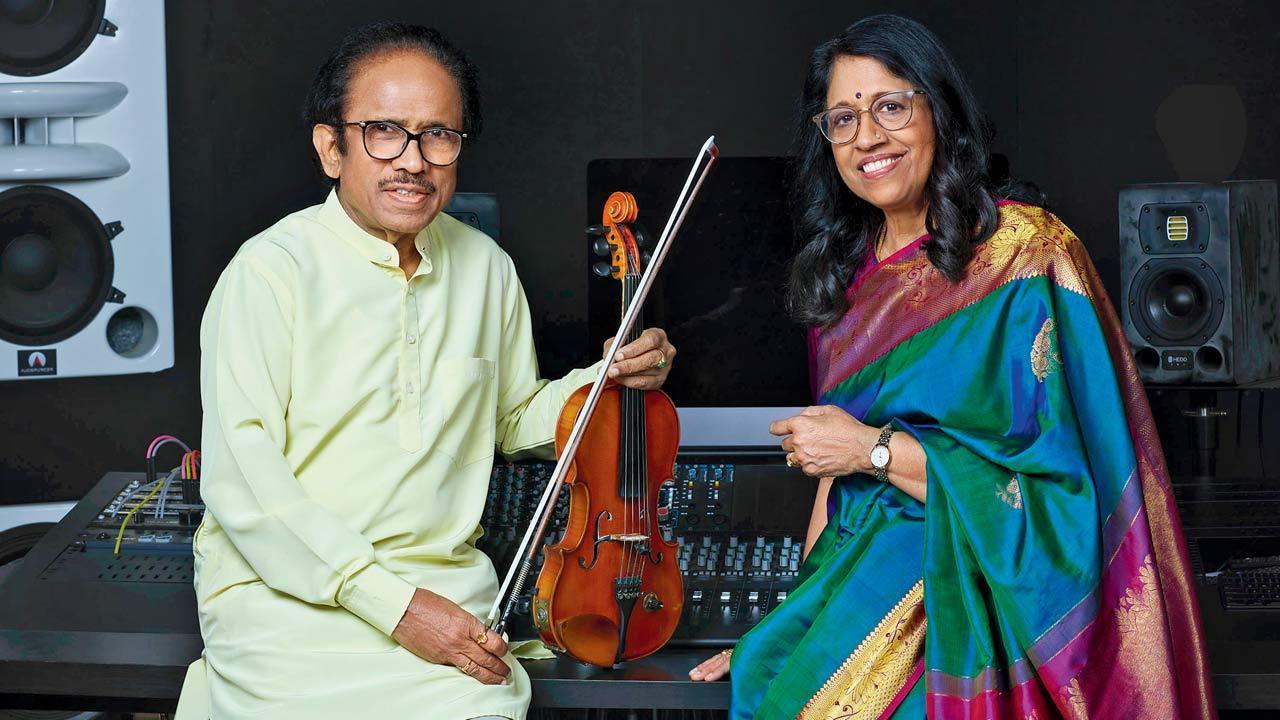
Violinist L Subramaniam with wife Kavita Krishnamurti. Pic/Jatin Kampani
Fresh from singing Sanskrit shlokas with a Kazakh choir, Kavita Krishnamurti looks back on the jingles, studios and songs that shaped five decades of music
Soumya Vajpayee (MUMBAI MIRROR; August 4, 2026)
“We sang Sanskrit shlokas with a Kazakh choir. That was really special,” says Kavita Krishnamurti, still sounding delighted by the memory. “They wanted me to sing a couple of film songs too, and they enjoyed those. Their own dancers even performed to my husband’s violin concerto.”
The performance came during the Lakshminarayana Global Music Festival, founded by violinist L Subramaniam in memory of his father. Invited by the Astana Symphony Philharmonic, the couple spent 10 days performing in Aktobe, Kostanay, Kokshetau and Astana, presenting everything from Indian classical compositions to Hindi film music.
One of the highlights was Navagraha Symphony, built around the nine planets. “We did five planets on Sanskrit shlokas, and their choir sang the Sanskrit with me,” she says. “It became a beautiful musical exchange.”
Away from the concert hall, Kazakhstan left an equally deep impression. “They have wonderful folk music, with dombras and beautiful percussion instruments. Their music feels close to nature. It reminds you of mountains and rivers. We hope to collaborate with the orchestra again.”
Bombay, jingles and a masterclass in speed
“It has been almost 54 years since I entered the profession,” says the singer, whose first film recordings date back to the early 1970s. Yet before Bollywood came the world of advertising, where she became one of India’s most recognizable jingle voices.
“The post-college years, when I was singing jingles, were among the happiest of my life. We worked very hard, but everyone felt like family.”
That phase, she believes, shaped her more than any award ever could.
“Sometimes you had to sing the same jingle in 14 different languages. The writers would stand around you, everyone watching the clock, and you had to switch instantly from one language to another.”
The pace taught discipline. “You learnt how to hit the very first word, how to emphasize the product name and still keep the emotion. It became an excellent training ground for film songs.”
The Nirma jingle remains the one audiences mention most often, although another composition still surprises her. “People also remember a literacy campaign song, Poorab se surya ugaa..., composed by Ashok Patki. Many tell me they still remember it.”
The songs chose her
Krishnamurti’s catalogue spans romantic ballads, classical pieces, qawwalis and dance numbers, but she insists it was never part of a career plan.
“I didn’t choose to be versatile,” she says. “Initially, romantic songs didn’t come my way. Then Hawa Hawai happened and suddenly I was offered many energetic songs. Later came Saudagar and romantic music.”
Working with hundreds of composers, she says, naturally expanded her range. “Every music director expected something different. Singing in different styles and different pitches probably made me versatile.”
What music has gained and lost
The biggest change, she believes, lies in the recording studio. “We used to record live with 100 or even 120 musicians. Those six or seven minutes had to be perfect because there was very little that could be corrected later.”
Digital recording has made music technically flawless, she says, but something else has faded. “I feel the emotional approach was much stronger then. I also miss the meaningful lyrics and the way actors performed songs through lip-sync. When Madhuri Dixit, Sridevi or Shabana Azmi appeared on screen, the songs acquired another life.”
Although Mumbai remains home, Krishnamurti believes the city’s aspiring singers can no longer depend solely on Bollywood. “There are so many talented singers today, but only a few can break into films. I pray independent music becomes much bigger in India, because then artists can build careers through their own music.”
She stops short of offering advice to younger singers. Instead, she wishes they had the opportunities her generation enjoyed. “I only wish there were composers like R D Burman, Laxmikant-Pyarelal, O P Nayyar or Naushad creating those kinds of songs for them.”
If her music continues to thrive on streaming platforms and social media, she sees it as proof that melody has a longer life than technology. “Good melody, good lyrics and good singing cannot disappear from people’s hearts.”
More than five decades after she first stepped into a recording studio, Krishnamurti is still finding new audiences, whether in Mumbai or halfway across the world with a Kazakh choir singing Sanskrit. For a singer whose career began in Bombay’s jingle studios, it is a reminder that music has always travelled farther than language.

Subscribe to:
Post Comments (Atom)
Post a Comment