Showing posts with label Laxmikant-Pyarelal. Show all posts
Showing posts with label Laxmikant-Pyarelal. Show all posts
It should have been for both, says Laxmikant's daughter on Padma Bhushan to Pyarelal
10:03 PM

BOMBAY TIMES (February 8, 2024)
You can't take "L or P" alone and the Padma Bhushan should be given to Pyarelal of course but also to her late father, Laxmikant's daughter said on Tuesday after the family wrote to the Union ministries of Home and Information and Broadcasting on the matter. Pyarelal, one half of the iconic composer duo Laxmikant-Pyarelal that gave music for over 700 films, was announced as a recipient of the Padma Bhushan, India's third highest civilian honour, on the eve of Republic Day.
"We were very happy that Pyarelal uncle was finally awarded... We felt when it came to the Padma Bhushan honour, they couldn't divide LP and give it to Pyarelal uncle just because fortunately Pyarelal uncle is there and my dad has unfortunately passed away," Rajeshwari Laxmikant told PTI.
In her letters, Laxmikant's wife Jaya Kudalkar appealed to the government to include her late husband in the honour along with his co-collaborator.The letter to the I&B ministry was sent three days ago and the one to the Home ministry on Tuesday.
Rajeshwari said the family wrote the letter because LP, as the music duo was fondly known, worked as a team on every tune. "Pyare uncle definitely deserves it and so does my dad because the work, the contribution, is all the same," Rajeshwari said.
Laxmikant Kudalkar and Pyarelal Sharma made their debut as composers with 1963 film "Parasmani" and struck gold with the success of "Dosti" a year later. They went on to script musical history spanning more than 35 years, giving songs for classic albums such as "Do Raaste", "Daag", "Haathi Mere Sathi", "Bobby", "Amar Akbar Anthony" and "Karz". The partnership ended in 1998 with Laxmikant's death when he was just 60.
Rajeshwari said the award should have included both their names as they had been a team since they were children. She said Laxmikant was just 11 and Pyarelal nine when they met.
"They even shared the same blood group. They must have had some divine blessings with them... the fact that two musically inclined people came together at such a young age and they created history. So when the government is giving such a big honour, it should have been to both."
Rajeshwari said they could go public with their grievance because of the confidence that the government will take a decision and include Laxmikant's name.
"I'm sure they must have overlooked it or something or I don't know what exactly happened on their front. I'm sure they will look into the material and justify the whole thing," she said.
Asked whether the family felt let down, Rajeshwari said while there was no disappointment, they felt "there was an incompleteness in the award".
"We, being his family, were sentimental as we have seen the hard work, the struggle, the challenges that both of them faced... LP has been a name to both of them, it was never Laxmikant Kudalkar or Pyarelal Sharma, nor have they composed individually, you can't take L or P alone," she added.
LP's last collaboration was "Deewana Mastana". After Laxmikant's death, Pyarelal distanced himself from active composing duties and sporadically worked as a music arranger for songs such as Vishal-Shekhar's "Dhoom Taana" from 2007's "Om Shanti Om".
Javed Akhtar reveals how Laxmikant-Pyarelal hesitatingly approached him for aarti and he stunned them
8:17 AM

Javed Akhtar discusses the influence of Urdu on everyday language, films
Niharika Lal (BOMBAY TIMES; December 12, 2023)
Participating in several sessions at the ongoing Jashn-e-Rekhta in Delhi, Javed Akhtar narrated his poetry and discussed the influence of Urdu on everyday language, especially in Hindi cinema. Giving an example of the vast vocabulary of Urdu he shared that there was a film for which Laxmikant-Pyarelal hesitatingly approached him, saying that there is an aarti in the film, and he has to write it.
He said, “I told him, ‘Give me the tune, I will write it.’ When he gave me the tune, it wasn’t an aarti but a song’s tune. Maine unse kaha aapne mujhe gaane ki tune di, aarti ki nahi di. Aarti mein ek crescendo hota hai, aarti aise hi nahi khatm ho jati hai. Maine toh apni taraf se likh diya hai aur woh crescendo, main Krishna ke naam se likh diya hai. Aap tune compose kar lijega. Woh crescendo tha: ‘Woh krishna kanhaiya murlidhar manmohan kanh murari hai, gopal manohar dukhbhanjan ghanshyam atal banwari hai, woh kans vinashak maharathi sudarshan chakra ke dhari hai...’ Laxmikant was perplexed. He told me, ‘Itne naam toh humein nahi maloom, tumhe kaise maloom?’ I told him, ‘Ye saare naam hain Urdu shayari mein’.”
He added that from Jan Nisar Akhtar, Gulzar, and Kaifi Azmi to Anand Bakshi — for many lyricists of Hindi cinema, it was Urdu that polished their language and craft.
--------------------------------
“We think this time is important because we are in it, but it is not. A nation's history cannot be judged in the span of 20-25 years. Nation ki history ko 10-15 varsh ya 25 varsh mat dekhiye. Hindustan ki rooh kahin aur hai.”
Khalnayak was supposed to be an art cinema with Nana Patekar; Anil Kapoor was keen to play the antagonist-Subhash Ghai
8:29 AM
Vinay MR Mishra (BOMBAY TIMES; August 11, 2023)
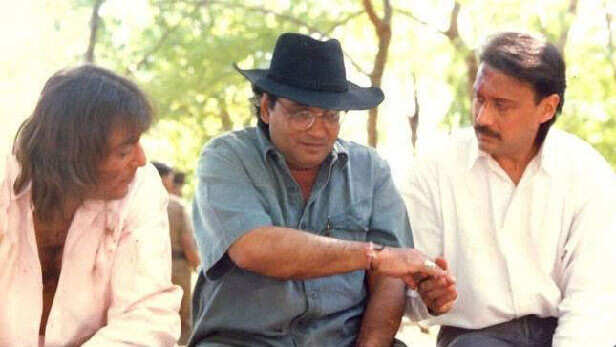
30 years ago, on August 6, the nation was taken by a storm, when the theatres played ‘Nayak nahi khalnayak hoon main’. Sanjay Dutt immortalized Ballu Balram on celluloid, while filmmaker Subhah Ghai once again reminded the world that no one could do a ‘larger than life cinema’ better than him in Bollywood back then. Three decades later, Subhash says, “We used to pray that even if it runs for 25 weeks, we would be happy. 30 saal chala diya ishwar ne!”
‘Khalnayak was supposed to be an art cinema’
“The idea of Khalnayak germinated from Ravan. Back then, iss pe kisi ne film nahi banayi thi. Not many are aware that when I started out with the film, I was making an art cinema with Nana Patekar. Khalnayak was an out and out art cinema story about his character moving from Pune to Mumbai. My writer’s told me ‘Why don’t you make a commercial movie and make it larger than life’. That is when we went all out.”
Anil Kapoor was keen to play khalnayak
Khal Nayak’s casting is a story within itself. Subhash was only certain about one actor – Jackie Shroff. “Ram was, of course, Jackie Shroff. It was the easiest character to cast. I was very clear about him. Anil Kapoor was keen to play the antagonist. He came to my home twice or thrice. He said, ‘Subhash Ji, I am very keen to do this role’. I told him, ‘Ye tujhe suit nahi karega. Tu jayega, main jaaunga and film bhi jaayegi’.”
While a few speculated that even Aamir Khan had reached out to Subhash to play the titular character, the director refutes the speculations: “Aamir wanted to do Saudagar. But I was looking for a new face and he was already a star.”
Was tensed about Choli Ke Peeche before its release
The movie’s music, composed by music duo Laxmikant-Pyarelal was a massive hit, selling over 10 million copies. Subhash reveals he anticipated the sad song O Maa Tujhe Salaam, sung by Jagjit Singh, to be a chartbuster. However, it was the title track and the most controversial song Choli Ke Peeche that went on to become hugely popular. “The lyricist (Anand Bakshi) asked me, ‘Kis tarah ka mujra hona chahiye?’ I thought about it and told him to skip the mujra and instead think of a folk song, because the character has to make Ballu believe she comes from a rural setting. Raat ko unhone mujhe phone kiya with the lyrics and I was shocked. I said, ‘No we cannot make this’. He started laughing. He made me hear the second stanza – Yeh Dil main dungi apne yaar ko…and I told him that he was compensating. But yes, I was quite tense, so we decided to make it an artistic song. The song in itself is a scene. There were so many organizations who protested the song. But I always asked them to listen to it in its entirety. Today, the song has gained cult status and is enjoyed by youngsters.”
‘Sanjay’s imprisonment was very disturbing for me’
During the filming of the movie, the film’s main lead Sanjay Dutt was arrested. “It was big shock for me and very disturbing. Subhash confesses. He adds, “I couldn’t imagine that this would happen. I was very close to Dutt sahab (Sunil Dutt, Sanjay’s father and actor). We had to take the situation as it was. I told Sanjay, ‘Tu jo bhi hai sach bol dena, sach ke siwa kuch mat bolna’. The worst thing was the protests. Everyone was saying, ‘terrorist and real-life villain ko Subhash Ghai le raha hai’. But all of that saved us a lot of money (laughs), as I cut down on my promotional budget. The movie was even discussed in the parliament.”
‘When you become a success, you should be ready to accept that you will make many enemies’
Not many are aware that on the same date, alongside Khalnayak, another film was released, Khal-Naaikaa, starring Jeetendra and Jaya Prada. “When you become a success, you should be ready to accept that you will make many enemies”, says the director.
He further explains, “I could see the enmity coming from various places. Millions were happy when Trimutri flopped. One day I got to know that someone was releasing the movie Khal Naaikaa on the same date. Bohot hungama hua. I spoke to IMPPA (The Indian Motion Picture Producers Association) and they said that they will release their film on the same date, and I can move my date if I want. The last week before the release was a very tough time for me. There were 45 people at that IMPPA’s meeting, and they were all against me. I have faced many such hurdles in my life.”
30 Years of Khalnayak: People used to say, ‘Aap woh wala gaana nahin ga sakte’-Ila Arun
8:47 AM
Samarth Goyal (HINDUSTAN TIMES; August 6, 2023)
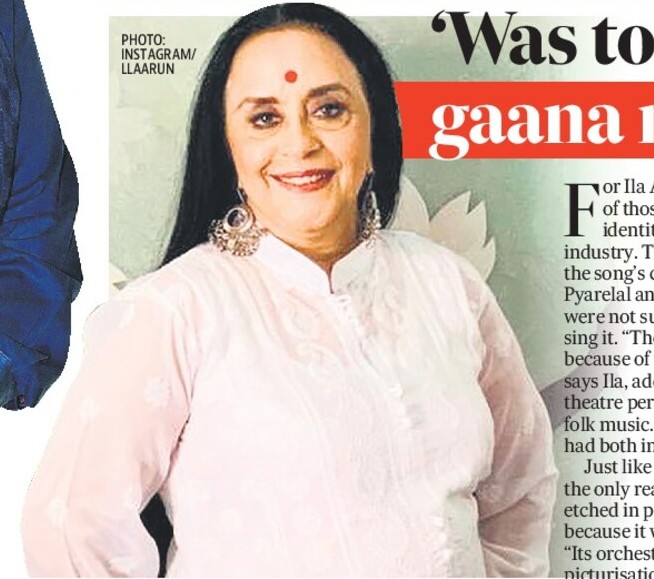
For Ila Arun, Choli Ke Peeche is one of those songs that gave her an identity as a singer in the film industry. The 69-year-old recalls how the song’s composers Laxmikant-Pyarelal and lyricist Anand Bakshi were not sure if she would agree to sing it.
“They thought I’d reject it because of the nature of the lyrics,” says Ila, adding, “But I had been a theatre person and was exposed to folk music. This, too, was one that had both innocence and naughtiness.”
Just like Yagnik, Ila also feels that the only reason why the song is still etched in people’s memories is because it was composed tastefully. “Its orchestration, lyrics and picturisation was so beautiful that it became timeless,” she adds.
However, despite its legacy, the song received a lot of flak. “Whenever I was called for a show, people used to say, ‘Aap woh wala gaana nahin ga sakte’, and I would jokingly ask what song they meant while being completely aware that it was Choli Ke Peeche,” she quips.
She signs off, “My mother told me that I should not sing such songs. But after it got popular, she understood that the track was actually not vulgar.”
30 Years of Khalnayak: Choli Ke Peeche was mischievous, but nothing vulgar-Alka Yagnik
8:45 AM
Samarth Goyal (HINDUSTAN TIMES; August 6, 2023)
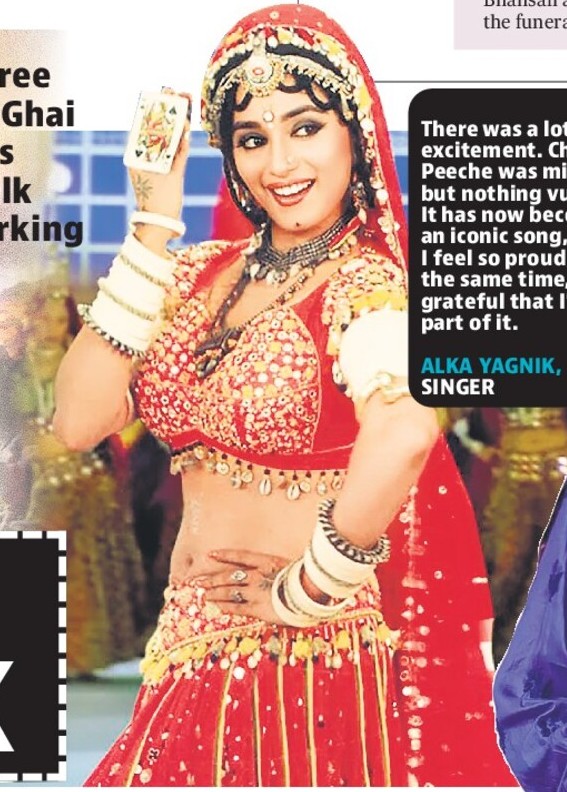
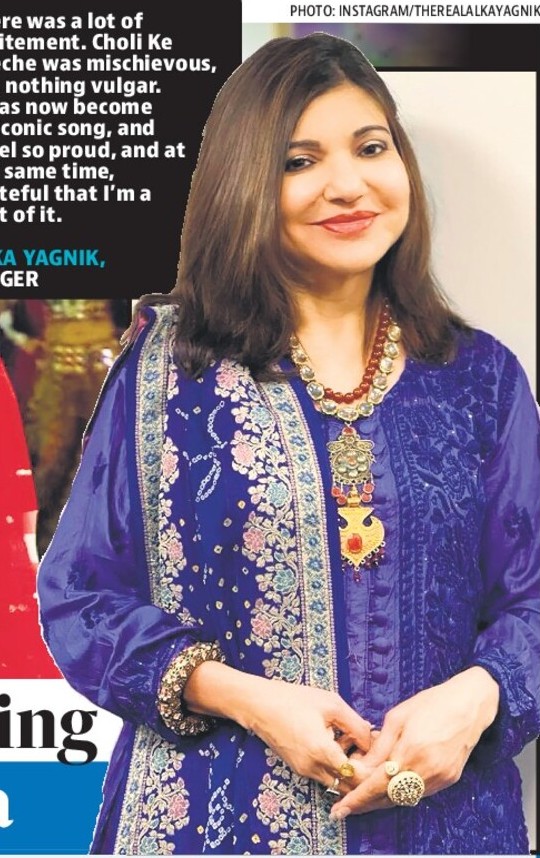
It’s three decades to the release of the iconic drama Khal Nayak today but the one thing that continues to resonate with audiences even today is the song Choli Ke Peeche. Reminiscing about her experience of singing the song, singer Alka Yagnik says she “never thought it would become such a massive hit”.
Revealing that she wasn’t fully convinced about the song initially because of its lyrics that she found a “little strange”, the singer adds, “When I went to rehearse, they gave me only my lines, not Ila ji’s (singer Ila Arun). I only read, ‘Choli mein dil hai mera.’ I wasn’t aware of the other lines and it was only later that I discovered them.”
She says the recording process was quite unique, which only contributed to its charm. “We used to do live recordings. Along with composers Laxmikant-Pyarelal, (lyricist) Anand Bakshi ji and Ila ji, we worked on reacting to the lines. It ended up sounding like a playful conversation between two sisters or two female friends,” she says.
The 57-year-old admits that the song had a “little naughtiness”, and being someone “extremely shy”, she had her inhibitions. “I was still new. Ila ji really helped me in making the song memorable and enjoyable,” recalls Yagnik.
She signs off, “There was a lot of excitement. Choli Ke Peeche was mischievous, but nothing vulgar. It has now become an iconic song, and I feel so proud, and at the same time, grateful that I’m a part of it.”
Lata Mangeshkar and I went on to create history by recording 712 songs together-Pyarelal
8:23 AM
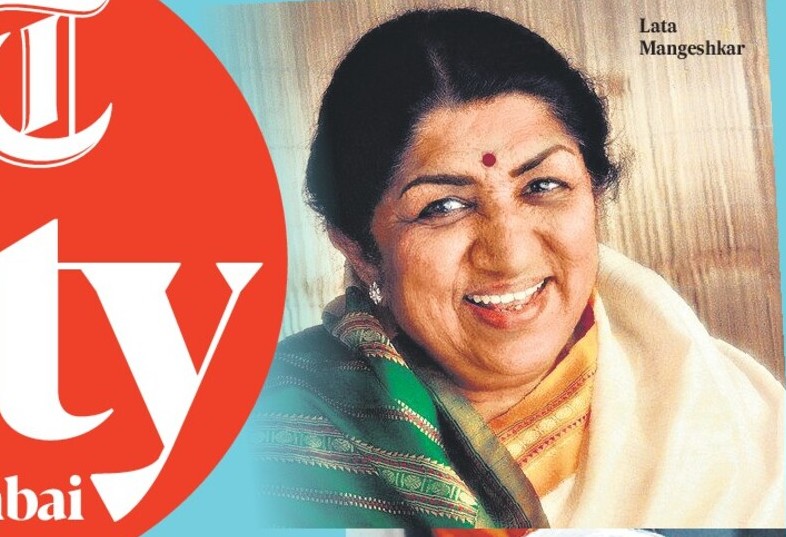
Soumya Vajpayee (HINDUSTAN TIMES; February 6, 2023)
Yesteryear composer duo Laxmikant-Pyarelal and late music legend Lata Mangeshkar are forever bound by the 700-odd songs they’ve worked on together. Today, on the singer’s first death anniversary, Pyarelal Sharma, one half of the duo, misses her “immensely”.
“Lata ji was a part of every important moment of my life. She was like a mother to me. I feel she is still around,” he says, adding, “Woh humare liye Saraswati maa hain. Hum Laxmikant-Pyarelal jo bhi bane, Lata ji ki wajah se bane. We were quite young when we were introduced to her. Laxmikant (Shantaram Kudalkar) ji ko unhone Shankar-Jaikishan (late composer duo) se milwaya aur kaam dilwaya. When she saw I was good at playing the violin, unhone humara ek music group bana diya. She always supported us. She was jovial and fun-loving. We went on to create history by recording 712 songs together.”
Recalling Mangeshkar’s reaction when they reached out to her for their debut project, Parasmani (1963), Sharma says, “When we requested her to sing our first song, she said, ‘Tum itne chhote ho, music director ban gaye?’ She happily recorded the songs and we gave her a cheque of Rs. 101. She’d sing our compositions in her own style, be it Bindiya Chamkegi (Do Raaste; 1969) or Satyam Shivam Sundaram (1978) title track. Woh jo bhi gaati thi, uss gaane ko amar kar deti thi.”
Sharma, 82, goes on to recall another fond memory of the Bharat Ratna awardee: “Jab hum Ek Duuje Ke Liye (1981) ki recording kar rahe the, Lata ji ne mujhse kaha, ‘Pyare, tu itna achha music arrange aur compose karta hai, tu western symphony kyun nahin likhta?’ I was touched by her thoughtfulness. When I finally released a symphony, Om Shivam, she was so happy. Unhone ek Shiv ji ki murti di, jo mere ghar mein sthapit hai.”
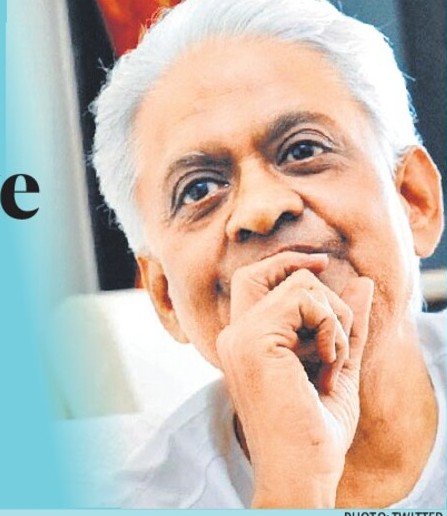
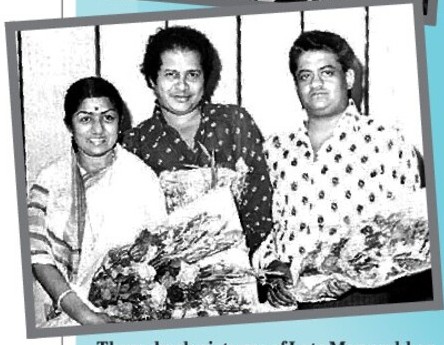
I do not like using apps to correct the sur-Kavita Krishnamurti
2:38 PM

After her take on the use of technology in recording songs went viral, the singer elaborates on what she meant
Debarati S Sen (BOMBAY TIMES; January 15, 2023)
Recently, a video in which Kavita Krishnamurti spoke about the rampant use of technology in recording songs went viral. The singer was present at an event in Bengaluru to speak about her journey and how songs were recorded earlier. She says, “I realized that parts of that talk had gone viral on social media when my friends started messaging me.”
Elaborating on her thoughts about the use of audio software to record songs, she says, “Once, Khayyam saab and I were judges for a show and someone said, ‘Aaj kal, sur aur sab theek kiya ja sakta hai, bas gaane mein expression aur attitude zaroori hai.’ Khayyam ji said, ‘Gaane mein attitude ka kya kaam agar sur aur taal hi nahi hai?’ These incidents were on my mind when I spoke that day. I didn’t mean to disrespect anyone and don’t want to create a controversy. With changing styles, we also change. I feel that if technology can help, one should definitely use it. I have suffered from bronchitis all my life and there have been days when I was so sick that I had to take antibiotics and cough syrups before singing. During times like these, technology helps. My only point is that you should not depend solely on technology to record a good song.”
‘SHOCKED WHEN I WAS TOLD HUM VOICE CLEAN KAR LENGE’
Narrating an experience, she says, “I remember I was recording a song in 2003 and wanted to redo a line. The recordist and the music director said, ‘Hum voice clean kar lenge’. I told them that they can clean the voice, but they needn’t work on the sur because I will sing again. Later, the recordist told me, ‘Aaj kal Melodyne (an audio pitch modification tool) hai aur sab theek ho jata hai usme.’ I requested them not to use it for my songs. I don’t like using it because when the song releases, you can make out that it has gone through a processor and sounds a bit metallic and unreal to me, and I don’t feel happy about that. There are others who don’t feel the same. I remember once a singer came to the studio and asked, ‘Melodyne hain na aap ke paas?’ And I found that very amusing!”
‘STRENGTHEN YOUR SKILLS AND THEN USE TECHNOLOGY’
The singer, who has lent her voice to chartbusters like Hawa Hawai, Tu Cheez Badi Hain, Dola Re Dola, Nimbooda and Bin Tere Sanam, among others, goes on to add, “Your capacity to sing without technology should never prove to be a limitation. You shouldn’t lessen your practice or stop focusing on sur and taal. For any singer, that is of primary importance. You should strengthen yourself and your skills and then use technology.”
Kavita emphasizes that all these factors were important. “Bollywood songs have phrases on the beat and aren’t rhythmically complicated. Earlier, if something was off-key or somebody was unable to catch the beat, then the only option was redoing it because tools and apps didn’t exist.”
RECORDING IN THE TIME OF RD
Reflecting on the effort behind recording when she had joined the industry, she shares, “Laxmikant-Pyarelal and R D Burman would call us a day earlier so that we knew the emotion of the song. The next day, we’d go to the studio and rehearse with the orchestra. That way, we would know the song well. Some music directors would tell us where to break the song and when to breathe.”
On Binaca Geetmala's 70th anniversary, Ameen Sayani talks about its popularity: "Somebody heard it in Germany"
8:39 AM
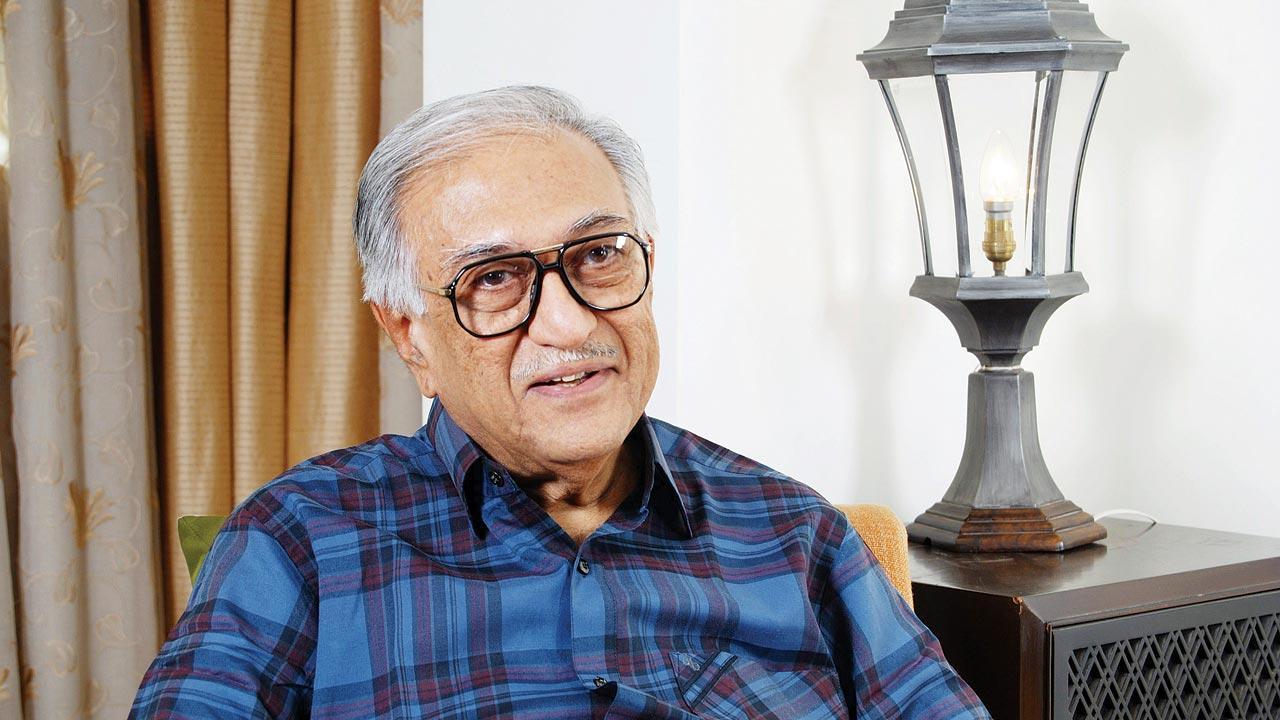
December 3 will be the 70th anniversary of the most beloved radio entertainment show. Happy birthday Binaca Geetmala!
Meher Marfatia (MID-DAY; November 20, 2022)
Beheno aur bhaiyo, this is a fortnight so worth the song and dance about. It marks the 70th year of a show-of-shows appearing on the airwaves, which wiped Indians cleanly off the streets. Into their homes they disappeared, huddling round the radio for the ultimate programme of popularity-based Hindi film songs. Hosted, of course, by the genial Ameen Sayani, who ruled the broadcast universe with uncommon passion and perception.
The orange flicker from my parents’ Bush set blazed bright at 8 pm midweek, warmed by the pitch-perfect inflection: “Main aapka dost Ameen Sayani bol raha hoon aur aap sun rahe hain Binaca Geetmala.”
Twenty years before Doordarshan’s screening of the Sunday evening movie brought the country to a complete standstill, Wednesdays (8-9 pm) became Geetmala Day, celebrating one of the longest running programmes in broadcast history.
The sweeping cultural phenomenon was introduced on December 3, 1952, by Radio Ceylon, Asia’s oldest station. The British left Ceylon short-wave transmitters belonging to Louis Mountbatten’s South East Asia Command. Colombo used them for commercial radio offerings in Sinhalese, English, Tamil and Hindi.
Wowing an estimated weekly listenership of 21 crores by the end of the 1970s, Sayani emerged the most idolized compere any channel could boast. He interviewed music personalities in other shows. Saridon Ke Saathi, in 1970, Vividh Bharati’s first sponsored programme, was produced and presented by him on All India Radio (AIR).
Geetmala got going in 1952 as Binaca Hit Parade on Radio Ceylon, hosted by Ameen’s brother Hamid Sayani and Happy-Go-Lucky Greg (Greg Rostowski) for the Commercial Service of Radio Ceylon. It shot to prominence as AIR slid on account of I&B Minister B V Keskar’s 1952 ban on film songs. Keskar dourly deemed that tunes like Tadbeer se bigdi hui taqdeer bana le, infusing S D Burman’s buoyant guitar riffs for Baazi in 1951, were over-orchestrated with Western instruments. Radio Advertising Services was opportunely established, with Hamid heading its production wing.
In his Churchgate home, over chai and chivda, Ameen Sayani explains, “Audiences flooded the station with requests for a similar Hindi film songs countdown. The client, Ciba Geigy, landed at the Radio Advertising Services office where I worked, looking for someone to write the script, narrate it, announce selected songs, go through listeners’ letters—for only Rs 25 per programme. Raising my hand I said, ‘I’ll do it.’”
“After the inaugural broadcast, I prayed to God, Gandhi ji and my mother, for 200-300 letters from listeners. We got 7,000. St Xavier’s College friends helped sort them. Doubling each week, within the year mail spiralled to 65,000 a week.”
Listeners arranged their individually preferred sequence of seven songs played in random order. A prize amount of Rs. 100 was split among seven of them. When the award system discontinued after a year, the show stayed a hit parade.
Small subterfuges abounded. Multiple entries were supposedly dispatched from different addresses on the envelope. A telltale post office chhappa revealed the same place—Kalbadevi, for instance.
The obsession from India knit millions internationally. At its peak, Geetmala attracted fans and followers in Ceylon, Pakistan, Bangladesh, Nepal, Afghanistan, UAE, Oman, the West Indies, Africa and then America. “Somebody heard it in Germany, so Europe seemed covered as well. Nothing must have blocked the shortwave reach. The signal probably went into China, which was countering Ceylon getting powerful.”
Rapturous responses poured in, filling stacks of sacks. Sayani generally refrained from accepting gifts. “What can you do, sometimes it’s just love,” his son Rajil says. When a woman sent a shawl as a token of appreciation, he politely conveyed—“Thank you for the present but this would upset my wife.” The lady wrote back, “Ameen bete, I’m of age enough to be your mother. Please accept the gift.”
Older women to schoolboys were in starry-eyed thrall. Byculla resident Rustom Jasoomoney remembers, “In 1955-56 pre-transistor days, at Scout camp in Matheran forest, we abandoned campfire activities on Wednesdays. Trekking two miles by lantern light, with staffs and in uniform, to Sayaji Park in the town centre, where Geetmala was on a public address system. We crossed fingers that failing electricity wouldn’t cut short the show.”
Another excited kid rushed to the radio minutes ahead, little dreaming he would grow up to market the same show. Former Ciba-Geigy advertising manager Homi Randeria says, “Suvi Godambe sifted through the post that record dealers sent and the tabulation went to Ameen. His charm alone made Geetmala shine, even with parallel film music programmes in the early 1980s. We polled listeners, asking if the show should continue amid competitors. The reaction was fantastic. I was shocked, being forced to wait five days before getting into my cabin. It was piled that high with mail begging us to never stop. Till today, I cherish Ameen’s signed cassettes and can’t nap in the afternoon without hearing those retro recordings on my Carvaan radio.”
Manohar Mahajan, Radio Ceylon’s iconic announcer, acknowledges, “He is my guru, my bhagwan, my everything. Unbelievable how, as a child, I was mesmerised by Geetmala tracks from a hotel near my home in Jabalpur, and that legendary voice soon advised, ‘Bombay aa jao.’ To be mentored by the finest industry veteran is a blessing.”
Sayani reminisces, “The beautiful quality of melodies resulted in Geetmala songs becoming an absolute craze. As younger talents, Laxmikant-Pyarelal, Kalyanji-Anandji, Shankar-Jaikishan and R D Burman, gained fame, senior music directors complained the ratings procedure was faulty.”
The basis of the listing initially was sales figures obtained from records stores and, later, numerous listeners’ clubs. To dissolve further rancour, rather than be ranked, songs simply played for a brief year.
Here are Sayani’s own favourites, not necessarily Geetmala inclusions:
Man re tu kaahe na dheer dhare (Chitralekha)
Piya tose naina laage re (Guide)
Bhooli hui yaadon (Sanjog)
Raaton ko chori chori (Mohabbat Zindagi Hai)
Poochho na kaise maine rain bitai (Meri Soorat Teri Aankhen)
Tere bachpan ko jawaani ki dua deti hoon (Mujhe Jeene Do)
Jaane jaan dhoondta phir raha (Jawani Diwani)
Main paagal mera manvaa paagal (Aashiyana)
Rasik balmaa dil kyon lagaaya (Chori Chori)
Jeevan dor tumhi sang baandhi (Sati Savitri).
Mass adulation meant restaurants and paan stalls packed with fevered patrons at that magic hour. “Without a radio in their struggler years, Laxmikant-Pyarelal hung around a cafe—they couldn’t afford entering—peeping in from its window to hear chartbusters blaring out,” Sayani recollects.
“My relationship with playback singers was excellent, especially Lata, Asha, Mohammed Rafi, Mahendra Kapoor and above all Kishore Kumar. Among music directors, I bonded with Naushad, C Ramchandra, Madan Mohan, S D Burman, R D Burman and Roshan, who was a dear friend. I also interviewed these wonderful sangeetkars. The lyricists closest to me were Sahir Ludhianvi and Shakeel Badayuni.”
Rajil adds, “Shakeel Badayuni wrote the sehra verse that was read out when Dad got married [to Rama Mattu, a veritable music encyclopaedia relied upon for information related to any Hindi film song under the sun].”
Geetmala moved from Radio Ceylon to Vividh Bharati, radio to stage, to LPs and cassettes, to TV, CDs, live streaming and finally, to the film music player Carvaan, containing Saregama’s hit Geetmala Ki Chhaon Mein series, paying tribute to less heard, yet deserving, songs.
With Chhoo lene do naazuk hotho ko, in the film Kaajal, the Sartaj Song (crowned song) strategy gracefully retired a number already aired 25 times. The marks scored decided whether it was to be included and ranked in the annual programme.
An admirer of Casey Kasem, producer-presenter of the American Top 40, Sayani reveals that Kasem’s signature line—“Keep your feet on the ground and keep reaching for the stars”—particularly appeals to him.
In 2000, the Advertising Club honoured Binaca Geetmala with the Golden Abby for Outstanding Radio Campaign of the 20th Century. “Entrenched in the hearts and minds of the nation, I still receive about 20 letters a month describing how Geetmala has influenced people’s lives,” says Sayani. “The interaction between me and my listeners has always been very personalised. I was their Ameen Bhai, they my sweet beheno aur bhaiyo.”
Geetmala milestones
December 3, 1952: First Binaca Geetmala broadcast, as a half-hour show
December 3, 1953: First annual programme of 12 top songs
January 5, 1954: Becomes a one-hour-long hit parade with 16 songs
From 1957: Annual programmes start on the last two Wednesdays of every year
March 23, 1966: Introduction of the Sartaj Song concept
January 8, 15 & 22, 1978: Silver jubilee broadcast in three parts from 11 AM-12 noon
August 12, 1981: Entry of the first non-filmi song, Disco deewaane, aha
May 21, 1986: Name change from Binaca Geetmala to Cibaca Geetmala
October 27, 1988: Slot change from Wednesday 8-9 PM to Thursday 9-10 PM
April 6, 1989: Number of songs becomes 14 from 16
November 6, 1989: Starts on 24 Vividh Bharati stations; broadcast day change again to Monday 9 PM
March 21, 1994: Last regular programme of Cibaca Geetmala broadcast. On March 28 and April 4, Sayani features two specials with previous years’ top songs
April 4, 1994: Last broadcast of Cibaca Geetmala
February 18, 2001: First broadcast of Colgate-Cibaca Geetmala
August 24, 2003: Last broadcast of Colgate-Cibaca Geetmala
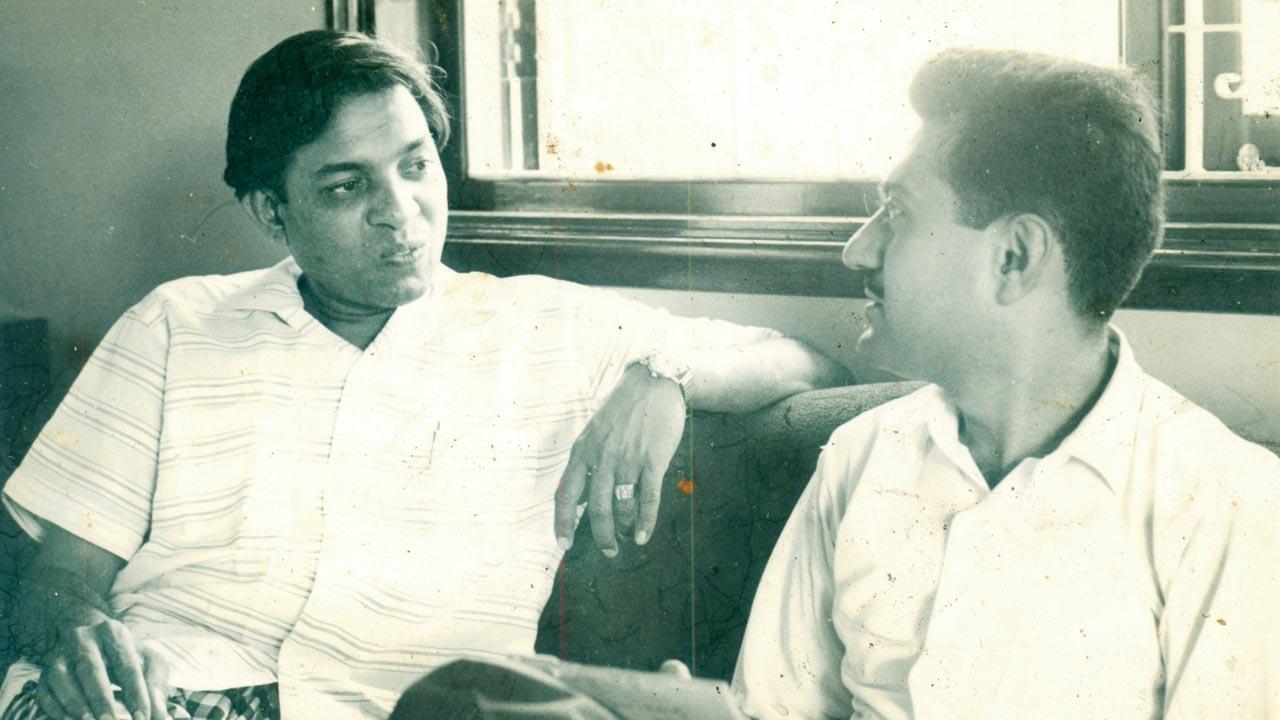
With singer Manna Dey and music director Ravi
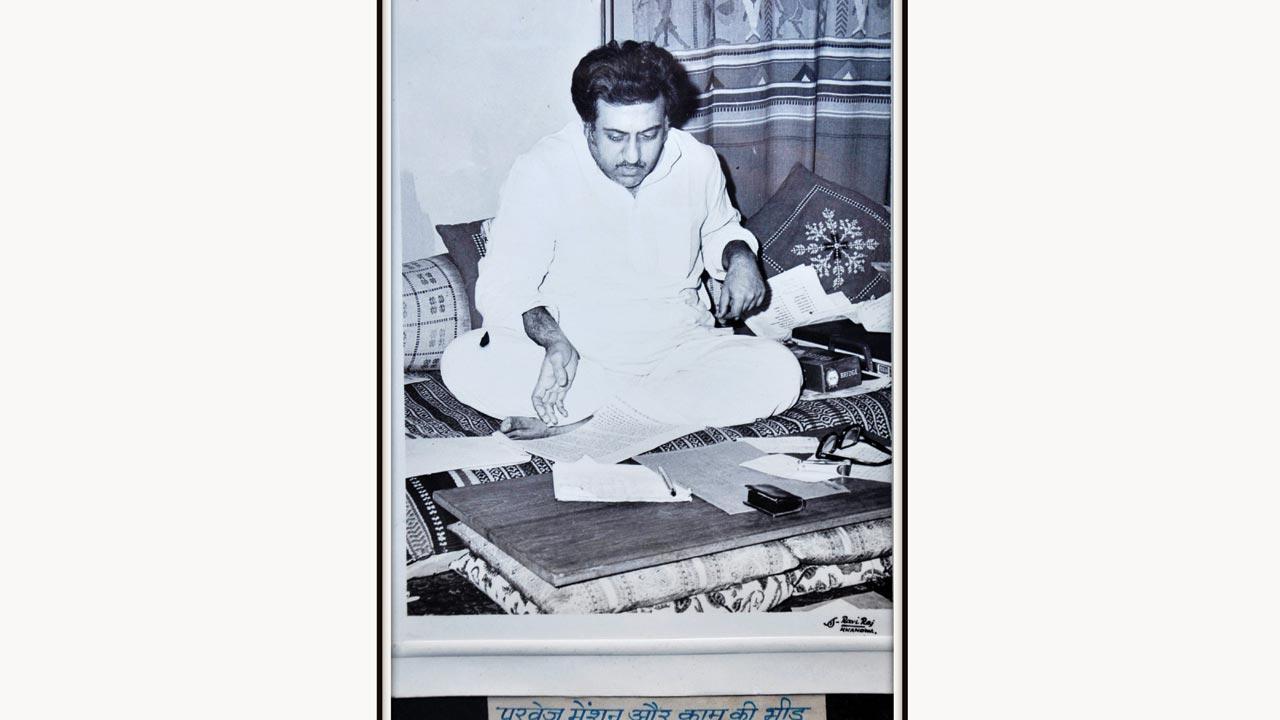
Preparing for the Geetmala silver jubilee stage show in December 1978
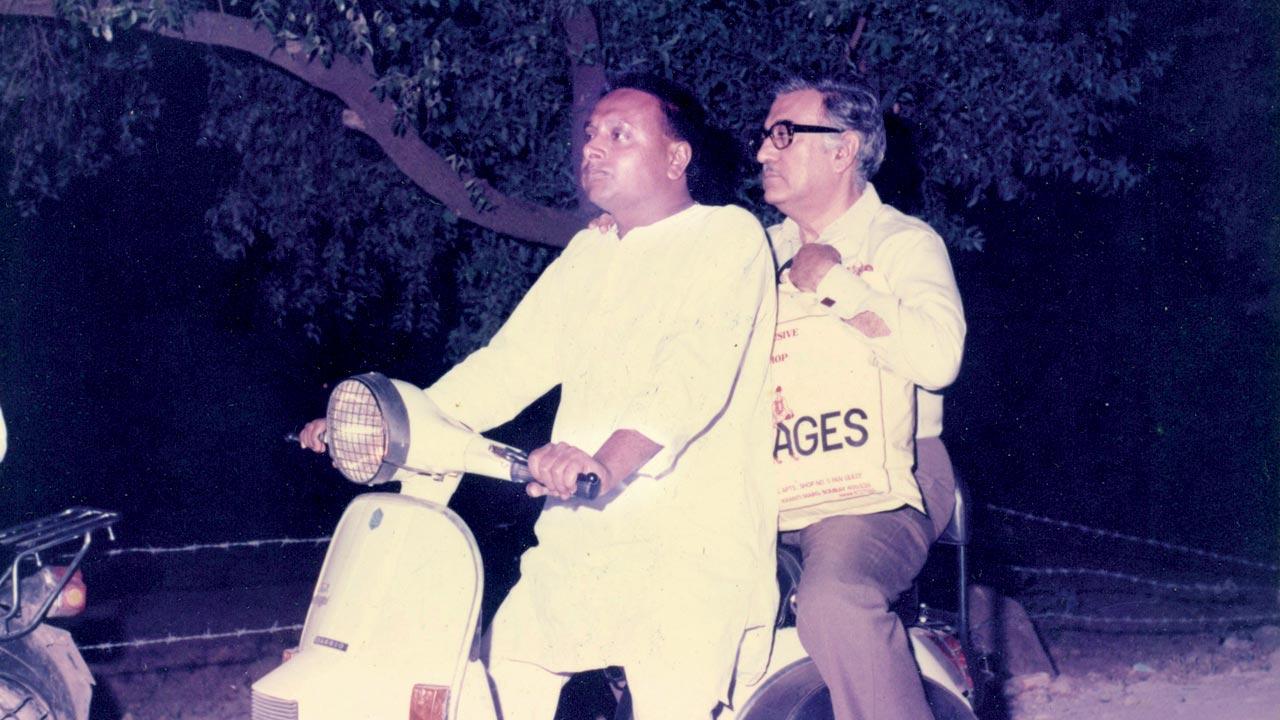
With his ardent fan Srinivas Agarwal in Khandwa, Madhya Pradesh, in 1993; Agarwal wrote him a birthday tribute every year
In Monica O My Darling, we roped in singers who perform at Asha Bhosle Nights or Kishore Kumar Nights-Vasan Bala
8:38 AM
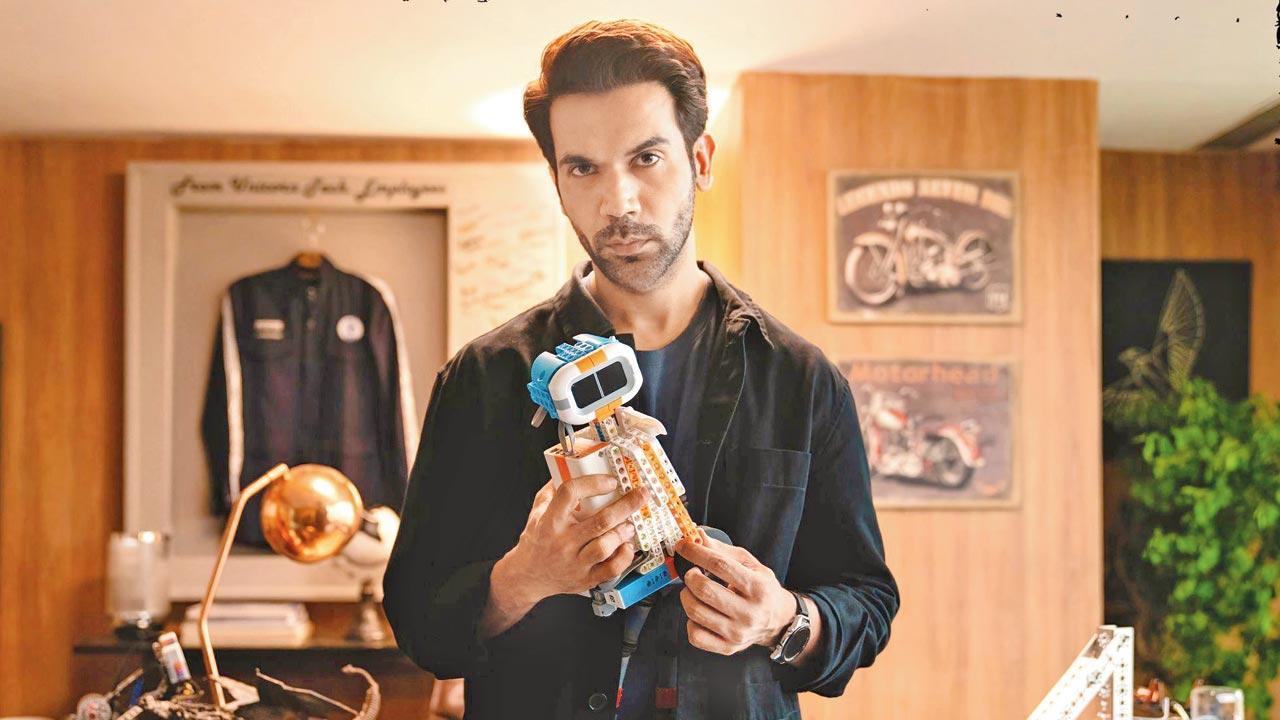
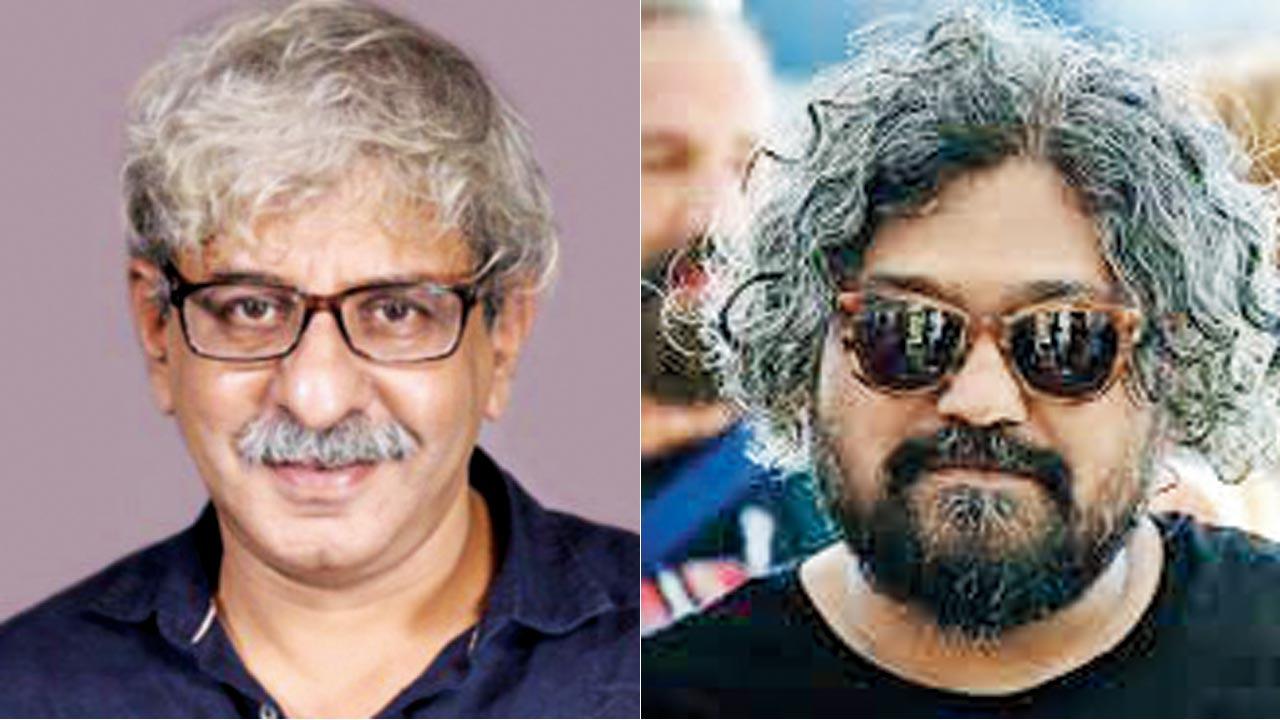
Taking a cue from Sriram’s style of storytelling, Monica O My Darling director Vasan says sharp crime thrillers are all about throwing curveballs at audience
Uma Ramasubramanian (MID-DAY; November 8, 2022)
What’s the secret to a deliciously crafted thriller? Vasan Bala hopes to have the answer with Monica O My Darling, starring Rajkummar Rao, Huma Qureshi and Radhika Apte. For the noir thriller, the director has been inspired by filmmaker Sriram Raghavan, whom he considers the genre’s pioneer in the Hindi film industry. “With thrillers, I don’t take the pressure of making it a whodunit. I think all the masters have followed the [rule]. Be it Sriram Raghavan or any other director, they never take the pressure of hiding a lot from the audience. In fact, they give away a lot and hide a few [elements], which works as a surprise for viewers,” says the director.
The Netflix film follows Rao’s character Jayant, who has been double-crossed by his ladylove, essayed by Qureshi. For Bala, the film’s biggest win is its casting. With dependable actors on board, the director says he only concentrated on the technical aspects of filmmaking.
“There wasn’t too much of direction [required],” he says candidly. “I could concentrate on other aspects of filmmaking. I had the privilege of leaving a lot to the actors and just going with the flow, thanks to the calibre of the people involved. It’s a pleasure to work with actors who are technically trained. They are not only involved as actors, but also as technicians. They gave due respect to the entire technical team. A lot of actors don’t do that.”
Mard Ko Dard Nahi Hota (2018) showed us how Bala likes to add quirky elements to his storytelling. This time around, he knew that he wanted a retro album to lend the required mood to the crime thriller. The director turned to composer Achint Thakkar for the task.
“It was great to go back to [the music of] Laxmikant-Pyarelal, Shankar-Jaikishen and Usha Uthup. We blended [their musical sensibilities] to create music that is authentic and not spoofy. We also roped in singers who perform at Asha Bhosle Nights, or Kishore Kumar Nights. They have not broken into professional playback singing, but are on the periphery, thanks to their ability to [mimic the singers of the bygone era].”
Raghavan and Vasan Bala
I don’t think I had seen a girl expose herself with so much confidence as Madhuri Dixit did in Ek Do Teen-Divya Unny
8:53 AM

It’s possibly the only Hindi film song to have a movie of its own. Madhuri’s Ek Do Teen inspires a young female director to delve into the track’s power of emancipation
Aastha Atray Banan (MID-DAY; March 13, 2022)
The lyrics of one of Bollywood’s most famous item numbers, Ek Do Teen, started off as “dummy text”. N Chandra, who directed and produced the super-hit Tezaab in 1988, shared an old Koli folk ditty with the film’s music composers Laxmikant Pyarelal which went, “Ding dong ding”. The legendary duo created a melody with dummy lyrics that went, “Ek Do Teen chaar paanch chhe saat aath nau...”, and lyricist Javid Akhtar took over, to make it a song that spoke about a young woman tired of waiting for her lover. It was Dixit’s first mega hit, and possibly the beginning of the item number trend as we know it. Dixit, as Mohini, danced on stage, choreographed by late Saroj Khan, in a glittery pink, one-shoulder crop top, matching mini skirt. And history was made.
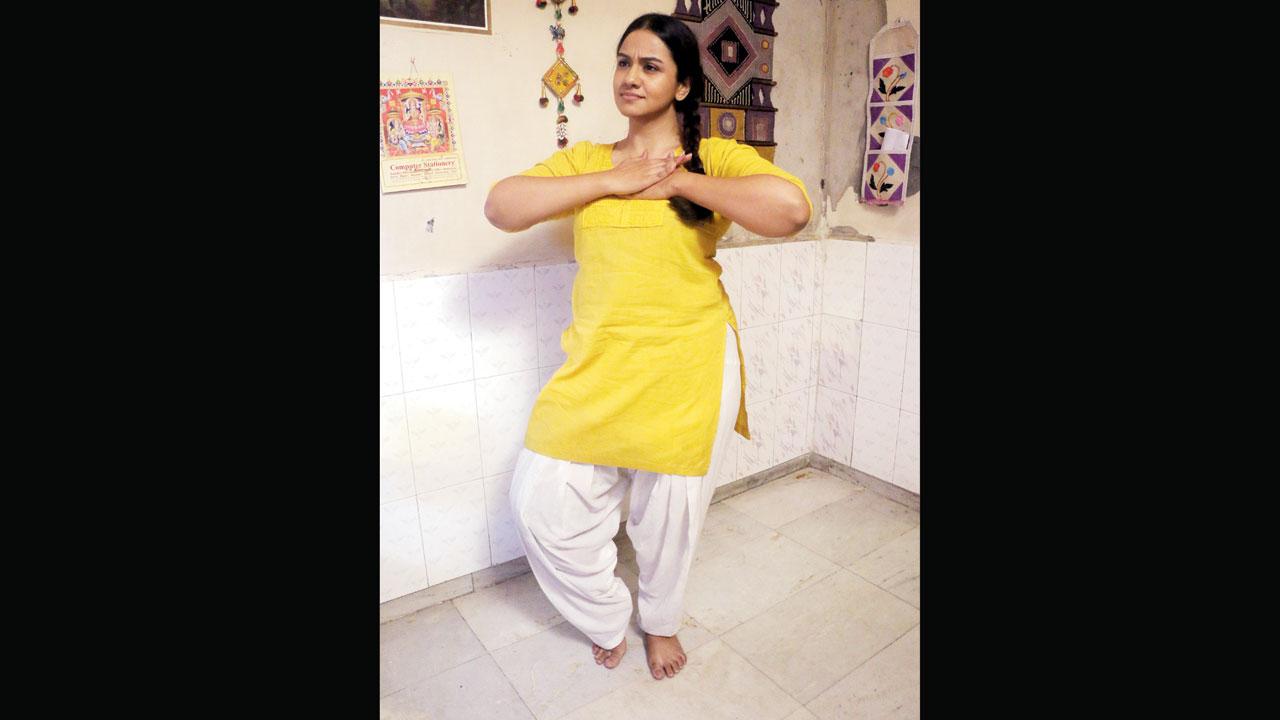
Mumbai-based journalist-turned filmmaker Divya Unny has drawn inspiration from the song 34 years later with her 12-minute short film, Dancing Queen. The film’s protagonist Madhu echoes Unny’s love for the song, which she first heard when she was nine, in 1995. She was a kid growing up in the suburb of Mulund, and attended a convent school where Bollywood music wasn’t encouraged.
She now sits at her Lokhandwala home with her cat Tara, and husband Somesh Saha, remembering the time. “I was very proper, except on Annual Day when we’d let go. Every Annual Day, I have danced only to Madhuri’s songs, especially Ek Do Teen. It became such a powerful image—I don’t think I had seen a girl expose herself with so much confidence as she did in that picturisation. It created a distinct live audience vibe... you know, how the crowd roars, ‘Mohini, Mohini!’ We replicated that at school. Even the nuns couldn’t eventually help dance.”
It was her mother, Bhamini, who would dress Unny, put on a bit of glitter make-up and gently nudge her on to the stage from the wings. “My mother came to Mumbai when she was 17, and gave up being the Bharatnatyam dancer she was back in Kerala. But she encouraged both of us [daughters] to do what we liked. She wanted this for me, and told me to go fly with my feet. It was like I was carrying her dream forward.”
In 2018, Unny released her first film titled, Her First Time, about a girl’s first menstrual period, and her relationship with her mother. Her latest short also hinges on the mother-daughter bond, and a young girl’s fascination with Dixit and the song.
“When Madhuri was on stage or screen, she was fearless with her body, and expressions. Her dance became a common language of communication among those who loved her. We would imitate her moves, feel like we had achieved something! Ek Do Teen was the beginning of my fan girl time, and the reason I chose it as the focus of this film,” she says.
The track journeys through the film as Madhu transforms from the kid and teen dancing with abandon at home to the TV set, pressured into marriage at 17 and breaking down on her wedding day when the speakers blare the track, to once again finding happiness in it as she and her daughter in turn enjoy it years later. “The song has meant different things to me as I’ve grown older, as it does to Madhu. I had a different idea of romance when I first heard it.”
Saha, who has produced, edited and composed for films, says that when Unny first discussed the idea with him, he discouraged her because of copyright claim challenges. “The movie is now available on YouTube for free, and can’t be monetised, as T-series holds the copyright to the song, and the price for it would exceed the entire film’s budget,” says Saha, who composed an original score for the movie. “I studied in Shillong, so Bollywood wasn’t big for me, but the song grew on me as I heard it. When Divya broke down the lyrics for me, I sort of saw how she would build her movie around it.”
Aayushi Lahiri, who plays Madhu discusses the crux of the short—girls abandoning their dreams when under societal pressures. “When I danced on the song, I felt like I was the character, I could see Madhu in every girl. It’s such a bright song, it urges to you to dance, fly.”
Madhu lip syncs in a cluttered bedroom to Alka Yagnik’s voice. The playback singer, who has a habit of writing the lyrics down before singing, admits she was initially perplexed. Yagnik tells mid-day, “I thought, this is just counting.”
It was then that composer Laxmikant Kudalkar stepped in, and gave Yagnik a half smile. “He urged me to continue. When I wrote all the lines down, I began to get excited. It was a one-of-a-kind song. Never before was a item song so poetic, and light. Ek Do Teen is part of every film-loving Indian’s life because it’s so catchy. Of course, because it was a dance number, little girls also easily caught on to it.”
Despite a hugely successful career, she admits the song is the biggest landmark in her professional life, and there isn’t a concert that can wrap up without the audience asking for it. “The lyrics that progress from the first day of the month to the end was a brilliant idea by Javed saab, as was the orchestration by Pyarelal ji. Madhuri’s performance added the emotion to every little nuance of the singing. In the end, it was team work,” says Yagnik, who watched Dancing Queen and dropped Unny a line about how much “I loved it”.
The director hopes more women will watch it and feel inspired. “It’s an ode to mothers and daughters, and of course, it’s meant to inspire young girls today, who have so many more platforms than we did to do whatever they want.”
Ayushi Lahiri, who plays Madhu in Dancing Queen, believes her character represents almost every young, urban Indian girl at the time
Indians need mithaas. Rock, for them, is distortion, something abrasive-Leslee Lewis
9:52 AM

Rishabh Suri (HINDUSTAN TIMES; September 1, 2021)
Singer Leslee Lewis grew up with Bollywood around him, as he likes to put it, but he admits he always wanted to dabble in western music, too. Recently, he came out with an English song, Entourage, in collaboration with rapper-singer Omar Gooding.
Leslee feels that a large section of people in India didn’t embrace western music back in the day. “Nobody got it in the ’80s, when I did it here. People said, ‘English mein samajh nahi aata, do lines ke aage kya gaa rahe ho, kya bol rahe ho’,” he recounts, adding, “I would listen to English and Hindi, both. My dad (late P L Raj) was a popular choreographer; he had worked in films such as Sholay (1975) and Don (1978). I grew up with Helen aunty and Laxmikant-Pyarelal. I wanted to do other things. People weren’t getting western music in 80s, so I had to simplify it.”
The 61-year-old, known for the hit number Yaaron and his debut album, Colonial Cousins, with Hariharan, believes that people in India prefer sweetness in music. “Indians need mithaas. Rock, for them, is distortion, something abrasive. By the time I got down to Aapki Dua in my album Pal, it was a sweet rock kind of thing,” says Lewis.
Talking about Entourage, he says that he is “probably the only Indian” singing in Hollywood, in English. Lewis is happy that his music is being embraced across the world. “I have started my own label, which is all about global music in Hindi. I released a song in June called Chhoda Tune, which did well. It made to three playlists in India, Brazil and Argentina,” he says.
I have done so many live gigs in my life that I am not missing it-Hariharan
8:08 AM

Shamayita C (BOMBAY TIMES; February 7, 2021)
Hariharan recently completed the shoot of a music project that he has developed with tabla maestro Bickram Ghosh. In a chat with us, the musician spoke about his current projects, plans for Colonial Cousins and more. Excerpts:
You swung into action even amid the Coronavirus pandemic...
I kept myself busy with masterclasses in the lockdown and even started working on this album, Ishq, with Bickram during that time. There is another album that I’m doing with my elder son, Akshay, who’s a music producer. So yes, I’ve been working a lot lately (laughs!).
And how much are you missing live music concerts?
I have done so many live gigs in my life that I’m not really missing it (laughs!).
So will you be doing only digital concerts now on?
No, no! I’m doing my recordings now. I did a few online concerts, too. What I’m trying to say is that certain things have changed and you don’t feel desperate anymore.
Colonial Cousins did a digital concert after the lockdown. What’s next for the duo?
We are in talks to record an album. The music will be fusion — something that Colonial is known for.
Last year, we lost the legendary S P Balasubrahmanyam. Tell us about your fondest memory with him...
I first met anna in Laxmikant ji’s (of Laxmikant–Pyarelal duo) Mumbai studio. He was recording there. I just went there to hang out and barely anyone knew me back then. Laxmi ji said, ‘Arre baitho. Suno, Balu ga raha hai.’ So, I waited there to listen to his recording. He then came out, smiled at me and I smiled back. And then to my surprise, he said, ‘Hariharan, how are you?’ My jaw dropped. He was a big name then and I was nothing. I couldn’t believe that he knew my name. Then he said, ‘I heard you on a Chennai TV channel. You sing really well. I loved it.’ He then started talking about my music with Laxmikant ji. I have been in awe of him since that very moment. After that, I got several opportunities to work with him. We travelled together for a lot for A R Rahman concerts. We even did playbacks for the same albums in many films.
Do you think that the pandemic has made us more sensitive towards art?
It is not about being sensitive. We all have learnt a lesson and I just hope that we don’t forget this one easily. More importantly, you and I do not make much of a difference to this world. What matters is the 20 per cent of the population who is involved in lawmaking and taking decisions that shape our future, understand the need of the hour, and act accordingly.
What is your take on music being used as therapy and how it is becoming increasingly popular during the COVID-19 pandemic?
Music has a calming effect on your mind and body. It’s all science. Specific combinations of notes and rhythm help. There have been experiments on how certain ragas like Bhimpalasi are very good for us. Music therapy has been there for years. It is just becoming more relevant now because people are spending a lot of time at home.

As many of my distributors and exhibitors pointed out, Karz came 10 years before its time-Subhash Ghai
8:16 AM

Roshmila Bhattacharya (MUMBAI MIRROR; June 30, 2020)
On Sunday, June 28, Subhash Ghai rang in the 40th anniversary of Karz, tweeting that his first production had released in 1980 amid heavy rains. “We were looking 4 audience to come. Very few came. Disappointed.”
This confession from the showman about the film that he also directed, came as a surprise, because given the popularity of the chartbuster “Om Shanti Om”, one had always believed that Karz was a blockbuster. “Yeah, everyone believes that,” Subhash ji acknowledged, sighing that the downpour had washed away all their expectations. “Or maybe, as many of my distributors and exhibitors pointed out, the film came 10 years before its time.”
Conceived in the filmmaker’s living room of his two-bedroom apartment, which served as his office, he had ambitiously shot the entire film in cinemascope. But at the time of release, several distributors from Bengal, UP and other centres turned it down pointing out that out of the 200-odd theatres then, only 10 were equipped for cinemascope. “So, I had to spend more money converting it into a 35-mm print. Dejected, I hosted a preview show for some industry friends, among them Jeetendra and Salim Khan, who enjoyed the film but expressed doubts about whether it would be widely accepted given its subject and treatment.”
On Friday, June 27, 1980, Subhash ji and his assistant directors arrived at Bandra’s Galaxy cinema half an hour before the 3 pm show, expecting huge crowds. There were only a handful of people at the ticket window while Feroz Khan’s Qurbani, which had released a week earlier, ran to full houses. “We opened with 20 per cent collections,” he reminisces.
It got worse the next day, when his Delhi distributor admitted that the masses were not coming in as the characters were too urban and spoke more angrezi than comprehensible. The biggest shock came when the manager of a Uttar Pradesh theatre shared that people were walking out during the songs, even “Om Shanti Om”, put off by the psychedelic lights.
“It’s a good film, but people can’t understand why Rishi Kapoor needs to avenge Raj Kiran’s death. We know Monty is Ravi Verma reborn, but till now, in all Hindi reincarnation dramas, the hero returned with the same face. By going with another actor in the next life, you have merely compounded the confusion of rebirth,” he was told.
Subhash ji had tried calling his ‘hero’ on Friday and Saturday, but Rishi Kapoor didn’t answer the phone. “On Sunday, I learnt that he had been admitted to the hospital for depression. He had worked hard on every scene and was so proud of the film, requesting several preview shows for his friends before its release. The no-show came as a shock and I had to get Raj saab (his father Raj Kapoor) to reassure him that we’d made a good film irrespective of its commercial failure,” he flashbacked.
Collections picked up marginally on Sunday in cities like Mumbai, Delhi and Ahmedabad and many more after the Qurbani craze abated. But Subhash ji himself admits with refreshing candour that by 10-15 weeks, Karz’s run was over. “We stretched its life span in certain theatres so it could celebrate a silver jubilee, but paisa kuchh nahin banaye. It was Vidhaata with Dilip Kumar and Sanjay Dutt, followed by Hero with a new boy Jackie Shroff, that saved my production house,” he states.
Ironically, over the years, Karz , which was Tina Munim’s second film, attained cult status and four decades later, “Om Shanti Om” still reverberates in our collective memory. Its maker reveals that the song was always a part of the script and marked a turning point in the story. After his untimely death, Ravi Verma’s mother (Durga Khote) goes to the mandir and asks Kali Maa to give her son back. Soon after, pop star Monty is on stage singing “Om Shanti Om”. “As he stretches out the word ‘Om’, the oldest sound in human existence, which connects straight with the divine, he swoons and falls to the ground. In the hospital, he admits to seeing visuals of someone being killed, going on to realise that it was him in his previous birth. Since reincarnation is the work of God and not a human effort, I thought a song like ‘Om Shanti Om’ would be apt,” Subhash ji notes, adding that instead of a devotional bhajan during aarti, he worked with his composers, Laxmikant-Pyarelal, to make a pop song out of it. “Pyarelal ji gave me five-six haunting tunes from which I selected my theme music.”
Among its many hatke twists, Karz had a female antagonist at a time when villains were male and in the Gabbar Singh mould. “I decided on a love story which ends with the girl, Kamini, murdering the boy and going on to become Rani Sahiba. I wanted Simi ji (Garewal) to play her because she’s no ordinary vamp, but a sophisticated lady in a negative role. She finally agreed because I begged, but wondered if she was doing the right thing. It was only after watching the film, that she hugged me. Karz today is one of her most memorable performances,” says Subhash ji.
Rishi saab and he didn’t do another film but remained good friends. Today, Karz and “Om Shanti Om” are instantly associated with the late actor. “Even though Karz wasn’t a blockbuster, eventually it made us all proud,” he concludes.

Subhash Ghai, his leading man, Tina Munim and Simi Garewal at the film’s mahurat with Gulshan Rai, NN Sippy and Shatrughan Sinha, who gave the ceremonial first clap
My music is valued because I value it first, says Mithoon in a conversation with Manoj Muntashir
8:14 AM

Mithoon's offerings may be few and far between, but his die-hard fans don't mind waiting. He tells lyricist Manoj Muntashir why
Sonia Lulla (MID-DAY; March 30, 2020)
Manoj Muntashir complains that he often finds his social media inbox littered with pleas from Mithoon's female fans, seeking an interaction with him. He is set to prepare an invoice for the job to present to the composer, who does every bit to evade questions pertaining to his romantic interests, despite Muntashir's repeated attempts. Here's all that the duo discussed in an interaction at Muntashir's vibrant Andheri office in early March, before they departed with the promise of creating a music piece for the "emotional" ending of Tom Hanks' Cast Away.
Manoj: How did you save yourself from being entangled in this wave of re-creations?
Mithoon: I am always tempted to create original songs. Six years ago, I had recreated a song called Aye mere hum safar, which did well. But, I missed the happiness that one derives [while working on original compositions]. Even in the credits roll, [original composers] Anand-Milind's name was placed before mine. So, it wasn't guilt [that bothered me]. But, there was no joy. Many people say composers are not celebrated enough. But they don't understand the joy we derive when a newspaper seller sings our song at a signal.
Manoj: There are few composers whose names are used by directors as a selling point. They are proud to say: 'Mithoon is composing for us.' But, people also complain that you take too long to finish a song. Do you feel insecure about not meeting deadlines?
Mithoon: Like they say, ignorance is bliss. I don't know much about [how a delay in meeting a deadline can affect me]. And I prefer that it remain that way. I want to be consumed by music. In the Bible, it is written that the lord made the world in six days. On day one, he said, 'Let there be light.' And yet, he made the sun and moon on day four. So, I interpret this as the lord referring to the light within us, that is brighter than sunlight.
Mithoon: What went behind the making of Teri mitti [Kesari], which, according to me, is the best written song?
Manoj: At times, all we need is a trigger. Sometimes, our directors and the people around us turn out to be blessings. They elevate us from being ordinary writers. Kesari's director Anurag Singh was responsible for it. The tune was already established by Arko. Anurag referenced Kaifi Azmi's words in Kar chale hum fida, and asked me that if it had to be represented in today's scenario, how would [I do it]. I kept that brief in mind. If a soldier is shot, and knows that he will die within the next 10 minutes, what will he think in the interim? Will he be sad, upset or happy? So, the song was written from that point of view. If you see [a soldier] dying, you'll notice him smiling. Death is a painful process. But that smile comes from the joy of dying for the country. More worthy than any award for me was when I got a call from Punj, from a soldier who was a zamindar. When people would ask him why he was becoming a soldier, and choosing a job with a Rs 25,000 salary [despite being wealthy], he never had an answer. My song, he said, gave him the words he needed to do so.
Mithoon: [How important] is it for a musician to stay away from formulas and templates?
Manoj: There's absolutely nothing that I can say with as much certainty as I can this — setting a template implies death of music. We should be thankful that we don't have a formula. Every song has a journey, and if you begin to search for the roadmap that led to its making, [that isn't right]. None of the people who have made it big, have a roadmap. If you do, you'll be a one-film wonder. A good way to [approach your work] is to leave ego behind. Don't carry the weight of your laurels. Be the student you were when you started, each time you work on music.
Manoj: You received much acclaim for your song in Kabir Singh, which is Tujhe kitna chahne lage. There's something I noticed about it. If you study Kabir's character, who is aggressive and angry, it is tough to fathom how this spiritual song, which is all about surrendering, suits him. But that song helped the film tremendously. Many people have complaints against the character, and rightfully so. But what made Kabir relatable was his simplicity and vulnerability. And it is your song that gave us a peek into his heart, and made us see how weak in love he is. I don't think there's anyone who is as weak as a lover, just like there is no one who is stronger than him.
Mithoon: As much as I've never seen it that way, that's true.
Manoj: You don't have a social life. In fact, the people who love you will, for your own good, never invite you to a party.
Mithoon: As a teenager, I would feel everything that a man who is in love feels, but, that excitement would be to meet Pyareji [Pyarelal Sharma, of Laxmikanth-Pyarelal]. At 16, I was assisting my father [Naresh Sharma], who worked with orchestras for films. In the studio, every musician would have a different viewpoint, and as a young musician, I would want to hear each one, so that I could learn. But there was one voice that [mattered the most], and that was of Laxmikant-Pyarelal. He [Pyarelal Sharma] is my tayaji. But, I never [exploited that] relationship. I was passionate about learning from him. He is among the most passionate artistes that this industry has seen. He wouldn't tolerate mediocrity. I wanted to experience him in that form.
Manoj: You have few releases in a year, and keep your fans waiting for them. Is it a calculated move to keep them eagerly anticipating what's next?
Mithoon: The truth is that I celebrate and respect my music first. If I play something on the piano, and like it, I respect that bar [of music]. I won't simply tell my team to [work on] it and send it off to a client who is calling repeatedly for a song. My laptop is kept in my locker, because that's my wealth. I value it so much. For me, my music is a revelation. It must be kept on a pedestal. It is valued, because I value it first.
I am nothing without Laxmikant, says Pyarelal
7:50 AM

Pyarelal is set to pay a tribute to his friend with a live performance on a music show
Natasha Coutinho (MUMBAI MIRROR; May 8, 2019)
Pyarelal Ramprasad Sharma, who composed music for films for over 35 years with Laxmikant Shantaram Kudalkar, will pay tribute to his late friend with a live performance on the live music reality show Rising Star over the weekend. While he will be accompanied by a 30-piece band, the special episode will see contestants sing some of the duo’s chart-toppers.
Before the episode, Pyarelal interacted with the contestants, advising them to be original and to only seek inspiration from legendary singers instead of imitating them. “What I liked was that most contestants have trained in Indian classical music and have good knowledge of folk traditions. But no matter how much you study it, there is always more to explore and they are willing to learn. I would like to interact with them even after the episode,” Pyarelal told Mirror.
Laxmikant and Pyarelal had met as students at Sureel Kala Kendra, a music academy for children run by Lata Mangeshkar’s family. “I am nothing without Laxmi. Whenever I’m performing on stage I believe that he is with me. We have done so much work together and his contribution has been immense. Whatever I do for him will be less,” Pyarelal added. Laxmikant passed away in 1998, ending their run at the movies.
I feel artistes should not get married-Alka Yagnik
9:10 AM

Alka Yagnik tells the story behind the yesteryear hit to interviewer Neeti Mohan
Soumya Vajpayee Tiwari (MID-DAY; July 9, 2018)
While Neeti Mohan is in awe of her senior, Alka Yagnik, the veteran is all praise for the young star and how newer singers are confident about their skills. As they settle for an interview peppered with music at a Juhu five-star, they walk each other through their musical journeys. Edited excerpts from the tete-a-tete:
Neeti to Alka
You redefined how singers carry themselves. Before you, few female singers would pay attention to dressing.
I am fond of good clothes and accessories, and I like to dress up. Earlier, for almost 15 years, my life was limited to home and studio. I would record five songs daily, and do stage shows occasionally. Later, when I started getting a little more time for myself, main apne shauk poore karne lagi.
At stage shows earlier, singers were only expected to perform well, with little attention paid to their dressing. But today, the spotlight is also on your appearance when you perform live.
Earlier, media was not so active and you wouldn't be clicked wherever you went. I did several shows with Kalyanji-Anandji and Laxmikant-Pyarelal. They taught me how to conduct myself on stage. Gradually, I started speaking to the audience. Back then, so much importance was not given to outfits, background dancers and presentation. I was a shy person. I could let go of my inhibitions only when I was in front of the mic. Now, I am a changed person on stage. I make the audience laugh.
(Mohan adds)
I experience something similar when I perform live — mere andar ki diva unleash ho jaati hai.
Do you feel singers are also actors?
Absolutely! Performing arts are always connected. You have to be an actor to be a good singer. When I sing a song, the actor in me comes out as I emote for the track. Actors also have a singer in them. Unless they have an idea of rhythm and sur,how will they dance to a song?
You said you would record five songs daily. How did you take care of your voice?
I had tonsillitis since childhood. My doctor suggested not to get it operated as my tonal quality would change. So, I had to live with tonsillitis attacks. The good thing was that the more I would sing, meri awaz utni hi khulti thi. Some artistes get tired after singing a couple of songs, but my voice used to blossom.
Do you remember recording a song with a bad voice?
When I had to record Ek Do Teen [Tezaab, 1988], I could barely talk. The song required strong throw, and we didn't have technical help those days. Mehboob Studio was filled with musicians that day — there was a 45-member chorus and around 100 instrumentalists. I told Laxmiji [of Laxmikant-Pyarelal] that I was not in a state to sing. He said, “Aap socho hi mat uske baare mein, aur bas gaao.” Though we had to finish recording before 12 am, we hadn't had a single take till 11.30 pm because balancing all the instruments was taking long. Finally, when it was all set up, Laxmiji said, “Alkaji, sing a rough version today. We will dub your voice again.” I belted out the number in one go. But that dubbing never happened. He was so happy with the song that he said, “Agar aapko lagta hai is gaane mein aapka gala kharab hai, to aap mera har gaana kharab gale se gaao.”
I read that when Osama Bin Laden's Abbottabad house was raided in 2011, hundreds of your song recordings were found.
Somebody had told me when this was reported. I felt weird. I think maybe he too had an artiste inside him (laughs).
Have you ever thought of teaching music?
Music cannot be taught. Either you are a singer or you're not. I always guide singers who need help. Over the years, I've done so many reality shows, and the participants often send me their works or come over to my home for suggestions.

Alka to Neeti
Do you plan to get married?
It has been on my mind of late. I hope to get into a relationship now.
(Yagnik adds)
I feel artistes should not get married. An artiste's life is erratic and most of them are moody. In such cases, the partner has a tough time adjusting to his/her moods and schedules. Even Ashaji [Bhosle] often says kalakaaron ko shaadi nahin karni chahiye.
(Mohan)
I have been in a relationship with my music and career. I am so busy that I don't have time for a guy in my life.
(Yagnik)
I got married early and my daughter [Syesha Kapoor] was born within a year. It was around the same time that Ek Do Teen and Qayamat Se Qayamat Tak (1988) released, and my career took off. I used to feel guilty that I wasn't able to devote time to my husband and her.
What kind of songs are your forte?
I don't know my forte yet. As a kid, I used to sing a lot of Hindustani classical songs and bhajans. When I went to a boarding school in Pilani, Rajasthan, I learnt folk music. I was there for seven years and would hear local women sing Marwari songs.
Did you always want to become a singer?
As a kid, I loved being on stage - be it acting, singing or dancing. I could never pick one, so I would often be in a fix. We used to have an hour-long extracurricular class daily. My dramatics, music and dance teachers would fight over me for their respective sessions. I struggled to figure out what I enjoyed the most. Eventually, I realised that when I sing, I get to do all three things - sing, dance and act - together. That's when I decided to participate in a singing reality show. I recently performed with A R Rahman sir in Kochi. I sang Jiya Jale Jaan Jale live and put up a Bharatanatyam act for it. It was fulfilling.

S P Balasubrahmanyam was our choice for Ek Duuje Ke Liye though he didn't know Hindi-Pyarelal
8:18 AM

A still from Ek Duuje Ke Liye; Laxmikant-Pyarelal (right)
Roshmila Bhattacharya (MUMBAI MIRROR; June 8, 2018)
When Lata Mangeshkar and S P Balasubrahmanyam were recording “Hum Tum Donon Jab Mil Jayenge, Ek Naya Itihaas Banayenge” for K Balachander’s 1981 tragic romance Ek Duuje Ke Liye, under Laxmikant-Pyarelal’s baton, little did they know that they were on their way to creating box-office history. Even though Vasu and Sapna’s prem kahaani did not have the happily ever after ending, it still resonates in our collective memory 37 years later.
His Bollywood debut, bagged SPB his second National Award, after K Viswanath’s Sankarabharanam in 1980, and Pyarelal bhai confides that whenever the singer came home, his wife would request a song or two from the Telugu musical. Buzz is, Carnatic vocalist-musician-composer-actor M Balamuralikrishna was the first choice for the male playback given the score’s largely classical content, but composer K V Mahadevan had insisted on SPB.
Reports suggest that in the case of Ek Duuje Ke Liye too, it was Balachander who pushed for the singer despite L-P’s initial misgivings. Pyarelal bhai refutes this gossip strongly, pointing out that despite being die-hard Kishore Kumar fans, they had convinced Do Raaste’s leading man Rajesh Khanna to move away from Kishore’s voice which after Aradhana had become synonymous with his, and experiment with Mohd. Rafi’s. “And after listening to 'Yeh Reshmi Zulfen' Khanna sahab acknowledged that we’d made the right choice,” the music director reminisces, pointing out that SPB too had been their choice even though like Kamal Haasan’s character Vasu, he barely knew Hindi at the time. “He would do exactly what they told him to and his accent and pronunciation added to the credibility of the character.”
Ek Duuje Ke Liye was a remake of K Balachander’s 1978 Telugu film, Maro Charitra, and revolved around Vasu, a Tamil boy, who woos Sapna, his neighbour in Goa, with “Mere Jeevan Saathi Pyaar Kiye Jaa”, an innovative medley of Hindi film titles. The song was picturised in the cramped elevator of a five-star hotel in Chennai and Rati Agnihotri who at 16 was too young to understand the wild passion that sweeps the lovers along, simply surrendered to her director who gently steered her through the emotional highs and lows. “The only problem was that I didn’t speak a word of Tamil so when Balachander sir suddenly veered from English to Tamil while explaining a scene to me, I’d look at him blankly till Prasad ji (producer L V Prasad) took over as interpreter and guide,” Rati informs with a laugh.
There’s an interesting story behind how Anup Jalota came to sing “Solah Baras Ki Bali Umar Ko Salaam, Pyaar Teri Pehli Nazar Ko Salaam”. Pyarelal bhai recalls that while they were rehearsing, L V Prasad came into the studio and delighted with the lyrics, offered his salaam to Anand Bakshi. Smiling at their exchange the composer stepped out and found Madan Mohan’s daughter waiting with a young man whom she introduced as a good singer, Anup Jalota, who wanted to see a song being recorded and Pyarelal bhai invited them inside. The Lata melody was preceded by a two-line doha-— “Koshish kar ke dekh le dariya sare nadiya sari/ Dil ki lagi nahi bujhati, bujhati hai har chingari” — and the composers wanted a voice other than SPB’s for this prelude. “Laxmi ji suggested we record it with Anup whose father, Purshottam Das Jalota, he knew to be a respected bhajan singer,” he informs.
The film was a blockbuster and made Kamal Haasan, Rati and Madhavi, household names across the country. Rati continued her star trek, going on to feature in a number of hits, including Farz Aur Kanoon, Coolie and Tawaif. Kamal Haasan moved from strength to strength down South with films like Moondram Pirai, Nayakan, Pushpak and Thevar Magan.
“Around five-six years after Ek Duuje Ke Liye, he came to us for a film he wanted to produce. The film had great scope for music but we weren’t sure if the pan-India audience would accept a classical Indian dancer for a hero and pointed it out to him. That film was never made but Ek Duuje Ke Liye or as Sapna explains to Vasu in the film, ‘We are made for each other, samjhe?’ proved that love, like music, speaks a language of its own that’s universal and timeless,” Pyarelal bhai sums up.
Few know about one of our first compositions for Hum Tum Aur Woh as the film was shelved-Pyarelal
7:42 AM

Roshmila Bhattacharya (MUMBAI MIRROR; August 31, 2017)
He comes from a generation
which believes that friendship is forever. Perhaps that's why, even
today, almost two decades after his friend and partner Laxmikant
Shantaram Kudalkar is no more, the nameplate outside Pyarelal Ramprasad
Sharma's Bandra apartment reads Laxmikant-Pyarelal. The singer-composer
goes on to reveal how, at the end of the day, when they'd get their
money, Laxmiji would crack open a bundle of Rs 10,000 notes and, without
bothering to count, give half of it to him with his right hand and put
the rest into his pocket with his left.
This relationship of trust blossomed early. Both boys started working at the age of 14 as musicians, Laxmiji playing the mandolin and Pyarebhai, the violin. They played for all the top composers before going on to arrange music for Kalyanji-Anandji, S D Burman and his son, R D Burman in his first few films. It was a unique bond that found expression in Tarachand Barjatya's 1964 black-and-white film, Dosti, revolving around a blind boy who sang on the streets and his lame friend who played the mouth organ. “(Mohammad) Rafi bhai, Pancham (R D Burman), Kalyanji-Anandji, some of the musicians and dance directors, Laxmiji and I would meet often and discuss work. When Pancham heard that Dosti had a boy who played the mouth organ, he instantly said, 'Mouth organ to mujhe hi bajana padega' and he played it beautifully,“ Pyarebhai reminisces.
The Satyen Bose-directed film bagged the duo their first Filmfare Award for evergreen Mohd Rafi hits like “Meri Dosti Mera Pyaar“, “Chahoonga Main Tujhe Saanjh Savere“, “Raahi Manwa Dukh Ki Chinta“ and “Jaane Walon Zara“. “But though everyone expected it, we didn't repeat Rafi bhai in our next film Milan. Laxmiji pointed out that this hero wore a dhoti and a gamcha, had short hair and pronounced 'shor' as 'sor'. So it had to be Mukesh,“ he smiles.
The L-P brand established itself with Babubhai Mistri's 1963 musical fantasy drama Parasmani, which produced unforgettable gems like Rafi's “Salamat Raho“ and the Rafi-Lata Mangeshkar duet, “Woh Jab Yaad Aaye“, Lata's “Ooi Maa Yeh Kya Ho Gaya“ and her duet with Kamal Barot, “Hasta Hua Noorani Chehra“, which entered the Binaca Geetmala's charts that L-P continued to rule for three decades. “People remember Parasmani's melodious mix but few know about one of our first compositions for Hum Tum Aur Woh because the film was shelved,“ Pyarebhai rues, going on to croon the first few lines of the song, “Kal raat humne sapna dekha, hum tum aur koi na tha. Wahan toh tha bas pyaar deewane, main bhi na thi aur tu bhi na tha“, which was recorded the previous year with Lataji and Rafi saab, but never heard.
Though Laxmiji fell silent on May 25, 1998, Pyarebhai, who turns 77 on September 3, continues to make music. He's made the corridors of London's Trinity College - which he's been visiting twice a year for five weeks in May and September - sing to his tunes. And last year, the composer of 500-odd films, created two western symphonies, “Om Shivam“ (in A Minor) and “Om Shivam“ (in D Minor), which were performed by a 100-piece orchestra in Germany last June.
Back in 1889, Rudyard Kipling in his ballad reiterated, “Oh, East is East and West is West, and never the twain shall meet.“ Pyarebhai has proved him wrong.
This relationship of trust blossomed early. Both boys started working at the age of 14 as musicians, Laxmiji playing the mandolin and Pyarebhai, the violin. They played for all the top composers before going on to arrange music for Kalyanji-Anandji, S D Burman and his son, R D Burman in his first few films. It was a unique bond that found expression in Tarachand Barjatya's 1964 black-and-white film, Dosti, revolving around a blind boy who sang on the streets and his lame friend who played the mouth organ. “(Mohammad) Rafi bhai, Pancham (R D Burman), Kalyanji-Anandji, some of the musicians and dance directors, Laxmiji and I would meet often and discuss work. When Pancham heard that Dosti had a boy who played the mouth organ, he instantly said, 'Mouth organ to mujhe hi bajana padega' and he played it beautifully,“ Pyarebhai reminisces.
The Satyen Bose-directed film bagged the duo their first Filmfare Award for evergreen Mohd Rafi hits like “Meri Dosti Mera Pyaar“, “Chahoonga Main Tujhe Saanjh Savere“, “Raahi Manwa Dukh Ki Chinta“ and “Jaane Walon Zara“. “But though everyone expected it, we didn't repeat Rafi bhai in our next film Milan. Laxmiji pointed out that this hero wore a dhoti and a gamcha, had short hair and pronounced 'shor' as 'sor'. So it had to be Mukesh,“ he smiles.
The L-P brand established itself with Babubhai Mistri's 1963 musical fantasy drama Parasmani, which produced unforgettable gems like Rafi's “Salamat Raho“ and the Rafi-Lata Mangeshkar duet, “Woh Jab Yaad Aaye“, Lata's “Ooi Maa Yeh Kya Ho Gaya“ and her duet with Kamal Barot, “Hasta Hua Noorani Chehra“, which entered the Binaca Geetmala's charts that L-P continued to rule for three decades. “People remember Parasmani's melodious mix but few know about one of our first compositions for Hum Tum Aur Woh because the film was shelved,“ Pyarebhai rues, going on to croon the first few lines of the song, “Kal raat humne sapna dekha, hum tum aur koi na tha. Wahan toh tha bas pyaar deewane, main bhi na thi aur tu bhi na tha“, which was recorded the previous year with Lataji and Rafi saab, but never heard.
Though Laxmiji fell silent on May 25, 1998, Pyarebhai, who turns 77 on September 3, continues to make music. He's made the corridors of London's Trinity College - which he's been visiting twice a year for five weeks in May and September - sing to his tunes. And last year, the composer of 500-odd films, created two western symphonies, “Om Shivam“ (in A Minor) and “Om Shivam“ (in D Minor), which were performed by a 100-piece orchestra in Germany last June.
Back in 1889, Rudyard Kipling in his ballad reiterated, “Oh, East is East and West is West, and never the twain shall meet.“ Pyarebhai has proved him wrong.
Karz: From reincarnation to retribution via Om Shanti Om
7:44 AM

Roshmila Bhattacharya (MUMBAI MIRROR; October 27, 2015)
Subhash Ghai reveals that Karz was conceived out of a need to retaliate against a comment he'd heard from the film fraternity that while he was an excellent director who could make blockbusters of crime thrillers like Kalicharan and Vishwanath, he had no sense of music. The observation haunted him and was the inception for this musical thriller which, 35 years after its release, still has six year olds crooning, "Om Shanti Om."
With the thought of a musical in his mind, Ghai stumbled upon a 1975 American supernatural suspense thriller, The Reincarnation of Peter Proud, directed by Cafe Fear maker J. Lee Thompson. "I didn't understand the film but I liked the idea of a mother recognising her son's soul even in a different body," reminisces the filmmaker, who, holding on to the thought, took off to Ooty alone, returning after 20 days with the first draft of Karz, which he narrated to his screenplay writer Sachin Bhowmick.
"Sachinda thought it was a good murder mystery in the mould of Vishwanath and Kalicharan. He was surprised when I told him I wanted to make it like a musical thriller. When he suggested I stick to doing what I was good at, I told him that I was good at many things, people just didn't know it. He smiled and asked for a second draft," recalls Ghai, who went back to Ooty to figure out how to integrate a musical theme into the plot and found his answer in Om.
Having studied Vedic science, he knew that Om was one word which vibrates in the soul. In a moment of epiphany, he decided to create a musical note which would be the soul of the film.
After completing the second draft he narrated the story to Laxmikant-Pyarelal, telling them he wanted them to compose the music. "But you are known for your traditional Indian scores, I want a more westernised orchestration," he told the duo, who accepted the challenge and came up with the first song, "Dard-E-Dil, Dard-E-Jigar", a ghazal penned by Anand Bakshi, which Rishi Kapoor aka Monty sings when he sees Tina (Munim) and falls in love with her at first sight.
"While we were recording this song, I asked Pyarelalji to give me some theme tunes. He played six of them for me on the piano. I picked number three, a haunting tune which played through the film as the script and music travelled together," says Ghai.
Besides music, he also used Hindu mythology and the concept of Brahma, Vishnu and Mahesh being reborn as different avatars to tell a story of intrigue and murder, revenge and retribution which continues beyond death, into another life to climax at the same Kali temple where Part 1 ended. Rishi was Ghai's choice for Monty, the reincarnation of Ravi Verma, because "he's a great dancer and lover, and one of the best actors we have".
He was paired with an innocent Tina Munim. Ghai named her character Tina and told her to simply be herself.
The biggest casting challenge was Kamini. "I didn't want a conventional vamp to play the sly princess... the elegant countess, I wanted Simi. But she wasn't ready to accept a performance-oriented role because it had grey shades. It took two months to convince her," he admits.
Three decades later, Karz is unforgettable for Simi's class act and Rishi Kapoor's cult song, "Om Shanti Om". Ghai wanted to travel through Om to the film's theme and while his music directors loved the idea, they were at a loss to come up with a happy song about a man in love which began with the words "Om Shanti Om" and moved to "Mere Umar Ke Naujavanon" in the second line. But like their director and lyricist, they proved equal to the task and were rewarded with the Filmfare Award for Best Music Director. The trophy vindicated Subhash Ghai whose innate sense of music was never questioned again.
In 2008, Karz was remade by Himesh Reshammiya as Karzzzz. Quiz Ghai on it and he says once he sells the rights of a film, he never contributes, interferes with or even sees the remake. "It's a deal between two companies, my job is over once I sell the rights," he reasons, admitting he has never wanted to remake any of his films. "But a sequel to Karz is a definite possibility."
Naam: The film Kumar Gaurav made for buddy Sanjay Dutt
7:40 AM

Roshmilla Bhattacharya (MUMBAI MIRROR; October 28, 2014)
Sanjay Dutt's career got off to a Rocky start in '81. Following a battle with drugs and a series of flops, it had hit a dead end five years later. In these testing times, his buddy who became his brother-in-law, Kumar Gaurav, not only stood by him but was determined to make a film that would bring him back into the race. This film was Naam.
The idea of two half-brothers came from Mahesh Bhatt, who during his growing up years was haunted by the ghost of his own illegitimacy. He sketched out the story of Ravi and Vicky to the two young actors and instantly, impulsively, Kumar Gaurav decided to turn it into a film under his banner.
His father, Rajendra Kumar, wasn't convinced, having spotted the dangers inherent in the script. "Even though it was a two-hero project, Rajendra Kumar knew that the audience's sympathies would eventually swing from Kumar Gaurav's character Ravi to Sanju's bad boy Vicky," reasons Bhatt who went on to direct the film.
Naturally, no father would want his son to get over-shadowed in a film he was producing but Kumar Gauarv stood his ground and insisted he wanted to make this film and none other.
Eventually his dad gave in.
Bhatt then took his idea to Salim Khan. After the split of the Salim-Javed jodi, Javed Akhtar was the one getting the plum offers and it was being said that Salim had been just the business component in the partnership that had given Bollywood blockbusters like Sholay, Zanjeer, Trishul and Seeta Aur Geeta. Naam brought Salim Khan back into the spotlight as a scriptwriter and he gave it all he had. "He added box-office sparkle to my offbeat story of two half brothers and turned it into a blockbuster. Naam was my first golden jubilee," reminisces Bhatt.
Sanjay Dutt, he remembers, was like a bhakt who surrendered himself completely to the film with single-minded dedication and boundless energy. "I never saw that kind of focus in Sanju again. With his stunning performance, he broke people's heart. We became a lifelong friend and years later, on the eve of his departure to the Yerwada Jail, I remember sitting with him and feeling as helpless as Kumar Gaurav's character in Naam because there was so little that I could do for him," he sighs.
There's a word of praise for Amrita Singh too who played Sanjay's wife and the mother of his unborn child for whom he finally decides to give up his life of crime and return home. It was like waking up to a new day after a long dark night and was beautifully expressed in the song, Chhiti aaye hai.
"Laxmikant-Pyarelal scored some beautiful songs for the film, but this is the one people still want to talk about whenever I travel to the Middle-East," says Bhatt, recalling how when Rajendra Kumar first heard Anand Bakshi's lyrics he innocently asked about the mukhdas and the anatras, convinced that a song that strayed from the traditional format would not work. Bhatt was far more accepting and Bakshi told their producer, "That's why you have put a younger director in charge. He understands my language, you don't," Once again, Rajendra Kumar gracefully gave in.
Pankaj Udhas, a popular ghazal singer in the '80s, not only recorded it but it was also picturised on him. "Pankaj would shoot for us during the day and sing at concerts at night. He struck a chord with the Indian and Pakistani diaspora," points out Bhatt, adding that Salim saab had stressed on the bonds of brotherhood between the two countries through the friendship of Sanjay and Aakash Khurana, his Pakistani neighbour who stands by him when he is imprisoned in Dubai.
As he signs off Bhatt adds Naam's misguided search for identity would not have had the emotional impact it did without its mother figure. He says, "Nutan wasn't keeping well at the time but she instantly agree to do the role and would come on the sets an hour-and-a-half early to get into the skin of the character. As always she was outstanding!"
Subscribe to:
Posts (Atom)