Samuk makers take extra security measures to avoid leaks from sets
10:14 AM
Mohar Basu (MID-DAY; October 27, 2026)
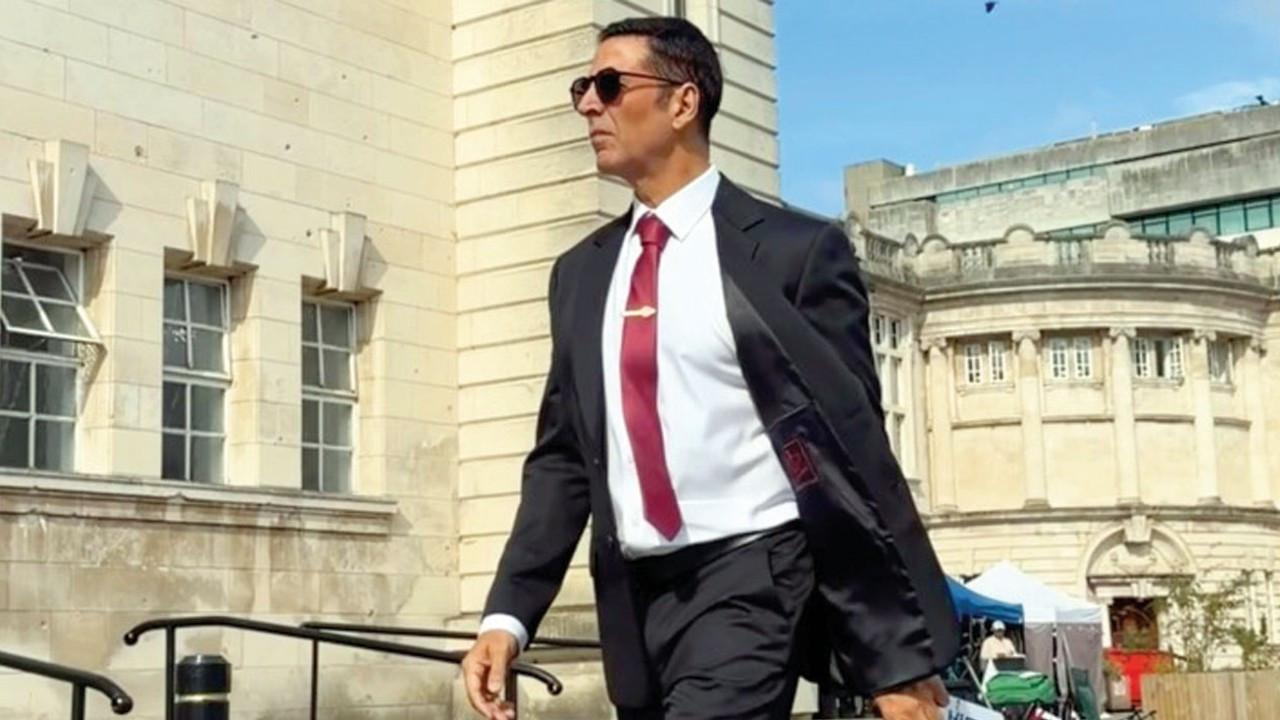
Early on during the UK leg, an image from the shoot of Samuk made its way online, giving a glimpse into the world of the Akshay Kumar-starrer. Now, as the sci-fi survival thriller’s final leg rolled in Powai on October 26, director Kanishk Varma and producer Vipul A Shah stepped up security measures to ensure that images from the set aren’t leaked online.
The makers want to keep the visual elements under wraps as Samuk has a distinct sci-fi premise and much effort has gone into building its world. Sources told us that mobile phones and photography have been barred on the set. Entry to the venue is also limited to essential cast and crew, with security personnel monitoring access.
A source said, “Samuk is not a conventional action film. There is a novel world that Kanishk wants audiences to discover on screen. The security measures are intended to ensure that no footage or visuals reach the audience before that.”
About two weeks of filming will take place across Mumbai, including at Film City and Jogeshwari. By mid-November, it will be a wrap on the thriller.
The Maruti Story makers want the show to represent India at the Emmys: "Maruti is responsible for where Gurgaon is today"
10:12 AM
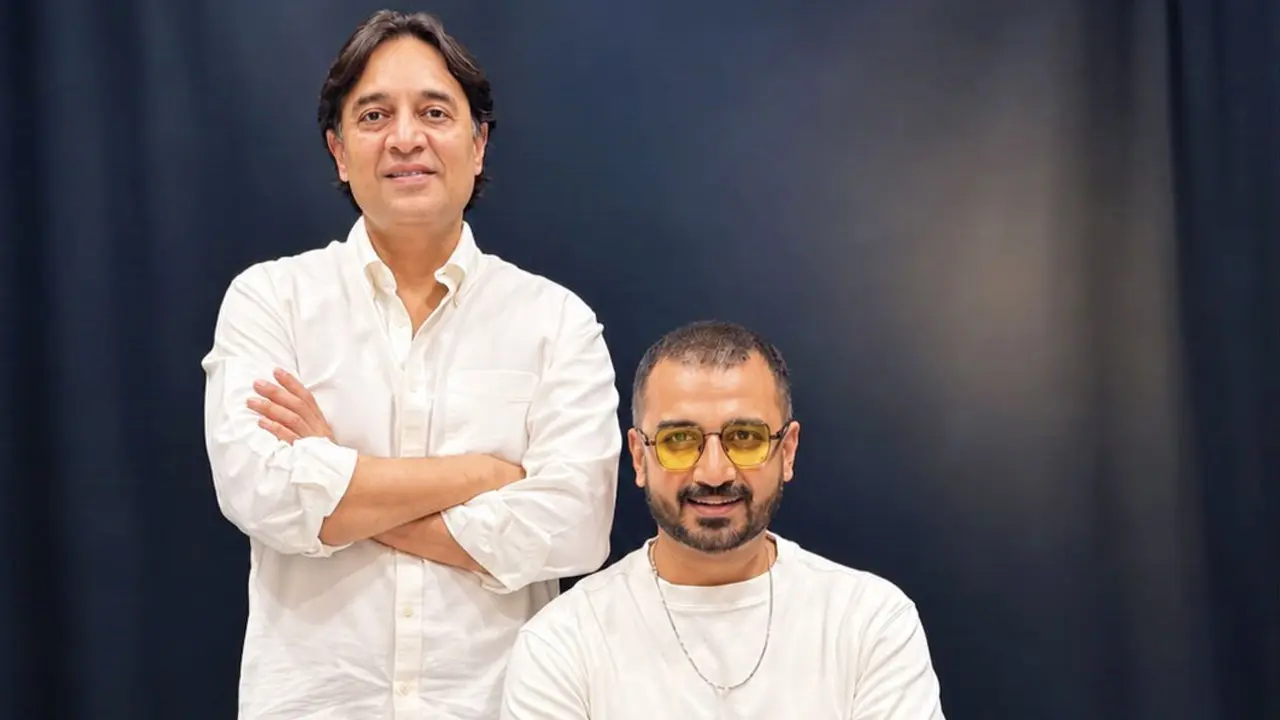
Producers Arjun Singgh Baran and Kartick Nishandar share their ambition as they adapt RC Bhargava’s book ‘The Maruti Story’; say the series will trace the car’s making in a changing India
Mohar Basu (MID-DAY; October 27, 2026)
Maruti’s story is about more than the car that put India on wheels. For Arjun Singgh Baran and Kartick D Nishandar, it is a story of the common man, the making of modern India and a dream that was once met with scepticism overseas. The duo, who are adapting The Maruti Story, based on the book by R C Bhargava, have secured the book rights as well as the life rights of Bhargava, the rights of Suzuki Motors and those of its late chairman Osamu Suzuki. Produced by Baran, Nishandar and Jyoti Deshpande of Jio Studios, the series is being developed as a character-driven drama and not a documentary chronicling the company’s milestones.
“We wanted to tell the story of India’s common man. What better than the Maruti story, around which the common man’s journey has grown? India has grown around it, and places like Gurgaon have grown around it. Maruti is responsible for where Gurgaon is today. It was a no-man’s land, and they built a housing complex there and brought in Delhi Public School, among other things, for the common man. We want to tell stories that impact the common man’s thought process and allow people to see themselves in the characters,” says Nishandar.
The makers acquired the book rights in 2022, but securing the material needed for a screen adaptation was a considerably longer exercise. The process involved negotiating the book rights, individual character rights and personality rights, which took eight to nine months. They had secured the rights around three-and-a-half to four years ago, says Nishandar, and have since spent considerable time developing the screenplay.
“Even if you take the book rights, it does not mean you have the right to tell everyone’s story or talk about every person in it. It is imperative to acquire the rights for the names you are going to use, unless they are in the public domain. The book rights, character rights and individual personality rights are all very important. You have to be convinced as makers before you put your money behind a subject. We were convinced that we wanted to tell the common man’s story, and that is what drove us. We got life rights of R C Bhargava, along with rights from Suzuki Motor Corporation and Osamu Suzuki,” Singgh says.
The series will explore the personal and family arcs surrounding the larger journey, while keeping the common man at its centre. The screenplay is complete, and the makers are moving towards the dialogue stage, with conversations underway with dialogue writers who have worked on leading shows. The ambition, Nishandar says, is to make the story travel beyond India.
“We don’t want to make a documentary or just document facts. We want to talk about characters. The journey of Maruti is a parallel universe, but if people cannot connect with the relatability and the thought processes of the characters, they will not believe the story. Writing is imperative when you are telling any story. If your writing lands correctly, it is your biggest hero. Then come your actors, your director and the ecosystem around it. We are extremely involved in the writing process, and we have finished the screenplay. We want this show to represent India at the Emmys and the Golden Globes. That is also why we took so much time to write it,” says Nishandar.
The production is expected to begin in the first quarter of 2027. The team plans to recreate several locations, including Tokyo, the European Motor Show and Delhi as it existed during the period being depicted. The makers are also preparing to use extensive graphics and visual effects to recreate the era, while ensuring that the production remains faithful to the subject.
At the heart of the story is the moment when Indian officials went looking for an international partner to help build a car that Indians could afford and drive on Indian roads. Nishandar recalls how the ambition was initially dismissed.
“When R C Bhargava and V Krishnamurthy went to Europe and said they wanted to collaborate with someone to make an Indian car that an Indian could afford and drive on Indian roads, they were laughed out of the room. They were asked how India could afford to make a car. That hit Bhargava so strongly that he decided to make the dream come true. He did not have any experience in automobile engineering; he was a bureaucrat. He then looked east, and that is where Japan came in. That is how the collaboration with Suzuki happened,” Singgh says.
The makers believe that this history has a global resonance, particularly at a time when India’s manufacturing capabilities have evolved considerably. Nishandar points to Maruti’s reach, its contribution to the growth of an ancillary vendor ecosystem and the role the company has played in making car ownership accessible to millions of Indians.
“We should proudly say that Maruti has created a vendor community and a global outreach. There are companies making auto parts for Rolls-Royce. The Europeans who looked down upon us at that time are now coming back to India to seek help. This has to be a story told globally, and this is the right time,” he says.
The series will also draw on archival material made available by the Maruti team, including footage from the company’s history. One of the defining moments it intends to revisit is Indira Gandhi presenting the first Maruti 800 key to Harpal Singh. The makers also plan to shoot at the Gurgaon factory, where the space associated with the car’s inauguration still exists.
“We are getting a lot of archival footage from the Maruti team. We are also going to shoot at the Gurgaon factory, where Mrs Gandhi inaugurated the first car. They have opened their doors to us, and we want to make the series as relatable and relevant as possible. But there is a thin line between using archival footage throughout the show and using it only when it is relevant. Otherwise, it becomes a documentary. We will use it to add relevance, not as a substitute for going out and shooting,” Nishandar says.
The hardest part is not vocal stamina, it is mental switching-Armaan Malik
10:06 AM

Debarati S Sen (MUMBAI MIRROR; October 27, 2026)
For a singer, releasing music across languages and genres in quick succession can be both exhilarating and exhausting. Armaan Malik, who has had four releases across languages and platforms in less than a month, describes the experience as a whirlwind of emotions, demanding schedules and creative challenges. While the flurry of releases has kept him on his toes, the opportunity to connect with listeners through different kinds of music has made the experience particularly rewarding.
FROM MALAYALAM TO BOLLYWOOD AND INDEPENDENT MUSIC
“It feels surreal, chaotic yet deeply rewarding. As an artist, you spend months sitting on music, and suddenly everything lines up in a four-week window,” says Armaan, reflecting on the unusual concentration of releases. For the singer, the excitement lies not just in the number of songs reaching audiences but also in the diversity of the music.
Moving between languages, industries and musical sensibilities allows him to connect with listeners in different ways. “What makes it special is the sheer variety. Connecting with listeners through a Malayalam track one day, a Hindi Bollywood ballad the next and then dropping an independent single all together is the ultimate high,” he says.
However, the rush of releases also comes with its share of demands. Balancing multiple projects in a short span means navigating packed schedules and putting in long hours, often with little room to pause between one song and the next. “It is exhausting to deliver all of it back-to-back, but seeing people find comfort in these songs makes every sleepless night completely worth it,” he adds.
THE CHALLENGE OF SWITCHING EMOTIONAL GEARS
While vocal stamina is an obvious consideration when recording several songs within weeks, Armaan believes the bigger challenge lies elsewhere. Each composition demands a distinct emotional approach, and moving between contrasting musical worlds requires him to reset mentally.
“The hardest part is not the vocal stamina, it is the mental switching. Shifting emotional gears in a matter of days is intense,” he says. The transition can be particularly demanding when the songs differ significantly in their treatment and emotional intensity. A grand, dramatic Bollywood ballad calls for a different vocal interpretation from an intimate independent track, where restraint and subtlety may be more important than sheer vocal power.
“One day you are cutting a grand, dramatic Bollywood ballad, and forty eight hours later you are doing an intimate, understated independent record. Throw South Indian languages into the mix, where phonetics and diction completely guide the emotion, and you really have to clear your mind between sessions so every song stays authentic,” he says.
We hope to move back home next year-Talat Aziz
10:28 AM

After a fire gutted parts of his home earlier this month, the Ghazal singer talks about restoration work and starting afresh
Natasha Coutinho (HINDUSTAN TIMES; October 25, 2026)
Veteran ghazal singer and actor Talat Aziz lost treasured possessions, paintings, musical instruments and other belongings in a fire that broke out at his home on October 2. The blaze gutted the ground floor and parts of the first floor, leaving Aziz and his family hospitalised and facing significant losses.
Now staying at a friend’s apartment, Aziz says the family has begun restoration work and hopes to return home early next year. “Restoration has already begun. Hopefully, by January or February, we hope to move back into our own home. The family has been coping bravely. My wife, Bina Aziz, is a very strong person, and both my sons have also been strong,” he says.
While the loss of paintings and musical instruments has been heartbreaking, the 69-year-old says the family is learning to move on.
“They had a lot of sentimental as well as monetary value, but we have come to terms with it. One has to get on with life, and we are grateful to God that we escaped without any injuries. That is crucial,” says Aziz who played actor Hrithik Roshan’s father in the 2024 film Fighter.
The outpouring of support from well-wishers has also been a source of comfort. “We have received thousands of messages of support from all over the world, as well as from Mumbai and across India. I can never thank people enough. Maybe this was a reset button in our lives for the better. We have faith in the Almighty,” he ends.
Tiger Shroff's firing incident: Sunday football matches with celebs cancelled
10:03 AM

In the wake of Tiger Shroff’s attack near the Juhu ground, ASFC owner Bunty Walia reveals Sunday football matches with stars cancelled until security measures are put in place
Upala KBR (MID-DAY; October 26, 2026)
Sunday evenings, for years, have meant only one thing to the All Stars Football Club (ASFC) — hours of football practice at the Jamnabai Narsee School playground in Juhu. But their weekly ritual was cancelled on October 25, in light of the October 18 attack on actor Tiger Shroff that took place outside the ground. Bunty Walia, who owns the ASFC, has called off all training sessions until further notice. We have heard that they will resume only after necessary security arrangements have been put in place.
A source from the ASFC told mid-day that the shooting attempt on Shroff — where reportedly five to seven bullets were fired at the actor’s car by two men on a motorbike — has left the team shaken.
The source said, “The October 25 practice match was cancelled by Bunty Walia. He is clear that till a security plan is put in place, he won’t announce the next match. Many actors are part of the ASFC, including Abhishek Bachchan, Kartik Aaryan, and Ranbir Kapoor. Everyone’s safety is top priority.”
When mid-day contacted Walia, he confirmed that the practice session was cancelled in the aftermath of the attack. The case is currently being investigated by the Mumbai Crime Branch.
“We are not sure about the next practice session. We’ll need to discuss with the police as to how to go forward. We cannot resume till we put the necessary safety norms in place,” said Walia.
As part of the safety measures, going forward, the ASFC may keep its training sessions away from the paparazzi’s lens. It is heard that the club will keep the dates and venues under wraps so as to not attract attention.
Using AI to make music an insult to artistes who have spent years learning music-Benny Dayal
10:00 AM

As aspiring musicians increasingly use AI to achieve technical perfection, Tamil Idol judge Benny Dayal says true artistes value emotions over technique
Komal RJ Panchal (MID-DAY; October 26, 2026)
Finding the next generation of artistes is perhaps among the best ways a musician can give back to the world of music. Singer Benny Dayal hopes to do that as he takes the judge’s seat on Tamil Idol. In a chat with mid-day, the artiste talks about finding true potential, the importance of performance in artistry, and why AI cannot match genuine talent. Excerpts from the interview.
What are you looking for in this season’s contestants?
I am looking for honesty, innocence, and, of course, an X factor that cannot be taught or replicated. There should be something unique about the way they approach music. You can learn techniques and acquire skills, but there is a certain quality that makes an artiste who they are.
Social media has changed the way singers find an audience. How do you view this shift?
There are people who find a platform through social media and become playback singers, while others write their own music and become popular through these platforms. It has an upside and a downside. Sometimes, music becomes short-lived because of the hustle and hurry of social media. At the same time, there are artistes who are becoming the faces of their own music. That’s brilliant. Ten or 12 years ago, singers were primarily known as playback singers, rather than as artistes with their own identities.
With AI increasingly being used to create music, do you see it as a threat to musicians?
As far as AI is used as a toy, it is fine. But if I write music with the help of AI, it’s an insult to artistes who have spent years learning music. It’s like a slap on their face. I’m not a big fan of AI tools, but I’m not excessively worried either. I also wonder whether there is something called technical perfection in music [that they try to achieve through AI]. In music, technique matters, but emotion will always be more important. Music should be used to express, not just impress.
Do you believe singers must also be performers?
Musicians should always be entertainers, rather than simply singing and calling it a day. Artistry involves performance, and that is the litmus test of any art form. It is an opportunity to bring your music alive and connect with people beyond the recording.
Many singers are exploring independent music, playback singing, and live performances simultaneously. What should they prioritize?
If you get an opportunity to try something, why not give it a shot? But you should not make these opportunities your priority at the expense of your music. It is important to create music that you genuinely love. If you focus on that, everything else will follow.
Advice to aspiring singers
For an artiste, art should also be a responsibility. To fulfil that responsibility, they have to be consistent. That means putting in the effort, reinventing themselves, and constantly renewing their approach to music. They must keep revisiting the works of great musicians, relearning, and finding wonderful new things to do with their music.
Lalit Prabhakar reveals how just one YouTube video helped him play Ajmal Kasab in Prahaar
9:58 AM
Priyanka Sharma (MID-DAY; October 26, 2026)
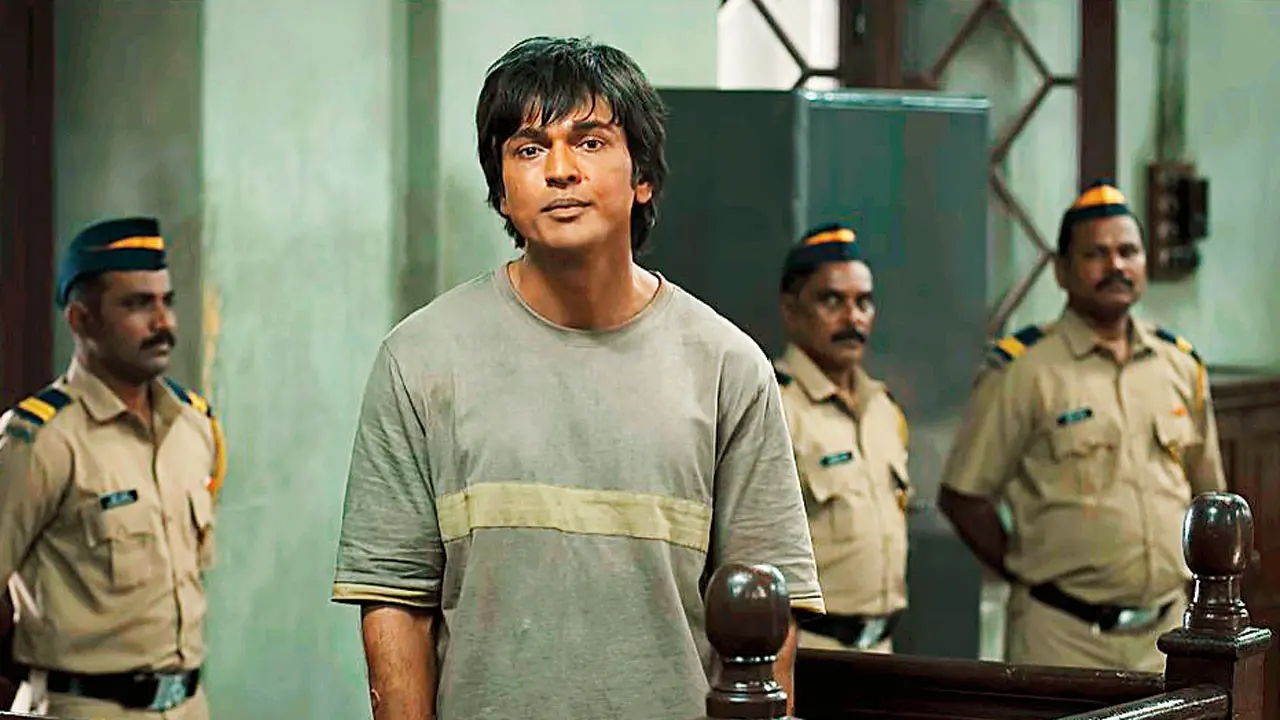
Lalit Prabhakar knew he had the chance to do something unique when he was asked to audition for the role of 26/11 Mumbai attacks terrorist Ajmal Kasab for Prahaar, led by Rajkummar Rao. While two takes were all it took for director Avinash Arun to know that he had found his Kasab, becoming the on-screen terrorist was a longer journey for the actor.
Breaking down his prep, Prabhakar said, “I spent time with Avinash sir as he expressed his approach towards the character, how he wanted to humanize it, and didn’t want to [adopt] the melodramatic, filmy style. He believed Kasab’s psyche should be our focus. What exactly does it mean to be brainwashed? If a person has killed so many people and is ready to die, how would his eyes and expressions be?”
The actor, who is winning praise for his act in Prahaar, also read the book, 26/11 Kasab Ani Me, by Ramesh Mahale, the chief investigating officer of the attacks.
Prabhakar added, “There’s only one video of Kasab available on YouTube. That’s all I could watch. I studied his two-three photos that are in public domain. The main task was [perfecting] the dialect and tone.”
I have not done betting app or paan masala promotions on my page-Khushaal Pawaar
9:54 AM

Content creator Khushaal Pawaar on blending comedy with social commentary, and taking his storytelling ambitions beyond Reels
Komal RJ Panchal (MID-DAY; October 25, 2026)
Ever caught yourself doomscrolling, hopping from one Reel to another, only to emerge more overwhelmed than entertained? Blame the algorithm, perhaps, but content creator Khushaal Pawaar (@khushaal_pawaar on Instagram) wants you to look at the bigger picture. Known for weaving social and political commentary into his character-driven comedy, Pawaar uses the very medium that keeps us glued to our screens to hold up a mirror to society.
Having started out during the lockdown, he has built an audience while navigating the commercial pressures and ethical dilemmas of the creator economy. Now, the former casting associate on Kabir Singh (2019) and casting director on Animal (2023) is looking beyond short-form content, with ambitions to establish himself as an actor and storyteller. His latest short film, The Vijay Theory, is about information overload and is now available to watch on his YouTube channel.
“I had this interest in performing arts since my childhood. I was doing theatre before this, and I also had some radio background. I was always writing stuff for bands or creating jingles and all that. During lockdown, I had free time and no acting projects, so I thought I would try it [content creation]. That is how the journey started,” he says.
While social media offers creators the possibility of turning a hobby into a career, Pawaar points out that the business has become increasingly challenging. “In the last one-and-a-half to two years, it has become tough for content creators to get brand collaborations. You have to be careful about what you put out and how far you are willing to go. Sometimes you go three or four months without brands. You have to think about your morals, but you also have to run your house.”
That balancing act becomes particularly complicated when the money comes with questions about what a creator is willing to endorse. “I have not done betting app promotions on my page. Even if I have acted for them, I have made sure I don’t post it directly on my page. There is a line you have to draw. I will not do paan masala,” he explains.
Pawaar’s approach to content is also shaped by his background in theatre and radio, where storytelling is central to the craft. “I try to make family content that people across India can understand. I don’t want to make it too high-fi; I want to reach the masses. It is rare that I go edgy with my writing. I try to ensure that every Reel has a little story or a character arc,” he says.
For Pawaar, social media is also a means of financing the projects he wants to pursue as an actor. Despite his experience in casting, the roles he hopes to play have not always come his way, prompting him to create his own opportunities.
One such project is his short film, Vijay, which examines how the abundance of information and opinions online can leave people struggling to make decisions. The film draws on the anxieties familiar to young people who find themselves comparing their lives with what they see on social media.
“The film is about how we are flooded with information and so many opinions. Even if you want to buy something or decide to do something, there are so many options, and every option is trying to get your attention. It is difficult to choose a career, start over, or pick a path and walk on it confidently. It also talks about mental health issues. A lot of beginners and students procrastinate and hesitate. You see so many people on social media and feel that you want to do something too, but you don’t know where to start,” he says.
The response to the film has been encouraging, particularly when viewers tell him that it has prompted them to act on something they had been putting off. Pawaar hopes to make it available to a wider audience, while exploring a festival run and the possibility of expanding the story.
“I wanted to share it with the young audience of India and make it available for free. I recently got a message from a guy who said that after watching my film, he took one step forward and was meeting an investor that day. He had been procrastinating, but he emailed and set up a call. That was a surreal moment for me.”
For Pawaar, the larger ambition is to move from creating content for screens to making cinema that draws audiences into theatres.
“In the next five years, I want to be doing a lot of cinema, making films that people buy tickets to watch, or presenting or doing a show on an OTT platform. My goal is to grow as an actor and, especially, as a storyteller.”
How bullies knocked the people-pleaser out of Shefali Shah
9:50 AM

Priyanka Sharma (MID-DAY; October 25, 2026)
Shefali Shah doesn’t always have it together, even if her towering public persona suggests otherwise. Both, the women she has played on screen and the woman the public has known through the filter of media, have contributed to this image of someone who can never fall apart. Shah is serious, solid, and sure-footed, until she lets one in her mind through her “sort-of-memoir”, The Audacity Of Being.
The Shefali Shah that one meets is a revelation. She is chaotic, impulsive, funny, and like any woman, has a million moments of self-doubt. “I think people wonder, ‘Isko toh kabhi koi problem nahi hoti hogi. She is always in control’,” the actor tells Sunday mid-day.
The point of a memoir is to be honest, but revelations about the self come with risk, especially for a public figure. “It was a risk, until I made the decision. Once I knew I was writing this, there was no other way of telling it besides honestly. And that’s me in everything I do,” she says.
The book that marks Shah’s debut as an author makes one thing clear: You can’t make Shefali Shah do anything. So, while the decision to write a memoir didn’t come from her, it felt like the right thing to do in the pursuit of her bigger goal, sharing the volume of stories living inside her with the world.
“I wanted to actually publish my novella, which is a fictional story. But my publishers thought that my first book had to be a memoir or a biography. I was not very convinced... And that’s exactly why it’s a sort-of-memoir, because it’s not like ‘this happened, then I was born here’. Now, when I look back, it was a good place to start because it’s my story. I can say what I want to. And no one’s going to sue me,” she laughs.
Writing a memoir inevitably involves revisiting unpleasant memories. One such memory in Shah’s book involves her school days. She shares she was bullied by her classmates, even as her mother didn’t allow her to make friends. The actor corrects us, though.
“It wasn’t unpleasant. In fact, I could revisit it in much more clarity because I was glimpsing it from outside. I was, however, sceptical because talking about it could hurt my parents. It’s very easy to blame your mother when you are growing up. But as I grew older, and particularly when I became a mother, I realized they did the best they could. Writing about that wasn’t even emotional. It was all just coming out; there was no feeling of ‘Oh My God! Why did this happen?’ Ho gaya na. Fine, move on.”
With clarity, has she gotten the answer to why she was subjected to bullying in school? “Maybe they thought I was very LS [‘low standards’]. So, the school I went to is very prestigious; rich people sent their children there. My parents weren’t rich. I was ashamed of my tiffin because I didn’t know if the thepla or roti-sabzi in it was going to be judged. My peers could pick up a bread roll from the canteen; I could not,” she says.
“Maybe [it was] because I was too dark or because I had two oily plaits. Maybe because I wasn’t a cool kid. I really don’t know what it was, but, now when I look back, it’s on them, not me,” she adds.
This became her mantra for life. Come what may, Shah wasn’t ready to fit in, especially when she experienced freedom for the first time through performance arts. Part after part, she built a rare career for a woman actor in the Indian film industry that featured fully-realised women with their quirks, flaws, dreams, and desires. For someone, who claims in the book and to us in person that she is not ambitious, a rich career of over three decades is no less than a feat.
“Just after Monsoon Wedding (2001), I got married and was pregnant with my first child. At that point of time I wasn’t even thinking of my career. I just wanted to have babies and take care of them. And that’s exactly what I did. After my second child, I felt ready to come back,” she recalls.
Then, she did Waqt [The Race Against Time (2005)], “where I played a mother and cut all my chances of playing anything my age”. “I was ready to work but I didn’t get anything that was exciting enough. But I never had a drive or an ambition to pitch myself to a director because I don’t think I am an ambitious person. It is so stupid. How are you expecting people to know you exist? I mean people didn’t even know if I was alive or dead,” she laughs.
In 2019, Shah struck gold with filmmaker Richie Mehta’s crime thriller Delhi Crime. Even if unintentionally, Shah also managed to challenge the one thing that’s often weaponized against female stars in the movies: time. Here was a 45-year-old leading woman of a blockbuster series. The success of which led her to six projects across theatres and OTT, making her one of the busiest female actors in Bollywood.
“If I was told years before I did DC, ‘You would be headlining a project in your 40s,’ I would have laughed the loudest. I was at the right place at the right time. It depended on a lot of choices I made earlier. So many actors, who work in television, get typecast. Had I been probably doing television, maybe this wouldn’t have happened. I did Juice [2017], which worked almost like my showreel. I thought, ‘Yes, you can rule at 40.’ I got six projects after DC. I thought to myself, ‘I have arrived’. The next year, I was back to feeling, ‘Okay what is happening?” she laughs.
At 53, time feels like sand slipping through her hand. “I wish DC had happened earlier,” she tells us, “Because then I would have had a longer run and done many films and played so many parts.”
But Shah has a plan. “I’m probably at my thinnest right now and I like the way I look. I’ve also cut off age, because when you’re thinner you probably look younger. And I mean thinner in a good way, not like when you’re dilapidated. There’s only so much work that will come for a 52-53 year old and it will be in the same bracket, but if I look like I’m in my 40s, I still have another couple of years,” she says.
Heritage nod for Capitol makeover
9:44 AM

MHCC approves revival plan, including addition of two missing architectural elements to 1879 structure that will soon host a single screen and a retail space
Diwakar Sharma (MUMBAI MIRROR; October 24, 2026)
Plans are afoot to restore and revamp Fort’s historic Capitol Cinema that opened in 1879, but tenanted shop-owners and hawkers who have carried out their trade on the building’s ground floor or around it for decades are complaining of being squeezed out of their spaces for the redevelopment.
The Mumbai Heritage Conservation Committee (MHCC) has given its thumbs-up to the revival plan, which will see the heritage structure house a 210-seat single-screen cinema spread across 264 sq m, apart from a commercial retail space of 316 sq m.
The ball to restore the structure was set in motion after the parent firm of the cinema, Nadir Company Private Limited, was bought over by real estate major K Raheja. Mirror was the first to report on the takeover on January 21. Capitol has been shut since 2007, according to sources.
Single screen plus retail space
“The Capitol Cinema building is a Grade II-B heritage structure. We received an application from K Raheja for the proposed conservation, restoration, additions and adaptive reuse of the theatre, for which we have granted permission. They are planning to use the existing structure for both commercial retail and a single-screen cinema with a proposed seating capacity of 210,” a senior civic official told Mumbai Mirror.
He added that as part of the renovation, the single-screen theatre’s entrance will shift to the rear of the heritage structure, with the auditorium layout being reconfigured from the back. “So, the front portion of Capitol Cinema will be reserved for commercial retail spaces, while the rear section will house the theatre,” he added.
Civic safeguards for heritage structure
The approval, however, comes with a string of strict heritage safeguards, said the civic sources. “Rooftop service structures must be kept as low as possible, while all original features, including window grids, roof patterns and historic flooring, must be retained or restored under expert supervision and in accordance with conservation norms. Box grills on windows and air-conditioning units on the front façade are prohibited,” said the source.
The MHCC’s NOC covers heritage-related aspects only, with ownership, structural stability, FSI, setbacks and parking still requiring clearance from the BMC’s Building Proposal Department under prevailing DCPR rules, reads the civic document.
According to the civic document, the approval is valid for two years and must be revalidated if work has not commenced or a Commencement Certificate (CC) has not been obtained within that period. An MHCC Completion Certificate will also be mandatory once the work is completed.
On the thorny issue of the existing tenants, the civic official said: “I am not sure whether the existing shopline tenants will be retained or asked to vacate, as that decision rests solely with the owner.”
Tenants, hawkers in a fix over rehab
Most of the tenants at Capitol are unaware if they will be retained or asked to vacate. Mirror spoke to many of them and confirmed that since the ownership change, no one has approached them for rent. “Earlier the owner would ask us for the rent and we would pay by cheque, but after the ownership transfer, no one is asking us for rent. We do not know if we will be evicted or asked to stay. But if we are asked to vacate, we will demand space for the space given up,” said a shop owner, who has been operating for the last eight decades.
A newspaper vendor, Ajay Prajapati, alleged that the owner is not directly engaged with the tenants or sub-tenants or vendors, “instead, they are provoking civic officials to throw out vendors and sub-tenants from the premises,” he told Mirror.
“I’ve been running a newspaper stall for the last 50 years and I have all valid BMC permissions. But after the Capitol Cinema structure has been covered in green net, I was thrown out of the premises and they are deployed bouncers. I was not even a tenant, but sold newspapers on the footpath for five decades, but the civic authority evicted me despite having QR code, which validates I am a genuine vendor in the area. Where should I go to seek justice? How will I run my house?” wondered Prajapati.
Deepak Chourasia, a paanwala-turned-juice seller, has also been removed. “I’m living hand-to-mouth and finding it difficult to pay my children’s school fees. In the name renovation, the owner has encroached upon the footpath. The pedestrians are forced to walk on the busy road. But BMC will never crack down on builders. We, the poor vendors, will be reminded of rules and regulations,” Chourasia said.
Abdul Gaffar Shaikh, the owner of World Stamp and Coin House and a sub-tenant of the structure, said that he has been forcefully evicted. “This shop has been run by my family for the past 80 years, but the civic officials evicted me. Now, the green net is blocking my shop. I have written to the authorities to seek their intervention, but everyone is just a spectator,” Shaikh told Mumbai Mirror.
The green net has also covered Blue Moon Watch at the corner of the building. “It’s been hampering my business. I had to fight with them to allow my shop to be visible to customers. This is ridiculous,” said Noor Mohammad, the staff at Blue Moon Watch.
“We are committed to restoring this historic building into a landmark Mumbai will be proud of, with all works carried out as per law and after securing approvals from the relevant authorities. Restoration works will commence shortly, and all necessary measures have been taken to ensure public safety. We remain in dialogue with all stakeholders and are working closely with the authorities throughout the process,” a senior representative from the K Raheja Corp told Mumbai Mirror.
CAPITOL CINEMA: Where history met style
- It opened in 1879 as a theatre for performing arts and was originally known as Gaiety
- During the British Raj, it staged countless plays. It was converted to cinema in 1928, after which the name was changed to Capitol
- The Neo-Classical beauty, with its Kurla Basalt façade and Porbunder limestone carvings, is a Grade II-B heritage structure on the ‘A’ Ward list
- It also stands in the shadow of giants, as the landmark structure sits in the buffer zone of Grade-I icons CSMT and the BMC Head Office
- A senior civic official told Mumbai Mirror that There were two turrets – above the staircase blocks – atop the structure. “The original roof will be restored as per the archival images. So, these two turrets will be constructed after securing due permission from MHCC,” the civil official added
What is a Grade II-B heritage structure?
A heritage structure is classified as such for its architectural, historical, cultural or townscape significance and is subject to regulations aimed at preserving its heritage character.
“Under Mumbai’s heritage classification system, Grade II is divided into Grade II-A and Grade II-B, with the latter allowing certain adaptations and additional construction under specified conditions. Original façades, ornamental features, architectural details and other significant elements must be protected. Essential structural repairs, restoration, internal alterations and adaptive reuse may be permitted, provided they do not compromise the building’s heritage value. However, changes to the exterior, façade or other protected features are subject to scrutiny and may require approval from the competent civic and heritage authorities. Demolition or major redevelopment cannot be undertaken as a matter of course and must comply with applicable heritage regulations,” said a city-based architect, requesting anonymity.
Subscribe to:
Posts (Atom)