Showing posts with label Kavita Krishnamurti interview. Show all posts
Showing posts with label Kavita Krishnamurti interview. Show all posts
With AI, it’s harder to judge the authenticity of a singer-Kavita Krishnamurti
8:29 AM

Debarati S Sen (BOMBAY TIMES; June 1, 2025)
In 1971, Bollywood playback singer Kavita Krishnamurti began her musical journey with composer Hemant Kumar, alongside the iconic Lata Mangeshkar. Fast forward to November 2024, she lent her voice to The Sabarmati Report, adding another milestone to her career spanning over five decades. With over 23,000 songs to her credit, she’s worked with Salil Chowdhury, Laxmikant–Pyarelal, RD Burman, OP Nayyar, Naushad, AR Rahman and others.
In a candid conversation at her Andheri home, she spoke about her journey, the changing music industry, the impact of technology, AI and more. Excerpts…
You have been a part of the music industry for over five decades, do you remember the experience of recording you first film song?
I began doing concerts with Hemanta Da (Hemanta Mukherjee) while still in college. One day, he called me to Rajkamal studio, saying, “Chole esho at 10 am, don’t go to college tomorrow.” Sitting with his harmonium, he taught me four lines of Shokhi Bhabona Kahare Bole — a beautiful song. I had no idea why, until the door opened and Lata Mangeshkar Ji walked in. I don’t know how I didn’t faint! Hemanta Da, who called her Lata, said, “You’ll sing four lines with her. (Lata r shathe charte line gaite hobe)”. During the final rehearsal, standing beside her, I completely forgot my lines. I was so mesmerized that I lost track of my cue! Hemanta Da reminded me, “Now we’re going for a take—don’t forget your lines. Lata is a perfectionist, one take okay.” We did two takes, and I finally sang. That was my first film song, Shriman Prithviraj (1972). And my first lucky mascot was Lata Ji.
What do you feel about the evolution of the music industry from the era of live orchestras to the digital age, and how it impacted you as a playback singer?
I consider myself very lucky to have witnessed and worked with legendary artists while also collaborating with younger composers like Jatin-Lalit, Anu Malik, Nadeem-Shravan, Anand-Milind, and A R Rahman. I started in the ’70s when playback singing was done with a full orchestra—one mistake meant redoing the entire song. Music directors had an incredible ear; Pyarelal Bhai could pinpoint a single violinist in a 30-piece orchestra playing the wrong note. He’d say: You (His name) sitting in the third row, the fifth violinist, you were told C major, but you are playing C minor. Correct that note.’ That was the precision of that era. Today, everything is computerized. I slowly adapted to these changes, but by 2004, when technology completely took over, I found myself stepping back.
With advancements in technology and AI today, what are your concerns about the use of artificial intelligence in music?
It's difficult for the common listener to distinguish between a naturally skilled singer and one enhanced by pitch correction and AI. Musicians can recognize true artistry, but for the average person, technology has blurred the lines. With AI refining sur and even creating harkats, the authenticity of a singer is harder to judge. While AI is a breakthrough in medicine, its role in music raises concerns and AI in music is a question mark for me, as it opens the door to potential misuse.
However, at the same time, technology is good too. I'm not so young now and for me, to think that I can sing one line and take a breath, and then sing the next line, really helps. Earlier, I would record entire songs in one go, but now recording line by line, with breaks in between has become a habit and makes the process easier.
You’d mentioned a poignant encounter with the legendary Geeta Dutt. What struck you the most?
Guru Dutt's youngest brother, Vijay Padukone, was my Rakhi brother. He introduced me to advertising jingles while I was a student in St Xaviers. I first met Geeta Dutt at a studio in Worli during my debut jingle recording. As the door opened, I was struck by her beauty and presence. I touched her feet and sat down. She was recording a butter commercial in Hindi and Bengali that I had to sing in Tamil. Her voice was pure magic. Though she was in the twilight of her career, facing personal loss and financial struggles, her aura remained intact. She barely spoke, just said, ‘Bhalo theko’. At that time, she was famous but had no money—yet nothing could take away her personality or her gift for singing. For me, Lata Ji and Asha Ji are the greatest singers I’ve ever met, but there are songs that only Geeta Dutt could have sung. Waqt Ne Kiya Kya Haseen Sitam—I don’t think even Lata Ji or Asha Ji could have delivered it the way she did.
You've sung for some of the biggest music directors. Tell us about a few of your favourite songs.
That's tough! But if I had to choose, I’d say Hawa Hawai, Dil Ne Kaha Chupke Se, and my songs from Hum Dil De Chuke Sanam. I love the ones I did with Rahman, like Tu Hi Re, Dheeme Dheeme, Kay Sera Sera. Maar Daala from Devdas is a favorite too, along with the title track of Hum Dil De Chuke Sanam and Hamesha Tumko Chaha from Devdas. Yeh sab mujhe bahut pasand hai.
I have always felt scared of falling short-Kavita Krishnamurti
3:31 PM
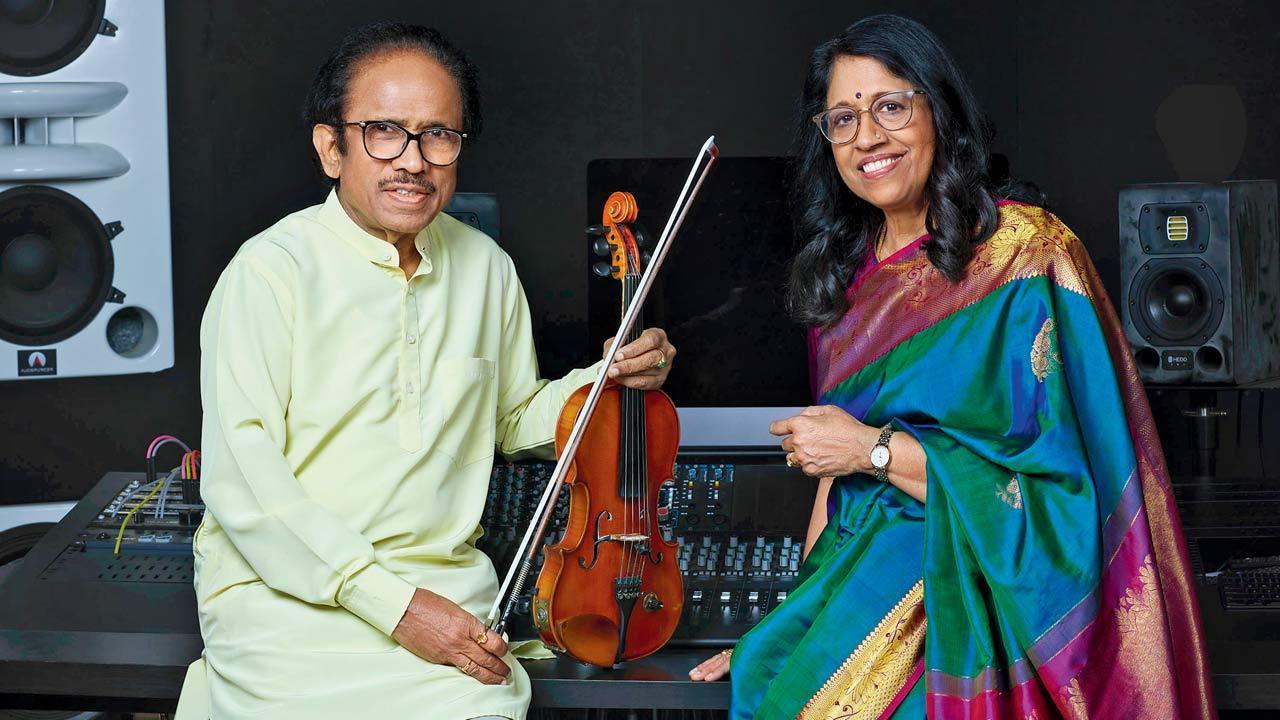
Violinist L Subramaniam with wife Kavita Krishnamurti. Pic/Jatin Kampani
Set to celebrate her journey spanning five decades with a city concert tomorrow, veteran singer Kavita Krishnamurti says striving for perfection keeps her motivated to pursue music each year
Sonia Lulla (MID-DAY; November 22, 2024)
Entertainment websites are often filled with tales of Kavita Krishnamurti’s musical journey commencing from her schooling days, however, the veteran singer appears to chronicle her experiences as vividly as though they occurred only yesterday. She recalls how a chance interaction with Hemant Kumar opened doors for her in the industry after he introduced her to Manna Dey, and the impact that being the dubbing artiste for Lata Mangeshkar had on her life. Her conversations are peppered with names of veteran musicians, as well as those who, despite being skilled, were unable to find a place in the limelight. If one taught her appropriate methods to breathe while rendering a song, another enabled her to understand the importance of learning musical notes.
At a city concert tomorrow, Krishnamurti is set to encapsulate these experiences into a set that promises to take music aficionados on a memorable journey. In this conversation, she discusses what’s in store for fans, and why she is certain her best work is yet to come. Edited excerpts from the interview:
When you have to encapsulate your life experiences into a musical event, how do you go about doing it?
First, it’s important to choose the most important songs to sing. Some part of the performance will be a tribute to all the great people I have worked with. I will subsequently [render] songs belonging to the time when I sang for Subhash Ghai and K Viswanath. I have videos of people, including music directors and actors, who have spoken about me and the songs we have worked on. There will also be details on how I got to sing popular songs like Hawa Hawai, and work with different composers like A R Rahman. The tribute section will celebrate those senior singers I have worked with and will narrate those stories about them that are relevant to my life. Finally, the show will include some of my popular songs from across the decades.
Your work has been pivotal to the lives of people across generations, with your most recent song being in last week’s release, The Sabarmati Report. How do you perceive this longevity?
I have grown up listening to the greatest artistes. I grew up listening to Lata ji, Asha ji [Bhosle], Manna da [Dey], and Kishore da [Kumar]. So, the standards that were set when it came to music were very high. I have always felt scared of falling short. I’m only weighed down [by pressure] when people praise the way I had rendered an old song. I wonder if I will be able to sing it on stage in the same way that I did 30 years ago. I keep telling myself, I have a few more years to sing, and I cannot allow myself to think that the best is over. I am also motivated by my husband, who, even at this age, after having performed for 70 years on stage, and at top concerts, sits at night to practice and says, ‘I’m not getting this note right.’ I feel I am listening to impeccable music, but he thinks he needs to do better.
Looking back at the last 54 years, which moments do you believe were most instrumental in shaping you as an artiste?
Singing with Hemant da [Kumar] was a big learning experience. He made me sing with Lata ji, and that was an eye-opener. Seeing her stand next to me and sing with perfection was unbelievable. After she would finish singing, I’d hear her voice and understand her approach. Another legend from whom I learnt was Manna Dey, who would reduce me to tears in each of his concerts because his music could transport me to heaven. He lived the life of a great artiste—he was dedicated to music till the age of 94, when he passed away. He was also a family man. He was attached to his wife, and I saw perfection in their relationship. He’d tell me, ‘Keep your feet on the ground, because when you go up, you also have to come down. Remember to keep track of your own money, go to the market, and buy your own stuff.’ [He] lived the life of a common person. Then, singing for Laxmikant-Pyarelal was also a defining experience, as was dubbing for Lata ji. I’d sing the song with the full orchestra, and then [after she would record it], notice how she sang it. I learnt so much about what great singing truly is.
I do not like using apps to correct the sur-Kavita Krishnamurti
2:38 PM
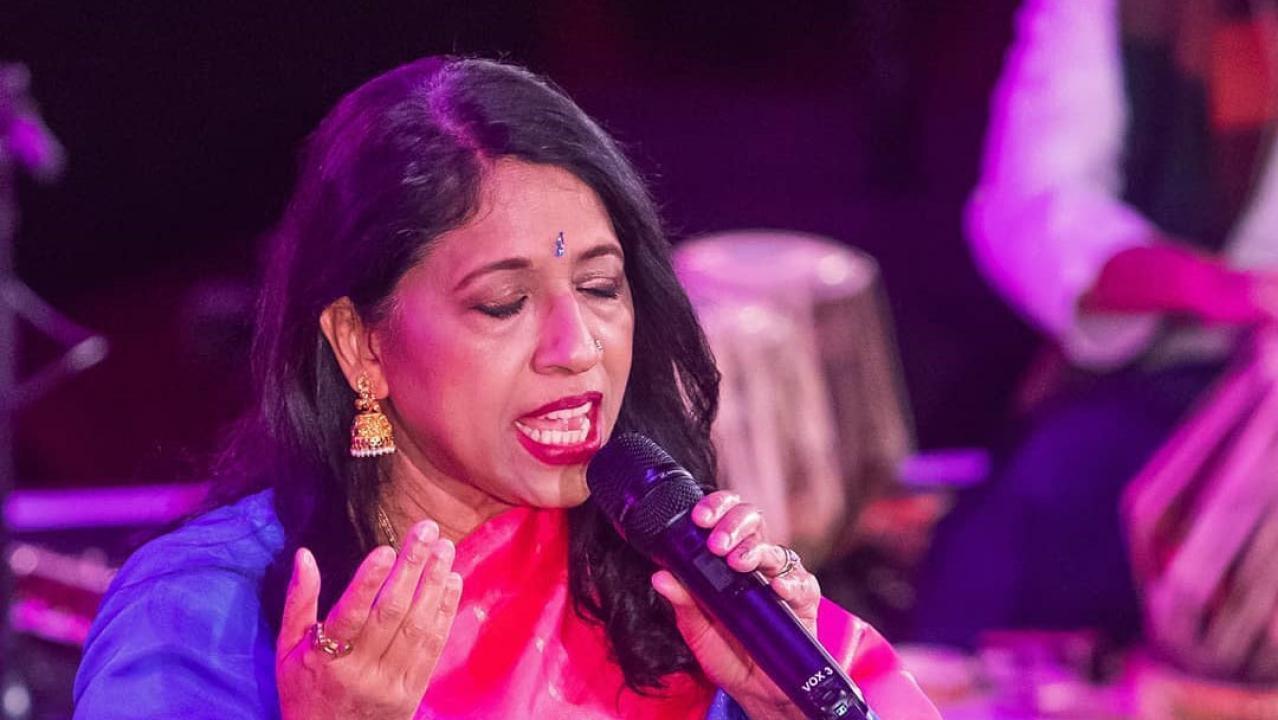
After her take on the use of technology in recording songs went viral, the singer elaborates on what she meant
Debarati S Sen (BOMBAY TIMES; January 15, 2023)
Recently, a video in which Kavita Krishnamurti spoke about the rampant use of technology in recording songs went viral. The singer was present at an event in Bengaluru to speak about her journey and how songs were recorded earlier. She says, “I realized that parts of that talk had gone viral on social media when my friends started messaging me.”
Elaborating on her thoughts about the use of audio software to record songs, she says, “Once, Khayyam saab and I were judges for a show and someone said, ‘Aaj kal, sur aur sab theek kiya ja sakta hai, bas gaane mein expression aur attitude zaroori hai.’ Khayyam ji said, ‘Gaane mein attitude ka kya kaam agar sur aur taal hi nahi hai?’ These incidents were on my mind when I spoke that day. I didn’t mean to disrespect anyone and don’t want to create a controversy. With changing styles, we also change. I feel that if technology can help, one should definitely use it. I have suffered from bronchitis all my life and there have been days when I was so sick that I had to take antibiotics and cough syrups before singing. During times like these, technology helps. My only point is that you should not depend solely on technology to record a good song.”
‘SHOCKED WHEN I WAS TOLD HUM VOICE CLEAN KAR LENGE’
Narrating an experience, she says, “I remember I was recording a song in 2003 and wanted to redo a line. The recordist and the music director said, ‘Hum voice clean kar lenge’. I told them that they can clean the voice, but they needn’t work on the sur because I will sing again. Later, the recordist told me, ‘Aaj kal Melodyne (an audio pitch modification tool) hai aur sab theek ho jata hai usme.’ I requested them not to use it for my songs. I don’t like using it because when the song releases, you can make out that it has gone through a processor and sounds a bit metallic and unreal to me, and I don’t feel happy about that. There are others who don’t feel the same. I remember once a singer came to the studio and asked, ‘Melodyne hain na aap ke paas?’ And I found that very amusing!”
‘STRENGTHEN YOUR SKILLS AND THEN USE TECHNOLOGY’
The singer, who has lent her voice to chartbusters like Hawa Hawai, Tu Cheez Badi Hain, Dola Re Dola, Nimbooda and Bin Tere Sanam, among others, goes on to add, “Your capacity to sing without technology should never prove to be a limitation. You shouldn’t lessen your practice or stop focusing on sur and taal. For any singer, that is of primary importance. You should strengthen yourself and your skills and then use technology.”
Kavita emphasizes that all these factors were important. “Bollywood songs have phrases on the beat and aren’t rhythmically complicated. Earlier, if something was off-key or somebody was unable to catch the beat, then the only option was redoing it because tools and apps didn’t exist.”
RECORDING IN THE TIME OF RD
Reflecting on the effort behind recording when she had joined the industry, she shares, “Laxmikant-Pyarelal and R D Burman would call us a day earlier so that we knew the emotion of the song. The next day, we’d go to the studio and rehearse with the orchestra. That way, we would know the song well. Some music directors would tell us where to break the song and when to breathe.”
Madhuri Dixit has made all my songs look beautiful-Kavita Krishnamurti
8:16 AM

Titas Chowdhury (HINDUSTAN TIMES; April 18, 2022)
Shah Rukh Khan and Madhuri Dixit Nene-starrer Koyla (1997), helmed by filmmaker Rakesh Roshan, clocks 25 years of its release today. Apart from the high-octane drama and action sequences, the song Sanson Ki Mala Pe remains etched in the memories of the audience to this day.
Singer Kavita Krishnamurti, who rendered the track, is thankful to music composer Rajesh Roshan for giving her the opportunity. “It’s definitely one of the nicest songs I’ve sung in my career. It was composed quite beautifully and arranged by Rajesh ji. While recording it, I tried to follow how he sang. He has a very aesthetic and delicate way of singing songs,” she says.
Recalling the experience of recording the song — originally written by Meera Bai, a 16th century poet — at Mumbai’s Mehboob Studios, the 64-year-old singer tells us, “We recorded it with an entire orchestra. We had all the musicians in a big hall; so, it was like singing live. And that’s a fantastic feeling. Dubbing a song can never be the same as singing live with the orchestra.”
Sanson Ki Mala Pe was one of the earliest songs she sang for Nene. She credits the actor for bringing it to life. “When I saw the picturization, I was amazed. The way Madhuri ji has danced to it, is beautiful. I’ve great respect for her talent and personality. She has made all my songs look beautiful,” says Krishnamurti, who went on to sing chartbusters like Kaahe Chhed Mohe (Devdas; 2002) and Kay Sera Sera (Pukar; 2000) for Nene.
Talking about the popularity the song garnered, the singer, who continues to get requests to sing Sanson Ki Mala Pe at live shows, shares, “To this day, I’ve people coming up to me at airports and expressing their love for the song.”
I miss good lyrics-Kavita Krishnamurti
8:29 AM

Soumya Vajpayee (HINDUSTAN TIMES; January 24, 2022)
Singer Kavita Krishnamurti has recorded over 50,000 songs in 46 languages in her five-decade-long career. Reminiscing about the phase she enjoyed the most, the singer says, “I’ve had the privilege of working with many composers, singers and lyricists. Every moment has been a part of my learning process. The songs I recorded in the mid-90s for films such as 1942: A Love Story (1994), Khamoshi: The Musical (1996) and Bombay (1995) were extra special.”
But as we go on to talk about the Hindi film music of today, the veteran has mixed views. “Some of the songs are splendid, I like the innovative approach and fusion style. But, there are quite a few that are not my taste. I miss good lyrics,” says Krishnamurti.
Ask her how the pandemic has been for her, and the Dola Re Dola (Devdas; 2002) and Mera Piya Ghar Aaya (Yaraana; 1995) singer says, “I enjoyed working on some projects with my husband, Dr L Subramaniam, at home, including songs like Vasudhaiva Kutumbakam and Vande Mataram.”
She was recently honoured with the Mohammed Rafi Award and holds it close to her heart: “I was delighted to receive the award. Rafi saab was one of the most iconic playback singers. My experience of recording two lines with him for a film called Ladies Tailor (1981) is a memory I’ll always treasure.”
She will be celebrating her 64th birthday tomorrow (January 25), “It will be a quiet one at home, with family,” she says, quipping, “I am young as long as I can sing or enjoy music.”
Subscribe to:
Posts (Atom)