Showing posts with label Kavita Krishnamurti. Show all posts
Showing posts with label Kavita Krishnamurti. Show all posts
With AI, it’s harder to judge the authenticity of a singer-Kavita Krishnamurti
8:29 AM

Debarati S Sen (BOMBAY TIMES; June 1, 2025)
In 1971, Bollywood playback singer Kavita Krishnamurti began her musical journey with composer Hemant Kumar, alongside the iconic Lata Mangeshkar. Fast forward to November 2024, she lent her voice to The Sabarmati Report, adding another milestone to her career spanning over five decades. With over 23,000 songs to her credit, she’s worked with Salil Chowdhury, Laxmikant–Pyarelal, RD Burman, OP Nayyar, Naushad, AR Rahman and others.
In a candid conversation at her Andheri home, she spoke about her journey, the changing music industry, the impact of technology, AI and more. Excerpts…
You have been a part of the music industry for over five decades, do you remember the experience of recording you first film song?
I began doing concerts with Hemanta Da (Hemanta Mukherjee) while still in college. One day, he called me to Rajkamal studio, saying, “Chole esho at 10 am, don’t go to college tomorrow.” Sitting with his harmonium, he taught me four lines of Shokhi Bhabona Kahare Bole — a beautiful song. I had no idea why, until the door opened and Lata Mangeshkar Ji walked in. I don’t know how I didn’t faint! Hemanta Da, who called her Lata, said, “You’ll sing four lines with her. (Lata r shathe charte line gaite hobe)”. During the final rehearsal, standing beside her, I completely forgot my lines. I was so mesmerized that I lost track of my cue! Hemanta Da reminded me, “Now we’re going for a take—don’t forget your lines. Lata is a perfectionist, one take okay.” We did two takes, and I finally sang. That was my first film song, Shriman Prithviraj (1972). And my first lucky mascot was Lata Ji.
What do you feel about the evolution of the music industry from the era of live orchestras to the digital age, and how it impacted you as a playback singer?
I consider myself very lucky to have witnessed and worked with legendary artists while also collaborating with younger composers like Jatin-Lalit, Anu Malik, Nadeem-Shravan, Anand-Milind, and A R Rahman. I started in the ’70s when playback singing was done with a full orchestra—one mistake meant redoing the entire song. Music directors had an incredible ear; Pyarelal Bhai could pinpoint a single violinist in a 30-piece orchestra playing the wrong note. He’d say: You (His name) sitting in the third row, the fifth violinist, you were told C major, but you are playing C minor. Correct that note.’ That was the precision of that era. Today, everything is computerized. I slowly adapted to these changes, but by 2004, when technology completely took over, I found myself stepping back.
With advancements in technology and AI today, what are your concerns about the use of artificial intelligence in music?
It's difficult for the common listener to distinguish between a naturally skilled singer and one enhanced by pitch correction and AI. Musicians can recognize true artistry, but for the average person, technology has blurred the lines. With AI refining sur and even creating harkats, the authenticity of a singer is harder to judge. While AI is a breakthrough in medicine, its role in music raises concerns and AI in music is a question mark for me, as it opens the door to potential misuse.
However, at the same time, technology is good too. I'm not so young now and for me, to think that I can sing one line and take a breath, and then sing the next line, really helps. Earlier, I would record entire songs in one go, but now recording line by line, with breaks in between has become a habit and makes the process easier.
You’d mentioned a poignant encounter with the legendary Geeta Dutt. What struck you the most?
Guru Dutt's youngest brother, Vijay Padukone, was my Rakhi brother. He introduced me to advertising jingles while I was a student in St Xaviers. I first met Geeta Dutt at a studio in Worli during my debut jingle recording. As the door opened, I was struck by her beauty and presence. I touched her feet and sat down. She was recording a butter commercial in Hindi and Bengali that I had to sing in Tamil. Her voice was pure magic. Though she was in the twilight of her career, facing personal loss and financial struggles, her aura remained intact. She barely spoke, just said, ‘Bhalo theko’. At that time, she was famous but had no money—yet nothing could take away her personality or her gift for singing. For me, Lata Ji and Asha Ji are the greatest singers I’ve ever met, but there are songs that only Geeta Dutt could have sung. Waqt Ne Kiya Kya Haseen Sitam—I don’t think even Lata Ji or Asha Ji could have delivered it the way she did.
You've sung for some of the biggest music directors. Tell us about a few of your favourite songs.
That's tough! But if I had to choose, I’d say Hawa Hawai, Dil Ne Kaha Chupke Se, and my songs from Hum Dil De Chuke Sanam. I love the ones I did with Rahman, like Tu Hi Re, Dheeme Dheeme, Kay Sera Sera. Maar Daala from Devdas is a favorite too, along with the title track of Hum Dil De Chuke Sanam and Hamesha Tumko Chaha from Devdas. Yeh sab mujhe bahut pasand hai.
I have always felt scared of falling short-Kavita Krishnamurti
3:31 PM
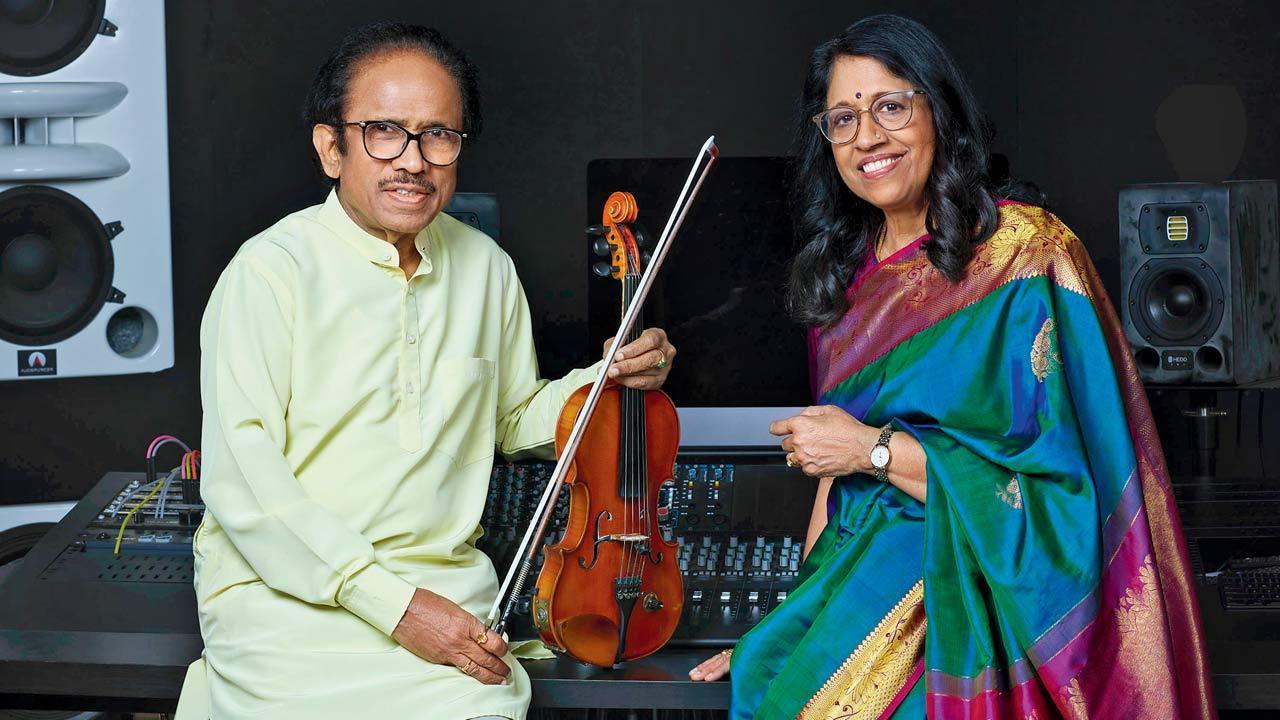
Violinist L Subramaniam with wife Kavita Krishnamurti. Pic/Jatin Kampani
Set to celebrate her journey spanning five decades with a city concert tomorrow, veteran singer Kavita Krishnamurti says striving for perfection keeps her motivated to pursue music each year
Sonia Lulla (MID-DAY; November 22, 2024)
Entertainment websites are often filled with tales of Kavita Krishnamurti’s musical journey commencing from her schooling days, however, the veteran singer appears to chronicle her experiences as vividly as though they occurred only yesterday. She recalls how a chance interaction with Hemant Kumar opened doors for her in the industry after he introduced her to Manna Dey, and the impact that being the dubbing artiste for Lata Mangeshkar had on her life. Her conversations are peppered with names of veteran musicians, as well as those who, despite being skilled, were unable to find a place in the limelight. If one taught her appropriate methods to breathe while rendering a song, another enabled her to understand the importance of learning musical notes.
At a city concert tomorrow, Krishnamurti is set to encapsulate these experiences into a set that promises to take music aficionados on a memorable journey. In this conversation, she discusses what’s in store for fans, and why she is certain her best work is yet to come. Edited excerpts from the interview:
When you have to encapsulate your life experiences into a musical event, how do you go about doing it?
First, it’s important to choose the most important songs to sing. Some part of the performance will be a tribute to all the great people I have worked with. I will subsequently [render] songs belonging to the time when I sang for Subhash Ghai and K Viswanath. I have videos of people, including music directors and actors, who have spoken about me and the songs we have worked on. There will also be details on how I got to sing popular songs like Hawa Hawai, and work with different composers like A R Rahman. The tribute section will celebrate those senior singers I have worked with and will narrate those stories about them that are relevant to my life. Finally, the show will include some of my popular songs from across the decades.
Your work has been pivotal to the lives of people across generations, with your most recent song being in last week’s release, The Sabarmati Report. How do you perceive this longevity?
I have grown up listening to the greatest artistes. I grew up listening to Lata ji, Asha ji [Bhosle], Manna da [Dey], and Kishore da [Kumar]. So, the standards that were set when it came to music were very high. I have always felt scared of falling short. I’m only weighed down [by pressure] when people praise the way I had rendered an old song. I wonder if I will be able to sing it on stage in the same way that I did 30 years ago. I keep telling myself, I have a few more years to sing, and I cannot allow myself to think that the best is over. I am also motivated by my husband, who, even at this age, after having performed for 70 years on stage, and at top concerts, sits at night to practice and says, ‘I’m not getting this note right.’ I feel I am listening to impeccable music, but he thinks he needs to do better.
Looking back at the last 54 years, which moments do you believe were most instrumental in shaping you as an artiste?
Singing with Hemant da [Kumar] was a big learning experience. He made me sing with Lata ji, and that was an eye-opener. Seeing her stand next to me and sing with perfection was unbelievable. After she would finish singing, I’d hear her voice and understand her approach. Another legend from whom I learnt was Manna Dey, who would reduce me to tears in each of his concerts because his music could transport me to heaven. He lived the life of a great artiste—he was dedicated to music till the age of 94, when he passed away. He was also a family man. He was attached to his wife, and I saw perfection in their relationship. He’d tell me, ‘Keep your feet on the ground, because when you go up, you also have to come down. Remember to keep track of your own money, go to the market, and buy your own stuff.’ [He] lived the life of a common person. Then, singing for Laxmikant-Pyarelal was also a defining experience, as was dubbing for Lata ji. I’d sing the song with the full orchestra, and then [after she would record it], notice how she sang it. I learnt so much about what great singing truly is.
Taal was the first time people had heard me be romantic-Sonu Nigam
9:33 AM
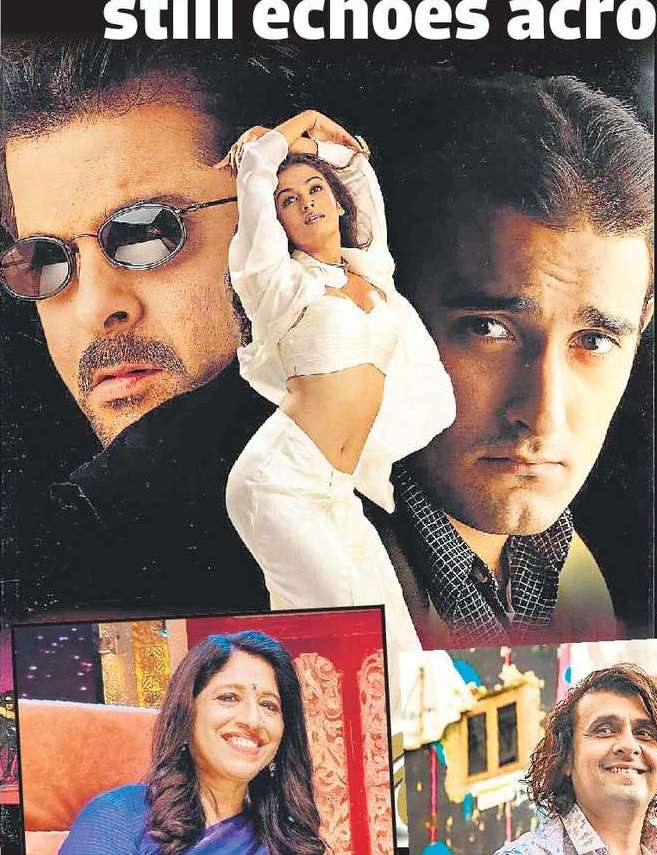
Look who’s turning 25 with HT City! On its silver jubilee, singers who were a part of this 1999 musical masterpiece, which gave us iconic dance and romantic numbers, tell us why the songs from this film remain classics
Mimansa Shekhar (HINDUSTAN TIMES; March 18, 2024)
Back in 1999, Taal, directed by Subhash Ghai dared to dream different by presenting an eccentric love story in a musical format. Starring Aishwarya Rai Bachchan, Anil Kapoor and Akshaye Khanna in lead roles, the movie is considered to have a masterpiece album, composed by A R Rahman. From love ballads to upbeat dance numbers — the album gave unforgettable melodies, written by Anand Bakshi, to all ’90s kids.
Every song had a story to tell, for instance, Ramta Jogi’s opening sequence was done by percussionist Sivamani using a beer bottle! The Raga Dance was Rahman’s collaboration with British violinist Vanessa Mae. And who can forget the Taal Se Taal (Western) that gave way to several classical and western dance crossovers.
As the film clocks 25 years this year, we speak to some singers who lent their voice for the album that still remains a favourite among all age groups.
KAVITA KRISHNAMURTI, ISHQ BINA
It was my first time working with Rahman ji and Subhash ji together. Rahman’s technique is different from my mentors Laxmikant-Pyarelal.
Even Subhash ji was curious to see how this will work with me. I knew that only certain basic chords will come to my headphones. But Rahman lets you sing in your own way as many times as you want. He would just keep on recording. It’s the wonder of his mixing where he would put something and take out the rest. [Eventually] the song comes out as a miracle.
Subhash ji would always give a picture. I knew Ishq Bina Ishq Bina is a decision-making song for the character Mansi (played by Aishwarya). So I couldn’t make it a weak song. Subhash ji is a master of picturization and he put in a lot of effort in making it.
SONU NIGAM, ISHQ BINA
I had worked with Ghai ji previously for Pardes (1997). He had liked me since then. He wanted to put me in the song Ishq Bina, although my part comes late in the song (after four minutes).
If you notice, I had never sung in this kind of reshami awaz before, which stood out. Later, when I was singing a song for Ismail Darbar (composer), he told me, “Sonu, woh Taal wali awaz isse pehle aayi nahi”. He wanted me to sing in that way for something he was composing.
So Taal was the first time people had heard me be romantic. It was recorded in Chennai at Rahman’s studio, late in the night as usual. The song is very special to me till date.
RICHA SHARMA, NI MAIN MAIN SAMAJHH GAYI
This album is not just for listening, it is an academy in itself. And this song became the turning point in my life.
Back then delicate voices were in demand, whereas I have a husky, folksy texture. I was always told I don’t have a mainstream voice, and it can’t be used for a heroine. So my voice remained in the background. Rahman also used my kind of voice. Later I got to know that the song featured Aishwarya!
This was also a dream come true as I had really wanted to work with Rahman since I saw his name and photo on Roja (1992) or Bombay (1995) film album cover, calling him “new music director”. As fate would have it, Sukhwinder Singh (singer) asked me to come to a studio at 1am. To my surprise Rahman was present!
HARIHARAN, NAHIN SAAMNE TU
I got a call from Rahman’s office for the song and Subhash ji also spoke to me. I loved the tune when I first heard it. It was titillating and subtle. Unlike the popular opinion it’s not a soft song; it’s very strong, including the lyrics and tune.
After I recorded all of us — Subhash ji, Rahman and I — thought we should give it one more try. So I recorded it again over a couple of days and we nailed it!
The lyrics are so beautiful, conversation-like, jaise aap kisi se guftagoo kar rahe hain. I cherish this song.
Pankaj Udhas no more, ghazal loses a chart-topper
8:13 AM

Avijit Ghosh (THE TIMES OF INDIA; February 27, 2024)
He completed evenings. In the 1980s and ’90s, ghazals sung by him were mandatory at parties and gatherings. They were like companions helping listeners unwind, enlivening many a ‘spirited’ sunset. Pankaj Udhas, whose audience-friendly renditions and easy on the ear compositions sold millions of cassettes, packed hundreds of concerts and took ghazals to new followers, passed away after “prolonged illness” at a Mumbai hospital on Monday. He was 72.
------------------------------------------
Ghazal chart-topper Pankaj Udhas, the voice behind ‘Chitthi Aayee Hai’ and ‘Jeeye Toh Jeeye Kaise’ passed away at a Mumbai hospital on Monday. His daughter, Nayaab, made the announcement on Instagram.
Primarily a singer of non-film ghazals and geets, Pankaj delivered Bollywood’s biggest 1987 chartbuster: ‘Chitthi Aayee Hai’ (lyrics, Anand Bakshi; music, Laxmikant-Pyarelal; film, Naam). The song, which topped Binaca Geetmala’s annual countdown show, touched an emotional chord, especially among NRIs and PIOs.
Some of Udhas’ finest numbers are in the 1981 album, Muqarrar. ‘Tum na maano magar haqeekat hai’ (poet Qabil Ajmeri) and ‘Deewaron se milkar rona achcha lagta hai’ (poet Qaiser-ul-Jafferi). Another popular track from the same album, Sabko maloom hai main sharabi nahi (poet Anwar Farook Habadi) spurred him to do a reprise with Paimana (1983), a collection of ghazals that went down well with tipplers; it had Thodi thodi piya karo (poet S Rakesh) and La pila de saakiya (traditional).
A science graduate from Mumbai’s St Xavier’s College, Pankaj spent his early years in Gujarat. In an interview to the Sunday Guardian in 2018, the singer recalled his father playing the musical instrument ‘dilruba’, and him liking the sound.
Pankaj also remembered being fascinated by the tabla and enrolling for a course but later switching to learning Hindustani vocal from Ghulam Qadir Khan Sahab in Rajkot. “Then I came to Mumbai to learn from my guru, Master Navrang Nagpurkar. He was a very famous singer from the Gwalior Gharana,” he said in the interview.
The 1980s saw two divergent trends in popular music. One was led by the breathless beats of disco, the other by the more reflective ghazal. The peerless pair of Jagjit and Chitra Singh had already initiated a new gene ration of the middle class to the non-film ghazals. A Padma Shri recipient who also worked to eradicate thalassemia, Pankaj was among the young bunch of ghazals singers - Talat Aziz and Anoop Jalota were the other two – who were part of that wave.
------------------------------------------
RWITC mourns a horse racing enthusiast
Ghazal singer Pankaj Udhas was a keen racing enthusiast too. A member of the Royal Western India Turf Club (RWITC), Udhas owned a few horses and would visit Mahalaxmi Racecourse. “He would call and ask if his horse has a chance to win,” RWITC-based trainer H J Antia told TOI on Monday.
Antia trained his horses. “And when I would tell him yes, he would specially make time to come to the Mahalaxmi racecourse,” added Antia. The late singer would also visit the stables at the racecourse to check on the horses, he said.
“We lost a very genuine member of the club,” said RWITC chairman Surendra Sanas. “It is also a personal loss for me. He would make it a point to visit the club on Classics race days and almost certainly on Indian Derby Day,” recalled Sanas.
Surgeon Dr Mehli Nazir, who jointly-owned horses with Udhas, said, “We bought our first horse called Aliyana sometime around 2010. And then we owned a couple of more horses together. When Aliyana won in Pune the first time, he was thrilled to lead the winner. It was his first ever win,” said Dr Nazir.
“He found it difficult to devote time to racing after 2018 because he had a busy schedule,” said Adhirajsingh Jodha, who trained a horse called Speed Of Sound owned by Udhas in partnership.— Shailendra Awasthi
------------------------------------------
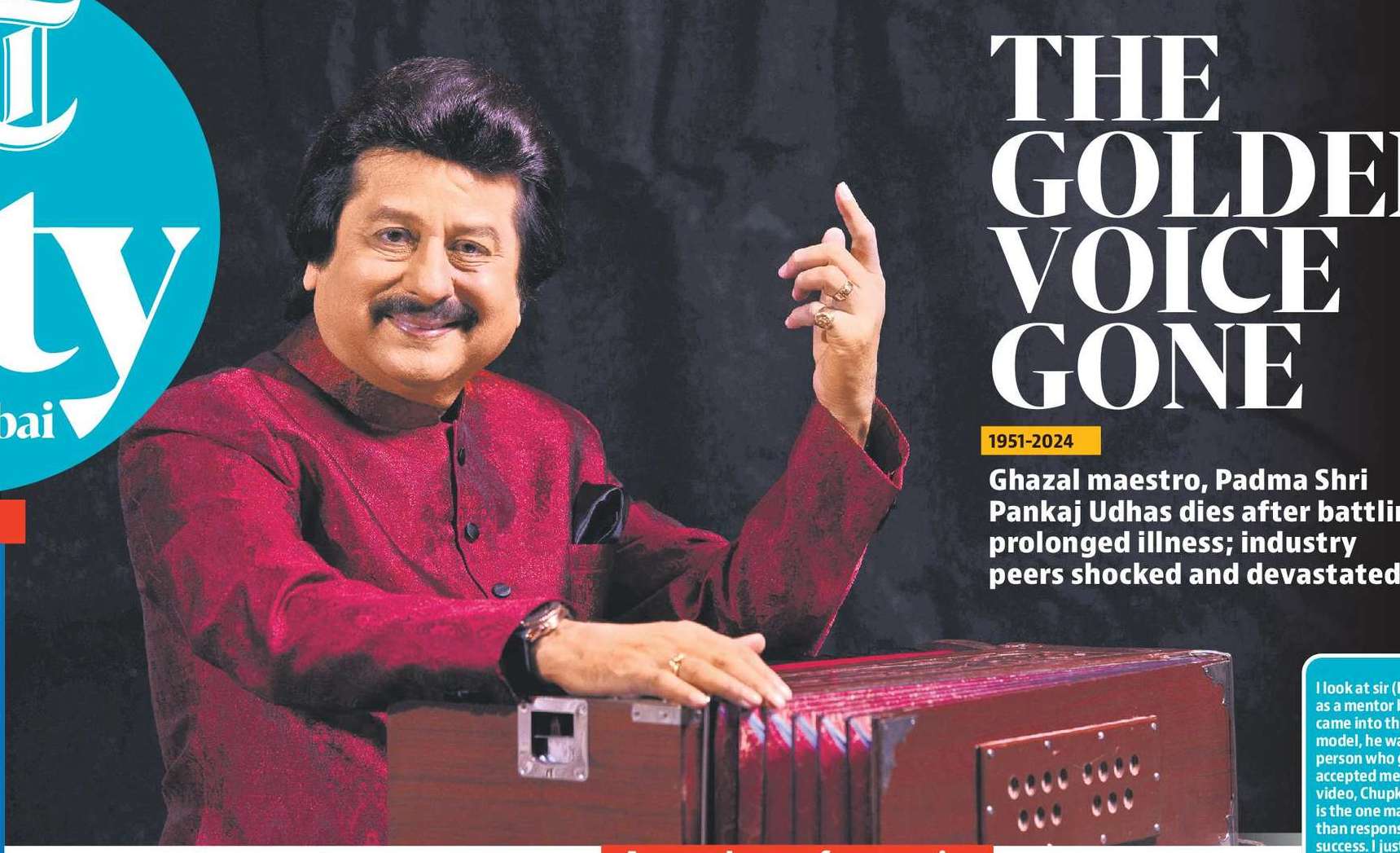
Ghazal maestro, Padma Shri Pankaj Udhas dies after battling prolonged illness; industry peers shocked and devastated
HINDUSTAN TIMES (February 27, 2024)
Inarguably one of the most renowned ghazal voices, Pankaj Udhas has died at the age of 72. His daughter, Nayaab, issued a statement on Instagram on Monday to announce the news: “With a very heavy heart, we are saddened to inform you of the sad demise of Padma Shri Pankaj Udhas on 26th February 2024 due to a prolonged illness.”
Born in Gujarat, Udhas was keen about music from a young age. It was in 1986 that his playback career took off with the cult classic Chitthi Aayi Hai for the film Naam, and there was no looking back after that. Chandi Jaisa Rang Hai Tera (Ek Hi Maqsad, 1988) Jeeye Toh Jeeye Kaise (Saajan, 1991) and more cemented his legendary status. He remained active in films until 2016, when his song Raat Bhar Tanha Raha was featured in Dil Toh Deewana Hai.
He is survived by wife Farida and daughters Nayaab and Reva.
----------------------------------------------------------------------------
A symphony of memories
In a 2016 chat with Soumya Vajpayee, Pankaj Udhas spoke about his journey as a ghazal singer and the future of the genre
ON HIS JOURNEY
It’s been interesting, challenging and satisfying. When I started out, the ghazal had just started gaining popularity. Even then, Bollywood music dominated the scene.
ON WHAT MADE HIM POPULAR AMONG THE MASSES
When I started singing, I was influenced by Begum Akhtar and Mehdi Hassan’s styles. But as I grew up, I realized that I shouldn’t keep singing like them. I wanted to create my own space. That’s when I started creating a style of my own. I wanted to reach out to the masses, as the ghazal was always limited to a very small audience. I wanted to make it more accessible. So, I composed the ghazal, Aap jinke kareeb hote hain. Anyone who could speak Hindi could understand it. That clicked, and I realized that I had found the success formula.
ON NOT SINGING FOR BOLLYWOOD ANYMORE
To be honest, I would love to sing for movies, as that’s a very exciting medium. I cannot deny that some of the Hindi film songs that I sang have had a huge impact on my career. They helped me gain popularity. Songs like Chitthi Aayi Hai and Jeeye Toh Jeeye Kaise helped me reach out to audiences across the world. It’s a different story that the style of songs and the approach to music in Bollywood has changed drastically now. Perhaps that’s why we (ghazal singers) are not called in to sing anymore.
ON LATE MEHDI HASSAN AND JAGJIT SINGH’S ROLE
After they arrived on the scene, people started talking about ghazals. There was a curiosity about this kind of music. By the time I started out, which was around 1978-79, Bollywood music was struggling to impress the masses. The audience was looking for an alternative. That’s when the ghazal started to rise. After the ’80s, it became a craze. I am glad to have been around when the ghazal ruled the roost.”
Farewell, ghazal king
SONU NIGAM, SINGER
Pankaj ji was one of the most important parts of my childhood. I will miss him forever. My heart cries.
KAVITA KRISHNAMURTI, SINGER
He was my friend since college and the nicest man I’ve known. He would always smile and talk to everyone; he’d never discriminate. The world has lost not just a singing icon but also one of the sweetest and simplest human beings.
SUKHWINDER SINGH, SINGER
During the video shoot of one of my songs from the album Nasha Hi Nasha Hai, he invited us all for dinner and lunch. He even extended our stay for the next night, just because he wanted to talk to us. The world has lost a great icon and I still can’t process that he is gone.
SALIM ARIF, THEATRE PERSONALITY-DIRECTOR
I was working on a musical show, based on (poet) Mirza Ghalib’s letters, with Pankaj ji. We couldn’t meet the last four months as he was not keeping well. It’s a personal loss.
I look at sir (Pankaj Udhas) as a mentor because when I came into this industry as a model, he was the first person who graciously accepted me in his music video, Chupke Chupke. He is the one man who is more than responsible for my success. I just told him that your voice still sounds so beautiful, it’s amazing.
TALAT AZIZ, SINGER
I can’t believe I have lost my dearest and oldest friend. Pankaj, Anup (Jalota) and I go way back. This is really shocking. I spoke to Nayaab (Udhas’s daughter), too. Rest in peace, my friend.
ANUP JALOTA, SINGER
Mera yaar chala gaya. I am heartbroken. Hum logon ne kitni shaamein saath bitaai, kitni yaadein hain... yakeen nahin ho raha. We started Khazana (annual ghazal festival) together. Now, I would like to take it forward with his daughter Nayaab.
The best song of Hum Dil De Chuke Sanam was also the toughest of my career-Kavita Krishnamurti
8:30 AM
HINDUSTAN TIMES (February 26, 2024)
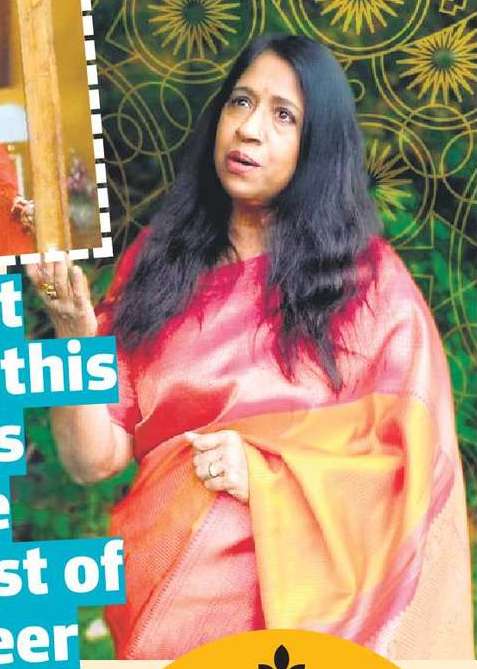
For Kavita Krishnamurti, Hum Dil De Chuke Sanam (1999) will always be a turning point in her career. The singer, who lent her voice to as many as six songs in the Sanjay Leela Bhansali film, feels grateful to have been associated with a project that helped her show her versatility as an artiste.
As the timeless album clocks 25 years, she recalls, “When I heard the tracks in the rehearsal room, they were so beautiful. I was also happy to work with Ismail Darbar (composer).”
While the entire album is special to her, there’s one song that Krishnamurti holds especially close to her heart — the title track. “It’s such a powerful song; the best in the movie but also the most challenging one of my life,” the 65-year-old shares. She adds, “There are so many notes in that song. I was extremely worried [if I’d be able to do it] as I was suffering from problems with my nose.”
Yet, things worked out beautifully and the song ended up being one of her best works. “Some days, things just work out. The song got okayed quickly and I didn’t face a lot of problems. I think God was holding my hand that day,” she fondly remembers.
Speaking of the first song she recorded for the film, Krishnamurty reveals, “It was Aankhon Ki Gustakhiyan. But, none of us were happy with it. After a few days, I redid my portions. Then, it had come out well.”
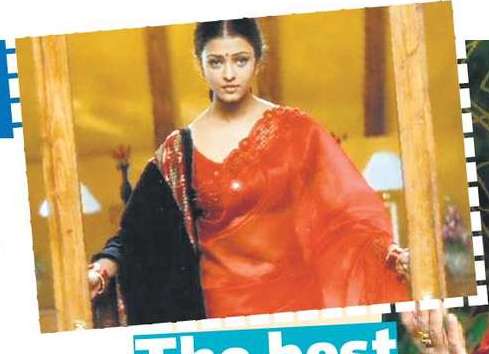
Perhaps one of the most popular tracks from the film, Nimbooda is also one of her personal favourites. “It was such an item song. In my heart, I just felt this song is going to do well for me commercially. And it did,” Krishnamurti tells us, while lauding actor Aishwarya Rai Bachchan for bringing the song alive on screen.
In fact, the singer gives a huge part of the credit of the album’s success to Bhansali’s vision. “He is the king of visuals. God has given him special aesthetics. So, HDDCS is a marvellous sangam of composition, sound and picturization,” she wraps up.
Is Bollywood killing off the lip-synced song?
8:27 AM

Natasha Coutinho (BOMBAY TIMES; February 2, 2024)
When it was time to shoot for Tum Kya Mile and What Jhumka? in Rocky Aur Rani Kii Prem Kahaani, Alia Bhatt was in a bit of a fix. She simply wasn’t confident that she could lip-sync her way through the numbers. “I was very nervous, going to shoot a full proper lip-synced song after Ishq Wala Love (Student of the Year, 2012). So, Karan (Johar) told me why you don’t call Shah Rukh Khan, he will give you some tips. I called him and told him no one does lip-syncing better than you,” Alia admitted at the film's press conference.
Shah Rukh, of course, is a veteran of lip-syncing, having delivered a hit with Zinda Banda in Jawan last year, a song for which he lip-synced in three languages. But as Hindi cinema becomes realistic, and songs are either not included or become a part of the background score of films, will the art of lip-syncing die out? We spoke to singers, lyricists and composers to find out.
OUR WEDDINGS AND FESTIVALS REVOLVE AROUND HINDI SONGS: ARSHAD WARSI
Indians love lip-synced songs; it’s in our DNA. Our weddings and festivals revolve around Hindi movie songs, which are sung by fabulous singers and lip synced by great actors. The audience loves imitating these songs. However, it’s fine that some movies don’t have songs; if it’s realistic, there’s no point forcing it. It’s also expensive to shoot songs, and thus filmmakers shy away from it. My favourites from my own films, would be my first song Aankh Maare (Tere Mere Sapne), sung by Kumar Sanu da, and everybody loved it.
FILM SCHOOLS SHOULD TEACH HOW TO SHOOT SONGS AND USE THEM IN FILMS: SHANTANU MOITRA
Film schools should make the shooting of songs and their use in Hindi cinema an essential part of the curriculum. We are following western trends and have stopped using songs, but each time a song is used sensibly, it takes the narrative forward. In 3 Idiots, which I scored for, Behti Hawa Sa Tha Woh was not lip synced, but Zoobi Doobi was. Initially, I had done a couple of songs for Sardar Udham, but Shoojit (Sircar) and I felt that the human voice was disturbing the silence, which is an important tool in the film.
A HINDI COMMERCIAL ENTERTAINER REQUIRES LIP-SYNCED SONGS: SAJID ALI KHAN (Sajid-Wajid)
Lip syncing is a special skill, and it takes actors like Shammi Kapoor to make it believable. Filmmakers are emulating Hollywood and focusing on picturization and graphics, but a Hindi commercial entertainer still requires lip-synced songs. Music is a part of Indian culture, and I don’t think that will ever change.
WHEN HAWA HAWAII RELEASED, PEOPLE THOUGHT IT WAS SRIDEVI SINGING: KAVITA KRISHNAMURTI
I belong to that lucky generation (1980s-90s) when songs and their filming were important. Almost every song – happy, sad, philosophical or spiritual – was lip-synced. I started off by dubbing Lata ji’s (Mangeshkar) songs, after which Lata ji would sing the final version for Rekha ji or Jaya Prada ji, heroines who excelled at lip syncing. I started singing my own songs for actresses like Padmini Kolhapure, Shabana Azmi and Sridevi. When Hawa Hawaii (Mr India) released, people thought it was Sridevi singing. A lot of credit goes to the actors, who excelled at lip movements, which is an art in itself.
I'M TOLD TO COMPLETE THE SONG IN TWO AND HALF MINUTES: SAMEER ANJAAN
Directors like Subhash Ghai would give 50% credit for their success to a film's songs. There was a time when there were at least six-eight songs in a film. I used to write two-three antaras for songs that were five-six minutes long. But nowadays I’m asked to complete a song in two and a half minutes, since people apparently don’t have patience. Many directors shoot the visuals first and then approach us for a song. This eliminates the chance of a lip-synced song. We need one big musical that can change this entire trend.
BESHARAM RANG WOULDN’T HAVE WORKED AS A BACKGROUND SCORE: KAUSAR MUNIR
I hope and believe that lip-synced songs will never completely disappear from the Indian film narrative, as it's beautifully exclusive to our films. Lip-syncing is also important to viewers. If you see the films that featured superstars and did well in 2023, all of them had at least one lip-synced song. For instance, Besharam Rang (Pathaan) would never have worked as a background score, it needed that dance, drama and the lip-synced visuals.
SONGS HAVE A GLORIOUS HISTORY IN BOLLYWOOD
- The 1932 release Indersabha had over 70 songs, a record that's tough to beat
- Salman Khan and Madhuri Dixit's hit -Hum Aapke Hai Koun...! (1994) had 14 songs
- Shah Rukh Khan is a master of lip-syncing. Two films starring him - Devdas (2002) and Mohabbatein (2000) both had 10 songs
- Amitabh Bachchan could effortlessly switch from his angry young man image and mouth the lyrics of a song. His Silsila had 12 songs

I do not like using apps to correct the sur-Kavita Krishnamurti
2:38 PM

After her take on the use of technology in recording songs went viral, the singer elaborates on what she meant
Debarati S Sen (BOMBAY TIMES; January 15, 2023)
Recently, a video in which Kavita Krishnamurti spoke about the rampant use of technology in recording songs went viral. The singer was present at an event in Bengaluru to speak about her journey and how songs were recorded earlier. She says, “I realized that parts of that talk had gone viral on social media when my friends started messaging me.”
Elaborating on her thoughts about the use of audio software to record songs, she says, “Once, Khayyam saab and I were judges for a show and someone said, ‘Aaj kal, sur aur sab theek kiya ja sakta hai, bas gaane mein expression aur attitude zaroori hai.’ Khayyam ji said, ‘Gaane mein attitude ka kya kaam agar sur aur taal hi nahi hai?’ These incidents were on my mind when I spoke that day. I didn’t mean to disrespect anyone and don’t want to create a controversy. With changing styles, we also change. I feel that if technology can help, one should definitely use it. I have suffered from bronchitis all my life and there have been days when I was so sick that I had to take antibiotics and cough syrups before singing. During times like these, technology helps. My only point is that you should not depend solely on technology to record a good song.”
‘SHOCKED WHEN I WAS TOLD HUM VOICE CLEAN KAR LENGE’
Narrating an experience, she says, “I remember I was recording a song in 2003 and wanted to redo a line. The recordist and the music director said, ‘Hum voice clean kar lenge’. I told them that they can clean the voice, but they needn’t work on the sur because I will sing again. Later, the recordist told me, ‘Aaj kal Melodyne (an audio pitch modification tool) hai aur sab theek ho jata hai usme.’ I requested them not to use it for my songs. I don’t like using it because when the song releases, you can make out that it has gone through a processor and sounds a bit metallic and unreal to me, and I don’t feel happy about that. There are others who don’t feel the same. I remember once a singer came to the studio and asked, ‘Melodyne hain na aap ke paas?’ And I found that very amusing!”
‘STRENGTHEN YOUR SKILLS AND THEN USE TECHNOLOGY’
The singer, who has lent her voice to chartbusters like Hawa Hawai, Tu Cheez Badi Hain, Dola Re Dola, Nimbooda and Bin Tere Sanam, among others, goes on to add, “Your capacity to sing without technology should never prove to be a limitation. You shouldn’t lessen your practice or stop focusing on sur and taal. For any singer, that is of primary importance. You should strengthen yourself and your skills and then use technology.”
Kavita emphasizes that all these factors were important. “Bollywood songs have phrases on the beat and aren’t rhythmically complicated. Earlier, if something was off-key or somebody was unable to catch the beat, then the only option was redoing it because tools and apps didn’t exist.”
RECORDING IN THE TIME OF RD
Reflecting on the effort behind recording when she had joined the industry, she shares, “Laxmikant-Pyarelal and R D Burman would call us a day earlier so that we knew the emotion of the song. The next day, we’d go to the studio and rehearse with the orchestra. That way, we would know the song well. Some music directors would tell us where to break the song and when to breathe.”
Kumar Sanu and Kavita Krishnamurti go down memory lane on Ishq's 25th anniversary: ‘The songs will live on for 100 years’
8:13 AM
Soumya Vajpayee (HINDUSTAN TIMES; November 28, 2022)
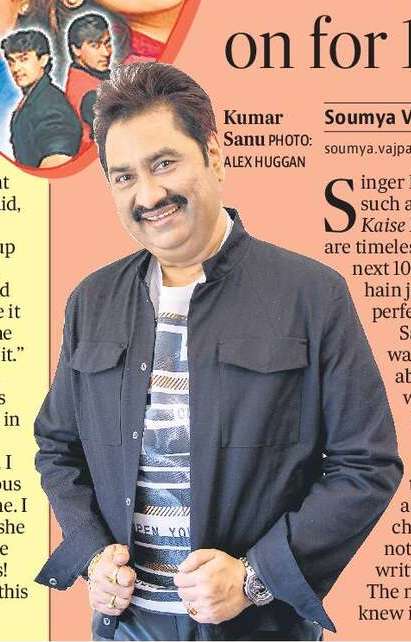
Singer Kumar Sanu enjoyed recording songs such as Neend Churai Meri and Kaise Kahoon Kaise Ho Tum from the 1997 hit. “Ishq’s songs are timeless. They will continue to live on for the next 100 years. Aaj kal aise gaane bante nahin hain jahan lyrics, composition aur voice sab perfect ho,” he says.
Sanu credits composer Anu Malik for his way of working. “An interesting thing about working with Anu ji was that we would always have arguments. Neend Churai Meri, which was a huge hit, was no exception. Whenever I found some parts tough, I’d request that he alter them, but he wouldn’t oblige. I felt the arguments were very healthy, and those challenges were fun to overcome. It was not an easy song to record. It was very well written, and every singer’s part stood out. The moment the song was wrapped up, I knew it would create magic,” Sanu shares.
-----------------------------
Soumya Vajpayee (HINDUSTAN TIMES; November 28, 2022)
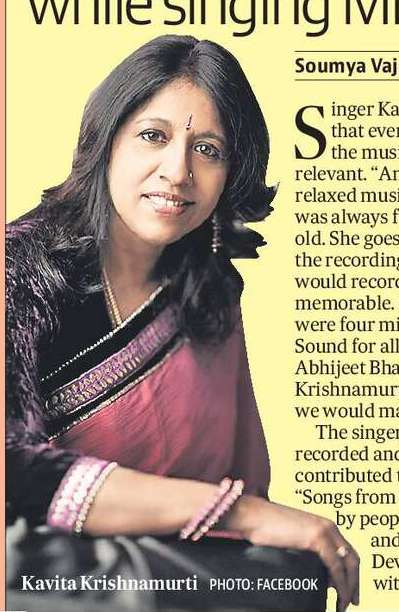
Singer Kavita Krishnamurti feels proud that even after two and a half decades, the music of Ishq continues to stay relevant. “Anu Malik (composer) is a friendly, relaxed music director. So, working with him was always full of masti,” recalls the 64-year-old. She goes on to share a fun anecdote from the recording days: “Back then, all the singers would record together, which made it memorable. For the song Mr Lova Lova, there were four microphones at Sunny Super Sound for all four singers (Udit Narayan, Abhijeet Bhattacharya, Sudesh Bhosle and Krishnamurti). Since we are all good friends, we would make fun of each other.”
The singer feels the way the songs were recorded and composed in the ’90s hugely contributed to the longevity of the tracks: “Songs from films [of that era] are still liked by people as the tunes are melodious, and [as for Ishq], the lyrics written by Dev Kohli ji were matched so well with the tunes.”
Madhuri Dixit has made all my songs look beautiful-Kavita Krishnamurti
8:16 AM

Titas Chowdhury (HINDUSTAN TIMES; April 18, 2022)
Shah Rukh Khan and Madhuri Dixit Nene-starrer Koyla (1997), helmed by filmmaker Rakesh Roshan, clocks 25 years of its release today. Apart from the high-octane drama and action sequences, the song Sanson Ki Mala Pe remains etched in the memories of the audience to this day.
Singer Kavita Krishnamurti, who rendered the track, is thankful to music composer Rajesh Roshan for giving her the opportunity. “It’s definitely one of the nicest songs I’ve sung in my career. It was composed quite beautifully and arranged by Rajesh ji. While recording it, I tried to follow how he sang. He has a very aesthetic and delicate way of singing songs,” she says.
Recalling the experience of recording the song — originally written by Meera Bai, a 16th century poet — at Mumbai’s Mehboob Studios, the 64-year-old singer tells us, “We recorded it with an entire orchestra. We had all the musicians in a big hall; so, it was like singing live. And that’s a fantastic feeling. Dubbing a song can never be the same as singing live with the orchestra.”
Sanson Ki Mala Pe was one of the earliest songs she sang for Nene. She credits the actor for bringing it to life. “When I saw the picturization, I was amazed. The way Madhuri ji has danced to it, is beautiful. I’ve great respect for her talent and personality. She has made all my songs look beautiful,” says Krishnamurti, who went on to sing chartbusters like Kaahe Chhed Mohe (Devdas; 2002) and Kay Sera Sera (Pukar; 2000) for Nene.
Talking about the popularity the song garnered, the singer, who continues to get requests to sing Sanson Ki Mala Pe at live shows, shares, “To this day, I’ve people coming up to me at airports and expressing their love for the song.”
Kavita Krishnamurti and Sameer remember Bappi Lahiri
8:20 AM

As told to Soumya Vajpayee (HINDUSTAN TIMES; February 17, 2022)
It’s extremely sad that another great musician has gone. Bappi da had so much music left in him. I have great respect for him. He was like a brother to me for many years. I got the opportunity to sing a lot of songs for him like Tu Pagal Premi Awara, Lal Dupatte Wali, and my Bengali hit, Aami Kolkata Roshogulla. He was so flexible and gave us diverse songs.
He loved his work and treated all of us like his family. Whenever I went to his place, he’d offer me Bengali sweets as I loved them. His family was always affectionate. My heart goes out to them. May his soul rest in peace. These last two years have taken so many amazing musicians from us. I’m sure even the Gods are enjoying their music.
Kavita Krishnamurti, singer
---------------------
Bappi da was like family to me. I’d accompany my dad (Anjaan, late lyricist) for the sittings. Whenever he saw me, he’d remember my father. I’ve had so many associations with him over the years. In fact, he called me a month ago for a project called Pyaar Mein Thoda Twist. But I think he fell ill. I didn’t hear from him after that.
He was an intelligent and multifaceted composer. Once, director Prakash Mehra asked Bappi da to call his mother, who was a classical singer, to compose a song for Namak Halaal. She was nervous as she was not a composer. Bappi da told her he’ll give her a phrase and she can compose it like a bandish. That’s how the original tune of Pag Ghungroo Baandh was made.
He made a mark when many composers were ruling the industry. He was synonymous to disco and the genre will always be associated with him. It’s truly a huge loss to the music industry and I’ll always miss him.
Sameer Anjaan, lyricist

Lata Mangeshkar would keep sending me several songs over WhatsApp-Kavita Krishnamurti
8:09 AM
As told to Uma Ramasubramanian (MID-DAY; February 7, 2022)
My favourite memory has to be my first opportunity to sing four lines along with Lata ji for the Bengali film, Shriman Prithviraj [1973]. It happened in 1971. In those days, we used to record in a small cabin. I was in college at that point, and I clearly remember it was such a nerve-wracking experience to be sitting next to her. I felt overwhelmed to sing with her. But she was so affectionate and immediately made me feel comfortable.
[Lata Mangeshkar’s demise] is a huge loss because for me, she has been someone who represents [the voice of] India. Her voice is unmatched. I constantly tried to learn from her. I used to listen to her songs, and tried to understand her approach towards particular notes. She was like my guru. Fortunately, she was also fond of me.
She may have physically left us, but she will live in my heart till my last breath. The lessons and learnings I gained from her are immense. To me, she represents my country. We used to constantly stay in touch over the years. She would keep sending me several songs over WhatsApp. Their language did not matter — they were Hindi and Marathi songs — but they were all unusual in their own way. I treasure these songs and have kept them with me. Sometimes, she also used to send me some of her paintings. She was a true artiste, [who painted] well. She comes from an artistic family, and that clearly was reflected in her paintings.
I miss good lyrics-Kavita Krishnamurti
8:29 AM

Soumya Vajpayee (HINDUSTAN TIMES; January 24, 2022)
Singer Kavita Krishnamurti has recorded over 50,000 songs in 46 languages in her five-decade-long career. Reminiscing about the phase she enjoyed the most, the singer says, “I’ve had the privilege of working with many composers, singers and lyricists. Every moment has been a part of my learning process. The songs I recorded in the mid-90s for films such as 1942: A Love Story (1994), Khamoshi: The Musical (1996) and Bombay (1995) were extra special.”
But as we go on to talk about the Hindi film music of today, the veteran has mixed views. “Some of the songs are splendid, I like the innovative approach and fusion style. But, there are quite a few that are not my taste. I miss good lyrics,” says Krishnamurti.
Ask her how the pandemic has been for her, and the Dola Re Dola (Devdas; 2002) and Mera Piya Ghar Aaya (Yaraana; 1995) singer says, “I enjoyed working on some projects with my husband, Dr L Subramaniam, at home, including songs like Vasudhaiva Kutumbakam and Vande Mataram.”
She was recently honoured with the Mohammed Rafi Award and holds it close to her heart: “I was delighted to receive the award. Rafi saab was one of the most iconic playback singers. My experience of recording two lines with him for a film called Ladies Tailor (1981) is a memory I’ll always treasure.”
She will be celebrating her 64th birthday tomorrow (January 25), “It will be a quiet one at home, with family,” she says, quipping, “I am young as long as I can sing or enjoy music.”
Omicron scare: Covid-19 forces artistes to call off live gigs, again
8:20 AM

Debarati S Sen and Riya Sharma (BOMBAY TIMES; January 9, 2022)
In light of the rapid spread of the Omicron variant, the unprecedented increase in the number of Coronavirus positive cases in Mumbai, and the curbs set up by Maharashtra government to curtail its spread, most concerts, private gigs and stage events in the city stand cancelled or postponed.
Live performances that had picked up quite well in the last quarter of 2021, have all quieted down to a large extent under the current circumstances in Mumbai, despite it being the season for live music shows, concerts, events, college festivals and wedding gigs. The Maharashtra government has banned large gatherings and also put restrictions on the number of people that can attend events. That apart, in the last few days, Mumbai’s singer-musician community has had multiple Covid-positive cases including Sonu Nigam, Vishal Dadlani, Shankar Mahadevan and others. While musicians agree that the situation is tough, they urge fans to mask up and stay safe, and also talk about how this current phase will impact the music industry, once again.
ABOUT 80% OF THE EVENTS HAVE BEEN POSTPONED; IT’S DIFFICULT FOR MUSICIANS AND PEOPLE INVOLVED IN THE BUSINESS: RAHUL VAIDYA
“About 80% of the events have been postponed. It is extremely saddening for the people who work in the live entertainment industry, especially those who survive on daily wages. It’s also very difficult for musicians. I have already started getting messages from people who are worried about what’s going to happen, but I am positive that this won’t last for very long,” says Rahul Vaidya.
WAS IMPORTANT TO CANCEL OUR UK TOUR FOR THE SAFETY OF OUR FANS: JUBIN NAUTIYAL
Jubin Nautiyal, who cancelled his December 2021 UK tour, shares, “It’s just unfortunate that we are once again facing this situation, but postponing the concerts was a conscious decision taken for the safety of my fans. A couple of shows in India have been cancelled too.”
Jubin adds that it is important to follow the guidelines that are being issued. “One thing we have learnt recently is to work from anywhere. Last time we were not as prepared, but now, with many of us fully vaccinated, we all have to be responsible and follow whatever guidelines are being issued by our government and health experts. That is the only way to keep moving ahead,” he says.

UNPREDICTABLE IS THE NEW NORMAL AND WE MUST ADAPT TO THAT: SHALMALI KHOLGADE
Shalmali Kholgade says, “I just got back from a holiday, ready to begin working again, but it looks like I will have to wait. Although I would have loved to get back to it, several of my shows are either cancelled or postponed. Unpredictable is the new normal and we must adapt to that as well, just like we’ve adapted to other things in the past. I’ve decided to focus my energies on completing my album.”

IT’S GOING TO BE DIFFICULT FOR ARTISTES WHO DEPEND ON LIVE CONCERTS FOR THEIR LIVELIHOOD: KAVITA KRISHNAMURTI
Kavita Krishnamurti shares, “All my engagements have been cancelled. Though concerts were beginning to start a couple of months ago, the pace was still slow compared to the pre-COVID scenario. It’s going to be very difficult for artistes who depend on live gigs for their livelihood. The situation is really bad now and I do hope that some organisations raise money for these artistes through online events and fundraisers.”

THERE’S LOSS OF WORK DUE TO THE PANDEMIC AGAIN, BUT WE HAVE TO BE PATIENT: ARKO PRAVO MUKHERJEE
Arko says, “I’ve just arrived in LA from Chicago after a music video shoot and judging a singing competition. My recording has been cancelled as my music producer and family tested positive. So, I understand the loss of work due to this pandemic again. But we have to be patient. A couple of years of difficulty will be forgotten in the long run, but we can’t afford to be ‘penny wise pound foolish’ by ignoring the health scare.”

THESE MONTHS ARE CRUCIAL BECAUSE THERE ARE A LOT OF THINGS HAPPENING: SALIM MERCHANT
“Just as we began to go back to normalcy, events started to get cancelled. But, this is something that we have to live with now. Musicians and performers have to work out a way to live and we have to work out an alternate way of life. The performance industry has really suffered in the last two years and it’s about to suffer some more now. These two to three months are crucial for us because there are a lot of weddings, concerts, college festivals that usually happen. The earnings of musicians, performers, people in the events industry, stage artistes are affected. Having said that, I’m still performing at some events and I feel grateful about that. These are small private gatherings and weddings in smaller cities,” the musician shares.

IF THIS PHASE LASTS FOR TOO LONG, IT WILL SEVERELY IMPACT THOSE WHO DEPEND ENTIRELY ON LIVE GIGS: AKRITI KAKAR
Akriti Kakar says three of her gigs have been cancelled in January itself. “Just when we felt that things were getting better, with artistes travelling extensively, and weddings and concerts returning, this new variant came in to walk all over us again. I hope this phase passes soon and we can resume our work again. If it does not, then it will severely impact those who depend solely on live gigs, just like in the first and second wave,” she shares.

SINCE THE LAST WEEK THINGS HAVE GONE QUIET: NIKHITA GANDHI
She says, “It was exciting to start travelling again for concerts. Things were picking up in November 2021 and it felt incredible to be on the road. But, things have gone quiet again and almost everyone I know seems to be catching the new variant. I find myself feeling low quite often and it's counterproductive. There’s a lot of studio work to do from home, but the heart is hurting from all of this, making it hard to make music.”

IT’S DEPRESSING AND SCARY, BUT HEALTH IS A PRIORITY: MAHALAKSHMI IYER
“It’s heartbreaking to see that just when we were all gearing up for a good season, events are getting cancelled or postponed. It’s both depressing and scary. But yes, health is a priority, so let’s hope we get through this quickly. Everyone please mask up and stay safe,” the singer urged.
WE ARE HOPING THE COVID SITUATION IMPROVES BY APRIL-MAY: SACHIN-JIGAR
Composer duo Sachin-Jigar shares that they have cancelled many of their gigs keeping the current situation in mind. “The whole live entertainment industry will take a hit because of this situation. January to March was slated to be the peak shaadi season, but we are hoping the situation improves by April-May. The last two years have been terrible. We know a lot of musicians who left Mumbai and went back to their hometowns for alternative means of income.”

Subscribe to:
Posts (Atom)