Showing posts with label R D Burman. Show all posts
Showing posts with label R D Burman. Show all posts
Dev Anand’s son, Suneil, passes away in London
9:15 AM

Avijit Ghosh (THE TIMES OF INDIA; July 29, 2026)
Actor Suneil Anand, fondly launched into the Hindi film world by his father Dev Anand in ‘Anand Aur Anand’ (1984), passed away following a heart attack in London. He was 70.
“We are comforted by the outpouring of love, prayers, and support, for which we are truly grateful. We kindly request privacy as we navigate this difficult time together,” his niece, Gina Narang, said in a statement on Tuesday. Incidentally, Dev Anand also died in the same city in 2011.
“Suneil didn’t seem ambitious. But he was extremely sincere towards his work. He was also very respectful towards senior actors,” recalled Raj Babbar, who worked with him in the film.
“My sincere condolences to his mother,” he added. Suneil's mother, Kalpana Kartik, a film star in the 1950s, is 94.
The 1980s saw a bunch of star sons being launched in style such as Kumar Gaurav, Sunny Deol and Sanjay Dutt. Suneil also made a carefully-crafted debut with much fanfare. He had learnt kung-fu in Hong Kong and displayed a felicity with dance moves as well as action scenes in ‘Anand Aur Anand’.
The film’s bouncy tracks, composed by R D Burman, proved to be popular. “Mr Ratan Tata who headed CBS Records at the time took keen interest in its (music) launch,” Suneil told this reporter in an email interview in 2020. But the film didn’t work.
Suneil also played the lead in the smartly lensed ‘Car Thief’ (1986), opposite Vijeta Pandit. He also starred in ‘Main Tere Liye’ (1988), directed by uncle Vijay Anand. A martial arts aficionado, he directed, ‘Master’ (2001), where the fights were choreographed by Hong Kong masters. None of these films succeeded at the box-office. Suneil had been working on a movie, Vagator Mixer for some years.
In his autobiography, ‘Romancing With Life’, Dev Anand provides a vivid account of how he was over the moon on hearing the news of his son’s birth. He was shooting for ‘Paying Guest’ for director Subodh Mukerji and enacting a drunken scene when the news arrived from a nursing home in Zurich. “I was in such high spirits that I gave a brilliant shot, probably my best in the film,” writes the star of superhits films such as CID, Johny Mera Naam and many more.
Shortly, Dev Anand and his wife Kalpana were invited to the Karlovy Vary film festival in (then) Czechoslovakia. The actor writes that an 86-year-old delegate and Suneil, then just two weeks old, were photographed together by the local press. The front page of a local newspaper carried the photo with the caption, “The oldest and the youngest delegates.”
In one of the chapters in the autobiography, Dev emotionally talks about flying out to Washington to meet Suneil who was studying there in a university. The Evergreen star writes how they embraced with moist eyes, how Suneil showed him around the campus, offered him a guided car tour of the US capital and helped him buy sunglasses. “These were great fatherly moments for me after the brutally harsh working schedule I had thrown myself into all these years, that kept me away from my family,” he says.
With Suneil's passing another chapter from the famed film family comes to a close.
I would have given the Governor role an edge, had I been given the chance-Ananth Narayan Mahadevan
9:38 AM

Upala KBR (MID-DAY; June 19, 2026)
Despite the accolades and decades of experience, actor and director Ananth Mahadevan says he is often overlooked for roles that he believes are tailor-made for him. The latest disappointment? The Manoj Bajpayee-starrer Governor.
After playing RBI governor S Venkitaramanan in Hansal Mehta’s Scam 1992: The Harshad Mehta Story (2020), Mahadevan earned widespread praise. Yet, when casting began for A Ramanan — a character reportedly inspired by S Venkitaramanan — nobody approached him.
“When Scam 1992 came out, Manoj was one of the first persons to acknowledge my performance on social media, before Nawazuddin Siddiqui and Shahid Kapoor. I would have given the role an edge and looked like the character of the Governor, had I been given the chance,” laments Mahadevan. He adds that filmmakers today often “lack maturity” in their thinking.
While Bajpayee may enjoy greater popularity, Mahadevan argues that both actors are ultimately valued for their craft. “Manoj may be a more popular star than me but he has a different grade of popularity. He is not in the rat race, as he himself admits. If they had got Kamal Haasan to play that part, I would have been fine with it.”
The actor says this isn’t the first time he has been sidelined. He recalls messaging director Neeraj Pandey about the R D Burman biopic with photographs, only to receive no response. “Maybe because they wanted more commercial options,” he says.
“If they had taken a Bengali actor who looked like the music director, that would have been alright. I have nothing against Farhan Akhtar, his father [Javed Akhtar] is a dear friend, but if I was making the film, would I cast Farhan? No.”
The roles that slipped away
- ‘Thiruda Thiruda’ (1993): Mahadevan says director Mani Ratnam had initially considered him for the CBI inspector’s role, which eventually went to SP Balasubrahmanyam.
- ‘Halo’ (1996): He says cinematographer-director Santosh Sivan had approached him for a father’s role, but filmmaker Rajkumar Santoshi ultimately played the part.
"Why London? Come to Mumbai": Asha Bhosle’s advice that changed Adnan Sami’s life
10:54 AM

HINDUSTAN TIMES (April 13, 2026)
The passing of Asha Bhosle on Sunday morning has left the music world grieving. For singer Adnan Sami, her loss also brings back memories of a turning point that changed his life. Sami, who became an Indian citizen in 2016, has spoken about feeling sidelined by the Pakistani music industry early in his career.
In an interview with India TV in 2025, he recalled how Bhosle’s advice helped him find a new path. “After I released a few songs in 1998, people in the Pakistani music industry just decided I was done,” he said. “There was no promotion, no marketing. It disappeared like it never existed. That really broke me,” he added.
Living in Canada at the time, Sami reached out to Bhosle. “I told Asha ji, ‘I’m dejected…’ and asked if we could record in London.” Her response changed everything. “She said, ‘Why London? Come to Mumbai. This is where magic happens’.”
Sami followed that advice. “Main boriya bistar le ke pahuch gaya Mumbai,” he recalled, adding that Bhosle and her family welcomed him warmly. “She made me stay in RD Burman’s house.”
What followed was a career-defining phase. Kabhi To Nazar Milao and Lift Karadey became massive hits. “The love and acceptance I received… I never imagined it,” Sami said.
How Asha Bhosle gave a new voice to Hindi film actresses
10:43 AM
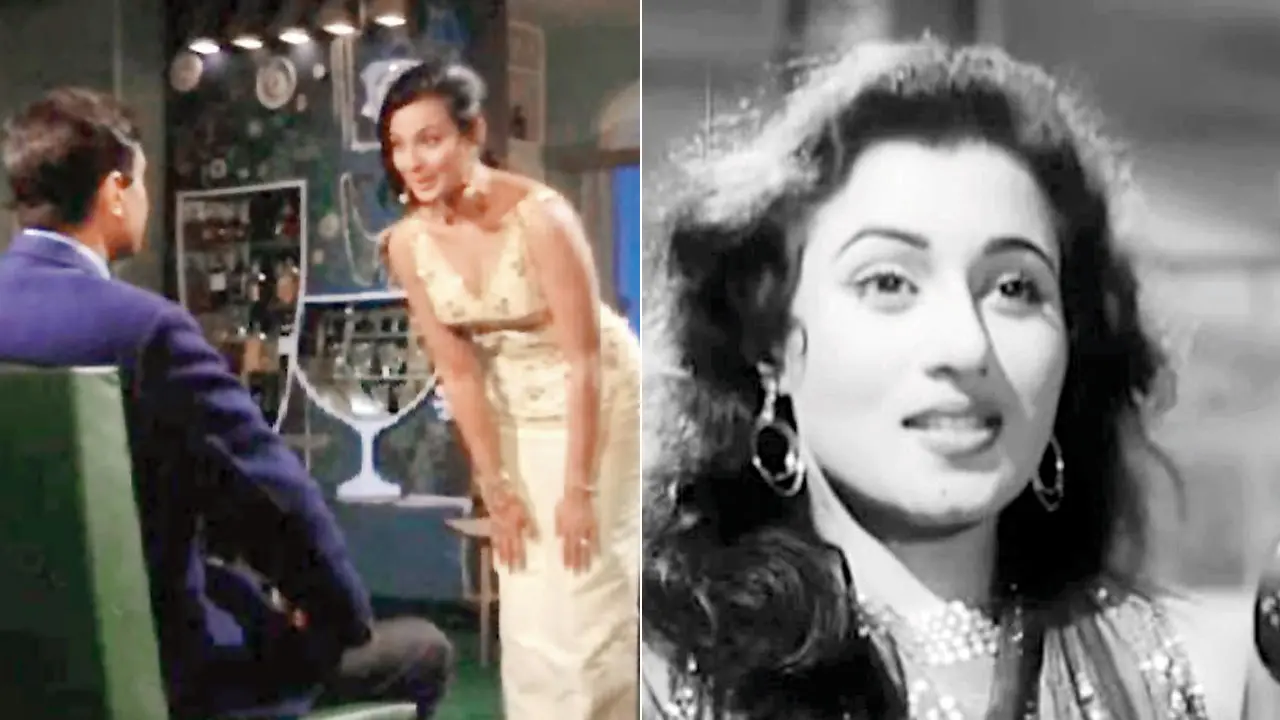
A still from the song ‘Raat Akeli Hai’ sung by Asha Bhosle
A lookback at how the veteran singer introduced a new voice for Hindi film heroines — unafraid and unheard until then
Shantanu Ray Chaudhuri (MID-DAY; April 13, 2026)
Dil Padosi Hai (1987). It’s difficult to say how many odes to Asha Bhosle will pause to acknowledge this remarkable non-film album, but for me, it remains the work that sealed my conviction of her singularity. By then, of course, I was familiar with the well-circulated highlights of her film career. But Dil Padosi Hai revealed something deeper. Across its 14 tracks, penned by Gulzar and composed by R D Burman, she stretched effortlessly across moods and idioms: from the classically inflected serenity of Bheeni Bheeni Bhor, to the sensuous playfulness of Raat Christmas Ki Thi. It is in albums like this that one encounters Bhosle not just as a voice of songs, but as an artiste of boundless imagination: restless, refined, and entirely inimitable.
Bhosle leaves behind a musical legacy so vast and varied that it resists easy summation. She was not merely one of the defining voices of Indian cinema; she continuously reshaped what that voice could be.
Born in 1933 in Sangli, Maharashtra, into the illustrious Mangeshkar family, she grew up in an environment steeped in music. While her elder sister Lata Mangeshkar quickly rose to become the pre-eminent playback singer of her time, Bhosle carved her own path, often navigating the film industry’s margins before stepping into its centre. In her early years, she was frequently assigned songs that others declined — cabaret numbers, dance tracks, or compositions for secondary characters. But what might have been a limitation became, in time, her greatest strength. Songs like Ab Ke Baras from Bandini (1963) and Raat Akeli Hai from Jewel Thief (1967) offer evidence of the depth, nuance, and vivacity she could bring to a composition even when these were not shot on the ‘heroine’.
Her breakthrough came in the 1950s, particularly through her collaboration with composer O P Nayyar. Songs like Aaiye Meherban (Howrah Bridge, 1950) and Yeh Hai Reshmi Zulfon (Mere Sanam, 1965) carried a modern, rhythmic vitality that set them apart. Bhosle’s voice introduced a new sensibility to Hindi film music, one that allowed for flirtation, mischief, and urban sophistication.
If Nayyar helped establish her identity, it was her partnership with Burman that expanded it exponentially. Their creative synergy produced some of the most memorable songs in Indian cinema. From the infectious energy of Aaja Aaja (Teesri Manzil, 1966) to the haunting introspection of Mera Kuch Saamaan (Ijaazat, 1987), Bhosle demonstrated a remarkable ability to inhabit vastly different emotional landscapes. Her voice could be sensuous, rebellious, tender, or melancholic, often within the span of a single film.
She did not just adapt to genres; she redefined them. She brought a distinctive flair to cabaret songs, lent depth to ghazals, embraced pop and Indipop with equal ease, and even ventured into international collaborations. Her foray beyond film music found a fresh audience in the late 1990s with Jaanam Samjha Karo (1997), a non-film album composed by Leslee Lewis. Its standout track, the lilting Raat Shabnami, became an immediate favourite, connecting her with a younger generation.
She continued to explore diverse collaborations, teaming up with Adnan Sami on Kabhi To Nazar Milao, and even Australian cricketer Brett Lee on You’re The One for Me. In 2006, she received her second Grammy nomination for You’ve Stolen My Heart: Songs from R D Burman’s Bollywood, a project recorded with the Kronos Quartet that reinterpreted her late husband’s music for a global audience. And balancing these crowd-pleasers were albums like Legacy, recorded with Ustad Ali Akbar Khan, which fetched her first Grammy nomination in 1997.
With her passing, an era of Indian music draws to a close. She helped shape not just an industry, but the emotional vocabulary of a nation. And yet, her legacy is not confined to nostalgia. It lives on in the countless songs that continue to resonate across time, in the artistes she inspired, and in the very idea of what a playback singer can be.
In the end, Bhosle did more than sing. She transformed music into an expression of life in all its complexity, playful and profound, ephemeral and eternal. With her departure, the silence she leaves behind is immense, but so too is the echo of her voice, which will continue to be heard for generations to come.
(An editor by profession, Shantanu Ray Chaudhuri has edited The Swinging Seventies: Stars, Style and Substance in Hindi Films, the anthology on ’70s Bollywood)
Asha Bhosle simply told me, ‘Music is not for everyone. Focus on your studies’-Leslee Lewis
10:39 AM
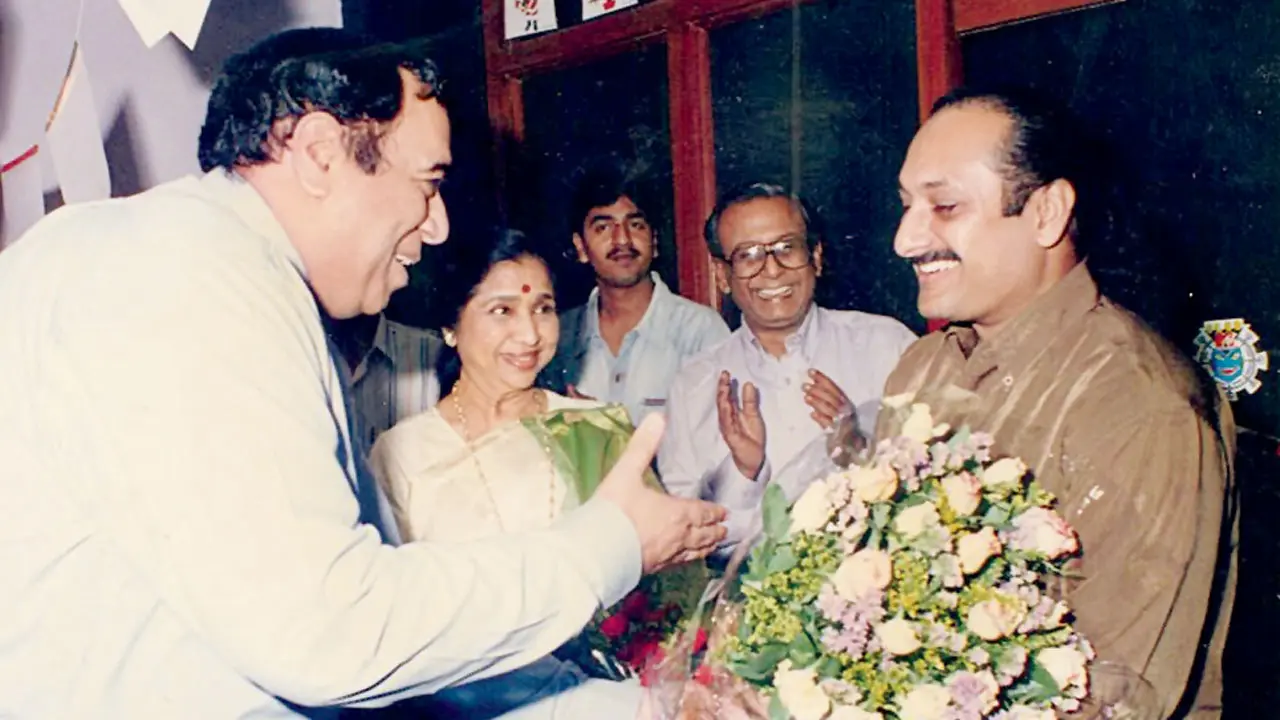
Leslee Lewis, who introduced Asha Bhosle’s songs to the ’90s listeners with ‘Rahul & I’, recalls how the singer’s versatility across the decades was a benchmark for every musician
As told to Mohar Basu (MID-DAY; April 13, 2026)
Some voices are heard, and some, felt. Asha Bhosle was always felt. She had that rare gift of turning every song into a lived emotion. For all of us in music, she was a benchmark we measured ourselves against. Not just for her range or versatility, but for her courage. She never allowed herself to be defined by one sound or era. She kept pushing boundaries.
She and Pancham da [R D Burman] were close to my father, PL Raj. I still remember the first time I met her — this was at Duke’s Retreat in Khandala. When my father told her I liked playing the guitar, she didn’t indulge me with polite praise. She simply said, ‘Music is not for everyone. Focus on your studies.’
Years later, I was approached to work on a project with Asha ji. Initially, I was hesitant, but I was told that R D Burman had wanted to recreate his old songs in a new style with me. That’s how the remix project, Rahul & I, began. The brief was simple: introduce Asha ji to a new generation.
Working with her wasn’t easy at first. She was used to a different recording style, where the voice dominated and the arrangement followed. I was [using] tighter grooves, modern production, and a new sonic space. Initially, she resisted. She even walked out at one point, saying, ‘This is not how I sing’.
To her credit, she came back. She gave it a chance. Slowly, she began to understand that the sound was fresh and exciting.
When the album released, suddenly, Asha ji was ‘young’ again in the eyes of a new audience.
Working with Asha tai was like going to school every day. Legends like her understand the composer’s thought, and then gently elevate it without ever overpowering it.
Today, there is a sense of loss. But her music will never pause. It will keep inspiring generations. Because artistes like Asha ji don’t belong to a time — they become time itself.
India hums 'Abhi Na Jao Chod Kar' as Asha Bhosle passes away
10:37 AM

PM Modi, celebs such as Shah Rukh Khan, Tendulkar, music fraternity remember iconic singer’s legacy
Rajesh N Naidu (THE ECONOMIC TIMES; April 13, 2026)
Asha Bhosle, whose incandescent voice lit up film screens over more than seven decades, died in Mumbai on Sunday.
Prime Minister Narendra Modi called her “one of the most iconic and versatile voices India has ever known.” Her voice had a “timeless brilliance” that elevated soulful melodies and vibrant compositions, he said.
Bollywood star Shah Rukh Khan described her voice as “one of the pillars of Indian cinema” and would continue to resonate around the world for centuries. Filmmaker Ram Gopal Varma said her voice gave Rangeela (1995) “an immortal soul and raw, youthful fire.” The title track Rangeela Re was a thunderclap that shook Bollywood, he said.
Cricket great Sachin Tendulkar called it “a deeply sad day for India, and for music lovers across the world,” saying time itself seemed to have paused, though her eternal songs would keep her timeless forever.
Ashalata Dinanath Mangeshkar was born September 8, 1933, making her debut as a singer in the Hindi film industry in the film Chunariya in 1948 at the age of 15. Three women dominated female playback singing at the time — her sister Lata Mangeshkar, Shamshad Begum and Geeta Dutt. Against this backdrop, carving out a niche was an almost insurmountable challenge. But she was undaunted, trekking from one studio to another, meeting one music director after another. She began to sing in low-budget films such as Madari (1950), Titli (1951) and Thokar (1953).
Range & Versatility
“Lata ji never reduced her fees. This fact worked in Asha ji’s favour. Music directors who could not afford Lata ji’s fees collaborated with Asha ji,” said veteran music critic Rajiv Vijayakar.
It was in 1957 that the turning point came in the form Naya Daur, when music director O P Nayyar brought out the best in her on an upbeat soundtrack brimming with hits, showcasing her vocals alongside those of Mohammed Rafi. She and Nayyar would go on to collaborate on other hit musicals such as Tumsa Nahin Dekha (1957), Howrah Bridge (1958), Kashmir Ki Kali (1964) and Mere Sanam (1965).
Life at this point was turbulent on other fronts as well. She married Ganpatrao Bhosale when she was 16 but that wasn’t a happy union, forcing her to become a single parent to three children. Later, she went on to marry R D Burman in 1980.
What made Asha Bhosle stand out were her sheer range and versatility, giving voice to a world of infinite possibilities. She could be the innocent, the nautch girl, the vamp, and, most memorably, the tawaif, delivering an outstanding performance on the Umrao Jaan soundtrack (1981).
Long Career
In a career spanning more than 78 years, she excelled in almost every emotion, sentiment, mood or genre of Hindi film music, whether it was the cabaret song Piya Tu Ab To Aaja from the film Caravan (1971), the ghazals of Umrao Jaan, or the poignant classical song Mana Anand Bhayo in Vijeta (1996). She gave her voice to actors ranging from Madhubala, Vyjayanthimala and Asha Parekh to Mumtaz, Helen, Zeenat Aman, Rekha, Urmila Matondkar, Kajol and Madhuri Dixit.
Among her international collaborations, one of the last was her appearance on the Gorillaz album, The Mountain, released earlier this year. She also collaborated with Michael Stipe of rock band R.E.M. on the 2002 track The Way You Dream and with Boy George in 1991 for Bow Down Mister. Incidentally, UK band Cornershop’s tribute, Brimful of Asha, became a hit in the late 1990s after a Fatboy Slim remix.
“The range and versatility of Asha ji’s singing is unmatchable,” said Lalit Pandit of the music director duo Jatin-Lalit. “In playback singing, there are two types of singers — one who has a melodious voice and sings what a music director has created. But an artiste like Asha ji added new dimensions and nuances to songs. In the song Zara Jhoom Loo Main (Dilwale Dulhania Le Jayenge, 1995), just listen carefully to how she sings the words ‘thandi thandi pawan.’ It is her contribution. It took the song to another level.”
This ability to add subtle detailing became a hallmark of her career. Her collaboration with music director R D Burman in films such as Teesri Manzil (1966), Caravan (1971) and Ijaazat (1987) would spawn all-time classics Aaja Aaja, Daiyya Main Kahan Aa Phasi and Mera Kuch Saaman.
These underscored not only her vocal range but her intricate understanding of music. In fact, the initial inspiration for the composition of the song Mera Kuch Saaman from Ijaazat came from her own humming of the lyrics written by Gulzar.
Music composer Anu Malik, who had a long association with Bhosle, recalled how helpful she was to a newcomer.
“I was only a 17-year-old teenager when Asha ji helped me,” Malik said. “She was at the peak of her career in the 1970s, working with all great directors. But she made time and met me. She sang my first song in the film Hunterwaali (1977). She gave me so much love and affection like her son. This shows her greatness as an artiste who had empathy and care for people around her.
Beyond film music, Bhosle was known for her ghazal collaborations with the legendary Ghulam Ali as well as with Hariharan.
Contemporary Voice
“One of the best qualities in Asha ji was that she always kept with the times,” shares veteran playback singer Udit Narayan. “There are singers whose voice quality deteriorates as they age or reach the last leg of their career. But Asha ji’s voice was always contemporary. This is the mark of a great artiste who represented not just music but the history of Indian cinema.”
Comparisons between the two Mangeshkar sisters were natural but weren’t really justified. “Both sisters must not be compared. Both represent history in different ways. In every field there are comparisons between two great people, whether it is Sachin Tendulkar or Sunil Gavaskar, or singers Pankaj Mullick and K L Saigal,” said Gujarati novelist and former music critic Anil Rawal.
“Both are great and provide a long and sumptuous thali of exquisite and diverse emotions to listeners.”
Bhosle sang more than 12,000 songs for more than 1,000 Hindi films. In addition to this, she sang in 20 Indian and foreign languages. She was awarded the Padma Vibhushan in 2008. Besides this, she won six Filmfare Awards for singing and two National Awards. She received the Dadasaheb Phalke Award in 2000.
-------------------------------------------------------
Avijit Ghosh (THE TIMES OF INDIA; April 13, 2026)
Asha Bhosle, whose voice foregrounded the rebellious notes of desire and abandon in Hindi film music at a time when such attributes were frowned upon in cinema and society, who overcame the looming shadow of her peerless sister Lata Mangeshkar to become the empress of a versatile music universe, and whose voice is sub-consciously part of every Indian's emotional archive, passed away on Sunday. She was 92.
Asha tai, as she was fondly called, was admitted to a Mumbai hospital on Saturday following exhaustion and chest infection.
A Dadasaheb Phalke recipient, her career spanned nearly eight decades and more than 11,000 songs; her best rendered under the baton of O P Nayyar and R D Burman.
Rollicking duets (especially with Kishore Kumar), bhajans, ghazals, qawwalis, discos, Indi-pop, Bhosle didn't just sing for every possible genre, she owned them all, enthralling Gen Now and Gen Nehru alike. "All singers are actors. We just act with our voices," she once said.
Her voice was an ideological antonym of her sister's. At its core, Lata's voice personified decorum and goodness, attributes tailor-made for decent leading ladies in the 1950s and 60s while Asha's embodied dissent created space for celluloid social outsiders such as cabaret dancers and gangster's girls.
Nobody also adapted better to the changing trends. And nobody defied age like her. It's scarcely believable that even in 2026, she collaborated with Gorillaz, a virtual British band. An era has ended. But Asha Bhosle is forever.
-------------------------------------------------------
Avijit Ghosh (THE TIMES OF INDIA; April 13, 2026)
Societies clinging to the past while dreaming of the future are often trapped in a duality. India, just out of the clutches of colonialism, too experienced this. The nation’s attitude to the female playback voice was complicated. After all, voices are secret catalogues of social history.
Around Independence, several singers such as Zohrabai Ambalewali, Rajkumari, Amirbai Karnataki, Shamshad Begum, Geeta Dutt, jostled for space and ascendancy in Hindi film music. But within a few years, Lata Mangeshkar’s voice encapsulating purity and propriety became the gold standard.
Asha Bhosle, almost four years younger, began her career under the shadow of her elder sister Lata. Keen to find her own voice, the Sangli-born singer listened to a farrago of foreign artistes: samba singer Carmen Miranda, the joyous Caterina Valente, even the breathless Elvis Presley. “Slowly,” Asha revealed in an interview to composer Salil Chowdhury on DD Bangla in 1993, “I carved out a different style from my sister.”
In time, the two became antonyms to each other. Lata’s voice had the innocence of a morning hymn, the sanctity of a temple while Asha’s evoked the sizzle of cabaret, the rush of a French kiss. “Lata didi and I are like Mahatma Gandhi and Nehru. Gandhi was great; Nehru wasn’t bad either,” Asha told Outlook magazine in April, 2006.
The sisters were fundamentally apart, even in their choices and their personalities. She thinks with her “head”, me with my “heart”, Asha once said. Perhaps, circumstances played a role. Lata started singing for films at 13 after their father singer-actor Deenanath Mangeshkar’s untimely demise. She never married. Lata disapproved when Asha eloped.
In the 1950s and 60s, Asha wasn’t the preferred singer of most A-list music directors, barring OP Nayyar. She was rarely the playback for major heroines. She once credited BR Chopra for giving her the chance to sing for a big movie, Dilip Kumar’s ‘Naya Daur’ (music: OP Nayyar, 1957).
By mid-60s, Asha had carved out her distinctiveness. Her range expanded. And her voice was richer in tone, more nuanced in texture. Three songs exemplify this. ‘Aagey bhi jaane na tu’ (Waqt, composer: Ravi, 1965) underlined a felicity for aligning each note with the lyric’s emotional intent. In ‘Teesri Manzil’ (1966), young composer R D Burman rewrote film music grammar, capturing the new musical zeitgeist. In ‘Teesri Kasam’, set in hinterland Bihar and released the same year, her rendition of ‘Pan khaye saiyan hamaaro’ was flawless flavouring the film with a folksy authenticity. The three belonged to three different musical worlds.
Music director R D Burman, whom she would marry in 1980, “really exploited the full potential of my voice and challenged me to greater heights,” she told journalist Kavita Chhibber in a long 2003 interview. “When he offered me Aaja aaja, I was petrified…but didi said you are a Mangeshkar and you can do it.” The remark reveals how Lata was also a mentor despite their differences.
Broadly speaking, R D preferred Lata for his more classical compositions. But the nightclubs with cigarette smoke and the grungy hippy joints were Asha’s fiefdom. These settings were home to some of the most furious and distinctive 70s rhythms. ‘Mera naam hai Shabnam’ (film: Kati Patang, 1970), ‘Piya tu ab to aaja’ (film: Caravan, 1971), ‘Dum maaro dum’ (film: Hare Rama Hare Krishna, 1972) and many more.
In 1981, ‘Umrao Jaan’ (music: Khayyam) became to Asha what films like ‘Anarkali’ and ‘Pakeezah’ were to Lata. Her voice became an extension of the courtesan’s melancholic life. “Through her voice, you reach Umrao Jaan’s soul,” Khayyam told this reporter in 2008.
Compared to Lata, Asha was more eager to embrace and adapt to shifting music trends. Hers was the sensual voice that the more conservative India sought to consign to the background. But as the country changed and evolved, she found wings. In 1980s, when disco was the celluloid favourite and ghazals the flavor of private albums, she sang ‘Disco Station’ for Bappi Lahiri (film: Hathkadi, 1982) and outshone Pakistani singer, Ghulam Ali, in Meraj-eGhazal (1983). And when Indi-Pop took centre stage in the 1990s, she delivered one of its most memorable tracks, “Jaanam samjha karo (1997).”
Much before the two sisters reached the autumn of their careers, Asha had become the preferred voice for a new generation of singers. She was their lighthouse and lodestar. Whether we like Asha or Lata has more to do with the person we are rather than the songs they sang. We see in their voices our own reflections. For true lovers of music, it is never Lata or Asha; it is always both.
-------------------------------------------------------
The most prolific recorded artiste ever, songstress from Mangeshkar clan mastered a range of genres and held millions in thrall with her sensual, exuberant voice
Bella Jaisinghani (THE TIMES OF INDIA; April 13, 2026)
Exemplary singer Asha Bhosle, whose life quilt was woven by skeins of struggle and triumph, passed away at age 92 Sunday. The evergreen artiste breathed her last at Breach Candy Hospital, a day after being hospitalized for cardiac and respiratory ailments.
An innocuous “chance” given to her by All India Radio at the age of 15 led into a career spanning 11,000 songs, the final flourish being a three-hour concert at age 90.
Her son Anand Bhosle said the final rites will be performed at Shivaji Park crematorium at 4pm Monday April 13 with full state honours. Members of the public can pay respects from 11am to 3pm at her residence Casa Grande in Lower Parel.
Born Sept 8, 1933 in Sangli to noted Natyasangeet exponent Pt Deenanath Mangeshkar and Shevantibai, Ashaji defied the adage that nothing grows beneath the shade of a vast banyan tree. She blossomed into a robust musical persona despite the abundant talent and fame of her older sister, legendary singer Lata Mangeshkar. “It is the sapling’s will to grow that helps it sprout,” she said.
Their rivalry became a frequent topic of conversation down the years. Siblings Meena, Usha and Hridaynath Mangeshkar were also stalwart artistes who bonded firmly as India’s first family of playback singing.
Financial compulsions initially forced Asha ji to accept songs that Lata ji declined -cabaret numbers, and songs picturized on the lead heroine’s sister or friend, dancer and vamp. But that turned out to be a blessing in disguise as Asha ji’s full plumage of vocals unfurled before the nation. Her partnership with Helen is history.
In her heyday she recorded seven or eight songs, flitting between studios, languages and genres. Old visuals of her recording in a pastel cotton sari with a flower in her hair slowly graduated to beautiful silken saris with similar coloured faux blossoms as the years wore on.
Diverse composers like Madan Mohan, O P Nayyar, Kalyanji Anandji, Laxmikant Pyarelal, R D Burman and Khayyam, and Marathi music directors Shridhar Phadke and Hridaynath Mangeshkar partnered her journey. Between her early hits like ‘Aaiye meherbaan’ to ‘Tora mann darpan kehlaye’ and ‘Sapna mera toot gaya’ to the memorable Umrao Jaan ghazals, everything in between was as consequential.
The in-house Mangeshkar pool of talent also created a fragrant bouquet of melodies. Ashaji laughingly recalled how she felt shy to sing ‘Tarun aahe raatra ajoon’, a beautifully erotic Marathi bhavgeet composed by her brother Hridaynath ‘Bal’ Mangeshkar. Son Hemant Bhosle tuned the whisperlike ‘Jaage jaage nainon mein’ for her in Damaad.
However the stairway to heaven was paved with gold and rocks both. Asha ji was candid about the numerous setbacks she suffered in her personal life including domestic abuse by her first husband Ganpatrao Bhosle, whom she eloped with and married as an impressionable teenager. Her liaison with composer O P Nayyar ended in bitterness while her second marriage to R D Burman was no bed of roses either.
“Irrespective of all the ups and downs I was facing in my personal life, the moment I stood before the microphone, I shut that out of my mind and concentrated solely on the song I had to deliver. There were days my children were sick but I had to come to the studio and sing a peppy or romantic number. God gave me troubles but he also gave me the strength to overcome them. I have worked hard. Very hard,” she said in an interview to Doordarshan.
Priyadarshan to release his memoir with his 100th film, which reunites him with Mohanlal
3:15 PM

Currently writing his memoir, Priyadarshan plans to coincide its release with his 100th movie that will reunite him with his first hero, Mohanlal
Upala KBR (MID-DAY; January 24, 2026)
We suspect Priyadarshan has 30 hours in a day. In 2025, the filmmaker wrapped up two movies, Bhooth Bangla and Haiwaan. Now, he has revealed to mid-day that he also squeezed in the time to write his autobiography. The filmmaker plans to release his memoir in 2027, coinciding with a career landmark.
“I am writing, shooting, and writing again. I have completed my 97th movie, Haiwaan, starring Saif Ali Khan and Akshay Kumar. The 98th will be with Pankaj Tripathi, Annu Kapoor, and Saurabh Shukla. I want to complete my memoir by 2027 as I should wrap up my 100th film by then,” he told us over a call.
The star of the yet-untitled autobiography will obviously be Priyadarshan and his rich career spanning over four decades. That said, another superstar, Mohanlal, will take pride of place in the book. After all, the Malayalam actor had fronted his directorial debut, Poochakkoru Mookkuthi (1984), and in a serendipitous turn of events, he will lead the director’s 100th outing too. The decades in between have seen the two friends collaborate multiple times.
Priyadarshan elaborated, “Mohanlal was the hero of my first film. I want to end my book with the last chapter on him. I think it’s the first time in the history of Indian cinema that an actor, who did a director’s first film, is also the hero of his 100th.”
Looking back at his life, the memoir will span his childhood, his entry into films as a screenwriter, and his rise as a director with three National Film Awards and multiple hits to credit. “I started my career at 19; I wrote my first Malayalam movie Kuyiline Thedi [1983]. Before that, I was a ghost writer for a couple of films,” he recalled.
“The book will also cover everyone I have worked with or met — from R D Burman to Rajesh Khanna, from Dev Anand to Akshay Kumar and Rajinikanth. I have met so many legends in the last 40 years.”
Ramesh Sippy on why he never made Sholay 2: "Some films should remain untouched"
9:38 AM

Komal RJ Panchal (MID-DAY; October 15, 2025)
For Ramesh Sippy, 2025 has been a significant year. The veteran filmmaker’s masterpiece Sholay completed 50 years of its release in August. Over decades, Sippy has carried the tag of the Sholay director. It’s something he wears with pride, but doesn’t let it weigh him down.
“I never felt any pressure to outdo Sholay. Every film must have its own identity. I don’t chase success; I chase inspiration,” he begins, when we, after over two months of chasing the filmmaker, sit down for a chat with him.
Inspiration has struck him again. The filmmaker, whose last directorial venture Shimla Mirchi released in 2020, is going back to the director’s chair.
“I’m developing a new project. It’s in its early stages. I’ve always believed in being completely sure of an idea before moving forward. Once I’m certain, you’ll hear an announcement,” he says, refusing to divulge any further details. While the buzz is that the project is an action film, he stays tight-lipped, only saying, “I am currently shaping it with writers.”
Sippy is understandably more forthcoming as we turn the lens on his 1975 classic starring Sanjeev Kumar, Amitabh Bachchan, Dharmendra, Jaya Bachchan, Hema Malini, and Amjad Khan. To mark the 50-year milestone, the movie’s restored version was screened at the Toronto International Film Festival. Many domestic film festivals too hosted special screenings. The response continues to move Sippy deeply.
“It’s overwhelming. When we made the film, we had no idea what it would become. I recently watched Sholay in Toronto with a full house, and the audience reacted exactly as Indian viewers did back in 1975. That was truly heart-warming.”
Very few Hindi films have managed to be as enduring as the classic. Ask Sippy the secret to the movie’s longevity and he points to its honesty.
“We kept it simple — drama where it was needed, humour and warmth where it belonged. Salim-Javed wrote a superb script, and the actors performed with sincerity. Add to that R D Burman’s unforgettable music, and everything just clicked.”
In today’s cinematic landscape, a film like Sholay would have spawned sequels and spin-offs. But Sippy never considered taking that route. “The culture of sequels didn’t exist back then, but more importantly, Sholay is fine as it is. After 50 years, the audiences react the same way. Why change something that continues to work perfectly? Some films should remain untouched.”
I will never make another Sholay-Ramesh Sippy
8:37 AM

Ramesh Sippy with Hema Malini and Amjad Khan on the sets of Sholay
Neha Maheshwri (BOMBAY TIMES; September 10, 2025)
Sholay, the 1975 blockbuster that redefined Indian cinema, turned 50 earlier this year. Touted as the greatest Indian film ever made, the film was honoured at the Toronto International Film Festival (TIFF), a recognition that speaks volumes for its timeless appeal and cultural influence.
Director Ramesh Sippy says, “Making a film is a lot of hard work. So, when it receives appreciation at the end of the day, it feels good. After all, being appreciated is an important aspect of moviemaking.”
Sholay created characters that became a part of popular cultural lore. However, Sippy dismisses the notion that the cult film helped him crack the formulaic moviemaking code in Indian cinema.
He says, “No one makes a good film with the thought that it must have some good songs, action that hasn’t been seen before, or a romantic scene that stands out. You begin with what you have, a bunch of writers who give you a strong storyline that you build up with good characters.”
‘Trade pundits felt Sholay would not recover the money spent on it’
Sippy says, “I was fortunate to have fine writers like Salim-Javed on board. Together, we were able to develop a powerful script. Casting the right actors was equally crucial. With music by R D Burman and lyrics by Anand Bakshi, we had a fabulous score.”
Surprisingly, Sholay did not open to a great start at the box office initially. He recalls, “Sholay was a very expensive film. It would normally cost Rs. 50-60 lakhs, but Sholay cost Rs. 3 crores, and trade pundits felt the movie would not be able to recover the money that was spent on it. No film had recovered that kind of cost, so they felt, what’s the point of it being a well-made film? We discussed the excessive criticism surrounding the film, but finally decided to leave it as it is. We thought time would tell and it did tell.”
The iconic characters of Sholay
The casting process of Sholay is the stuff of legends, with stories about Dharmendra initially wanting to play Thakur, while Sanjeev Kumar eyeing the role of Gabbar Singh.
Sippy shares, “If one character is more colourful, the other one seems to have more depth. Jaya Bachchan, playing the silent Radha, was just as important as the chatterbox Basanti, played by Hema Malini. It was the same in the case of Mr Bachchan as Jai, the silent and calm contrast to Dharam ji’s flamboyant and outspoken Veeru. It all worked out beautifully. However, it was not easy to make a film like Sholay. Most films are made in 40-50 days, but for Sholay, it took us 300 days to shoot it. We put our shoulders to the wheel as a team and plodded on.”
‘Films like Sholay become timeless, which is why we’re still talking about them’
Sippy is firm in his belief that Sholay should never be remade. He says, “I will never make Sholay again. If the film is still being remembered after 50 years, does it make sense to make it again? Films like Sholay become timeless, which is why 50 years later, we’re still talking about them. If somebody else wants to remake Sholay, they can, but I personally would not want to.”
In 2007, Ram Gopal Varma attempted exactly that, with Ram Gopal Varma Ki Aag, but the film failed to resonate with the audience. Sippy recalls, “Ram Gopal Varma had come to me wanting to remake it, and I very politely suggested to him not to. However, every maker has a right, and I told him it’s entirely his decision.”
I'm far from done. There's so much to learn, so little time, says Asha Bhosle on her 92nd birthday
9:23 AM

Asha Bhosle with a young A R Rahman
Renuka Vyavahare (BOMBAY TIMES; September 8, 2025)
Beginning her musical journey at the tender age of 10, Padma Vibhushan Asha Bhosle has built an illustrious career spanning over eight decades. A force to reckon with, she is celebrated for her immense talent, versatility, and, above all, her remarkable ability to adapt and evolve with the times. A Guinness World Record holder for being the most recorded artist in music history, Asha Bhosle's enduring legacy is not just rooted in her distinct voice or range—but in the indomitable spirit that continues to define her and her longevity. As she turns 92, she opens her heart, reminiscing about a legendary journey and the timeless landmarks along the way in a heartfelt exclusive with Bombay Times.
'Quite contrary to my public image, I am reclusive'
I am 92-years-old and I take this opportunity to thank all my well-wishers who have supported me in my long journey. Had it not been for your love, I wouldn’t have made it this far. Every time I hear your applause, it pushes me to go further and test uncharted territories in this vast ocean of music and art. Quite contrary to my public image, I am reclusive at heart. I am shy to discuss my achievements because I have so much more to learn in so little time.
'Cinema’s popularity brought an end to the golden era of theatre'
Prior to the advent of cinema (silent cinema then talkies), the only public entertainment platform was theatre. My wonderful actor, singer, composer and writer father, Master Dinanath Mangeshkar owned his own travelling theatre company. I, along with my four siblings (Lata Mangeshkar, Usha Mangeshkar, Meena Khadikar and Hridaynath Mangeshkar) travelled with the theatre company all over India where my father performed these grand musicals to a rapt audience. Therefore, I grew up in an atmosphere of music and the performing arts. It was great that Dadasaheb Phalke laid the foundation of cinema in India but as cinema rose to prominence over the years, our theatre company sadly folded. Soon after, my father passed away in 1942 at the height of The Quit India Movement.
'Looking back: How my journey began'
In 1943, World War II was raging in Europe and that’s when I recorded my first Marathi song at the age of 10. Around this time the Battle for Stalingrad in Russia was in full swing. My first record label read ‘British India’. World War Two era was one of rationing and hardships and we often slept on empty stomachs. I remember attending a political rally at Shivaji Park in Mumbai where I first saw Mahatma Gandhi and I was very impressed by his speech and other leaders such as Jawaharlal Nehru, Sardar Patel and Abdul Ghaffar Khan. The partition of India in 1947 was a painful experience for many Indians, but we managed to live through that as well.
‘Sometimes I recorded as many as seven songs a day’
When I moved to Mumbai, (then Bombay), the British had left it in pristine shape. It was a grand city, and I was in awe of it. I loved travelling on trams, trains and buses hopping from one studio to the next. Working in the emerging music industry (termed Bollywood today) was full of new experiences. As people heard me sing, more work came my way. Sometimes I recorded as many as 7 songs a day. Years later, I was informed that I had got a mention in the Guinness World Records as the most recorded artist (around 11,000 songs). Honestly, I did not work to break any records.
‘My husband Rahul Dev Burman was the finest musical genius of our times’
Music evolves every decade or so. According to me, the first music composer who brought a new exciting western sound to Hindi cinema was C Ramchandra. He experimented with Rock and Roll and took a leaf out from Bill Haley and Elvis Presley’s style of music. Suddenly, that was a rage, and I adapted to this western style to keep up with the times. Then came OP Nayyar with his rustic Punjab folk music sound which went through the roof. I adapted to this style as well and remained relevant. Post O P Nayyar, came the finest musical genius of our times; my late husband Rahul Dev Burman (a prince by birth from the royal family of Tripura, but an Emperor by his deeds). RDB’s revolutionary style of compositions, sound, technique are admired even today. R D Burman passed away in 1994 and a year later in 1995, another musical genius A R Rahman unleashed a fresh new brilliant sound on an unsuspecting audience through Rangeela. When I sang Rangeela Re and Tanha Tanha Yahan Pe Jeena for him, I was 62 years old! I thank ARR for bringing the best out of an elderly person.
'Dekhi Zamane Ki Yaari, Bichhde Sabhi Bari Bari'
I take this opportunity to remember the wonderful singers that I have worked with…my older sister Bharat Ratna Lata Mangeshkar, Padma Shri Mohammed Rafi, Shri Kishore Kumar, Shri Manna Dey, Shri Mukesh, Shri Hemant Kumar, Smt Geeta Dutt, Smt Shamshad Begum and the list goes on. I shared a great rapport with them, not only as colleagues but also as close friends. I recall one common factor between all these great artists - they were all simple human beings without a nasty bone in their system. Unfortunately, most of my close friends and colleagues have passed away and I mourn their loss, a void that can never be filled. On this note, I recall Rafi Saab’s famous song; composed by the late Sachin Dev Burman and penned by the late Kaifi Azmi Sahab…Dekhi Zamane Ki Yaari, Bichhde Sabhi Bari Bari…!
'I am not done yet'
Since my name is Asha (hope), I would like to conclude by saying, I am not done yet. On 12th Sep ‘25, a song sung by me with a very popular British Band shall be launched. I am happy to say that whenever musical boundaries were being broken, I remained the common thread for experimentation by all these great composers of extraordinary calibre. I’m proud to see the growth of my granddaughter Zanai, who is a music composer, writer, singer, classical dancer and an actor. As Mr. AR Rahman recently remarked; that my family (Mangeshkar / Bhosle / Burman) has done nothing but music for 4 generations. He went on to add that this family knows nothing other than music. I take that as a compliment.
Sona Mohapatra claps back at trolls on Kaanta Laga remarks
9:27 AM
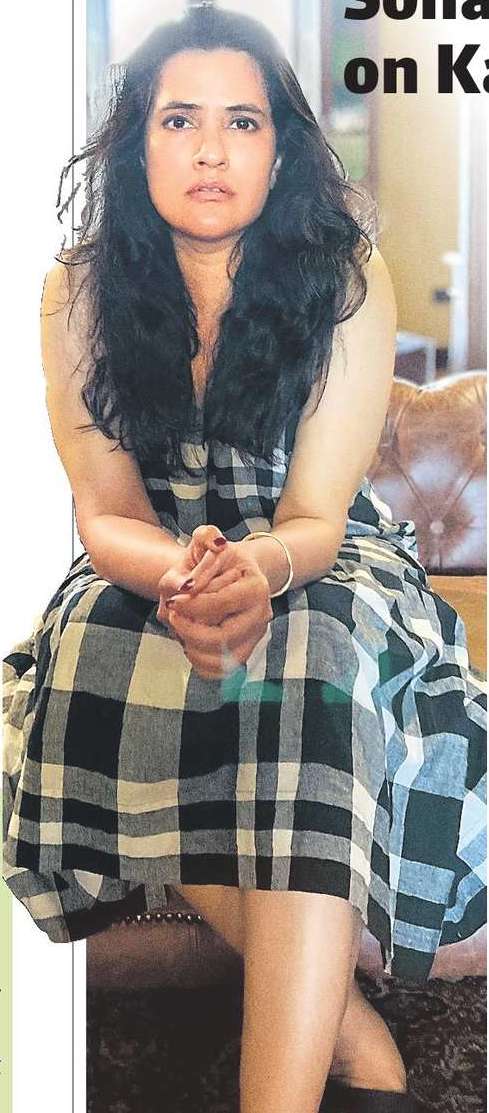
Vishakha Pandit (HINDUSTAN TIMES; July 6, 2025)
Singer Sona Mohapatra has responded to the criticism over her recent remarks on Kaanta Laga music video directors Radhika Rao and Vinay Sapru, denying allegations of insensitivity after actor Shefali Jariwala’s death.
Speaking to us, Sona (49) said, “What do the people of India feel about performative grief? It’s insidious self-promotion riding on a pretty performer’s untimely demise — it should upset everyone. These songs and legends are the musical heritage we stand on.”
It all started on Friday, when she shared an Instagram Story about the directors “retiring the song” after Shefali’s passing, writing: “3 legends created Kaanta Laga. Composer, lyricist, and singer: R D Burman, Majrooh Sultanpuri, Lata Mangeshkar... These two only created a smutty video with a 19-year-old. RIP and all for the 42-year-old lady but legacy???”
Several social media users accused Sona of being “insensitive” by refusing to name Shefali. Some also pointed out that Sona had voiced the 2004 remix Kabhi Aar Kabhi Paar, which had an equally sensuous video.
However, on Saturday, the singer shared a follow-up post: “Are we okay with our legends fading and getting disconnected from their own creations? Calling yourself the ‘makers’ of Kaanta Laga is okay when you are just the makers of a remix video?”
People say Amit Kumar was born with a silver spoon, but I have also seen the hard life-Amit Kumar
8:30 AM

Debarati S Sen (MID-DAY; October 26, 2023)
Amit Kumar has been the voice of almost all big stars in Bollywood including Dilip Kumar, Sanjay Dutt, Govinda, Anil Kapoor, Rishi Kapoor, Shah Rukh Khan and Salman Khan. In a candid conversation with us at his Juhu home, he admits he is nothing like his genius father Kishore Kumar, talks about the maestro, the ups and downs in his musical career and being in a phase where he is enjoying live performances. Excerpts:
Your father was a genius but also known and loved for his quirkiness. How much of him do you see in yourself?
Oh! We can’t be compared at all!
But would you say that you are temperamental, a trait your father was known to have?
You could say that. My father was temperamental, and I used to be like that, too. I guess all artistes have that to some extent. But my father was also a very down-to-earth person and a very simple man at heart. Earlier, I had a restless mind like him, but over the years, I have calmed down a lot. I regularly meditate now.
Over the years, you sang for almost all the big heroes in Bollywood, but then there was a lull. What do you think was the reason behind that?
My first recording was in 1973, but the song came out five years later. Then sang a duet with Asha Bhosle, and one for Madan Mohan and Salil Choudhary, but none of them released on time. Bade Achhe Lagte Hai (Balika Badhu, 1976) became a popular song even though the film didn’t do so well, and it is my bread-and-butter song even today. My songs in the 1979 film Baton Baton Mein were all hits. With Bappi Lahiri, I did Govinda’s first film, and the song I Am A Street Dancer was a super hit. After that, I sang for films like Afsana Pyar Ka, Kabhi Haan Kabhi Naa and Baaghi. I sang many songs for Anil Kapoor in Tezaab, Judaai, Rakhwala, Khel, Jamai Raja, Kala Baazar, Kishen Kanhaiya and others. I became his voice with hits. There were also many other good songs, but those films didn’t run at the box office, so they weren’t heard by most, just my luck!
Now, you are not actively into playback singing, are you enjoying doing live shows?
I do stage shows frequently. I have performed in Amsterdam and the US recently. In November, again, I will be out of the country. I am also constantly creating and composing music for the digital platform. The fact that people still want to listen to me on stage and buy tickets for my shows is overwhelming. I am 71 and still going strong and loving it. I have been performing on stage for the last 50 years! Whether good or bad, I have played my innings, and now I am relaxed and enjoying this stage of my life.
How do you view your journey in the music industry?
I have never spoken about this, but when I was in the Calcutta Youth Choir, I travelled all over India. We would travel in a third-class compartment in trains, carrying heavy bags. It was tough, but fun. People say Amit Kumar was born with a silver spoon, but I have also seen the hard life. My father used to say you must see all this to grow. When he introduced me at Shanmukhananda Hall (Mumbai) with the show ‘Daddy Kishore and sunny Amit’, it went on for three years, and every single weekend was houseful. It was because of my father, of course, but that made a difference in my life and gave me immense confidence.
Wasn’t your singing style compared to your father? Did you consciously try not to sing like him?
R D Burman had told me in the early days, ‘Don’t try to sing like your father. Don’t clone him. Sing what you are. Just do your own style.’ He egged me on. The composers I worked with helped and I developed my own style.
A lot has been written about your father. What is that one thing that most of his fans don’t know about him?
My father used to do stage shows for the army, but he never publicized that kabhi bhi apna dhol nahi pita. Sab bolte the ki Kishore Kumar kanjoos hai, but no one knew how much he did for others. He did the maximum free shows for the jawans of our country. Not many people know this. I have been doing shows to support cancer patients for the last six to seven years and consider myself extremely fortunate to be able to give back to society. And I too have been doing shows to support cancer patients for the last six to seven years and consider myself extremely lucky to be able to give back to society like this. I am blessed with everything and to be able to do such charity shows, it feels great. This year it is special because my 18-year-old daughter Muktika debuted on stage with me. She isn’t a professional singer, but I feel she has it in her.
Love Story (1981) was your first major hit?
Yes my stardom in playback singing was with Love Story and I became the voice of Kumar Gaurav. We went on to do many films together for five years after which Kumar Gaurav’s films began flopping and slowly, I was out too. Over the years my career has been like the waves in the ocean, full of ups and downs. I did so many songs for Anil Kapoor and became his voice with all the super hit songs! The fact that you journalists are still coming to me for interviews shows I must have done something right.
Your first stage performance was with your father? You weren’t based in Mumbai in those days. How did that happen - coming from Kolkata where you stayed with your mom, and working here?
I landed in Bombay when I was 19. My father introduced me for the first time on stage 50 years ago in 1973, at Shanmukhananda Hall. Then we went on to Europe, America, all over the world for shows. People talk of my father, but no one speaks about my mother, Ruma Guha Thakurta. She was instrumental in my life, encouraged me a lot. I used to sing in her group, Calcutta Youth Choir that she set up along with Salil Chowdhury and Satyajit Ray. I grew up in Uttam Babu’s (film star Uttam Kumar) neighbourhood. My first stage program was during Durga Puja, and Uttam Kumar had called my mother saying, ‘Ruma your son is a good singer, will he sing on stage?’. My mother refused saying he has studies. But he coaxed me to sing anyway. I rehearsed four songs but sang 10 and got Rs 800 for that show and we friends went over to Park Street the same night and spent all the money eating there.
My ma wanted me to have a stable career like a doctor as she knew music was not a steady profession. She complained to my father, ‘Your son is singing here and there, not studying. Gali gali mein gaana ga raha hai awaara jaisa. Fail ho gaya hai (at the famous institution Patha Bhavan). But my Baba hearing all this said, ‘Very good, very good! Time for him to come to me in Bombay’. That was typical of my father (laughs) He then came to Kolkata and saw me perform live at Rabindra Sadan. He said never keep a seat for me because the audience will get distracted and won’t hear you. So, he watched me from backstage. That’s when he was convinced. I learnt classical music for a bit but bouncer gaya. I learnt tabla and then it all began. Music directors like R D Burman, who was like family, Kalyanji Anandji, Laxmikant Pyarelal, Rajesh Roshan, they stood by me. They knew how to extract the best from me and I learnt a lot through experience.
When Kishore Kumar's biopic gave Soumik Sen the idea for Jubilee
8:23 AM
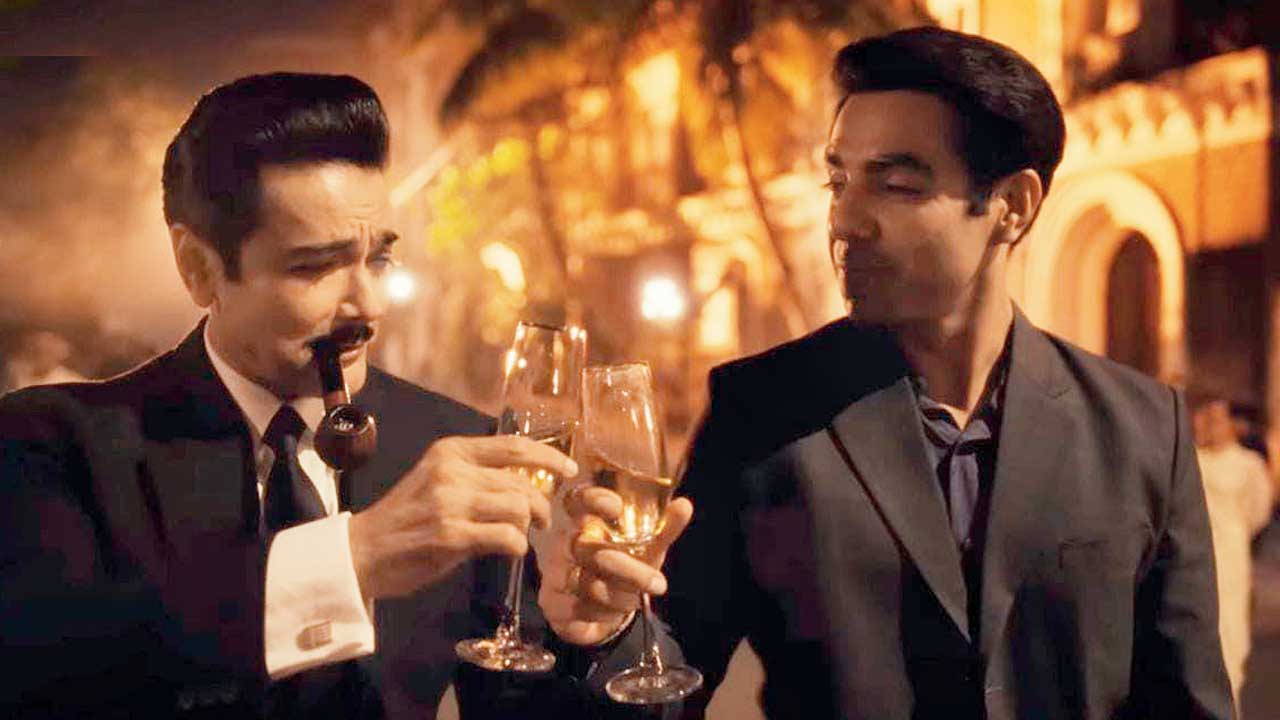
Jubilee co-creator reveals how scripting of Kishore Kumar biopic led him to explore ’50s film industry that forms the series' crux
Hiren Kotwani (MID-DAY; April 7, 2023)
Their love for cinema has seen many filmmakers tell stories set in the Indian film industry. Vikramaditya Motwane and co-creator Soumik Sen take a stab at it with Jubilee, Amazon Prime Video’s marquee series that stars Prosenjit Chatterjee, Aditi Rao Hydari, Aparshakti Khurana and Wamiqa Gabbi. Sen surprises us when he says that the period drama has its roots in the Kishore Kumar biopic that he was scripting for Anurag Basu, and was to star Ranbir Kapoor.
“While working on the Kishore Kumar biopic, my research extended to R D Burman, the music of those times and the era before that. In the process, I went through old magazines that gave insight into the functioning of the film industry,” recounts Sen.
It led him, along with Motwane and Atul Sabharwal, to create a fictional tale set in the Hindi film industry of the ’50s and ’60s. Jubilee studies love, power and burning ambitions set against the backdrop of the studio system.
Reminiscing the time actors like Ashok Kumar and Dilip Kumar opted out of studios, Sen shares, “Actors went their independent way when [their star power] became the reason for commerce.”
He adds that the studio system eventually gave way to the star system. “Whenever a new actor is given a break, he likes to associate with a certain production house — like Rajesh Khanna did with Shakti Samanta Productions, or Amitabh Bachchan did with Prakash Mehra.”
While Sen is awaiting the audience’s reaction to the series, we prod him about the fate of the Kumar biopic. “Kishore da’s family would be in the best position to share any details about it,” he says.
I do not like using apps to correct the sur-Kavita Krishnamurti
2:38 PM

After her take on the use of technology in recording songs went viral, the singer elaborates on what she meant
Debarati S Sen (BOMBAY TIMES; January 15, 2023)
Recently, a video in which Kavita Krishnamurti spoke about the rampant use of technology in recording songs went viral. The singer was present at an event in Bengaluru to speak about her journey and how songs were recorded earlier. She says, “I realized that parts of that talk had gone viral on social media when my friends started messaging me.”
Elaborating on her thoughts about the use of audio software to record songs, she says, “Once, Khayyam saab and I were judges for a show and someone said, ‘Aaj kal, sur aur sab theek kiya ja sakta hai, bas gaane mein expression aur attitude zaroori hai.’ Khayyam ji said, ‘Gaane mein attitude ka kya kaam agar sur aur taal hi nahi hai?’ These incidents were on my mind when I spoke that day. I didn’t mean to disrespect anyone and don’t want to create a controversy. With changing styles, we also change. I feel that if technology can help, one should definitely use it. I have suffered from bronchitis all my life and there have been days when I was so sick that I had to take antibiotics and cough syrups before singing. During times like these, technology helps. My only point is that you should not depend solely on technology to record a good song.”
‘SHOCKED WHEN I WAS TOLD HUM VOICE CLEAN KAR LENGE’
Narrating an experience, she says, “I remember I was recording a song in 2003 and wanted to redo a line. The recordist and the music director said, ‘Hum voice clean kar lenge’. I told them that they can clean the voice, but they needn’t work on the sur because I will sing again. Later, the recordist told me, ‘Aaj kal Melodyne (an audio pitch modification tool) hai aur sab theek ho jata hai usme.’ I requested them not to use it for my songs. I don’t like using it because when the song releases, you can make out that it has gone through a processor and sounds a bit metallic and unreal to me, and I don’t feel happy about that. There are others who don’t feel the same. I remember once a singer came to the studio and asked, ‘Melodyne hain na aap ke paas?’ And I found that very amusing!”
‘STRENGTHEN YOUR SKILLS AND THEN USE TECHNOLOGY’
The singer, who has lent her voice to chartbusters like Hawa Hawai, Tu Cheez Badi Hain, Dola Re Dola, Nimbooda and Bin Tere Sanam, among others, goes on to add, “Your capacity to sing without technology should never prove to be a limitation. You shouldn’t lessen your practice or stop focusing on sur and taal. For any singer, that is of primary importance. You should strengthen yourself and your skills and then use technology.”
Kavita emphasizes that all these factors were important. “Bollywood songs have phrases on the beat and aren’t rhythmically complicated. Earlier, if something was off-key or somebody was unable to catch the beat, then the only option was redoing it because tools and apps didn’t exist.”
RECORDING IN THE TIME OF RD
Reflecting on the effort behind recording when she had joined the industry, she shares, “Laxmikant-Pyarelal and R D Burman would call us a day earlier so that we knew the emotion of the song. The next day, we’d go to the studio and rehearse with the orchestra. That way, we would know the song well. Some music directors would tell us where to break the song and when to breathe.”
For an entire month, all that I did was watch old movies and study the music. I went down a rabbit hole-Achint Thakkar
8:14 AM
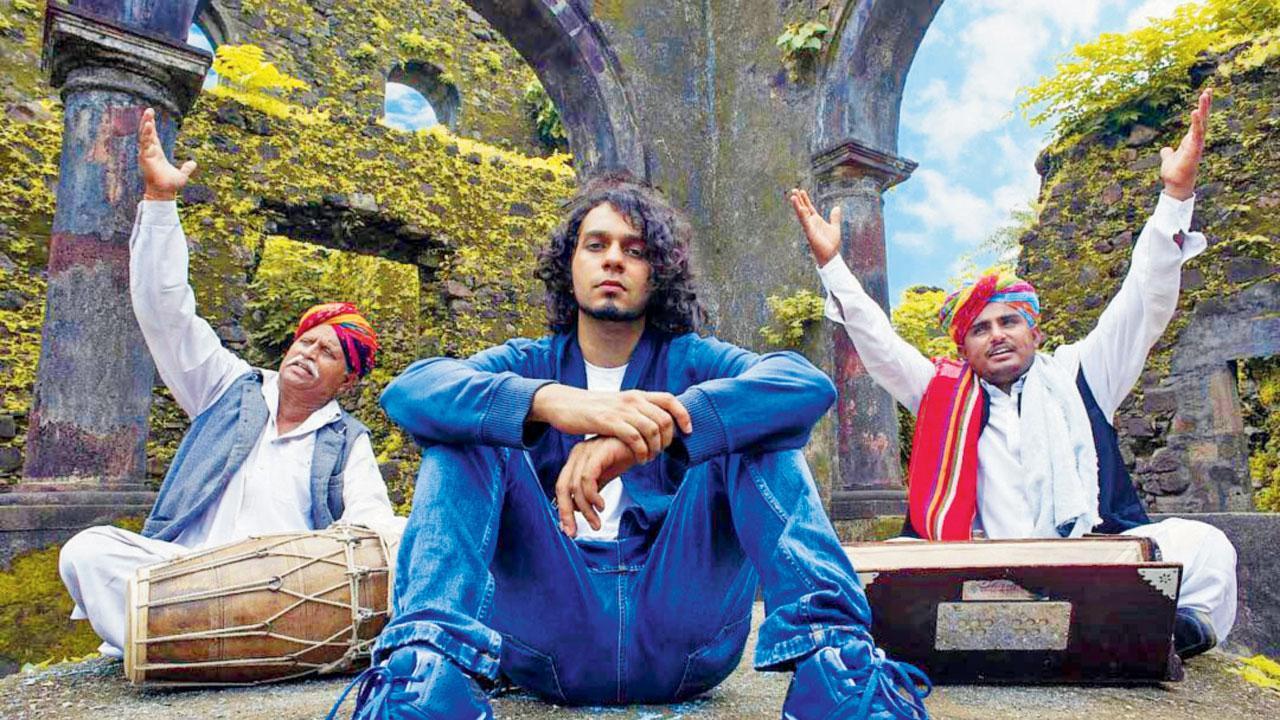
Monica O My Darling composer Achint Thakkar on putting his modern music sensibilities aside to create songs reminiscent of bygone eras
Sonia Lulla (MID-DAY; November 7, 2022)
Given that he is a ’90s kid, musician Achint Thakkar admits that he had to put in a fair bit of toil to replicate music from the ’60s and ’70s for Rajkummar Rao's next, Monica O My Darling. Director Vasan Bala did not merely want elements of music of the bygone eras in his film, but asked the musician to create numbers that resembled the decades in their entirety.
“Initially, I thought the brief to include music from the ’70s was for aesthetic purposes alone, but he wanted the songs to be made like they were in those decades. Tracks like Piya Tu were templates that he wanted me to follow. For an entire month, all that I did was watch old movies and study the music. I went down a rabbit hole and consumed the works of musicians like R D Burman and S D Burman. So, the soundtrack is substantially influenced by them. The first song that I created for this film was Yeh Ik Zindagi, and that eventually formed the base for the rest of the songs,” the composer tells mid-day.
Thakkar’s research revealed that he needed to train his attention on making the music more melodic. He also needed to include more instruments in his songs. “My sensibilities are modern, so, I found it hard to do the whole antra and mukhda thing. But the simplicity of their music is what makes it more beautiful. It is harder to do something that is simple.”
At a time when music production houses are tweaking old ditties to make them palatable for today’s listeners, was the team apprehensive about presenting an entire soundtrack that seemed to belong to the ’70s? “We did not consider that,” says Thakkar, simply.
“The first track that I made was a modern version, and had all the [trinkets] associated with today’s music. That was rejected. Making music that is authentic and true to the past eras is challenging. We scouted for singers on YouTube to find the kind of voices that could do justice to the songs. Singers like Anupama Shrivastava truly delivered what we needed. In the ’80s, the singers had a natural flair, and could easily render songs in [high pitches]. The female singers had a sweet shrillness, which we no longer see in today’s singers. Fortunately, we found several artistes who could recreate that vibe.”
The composer’s previous projects include collaborations with Four More Shots Please composer Michael McCleary, who was also the co-composer on Yeh Ik Zindagi. Having earned recognition for his work on Scam 1992: The Harshad Mehta Story, Thakkar is also associated with Hansal Mehta’s Scoop, which is based on crime journalist Jigna Vora’s life. He has also worked on the web series, Rocket Boys.
I would always tell Bhupinder Singh, ‘Bhupi, tu muh khol ke gaa. Don’t sing like ghazal singers’-Asha Bhosle
8:20 AM

Legendary singer Bhupinder Singh passed away in Mumbai on July 18. Asha Bhosle recounts some fond memories
Debarati S Sen (BOMBAY TIMES; July 20, 2022)
Veteran singer Bhupinder Singh breathed his last on July 18 at a Mumbai hospital. The singer, 82, was suffering from a colon ailment and had tested positive for Coronavirus a few days ago. He died after suffering a cardiac arrest on Monday evening.
The Amritsar-born musician began his career in Delhi with performances at the All India Radio. He was known for making use of drums, bass and guitar in his ghazals. He sang some memorable songs in Hindi films, including Kisi Nazar Ko Tera Intezar (Aitbaar), Dil Dhoondta Hai (Mausam), Naam Gum Jayega (Kinara), Karoge Yaad To (Bazaar), Ek Akela Is Shaher Mein and Do Deewane Shehar Mein (Gharaonda) and many more. He was discovered by music director Madan Mohan, who brought him to Mumbai and gave him his first song Hoke Majboor Mujhe Usne Bulaya Hoga (Haqeeqat). He also has albums like Aarzoo, Gulmohar and Ghazal Ke Phool with wife, singer Mitali Singh to his credit.
Remembering the singer and the bond they shared, Asha Bhosle said, “Bahut hi bura lag raha hai yeh sunke ke woh nahi raha. Industry ke bahut acche-acche log iss saal chale gaye. Bhupinder Singh ke saath Pancham (R D Burman) aur meri bahut purnani jaan pehchaan thi. We have known him since he first sang for Madan Mohan ji. Hum usko Bhupi bulate the. Woh bahut accha dost tha Pancham ka; jab bhi aata tha, he would stay till evening. He was a good man.”
Bhupinder Singh was also a fine guitarist and had played the guitar for a few songs. Asha Bhosle recalled, “Bhupi had played the guitar for Dum Maro Dum (Hare Rama Hare Krishna) and Chura Liya (Yaadon Ki Baaraat), both composed by Pancham. I remember we sang Bappi Lahiri’s songs…bahut accha daur tha woh. Together, we have have also sung songs penned by Gulzar bhai. Pancham’s Jab Andhera Hota Hai from the film Raja Rani (1973) was sung by Bhupi and me. He sang the aalap there. I don’t think the younger generation has heard this song; we used to perform this song at our shows.”
Talking about their rapport, she said, “There was a film starring Jaya Bhaduri, and I had sung a song with Bhupi for the film. Bhupi had a different style of singing. He would sing songs in the ghazal style – bahut accha gata tha aur alag hi style mein gata tha. I would always tell him, ‘Bhupi, tu muh khol ke gaa. Don’t sing like ghazal singers, open your mouth and sing.’ He would tell me, ‘Haan Masterni, sikhao ab mujhe.’ He was such a fabulous guitar player – there was no one like him. When a singer plays the guitar, he adds to the song. But then he quit playing the guitar as he said that he wanted to only be a playback singer. If he would’ve remained a musician, he would have surpassed everyone.”
He is survived by his wife Mitali Singh and son Nihal.
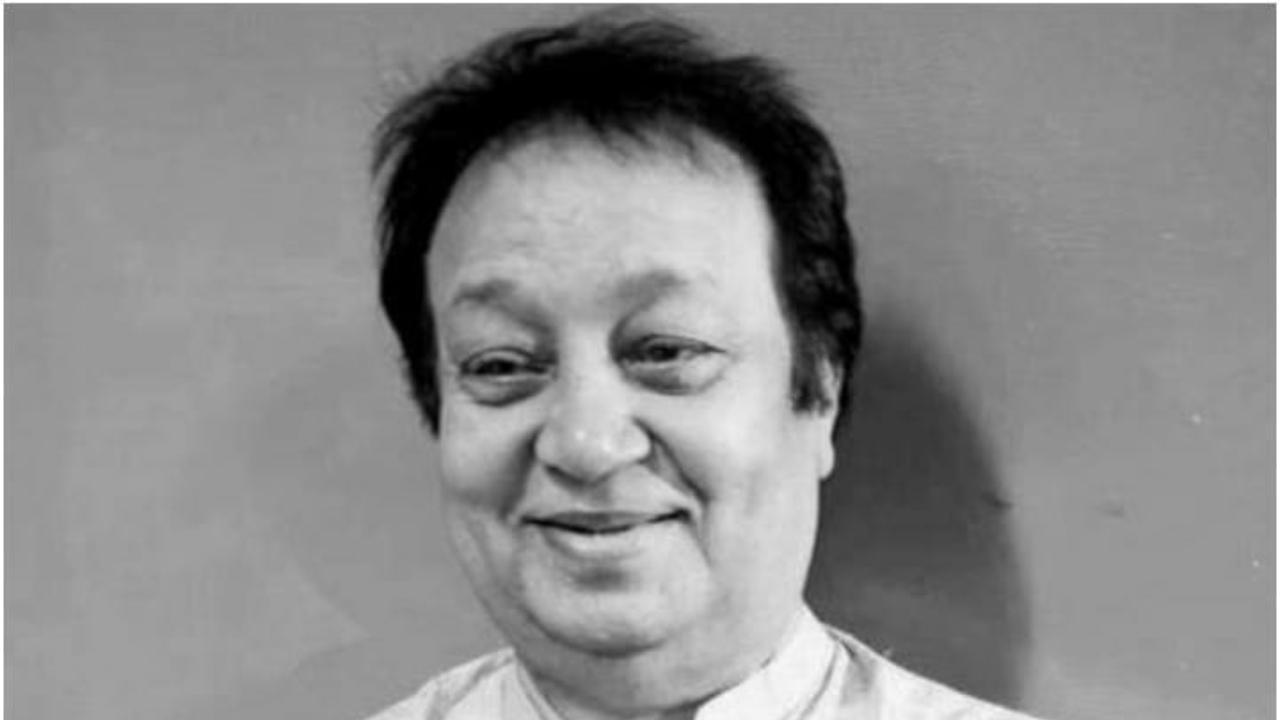
Bappi Lahiri was a simple man at heart, but later got sucked into being a showman-Amit Khanna
8:17 AM
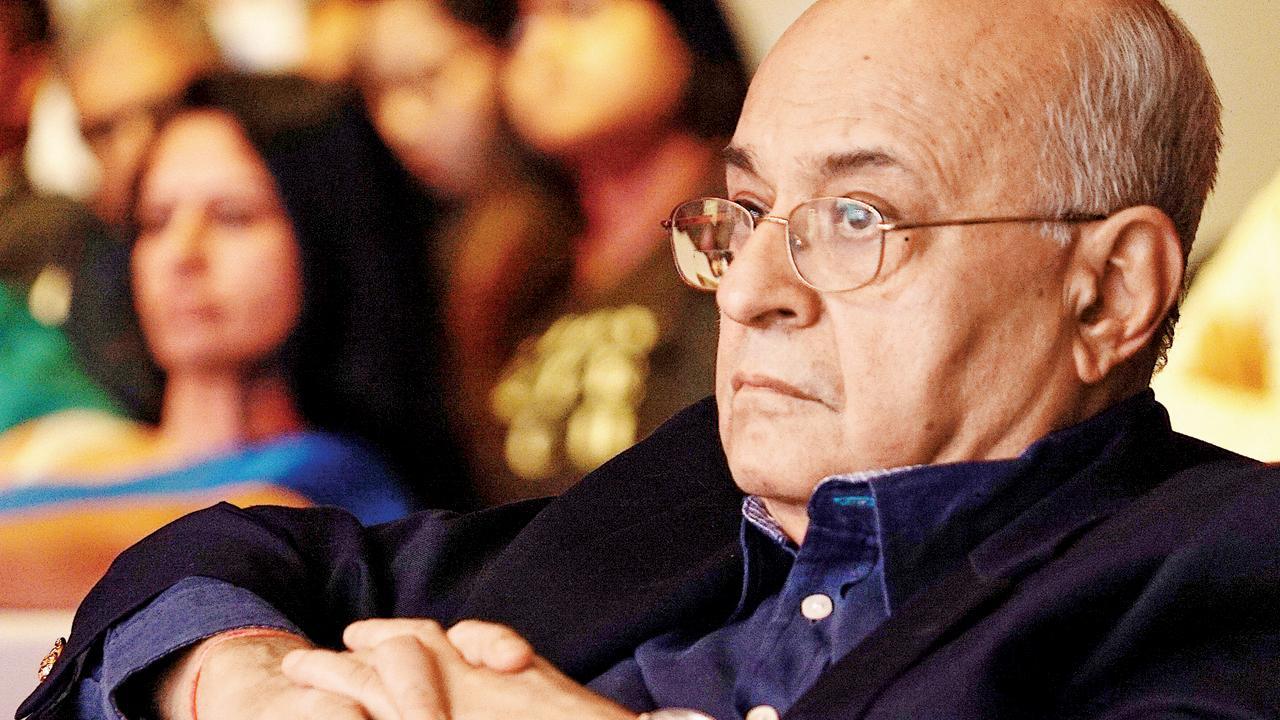
As told to Upala KBR (MID-DAY; February 17, 2022)
Bappi started his career on the first day that he [arrived] in Mumbai. He was a couple of years younger than me when I met him. He was 20. I had heard that B R Ishara had signed him for the background music of his movie Charitra, which launched Parveen Babi and Salim Durrani. Bappi knew the Mukerji family and got a film with them. In those days, Bappi and his parents would meet producers at their offices, and one day, he dropped in at Navketan. I asked him to sing something for me.
The next day, the producer of Chalte Chalte [Bhisham Kohli] dropped in to meet us. Bhisham told me that while they had raised money with great difficulty, and got Simi Garewal’s nod to play the lead role, R D Burman and Lamikant-Pyarelal, whom they approached first, had backed out as they were busy. Bhisham asked me to recommend someone, so I told him about this young boy who came to meet me and played some interesting Bengali music. Bappi seemed promising, I told him.
Bhisham liked his music, especially a particular melody that became the title song, Chalte Chalte. Bappi would sing in Bengali, and I would write the words in Hindi. From there, our association began. That evening, we finalised the song and another one which Lata ji sang — Dur Dur Tum Rahe. It was an unusual song for her. The film’s music became a hit, and there was no looking back for Bappi. Out of the 40 to 50 songs I wrote, I must have written a dozen for him.
One of my favourite compositions of his was for my directorial venture, Sheeshe Ka Ghar. Anup Ghoshal’s Tum Saath Ho and Salma Agha’s Chala Hai Balamwa, were hits. Bappi was talented, and few know that he was a brilliant tabla player — a child prodigy in Kolkata. He learned from Pandit Shanta Prasad, and once, when people heard him at a public performance, they were shocked to see that he could play so well.
He played the tabla in one of my songs in Sheeshe Ka Ghar. In Raj Sippy’s Josh, I wrote the songs and we made Amjad Khan and Deven Verma sing. It was the first in nonsensical music and the lines went like Jab Khat Mein Khatmal Chalega.
Bappi, like Pancham, understood that sound was as important as recording. The way you balance the orchestra is essential. He came to be known as the Disco King after B Subhash’s music became a freak hit. That’s how he perfected the disco sound. Though he became very famous, as a person he remained simple. He was a simple man at heart, but later got sucked into being a showman.
What classical musicians take 3 hours to do, Lata Mangeshkar does in 3 minutes-Shruti Jauhari
8:27 AM

By Shruti Jauhari, singer/teacher (THE TIMES OF INDIA; February 7, 2022)
The word for Sur was ‘Saam’ in ancient India. In present times it is known as Swar, a melodic and soothing sound. And if one wishes to listen and feel it (Swar) in all its perfection, Lata Mangeshkar’s voice is the personification of it.
The legendary Ustad Bade Ghulam Ali Khan after listening to her said: “What we classical musicians take 3 1/2 hours to accomplish, Lata does in 3 minutes.” She had beautifully reinvented her style from the classical to obtain the best results for light music.
Much of it came naturally to her as she carried the genes of natya sangeet maestro, Pandit Deenanath Mangeshkar, especially the ability to render intricate Swar Sangati to perfection. This is evident in her very first song as playback singer ‘Naachu Yaa Gade, Khelu Saari Mani Haus Bhaari’ for a Marathi film Kiti Hasaal (1942). She was merely 13 years old then. The most mystifying feature in it was her perfect pitch rendition—a singer’s most precious vocal asset. This is something one is born with and extremely difficult to acquire.
Her association with music directors Anil Biswas, Naushad, C Ramachandra, Sajjad Hussain in the 40’s and 50’s made for a rich body of work. Each one had his own preferences and she satisfied each of their highly specific requirements. If it was andolit swar demanded by Sajjad Hussain in ‘Aye Dilruba’ from the film Rustom Sohrab (1963), for Shankar Jaikishan it was a subtle touch in ‘Tera Jana’ for the film Anari (1959).
Pieces like ‘Pa Lagun Kar Jori’, the famous Pilu Thumri, revisited by Datta Davjekar for the film ‘Aap Ki Seva Mein’ (1946) stood out when she was still in her teens. In later years, she would render the same Raag Pilu with the tranquility of a lullaby in ‘Chandan Ka Palna’ for the film ‘Shabab’ (1954) and in ‘Na Manu Na Manu’ with breathtaking harkat to emphasise its chanchal aspects in Ganga Jamuna (1961) (both compositions were by Naushad). Anil Biswas’s Ek taal composition ‘Rooth ke tum to chal diye’ for ‘Jalati Nishani’ (1957) was similarly a masterpiece with pathos rendered through detailed note patterns.
When it comes to intricate singing, one has to but remember the genius of both music maestro C Ramachandra and Lata ji, for compositions like ‘Radha na bole’ (Azaad,1955) in Rag Bageshri, ‘Balma Anadi’ (Bahurani, 1963) in Rag Hemant and ‘Dheere se aaja’ (Albela, 1951) in Rag Pilu. Not to forget the jugalbandi of the Meend-based Bihag composition ‘Tere sur aur mere geet’ (Goonj Uthi Shehnai, 1959) by Vasant Desai, in which she matched the flow of the shehnai played by none other than Ustad Bismillah Khan.
Madan Mohan specifically made tunes for her; among magical melodies created by the duo is ‘Pritam daras dikhao’ (Chacha Zindabad, 1959), a piece in Raag Lalit, accompanied by the great Manna Dey, is worth mentioning. The taans in this Teental composition are extraordinary. Any attempt to sing it seems futile.
‘Will Lata sing? Then I am safe,’ said S D Burman once. For only she could give voice to his thoughts on ‘Tum Na Jane’ (Sazaa, 1951), inspired by Rabindra Sangeet. When R D Burman scored the evergreen ‘Raina beeti jaaye’ (Amar Prem, 1972), moving in and out of Rag Todi, it could again only be handled by her. Every version of ‘Shyam na aye’ in this composition is a treat. Singing and singing effortlessly are entirely different. Singing effortlessly to perfection is yet another thing. This is what Lata ji did to the classical style—she created her own three-minute masterpieces.
Those criticizing me are the ones dancing to my tunes-Tanishk Bagchi
8:30 AM
Undeterred by the brickbats he gets for remixing old ditties, Badhaai Do composer Tanishk Bagchi gets candid about emerging as the go-to person for filmmakers in search of chart-busters
Sonia Lulla (MID-DAY; January 31, 2022)
New music composers in the industry either win the favour of cinephiles and critics, or face brickbats. Tanishk Bagchi, however, faced an unusual predicament during his early years in Bollywood — he found favour in cinephiles, and faced the brickbats of critics. The Humma song, one of his first remixes, became a chartbuster in no time, and paved the way for a fresh trend in the industry. Bagchi’s scores became hot favourites among music consumers, a development that sat well with label heads, but not with composers of the original ditties that Bagchi was revisiting.
“I wasn’t the first one,” Bagchi tells mid-day in a candid chat. “Amit Trivedi did it with Hungama Ho Gaya, and Vishal-Shekhar with Bachna Ae Haseeno. When I started doing it, people questioned me. So, I decided that if I created two remixes, I’d make two original tracks as well. If I made Humma Humma, I made Akh Lad Jaave too. If I was at the top due to my remixes, I was also at the top because of my original songs.”
Bagchi’s resume evidently backs his claim. In 2021, apart from being a top performer on Indian music apps, his Shershaah composition Raataan Lambiyan made it to the Billboard charts as well. Emraan Hashmi-starrer Lut Gaye, and Nach Meri Rani were other Bagchi compositions that were also seamlessly adopted by music lovers.
Assured in the knowledge that “those criticizing me are the ones dancing to my tunes”, he says reinventing music is only a way of celebrating the work of revered composers. “My dad [Nandakumar Bagchi] would say that during the end of R D Burman’s life, few were there [with him]. But when he [passed away], people started reinventing his music. Nobody is trying to reinvent the work of those who are here. Only when they go do we say, ‘Wah, kya kaam kiya tha’. How do we get these legends back? We can do collaborations. Maybe, Anu Malik and I could collaborate.”
Despite the criticism he has faced, Bagchi is the go-to person for filmmakers seeking a hit track in their offerings. With as many as 20 projects under his belt as we speak, he gears up for his next, the Rajkummar Rao-starrer Badhaai Do. “I worked on the [franchise’s] first film as well, so I had the theme in my mind already. I begin to visualise the film through the music as soon as the story is narrated to me. I also like to think about it like a director would, and match the director’s vision. The dialect plays a crucial role as well. For instance, a Delhi-based film will have a Punjabi song. For a film set in UP, I will try to incorporate the flavour that we had in Badrinath Ki Dulhania. With 20 films [in my kitty], I need to be fast. It would usually take me a month, but, now, if a scenario is explained to me, I can churn out a track in a day.”
Matching the desired quality, one would assume, would be a challenging feat. But, Bagchi says his only aim is to appease himself. “Even if my manager or anyone else says a song I’ve made is good, I won’t present it unless I like it. If it doesn’t appeal to me, I will throw it out. I will also never repeat a certain kind of song. I can do a Makhna with Jacqueline Fernandez, a Nach Meri Rani with Nora Fatehi, a Raataan Lambiyan, which is [like a] sufi track, and a Tip Tip Barsa for Sooryavanshi. They all sound different.”
Bagchi admits that understanding the ways of the industry took a fair amount of toil. He didn’t find it easy to get work when he arrived in Mumbai from Calcutta, and turning down offers that he knew could easily go to other composers didn’t seem like a wise decision. “If I said no, producers would go to someone else. So I focussed on doing the best I could. At the end of the day, I focus on the good. When I will no longer be here, [my songs] like Ve Mahi and Baarish will be immortalized.”
When R D Burman died, I lost both that friendship and creativity we shared-Gulzar
8:31 AM
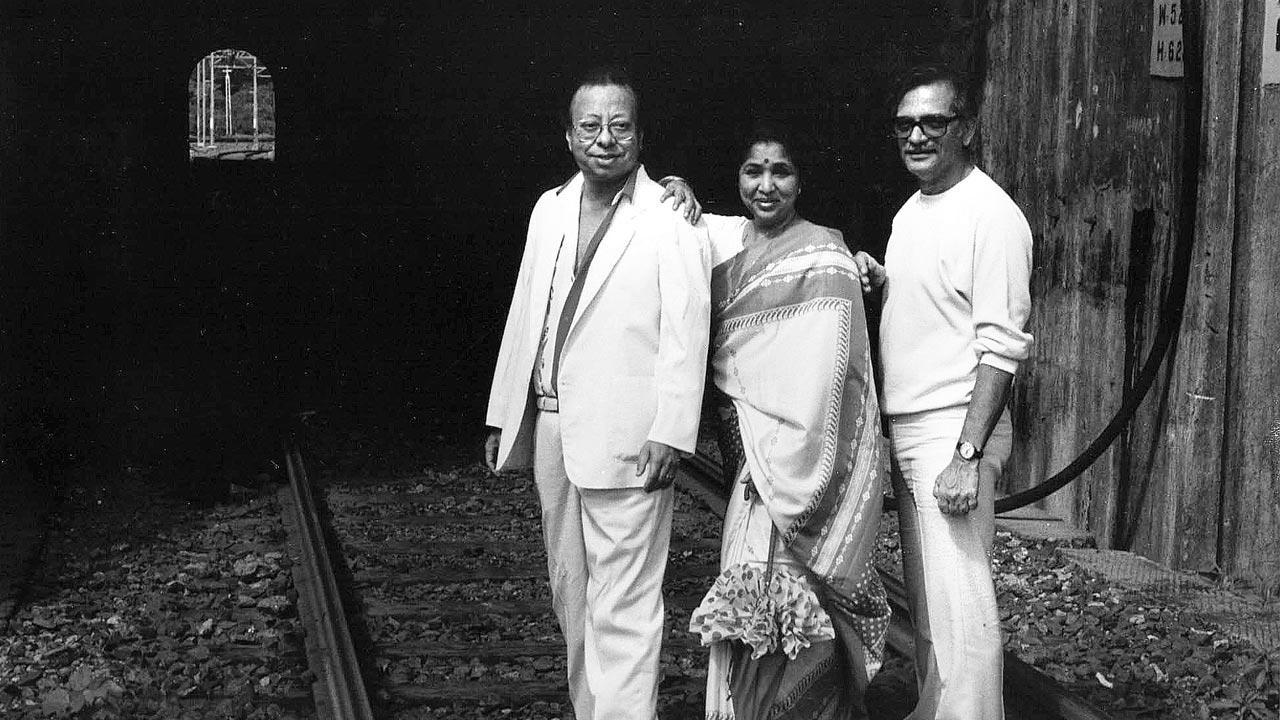
Gulzar with his music composer friend R D Burman and Asha Bhosle. Pic courtesy/Gulzar; Actually... I Met Them
When R D Burman died, a large part of Gulzar departed with him. In a new memoir, the veteran lyricist remembers his dear friend, who gave wings to his song-writing journey and the magic they created together
Jane Borges (MID-DAY; October 17, 2021)
The first rule of journalism is to remain objective, always—something, this generation of “news-breakers” are already grappling with. But, speaking with veteran film director-lyricist-poet-author Gulzar for the third time now, this writer’s struggle has never seemed more real. We can’t really put a finger on why that’s the case. Though, we must admit that when we were two years old, Lakdi Ki Kathi from the film Masoom (1983) was played on loop on our TV set — the number of rewinds terribly reduced the life of the video cassette—as the song made our toddler self dance with glee. We didn’t of course know then that Gulzar had penned it. Later, it was the ghazals that he wrote — the album Marasim (2000) being a personal favourite — that preoccupied our teenage heart. So, when the octogenarian, who is blessed with a razor-sharp memory, remembers our meeting from four years ago at his Pali Hill bungalow, we can’t help but smile. Since this time, our conversation is over telephone, we allow this slip. That’s also where we cut-short the impulses of the inner-fan. We are back to discussing his book, a new memoir, which is also several years old. Confusing?
Over three decades ago, Gulzar was approached by Sanchari Mukherjee, then a journalist with a Bengali newspaper’s Sunday edition, for a new column series. “She wanted me to write about my experience of working with veterans from the film fraternity. I told her that’s typical Filmfare [magazine] material. But, she kept insisting,” recalls the 87-year-old.
Gulzar eventually told her that he’d speak about his many interactions with those who had influenced his work. “We managed to work it out. She would fly down to Mumbai, and cover columns for two editions at one time, and leave for Kolkata the same evening. I would narrate my experiences in Bangla, Hindu, Urdu, English and hand gestures, and she’d put it all down in Bangla. She would later send the final piece, and I’d make a few edits, before it got published,” he shares.
This went on for some time, until Mukherjee “went the family way”. The column ended soon after, but took on a new life as a book in Bengali called Panta Bhate, which means “in fermented rice”, a phrase he used in one of his films. Gulzar, however, was adamant about not having it published in English, because he saw himself making new additions to this diverse cast of celebrated artistes mentioned in the original compilation. “The wave of thoughts kept churning, but I never sat down to write. This continued and time passed by.”
It was only recently when Premanka Goswami, the executive editor at the publishing house behind his book, mentioned how he wanted to translate Panta Bhate, and that he knew someone, who had worked on the first two chapters that Gulzar, in a first, re-considered the option. But that was only because the translation by Maharghya Chakraborty had bowled him over. “He had done such a good job, and had remained authentic to the text. I realised that even if I write more, it would not be in the same style.”
His new memoir, Actually… I Met Them (Penguin Random House), though an old one, will thus, for the first time, be read by non-Bangla readers. In essence, they are intimate sketches of doyens who shaped Gulzar’s early decades in cinema—from Bimal Roy, Kishore Kumar, RD Burman, Satyajit Ray, Pandit Ravi Shankar, Sanjeev Kumar to Suchitra Sen and Sharmila Tagore. “Most of them are Bengalis, and [while working on this book] I realised the extent of my collaboration with them,” says Gulzar, who considers himself as much a Bengali, as he’s Punjabi, and has also taught himself to write and speak the language.
The one Bengali who, however, doesn’t have an entire chapter dedicated to her is actress Rakhee Gulzar. He mentions her often through the book—the first time he set eyes on her, the love letters they exchanged, the pranks she pulled on him, driving away with his car with friends to eat paani puri—but beyond that “I am very shy when it comes to writing about my wife.”. We can almost hear him blush over the phone.
When it came to naming the memoir, the celebrated poet says he picked up the last sentence of the introductory note that he wrote for the book. “I find it hard to believe that all these people lived in the same era, and that I had the chance to work with most of them. Sometimes, I have to convince myself that I actually met them.”
These vignettes are unlike any other we’ve read—they aren’t short biographies, neither are they profiles. They are reflections of personal and private moments between two artistes, and show them in new light. Most moving is his relationship with Pancham (R D Burman). When the music composer passed away in 1994, Gulzar writes that “a large part of me departed with Pancham; the Gulzar that remains now is but half-complete”.
“Before my career as director took off, I had written only one song with his [Pancham] father [S D Burman]… my song-writing journey began when Pancham was an assistant with his father, and I, an assistant director. He used to come to our office holding the dugga [the left tabla]. While the grown-ups would continue their discussions, we would go out to take a stroll. A deep friendship formed between us, and I began writing more songs for him. The way I wrote when with Pancham, can’t be recreated. We grew together in this journey. When he died, I lost both that friendship and creativity [we shared],” he tells us.
Gulzar also writes about his disappointment of not being able to complete the script for Amritakumbher Sandhane that Bimal Roy and he were working on, as the former died of cancer. Another huge regret was not being able to land the opportunity to work with Satyajit Ray, an institution in himself. “It would have been like going back to college, and I missed that chance. Another person I wanted to assist was Shyam Benegal, because I admired his modern, new cinema greatly. I requested him twice actually, but he laughed it off,” says Gulzar, being absolutely modest.
He admits he has always been curious about cinema and never shied away from learning. In fact, he tells us that in the early 1980s, by which time his body of work included big hits like Aandhi, Parichay and Mausam, he wanted to study at the Film and Television Institute of India. “I was making Namkeen at the time. I approached Hrishi da [Hrishikesh Mukherjee] who was the examiner at the institute, and asked if there was a possibility of doing a three-year course there.”
He remembers being scoffed at. “Hrishi da said, ‘Huh! Who will write for my films then?’ He joked that grown-ups and married people weren’t allowed here.”
If and when Gulzar writes a Part 2 of this memoir, which he says he will, there will be certain colleagues that he definitely won’t forget to mention. A R Rahman, Vishal Bhardwaj, Shaad Ali, and his daughter Meghna Gulzar. “It might feel like I am boasting. But, I am very, very proud of her [Meghna]. She has really surpassed my filmmaking. Our generation made good films, but we weren’t the original authors — our works were inspired by other literary stalwarts. The new crop of filmmakers author their own films. Cinema after all is about your own expression, commitment and statement.”
Subscribe to:
Posts (Atom)