Showing posts with label Uri. Show all posts
Showing posts with label Uri. Show all posts
I believe an actor who becomes frustrated burns out very quickly-Rakesh Bedi
4:52 PM

Neha Maheshwri (BOMBAY TIMES; July 20, 2026)
If Dhurandhar has been a disruptor in Indian cinema, Rakesh Bedi has emerged as one of its biggest rediscoveries. Nearly five decades into a career spanning cinema, TV and theatre, the veteran has won widespread acclaim for his portrayal of Jameel Jamali, proving that one role can remind audiences of an actor’s enduring brilliance.
‘Dhurandhar was a result of one scene in Uri’
Citing his role of Khabrilal in Tirangaa (1993) as an example, he says, “No matter the role, big or small, I always worked honestly and to the best of my ability. When Uri: The Surgical Strike (2019) was being made, I received several calls from the production, but I kept refusing because I didn't want to do just one scene. Finally, Aditya Dhar called me. At the time, I barely knew him. He told me, ‘Sir, whenever I reach this page in the script, I can only think of you for this part. Now you tell me, will you do it or not?’ I was overjoyed. Since then, Aditya and I have shared great mutual respect.”
‘The maine sabki chhutti kar dee mindset is a dangerous zone’
At the sequel’s screening, Arjun Rampal told him, “Aap sabko khaa gaye.” Bedi smiles at the memory but is careful not to let the compliment go to his head. He says, “That was his way of appreciating my performance. Everyone has done justice to their role. So did I. It's just that my part took a bigger slice of the pie.”
The veteran is equally mindful of not allowing success to inflate his ego. Clarifying a recent remark about finally feeling like a star, he says, “I don’t have the feeling that I am a star. I said it in reference to the love I have received after Dhurandhar. If that’s what people call stardom, so be it. I never assume that maine sabki chhutti kar dee. That mindset can be dangerous. It can get into your head, and luck or fortune can humble you overnight. Main uss zone mein nahi jaata ki main bahut phail jaaun.”
‘I believe an actor who becomes frustrated burns out very quickly’
Jameel Jamali has revealed a side of Bedi that even many within the industry hadn’t seen before. Yet, he has never measured his career by the opportunities he missed.
He says, “One thing about me is that I have never been frustrated. I believe an actor who becomes frustrated burns out very quickly. If I keep dwelling on what I didn’t get, it will only breed anger, and sooner or later, that will reflect in my work and behaviour towards colleagues ki tum nahi jaante main kya hoon. Arre bhai, nahi jaante tum kya ho, lekin tumko jo kaam diya hai, usko toh theek se karo. I never want to get into that space.”
‘Amjad Khan didn’t become an overnight star with Sholay’
If there’s one thing Bedi wants younger actors to remember, it is to let the work speak louder than the trappings of stardom. He says, “Aap jo bhi kaam kar rahe hain, usko achha kijiye. Uska kahin na kahin aage jaa kar asar padta hi hai. A lot of newcomers focus more on the frills than on the work, like meri vanity, mere dry fruits, and everything that comes with stardom.”
Drawing from Bollywood history, he adds, “We often think Amjad Khan became an overnight star after Sholay (1975). He didn’t. Before that, he had done around 10 films, playing small parts, sometimes just a scene or two. But whatever he did, he did well. The same is true of Nawazuddin Siddiqui and Pankaj Tripathi. I’m not saying you should accept completely inconsequential roles with a single dialogue like, ‘Yeh aapka letter aaya hai,’ or ‘Maine injection laga diya hai. Baaki Bhagwan par bharosa rakhiye.’ Luck plays a huge role, but it isn’t in your control. What is in your hands is doing every role with honesty, dedication and complete focus.”
‘I have to choose my roles diligently and carefully’
Finding a director who can look beyond an actor’s established image, Bedi believes, can be career-defining.
He says, “Ye iss industry ki vidambana hai that once you’ve played a certain kind of role, people tend to see you only through that lens. They either can’t or don’t imagine you differently. They often cast whoever is available and fits the budget. Very few filmmakers are willing to wait for an actor rather than compromise on their vision. That kind of faith gives an actor tremendous confidence. It’s always a two-way street.”
He concludes, “After Dhurandhar, people have expectations from Rakesh Bedi. So, I have to choose my roles more diligently and carefully. Whatever I achieved in Dhurandhar, I owe equally to Aditya Dhar. He wrote a wonderful part, and I’m grateful he entrusted me with it.”
Riva Arora on archiving Instagram posts: "I wanted my social media to reflect who I am today"
2:58 PM

Neha Maheshwri (MUMBAI MIRROR; June 3, 2026)
At a time when social media following and digital visibility often influence casting conversations, Riva Arora has chosen to reinvent her online presence. The actress recently archived all her old Instagram posts, consciously moving away from lip-sync and creator-driven content to focus entirely on acting as she prepares for the next phase of her career.
Explaining the decision, Riva says, “I think growth sometimes needs a reset. Archiving my posts wasn’t about erasing anything; it was about realigning with who I am today. I started very young, and over time you evolve not just as an artiste, but as a person. I wanted my social media to reflect my current phase, my mindset, and the kind of work I want to be associated with going forward.”
Having started acting at a young age, the actress believes growing up on film sets shaped both her personality and craft. Riva, who has been part of films like Uri: The Surgical Strike, Bharat, Gunjan Saxena: The Kargil Girl and Mard Ko Dard Nahi Hota, says, “It gave me discipline and a natural ease in front of the camera, something I’m really grateful for. I’ve grown up on sets, so they’ve always felt like home. They also taught me how to observe people closely, which has helped me immensely as an actor. One thing that has stayed with me is watching even the most experienced actors continue to learn. That made me realise you can never feel like you ‘know it all’.”
Over the years, Riva has also found herself at the centre of online scrutiny, including discussions around her age. While she acknowledges that public attention can sometimes become overwhelming, the actress says she has learned to focus on constructive criticism while distancing herself from negativity.
She says, “I try not to let unnecessary noise affect me too much. When you grow up in the public eye, people will always have opinions and assumptions. I value constructive criticism because it helps me grow both as a person and as an actor. But when comments come from a place of trolling or pulling someone down, they do take a toll on one’s mental health. That’s why I focus on protecting my peace and concentrating on my work. Over time, what truly matters is the consistency and sincerity you bring to your craft.”
Now actively auditioning and preparing for her next chapter, Riva says the time away from constantly creating online content helped her refine her craft and gain clarity about the kind of work she wants to pursue.
“This period has been very important for me. It was all about evolving, not stopping. I’ve used this time to work on myself and refine my craft, and I’m now very clear about the kind of characters I want to take on. I’m looking at roles that challenge me, push boundaries and truly showcase me as an actor. Going forward, it’s less about doing more and more about doing better,” she concludes.
I had said Dhurandhar will not just raise the bar but break the bar because people will see it baar baar-Rakesh Bedi
8:56 AM

Neha Maheshwri (BOMBAY TIMES; March 30, 2026)
Rakesh Bedi has built a career on consistency and craft, quietly shaping performances that linger long after the scene ends. With Dhurandhar, his portrayal of Jameel Jamali has once again drawn attention to a range that has always existed, even if not always fully tapped. Over the years, he has been part of films like Coolie No. 1, Gadar 2 and Teri Baaton Mein Aisa Uljha Jiya, as well as popular television shows including Yeh Jo Hai Zindagi, Zabaan Sambhalke, Shrimaan Shrimati, Yes Boss, Bhabi Ji Ghar Par Hai and Taarak Mehta Ka Ooltah Chashmah.
He shares, “When the first installment was released, I had said this film will not just raise the bar but break the bar because people will see it baar baar (laughs!). That was my gut feeling after seeing kis shiddat aur mehnat se yeh film banaayi jaa rahi thi. After watching my work in it, the feeling was like having a good feast. I felt full and satisfied.”
For Bedi, the size of a role has never defined its value. He says, “It’s not important whether you are playing a big role or a small one. Bobby Deol scored in a role that may not have been the lead in Animal. It’s about leaving an impact. Aapne kuchh kiya ki aadmi bole ki ek scene mein kamaal kar diya. I had the opportunity to do one scene in Uri, and Dhurandhar has been a result of that.”
He also points to the importance of filmmakers who are willing to see beyond familiar labels. He says, “Rarely does a filmmaker say he wants only one actor and is willing to wait. When a director shows that kind of confidence and says, ‘I only want Rakesh Bedi,’ then the actor feels, ‘Ab toh main bhi jaan laga doonga’. You have to repay that faith.”
Three actors who declined Dhurandhar told me after release, 'I wish we would have said yes'-Mukesh Chhabra
10:47 AM

Casting director Mukesh Chhabra spills the beans on casting for the Dhurandhar franchise and why he avoids the obvious picks
Sonal Kalra (HINDUSTAN TIMES; March 28, 2026)
With Dhurandhar The Revenge smashing box office records, following closely after its predecessor Dhurandhar (2025), the films have earned praise for their ensemble cast. Behind this casting is Mukesh Chhabra. The casting director of Aditya Dhar’s magnum opus gets talking on The Right Angle with Sonal Kalra. Excerpts:
After Dhurandhar, audiences are not just talking about the lead cast, but the entire ensemble, and ‘peak detailing’ has gone viral. Who did you enjoy casting the most?
Initially, only Ranveer Singh was on board. From there, the cast grew, starting with Akshaye Khanna as Rahman Dakait, followed by Arjun Rampal and R Madhavan. It’s very difficult to get a big star cast to do an ensemble film today. Sanjay Dutt bhai came on board almost immediately, and so did Madhavan. And that was, honestly, my favourite moment: on the first day, within just two hours, we had locked that casting. Altogether, the casting process for both films took nearly a year and a half.
Rakesh Bedi has been a fabulous actor, but no one could have imagined him for Jameel Jamali’s role. How did you get the idea?
People hire me for my opinion and my ideas. It’s not about data; it’s just about who will fit where. How do you surprise the audience? There are so many actors who said no to Jameel’s part in the beginning. But then we thought… Rakesh had done one scene with Aditya Dhar in Uri: The Surgical Strike. I said, “If you have already worked with him, why don’t you think of him again? He’s great.” People will be in shock because he does mostly comedy scenes. I immediately called him and said, “Rakesh bhai, I had told you that a big project is coming. It’s here. Talk to Aditya Dhar.” We were sitting together, and on that call, we locked him.
If I talk about Gaurav Gera, we have known him for years for his very cute, comic characters. Even people around him couldn’t recognize him as Aalam here. If someone looks so different, how do you imagine him in a completely different role?
When I read the script, I always think, how can I go against the typical way of thinking about casting? I had seen a lot of work by Gaurav. He made interesting mimicry or comic videos… I noticed things no one else has seen. Also, surprisingly, he had left Mumbai and shifted back to Gurgaon. He had given up on films. I called him and asked if he would grow his beard for a few days because I wanted to test him for a character. He agreed. After watching him, Aditya asked, “Who is this actor?” I said, “Gaurav Gera.” He exclaimed, “What?”
I think after the film, every single person in the industry messaged me and asked who the actor was, cast as Alam. They said, “He is a new face.” I said, “He is not new, he is Gaurav!”
Also, the Nawaz Sharif character in Dhurandhar The Revenge, people are amazed at the casting. I know there may be special effects or AI, but still, how did that happen?
In the whole film process, we had real-life references. So, I worked with my team for 4-5 months and did research on people’s faces. We looked at all the data: who looks close to them, their personality, their behaviour, and their height.
I divided them on the basis of their physicality in a folder. Then, I started auditioning people according to it.
Today I can tell three actors had said no to this film. They have all said after it was released, ‘I wish we would have said yes.’ And now they remind, ‘Next time, don’t forget. I will say yes, whatever you tell me’. Suddenly, after the first film, I get messages from actors: ‘You tell me what to do; I’m on’.
Tell us about Sara Arjun’s casting in Dhurandhar. It was a big project, and you were taking an actress making her proper debut.
Initially, we thought of so many big, established actors. Aditya got so many messages from different people; I got messages asking, “Why not me?” We were very clear that the whole world should feel like she’s a fresh girl — someone who doesn’t have a background in films. We auditioned so many people, more than 1,000 girls. I made it very clear: completely fresh, a new approach, and of course, language. It should feel like she’s from there because the film feels like you’re going to that country. That was the whole idea.
In the second film, that scene with Ranveer Singh where she asks, “Are you a Hindustani agent?”—that was my audition script. I decided, first, the girl’s physicality and appearance should match the role, and then whoever does a good job, we will shortlist. We did the scene with a minimum of 50 people after shortlisting. Then we shortlisted 30, came down to 20, then 10, then five, three, and one. Sara gave a kick-a*s audition. I’m going to release that soon.
If you release all the audition tapes of Dhurandhar’s casting, that will be a super hit!
I’ve been playing with one idea: releasing a documentary on the process of casting.
Was it in the fate of this project to become such a superhit?
Aditya’s conviction was seen on the first day. Even now, I remember the words: “See what will happen after this film.” Such strong conviction. His way of thinking about scenes, the way he designs them, his sensibility of music—he surprised people.
Because of your work, the overall image of casting directors has been raised. The casting industry is going to benefit a lot.
Thank you very much. I am hoping that the whole community will benefit. We have made a good base; we have done it with respect and dignity. A lot of people go for training for camerawork, for editing, for direction, and for acting. I hope in the future I also make an institute where people come to learn casting and make it a full-fledged profession. Because it took us a lot of years; today it’s been 20 years. Only now are we talking about casting, when it should have happened a long time ago. It’s a very good change.
Totally. There are a lot of aspiring actors who, even before, must have been trying to impress you. After Dhurandhar, all the more. For such aspiring actors, what advice do you have?
I don’t have one; there are two or three things that I want to explain nicely. First of all, this whole industry is a game of patience, and nothing is going to happen overnight. You keep working on your craft. Sometimes people get into the wrong networking; they get into socializing… Nothing is going to happen. Just have some patience. If it’s meant for you, it will be yours. Today’s generation loses patience very quickly. In the time of social media, they think that they will make a reel and it will go viral. No, acting is very different;
You have talked about social media: how much presence should aspiring actors have?
If you look at Dhurandhar, I have not cast any actors who are popular because of social media. On social media, you are an influencer or content creator; that is a different job. Don’t mix that with acting. Acting is a process. But you should stay on social media because you look like this, or you have a presence; this is like how your identity card looks.
Never sell your talent on social media; do it for the camera. Whatever work you are made for, do it there. I don’t think all the big directors are sitting on social media; we don’t really like to see that. Some are using these followers and content creators because they want to promote a song, a brand, or a new music video. For them it works. For us, it doesn’t.
Top 10 films in Mysore circuit: Dhurandhar beats Jawan by a huge margin
10:18 AM

Box Office India Trade Network
DHURANDHAR has smashed records in Mysore by crazy margins as the film stands at around 69 crore nett which is 20 crore nett more than JAWAN, the previous record holder. JAWAN itself set a record by a considerable margin. Not only that, the film will be beating all the the local Kannada films released in 2025 apart from two of them and here its Mysore for us and Karnataka for them which includes all of the state while for us, some of the state goes into Mumbai circuit.
The circuit has shown immense growth post pandemic and this is reflected by the fact that a film like FIGHTER gets 20 crore nett in the circuit and stands just outside the top ten which is more than films like SANJU and SULTAN from before the pandemic. Actors like Aamir Khan, Shah Rukh Khan and Hrithik Roshan are stronger in this circuit and this could be another reason why FIGHTER did well here also but no doubt the circuit has grown.
If we count all films including the South ones, then this Mysore collection will be just outside the top ten but if we add the numbers of North Karnataka, which is in Mumbai circuit, then the film will be among the top ten grossing films in the state. Now with the second part this figure could go even higher and if the does three times DANGAL, its pretty much unthinkable as that film was considered insane in the circuit pre pandemic and now here is a film which may do three times the business.
The top ten grossers in Mysore are as follows.
1. Dhurandhar - 69,00,00,000 apprx
2. Jawan - 48,24,00,000
3. Animal - 36,69,00,000
4. Pathaan - 35,77,00,000
5. Stree 2 - 33,08,00,000
6. Chhaava - 31,00,00,000
7. Dangal - 27,81,00,000
8. Uri - 25,00,00,000
9. Padmaavat - 23,87,00,000
10. PK - 23,85,50,000
Baby Vihaan: Vicky Kaushal-Katrina Kaif’s son’s name sparks Uri throwback
3:18 PM

HINDUSTAN TIMES (January 9, 2026)
Actors Vicky Kaushal and Katrina Kaif have revealed the name of their baby boy, introducing him as Vihaan Kaushal through a joint post on Instagram on Wednesday.
The announcement quickly caught fans’ attention for an unexpected reason. The name mirrors Vicky’s character, Major Vihaan Singh Shergill, from the 2019 blockbuster Uri: The Surgical Strike, which won four National Film Awards. The coincidence amused the film’s director Aditya Dhar, who reacted warmly in the comments section: “Huge congratulations! Mere Vikkuuu, from bringing Major Vihaan Shergill to life on screen to now holding little Vihaan in your arms, life has truly come full circle.”
Several other celebrities also congratulated the couple, including Alia Bhatt, Sonam Kapoor, Parineeti Chopra and Hrithik Roshan.
Vicky and Katrina welcomed their son on November 7, 2025, nearly two months before publicly revealing his name.
Hum filmein banate hain peace ke liye, lekin Pakistan peace maanta kahan hai-Anil Sharma
8:07 AM

Niharika Lal (BOMBAY TIMES; April 28, 2025)
"Sab ne apne-apne tareeqe se bataya hai India aur Pakistan ka conflict. Yashji had his take, Border showed it in a different way. When we made Gadar, we wanted to say, ‘mohabbat hi sab kuch hoti hai,’” shares director Anil Sharma. In the aftermath of the Pahalgam attack, the veteran filmmaker, who is also one of the original voices of the Indo-Pak conflict on screen, shares his take on how the subject has been portrayed in cinema over the years.
‘Made Gadar with the perspective of humanity’
Through his films, Anil Sharma tried to talk about the power of humanity in the face of conflict. He says, “More than 10 lakh people lost their lives during the partition – one of the greatest tragedies the world has ever witnessed. We asked ourselves, ‘When the people on both sides of the border were so alike, what was the need to create two nations?’ Most of the Muslims living in India at that time could trace their ancestry, in some way or another, back to Hindus. There was a deep sense of brotherhood. It is also true that it was said at the time that Hindus living in Pakistan will continue to live there and Muslims living in Hindustan will continue to live there. Then why did it happen that those summons came, like we showed in Gadar, that Hindus living in Pakistan must leave their homes? Why did that violence happen? It was all because of the game of power and religion – the game that kills humanity. That’s what we tried to show in Gadar. We made the film with this perspective – tread the path of humanity.”
‘Uri showed that aakrosh hai janta mein’
In Uri, the sentiments are very different from that of a Veer-Zaara. “If (Pakistan) comes to our home and kills us, like they killed a few days back in Pahalgam, toh hum kya karenge? Hum bhi ja ke ghuss ke maarenge. Aakrosh hai janta mein – Uri showed that. I showed the same long back in my film Tahalka (1992),” says the director.
‘If we have to improve our relations, we have to think of humanity’
Talking about the attack on tourists, the director adds, “What happened in Pahalgam – why did it happen? Naam puchh-puchh ke maara – matlab kya hai iska? Aur kyun maara pehle toh? Aap ye phailana chahte hain ki Hindu-Muslim mein jhagde ho? Aur ye unki political thinking hai, unke political achievements hain, woh poore ho? Hindustan aur Pakistan ke rishton ke baare mein baat ye hai ki ek baar dono deshon ki awaam soche – politicians toh politics karte rahenge, woh badlenge nahi. Ek baar sab log soche ki hum chalein insaaniyat ke raaste par. As long as we are alive, we must spread love and peace, and that is what can improve Indo-Pak relations.”
He adds, “Consider this : we are spending billions on weapons made by foreign countries and growing poorer by the day. How does that help us? If we have to improve our relations, then we have to think of humanity. I have always made films with that purpose.”
‘Yash ji’s Veer-Zaara was a reminder Aap mohabbat ke raaste chalein’
Our films have often captured the ebb and flow of the relations between the two countries. Sharma says, “How Yash ji depicted Indo-Pak conflict in Veer-Zaara was beautiful. Having survived the partition, he brought a mature perspective that was beautifully reflected in Veer-Zaara. It was a coherent, heartfelt reminder – ‘Aap mohabbat ke raaste chalein.’”
‘We never attack first. But there is a limit to our tolerance’
For those who have lost their loved ones to conflict, there can be no “anti” or “pro” Pakistan film. Hum film banate hain peace ke liye, lekin ye (Pakistan) peace maante kahan hain?,” says Sharma, adding, “Our films are out there for the world to see what really happens. India has always been a peaceful country. We never attack first. But there is a limit to our tolerance. Whenever they attack – we give them a fitting reply. They started the Kargil war, they started the 1965 war, Pulwama, the Parliament attack – and now Pahalgam too. Whenever India reacts to their violence, provocation, or war, we make films that show how peace is possible – but only when the truth is faced.”
The director adds that our films are 100 per cent realistic. “We haven’t portrayed all of Pakistan in a negative light. Several Pakistani characters in Gadar 1 and Gadar 2 were genuine and came from a place of understanding. Hum awaam ko positive dikhane ki koshish karte hain. Awaam ko kabhi negative nahi dikhate. Hum dikhate hain politicans ko negative, jo satya hai. I believe common people in every country are inherently good. Awaam bechari ko kya chahiye? Awaam ko toh keval roti chahiye khaane ko,” he says.
Katrina Kaif is too honest as a critic, I tell her thoda sa sugar-coat kar de, yaar-Vicky Kaushal
8:19 AM

Madhureeta Mukherjee (BOMBAY TIMES; February 9, 2025)
On the maiden episode of the talk show, Bombay Times Lounge, which dropped now, Vicky Kaushal was at his charming best as he captured the attention of the audience present with a heartfelt conversation – no filters, nothing unreal. Just like what this show promises to be. Many more such riveting conversations are coming up soon, but now, watch this dynamo of an actor on the Bombay Times Lounge.
You rose to stardom slowly, but steadily. Uri: The Surgical Strike (2019) changed the game for you, and since then, there has been no looking back. However, you continue to say, “I haven’t earned that title (star) yet”. Why? Is it still sinking in?
I feel that in today’s time, we often get confused, and equal stardom to what’s trending. Every week, there’s a new star because every week, a new actor is trending. I feel that stardom should be linked to legacy, it should not be linked to just a hashtag. The day a really bad trailer or poster of a film drops, and yet, a lot of people go in to watch that actor on screen – that’s stardom. I think stardom has to be cultivated over a series of films and with a body of work. This year is my tenth year here (film industry), and I still have a lot to do and a lot to learn. Ten years ago, I couldn’t have thought my journey would be as beautiful as this.
From doing multiple auditions, making a debut with an incredible film like Masaan, which was not mainstream, to finding a strong foothold as a leading man in commercial Hindi cinema – in the last ten years, you’ve had such an interesting mix of experiences. I remember you once told me that you never had a Plan B. Were you super confident that you would make it so far?
I never believe in a Plan B, and it’s not a calculative decision. It makes me give more and whatever I have to Plan A. Today, giving everything to whatever you want to do is the bare minimum. Usse kum kar rahe ho toh bahut kum kar rahe ho. Knowing that there is a Plan B to fall back on only makes me weaker. Also, for me, the leading man part came in much later. Back in 2009 when I finished college and enrolled in an acting school, tab hero launch hote thay. Right now, such a beautiful phase is going on that any new actor who has done a great job, even if it’s two scenes, they will get noticed and that will get them better opportunities.
You are enjoying success, fame and all of those things that come with stardom. Yet, there is something so real and rooted about you. What keeps you so grounded?
I think that credit has to go to my parents, because what I am and how I am, that’s something that has been instilled in me for years through my parents, it is part of my upbringing. They truly deserve credit for it.
Is it also because you’ve seen humble beginnings? You’ve seen your father (action director Sham Kaushal) struggle to reach where he has. So, have those experiences and memories ensured you never take stardom or success for granted?
Of course, it’s stemmed from there as well. When you were born in a chawl, which was a 10x10 room, and your dad was a stuntman who was setting himself on fire, jumping from the 10th floor of a building to get that per day income, you see things differently. My parents never shied away from sharing their struggles to make us realize what is important and how it’s not easy. So, I think somewhere subconsciously, wahi se sab kuch ki shuruwat hoti hai. Also, in this profession, everything is so fragile – your stardom, the love, recognition, it’s all so fragile that you can’t ever take them for granted. It’s just one film at a time and then you keep moving forward.
Is Katrina your most honest critic?
Yes, she is, and sometimes she’s just too honest, and I tell her thoda sa sugar-coat kar de, yaar.
If you were to choose Vicky, the comedy actor, Vicky, the action hero or Vicky, the romantic lead, which one would you pick?
Action. I think action is in my blood.
Both Katrina and you have had a fascinating journey in the movies, and she’s been a huge star for so long. Do both of you learn from each other’s experiences and how much do you creatively feed off each other?
She’s had a far longer journey than I have and what a fabulous journey… and mega stardom in that sense. So, of course, I learn a lot from her journey because she’s really hustled through her way and worked very, very hard. When she has her blinkers on, nobody can take that focus off her and that’s why she is where she is. Also, whenever I’m discussing something with her, in terms of scripts or my creative matters, she really has a perspective which is very objective, and that’s not easy when you are a couple. She always has a great perspective, which really helps.
Earlier, I would get four to five calls a day for work, but now it’s doubled-Anil George
8:17 AM
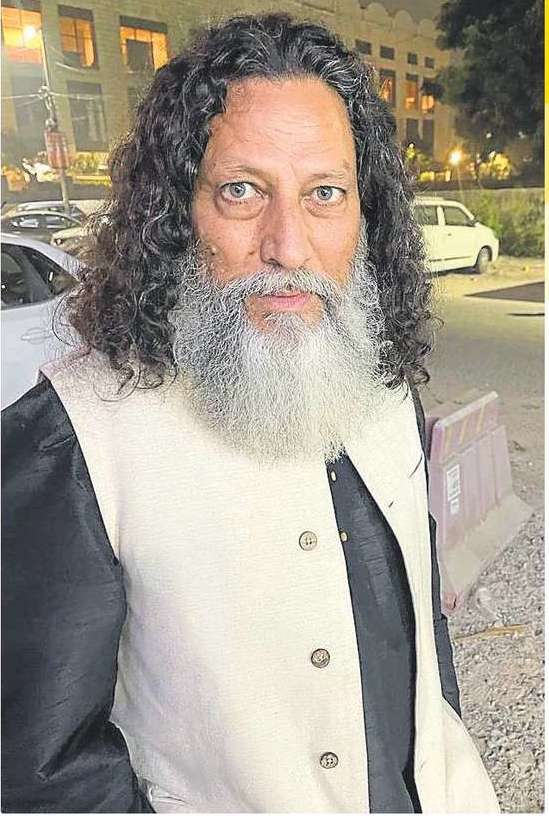
Rishabh Suri (HINDUSTAN TIMES; July 30, 2024)
His performances in Mirzapur and Kalki 2898 AD have fetched him more work. With a long beard, it’s actor Anil George’s distinct look that sets him apart. He admits that all these years, it earned him work opportunities alongside missing out on a few too.
“Haan, kaam chala gaya look ki wajah se, but I got work as well because of it. I had to let go a lot of work due to continuity reasons. My dates would clash with the projects that required me in the beard, while others would want a different look. Though we could have used a dummy beard, but the original one has another effect on screen. Ek-do projects mein dikkat aayi thi,” says the actor.
George adds that many people would suggest him to trim his beard to prevent getting typecast. “Mere dost kehte the, ‘Shave off the beard, otherwise you will get typecast. You look of a certain nationality’, and yes, I did get cast as that in films such as Uri: The Surgical Strike (2019) and Romeo Akbar Walter (2019). I would tell me, ‘I’d do it for something big’ and that wish got fulfilled with Kalki 2898 AD,” he says.
With the film doing well, George reveals how it changed his day-to-day life. “Earlier, I would get four to five calls a day for work, but now it’s doubled. My confidence has doubled too. I thought it was a joke when I was called for the film. (Actor) Amitabh Bachchan ji ke saath kaam karna ek khwaab hota hai. I got to do not just that, but also got a chance to work with (actors) Kamal Haasan sahab, Prabhas and Deepika Padukone,” he ends.
This is validation in its truest form. Those claps and hoots are music to our ears-Yami Gautam, Aditya Dhar
9:03 AM
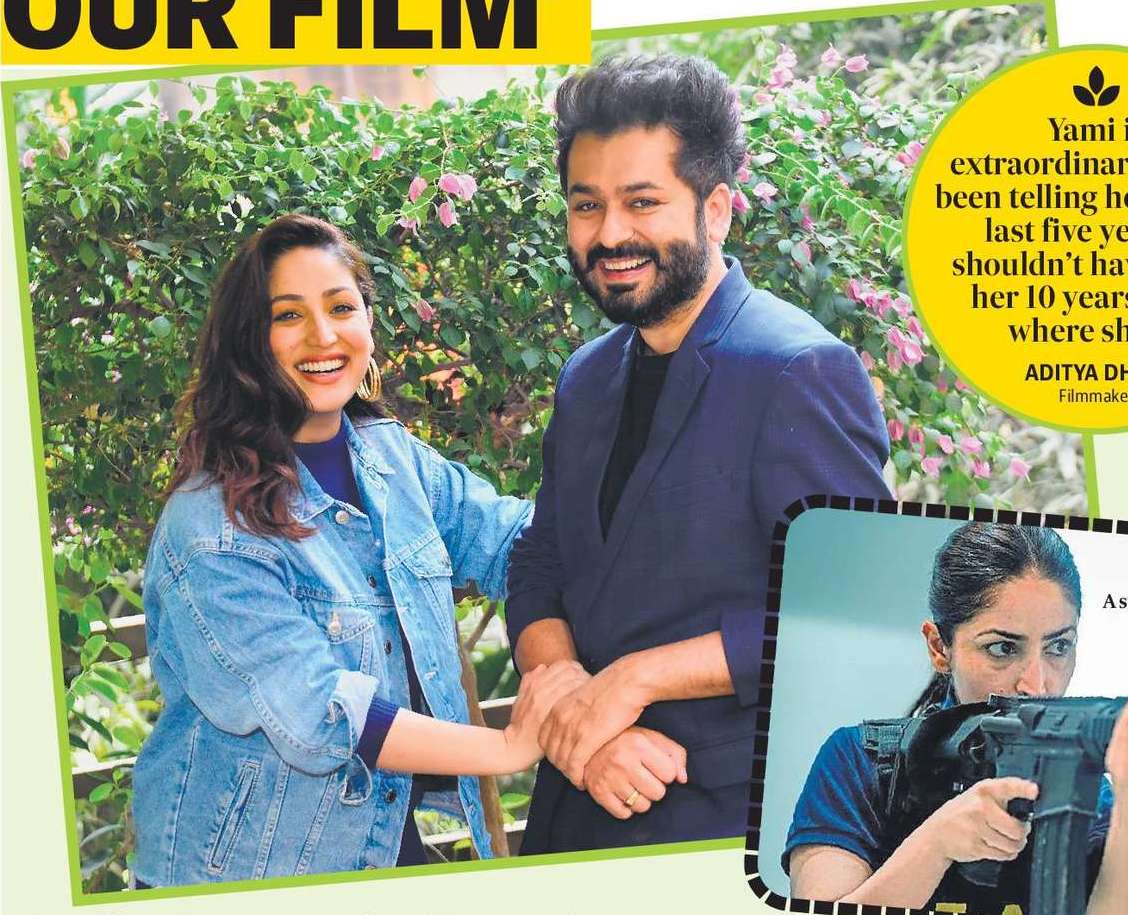
In an exclusive chat with us, Yami and Aditya talk about being pregnant and the success of their recently released movie, Article 370
Rishabh Suri (HINDUSTAN TIMES; February 29, 2024)
Actor Yami Gautam Dhar and filmmaker Aditya Dhar sit down with HT City for their first-ever interview as a couple after they announced their pregnancy to the world during the promotion of the film Article 370.
TWO GOOD NEWS
“We got into films because we wished someday hamari film ki bhi tareef hogi, log seetiyaan bajayenge,” Aditya says in response to Article 370’s extraordinary reviews. He adds, “It happened first with Uri: The Surgical Strike (2019), and now with this movie. To see this kind of response in multiplexes, which usually happens on single screens, this love... We are on top of the world. A lot of people discouraged us. ‘Yeh film nahin chalegi’, it’s a technical film, and it also had a lot of English. But we always felt that people have this tendency, especially in our industry, to underestimate our audiences.”
Yami, who portrayed an intelligence officer in the movie, adds, “This is validation in its truest form. Those claps and hoots are music to our ears.”
While snacking and looking radiantly pregnant, she jokes, “I will eat and talk; no manners or etiquette; I am getting the signal that I need to eat.”
BABY ON BOARD
The pair got married in 2021 and expecting their first child in May this year. Reflecting at the moment they learnt about the pregnancy during the shooting of Article 370, Aditya recalls, “Luckily, our action portions were done by then [the pregnancy]. We were in the hotel... It was a really happy moment, something I will remember for the rest of our lives.” Yami joins, “You are never prepared for a moment like that. You only realise it once you are in it. I can’t stop smiling... It’s a personal time; we are private people. We had to be cautious.”
Aditya ensured they had a panel of doctors available 24/7 during the shoot. Yami says, “But never did I want to hold myself back. I wanted to have the same strength that my mom had when she was pregnant. I am so lucky to have a life partner like Aditya; he has been a huge support.”
It is a happy occasion when a joint collaboration hits it out of the park. In Yami Gautam Dhar and Aditya Dhar’s case, they met and began dating on the sets of their first collab, Uri: The Surgical Strike (2019). Now, with their second film together, Article 370, the duo are en route to become parents.
KEEPING IT IN THE FAMILY?
The fact that Aditya’s wife is playing the lead in a film he is producing might seem ‘obvious’ to some people. However, Aditya tells us that Yami is approached, just like any other actor, whenever he is working on a new project. “We are always professional. It is our second production with Yami and it is always routed through her management. When we talk about commercials too, it is never across the table. Our company and producers decided unanimously that we should go with Yami. And she has given her heart, soul, blood, sweat and tears to this film,” he says.
POLITICAL FILMS — A RISK?
Yami has always chosen unconventional films, right from her debut, Vicky Donor (2012) to Article 370. Taking up political films can put you into a box and even lead to backlash for the actor. However, Yami isn’t apprehensive when she signs on.
“Thinking back to the Yami who did her first film on a subject which had stigmas attached. I remember after finishing the shoot, and I was still giving auditions, they’d ask if I had done any films. I remember the reaction [I’d get when I told them]. So I started saying, ‘You will know. It’s a good film’. It’s fear which will create a layer of inhibition and pull you back from exploring your potential. I like to go with my gut. I know in my heart why I signed this film. Of course, I was aware there will be debates.”
ONLY LOVE AND RESPECT
Aditya, a proud and caring husband, brushes off a stray hair from his wife’s forehead as she talks to us. Getting candid about how she preps for her films, he says, “You can ask our director, she is extraordinary. I have been telling her, for the last five years, it shouldn’t have taken her 10 years to get where she is. If it was some [star] kid with a start like Vicky Donor, their career would’ve been at a whole other level by now.”
Hearing the heavy praise from her husband, Yami fights back tears, sniffles and says, “People say it’s pregnancy hormones, I know how much control I need right now to conceal my emotions.”
Instead of Yami Gautam, if a star kid did had debuted with Vicky Donor, they would be at the Oscars-Aditya Dhar
11:24 PM
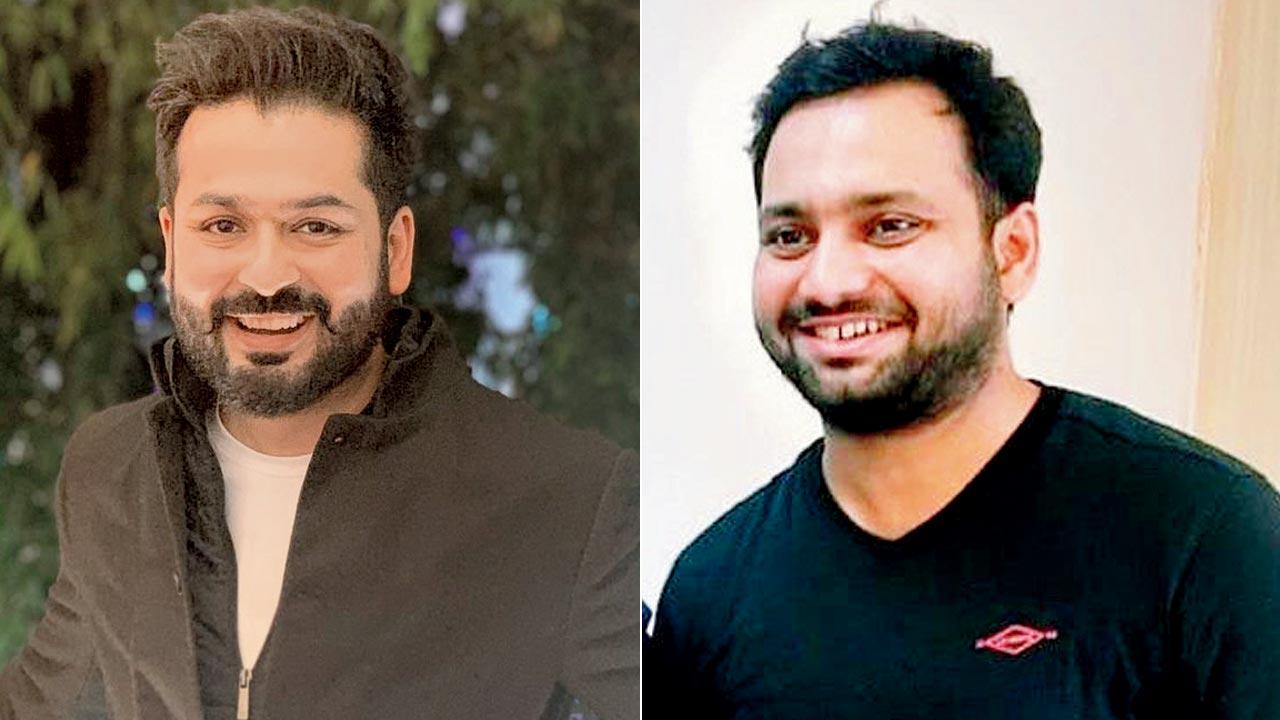
Article 370 creator Dhar on submitting script to Defence Ministry for approval; asserts movie’s aim is to give ‘chronological account’ of J&K’s special status revocation
Mohar Basu (MID-DAY; February 15, 2024)
Less than five years after the abrogation of Article 370, creator-producer Aditya Dhar is ready with a political thriller that, he says, examines the events around the revocation of the special status that was granted to Jammu and Kashmir. A film of this nature is tough to pull off, given the sensitivity of the subject. To make Article 370, Dhar did what he did for his last directorial venture, Uri: The Surgical Strike (2019)—seek the Ministry of Defence’s (MoD) approval and do due diligence.
“I was always clear that I won’t bypass protocol. For Uri, I presented the script to the ADGPI [Additional Directorate General of Public Information], and took approvals from every department at every stage. The MoD had to give us clearances. I have understood two important things—first, they give better feedback than 99 per cent of people from the [film] industry. Second, the procedures make our life easier. After that, no one can harass us or stop our shoot. You have to show them your paperwork, you have to do your homework, and if your intent is correct, they will help you out,” says the producer.
Starring Yami Gautam and Priyamani, the Aditya Suhas Jambhale-directed venture was shot entirely in Kashmir. Reflecting on how smoothly the shoot went, Dhar says, “From 2019, it has been peaceful in Kashmir. The tourism has gone up. Colleges and schools are open. There is no stone-pelting, the internet is smooth. People are seeing the good changes.”
Such a movie demands a balanced viewpoint, especially when the local sentiment on the abrogation of Article 370, in 2019, remains divided. Is he worried that some sections might be offended by the political thriller?
“Our film is a chronological account of what happened. The drama of it lies in how the bureaucracy, Army, MoD and CRPF [Central Reserve Police Force] worked to ensure this operation happened peacefully. If it had failed, people would have blamed the establishment. Some people believe this is an agenda-driven film even before they have watched it. Maybe the agenda is in their head. I’ve been there before with Uri too. Every time I feel disheartened, I think of the real-life female officer on whom Yami’s character is based. A few bad words can’t dampen my spirit.”
Being a Kashmiri, it’s evident that the National Award-winning filmmaker holds the movie, Article 370, close to his heart. Why did Dhar then pass up the chance to helm it? “I was to direct a movie in 2009, then in 2011, then in 2013 and so on. My first film finally happened in 2019. I waited for a decade to get to that point. In my early years, I [was made to feel] that my PR skills and who I hang out with mattered more than my talent. I wanted to change that. I met Aditya Jambhale during the National Awards. He told me he tried assisting in Mumbai, but wasn’t entertained because he didn’t come from a certain stratum. I saw myself in him. I want to platform people who are meritorious. When I did Uri, people didn’t see Vicky Kaushal as a star. Yami started out with Vicky Donor [2012], her career should have skyrocketed. If a star kid did that debut film, they would be at the Oscars! When this story came to us, I realized Jambhale is the right director for it. He gets the nuances of a political story. He was the most deserving person for the film, and that’s the culture I want to maintain in my studio.”
‘Uri’ effect? Bollywood full of josh for military movies
8:32 AM

Wartime stories and biopics of heroes are the new favourite with filmmakers, many of whom are trying to make them more authentic with real weapons and research
Himanshi Dhawan (THE TIMES OF INDIA; January 28, 2024)
Bollywood is going to war! Well, not literally but visually. Don’t get us wrong. The staple Bollywood masala hero must still overcome insurmountable challenges, romance the girl and win in the end. But if a hero can also fly a plane, shoot enemies of the country, survive a couple of bullets, there is a better chance of box office success.
No wonder filmmakers have dusted off archival material to bring old war stories to celluloid — the 1971 war with Pakistan is a hot favourite. ‘Fighter’, starring Bollywood biggies Hrithik Roshan and Deepika Padukone who play fighter pilots in the Indian Air Force, released this week, and there are more such military-themed movies in the pipeline.
‘Ekkis’ by director Sriram Raghavan— slated for a 2025 release — is based on the youngest Param Vir Chakra awardee Lt Arun Ketrapal who lost his life during the 1971 war. Director Aanand L Rai has announced ‘Gorkha’ on Gorkha regiment’s Maj Gen Ian Cardozo and the pivotal role he played in the 1971 war, while Tamil director Rajkumar Periyasamy has begun shooting for a film on Major Mukund Varadarajan who killed three terrorists in J&K’s Shopian district and was awarded the Ashok Chakra posthumously.
‘Fighter’ co-producer and filmmaker Ramon Chibb has announced a film on Narendra ‘Bull’ Kumar recently. Col Kumar, who was awarded the Padma Shri, carried out multiple expeditions in the Siachen glacier area in the late 1970s and early 1980s which laid the basis for the Army’s success in Operation Meghdoot.
Last year, there were three Bollywood films on the armed forces, including the Sam Bahadur biopic starring Vicky Kaushal, and ‘Pippa’ that was released on OTT featuring Ishaan Khatter and ‘Tejas’ that showcased Kangana Ranaut as a woman fighter pilot helming a military spy operation. The first two received critical acclaim for their portrayal of the military. ‘Major’m based on NSG commando Sandeep Unnikrishnan’s bravery during the 26/11 Mumbai terror attacks, was released in 2022.
Military historian AVM Arjun Subramaniam says military movies have been an influential genre in the West that India is catching up to. “Indian filmmakers had it tough in terms of authentic research and access to material and people. Now, there are more sources of information, more books, and more articulate officers. Also, the defence establishment has realised that this is an effective form of outreach to show how the military that embodies the values of inclusiveness, secularism and multiculturalism has contributed to democracy.”
Subramaniam, who was advisor for ‘Sam Bahadur’, says it is amongst the few military biopic made after Independence and a good indicator of how nascent the genre is in India.
Many took their cue from the resounding success of ‘Uri: The Surgical Strike’ in 2019. “How’s the josh?” a dialogue by Vicky Kaushal’s character captured the public imagination. In 2021, ‘Shershaah’, based on Captain Vikram Batra who lost his life during the 1999 Kargil war, was also a success. ‘LOC Kargil’, ‘Lakshya’ and ‘Gunjan Saxena: The Kargil Girl’ have been some of the other films on the subject.
Chibb, who wrote the story for ‘Fighter’ besides co-producing it, says that there is a marked change in how Bollywood approaches the subject. For starters, it’s ditching the earlier clichés of bandook and badi mooch. “Filmmakers are more sensitive to historical facts and are veering towards realism whether it is action, operational details or equipment. Earlier, there were times when the film would carry the wrong medals, uniform and weaponry,” he says.
Cringe-worthy scenes like an army officer wearing police medals, or a 25 or 26-year-old being portrayed at a senior position like a Lt General that takes 25 years of service come to mind. Chibb says ‘Fighter’, which has extensive aerial manoeuvres and authentic weaponry and equipment, will hopefully show the way.
Chibb says that he would watch Hollywood films like ‘Guns of Navarone’ and ‘Top Gun’ and find that ‘cool’ quotient missing in Bollywood films. He singles out ‘Vijeta’ (1982) and ‘Prahar’ (1991) as exceptions and close to authentic. “The industry has realized that military stories lend themselves to the screen: they have action, mystery and drama. When big stars are willing to play the characters, it makes a huge difference. It raises awareness about the military and increases recruitment,” he says.
After the controversy sparked by the release of ‘Gunjan Saxena’, where the military felt that facts had been distorted to show the air force as gender biased, it mandated that scripts would be cleared by the Additional Directorate General of Public Information (ADGPI). ADGPI can also recommend defence consultants for projects.
“The military has also opened access to cantonment areas, equipment and even using real soldiers that adds authenticity to the film,” says Major Sandeep Sangwan who was a defence consultant for ‘Pippa’. The movie was shot at the Armoured Corps School and Centre in Ahmednagar, Maharashtra. In ‘Sam Bahadur’, Kaushal was allowed access to not only Field Marshal Sam Maneckshaw’s car but also his driver for the film scenes.
Filmmakers might have upped the standard with research, but critics say many of them still border on jingoism. Unlike films like ‘Dunkirk’ that examine military strategies or ‘American Sniper’ that explores PTSD in soldiers, most Bollywood films do not look at layered characters.
Subramaniam says, “Our DNA is not structured for an open investigation or learning from mistakes. Issues of national security are cloaked in secrecy. The public does not easily understand these matters.” This reflects in the paucity of books or availability of declassified archival material on the battles India has lost. Indian filmmakers also succumb to the temptation of adding romance and songs.
The military is one of the few institutions for which public support transcends regional and communal loyalties and that means serious moolah, an opportunity that Bollywood is gunning for.

If one female actor’s film stands out, it makes space for more-Yami Gautam
10:21 AM

Madhureeta Mukherjee (BOMBAY TIMES; December 28, 2023)
It won’t be wrong to say that Yami Gautam Dhar is probably in the best phase of her career right now. Her recent spate of films has made filmmakers more aware of what lies untapped and how they can mould her for a variety of characters. She admits, “It took a lot of time for everyone to turn around and say, ‘We didn’t think of her in the same light’.” Now the arc lights are shining bright on her, the floor is all set, and Yami is here, bringing on her A-game. Excerpts from a conversation.
You have had an interesting few years, with back-to-back releases on OTT. Do you think the medium has opened doors for you and tapped your potential like never before?
I see this whole phase as a process of evolving, and fortunately, before the pandemic struck, I had two important theatrical releases, Uri – The Surgical Strike and Bala. To get a role like the one in Bala was so different. I don’t think we have enough well-written comedy parts for actresses. These films opened up the box office, and for me, they opened avenues and gave other directors ideas on what more they could explore with me as an actor. After that, I did A Thursday, Dasvi, Chor Nikal Ke Bhaga, Lost and OMG 2. For me, the whole idea of choosing films is not about filling in some dates in my calendar and doing one film after the other. I need to feel that the work I am choosing is taking me ahead, not just from the box office point of view, though I understand that is critical, too. I need to know that the work I choose has something new to offer and the potential to connect with the audience.
So, films like Uri – The Surgical Strike and Bala were the gamechangers?
Yes, Uri and Bala were turning points in my career. Those films allowed everyone to see my potential from a new lens.
You started your journey in the movies on a very different note, with an unconventional film like Vicky Donor. Was that your way of setting the tone for your career?
If I chose to be part of a film like that at the beginning of my career, what does that tell the audience? That you are here to do something with substance, and not just be a part of what is trending. What follows is not in your hand, and in my case, it took a lot of time for everyone to turn around and say, ‘We didn’t think of her in the same light’. There was a period when I was trying to find my ground. I had clarity, but that had to be expressed through my work. And there comes a point when you don’t fear saying no and let go of films that you don’t think you should be a part of, because you want to create equity for yourself and be a pivotal part of stories. For me, this realization happened around 2019. So, I, too, had to shift gears, evolve, and change my perspective.
Do you see a change in the way the industry views women in cinema – the kind of roles they can do and what they can bring to the table with their talent?
There has been a change, and I do sense an awareness among actresses and respect for them among writers, directors and producers who back good films. We want well-written roles, and we want to be pivotal to the story irrespective of the genre. The change will not happen in one day; years ago, it took one woman to muster the courage to go home and say she wanted to become an actress. Since then, we have had a series of great actresses because of whom we are here. Today, we are doing better work, expecting better roles, and making a place for ourselves, and if one female actor’s film stands out and does well, it makes space for more.
You have been married to filmmaker Aditya Dhar (director of Uri: The Surgical Strike) for over two years now. Tell us how this phase in your life has been so far.
It’s the best feeling to come back home to someone who loves you, respects you and is always on your team, no matter what. We talk about everything – from what we ate to discussing the scenes I shot. We like to keep it light and happy. Both of us like talking about films, and not just the films we are working on, but different kinds of movies. It is so refreshing for the actor in me to hear a director’s perspective on a certain scene. I love his perspective and observations on my work, too.
Today, things like the length of your role in a film and how many scenes you have doesn’t matter. It is about the bigger picture, right?
Internationally, we see some of the biggest stars coming together for a film and if we want to take our cinema ahead, we have to let go of these things (like the length of your role) and create a sense of new culture where these factors are not a hindrance. We (the industry) and the media should change their lens. For so many of my films, including Kaabil, I have been written about for the length of my role, instead of what I added to the film or what I held as an actor on my own. We all need to evolve if we wish to make the change.
On social media perceptions
I don’t believe there is anything like ‘couple goals’. I find it very interesting to read these terms, and people get excited by them because they see them (couples) in a certain way. You will never know about anyone’s life, every marriage is different and every picture you see is very different. So, you don’t need to engineer that thought in people”
I signed two big projects, but they didn’t work out the way I had hoped-Dhairya Karwa
8:27 AM
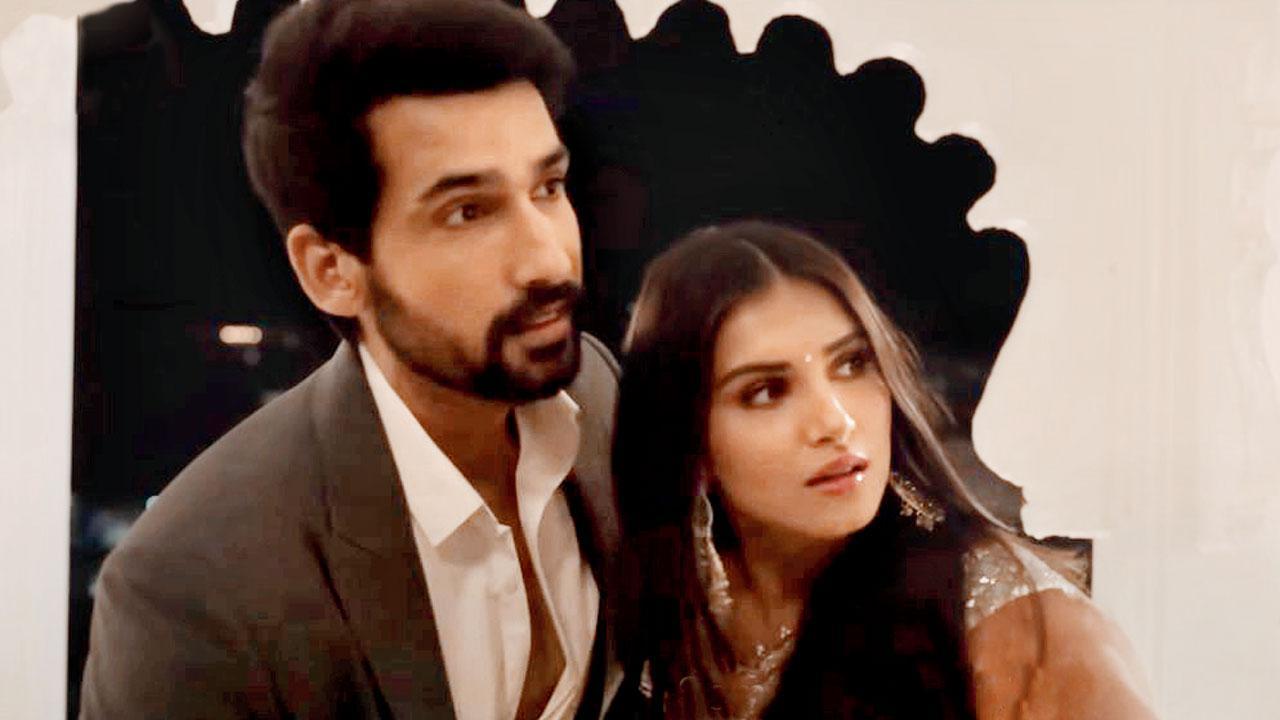
Unfazed that Apurva is centred on Tara’s character, Dhairya says he starred in the film for its powerful narrative
Mohar Basu (MID-DAY; November 14, 2023)
The last time we saw Dhairya Karwa was as a Mumbai-based writer in Gehraiyaan (2022). His next, Apurva, largely set in Chambal, is a story that could scare the life out of any city dweller. Director Nikhil Nagesh Bhat’s survival drama follows Tara Sutaria’s titular character as she fights her male assailants after being abducted from a bus. Karwa plays her fiancé who sets out in search of her.
“The only way to survive such [intense] films is to take it a little less seriously. But the subject cannot be [taken lightly]. A film like this reflects generational conditioning,” says the actor.
Karwa is unfazed that the Disney+ Hotstar movie is centred on Sutaria and Abhishek Banerjee’s characters. To him, it was the messaging that mattered. “I knew it’s a great story. When you are starting out, it’s more important to establish the kind of stories that matter to you.”
In the past five years, the actor has featured in Uri: The Surgical Strike (2019) and 83 (2021). After Gehraiyaan, he says he has noticed a shift in opinions about him.
“I got some roles that needed me to shoulder more. I signed two big projects, but they didn’t work out the way [I] had hoped. There was a long gap since my last release because of this. I had to recalibrate [my choices] and that’s when Apurva came my way.”
He will also be seen in Gyaarah Gyaarah soon.
Using on-screen artillery in films: Kabul Express had real Kalashnikovs; night-vision glasses in Uri were from Juhu Beach
9:15 AM

From the age-old revolver to today’s advanced weaponry — the evolution of on-screen artillery is an interesting chapter in Bollywood history
Natasha Coutinho (BOMBAY TIMES; October 20, 2023)
What’s a good ol’ Bollywood actioner without a gunfight or three? Indeed, the story of how Hindi cinema has depicted arms and armaments is as interesting as the century-plus history of Bollywood itself. The long-barrel revolvers and 303 rifles have been around for decades – see the posters of Dev Anand’s CID or of Sholay, for example – but it’s only in recent years that Hindi films have started matching Hollywood blockbusters bullet for bullet, so to speak.
From espionage thrillers to cross-border wars and gangland dramas, as the scope of the Bollywood action flick grows exponentially, our films now show an astounding array of guns, artillery, tanks, explosions and more. We go behind the scenes to explore how the industry creates all the firepower that is required to make a big bang at the box office.
‘AFGHANS GOT US A TRUCKLOAD OF KALASHNIKOVS IN KABUL EXPRESS’
Action scenes require the maximum planning and pre-production, because there is much at stake in terms of the safety of people involved. Today, with VFX, things have become simpler than what they were 10-15 years ago. During Ek Tha Tiger (2012), we did stunts physically, with 200 foot wooden towers falling from one building to another. In Kabul Express (2006), every gun that you see is real. Those days guns were easily available, and Afghans got us a truckload of Kalashnikovs. We had an Afghan action director, Abdul Basir Mujahid, who insisted on firing a rocket in our honour despite my telling him not to. In the middle of a shot, he jumped off an SUV and fired it and that shot is there in the movie. We were shocked because the whole place resounded with the noise, but Afghanistan being Afghanistan, no one batted an eyelid!
— Kabir Khan, director

‘GOT GUNS FROM SERBIA, BUT THE NIGHT-VISION GOGGLES WERE FROM JUHU BEACH!’
My team and I are particular about authenticity, and when we started prepping in India for Uri: The Surgical Strike, we realized that replicas of original guns weren’t easily available here. There are customs issues and getting the guns may take months. We had a choice between going ahead with the AK-47 replicas available here, or trying something new. Luckily, Serbia had opened up a rebate structure, and getting equipment similar to the choppers, Mirages and guns we needed became easier. However, we also did a little jugaad and the night vision goggles were binoculars with a green light inside from Juhu beach. While shooting in Serbia, we could only afford four stunt people. If you watch carefully, the same people play terrorists and armymen and even come back from the dead to play other characters! — Aditya Dhar, director
‘WE BUILT PROTOTYPES OF MANY GUNS, AND VFX DID THE REST’
The Night Manager was a tricky series because it is the story of an arms dealer. We had to ensure that the arms shown were technically correct and matched the stuff used in modern warfare, apart from being visually appealing. After extensive research, we zeroed in on a wish list. Other than a few assault rifles, not many weapons were readily available for filming. Necessity is the mother of invention. We studied and built prototypes of many guns with our SFX partners and made its impact look cinematically as close to the real ones with ample help from our VFX team.
— Sandeep Modi, director

‘WE PROVIDE FILM TEAMS WITH AN ALBUM TO CHOOSE THE RIGHT GUNS FROM A PARTICULAR ERA’
The 1980s and ’90s saw several dacoit films and those needed rifles and double-barrelled guns. Times have changed and films now require M4 carbines and AK-47s, Glocks and Berettas. Even if gun models are limited in real life and we have to repeat them, the audience wants something new in each film. That’s why we have custom-made guns like those seen in Don 2 and Lucifer. when the trigger is pulled, there is a sound like gunfire, which is the cue for the actor. Muzzle flash is later added via VFX. When we are approached for a film, we give the team an album, from which they can select guns. We also recommend the gun that should be used for a particular era, though sometimes we take cinematic liberty if the gun looks good on screen.
— Vishal Tyagi, SFX supervisor and armourer

‘WE USED A DRILL MACHINE TO REPLICATE AN ANTI-AIRCRAFT GUN’
Research is an important part of our job, and for Tiger Zinda Hai we had to show Baghdad city, Chinooks and other army choppers. We built the set in Abu Dhabi and since a real Chinook would’ve cost Rs. 30 crore, we created mock-ups. Tubelight had Indo-China war sequences and we had a team that made study models and converted normal cars into tanks. For the upcoming Chandu Champion that shows the 1971 war between India and Pakistan, we required an antiaircraft gun that vibrates. We used a drill machine to get the repetitive movement, while the VFX team added the bullets, and the sound department handled the rest. In the past, we would make a mould of mud and create guns from it; today you can just print a dummy gun from websites and the process is effortless. VFX has also made life easier. For example, we built a chopper for Bade Miyan Chote Miyan without the rotating blade, which will be added through VFX. For blast scenes, we create the smoke, while the fire is added via VFX
— Rajnish Hedao, production designer
‘WE MEET SENIOR OR RETIRED OFFICERS FOR HELP IN RESEARCHING THE RIGHT GUNS’
While selecting guns, we must be careful because Mumbai police firearms are different from those used by Rapid Action Force or the Army. We meet senior or retired officers who help us with our research. It takes us a long time to prep for car stunts because even if the shot shows a car toppling, we have to ensure people inside are safe. The web series Aar Ya Paar has an archer as the protagonist and we got on board a national archery coach to work with the cast. We created artificial bows and arrows lighter than the real ones, so that actors could handle them easily. Our job begins two-three months before the shoot.
— Swapnil Bhalerao, production designer working with Rohit Shetty for 18 years

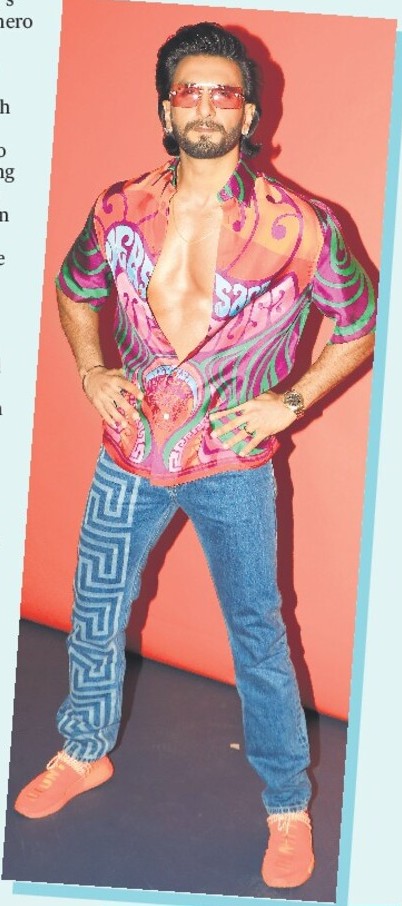
Has Ranveer Singh replaced Vicky Kaushal in The Immortal Ashwatthama?
8:08 AM
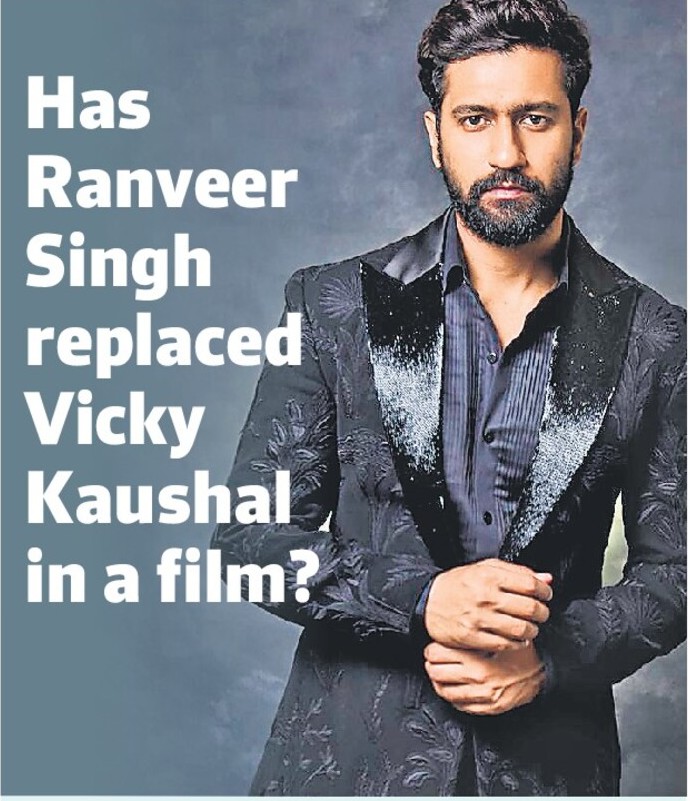
HINDUSTAN TIMES (April 14, 2023)
Filmmaker Aditya Dhar’s ambitious sci-fi superhero drama The Immortal Ashwatthama has been the subject of much buzz. The project was announced with actor Vicky Kaushal in the lead. However, according to the latest reports, the casting may have changed slightly.
A report by PeepingMoon states that actor Ranveer Singh is now in talks for the titular role. “Aditya Dhar and Ranveer have been discussing this project for months, and talks are now in an advanced stage,” read the report.
The film will be based on mythological character, Ashwatthama, the son of Dronacharya, who was cursed with immortality.
Kaushal had in fact released two posters of the film as well in January 2021. “Overwhelmed and ecstatic! On the 2nd anniversary of ‘URI-The Surgical Strike’, the team gives you a glimpse into the world of #TheImmortalAshwatthama. Cannot wait to get onto this journey with the dream team,” he tweeted. The production team has also reportedly undergone a change, with another studio stepping in to finance this film.
We reached out to Singh and Dhar for a clarification, but our efforts were not met with a response till the time of going to press.
Every actor worth their salt would consider it a privilege to work with the talented Paresh Rawal-Manasi Parekh
8:08 AM

Actor Manasi Parekh credits writers for meaty roles and change in audiences tastes
Kavita Awaasthi (HINDUSTAN TIMES; March 22, 2022)
She is on cloud nine with the reception of her recent Gujarati film, Dear Father. Calling the experience “incredible”, actor Manasi Parekh remarks, “Every actor worth their salt would consider it a privilege to work with the talented Paresh Rawal sir (actor), who has done over 150 films. It was great to have a substantial role that gives takkar to his character in the film.” Though the team knew the film would work, they were surprised with its response.
Parekh has been an actor since 2004, with a number of hit TV shows, including Kitni Mast Hai Zindagi, Gulaal and Sumit Sambhal Lega to her credit. Later, she debuted in Hindi films with Uri: The Surgical Strike (2019). “I am at an interesting juncture in my career. My Hindi film career is a few years old that started with Uri, which I was happy to be part of. The usual trend is that actresses in their 20s do many Hindi films and in their 30s, things would peter out, but that is not the case anymore. In fact, now there are so many interesting roles out there for my age group,” says the 35-year-old.
Parekh gives credit to the writers and audiences who have accepted actors “who are not playing a quintessential, good-looking actress”. “I always had wonderfully etched out roles in the TV shows I did. But back then, I didn’t get film offers and maybe koi specify requirement hogi. And after Uri, people have been offering good roles. Moreover, my experience, marriage, and motherhood have added value to my performances. Earlier, actresses were told if you want a career, you can’t marry or become a mother. But my career surged post marriage,” says the actor, who will be seen in Jab Khuli Kitaab, co-starring Aparshakti Khurana.
Having starred in some acclaimed Gujarati films, Parekh is thrilled with the growth of Gujarati cinema. “There is an overarching trend of audiences and their tastes changing. The lockdown and pandemic, too, have amplified things. Today, people are ready to watch films in any language. Pehle Bollywood zyada dekhte the, but now they have become more open to different languages,” says Parekh.
She adds, “There are many exciting things happening in Gujarati cinema. After doing Gol Keri (2020) and Dear Father, I am now shooting a film with (actor) Sharman Joshi and another Gujarati film with (actor) Ratna Pathak Shah. Suddenly, a number of mainstream Hindi actors are stepping into Gujarati films. While the south industry is established, Gujarati is still growing. It is exciting to be part of this growing industry. That is a telling sign of changing times.”
One child is equivalent to 10 kids on set. For A Thursday, we shot with 16-Yami Gautam
10:13 PM
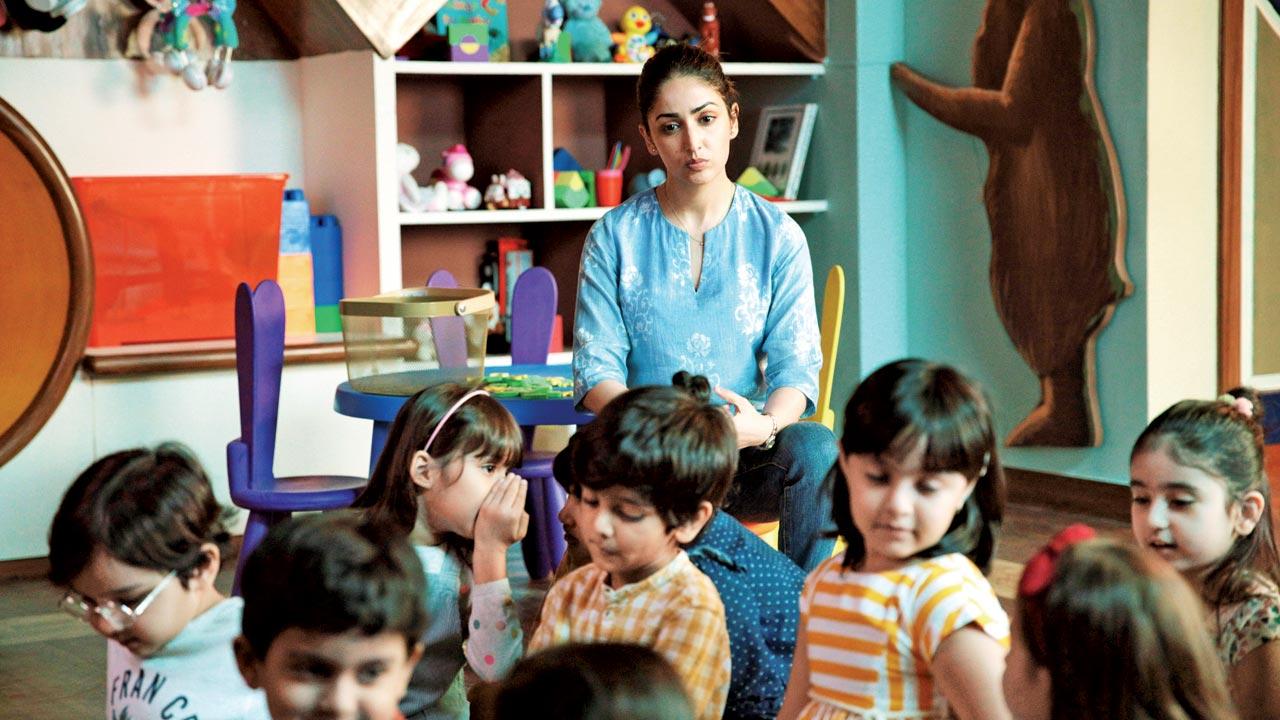
As a flawed kidnapper in the thriller, Yami says A Thursday offered her a character far removed from the happy-go-lucky ones she has played
Uma Ramasubramanian (MID-DAY; February 20, 2022)
As a school teacher behind the kidnapping of 16 children in A Thursday, Yami Gautam has evidently stepped into a role far removed from the ones she’s attempted so far. While the actor did not mirror any artistes who has played a similar part on screen, she did consume a fair share of international flicks. “There are some good psychological thrillers made in the past. I watched a couple of films. I am fond of the genre, but a lot had to be left to imagination. I had to make my character’s story [relatable] and that takes a lot of homework.”
Gautam says her desire to understand her flawed character’s psyche took a toll on her. “When I’d reached the set, I’d feel heavy in my body. I realised that I was aiming to understand Naina, and was not judging her. The mental conditioning can be overpowering, but that’s an important part of the process.”
Having been perceived as a vivacious actor, Gautam says she has attracted similar parts, most of which, she says, were “not a true reflection of my [calibre] as an actor”. She doesn’t discredit the work coming her way, but points to films like Uri, Kaabil and Vicky Donor as films that showcased her prowess. “I was constantly looking for scripts that could help me express myself, as an actor, I need to explore my potential. A Thursday presented that opportunity.”
In line with the role that she played for the Disney+ Hotstar series, Gautam made it a point to avoid getting familiar with the kids who she holds hostage on screen. “One child is equivalent to 10 kids on set. We shot with 16. I didn’t want to become too familiar because they would not take me seriously when the cameras rolled. They were very smart, and aware, and we understood one another’s energy. They are such an integral part of the film, and have done a terrific job. For some sensitive scenes, we had to ensure that we shot them separately with the kids to get the desired reaction.”
Even before I bagged Gehraiyaan, I had told Deepika Padukone that I am going to do a film with her-Dhairya Karwa
8:20 AM

Onkar Kulkarni (BOMBAY TIMES; February 3, 2022)
“I guess I have just been lucky,” says Dhairya Karwa, who bagged an envious part in the upcoming film Gehraiyaan. Four years ago, when he arrived in Mumbai from Delhi, he wanted to be a model. However, the city and his love for Bollywood made him pursue a career in films instead. He calls himself lucky because, unlike many other strugglers, Dhairya, since the time he began in 2016, kept getting interesting roles in reputed projects that helped him learn as an actor and get noticed by filmmakers. His upcoming film Gehraiyaan, which releases on Amazon Prime Video on February 11, features him along with Deepika Padukone, Siddhant Chaturvedi and Ananya Panday.
“I was busy cracking exams to head abroad to study in a business school. People used to ask why wasn’t I trying my hand at modelling,” he says, adding, “Once in Mumbai, the kind of welcome I got made me chase a career in acting. I am happy to have scored roles in films like Uri: The Surgical Strike, '83, which was followed by the web show, Made In Heaven. ”
Dhairya says, “Then, when I was offered Gehraiyaan, it felt like a dream come true. It’s like this big Karan Johar project, getting an opportunity to act opposite Deepika, a chance to work with actors like Siddhant and Ananya and getting to learn under a director like Shakun Batra… it’s like every actor’s dream.”
He adds, “I am not a trained actor. I have learnt on the job. The experience and the time I spent on my initial projects prepared me for a film like Gehraiyaan. Now that I look back, the experience and the confidence I gained from my first two films was necessary for me to be the actor that I am today.”
Apart from his work experience, he is thankful to Karan and Deepika, who made him feel extremely comfortable on set. “When I met Karan for the project, he gave me the biggest and the warmest hug. He told me you are here, and you are here for a reason. You are good, now just enjoy it. Don’t take any pressure and keep doing what you are doing. His words were very reassuring and comforting. As for Deepika, I was just smitten by her. She is everything you would expect her to be and more. We know of her as this humongous star and a fabulous actor, yet she’s so simple and warm.”
Dhairya remembers meeting Deepika at the wrap-up party of '83, in which she played Kapil Dev’s (essayed by Ranveer Singh) wife and the former played Ravi Shastri’s part. He shares, “I remember at the party, people were busy clicking pictures with her. I didn’t do that. At one point, I saw she was all by herself. I mustered up the courage, went up to her and told her I am not going to click pictures with you because I am going to do a film with you. At that time, Gehraiyaan was not even being discussed. When I met her for the first time for this film, she was surprised that we indeed were doing a film together.”
Gehraiyaan is creating buzz for its beautifully shot, intimate sequences. Talking about it, Dhairya says, “The credit goes to Shakun, who’s the captain of the ship. For these scenes, we had an intimacy director on board. Intimacy is not a part of the film for a shock value, but because it is essential to the story. We dealt with intimacy with so much care and sensitivity when we performed these scenes. The set felt so safe and secure for us to express ourselves during these sequences.”
The young actor hopes that the film opens up more avenues for him. He says, “Surviving in Mumbai itself is a challenge and Bollywood is an altogether new field for me. Finding your feet can be challenging. But then everything comes with its own challenges. It is all about your outlook towards it. The nature of the business is that it is going to be disheartening for you as the rejections are always going to be more than the acceptance you receive. However, the rejections are never personal. You need to understand that you didn’t suit the part and hence you didn’t qualify for the project. That’s it. But at the end of the day, we are humans and have a heart. We tend to get affected, and at times, it does break you. Instead of crying over the opportunities that I missed, I celebrate the fact that I got to be a part of three fabulous films. That’s all that matters.”
---------------------------
Teaming up with Deepika in Gehraiyaan, Dhairya discusses approaching director Shakun’s take on infidelity without judgment
Uma Ramasubramanian (MID-DAY; February 3, 2022)
Landing a Dharma film is every upcoming actor’s dream. But for Dhairya Karwa, being part of a Shakun Batra film was a bigger high. The actor, who plays one of the leads in Gehraiyaan, says it was a joy to be directed by Batra so early on in his career. “I have been an admirer of his work. I remember watching Kapoor & Sons [2016]; it’s a film that hits you hard. Apart from being a bright mind, Shakun is also a warm person. Another sterling quality of Shakun is that he is open to ideas, and always considers your input. We all surrendered to him because we trusted his vision,” he says.
In the Amazon Prime Video offering, Batra teams up with Deepika Padukone, Siddhant Chaturvedi, Ananya Panday and Karwa to examine infidelity as he tells the story of two modern-day couples. True to his style, the director is more interested in observing the nuances of such relationships than in judging them. “We have been so conditioned by the conventional take on love stories. Here, it’s a take on modern-day adult relationships. We are not trying to judge anybody; instead, we are trying to look at things as they are. Some [viewing] from a societal lens may [deem] them [morally] bad characters. But we are merely observing relationships, not promoting [infidelity],” says the actor.
Karwa, who previously featured in 83 (2020) and Uri: The Surgical Strike (2019), heaps praise on co-star Padukone. “Someone in my position would think it would be intimidating [to work with her]. [But my fears vanished] after I met her. She is warm, considerate and immediately makes you feel comfortable.”

Ensembles have helped me gain confidence to shoulder films in the future-Dhairya Karwa
8:24 AM

Juhi Chakraborty (HINDUSTAN TIMES; January 30, 2022)
Dhairya Karwa’s acting career began with Uri: The Surgical Strike (2019), which was followed by '83 (2021), both of which included an ensemble cast. The actor claims that he is confident and secure as an artiste, which is why he was never hesitant to take on those ensemble productions.
“My intention has been to be a part of good, engaging stories, and quality matters to me. Eventually, I believe that if you keep going and stick to your guns, even the smallest part may have a significant impact. It will then lead you to a project where you are at the forefront. I may have had smaller roles in my earlier works, but people have recognized me,” shares Karwa, whose next project, Gehraiyaan will once again see him sharing space with multiple actors — Deepika Padukone, Ananya Panday and Siddhant Chaturvedi.
About how he is ready to shoulder a film on his own, the actor says, “I am striving to now play a lead. It is the kind of responsibility that I am looking for in my career. Ensembles have helped me gain confidence to shoulder films in the future. They have been my learning ground and acting school, and I am prepared now. I have experience. I just have to keep building on this.”
While he made his acting debut in 2019, the pandemic had a significant impact on the pace of his career. However, the 31-year-old is hopeful that things will soon return to normalcy. “The wait has been long. Par der aaye durust aaye. My first two films were signed back-to-back, but '83 took two years to release. All of this could have happened sooner, but that is destiny. I hope that this is just the beginning and that it keeps getting better. I am raring to go and just work,” he concludes.
Subscribe to:
Posts (Atom)