Showing posts with label Sonu Nigam. Show all posts
Showing posts with label Sonu Nigam. Show all posts
It’s been traumatic, we are still trying to process it-Talat Aziz
9:25 AM

Debarati S Sen (BOMBAY TIMES; October 5, 2026)
For ghazal singer Talat Aziz, Friday, October 2, was like any other day at home. In the evening, he was watching television in the living room of his Juhu duplex apartment, while his wife Bina was upstairs and their sons were in their rooms. Within minutes, however, the family found itself fighting for survival as a fire rapidly engulfed their home.
“I think there was an electric short circuit. And the funny part is that it was one of the ACs that wasn’t even on at that time,” says Aziz.
What followed was a terrifying 15 minutes that he says he will never forget. “I’ve never seen a fire spread so fast. In 15 minutes, the whole house was engulfed in black smoke and raging flames.”
‘WE COULD BARELY BREATHE’
The family had fire extinguishers, but there was little they could do as the flames spread rapidly. Aziz and his sons were on the ground floor, while his wife Bina was trapped upstairs in the bedroom.
“My sons and I could not even go up the stairs to rescue Bina. She was in the bedroom, locked. But then she managed to escape through the bathroom window. My son who was on the ground floor outside, spotted a ladder that had been kept there because construction work was underway in the building. He took the ladder and put it against the wall. Thankfully, it was exactly the right height. Bina managed to squeeze out of the bathroom window and then they brought her down.”
The family eventually made it out, covered in soot and struggling to breathe. “It was a horrifying fire and all of us had a miraculous escape. My sons were running around. We were all black, with the soot all around.”
The ambulance arrived and the family was rushed to hospital. Doctors found that they had inhaled significant amounts of smoke and carbon monoxide and admitted them to the ICU for observation. “They wanted us to be monitored to check if everything was okay and wanted to keep us for another day. But since we were fine, we asked to be discharged on Saturday afternoon.”
‘WE HAVE LOST STUFF, BUT WE CAME OUT ALIVE’
The living room and dining area have been completely gutted. Glass, furniture, paintings and belongings were destroyed. “The whole apartment is black and burnt down. I haven’t been able to see everything properly. There are some paintings left upstairs, I think, but I don’t know in what state. Everything is just black and burnt down,” he says.
Yet, amid the devastation, Aziz says he is trying to hold on to what matters most. “Yes, it’s been traumatic. We still have to process it all. We have lost stuff in the fire, but the very fact that we came out alive, that’s important. That’s the biggest. Anything could have happened. It was a major fire. I am still trying to recover. We hadn’t slept the whole night for the last two nights.”
‘I AM OVERWHELMED BY ALL THE LOVE’
In the middle of the trauma, however, Aziz says he has been deeply moved by the response from friends, neighbours and well-wishers.
“We have been staying at a hotel and on Monday we will temporarily move into a fully furnished four-bedroom apartment in Santa Cruz that our friend who is in Hong Kong offered us. They have said we can stay there as long as we need to, till the time everything is sorted out.”
The offers of help have come from across the music fraternity. “The goodwill is amazing,” he says. “Sonu (Sonu Nigam) just called me from New Zealand or Australia, wherever he is. He said, ‘Talat ji, my house is yours, you can come and stay.’ Anup Jalota also called to offer help, while several neighbours invited us into their homes. I am touched by all the love. The outpouring of love and concern is unreal. I’ve got millions of messages. I can’t even reply to all of them. We had not told anyone, but the fire department put out the whole story on Saturday. After it was out in the news, people haven’t stopped texting.”
‘THE WHOLE BUILDING WOULD HAVE BEEN GUTTED’
“From today we are starting the process of cleaning and rebuilding. There’s so much to be cleaned first. Debris has to be taken and thrown out. I have asked the building authorities to conduct a fire audit of the entire building.”
He is grateful for the speed with which emergency services responded. “Everyone has come forward to help and I’m really grateful to all of them. Even the authorities were so quick to respond, which I’m really, really grateful for. The fire department, the police, the ambulance — within 15-20 minutes they were there. The whole building would have been gutted if they didn’t arrive on time.”
I have given my word to my father to not comment on anything I am not knowledgeable about-Sonu Nigam
4:53 PM
Vinay MR Mishra (BOMBAY TIMES; August 12, 2026)
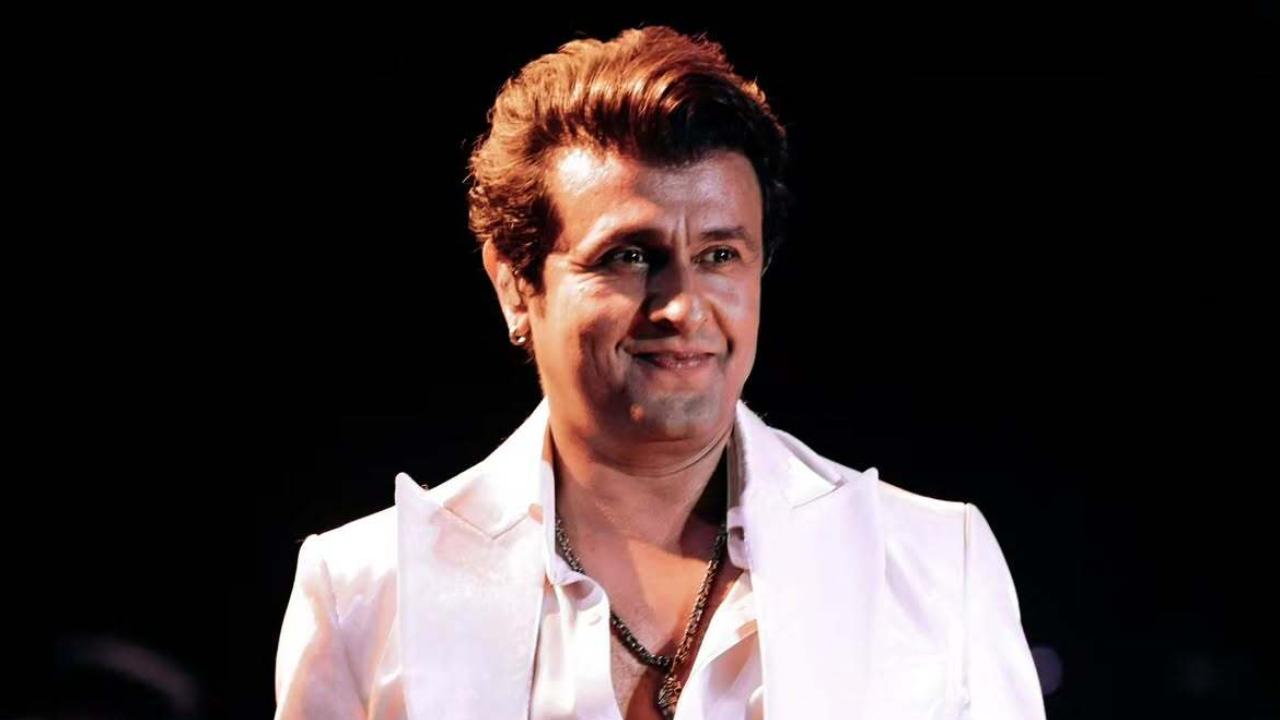
Sonu Nigam has never really been one to shy away from taking a stand. Over the years, the singer has spoken openly about issues ranging from the use of loudspeakers at religious places to royalty rights for performers. So, when a recent video of him refusing to comment on the ongoing student protests over alleged NEET irregularities went viral, his silence was bound to invite questions. During the interaction, Sonu was visibly irritated when reporters continued to ask him about the issue and eventually ended the exchange. Now, explaining his decision, Sonu says it was less about avoiding a difficult question and more about choosing when — and on what — he should speak.
“Firstly, in the last more than three decades of being in Mumbai, I have learnt one basic etiquette for any press conference. Always adhere to the agenda of the occasion and do not let conversation wander to disconnected matters,” he says, adding, “Talking politics when you have come to talk about your tribute to your Guru Pankaj Udhas is disrespectful in my eyes. And I would very politely expect the press and media gathered to maintain the same decorum.”
The singer who recently sang a Haryanvi song, Chunni, continues, "I have also given a word to my father to not comment on just anything which I’m not knowledgeable about. I don’t have social media on my phone. My life is about music and Bhakti. I have taken enough stands throughout my life and have been instrumental in bringing many mammoth changes in the system. From my outcry against loudspeakers on religious places to the right to royalty for performers, I have belled the cat alone bravely. Now let others take up new courageous stands and see what changes they can bring through their steadfastness. Let them become real warriors and not just social media lampoons,” he says.
‘The pain had nothing to do with my vocal chords’
Apart from the controversies, the singer has recently been in the news for his health. Sonu had earlier spoken about experiencing severe pain, with reports describing a pinched nerve, and has since also shared a video from a separate medical procedure involving a recurring growth on his left ring finger.
"I am perfectly fine due to the timely intervention of a wonderful and kind physiotherapist from Delhi called Arvind Kumar. He rid me of the excruciating pain in four days. More than anything else, I was overwhelmed with the outpour of love and concern for me from every quarter.” The singer clarifies that the pain was not related to his voice.
“The pain was in the side of the neck and had nothing to do with vocal chords, thankfully. But of course, your ability to sing comfortably is compromised when you are under such severe agony,” he says.
"It happened organically": Sonu Nigam on singing Mohammed Rafi’s song during surgery
10:13 AM

Vishakha Pandit (HINDUSTAN TIMES; August 10, 2026)
On Sunday, singer Sonu Nigam shared a video of himself crooning late singer Mohammed Rafi’s Suhani Raat Dhal Chuki (Dulari, 1949) while lying on an operating table undergoing surgery. The unusual moment left fans concerned and wondering what had happened. Nigam now tells us that the surgery was related to a recurring growth on his left ring finger.
“It’s been happening for some time. I had a surgery four months back to remove it, but it has come back again. I think it’s got to do with my arthritis,” he shares.
Explaining how he ended up singing during the procedure, the 53-year-old says, “Dr Nilesh Satbhai is an admirer of mine and he was playing my songs during the surgery. There were some songs playing without vocals, so I just started singing. It happened organically. They enjoyed it and said it has never happened that a patient is singing for the doctors while they operate.”
Nigam says he was the one who suggested that the doctors record the moment: “I told them they could record it as a memory if they wanted.”
Despite the health setback, the singer says he has no plans to slow down. “After the surgery, on Thursday, I went for the launch of my song Chunni. So I have been on the move even after the surgery, and I am not on a break.”
Cancelling a concert is never an option for me-Sonu Nigam
9:16 AM

Debarati S Sen (BOMBAY TIMES; June 24, 2026)
After battling severe pain for nearly three weeks, singer Sonu Nigam is finally on the road to recovery. Speaking to us exclusively from Delhi, where he sought treatment while attending an award function, the singer opened up about the physical ordeal he endured, the challenge of performing through pain, and the overwhelming love he received from fans after a video of him discussing his condition went viral.
‘I WAS IN A VERY BAD SHAPE FOR THE LAST 20 DAYS’
Sonu revealed that a nerve-related issue left him in constant pain, making even the slightest movement difficult. "I was in a very bad shape for the last 20 days. I think it was probably a wrong workout move or probably sleeping at one position for a long time must have triggered the nerve. And because of that, it was so painful that even if I was doing anything, not even moving my head, I was in constant pain."
While doctors initially prescribed painkillers, Sonu says he knew medication alone wasn't the answer. "Initially, for pain management, I took painkillers as suggested by doctors. But that's not an option. You have to heal from your pain and cannot just rely on painkillers. It's not good for your health."
His turning point came in Delhi, thanks to a filmmaker who connected him to a specialist. "I came to Delhi for an award function and when I realized that I couldn't do anything, Pankaj Parashar, the director of Chaalbaaz, put me onto a very good doctor in Delhi who works with cricketers, actors and politicians. He began working on me immediately. He was with me twice a day, for two and a half hours. He literally made me stand up. So, I finally am in a position that I can come back to Bombay now and start working."
‘NO ONE CAN REPRESENT ME ON STAGE’
Despite the pain, cancelling performances never crossed his mind. "Our work is such that I cannot send my secretary to sing on stage if I’m unwell. Agar koi aur business hota mera toh I would tell them to do the meeting without me, or I’d come on Zoom, ya mera assistant meeting kar lega. But this is a job which has to be done by the artist themselves."
For Sonu, performing is a responsibility that cannot be delegated. "If I have a work commitment, I have to do it. No one else can represent me on stage. As artists, this is our job. And that's why, cancelling a concert is never an option for me. I've never done it. I’ve sung even when I’ve had a bad voice or been unwell."
‘IF YOU’VE PRACTICED ENOUGH, THE SETBACK CAN BE FROM 100 TO 90, NOT FROM 100 TO 50’
The singer admits he was concerned that the medication and muscle relaxants prescribed for pain could affect his voice. "As I said, when we are in this profession, we have to perform on our own. And obviously, medication sometimes slows you down. If you are being given muscle relaxant for the pain, then that muscle relaxant will affect your vocal muscles as well."
Yet decades of training and discipline helped him overcome the setback. "But thankfully, if you have practiced enough in your life, then the setback can be from 100 to 90, not 100 to 50."
To his surprise, his voice held up remarkably well on stage. "So yes, I felt that I might be in pain. But in fact, when I went on the stage, I was singing even better than before. In the last one and a half months, I had not done any concert, I only did Riyaz. So my voice was even better. But yes, I was a little frightened that I might not be able to sing properly, but I sang pretty well."
‘SABSE BADI KAMAI HAI YEH’
What moved Sonu most during this difficult phase was the outpouring of concern from fans after he shared a video about performing despite being in pain. “It makes me so emotional that just a single video of me telling people that I'm having pain before a concert and now I have to perform brought in so much concern."
The singer says the response reminded him of what truly matters. "I was showered with so much love, so much attention, which is very special. It doesn't happen to everyone. And this is what makes me very humble. It makes me very thankful to God."
Calling the affection of his audience his greatest reward, Sonu says, "I feel this is the biggest earning. Sabse badi kamai hai yeh. And it comes from luck. It's not that I'm a very good person and that's why I'm getting it. Just my good luck. that I was just showered with love."
"May God give me strength": Sonu Nigam opens up about painful nerve condition
10:44 AM

HINDUSTAN TIMES (June 18, 2026)
Singer Sonu Nigam, 52, has revealed that he is battling a painful nerve condition that has kept him under medical supervision over the past week, requiring multiple MRI and CT scans, medications and physiotherapy sessions.
In a video shared on Instagram on Tuesday, the singer, while showing a patch on his shoulder and neck, said, “My nerves are pinched. I have been taking MRI and CT scans for a week. I have been taking a lot of medicines.”
The singer added, “Physiotherapy was very painful. I am taking painkillers now. Due to that, my throat is also a little heavy.”
Sonu explained that the muscle-relaxant medication prescribed as part of his treatment has also “affected his throat”, a concern for a singer preparing for live performances.
Despite the discomfort, Sonu said he is committed to going ahead with his upcoming concerts. “May God give me strength,” he said, admitting that he is feeling nervous ahead of the performances.
The singer is scheduled to perform on June 27 in Mumbai, followed by concerts in Delhi on July 25 and Abu Dhabi on August 21.
Artistes have finally moved from being remembered to being rewarded-Sonu Nigam
9:25 AM

Debarati S Sen (MUMBAI MIRROR; April 2, 2026)
In a landmark moment for India’s music industry, ISAMRA distributed Rs. 100 crore in royalties to 26,000 singers and musicians, marking what its leadership calls a long-overdue “correction of history.” We spoke to veteran singers Anup Jalota, Sonu Nigam and Founder, MD of ISAMRA, Sanjay Tandon.
Tandon described the payout as more than a financial milestone, calling it “justice for performers” whose voices have shaped the nation’s musical legacy while remaining excluded from its economic rewards.
He said, “With over 4 lakh tracks played upwards of 4.5 crore times across platforms, the move underscores the growing importance of structured systems, as ISAMRA’s metadata backbone ensures accurate tracking and monetisation across radio, television, digital and public platforms.”
VOICES FINALLY HONOURED
Anup Jalota called the moment “deeply emotional and historic,” adding, “For years, singers gave their voices to immortality, but did not always receive their due. Today, with this distribution, that voice is not just heard, it is honoured. It reinforces that royalties are a right, not a privilege.”
Sonu Nigam echoed the sentiment, saying, “Our decades-long battle pays off. Artistes have finally moved from being remembered to being rewarded. This goes beyond applause. It gives performers a financial identity and dignity, and acknowledges that the voice is not just emotion, it is value.”
A SHIFT ACROSS GENERATIONS
For veteran artistes, many of whom never expected to receive royalties within their lifetime, the payout signals delayed justice, while for younger performers it offers long-term assurance. Jalota noted, “It brings peace to legends and confidence to the young. When an artiste knows their work will continue to earn for them, it brings dignity and security.”
Nigam added, “For years, recognition came in the form of love and applause, but not proportionate reward. This shift changes that narrative. It tells every young artiste that their art will not just be celebrated, it will be protected and valued.”
WHY SYSTEMS MATTER
The scale of music consumption today makes transparency critical. “Today music travels everywhere. Without structure and transparency, it is impossible to track it,” said Jalota, crediting ISAMRA with bringing “discipline and accountability” to an unorganized space.
Nigam emphasized, “Transparency is everything. If you cannot track usage, you cannot value it. Systems like ISAMRA ensure that every play, every performance translates into rightful earnings with clarity and credibility.”
THE ROAD AHEAD
Looking forward, the focus is on expanding awareness, strengthening enforcement and building global integration. Tandon stressed the need to bring more artistes into the royalty framework, ensuring no voice is left behind. Jalota underlined the importance of parity, saying, “We must ensure that Indian artistes receive global respect and parity. As our music travels across borders, our rights must travel with it.”
Nigam added a note of caution in an evolving landscape: “The industry is evolving rapidly with digital platforms and AI. But the core must remain human. Technology should empower artistes, not dilute their rights. We need ethical frameworks that protect the voice behind the music.”
Shreya Ghoshal’s tribute to Lata Mangeshkar moves Mumbai
9:55 AM

Debarati S Sen (BOMBAY TIMES; March 9, 2026)
Paying tribute to a legendary singer with an 80-year career spanning nearly 45,000 songs is no easy task. Yet, that is precisely what Shreya Ghoshal achieved at her concert Letters To Lata Didi held at Jio World Garden on Saturday night. The evening was unlike the typical large-scale concert spectacle. There were no confetti bursts, fireworks or pyrotechnics; only pure music, delivered straight from the heart. With no costume changes and no breaks, she sang non-stop through more than 50 songs, each unfolding like a musical letter to the timeless legacy of Lata Mangeshkar, whose voice defined generations of Indian cinema and music.
“Aaj ki yeh shaam mere liye sabse khaas hai”
She opened with a traditional Ganesh vandana, followed by the classic Aayega Aanewala. Setting the emotional tone for the evening, Ghoshal addressed the audience
“Aaj ki yeh shaam mere liye sabse khaas, most important, sentimental and emotionally close to my heart evening hai. And main shayad kitni bhi tayaari kar loon, aaj ke din ki tayaari poori nahi hai. I think you will sense my vulnerability my emotion today. We are all here celebrating the legacy of Maa Saraswati, hamari pyari Lata Didi. This tribute is from all of us fans, from me and the musicians and isko sametne ke liye humne yeh ek zariya apnaya hai. Didi ko hum itna upar rakhte hain, unka jo sthan bhagwanon ke jagah hai. Hum sab fans ke taraf se hai yeh show and iss legacy ko celebrate karne ke liye aap sab saath mein gaiyega zaroor. I am sure Didi is smiling upon us from the heavens.”
Memories, music and ‘letters’
The evening’s narrative unfolded through music interspersed with audio-visual segments featuring messages and memories from people who knew and worked closely with Lata Mangeshkar. Tributes from Nitin Mukesh, Anandji Shah (Kalyanji-Anandji), Prasoon Joshi, Sachin Tendulkar and Prakash Peters added a deeply personal dimension to the concert. Shreya also shared memories of how Lata Mangeshkar’s voice shaped her own musical journey since childhood.
“Uss choti si ladki ko zara bhi andaza nahi tha ke yehi woh awaaz hai jo uska haath thaamkar usse uske aane wale kal ki oor le jayegi. I was too young but Lata Ji ke awaaz ne mujhe iss tarah khincha ki maine music se pyaar karna shuru kar diya. We formed a spiritual bond, that’s the asar of her voice. Karodo Bharatiyon ki tarah maine unhe sunne se zyada mehsoos kiya. Aur inn jazbaaton ko hum sabne jiya hai, lekin shayad unhe poori tarah jata nahi sakein. Toh aaj ki yeh shaam unhi unkahi baaton ko inn khaton ke zariye aapko samarpit karte hain.”
The first meeting with Lata Didi
The singer also recalled her first meeting with Lata Mangeshkar in 2005. “I was recording in her studio and she came there. I ran down to meet her and when she saw me, unhone mujhse kaha, ‘Tum Shreya ho na?’ Main unhe kuch bhi nahi bol payi. I was so stunned, meri bolti bandh ho gayi. Uss din main unse mil nahi rahi thi, mujhe uss din Lata Didi ke darshan ho gaye the. Uss waqt kuch nahi sujha, main thank you bhi nahi bol payi. Aaj mujhe Didi ko thank you bolna hai, for the soul, music you were for me.”
Choosing from a legendary repertoire
Selecting songs from Lata Mangeshkar’s vast repertoire proved to be one of the biggest challenges confessed Shreya. “Today, we are trying to cover all the eras of Lata Didi’s blockbusters,” she said.
“There are songs with so many composers including S D Burman, Laxmikant-Pyarelal, Kalyanji-Anandji and so many hit duets with the likes of Mohamad Rafi, Kishore Kumar. She worked with Laxmikant-Pyarelal for around 35 years and sang around 700 songs with just them. There are so many eras of her songs, her repertoire is simply massive. Ek se ek behtareen gaane hain unke. Main kya chunu? Finally, we just had to pick chits of which ones to sing!”
Introducing the song Aa Jaan-E-Jaan, she noted with a smile, “This was probably the only cabaret that Lata Didi ever sang. If you listen to this song you will realize that even in a cabaret there can be so much divinity, spirituality and itna apnapan and pyaar, even though it is a seduction song.” The evening featured several Lata Mangeshkar duets performed with singers Javed Ali and Kinjal Chatterjee.
A feminist inspiration
Speaking on the eve of International Women’s Day, Shreya highlighted Lata Mangeshkar’s enduring influence beyond music. “Lata Didi has always inspired us. Woh sabse badi feminist hain and tomorrow we are celebrating Women's Day. She has inspired us not just as a musician but also as a human being, living by her own terms. She gave us a sense of purpose. Aisi kitni auratein thi 40s, 50s and 60s ke daur mein jinhone kitna kuch iconic kiya.”
Music in its purest form
More than 40 musicians performed live on stage, including the UAE Philharmonic Orchestra and a choir, recreating the grand orchestral feel of the golden era of film music. Praising the ensemble, Ghoshal said, “Aaj lag raha jaise Lata Didi ke recording studio mein sab kuch live hota tha, waise hi hum conductor ke haath pe tike hue hain. I feel all this energy is very much missing in today’s film music.”
Among the distinguished guests present were members of the Mangeshkar family, Nitin Mukesh, Anandji Shah and Shantaben, Sonu Nigam, Prasoon Joshi, Kumarmangalam Birla, Dr Neerja Birla, Virender Sehwag and Anjali Tendulkar.
After the concert, Usha Mangeshkar was invited on stage and blessed the singer. “Aaj mere samne sirf Didi dikh rahi hai aur uski awaaz aa rahi hai mere kaon mein. Bachpan se main Didi ke saath recordings mein jaati thi, aakhri gaane tak. Ek ek cheez yaad aa raha hai. Bahut accha gaya Shreya. Bhagwan aapko hamesha Didi ka ashirwad zaroor denge!”
A standing ovation for the finale
As the evening drew to a close, Ghoshal performed songs such as Lukka Chuppi, Ae Mere Watan Ke Logon, Naam Gum Jayega and Rahein Na Rahein Hum.
For the final song — which she described as “a hug from all of us to Lata Didi” — the audience switched on their phone flashlights as she sang the immortal Lag Jaa Gale. Overcome with emotion, Ghoshal teared up on stage as the crowd rose to its feet in a standing ovation.
I am sure Arijit Singh must have made this decision after giving it good thought-Javed Ali
8:55 AM
Dnyaneshwari Katkar (BOMBAY TIMES; February 8, 2026)
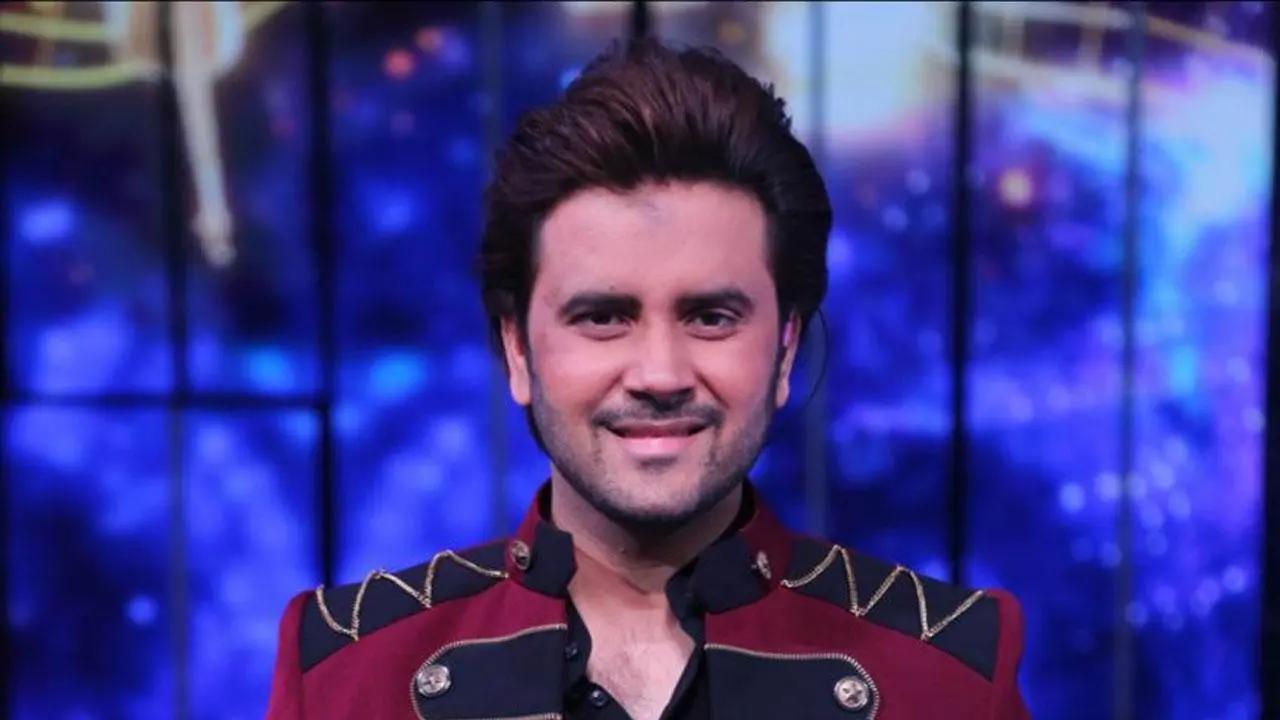
Javed Ali has been constantly travelling for his concerts in the last couple of weeks. But there’s a sense of calm and focus when he meets us for a chat. The singer slips between anecdotes and musings, occasionally humming a phrase to make a point, as he talks to us about making choices and how to keep things interesting for himself and the listeners.
‘I DON’T BELONG TO A PARTICULAR GENRE’
The first listen matters more than the banner or the buzz around a film for Javed. “This instinct has kept me anchored,” he says. From the soft romance of Jashn-e-Bahaara, Tum Tak and Saudebaazi, to the playful energy of Tinku Jiya, Nagaada Nagaada, Kajra Re, and the spiritual depth of Arziyaan and Kun Faya Kun, the singer’s discography is varied. “I don’t belong to a particular genre. For me it’s all about versatility,” he adds.
‘ARIJIT IS ONE OF MY FAVOURITE SINGERS’
The conversation inevitably turns to the current playback landscape and the singers defining it. When Arijit Singh’s name comes up, Javed speaks with both admiration and caution about the singer’s decision to step back from playback singing.
“I am sure Arijit must have made this decision after giving it good thought. I don’t think this is something he decided on a whim, especially at the peak of his career.”
The Kun Faya Kun singer adds, “I don’t really think he should have done this. He is a brilliant singer and one of my favourites. I’m sure his fans everywhere must be disappointed.”
On hook steps and social media
Bringing up the song Aashiqon Ki Colony from the upcoming O'Romeo as an example of how songs travel today, Javed shares, “The song has gone viral. At the same time, I feel that the virality is not just about the audio. One of the big reasons that song has become so popular is Shahid Kapoor’s hook step.”
The visual, he acknowledges, can push a song into people’s feeds, and from there into their playlists. “There are benefits to songs trending on Instagram because they reach more people,” he says. But he draws a line at letting it define creativity. “I don’t think artists should take a lot of pressure for that, though. A song has to work beyond a 30-second reel,” he adds.
On AI’s appropriate use in music
Javed says that technology, if wielded appropriately, isn’t a threat, but an advantage. For him, AI in music is a new space to explore. “When AI is used properly, like the way Sonu Nigam did by bringing Rafi sahab’s voice alive for a duet recently, it can be a great tool for music. I will probably do something like that too,” he says.
I was crying during the AI-powered live duet with Mohammed Rafi-Sonu Nigam
9:20 AM

Soumitra Das (BOMBAY TIMES; December 14, 2025)
Sonu Nigam, who will be performing in Ahmedabad later this month as part of his ongoing multi-city tour, is eagerly looking forward to the experience. He shares, “I have a very inexplicable connection with Gujarat. Wherever in the world I go, Gujaratis flock to my shows in huge numbers. Some of my closest friends are Gujaratis. Thus, coming to Ahmedabad with a special show like Satrangi Re is a great feeling. It’s like coming back home. I am a big foodie. Gujarati food is delicious, and my favourite is the undhiyu sent to me by Anand Pandit ji every year.”
‘AI gave me the opportunity to sing with my guru’
Recently, his AI-powered live duet with Mohammed Rafi at a concert created a lot of buzz. Talking about it, Sonu says, “The idea came to me when we were working on the show flow for my US tour. I thought I would give myself this opportunity to sing with my guru, and what better song than my own (Kal Ho Naa Ho) for the duet?”
He adds, “I was crying when I sang the part that was meant to be transformed into Rafi sahab’s voice through AI. And can you believe it, I enacted Rafi sahab for the AI to get his mannerisms right.”
‘I have been singing Gujarati songs for a long time’
Sonu, who has performed in numerous cities in Gujarat, tells us, “Over the last three decades, I have made innumerable trips to Gujarat. Gujaratis have literally seen me growing up. In fact, no one expresses their love for me the way Gujaratis do it, and I love it. The men, women physically hug me, hold me as if I’m their own. They feel they kind of own me, and I respect that kind of feeling. Very fortunate are those who are loved like this.”
The versatile singer, who has also sung for Gujarati films (Udi Re from Vickida No Varghodo and Ishq Rang from Romance Complicated, to name a few), adds, “I have been singing Gujarati songs for a very long time now. I love my recent song Misri (title track of Misri). I understand Gujarati quite a lot, so I don’t have any problem singing in the language.”
‘There are excellent, average, and mediocre artistes in all eras’
Asked about the biggest changes he has noticed in the music industry over the years, he says, “The music business changes, of course, but not much changes artistically. There are excellent, average, and mediocre artistes in all eras.”
How can artistes make their songs stand out in an era of reels and viral fame, where ‘views’ matter a lot? “Honestly, I am not an expert on this. I believe in doing my job honestly and leaving the rest to God,” he says. And how has he managed to remain popular with every age group? “Because I am God’s chosen one!” he quips.
He adds, “It’s a very good time for indie music and artistes. The market has opened up due to various music streaming platforms. The concert scenario in India has also improved drastically. It is more organised now. So, international artistes are more comfortable and surer about performing here. They know they will be treated professionally.”
‘Karan Johar and Varun Dhawan reintroduced Bijuria to the world’
His song Bijuria was recreated recently for the film Sunny Sanskari Ki Tulsi Kumari, and Sonu enjoyed it. He says, “The younger generation wasn’t aware of the glory of Bijuria. Karan Johar and Varun (Dhawan) reintroduced my song to the world. Today, three generations groove to it. The kind of reels and responses I have seen on social media — it’s astonishing.”
‘Kirtidan Gadhvi’s love for me is humbling’
Sonu shares a special bond with Kirtidan Gadhvi, one of Gujarat’s most loved singers. In an interview with us last year, Gadhvi said that they would love to collaborate someday. Sonu says, “Kirtidan Gadhvi’s love for me is humbling. He is a fantastic artiste and an even better man. I love him and his family. We have decided that he will take me to Dwarka and a few other pilgrimage sites in Gujarat when our schedules are a bit relaxed.”
Remakes made with respect aren’t a bad thing-Sonu Nigam
9:35 AM

Samarth Goyal (HINDUSTAN TIMES; September 12, 2025)
Sonu Nigam has always maintained that remakes aren’t as bad as they’re made out to be — provided they honour the original. This belief is now personal, as the singer’s 1999 pop hit Bijuria makes a comeback in actor Varun Dhawan’s upcoming film, Sunny Sanskari Ki Tulsi Kumari.
“Remakes, if done with respect and regard to the original creators, are not a bad thing at all,” the 52-year-old tells us, adding, “Sometimes remakes spoil a song, but a lot of times they bring back old melodies and create nostalgia for people who grew up with them. Even I discovered singers Elvis Presley and Frank Sinatra through reimagined versions.”
Originally part of his third non-film album Mausam (1999), Bijuria was conceived as pure pop. “I had the freedom to choose what I wanted to sing. We weren’t thinking of movies at all. And now, after 26 years, it’s finding its way into a film. It is an incredible thing, really,” he recalls.
The music video, which featured Sonu as a ghost, cemented its cult appeal. “It caught the fancy of youngsters like Varun back then, which is why he has so much love for the song,” he says.
For Sonu, the original album will always be special: “We had legends like Shivamani (percussionist), Rupert Fernandes (composer) and others contribute. The bond we shared as a team is what reflects in the success of the album. That is why people are still in love with the songs.”
For us, it’s a matter of pride if Pardesiya even gets compared to A R Rahman's work - Sachin-Jigar
10:41 PM
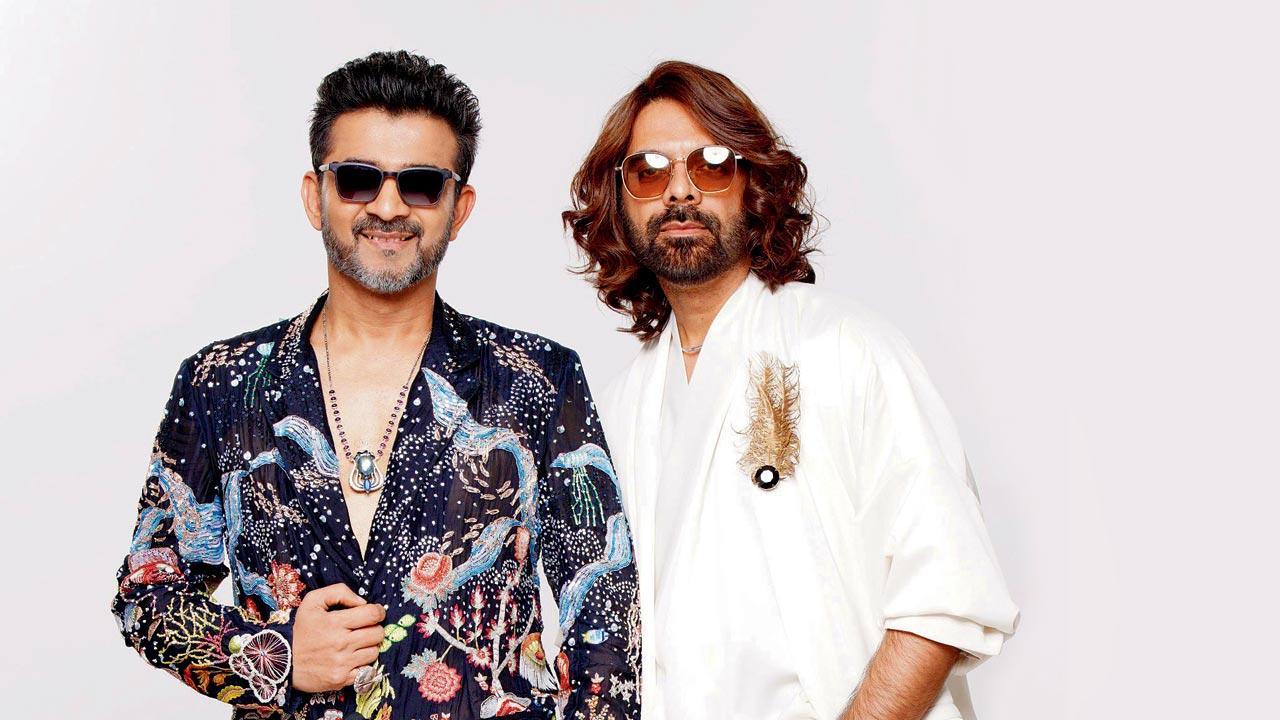
As listeners say that ‘Pardesiya’ is influenced by AR Rahman’s music, Param Sundari composers Sachin-Jigar reflect on how the album is their tribute to the maestro. They also share that they are proud that their work is being compared to A R Rahman's
Mohar Basu (MID-DAY; August 25, 2025)
Few composer duos in Hindi cinema today straddle madness and melody as deftly as Sachin–Jigar. Over the past decade, they’ve swung between quirky tracks like Kamariya, romantic numbers like Mileya Mileya, and chartbusters like Aaj Ki Raat. Ahead of their latest outing, Param Sundari, the duo talks about their mindset, music, and their tribute to the master. Excerpts from the interview.
What’s the secret of a long-term collaborative equation?
Sachin: It is destiny. We never sat in business meetings to plan this partnership — it just happened. I first met Jigar to share some workload, and there’s no way two people living so far apart could’ve just decided to become a jodi. It feels like something beyond us put us together. Let me give you a recent anecdote: I needed Jigar not just as my business partner but as family, and he came through for me. That’s when I realised I admire him beyond music. He’s five years younger but has this politeness, manners, and ability to communicate that I really look up to. He’s also the rebel in our duo, the one who pushes.
Jigar: The common thread between all of us is that we’re mad but sane enough to know that we’re mad! Otherwise, who decides to make a song “Baba Ji Ki Booti”? And when we did that track, everyone sang — Raj, DK, Anand, Kunal, me. Whoever was in the room. None of us was in it for stability. I think it’s that madness that connects us and keeps us together.
Last year was stupendous for you, with Aaj Ki Raat becoming 2024’s most-streamed song. When you start a new project after such a success, what is your mindset?
Sachin: Jigar doesn’t sleep — and he doesn’t let anyone else sleep either! (laughs) For him, the moment a song works, that gate is closed. He won’t allow us to repeat ourselves in the same way. That forces us to think differently, and that’s why we’ve managed to stay versatile. For me, that success gave me a certain ease. I’ve lived through the struggle of not finding popularity, so to be on the other side feels nice. But we were never in the game for just hits or flops. We came here to make good music, and even after success, that hasn’t changed.
Our mantra is never to define a “Sachin–Jigar sound.” We don’t want people to say, this is exactly what they always do. We move on, leave that sound behind, and try something new. If others want to pick it up, great. If not, no problem. That’s why after Stree 2, we thought, okay, we’ve done the madness in Stree, we’ve done dance numbers, now how do we break out again? That’s how Param Sundari happened. It’s become an unplanned pattern with us — one big dance number, then one big love song, then something unexpected.
Jigar : We’re also conscious of not getting typecast as “the commercial dance anthem guys.” So if we’ve just done a massive dance track, next time we’ll want to balance it with a love song or something soulful.
When the Param Sundari teaser dropped, it went viral, with Sonu Nigam’s voice everywhere on social media. How did that feel?
Sachin: A day before Jigar and I flew to Dubai for the Param Sundari music session, Dinesh Vijan called us to his office and told us this is a once-in-a-lifetime opportunity. Instantly, [A R] Rahman sir started playing in my head. Roja [1992] changed my life forever — if I’m a composer today, it’s because of those five years of listening to him. So working on Param Sundari felt like living a dream.
Jigar: South Indian music has also inspired us a lot because it stays rooted in its culture. Even in the most commercial films, you’ll hear classical influences. I trained in classical singing for 10–12 years, and often had to “unlearn” some of it to compose for cinema. But “Param Sundari” brought everything we wanted together, it felt like a dream we didn't want to wake up from. As for Sonu Nigam: growing up, albums like Yaad, Deewana, Jaan were my everyday listening. First it was a dream to see him live, then to hear him sing songs we produced. The first track we ever programmed was sung by Sonu Nigam. That was already a big moment.
But as composers, we never got to record him again. We always kept it inside us. One day, we have to make a tune worthy of his voice. I was such a huge fan, I would literally pray to him before going to school! (laughs) So when we composed Param Sundari, we both knew deep down: this is it. We didn’t even say it out loud to each other, but we knew this was the song for Sonu Nigam.
We called him, he heard it, came to the studio, and recorded it in half an hour. It was magical. For us, it’s the greatest tribute — to have the man who inspired us be part of our music. Recently, he called and told us how much love he’s receiving for the song. To hear that from your idol — that’s the biggest moment of the year.
With the first track going viral, the flip side is that the rest of the album has to match up. Do you worry about how people will receive a song?
Jigar: Definitely the latter. That’s not our job. Once we put our music out, it belongs to the audience. As fellow creators, we may form opinions, but as listeners, people have the right to completely own or dismiss what we make.
We learned early in our careers to detach ourselves from the fate of a song. It hurts when a track you love doesn’t do well, but once you release it, it’s no longer yours. You’ve shot the arrow, and it’s out in the world. What feels “good” to me might not land with someone else, and that’s okay. So yes, we’ve made peace with it. Especially today, when there’s such great indie music and such strong new artists coming through, we’re not greedy. We just try to give our best and then leave it to the universe.
Has it happened that you expected a song to be a big hit and it didn’t catch on?
Jigar: Many times! One example is Happy Ending [2014]. The album actually caught on months later. At release, it didn’t get the traction we hoped for, though we felt it was a true coming-of-age album in terms of sound and concept. The first song, Jee Phaad Ke, generated noise, but the other tracks didn’t bloom immediately. And because once a producer sees one song breaking through, he’ll naturally invest all his energy and money into pushing that one, the rest often get sidelined. We always believed the album would find its way — and it did, but very late. There are other examples too. A beautiful song like Pinjra Tod Ke in Simran, or Hoor in Hindi Medium with Atif Aslam. We thought they’d immediately catch on. They didn’t at first, but later people came back to them, and now they even request us to perform them on shows.
Sachin: It’s a part of the game. That’s why having the first song of an album break through is actually a huge victory. Because imagine if you’re waiting until the fourth track for something to click — by then the producer may lose hope, and the entire album can collapse.
Jigar: For us, every film’s music carries big stakes. Actors want to be seen in a good light, producers are investing heavily, directors have worked hard. If the first song doesn’t land, there’s panic. And in those moments, you have to put art aside and think practically: we have to make this work. When the first track works, it also gives us the liberty to experiment with the rest of the album. For example, because Stree worked, we could make Stree 2 completely different — even put a ghazal on a beat. That was a risk, and it only happened because the first one clicked. So yes, we’ve learned that “first song tracking” is the safer and better place to be in, even if the others don’t explode in the same way.
Dinesh Vijan, Amitabh Bhattacharya and the two of you almost function like a unit. And every time this unit comes together, it delivers. What makes it work?
Sachin: Dinesh is extremely critical of his own work, and Amitabh Bhai is the same. He’ll come back after six days to change just one word in the last line of an antara, or fight with us about a line even before a shoot mix is delivered. That level of self-criticism keeps the bar high.
The truth is, at the end of the day, no matter how many aspirations or ideas we all come in with, there’s only one song to be made. That perspective keeps us grounded. We keep checking each other.
Dinesh loves to experiment — he’ll come to us with a reference, or say, “Here’s this Afro-inspired song, can we make it a love track?” He’s always hustling, always infusing new ideas. Jigar, as I’ve said, is the rebel — he refuses to repeat himself, and he shares a bond with Dinesh that goes beyond work, which makes them almost like brothers.
Jigar: For me, I try to stay objective, to keep perspective when things get too passionate. And Amitabh Bhai has this magical ability to bring in a word or phrase that sparks a whole song. Among the four of us, someone always has the starting point.
Because this unit has delivered before, we have the courage to keep pushing further — to take one more risk, one more step. The balance of being able to check each other and push each other is what keeps us both grounded and moving forward.
Also, we’ve been through failures together — films that didn’t work, songs that vanished without a trace. That’s why now, even if something doesn’t work, it doesn’t shake the association. Our bond isn’t dependent on hits. It’s dependent on whether we’ve fulfilled each other’s creative soul. If between the four of us, we’ve inspired and satisfied each other creatively, then that’s success, no matter how far the song travels.
On social media, people are calling Param Sundari’s music derivative and influenced by A R Rahman. Do you worry about that?
Sachin: Never. From the beginning, this song came from a place of pure art, dedication, and a tribute to the master. For us, it’s a matter of pride if one of our songs even gets compared to his work. I look up to Rahman sir not just for his work, but for the person he is. On the inlay card of his first independent album [Vande Mataram], he wrote: ‘Hope to become the song of an independent India.’ That’s the man we’re paying homage to.
Jigar: When people say Param Sundari feels familiar, for us, familiarity isn’t bad. Familiarity can make you feel at home, and once you’re there, you can surprise the listener with new things hidden inside.
Stones thrown at Sonu Nigam at Delhi Technological University
8:31 AM

Karan Sethi (HINDUSTAN TIMES; March 25, 2025)
What was meant to be a magical night at Delhi Technological University’s (DTU) Engifest 2025 turned chaotic on Sunday when singer Sonu Nigam was forced to halt his performance midway. A section of the massive crowd — over one lakh students — began hurling stones and bottles at the stage, endangering his team.
Addressing the unruly audience, Sonu pleaded, “Main aapke liye aaya hun yahan pe so that we can all have a good time. I’m not asking you to not enjoy, but please aisa na kariye.” He stressed that his team members were getting injured in the mayhem.
Geetika, a student from Daulat Ram College, expressed her disappointment: “It was shameful to see a legend like him having to pause and request the audience to behave.” Abhishek Ratra from Guru Gobind Singh Indraprastha University added, “Even in that moment, he remained humble and composed.”
Despite the disruption, the 51-year-old resumed his performance once the situation settled.
"I love you": Daboo Malik reacts with emotional post after son Amaal Mallik cut all ties with family
8:35 AM

HINDUSTAN TIMES (March 24, 2025)
Last week, musician Amaal Mallik penned a lengthy Instagram note, revealing that he had been diagnosed with clinical depression. In the caption of the now-deleted post, Amaal shared that his family had held him back and blamed his parents for the growing distance between him and his brother, singer-composer Armaan Malik.
On Saturday, Amaal’s father, composer Daboo Malik, reacted to the news with an emotional post on social media. The 62-year-old shared a picture of Amaal giving him a kiss on the cheek. He simply captioned it, “I love you.”
Singer Sonu Nigam tried to cheer Daboo up, commenting, “Everything was fine, everything is fine, and everything will be fine.” Fans also reacted to the post; one Instagram user wrote, “Can’t wait to see you all back together as one.” Another read, “Everything will work out. Good things come to good people like you.”
In his post, Amaal had written: “My self worth has been diminished countless times by actions of near and dear ones that stole pieces of my soul.”
Following this revelation, we reached out to his mum, singer Jyothi Malik, who said, “Whatever he has put is his choice. I am sorry.”
President made us feel so comfortable. She broke the ice by talking about my musical journey-Sonu Nigam
8:20 AM
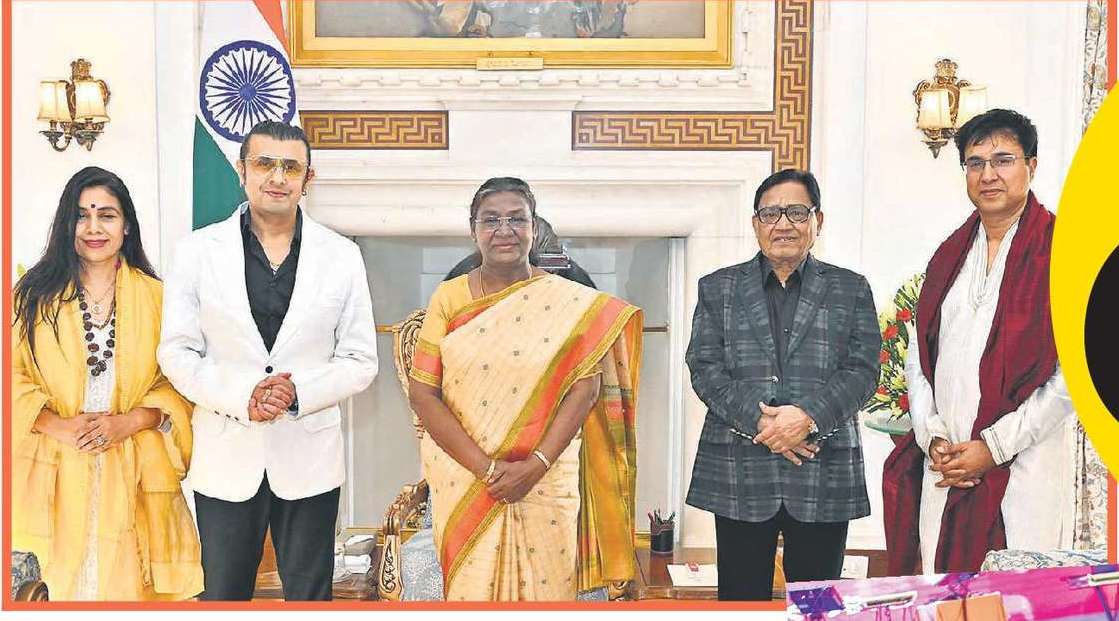
(From left) Meenal Nigam, Sonu Nigam, President Droupadi Murmu, Agam Kumar Nigam and Sumit Mahendru at the Rashtrapati Bhavan in New Delhi
President made us feel so comfortable. She broke the ice by talking about my musical journey
Soumya Vajpayee (HINDUSTAN TIMES; February 5, 2025)
Sonu Nigam performed at the newly inaugurated Open Air Theatre at the Rashtrapati Bhavan in Delhi on February 3. “As an Indian, to be invited to perform on the Rashtrapati Bhavan Diwas and to get the opportunity to not only perform in front of the President of India Droupadi Murmu, but also have a one-on-one interaction with her was an overwhelming feeling. I was the first artiste to perform at the newly built amphitheatre. It’s a matter of good fortune. They invited my family too, so my father (veteran singer Agam Kumar Nigam), sister (singer Meenal Nigam) and brother-in-law Sumit Mahendru accompanied me.”
Sonu adds, “Our President made us feel so comfortable. She broke the ice by talking about my musical journey, my Sa Re Ga Ma days and how I’ve represented India globally. That felt so rewarding.”
Sonu calls performing at the Rashtrapati Bhavan “an honour”, but adds how it wasn’t a cakewalk. “I suffered an acute back spasm recently and I wasn’t in a great shape before the performance. However, the President’s doctor attended to me for 45 minutes before the show and I felt better,” says Sonu, as he goes on to explain why the occasion “was extra special”.
He adds, “This was the first time that I performed with my father and sister on the same stage. So, the three Nigams ended the concert in front of the President.”
The singer and his family were hosted at the Rashtrapati Bhavan for the night: “After the show, we were taken to the Rashtrapati Bhavan museum. It was such a pleasant surprise to see a picture of me receiving the Padma Shri in the Padma Awards section, which only had 12 photos. After that, my family and I had the honour of spending the night at the Rashtrapati Bhavan too. We went to the Amrit Udayan yesterday.”
Vishal Dadlani is a malang kind of a person and I love his vibe-Sonu Nigam
8:43 AM
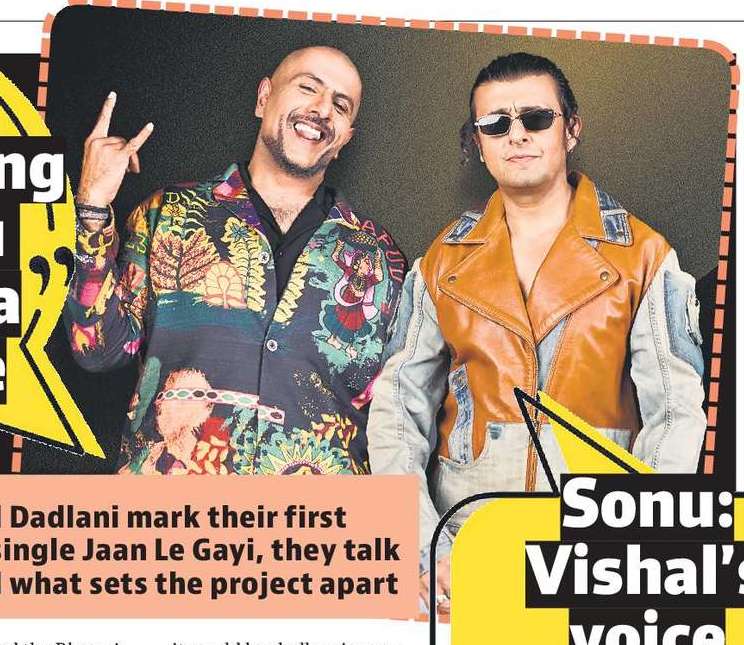
As Sonu Nigam and Vishal Dadlani mark their first non-film collab with the single Jaan Le Gayi, they talk about the experience and what sets the project apart
Soumya Vajpayee (HINDUSTAN TIMES; January 14, 2025)
While they have worked together on several Hindi film songs, musicians Sonu Nigam and Vishal Dadlani marked their debut collab for a single, Jaan Le Gayi, last month. The song, which is part of the album Bhoomi 2024 — a brainchild of composer duo Salim-Sulaiman, has been penned by Shraddha Pandit and has almost two million views on YouTube.
Nigam says working on the song and singing alongside Dadlani was a breeze. “Jaan Le Gayi was the first song that we recorded for the album. But everyone loved it so much that it was decided to end the Bhoomi season with the track. I am a sound person and I get very touched by voices. Vishal ki awaaz mujhe bahut touch karti hai. Despite his rock background, he has a soul for Indian melodies, which is quite rare. I was so happy that we collaborated for our first non-film song. Vishal is a malang kind of a person and I love his vibe,” he says.
For Dadlani, coming on board for the song was a yes at the very outset. “I was on a paragliding trip in France when Salim (Merchant; composer) called me and said he wanted to do this song and that I’d have to sing alongside Sonu Nigam. My brain broke a little, because it’s not easy to sing with Sonu. It was something I had never done before. So, I knew it would be challenging as a singer to even go behind the mic. I don’t consider myself a singer at all, although Sonu and Salim always say kind things about my vocal performances,” he says.
Dadlani adds that shooting the music video was even more fun: “It was a concert-like setting. Both Sonu and I are energetic performers on stage and we are also seen dancing in this one. Projects like these become a way of reinventing yourself, especially when you have people like Salim and Sulaiman at the helm of it. This song has me singing sargams that I am really not fluent in, but these guys encouraged me to do it. I would love to work with Sonu again.”
For Nigam, who is seen pulling off some impressive moves in the music video, shooting the track was a special experience. “The last time I shot at a Bhoomi set was in 2022 for the single Ruk Ja. So, returning to the same space after two years felt great. I love working with Salim-Sulaiman, because I enjoy that space. That’s why the kind of work that we’ve been doing, including the Kannada song Mayavi (it has close to 30 million views on YouTube) from the same album that has received so much love globally, is very divine and genuine,” he ends.
I sought permission from Mohammed Rafi before every song I sing on the mic-Sonu Nigam
8:34 AM
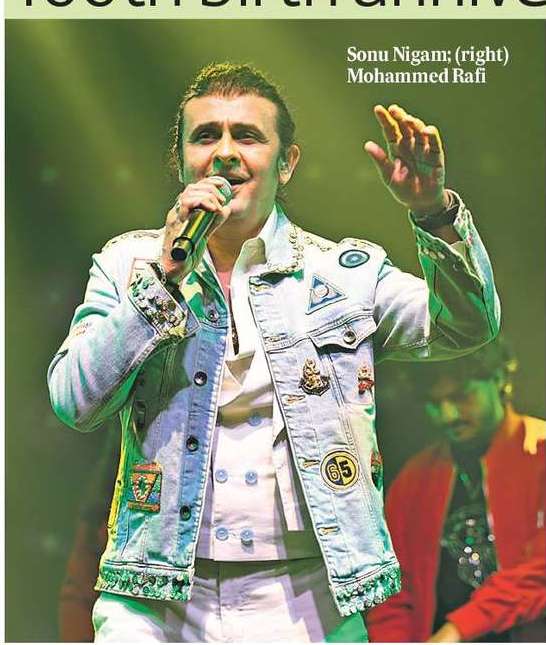
Soumya Vajpayee (HINDUSTAN TIMES; October 7, 2024)
In his 47-year-long career, Sonu Nigam has considered late singer Mohammed Rafi a guru. Now, the singer is set to pay homage to the veteran by performing at a tribute concert on Rafi’s birth centenary on December 24. Titled Sau Saal Pehle, the show will mark Nigam’s first-ever Rafi concert in India.
“Rafi sahab is not just my guru, but also my pir (spiritual guide), who I have worshipped and sought permission from before every song I sing on the mic. I’ve cried in admiration listening to him. To realize that he chose me to do his centenary show reassures me that my reverence has been reaching him in the other world. He is blessing me,” he tells us, exclusively.
Sharing how “it’ll not be an ordinary concert”, Nigam says, “It’s akin to my life getting encapsulated into a concert. Every song and emotion his music conveyed will be relived by me and the audience. It’s going to be a festival — the Mohammed Rafi Festival.”
On doing his first-ever Rafi show in India, Nigam says, “I performed three concerts, titled Rafi Resurrected, in 2008, in the UK. It marked my collaboration with the City of Birmingham Symphony Orchestra. It’s been 16 years since my last Rafi show. So, I can’t wait to take the stage in Mumbai on December 24.”
Sharing how the idea of this tribute show came about, he adds, “It’s surreal that it was ideated by the families of both my gurus — Firdaus Rafi ji and Shahid Rafi ji from Rafi sahab’s family and Rabbani Mustafa Khan and Namrata Gupta Khan from Ustad Ghulam Mustafa Khan sahab’s family.”
AI is a threat to an average musician, singer-Sonu Nigam
8:32 AM

Debarati Sen (BOMBAY TIMES; September 26, 2024)
Sonu Nigam has over 6,000 songs and 47 years of live performances to his credit. With a multi-genre repertoire that includes romantic melodies, dance numbers and soulful tracks, the singer’s range is enviable. His songs include numbers like Abhi Mujh Mein Kahin, Sandese Aate, Kal Ho Na Ho, Suraj Hua Maddham and You Are My Soniya, among others. In a conversation with us, Sonu opens up about the toughest phase of his life, his priorities at 51, the advent of AI and more.
Looking at your career that spans many decades, do you often wonder what’s next?
There was a time about five-six years back when I felt that I’ve probably done and experienced everything – be it success, failure, happiness, ecstasy, depression and spiritual elevation – but then something within me told me never to underestimate the universe. Never think ki ‘ho gaya’. So, I surrendered, now the universe will tell me what’s next. My life is good and smooth. The more I surrender to the universe, the better my life is. The love of my colleagues, my seniors, my contemporaries… it’s so organic, and it’s come from surrendering myself. There has been no manipulation or strategy here.
At this juncture in your life, what would you say are your priorities?
I never got a chance to learn music when I was a kid. I was inspired by my parents, and they told us whom to listen to, but vidhivat training in music is something I didn’t get then. So, what I did not get to learn or enjoy in my childhood, I’m trying to make up for it now. I have just two priorities now – my constant vocal practice and maintaining a reasonable fitness level. I can try to get a six-pack, but I also like to eat (laughs), so I want to strike a balance. I’m fit, and I have good stamina, and that’s what is important. When I’m performing on stage for three-four hours, I need to be physically fit.
There has been a lot of talk about the impact of AI on creative fields such as writing, singing and creating music. Do you look at AI as a threat?
AI is a threat to average writers, singers and musicians who are not passionate. Tell AI to write one song on mohabbat in Javed Akhtar’s style, and it will be done. It is being used to program songs, too. But all this is for mediocre people and AI is a threat for them.
You went through a phase when your songs were dubbed by others and music companies were not ready to work with you. How do you look back at it?
Kai cheezein thi… I wasn’t prepared for any of that. So, I’d be a liar to say that it was all fine. No, I did feel, ‘Yaar, kya ho raha tha, yeh bhi dub kar raha hai, woh bhi dub kar raha hai.’ Nobody wanted to work with me because they knew if I sang their songs, some music companies wouldn’t take them. They wanted to work with me and would say, ‘Sonu bhai, zara samjhauta kar lo.’ But I didn’t. So obviously, those were tough times, but I had faith and did not let the negativity seep in. Today, all the music companies love me, aur hum wapas pyaar se rehtein hain. It was a very difficult phase, but some lessons were meant to be learnt.
On the personal front, you have spoken about dealing with marital issues. How did you sort that out?
When you get married, you think you understand the person, but then, the equation changes. You face ups and downs in your marital life and one is not ready for it. You are never prepared for a difficult marriage. Most people have difficulties in their marriage at some point. I believe familiarity breeds contempt. When you live with a person, you forget who that person is. You start looking at them contemptuously. It starts hunky-dory, but later, the taken-for-granted feeling creeps in. Some people are okay with it, perhaps I’m not. I don’t deny the fact that times have been tough for me, but I have a beautiful son, and he deserves the love of both his parents. So, you come to a mutual understanding after a point. You mature over the years and also start looking at the other person differently and accept each other. My work is such that I travel a lot and that also gives us enough space. It’s good to have space… you don’t get on each other’s nerves (laughs).
Mausam and Deewana nailed my image as a pop star-Sonu Nigam
8:24 AM

As Sonu Nigam’s cult albums turn 25, he shares why they continue to be special and how they helped him evolve
Soumya Vajpayee (HINDUSTAN TIMES; September 2, 2024)
Who can forget the iconic songs Ab Mujhe Raat Din, Deewana Tera or Bijuriya? These cult classics from Deewana and Mausam, rendered by Sonu Nigam, continue to resonate with music lovers even today. As both the albums turned 25 recently, the singer feels “grateful and overwhelmed”.
Sharing how the songs from the two records “are ageing like fine wine”, he says, “Although Kismet (his 1998 album) brought me in the pop scene, dynamically changing my image from a boy-next-door to a singing-dancing pop star, Mausam and Deewana in 1999 just nailed it for me. It’s been 25 years and I don’t remember doing a concert and not performing songs from these albums.”
The tracks in both the albums were quite diverse — from uptempo numbers to soulful, romantic ballads. Sharing how they gave him a chance to showcase his versatility as an artiste, Nigam says, “Back in 1999, I was a restless kid, wanting to experiment, try newer and unattempted genres, showcase my vocal skills, challenge the dancer in me and just have fun. The interesting part was that both the albums released around the same time and had the same artiste, but both went on to become chartbusters, as the genres of songs were poles apart. Mausam had songs ranging from Indian and western classical to ballads, to folk to pop, to dance, etc.”
As he goes on to talk about his favourite numbers from the two albums, the singer says if he were to revisit them now, “everything will change, as that Sonu doesn’t exist today”.
He shares, “I love all the songs. People have their favourites, mainly from Deewana. From Kuchh Tum Socho to Iss Kadar Pyaar Hai, besides the popular ones such as Ab Mujhe Raat Din and Deewana Tera. There was a special song in Mausam called Yesterday Was Tomorrow. It had no words, just sargam in different ragas, composed amazingly by Ravi Pawar. It was really special to me, as I had no formal training in classical music.”
Looking back at learning his signature steps for Bijuriya from late dance legend Saroj Khan, Nigam recalls, “I requested her to choreograph the songs keeping (actor) Govinda in mind. So, Saroj ji said, ‘Chaliye, kamar kas lijiye’. And I slogged to learn the steps, which, till today, are synonymous to me. I feel so grateful to see everyone dance along when I perform the song at my shows.”
Praising me shows Zayn Malik's own humility-Sonu Nigam
8:17 AM

Soumya Vajpayee (HINDUSTAN TIMES; July 20, 2024)
British singer Zayn Malik is a fan of singer Sonu Nigam’s song Abhi Mujh Mein Kahin from the 2012 film Agneepath. Recently, in an interview with Diet Paratha, the former One Direction member spoke about his favourite Hindi track and said, “My favourite Hindi song is Abhi Mujh Mein Kahin sung by Sonu Nigam. It is an incredible track and I would do no justice to it if I sing it. But maybe, at some point on my tour in the future, I might attempt it.”
Mention this to Sonu, and the singer says, “That’s so sweet. Zayn is a bright and talented singer. Because of Nevaan (Nigam; his son), I have heard a lot of his songs, including Pillowtalk, Dusk Till Dawn and A Whole New World. Praising me shows his own humility. I am all smiles.”
Penned by lyricist Amitabh Bhattacharya and composed by music director duo Ajay-Atul, the award-winning song was picturized on actors Hrithik Roshan and Priyanka Chopra Jonas in the film.
Sonu Nigam, Shankar Mahadevan, Shreya Ghoshal to perform at Anant Ambani-Radhika Merchant’s wedding
8:16 AM
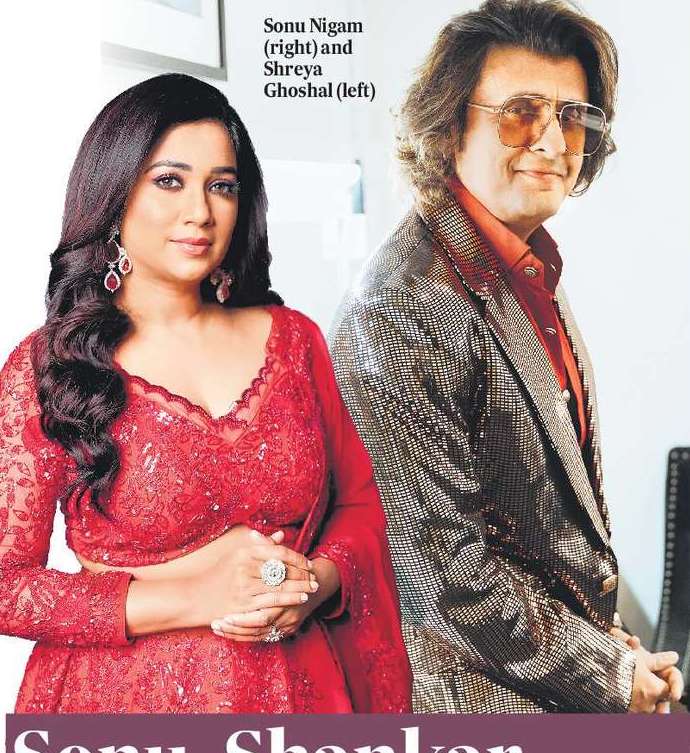
HINDUSTAN TIMES (July 8, 2024)
After pop star Justin Bieber rocking businesspersons Anant Ambani-Radhika Merchant’s sangeet, there’s a lot of anticipation around the performances at their wedding. International singers Adele, Drake and Lana Del Rey will reportedly have power-packed acts at the celebration that will be held from July 12 to 14.
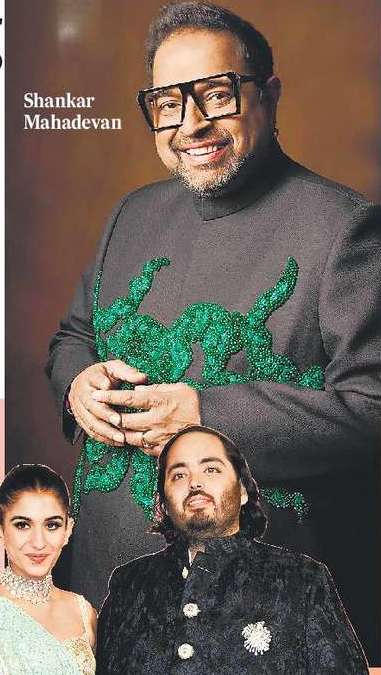
Now, we have exclusively learnt that a few Indian musicians would also have an important role to play at the do. A source tells us that musicians Sonu Nigam, Shankar Mahadevan, Hariharan, Shreya Ghoshal and Kaushiki Chakraborty will be performing live at the wedding.
The source adds, “There are some devotional songs and shlokas that will be performed by these musicians, including Shri Krishna Govind Hare Murari by Sonu. There has been extensive prep and rehearsals, as the shlokas are in Sanskrit. All the songs have been composed by Ajay-Atul (music director duo).”
Subscribe to:
Posts (Atom)