Showing posts with label Prithvi Theatre. Show all posts
Showing posts with label Prithvi Theatre. Show all posts
Ekjute completes 45 years of making plays and moulding actors
5:06 PM

Mohammed Wajihuddin (THE TIMES OF INDIA; October 4, 2026)
Razia Sajjad Zaheer, Urdu writer and wife of the Marxist ideologue Sajjad Zaheer (1905-1973)—one of the founders of the Progressive Writers’ Association—had a delightful way of describing the progress of her four daughters. When her third daughter Nadira graduated from National School of Drama (NSD) with a gold medal in 1971, Razia celebrated it saying: “Jo dramebaaz thi woh NSD se paas huee (the one who would do drama passed out from the NSD).”
Interesting anecdotes like this animate ‘Ek Lamhaa Zindagi: A Love Story 1938-1979’, a play depicting the love between Razia and Sajjad Zaheer, the famous couple whose South Mumbai home hosted many memorable events, including the nikah of poet-lyricist Kaifi Azmi with Shaukat Kaifi.
This was one of the plays that Ekjute, Nadira Zaheer Babbar’s theatre group, staged last week at Prithvi Theatre as the group turned 45 this year. Founded in 1981, Ekjute (meaning together) has evolved into a major theatre movement. With dozens of plays, hundreds of performances and annual theatre workshops, it doesn’t just stage plays, it mentors actors.
“When Raj sahab (Raj Babbar, Nadira’s fellow NSD alumnus, whom she married in 1975) and I moved to Mumbai in the early 1980s, I knew that I wanted to create a platform for aspiring actors,” says Nadira, whose group has produced acclaimed plays like ‘Sandhya Chhaya’, ‘Look Back in Anger’, ‘Begum Jaan’ and ‘Sakku Bai’.
Theatre critic Shanta Gokhale says she enjoyed ‘Begum Jaan’, based on the life of a classical singer on hard times, where Nadira plays the protagonist. “Though I have not followed all her plays, she and her group certainly played a role in creating a vibrant theatre culture in the city,” says Gokhale.
A place that has shaped Ekjute’e journey is Prithvi Theatre. “I couldn’t have done so much had Jennifer and Shashi Kapoorji not opened their hearts, home and this place for me,” she says. It was here that she staged her first production ‘Yehudi Ki Ladki’, reviving the Parsi theatre style of storytelling. Years later, Nadira and Raj’s daughter Juhi Babbar Soni would make her stage debut with ‘Yehudi Ki Ladki’.
Juhi was one of many actors and directors — including the late Sushant Singh Rajput, Richa Chadha and Rakul Preet Singh — who trained at Ekjute’s theatre workshops. “I grew up with Ekjute, imbibing its vibrant literary and acting culture,” says Juhi, who co-directed the critically acclaimed ‘Ek Lamha Zindagi’ with actor-director Makarand Deshpande.
Deshpande admires the way Ekjute has evolved. “Nadira ji’s knowledge of Urdu enables her to give powerful performances in plays like ‘Begum Jaan’. Few theatre groups have survived 45 years. This alone is worth celebrating,” he adds.
Ashish Vidyarthi, who plays a small-town man dreaming of joining Bollywood, but ends up a clerk in ‘Dayashankar Ki Diary’ says, “This story has universal appeal. I have played this character for 25 years and every show excites me.”
Both Nadira and Juhi say they carry the rich legacy of Razia and Sajjad Zaheer. Zaheer and writer Mulk Raj Anand formed the Indian Progressive Writers’ Association in 1935, while at Oxford. A member of the Communist Party of India, Zaheer was sent to Lahore in 1948 to establish the CPI in Pakistan, but was arrested along with poet Faiz Ahmed Faiz. Razia moved mountains, and even sought Nehru’s support for her husband’s release.
This scene appears in ‘Ek Lamha...’ a play marking Ekjute’s 45th anniversary.
It was not till 2010, that we found a contemporary, urban language that defined us-Akarsh Khurana
2:41 PM
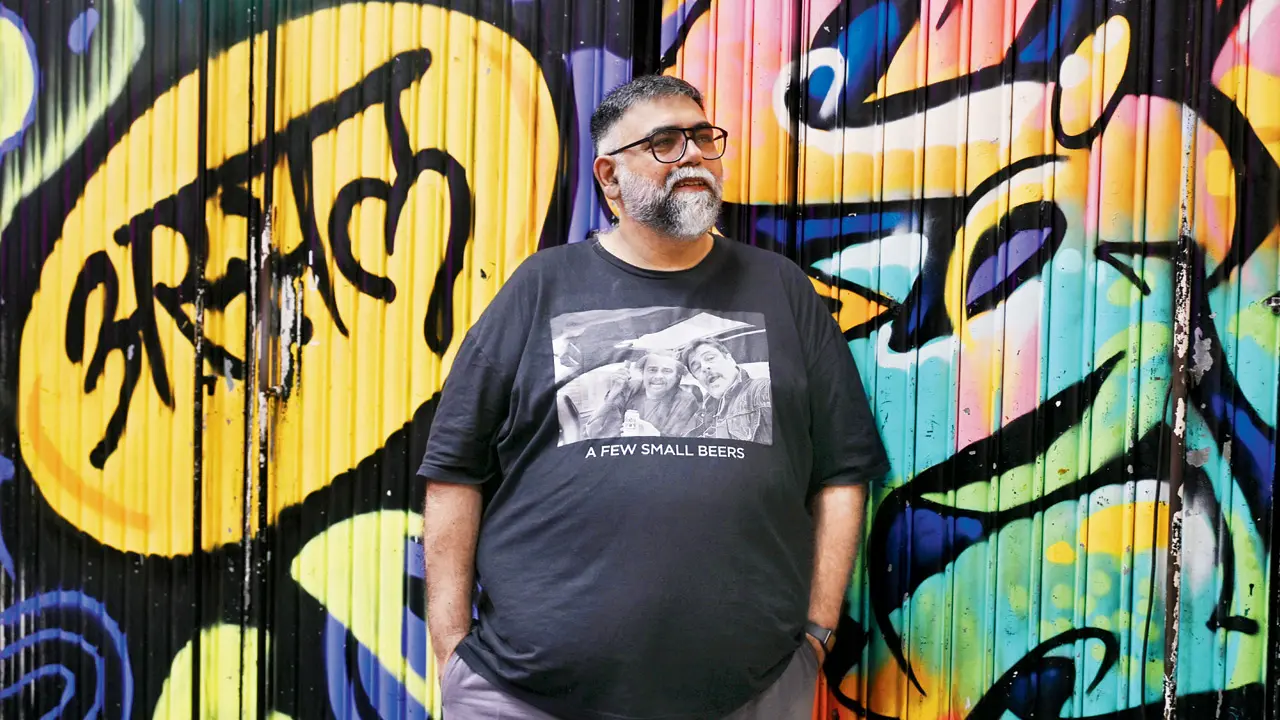
(From left) Akarsh, Dilshad, Akash, Meera, and Adhaar Khurana. Pic Courtesy/Akarsh Khurana
From studying mathematics, to stepping onto the stage, directing a film, and acting, Akarsh Khurana has been there and done that. In this edition of Arts Adda, the veteran is staying relevant in the game while borrowing from his 25-year-long journey
Shriram Iyengar (MID-DAY; June 21, 2026)
It is a busy afternoon while the cast and crew of Micro Theatre sets up their technical check on stage at antiSOCIAL in Lower Parel. Akarsh Khurana smiles, as he walks in; the tiredness of a battle-weary veteran of Mumbai traffic is hard to miss. “It feels like this city is at war with itself. I have grown up in Mumbai; a Bandra boy through and through, and yet, I find it tough to defend it these days,” he admits.
The conversation flows over cups of coffee, jokes, and insight into anecdotes and observations on everything from the stage to film.
Excerpts from the interview
Congratulations on 25 years. That’s quite an achievement...
It was in 2000 when we set up our production. Last year, we wanted to just celebrate. This year, it might be a reduced showcase.
Take us back to 2000, and your first production.
I was at St Xaviers’ College. Arghya [Lahiri] was a schoolmate, back from Arya Vidya Mandir in Bandra. One evening at Prithvi [Theatre], he suggested I submit a play to Thespo.
And, which play was this?
It was Brothers. I recall one of our lead actors contracted malaria two days before the opening, and I had to step in. Thankfully, we did well.
The perfect start for a 23-year-old on the stage…
Yes, but at a cost. The next season, I got more ambitious, and set up a production with 28 actors. We were literally booed off stage. I considered quitting theatre altogether.
So why didn’t you?
Back then, you had to apply in advance for dates at venues. Just then, the National Gallery of Modern Art (NGMA) offered me two dates. Quasar Thakore [Padamsee], Arghya [Lahiri], myself, and a few others quickly put together a quartet of short plays which did spectacularly. That was a resurrection.
Going back to setting up Akvarious. What was the moment of epiphany?
It felt like a place I wanted to be in. The name, Akvarious, came from my father’s [Akash Khurana] writing company — a combination of his initials, and his star sign, Aquarius. But it was not till 2010, that we found a contemporary, urban language that defined us.
That language is not just in theatre. I remember it in Karwaan. How did you not get mobbed during the shoot?
We did. Do you remember that now famous scene of Dulquer Salmaan, Mithila [Palkar] and Irrfan [Khan] on the bridge? It is now called the DQ Bridge.
It had been built just a week before we arrived. Avinash [Arun, Director of Photography] and I picked it because it was an isolated place. Unfortunately, on the day of the shoot, there was a funeral in the village. Suddenly, hundreds of people were trying to catch sight of Dulquer [Salmaan]. Everyone else became almost irrelevant.
Two hilarious episodes occurred. Irrfan couldn’t reach his car, and just hopped on a passing local bike for a lift. The other incident was that Avinash and I were trying to set up a shot, and one over enthusiastic gentleman climbed up on my shoulder to take a picture of Dulquer (laughs). It was memorable.
Talk to us about the idea of curating theatre at a musical venue
They [antiSocial] approached us with the idea as they found that a few days in the week were slower at the venue. It sounded like a good alternative to experiment with subjects to suit the space. After a while of staging plays, we also stepped on board to help with the curation. The Micro Theatre itself is an interesting idea, and is mainly overseen by Jahaan Singh and Rayaan Khatib.
We want to build a community of theatre lovers, actors, and audiences. To do so in Lower Parel is an interesting project.
With your dad, and Adhaar, do you think of the legacy on stage?
I don’t think we consider legacy much. Even this community-building exercise is something we simply chose to do as an interesting experiment.
What is the ultimate objective?
The ultimate dream is to have my own venue. But it takes a lot. In this next five-year plan, it is something I would like to achieve.
Farida Jalal is one actor who never really got her due-Juhi Babbar
8:21 AM

Priyanka Sharma (MID-DAY; December 9, 2025)
Before meeting director Anusha Rizvi for The Great Shamsuddin Family, Juhi Babbar had not been familiar with her work. So, she was surprised by Rizvi’s firm belief that Babbar was the perfect fit for the eldest daughter of the Shamsuddin family.
“She had already seen my plays. We met at Prithvi Theatre and she was acting so friendly, telling me she knew me inside out, describing to me how I sit, pose, and talk. But it was the first time we were meeting. What amazed me is that she was so sure she wanted me for this character,” Babbar shares. She is only glad she surrendered to her director’s vision, as the JioHotstar film brought her together with co-stars she now calls friends — especially Kritika Kamra and Shreya Dhanwanthary.
“For a family film like this, it is important that we have the correct bonding. Actors need to gel with each other. And Anusha tried that with a workshop. She called us before the shoot, but somehow it didn’t really turn out like a workshop. It became about blocking scenes. However, through that we created our own bond. I thank whoever up there planned it this way for the three of us, Kritika, Shreya and me. It was important that three of us were [emotionally] aligned as we play sisters,” she says.
The Great Shamsuddin Family also stars Sheeba Chadha, Purab Kohli, and veteran actor Farida Jalal, who makes selective screen appearances now. Babbar, a longtime admirer of Jalal, cannot stop gushing about the experience of working with her. “I absolutely loved working with Farida ji,” she says.
Apparently, Babbar’s mother Nadira has also been a fan since watching Jalal’s earliest films, dating back to the 1960s. “Mammo [1994] is one of my favourite films of Farida ji. I feel that she is one actor who never really got her due. A film like Mammo came, but didn’t get noticed the way it should have been. I feel sad that so many female actors of that generation and bracket did not get their due and roles,” she says.
Paresh Rawal, Aditya Rawal on craft, clashes & strange intimacy of making theatre across generations
9:48 AM

Jane Borges (MUMBAI MIRROR; November 23, 2025)
As a theatre veteran and proud parent, Paresh Rawal has followed his son Aditya’s work closely. At the recent Prithvi Theatre Festival, where Aditya, 32, premiered The Queen, set in 1567 in the fictional kingdom of Banasvan during Akbar’s reign, Paresh attended an earlier show that week and then returned to see it again. Seated just an aisle below this writer, he watched the entire performance and later stood with the audience as the cast received a standing ovation.
“It was a thrilling experience,” says Paresh, 70, when I meet him at Aditya’s Juhu residence days later. “I’d seen the play when it was first staged in America [Theatre for the New City in New York] back in 2016, but was keen to experience it again, because I knew he’d made several changes to make it tighter, more effective, and more impactful.”
Was he pleased with the result? “Very happy,” he says, smiling at Aditya. “He is on the right path.”
Aditya is a spitting image of his father. “There’s an old picture of my father standing on stage, from 1979, I think… everything from his posture, the body structure, the height, even the hair, reminds me of me,” Aditya says. What Paresh passed on is not only resemblance but instinct for the stage.
Aditya has worked in film. He co-wrote Panipat in 2019, acted in Bamfaad in 2020 and won the Filmfare Award for Best Debut Male for Faraaz in 2023. Yet theatre remains home. “I don’t find anything more glamorous than 300 people who’ve come to see your play, talk to you right after the show is done. We are buzzing, they are buzzing, hopefully. It beats the high of a red carpet any given day.”
Life, arranged in acts
The apartment reflects a life built around theatre. Minimal furniture sits pushed aside. “We rehearse here often,” Aditya says. A bookshelf covers one wall, next to a metal trunk that catches Paresh’s eye. “What’s inside it?” he asks. “Some of the costumes and props for the play.”
Three more shows of The Queen are lined up at Prithvi. He says it “keeps evolving with every performance.” Directed by Daniel D’Souza and produced by his mother, Swaroop Sampat, the story follows Durga, once adored as queen and counsel, now numbing herself with drink after her husband Amar takes another wife. When Amar must decide whether to join Akbar in battle against his own kin, she becomes the mind he turns to.
His influences include Macbeth and Medea. “I never understood how she could do that to her children, until I actually wrote The Queen,” he says. Paresh nods. “As a writer, he is quite radical. On the one hand you have Siachen and on the other hand, you have The Queen.” Aditya responds lightly. “And as actor, my father knows exactly what will work for the stage.”
The first cue
Paresh’s association with theatre began when he was nine. “There were these open-air dramas that would be staged in the ground next to my building in Vile Parle East. They would go on till 2 or 3 in the morning, and I’d strain my ears to listen to the dialogues,” he recalls.
Soon he turned up for rehearsals. “Since my memory was good, I’d sometimes help with prompting and even moving around stage furniture.”
A small part followed. “I got bitten by the keeda… I couldn’t imagine doing anything else,” he says. His formal debut came in 1972 with the Gujarati play Vairi (Hasty Heart).
Aditya’s path was less direct. He first pursued football at a professional level. “When I wasn’t training, I was filling up my days writing stories,” he says. Theatre had already seeped in; he grew up watching his father on tour, seeing Kishan Vs Kanhaiya almost 30 times. Eventually he chose the stage, leaving for New York University to study drama.
In the wings
Paresh hopes his son will take on more acting roles, while Aditya prefers to keep writing and performing separate. “Aditya also has this Leftist leaning, you know, and that happens with every artist,” Paresh says. “I had it once, too. There’s this rebel streak in us. But hopefully he is balanced and can analyze things for himself.”
Talk turns to Paresh’s recent release The Taj Story, criticized as “right-wing propaganda.” He dismisses the label. “When this script came to me, I was zapped by the research. It was very meticulous,” he says. “The writer even provided me all the primary resources… I don’t like doing anything for the sake of sensationalism.”
His son listens, quietly. “As an artiste, I truly have an advantage… I can come home and have a two-hour conversation about my work with somebody who has done 100-plus plays, 5,000-plus shows,” he says. Paresh laughs. “But normally, you don’t have this two-hour conversation with me, ha.” “Yes, normally we don’t, but at least for the interview we can say it,” Aditya replies.
Their laughter lands in the same rhythm. A collaboration, they agree, would be the perfect sync to their parallel acts.
The thought that theatre ek gareeb medium hai should change now-Makarand Deshpande, Lillete Dubey, Pratik Gandhi
9:43 AM

On World Theatre Day, Makarand Deshpande, Lillete Dubey & Pratik Gandhi talk about the joy of performing live on stage & its long-lasting connect with the audience
Debarati S Sen (BOMBAY TIMES; March 27, 2024)
As curtains rise and lights dim, audiences are transported into worlds of imagination, laughter, and reflection, reminding us of the enduring power of live performance to inspire, provoke, and unite communities. This ability of theatre to transcend boundaries, languages, and ideologies, getting people together from diverse backgrounds in a shared experience, is being celebrated today (March 27).
World Theatre Day reminds us of the universal human need for storytelling, empathy, and connection, emphasizing the enduring relevance of live performance in an increasingly digital world. We got together actor-theatre director Lillette Dubey, actor-director-playwright Makarand Deshpande, and actor Pratik Gandhi over to Prithvi Theatre, for a candid conversation all about stagecraft.
What are your earliest and fondest memories of theatre?
Lillette: I started staging plays when I was in school, and was reminded of that by my old neighbour, whom I met on a plane recently. She told me that I’d hold these solo shows, with music et al, when I was 9 or 10! Our house in Delhi’s South Extension had a big terrace, where I’d call neighbourhood children to watch. This lady also told me that I used to take 10 paisa or 20 paisa fee (laughing!) for the show. I’d make my siblings hold a white sheet like a curtain. I was a clever producer-actor (laughs!) even as a kid!
Makarand: As a young boy I remember watching my brother on stage. It was a folk musical and when it would come to an end, mujhe lagta thaa ki yeh kabhie khatam nahi hona chahiye! I loved it. As a child, theatre was full of happy memories, when I grew up and saw theatre is about tragedies, I was shocked!
Pratik: My first ever memory of theatre was when I stepped on stage in school, in the 4th -5th standard. Once a month, the whole school would meet at the auditorium, and you were supposed to perform. I made a skit of five minutes and the moment I performed; people laughed at the right places where I was wanting them to. And that was magic for me. Maine kisi to bola nahi tha kahan hasna hai. That was my first strongest memory – theatre is magic. And ever since that day, I always wanted to be on stage.
When it comes to the stage, the feedback with the live audience is instant, whether you’re good or not. Has this aspect of the form ever intimidated or made you feel nervous all these years?
Lillette: I’ve done theatre now for, even though it makes me sound like a fossil, more than 50 years. I’ve learned to strike back and not get thrown off by extremes – whether there is extreme laughter, extreme responses, extreme chatting, or extreme silence by a detached audience. I’ve learnt to deal with them. But even the most experienced actor would be lying if he said that audience response means nothing to them. I may not react to it and may have learned to override it with experience, but audience response does make a difference. Without an audience there is no theatre. Since it is a shared experience, the energy interflow is crucial. Only an actor on stage will know what it is and why is it so heady. It is also the reason why some of us mad people still keep doing theatre despite the limitations!
Makarand: It's deceptive. A 6 o’clock show gets a standing ovation, but the 9 o’clock show, with the same everything, gets nothing. And then the doubt comes in, ‘Am I not performing well?’ So yes, audience response definitely affects your performance immediately. Priming the audience can help to get better responses, so I talk to them before I begin. There are also some audiences who behave in a particular manner. You will get guffaws in Mumbai, but a Pune audience might just smirk at the same lines.
Pratik: In cinema, the teaser, trailer, poster does all the work of priming the audience, but theatre doesn’t have that. It is one place where the constant reaction of the audience helps you to overcome your own ego. I thought I’d get audience laughter here, I got it for 25 shows, why didn’t I get that for this show? Theatre over a period of time teaches you to overcome your ego. It is about playing second by second. If an accident of one second lingers on, you can ruin the whole play. That discipline, the ego fight is what you deal with on stage. Over the years, audience reaction stops bothering you too much as you learn how to gauge them.
What is your fondest memory of staging a play in Mumbai?
Makarand: My guru late Mahendra Joshi contributed immensely to Gujarati theatre. And when I started directing, he came for my first show. He saw that my lightman wasn’t there and offered to do them. I was overwhelmed. During the show he saw us improvising on stage and said, ‘Mac, improvise karega na toh main blackout kar doonga’. Only he could say that, and he actually did it! I feel so good remembering him. Once Gulzar saab came searching for me backstage and just gave me a long hug. That was enough.
Lillette: Making Jaya! I revived it after 26 years, a rock musical on the Mahabharat, with kathak and kalarippayattu. It’s a fond memory because it is one of my most difficult and challenging plays. Secondly, I was scared because Mahabharat toh sab jaante hai. But one of the biggest compliments I received for it came from people who knew the Mahabharat. They said, “Wow. This is such a different way of looking at it because it's contemporary, English, and has a rock band.”
When you are live on stage, what is the one recurring thought you have?
Pratik: I tend to think objectively about my performance, and I become my own audience. The continuous thought in my mind is that whatever I am performing is it reaching my audience, in what best possible way should I reach out to them with this line or dialogue. I know that the one word I said, I will get a pay off in 15 minutes. Dimag mein yeh chalta hain ki yeh audience ko clearly pata chale. At that point there are two people inside me – the character I am playing and me. On stage though it is all one unit.
Lillette: Everyone’s nightmare is only one – what if I forget my lines and go blank, what will I do? At such times, you need experience to find a way to come back. The other nightmare is your co-actor also forgetting his lines. People have forgotten their lines and gone to Act 2 in the middle of a scene of Act 1. The whole play of the first half is gone. That again has to do with the craziness of that theatre - the live aspect of it. It is one of the scariest live performing arts mediums.
Makarand: I feel that going blank on stage is not as scary as going off-timing. Theatre is not like stand up comedy, here you have situations, and the timing is crucial.
With the world celebrating World Theatre Day today, what does that mean to you?
Lillette: A lot! Not just as a fraternity, but because theatre is still acknowledged as an important part of our cultural landscape, especially with the emergence of multiple forms of entertainment and storytelling around us. It is still valued as one of the most important parts of the performing arts. Days like this highlight the fact that theatre is an integral part of our culture, about our being, the need to tell stories and share experiences. It is a huge part of being human. Togetherness is the foundation of it. Theatre brings joy, it sometimes reveals things we have not thought about. The most beautiful thing about theatre is the collective experience. And by celebrating World Theatre Day, you are putting the spotlight on the significance of theatre in our lives. And it is very important to us that the world acknowledges this.
Pratik: The thought that theatre ek gareeb medium hai should change. I feel that in this world of technology, the value of the real world will increase. If you are buying a 500 rs ka ticket for a film today, mujhe nahi lagta hai ki who din door hai jab aap 2500 ki ticket deke, live theatre dekhne aaoge. When you buy an artisanal chocolate, you pay hundreds more – theatre has to be that exclusive because only theatre and this live medium can give you that exclusive experience. In films everything is virtual, there is AI. Watching theatre once a week can be way more enriching.
Makarand: One day is not enough. Every week we should have one theatre day. The valuation of this real, live performance has to go up.
Television and films are considered to be a director’s medium where the actor has little control over the end result. All of you have worked in all mediums. Do you feel that actors have more control over their craft on stage than other mediums?
Lillette: In cinema, the director's vision is clear only to the director. It's not democratic. We don't sit and discuss. Nowadays, we do have readings, but only the director knows the tone of the film, the sur, the look of it, the sensibility of it. And you are just one part of the project, unaware of the whole picture. That is why even good actors sometimes don’t perform well in a film. Because they don't know and can't judge the entire picture.
Makarand: In cinema, the actor has no control. You are probably giving the best performance of your life when you hear a ‘cut’ from the director because maybe the camera angle was wrong or a picture in the background was not straight! In cinema the actor only gets to see the married print (audio and video is together). But in theatre there is a grand rehearsal where the actor knows when the music beings, when the light switches off and when another actor comes in. In cinema you don’t know anything when shooting. We are totally in the hands of too many processes. I feel a theatre actor is far more literate than anyone. Theatre and cinema cannot be compared. Theatre is thousands of years old and cinema is too young a medium to compete. Yes, the technology can compete but not the essence of theatre.
Pratik: A theatre actor can stand at a place and say this is England and people will believe it. Theatre make-belief ka sabse strongest medium hai. As actors, we don’t have much control when it comes to films and TV. Theatre with all the kind of freedom it gives an artiste, it also makes you ready, for that responsibility. I know that I have no one to stop me once I am on stage, but I should know when to stop, know how much to do. Bahut taaliya mil rahi hai par mujhe behna nahi hai. Script ka daayra manna hai. If any actor gets this discipline, he can add a lot of value to all other mediums. Even if I am performing the same play for the 25th time, the freshness, the punch, should remain intact, theoretically.

If it wasn’t for streaming services, I wonder if I would have got such good work?-Rasika Dugal
8:27 PM
Tanvi Trivedi (BOMBAY TIMES; December 1, 2023)
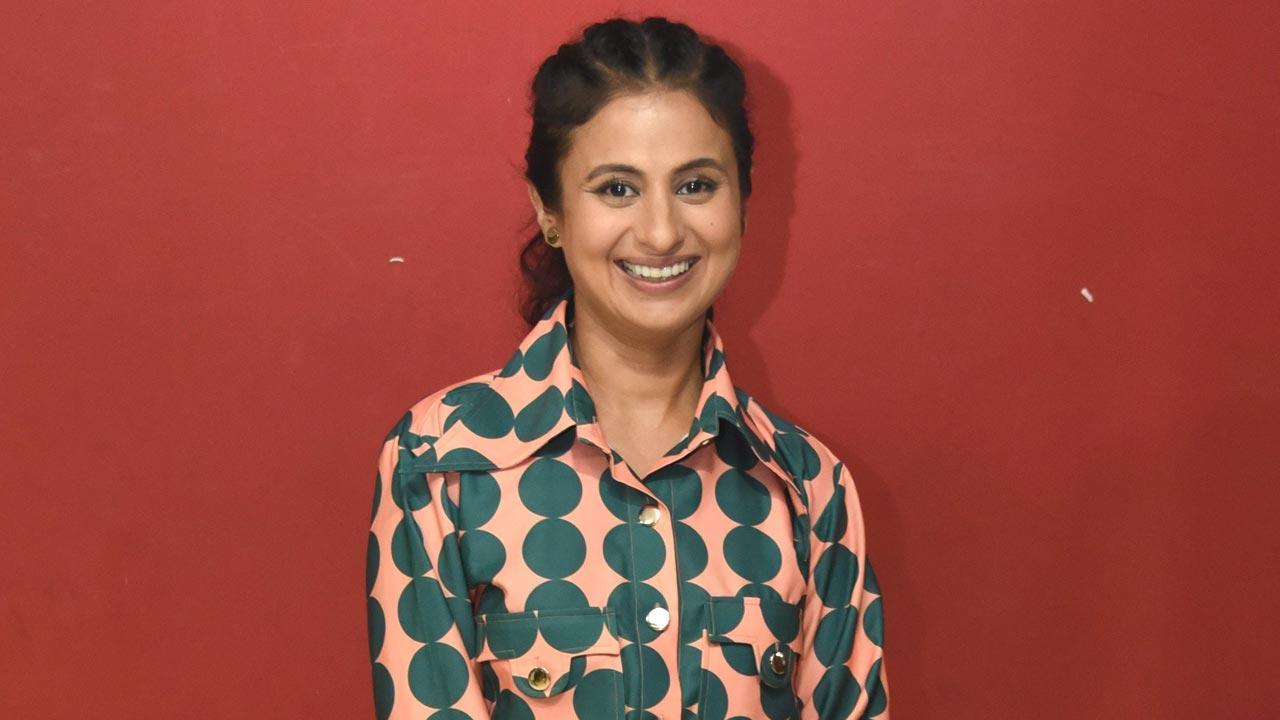
Rasika Duggal, in an exclusive chat with BT, talks about her early days in Mumbai as a young actor and how happy she is about the way the entire ecosystem for actors has changed in the current scenario.
‘I have turned down some commercial films because the character did not have much to do’
Rasika, who was a special guest at the recently held Prithvi Theatre Festival recently, has won immense appreciation for her performance in Mirzapur and has featured in an interesting mix of projects, says, “I am proud of all the projects. I have done a mix of films and web shows. And if you consider my show Mirzapur, it was mainstream. I have been offered to play bhabhi or sister in commercial films, and I turned them down because the character did not have much to do. At times, it is difficult to say no, but I have been very clear that as a performer, if there is nothing in it for me, I won’t do it. Of course, if there is a central role in a masala film, why not?
‘If it wasn’t for streaming services, I wonder if I would have got such good work?’
The Manto actress gives credit to digital platforms for being able to flourish in this industry as an actress. She explains, “Everyone has their own unique journey. Some have a combination of luck, help from seniors and hard work; others don’t. Having said that, the ecosystem for actors has changed over the years. If it were not for streaming services, sometimes I wonder if I would have got such good work? What would I have done? I feel you need good luck, intent and talent to make brave decisions in this business.”
‘Female actors have been able to tick many boxes in the past few years’
Talking about how female actors are getting well-written characters to portray today, she says, “I feel female actors have been able to tick many boxes in the past few years and there is progressive storytelling, whether it is a film or a web show. The quality of writing has changed dramatically, it has become nuanced, and every character has something to contribute. You no longer find female actors playing cardboard cutout characters. Now you see them playing a variety of roles that are more human and relatable, she is not just heroic or celebrating feminism.”
I want to do a full blown action film-Neena Gupta
2:46 PM
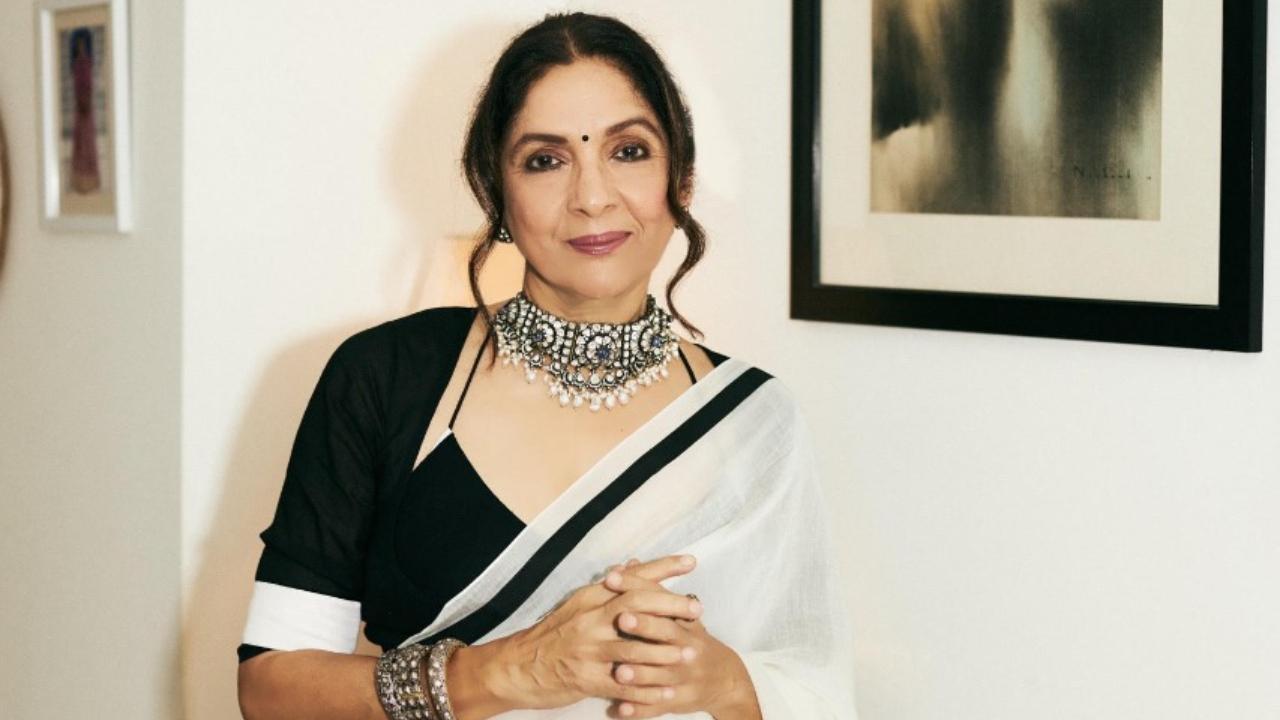
At the recent Prithvi Festival, Neena Gupta candidly spoke about her National School of Drama (NSD) days, her early experiences in Mumbai and the turning point in her career
Neha Maheshwri (BOMBAY TIMES; November 20, 2023)
Neena Gupta began her journey in the world of entertainment at Prithvi Theatre. During a Stage Talk session held at the Prithvi Festival, which concluded recently, she reminisced, “We (the NSD gang) would often hang around here hoping producers and directors watching the plays might spot us and offer work. During that time, I met Prahlad Kakar (ad guru), who used to manage the café here. He offered me some work in his ad films and let me work in the café. This is where I learnt to make Irish Coffee, one of the most popular items on the menu. On one occasion, I prepared baingan ka bharta in the kitchen and Prahlad enjoyed it so much that he requested me to make it daily and in return, I received complimentary dinners.”
Sharing that her parents opposed her joining films, Neena said, “My mother looked down upon Hindi films and preferred only English cinema. However, once I saw myself on the big screen in ‘Aadharshila’ (1982), I thought, ‘Mujhe yahi karna hai.’ Ussi samay main tabaah ho gayi (smiles).”
‘In college, I was mostly cast in male roles’
Originally, she planned to stick to theatre. She recalled, “In college, I was mostly cast in male roles and as male house helps in plays because I was taller than the other girls. I was too shy to ask the director for the main part. I would rehearse the lines of the heroine at home and felt that I performed better than the heroines. My first ever significant act in a play was ‘Aadhe Adhoore’.”
‘Facing a live audience is an incredibly exhilarating experience’
Talking about her experience on stage, she said, “Theatre is truly magical, and there’s no comparison. As an actor, when you are on stage, nobody can touch your performance. In films, they have the power to touch your work, edit scenes, or even remove your part entirely. However, when I am on stage, I am the king. Facing a live audience is an incredibly exhilarating experience. I used to be extremely nervous during my initial shows at Prithvi because it felt like the audience is right on your lap, but that’s the ultimate test of an actor.”
‘Director Amit Sharma brought out the best in me during ‘Badhaai Ho’
It wasn’t always smooth sailing for her. At one point she found herself being typecast as the comic relief side-character. After ‘Saath Saath’ (1982) became a hit, in which she played a small part of a naïve girl, she recalled Girish Karnad telling her, “You’re finished, and you will never get a heroine’s part again.”
She said, “Unfortunately, that’s exactly what transpired, and all I got offered for the next two years were similar roles.” The turning point in her career was ‘Badhaai Ho’ (2018). All praise for director Amit Sharma, she said, “I loved the script, but the thought of wearing a stomach pad throughout the film and not looking glamorous did not sit well with me at first. But Amit Sharma brought out the best in me. He made me give 20-25 takes even for a simple line like ‘Jaldi Chalo’. Ek toh confidence shake hota hai. Amit would enact the scene so brilliantly ki abhi tak ek line hai jo main uske jaise nahi kar paati hoon and I am reminded of it every month. Similarly, I still can’t do what Naseer (Naseeruddin Shah) does. The reason for it is we are not focused and relaxed.”
‘I wish I were younger, as there are more such opportunities now’
Talking about how the changing landscape of cinema has enabled actresses to explore and experiment with characters, Neena shared, “I wish I were younger, as there are far more opportunities now for the new era of actors. I aspire to do comedy and romance. I want to write a romantic story for myself. I want to do a full-blown action film. In fact, I am eager to take on an action film offered to me where I have a double role, but I have yet to hear back from them.”
‘I remember feeling liberated the first time I declined a project’
However, she also agrees that today she is content with her current filmography. “Today, I can afford to turn down projects. In the past, I had to say yes to everything. I remember feeling liberated the first time I declined a project (laughs!). Today, If I have to think twice about taking on a role, I won’t take it up. It’s as simple as that,” she signed off.
Theatre audience comes for the play, not to fan over an actor. For that, there is cinema-Kumud Mishra
8:06 AM
Neha Maheshwri (BOMBAY TIMES; November 10, 2023)
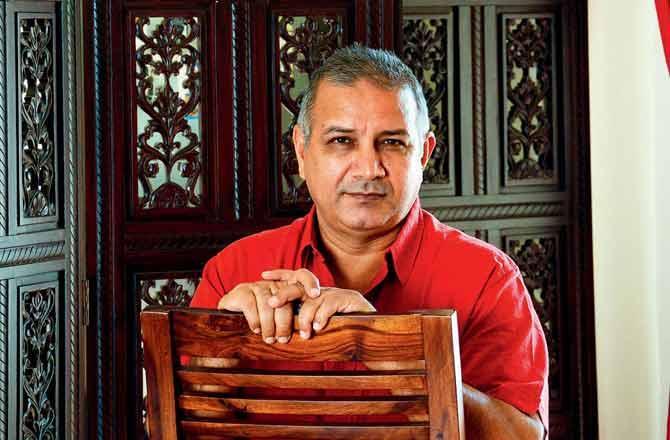
Kumud Mishra was seen on stage after four years in a play titled ‘Purane Chawal’ at the Prithvi Theatre Festival. While the actor has deeply impressed the audience with his roles in movies, his passion for theatre and belief that this medium of performing arts will thrive is evident. Mishra, who did not take up any other project for a few months to focus entirely on this play, talks to us at length about the beauty of theatre, working with young actors, and more.
‘I feel there is a shortage of performing spaces’
Talking about the economics and commercial viability of this medium, Mishra explains, “There is a shortage of performing spaces. In that regard, Prithvi is a true blessing for us, it is a place where you can continuously nurture and hone your art. However, I have witnessed the emergence of new, albeit, smaller spaces where emerging actors are given an opportunity to perform. The key is that the economics of theatre should be sound.” However, he also adds that whatever the space or the format, “a good story is the only hero an actor needs”.
“Aapke pass kahaani hai kehne ke liye, toh log aayenge. That’s the beauty of theatre. As long as one person wants to tell the story and another is willing to hear it, theatre will thrive. So, I am not worried about the medium,” he says.
‘I enjoy working with young directors’
The ‘Thappad’ actor, who also produces plays, constantly encourages and collaborates with young talent. He explains, “I enjoy working with young directors. As you grow older, you tend to become rigid, both physically and mentally. A fresh perspective is essential to break that rigidity, and that can only be introduced by young people. Not every project will turn out perfectly, but my experience will keep getting enriched because every talent brings their unique grammar to a production.”
‘The medium shouldn’t be individual-centric’
“Theatre is primarily a director’s medium,” Mishra explains to us, on being asked if he expects his name to pull in more audience for the play. “I am fine with my name being used to promote the show, but I still find it uncomfortable. I am a purist in that regard. Naam se bada naatak. The theatre audience comes to enjoy the play, not to fan over a particular actor. For that, there is cinema and the associated stardom. Theatre, as a medium, is vast, and if we focus on individuals, we will not do justice to it. So, I don’t see myself at the centre of anything; the medium is at the centre of it all. Theatre is not an individual medium,” he signs off.
I believe theatre is the one thing that OTT can never affect-Vivaan Shah
8:22 AM

Vivaan Shah, who is fronting the one-act play Gulli Danda, discusses what makes theatre the ‘last bastion’ amid the digital boom
Letty Mariam Abraham (MID-DAY; January 24, 2023)
Vivaan Shah describes theatre as the “last bastion” that has stood its ground. Even as people have traded big-screen releases for the comfort of OTT offerings, the actor notes that audiences continue to step out of their homes to watch their favourite plays. What does he make of cineplays being televised? “It’s an old tradition,” he says, as he features in Zee Theatre’s anthology Koi Baat Chale. For the endeavour, Shah has done a one-act play of his favourite author Munshi Premchand’s Gulli Danda. In conversation with mid-day, he talks about the Seema Pahwa-directed one-act teleplay and how the medium inspires people to take up literature.
Edited excerpts from the interview.
What goes into preparing for a one-act play reading?
To do his riyaaz, all an actor has to do is start reading a short story aloud and do a monologue. The process of doing a monologue is like second nature to me. I did a piece called Bade Bhaisaab for my father [Naseeruddin Shah] in a play, which is also written by Munshi Premchand. When Seema ji [Pahwa, director] asked me to do Gulli Danda, I was well-versed in [one-act plays].
Which of Premchand’s stories do you often go back to?
My favourite Premchand story is Shatranj Ke Khiladi, which is about an important transitional phase in the history of Lucknow and the Nawabi culture. It is an interesting satire on the upper classes. Premchand’s [literature] has humour, humanity and social commentary.
Had you read Gulli Danda before venturing into this one-act play?
I had not read it until Seema ji handed me the piece. It is a moving piece that deals with inequality and friendship of two young boys — one belongs to a lower caste, and the narrator comes from a middle-class background. Social hierarchies and inequalities don’t rear their head in one’s childhood because children look at each other purely as human beings rather than the baggage that adults come with.
Premchand’s stories have influenced generations. But do you think there is an audience for monologues in this generation?
If you go to Prithvi Theatre, there is a crowd of people that go to bookstores to explore varied literary pieces. They are not necessarily people from an English ethos; they come from a world of Hindi literature. The great thing about theatre is that it encourages people to seek out certain pieces of literature, which they previously had not considered for reading. After we did plays by [Saadat Hasan] Manto and Ismat [Chugtai], a lot of young people in the audience sought out those books.
Do you think OTT can affect theatre, the way it affected big-screen releases?
I believe theatre is the one thing that OTT can never affect. What is unique about the theatre experience is the exchange of energies between the performer and audience. It’s the same [feeling] you get at a live music concert. Theatre is probably the last bastion for which people are willing to leave their homes, put their cell phones off and be transported to a different world. It cannot be affected by the OTT revolution.
Your take on televising plays?
Theatrical purists may have mixed emotions about it, but cineplay is an old tradition. In the ’50s US, it was called Playhouse 20s where people telecast live theatre. Henry [Jaynes] Fonda and Sidney Lumet came out of that tradition. After that, in the ’70s in England, the concept of film plays started. King Lear and Othello were performed as cineplays.
My parents were really disappointed that none of their kids were in the IT sector-Priyanshu Painyuli
8:59 AM

Akash Wadhwa (BOMBAY TIMES; October 8, 2022)
Priyanshu Painyuli, best known for his lead role in the film Bhavesh Joshi Superhero, is happy with his journey in showbiz so far. This Delhi boy, who has also lived Bengaluru, started his career with theatre, and later moved to Mumbai to pursue his dreams.
The actor, who is known for shows like Mirzapur and Bang Baaja Baaraat, says, “I did theatre with Rajit Kapur and Shernaz Patel after shifting to Mumbai in 2010. I initially worked backstage for them for a long time and then Rajit directed my first play as an actor which was staged at Prithvi Theatre. Post that, I did a lot of plays, a majority of them were comedy plays.”
Ask Priyanshu, who starred opposite Taapsee Pannu in the sports film Rashmi Rocket, about his struggle in the industry and he says, “Since I come from a city like Bengaluru, my parents were really disappointed that none of their kids were in the IT sector. We all are in different fields. I only asked them to take care of my rent for one year in Mumbai. They were very supportive. I don’t call my journey a struggle, but it has been a process. I hadn’t come to Mumbai to be a one-film wonder. I wanted to be here for a long time and do quality work. The choice of our projects in the industry make us the actors we are.”
Ask him if he was choosy about the projects he wanted to do at the start of his career, and he says, “Yes, I was quite picky about what I did. My whole idea has been to do performance-oriented roles and that is why I said yes to a brief role in a film like Rock On 2. The minuses are there as we also have to earn our bread and butter, but for that, I did a few odd jobs here and there.”
Married to actress Vandanaa Joshii, Priyanshu says it helps to be married to someone from the same field. “We both are actors and we understand how things work in this industry,” he signs off.
Unlike cinema, in theatre everyone gets equal credit-Naseeruddin Shah
8:26 AM

Sunayana Suresh (BOMBAY TIMES; July 20, 2022)
At 71, Naseeruddin Shah has the enthusiasm of a 20-year-old when he speaks about theatre, but his experience weighs in when he discusses its future and the threats. In this exclusive chat, he also speaks about streaming platforms and his comeback to direction.
What has kept you rooted to the stage till date?
It’s love. It is just sheer love for the work. It is very rewarding in terms of human interaction and in terms of widening one’s horizons – reading new scripts, talking about issues that matter and just going ahead with it. It has always been that way. We have never tried to do much commercial stuff. We did it once with The Odd Couple, which didn’t turn out to be a success, so we abandoned all that.
We then decided to do plays which we felt were important to do. This is what we are doing. The other thing that draws me to theatre every time is how everybody pulls together when working in theatre. Whether you are playing lead or backstage, everybody is pulling together. The so-called stars are not isolated from the rest of the crew and we all are working in the same direction. Everyone gets equal credit. Though the actors are more visible, in terms of teamwork, it is something that one seldom feels in a movie.
You speak about plays with relevant content. But we have seen theatre productions under attack, like in Shivamogga, Karnataka, recently. Do you think theatre is at risk?
This is scary, but it is not the first time that this has happened. There was a very famous play by Vijay Tendulkar, Ghashiram Kotwal, which saw a lot of objection when it was staged, and they received threats to boycott it.
There was Habib Tanveer’s play in Bhopal that was stopped midway. There was an incident in Prithvi Theatre several years ago where activists demanded an apology from the writer of a play called Shakespeare Ki Ramlila, which was a comedy. So, the incident is Shivamogga is not an isolated incident and it is really puzzling. Why do these people, who claim to be guardians of their region, have such thin skins? The play was stopped with the shabbiest of arguments. I hope this does not continue to be a frequent occurrence.
To foster more such dialogues on pertinent issues, do we need more theatre spaces like Mumbai’s Prithvi Theatre and Bengaluru’s Ranga Shankara?
Yes. But how many selfless people like the Kapoor family or Arundhati Nag can you think of, who will build theatre, not for profit, but for the love of it? They are perhaps the only two theatres in the world to build young theatre workers and not bleed them. We definitely need them and someone to take up the initiative, but there aren’t many such selfless people around. There are, however, a number of small venues that are inexpensive and encourage youngsters to perform for audiences of 50-60 in Mumbai. I think that is the only way to go.
When it comes to theatre, you have maintained that the future is in safe hands. Why?
The number of people who are involved in theatre is the most encouraging factor. I know that’s true of Mumbai and Kolkata. Delhi is pretty sterile as far as theatre is concerned, and so is Bengaluru. The inclusion of young blood is a positive thing. There are several young people who are writing and directing plays, and doing whatever they can. The work is often uneven, but they find their feet very quickly. When I started theatre in 1975, I don’t recall many young people there. The fact that there is a rush of such youthful enthusiasm and some of these kids have produced good work gives me hope.
We do see many writers, unlike in films…
This is a blessing. Ironically, the curse of the film industry is the writing. The kids who are writing these plays are writing about subjects that matter to them. They are not writing about borrowed pain. They are not doing plays about the sufferings of the peasants in Bihar. They are writing about the complicated life that our existence has become, the social media devil that has infiltrated everything and other such things. They are not trying to pretend that they are writing classics. They are writing what their heart makes them.
You also see writing being encouraged on OTT. What do you make of that?
These youngsters don’t have the pressures of facing a producer’s or distributor’s demand of putting in a star, a song or Indian emotions. They are making short films about the scripts that they believe in. And I think that is a terrific grounding for them. For when they graduate to making feature films, hopefully, the same beliefs will remain with them. OTT is the future and we have got to face that.
Has this tempted the director in you to return? Will we see you make projects on OTT?
Yes. If all goes well, I am planning a short film which I want to shoot in October. I have written the script. It has taken me a long time to regain the confidence to make a movie. I made one and it was a disaster in every way. So, I thought I would never ever make a film. But the urge to wipe that blot off my record was just too strong. Hopefully, this film will be better than the first one. I then hope to continue to make movies.
I’m not motivated to do the online form of theatre-Lillete Dubey
8:24 AM

The actress talks about how excited she was to perform live after a long break and how OTT platforms have been a boon for many actors
Debarati S Sen (BOMBAY TIMES; February 13, 2022)
Lillete Dubey is thrilled that after being away from the stage for over a year, she got to perform live at the three-day theatre festival at Prithvi Theatre that wraps up today. This probably was the longest she was away from doing what she loves the most in her four-decade-long career.
Talking about being back on stage, she says, “We were very excited to be back at Prithvi! Though theatres were shut for a long duration, whenever they were operational, the shows have been housefull, and that itself was a testimony to the fact that people were eager to watch live shows and theatre. After a year of not performing, we performed live this week at our three-day theatre festival.”
Lillete, who has directed and acted in over 60 theatre productions, has also been a part of films like Kal Ho Naa Ho, Baghban, Chashme Baddoor, Monsoon Wedding and Zubeidaa, among others.
Reflecting on the tough time that theatre artistes faced during the Coronavirus pandemic, the actress says, “Every single person in the theatre field has been hit very badly by the pandemic. And, not just financially, there is also a psychological side of it and a creative side that has been deeply affected. TV and films also suffered, but not the way theatre did because performing arts is a live medium at the end of the day. We can do as many online shows as we want or record and telecast, but theatre is a different medium. The core of theatre is telling a story around a fire, and so, it has to be a live interaction that is to be shared to be enjoyed.”
When asked about the rise of online theatre in the last two years, she says, “Online plays do not excite me at all. Sitting in a room and reading my lines… that doesn’t work for me. That definitely is not theatre for me. But then maybe I am not with the times. I am not motivated to do the online form of theatre.”
Though Lillete was away from the stage, she was busy shooting for her upcoming projects. The actress feels that the digital medium has offered many actors an opportunity to be a part of exciting projects with author-backed roles.
“It is wonderful that there are so many platforms mushrooming every day because then it means that there is work for so many actors in the industry,” she says, adding, “Actors who have been under the radar so far, especially senior actors, are getting interesting offers again, thanks to these platforms. Also, actors who played supporting parts in films are being offered meatier roles. However, I am convinced that people still long to have the freedom of interaction that theatre offers.”
Aahana Kumra returns to Prithvi Theatre to perform her much-loved play Sir Sir Sarla after 9 years
8:02 AM
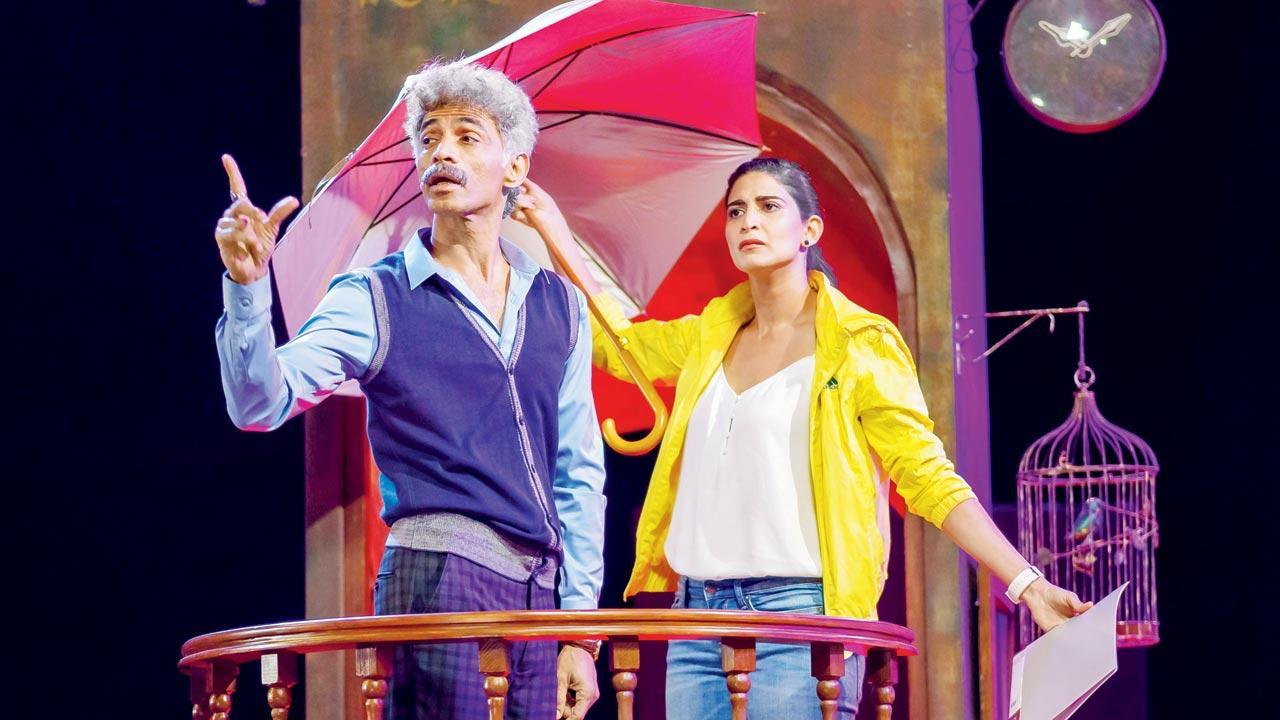
Mohar Basu (MID-DAY; November 4, 2021)
It’s homecoming for Aahana Kumra as she gears up to share the stage with Makarand Deshpande for Sir Sir Sarla. Kumra, like many of her peers in Bollywood, is a product of the theatre world and had first been part of the much-loved play during Diwali 2012. In a happy coincidence, the actor will reunite with the cast to perform today, on the occasion of Diwali, at Prithvi Theatre in Juhu. Elated to return to her roots, she says, “It was the stage that made me an artiste, and while I have done television, films, and [web] shows later, I will always have a special connection with theatre.”
The four-character play, penned and helmed by Deshpande, sees Kumra play the titular role of Sarla with the director slipping into the role of the professor aka Sir. Rehearsing with the cast has been an emotional ride for the actor. “This Diwali performance after nine years is not only symbolic of life coming full circle, but has also brought a sense of nostalgia. It reminds me of how it all started. My love for theatre is unparalleled, and I know that no matter what heights I reach, I will be in touch with my roots,” says Kumra, who recently had a release in Call My Agent: Bollywood.
Kavish Majumdar is the one who pushes me to do Badlapur and October-Varun Dhawan
8:28 AM

On Friendship Day, the two reveal how they’ve got each other’s backs for two decades and counting
Rishabh Suri (HINDUSTAN TIMES; August 1, 2021)
He calls Varun ‘badarva’, and not many people know about their bond. Actors Kavish Majumdar and Varun Dhawan have been friends for over two decades. Dhawan calls Majumdar the “funniest person in the room”, and says he wants to make a show on him. On Friendship Day today, we get talking to both in an exclusive conversation:
When did the two of you meet for the first time? What’s the first memory you have of each other?
Varun: Meeting Kavish is a story in itself. He had done a play called Little Boy Blue, at Prithvi Theatre in Mumbai. I had gone to see it along with a friend. We were 12. I loved the play, and thought, ‘This guy is damn good’. We never spoke, but ended up meeting in H R College (Mumbai) in 2003.
Kavish: I met him in the corridors of college, Varun was standing alone, going through his phone. I went up to him and said, ‘Hi Varun, we had met at that time’. Then there was a Goa trip we went on with friends by train for a good 10 days. We came back and stayed in touch.
Not many know about the bond you share, we don’t see any pics on social media, too.
Varun: That’s because Kavish isn’t very fond of social media. He hates it when I put any of his stuff online, so I respect that. Otherwise, we pretty much speak every day. He’s one of my closest friends, plus he loves cinema being an actor himself.
Which of Varun’s films is your favourite?
Kavish: Student Of The Year (2012), he killed it in his first film. After that, Main Tera Hero (2014), Judwaa 2 (2017). I loved him in Coolie No 1 (2020), he’s the best at those films.
Varun: He’s saying this, but he’s the one who pushes me to do Badlapur (2015) and October (2018).
What’s that one thing about each other that no one else knows?
Varun: We can’t say it (laughs). We don’t have any secrets with each other. His favourite actor is Baba (Sanjay Dutt), so we make him enact Raghu from Vaastav, the 50-tola dialogue.
Kavish: In a party, we don’t talk as much, we start acting and dancing.
Varun got married in January. What was his bachelor’s party like?
Kavish: He was working until before the marriage, and then there was the pandemic. We couldn’t plan anything. I was just told to be free on those dates.
Who between Natasha and Kavish would you call your best friend, Varun?
Varun: (laughs) You can’t choose like that! Kavish is a person who Natasha has accepted in my life, she knows he is going to be a part of it no matter what.
How is Varun as a friend, Kavish?
Kavish: He has always been there. Sometimes, when I’m not able to call, he’s the first to call and ask, ‘Where have you been’. He’s the one who makes plans. In the pandemic, too, he looked out for me.

There weren’t many people at my play recently, so I wasn’t able to give my 100%-Namit Das
7:59 AM

Akash Wadhwa (BOMBAY TIMES; March 26, 2021)
Not seen much on TV these days, actor and singer Namit Das says he is waiting for the right kind of offers from the medium. “I’m happy with the kind of roles being offered to me on the web. For TV, I think it is going to get influenced from the OTT revolution and will change slowly. People now want to watch real things on TV. Right now, I can’t commit to a TV serial as it will take up most days in a month. But yes, I am always open to shows with seasons,” he shares.
Son of renowned ghazal singer Chandan Das, Namit is passionate about music, too. “Singing has taken a backseat for me at the moment because during the lockdown, that was the only thing I was doing on social media with my band. Also, with only a few live events happening in the world, music has taken a backseat not just for me but for many others. The live music scene has taken a beating. Things are in a challenging state right now for most of the live medium options. Recently, I performed in a play at Prithvi Theatre, which has opened to 50 per cent of its capacity. And during the act, I wasn’t able to give my 100 per cent because there were not many people in the audience. For a live performance, we need to have an audience. The worst part is that no one is talking about it. My father also did a few live shows online and despite millions watching and commenting online, he didn’t do it for long as there was no connect with the audience. For him, it was like singing for a void,” Namit adds.
Idiotic censor guidelines that operate in movies will now be applied online as well-Naseeruddin Shah
8:06 AM

Navneet Vyasan (HINDUSTAN TIMES; January 4, 2021)
After a long and eerie uncertainty that loomed over the premises of Mumbai’s iconic Prithvi theatre, Naseeruddin Shah returned to stage as Einstein, much to the delight of theatre goers. Shah, who continues to be the theatre circuit’s mainstay, to a large extent, feels there is an undoubtedly tough time ahead for theatre in a Coronavirus world.
The 70-year-old actor says, “I fear for the existence of the large commercial spaces as well as the very small ones. But there was the plague in Shakespeare’s time, too. Theatres were shut for a year but recovered gradually. I am optimistic that’ll happen here as well. But I love being on the stage and will continue even if no one turns up.”
Shah’s propensity for being brutally honest evidently comes across as he expresses his disappointment with some of the developments that have taken place in the last few months. The actor made his debut on OTT last year with Bandish Bandits is apprehensive about the development that saw the government announce its decision to regulate the OTT space.
He says, “The I&B ministry wanting to interfere with online content is a double edged sword, we might see the same idiotic censorial guidelines that operate in movies being applied online as well.”
Shah doubts whether the move might just be a step towards an odious intent to curtail the freedom of the makers under the garb of regulation. “The intention of the I&B is actually not to limit the rampant permissiveness and obscene language on OTT but to be a watch dog for anything it perceives as ‘anti-national’ and anything these days can be branded as such — even saying that you don’t like Hindi movies,” adds the actor.
Although he ventured into the uncharted waters somewhat late, Shah’s films, nevertheless, have been the beneficiaries of OTT. And the actor does realise its numerous merits, i.e, according to him: “writers and filmmakers don’t face the pressure of casting stars or compromising their content with unnecessary songs and violence.” Yet, he remains somewhat dismissive of the fact that a completely new generation is getting to see his definitive work from the ’80’s and ’70’s. “I feel nervous about that because many of those ’70s and ’80s films were rubbish disguised as art,” he quips.
I missed the stage so much that there were withdrawal symptoms-Naseeruddin Shah
8:17 AM

Harshada Rege (BOMBAY TIMES; November 30, 2020)
After eight long months, Naseeruddin Shah stepped on the stage at Prithvi Theatre once again. This time, to perform Gabriel Emanuel’s Einstein that’s directed by actress-wife Ratna Pathak Shah. The Coronavirus pandemic forced him to stop doing what he loves the most, and he admits that there were “major withdrawal symptoms”. In a conversation with BT, he spoke about how he coped with staying away from the stage for a long time, taking live performances into the digital world and gearing up to perform for a smaller audience in current times. Read on…
Was this the longest you were away from stage?
I would think it is definitely the longest I’ve stayed away from the stage, and it felt like cold turkey. The only other time I’ve not been on stage this long was while shooting The League Of Extraordinary Gentlemen (2003), which was a colossal bore to shoot (and later to watch), but what made it bearable was that I was making an obscene amount of money from it. I spent those six months memorizing The Prophet.
How difficult was it to stay away from the stage — performance and direction? Which of the two did you miss more?
I missed it so much that I visited Prithvi Theatre just to be there and because I felt like hugging that stage. I have to say that there were major withdrawal symptoms. Whether I missed directing or acting more is hard to say because acting gives meaning to my life, but guiding young actors has become a sort of mission for me now. In fact, at times I enjoy it more than acting myself, and when you see youngsters achieving their true potential, it’s far more gratifying than doing it yourself.
During the lockdown, you staged performances online, did it in any way make up for not being in front of a live audience?
Nothing can compensate for the high of being on stage in front of people, but performing without an audience has its own challenges and advantages. In time, we will conquer the challenges and figure out the advantages fully because performing online does seem to be an inescapable part of the future.
Do you think people are ready to return to watch plays and films?
The Prithvi regulars, despite missing going there, will probably hesitate a bit to venture out, but for us, it means giving our best even if no one is present.
Do you plan to stage more performances?
We have announced Aurat Aurat Aurat for December 19 and 20, and depending on the actors’ and technicians’ commitments, and availability of theatres, we will announce more shows and launch into the new ones. In fact, I have already done the basic spadework for all the projects and have even started working on a solo piece about Clarence Darrow (famous and controversial American defense attorney).
There was the plague in Shakespeare’s time, too. Theatres were shut for a year but recovered-Naseerudin Shah
8:13 AM

Actor Naseeruddin Shah, who’s back on stage with his solo play, Einstein, says despite all the troubles in the past few months, he’s optimistic about the future
Navneet Vyasan (HINDUSTAN TIMES; November 29, 2020)
It has been a while since the iconic Prithvi theatre staged any production. After eight to nine months of eerie uncertainty, Naseerudin Shah has brought his iconic play Einstein back to the legendary stage today. Written by Canadian playwright Gabriel Emmanuel, the actor first stepped into the shoes of the Nobel laureate six years ago. Shah says that over the years the script has remained the same.
“It was a perfect script to which I have made no changes. Gabriel managed to condense a very significant part of Einstein’s life into an hour and a quarter. What emerges is a sort of line drawing of the man which is very precise and captures all his qualities, his wisdom and his sense of humour,” he says.
Einstein, it is well documented, was an ardent lover of literature and classical music. The scientist played the violin, admired Mozart's music and always kept a copy of Don Quixote on his night table. “I myself find Don Quixote fascinating and I love music though I don’t know much about it” says the 70-year-old, before he quips, “I was hopeless at physics and can’t claim to understand one millionth of what Einstein said but his puckishness and precision of expression are what charmed me. I can’t claim any affinity with him except that we both believe in the God of Spinoza.”
As for the future of the theatre community, the actor is hopeful that there will be better days ahead. But he does not negate the possibility that the road to recovery will be tough. “There’s undoubtedly tough times ahead for theatre people. But there was the plague in Shakespeare’s time, too. Theatres were shut for a year but recovered. I am optimistic that’ll happen here as well,” he concludes.
In 42 years, Prithvi Theatre has never been dark-Kunal Kapoor
7:53 AM

Debarati Sen (BOMBAY TIMES; October 29, 2020)

The curtains have been down in Mumbai’s fourdecade-old Prithvi Theatre. Talking about it, Kunal Kapoor, trustee of Prithvi Theatre, tells Bombay Times, “The last six-seven months have been terrible; just as it has been in most parts of the world! This November it will be Prithvi Theatre’s 42nd birthday, and in 42 years, the theatre has never been dark, but that changed this year. No performance on the stage was an inconceivable thought, until the reality of this year.”
On a positive note, Kunal adds, “Our loyal and super staff are well and have kept the theatre and themselves in good shape through this nightmare and that’s a relief.”
In these unprecedented times, everyone is evolving and adapting to the new normal. With live attendance put on hold for now, the theatre has worked towards creating an online presence through workshops, training sessions and even performances. Kunal says, “The attempt is to create a professionally equipped and quality space from which workshops, masterclasses and discussions can be held while keeping with Prithvi Theatre’s core values and experience in place. A tough one, but this is a new world and we must all learn to deal with it.”
Coronavirus outbreak calls for a dramatic pause
8:29 AM

Sanskrita Bharadwaj, Titas Chowdhury and Naina Arora (HINDUSTAN TIMES; March 25, 2020)
With no new theatrical shows, open-mics or gigs due to the outbreak of Covid-19, life has been drastically different for people across the country. The performing arts have always suffered challenges, financially. And now, the Coronavirus scare has come as a severe blow to the entire industry, including artistes and technicians. Manav Kaul who was all set to stage Giving Up On Godot, a play directed by him at Mumbai’s Prithvi Theatre, says, “It was a little heartbreaking that it didn’t happen. We had finished the final rehearsals, and just two days before we were about to go on stage, we came to know that the show has been postponed.”
Ask him about the loss of money and he explains, “A play won’t go waste and it’s here to stay. I’ve got a script, we’ve got actors and we’ll open it in November. The money put in is all mine and so it doesn’t matter. The staff involved in plays are being taken care of.”
Shikha Talsania, who has co-directed the play, wants to concentrate on the silver lining and hopes that the audience turnout will be more post the crisis. “Maybe, once this ends, we will get more audience, who will be bored of watching television and would look forward to watching a live performance,” she says.
Gujarati actor-director Pratik Gandhi, who is popular for his plays Mohan No Masalo and Hu Chandrakant Bakshi, believes that the coronavirus crisis is a “big blow” to the already struggling theatre industry but some “path breaking innovation” might come out of it. “With shows being cancelled, a lot of theatre people who are completely dependent on it are suffering a huge loss, too. But being an optimist, I want to believe that we’re all getting time to introspect,” he says.
 Comedy gigs which are a regular in Mumbai and Delhi, have suffered a big blow as well. “All my shows were cancelled, including public, corporate, and private,” says stand-up comedian Rahul Dua (right), adding, “Quarantine can be boring. Even if all of this is over, it’ll take some time for people to be comfortable sharing an auditorium room with 300 people.”
Musicians, too, are bearing the brunt. Delhi-based singer Sonam Kalra, says, “This has been hard on the global economy. A lot of musicians including myself had shows that have got cancelled but I do believe it is necessary for now as it is better for us to be safe and responsible.”
Actor Sonali Kulkarni (below), who was supposed to travel to the US for a play, early this month, cancelled her travel plans. She says, “This is going to hit the industry for long term. All the technicians are going to face problems because we are shut.”
Stage actor and producer Denzil Smith (below) echoes similar thoughts. “Let’s assume that we are able to get out of this, even then people will not want to invest in the arts because many people would think about resurrecting their financial situations,” he explains, adding, “Perhaps, the art will see a resurgence and some mind blowing stuff will happen when we start over.”
Director Atul Satya Koushik whose shows were cancelled, says, “Even if normal services start opening by mid April, entertainment would be the last priority of the government as it’s not an essential commodity. I am telling my team that art is practised in isolation, and executed in public. So, the practise must continue, writers must write new scenes, and directors must revisit their shows and redesign them.”
However, theatre organisers are hopeful. Anasuya Vaidya, from Akshara Theatre, Delhi, says, “We’ve had to cancel and postpone a whole lot of shows. Classes and workshops are suspended as well. We are waiting to get back on stage.”
While Asmita Theatre Group is keeping the action alive on Facebook with a 10-day online theatre festival called the Quarantine Theatre Festival. Founder Arvind Gaur says, “Our live shows were affected so we thought of doing an online festival till March 31,” he says.

Subscribe to:
Posts (Atom)