Showing posts with label Kahaani. Show all posts
Showing posts with label Kahaani. Show all posts
Yami Gautam Dhar to replace Vidya Balan in Kahaani franchise?
9:48 AM

HINDUSTAN TIMES (July 27, 2026)
Vidya Balan-starrer Kahaani may have a new leading lady. Filmmaker Sujoy Ghosh is returning for a third instalment in the franchise, with actor Yami Gautam Dhar set to headline the film, reported Pinkvilla.
“Kahaani 3 is a new story altogether... Yami’s character has a very strong arc. The film is still in the pre-production stage, and the team is working on the timelines for the shoot,” a source told the outlet.
The source added that Ghosh “has a very clear vision for the Kahaani world. He is working closely with the team to ensure that the third film feels fresh but still carries the soul of the franchise.”
We reached out for a comment to both actors, but they remained unavailable till the time of going to press. As of now, it is unclear whether any actors from the earlier films will appear in the new project. The franchise includes Kahaani (2012) and Kahaani 2: Durga Rani Singh (2016), both starring Balan in different roles.
Sujoy Ghosh on decade-long Kahaani 2 plagiarism row: “It was one battle after another”
10:43 AM

Niharika Lal (BOMBAY TIMES; May 3, 2026)
It was like one battle after another, and winning this case was like winning an Oscar” – that’s how Sujoy Ghosh describes his decade-long battle in court over the plagiarism accusations against his film Kahaani 2: Durga Rani Singh (2016) . Now, after the case was quashed last month, he is revisiting the ordeal.
At a discussion hosted by the Screenwriters Association in Mumbai, Ghosh recalled the nightmare that the case caused.
‘IP IN OUR COUNTRY IS TREATED AS A CRIMINAL CASE’
Ghosh, who wrote and directed the film, said the complainant had first approached the SWA, which found no connection between the two scripts. He then went to court, allegedly concealing this. Ghosh said he discovered the SWA verdict later after missing the email and submitted it in court, adding that the complainant was a serial litigator.
He shared, “In 2016, we had just released Kahaani 2: Durga Rani Singh, which is the sequel to Kahaani, and Robin da (Robin Bhatt), who was part of the SWA, called me and said, ‘ Arey tune kuch kiya kya?’ I said, ‘What did I do?’ He said, ‘There is a gentleman who is accusing you of copying his script.’ I didn’t take it seriously because I had not. So I said, ‘No, I didn’t,’ and I gave all my details to Robin da.”
He explained, “I didn’t realize it. I didn’t take it seriously because it’s like somebody tells you, ‘you killed that person.’ ‘No, I haven’t!’ Why should I take it seriously? And that was my biggest mistake. And then suddenly, I had a criminal case against me because IP in our country is treated as a criminal case. So if I accuse you of plagiarizing – and that’s a big word – then a criminal case can be filed. Initially, I didn’t take it seriously. It’s like a little snowball that starts gathering momentum. It piles up, grows bigger, and before you realize it – boom! It has hit you. I was like, ‘yeh kya ho raha hai?’ It was one battle after another. It kept growing. The Supreme Court also took a lot of time. And thanks to the court, we got a judgment stating that whenever someone accuses another of copying any work, certain steps must be followed before making such a claim.”
Background
After Kahaani 2 was released, a case of copyright violation was filed against writer-director Sujoy Ghosh. The complainant, Umesh Prasad Mehta, had written a script for the film Sabak. He alleged that Ghosh had copied that script for Kahaani 2. A criminal complaint followed, and a June 7, 2018 summoning order by the Chief Judicial Magistrate triggered a legal battle that lasted nearly a decade.
In March 2026, the SC quashed the copyright infringement case, noting that Ghosh’s script had prior registration and that the complaint was baseless. Ghosh told the SC that the complainant was a serial litigator. He added that the complainant had approached the SWA, which found no similarity between the scripts and cautioned the complainant, but he allegedly concealed this verdict before proceeding with the case.
‘Would suggest fellow writers – don’t take such complaints lightly’
Writer Preeti Mamgain, who was hosting the session, and writer Jyoti Kapoor, then convenor of the SWA in Sujoy’s case, explained that regardless of who files a complaint – producer, director or writer – the SWA calls both parties. “We listen to both sides. Jo bhi verdict hota hai, we send it to both parties,” they said.
Mamgain added, “We have had cases where someone went directly to court, and the court sent the script to us.” Sujoy said, “The biggest mistake I made, which I would suggest to all fellow writers, was not taking it seriously. I didn’t give it the seriousness it deserved. There is no point in thinking you are safe because you know you are innocent.”
I always thought the boys were my real competition-Vidya Balan
4:00 PM

Madhureeta Mukherjee (BOMBAY TIMES; June 10, 2025)
The world may hail her as a game-changer, a sherni who roared her way through Bollywood’s rulebook — but Vidya Balan doesn’t see it that way. Twenty years in Hindi cinema, and she is still dancing to her own rhythm. The actor, who defied norms, wants to be free of those tags and labels – free of that baggage. There’s a newfound lightness about her, yet she’s just as fiercely passionate about her craft as she was two decades ago. In this deeply personal interview with us, she talks about her inner battles, her evolution shaped by heartbreak and healing – and all the joy that went into it.
If you could relive one moment from your 20-year journey in Hindi cinema, which one would it be?
The premiere of Parineeta in Amsterdam. I don’t remember watching the film, as that memory is a blur. It’s like your wedding day (laughs). What I remember is standing up on that stage along with the cast and looking at the world. It was a full house. It was something about that moment – this is what I had always wanted. I didn’t know if there was a road ahead, but I felt I had reached the summit. That moment has stayed with me. It’s like I walked up with my back to the audience, and when I turned to the world, my world had changed.
In your early days, how did you deal with stereotypes and industry expectations of how an actress should be? You’ve never been apologetic about the characters you’ve played – whether it was flawed, sensual, loud or silent. How did you stay so true to your choices?
I don’t think I did anything consciously. It’s just the way I am made. I am shamelessly accepting of my dreams and aspirations. I don’t think anything was stopping me from being a conventional heroine. Also, I never thought of myself as unconventional and different – these were the tags given to me. I wanted to be like all the actresses I had admired over the years. With every opportunity I got, I made the most of it – whether it was Guru with Mani Ratnam, Halla Bol with Rajkumar Santoshi or Salaam-E-Ishq with Nikkhil Advani. I played the lead in these films, but they were all different. That is who I am and that began to find expression. When there is success, you are okay being seen for who you are. There are two films where I feel I didn’t do my best – Heyy Babyy and Kismat Konnection. People enjoyed those films, but I got a lot of criticism for it.
It must have been shattering at that point. Would you say there were many such breaking points in your career, from where you had to rebuild your confidence, renew your spirit and rise again?
It happened at various points. After The Dirty Picture and Kahaani, many of my films didn’t work and I was going through a persecution complex. I felt everyone was out to get me. I began to assume a certain kind of self-importance thinking everyone was talking about me. Everyone is not talking about you, but you feel that because you are only looking at yourself. I thought, why is my dressing such a problem? Today, when I look back, yes, it was a huge problem, as I was not doing anything that I liked doing. I am so grateful for that period, those films, the criticism, the nasty things that people said and the humiliating experiences – it made me realize what is the kind of work I want to do. Who am I really? I slowly started embracing myself. It was tough and it came with a lot of heartbreak. I feel my father has given me a certain fearlessness to be myself and my mom has given me faith and that has taken me a long way.
When did the feeling of being comfortable with who you are — your work, your body — finally come in?
After The Dirty Picture, I was going through some health issues and the weight kept going up. I had also got married, so people thought that I was taking it easy. Every few months, there’d be a rumour that I was pregnant. I wanted to be invisible in those days, and that is a horrible place to be in. I was at my lowest professionally and personally because of the way I was viewing myself. I’ve been with a healer for the past 14 years, and that has been a huge help. It is a lifelong process. I feel now everyone goes through it and a lot more. At that point, I felt that I was being singled out and judged for everything. Today, I am more in touch with who I am.
If you met the Vidya of 2005 today, the Vidya who was on the cusp of becoming a star, what would you tell her?
I would say don’t try too hard. I’ve spent a lot of time trying too hard. Be yourself and go with the flow. Don’t think of where, what, when and how it will happen. It will all happen. Deep down, even I knew that, yet I needed life to teach me that through my journey.
In 2012, when your career was soaring, you married Siddharth (Roy Kapur) — despite having once said that marriage wasn’t really on the cards. Thirteen years in, has the experience changed your perspective?
Yes, I didn’t want to get married at all. Even today I don’t think partnerships are easy and I don’t think marriage is easy. But the fact that we both are from the industry is a blessing, because if anyone can understand our work and life, it is people from the same business. Now I’ve come to understand that marriage is always work in progress, it’s learning, unlearning, relearning and growing together. Siddharth and I never give each other advice, but we are fully supportive of each other and respect how passionate we are about what we do. I feel blessed to have a partner who lets me be. He is my anchor.
Your perspective on marriage has changed, but what were the beliefs or fears that made you resist it initially?
Earlier, I could never see myself getting married because I felt marriage was about domestication. I often wondered who my mother would have been if she hadn’t been married. I don’t know if she wondered that though. I always felt ki mujhe shaadi nahin karni hai. Also, I have always wanted to be better than the boys, so a long partnership with a boy seemed impossible. Come to think of it, maybe I never competed with the girls because I always thought the boys were my real competition. At the gym, I would lift heavier weights than the boys. We are two sisters, and I do think that my mom subconsciously wanted a boy, as she already had a girl. In our extended family, there were mostly girls, so the ones with boys were given that much more importance. These are very subconscious things, and I picked up on all those cues and I thought I will be better than the boys. Maybe that explains my career, too, in a way… don’t you think?
Perhaps, a lot of my hormonal issues were an outcome of this rejection of the feminine part of me and I fought it, as I wanted to constantly prove that I was better than the boys. But marriage has allowed me to accept that side of me. Maybe, it has made me realize that I’m not lesser and don’t need to be better than the boys to be good enough. I’m good enough just being me…wholly me!
There’s something about the Bengali culture that just feels very familiar-Vidya Balan
2:30 PM

Onkar Kulkarni (BOMBAY TIMES; October 11, 2024)
Dressed in a red Banarasi sari, Vidya Balan enthusiastically soaked in the Durga Puja festivities at the Chembur Durga Puja Association. The actress, who believes, “Ami mon theke Bengali (I am a Bengali at heart)”, immersed herself into the celebrations – from blowing the conch, playing the dhak to gorging on some irresistible Bengali mishti. She talks to us about her connect with Durga Puja, her Bengaliness and how Satyajit Ray has a role to play in her love for Bengali culture.
‘My first visit to a Durga Pujo pandal was in my early 20s’
While growing up, Vidya was more familiar with Navratri than Durga Pujo. She tells us, “We celebrated Navratri every year in the South Indian way. For us, Navratri meant ‘girl time’. My mom would call her female friends and their girls over for haldi kumkum and we would visit others too. My first visit to a Durga Pujo pandal was only in my early 20s. I’d done a music video, Kabhi Aana Tu Meri Gali, with Euphoria and Pradeep Sarkar (director of Parineeta). Since I lived in Chembur, dada’s then assistant Paula, invited me to this pandal because she was going to be singing here.”
‘Fortunate to explore various facets of Durga Maa through my work’
As she revisits this pandal after 20 years, Vidya gets nostalgic. She says, “The image of Durga Maa instantly called out to me. What Durga Maa stands for resonated with me at a very deep level, even before I could articulate it or understand it. I’ve been fortunate to explore various facets of Durga Maa in some of my most popular films.”
‘Bengalis are known for their beautiful women and their beautiful weaves’
The Kahaani actress loves the khichuri along with begun bhaja (brinjal fry) bhog served during pujo. One of the other highlights is, of course, dressing up in gorgeous saris. “I love wearing saris with the red bindi, and hair left loose, and now I also have my own shakha pola (the traditional Bengali white and red bangles). Bengalis are known for their beautiful women and their beautiful weaves. I wear all kinds of saris, but I love Bengali saris, the Dhakai, Baluchari and even the simple Bengal cotton saris. I remember on one of my early trips to Kolkata, I had gone to Punjabi House at Gariahat and bought my mom a sari for Rs. 135, and she still has it.”
‘I see Navratri and Durga Puja as a celebration of the divine feminine’
Apart from the grand celebrations, the festival is also a tribute to the divine feminine, Maa Durga. Vidya shares, “I see Navratri and Durga Pujo as a celebration of the divine feminine and the power of Shakti. I guess my sister and I have imbibed that from my mother. Growing up, I had examples of a lot of strong women in my life, including my mother, aunts, neighbours and sister, who I’ve always said is my hero. They are all delicate, simple women, but women with a lot of strength. So, when you grow up with such role models, you believe that you can do whatever you want to do in life and that femininity is not an appendage, it is powerful.”
‘The first time I visited Kolkata, it felt like this was also home’
Vidya has had a strong association with Bengal and its culture. In one of her most outstanding performances, Kahaani, she was called Vidya Bagchi, and the final moment in the film culminated in a Dashami scene. She made her acting debut with a Bengali film, Bhalo Theko, and then her Bollywood debut with Parineeta, which was set in Bengal.
She says, “There’s something about the Bengali culture that just feels very familiar. You know, I visited Kolkata for the first time only in 2003, but the moment I went there, it felt like this was also home. I’ve also shot a lot of important films in my career, including Bhalo Theko (2003), Parineeta (2005), Kahaani (2012), Kahaani 2 (2016) and Te3n (2016) in Kolkata.”
‘Satyajit Ray has a role to play in my love for Bengali culture’
“I think Satyajit Ray also has a role to play in my love for Bengali culture. I’ve watched a lot of Bengali films, and I know some songs and rhymes (like aabol-taabol) too. I couldn’t have imagined that my film debut would be in the land of Ray. I didn’t get an opportunity to work with him, but I’ve had a lot of people tell me that I look like one of his favourites, Madhabi Mukherjee (laughs)!”

By the way Kareena Kapoor delivers scenes, you know she is a mom-Sujoy Ghosh
8:25 AM

As Kapoor makes her OTT debut with Jaane Jaan, director Sujoy Ghosh praises her for bringing life experiences to her role of a fiercely protective mother in the moody thriller
Upala KBR (MID-DAY; September 23, 2023)
She has been your classic big-screen movie star, her stardom going hand-in-hand with her acting prowess over the past 22 years. How does one then convince Kareena Kapoor Khan to trade the allure of the big screen for OTT? With a solid script, says Sujoy Ghosh. On Thursday, his directorial venture Jaane Jaan dropped on Netflix, marking Kapoor’s foray into digital entertainment.
“I didn’t have to convince her. Kareena has an uncanny acumen for scripts. When she read Jaane Jaan’s script, she knew this is what she wanted to walk in with, as her first digital appearance. I’ve gone to Kareena with many scripts, but this worked for her,” smiles Ghosh.
In the Jaideep Ahlawat and Vijay Varma-led moody thriller, based on Keigo Higashino’s popular novel, The Devotion Of Suspect X, Kapoor plays a single mother in Kalimpong who becomes a prime suspect in a murder. Ghosh admires how she brought her own interpretation to the role.
“Kareena brought a lot of her life experiences to Jaane Jaan — like looking after her children while being a working woman, and her fierce protectiveness towards them. By the way she delivers the scenes, you know she is a mother. This is not to take away from her as an actor. In a sequence, where Vijay tells her he is leaving for Mumbai, the way she looks at him is brilliant. I didn’t have to explain much to her about the scene, she just got it.”
There’s something else about her that has left him impressed and intrigued. “I’ve never seen Kareena mug up her dialogues on the sets. The whole day she’d shoot with me, then go home to be with her family. So, I want to know when she learns her lines,” he asks, laughing.
The director’s love for mystery thrillers has seen him work with Vidya Balan on the Kahaani franchise. Does he find any similarities between the two actors?
“Both are in a league of their own. It’s impossible to compare them. [A similarity between them] is that they are so dedicated to their craft. They immerse themselves into every role they play. They treat acting like something holy; they won’t take it for granted.”
Next, Ghosh is set to helm an action-thriller starring Shah Rukh Khan and his daughter Suhana. While he is tight-lipped about the project, we ask him if he is considering making Kahaani 3. “Not right now, but if I have a good script later, yes. I can make up to Kahaani 10, but I need a good script.”

I’m running to keep up with the audience-Sujoy Ghosh
4:08 PM
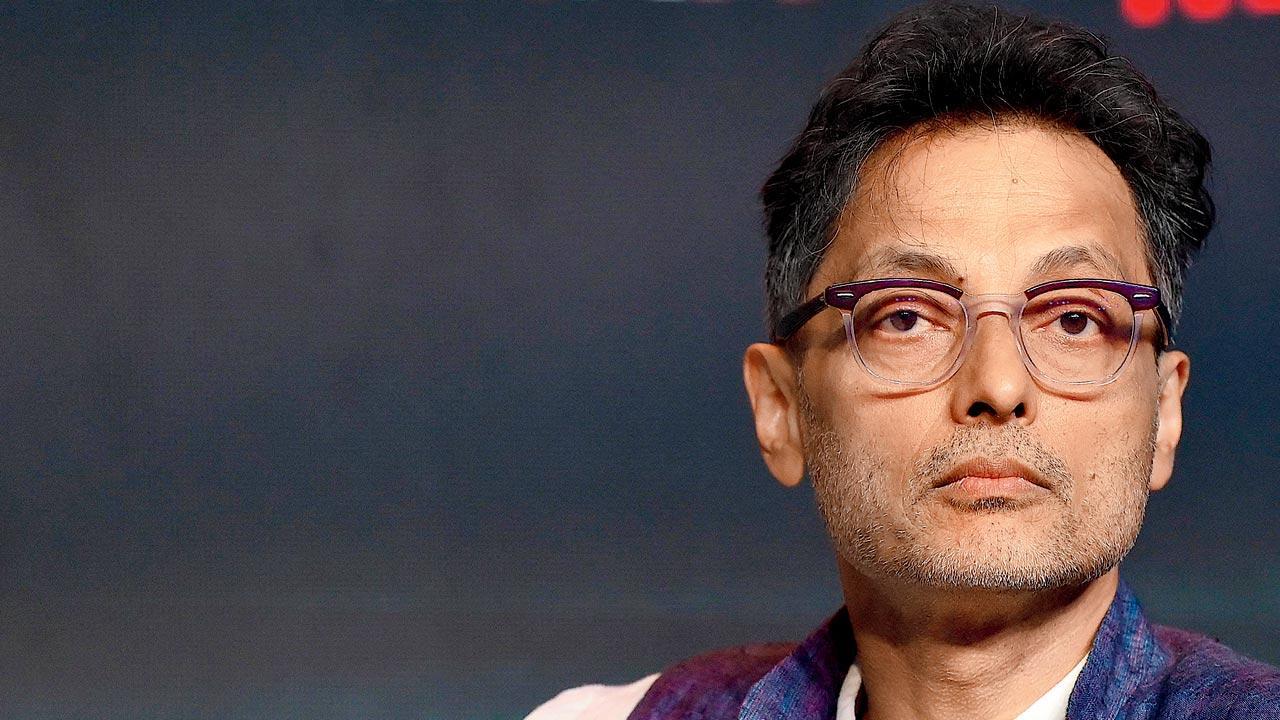
Filmmaker Sujoy Ghosh speaks of adaptations, choosing too-pretty-to-leave Kalimpong as location and keeping up with audience tastes in the build-up to his Kareena Kapoor-starrer Jaane Jaan
Sucheta Chakraborty (MID-DAY; September 10, 2023)
“It was a doomed love story and I loved it because the only other love story I could think of in comparison was King Kong,” filmmaker Sujoy Ghosh tells us about his upcoming Netflix film Jaane Jaan, which is based on the 2005 Japanese novel The Devotion Of Suspect X by Keigo Higashino. It’s a book brought to him years ago by friend and screenwriter Kanika Dhillon. He recalls being drawn to it instantly.
“You don’t know whether it’s a good story or a bad story, but it’s a story you have identified with,” he explains. “It really got to me because I saw characters in that book who were big [and] honourable. It was something I was not used to. In Japanese culture, honour is a very big thing and [people are] big hearted. I wish I was like Naren [Jaideep Ahlawat’s character]. I wish I had that kind of honour instilled in me, the values, beliefs and morals that he has.”
Since Anukul, Ghosh’s 2017 short film starring Parambrata Chatterjee and Saurabh Shukla, based on a short story written by Satyajit Ray, this is the first time that Ghosh has adapted a story for the screen. “I was dying to,” he tells us excitedly.
“These people are experts in what they do. They’re born to write stories. I would love to have all my films based on books if I had my way.”
Aranyer Din Ratri, Bengali author Sunil Gangopadhyay’s novel, which was famously adapted for the screen by Saytajit Ray in 1970 has been on his mind for long. “But it is too scary.” There is the burden of responsibility and the need to be loyal and respectful to the source material because there is the looming sense of someone having worked very hard to put the story together. “I shouldn’t be messing with a story just because I can.”
Rabindranath Tagore’s short story Kabuliwala is a work he says he hopes to adapt one day. “I will do it before I retire,” Ghosh smiles. “Have to do one Tagore, at least.”
Jaane Jaan is set in the hill town of Kalimpong in West Bengal, a location that Ghosh has used previously in 2016’s Kahaani 2: Durga Rani Singh. But the Kalimpong of the new film is different. “That’s how it should be,” he insists.
“Even the Kolkata of Kahaani versus the Kolkata of Te3n [which he produced] versus the Kolkata of Bob Biswas [which he wrote and co-produced] are different. At least I hope they are. That’s the whole trick. You should shoot in the same city, but the city should also be a character. The city should reflect the story that you’re telling. My world is very important; it should be a character in the film.”
Misty and far away from the city bustle, Kalimpong in the Himalayan foothills, Ghosh tells us, lent itself perfectly. “I feel any character within a story is believable if the world in which they are is believable. Now, if you’re showing somebody who’s academically inclined, who wants a quiet life, who is looking to restart her life, you would need a world which is smaller. It’s a smaller community where people know each other.”
His own familiarity with the terrain also undoubtedly contributed to his choice. He recalls a time when he and a friend hired a car and went to Kurseong and from there to Kalimpong and Darjeeling. “We kept falling in love with the places and didn’t want to leave, and then my wife had to call us back,” he laughs. “I could do a whole film by the banks of the Teesta.”
While creative concerns and a director’s sense of discipline remain largely the same while making a film for the OTT space, what changes for Ghosh is the way the film is presented.
“If I know that you’ll see my film on a mobile, an iPad, a computer or a television screen, my framing would change a little,” he says, explaining that for a theatrical film he can include more wide shots. “I try to keep that in my mind, but don’t let it dictate me. In Jaane Jaan, you’ll know that the framing is a little different from, for example, a Badla or a Kahaani.”
The process he finds pushes him to think differently, an important requisite “to move with the times”. “We have to learn to serve people who watch films on their mobiles. Whether we like it or not, they do.”
Ghosh began his filmmaking career in 2003 with the ‘cool’ indie musical comedy Jhankaar Beats and has since gone on to make several hit thrillers starring industry A-listers. The biggest change in his life he feels, however, is technology.
“When I started out, technology was never a faculty of filmmaking. Now, it’s as important as editing or cinematography or directing because you have so many possibilities if you know how to harness technology in your film, to create the world, to tell your story. And it’s changing rapidly. A lot of my friends do some amazing things with technology and I don’t know how to, but I would love to learn.”
There is also the matter of the audience’s evolving tastes. Ghosh says that at the time when he started out, people were not that exposed to global cinema. “But now, I’m competing with the evolution of taste. When you see my film, your benchmarks are different. You’re not just seeing a film, you’re also assessing it. Technically, is it sound? How well has he shot it? How good is the VFX? If I give you a lazy film, you’ll be able to spot it a mile away. Their expectations and demands from a film are changing, and I am just running to keep up with them.”
Why Bengali films are giving trams a pass now
8:13 AM

Scrapped trams stored at the Tollygunge tram depot
Modern Kolkata Moves In The Metro And App-Cabs While Its People Are Shifting To Highrises. So, The Tram Is Reduced To A Cliche That Appeals To The Outsider But Not Contemporary Bengali Directors
Priyanka Dasgupta (THE TIMES OF INDIA; February 19, 2023)
There’s a West Bengal tourism commercial that shows the city through the lens of a foreigner. Its last sequence features a tram car chugging past the Maidans by night on Route 36. The climax is the spectacular entry of Bengal’s brand ambassador, Shah Rukh Khan, singing Tagore’s ‘Ami chini go chini tomare ogo bideshini’. When the tram car finally chugs out of the frame, the camera zooms in on the words, ‘Experience Bengal: The sweetest part of India’.
Six years since the commercial aired and a pandemic later, Kolkata’s once-ubiquitous trams are chugging out of the city. Even the sound design of contemporary Bengali cinema no longer uses the chimes of tram bells to capture Kolkata’s essence.
Inseparable For Years
Bengali cinema’s tram connection meandered from Satyajit Ray’s ‘Mahanagar’ (1963) to Amitabha Chaterji’s ‘Manohar & I’ (2018) via Buddhadeb Dasgupta’s ‘Kaalpurush’ (2005), Atanu Ghosh’s ‘Abby Sen’ (2015), Nandita Roy and Shiboprosad Mukherjee’s ‘Praktan’ (2016), Srijit Mukherji’s ‘Ek Je Chhilo Raja’ (2018), and Raj Chakraborty’s ‘Parineeta’ (2019).
Not just films, even their opening credits celebrated this connection. Subrata Mitra filmed the two-minute-long title sequence of Satyajit Ray’s ‘Mahanagar’ (1963) by only focusing on a moving tram cable. Once Ray’s credits for the film’s screenplay, music and direction have rolled, the camera moves inside the tram car to freeze on Anil Chatterjee’s tired face.
“Ray used just the electric cable to depict the big city. In the background score, he also changed the tempo and volume of violin, flute and cello to heighten the drama of everydaylife,” said Riddhi Goswami, a member of the Ray Society.
Criss-crossing tram wires form the backdrop for the opening title card of Mithun Chakraborty-Rahul Bose-Sameera Reddy starrer ‘Kaalpurush’. “My father loved everything quaint and old that stood witness to time and defined his Kolkata in its purest form,” said music director Alokananda Dasgupta, daughter of the film’s director, the late Buddhadeb Dasgupta.
Later in the film, Bose falls asleep inside a compartment and has imaginary conversations with his father about his love, hatred, regret and memories. “It is such a vulnerable and sensitive scene. What better than the long-lost tram to act out this metaphor of extended realism in his film,” she added.
Metaphorical Journeys
Ritwik Ghatak used trams in ‘Bari Theke Paliye’ as a metaphor for Kolkata’s mechanical transport. But film scholar Sanjoy Mukhopadhyay said Ray and Ghatak used trams differently. “In Ray’s ‘Apur Sansar’, the tram becomes a space where dreams turn into reality when Apu reads the editor’s letter. In contrast, the tram in ‘Bari Theke Paliye’ symbolizes crude mechanization and not fantasies.”
Trams also appear in Mrinal Sen’s ‘Interview’. “The protagonist nabs a pickpocket in a tram. That was more of an emblem of day-to-day life and living in 1970s’ Kolkata,” Mukhopadhyay said.
Parked In Nostalgia
Once an emblem of modernity and the metropolitan mind, trams now symbolize old-world charm. “People who joined college in the midor late-1980s remember how romantic tram rides were during noon, especially if a couple got the front seats just behind the driver’s cabin,” said Atanu Ghosh, who directed the 2015 sci-fi film ‘Abby Sen’. “As a tribute to my fond memories, I devised the tram ride scene as a metaphor for nostalgia and romance in ‘Abby Sen’. In the story, Abby travels 33 years back in time from 2013 to 1980 and meets his wife in an illusion scene inside a tram.”
Poet-turned-filmmaker Srijato penned ‘Chol rastae saji tramline’ for Srijit Mukherji’s ‘Autograph’ (2010) that highlighted the word tram. Despite the song’s popularity, Mukherji didn’t use a tram shot to picturise it. He waited for eight years to use the tram as the setting for the conversation between Aparna Sen and AnjanDutt in ‘Ek Je Chhilo Raja’. “Tram for me is quintessential Kolkata. I use trams to portray a character of the city which is traditional, old-world, slightly laidback with its own rhythm or something very intimate, quaint and personal,” Mukherji said.
Few contemporary Bengali films use trams for a nuanced portrayal of urban loneliness. One rare exception is a 13-minute-long scene from ‘Manohar& I’, which is among British Film Institute’s 10 great films set in Kolkata. Two strangers-turned-acquaintances hop on to a tram car. The languid pace and the empty space of a tram car allow a lot of time for the characters to communicate. The camera placed up close captures the hoardings and wall graffiti through the huge windows while the protagonist garnishes his narrative with half-truths and yearnings.
“In between their conversation, I deliberately kept some top shots of a serpentine tram negotiating the traffic. The tram becomes a metaphor for Kolkata’s indifference that alienates migrants from the suburbs. The metropolis shuts them up inside boxes. Their existence resonates with tram cars moving around the city like long matchboxes in motion,” director Amitabha Chaterji said.
Iconic For The Outsider
Most contemporary Bengali films steer clear of the tracks to avoid clichés. Besides, their plots have long shifted to highrises where the chimes of tram bells hardly reach. “As a child, I used the tram regularly while commuting. But trams have now disappeared from the cityscape. If I set a realistic film in the city, where is the space for trams since my characters will use the metro and app-cabs?” said director Aniruddha Roy Chowdhury.
But those who haven’t lived in this city as an insider rely on trams, Howrah Bridge and Victoria Memorial to reinforce a stereotype. From Mani Ratnam’s Yuva (2005) and ‘Guru’ (2007), Sujoy Ghosh’s ‘Kahaani’ (2012), Tigmanshu Dhulia’s ‘Bullett Raja’ (2013), Shoojit Sircar’s ‘Piku’ (2015), Dibakar Banerjee’s ‘Detective Byomkesh Bakshy!’ (2015) to Mridul Toolsidas’ ‘Toolsidas Junior’ (2022), Kolkata’s trams and even tram depots remain the perfect backdrop for period films and romantic songs.

Women never acknowledge their bodies’ needs and desires-Vidya Balan
3:44 PM

Ruman Ganguly (BOMBAY TIMES; January 9, 2023)
During her recent visit to Kolkata to interact with medical professionals, Vidya Balan opened up about subjects such as women’s health, her upcoming projects and her love for the City of Joy.
‘WE WOMEN DON’T ACKNOWLEDGE THE NEEDS OF OUR BODIES’
Sharing her thoughts on women’s body image, she said, “We do not acknowledge the desires and needs of our bodies, let alone take care of ourselves. This has to change. It is not just a woman’s responsibility — but everyone in the family has to be aware and equally responsible for her wellbeing. The shame and taboo attached to a woman’s body have to go. The family, her support system, should collectively engage with and address a woman’s health issues. Every time a woman goes to a gynaecologist, her partner, husband or son should also go along with her. That’s only when we can truly progress as a nation.”
REVISITING PLACES WHERE SHE SHOT
Talking about her bond with the City of Joy, she shared, “I have a special connection with this warm city and look forward to any and every excuse to be here. But the pandemic has kept me away all these years. This time around, I went to Kalighat for Ma’s darshan and blessings. Then I went for a drive and the city looked so beautiful. I went to the places I shot at for Kahaani and No One Killed Jessica to revisit my memories, as I have not been to the city for three long years. ”
USHA UTHUP BIOPIC IN THE WORKS?
There was buzz that the actress would step into veteran singer Usha Uthup’s shoes for a biopic. “I would be more than happy to do it, but it has not materialized yet,” said Vidya, adding, “I love Usha Uthup and her fabulous music!” As for her upcoming films, she said, “This year, my films Neeyat and Lovers will hit the big screen, but I am not sure about the release dates.”
There have been thrillers after Kahaani, but it continues to be a benchmark-Vidya Balan
8:18 AM
Madhureeta Mukherjee (BOMBAY TIMES; March 16, 2022)
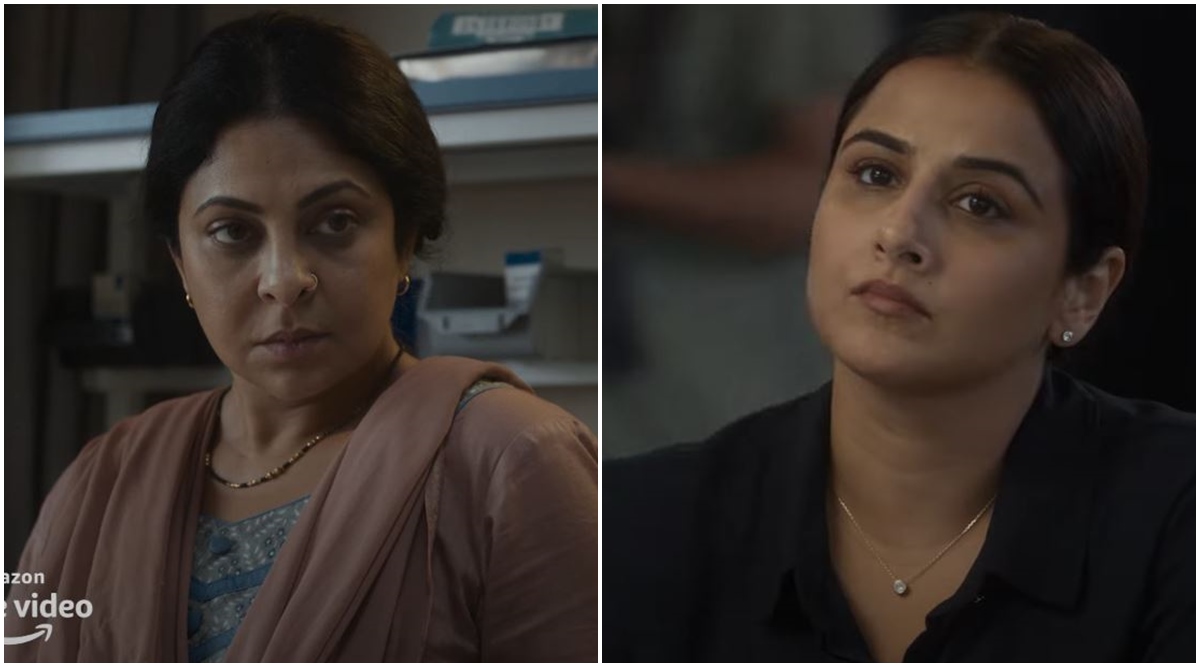
She says she is a greedy actor. The fierceness with which she bites into every role, bringing alive every character she portrays and owning it wholly, we couldn’t agree more with Vidya Balan. It’s her greed for great roles, and the audiences’ hunger to see more of her on any platform that maybe, results in the making of some unforgettable cinema. Vidya leads the show, along with Shefali Shah, in the upcoming, Jalsa, a thriller drama that releases on Amazon Prime Video on March 18. In a conversation with us, she shares her views on women in cinema, in the OTT space, in society, and how the concept of stardom is changing. Here’s a Vidya-view on all these subjects that matter…
This year marks 10 years of Kahaani, a landmark film of your career, and for our cinema. It came at a time when thrillers were far and few in Bollywood, leave alone a woman leading the show with such a compelling story. Ever since, we have had several more, and some of those featuring you. It is indicative of the changing narratives in our cinema, and of course, how you continue to do roles that defy stereotypes and redefine trends.
I was a bit taken aback when you said 10 years of Kahaani. I didn’t realise that, wow! It just seems like yesterday. You are right when you say that there weren’t many thrillers being made back then. And with Kahaani, you had a thriller with a woman at the centre of the story, and not just that, a pregnant woman. People just didn’t know what to expect from it. For Sujoy Ghosh (director), it was a challenge to put the film together. A lot has changed since… now there is a wide range of women’s stories being told. It is so exciting, though I have to say that I hope that the tag of the ‘woman-centric film’ is done away with at some stage. In Jalsa, you have two women leading the story, but it’s a kind of story that could happen to anyone. It is about one incident that just changes your life. Maya (my character) is a journalist. She is self-righteous, and here she is thrown into a sudden situation. It is easy to pronounce judgements on others, but now she is at the receiving end. Every character in this film is under the stress of being judged or judging themselves. Talking about Kahaani, yes, there have been other thrillers, but I think even today Kahaani is a benchmark.
A lot of female actors don’t subscribe to the term ‘woman-centric’ role/movie. In many of your finest films, while you were leading the show, it was the subject and story that took center stage. To put it simply, the subject was the hero, and hence, the films drew the kind of audience they did. Subjects have no gender, so here, the actresses are right in having a problem with the term ‘woman-oriented’. Your view?
I totally agree, and I love the way you have articulated it; I have never been able to articulate it like that. Yes, subjects have no gender and I think universal subjects appeal to me. When the story is not restricted to a gender, and it is about people and humans, it draws me. Like when I first heard the story of Jalsa, I said, ‘This could happen to anyone.’ That’s what hits you hard — the story.
You play a journalist in Jalsa. Over the years, your journey with the media has been interesting. For this part, did you draw any references from your interactions and relationship with the media that you have shared all these years?
Maya is not an entertainment journalist, so there was no exact reference point for me there. A lot of journalists we see around us, and credible names who you think are beyond blemish, are also human. When the camera turns towards them, and they are confronted with certain situations in their life, it would be interesting to see how they would deal with it. Maybe a better way of putting it would be, when the lens of judgement is on them, what happens? Will they crumble? It is easy to put others on the stand, but what happens when you are on the stand, what are the calls that you will take, and what are the choices you will make? Everyone has secrets, and everyone knows their truth — this is the crux of the story and the narrative of every character in the film.
You have worked with director Suresh Triveni in Tumhari Sulu, which was in a very different zone. Jalsa seems to be an intense drama. Is he trying to make a social commentary through this film?
I stay away from any sort of commentaries, but different people will have a different take away from the film and story. At times, people will find layers in everything, and yet, sometimes, they will find nothing at all, so it is subjective. Jalsa is a gripping story, with oodles of drama. I don’t think it is trying to make a commentary. I think it will leave you feeling, ‘Oh, my god, this could be me.’
Currently, there is a lot of conversation around how the digital space has given female actors ample opportunity to play diverse roles, a chance to break the mould, take risks et al . In this case, would you agree that you were ahead of the game, as what we are talking about today — the chances and variety of roles, you took that leap for the big screen long before we were rejoicing in this new wave of content on OTT?
May I say that it is very easy for everyone to now say that. ‘Oh, the OTT space has opened up opportunities for women’. They are basically mitigating the value of the journey that the Hindi film heroine’s arc has gone through. I don’t think the OTT wave has changed anything for women alone, I think it changed the way we view content, and therefore, it has changed content. Obviously, because of that, there is a wider variety of stories being told, and different genres being explored. I think what the OTT space does is that it offers you an intimate, personal experience. When you go into the theatre today, the difference is very stark. You go into the theatre to get the big-screen, heroic, larger-than-life experience. On OTT, you have the luxury of when and what you want to watch. It troubles me when people talk about the OTT space being a game-changer for female actors or female story writers. I don’t think that’s true at all. I am credited with being at the helm of things, but even that, I believe, is about timing and being at the right place, at the right time. And I am not the only actor who has been doing that. Most importantly, there have been others who have followed it up, and we are all in it together.
So, the choices of films that you are making now are irrespective of the medium?
Absolutely! I am medium agnostic. I am a very greedy actor. The platform depends on the content and what sort of film will appeal to what audience. I believe that Jalsa will appeal to a universal audience, it is not just for the Indian audience.
In Jalsa, we have two actors (who happen to be women) who are superb at their craft — Shefali Shah and you — leading the show. It again points to the steady and positive change that we are seeing around us and in our cinema.
Yes, it is because of changing mindsets and evolving audiences, but most importantly, it is reflective of the change happening in society where women are taking centre stage. Today, women are in charge of their own life stories, which is why we are seeing much more of those stories in our cinema.
Do you feel that the concept of stardom has changed, or has been redefined in the current times? And the audience is willing to watch the actors they admire on any medium, as long as they have a great story to tell?
Yes, I think the concept of stardom has changed. The larger-than-life quality of stars has changed over time because of their accessibility on social media. The OTT platform has also created a new breed of stars. If you like an artiste, you will watch what they have to offer on any platform. I don’t think the previous success of a film of an actor has actually mattered ever for their fans. Also, today, I think it’s how exciting your trailer is and what it makes the audience feel is what determines whether they will watch the film or won’t.
Two of your big films released on OTT in the last two years, Shakuntala Devi and Sherni. While releasing a film on a digital platform could be a new experience, do you miss the excitement around a theatrical release, where the box-office numbers keep coming in on a Friday, and there is all that hysteria around it?
Not really. Honestly, it’s the best thing to have happened to Shakuntala Devi and Sherni. Our films were ready, and we had a platform. Both were loved and were very different films, and so is Jalsa. Whether a film is releasing in theatres or OTT, I still feel butterflies in my stomach until I know how the audience is responding to the film. It’s the same nervousness. It’s like you are showing your Simba to the world. The first time you hold your baby out to the world, it will always make you nervous, no matter where and how you show it.
I got sc****d trying to find money for Kahaani-Sujoy Ghosh
8:29 AM

Juhi Chakraborty (HINDUSTAN TIMES; March 9, 2022)
Over the last 10 years, Kahaani has got a cult status, something that filmmaker Sujoy Ghosh finds flattering. “I don’t feel 10 years [have passed]. People still talk to me about the film like it released yesterday,” he says.
But Ghosh says that the journey of the film from inception to execution was a tough one, especially since it was a female-led story. “It was tough to get people to back the film, given the fact that it was an action/thriller with a female protagonist, from a director like me, who was coming out of two massive flops (Home Delivery: Aapko... Ghar Tak, 2005, and Aladin, 2009). There was nobody around and I knocked on every door. I got sc****d trying to find money for Kahaani,” he says.
Ghosh shares that after the film released, the notions changed. “[Someone from] a big studio came to me and said, ‘What a twist, our eyes popped out’ and I was thinking, ‘I narrated the script to you, twice, were you not listening?’” he recalls.
Ghosh is content that the film triggered a change in the film industry. “Kahaani helped assure people with money and the producers that such films can be made and they can make money, too. So, people started investing money in films with female protagonists,” he explains.
Ghosh credits actor Vidya Balan for believing in the film from the beginning. “Kudos to Vidya for carrying this film on her shoulders. It was a story we wanted to tell and be associated with,” he says, adding that he is looking forward to taking the franchise forward. We did Kahaani 2: Durga Rani Singh (2016) and Bob Biswas (2021) and if the right script comes up, we will do more,” he ends.
After I did Kahaani, there was no looking back for me-Nawazuddin Siddiqui
8:28 AM

Sugandha Rawal (HINDUSTAN TIMES; March 9, 2022)
There was a time when actor Nawazuddin Siddiqui was in two minds about doing Kahaani (2012), as he juggled two film sets. As the movie turns 10, he’s glad that he took the plunge. Despite actor Vidya Balan driving the narrative, Siddiqui etched a distinctive place for himself as an investigating officer: “Today, I am proud that I did this film, as there was no looking back for me since then. I am so happy that people loved my role, and continue to do so even today.”
The 47-year-old, who was shooting for Gangs Of Wasseypur (2012) alongside Kahaani, adds, “I wasn’t willing to do Kahaani. But Sujoy (Ghosh, director) showed me a documentary and I got interested.” The realistic lens of Ghosh convinced Siddiqui to take it up.
He adds that the initial buzz of the film didn’t indicate that it would go on to become iconic. “Shuru mein itna idea nahin tha ke film iss tarah hit hogi. In fact, jab film release hui, teen din tak kuch nahin hua. After Sunday, I started getting calls from producers and Sujoy that the feedback is good, and it is growing,” recalls the actor.
I saw Kahaani during the lockdown, after we had shot a chunk of Bob Biswas-Abhishek Bachchan
8:21 AM

Vying for the Best Actor: Film trophy in Hitlist OTT Awards for Bob Biswas, Abhishek on how he was unfamiliar with Saswata’s rendition of the hitman
Hiren Kotwani (MID-DAY; March 8, 2022)
Minutes into our chat, Abhishek Bachchan surprises us when he reveals that he watched Kahaani (2012) only during the lockdown in 2020. The spine-chilling character of Bob Biswas and the indelible performance of Saswata Chatterjee, he claims, were unknown to him until then. Bachchan walked blind into Bob Biswas (2021), the spin-off of Kahaani — a decision that has benefitted him. His performance as the unusual contract killer has earned him a Best Actor (Male): Film nomination at the mid-day and Radio City Hitlist OTT Awards.
“When Sujoy [Ghosh, producer] met me, he said he’s thinking about making a film about a hitman who has lost his memory. I thought it’s an interesting premise. When he said Diya [Annapurna Ghosh] is directing it, I said yes before [hearing] the script. When she narrated it to me later, it turned out to be a cool script,” recounts the actor.
While Chatterjee was embedded in our minds as the cold-blooded hitman, Bachchan had little idea about the original rendition. “I saw Kahaani during the lockdown, after we had shot a chunk of the film. I got to know months later that this was a character from Kahaani.”
The most challenging part was the physical transformation. The actor, who became a portly 100 kilos, says the appearance was crucial to the character. “Bob’s takia kalam [greeting] is ‘Nomoshkar, Bob Biswas. Ek minute.’ I wanted to figure out where this ‘ek minute’ came from. [It was justified] in the scene where he is running up the stairs to catch up with the elevator, and [since he is heavy], he is trying to catch his breath.”
Most actors are critical of their work. Did he analyse his performance after the thriller’s release to see what he could have done differently? “In the climax, after the two hitmen kill Bob’s wife and son, he holds them in his arms. In that moment, his world is taken away from him. That’s why he becomes the cold-blooded murderer after that. I could have perhaps portrayed the scene in a more emotional way.”
Cast your vote for the Hitlist OTT Awards
Abhishek Bachchan has been nominated in the Best Actor (Male): Film category for Bob Biswas.
The other nominees are:
- Adarsh Gourav (The White Tiger)
- Dhanush (Atrangi Re)
- Farhan Akhtar (Toofaan)
- Sidharth Malhotra (Shershaah)
- Vicky Kaushal (Sardar Udham)
Log on to www.radiocity.in/hitlistawards to cast your vote.
You can also vote via SMS. Send HITLIST <space> category name <space> your choice (a/b/c as on the website) to 57575.
Voting lines close on March 18.
If you look the part, half your job is done, says Abhishek Bachchan on his Bob Biswas
8:11 AM

As his Bob Biswas look from Kolkata shoot goes viral, Abhishek Bachchan discusses slipping back into role after nine months of lockdown
Upala KBR (MID-DAY; December 1, 2020)
When Bob Biswas — a spin-off film based on a character from Sujoy Ghosh's Kahaani (2012) — was announced in November 2019, many had wondered if Abhishek Bachchan would be able to pull off the part of a cold-blooded contract killer. A year later, the doubts have been quelled. As the actor resumed work on the project in Kolkata last week, pictures from the shoot went viral. Almost unrecognisable in a portly frame, with a bald patch and thick-rimmed glasses, Bachchan was praised by Twitterati for his physical transformation.
"The media knew we were shooting in Kolkata. So, the photographers showed up at the venue [and clicked the pictures]. I would have loved for the look to come out the way Diya [Annapurna Ghosh, director] intended — during our marketing campaign," says Abhishek Bachchan, adding that he is humbled by the praise coming his way. "The [netizens'] reaction was an endorsement that we are doing something right. I believe that if you look the character, half your job is done. In Kahaani, Bob Biswas [portrayed by Saswata Chatterjee] is portly, so I had to pile on the kilos. Maintaining the frame during the lockdown was difficult."
The crime thriller, also featuring Chitrangda Singh, was one of the many projects affected due to the lockdown. Bachchan agrees that slipping into the character after a long break was initially difficult. "When you are shooting a film, there's a creative momentum that builds up. So, getting back in the groove can be challenging. But, after the first day, it didn't feel that we had a nine-month break."
Filming in Kolkata is always a joyous experience for the actor, who considers it his second home. "This city has showered my family and me with love and respect. My father is called 'jamai babu' [son-in-law] here, and I am referred to as 'aamar naati' [our grandson]. It has been a lucky city for me. Every time I have shot here, the film has gone on to fare well — be it Yuva or the recent Ludo."

Images: Abhishek Bachchan nails the Bob Biswas look; resumes shoot in Kolkata
8:19 AM

BOMBAY TIMES (November 26, 2020)
Abhishek Bachchan and Chitrangda Singh were seen shooting for Bob Biswas at a south Kolkata location on Tuesday. The film, directed by debutante Diya Annapurna Ghosh and written by Sujoy Ghosh, is a spin-off based on the character, Bob Biswas, in the Vidya Balan-starrer Kahaani (2012). While the first schedule of the crime thriller was completed before the lockdown, Abhishek flew to Kolkata on Tuesday to resume work on this project.
According to sources, the unit will shoot at various locations in the city before they wrap up by December 7. Before flying to Kolkata, Abhishek took to Instagram to share a picture that had him wearing a face shield and mask on the flight to the City of Joy. He wrote, “#BackToBeingBob Stay safe everyone. Travel safe. #maskon keep your mask on (sic).”

I am happy doing Bengali films, and occasionally, a Hindi project-Parambrata Chattopadhyay
8:31 AM

Despite being noticed for a handful roles in Bollywood, Parambrata Chattopadhyay on not being swayed by the Hindi film industry
Shaheen Parkar (MID-DAY; June 21, 2020)
His acclaimed act as an aide to Vidya Balan's character in the 2012 drama, Kahaani, made makers of Hindi films instantly sit up and take notice of him. But, Bengali actor Parambrata Chattopadhyay wasn't one to be swayed by the glamour attached with Bollywood. "Many people thought I would shift to Mumbai and do more Hindi films, but I am an actor and a director, and primarily belong to the Bengali film industry. I am happy doing Bengali films, and occasionally, a Hindi project," says the actor, who can be persuaded to take up a project from the Hindi film industry if it appeases his heart.
One such offering was the Anushka Sharma-backed Anvita Dutt directorial venture, Bulbbul. The supernatural period thriller, which drops on Netflix on June 24, sees the actor play a "character full of intrigue". The offering also has him collaborate with Sharma for the second time, after the duo shared screen space in the horror film, Pari. "When shooting for Pari, I was relatively new to the Hindi film [industry]. [Anushka and I] spent a lot of time doing workshops. I enjoyed the atmosphere on the set and was looking forward to working with [her team] again. She had dropped in when we were shooting for Bulbbul. It was good to reconnect with her as well as her brother, Karnesh [co-producer]."
Sharma's last production, Paatal Lok is being touted as one among the best to have released this year. Inevitably then, cinephiles have their eyes trained on Bulbbul, which promises to be an equally gritty offering. According to Chattopadhyay, Sharma has been "handpicking projects that are pushing the envelope, which provides actors from regional films to showcase their talent."
It was Dutt who roped him for this series. "I said yes immediately. Though she is a debutant, she didn't need my advice. She is confident about her craft," says Chattopadhyay, who is also working on a biopic on legendary actor, Soumitra Chatterjee.
If I have to set a film outside India, I will only do it at a place that I know well-Sujoy Ghosh
8:28 AM

Renuka Vyavahare (BOMBAY TIMES; October 12, 2019)
 Those familiar with director Sujoy Ghosh’s work are mostly in awe of his film’s setting. Kahaani was gorgeously shot in Kolkata and Badla was set in Scotland.
Talk about the way he used the backdrop of Kolkata so aesthetically for Kahaani, and the director explains that he prefers shooting in places that he is familiar with. “I missed shooting in Kolkata during Badla, but that film demanded a certain setting and Scotland was perfect. I haven’t travelled much in life. Within India, I am very familiar with Kolkata and Mumbai, outside of that, I have travelled around the UK. If I have to set a film outside India, I will only do it at a place that I know well, hence we chose Scotland for Badla. Also, my stories decide the setting. For instance, the characters in Badla are independent people, who do their chores like cleaning, cooking and all that on their own. I needed an environment which supported that. In India, most of us don’t do all that, so a location outside our country worked for it. The story leads the way, even when it comes to picking the location to shoot at.”
I am commitment phobic when it comes to taking up a web series-Vidya Balan
8:25 AM

The actor isn’t keen to dedicate time to a role unless it’s something extraordinary
Pooja Sharma (HINDUSTAN TIMES; October 10, 2019)
Vidya Balan is an actor who defies all Bollywood heroine stereotypes, both on screen and off it. The characters she portrays are always women who dream big and dare to express themselves, whether in films such as Ishqiya (2010), The Dirty Picture (2011), the Kahaani series, Tumhari Sulu (2017) or her latest, Mission Mangal. The 40-year-old actor’s upcoming projects are also along similar lines, for instance Vidya will play the late writer and ‘human computer’ Shakuntala Devi, in her next. Excerpts from a chat:
Does the success of Mission Mangal encourage you to take up newer content?
I am so grateful for its success. I received so much love for it. I knew it would turn out to be a good film. Everyone loved it. They said how my character was reflective of every Indian woman who balances work at home and work outside. Now, my focus is only on Shakuntala.
You’ve mentioned how Shakuntala Devi’s personality was quite fun, and you’re having a ball playing the role. However, would you like to essay the opposite, an out-and-out negative role? Are you an audience for dark cinema?
Absolutely! But, I am not always in the mood to watch the darker stuff. I am okay to watch it in the confines of my home, when you are binge-watching. But when I go to the theatres I like to watch happy stuff. When you are going with a group of people, you want it to be a happy experience. So, unless I was doing it for a platform, I think I’d choose the lighter, brighter stuff over everything else. Having said that, I don’t have set rules. If something really excites me as an actor, I’d go ahead and do it.
The Kahaani series has been one of your biggest hits. Is there any scope to turn it into a bigger franchise?
Sujoy (Ghosh; director) keeps threatening me that he will write Kahaani 3 (laughs), but he hasn’t written it. I am also waiting! Of course, we would love to go ahead with the franchise. It’s crucial that we first find the right story.
You’ve co-produced a short film this year. Any plans of turning full-time film producer?
This was not on the cards at all. Short films have no budget. So, Ronnie Screwvala offered me the producer credit as barter. There was no scope to learn as a producer, and I don’t plan on doing this any further. With due respect, it’s not of interest to me. I am only interested in being an actor. My interests are different; they’re more creative.
Would you want to take up something on the digital platform?
I am commitment phobic. That’s why unless something blows my mind, I can’t commit to so many months (laughs).
How Bollywood has infused the spirit of Durga Puja in films
8:16 AM

Rachana Dubey (BOMBY TIMES; October 8, 2019)
Call it Vijaya Dashami, Bijoya, or Dussehra — the festival is celebrated with fervour in most parts of India. The day underlines the victory of good over evil — a theme that has been translated on celluloid often by Bollywood filmmakers.
For decades, filmmakers have used Durga Pujo, Navratri and Dussehra celebrations as motifs or as backdrops for key events in their narratives. Visuals from the festive season have often lent themselves for the creation of dance numbers, memorable scenes and sequences, replete with symbolism.
Sujoy Ghosh’s Kahaani (2012) features one of the most well-recalled, and what is considered to be one of the best amalgamations of Durga Puja into a story. The film unfolds in Kolkata, which is gearing up for the pujo, and culminates on dashami (last day of Durga puja), drawing parallels between the festival’s message — the victory of good over evil — and the story, as Bidya Bagchi (Vidya Balan) defeats her husband’s murderer.
 Bring this up and Sujoy says, “The thought behind the sequence was to highlight the strength and will of a mother. I’m a huge fan of Maa Durga, because in this form of hers, she’s always with her children. For Bengalis around the world, she’s a mother — we equate her to a human being. In Kahaani, I wanted to depict that Maa arrives once a year, she listens to you and solves your problems. We threaded in a lot of stuff. The build up-to the story is pretty much like the build-up to Bijoya. The climax blended beautifully with the culmination of the pujos.”
Pradeep Sarkar’s Parineeta (2005), adapted from the eponymous Bengali novel by Sarat Chandra Chattopadhyay, uses Durga Puja as a backdrop on two crucial occasions — once to show the love and care Lolita (Vidya Balan) has for Shekhar (Saif Ali Khan) and then to show Shekhar’s jealousy towards Lolita’s friendship with Girish (Sanjay Dutt). The film also uses the traditional dhunuchi dance as a tool for the narrative.
 The filmmaker shares, “Durga Puja has often been used as a backdrop in films or as a part of the story. It only makes sense to include the festivities when there is some meaning to it. During pujo, you meet people and interact with them, and relationships also blossom. That is how we also used it in the film.”
Shoojit Sircar’s Vicky Donor (2012) briefly takes the audience pandal-hopping during Durga Puja in Delhi, to show the growing proximity between Vicky (Ayushmann Khurrana) and Ashima (Yami Gautam). The Ranveer Singh and Arjun Kapoor-starrer, Gunday (2014), also saw the two actors sway to beats of dhols against the backdrop of Durga puja in the song Jashn-e-Ishqa.

FILMMAKERS SPIN THE NARRATIVE AROUND THE FESTIVAL
Sanjay Leela Bhansali’s screen adaptation of Sarat Chandra Chattopadhyay’s Devdas (2002) shows Paro (Aishwarya Rai Bachchan) and Chandramukhi (Madhuri Dixit-Nene) meeting and even dancing together. Paro is seen at Chandramukhi’s kotha, asking for mitti of her aangan to make an idol of Maa Durga for her baadi. This marks the beginning of a crucial turn in the story when Paro is forbidden from stepping out of her house.
The story of Akshay Kumar’s Bhool Bhulaiyaa (2007) peaks in the thick of Navratri in a village in North India. The film’s climax, which sets off on ashtami, underlining the theme of good winning over evil, shows Vidya Balan as the revengeful dancer Monjulika, who is seeking protishodh (revenge) for her lover’s death. Raveena Tandon played a victim of marital violence in Kalpana Lajmi’s Daman (2001). Her character Durga vanquishes her patriarchal tormentor on dashami, freeing herself from bondage.
 Vikramaditya Motwane’s Lootera (2013) opens in a traditional zamindar’s baadi celebrating Durga Puja. Sonakshi Sinha, as Paakhi, is seen enjoying a jatra with her friend in the house. Here, the celebration is more of a backdrop to show how festivals were seen as symbols of power and prestige in society those days. Elaborating on it, writer Bhavani Iyer, who wrote the screenplay, shares, “I don’t think one really sets out to put a festival into the story. A lot depends on the milieu or the household you set the story in. Maa embodies vengeance and righteous anger, and if that fits into a story, then, Durga Puja could become an ideal motif. We used pujo to define the Bengal of the 1960s when zamindari was breathing its last. The jatra that Sonakshi is watching in the film, depicts her family’s power and stronghold in a fast-changing society. It was metaphoric.”
In Kurukshetra (2000), Sanjay Dutt, who plays an honest cop, is seen wiping out evil politicians, while Dussehra firecrackers drown out the sound of gun-shots, symbolising the defeat of modern-day Raavans. Ram Leela, which is an integral part of Navratri celebrations, was also used effectively in Rakeysh Omprakash Mehra’s Delhi 6 (2009). While depicting the glorious celebrations at Delhi’s Ramleela Maidan, the narrative also delves into frictions within men from the neighbourhood.
 Ashutosh Gowariker’s Swades (2004) also featured a Ramleela performance by debutant Gayatri Joshi. Here, it was a philosophical discourse — a conversation between Raavan and Sita that tries to highlight the difference between the evil and good. In a face-off sequence in Rajkumar Santoshi’s Lajja (2001), Madhuri Dixit-Nene, while playing Sita, refuses to go through an agnipariksha to prove her chastity.
More recently, Akshay Kumar, revealing his upcoming Laxmmi Bomb avatar, put out a picture with the backdrop of Maa Durga, embodying power and anger. Talking about the reducing number of instances of films using the festival as a motif, writer Bhavani Iyer says, “Kahaani was one of those films that integrated the festival so beautifully into the story. Even Sanjay Leela Bhansali’s ritualistic semblance of the celebrations in Devdas was a sight. Storytelling, in the last few years, has changed. The pujas are extravagant celebrations as opposed to the lives that we lead today, which are so clinical. We’ve also begun to write our stories in a more realistic manner. That doesn’t always allow us to merge festivals and rituals with the stories.”
IN THE BYGONE ERA...
Amitabh Bachchan and Rakhee’s 1981 Bengali-Hindi bilingual Anushandhan, made in Hindi as Barsaat Ki Ek Raat, used Durga as the metaphor of triumph. As a police officer, Amitabh is seen investigating an evil father-son duo. He is even seen playing drums during Durga pujo and beating Amjad Khan at a competition.
On the other hand, is Shakti Samanta’s Amar Prem (1972), featuring Rajesh Khanna, Vinod Mehra and Sharmila Tagore. The film had a brief, but an extremely powerful depiction of Durga pujo, which appears at the end of the film. While Nandu (Vinod) takes Pushpa (Sharmila), his foster mother, home, we see protimas of Maa Durga being taken to pandals, hinting at mahalaya. The symbolic reference to Maa’s homecoming was hard for anyone to miss.
 Apart from Hindi films, Bengali movies have evidently underlined the spirit of Durga Pujas through their stories. Pather Panchali (1955), Devi (1960), Titas Ekti Nadir Naam (1973), Joi Baba Felunath (1979), Utsab (2000; right), Debipaksha (2004), Antarmahal (2005; below), Durga Sohay (2017), Bishorjan (2017) and Uma (2018) are some films where important parts of the narrative have been woven around the festival. Writer-director of the Bengali film, Mahalaya, Soumik Sen says, “The pujos have been used as motifs in Bengali cinema very often. Utsab, Joi Baba Felunath, Bishorjon (2017), Nayak (1966) and Bela Seshe (2015) are some examples of how differently and beautifully the festival has been merged into the story. In Hindi films, Kahaani and Devdas come to the mind when one thinks of weaving in the celebrations of Durga Pujo into the story. The difference lies in the way the festival has found its place across popular cultures from the West to the East.”
Filmmaker Ramkamal Mukherjee’s Season’s Greetings (2018), a homage to filmmaker Rituparno Ghosh, uses a motif of children visiting parents for the Durga Puja in his film — something Ghosh’s Utsab also employed. Ramkamal says, “The festival has different meanings and style of celebrations across the country. For Bengalis, it’s about Maa’s homecoming, symbolically depicted as a mother, daughter, wife or a sister in films. I’ve shown this in my film, too, to doff my hat to someone who crafted bold stories and broke all taboos — something that Maa also embodies.”

Amitabh Bachchan does control checks to see whether we are sleeping on the set or not-Sujoy Ghosh
8:16 AM

Renuka Vyavahare (BOMBAY TIMES; March 6, 2019)
In a chat with Bombay Times, Sujoy Ghosh talks about movies, his passion for capturing intense conversations between his characters on camera, his comfort with rejection, ideas of revenge and his upcoming film, Badla.
Sujoy, you take your own sweet time to make movies. How do you keep away from the rat race which comes with the territory?
I come from an average middle-class family. Mine is not a sob story, but everything in my life has been a struggle and is still a struggle. I don’t expect anything on a platter. I have had to work hard for everything in my life and I am okay with it. I am used to rejection. In fact, I am very good with rejection as I have not tasted success at every step in my life. I had to give tons of interviews before I landed my first job. I wanted to do Computer Science from Manchester University, but I got rejected. But then, I worked hard and got in. I know this process and I am cool with it so I think that helps me stay sane. I could write a script and I am aware that it may not get made into a film because it could also be a shitty script.
Your films are led by strong female characters. Vidya Balan in Kahaani for instance or Taapsee Pannu in Badla...
I have grown up around strong women. I don’t know if strong is the right adjective, but I have seen my grandmother, then mother controlling and taking charge of our family. Even now my wife takes care of us in a way. I have always been around capable and strong women so I feel I know where they are coming from. Be it Ahalya (his Bengali short film starring Radhika Apte) or Durga (Vidya Balan in Kahaani 2), I have seen such strong women who have influenced me. Even as an individual, I get to learn a lot from Taapsee or a Vidya as people.
As a filmmaker you tend to be intrigued by capturing conversations on camera.
It’s interesting. Why are we talking for the past 10 minutes? There has to be something about this conversation. How do I present this to the audience, who would then be equally interested in knowing what you and I are talking about. That’s the challenge I like. That’s making a thriller out of a normal conversation. I enjoy that and the master of this was Satyajit Ray and Rituparno Ghosh. Their films were about conversations.
Many believe that the best form of revenge is no revenge, instead you just move on. If you were to keep the film aside for a while, what’s your take on revenge?
Interesting question. I live by the Mahabharata. I am not willing to let go of anything without putting up a fight. That’s me. I don’t know if that translates into revenge or confrontation. If somebody has wronged me in life, I will fight back but it also depends on the situation. The question determines the answer. If someone punches me in the face, I will punch him back but it all differs from situation to situation.
Badla is a Hindi adaptation of Spanish film The Invisible Guest. What made you choose this film in particular for a remake?
Initially, I didn’t want to do it. It is Taapsee’s fault (smiles). She kept telling me that it’s interesting. I finally read what was written and felt that I can contribute to it. As a director, I need to know if I can contribute to a certain story. The challenge was to tell something that was already told in a fantastic manner (Spanish original), so how do you top that?
You seem to have a special connect with Mr Bachchan. Is it intimidating to tell him what you (as a director) think he needs to or doesn’t need to do for a particular shot? What’s the process like when you work with him?
I will always draw a line, but he expects you to say what you feel, else you are doing a disservice to your film. If there is anything I don’t agree with, I will always discuss it with sir. That discussion is of utmost importance. I will always voice my concerns or interests to him and sir is very clever. He does control checks to see whether we are sleeping on the set or not (laughs!). He knows exactly what you want to say even when you don’t say it. He has this process of understanding the script over and over again. Once he studies that, he does what he thinks is correct and if that’s okay with me, we go ahead. If not, I explain to him my point of view and if he agrees, we change it. It’s very organic, we discuss and improvise.
You are particularly drawn to layered thrillers, isn’t it?
It’s a coincidence but I do feel I am attracted to stories which are of this nature. Given another story or genre, I think I will be able to tell that too. I started my career with Jhankaar Beats after all. I don’t care about genres as long as it’s exciting enough for me to give nine months of my life to that film. As far as layering is concerned, when I was growing up, everything was very black and white. Hero, heroine, villain... it was all very compartmentalised but as we go through life, you see things about yourself which you didn’t know existed. The good and the bad side. You evolve. When I fight with my wife and think about it later, I feel I am a very bad person but in my head I was right in doing what I did. It all exists within us and that’s how the layering comes. We have different sides to our personality, all of us have grey shades and I find that aspect in people very interesting.

The beauty of Badla is that all its characters are layered-Tony Luke
8:04 AM

Malayalam actor on his Hindi film debut which has Amitabh Bachchan and Taapsee Pannu as leads
Himesh Mankad (MUMBAI MIRROR; February 12, 2019)
 Malayalam actor Tony Luke is gearing up for his Bollywood debut with the Amitabh Bachchan – Taapsee Pannu-starrer Badla. He describes his character as the catalyst in the Sujoy Ghosh thriller. “It’s an official adaptation of the Spanish film, The Invisible Guest, and my character epitomises what a human being can do to survive and how he reacts when guilty,” informs Tony who down South has acted in three films, Oozham, Sakhavu and Aadhi. “The idea is not to play the lead but stand out in a film, even if it’s a five-minute role otherwise I have no right to call myself an actor.”
Tony reveals that having worked with Jeethu Joseph in two Malayalam films, he was offered the role of a cop in his Hindi film debut The Body, also featuring Emraan Hashmi and Rishi Kapoor. But Sunil Khetarpal who is also producing Badla asked him to audition for the latter and the casting director gave him one of the most difficult scenes in the film to act out. “Later, I got a call to meet Sujoy at his Bandra office at 9 am. Kahaani is one of my most favorite thrillers and I reached to meet him much before time. We discussed the script and I was blown away by the way he had written it,” Tony reminisces. Is he making his debut as the antagonist? Tony answers, “The beauty of this film is that all its characters are layered.”
 It required him to get back in shape, burning all the calories he had gained for the recently released Malayalam thriller, 9, with Prithviraj in lead. He also had to learn Hindi. “It is a very important character and the first task was to learn the language, then, hit the gym as I weighed 90 kg then. I have a shirtless scene and Sujoy wanted washboard abs,” he shares. Buzz is, he’s romantically paired with Taapsee? The actor denies it, saying, “There is a certain sense of synergy between our characters, in a thriller, that’s what makes them special.”
The Big B plays a lawyer investigating the circumstances surrounding the death of a young man in the film. Bring up his name and Tony is instantly excited, “He’s a legend, you feel the energy when he is around. Nobody sits down when he is filming, and he is always pulling someone’s leg. In Kerala, we have Mohanlal sir, in Bollywood, there is Bachchan sir,” he gushes.
Shah Rukh Khan is one of the producers of Badla, however, Tony is yet to meet him but is looking forward to it. “From what I hear, he has loved the film as well as my performance,” the debutant signs off with a smile.
Subscribe to:
Posts (Atom)