Showing posts with label Dil Chahta Hai. Show all posts
Showing posts with label Dil Chahta Hai. Show all posts
Famous Studios was Asia’s first air-conditioned studio; Raaj Kumar once came just for AC-Anant Roongta
10:12 AM

Anant Roongta on the responsibility of inheriting a city icon and his plans for the 80-year-old studio
Jane Borges (MUMBAI MIRROR; October 18, 2026)
Twelve years ago, when Anant Roongta, then a 20-something, bursting with ambition, decided to step away from his family business and build a sports tourism company with his cousin, his father Arun Jagmohanlal Roongta was surprised. “So, you are going to start a travel agency,” he had said, unsure why his son didn’t want to take the reins of a legacy nurtured by two generations of the family. It was, after all, no ordinary inheritance—Famous Studios in Mahalaxmi.
A year older than independent India, the studio had hosted shoots for some of Hindi cinema’s most celebrated films, including Taj Mahal (1963), Seeta Aur Geeta (1972) and Hum Saath Saath Hain (1999), while serving as the hub for the Indian advertising industry. Its facilities spanned six studio floors, post-production labs and a screening room.
But Roongta, who, after completing his Master’s in International Business from Aston University, UK, returned to Mumbai to work alongside his father in 2009, could sense a flattening in the business. Much had to do with external forces—the film industry in general wasn’t experiencing any major churn, with the same kind of movies being released year after year, and, with a preference for shooting in the suburbs or on location, staying relevant was becoming harder.
“At the end of the day, mind-set really matters and you have to be ruthless to do something different,” says 39-year-old Roongta when I meet him at his, “war room” in the year-old office in Santa Cruz West.
So much has changed between then and now. After four years in tourism, Roongta came back to the studio in 2018 with fresh zeal and a new vision, building a co-working space within the premises. Last year, the studio in the iconic Art Deco building that had served as the nerve centre of the family’s empire shuttered to make way for a residential tower. Famous, which has turned 80 this year, moved bag and baggage to the western suburbs, with offices in Santa Cruz and Andheri. “It was a very difficult decision to take, especially for my father, who spent a considerable part of his professional life in that building. But I think it’s all part of evolution,” says Roongta, managing director of the studio, adding that cinema still runs in his veins.
Big shoes to fill
The movies happened to the family by accident. Before 1946, the Roongtas, like many traditional Marwari business families, were engaged primarily in jute and cotton trade. They acquired the studio from producer Shiraz Ali Hakim, who had taken a loan from Roongta’s grandfather Jagmohan Bilasrai and had offered the Mahalaxmi land where he had built this, as collateral. During Partition, Hakim decided to move to Pakistan and gave up the studio. “Since it was already functional, my grandfather decided to run it.”
Back then, Roongta says it was “Asia’s first air-conditioned studio”, equipped with imported cameras and a processing laboratory. “Because we shot on negatives, experts from Japan and countries in Europe would come to visit my grandfather to learn about film.” Roongta’s grandfather was also a two-time president of the Indian Motion Picture Producers’ Association (IMPPA), founded in 1937.
The studio enjoyed a golden era that Roongta, born in the 1980s, later heard about. “My grandfather told me a funny story about actor Raaj Kumar. He was called to the set one day, but he had other plans. He came in, sat on a chair and lit a cigarette. As soon as the director said, ‘Sahab, aapka time hai,’ he replied in his typical style, ‘Jaani, aaj mood nahi hai,’ threw away his cigarette and went home. He had come just for the air-conditioning,” says Roongta, laughing.
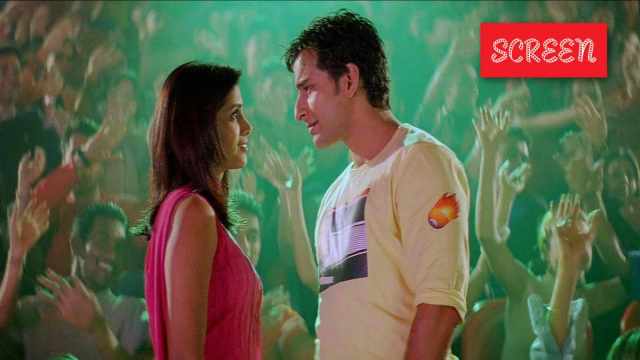
Roongta was still at school when one of the studio’s sets was converted into a nightclub to shoot the song Koi Kahe Kehta Rahe from Dil Chahta Hai (2001). “I remember interacting with Aamir Khan, Saif Ali Khan and Akshaye Khanna. Little did I realize then that the song would become such a hit,” he says.
Incidentally, ad world figures, including Piyush Pandey and Prasoon Joshi, also spent time at the studio, he shares.
Reimagining the empire
Contrary to claims that the studio’s closure was hastened by a slump, Roongta says that its last few years in Mahalaxmi—barring the brief COVID lull—were buzzing and alive. The co-working space had breathed new life into it. “We were also opening up the place for concerts and launches.” The shift was a response to the changing nature of the work.
“We’ve always been a service-led business, whether it was renting out our studio floors or providing post-production, virtual production, motion capture and visual effects services. But when we moved out, we decided that it was time to transition into a full-fledged creative business,” he says, adding that he is now looking at developing stories for theatrical-first filmmaking.
“Today, people are seeking out more organic stories that are deeply rooted in their lived experiences. This has been made possible because of the cinema that they are being exposed to across Indian languages.” He has already set up a new team of storytellers.
This decision might seem surprising, considering the OTT boom and the influx of microdrama platforms. But Roongta says that “there has been a lot of advancement in technology, which is making the cinematic experience more immersive”. “So, I still feel there’s a huge opportunity there.”
The end goal, he says, is to create culturally relevant content originating from the length and breadth of the country, for global audiences. Roongta admits that it hasn’t been easy to sustain a legacy business like theirs. The business has had its highs and lows. Survival, he says, has required adapting to technology that now changes every quarter. “In fact, we’ve been using AI for the last 18 months.”
Apart from using AI for research and development and gathering data in real time, the studio has, in some cases, been using it to assist with storytelling at the scripting stage. “We are also training our visual effects and animation team to blend a bit of AI into their work,” he says.
In the past, the studio has been a passive film investor, with creative and production work being executed by external parties. But moving forward, Roongta says it will serve as a production house, “which means we will now be involved from concept to development to production, post production and final distribution”. “That was the one thing we hadn’t attempted as a studio.”
Before we end the interview, we visit his new office cabin, where a shelf is dedicated to scale models of different aircraft, all positioned as though about to take off. It’s exactly the mode Roongta believes the studio needs to be in.
Dil Chahta Hai has given me my identity-Sonali Kulkarni
9:35 AM

Shreya Varanasi (MUMBAI MIRROR; August 31, 2026)
For Sonali Kulkarni, Hyderabad has become more than the backdrop to her latest film. Nearly two years into her journey with The Paradise, the actor is learning Telugu, finding comfort in pappu and discovering a new sense of belonging in an industry that has welcomed her warmly. As she makes her Telugu debut in Srikanth Odela’s film alongside Nani, Sonali reflects on matching the intensity of the team, the enduring legacy of Dil Chahta Hai and the many characters she is still eager to inhabit.
The Paradise schedule has left Sonali little time to explore Hyderabad, but the experience has nevertheless given her a strong sense of belonging. “The amount of affection and warmth I keep getting from the Telugu industry — I am overwhelmed,” she says. “The little world I have experienced here feels like paradise, literally.”
Food, however, has offered its own introduction to the city. “I am dying to have some double ka meetha! Earlier, I kept calling it shahi tukda and people here just wouldn’t understand what I was talking about!” she laughs.
On set, it is the pappu that has become her comfort food. “I don’t eat much rice, but I’ve been allowing myself a little indulgence. Maybe twice a week, I’ll have some rice with pappu. It’s become my little comfort food during the shoot.”
‘The energy of the entire team pushed me to give my everything’
Sonali says she was surprised when she was approached for The Paradise, particularly because the team saw her beyond the image created by films such as Dil Chahta Hai, Taxi No. 9211: Nau Do Gyarah and Mission Kashmir.
“When I heard the story, I was all ears. The story has drama and emotions. It’s super special. I just wanted to be part of that story. The intensity Nani and Mohan Babu sir bring to a scene, the passion Raghav brings, and the innocence and beauty Kayadu brings — for me, it was absolutely demanding and challenging to match that energy everywhere,” she says.
‘Dil Chahta Hai has given me my identity’
Twenty-five years after Dil Chahta Hai, Sonali still finds the milestone difficult to process. Looking back, she remembers the film as “a huge gang of friends making something beautiful” rather than a project anyone expected to become a cultural touchstone. “Dil Chahta Hai has given me my identity. Back then, nobody knew that it was going to create such history or records,” she says.
Its influence, she adds, continues to travel across generations. “My daughter watched it last year. She loved it. She was just 12 years old when she watched it. I am so happy that she liked it,” she shares.
----------------------------------------------
There’s so much I want to explore as an actor. I feel like I’m entering a very exciting phase of my career. I would love to play an athlete on screen because sport has always been a very real part of my life
- Sonali Kulkarni
Today, I can demand the money I deserve-Sai Tamhankar
9:34 AM

Mihir Bhanage (BOMBAY TIMES; July 31, 2026)
Sai Tamhankar has voiced her opinions against pay disparity in the film industry in the past and continues to bat for fair pay on the basis of what an actor brings to the table, not depending on their gender. It’s taken her time to reach a position in which she can put her foot down on the fee she quotes for a project. And now, Sai wants to pave the way for others to do the same. In a chat with us, the Matka King and Tumbbadchi Manjula actress speaks about pay parity, need for unity in the Marathi industry and using her privilege to back projects with potential. Excerpts:
‘Changing things is in your hands’
The demand for pay parity has consistently highlighted the gender divide in the film industry. Male stars are often paid more than their female counterparts. While equal pay is an ongoing debate, Sai feels that one can definitely demand the fee they deserve.
“If you consistently deliver good work, no one can ignore you or the impact you bring in. I’m in a position today where I can demand the money I deserve. I know my worth and people have that assurance that I will give my 100% to a project – from filming to release and beyond,” she says, adding, “It took time to build this reputation but it’s absolutely doable.”
The same authority doesn’t extend to newer actors. Irrespective of how talented they are, there’s always that fear of losing out on work for many.
On that, Sai adds, “I’ve been through that and I understand how it feels. But I genuinely feel that the emphasis should be on the hope that this can happen. Yes, you have to build credibility. At the same time, you know what you’re worth. When I demand my worth today, it opens doors for others to do the same. This needs to be a habit. Makers shouldn’t raise their eyebrows if a deserving artiste quotes a fee that justifies their worth.”
Unity, consistency and seriousness: Sai’s keywords for sustained success in the Marathi industry
Sai is one of the actors who has successfully balanced work on Marathi and Hindi projects. Her recent Marathi films – Bol Bol Rani and Tumbbadchi Manjula – have been buzzing too. Despite many stating a lack of audience for Marathi films in the recent past, the actress has had a contrasting take, something that multiple Marathi films in the last year have proved to be right.
“If your content is damn good, the audience will show up,” she says. True as it may be, what will it take for this recent spate of good films and good response to turn into a sustained streak of even better films and response?
“I think it is commendable that we managed to bring the audience to cinemas. We should celebrate this because we deserve every bit of it. Plus, movies from new filmmakers are being appreciated, which is a very positive sign,” says Sai,” adding, “To sustain this success in the long run, we need unity in the industry and in the ecosystem. If we have that and take the business very seriously, there is no looking back. We shouldn’t lose sight of the bigger picture.”
‘Don’t think I’m mentally made for producer duties’
Sai was one of the executive producers of the acclaimed Marathi film Sabar Bonda. Ask her how important it is to lend one’s name to small or independent projects and she says, “Very!”
Elaborating further, the Agni actress adds, “If I can use my privilege and name to stand behind a deserving project and strong voice in whatever capacity, I am more than happy to do it. It is also a learning process for me.” But would she also turn producer eventually? “I’m not sure about that yet. I don’t think I am mentally prepared for the ‘chal theek hai, ho jayega’ moments that come very often with producer duties,” she shares.
A chick flick with fellow leading ladies? ‘Absolutely yes!
Sai and her contemporaries, including Priya Bapat, Amruta Khanvilkar and Sonalee Kulkarni, have been part of some notable projects in the recent past. While they may have worked in pairs of two in some projects, there hasn’t been a film that has brought all of them together. With a hope to remedy that, we suggest – a chick flick. Sai's response is enthusiastic.
“Yes, absolutely!” she says, adding, “We are all in a space where there’s no internal competition or trying to one up the other. And a chick flick all of us sounds fascinating. A travel film on the lines of Dil Chahta Hai would be perfect.” Producers and directors, hope you’re reading this.
------------------------------------------------
“Between a brilliant script with less money, and an average script with more money, I would choose the former. You should understand where to be stubborn about your fee and where to surrender creatively”
------------------------------------------------
“The fear of being typecast pushes me to do projects that aren’t similar to one another. The effort is to create a portfolio so diverse that no one comes back to you with the same type of role”
Universal Music India acquires a stake in Excel Entertainment; can corporate investments ever be married to creativity?
9:45 AM

Akshita Maheshwari (MID-DAY; January 25, 2026)
In December last year, when we first heard rumours of Netflix acquiring Warner Bros, the thinkpieces came thick and fast. People said this was the final nail in the coffin for theatrical films, the moment algorithms would officially replace auteurs, and boardrooms would decide not just what gets made, but what kind of stories are even worth telling. A streaming giant swallowing one of Hollywood’s oldest studios seemed to confirm everyone’s worst fears, that cinema would finally become content, IP would matter more than ideas, and risk, originality, and the mid-budget film would be the first casualties.
Closer at home, Universal Music India (UMI) just acquired a 30 per cent stake in Farhan Akhtar and Ritesh Sidhwani’s production house, Excel Entertainment. This comes after Saregama Music invested in Bhansali Productions in December last year, and vaccine billionaire Adar Poonawalla acquired a 50 per cent stake in Dharma Productions in 2024. When corporate deals that haven’t even gone through in the West cause such a stir, is there any panic of a corporate takeover of the movies at home?
Managing director at Mukta Arts production house, Rahul Puri, says, “Giants have always existed in the business. Mukta was one of the first companies that went public and raised money from the equity markets. Then you had PNC [Pritish Nandy Communications], Balaji [Telefilms], Tips [Industries] in those early days. Even when there was a corporate interest, companies — like the [Aditya] Birla Group with Applause — tended to build organically. They didn’t necessarily partner with anyone because they had enough capital to come in and attract talent.”
He adds, “Now the mindset has changed. Corporate houses have recognized the value that creators and production houses bring. They bring a network of talent and relationships, and our business is very much about those networks.”
The style of filmmaking too has changed today. Going to the cinema is a theatrical event, reserved only for big-ticket spectacles.
“Whether it’s action films with big sequences or films on a large canvas with international travel, budgets are much bigger,” says Puri, “There’s also the ambition to make Indian films competitive globally, so quality has to go up, which affects production costs. Corporate investment is a way to de-risk producers while also giving them capital to be able to make these large projects.”
Among the three deals mentioned, interestingly, two of them happen with music labels entering films. In Indian cinema, music and films have always shared a special relationship, in business and in bed. Even bad films could rely on a banger album to be able to succeed. Before phones and social media, music was the first taste of a film, and often the biggest factor that invites the audience in.
“Unfortunately though in India, music is perceived as free. We never want to pay for music. Since the piracy boom, music has been seen as an add-on to everything else,” says Rajdeep Anand, who works in music licensing, “With UMI and Saregama getting into films, music will finally get its due.”
For Anand too, the deal is like music to his ears. “The older model was that someone would come up with a movie and a set of songs, and then labels would bid for it. But now, everything in Excel’s future that relates to music will go through UMI. Universal doesn’t have to worry about any other player coming in. If I already know my slate for the next five to ten years — what’s coming on OTT, what’s coming in theatres — I can spend time developing new talent and strategically placing which singer gets attached to which project. It gives artistes a platform even before they start off,” he explains, “Look at something like Mismatched (2020-26), Kho Gaye Hum Kahan (2023), or Gehraiyaan (2022), or something as big as Dhurandhar (2025) — they could take much bigger bets with their music. Excel has always had a great ear for music, so I am hopeful that this collaboration will bring music to the forefront.”
Puri also adds, “It is also a play to give music labels a strong flow of content separate from their traditional business, which is essentially just music distribution. They’re taking advantage of a dynamic content monetization space.”
Filmmaker Arati Kadav, whom you may recognize from Mrs (2025), shares why she thinks corporates are investing in films. “First of all, there is always the charm of being associated with the film industry,” she says, “We hear of many films making Rs 100 or Rs 200 crore, but we confuse revenue for profit. Even if a film makes Rs 100 crore, the production cost has gone up so much that the profit we earn is very less.”
Puri argues that big-ticket films might actually help with cash flow. “If a film like Dhurandhar [Jio Studios] does really well, that money can flow into smaller films. Big stars can’t make infinite films, so the surplus has to go somewhere. Ideally, into more creative films.”
Kadav also agrees, “Corporates coming in might actually impart some autonomy to production houses. For example, Dharma [Productions] could make the beautiful film, Homebound (2025) because they had the backing of Adar Poonawalla.”
We ask, what if algorithms start to dictate storytelling? She says, “Unfortunately, the climate has already become like that. Algorithms are dictating the shape of our stories already. Actors are chosen by follower counts. The world has become like that, regardless of corporations. At least if a producer with a good sensibility gets corporate money and support, and if they have good convincing power, they might actually be able to break out of that.”
Although Puri, Kadav, and Anand make this sound like a sweet deal, there are still sceptics who worry that this might mean a death for their creative vision. Filmmaker Aditya Kripalani shares his concerns, “Within corporations, you have a whole board of people and their aim is to not lose their job. I’m not saying they are wrong. But for them, the peak point of their life is to keep that job at the platform,” he says, “If I’m at a platform, it’s easy for me to have a checklist: Did it go to Cannes? Does it have a star? What numbers has that star’s previous film done? Once I have that checklist, my head will not roll if I take the film. But if I say ‘I like the film’ and the film doesn’t work, my head will roll.”
Kripalani calls back to when Netflix co-CEO Ted Sandoros said that he thinks Sacred Games (2018-19) may not have been the best choice to open in the Indian market; he would have liked to go with something more “populist”. “Exactly, there you go,” says Kripalani, “For me, the 100 per cent corporatization is when a platform makes a film. Because then the creative individual — which is the director — has no power. They are hired hands, no matter how big that director is.”
Eros International, a music giant, produced Raanjhanaa (2013), while Aanand L Rai directed it. When the film was re-released, Eros could change the ending of the film with AI, without the director’s consent, completely changing the meaning of the film. Rai was then dragged in a copyright infringement lawsuit by Eros for making Tere Ishk Mein (2025) too similar to Raanjhanaa.
An important loss in the race to corporatization is the mid-budget film. “The '1-crore films, we used to call them,” says Kripalani. According to him, movies will now split into big-ticket spectacles or OTT releases. The traditional trajectory for a director to get a big-budget would be to start with AD-ing, get to mid-budget, and then big-budget event films. With corporatization, we may just be witnessing the death of a mid-budget hit.
“In the 1990s, you used to get 2 to 3 such films a year each from Ram Gopal Varma, from Dharma [Productions], from Yash Raj [Films]. Even Munna Bhai MBBS (2003), Rock On!! (2008), Dil Chahta Hai (2001) were all mid-budget films. A film made for a certain budget with a known face, these are gone,” he says, “In the last couple of years, you have seen Superboys Of Malegaon (2024), Laapataa Ladies (2024), and maybe one or two more — there’s a handful of this kind of film that I can name.”
“I think the people who are in the biggest problem are the mid-level people. New people — like a crazy YouTuber making great content — can still get picked up. And if you’re already an established [Martin] Scorsese or [Christopher] Nolan, you’re okay,” says Kripalani, “But the people who have made five to eight films and are in the middle of their career. There is no platform left for them.”
But what do we lose when we lose mid-budget films? “We lose stories with depth. They may not deal with dark subjects, but they touch you deeply — family dynamics, interpersonal relationships,” says Kripalani, “The indie space deals with the darker sides of society. Big films are just popcorn films, which is fine. Now you’ll get either mindless spectacle or very dark films. When was the last time you got something like Dil Chahta Hai? That middle space is disappearing.”
Naseeruddin Shah on Farhan Akhtar’s comment: "He is right, but..."
10:48 AM

Rishabh Suri (HINDUSTAN TIMES; November 11, 2025)
In an exclusive chat with us, actor Naseeruddin Shah has reacted to Farhan Akhtar calling his past comments “distasteful”, saying that his remarks about Farhan’s performance in Bhaag Milkha Bhaag were exaggerated by the media.
“He is right but I think my statement has been exaggerated a bit,” he tells us. When we ask which bits were exaggerated, the 75-year-old adds, “I don’t think you need to be a genius to figure that out! Read both statements.”
In 2013, Naseer had stirred controversy with his blunt take on Farhan’s performance in Bhaag Milkha Bhaag: “I don’t care about Farhan Akhtar and I don’t watch his films. I liked his first film Dil Chahta Hai (2001)... I’m not a great fan of his acting or his films. But I admire him.”
In another interview, he said, “Building up muscles and growing your hair is not working hard on your acting. At least he should have tried to look like Milkha.”
Farhan (51) had recently told India TV, “I’ve known him for so many years. We worked together in Zindagi Na Milegi Dobara (2011)... If you want me to improve in my work, there is a way of communicating... To go in the press and say this, I found that distasteful.”
Dil Chahta Hai was a trendsetter, not just in storytelling but also in terms of work ethics-Sonali Kulkarni
8:35 AM
Onkar Kulkarni (BOMBAY TIMES; February 28, 2025)
Sonali Kulkarni has worked across Marathi and Hindi film industries, and has now ventured into Tamil cinema. As films from the south continue to gain popularity, fuelled by the pan-India trend, she shares her thoughts on Marathi cinema and how different language films are coexisting in our country.
‘I believe there is already a lot of pressure on Indian cinema’
Sonali believes that one shouldn’t compare different language films, because what really matters to the audience is the story. “Let’s not rush to compare different languages. We should appreciate films as a whole. What truly matters is enjoying the story being told, rather than the language in which it’s told. Right now, I believe there is already a lot of pressure on Indian cinema across various languages, and I’m glad to see how they’re coexisting rather than competing,” says Sonali who's an author and recently released her book.
‘Marathi cinema has always stood out for its compelling stories’
Talking about Marathi cinema, the actress who featured in films like Deool and Gulabjaam, adds, “Marathi cinema has always stood out for its compelling stories on meaningful topics. It has consistently won national and international awards. We have incredible writers and actors in Marathi cinema, many of whom have contributed to Hindi films as well. I don’t feel burdened by comparisons; instead, I think we should celebrate the diverse and rich content coming from all languages. Ultimately, it’s the entertainment that should take centre stage, not any one language.”
‘I love it when people still greet me with the song Woh Ladki Hai Kahan’
She’s been around in the industry for over three decades, and even today, Sonali is recognized for her iconic song Woh Ladki Hai Kahan from Dil Chahta Hai.
“I have no issues with it,” she says, adding, “I love it when people still greet me with that song. It’s been more than 20 years since the film, but it doesn’t feel like that at all. It was one of the most amazing experiences of my life. The film was a trendsetter, not just in storytelling but also in terms of work ethics. We started on time, received scripts a day ahead, knew our scenes, and finished on schedule. There were no last-minute surprises.”
From choreographing Aamir Khan to Junaid, life has come full circle-Farah Khan
8:26 AM
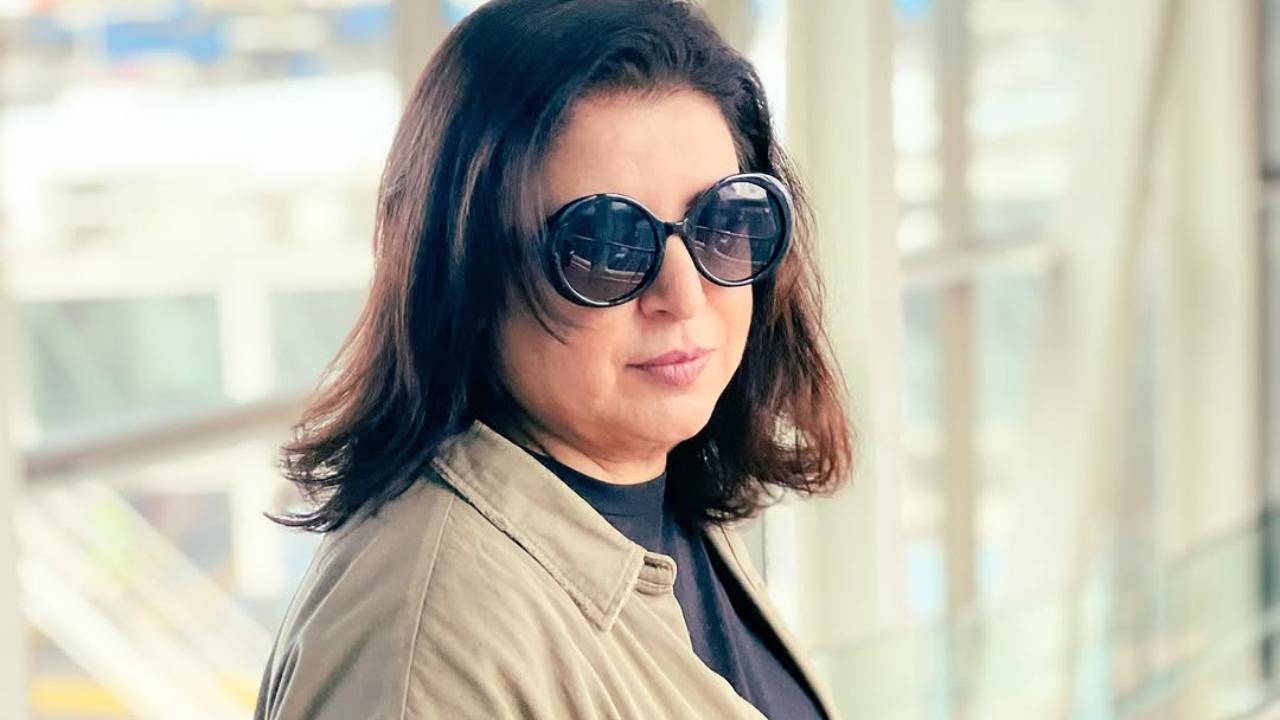
Tanvi Trivedi (BOMBAY TIMES; January 8, 2025)
Choreographer-filmmaker Farah Khan has not donned the director’s hat since the release of the Happy New Year in 2014. And she doesn’t seem to be in any hurry to plan her next project.
“I directed four films – Main Hoon Na (2004), Om Shanti Om (2007), Tees Maar Khan (2010) and Happy New Year (2014). Of these, except Tees Maar Khan, all did very well. I am proud of the fact that I got to direct the top stars of our country after working with them as a choreographer for years,” she says. Farah, who is gearing up to host the TV show Celebrity MasterChef, talks to us about choreographing for stars across generations, her Bollywood friendships and some disasters in the kitchen. Excerpts:
‘From Aamir to Junaid and Sridevi to Khushi, it is surreal how I have choreographed two generations’
Farah, who had choreographed for actors like Aamir and Sridevi, says that now she is excited to be working with their children, Junaid and Khushi. She says, “Life has come full circle. I started my career with the song Pehla Nasha (Jo Jeeta Wohi Sikandar) with Aamir Khan. I remember him grilling me on the sets, and cut to now, I choreographed Junaid Khan for an upcoming film. Years ago, when I choreographed Sridevi, she was a big star and now it is a surreal experience to direct Khushi. I was a newbie when I worked with their parents and a veteran when I am directing the kids.”
Ask her whether she plans to direct anytime soon, and she says, “After Happy New Year, I took a break because there was nothing exciting coming my way. So, I got busy doing other things, which included looking after my kids, going on holidays with them and enjoying life. I want to direct a film again, but it will happen when I have the right script and when it is destined.”
‘I became friends with SRK even before Kabhi Haan Kabhi Naa released’
Farah says that she is lucky to have found long-lasting friendships in B-Town, and there have also been some bonds that go back to a time before her friends became stars. She shares, “I became friends with Shah Rukh Khan even before Kabhi Haan Kabhi Naa and Deewana released. We share the same level of friendship even now. If it was hard working with him then, it is harder now. Every time we work on a song, the pressure doubles because we have created such iconic songs together.”
‘I had embarrassed everyone on Dil Chahta Hai sets’
The filmmaker, who is all set for her cooking reality show, reveals that she has had her share of bad days in the kitchen.
Farah recounts, “We were shooting for Dil Chahta Hai in Australia, and I was cooking yakhni pulao in those small pots on the induction cooker, and my then-boyfriend called. I got busy talking to him, and the next thing I heard was fire alarms all over the building. The entire evening was spent with people making faces as everything smelt of burnt yakhni pulao on the premises. It was so embarrassing.”
I have a family connection with the Olympics-Shaan
8:03 AM
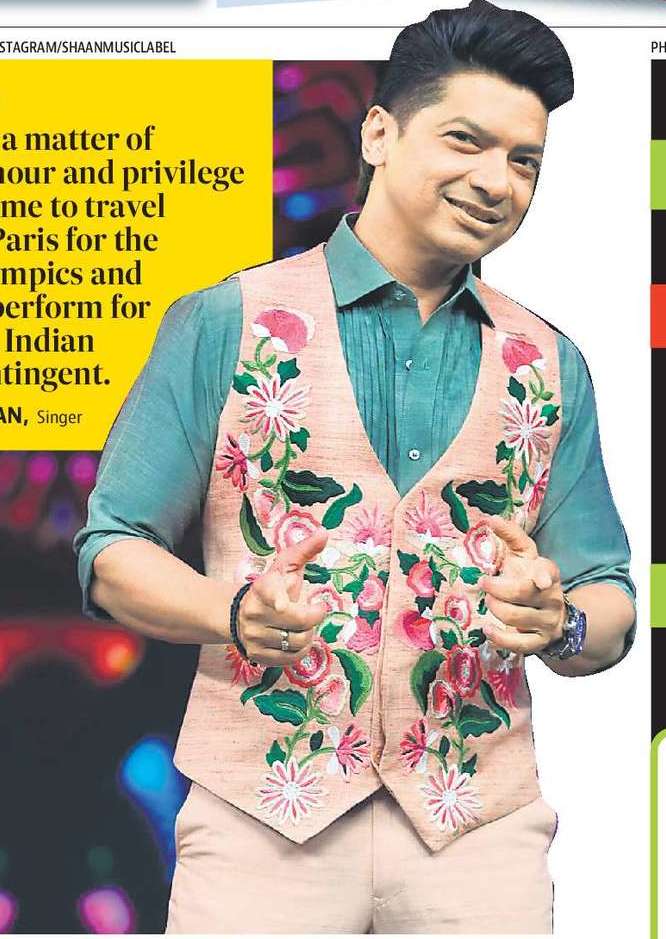
Akash Bhatnagar (HINDUSTAN TIMES; July 24, 2024)
Paris 2024 Olympics will commence on July 26 and singer Shaan will give a soulful start to it with a performance at the first-ever India House in Paris, France. “It’s a matter of honour and privilege for me to be there at the inauguration of the India House to perform for the Indian contingent and encourage all Indians cheering for the Indian athletes,” he exclaims.
Shaan reveals that he has a special connection with the Olympics. “My first cousins Rahul Banerjee and Dola Banerjee, who have represented India at the highest level in archery, will be there as coaches this time. So, I have a family connection with the Olympics,” he says, adding that sports and music go hand-in-hand: “A lot of my friends in sports tell me that music plays a huge role in getting them in the zone and helping them relax.”
India House at the Olympics has been conceptualized by businessperson Nita Ambani’s Reliance Foundation, and Shaan will deliver a 90-minute performance on day one.
“There’s a song that I recorded for Chandu Champion, but it wasn’t used in the film. I will be performing that for the first time, dedicating it to the Indian athletes. We will also perform a medley of songs related to sports and patriotism. Besides that, I will also sing songs such as Deewangi Deewangi (Om Shanti Om; 2007), Dus Bahane (Dus; 2005) and Koi Kahe Kehta Rahe (Dil Chahta Hai; 2001), among others.”
This is Shaan’s first time at the Olympics and he’s excited to be there. “For the first time, I will see some of the Olympic events live,” he ends.
20 Years of Lakshya: We wanted to show Hrithik Roshan dancing in the sunset, but could not due to the crowd-Vaibhavi Merchant
9:03 AM

Niharika Lal (BOMBAY TIMES; June 23, 2024)
Be it the authentic depiction of the uniforms, ranks, operation procedures or avoiding over-the-top dialogues, Lakshya remains that rare Bollywood war film that manages to escape stereotypes and create a subtle yet impactful war narrative. “Lakshya is not loud, it doesn’t have jingoism. All the details are accurate, be it the uniform or the operations procedure.It also explored the impact of war on a soldier and the people around him,” said Brigadier (retd) Gautam Ganguly in an earlier interview
As Lakshya completes 20 years, we reflect on this film on Kargil war and how it has stayed relevant over the years.
How Lakshya originated
Soon after Dil Chahta Hai, Farhan Akhtar was deliberating about what to do next and had a discussion with his father Javed Akhtar about some of his ideas. Javed shared that he was working on a story about a young boy who joins the army, not just professionally, but in an attempt to find his true calling and understand who he is through that process.
Farhan says, “This was just a story idea, but the core of it really spoke to me. In a large way, that’s what filmmaking did for me. Until I started making movies, I didn’t really know that it is what I wanted to do. I started it when I realized that my love for filmmaking is tremendous. So the germ of that idea was something that I could connect to. Of course, he sat down and wrote the screenplay, which is there for everyone to see. But it really started with a conversation.”
Filming Agar Main Kahoon in Delhi
“We were scouting for locations, and I had expressed how I’d like to do the shoot. After Humayun’s Tomb, we moved to Hauz Khas and then to Tughlaqabad Fort. Since these were tombs and forts, we could not play the song out loud. The actors had to lip-sync. In the morning, nobody knew we were shooting, but by evening, the crowd arrived, knowing that Hrithik and Preity Zinta were shooting. We wanted to take a shot of Hrithik dancing in the sunset, but it was not possible due to the crowd. To this day, people come to me and say, Oh! You did Agar Main Kahoon,” says Vaibhavi Merchant who choreographed the song.
“Films or any pieces of creative work are created at a particular time in a person’s life, within a specific societal context, and (according to) the cinematic environment of that period. To gauge anything by the standards of 20 years later is always, I think, a mistake. Having said that, I look back at it with the fondest memories. It was extremely challenging and difficult to put that film together. We had some kind of youthful exuberance inside us as filmmakers, and Hrithik and Preity as actors. None of us had done this kind of film before, and that energy translated on screen.” — Farhan Akhtar
DID YOU KNOW?
- Hrithik asked gentlemen cadets to teach him how to execute training shots and what to look out for.
- While the hairstylists were not on board with the Hrithik’s haircut initially, Farhan insisted that he wanted Hrithik’s hair cut same as the other cadets. Farhan wanted Hrithik to look like one of the cadets from the IMA.
- A major chunk of the film was shot in Ladakh at 13,000 feet altitude.
- All the actors attended a boot camp in Ladakh and the movie was filmed for five months in Ladakh.
----------------------------------
“When he (Farhan) came with the idea, I almost said that there is no need for me to hear the script. Javed saheb is writing it, and Farhan is directing it; that’s enough for me,” said Amitabh Bachchan, who played the role of Col Sunil Damle
----------------------------------
There was no other working title for the film. In the screenplay, there is a very important scene in which the character Karan Shergill tells Romilla that he has finally found what his goal is. The word for that was “lakshya” — Farhan Akhtar
----------------------------------
Farhan Akhtar shared, “There is a simple thing that anybody who is not from the Army doesn’t know soldiers never ever get down on their knees. The soldiers of the Indian Army do not kneel. Getting down on your knees is not considered right either lie down or stand. These kind of things were learnings for us. We also had soldiers from the Indian Army fighting alongside actors. They obviously were trained and knew what to do.”
----------------------------------
Talking about the film’s music, Farhan says, “Lakshya’s title song is a very difficult song to sing because it goes from low to high in short bursts. The only reason one doesn’t realize it is because Shankar Mahadevan is singing it”

Zoya Akhtar, Reema Kagti read first draft & said, ‘Throw it in the dustbin and start again’-Arjun Varain Singh
7:45 PM
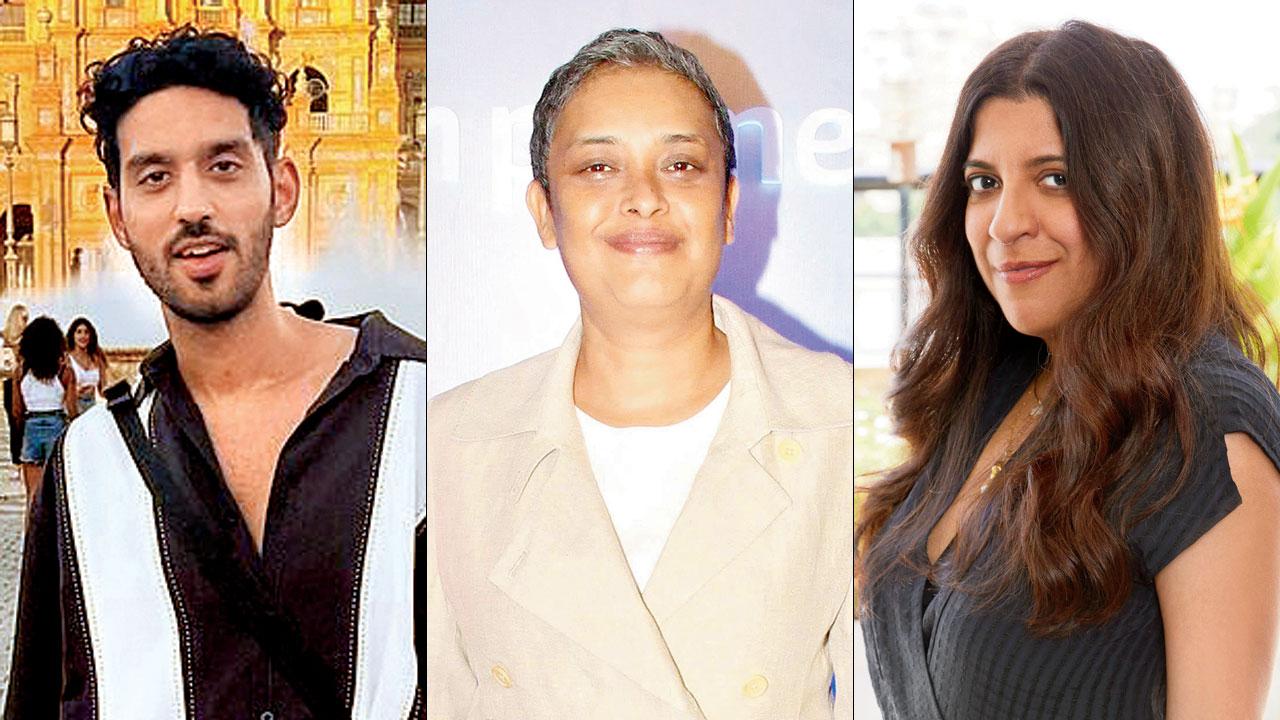
Kho Gaye Hum Kahan director recalls Zoya and Reema’s reaction to his first draft; expresses gratitude to them for trusting him to develop young adult drama
Priyanka Sharma (MID-DAY; January 6, 2024)
It all started with casual conversations. While assisting Zoya Akhtar on Gully Boy (2019) and Ghost Stories (2020), Arjun Varain Singh would chat with her about social media, and how it exasperates yet comforts the current generation.
Singh remembers, “At some point, Zoya said, ‘This is a movie.’” That marked the birth of Kho Gaye Hum Kahan, which is winning praise since its release last week.
Writing the Siddhant Chaturvedi, Ananya Panday and Adarsh Gourav-starrer took time. As the debutant director sat down to pen the story of three friends whose joys, deceptions and frustrations are all influenced by social media, Akhtar and Reema Kagti joined him as co-writers.
“When Zoya and Reema read the first draft, they said, ‘Throw it in the dustbin and start again.’ I’m blessed they came on board as it allowed the story an outsider’s lens and made it cross-generational. But many things remained true, like two boys and one girl, and the core idea of learning to be authentic to yourself,” Singh says.
The Netflix film is a rare young adult drama in Bollywood, which has ignored the genre in the last few years. “If we look at Dil Chahta Hai [2001] or Wake Up Sid [2009], it’s important that these stories are told by people at that age or who have just passed that age. It’s important to trust younger creators and give them the space to explore [such stories].”
Among the film’s many highlights is its depiction of an online troll. Singh shows the transformation of Gourav’s character from a middle-class boy seeking validation to an anonymous troll. The director says his intention was to capture how a person going about his life turns hateful. “We wanted to show that no one is entirely good or bad. Everything we do is a reaction to circumstances. Even in the case of trolls, their hate is coming from a place of hurt or loneliness.”
Another highlight is the seamless performance of Panday, who is often subjected to online hate. “She has been good in other films as well, but unfortunately has got a lot of hate. The work and energy she put into making this role her own is incredible. Despite all of the hate, people have come to love her. That tells you so much about the fighter she is.”
What do you think would have happened if Hunterrr would have made Rs. 100 crores?-Gulshan Devaiah
8:25 AM

Niharika Lal and Divya Kaushik (BOMBAY TIMES; October 5, 2023)
In the big screen vs OTT debate, Gulshan Devaiah isn’t taking sides. While he believes OTT offers more opportunities, there’s no substitute for the cinematic experience, he adds. In a freewheeling chat, the Dahaad actor talks about everything from the business of cinema to having civil discussions on social media. Excerpts:
‘Cinema and OTT should co-exist and flourish together’
I love cinema and it will make me very sad if the cinematic experience is lost and is not valued anymore. I am happy that I am doing interesting work and the web series format is very liberating for storytellers – the business model is also different as you don’t have the same pressure and it is more liberating to tell long-format stories – which means more interesting work, more money, opportunities. But if this is going to be at the cost of cinema, that will make me very sad.
I have a wider reach on OTT, I have better opportunities. But sometimes achieving difficult things can be extremely satisfying. If I am able to have a blockbuster when nobody expects it, what do you think is going to happen to my career? What do you think would have happened if Hunterrr would have made Rs. 100 crores? I know it’s a slim chance but there is nothing wrong in trying. I’m not losing anything. I have a career anyway.
‘We have lost that emotional touch with cinema’
Many people do not realise that Andaz Apna Apna did not make any money and they don’t care, it is a film that is fondly remembered. Dil Chahta Hai was not really a financially successful film, but people have strong memories attached to that film, its music. Agneepath was a massive flop, but nobody remembers it as a flop because people don’t care. They loved these films. We have lost that feeling – ‘ mazaa aaya yaar yeh dekh ke’. We have lost that touch with cinema, which is becoming more about numbers.
‘It’s always the role that matters when I pick a film’
If I have genuine interest in the story and in the part, then I will do the film. Like in Badhaai Do, it was a six-minute part, it was nine pages worth of scenes for me. The director, Harshavardhan Kulkarni, is a friend, I am his supporter, and the role made complete sense to me when I read it. It was a small part but it was well written, it impacted the story, and I got to romance Rajkummar Rao. It is always the role and the story that matters most when I am selecting a film.
‘I’ve done many small- budget films and will till do more of them’
I have primarily done mid and small-budget cinema, like CandyFlip and 8 A.M. Metro. Barring Goliyon Ki Rasleela Ram-Leela, most of my films were mid-budget. Small and mid-budget films are the ones that can take risks in terms of storytelling, they can try something new. I have been a part of many small-budget films because those scripts were interesting to me. They were more interesting than big-budget films or the roles that were being offered to me.
‘Cinema is all about numbers and opening day business now’
Small and mid-budget films face bigger challenges right now in terms of business. The theatrical business model is cut-throat. Some kind of reform is needed there. With very little guarantee of return on investment, it is a gamble. Sometimes you have a good film or product, but if you don’t market it well, it doesn’t work. And if you don’t get good show timings, people may like it but won’t be able to watch it. It is very pressurizing. It’s much more difficult now that everybody has started discussing figures. Even cinemagoers who really don’t understand anything about business, they are talking about opening kitne ki lagi thi, and then they decide whether that film is good or bad. Whether they want to watch a film or not is based on whether other people are watching it. That was never the case before.
‘Can’t compete with stardom, despite brilliant performances’
There are people like Rajkummar, Manoj ji, whom I respect and I have learnt a lot from them. They give me and everybody else hope. They are not proper movie stars, I could say they are stars – people love their characters. Even when they (the audience) talk to me, they refer to Mandar Ponkshe (from Hunterrr) or Devi Lal (from Dahaad) – all characters, right? On the other hand, I have seen grown men at an airport react to Rajinikanth – it’s like they have seen God. They fall, they start to shake and shiver. They love him and not his characters. People love Shah Rukh Khan and not his characters. They love Salman and not his characters. You can not compete with that, no matter how brilliant your performances are.
‘Most people don’t expect to make deep bonds at their workplace’
In 2020, when I tweeted that “Bollywood is not a family, it never was and never will be”, the point I was trying to make is that it’s a place of work. I think some people misinterpreted that as yahan pe koi dost nahi hai. I think it helps if you change your perspective. If you don’t have expectations of it being your family, then you are able to navigate your way around it in a much better way – you don’t expect people to be your friend or family because it is a place of work. You can have wonderful colleagues with whom you get along and develop friendships and deep bonds, but that’s not the expectation that most people have when they go to work. This whole romanticization of one big family – if we don’t do that, it will probably help us have a perspective that is a bit better for our mental health.
Arts is usually filled with subjective opinions, and the sooner you accept that it is subjective I think the better you will be able to deal with failures and disappointments. Back then (in 2020), I also saw that our angst is being harnessed by others for their personal benefit. I had an issue with it, I was like my angst is my angst, you are not benefitting from it!
I got a call that a popular news anchor wants you on the show, I was like I don’t want to be on television. I am what they called an outsider, who has an okay career, who has done alright for himself but is not a massive star. So they thought maybe I would have some grudge, maybe I do, but then I will deal with it.
‘I won’t say anything on social media that I wouldn’t in real life’
I refused to believe that social media is a place where you cannot have a civil conversation. I’m very fortunate that most people engage with me constructively. I get trolled sometimes, but it’s okay. I have a thick skin for such things. Not all of us will take our freedom of speech responsibly. Some of us will be irresponsible with it. I don’t want to say anything on social media that I wouldn’t say in real life. And I would not say anything to you all that I wouldn’t put on social media.
Dil Chahta Hai didn’t make much money, but people remember it as it had a cultural impact-Gulshan Devaiah
3:29 PM

Enjoying diverse roles in OTT shows, Guns & Gulaabs actor Gulshan says films now are judged by BO and not merit
Priyanka Sharma (MID-DAY; August 19, 2023)
Many men reside in Gulshan Devaiah—from the charming lover of Badhaai Do (2022) to the righteous cop of Dahaad. The Devaiah we meet this weekend is an outlandish assassin in Guns & Gulaabs. Point out the diversity in his work, and the actor says it’s a conscious effort.
“I am happy people are noticing the diversity. I am trying to [showcase] my versatility and create diversity because that’s who I am. I like unpredictability in my career, and that spills into my characters,” he begins.
The unpredictability of his character Atmaram drew him to Raj-DK’s crime comedy series, also starring Rajkummar Rao, Dulquer Salmaan and Adarsh Gourav.
The desire to be versatile implies that Devaiah is medium-agnostic. This, even as the success of a star is measured in terms of box office. The actor says he understands why the film industry attaches greater value to stars and commercial success. “To get people out of their houses, buy tickets and watch a film is hard. Unfortunately, a film’s success now is only measured by the box-office numbers. So, when you get [box-office] success, people attach more value to it.”
What, however, makes him sad is when the merit of a film is strictly judged by its commercial value. “Dil Chahta Hai didn’t make [much] money, but people remember it because it had a cultural impact. We don’t judge a film by how much we like it, anymore. We need to shift the way we look at films.”
I can’t believe it’s been a year since KK left us-Shaan
11:01 AM

On KK’s first death anniversary, Shaan gets emotional recounting his bond with the late singer
Debarati S Sen (BOMBAY TIMES; May 31, 2023)
A year ago, on this date, singer KK (Krishnakumar Kunnath), 53, died of a heart attack soon after a live performance in Kolkata. His friends, fans and members of the music industry were shocked and devastated by the singer’s sudden demise.
Remembering him on his death anniversary, Shaan, who was among KK’s close friends, said, “It’s been a year. I know time will move on, but KK will continue to mesmerize everyone. I always feel the soulfulness and connection in his renditions...even more now when he is not with us. I feel he’s telling us that he is here with us and in our hearts forever.”
Over the years, Shaan and KK have sung many hit songs together and also performed to packed auditoriums.
An emotional Shaan said, “When I sing our duets on stage now, I get very emotional. We had so many superhit songs like, It’s The Time To Disco, Koi Kahe Kehta Rahe, Dus Bahane Karke Le Gaye Dil and O Humdum Suniyo Re. I had never imagined that I would one day sing Yaaron Dosti as a tribute to KK.”
He added, “Today, I can picture his cherubic smile, easy unassuming demeanour and voice brimming with life. God bless Jyoti, Nakul and Tamara (KK’s wife, son and daughter). KK defined the term family man better than anyone I know.”
--------------------------------------
Soumya Vajpayee (HINDUSTAN TIMES; May 31, 2023)
Today (May 31) marks the first death anniversary of one of the most popular singers in India — Krishnakumar Kunnath aka KK. The Pal and Yaaron hitmaker suffered a heart attack last year during a concert in Kolkata (West Bengal).
In a chat with us, his close friend, singer Shaan, says, “KK and I were like family. When I heard the news about his death, I was in disbelief. I thought it was a prank. But I was shattered when I learnt it was true. He wouldn’t smoke or drink and struck a work-life balance. I can’t believe it’s been a year since he left us.”
Shaan and KK recorded over 25 songs together. Recalling those days, the 50-year-old adds, “We had our best time in the studio and during our live shows. KK was very disciplined and was always on time. We did some great songs together. In fact, some of them went on to become anthem hits such as Koi Kahe Kehta Rahe (Dil Chahta Hai; 2001), It’s The Time To Disco (Kal Ho Naa Ho; 2003) and Dus Bahaane (Dus; 2005).”
Unlike many others in the industry who like to give a glimpse of their lives on social media, KK was guarded about his personal life. “He wasn’t on WhatsApp or social media. He didn’t attend parties, as he felt parties mein koi serious conversations nahin hoti. He preferred meeting people one-on-one and having engaging chats,” says Shaan.
Ask if his sudden death acted as an eye-opener for him, and the Tanha Dil singer says, “My family insisted I get an MRI done. Thankfully, it was all fine. But KK’s death made me realise that life is so unpredictable. It’s important to live in the present.”
I have come a long way when it comes to speaking on stage-Farhan Akhtar
8:27 AM

For Farhan Akhtar, being comfortable on stage has not been easy; says acting helped him
Rishabh Suri (HINDUSTAN TIMES; January 24, 2023)
Farhan Akhtar’s natural demeanour on stage is something his fans love about him. The filmmaker-actor, who is also a musician and the frontman of the band Farhan Live that turned 10 recently, is full of energy during his live shows. In fact, his sense of humour while hosting award shows is also appreciated. But learning the art of being comfortable on stage hasn’t been easy for Akhtar.
“I was not comfortable speaking on stage. If I need to go on stage and perform, I know what I am supposed to do. So it is easy for me. If I have to converse with you, it’s easy because we’d be engaged talking. But if somebody says, ‘Go on stage and speak to the crowd for 25 minutes’, there’s a part of me that wonders, ‘Why are they interested in what I have to say? What am I going to do, give a PPT presentation?’ I think I have come a long way when it comes to speaking on stage,” says the 49-year-old.
But, given the nature of his profession, he needs to engage with audiences on a regular basis. Akhtar admits that acting helps him overcome nervousness. “When you play a character, you lose inhibitions because the character allows you that. It’s a strange psychological thing that happens. It’s easier when I am in character. If something makes you nervous, you should do it more so that you can ease it out,” says the Ms Marvel actor.
Akhtar feels hosting award shows has also helped him overcome stage fear. “It slowly, but surely helped me get over it. But I still remember the Lakshya (2004) and Dil Chahta Hai (DCH; 2001) days (he directed the films). DCH won a couple of awards and I didn’t attend the show because I was scared I might have to go on stage and say something,” he ends.
It is my dream to work with Zoya Akhtar-Sonali Kulkarni
8:49 AM

Arundhuti Banerjee (HINDUSTAN TIMES; January 14, 2023)
In a career spanning three decades, Sonali Kulkarni has worked on myriad scripts with some of the best in the business. However, the National Award-winning actor still has a bucket list to fulfil.
“It is my dream to work with Zoya Akhtar; she is a talented storyteller,” she tells us. “Zoya was my casting director when I worked in Dil Chahta Hai (2001). She was Farhan’s (Akhtar, director of the film) assistant director. The way she has grown as a professional, the kind of cinema she is making and the voice that she has created as a director, are all fascinating. Her thought process is the kind that I am attracted to,” adds Kulkarni, who was seen in the web show Dharavi Bank, co-starring Suniel Shetty and Vivek Oberoi.
Her recent project, she says, is a special one for many reasons. The actor, who plays the chief minister of Maharashtra, explains: “The world of Dharavi is shown as a male-dominated one, with not many female characters. It is basically a story of a dedicated police officer and a powerful man who is the messiah of Dharavi. But, it is my character that gives these two larger-than-life personalities a tough time.”
Being a Mumbaikar, Kulkarni was quite well-versed with the area, but during the shoot, had her fair share of realisations. “The show is written from a very real space. It is about how the people of Dharavi risk their lives every single day to keep Mumbai alive. The spirit of the people, their resilience and the hard work they do, even though they live in suffocating conditions, and how they carry a sense of dignity that they earn through their work — everything was fascinating,” she shares.
Black & white classics to the ’90s favourites: Nostalgia’s a big hit on OTT
8:37 AM

Several OTT platforms are adding cult classics and evergreen blockbusters to their libraries, as viewers can’t stop watching, and rewatching, them
Niharika Lal (BOMBAY TIMES; August 20, 2022)
From series such as Mad Men, Friends and The Office to rom-coms of the ’90s and 2000s – streaming platforms have been offering a treasure trove of nostalgia to viewers. Streaming platforms’ heads say that they have been continuously expanding their library of old shows and films, keeping in mind the high engagement for this category of content. While in pre-streaming years, reruns on TV were quite common, today streaming platforms are rushing to create a library because the classics have a dedicated fan following.
Mansi Shrivastav, Senior Vice President Content Acquisitions, Alliances & Distribution, MX Player says, “People prefer watching evergreen blockbuster movies that score high on recall and familiarity. Besides, cult classics serve as a breather and become an easy solution to ‘what to watch?’ On MX, library movies from the ’90s and 2000s from both Hollywood and Bollywood are among high-performing content categories.”
Bollywood titles such as Andaaz, Raja Hindustani, Soldier and Baazigar; and Hollywood movies such as Anaconda, Karate Kid, Stuart Little and Street Fighter are popular on the platform.
A Netflix spokesperson adds, “Fans in India love the ability to watch and rewatch their favourite films and shows. We have been building a selection of licensed films and series from across the world from evergreens such as Dil Chahta Hai to international hits like Spider-Man: No Way Home.”
Popular nostalgic content on the platform include Friends, The Twilight Saga and Zindagi Na Milegi Dobara.
Manish Kalra, Chief Business Officer, ZEE5 India, says that nostalgic content always had its audience, but its availability and accessibility were limited before streaming platforms. He adds that they have witnessed that the audience is interested in older content. “The growth of in-home entertainment technologies and the popularity of family watch-time have lured back audiences to binge-watch titles from ’90s and 2000s, which, therefore, generate a sizable amount of engagement,” he adds.
Hindi TV serials of ’90s and 2000s like Hum Paanch and Hip Hip Hurray are popular on the platform.
On MUBI, there has been engagement on films by iconic directors like Krzysztof Kielowski, Satyajit Ray and Agnes Varda. A spokesperson from the platform says, “The reason nostalgia brings audiences together is that there is a sense of comfort and familiarity and we have an extensive library of renowned classics and movies by legendary filmmakers.”
French films top the popularity list on the platform, followed by English and Hindi. The platform has classics like Awara, Mirch Masala, and Salaam Bombay!
The iconic Famous Studio turns 75
8:14 AM
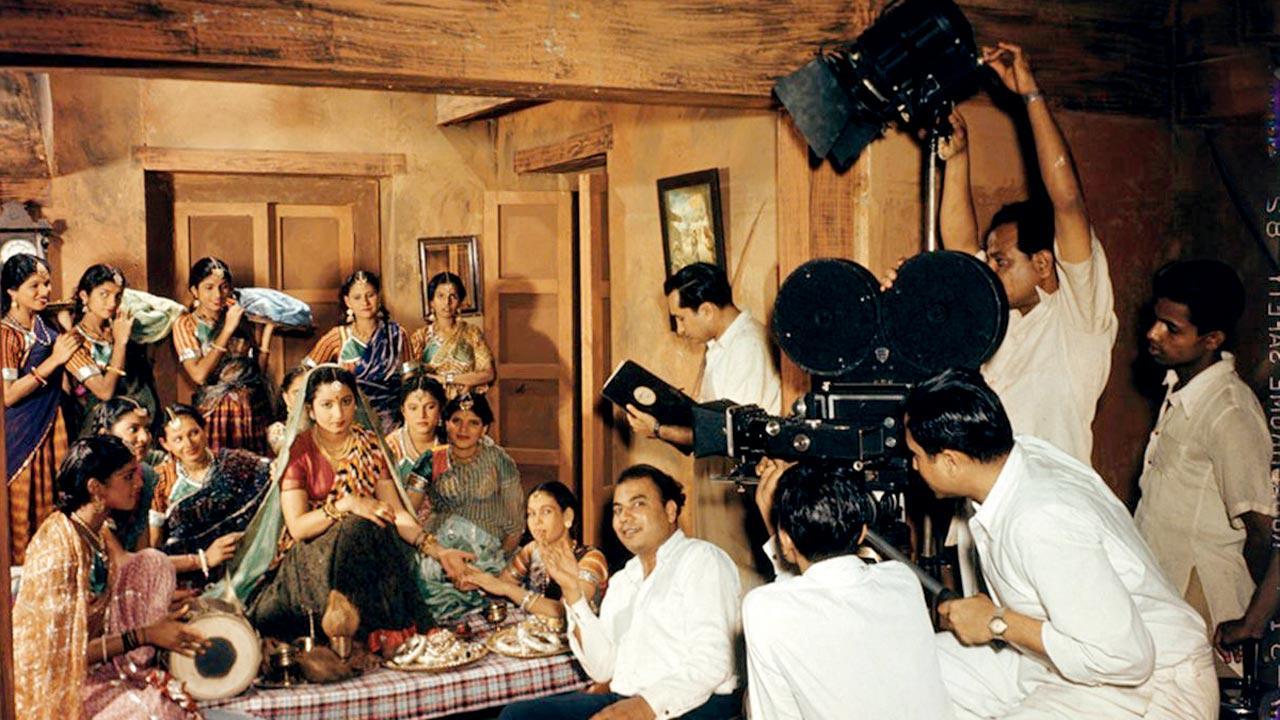
A colourised version of a photograph that shows a wedding scene being shot in Famous Studios in 1948
One of the city’s most iconic studios turns 75. Famous Studio’s Anant Roongta talks about what continues to keep them relevant
Aastha Atray Banan (MID-DAY; May 15, 2022)
It was in the early 1900s that Juharmal Roongta decided to leave Rajasthan and head to Mumbai to discover what business opportunities the city held for him. He worked in the jute and cotton industry, and even dabbled in stock trading before he came into possession of a piece of land in Mahalaxmi, where Famous Studios stands today. “A Muslim gentleman owed my great-great grandfather some money, and when he was unable to repay, he transferred this land’s ownership to him. We retained the name Famous, as the original property was called that,” says Anant Roongta, the proprietor of one of Mumbai’s most famous studios, which is celebrating its 75th anniversary year.
“Construction,” says, Anant, began in the 1940s, and “by June 1946, Asia’s first air-conditioned studio was open for business”. It was headed by J B Roongta, who was also the founding president of The Indian Motion Picture Producers’ Association, before his son Arun Roongta took over.
Much like Bandra’s Mehboob Studios, Famous become a city landmark. Spread across 1,10,000 sq ft, it grew as the go-to destination for film and advertising shoots, music recordings, events and concerts. It now also houses a co-working space. This writer has spent many an evening at Famous. Once, 12 years ago, we watched a raw MMA fight there, and then in 2019, caught international pop star Lauv in concert here.
It would seem that Famous has always been ahead of the curve. “In the ’50s and ’60s, we introduced new technology. We had the American Mitchell Cameras. Then we got into set design, collaborated with Bollywood cinematographer Fali Mistry and even entered production,” says Anant of the studio which has been the location for legendary movies such as Seeta Aur Geeta, and Mr India.
Add to that, in the 1980s, when Arun Roongta took over, it also received the first license for video services from the I&B Ministry. It then became the first studio in India to introduce video and audio production. “World-leading acoustics expert Andy Munroe, who has worked as an engineer at Shure where he designed systems for venues, and where he worked with Led Zeppelin and The Rolling Stones, also designed the recording studio,” says Anant.
Anant, who was a student at Campion High School, and later Cathedral and John Connon School, before heading to the UK to earn a degree in international business, says that he grew up in a home that knew everyone in the movie business, but weren’t star struck. “I used to walk in on my dad sitting around with celebrities, and he was never affected or fazed. He was also great friends with Mehboob Khan, the founder of Mehboob Studios.”
He did, however, take some time to find his own passion for the family business. And since 2018, he has resurrected the place by adding a co-working space, and making it wholly tech enabled. “Owing to its location [stone’s throw from Mahalaxmi station], we had many a developer reach out. It has a certain nostalgic value, and an even bigger brand value,” Anant feels. It could be this that led to State Tourism Minister Aaditya Thackeray inaugurating the revamped bus stop dedicated to Famous Studio under the tactical urbanism initiative.
Ask him what’s the defining moment for Famous, and Anant names shooting for the song, Koi Kahe from Dil Chahta Hai in 2001. “Creating that club ambience was something we did well. We have also restored the Sholay print. And thanks to the technology we have, which now includes a Dolby Atmos studio, we have been the centre of many big advertisements.”
But for the Roongtas, the goal is to bring together the best of old-world feel and new-age technology. If Anant has to list one factor that differentiates Famous from the studios that dot Mumbai, he says it is flexibility. “The whole aim was to retain the charm of the place, and keep it as modern as possible, offering all levels of comfort.”
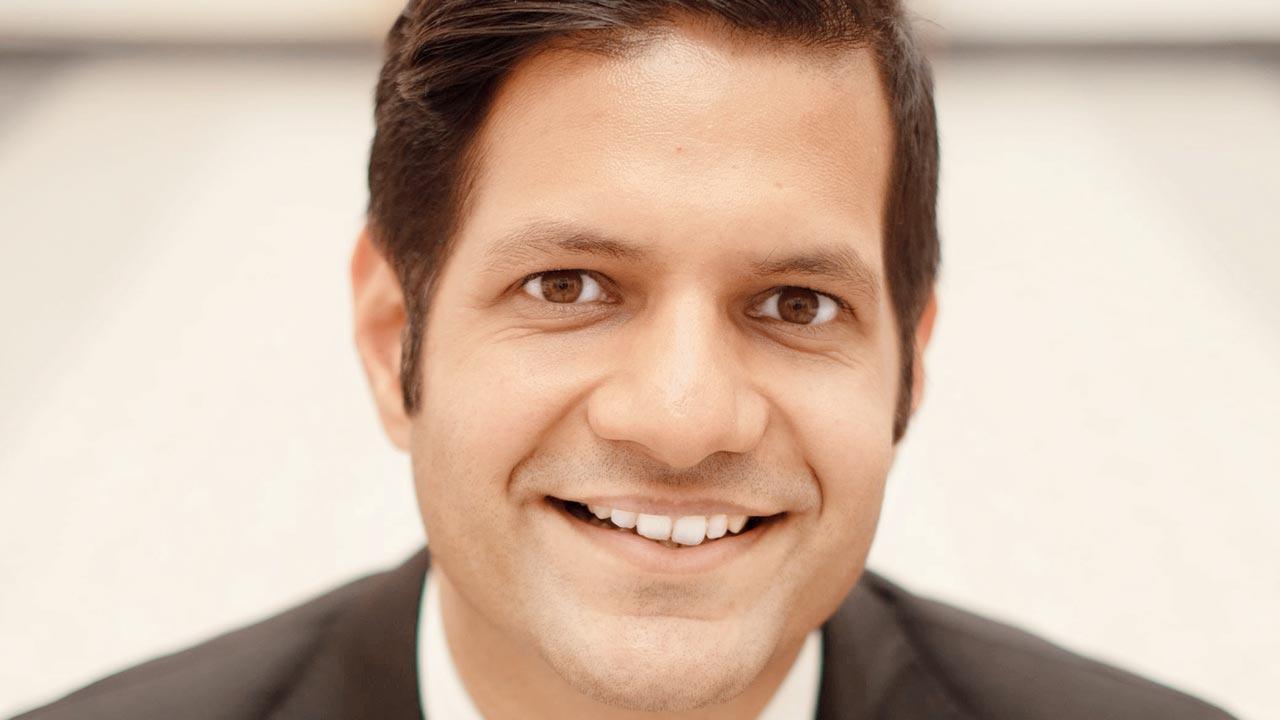
Anant Roongta
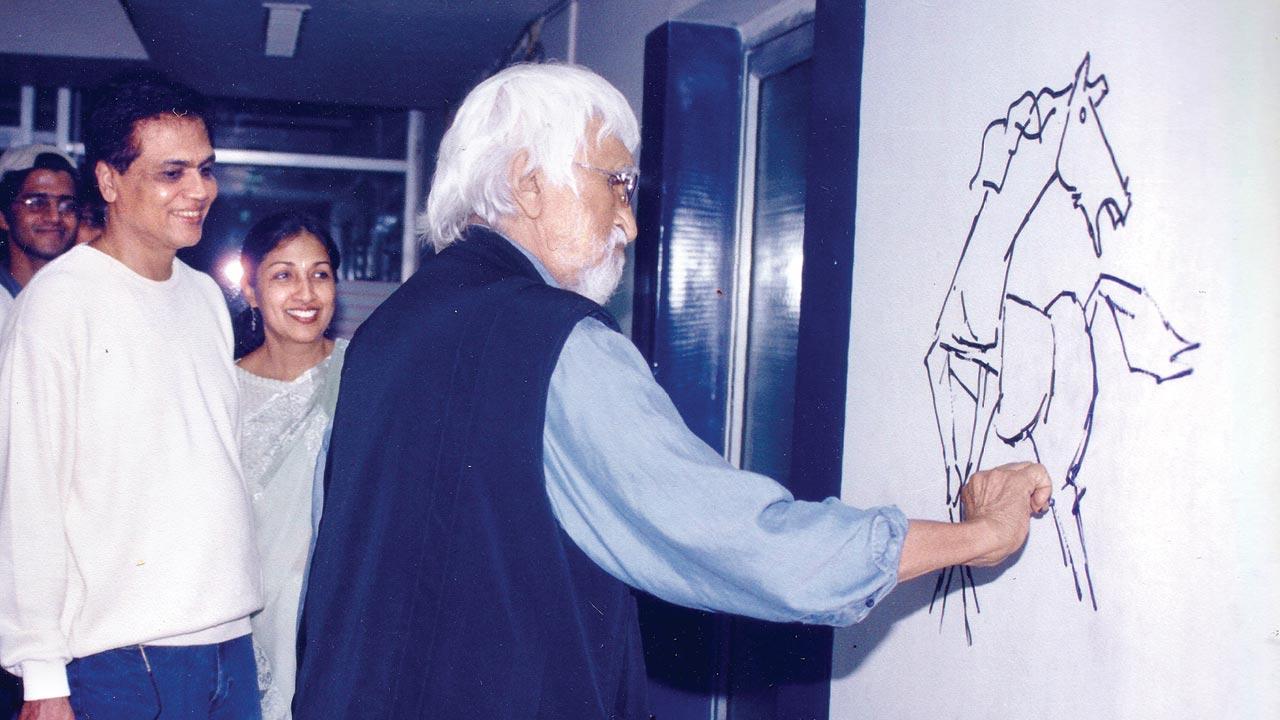
M F Husain sketches on the wall outside the animation studio in 2001, as Arun and Chandralekha Roongta watch
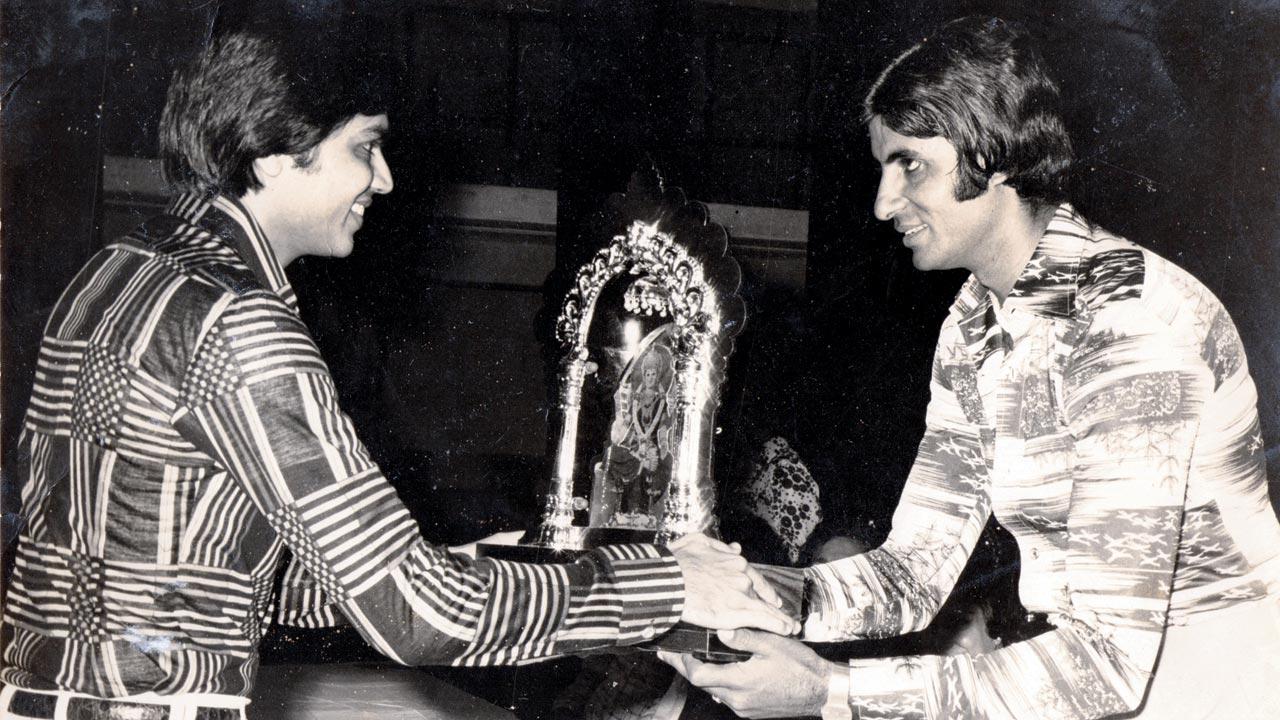
Amitabh Bachchan gives an award to Arun Roongta in the 1970s
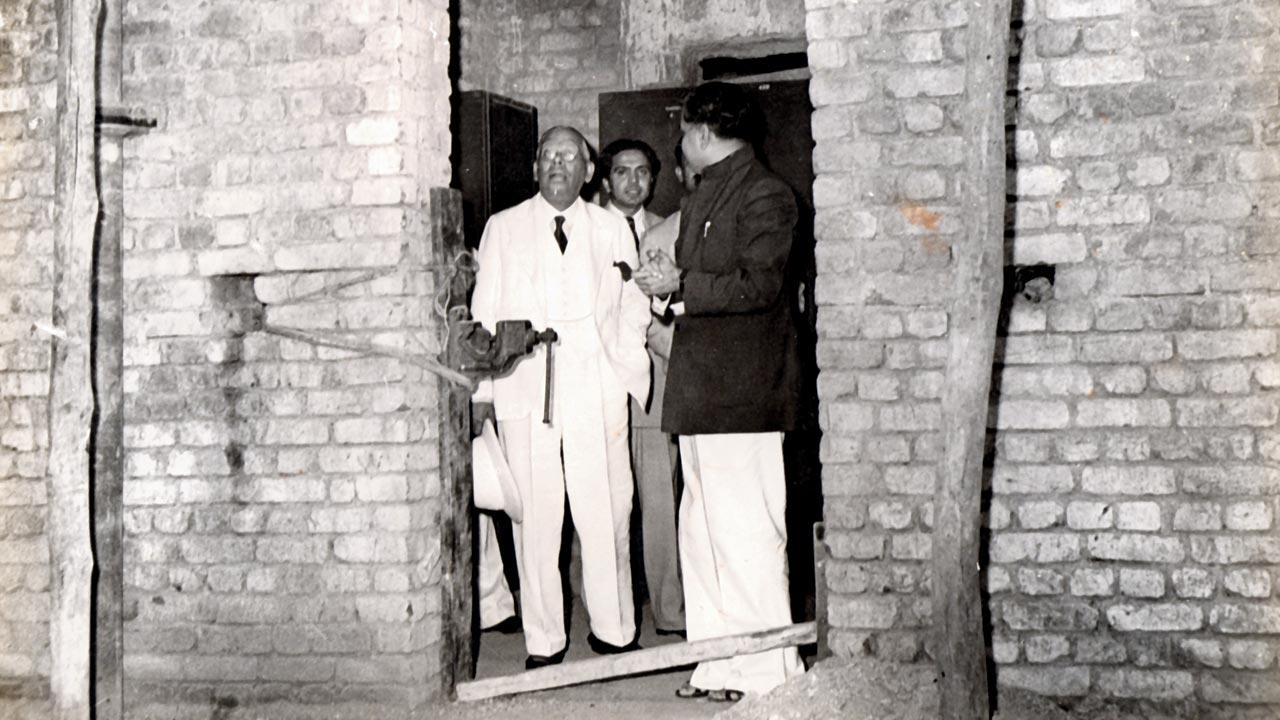
Mehboob Khan of Mehboob Studios visits the construction site in the 1940s
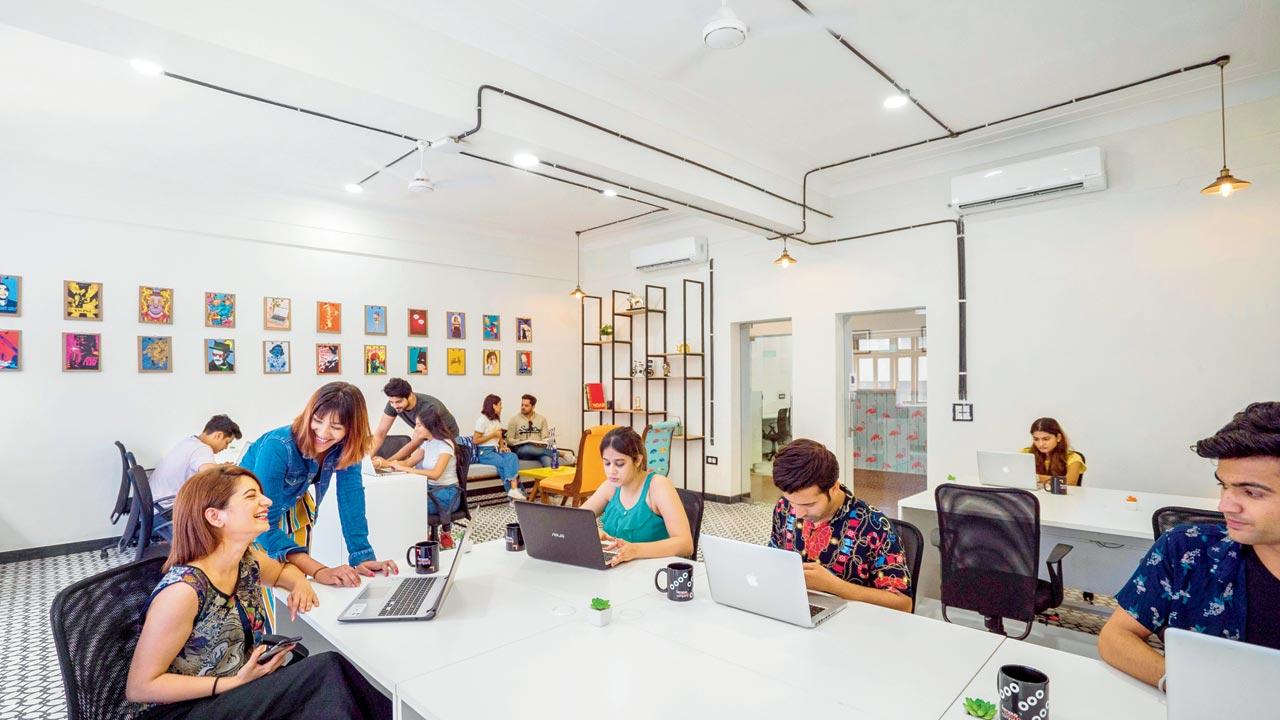
For the past three years, Famous Studios has had a co-working space
Even though I belonged to a filmi family, Dilip saab never backed me or supported me-Ayub Khan
8:08 AM

Tanvi Trivedi (BOMBAY TIMES; April 6, 2022)
Actor Ayub Khan acted in many films like Mashooq, Meri Aan, Smuggler in the 90s and then made an impact with films like Mrityudand and Dil Chahta Hai, but his movie career did not shape up the way he would have liked it to. Today, when he looks back, he feels he probably lacked the flamboyance, which most of the actors had during the 90s.
He says, “I got many opportunities to prove myself and I feel happy that the producers banked on me in all those Hindi films that I did. In fact, I feel sorry that those films didn’t work. I don’t have any other regrets because people never stopped giving me work. Even after my films didn’t do well, I had a Mrityudand or Dil Chahta Hai, where my presence was felt and I made an impact.”
Ayub adds, “During those days, I did not have the guts to experiment or sing and dance like other heroes and that’s what did not work for me in my career. I had a subdued style of acting, I felt that your performance should be subtle and I acted that way, but audiences enjoyed actors’ item songs and colourful costumes and the way they acted in films. I wasn’t cut out for it and so I moved to television. I also feel that the flavour was different at that point of time and I could not gauge the pulse of the audiences.”
Ayub comes from a filmi background —he is late Dilip Kumar’s nephew, and son of Nasir Khan and Begum Para. He says, “Today, youngsters talk about being in an industry where if you don’t have a godfather, you will not succeed. But I want to say that even though I belonged to a filmi family, Dilip saab never backed me or supported me. He used to say, ‘No one ever backed me or supported me, so you should also rise to your level with your own hard work.’ I would like to take credit for what I did supporting me.”
The actor was seen in the TV show Ranju Ki Betiyaan some time ago and is currently seen in Spy Bahu, in which he plays a businessman. He says, “I have done both positive and negative roles, and now I would love to do comedy. Though it is a woman-centric medium, I am glad that I have landed interesting, hard-hitting roles on television.”
I got slapped in the face with demonetization when Rock On 2 released-Farhan Akhtar
4:39 PM
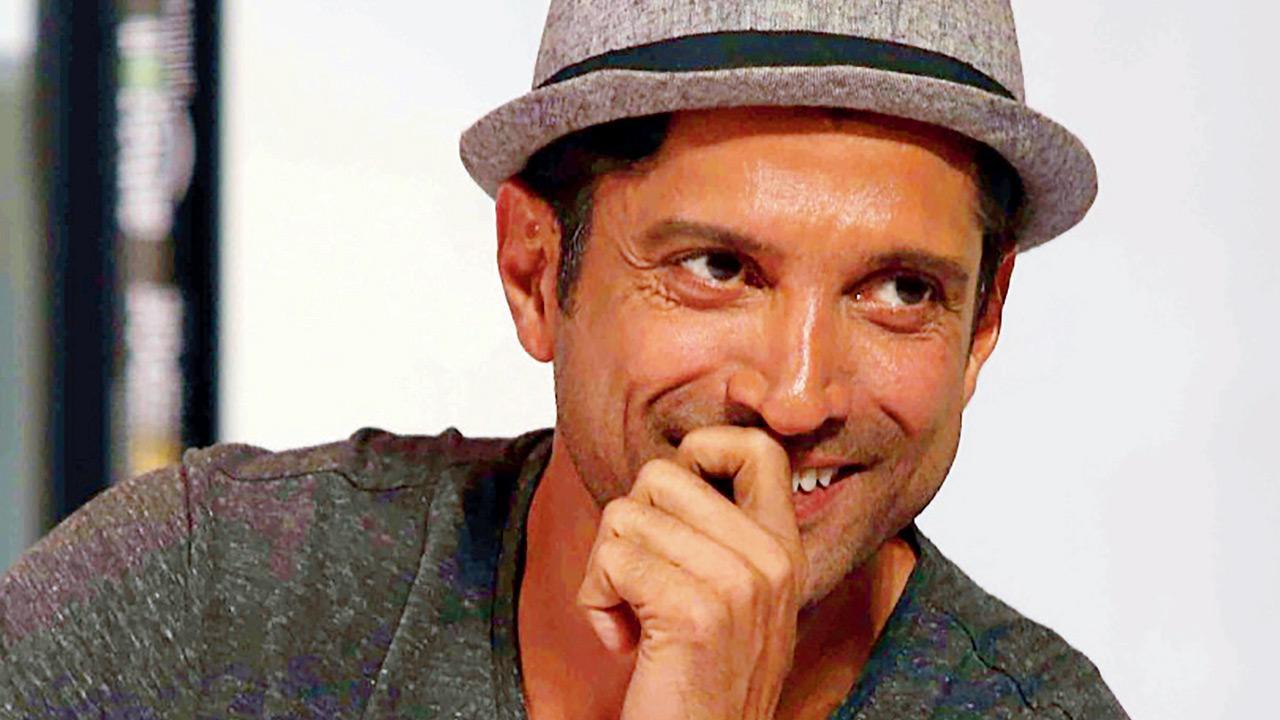
Takes a village to raise a star, Bollywood’s top polymath looks at key people through his 20-year journey
Mayank Shekhar (MID-DAY; September 4, 2021)
Back when Farhan Akhtar was a kid, a common visitor to his home used to be family friend, ace photographer, late Gautam Rajadhyaksha. Gautam was once assigned a photo-shoot for a pressure cooker ad, in which a child is supposed to look excitedly at the contents of a cooker — “Like, this is the best matar pulav I have eaten in my life; that expression!”
Gautam asked Farhan’s mother, Honey Irani (a child actor once herself), if her little boy could pose for the ad. She agreed, and he did. For the longest, Farhan’s face had remained associated with the pressure cooker. “I’m talking about the ’80s,” he recalls. This is, in fact, the first story he also recalled to his childhood friend and later his producer-partner, Ritesh Sidhwani, when he first learnt about Ritesh’s family business.
“You mean you shot an ad for Marlex?” Ritesh asked, naming the kitchen appliance company his father owned, and the son worked in as well. “Oh, no,” said Farhan: “It was for your biggest rival, Hawkins. We were rivals when we were kids. Now, the two opposing giants of the kitchen corporate-world are collaborating together!”
Gautam hired the “naughty boy [Farhan], for his mischievous streak.” Which Farhan offers another evidence of, when I ask him how he got a scar under his right eye — the permanent identification mark on his passport; also something you’ll notice, especially, when he plays rugged parts in films like Lucknow Central (2017) or Toofaan (2021).
Is there an interesting story to that injury? Not really, he basically tripped and fell on the side of a table, when he was two. In school though, when kids would ask him about it, he’d look them in the eye and go, “Vietnam [accent on nam]!” Imagining a story in his head similar to how Sylvester Stallone’s character has his face slashed across, in Rambo: First Blood Part II (1985), his favourite film then!
Ritesh and Farhan went to Juhu’s Maneckji Cooper Education Trust School together. Which is also where, he reveals, the name of the production house they jointly founded, Excel, gets its name from: “There was a tossup between two names. The other day we were trying our hardest but couldn’t remember what that other [possible] name was. Besides its obvious meaning, Excel comes from our school motto: There is no excellence without labour.”
The two Maneckji boys — who later went to Jai Hind College, while Farhan dropped out — came together only to make the film Dil Chahta Hai (DCH, 2001), where Farhan was explicitly the writer-director, and Ritesh the producer. It’s during the film that Ritesh sat Farhan down and reasoned, “This is something you want to keep doing — then it really is important that you keep ownership of your work.”
“Maybe it is a business lesson that he had learnt from what he was doing earlier in life. Things have to belong to you — when you work so hard to create them,” Farhan agreed. By then, he had already spent few years learning production in Adi Pocha’s ad film company Script Shop. He obviously came from a film family — both his parents, Honey and Javed Akhtar, having been accomplished screenwriters.
“The closest Ritesh came to film was putting a VHS tape into his VCR player,” Farhan laughs, of the time his business partner quit his family firm, placed both his trust and money into a movie and an industry he had such little idea about.
And yet, he says, it is actually Ritesh’s continuous commitment to produce more and more movies that inspires him: “In our industry, Ritesh is known as a hard negotiator. That is what I hear about him. And in business, being a hard negotiator is a good thing. That’s what you are supposed to be. People also respect him, because he is always there for them. Six years down the line [after DCH], Lakshya, Don and Honeymoon Travels Pvt Ltd — by 2006 in fact, producers would call him to find out how is it that we were doing certain things differently. Of course we were only doing [or putting systems in place] that is commonplace in, say, LA.”
Which is where Farhan, 47, is speaking to us over the screen from. It’s 8 am for him (8 pm for us). A morning person “for 15-16 years”, he’s usually up by 6 am, to hit the gym. The regimen works best for his health, “which is something you owe yourself, and your loved ones.”
Of course he wasn’t always this way: “I was also a teenager once — not wanting to wake up before 11-12.” Which is the phase from Farhan’s life that his father Javed, he says, had probably modeled Hrithik Roshan’s character Karan Shergill on, in Lakshya (2004), that Farhan directed.
After DCH, of course — a Hrithik-mania type directorial debut, no less, when viewed in hindsight. Each year, social media explodes on August 10 to celebrate DCH Day, replete with heartfelt tributes and personal anecdotes.
Which is quite common for a lot of movies — even random ones, whose non-landmark anniversaries get celebrated every other day. Including messages like, “I wish this movie many years, a long life, 50 years, golden anniversary…” As if films were humans who could otherwise pass on with a heart attack.
The year 2021, nonetheless, was special for DCH, since it completed 20 years of relentlessly growing in public imagination. Ever since, Farhan himself has expanded his CV to become among the most hyphenated contemporary entertainers around — music composer, rock-star, movie star, screenwriter, director, lyricist, talk-show host… His introduction has become a cliché.
The job description that doesn’t get enough attention still is of him as a consistent/prolific producer, for the longest — having established arguably the most successful creative-commercial collaborations in Bollywood, with Ritesh.
Together they’ve produced 36 films and series, according to IMDb — generating what should be a healthy balance sheet, given smart calls like an early foray into OTT, with franchise shows like Inside Edge, Mirzapur, Made in Heaven. Even DCH, you realise, for all its creative acclaim, was one of the early Hindi films to be insured, for instance — opening titles credit United India Assurance Co (Ajit Gupta).
“It just wasn’t possible or a film to qualify for insurance against calamities in India, until then — because of the way the film industry worked I guess,” Farhan says. DCH was a commercial success of course, but slightly eclipsed in the box office that year, because “on June 15, came Lagaan and Gadar. Gadar at that point had become the biggest hit that India had ever seen. Lagaan captured the nation’s imagination in a way that money can’t quantify.”
Everything about DCH, though, has become part of popular folklore since. Starting with the back shot of the three lead actors — Aamir Khan, Saif Ali Khan, Akshaye Khanna — on Chapora Fort in Goa, that is now called the Dil Chahta Hai Fort! Farhan had obviously been to the fort on his trips to Goa, “Just never had the kind of deep thought Akshaye’s character has, when they are staring out!”
Likewise the line, “Hum cake khane ke liye kahin bhi jaa sakte hain” — that’s morphed into a line with multiplex context. “The story behind it is my absolute love for cake,” Farhan says. “I was a member of this club at Hotel Sea Rock that no longer exists, and which used to have the amazing Black Forest and Chocolate Truffle I could not afford. If somebody ever said, let’s go somewhere, it is my treat, it was the happiest day of my life! Later in college, the cake could become a free meal, free drink… So I just threw in that line for Sameer [Saif’s character].”
The first actors Farhan approached for DCH were in fact Preity Zinta and Akshaye Khanna — both of whom had come to his home to audition for Kya Kehna (2000), written by his mom Honey, and directed by Kundan Shah.
“Akshaye was already there in the film. They were looking to cast a new girl, which is how Preity came in. She still hadn’t had her release of Dil Se, and all the other films that followed. I told her about what I was writing. She asked me to meet her when I was done. She became a massive star after, but kept her word.” Farhan had bonded with Akshaye on the sets of the latter’s acting debut, Pankuj Parasher’s Himalay Putra (1997), where Farhan worked as an assistant director.
The script Farhan would’ve probably shown Preity and Akshaye was then titled Hum Teen: “It sounded like an anti-allergy tablet to people!” He later called it Dil Chahta Hai, which in English would make sense as, “What your heart desires!” Except in Hindi, it sounds incomplete, or so his father Javed asked: “Dil kya chahta hai?” Farhan was stuck, and asked lyricist dad to bail him out. To explain, Javed came up with the song words, “Dil chahta hai… Kabhi na beetein chamkeele din… Hum na rahein kabhi yaaron ke bin…”
While DCH arguably altered/reinvented the grammar of popular, metropolitan Hindi cinema altogether, in the beginning of the naughties — it is in fact Farhan who wholly reinvented himself by the turn of the decade. Branching out into full-time acting instead — scripting a completely different direction for his career, away from film direction itself.
Was there a moment of epiphany? “I guess you see me as a full-time actor — because that is my only visible work out there. But I was very involved in producing a lot, writing dialogues for Game, Karthik Calling Karthik, Talaash, Dil Dhadakne Do, working with different directors, doing Rock On 2. There was a desire to creatively extend myself in different ways. I actually took a year and half away from acting itself—to write and record my album as [an independent] musician.” The album, Echoes, dropped in 2019.
Few artistes in Mumbai have freely allowed themselves as many avenues to max out their varied creative potential — whatever the eventual outcome, that effort itself could be a measure of personal success. Music, of course, happened naturally with Farhan’s acting debut on screen, Rock On (2008) — about a retired musician who goes back to stage. Farhan sang his songs, instead of simply lip-syncing.
The soundtrack was a smashing hit that’s stood the test of time: “I had always wanted to play the guitar, and been teaching myself from chord books and the Internet, age 16-17 onwards. But it was a private passion. In 2012, I tinkered with the idea of putting together a bunch of like-minded musicians to form a band [Farhan Live]. We’ve performed in over 100 cities since — colleges, festivals — twice to the US, Australia, Middle East...”
Farhan’s last release as a director was Don 2 (2011). Whatever your opinion on the film — there is surely a social media clamour for Part 3 — what’s undeniable is how it spawned a series of sequels in Bollywood. Just as his Don (2006) remake, before that, made old Bollywood remakes a thing to roll out every few months.
His most challenging move as an actor, until 2013, was to play the Olympian athlete in Bhaag Milkha Bhaag — a role he was even more determined to pull off convincingly, once he heard a journalist in Chandigarh ask him why a Punjabi wasn’t picked for the ‘Flying Sikh’ Milkha Singh’s part. After the film released Farhan went back to Chandigarh, especially reached out to the journalist — besides to gauge her response, to thank her for inadvertently “serving as great motivation”.
Bhaag Milkha Bhaag similarly unleashed a series of sports biopics — a gift that Bollywood can’t stop giving, as we speak. What does he make of the formula? “Well, I guess if a car sells with a certain kind of artificial intelligence system now, then all cars will go get artificial intelligence. Because that is what people like. If there is a new flavour in the chips packet, suddenly everybody will have that same flavour. That is how life is, and how the world functions I guess.”
That commercial benchmark for films, of course, is the number of views/hits online; or box-office figures in case of theatrical releases. But creative failure can also be defined as mismatch between intentions, and outcomes. Have there been such instances he could talk about, with regard to his own works, as an actor, or filmmaker.
“Of course that’s happened. A lot of things, at times, do not translate from script to screen as effectively as you want. I don’t want to take names of those movies though. Because there are other people, who have their effort, talent and reputation attached. And it is not fair for me to speak about a work, as if it only belongs to me, or my learning from it.”
For a more particular example, I bring up Rock On 2 (2016) — did that turn out the way he would’ve liked? “Well, the first Rock On obviously had a lot more people loving it, than not liking it. With Rock On 2, it was a bit more mixed, for sure. But we also got absolutely slapped in the face with demonetization happening two days before the film released. The carpet got pulled from under our feet. People didn’t have enough money to buy food; they were queuing up outside ATMs. There were news stories on TV about how demonetization had affected the film industry. It was sad for me to see posters of Rock On 2 on walls in these clips — not a crow in theatres. It was completely empty. Which is understandable.”
The great part of the original Rock On’s success, though, was it delivered for Farhan’s sister Zoya a saleable star right at home. Given that she’d been struggling to take off as a director for years, taking rounds of hero’s homes, unable to cast for the lead of Luck By Chance (2009) — a Bollywood movie, on Bollywood itself; a subject supposedly too close for superstars to sign up for.
Farhan suitably stepped in. Together as director-actor, they’ve collaborated on Zindagi Na Milegi Dobara (ZNMD, 2011) and Dil Dhadakne Do (DDD, 2015) since. Both those films co-produced by Farhan, where he has also written the dialogues. Giving one a sense that between the two, perhaps Farhan has the edge in dialogue writing. With Gully Boy behind her, Zoya can easily stake a claim for the most interesting voice in current Hindi mainstream.
Age wise, the siblings are a year apart. Zoya was also the casting director on DCH. How are they different as directors, I ask Farhan, who takes a second to think this through, and eventually boils it down to how they are different as personality types as well.
“She is more open about her feelings — more of a people’s person than I am — better at communicating her thoughts. Because she speaks with a lot of clarity. I tend to keep things more inside, which can be unnerving sometimes — an actor or technician could feel anxious, about why am I not saying what I feel? So, there is that.”
This seems like an accurate assessment, even when you compare Zoya to Farhan from an edition of this series Sit with Hitlist on YouTube. While Farhan does hold a more public job — facing the camera, surrounded by selfie-hunters, massive audiences before a concert stage — it is Zoya who comes across as more naturally the extrovert!
She develops screenplays with her long-time writing partner, Reema Kagti. But for the dialogue draft of DDD, that required a lot of back-and-forth with Zoya for the number of voices/characters involved, Farhan says, he’s worked on all scripts alone, by himself. Which would be true for song writing, an equally solitary job, as well.
Farhan was last seen on screen with a dramatic physical transformation, playing a boxer in the film Toofaan (2021). He enters the ring as director next — first time, behind the camera since a decade.
With Jee Le Zara, starring Priyanka Chopra Jonas, Alia Bhatt and Katrina Kaif, slated to open in 2022. Which is also the first time he’ll be co-writing a screenplay, with Reema and Zoya: “For me this is actually going to be a new experience. Working on screenplay, maybe not dialogue so much, but at least on screenplay, with two other writers, who are so hands-on.”
Where the siblings are likely to meet on the same page, I’m guessing, are inevitably some inside jokes. As they did with the popular refrain, “Bwoy”, in ZNMD. That caricature of a school teacher in the decade’s breeziest Bollywood film was based on their common PT instructor at Maneckji Cooper — one, Mr Dubey, who is no more.
Mr Dubey’s daughter, who saw the film, instantly got the reference and called up Farhan to convey how glad she felt that he and Zoya remembered her father fondly still: “All these things from those years leave such great impressions on our minds, isn’t it?”
Akhtar siblings grew up in the sea-facing Bandstand in Bandra, which is where I’m hosting this conversation from, I tell Farhan. It’s a few blocks away from his family home, that Farhan intends to shift back into, once he returns from LA. On the other end of the same street is Galaxy apartments, where Salman Khan grew up, and still lives. Both Salman and Farhan, respectively, being sons of Salim-Javed, the hyphenated, greatest blockbuster writers of ’70s Bollywood.
Javed had come to Bombay to become a film director. Salim Khan had acted in many films — realised he wasn’t getting too far, and so stepped back to pursue screenwriting instead. Both came full circle with their kids — Farhan turning director, and Salman a superstar.
“I think we are making it too melodramatic [with the observation],” Farhan cautions: “In the ’90s, my father was so busy writing songs, working with everyone — I think in every second film or third film, the songs were written by him. I thought this is what he always wanted to do. It was when we were doing Lakshya, and he was writing it, that at one point he spoke about having wanted to direct. And that this is going to be a very challenging film, etc. I was like, okay — I didn’t know you wanted to direct! That is when I found out — at 29!’
Salim-Javed’s sons could not have turned out more differently still. If anything Salman stands for larger than life, ganjee-boots mardaangi/masculinity—about never going back on a commitment. Let alone choice in dialogue, script or films, even in life outside cinema, Farhan actively runs an NGO tackling toxic masculinity itself.
What explains two lifelong neighbours, with fathers who went by a common name for years, turning out such polar opposites? Farhan says, “The interesting part of your question, really, is that our creative paths are different, but we do come from the same pool. Which is a pool that Salim uncle and my father kind of created. That is the world we grew up in, and those are the films we grew up on, and knew. But why that happens, or how that happens? I don’t know. I guess you are a product of your environment in some ways. He [Salman] is massively successful. I don’t think we should question his choices at all!” Mic drop.
Subscribe to:
Posts (Atom)