Are big-screen romances having a 'moment' in Hindi cinema?
8:33 AM
As re-releases of Hindi romantic hits draw audiences to theatres, mid-day asks whether this heralds a resurgence of big-screen love stories
Priyanka Sharma (MID-DAY; December 15, 2024)
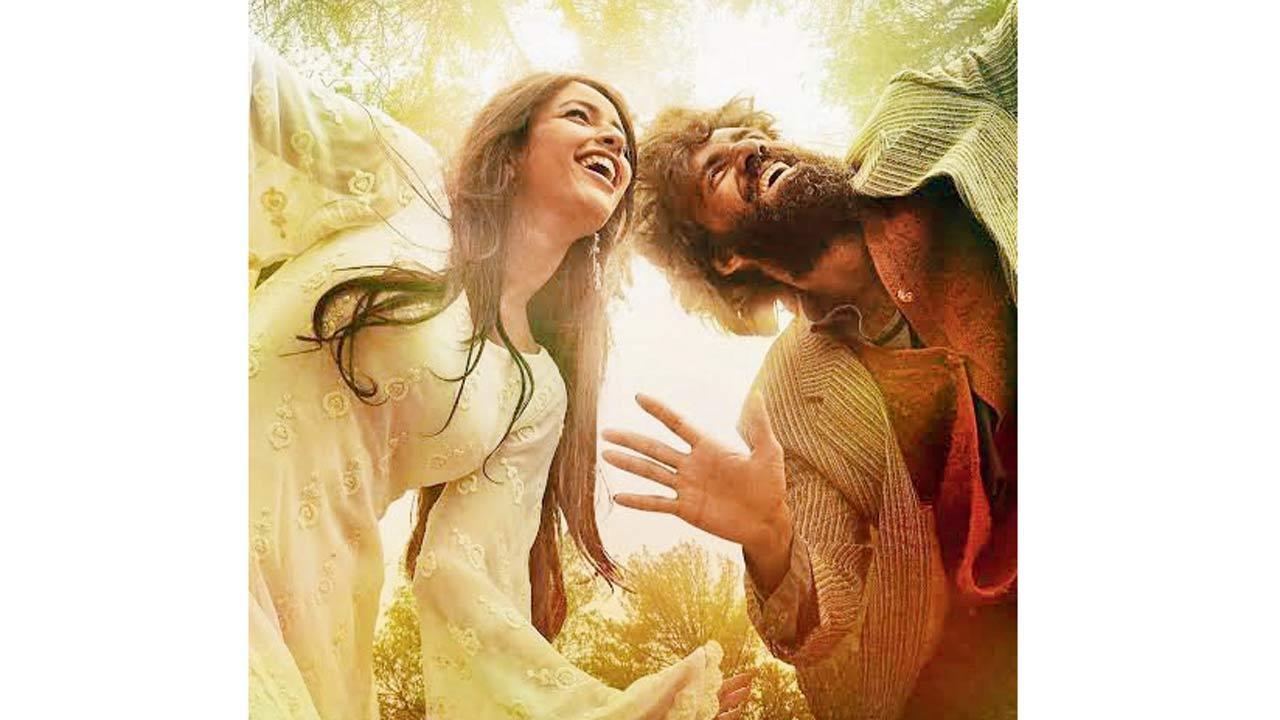
Every age writes its own love story, and every generation speaks a new love language. But looking back at 2024 reveals we are stuck in a time warp, at least when it comes to love on screen. “Most people who have written to me since the re-release of Laila Majnu are in the age bracket of 13 to 17 years,” says filmmaker Sajid Ali, whose 2018 romantic drama became a hit upon re-release this year.
“When we made this film seven years ago, we thought we were making it for people in their 30s to 50s who have some understanding of classical literature. But ultimately, teenagers have held this film closer to their hearts.”
Initially, the Avinash Tiwary-Triptii Dimri starrer earned around R3 crore at the box office. Upon its re-release, the collection is estimated to be over Rs. 10 crore. Laila Majnu is not alone in a replay of success. Ranbir Kapoor’s 2011 angsty romance, Rockstar, re-ran in theatres for over a month and amassed more than Rs. 5 crore, doing better business in its fifth week than it did in the fifth week after its original release. Social media feeds are crowded with essays, videos, and pictures of youth loving the return of love. They don’t make them like that anymore, is the overriding sentiment. So then, is love lost in a crowd of actioners, spectacles, sci-fi and horror comedies on screen?
Filmmaker Vivek Soni, who has two romantic films coming up— Ananya Panday-Lakshay starrer Chaand Mera Dil and Aap Jaisa Koi on Netflix with R Madhavan and Fatima Sana Shaikh—says the success of re-releases speaks more about people’s desire to relive experiences, not genres.
“People go for nostalgic value,” he says, “Even I wanted to watch Dil To Pagal Hai and Veer-Zaara. People now want to watch Shah Rukh Khan’s dialogues and scenes again on the big screen. But will they watch a new romantic comedy? The test will be how well a new romantic release does in theatres.”
A studio executive echoes Soni’s sentiment: “Who doesn’t want to see SRK romancing once again? Or Ranbir Kapoor? Either you want to recreate the experience, or you missed it the first time it released and want another go. That’s what happened with Laila Majnu. It grew on OTT, and people wanted to experience it on the big screen.”
Since the COVID-19-induced lockdown, industry hits have either been big-scale actioners or horror comedies. Successful romcoms such as Teri Baaton Mein Aisa Uljha Jiya, Zara Hatke Zara Bachke have been far and few in between. “The audience has shown more interest in event films than relationship dramas,” says Soni.
“Most people prefer watching relationship dramas or mid-scale films at home. So, makers are cautious about the canvas and scale of what they make for theatres. Similarly, stars also do event films for theatres—the whole chain has been affected.”
The demand for romcom is higher on OTT. “Most romances have moved to OTT,” a trade pundit says, “and streaming platforms like them because they are low-stakes stories. Unless you find a big idea and scale within a romance, like Rocky Aur Rani Kii Prem Kahaani or the upcoming Dhadak 2, an inter-caste love story.”
Bihar-based exhibitor Vishek Chauhan believes the audience has no bias towards a genre but invests in films that offer something new. “Right now, only action [films] work because that’s what people are making. Once there’s a good romantic film, people will come to theatres to watch it; they haven’t sworn the genre off. A theatre release must be about everyone and be understood by everyone—from Pune to Purnia. Yesteryear directors like Yash Chopra understood India; they were connected to the roots. They knew how a common man thinks. Take for instance Dilwale Dulhania Le Jayenge (DDLJ)—it united classes—it started in England and ended in Punjab. Today, that understanding is missing.”
Another creative sheds light on challenges in making a romance palatable to the masses. “Earlier, the demographics were still homogeneous,” he says. But today, the fragmentation of audiences across multiplexes and B and C centres is enormous. People’s experience of watching the same thing is varied. There’s no homogeneity. A film like Animal will work in mass centres, even though the urban class criticizes it. Similarly, Rocky Aur Rani… did good business in urban centres but not in B and C centres. It’s difficult to have a DDLJ moment today.”
For Tanuja Chandra, who last helmed the charming romantic comedy Qarib Qarib Singlle (2017), it’s just a matter of time before love overtakes violence and action. “There is confusion in the industry at present,” she says, “and many producers don’t know which road to take. The perception is that pulling audiences with noise and fireworks [action and violence] is easier. I don’t think that’s true. And violence under a sheen of glamour is something to be wary of in a world sinking into an abyss of the most horrific violence. The perception that softer stories are unlikely to draw people to theatres has been proven wrong repeatedly.”
There’s also a creative challenge to making a romantic film that screenwriter Ankur Pathak breaks down: “A filmmaker recently told me, ‘These days, a large part of love takes place virtually… it doesn’t inspire the desire to shoot or create drama.’ A love story needs relentless conflict to sustain itself, and because our love lives are largely dependent on communication through WhatsApp, DMs and tweets, there’s not much room to make it cinematically exciting.”
Another creative professional shares how a high concept is necessary for a young love story to fly today. “Earlier, you could separate lovers, leaving no means of communication. If lovers are separated today, the whole communication needs to go haywire. Straightforward romance is becoming difficult to crack without a core idea. Or it has to have mature characters who reflect those times—like Qarib Qarib Singlle or The Lunchbox. These aren’t reflective of today’s romance. So you have to either go back in time or have mature characters.”
Soni believes success will come in making romance personal while understanding audiences’ tastes. “Until five years ago,” he says, “a simple story of two people falling in love, lots of songs and a milieu worked. Today, people don’t have the patience to enjoy slow-burn stories or even songs. While travelling by train the other day, I saw a gentleman watching a film on his phone, and he was constantly skipping the establishment shots. This is what we are dealing with.”
He adds, “My assistants are 10 years younger than me; they also want to experience passionate, intense love. They look at that kind of love with a sense of aspiration. As long as you make it personal, a romance will become aspirational.”
Chandra sums it up by saying love will find its way to the screen if filmmakers don’t play it safe. “A disarmingly honest story is bound to be compelling. We just need to be rid of our fears as storytellers.”

Subscribe to:
Post Comments (Atom)
Post a Comment