Showing posts with label Shah Rukh Khan. Show all posts
Showing posts with label Shah Rukh Khan. Show all posts
Shah Rukh Khan resides in the temple in my heart-Abhay Verma
9:18 AM

Akash Bhatnagar (HINDUSTAN TIMES; September 1, 2026)
Currently riding high on the success of Operation Safed Sagar, actor Abhay Verma is looking to end his year on a professional high with the release of Shah Rukh Khan-starrer King, and he feels there couldn’t have been a bigger milestone. “I've got to work with Shah Rukh sir, Abhishek (Bachchan) sir, Rani (Mukerji) ma’am and all these personalities I have idolized. There's a temple in my heart and all these people reside in it,” he says.
Crediting Khan for being his source of inspiration, the actor says, “I saw dreams because of him. So, to come on the same screen with him was more than a dream. I didn't know it would come true so early, but just to be on the screen and make my work reach to Shah sir, it meant more than anything to me.”
Recalling a piece of advice that Shah Rukh Khan gave him, Abhay Verma shares, “Every word that comes off the legend's mouth just becomes legendary. I had asked him how did you choose your early films, to which he said, ‘Although the times were different, just work with people who love you and who you love’.”
The actor adds that it also complements his own philosophy as an actor. “I have taken my acting as democracy: to the people, by the people, for the people,” he says.
Reflecting on Khan’s approach on sets, Verma shares, “He just takes a chair, sits in the corner without disturbing anyone and sees how things are happening, how cinema is taking place. Even despite his injuries, or if he's feeling unwell, how he just gives everything, there's lots of learning from it.”
The actor also remembers a kind gesture by Bachchan during the shoot: “One day he was getting ready, and I told him that my family is in my van, so whenever he had two minutes, if he could let me know, I'll just bring them to him. He just stood up and walked to my van. He met my mom and said, ‘Hi, my name is Abhishek Bachchan and I'm working with your son in King’.”
Apart from King, Verma also has Laikey Laikaa and a film with Shanaya Kapoor in the pipeline, and with all his work, he hopes to break his ‘chocolate boy’ image.
“My biggest success would be that I break my image with every character that I play. I want my characters to live longer than me. I really don't want any image associated with me,” he ends.
Maharashtra FDA reopens surrogate advertising battle with Vimal Elaichi notices
11:17 PM

Fourteen years after Maharashtra’s gutkha and pan masala advertising crackdown, the FDA has issued show-cause notices to Shah Rukh Khan, Ajay Devgn and Tiger Shroff over a Vimal Elaichi advertisement, alleging it could amount to surrogate promotion of Vimal Pan Masala
Abhitash Singh (MID-DAY; August 17, 2026)
Fourteen years after Maharashtra's Food and Drug Administration (FDA) launched a crackdown on gutkha, pan masala and scented supari advertising, the battle over surrogate promotion has resurfaced, this time involving three Bollywood stars.
Former Maharashtra FDA Commissioner Mahesh Zagade, who led the 2012 crackdown, says the action forced gutkha and pan masala brands to pull advertisements from television and hoardings and dried up their sponsorship of Ganpati mandals in Mumbai and Pune.
Now, the FDA has issued show-cause notices to Shah Rukh Khan, Ajay Devgn and Tiger Shroff over their endorsement of Vimal Elaichi, alleging that the campaign is a surrogate front to promote Vimal Pan Masala.
The notices were delivered to Khan's Mannat residence in Bandra, Devgn's bungalow in Juhu and Shroff's production firm. The actors have been asked to place their explanations on record and pull down promotional material from their social media and digital channels within 15 days.
The FDA has invoked Sections 24 and 53 of the Food Safety and Standards (FSS) Act, 2006, along with provisions of the Consumer Protection Act. It has alleged that the use of identical brand identity, dialogues and presentation creates deceptive brand recall for a prohibited product.
‘We banned them in 2012’
Zagade said the issue was tackled during his tenure more than a decade ago. “When I banned gutkha, pan masala, and scented supari back in 2012, it was the first time such a blanket ban was imposed in Maharashtra. The moment the ban took effect, all promotional advertisements were immediately taken off air and stripped from hoardings.”
The surrogate trap
Adv Jamshed Mistry, Bombay High Court, said Section 5 of the Cigarettes and Other Tobacco Products Act (COTPA), 2003 prohibits direct and indirect advertising of tobacco products. “Surrogate advertising is strictly prohibited under the Cigarettes and Other Tobacco Products Act (COTPA), 2003. Section 5 prohibits direct and indirect advertising of tobacco products, and the statutory rules explicitly recognise the use of a tobacco product’s name or brand to promote other goods, services, or events as indirect advertising. If an ad for a product like elaichi is used as a vehicle to promote a banned brand, it attracts regulatory scrutiny.”
When the ads disappeared
Zagade said the crackdown also hit corporate sponsorship of Ganpati mandals. “Back then, Ganpati mandals in Mumbai and Pune were heavily sponsored and flooded with hoardings by gutkha and pan masala giants. That year, their funding dried up completely. Many mandals approached me seeking exemptions, but I refused point-blank. For the next two years during my tenure, not a single ad appeared. If these ads crept back in, subsequent commissioners clearly failed to pursue the enforcement stringently.”
He said the FDA had also acted against celebrities over misleading endorsements. “I had issued personal notices to top actors for misleading endorsements—including fake joint-pain oils—and registered over 450 cases against fictitious claims under food and drug laws. When one veteran actor was confronted, he immediately withdrew. Ground-level action has to be sustained and systemic, not just occasional media hype.”
The due diligence question
The case also raises questions about how much responsibility celebrity endorsers have to investigate the brands they promote, particularly where a brand is also associated with a restricted or prohibited product. Adv Behzd Irani and Adv Ruchika Sharma, Advocates, Bombay High Court, said the advertisement would have to be assessed as a whole.
“The FDA’s allegation essentially raises the question of whether the advertisement of an otherwise permissible product is being used to indirectly promote a prohibited product under the same brand umbrella,” they said.
“Legally, the mere use of a common brand name may not, by itself, establish surrogate advertising. The advertisement has to be considered in its entirety, including its presentation, packaging, brand recall, and the overall impression it creates upon the consumer. Importantly, a show-cause notice is an initiation of regulatory proceedings and should not be equated with a conclusive finding of contravention.”
They said celebrity endorsers should exercise greater due diligence when a brand has an established association with a restricted or prohibited product. “In such circumstances, due diligence should extend beyond verifying the legality of the product being advertised and should include an assessment of whether the campaign could reasonably be construed as indirect or surrogate promotion.”
The lawyers said the actors should cooperate with the FDA and submit relevant agreements, legal clearances and due-diligence material. They added that, unless removal has specifically been directed, a show-cause notice itself does not amount to a final finding of illegality, though continuing the campaign would require caution.

A copy of the show-cause notice issued by the Maharashtra FDA to the actors over the advertisement
I don’t want to live in my own ego, the ‘showman’ title is bakwaas-Subhash Ghai
3:47 PM

Neha Maheshwri (BOMBAY TIMES; August 22, 2026)
Noted filmmaker Subhash Ghai, whose filmography includes Karz (1980), Hero (1983), Ram Lakhan (1989), Khal Nayak (1993), Pardes (1996) and Taal (1999), continues to adapt to changing times. At 81, he is studying AI and connecting with Gen-Z through his film institute. Often described as Indian cinema’s biggest showman after the legendary Raj Kapoor, Ghai has little patience for the epithet.
He says, “The showman title is bakwaas. We never made a show of it anywhere... Because I don’t want to live in my own ego and self-boasting titles. I am a small filmmaker, a student of cinema who wants to learn every day. Today I am learning and connecting with Gen-Z through my school. I firmly believe that we can teach each other a few things.”
In an exclusive conversation with BT, Ghai discusses discipline, stardom, filmmaking and the changing dynamics of the Hindi film industry.
‘None of my films have gone over-budget’
Discipline has been central to his filmmaking. He says, “All our films, since Karz, have had their muhurat on October 24 and most have been released in August the next year. Why October 24? It’s my marriage anniversary and the founding anniversary of my production house and film institute. Till you don’t set a deadline, tab tak aap kaam nahi kar sakte. You might take years to find a good subject. But if I have to work on it till August 15, then I will have to find a good subject. That discipline is important. It is also important to make films within a set budget. None of our films have gone over-budget.”
He adds, “Today, every project is facing two problems: the star’s availability and access to funds and studios. That’s why we didn’t make any films because the whole wind is going against our will. So, it’s better to make small films instead of showing that I am making such a big film ki 1000 crore ki hai ya 500 crore ki hai.”
‘The character, not the market, decides whether it demands a star or a newcomer’
Ghai believes writers and directors are often overlooked once an actor becomes a star. He says, “An actor becomes a star when he delivers a memorable performance, the film succeeds and his character becomes iconic. But who creates that character? The writer. Who brings it to life? The director. Yet, neither receives the same recognition; the credit goes almost entirely to the actor. The problem is that when you work with a star, the script often begins to revolve around the star. With a newcomer, however, the actor is more likely to adapt to the script.”
Recalling Pardes, he says, “When I wanted to make Pardes, Shah Rukh Khan was the only established actor I had on board. Many stars wanted to work with me, but I was adamant about casting a newcomer opposite him. Agar kisi established actor ko lete toh shayad praise zyada milti. The character, not the market, should decide whether it needs a star or a newcomer.”
‘Individualistic cinema is for a niche market’
Ghai believes the disconnect between some contemporary films and audiences stems from filmmakers prioritising personal conviction and expression over the sensibilities of a wider audience.
He says, “Pehle bhi achhi filmein aur kharaab filmein banti thi, aur aaj bhi. The problem is that most of the younger generation today makes films based on their own convictions and ideas, which don’t necessarily match the audience. Our films matched because when we made them, we would identify who the front bencher was, who belonged to the middle class, upper middle class and balcony. Our films were made for all four sections. Ab aisa hai ki jo main kahu woh kayda... this is my expression and my voice, and that is individualistic cinema, which is essentially meant for a niche market. There are different names for it, like experimental, parallel, personal voice, issue-based or art cinema.”
‘Jo darr gaya woh marr gaya’
Ghai sees AI as another technological shift rather than a threat to cinema. He shares, “Jab black-and-white ka era tha tab sochte the ki colour aayega toh kya hoga, saari authenticity chali jaayegi. When cinemascope came into being, they said who will watch the movie on such a big scale. Toh technology ke against toh hamesha se rahe hain aur yeh aagey bhi chalta rahega. AI is artificial intelligence created by man. Real intelligence is you, your heart, mind, spirit and your thinking. Bas aapki story achhi honi chahiye, sense of framing and narration should be strong.”
Social media, however, gets a more sceptical assessment, particularly given the renewed popularity of his controversial Choli Ke Peeche Kya Hai song on reels. Ghai recalls Taal’s rocky opening: “When Taal released, it was criticized a lot in the first two days, only to pick up pace from the third day. Agar social media aaj ka hota toh Taal ki dhajjiyan uda deta. It would have been destroyed within two-three days. Courage is very important,” he says, ending on a defiant note: “Jo darr gaya woh marr gaya!”
Clean social image makes stars the new heroes of the ad world
3:47 PM

Advertisers focus on net positive sentiment around a celebrity; Shah Rukh Khan still tops brand charts, finds a study
Rajesh N Naidu (THE ECONOMIC TIMES; August 6, 2026)
Mumbai: Box office success is no longer the defining factor in film stars' endorsement deals, with advertisers increasingly prioritizing celebrities' meaningful, controversy-free social media presence as a key metric, according to a latest study.
For example, actor Shah Rukh Khan, who did not have a film release in the past three years, is still the country's biggest celebrity by brand valuation, shows the latest brand valuation study of India's top 25 celebrities by financial and risk advisory firm Kroll.
The actor endorsed 30-35 brands in 2025, compared with 25-30 the year before.
He has maintained his endorsement fee at Rs 10 crore per brand between 2024 and 2025, indicating the strength of his brand equity and digital presence.
“Today, box office success is not a key criterion in endorsement deals. Brands focus on the digital presence of stars. This has made social media engagement an important factor in selecting celebrities for endorsement deals," said Umakanta Panigrahi, managing director of Valuation Advisory Services at Kroll.
The rising share of digital endorsement deals has contributed to this trend.
According to Kroll, the share of digital endorsement deals in total endorsement deals has increased to 60-75% from 40-60% over the past two to three years.
Against this backdrop, advertisers are evaluating specific digital parameters of film stars, according to independent brand valuation experts. One of the most important metrics is the net positive sentiment surrounding a celebrity.
“Advertisers look beyond box office success, with digital influence becoming a key consideration. They closely track the net positive sentiment around a film star," said Ajimon Francis, managing director of brand valuation consultancy Brand Finance.
“Today, negative sentiment spreads rapidly online. As a result, stars with a positive or neutral public image continue to attract advertisers regardless of how many films they have released.”
A star's ability to create original content is another factor advertisers consider.
"Advertisers prefer celebrities who create original content, post regularly, and stand for meaningful causes instead of simply reposting others' content. These qualities build trust and strengthen engagement," Francis said.
Advertisers also place equal importance on a star's legacy, with endorsements extending beyond short-term or episodic popularity, according to brand merchandising experts.
"Long-term legacy matters a great deal. Advertisers prefer stars who stay away from controversy and have a strong future film pipeline. Ultimately, endorsements are driven by reputation, relevance and brand fit, not just box office numbers,” said Navin Shah, joint managing director of EMC Solutions Worldwide, a branded entertainment company.
Advertisers also consider the emotions a star evokes, according to influencer marketing companies.
"Advertisers select personalities with unmatched mass appeal who can connect with audiences across generations," said Anirudh Sridharan, cofounder of influencer marketing company HashFame. “Stars fulfil these criteria. They represent memories, emotions and nostalgia, reminding people of different phases of their lives. These qualities help them continue to attract endorsements even after their peak years.”
According to the study, Ranveer Singh was the second most valuable celebrity by brand valuation in 2025, followed by Alia Bhatt and Deepika Padukone. Among sportspersons, Virat Kohli and Sachin Tendulkar were the top two most valuable celebrities.
There are four clear trends emerged from the study.
“The first trend is legacy icons such as Shah Rukh Khan, Sachin Tendulkar and M S Dhoni continue to command a premium because they enjoy trust, familiarity and recognition across generations. Their appeal goes well beyond their current professional achievements. They are valuable brands even years after their peak. The second trend is female celebrities are growing much faster than their male counterparts in brand valuation. Nearly half of the top 25 most valuable celebrities are now women. Women stars are increasing both their endorsement portfolios and brand value,” said Umakanta Panigrahi, Managing Director, Valuation Advisory Services, Kroll.
“The third trend is about Southern stars becoming national brands. Celebrities such as Rashmika Mandanna and Samantha Ruth Prabhu have significantly improved their rankings because of their growing pan-India appeal. Finally, younger Bollywood stars are also rapidly building their endorsement businesses through strong engagement with Gen Z audiences. Ananya Panday and Janhvi Kapoor have recorded notable growth in brand value,” he added.
These trends reinforce the point that box office success alone does not determine a celebrity’s brand value. Long-term relevance, cross-generational appeal and meaningful engagement with fans particularly on digital platforms are becoming equally important drivers of commercial success.
Shah Rukh Khan's King eyes US and South America for final overseas shoot
4:44 PM
Mohar Basu (MID-DAY; July 21, 2026)
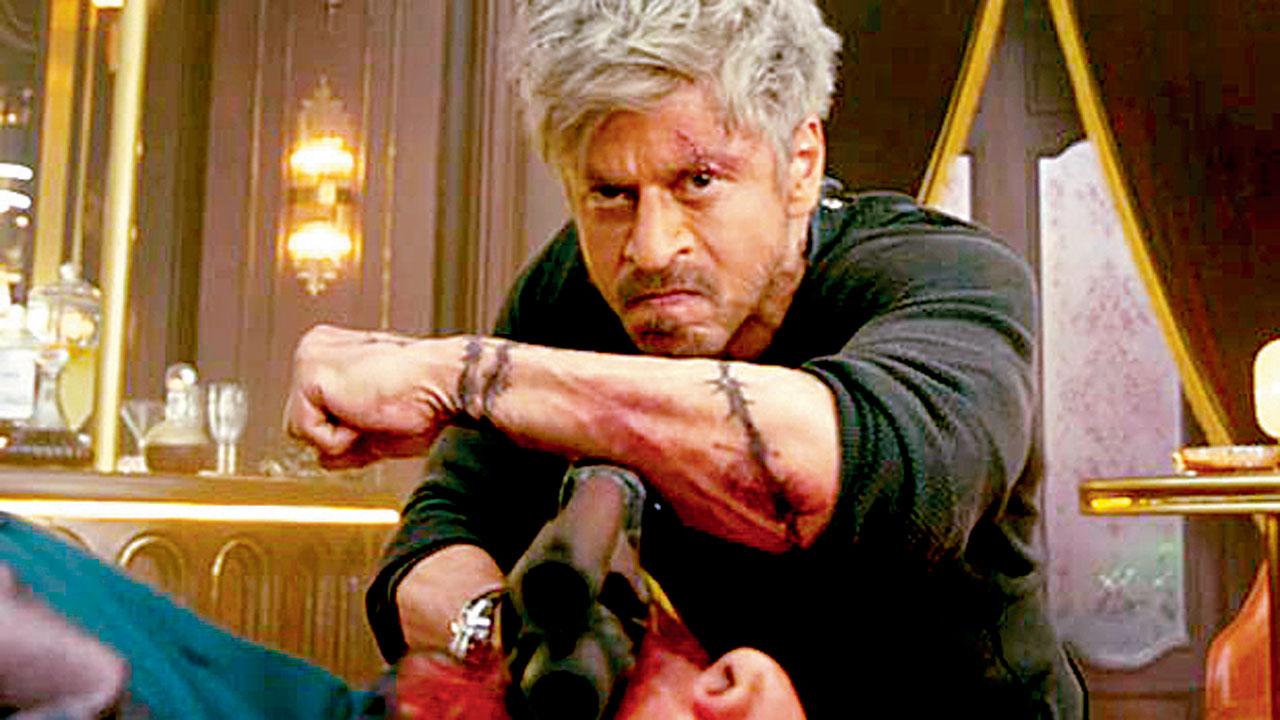
With five months to go for its release, is Shah Rukh Khan’s ‘King’ done with its globe-trotting shoots? Well, almost. Sources have told mid-day that discussions are underway for the action thriller’s last overseas shoot that will be held in August. The destination? Either the US or South America.
From what we’ve heard, a team is currently conducting a recce to finalise the locations for the last leg of director Siddharth Anand’s action extravaganza.
A source shared, “Only an international schedule is remaining. Nothing has been officially locked yet, but a team is currently in the US, scouting locations and working out the logistics. They will head to certain countries in South America before zeroing in on the locations. If all goes according to the plan, the unit will head there next month before calling it a wrap.”
The bulk of the film — which marks Suhana Khan’s first big-screen offering — is already complete. The proposed shoot is for a key sequence. The source added, “Shah Rukh and Siddharth wanted an untapped location for the sequence in question.”
I felt my film didn’t get the showcasing it should have-Saqib Saleem
9:02 AM

Mohar Basu (MID-DAY; July 2, 2026)
Making Baby Do Die Do was only half the battle for actor-turned-producer Saqib Saleem. Paving the thriller’s road to release, without a studio backing its campaign or distribution, has been an education for the new producer. “Producing a film and trying to bring it to theatres is a humbling experience. In today’s cluttered market, trying to find a place for a film that is not studio-led has been a completely different experience,” began Saleem.
Baby Do Die Do stars his sister and actor Huma Qureshi in the lead role, and marks the duo’s first co-production under their new banner Saleem Siblings. Their previous productions, including Double XL (2022), were studio-backed and taught Saleem the mechanics of filmmaking. What frustrated him was what happened after the movie was complete.
“When it came to putting it out for release, I felt my film was not treated properly or didn’t get the showcasing it should have. If I did it independently, I’d be able to pull in more muscle because when other people are involved, you don’t have full control over how your film is positioned,” he recalled.
That perhaps fuelled Saleem’s desire to build an independent creative ecosystem rather than waiting for opportunities to arrive.
He shared, “We want to create an ecosystem for interesting voices. We call ourselves a boutique production house because our bandwidth doesn’t allow us to do more than one film at a time. With Baby Do Die Do, we just wanted to make a good film. Whether this works or not, everything is on us. I have no one to blame. I have reached a point in my life where I want far more agency in the decisions I take and the creative choices I make.”
Shah Rukh Khan and Aishwarya Rai Bachchan’s popular song ‘Ishq Kameena’ from Shakti has been recreated for ‘Baby Do Die Do’.
Admitting that the idea originated from Tips chairman Kumar Taurani, Saleem shared, “The idea was to make more people aware of the film. When you recreate a classic, there will be people who don’t like it. But if the purpose is to make people aware that our film exists, it served that purpose.”
After rocking debut season, The Ba***ds Of Bollywood returns to the drawing board
9:16 AM

Mohar Basu (MID-DAY; June 14, 2026)
It may have dropped months ago, but the buzz around ‘The Ba***ds Of Bollywood’ is far from over. The irreverent industry satire is quietly gearing up for its next act. Sources tell mid-day that work on the Lakshya-led second season is already underway, with the writing process expected to continue till the end of the year.
The Netflix series, which marked Aryan Khan’s debut as a creator and director, is taking a measured approach to its sophomore outing. The makers are focusing on crafting a fresh narrative instead of simply repeating themselves to strike a chord with the audiences.
“Everyone is aware that the second season comes with greater expectations. The effort right now is to make sure the writing feels fresh and original, rather than simply repeating what worked the first time. Bilal Siddiqi, who was a key creative force behind the first season, is actively working on the scripts,” an insider reveals.
If development progresses as planned, the next season is expected to move into production next year. “If all goes as planned, the show will go on floors by the first quarter of 2027. Shoot-related decisions will take place after Shah Rukh Khan’s King releases in December,” confirms another source.
Other Rumours doing the rounds
- The second season may feature a plotline where Aasmaan (Lakshya) stars in a biopic about the underworld don, Gafoor.
- It could explore a narrative where the world discovers Aasmaan is Ajay Talwar’s (Bobby Deol) son, potentially making him a nepobaby.
- Netflix is reportedly trying to leverage its global network to lock in a massive Hollywood star or an acclaimed international director for a cameo.
AI-generated “mini version” of Shah Rukh Khan’s King using leaked clips and paparazzi footage goes viral
4:34 PM

Mohar Basu (MID-DAY; May 21, 2026)
What do established filmmakers and production houses fear the most? Financial losses? Bad publicity? Ballooning budgets? Not quite. A footage leak, perhaps. But what the makers of Shah Rukh Khan’s King certainly didn’t see coming was an Artificial Intelligence (AI)-generated mini version of their film going viral online, stitched together from leaked visuals, paparazzi clips, and stills, just days after footage from the climax shoot surfaced on the internet. Now that’s the kind of nightmare no one in the industry was prepared for.
The 15-minute fan-made video used AI tools to recreate transitions and claimed to offer audiences a “mini version” of director Siddharth Anand’s film before its release. According to insiders, both fans and the production team rapidly mass-reported the footage, leading to its removal from several platforms.
A source close to the production told mid-day, “The team was already upset after stills from the climax leaked. Before that, sequences from the Cape Town schedule went viral where Deepika and SRK shot a song. The line production team was extremely careful but when someone like SRK shoots in public, it’s impossible to trace the source of the leak. But the AI edit crossed a line because it attempted to recreate the narrative of the film.”
The insider added that security around the current schedule near Ghodbunder Road, on the outskirts of Mumbai, has now tightened significantly. “This set in Mumbai is a busy area, so removing phone access won’t help much. But movement in the action portions and crucial scenes has become extremely restricted.”
King is now nearing completion, with “nearly two months of shoot pending”. “King is in its final leg. A lot of patchwork, action inserts, and another schedule remains to be done, with VFX work going on simultaneously. The film is looking to wrap by July-end,” the source revealed.
Director Siddharth Anand’s appeal
“Please do not post or circulate any leaked multimedia from the sets of ‘King’. The team is working around the clock to ensure the best cinematic experience for everyone. Let us wait for the surprise on the big screen.”
Tiger Shroff told me it would be tough to play a superhero-Jackie Shroff
10:18 AM

Neha Maheshwri (BOMBAY TIMES; May 12, 2026)
Forty-three years is a long time to stay in the game. Long enough to not just watch empires rise and fall, but also for a young man from a Mumbai chawl to become one of Hindi cinema’s most handsome and enduring actors. Today, Jackie Shroff, who began his journey as a leading man with Hero (1983), is strapping on the costume of a superhero with Manish Saini’s The Great Grand Superhero – Aliens Ka Aagman.
Over the years, he has become synonymous with the ‘cool guy’ persona and remains no different today. Ask him about box office anxiety; he laughs it off. Ask him about the National Awards; he shrugs warmly. From the brooding, smouldering Hero of 1983 to becoming India’s first superhero grandpa in 2026, he carries the ease and satisfaction of a man who has made peace with every chapter of his story.
‘Mere haath-pair tootele hain, muscles phatele hain while doing the action’
Before taking on the role, Jackie says he spoke to his son, Tiger Shroff, who played a superhero in A Flying Jatt (2016). He shares, “He told me, ‘It’s very tough, dad. The costume keeps you so hot, your skin can’t breathe. It’s an ordeal. Jitna easy dikhta hai, utna easy hota nahi hai’.”
Playing a superhero at 69 is not simply a matter of saying yes; it comes with physical challenges. “Mere haath-pair tootele hain, muscles phatele hain while doing the action. People don’t see what goes into it. Recovery mein bhi time lagta hai, bhidu. Shooting action koi khaane ka game nahi hai. Dum nikal jaata hai,” explains the actor.
‘My mind is still stuck at 19’
While he credits Tiger’s discipline for his own physical resurgence, Jackie insists that in his mind, he is still young. He says, “My mind is still stuck at 19. My genetics don’t let me grow old. The power and energy are still there. In fact, I feel stronger now than I did in my teens.”
Tiger, Jackie proudly says, has also shaped his outlook towards fitness. “Tiger has always been my inspiration. I had never worked out, but looking at him makes me want to push my limits. I’m grateful to my son for making me see the real light. Woh hamesha bolta hai ki jitna strong main rahunga, utna strong hamaara parivaar rahega.”
‘Relationships matter more than strategy’
What has remained unchanged through the decades, however, is Jackie’s approach to relationships within the film industry. In an environment often driven by networking and strategy, he says he still values personal bonds over professional calculations. “Relationships matter more than strategy. If a cameraman offers me a role that requires four days of shooting, I’ll do it without thinking, if it helps him,” he says.
Speaking about his equation with actors like Salman Khan and Shah Rukh Khan, Jackie adds, “I’ve known Salman, who is five years younger, since my modelling days, when I was the cool dude in the area. When he says, ‘Meri picture kar’, how can I say no? How can I say no to Shah Rukh? If he says, ‘I want you to do a film and just look good,’ I say, that’s easy,” he laughs and adds, “You have to reciprocate and stay open to people, friends and colleagues.”
Jackie traces that outlook to his upbringing in Mumbai’s chawls. “I am a chaali boy. Living in chawls means community. Ek doosre ke ghar mein jhaakte hain, khaana milta hai. Kahin se baraf aati hai, kahin se biryani. You help each other. There were 21 chawls where I lived. Six of us, including my parents, stayed in a 10x10 house. That life makes you see everyone as equal,” he says.
At the time of release, Pehla Nasha ran into complications with distribution-Deepak Tijori
10:24 AM

Onkar Kulkarni (MUMBAI MIRROR; May 9, 2026)
A wave of nostalgia swept across social media recently when Pooja Bhatt shared the poster of her 1993 film Pehla Nasha. The post not only revived memories of the cult thriller but also transported many back to a phase when several now-established names were still finding their place in the industry.
For Deepak Tijori, the film remains especially close to his heart. While speaking to us, the actor admitted that Pooja’s gesture caught him by surprise and stirred a flood of emotions.
“I was surprised to see the post. But I can expect that out of Pooja; she has always been that kind of person. She has always been there for me, and seeing her put up that poster just brought back so many memories from that phase of my life,” he says warmly.
Back in the early ’90s, Deepak was still navigating his way through the industry. He recalls, “In 1993, I was still getting there as an actor. I had been doing supporting roles, and this was a big moment for me. What made it even more special was that Pooja, who was already a star at that time, immediately said yes to the film. Even with Raveena Tandon, there was no hesitation; she came on board with complete conviction. That kind of support meant a lot to me back then.”
The film also marked the directorial debut of Ashutosh Gowariker, making the experience even more memorable for the team. Deepak remembers the atmosphere on set as one filled with youthful energy and genuine camaraderie.
“This was Ashutosh’s first film, my first as a lead — it was a very sentimental journey for all of us. Honestly, we were having a blast more than we were shooting a film. There was so much energy, so much enthusiasm. It remains one of those rare experiences in my life that I will always cherish,” he shares.
One of the film’s most talked-about sequences featured an impressive line-up of stars, including Shah Rukh Khan, Aamir Khan, Rahul Roy and Sudesh Berry. “Even that sequence was a treat. To have all these actors come together — it added a certain charm to the film. It felt like everyone was rooting for us,” he says.
Despite the passion and promise behind the project, Pehla Nasha struggled at the box office. According to Deepak, external circumstances heavily impacted the film’s release.
“At the time of release, the film ran into complications with distribution. Around the same time, the 1993 blasts had happened, so naturally people were not going to theatres the way they normally would. The film didn’t get the kind of release it deserved, and it wasn’t a box office success. But for us, it was never just about numbers — it was a very emotional project,” he explains.
Even Shah Rukh Khan becomes the butt of jokes on comedy shows-Sunil Pal
10:07 AM

Akash Bhatnagar (HINDUSTAN TIMES; May 5, 2026)
One of the most unexpected team-ups in the Indian comedy scene happened recently on The Great Indian Kapil Show when comedians Samay Raina and Sunil Pal came face-to-face. The episode sparked online buzz with many feeling that the veteran comic was called in to be humiliated. However, Sunil does not feel so.
“Main usko humiliation nahin maanta hoon kyunki woh comedy show hain. Koi mann mutaav nahin hai. People will make jokes at each other. I made punchlines at him, and he did the same. Even Shah Rukh Khan (actor) becomes the butt of jokes on such a show, so mujhe koi shikayat nahin hain.”
Sunil, who has earlier publicly criticised the young stand-up comic over his style of “abusive” comedy, shares that he had been informed beforehand about Samay’s presence in the show.
He says, “I don’t have a personal beef with anyone. It’s just a difference in opinion with not just Samay but all Gen-Z comedians who use abuses.”
He adds, “Audience tak acchi cheezein pahuchni chahiye kyunki woh unka haq hai, par ghum firkar, wahi gaali galauch jata hain aur usse mera dil dukhta hai. It’s only my request to all young comics to utilise the access that they have well.”
A documentary on Latent controversy?
YouTuber Ranveer Allahbadia, in the behind-the-scenes vlog of the same episode of the show, hinted at a documentary on India’s Got Latent controversy: “We are releasing a very detailed Latent documentary next month. Everything that happened day by day has been recorded.”
Shah Rukh Khan is like a godfather to me-Anirudh Ravichander
4:41 PM

Vinay MR Mishra (BOMBAY TIMES; April 17, 2026)
Composer Anirudh Ravichander has been a part of the south music industry for over a decade, but he entered the Hindi music space only recently. “I was always waiting for a banger debut in Hindi. Obviously, in the south, we’re doing a lot of films,” he says.
That moment arrived with Shah Rukh Khan’s Jawan. “It’s always a dream for any musician to work with him. That’s something on our bucket list. And I was glad that it happened. My Bollywood debut could be nothing bigger than Sir’s film,” he says.
'I became a part of Shah Rukh Khan's family'
What followed was not just a successful collaboration but a relationship that continues to shape his journey in Hindi cinema. “The rapport that we built, and the kind of sessions that we had with respect to jamming, was really very special. And he took me into his fold. So, I became part of the family now. Sir’s been one of the kindest and sweetest people. And he’s almost a godfather to me here,” he shares.
Since then, Anirudh has also composed for Shah Rukh's son Aryan Khan’s directorial debut The Ba***ds Of Bollywood (TBOB) and is currently working on the actor's upcoming action film King.
'We want to celebrate King Khan'
With King already shaping up to be one of next year’s most anticipated releases, expectations around its music are naturally high — especially following the success of Jawan and The Ba***ds Of Bollywood.
Addressing the pressure, Anirudh clarifies, “Sir makes sure that you don’t feel that (pressure). We just want to celebrate him. We just want to make sure that he gets the best. Sid (Sidharth Anand, director) and him have worked a lot on the film because they took some time, right, to start the film. They worked a lot on the film to make sure that it’s a banger. So, with respect to the music as well, we are giving our best. So hopefully, whenever it’s out next year, it’s another memorable time in our life.”
'Ed Sheeran was just an idea'
Talking about King’s music, there has been speculation around international singer Ed Sheeran making his Bollywood debut with the album. Ask Anirudh about it, and he says, “That was just an idea. It hasn’t been executed yet, so we can’t say that it’s going to be out. That hasn’t been finally done where… it was an idea where we should do something like that, but it’s not been done yet. But it will happen. I think it should. Either that or something big is on the cards.”
Why are women constantly asked to justify how they look, while men aren't?-Malaika Arora
9:49 AM

Actor-entrepreneur Malaika Arora on shutting down age stereotypes and why men are rarely questioned about their appearance
Sonal Kalra (HINDUSTAN TIMES; May 2, 2026)
Fitness goals, fashion goals… You name any benchmark in showbiz, and chances are Malaika Arora has already achieved it. As the actor approaches three decades in the industry, she continues to remain relevant. This week on The Right Angle with Sonal Kalra, Malaika opens up about why she chose not to pursue full-fledged acting roles, her entrepreneurial journey, and her close-knit girl gang. Excerpts:
Looking the way you have for decades, we are sure there’s a lot of happiness and joy around it. But are there moments when you sit by yourself, and a fear creeps in that age might catch up and things could be different?
Now that’s a double-edged sword. There are days when it does cross my mind, when I do wonder or question the obvious. And then there are days when I don’t. Ultimately, I don’t care because I am doing what I love and I feel like I am in my prime. I am hungry and want to do so much, so it doesn’t really affect me. I feel women are constantly asked questions like, ‘At your prime, you were like this, and now you are at this age, how does it feel? Do you still feel beautiful or desirable?’ Very rarely is a man asked such a question. Women are always subjected to this test of looking a certain way, and we have to constantly justify how we look. People often go, ‘Oh my God, at this age she looks so amazing. Oh my God, at this age she’s so fit.’ Why? I was like this then, I am like this now, and I’ll be like this 20 years hence, because I feel good. As women, we have got to wear that on our sleeves as a badge and enjoy it, and not feel threatened or pressured by what society has to say.
At the end of the day, it’s not just the physical appearance. Yes, that’s what the world sees, but I feel you have to balance it out with how you are feeling mentally and emotionally. What is it that drives you? What is it that pushes you out of bed every single day and makes you go, ‘Go out there and seize the day?’ It’s not that every time I look in the mirror, I am thinking, ‘Oh, wow, I look good.’ I just have to wake up every day and say, ‘Today is a new day, and I want to make the most of it, and build some sort of legacy that I, my child, and family are proud of.’
How does it feel to spend nearly 30 years in the industry? What’s the journey been like?
It has been ‘wow’. That’s exactly how I would say it. For me, it’s been like a Hindi movie for over 30 years. There’s been a little bit of everything — fun, sadness, highs, lows, heartbreak, love, personal upheavals, and professional highs. One has experienced a little of all in these 30 years of being in the business, and it’s been amazing. I have loved every moment and look forward to the next 30 years.
Why would you not consider doing a full-fledged lead role all these years?
I think I am different. I didn’t want to do what everybody is doing; I didn’t want to be put into a box. Somewhere, I just felt maybe I needed to pivot and do something different. I was very lucky to get some amazing offers. People kept asking me why was I not doing them, but I was never really drawn or attracted to it. But I have always said ‘never say never’. Maybe one day I just might turn around and say, ‘I want to do this. Maybe this is my calling.’ Somewhere, I was happy doing what I did. Back then, I wasn’t sure I had the bandwidth to carry an entire film, and being part of something impactful felt amazing. Maybe a part of me chose the easier path, but over time, I realized this is what I truly enjoyed.
You call your life a Bollywood film and handle tough moments with humour. How do you do it?
I would like to say I have the last laugh. People may have an opinion, or they may want to ridicule or pull you down about something. But with all the good, there comes bad. There’s so much love and appreciation, which balances things out. At the end of the day, I am the one who sits and has the last laugh.
You’ve worn many hats — from entrepreneur to running a restaurant, now joined by your son, Arhaan Khan. What drives you to keep pushing as a businesswoman?
Well, I could just sit back and say, ‘I’ve had fun, I’ve been blessed to have that kind of career, and I am financially secure, so I don’t need to do anything beyond that.’ I could put my feet up and say that’s that, but I am not that person. I am greedy and hungry when it comes to work and opportunities. I feel all these opportunities have been given to me, and it is important for me to make the most of it. At some point, I didn’t realize that this was the path I was going to go down. I realized, why not throw myself into the deep end? Right from my first venture in collaboration for fashion, and now, a lot has happened. Each one has been a stepping stone.
Out of all the qualities you have, which one do you think your son has inherited the most?
I think it’s his sense of discipline and work ethic. When it comes to the way he leads his life, he’s very disciplined, he’s conscious and has a certain work ethic — always be on time and do things, which I think he’s got from me.
You receive a lot of love on social media, but it’s also a mixed space where people say whatever they want. Does that affect you in any way?
I have said this dozens of times: you don’t just take it with a pinch of salt, take it with a handful of salt. It is a platform. You are there, and it’s very simple. Either you choose to stay away from it, or you strike a balance. For me, I keep things out that I don’t need to engage with. I use social media purely as something that is good in terms of our work. At the same time, you use it in the right proportion, where you put out however much you want, and people get that much glimpse into your life. Enjoy it, have fun with it, and leave it at that. Don’t take it too seriously or get too bogged down by it. Don’t let it govern your life. You have to draw these lines somewhere, and then you are good.
Your girl gang (Amrita Arora Ladak, Kareena Kapoor Khan and Karisma Kapoor) also gets talked about a lot. In a hypothetical crisis situation, who would you call first?
Family, goes without saying. The girls that we hang out with, they are a phone call away, literally. They are a call away, and I know they will all be there. We stand up for each other and are each other’s support system. There are days where we don’t even connect; we may not talk, but we’ll always be there for each other.
Which actor from the current crop do you admire or really enjoy watching on screen?
I’ve grown up on a staple of Amitabh Bachchan’s films. I have loved his films during my growing-up years, and we keep watching them over and over again. Then, of course, I have always been a Shah Rukh Khan fan. I love his cinema. As you go along, there are so many others who do amazing work and are brilliant actors. But these are the ones I have always been a fan of.
What advice would you give to the people who sometimes feel low?
Being resilient or being able to build a solid inside (inner self) takes a while; it doesn’t happen overnight. There are numerous instances that push you against the wall, where you feel there is no way out. But then you work on yourself. You get strong physically and mentally, and I continue to do that because that’s part of life and learning. There are days where I feel completely bogged down, but I also then dig into my reserves, which are pretty strong, which help me tide over difficult times. If I have to say something, I would always tell people to listen to their body. It may sound silly, but love yourself. As women, we always feel so pressured about so many things. If you are working, there’s always a section of society that will make you feel what you are doing is not good and will tell you, ‘Who’s at home taking care of the kids?’ If you look a certain way, they’ll be like, ‘Isn’t it time for her to give up?’ There’s always something to justify, always a system pushing back. So I just want to say: love yourself.
2 days after pregnancy announcement, Deepika Padukone shoots intense action scene with Shah Rukh Khan in King
10:41 PM

Mohar Basu (MID-DAY; April 24, 2026)
Soon after announcing her second pregnancy on April 19, it has been work as usual for Deepika Padukone.
mid-day has learnt that the actor returned to the set of King on April 21, kicking off a two-day shoot of an action set-piece alongside leading man Shah Rukh Khan.
Sources revealed that true to his style, filmmaker Siddharth Anand envisioned a hyper-stylised fight sequence that sees the two superstars in combat with eight fighters.
An insider shared, “Shah Rukh and Deepika filmed the scene on April 21 and 22, with the latter dressed in an all-white outfit. A special set was constructed at Golden Tobacco Studio in Vile Parle. The combat choreography is in line with the film’s larger-than-life treatment.”
More adrenaline rush seems to be in store for Padukone, as far as King’s shoot is concerned. The source added, “Siddharth has planned another elaborate set-piece against a sandy backdrop. It will be shot in a Mira Road studio.”
Padukone, who welcomed her first child Dua with actor and her husband Ranveer Singh in September 2024, also has Allu Arjun-starrer Raaka on her plate.
India hums 'Abhi Na Jao Chod Kar' as Asha Bhosle passes away
10:37 AM

PM Modi, celebs such as Shah Rukh Khan, Tendulkar, music fraternity remember iconic singer’s legacy
Rajesh N Naidu (THE ECONOMIC TIMES; April 13, 2026)
Asha Bhosle, whose incandescent voice lit up film screens over more than seven decades, died in Mumbai on Sunday.
Prime Minister Narendra Modi called her “one of the most iconic and versatile voices India has ever known.” Her voice had a “timeless brilliance” that elevated soulful melodies and vibrant compositions, he said.
Bollywood star Shah Rukh Khan described her voice as “one of the pillars of Indian cinema” and would continue to resonate around the world for centuries. Filmmaker Ram Gopal Varma said her voice gave Rangeela (1995) “an immortal soul and raw, youthful fire.” The title track Rangeela Re was a thunderclap that shook Bollywood, he said.
Cricket great Sachin Tendulkar called it “a deeply sad day for India, and for music lovers across the world,” saying time itself seemed to have paused, though her eternal songs would keep her timeless forever.
Ashalata Dinanath Mangeshkar was born September 8, 1933, making her debut as a singer in the Hindi film industry in the film Chunariya in 1948 at the age of 15. Three women dominated female playback singing at the time — her sister Lata Mangeshkar, Shamshad Begum and Geeta Dutt. Against this backdrop, carving out a niche was an almost insurmountable challenge. But she was undaunted, trekking from one studio to another, meeting one music director after another. She began to sing in low-budget films such as Madari (1950), Titli (1951) and Thokar (1953).
Range & Versatility
“Lata ji never reduced her fees. This fact worked in Asha ji’s favour. Music directors who could not afford Lata ji’s fees collaborated with Asha ji,” said veteran music critic Rajiv Vijayakar.
It was in 1957 that the turning point came in the form Naya Daur, when music director O P Nayyar brought out the best in her on an upbeat soundtrack brimming with hits, showcasing her vocals alongside those of Mohammed Rafi. She and Nayyar would go on to collaborate on other hit musicals such as Tumsa Nahin Dekha (1957), Howrah Bridge (1958), Kashmir Ki Kali (1964) and Mere Sanam (1965).
Life at this point was turbulent on other fronts as well. She married Ganpatrao Bhosale when she was 16 but that wasn’t a happy union, forcing her to become a single parent to three children. Later, she went on to marry R D Burman in 1980.
What made Asha Bhosle stand out were her sheer range and versatility, giving voice to a world of infinite possibilities. She could be the innocent, the nautch girl, the vamp, and, most memorably, the tawaif, delivering an outstanding performance on the Umrao Jaan soundtrack (1981).
Long Career
In a career spanning more than 78 years, she excelled in almost every emotion, sentiment, mood or genre of Hindi film music, whether it was the cabaret song Piya Tu Ab To Aaja from the film Caravan (1971), the ghazals of Umrao Jaan, or the poignant classical song Mana Anand Bhayo in Vijeta (1996). She gave her voice to actors ranging from Madhubala, Vyjayanthimala and Asha Parekh to Mumtaz, Helen, Zeenat Aman, Rekha, Urmila Matondkar, Kajol and Madhuri Dixit.
Among her international collaborations, one of the last was her appearance on the Gorillaz album, The Mountain, released earlier this year. She also collaborated with Michael Stipe of rock band R.E.M. on the 2002 track The Way You Dream and with Boy George in 1991 for Bow Down Mister. Incidentally, UK band Cornershop’s tribute, Brimful of Asha, became a hit in the late 1990s after a Fatboy Slim remix.
“The range and versatility of Asha ji’s singing is unmatchable,” said Lalit Pandit of the music director duo Jatin-Lalit. “In playback singing, there are two types of singers — one who has a melodious voice and sings what a music director has created. But an artiste like Asha ji added new dimensions and nuances to songs. In the song Zara Jhoom Loo Main (Dilwale Dulhania Le Jayenge, 1995), just listen carefully to how she sings the words ‘thandi thandi pawan.’ It is her contribution. It took the song to another level.”
This ability to add subtle detailing became a hallmark of her career. Her collaboration with music director R D Burman in films such as Teesri Manzil (1966), Caravan (1971) and Ijaazat (1987) would spawn all-time classics Aaja Aaja, Daiyya Main Kahan Aa Phasi and Mera Kuch Saaman.
These underscored not only her vocal range but her intricate understanding of music. In fact, the initial inspiration for the composition of the song Mera Kuch Saaman from Ijaazat came from her own humming of the lyrics written by Gulzar.
Music composer Anu Malik, who had a long association with Bhosle, recalled how helpful she was to a newcomer.
“I was only a 17-year-old teenager when Asha ji helped me,” Malik said. “She was at the peak of her career in the 1970s, working with all great directors. But she made time and met me. She sang my first song in the film Hunterwaali (1977). She gave me so much love and affection like her son. This shows her greatness as an artiste who had empathy and care for people around her.
Beyond film music, Bhosle was known for her ghazal collaborations with the legendary Ghulam Ali as well as with Hariharan.
Contemporary Voice
“One of the best qualities in Asha ji was that she always kept with the times,” shares veteran playback singer Udit Narayan. “There are singers whose voice quality deteriorates as they age or reach the last leg of their career. But Asha ji’s voice was always contemporary. This is the mark of a great artiste who represented not just music but the history of Indian cinema.”
Comparisons between the two Mangeshkar sisters were natural but weren’t really justified. “Both sisters must not be compared. Both represent history in different ways. In every field there are comparisons between two great people, whether it is Sachin Tendulkar or Sunil Gavaskar, or singers Pankaj Mullick and K L Saigal,” said Gujarati novelist and former music critic Anil Rawal.
“Both are great and provide a long and sumptuous thali of exquisite and diverse emotions to listeners.”
Bhosle sang more than 12,000 songs for more than 1,000 Hindi films. In addition to this, she sang in 20 Indian and foreign languages. She was awarded the Padma Vibhushan in 2008. Besides this, she won six Filmfare Awards for singing and two National Awards. She received the Dadasaheb Phalke Award in 2000.
-------------------------------------------------------
Avijit Ghosh (THE TIMES OF INDIA; April 13, 2026)
Asha Bhosle, whose voice foregrounded the rebellious notes of desire and abandon in Hindi film music at a time when such attributes were frowned upon in cinema and society, who overcame the looming shadow of her peerless sister Lata Mangeshkar to become the empress of a versatile music universe, and whose voice is sub-consciously part of every Indian's emotional archive, passed away on Sunday. She was 92.
Asha tai, as she was fondly called, was admitted to a Mumbai hospital on Saturday following exhaustion and chest infection.
A Dadasaheb Phalke recipient, her career spanned nearly eight decades and more than 11,000 songs; her best rendered under the baton of O P Nayyar and R D Burman.
Rollicking duets (especially with Kishore Kumar), bhajans, ghazals, qawwalis, discos, Indi-pop, Bhosle didn't just sing for every possible genre, she owned them all, enthralling Gen Now and Gen Nehru alike. "All singers are actors. We just act with our voices," she once said.
Her voice was an ideological antonym of her sister's. At its core, Lata's voice personified decorum and goodness, attributes tailor-made for decent leading ladies in the 1950s and 60s while Asha's embodied dissent created space for celluloid social outsiders such as cabaret dancers and gangster's girls.
Nobody also adapted better to the changing trends. And nobody defied age like her. It's scarcely believable that even in 2026, she collaborated with Gorillaz, a virtual British band. An era has ended. But Asha Bhosle is forever.
-------------------------------------------------------
Avijit Ghosh (THE TIMES OF INDIA; April 13, 2026)
Societies clinging to the past while dreaming of the future are often trapped in a duality. India, just out of the clutches of colonialism, too experienced this. The nation’s attitude to the female playback voice was complicated. After all, voices are secret catalogues of social history.
Around Independence, several singers such as Zohrabai Ambalewali, Rajkumari, Amirbai Karnataki, Shamshad Begum, Geeta Dutt, jostled for space and ascendancy in Hindi film music. But within a few years, Lata Mangeshkar’s voice encapsulating purity and propriety became the gold standard.
Asha Bhosle, almost four years younger, began her career under the shadow of her elder sister Lata. Keen to find her own voice, the Sangli-born singer listened to a farrago of foreign artistes: samba singer Carmen Miranda, the joyous Caterina Valente, even the breathless Elvis Presley. “Slowly,” Asha revealed in an interview to composer Salil Chowdhury on DD Bangla in 1993, “I carved out a different style from my sister.”
In time, the two became antonyms to each other. Lata’s voice had the innocence of a morning hymn, the sanctity of a temple while Asha’s evoked the sizzle of cabaret, the rush of a French kiss. “Lata didi and I are like Mahatma Gandhi and Nehru. Gandhi was great; Nehru wasn’t bad either,” Asha told Outlook magazine in April, 2006.
The sisters were fundamentally apart, even in their choices and their personalities. She thinks with her “head”, me with my “heart”, Asha once said. Perhaps, circumstances played a role. Lata started singing for films at 13 after their father singer-actor Deenanath Mangeshkar’s untimely demise. She never married. Lata disapproved when Asha eloped.
In the 1950s and 60s, Asha wasn’t the preferred singer of most A-list music directors, barring OP Nayyar. She was rarely the playback for major heroines. She once credited BR Chopra for giving her the chance to sing for a big movie, Dilip Kumar’s ‘Naya Daur’ (music: OP Nayyar, 1957).
By mid-60s, Asha had carved out her distinctiveness. Her range expanded. And her voice was richer in tone, more nuanced in texture. Three songs exemplify this. ‘Aagey bhi jaane na tu’ (Waqt, composer: Ravi, 1965) underlined a felicity for aligning each note with the lyric’s emotional intent. In ‘Teesri Manzil’ (1966), young composer R D Burman rewrote film music grammar, capturing the new musical zeitgeist. In ‘Teesri Kasam’, set in hinterland Bihar and released the same year, her rendition of ‘Pan khaye saiyan hamaaro’ was flawless flavouring the film with a folksy authenticity. The three belonged to three different musical worlds.
Music director R D Burman, whom she would marry in 1980, “really exploited the full potential of my voice and challenged me to greater heights,” she told journalist Kavita Chhibber in a long 2003 interview. “When he offered me Aaja aaja, I was petrified…but didi said you are a Mangeshkar and you can do it.” The remark reveals how Lata was also a mentor despite their differences.
Broadly speaking, R D preferred Lata for his more classical compositions. But the nightclubs with cigarette smoke and the grungy hippy joints were Asha’s fiefdom. These settings were home to some of the most furious and distinctive 70s rhythms. ‘Mera naam hai Shabnam’ (film: Kati Patang, 1970), ‘Piya tu ab to aaja’ (film: Caravan, 1971), ‘Dum maaro dum’ (film: Hare Rama Hare Krishna, 1972) and many more.
In 1981, ‘Umrao Jaan’ (music: Khayyam) became to Asha what films like ‘Anarkali’ and ‘Pakeezah’ were to Lata. Her voice became an extension of the courtesan’s melancholic life. “Through her voice, you reach Umrao Jaan’s soul,” Khayyam told this reporter in 2008.
Compared to Lata, Asha was more eager to embrace and adapt to shifting music trends. Hers was the sensual voice that the more conservative India sought to consign to the background. But as the country changed and evolved, she found wings. In 1980s, when disco was the celluloid favourite and ghazals the flavor of private albums, she sang ‘Disco Station’ for Bappi Lahiri (film: Hathkadi, 1982) and outshone Pakistani singer, Ghulam Ali, in Meraj-eGhazal (1983). And when Indi-Pop took centre stage in the 1990s, she delivered one of its most memorable tracks, “Jaanam samjha karo (1997).”
Much before the two sisters reached the autumn of their careers, Asha had become the preferred voice for a new generation of singers. She was their lighthouse and lodestar. Whether we like Asha or Lata has more to do with the person we are rather than the songs they sang. We see in their voices our own reflections. For true lovers of music, it is never Lata or Asha; it is always both.
-------------------------------------------------------
The most prolific recorded artiste ever, songstress from Mangeshkar clan mastered a range of genres and held millions in thrall with her sensual, exuberant voice
Bella Jaisinghani (THE TIMES OF INDIA; April 13, 2026)
Exemplary singer Asha Bhosle, whose life quilt was woven by skeins of struggle and triumph, passed away at age 92 Sunday. The evergreen artiste breathed her last at Breach Candy Hospital, a day after being hospitalized for cardiac and respiratory ailments.
An innocuous “chance” given to her by All India Radio at the age of 15 led into a career spanning 11,000 songs, the final flourish being a three-hour concert at age 90.
Her son Anand Bhosle said the final rites will be performed at Shivaji Park crematorium at 4pm Monday April 13 with full state honours. Members of the public can pay respects from 11am to 3pm at her residence Casa Grande in Lower Parel.
Born Sept 8, 1933 in Sangli to noted Natyasangeet exponent Pt Deenanath Mangeshkar and Shevantibai, Ashaji defied the adage that nothing grows beneath the shade of a vast banyan tree. She blossomed into a robust musical persona despite the abundant talent and fame of her older sister, legendary singer Lata Mangeshkar. “It is the sapling’s will to grow that helps it sprout,” she said.
Their rivalry became a frequent topic of conversation down the years. Siblings Meena, Usha and Hridaynath Mangeshkar were also stalwart artistes who bonded firmly as India’s first family of playback singing.
Financial compulsions initially forced Asha ji to accept songs that Lata ji declined -cabaret numbers, and songs picturized on the lead heroine’s sister or friend, dancer and vamp. But that turned out to be a blessing in disguise as Asha ji’s full plumage of vocals unfurled before the nation. Her partnership with Helen is history.
In her heyday she recorded seven or eight songs, flitting between studios, languages and genres. Old visuals of her recording in a pastel cotton sari with a flower in her hair slowly graduated to beautiful silken saris with similar coloured faux blossoms as the years wore on.
Diverse composers like Madan Mohan, O P Nayyar, Kalyanji Anandji, Laxmikant Pyarelal, R D Burman and Khayyam, and Marathi music directors Shridhar Phadke and Hridaynath Mangeshkar partnered her journey. Between her early hits like ‘Aaiye meherbaan’ to ‘Tora mann darpan kehlaye’ and ‘Sapna mera toot gaya’ to the memorable Umrao Jaan ghazals, everything in between was as consequential.
The in-house Mangeshkar pool of talent also created a fragrant bouquet of melodies. Ashaji laughingly recalled how she felt shy to sing ‘Tarun aahe raatra ajoon’, a beautifully erotic Marathi bhavgeet composed by her brother Hridaynath ‘Bal’ Mangeshkar. Son Hemant Bhosle tuned the whisperlike ‘Jaage jaage nainon mein’ for her in Damaad.
However the stairway to heaven was paved with gold and rocks both. Asha ji was candid about the numerous setbacks she suffered in her personal life including domestic abuse by her first husband Ganpatrao Bhosle, whom she eloped with and married as an impressionable teenager. Her liaison with composer O P Nayyar ended in bitterness while her second marriage to R D Burman was no bed of roses either.
“Irrespective of all the ups and downs I was facing in my personal life, the moment I stood before the microphone, I shut that out of my mind and concentrated solely on the song I had to deliver. There were days my children were sick but I had to come to the studio and sing a peppy or romantic number. God gave me troubles but he also gave me the strength to overcome them. I have worked hard. Very hard,” she said in an interview to Doordarshan.
There is no love for Pakistan in Main Wapas Aaunga-Imtiaz Ali
10:51 AM

Sonal Kalra (HINDUSTAN TIMES; April 11, 2026)
He’s been in the film industry for almost 20 years now, and people swear by his school of filmmaking. Unrequited, often incomplete love (barring a few exceptions) forms an integral part of his stories. Yet, when you speak to him, he’s all heart. Filmmaker Imtiaz Ali, gearing up for the release of his next film Main Wapas Aaunga, spoke about everything under the sun on The Right Angle with Sonal Kalra. Excerpts:
Do you still get asked about a Jab We Met 2 or Tamasha 2?
I do keep hearing about Rockstar 2 and Jab We Met 2. But especially for Jab We Met (2007), I won’t [make a sequel]. Some things are best left untouched. I don’t want to start from a point of view that this is a money-making plan or a professional move… Good films cannot be made that way. They have to come from a point of, ‘This is a nice story, I want to be in this world’. Love Aaj Kal 2 (2020) bhi toh banayi thi na… woh toh itni achhi nahin gayi.
How did you come up with the title Main Vaapas Aaunga?
When I was in school, I read a poem called The Highwayman, which was very effective. I was thinking this is such a thing to say, that ‘I’ll come to thee by moonlight, though hell should bar the way.’ Then there was a song actually in Khuda Gawah (1992), in which the character of Badshah Khan (Amitabh Bachchan) says, ‘Main vaapas aaunga; main agar mar bhi gaya phir bhi vaapas aaunga’. I remember the impact of that song. Even while shooting this film, I didn’t think that it would be called Main Vaapas Aaunga. There was this scene we were shooting on a moving train. I had briefed Vedang Raina (actor), who is playing Kinu in the film, that he comes and he screams these same words. He’s making this promise to somebody, and it happened to be those words. During the take, I realised that this has to be the title of the film.
Have you received Love Aaj Kal-like comparisons?
I saw some on the internet, but I’m not worried about that at all. This is not two love stories; it is just one story.
You’ve taken two risks—one, telling a romantic story in a time dominated by high-scale violent films, and two, exploring love involving Pakistan when sentiments are sceptical.
There is no love for Pakistan in the film. It’s a very personal story of one person. And it is not casting an allegation. It is not saying anything which is politically one way or the other. Anybody watching the film will not feel slighted by the fact that this is catering to anyone. The second thing is, is there a time for a love story to work? I’ve seen all of my life that any good film, whether it’s violent, bold, romantic or a comedy, is working at any particular time that it’s released. The audience is very strategic in the way that it wants to see films, and if the socio-political climate becomes very intense, maybe comedies will also work very well, and a film which is very intense and bloodthirsty will also work.
Which of your films comes closest to perfection?
Perfection— no! As for things which made me happy, there are certain points in Rockstar (2011) and Amar Singh Chamkila (2024). In Chamkila, there was this portion where we had a beautiful sunset, and somehow, we had time in hand. I don’t know what we were doing, so I just asked Diljit (Dosanjh), ‘Please sit here, and I’ll play the song. You just listen to it and turn and look at the lens when I say.’ That’s the longest take in the film. And I thought, let’s take a chance at Mainu Vida Karo. So then I played it, and he heard it for the first time. Sometimes, you don’t even know why, and it feels nice.
Do you see flaws in any of your past films?
Oh yes, I discover flaws very early. I remember that I saw Socha Na Tha (2005) after many, many years, and then I was laughing along with it, which is not something that ever happened for the first 10-15 years since its release. For a film like Jab Harry Met Sejal (2017), there was something very nice, which did not really turn out nicely. This whole angle of somebody being a womaniser or looking at themselves like an unstable character but having a story behind it… It was very enticing. I feel that even in Love Aaj Kal (2020), there were certain things which were underwhelming. There was a very beautiful thought, but I couldn’t bring it out in the best possible value.
Is a reunion with Ranbir Kapoor (with whom he worked in Rockstar and Tamasha) on the cards?
There is no present plan as such. But hopefully there’ll be something that will have to top the other work that we’ve done.
What’s that one thing about the film industry that you have still not been able to understand in 20 years?
Everyone here is very passionate and always trying to come across as strategic and professional. But I think they’re just a group of passionate drifters. I don’t know how they have so much time to just do gup-shup. When I met (actor) Shah Rukh Khan... he was sitting calmly for 5-6 hours, talking to me. How does he have so much time? It’s the same for all of the Khans, various other producers, directors — whoever you meet. I love that about the film industry. But unfortunately, what happens in the film industry is that with popularity comes power. Each one of them have so many people on their social media… it’s almost unfair. And if somebody has to say something about politics, etc., maybe we are not the most qualified, but we have to be damn careful.
I also feel lucky to be a part of the industry because I didn’t know anybody when I came here. It’s only with the support of these people that I could do anything.
I like being in the same frame as Shah Rukh Khan, even if it’s a meme, says Dhurandhar’s Arshad Pappu
10:16 AM

Mahima Pandey (HINDUSTAN TIMES; April 9, 2026)
Actor Ashwin Dhar has been earning praise for his portrayal of gangster Arshad Pappu in Dhurandhar The Revenge. Recently, he has also been trending online, with fans drawing comparisons between one of his looks in the film and actor Shah Rukh Khan’s appearance at the 2025 Met Gala. Reacting to the buzz, he says, “That was a pleasant surprise… Comparisons with Shah Rukh felt really nice.”
Sharing how he came across the social media memes, he says, “My team sent it to me. We laughed and enjoyed... Many people made this comparison. I like being with him (SRK) in one frame even though it’s a meme.” While the two have never worked together, Ashwin hopes to meet Shah Rukh one day. “I hope to see him soon. When I meet him, we’ll talk about this meme. It could be a good beginning, an ice breaker,” says the actor.
Ashwin also opens up about reuniting with actor Ranveer Singh after Padmaavat (2018), “He is absolutely the same. A bundle of energy, he’s making jokes, meeting people. Whenever he’s on the set, there is another kind of energy. But he has definitely grown as an actor.”
Mohit Suri on Saiyaara’s music-driven promotion: "Shah Rukh Khan said it was the best thing we did"
2:34 PM

Filmmaker Mohit Suri says actor Shah Rukh Khan praised the unconventional promotional strategy behind his 2025 hit Saiyaara, which skipped traditional publicity and focused on music-led marketing.
Recalling a meeting at fellow filmmaker Siddharth Anand’s Diwali party, Mohit shared, “The great Shah Rukh Khan told me this was the best thing we did.”
Instead of relying on interviews or star-driven campaigns, the team chose to keep its lead actors away from the spotlight. “Because we didn’t have stars, we focused on making great music and pushed that instead. It felt authentic, and it paid off,” he told Variety India.
The romantic musical marked Ahaan Panday’s Bollywood debut, with co-star Aneet Padda. The film went on to become a blockbuster, earning Rs. 570 crore worldwide and Rs. 329 crore domestically, and ranking among India’s highest-grossing romantic films.
Suhana Khan's action sequence to be shot in Mumbai as makers cancel Dubai schedule amid West Asia tension
9:59 AM
Sources say King makers have scrapped their Dubai leg amid the ongoing West Asia conflict
Mohar Basu (MID-DAY; March 30, 2026)
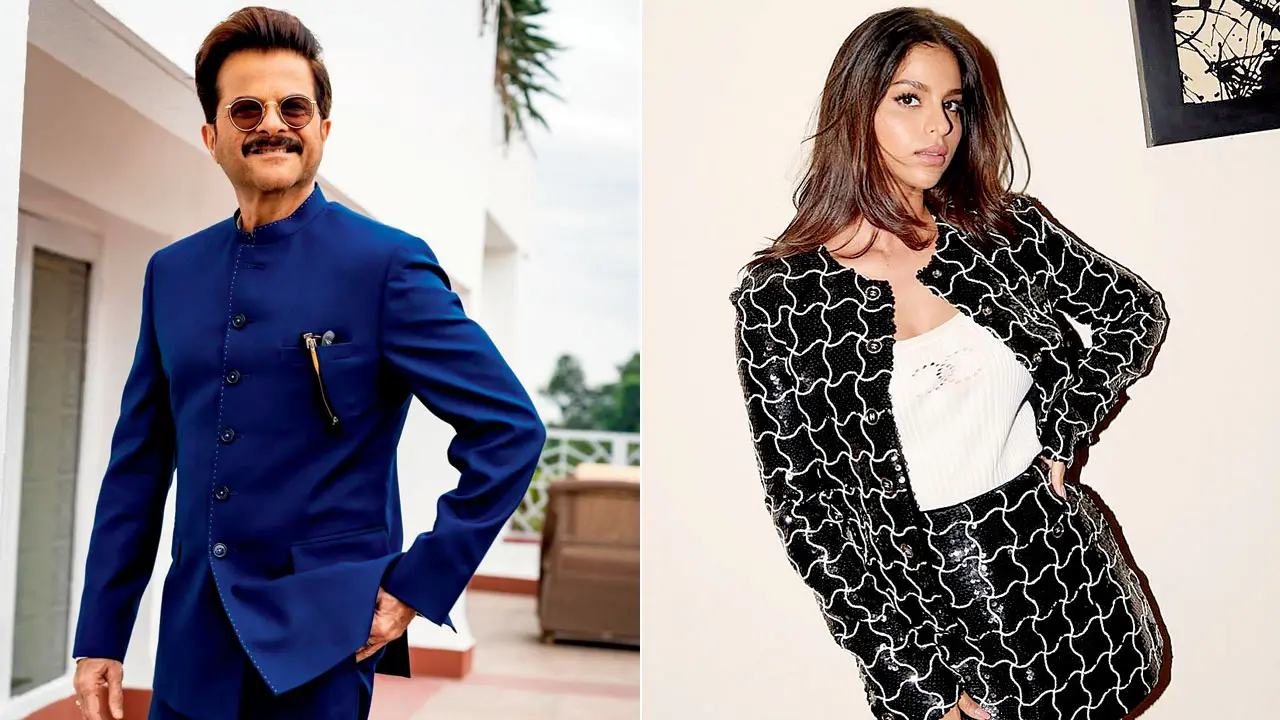
There appears to be a last-minute location shift for King, starring Shah Rukh Khan and his daughter Suhana. The unit was scheduled to shoot a large-scale desert action sequence, featuring Anil Kapoor and Suhana, in Dubai. However, the ongoing conflict in West Asia has prompted filmmaker Siddharth Anand to call off the international leg and reimagine it in Mumbai.
According to a source close to the production, the Dubai schedule was locked months in advance. “The team had procured the necessary permissions to shoot in the emirate. It was supposed to be a week-long schedule from April 9. But given the dynamic situation in the region, the makers decided not to take any risk with the cast and crew’s safety.”
Instead, the sequence will now be filmed in a Vile Parle studio, where the production design team has recreated a desert landscape.
“They’ve gone all out to match the scale that Siddharth envisioned for the set-piece. In fact, this gives them more control over action beats and lighting. The sequence begins with a chase, resulting in an intense combat.”
To receive my first National Award standing next to Shah Rukh Khan in itself was an honour-Rani Mukerji
9:39 AM

Madhureeta Mukherjee (BOMBAY TIMES; March 28, 2026)
Three decades in, and Rani Mukerji isn’t looking back, she’s looking ahead. With 71 films, a fiercely individual journey, and a National Award arriving right on cue, she stands as both a rarity and a reinvention in motion. In an industry quick to sideline women post marriage and motherhood, she’s quietly rewritten the rules, choosing honesty over hype, and substance over noise. At 30 years, this doesn’t feel like a culmination. If anything, it feels like a reset. On the new episode of the Bombay Times Lounge, which dropped this week on the Bombay Times YouTube channel, Rani reflects on the road behind and the road still unfolding.
Thirty years in the film industry is no mean feat—marked by highs, lows, learnings, and incredible success. As you look back, do you feel a sense of nostalgia and pride, or do you feel it’s a journey that’s unfolding, like a work-in-progress?
It feels like I am starting a new journey, because obviously, when I see my earlier films, I don’t look the same. Also, now with my daughter turning 10, I think I’ll have more time to devote to films. I constantly want to reinvent and bring across a Rani to my audience that they haven’t seen before. I’ve been so fortunate that directors, writers and producers have thought of me for these amazing characters that I’ve got to play for the last decade, and that’s the decade where I got married and had a child. Fortunately, that didn’t come in the way of a director choosing me for a role. So, in a way, the audiences and the industry have helped me shatter the glass ceiling. They always say that once you go the family way, it’s the end of the road for an actress. But that’s not always true.
Having said that, while I love being an actress, I enjoy the whole part of being a housewife. I enjoy the fact that I’m a mother to my daughter. I enjoy that I get to look after my husband (Aditya Chopra). It gives me immense joy to see my husband and my daughter support me in my journey in films, as this kind of support is so important for every woman. I know there are so many women who probably want to go out there and work, but don’t have the kind of support they wish they had. So, I’m very grateful for what I have, and I always tell myself to not ever take these things for granted.
Today, there’s a lot of talk around “staying relevant”. While marking your 30-year milestone, you had written a note in which you had said, “Longevity is not about staying relevant, it is about staying honest.” Could you elaborate on that?
I always give importance to the story that needs to be told, without thinking about the box office and other things that come with it. The audience always connects with honesty, irrespective of the genre. The problem happens when stories are adulterated just for the benefit of the box office. Audiences are sensitive enough and instinctive, they can sense a good story and a good film. They are looking for genuine stories, so it is important to be honest about what you are doing.
Winning the National Award in your 30th year in cinema (for Mrs Chatterjee vs Norway) — did that feel like poetic timing?
It felt surreal. I think it was saved for this moment, probably because my daughter was old enough to understand what this means. The only regret I feel is that my dad, who was always my cheerleader, was not there to see it. My National Award has made my fans and well-wishers happier than me, as they have rooted for me all these years.
How has being a mom to Adira changed you and your perspective towards life?
The change happened instantly. Seeing that little baby, that little piece of your heart and soul, changes everything in a moment. When you talk about the concept of love at first sight and falling in love with someone instantly, I feel the whole concept started when a mother had a baby. Seeing your baby for the first time changes that concept of love at first sight for mothers. That love for your child is unconditional, and it’s something you can’t describe. It could also be a one-way love because you don’t know how much the baby will love you back and for how long (laughs). But really, for me, love at first sight happened with Adira.
Tell me about the one role that changed you forever and why?
Sanjay Leela Bhansali’s Black. I think Black taught me to be grateful for the little things that we take for granted – like how we are able to see, talk, hear and walk. The film taught me to be grateful for the gift of being alive.
Shah Rukh Khan also received his first National Award (for Jawan) last year. The two of you have shared such a rich on-screen history. Was there something special about sharing that milestone moment with him?
It was such a happy moment, as it was something that we both were so excited about. I started my journey in the movies with Shah Rukh Khan, and to receive my first National Award standing next to him – that in itself was an honour for me.
Which is the one compliment that you have received that means more to you than any award?
Recently, Adira wrote a letter to me where she declared me “the best mom in the world”. For me, that’s the best compliment, and nothing beats that.
Which is the one co-star you wish you had done more films with?
Bobby Deol.
Which is the one co-star who pushed you to up your game the most?
Shah Rukh Khan.
Subscribe to:
Posts (Atom)