Showing posts with label Rocky Aur Rani Kii Prem Kahaani. Show all posts
Showing posts with label Rocky Aur Rani Kii Prem Kahaani. Show all posts
People still call me Ranveer Singh’s sister. Now they’ll probably call me Riteish Deshmukh’s wife-Anjali Anand
9:15 AM

She knows Bollywood still writes fat jokes. She also knows someone has to survive them long enough to change the script. Ahead of Dhamaal 4, Anjali Anand talks about representation, ridicule, and why she refuses to shrink herself to fit the industry
Mohar Basu (MID-DAY; July 5, 2026)
The trailer of Dhamaal 4 has everything audiences have come to expect from the franchise — slapstick, loud humour, and an ensemble cast. But amid the flying punches and comic mayhem, one thing stood out: actor Anjali Anand wasn’t just another face in the crowd. She was paired opposite Riteish Deshmukh, dancing in songs, featuring prominently in the promotions, and occupying space that mainstream Hindi comedies have rarely offered women who don’t fit Bollywood’s conventional beauty template.
It also reopened a familiar debate. Can commercial Hindi cinema move beyond using a plus-sized actor as the butt of a joke?
Anand doesn’t dodge the question. “I was hesitant in the beginning,” she says, “Even I didn’t want to represent something where the body becomes the conversation. I told myself, ‘If I don’t do this part, someone else will.’ Rather than giving this responsibility to somebody else, I wanted to play the character and play her the way she should be played. I didn’t want her to become a bechari who simply keeps listening to people.”
“Those films are still being made because society still thinks like this. People can argue with me, but I always tell them, ‘Go and read the comments on my social media.’ There’s a lot of love, yes, but there are also people who have never seen someone like me getting a lead part.”
The word “fat”, she says, has acquired a power it shouldn’t have. “For me, ‘fat’ isn’t an offensive word. We’ve conditioned ourselves to think thin is good, fat is bad, fair is good, dark is bad. I’ve spent years changing that conditioning in my own head.”
Unlike many public conversations around GLP-1 weight-loss drugs such as Ozempic and Mounjaro, Anand’s response isn’t moralistic. “My weight has never made me unhappy,” she says, “People have made me unhappy because of my weight. There’s a difference.”
She laughs when she is told people assume she must be unhealthy. “I probably have the best blood reports among people I know. I trek, I dance for hours, I go scuba diving, I paraglide. I’ve never looked at myself as somebody who needs fixing. If somebody wants to take a GLP-1 because it genuinely makes them happier, then please do it but under a doctor’s supervision. Who am I to judge? We have medicines for everything. If this helps somebody live a happier life, why shouldn’t they? The question is whether you’re doing it because you want to, or because you’re listening to everyone else.”
Anand has become one of the few actors expected to shoulder conversations around representation while simultaneously navigating an industry that still views her body before her talent. The irony isn’t lost on her.
“I don’t see my body,” she says matter-of-factly, “I just see myself as a person. In the beginning, I got swept into the whole body positivity movement. Later I realized, that’s not me. I’m not body positive. I’m just a good person and I expect other people to be good people.”
Three years have passed since Rocky Aur Rani Kii Prem Kahaani (2023) introduced her to a much wider audience as Ranveer Singh’s warm-hearted sister. Ironically, she says, success hasn’t quite given her an identity of her own.
“People still call me Ranveer’s sister. Now they’ll probably call me Riteish’s wife,” she laughs, “The day people call me Anjali, that’s when I’ll feel like they’ve actually started seeing me.”
That recognition, she believes, still comes most powerfully through the big screen. “When we were growing up, social media didn’t exist. Brands didn’t exist. OTT didn’t exist. Those things are wonderful and I hope I keep getting more work there. But there’s something about the big screen. That’s where your inner child lives. I’m hoping Dhamaal reminds people that I still exist. This is my tenth year in the industry. Everybody tells me somebody should write a great film for me. I hope God is listening.”
For Anand, perfection has never been the goal. “I don’t want to spend my whole life trying to become perfect. I want to live my life. A hundred years from now, people won’t remember any of us. Why should I waste my life chasing somebody else’s definition of beauty?” The answer, perhaps, explains why she continues to choose visibility.
She knows Dhamaal 4 won’t end Bollywood’s dependence on easy fat jokes overnight. But she hopes a few will remember something else. That a woman who didn’t fit Bollywood’s conventional mould stood at the centre of one of Hindi cinema’s biggest comedy franchises and looked like she belonged there all along.
Dhurandhar The Revenge first film to cross 10 million mark in Canada
2:21 PM

Box Office India Trade Network
DHURANDHAR THE REVENGE smashed all records in Canada as it has collected almost $10.8 million till date which is a record by a distance and the first $10 million Indian film in the country. The film beat the record of DHURANDHAR by over $3 million and ANIMAL, by $3.7 million which are second and third best.
The market has grown by leaps and bound post the pandemic and is the fastest growing market for Hindi films in Overseas. There was a time 8-10 years back when $2 million was a big mark in Canada and here you have a film crossing $10 million. The share of Canada from the US/Canada market is 31% for DHURANDHAR THE REVENGE. This is roughly the average today though if the film has less of a gentry audience, then Canada can go up as USA has a bigger market for gentry films.
DHURANDHAR THE REVENGE has not beaten the BAAHUBALI 2: THE CONCLUSION record in USA alone as that was $19.9 million and DHURANDHAR THE REVENGE will be $17.5 million. But BAAHUBALI 2: THE CONCLUSION was only $275k in Canada while DHURANDHAR's sequel will be $7.9 million (USD) giving it $25.4 million total as compared to $20.175 million of BAAHUBALI 2.
Below are the all time top grossers in Canada. All figures are in CAD $.
1. Dhurandhar The Revenge - $10,800,000
2. Dhurandhar - $7,700,000
3. Animal - $7,103,000
4. Pathaan - $6,054,000
5. Jawan - $5,278,000
6. Pushpa 2 - The Rule - $4,218,000
7. Stree 2 - $4,213,000
8. Jatt & Juliet 3 - $3,860,000
9. Kalki 2898 AD - $3,623,000
10. Rocky Aur Rani Kii Prem Kahaani - $3,281,000
Karan Johar calls out Bollywood’s hyper-masculinity trend
11:32 PM

HINDUSTAN TIMES (April 27, 2026)
Filmmaker Karan Johar has opened up about the industry’s growing obsession with hyper-masculine storytelling, calling out what he describes as a phase dominated by “big alpha” energy and testosterone-heavy narratives, with films like Animal (2023) and Dhurandhar franchise.
Karan observed that theatrical releases today are largely driven by high-octane, male-centric narratives, where aggression and machismo take centre stage.
Highlighting Bollywood’s ‘herd mentality’, he told The Week, “If one film works in a certain zone, there will be 10 more. So you will see 10 more high-octane testosterone movies where men are just walking in slow motion for no reason... They’ll all have beards and they will all smoke. Apparently, that’s what women like to watch, or at least, that’s what men think.”
He also reflected on the backlash he faced while portraying a different kind of masculinity through actor Ranveer Singh’s character in Rocky Aur Rani Kii Prem Kahaani (2023).
“I had a barrage of mainstream audiences who asked, ‘How could you depict a man like that?’ And I’m like, if I’m going to focus my attention on a certain audience and not have conviction, then why am I here? I am a born feminist and will always tell a feminist story.”
THE RETURN OF KANK AND KWK
Karan had quite a few exciting developments to share too as the filmmaker revealed the revival date of his talk show, Koffee With Karan. When asked by an audience member about the tentative date of the show’s return, Karan said with a smile, “Diwali. Season 9.” The show was last on air in 2024. He was also asked if he would adapt any of his movies into a series, and Karan replied, “We are adapting Kabhi Alvida Naa Kehna (2006) into a long form series.”
Dharmendra, the star everybody loved, passes away; Garam Dharam leaves behind 'Yaadon Ki Baaraat'
8:56 AM

Avijit Ghosh (THE TIMES OF INDIA; November 25, 2025)
Dharmendra, whose irresistible combo of soft face and tough body made him the poster boy of endearing masculinity, and whose Venus-Adonis-like pairing with Hema Malini sold millions of film tickets and gossip magazines, passed away in Mumbai on Monday. Ailing for sometime, the actor was two weeks short of 90.
In the 1970s, a Hindi newsmagazine ran a readers’ contest posing the query, “Why I like Dharmendra?” The winning answer went, “If the question was, why I don’t like him, nobody would have won the prize.”
Everybody loved Dharmendra. The actor, who acted in more than 300 films over six and half decades, thrived even when a tsunami called Rajesh Khanna struck India in late 1960s and when Amitabh Bachchan’s Angry Young Man became the unofficial spokesperson of the nation’s angry young in early 1970s. Unfazed by fluctuating trends and fickle public taste, he remained a constant star on the Bollywood firmament.
Blockbusters like ‘Phool Aur Patthar,’ ‘Aankhen’, ‘Mera Gaon Mera Desh’, ‘Jugnu’, ‘Yaadon Ki Barat’, ‘Sholay’, ‘Dharam Veer,’ ‘Hukumat,’ made action films his province and created Hindi film’s enduring He-Man. But Dharmendra was more. He effortlessly romcom-ed as a botany professor masquerading as a car driver in the inter-generational favourite ‘Chupke Chupke’ and delivered his career-best act as the idealist engineer in ‘Satyakam’, both with director Hrishikesh Mukherjee who eternalised the ‘other’ Dharmendra.
Unpretentious and generous to a fault – the actor embodied the soul of rural Punjab. In one of his last films, ‘Rocky Aur Rani Kii Prem Kahaani (2023)’, Dharmendra reprised a classic ‘Hum Dono’ track, “Abhi na jao chhod kar, ke dil abhi bhara nahi.” (Please don’t go. I haven’t had enough of you).” His fans would be saying the same.
Whenever Dharmendra snarled, "Kuttey main tera khoon pee jaunga," or something like that, bad guys cowered, frontbenchers whistled and box-office queues became as long as a goods train. But that happened long after the actor struggled with a series of flops.
Producer-director O P Ralhan’s Phool Aur Patthar (1966) made him a star. In the film, he played Shaka, a thief with a conscience. In an iconic scene, a drunk and topless Dharmendra walks up to a scared widow (Meena Kumari) pretending to be asleep. He looks at her, spreads a quilt over her and walks away.
The scene not only established the character’s innate decency but also underlined his splendid physicality; two attributes that the audience, both male and female, would associate him with in their own ways. Here was an actor whose body men wanted to acquire, and women lie next to.
Born on December 8, 1935 in Nasrali village, near Khanna town in Punjab’s Ludhiana district, the school headmaster’s son developed a passion for moving pictures after watching Dilip Kumar's ‘Shaheed’ (1948) in Ludhiana’s Minerva cinema. That obsession persisted even after he was employed as a mechanic in an American drilling company. Mumbai beckoned. In 1958, he finished second in Filmfare-United Producers’ first talent contest. By then, he was married to Prakash Kaur and father of a child, now known as Sunny Deol.
Dharmendra confessed on Rajat Sharma’s ‘Aap Ki Adalat’ show that during his early years, a renowned producer told him, “I want a hero, not a hockey player.”
The actor lived in a rented single room over a garage in Versova developing a close friendship with fellow struggler Manoj Kumar. Film journalist Rajiv Vijayakar writes in the actor’s biography that Kumar stopped Dharmendra from leaving Mumbai and going to Delhi where he had landed up a job.
Dharmendra got his big break in Arjun Hingorani’s ‘Dil Bhi Tera Hum Bhi Tere’ (1960) with Kumkum as fellow heroine. More people noticed the kind-hearted doctor who falls in love with a murderer (Nutan) in Bimal Roy’s ‘Bandini’. Over the years, Hingorani and him would form a cosy director-actor team making hits starting with the letter, K -- 'Kab Kyun Kahan' and 'Kahani Kismat Ki' to name just two -- much like the Ekta Kapoor teleserials later.
His collaboration with Bengali directors widened his repertoire. Satyen Bose’s ‘Jeewan Mrityu’ and Dulal Guha’s ‘Pratigya’ were megahits. He wasn’t much of a dancer but the brio with which he expressed ardour while mouthing, “Main jat yamla pagla deewana” became the film’s highlight.
Unlike most stars of the time, Dharmendra was shorn of mannerism, barring a tendency to flare his nostrils when singing or screaming. Directors like Hrishikesh Mukherjee (‘Anupama’, ‘Satyakam’, ‘Chupke Chupke’) and Basu Chatterjee (‘Dillagi’, where he played a BHU-educated Sanskrit teacher), expanded his range, fashioned his bhadralok persona. ‘Satyakam’, a human tragedy, saw his best performance. But forget winning awards, he wasn’t even nominated for one, a fact that despaired him.
With ‘Dreamgirl” Hema Malini, Dharmendra formed a red hot romantic pair. Even in the ultra-violent ‘Sholay’, the scenes of romantic comedy between the two, are utterly charming. ‘Seeta Aur Geeta’, ‘Raja Jani’, ‘Jugnu’, ‘Pratigya’ and ‘Charas’ were some of the major winners they paired with. The real and the reel came together when they got married in 1980; among the finest examples of North-South fusion in Bollywood.
In the 1980s and the 1990s, the market for soft romances and gentle comedies receded. Consequently, Dharmendra focused more on fists and guns which ensured that his underclass fans remained steadfastly loyal. ‘Ghulami’, ‘Hukumat’, ‘Aag Hi Aag’, ‘Loha’, ‘Insaniyat Ke Dushman’, ‘Watan Ke Rakhwale’, ‘Tahalka’ were superhits of this era. The title of one film summed up his new stock-in-trade: ‘Paap Ko Jalaa Kar Raakh Kar Doonga.’
Much of the actor’s later career is a collage of forgettable films. Exceptions include Sriram Raghavan’s nuanced neo-noir, ‘Johnny Gaddaar’ (2007), Anurag Basu’s take on modern love, ‘Life In A Metro’ (2007), an aging NRI waiting for an elderly girlfriend (Nafisa Ali) and the rollicking action comedy, ‘Yamla Pagla Deewana (2011). Raghavan’s ‘Ikkis’, scheduled for release next month, will be among his last films.
In 2004, Dharmendra won the Bikaner Lok Sabha seat on a BJP ticket. Unlike Hema Malini, who seems to relish politics as a three-time MP from Mathura, the Punjab da puttar didn’t. Gossip mags called him ‘Garam Dharam’. But for many, he was a 'naram dil insaan' (soft-hearted guy) who helped out struggling artists and technicians, making guest appearances by the dozen. Even his real-life misdemeanours, which includes beating up film journalists once, didn’t change that image.
The Padma Bhushan recipient was a regular on Twitter (now X) till March this year building a healthy 770,000 followers. His posts revealed his love for farming and Urdu poetry. Not many know that Dharmendra also wrote poems.
During an interview to TOI, he once recited a few lines from one of his poems, ‘Main Kaun Hoon’: “Pyar, mohabbat duayein apki sejti hai jazbaat ko mere/ Isi liye aaj bhi jawan hu main/ Khata gar ho jaye baksh dena yaaron/ Galtiyon ka putla aakhir ek insaan hoon main. “(Your love, affection and prayers nurture my emotions/ That’s why I’m still young/ Please forgive me if I’ve erred ever/ After all, I am only human).”
Bollywood top stars aren't boxed in, they have brands and investments
9:39 AM

Earnings from endorsements, holding in cos help them tide over lean periods, finds study
Rajesh N Naidu (THE ECONOMIC TIMES; September 30, 2025)
Non-film income has become a defining factor in the brand value of Bollywood's biggest stars, with earnings from endorsements and investments in companies, start-ups and property now substantial enough to help them weather leaner patches without major hits and resist pressures to lower fees. The brand value of actor Ranveer Singh emerged the highest in 2024, showed the latest study (a calendar year exercise) by the US-based global financial advisory firm, Kroll.
"Ranveer Singh continues to be the top Bollywood star by brand value. He has become the face of diverse endorsements. This unique blend of stardom and strategy cements his position among the industry's most renowned stars," said Umakanta Panigrahi, managing director, Valuation Advisory Services, Kroll.
According to the Kroll study, the brand value of Ranveer Singh was $170.7 million (Rs. 1,423.8 crore) in 2024. A critical factor to note here is that Singh did not have a major solo film release for nearly two years, with Rocky Aur Rani Kii Prem Kahaani releasing in 2023.
Other four Bollywood celebrities ruling the brand value leader-board are Shah Rukh Khan, Alia Bhatt, Akshay Kumar, and Deepika Padukone, according to the Kroll study. The brand values of these actors and actresses ranged between $100 million and $146 million (Rs. 800-Rs. 1,216 crore) in 2024.
Among the many factors, industry veterans say a key advantage for Ranveer Singh is his ability to resonate with both mass and younger audiences.
"His sheer energy and relatability resonate with youth as well as mass audiences, which is why marketers are willing to invest anywhere between Rs. 4-Rs. 7 crore per campaign to leverage his influence. This consistency not only underscores his brand value but also reflects the evolving dynamics of celebrity endorsements, where brands seek both cultural impact and nationwide visibility," said Suniel Wadhwa, co-founder and director, Karmic Films.
The Kroll study also noted that Singh's entrepreneurial spirit in making bold start-up investments has boosted his brand value.
In 2024, he endorsed more than 45 brands, compared with fewer than 30 by each of the other top four celebrities. "His celeb-preneurial spirit and bold investments set him apart in the celebrity ecosystem. From start-ups to smart investments, he is as bold as his on-screen persona," said Panigrahi of Kroll.
A few of the brands endorsed by Ranveer Singh are Zomato, Ching's, and Bold Care. In addition, Singh has acquired a 50% stake in Elite Mindset, a packaged foods start-up. The study shows that in 2024, the brand value of Ranveer Singh and Akshay Kumar fell by 16% and 3.3% respectively, while Shah Rukh Khan and Alia Bhatt registered gains of 20.7% and 15.1%.
"Celebrity brand value is an accumulation of their endorsements and investments. But there is a difference between brands and brand ambassadors. One must keep this in mind. Brand endorsement deals are momentary, done on and off screen with big corporations and other engagements," said Ajimon Francis, MD, Brand Finance, a brand valuation consultancy firm.
My right eye is still affected, but hasn’t hindered my work-Vaibhavi Merchant
9:17 AM

Natasha Coutinho (HINDUSTAN TIMES; September 28, 2025)
Vaibhavi Merchant, who received her second National Award for Best Choreography on Tuesday, has spoken about battling health challenges like peripheral vision loss and thyroid issues for the first time. The 49-year-old, who was honoured for Dhindhora Baje Re (Rocky Aur Rani Kii Prem Kahaani, 2023), opens up about her body transformation.
“I was diagnosed with thyroid in 2017; it is a hereditary issue. Despite working hard and trying several diets, my body showed no results until my endocrinologist put me on a slow, sustainable plan. I also started playing badminton,” she shares.
But soon after, Vaibhavi was diagnosed with an autoimmune trigger. “I had peripheral vision loss in my right eye,” she reveals, adding, “It could be due to the Covid vaccine or the shoot schedule of Tiger 3 (2023). We shot throughout Europe — including Italy, which was badly affected by Covid — and I spent long hours in a mask, which affected a nerve.”
Vaibhavi was put on steroids at the time. She recalls, “It made me gain another 10 kg. To date, people ask me why I wear glasses indoors, but I have to do what I can to protect my eyes. My right eye is still affected, but hasn’t hindered my work.”
Despite the stress on her body, she has learnt to adapt to the situation: “I never gave up, though I still have 5 kg to lose and muscle mass to gain. It’s important to be guided by a doctor, and to love your body the way it is.”
Her slim physique at the ceremony, captured by actors Shah Rukh Khan and Rani Mukerji, also surfaced on social media. “I got so many messages about how people loved SRK and Rani rooting for me. They made my day special by capturing beautiful photos and videos. Rani is my soul sister, Shah Rukh just knows how to make you feel special,” she ends.
Internet divided over Shah Rukh Khan's National Award win for Jawan
8:54 AM
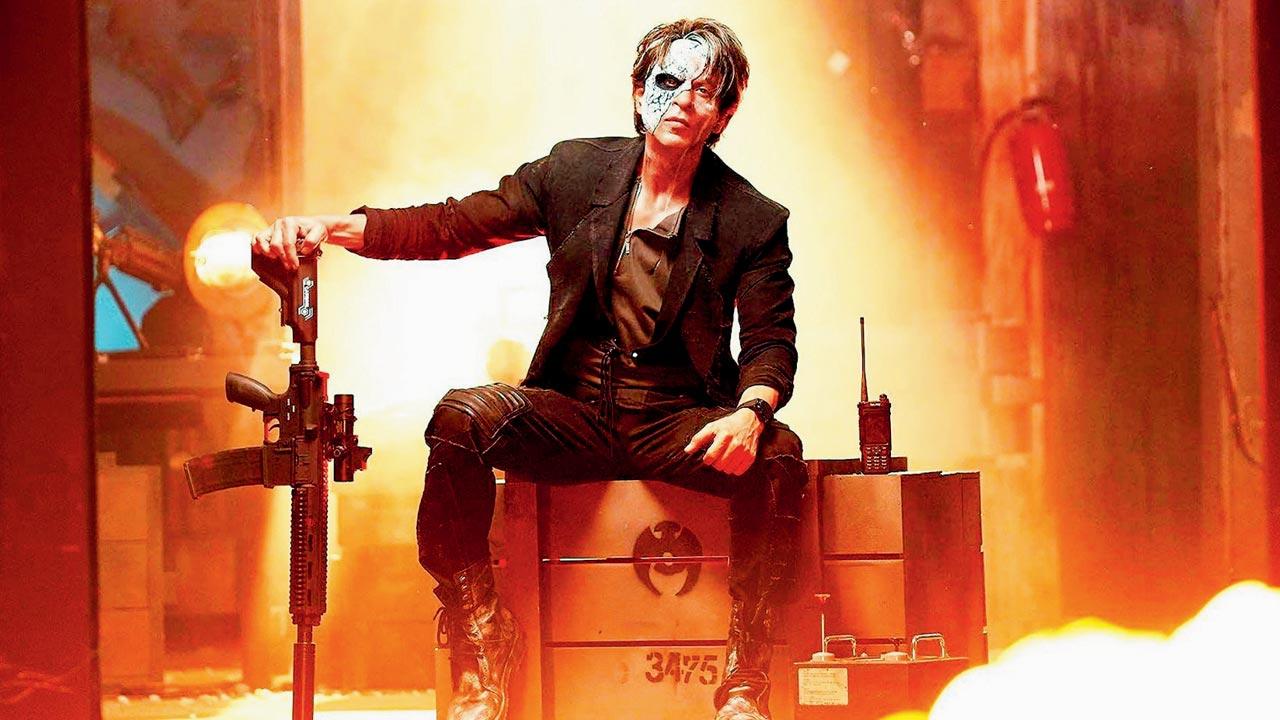
National Film Awards leaves internet divided as Shah Rukh Khan wins his first Best Actor nod for Jawan alongside Vikrant Massey for 12th Fail; ‘Sirf Ek Bandaa Kaafi Hai’ writer hopes Best Dialogue win will boost social dramas
Priyanka Sharma, Komal RJ Panchal (MID-DAY; August 2, 2025)
The 71st National Film Awards couldn’t have gotten starrier than this. Superstar Shah Rukh Khan won his first National Award in his 33-year career for his double role in Jawan (2023). The actor shared the honour with Vikrant Massey, who won it for 12th Fail (2023). Bollywood entertainers seemed to dominate the awards as Rani Mukerji took home the Best Actress award for Mrs Chatterjee Vs Norway (2023).
On the one hand, Khan’s fans saw the win as overdue, considering his restrained act in Swades (2004) was overlooked by the National Film Awards jury 20 years ago. On the other hand, some social media users called the Jawan win “laughable” and “a joke”.
The Best Director award went to Sudipto Sen for The Kerala Story (2023) — a win that will presumably be debated over the next few days. The movie, which centred on the alleged coerced religious conversion of Malayali women, was widely criticized. An elated Sen called the win “validating”.
He told mid-day, “I would’ve been even happier if the film had also taken the top honour, but this recognition validates everything we set out to express through The Kerala Story.”
With Rocky Aur Rani Kii Prem Kahaani winning the Best Popular Film Providing Wholesome Entertainment, co-writer Ishita Moitra told mid-day, “It’s Karan Johar’s [filmmaker] hard work and love that shines in this film.”
The film also won Vaibhavi Merchant the Best Choreography award. She learnt about the win when we called her. “This is overwhelming. You’ve broken the news to me,” said a surprised Merchant.
Deepak Kingrani, who bagged the Best Dialogue award for Sirf Ek Bandaa Kaafi Hai, said, “This win is important as [it gives us] courage to write and producers to pump money in such films.”
First National film honours for Shah Rukh Khan, Rani Mukerji, Vikrant Massey
8:38 AM

THE TIMES OF INDIA (August 2, 2025)
New Delhi: Hindi cinema dominated the 71st National Film Awards on Friday with superstar Shah Rukh Khan winning his career’s first best actor award for ‘Jawan’ alongside Vikrant Massey for ‘12th Fail’, which was also named the best feature film.
Rani Mukerji won the best actress honour for ‘Mrs Chatterjee vs Norway’, her first award. The awards for 2023 were announced by jury head Ashutosh Gowariker. He said Shah Rukh had delivered a “powerhouse performance, balancing raw intensity and emotional depth, and bringing to life a hero who fights not just the enemy, but societal boundaries, creating two unforgettable cinema personas”.
Sudipto Sen won the best director award for ‘The Kerala Story’, which also got the cinematography prize. It had sparked a row for its portrayal of women being converted and recruited by ISIS. ‘Rocky Aur Rani Kii Prem Kahaani’ was the best popular film .
Rani Mukerji, who has clinched the National award for best actress, said, “I’m overwhelmed. For me, this award is also a validation of my 30-year body of work, my dedication to my craft with which I feel a deeply spiritual connection and my passion for cinema and this beautiful film industry.”
‘Jawan’, which minted over Rs 1,100 crore at box office worldwide, was a highoctane thriller from filmmaker Atlee and featured SRK in the dual role of Army officer Vikram Rathore and his jailor son Azad.
The jury praised Massey’s performance as one that portrayed the transformative journey of a village boy with “raw honesty and emotional depth”. In a statement, Massey (38), said it was a dream come true moment for him.
Meghna Gulzar’s ‘Sam Bahadur’ was recognized as the best film promoting national, social and environmental values and won the award in the make-up & costume category.
Vaibhavi Merchant won the best choreography award for ‘Rocky Aur Rani Kii Prem Kahaani’ song ‘Dhindhora Baaje’, while Shilpa Rao was named best female playback singer for ‘Jawan’ track ‘Chaleya’. Sanya Malhotra-starrer ‘Kathal: A Jackfruit Mystery’ was named the best Hindi film.
While Hindi cinema ruled in the main categories, regional movies were recognized in categories such as best supporting actor as well as actress and in technical segments.
Best Film in AVGC (Animation, Visual Effects, Gaming & Comic) went to Telugu film ‘Hanu-Man’, which also won the best action direction award. The National Award for best screenplay was shared between Telugu movie ‘Baby’ and ‘Parking’.
Filmmaker Ashish Bende won the best debut film by a director for Aatmapamphlet, a coming-of-age drama that resonated with audiences and the jury alike.
Overwhelmed by the recognition, Bende said, “Getting a national award was always a dream for me, but I did not know that my dream would be realized in my directorial debut. Though it is an award for direction, I feel that it is not a solo award but an award for the entire team of Aatmapamphlet. The film was made during Covid-19 pandemic with a lot of effort, and today all those efforts have paid off.”
Bende will receive the Swarna Kamal for this award.
He added, “The Marathi film industry has along legacy of quality films, and today I feel proud that I am part of this rich tradition. The award will personally encourage me to keep doing quality work.”
I knew I was capable of so much more-Shahana Goswami
8:45 AM

Vinay MR Mishra (BOMBAY TIMES; July 23, 2025)
Known for her indie movies, Shahana Goswami has also been a part of quintessential Bollywood films like Ra.One and Heroine.
Reflecting on her shift from commercial big-budget films to content-driven movies, she says, “Each of those projects had a different pull and attraction for me in terms of the journey that I had. As for the feeling of fulfilment where my craft is concerned, I didn’t feel that very much. I felt like I was selling myself short. I realized that the problem at that time, at least with these bigger and more commercial films, was that smaller characters were not always well-crafted into the story. So, there wasn’t much of a graph or much to do. I knew I was capable of so much more.”
‘GOOD ROLES GO TO PEOPLE WHO BRING MONEY TO THE TABLE’
Talking about her career choices, Shahana says, “After those few films, I started doing leads in independent films, which was fulfilling. I would be happy to be a part of a big commercial project with a meaty part, but that hasn’t happened. Bollywood is driven by commerce. So, the good roles will be given to people who bring money to the table through their name and fame. That’s the dynamic. It’s almost impossible or unheard that there would be some completely new person picked just on the basis that they are a good actor.”
‘I’m content with what I am doing; the rest is a bonus’
So, does the industry’s pecking order ever leave her bitter? The Rock On actress says, “I would’ve loved to play Rani in Rocky Aur Rani Kii Prem Kahaani, but that’s not a possibility. I do understand that there is a commercial aspect to it. I understand that the minute it’s a Karan Johar film, it needs names that are commercially viable. It doesn’t really bother me. I’m content with what I am doing and everything else is a bonus.”
Despite good intentions, visuals can end up sexualised even if that wasn't the intent on paper-Rasika Dugal
8:30 AM

Actors from web series share experiences, apprehensions amidst entertainment’s changing narrative
THE ECONOMIC TIMES (June 16, 2025)
In a panel discussion titled 'Women in OTT: Changing the Script' at The Economic Times Women's Forum 2025, acclaimed actors Rasika Dugal, Tillotama Shome, Riddhi Dogra, Sheeba Chaddha, and Anjali Anand came together to share personal journeys, career pivots, and how the streaming revolution transformed the narrative arc for women in Indian entertainment.
Rasika Dugal, widely recognized for her role as Beena Tripathi in the critically acclaimed web series Mirzapur, opened the conversation with a candid take on the early promise of streaming platforms.
"When OTT first exploded, everyone was suddenly saying 'female-centric story, female-led character'. It was exciting, but I was skeptical. Would it be real change or just another form of tokenism-women doing the same things men do?"
Dugal added that scripts are now beginning to explore femininity more meaningfully. "We don't always succeed because our ingrained references often objectify women. Despite good intentions, visuals can end up sexualised even if that wasn't the intent on paper. We're all working to unlearn and undo that baggage," she said.
Veteran performer Sheeba Chaddha, who has transitioned fluidly between theatre, film, and streaming, spoke of clarity rather than challenge. "I've always approached them (theatre and film) as completely separate mediums and we engage with them differently," she noted.
Tillotama Shome reflected on her shift from theatre to film and OTT, emphasizing the emotional safety the camera offered. "The camera was like an unobtrusive, gentle friend," she said.
"The concept of multiple takes wasn't about repetition-it was about trying something new. It suited someone like me who doesn't enjoy the adrenaline rush of a live performance." She also spoke about the impact of her role in Qissa, where she played a woman raised as a man by her father. The part, she said, reshaped her understanding of gender and identity.
Riddhi Dogra, who played a woman grappling with same-sex desire in The Married Woman, admitted to initial hesitation. "It was a subject that needed absolute non-judgement and great sensitivity," she said. "But when I met the director and writer, I understood the care they were bringing to the story."
She said that a script supervisor-herself in a same-sex relationship-was brought in to guide the process. "I think that is what has sort of resonated with the audience, whoever has appreciated that show, is that they see that care, they see that sensitivity but not overly doing it. We kept it as normal as possible," she added.
For Anjali Anand, Rocky Aur Rani Kii Prem Kahaani marked a turning point. "I came from television-did it for three years after my first web show, back in 2016-17, when the web shows weren't really considered cool. Television throws every imaginable situation at you-especially if you're the protagonist in a daily show," she said.
"When Rocky Aur Rani came along, it felt like the right opportunity to finally show what I was capable of. I had been preparing for it, and I chose to take it on."
Reflecting on her role as Beena Tripathi in Mirzapur, Dugal said the role became a form of exploration-something she hadn't had the courage to pursue or allowed herself to experience in real life.
"I feel I had an upbringing that was as free from gender bias as possible within a patriarchal society. I also went to a college with a strong feminist ideology," she added.
Speaking about changing perceptions of indie cinema, Shome observed that independent films are experiencing a resurgence. "It feels funny-like coming full circle. When I started out with independent cinema, it was looked down upon, and considered neither mainstream nor commercially viable. So it's really nice to now be in an environment where people understand the commercial viability of an independent project. And by 'independent,' I mean having the creative freedom to do what you want."
Taarak Mehta ka Ooltah Chashmah, Saath Nibhaana Saathiya helped me with my Hindi-Kal Penn
8:33 AM

Vinay MR Mishra (BOMBAY TIMES; May 18, 2025)
Kal Penn, known for his roles in House and the Harold & Kumar series, was recently in Mumbai in the first week of April. “I was hosting a gala this time, but I stayed on for a few days for meetings, see some family, and because I love Mumbai so much. So as much as I can stay, I always like to,” he says
For an exclusive shoot with Bombay Times, Penn takes a stroll along the iconic Juhu beach, eats Pani Puri and even relishes a nariyal pani. "I will have to warn my mum that the pani puri was just for the pictures," he quips.
During his stroll, he shares his ambitions to deepen his connection with the Indian entertainment industry - which comprises of securing local representation and pursuing OCI (Overseas Citizenship of India) status. Read the excerpts as followed...
'I would love to do a Bollywood film'
Mumbai isn't a new city for Penn; in fact, it's a place where he's spent his summer vacations as a kid, zipping between Dadar and Juhu. This familiarity might explain why he's particularly impressed by the city's latest infrastructure - the coastal road bridge, which has slashed travel time between the suburbs and South Bombay. "The coastal road is actually amazing. The fact that you can get to South Bombay that much quicker is amazing. I live in New York, so I'm no stranger to congestion, traffic, construction, et cetera. But every time I come here, I feel like there's more and more infrastructure that has been built,” he shares.
He adds, "I just always love coming and working in Mumbai. With so many of the OTT shows and there's just so much diversity of content here and I'd love to come back to work. I would love to do a huge Bollywood film or an OTT show."
'I have not been offered a Hindi film yet'
Penn doesn't mince his words stating that he wants to do a Hindi film. And his choices are as quintessential as it can be for an NRI. “Rocky Aur Rani Kii Prem Kahaani,” he states when asked what kind of Hindi film he would like to work in. “I don't think I've been offered a Hindi film yet. So, I feel this is an amazing time to explore that,” he adds.
'TMKOC and Saath Nibhaana Saathiya helped me with my Hindi'
As Penn talks about Hindi cinema, it is important to mention, how during his last visit to India in November last year, the actor visited the sets of popular Hindi TV show, Taarak Mehta ka Ooltah Chashmah. Penn is self admittedly a fan of the show.
“So, I'm fluent in Gujarati and English. But I had to learn Hindi because I didn't grow up speaking (Hindi). And one of the ways I think a lot of people learn a language is through movies and TV. So, the two shows that I watched a lot to better my Hindi were both very watchable, very meme heavy, you can't scroll insta without seeing memes from either their show. They are Taarak Mehta ka Ooltah Chashmah and Saath Nibhaana Saathiya.”
'Back in the day, South Asian community wasn't huge in the West'
The West has seen an influx of multiple South Asian actors including Bollywood star Priyanka Chopra Jonas entering the industry. Penn who could easily be one of the early ones to make a striking impact in the Hollywood entertainment industry feels great about.
“Back in the day when I was starting out my career, it wasn't a huge community, but there were talented, trained Indian American actors who had gone to theater school, film school. And when I would audition for projects in the late 90s, early 2000s – even if they were specifically Indian American or specifically Indian characters – there were still white actors who would audition for those roles, and they would just put makeup on them if they got the job. So, it just makes me happy, how far we have come,” he shares.
Talking further, "Art is constantly in flux and updating. There are these super talented producers and content creators, whether it's Mindy (Kaling, creator) or Priyanka (Chopra Jonas, actor) and all the stuff that they're doing. You have people like me wanting to come and sell shows here and work here (in India). Lines and categories are blurred, both from the sake of content creators and also for audiences because I think they're able to enjoy projects that weren't offered to us 10 or 15 years ago.”
'If an audience sensibility has changed, I would want to update that to make sure an audience laughs'
Penn, who also does stand-up comedy wishes to explore that in India. However, with the ongoing censorship over standup comedy in the country, Penn isn’t dithered.
“As an American actor and a comic, I just need to be mindful of my views. Somethings might be different back at home or last year, but it may be different now because laws and the sensibilities are different. Back at home, I always get this question, ‘Are you upset that you could never make a movie like Harold and Kumar today? You could never make the jokes you made 20 years ago?’ I always found them strange because why would I want to make the jokes I made 20 years ago? I've made those jokes. That's a barometer of comedy that's changed. If an audience sensibility has changed, I would want to update that to make sure an audience laughs. It is different there. As an American, my view is if I don't like something that someone's saying, and that happens often because comedy and art are always subjective, I personally, don't get worked up over it. I would just change the channel because I'm confident in my viewing habits. I would defend somebody's right to say whatever they want to say, whether I agree with it or not. That's the vibrancy of what we offer as artists. Comedy is subjective," he explains, and adds, "I'm mindful of wanting to learn the lay of the land and learn what are the benchmarks? What are the parameters? What's allowed, what's not allowed? I had a couple standup comedy friends here, who explained to me that technically, I cannot use cuss words on stage. That's not something that I would have known, as an American
'If my presence makes somebody feel less invisible, more empowered, that is wonderful'
Penn’s partner Josh (his last name is not in the public domain yet) didn’t accompany the actor on his trip to the country. “He wanted to come. He's part of a friend's wedding. So couldn't make it.”
Penn came out earlier in 2021 and admits “people have been very kind” to his coming out. “Everybody figures themselves out at different times. There's no timeline for it. There are some people who figure themselves out at seven, and for other people, I have heard stories and interacted with people who in their 70s have figured themselves out. I don't live in a vacuum. I am very well aware of how and why representation matters. If my presence makes somebody feel less invisible, more empowered, that is wonderful. I didn't necessarily have that.”
Ask him if there is going to be a wedding, and Penn quickly quips, “Did my mom tell you to ask that? We've been engaged for seven years. So, we need to get it together.”
Ask Kal if there is going to be a fourth part of Harold & Kumar: “I would love to make a fourth movie. We had three movies. Thanks to all the fans. We would all love to make a fourth one. There's nothing on the books right now. We are trying to figure. I love that character so much. He's cooler than I will ever be in real life. I'd love to do it."
When I began winning National Awards, female actors started feeling ki iss space mein kuchh hai-Shabana Azmi
8:16 AM

Neha Maheshwri (BOMBAY TIMES; April 2, 2025)
From her early days navigating the then-distinct worlds of art-house and mainstream cinema, to her current place as a celebrated actress, who is keen to explore roles across mediums, Shabana Azmi has consistently broken stereotypes and paved the way for generations of actors. In an interview with BT, she reflects on her journey, talks about the positive changes happening in Hindi cinema, and how she wants to have a choice of films to work in. Read on...
‘Art-house cinema automatically placed me on a pedestal’
Shabana entered the film industry at a time when actresses were often just a glamorous addition to a hero’s narrative. Art-house cinema, while respected, was not considered commercially viable. However, the actress skilfully navigated both spaces, showcasing her versatility with every role she played.
She reflects, “When I started working, the fact that I was doing art-house cinema automatically placed me on a pedestal, putting me on the same level as Hema Malini. Had I started out in mainstream cinema, it would have taken me much longer to reach a certain level. When I began winning National Awards, female actors started feeling ki iss space mein kuchh hai. There is respectability. So, they began exploring.”
The actress believes the blurring lines between art-house and mainstream cinema have been beneficial for the industry. She says, “It has led to greater realism in filmmaking. I always felt, why should there be a division between the two.”
She adds, “The actresses today want agency because they have realized that something more is needed than just a role in which you are glamorous, pretty, and playing second fiddle to the hero. If you look at the actresses at the top, they are all playing substantial characters and that’s really good.”
‘Zeenat Aman & Jaya Bachchan didn’t wear wigs or make-up like their contemporaries’
Bring up how there is a certain homogenization of appearance in the way actors look on screen these days, and she explains, “These standards have been shaped by ideas of glamour we have now. So, the way your hair is done, the way your clothes are worn, all that is very similar,” she says. However, she believes there is a positive shift that is visible with actors embracing more individual and realistic looks.
“I think there is a change, which makes me happy, as there is now an attempt at characterization that feels much more realistic. In the past, there were only two people – Zeenat Aman in western roles and Jaya Bachchan in Indian roles – who had distinct personalities, and neither wore wigs or make-up in a particular way,” she explains.
There is this belief that actors in our industry, especially female leads, are easily replaceable, hence, one needs to stand out in the way they look and the roles they choose to create their own identity. On that, she recalls how her husband, writer-poet-lyricist Javed Akhtar, has an interesting point of view.
She says, “It’s a strange thing because Javed saab believes it’s an anachronism. If you aspire to be a star, the audience expects certain things from you. They’ll feel cheated if Shah Rukh Khan goes through a film without doing his signature arm spread. Yet, he also has to strive to be different. It’s a dichotomy.”
‘Rocky Aur Rani Kii Prem Kahaani paid me great dividends’
Talking about her current selectivity in choosing projects across mediums, the actress, who was recently seen in the web series Dabba Cartel, says, “I am an actor, and I love to do everything. People have this impression of me being drawn to art cinema. Aisa kuchh nahi hai, I want to do mainstream cinema. I had a ball when I did Rocky Aur Rani Kii Prem Kahaani. It also paid me great dividends. But I’m greedy and I want more. I want to work with all kinds of filmmakers. I want to work with both independent and mainstream directors. I want to have a choice of films to work in.”
‘I was not talented in the mainstream; I could not dance to save my life’
Shabana also believes that she made an awkward heroine in mainstream cinema. “I was not talented in the mainstream scene,” she says, elaborating, “I couldn’t dance to save my life. I was very awkward because I had this notion that I was Kaifi Azmi’s daughter, and I was from St. Xavier’s College and if I ran around trees, what would my friends think? I had certain inhibitions that took me a long time to overcome. I am saying all this in retrospect. It’s not that I was mindful of it in the beginning, or that there was any great design.”
Pure coincidence, says Pritam Chakraborty on plagiarism row
2:36 PM
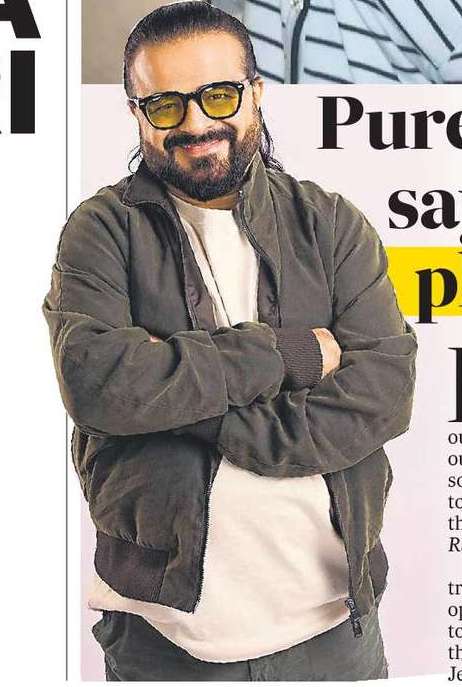
HINDUSTAN TIMES (March 9, 2025)
Earlier this week, K-pop singer and BLACKPINK member Jennie Kim found herself in the middle of an outcry after Indian fans pointed out that a snippet from her new song Like JENNIE sounded a little too similar to Rani’s (Alia Bhatt) theme in the2023 film Rocky Aur Rani Kii Prem Kahaani (RARKPK).
Now, Pritam, who composed the track for RARKPK, has finally opened up about the row. Taking to Instagram account on Friday, the composer wrote, “Rani and Jennie are names that rhyme, so a similar flow in one phrase doesn’t make it a copy. In music, minor similarities are bound to happen. Music is ...sometimes pure coincidence — especially when artistes exist on the same creative wavelength (sic).”
He added, “In today’s interconnected world, where artistes share the same platforms, no one is deliberately trying to copy someone else’s work. Wishing Jennie all the best for the new album.”
Coincidentally, Jennie’s new track also dropped on Friday.
Are big-screen romances having a 'moment' in Hindi cinema?
8:33 AM
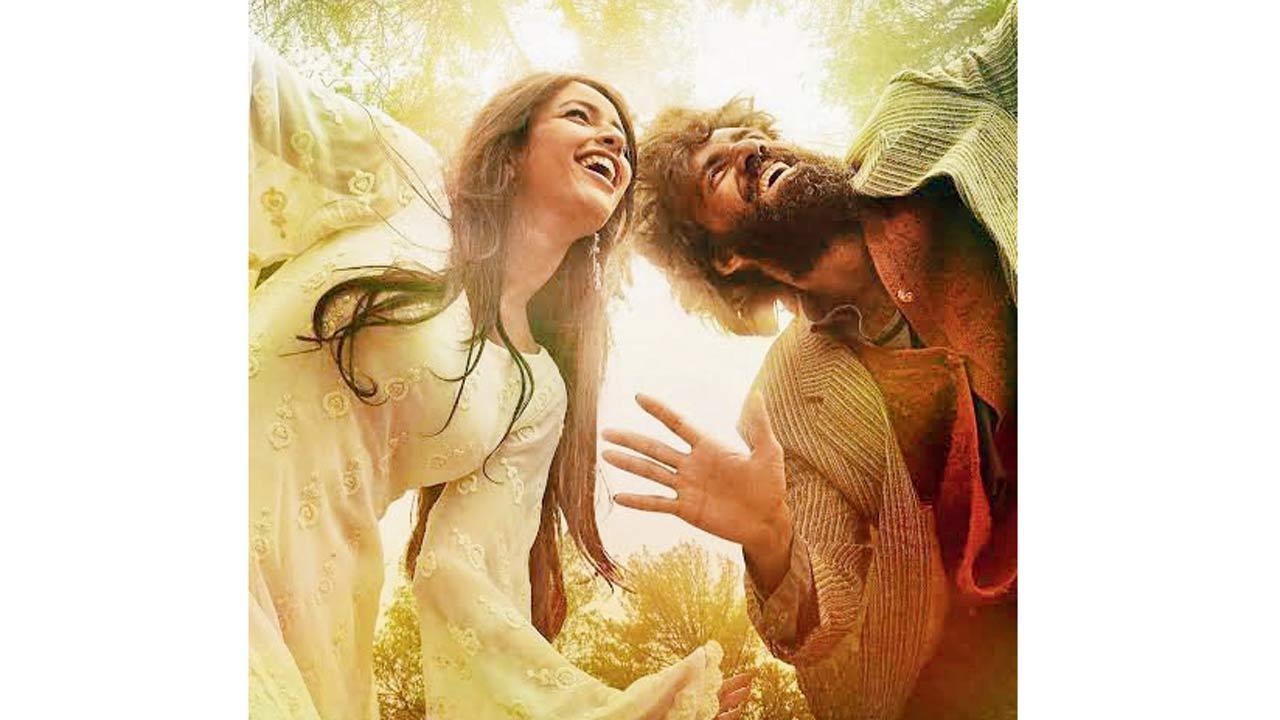
As re-releases of Hindi romantic hits draw audiences to theatres, mid-day asks whether this heralds a resurgence of big-screen love stories
Priyanka Sharma (MID-DAY; December 15, 2024)
Every age writes its own love story, and every generation speaks a new love language. But looking back at 2024 reveals we are stuck in a time warp, at least when it comes to love on screen. “Most people who have written to me since the re-release of Laila Majnu are in the age bracket of 13 to 17 years,” says filmmaker Sajid Ali, whose 2018 romantic drama became a hit upon re-release this year.
“When we made this film seven years ago, we thought we were making it for people in their 30s to 50s who have some understanding of classical literature. But ultimately, teenagers have held this film closer to their hearts.”
Initially, the Avinash Tiwary-Triptii Dimri starrer earned around R3 crore at the box office. Upon its re-release, the collection is estimated to be over Rs. 10 crore. Laila Majnu is not alone in a replay of success. Ranbir Kapoor’s 2011 angsty romance, Rockstar, re-ran in theatres for over a month and amassed more than Rs. 5 crore, doing better business in its fifth week than it did in the fifth week after its original release. Social media feeds are crowded with essays, videos, and pictures of youth loving the return of love. They don’t make them like that anymore, is the overriding sentiment. So then, is love lost in a crowd of actioners, spectacles, sci-fi and horror comedies on screen?
Filmmaker Vivek Soni, who has two romantic films coming up— Ananya Panday-Lakshay starrer Chaand Mera Dil and Aap Jaisa Koi on Netflix with R Madhavan and Fatima Sana Shaikh—says the success of re-releases speaks more about people’s desire to relive experiences, not genres.
“People go for nostalgic value,” he says, “Even I wanted to watch Dil To Pagal Hai and Veer-Zaara. People now want to watch Shah Rukh Khan’s dialogues and scenes again on the big screen. But will they watch a new romantic comedy? The test will be how well a new romantic release does in theatres.”
A studio executive echoes Soni’s sentiment: “Who doesn’t want to see SRK romancing once again? Or Ranbir Kapoor? Either you want to recreate the experience, or you missed it the first time it released and want another go. That’s what happened with Laila Majnu. It grew on OTT, and people wanted to experience it on the big screen.”
Since the COVID-19-induced lockdown, industry hits have either been big-scale actioners or horror comedies. Successful romcoms such as Teri Baaton Mein Aisa Uljha Jiya, Zara Hatke Zara Bachke have been far and few in between. “The audience has shown more interest in event films than relationship dramas,” says Soni.
“Most people prefer watching relationship dramas or mid-scale films at home. So, makers are cautious about the canvas and scale of what they make for theatres. Similarly, stars also do event films for theatres—the whole chain has been affected.”
The demand for romcom is higher on OTT. “Most romances have moved to OTT,” a trade pundit says, “and streaming platforms like them because they are low-stakes stories. Unless you find a big idea and scale within a romance, like Rocky Aur Rani Kii Prem Kahaani or the upcoming Dhadak 2, an inter-caste love story.”
Bihar-based exhibitor Vishek Chauhan believes the audience has no bias towards a genre but invests in films that offer something new. “Right now, only action [films] work because that’s what people are making. Once there’s a good romantic film, people will come to theatres to watch it; they haven’t sworn the genre off. A theatre release must be about everyone and be understood by everyone—from Pune to Purnia. Yesteryear directors like Yash Chopra understood India; they were connected to the roots. They knew how a common man thinks. Take for instance Dilwale Dulhania Le Jayenge (DDLJ)—it united classes—it started in England and ended in Punjab. Today, that understanding is missing.”
Another creative sheds light on challenges in making a romance palatable to the masses. “Earlier, the demographics were still homogeneous,” he says. But today, the fragmentation of audiences across multiplexes and B and C centres is enormous. People’s experience of watching the same thing is varied. There’s no homogeneity. A film like Animal will work in mass centres, even though the urban class criticizes it. Similarly, Rocky Aur Rani… did good business in urban centres but not in B and C centres. It’s difficult to have a DDLJ moment today.”
For Tanuja Chandra, who last helmed the charming romantic comedy Qarib Qarib Singlle (2017), it’s just a matter of time before love overtakes violence and action. “There is confusion in the industry at present,” she says, “and many producers don’t know which road to take. The perception is that pulling audiences with noise and fireworks [action and violence] is easier. I don’t think that’s true. And violence under a sheen of glamour is something to be wary of in a world sinking into an abyss of the most horrific violence. The perception that softer stories are unlikely to draw people to theatres has been proven wrong repeatedly.”
There’s also a creative challenge to making a romantic film that screenwriter Ankur Pathak breaks down: “A filmmaker recently told me, ‘These days, a large part of love takes place virtually… it doesn’t inspire the desire to shoot or create drama.’ A love story needs relentless conflict to sustain itself, and because our love lives are largely dependent on communication through WhatsApp, DMs and tweets, there’s not much room to make it cinematically exciting.”
Another creative professional shares how a high concept is necessary for a young love story to fly today. “Earlier, you could separate lovers, leaving no means of communication. If lovers are separated today, the whole communication needs to go haywire. Straightforward romance is becoming difficult to crack without a core idea. Or it has to have mature characters who reflect those times—like Qarib Qarib Singlle or The Lunchbox. These aren’t reflective of today’s romance. So you have to either go back in time or have mature characters.”
Soni believes success will come in making romance personal while understanding audiences’ tastes. “Until five years ago,” he says, “a simple story of two people falling in love, lots of songs and a milieu worked. Today, people don’t have the patience to enjoy slow-burn stories or even songs. While travelling by train the other day, I saw a gentleman watching a film on his phone, and he was constantly skipping the establishment shots. This is what we are dealing with.”
He adds, “My assistants are 10 years younger than me; they also want to experience passionate, intense love. They look at that kind of love with a sense of aspiration. As long as you make it personal, a romance will become aspirational.”
Chandra sums it up by saying love will find its way to the screen if filmmakers don’t play it safe. “A disarmingly honest story is bound to be compelling. We just need to be rid of our fears as storytellers.”
If marrying Javed Akhtar would make me Shabana Azmi, I would marry him-Vidya Balan
8:16 AM

Neha Maheshwri (BOMBAY TIMES; October 22, 2024)
The masterclass with veteran actress Shabana Azmi moderated by Vidya Balan, at the MAMI Mumbai Film Festival 2024, left the audience inspired. The two acclaimed actresses shared their journeys, offering insightful perspectives on the craft of acting, the evolving landscape of Indian cinema, and the key to staying relevant.
‘Theatre isn’t my first medium, I find it incredibly challenging’
During their conversation about the diverse mediums in today’s entertainment landscape, Vidya asked Shabana about her love for theatre, given her unforgettable performances in plays like Tumhari Amrita and Broken Images.
“I still see myself as a film actor,” Shabana responded, elaborating, “I’m trained in cinema and understand the medium much better. However, I believe the ideal situation for an actor is to work in both mediums.”
Shabana said, “While theatre isn’t my first medium, I find it incredibly challenging. The thrill of performing live on stage is unmatched. However, I wouldn’t say it’s the most satisfying because a film performance lasts forever, whereas theatre is ephemeral.”
Vidya added, “I’ve been offered a few plays, but I haven’t had the courage to say yes. The idea of performing in front of a live audience is extremely intimidating.”
‘Hindi cinema used to operate in an alternative reality’
Vidya brought up the fact that Shabana has starred in a diverse range of films, from arthouse cinema to mainstream escapist hits. When asked about the contrasting impact and reception of her vast body of work, she replied, “I just have a ball. I surrender myself to the director. For example, if I were to ask someone like Manmohan Desai, ‘What does this mean?’ He’d reply, ‘Iska kuchh matlab nahi hai. Main bol raha hoon yeh hai iska matlab. Yeh Satyajit Ray ki picture nahi hai’(laughs!). And you are happy to surrender to someone who directs with such conviction.”
‘The lack of attention to detail in mainstream cinema drove me crazy’
Elaborating on her experience of working in mainstream and offbeat cinema, she said, “It’s actually easier for actors to perform in arthouse cinema because it is realistic. Hindi cinema used to operate in an alternative reality; it didn’t matter if you were playing a policeman or a businessman – their homes looked no different from one another. The lack of attention to detail drove me crazy. It was left to art films to capture those finer nuances. I feel there was a design behind it though – Hindi cinema aimed to cater to the lowest common denominator and wanted to be all India. This focus on mass appeal made it more challenging to create credibility in such a stereotypical world.”
‘I lament the loss of songs & lip-syncing in our films’
Shabana expressed her disappointment over the decline of lip-synced songs in Hindi cinema, saying, “I lament the loss of songs being sung in sync because, in Hindi films, we tell our stories through songs. These songs were like little philosophies that captured life’s moments. We had a song for every situation, creating a nostalgic connection. However, in the effort to be modern, we’re replacing the song with something no one is paying attention to.”
Vidya agreed, adding, “I absolutely miss lip-syncing to songs; they have now been relegated to the background. I also feel that the urge to be universal is robbing the Hindi film industry of its unique essence.”
‘Actors who start playing meaningful roles have a longer career span’
When asked how she has managed to stay relevant over the decades, Shabana shared, “I’ve never been someone to rest on past achievements because I constantly seek new challenges. So, staying relevant is important to me. Even after 50 years, I am still learning. I adapt to changes, like working with green screens (chroma) where I react to nothing.”
On the topic of ageing and the kind of roles that women get offered, Shabana concluded, “Ageing has never been a problem for me, I embrace it as a natural part of life. I don’t try to look younger than I am because there’s nothing more beautiful than ageing gracefully. Even in my 30s, I wasn’t doing only naachne-gaane ke roles; I was playing substantial characters. Actors who start playing meaningful roles have a longer career span. There’s always more space for characters than just leading men and women.”
‘My entire family supported my decision to do Fire’
When I was working with women living in slums, I was concerned that if I accepted the role (in Fire), it could be used against me, making it difficult for those women to continue working with me. Zoya (Akhtar), who was only 18 then, asked, ‘If you like the script, what’s the big deal?’ Farhan, even younger, liked the script but was concerned about the ending — my character was meant to die in the fire. He argued it would suggest the character did something wrong, insisting she needed to survive. I shared his feedback with Deepa (Mehta). Ultimately, my entire family supported my decision
---------------------------------------------------
If marrying Javed Akhtar would make me Shabana Azmi, I would marry him – Vidya Balan
---------------------------------------------------
I really enjoyed working on Rocky Aur Rani Kii Prem Kahaani. In the very first scene, I had my hair down on one side, wearing a silk sari while cooking macchi curry. I asked Karan (Johar), ‘Which Bengali woman cooks in a silk sari with her hair open?’ He said, ‘In a Karan Johar film, she does, just go with it’. I’m glad I trusted his vision because it turned out beautifully – Shabana Azmi
I don’t think that re-releasing a film is the answer, says Shabana Azmi
8:34 AM

Akash Bhatnagar (HINDUSTAN TIMES; August 31, 2024)
The trend of re-releasing classic films is gaining momentum in Bollywood, with the recent re-release of the Gangs of Wasseypur franchise (2012), Rehnaa Hai Terre Dil Mein (2001), Tumbbad, and Laila Majnu (both 2018), among several others, making waves. Veteran actor Shabana Azmi, however, has reservations about this trend. “I don’t think that re-releasing a film is the answer, because everything today is so easily available,” she remarks.
But she does acknowledge that re-releases offer younger audiences a chance to reconnect with the simplicity of classic Indian cinema. “To each their own. I can’t dictate what others should do,” she says, adding, “While today’s stimuli are exciting, it’s also important to stay connected with the richness of our industry’s past. These films had their significance in their time and some lasted longer than others.”
Azmi goes on to highlight some of her notable films, such as Ankur (1974), Arth (1982), Mandi, Masoom and Avtaar (1983), which continue to resonate with audiences. “Strangely, Makdee (2002) also stands out because a whole generation remembers me from that film,” she says and adds, “The latest generation knows me from Rocky Aur Rani Kii Prem Kahaani (2023). It’s interesting how perceptions evolve.”
Madan Mohan's 100th birth anniversary: Under-feted in life, ghazal maestro finds a new note
8:59 AM

Chartbusting Success And Awards Largely Eluded Madan Mohan During His Lifetime, But The Decades Have Burnished The Legacy Of The Composer Whose Birth Centenary Is On June 25
Avijit Ghosh (THE TIMES OF INDIA; June 23, 2024)
Some songs have afterlives. They are reborn in other languages, repurposed as jingles and cover versions, discovered and nurtured by new generations and geographies. Madan Mohan’s haunting composition, ‘Lag Jaa Gale’, a brew of melody and melancholy, belongs to that elite club of single malt songs.
Here are the facts: the classic from ‘Woh Kaun Thi?’ (1964) was reused in a bunch of films, notably as ‘Ponmeni Thazhuvaamal’ — lensed on a teenage Jayalalitha in the 1966 Tamil film, ‘Yaar Nee?’ — and, more recently, in ‘Saheb Biwi Aur Gangster 3’ (2018). Several Pakistani singers have crooned it; there’s a qawwali version, too. The track was used to promote digital audio player, Saregama Carvaan. No wonder, the song, written by Raja Mehdi Ali Khan and voiced by Lata Mangeshkar, has over 300 million YouTube hits.
And here’s the irony: ‘Lag Jaa Gale’ didn’t figure among the top 32 songs of 1964 in Binaca Geetmala’s annual hit parade even though two other numbers from the same film — ‘Jo humne dastan apni sunayee’ and ‘Naina barse rimjhim rimjhim’ — made it to the coveted chart.
Unsung Star
Lag Jaa Gale’s fate is emblematic of Baghdad-born music director Madan Mohan’s chequered career, which brims with moody melodies that have stood the test of time and changing taste but that seldom became chartbusters or won awards. In a career spanning 25 years, the composer didn’t take home a single Filmfare statuette.
Only three of his songs figured in Geetmala’s Top 5 hits of the year. The frisky ‘Ae dil mujhe bata de’ (No.5 spot, film: ‘Bhai Bhai,’ 1956), the folksy and dancey, ‘Jhumka gira re’ (No.4, ‘Mera Saaya’, 1966), which was recast in Karan Johar’s ‘Rocky Aur Rani Kii Prem Kahaani’ (2023), and 1977’s ‘Koi pathar se na maare mere deewane ko’ (No.1, ‘Laila Majnu’). Tragically, the music director had breathed his last a couple of years before that. He was only 51.
His eldest son Sanjeev Kohli writes that the lack of mass adulation always caused him anguish and, over the years, embittered him. “The man who was acknowledged as a genius by people who understood and appreciated music was never at the top rung in the hit parades or with the big banners or the big stars,” he says in the website, madanmohan.in.
With exceptions like Madras-based production house AVM and filmmakers like Chetan Anand and Raj Khosla, Madan Mohan mostly scored music for smaller producers and directors. He worked for Devendra Goel (who gave him his break with ‘Ankhen’ in 1950), Shakti Samanta and Pramod Chakravarty, too, but that was much before they became industry biggies.
The songs he composed were invariably better than the movies they were located in. Often, they are the only notable element of a film. Some of his finest works, ‘Dekh Kabira Roya’ (1958), ‘Jahan Ara’ (1964), ‘Dulhan Ek Raat Ki’ (inspired by Thomas Hardy’s ‘Tess of the d’Urbervilles’ (1967), was for movies that were mega flops. The songs are remembered, not because of the movie, but despite its failure.
Ghazal Maestro
There is a timelessness and universality to his compositions, says film music historian Pavan Jha. Veer Zaara’s tunes were used about 30 years after his death, but they don’t sound outdated at all, he says.
Nobody composed ghazals better in Hindi films. The music director with leading man looks had the gift to imbue songs with subterranean sadness even when the words were not overtly so, notably in ‘Aapki nazron ne samjha’ (‘Anpadh’, 1962), ‘Teri aankon ke siva duniya mein’ (‘Chirag’, 1969) and Dil dhoondta hai (‘Mausam’, 1975).
Jha reasons that unlike some of the more popular music directors, Madan Mohan understood and appreciated Urdu poetry. He sang as well. “Which is why there’s a special symmetry of words and melody in his compositions,” he says. His niece, actor Anju Mahendroo, reinforces the point. “He wasn’t formally trained in music. But he was blessed with inborn talent. His music came from his heart,” she says.
He was also a master of the mega song, best illustrated in ‘Tum jo mil gaye ho’ (‘Hanste Zakhm’, 1973) and ‘Har koi chahta hai’ (‘Ek Mutthi Aasman’, 1973). Like Vivaldi’s Four Seasons, these ambitious tracks change tempo, evoking a multitude of yearnings. He was versatile, too. Few patriotic pieces are as moving as ‘Kar chale hum fida jaan-o-tan saathiyon’ (‘Haqeeqat’, 1964). And, you’d seldom have heard a more joyful track than ‘Zaroorat hai zaroorat hai’ (‘Man-Mauji’, 1962).
Songwriter-singer Amitabh Bhattacharya stumbled upon a Madan Mohan track from the unreleased film, ‘Jahan Tum Wahan Hum’. “Over the days, I kept returning to it and I think it underlines the strength and class of the composer who is making us listen to his song in an era where everything is fleeting and clutter rules our audio universe,” he says. The song goes, ‘Kaise kategi zindagi tere bagair’.
In 1970, Madan Mohan won the national award for best music director for ‘Dastak’. Writer-director Rajinder Singh Bedi’s movie had some of the composer’s most poignant and sensitive melodies like ‘Baiyan na dharo’ to ‘Hum-hain-mataae-koocha’ and ‘Mayee ree’. “He was extremely sensitive. During a song recording of ‘Hanste Zakhm’, he was so moved by a note of a sitar that he started weeping profusely,” recalls Mahendroo.
Man Of Principles
He was also a man of conviction and principles, a trait he shared with fellow composers such as Jaidev and Khayyam. “While he was convinced that Talat Mahmood was the right singer for some of ‘Jahan Ara’s’ songs, the director was insistent that Rafi saab be given all the songs. My father did not budge and was willing to give up the film. The same thing happened when he chose Rafi saab over Kishore Kumar for the songs of ‘Laila Majnu’. The directors finally gave in and these films became musical landmarks,” Kohli writes. Overshadowed by Kishore Kumar in the post-‘Aradhana’ era, the superhit songs of ‘Laila Majnu’ helped Rafi stage a strong comeback.
Like the finest of whiskeys, many of Madan Mohan’s compositions have aged remarkably well and his reputation vaulted. In the run-up to his 100th birth centenary, celebrations of his life and songs are planned in places such as Mumbai, Surat, Pune and others. The master music maker would have loved that.
No one can change society with one film-Karan Johar
7:56 AM

Niharika Lal (BOMBAY TIMES; April 25, 2024)
Karan Johar was in Delhi recently to speak at the AIMA’s (All India Management Association) 9th National Leadership Conclave. Addressing the role of cinema in society, Johar said that over time, cinema does bring about change and hopes that filmmakers who fail to grasp this concept now will one day realise how important their voice is.
‘WHAT WE PROJECT, WHAT WE SAY, HAS TO BE CONSIDERED WITH SENSITIVITY’
Karan said, “I believe (as filmmakers), we have tremendous power, and therefore, with tremendous power comes tremendous responsibility. What we project and what we say, we have to consider it with some amount of sensitivity because people take the spoken word very seriously. Of course, no one can change the fabric of society with one feature film. It is not possible. It takes a lot of work and a lot of cinema if you want to drive home a point today. I believe so many films that talk about women empowerment are finally hitting home today. Nothing happens overnight.”
He continued, “Of course, there is a flip side to that as well. There have been films that continue to be harmful, but I hope those filmmakers realize with time how important the platform they have is, how important their voices are.”
‘WHAT SOME SAY DUMBING DOWN, I CALL IT MAKING AN ISSUE ACCESSIBLE TO PEOPLE’
Talking about how he blends sensitive issues into mainstream cinema, Karan said, “There are two things – there are some cerebral filmmakers who will be very-very true to their communication and do it in a way that is perhaps not understandable to a large section of society.”
Johar added there are second kind of filmmakers like him who try to make the message more accessible, but which critics call dumbing down of content. However, he doesn’t agree that it is dumbing down the message.
He said, “It is what I call accessibility. Can you talk about the issue in such a way that it is accessible to people who may not understand nuance? We need to communicate it with a certain amount of front-footedness. If you are sensitive about the issue and sensitive about it reaching a vast audience, it will happen organically and that’s what I have tried to do even in Rocky Aur Rani Kii Prem Kahaani.”
‘THERE’S A MOMENT IN ROCKY AUR RANI, WHERE RANVEER ADDRESSES CANCEL CULTURE; THAT’S WHAT HAPPENED TO ME’
“Kabhi Alvida Naa Kehna (2006) was about breaking stereotypes and exploring the grey areas of human relationships. As a filmmaker, I feel the need to evolve and explore territories that may not be conventional but are what our society experiences daily. Topics like monogamy and infidelity are often brushed under the carpet in traditional family settings. I thought I have to address it. I have tried to push the envelope. There are certain things that I won’t do anymore. I feel that we have made our errors in the past, but all this I have realized in due time. At that time, I didn’t know any better. There’s a moment in Rocky Aur Rani, where Ranveer addresses cancel culture and says, ‘I didn’t know better, but don’t cancel me, correct me.’ That’s what happened to me.”
Shabana Azmi lists her five special films from her 50-year career
3:10 PM

Natasha Coutinho (BOMBAY TIMES; March 15, 2024)
Five decades in the movies – and what a glorious journey it has been for Shabana Azmi. “But then, acting can’t be taught in 15 days or a month, that’s not even touching the tip of the iceberg. The greatest resource for an actor is life itself. Getting into the world of the character is not an easy task, just learning your lines is not enough,” she says.
It’s a 50-year career marked with several milestones, from winning a National Award for her debut in Ankur (1974) to choosing to play a queer character in Fire (1996). Here are five movies from her 50-year career that she exclusively spoke on during an hour-long chat.
ANKUR (1974): ‘I TOLD MY MOTHER THAT IT WAS LIKE SHOOTING A SATYAJIT RAY FILM’
I had started shooting for Faslah and Parinay, but it was Shyam Benegal’s Ankur that was my first release (Shabana won the Best Actress National Award). I was an urban, city-bred girl who spoke English and had never gone to a village. Then, Shyam Babu got Lakshmi’s costumes ready and we started working on what her gait would be like. It was interesting working with Shyam Benegal and I told my mother that it was like shooting a Satyajit Ray film. We went to the Berlin Film Festival and it was so glamorous. We got special treatment because Satyajit Ray’s film had been screened there in the past and were widely appreciated. Richard Dreyfuss and I were announced as the talented newcomers. The journey afterwards was a dream, and I was lucky as I faced no struggle.
ARTH (1982): 'EVEN TODAY PEOPLE TELL ME THAT THE FILM CHANGED THEIR LIVES’
One could give up an arm or a leg for my role in Arth. Mahesh Bhatt and I were friends and he excited me as a director. It’s like he would press a button and I would become the character. When the film released, people said it was nice, but objected to the ending – how could a woman not forgive her husband when he was apologizing? We said that we had made the film with that specific ending in mind and thank god for that! I won the National award, and it was a big hit. Even today people tell me that the film changed their lives and gave them courage. It was a small-budget film and many of the clothes I wore were my own. It didn’t have a bound script and kept developing even as we were shooting. One day, I was shooting for another film and Bhatt asked me to come over for 10 minutes. When I reached, he started shooting the important telephone call scene, with just one technical rehearsal. I started trembling, but today I’m glad it turned out that way and I did not over-prepare.
MANDI (1983): ‘I VISITED THREE BROTHELS TO UNDERSTAND THE WORLD OF THE FILM’
There was no question of saying no to Shyam Benegal and I gave 40 days for Mandi. My secretary was baffled and told me that I could’ve finished more films in that time. Most people on set were from FTII or NSD and we had a great time. Smita and I were given cars, but we gave it up to travel by bus with the others. Ila Arun would keep us entertained with her songs. I visited three brothels to understand that world. Faaroq Shaikh took me to Peela House and I noticed the girls were not garishly dressed; they wanted to look like film stars. Amrita Singh’s mother Rukhsana Sultana took me to GB Road, Delhi, that had tawaifs. Shyam Benegal took me to Heeramandi, where the madam asked one girl to perform on Dil Mein Tujhe Bitha Ke (from Fakira, that stars Shabana opposite Shashi Kapoor). Afterwards, she went back to being the person she was, a woman who had to support a family of eight. Pankaj Kapur had one scene but Shyam Babu would like the actors to be around. So he built a volleyball court and a carrom space so that we wouldn’t get bored.
FIRE (1996): ‘IT WAS NANDITA DAS’S FIRST FILM BUT SHE HAD THE COURAGE TO SPARKLE’
People still talk about Fire. It was Nandita Das’s first film but she had the courage to sparkle. We shot in a small house in Lajpat Nagar in Delhi and I knew there would be different reactions. People would be disturbed and overwhelmed, as these subjects were generally shoved under the carpet. The final confrontation between the characters played by Kulbhushan Kharbanda and me, where I talk about desire, was memorable. Deepa (Mehta) described my character as a ‘centred woman’ and for me, that’s when the penny dropped in my head. I don’t like directors showing how to act; one has to inspire the actor – not make them imitate. Having said that, the director is the most important person on the film, it’s their vision. But actors get more credit because we are on camera.
ROCKY AUR RANI KII PREM KAHAANI (2023): ‘KARAN JOHAR WOULD SAY ‘TRUST ME’ AND I WAS HAPPY TO SURRENDER’
Rocky Aur Rani Kii Prem Kahaani was a very different world for me. Karan Johar would just say ‘trust me’ and I was happy to surrender. Karan has kept up with the times and also wanted to bring in the world of Yash Chopra. The film raises such important points on gender roles. On one side I was playing Jamini and on the other side I was shooting for R Balki’s Ghoomer, I was also shooting for Shekhar Kapur’s What's Love Got To Do With It? In the same period.
We didn't have to dumb down Rani in Rocky Aur Rani Kii Prem Kahaani to make her look cute-Ishita Moitra
2:56 PM

Natasha Coutinho (BOMBAY TIMES; March 14, 2024)
Ishita Moitra, writer for the Alia Bhatt and Ranveer Singh, starrer Rocky Aur Rani Kii Prem Kahaani says she is proud of how the former's character panned out onscreen.
She says, "In the past, I have written women-centric characters for Shakuntala Devi, web series, Four More Shots. However, the character I am most proud of is Alia Bhatt’s portrayal of Rani Chatterjee. I loved how a strong woman could be a mainstream Hindi film heroine – who is lovable and intelligent at the same time. We didn't have to portray her as dumb just to make her look cute. As a young girl who grew up watching rom-coms, I longed to see women with jobs, opinions, and a vision for themselves who didn't have to shrink themselves to find love. One of my favourite scenes is Poonam (Rocky's mother) and Rani having a conversation about “Jab seva ek tarfaa ho, to usey seva nahin ghulami kehte hain.”

Subscribe to:
Posts (Atom)