Showing posts with label Vishek Chauhan. Show all posts
Showing posts with label Vishek Chauhan. Show all posts
Exhibitors say Dharma Productions demanded 60% profit share for Ramayana; worry it may set a bad precedent
10:08 AM

Priyanka Sharma (MID-DAY; October 21, 2026)
Around 6.30 pm on October 20, the makers of Ramayana: Rise Of A Legend announced that the movie’s advance bookings had opened in leading theatre chains, removing the cloud of uncertainty that loomed over the Ranbir Kapoor, Sai Pallavi, and Yash-starrer in the preceding hours. The delay in the advance booking’s opening, it turns out, was due to a tussle between the exhibitors and Dharma Productions, which is the North India distributor of filmmaker Nitesh Tiwari’s magnum opus. Dharma Productions reportedly demanded a 60 per cent profit share for the first week, in a departure from the usual 50-50 per cent share between distributors and exhibitors.
Happy that the exhibitors and the distributor found common ground, leading to bookings opening in PVR-Inox and Cinepolis, exhibitor Akshaye Rathi told mid-day, “The commercial terms that have been agreed upon are on similar lines as those in the case of event films. The negotiations with the rest of the theatre chains are underway.” It’s not known yet if the exhibitors agreed to Dharma’s demands or the latter relented.
But one thing is for certain — the demand has left the exhibitor community worried. Bihar-based exhibitor Vishek Chauhan shared, “Dharma was trying to arm-twist cinemas by saying, ‘This is a big film. We have paid a bomb [to buy it], now you pay us more in the first week.’ Assume the film makes Rs. 300-400 crore in the first week, Dharma will generate anywhere between Rs 25-30 crore of extra revenue. In the second week, they are asking for 50 per cent share. My contention is that if Ramayana merits a 60 per cent profit share because it’s a big movie, then how much should we pay Udta Teer, which is [a smaller film] distributed by Dharma? Then we should give a low share to them.”
Chauhan further argued that such a demand may leave exhibitors open to being arm-twisted by bigger players in the future. “Avengers: Doomsday is a bigger film than Ramayana. So, should we pay the distributor 70 per cent? Should we give 65 per cent share to Shah Rukh Khan’s King? One film cannot destroy a set [practice].”
Faith can move mountains, also fill up seats at cinemas
8:32 AM

Rajesh N Naidu (THE ECONOMIC TIMES; September 3, 2026)
Mumbai: Amid the din created by big-budget Indian and Hollywood movies, several faith-based films that amalgamate personal stories with cardinal ideas of deities and saints have scored strong success at the box office. These include films such as Laalo - Krishna Sada Sahaayate (Gujarati, 2025), Hanuman Ansh (Hindi, 2026) and Irumudi (Telugu, 2026), all of which were made on small budgets and feature faith-based but non-mythological stories.
Made on budgets ranging from Rs. 2 crores to Rs. 35 crores, these films have collected Rs. 45-Rs. 140 crores from the box office. Critically, some of the films have weathered stiff competition from big-budget movies such as Toxic: A Fairy Tale For Grown-ups, Dhurandhar The Revenge and Hollywood spectacle films in India.
These films drive the importance of community experiences, faith and spirituality in bringing audiences to theatres, producers, distributors and exhibitors told ET.
A key aspect that binds these films is that they are not devotional in the traditional sense. They are about existential problems and how fundamental teachings of a saint, or a deity, help people to deal with these problems.
"These films weave faith into mainstream storytelling elements such as family, emotion, mythology and culture, thereby extending their appeal beyond believers," said Suniel Wadhwa, cofounder and director of film production and distribution firm Karmic Films.
Irumudi is the story of an alcoholic father. On his daughter's request, he performs a 41-day Ayyappa Deeksha by abstaining from alcohol. After dealing with big challenges, he gets reformed. Laalo features an auto-rickshaw driver who is guided by Lord Krishna to come to terms with his past and mistakes. Hanuman Ansh tells the legendary stories that occurred in the life of the saint Neem Karoli Baba.
In India's vast cinematic history, there are many examples of successful faith-based films. Jai Santoshi Maa, which was released a few months before Sholay in 1975, stood up to the competition and collected close to Rs. 5 crore on a budget of Rs. 30 lakh.
"Faith has always been part of our storytelling. As the world becomes more uncertain and complex, people often return to faith for comfort and strength. That is also why films like Laalo, Irumudi and Deool Band 2 connect with audiences," said film producer Naveen Chandra.
According to a 2025 study by the Pew Research Centre, 82% of Indian adults describe religion as very important in their lives. Also, a 2026 study across 180 countries reported in the academic journal Wellbeing, Space and Society found that chances of people reporting stress nearly doubled in the past eighteen years. Audiences have appreciated the simplicity of these faith-based films, said exhibitors.
"These films have been made with the right intentions. Audiences who value culturally rooted stories rewarded it," observed Vishek Chauhan, chief executive of Roopbani Cinema, a single-screen theatre in Bihar.
Producers increasingly believe that faith-based films can be a sustainable genre given their favourable economics of low budget, no reliance on stars, community experience and high word-of-mouth communications.
Dhurandhar and then what? Bollywood's box office blues return after one big hit
10:38 AM

Outdated story formulas, fading star power bring string of failures soon after the success of Dhurandhar 2
Rajesh N Naidu (THE ECONOMIC TIMES; June 18, 2026)
Mumbai: After the blockbuster success of Dhurandhar The Revenge, Hindi cinema has slipped back into a slump, with at least seven consecutive box-office failures following the moderate performance of Bhooth Bangla, trade data showed.
Films such as Chand Mera Dil, Ek Din, Daadi Ki Shaadi, Pati Patni Aur Woh Do, Hai Jawani Toh Ishq Hona Hai and Bandar, despite featuring well-known casts and filmmakers, have failed to draw audiences.
Industry experts told ET that Bollywood's continued dependence on outdated storytelling formulas, fading star power, inability to adapt to evolving audience preferences, weak marketing campaigns and the failure to turn films into social media-driven cultural events have all contributed to the poor performance.
Producers and exhibitors said the industry has struggled to organically build audiences around films before their releases, a strategy increasingly crucial for box-office success.
Also, increasingly, makers in the Hindi film industry have a huge disconnect with audiences' tastes, said exhibitors.
"These films are rejected. Audiences want to come to theatres. The successes of Tamil film Karuppu or even the small-budget experimental horror film Obsession prove it. One needs to bring the right product at the right time. This is how the business works. Smart producers adjust to genres and not make what they think audiences will like," explained Vishek Chauhan, CEO of Roopbani Cinema, a single-screen theatre in Bihar.
"Earlier, big directors would constantly communicate with well-penetrated distributors to understand audiences' preferences and tastes. This is how they made films. This is not the case today," he added.
Apart from animation, horror genre has emerged as a favourite among audiences in India and abroad. Recently, a small-budget franchise Hindi film Haunted – Echoes Of The Past, which was released without marketing, collected Rs. 13.5 crore in the first six days of its release.
Another reason may have been dated stories and style. "These recent films are made in the old mould. You cannot make a Hindi film with the 1990s story and expect it to click with audiences. Today, audiences reward 'unique' writing. It is not about stars or a film's budget. Given the high costs that are involved in a theatre visit, these films made in the old mould do not provide a strong reason for audiences to come to theatres," said producer Rajesh R Nair.
"It is about intent. After the pandemic, I have not seen a major film launched which has matched up to the evolved taste of audiences. The intent is totally missing. If one starts a film then one must sense the audience's tastes 18 months in advance to be relevant," explained Girish Johar, producer and film business expert.
Telangana theatre dispute exposes stress in single-screen economics
9:49 AM

Rajesh N Naidu (THE ECONOMIC TIMES; May 18, 2026)
Mumbai: A dispute between single-screen theatre owners and producers in Telangana over revenue sharing has exposed the growing financial stress in India’s theatrical business, with exhibitors saying weak box-office collections and rising operating costs have made the current fixed-rental model unsustainable.
The Telangana Exhibitors Association has instead proposed a percentage-based revenue-sharing model, which has received support from some producers while others have yet to formally communicate their acceptance.
“It is an existential crisis for single-screen theatre owners,” said Vishek Chauhan, CEO of Roopbani Cinema, a single-screen theatre in Bihar. “On the one hand, they pay a fixed fee to distributors irrespective of the performance of films. On the other hand, they do not have a say in the choice of films they want to showcase or even in the number of shows,” he explained.
“Exhibitors that are part of national chains have more favourable terms, as they follow the percentage model to the hilt,” Chauhan added.
India has close to 5,000 single screens, of which 70% are in South India, according to trade analysts. Telangana accounts for 10-11% of the single-screen capacity in South India.
In a fixed-fee business model, a single-screen theatre owner must pay a fixed amount to distributors irrespective of a film’s performance. Given the high fixed costs of running theatres and the uneven box-office performance of films, theatre owners are facing significant losses.
Trade analysts said the Telangana Exhibitors Association has proposed a staggered revenue-sharing model, offering distributors 60% of the box-office collections in the first week, 50% in the second and 40% in the third week of a film’s run.
In 2025, the Indian film industry shut 124 screens, mostly single screens, even as 225 screens were added mostly in multiplexes, according to the Ficci-EY 2026 Media and Entertainment report. “Industry discussions indicate that in Hindi-speaking states, some towns now open screens only for a few days a week or when there are major film releases,” it noted.
Meanwhile, producers are also under pressure from soaring star remunerations and fewer releases from top actors due to pan-India ambitions, industry analysts said.
“A key reason for weak box-office revenues in the Telugu and Kannada markets is the pan-India ambitions of stars and filmmakers in these industries,” said Ramesh Bala, a movie trade analyst based in Chennai. “As a result, stars have not only reduced the number of films they release each year but have also increased their fees. These developments have put producers in a vulnerable position.”
The FICCI-EY report noted that pan-India films will increase pressure on regional content to scale up in both narrative and production values. “Large-scale, multilingual releases are increasingly dominating screens, often compressing theatrical windows for mid-budget and regional-language films,” it said.
The gross box office of southern films fell to Rs. 6,000 crore in 2025 from Rs. 7,000 crore in 2024, according to the report.
Analysts said even though single-screen theatre owners have promised not to raise ticket prices, they are threatening to shut down if their proposal is not considered seriously.
Producers have also pointed to the timing of the proposal, which coincides with the release of the big-budget pan-India Telugu film Peddi early next month.
Why Bollywood production houses turn to distribution
9:52 AM

Producers look to grab a larger share of revenues amid rising costs of filmmaking
Rajesh N Naidu (THE ECONOMIC TIMES; May 4, 2026)
In the past two years, Bollywood production houses are increasingly diversifying into film distribution space. Though not unprecedented, a notable aspect of this shift is that today diversification into film distribution space has become a structural and survival imperative for production houses to deal with rising costs of filmmaking and grab larger share of revenues available across the value chain of filmmaking, producers, exhibitors and film marketing experts said.
Dharma Productions, and most recently Jio Studios, are the two prominent production houses that diversified into film distribution space in noteworthy manner in the last two years.
"Cost of making films has gone up due to the huge talent cost. Then, distributors are doing away with minimum guarantees (upfront cash) to producers. A combined effect of these is production houses venturing into distribution,” explained Suniel Wadhwa, co-founder & director, Karmic Films.
A key rationale behind production houses diversifying into distribution is to retain a larger share of revenues that a film can generate, noted established producers.
A key rationale behind production houses diversifying into distribution is to retain a larger share of revenues that a film can generate, noted established producers.
Functioning as distributors helps production houses reduce their dependence on sub-distributors, explained independent exhibitors.
"Production houses are going full throttle. They have set up offices in Bihar and West Bengal," said independent exhibitor Vishek Chauhan. “They are not dependent on sub-distributors. So, a distributor’s commission is their savings,” he explained.
Independent distributors earn 5-10% of revenues as commission income. “For instance, consider Dhurandhar. The film collected Rs. 1000 crore. And if a sub-distributor’s billing is Rs 450 crore, then 10% of it is Rs 45 crore. This is a huge number,” explained Chauhan.
Unfavourable experiences with studios have also contributed to this trend, noted producers. “There are studios who offer promotion, marketing and distribution to production houses for a fixed fee. These studios take a huge share of revenues earned through a film for the money they invest. This is in the range of 10-50% of box office revenues. This is a reason why production houses have diversified into distribution,” explained producer Rajesh R Nair.
Digitalization is another enabler for production houses to venture into distribution, explained distributors.
“Today, distribution is centralized, thanks to digitalization. One can keep a tab of everything sitting in Mumbai. Due to nuanced data, production houses have been able to negotiate with exhibitors on programming and revenue-sharing,” explained Shaaminder Malik, distributor and film trade analyst.
At present, apart from production houses, players such as AA Films, Pen Marudhar, YRF and PVR Inox distribute films.
In the long run, power dynamics in the distribution ecosystem is likely to shift in favour of multiplexes, said industry veterans.
“Today, multiplexes generate 70-75% of box office revenues. This shows their power in the entire distribution ecosystem. In the long run, the power dynamics will shift in favour of multiplexes,” said Neeraj Joshi, a film marketing and strategy consultant.
Had even 1 song worked, Tu Meri Main Tera Main Tera Tu Meri's opening would not have been so bad-Raj Bansal
9:15 AM

Priyanka Sharma (MID-DAY; December 29, 2025)
This Christmas, romance arrived on the big screen in a quintessential Dharma-esque manner, but audiences have refused to reciprocate love for the story. The Kartik Aaryan-Ananya Panday-starrer Tu Meri Main Tera Main Tera Tu Meri collected only Rs 8.46 crore on opening day, with a four-day total of around Rs 28 crore.
Bihar-based exhibitor Vishek Chauhan isn’t surprised. He told mid-day, “I don’t think the film had any chance from day one. It looks like a stale product, which people have seen umpteen times throughout the previous decade. It is basically the genre that came into being with Ranbir Kapoor and Deepika Padukone-starrer Yeh Jawaani Hai Deewani (2013). And then Ranbir milked it to great effect with many films. He even managed to get some kind of success with Tu Jhoothi Main Makkaar (2023). The audience has seen enough of this genre. Theatrical entertainment works on the basic principle of the ability of the content to create the fear of missing out (FOMO). If your content is not able to do that, the audience will not come to the theatres. If you feel that you will make anything random, then don’t expect numbers.”
Chauhan added lessons for Karan Johar, the co-producer of the film: “Two of his productions this year — Tu Meri Main Tera and Sunny Sanskari Ki Tulsi Kumari — were stale products. We need intense romantic love stories on the big screen, that’s what people are watching right now. People want dark, intense lovers. No matter how good a film you make, the public will not come to see a romantic comedy. People are saturated with it.”
Timing also worked against the release. Rajasthan-based exhibitor Raj Bansal told mid-day, “The film has terribly low collections so far. The opening day (Dec 25) was low. Then a Friday (Dec 26) drop was natural. But Saturday’s (Dec 27) collections showed that it would trend poorly. The movie got sandwiched between Dhurandhar and Avatar: Fire And Ash, which is doing well at my theatre. Its lifetime looks like around Rs. 40 crore. What the film lacked was hit music. Had even one or two songs worked, the opening would not have been so bad. The movie’s star cast is also not a big draw.”
From Kanu Behl to Chaitanya Tamhane, filmmakers are challenging a system that decides what India can and cannot watch
9:52 AM

Jane Borges (MUMBAI MIRROR; November 23, 2025)
“It’s taken me over nine years, a large chunk of my life and a lot of blood, sweat, toil and tears to make Agra,” filmmaker Kanu Behl shares over a phone call, “I couldn’t have let this go.” Agra, which won Best Indie Film at the Indian Film Festival of Melbourne and premiered at the Cannes Directors’ Fortnight to critical acclaim, is a psychological drama, exploring sexuality and loneliness. Earlier this week, after being given severely limited screenings for his film—only 70 screens across the country—the filmmaker took to social media to call out the “long-standing systemic pattern affecting all independent films in India”: the denial of theatrical access.
His post immediately found support within the community, with 46 filmmakers, including Chaitanya Tamhane, Payal Kapadia, Shaunak Sen, Vasan Bala, co-signing a statement demanding fair access for independent films.
“The group is expanding as we speak,” Behl told Mirror, “We are now in the process of forming a body that will come together to talk about our collective rights.”
Reel dreams, real struggle
Directors Alankrita Shrivastava and Arati Kadav, co-signees to the statement, say their solidarity stems from having experienced similar helplessness. Shrivastava remembers the difficulty she faced in getting a theatrical release for her film Turning 30 (2011), a romantic comedy, starring Gul Panag, revolving around an ad executive who gets dumped and has her ideas stolen before her 30th birthday.
“We got screens in certain places where the film honestly did not have any resonance, whereas we needed more screens in places where the film was doing well,” she says.
For Kadav, who found OTT fame with Mrs (2023) — a remake of the Malayalam film, The Great Indian Kitchen — bootstrapping her career had been the norm for the longest time. Her sci-fi fantasy film Cargo (2019), starring Vikrant Massey and Shweta Tripathi, set aboard a spaceship where souls of the deceased arrive before they are prepared for reincarnation, went to over 25 festivals, including the Miami International Science Fiction Film Festival (MiSciFi).
“Though it was lapped up by everyone outside India, I struggled with distribution for about one-and-a-half years. I had put in a lot of money into this project, and felt quite dejected,” she says.
While the film didn’t get a theatrical release — Kadav says she understands “theatrical reservations for some festival films”, though the need of the hour is to find “incentives for them”—it was eventually picked up by Netflix where it had a decent five-year run. Having the backing of an industry powerhouse like Anurag Kashyap, who was among Cargo’s many co-producers helped. “I got lucky,” Kadav admits.
Showtime comes at a price
The fight at the ground level for independent films is getting harder with each passing year, says Kimaya Hemdev, director and head of acquisition at Star Entertainment Pvt Ltd. “Companies that were once only theatre owners have now also become distributors. So, you’re competing with a distributor who also has the bargaining power of a theatre,” she explains.
When producers, distributors and exhibitors are the same people, it creates a monopoly—one where, she says, “there’s a clear preference for the films they distribute, especially studio movies.”
Quality time slots and cinemas are carved out for the big studio films, which are also exonerated from paying a Virtual Print Fee —a charge producers pay to exhibitors to help cover the costs of converting to digital cinema projectors — which Hemdev says is anywhere between Rs 25,000-Rs 50,000 per screen, per show, and can be prohibitive for independent filmmakers. If a film had to run for a week with a single show daily, it would translate to Rs 3.5 lakh approx.
Audience is king
The long-held argument that there’s no audience for independent films, Behl says, is “fallacious”. “On Tuesday night, when I finally got a show [for Agra] at PVR Citi Mall in Andheri, there were 119 people who came to watch it,” he says.
According to Shrivastava, what’s happening right now is neither fair to independent films, nor the audience. “If the audience can’t access these films, how will they ever get a taste of another kind of cinema?”
Vishek Chauhan, CEO of Rupbani Cinemas, Purnia, Bihar, says that ultimately, “the programming power lies only with the audience.” He stresses that no exhibitor in their right mind would deliberately refuse a good film that promises viewership, because theatres operate as businesses and decisions depend on demand and viability. He finds it unfair to pin the blame solely on exhibitors.
Theatrical success, he says, is no longer the only metric of a film’s performance. The majority of the viewers consume films at home on OTT or television, with theatre earnings form only “12–20 per cent of a film’s overall pie.” Therefore, he says, forcing exhibitors to run films with low turnout “jeopardizes other films that could do better.”
Kerala files
Down South, in the Malayalam film industry, filmmakers working with novel scripts have tried to negotiate the system to reach the right kind of viewers. A case in point is the 2023 National Award-winning drama Aattam, written and directed by Anand Ekarshi, which turns the spotlight on a theatre group whose sole actress faces sexual assault by one of the men. According to him, “shooting and making the film is actually the easiest part; releasing the film is the toughest.”
As an early business strategy, Ekarshi raised funds to make a 10-minute pilot of his film to show producers. “The idea was to give them a glimpse of the script, understand the characters, and see what the actors could pull off.” Joy Movie Productions came on board soon after. Aattam, despite its experimental nature, turned into commercial project. It was made on a shoestring budget of Rs 3 crore, of which Rs 80 lakh was dedicated solely to marketing—the movie enjoyed a successful theatrical run and bagged a prime OTT release.
Meanwhile, the theatre run of Prasanth Vijay’s Ithiri Neram, a romantic drama starring Zarin Shihab and Roshan Mathew, earlier this month in Kerala has been hard-won. Vijay has made two critically acclaimed films before, Athisayangalude Venal and Daayam, funded by a school friend and his wife respectively, which didn’t make it to theatres. He tried to cut the risks with Ithiri Neram by getting a producer — Jomon Jacob of Mankind Cinemas and four others — who shared his sensibility. “Even after the film was made, it took a while to find the right distributor,” he says.
“But I waited, because I wanted the film to reach the last mile, even if it were fewer theatres.” The goal was also to be able to get a good OTT platform for wider reach. The film opened in 60 theatres in the first week of November and continues to reach newer audiences.
The fact that the Kerala state government has taken up initiatives to support the arts, has also come to the aid of filmmakers. Debutante filmmaker Sivaranjini J won a Rs 1.5 crore woman’s empowerment programme grant for her film, Victoria in 2022 — there is no such equivalent grant in Maharashtra for women. The production was taken care of by the Kerala State Film Development Corporation and the movie, when it releases next week, will be shown across eight government-run theatres in major cities. A government grant comes with its own set of challenges with filmmakers having to deal with red-tapeism and mounds of paperwork. “But it gives you a good start,” she admits.
Meenakshi Shedde, Senior Programming Advisor-South Asia at the Toronto International Film Festival (TIFF) and South Asia Delegate to the Berlin Film Festival for 27 years, says that in contrast with Bollywood, Kerala has a very strong grassroots film movement.
“Even the rice farmers know their cinema, and that’s unthinkable in most parts of the country,” she says, adding “that the International Film Festival of Kerala and film societies have played a huge role in shaping their taste”.
Alternative script
Internationally, independent American production house A24 has been backing indie and artistically driven films in its attempt to push high-quality cinema. Closer home, Manish Mundra, filmmaker and founder-producer, Drishyam Films has emerged as an unlikely champion of independent films — Masaan (2015) and Newton (2017) are part of the success story.
“For things to change, everyone must play a part. Producers and distributors cannot do it alone. Audiences need to show up for these films, and the government needs to recognize that cinema is a cultural resource. We need more single screens, art-house theatres and community spaces across the country, and not just urban and expensive multiplexes focused on mainstream releases,” Mundra says.
Shedde believes that independent filmmakers should also tap into movements taking place within cities like Mumbai, that provide platforms to showcase good, quality cinema. “Film Heritage Foundation and VHS [Versova Homage Screenings], for instance, regularly screen indie productions and also get audiences for these screenings.” She stresses the need for filmmakers to think more about “how to help create an audience for their films as well.
Karan Talwar, filmmaker and co-founder of Harkat Studios, has for the last decade been building an alternative community-driven space for independent and experimental films. “Harkat now screens nine to 10 films a month under our independent calendar, with guest curators and rotating themes,” he says. They operate on a 50-50 box-office sharing model, to help filmmakers earn revenue.
“We are seeing a massive uptick of people who want to come in for these screenings,” he says, adding. He believes that the one way to fight this system is to make new inroads and find new friends.
Did Kantara: A Legend Chapter – 1 affect Sunny Sanskari Ki Tulsi Kumari’s box office run? Trade experts weigh in
9:57 AM

With the Hindi version of Kantara: A Legend Chapter – 1 earning almost double of Sunny Sanskari Ki Tulsi Kumari, trade attributes it to the former’s brand value and the rom-com’s lack of novelty
Priyanka Sharma (MID-DAY; October 6, 2025)
Two diverse offerings, a mythological spectacle and a romantic comedy, were presented to the audience over the extended four-day weekend. The audience has made its pick known, loud and clear. Rishab Shetty’s Kantara: A Legend Chapter – 1’s Hindi version is poised to end its opening weekend run at over Rs 60 crore, in contrast to Varun Dhawan and Janhvi Kapoor’s Sunny Sanskari Ki Tulsi Kumari, which has reportedly made over Rs 30 crore.
Set to amass a whopping Rs 200 crore by the night of October 5 across languages, the dominance of Shetty’s Kannada feature in the South market is not surprising. Bihar-based exhibitor and trade analyst Vishek Chauhan notes that the mythological drama is ruling the Hindi belt too. “In Karnataka, it’s a blockbuster, and [in other markets too], the film is making big money. It’s a super hit in Hindi,” he tells mid-day.
Given Kantara’s (2022) phenomenal run in the Hindi belt, the trade expected the second instalment to open bigger. However, Chauhan considers that an unrealistic ask. He reasons, “The trade thought that since the original broke out like the KGF and Pushpa franchises, the second part would follow the same trajectory and open at Rs. 30-40 crore. But Kantara doesn’t have any commercial hooks, like songs or romance. To expect it to open like a conventional blockbuster is [wrong]. The 2022 film’s [Hindi version] opened at Rs 2-3 crore, and this one did at Rs 17 crore. So, it has done six times the first part’s opening day.”
Rajasthan-based exhibitor Raj Bansal says while the festival release benefitted both the films, Sunny Sanskari ki Tulsi Kumari’s opening was compromised due to the clash. “I believe Sunny Sanskari… earned around 25 per cent less than it should have,” Bansal tells mid-day, before pointing out that Shashank Khaitan’s directorial venture has little going for it.
“There is no novelty in the story; it’s routine feel-good cinema. We have about a dozen of such stories coming. So, the audience didn’t get excited about the film. Varun’s last few films haven’t fared well. That also affects a release’s opening day collection.”
With the collections set to take a drop on Monday, trade expects Sunny Sanskari… to wrap up with a lifetime business of Rs. 60-70 crore. Chauhan adds, “This is concerning for Varun because this will be another flop for him. He needs to introspect because [rom-coms] were his turf.”
Aamir Khan's YouTube release for Sitare Zameen Par receives mixed reactions from exhibitors and audience
8:07 AM
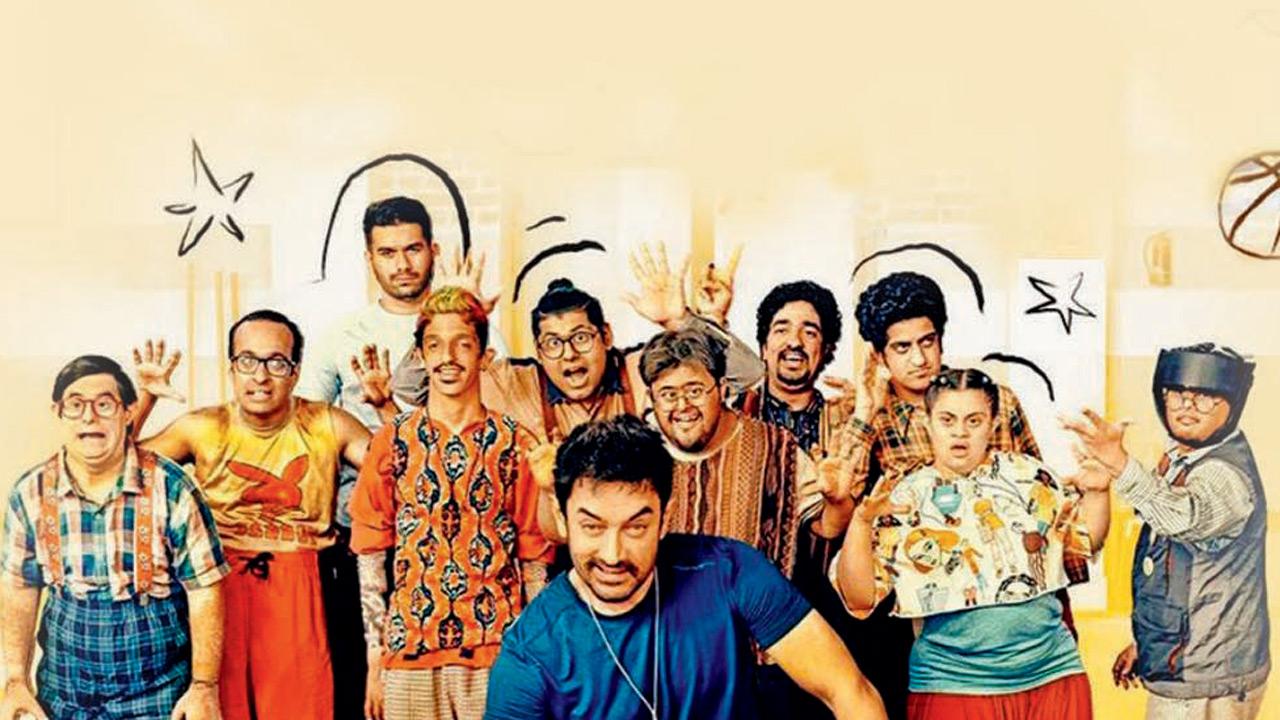
Bypassing the industry’s eight-week digital release norm and backtracking on his ‘theatre-exclusive’ stand, evoked mixed reactions from audiences and industry insiders alike
Priyanka Sharma, Komal RJ Panchal (MID-DAY; August 3, 2025)
Aamir Khan dominated the news cycle last week by announcing that Sitaare Zameen Par would be available on YouTube from August 1 for Rs 100 per view — just six weeks after its theatrical release. Bypassing the industry’s eight-week digital release norm and backtracking on his ‘theatre-exclusive’ stand, evoked mixed reactions from audiences and industry insiders alike.
Now, two days after the film’s YouTube premiere, mid-day speaks to audience members, trade analysts, and exhibitors to understand whether Khan’s decision has the potential to become a game-changer in film exhibition and revenue generation for Indian producers.
Trade analyst Taran Adarsh believes the actor-producer’s decision undermines a film’s theatrical business, which he had earlier claimed to safeguard
“This is a debatable issue. At one point, he said that he was looking out for the theatre people by refusing a digital release. Then suddenly, he is releasing it on YouTube in six weeks. He even made a statement, saying, ‘I’m protecting the cinema. I want the theatres to survive.’ How do you expect theatres to survive if people are going to watch it in six weeks in their home for Rs 100? It’s a bold move, but it doesn’t benefit theatres,” he says, before adding that perhaps the superstar’s logic is to reach areas with minimal or no theatre access, given YouTube’s wider reach thanks to the growing digital penetration in India.
“Maybe his logic is that at smaller centres where there are no theatres, people still have access to YouTube. That is understandable,” adds Adarsh.
Bihar-based exhibitor and trade observer Vishek Chauhan begs to differ, as he views film exhibitors as the “opening batsmen.” “Most people watch films at home. Theatres serve only two to three per cent of the population. As exhibitors, if our only value is the exclusivity window, we’re in the wrong business. Our job is to launch films, discover price, and create visibility. We’re like the opening batsmen.”
The pay-per-view model differs from selling the film to an OTT platform because it allows the star to build a direct relationship with his viewers. It also gives him greater control and flexibility over pricing and release on his channel, unlike OTT premieres, where streamers set the price, release plan, and enforce a stringent eight-week window.
To release a film on YouTube, a creator doesn’t need to pay the platform. Gunjan Soni, managing head of YouTube India, mentioned earlier this week that the platform works on revenue revenue-sharing model with the concerned creator/filmmaker. Reportedly, YouTube and Khan have struck a 45/55 deal, with the larger share reserved for the star.
In contrast, once a filmmaker sells a film to an OTT platform, they cannot earn any additional revenue from new subscribers the platform may earn. “The pay-per-view model isn’t strong in India, where subscription platforms dominate. What Aamir is doing is risky and idealistic, not pragmatic. He’s bypassing giants like Netflix and Prime Video. It may backfire, but it’s also courageous. I wouldn’t advise producers to skip OTT deals. But it’s his film, his choice,” says Chauhan.
But shouldn’t Khan have waited eight weeks to release the film digitally, considering he had earlier advocated a longer gap? “Aamir hasn’t made the film free. Two weeks ago, Housefull 5, which was on rent at Rs 279, is now streaming on Prime Video. Tamil films have long followed a four-week window. We need a flexible model — not every film can wait eight or 12 weeks. What if a film doesn’t do well theatrically? Why hold it back? Pirated prints are available within a day. If the theatrical run is exhausted, let the producer monetize it elsewhere,” Chauhan argues.
We ask an audience member who watched the film in theatres whether they would watch it again on YouTube. “Given its emotional appeal, Sitaare Zameen Par is likely to be watched repeatedly, especially among family audiences. Its availability at Rs 100 rental makes it an accessible weekend entertainer, particularly for viewers who don’t subscribe to OTT platforms — a segment that still forms a considerable share of India’s digital audience. Strategically, this move not only widens the film’s reach but also aligns with Aamir’s track record of pioneering unconventional distribution methods in Indian cinema. This model could further cement the film’s place as a contemporary Bollywood classic,” says Yash Pandit, a Mumbai-based PR executive.
Soumil Kamat, content consultant, who consumes films and shows on OTT, believes Khan’s earlier statement about not releasing the film digitally created a sense of urgency among theatregoers. “But now, since it is available so early at Rs. 100, I am thrilled because I missed it in theatres. However, many who spent a lot of money in theatres might feel cheated by Aamir’s previous misleading statement about not releasing it online.”
Ahaan Panday and Aneet Padda's Saiyaara becomes one of the biggest openers of 2025
8:34 AM

Mohit Suri’s romantic drama defies box office norms, becoming the biggest opener of the year for a film starring newcomers
Priyanka Sharma (MID-DAY; July 20, 2025)
If recent box office trends are anything to go by, Mohit Suri’s Saiyaara can be described as something that came out of the syllabus. Headlined by newcomers Ahaan Panday and Aneet Padda, the film has amassed an opening collection of Rs 21.25 crore, becoming one of the biggest openers of 2025 so far. It has also registered the biggest opening for a Bollywood film starring newcomers. It’s being talked about because it challenges the notion that romance is dead on the big screen, and that you need a star to open a film big.
But did anyone see this coming? mid-day asks trade experts. Bihar-based exhibitor and trade observer Vishek Chauhan says people who had their ears to the ground, did. “We got the first indication when Laila Majnu [2018] re-released and did tremendous business, followed by re-releases of Rockstar [2011] and Veer Zaara [2004] in 2024. When Sanam Teri Kasam [2016] re-released, it blew the lid. With their attendance, the audience told makers that they wanted more intense romantic films with solid music,” he explains, adding that it’s the youth who has championed the film.
“Saiyaara is being pushed and patronized by Gen Z. If the youth is not interested in your film, it cannot have a big opening. Since Saturday, calls have been pouring in from the family audience. It is breaking out in a different demographic now,” he says.
“Shah Rukh [Khan] started his career [with romance]. For me, he is my hero. But for this generation, he doesn’t have the same impact. He is either Vikram Rathod or Pathaan [his characters in Jawan and Pathaan, 2023]. Ranbir Kapoor gave his generation many romantic films — Rockstar, Yeh Jawaani Hai Deewani [2013], and Tamasha [2015]. Sadly, this generation did not have one, until Saiyaara,” he adds.
Trade analyst Taran Adarsh says Saiyaara showcases the power of music and visual assets, and proves that excessive promotion yields no benefit. “Back in the day, filmmakers focused on music. Even today, when we play Antakshari, we sing old songs because they are [still] fresh. Today, music is not given importance. It could have been a risk to not have actors promote the film, but the makers of Saiyaara were relying on the trailer and the music, which worked big time.”
Ground reality vs online rumours
There’s chatter that the number hype around Saiyaara, a YRF venture, is partly manufactured, aided by PR. Freelance journalist and filmmaker Fenil Seta calls it “denial”. “When I went [for a morning show], I was shocked to see 60-70 per cent occupancy. So, the hype is real and organic. We should [know] what is happening on the ground beyond online claims.”
Trade weighs in on success of Aamir Khan's Sitaare Zameen Par at box office
9:54 AM

Aamir Khan’s Sitaare Zameen Par earns over Rs. 57 crore in the first weekend; trade says it is the first ‘multiplex hit’ in the post-pandemic market that favours extravaganzas
Komal RJ Panchal, Priyanka Sharma (MID-DAY; June 24, 2025)
Aamir Khan’s star is finally shining bright at the box office. The actor’s latest release Sitaare Zameen Par has registered an impressive opening weekend collection of over Rs 57 crore. While the R S Prasanna-directed venture has spread cheer among exhibitors, trade analysts also note that the success is a marker of two crucial things — first, that Khan may have pulled off a wise move by skipping the post-theatrical OTT run. More importantly, the feel-good movie’s strong run can be seen as a revival of the genre that almost disappeared from the big screen in the post-pandemic market.
Exhibitor Akshaye Rathi says, “[In the past few years], we had Pathaan [2023], Jawan [2023], Gadar 2: The Katha Continues [2023], and Pushpa kind of films [becoming hits]. The notion was that people would come to theatres for these mass-oriented action films. I think this is the first multiplex hit since the pandemic. It’s good to see the genre, which targets urban India, being revived.”
Rajasthan-based exhibitor Raj Bansal shares that women and families are driving the footfall in his Jaipur multiplex. Noting that Sunday’s collection of Rs. 26 crore was almost 2.5 times the opening day’s figure of Rs 10.5 crore, Bansal is optimistic of the film’s growth.
“From now, Aamir’s decision to not [stream] the film on OTT will play a role. The first week’s collection should close at about Rs. 80 crore.”
Trade analyst Girish Johar adds that the movie has found takers in the international market too. “Over time, it could touch the Rs 100 crore mark in the domestic market.”
Vishek Chauhan, however, states that its success doesn’t indicate a change. “It does not penetrate the rural market. This is not the kind of film people in villages will throng to watch,” he says.
Sanam Teri Kasam's re-release proves to be financial success: "Initial release had resulted in Rs 25 crore loss"
3:15 PM

With Sanam Teri Kasam re-releasing in 400 screens, trade analysts expect an increase in shows amid the film’s unexpected popularity and low buzz around new movies
Mohar Basu (MID-DAY; February 8, 2025)
It’s almost impossible to predict the box office. The film industry saw it last year as the audience warmly welcomed re-releases, with Laila Majnu —a washout upon its original release in 2018—becoming a hit during its second run. It looks like Sanam Teri Kasam (2016) may have a similar fate. As the Harshvardhan Rane and Mawra Hocane-starrer re-released yesterday, producer Deepak Mukut said that the film’s screen count was originally finalized at 60, but was increased after seeing the audience demand.
“We had no plans to re-release the film, but about 70 fans came to our office and requested that we release it in the Valentine week. Initially, I was very unsure as the competition is high with Deva, and Loveyapa,” said Mukut, adding that the strong advance booking on online booking platforms has left him surprised.
“While the film’s 2016 release had resulted in a Rs 25 crore loss, the re-release has proven to be a financial success. We have almost 400 screens across 350 cinemas. Exhibitors have been increasing shows organically.”
While the love story had a poor run on its release, it gained a following over the years after its OTT release. But that isn’t the only factor driving its opening in theatres. Trade expert Girish Wankhede says the lack of buzz around the new movies has further helped it.
Wankhede says, “Badass Ravi Kumar is doing reasonably well, but Loveyapa has started slow. The new releases aren’t tracking as well. Sanam Teri Kasam has opened well. One can predict only after Saturday how many screens it will be increased to.”
Bihar-based exhibitor Vishek Chauhan says that while he had allotted one show during advance booking in his theatres in Patna and Gaya, he increased it to 80 by the time the film opened yesterday. “[After the rise in shows], I traced back and figured that a few months ago, some influencers convinced the producer to re-release the film. With Friday being Rose Day and Valentine’s Day around the corner, young people, who had never watched it in a theatre, made it a FOMO experience. This isn’t a case of corporate booking, young couples are coming to the film. Our Friday, Saturday and Sunday shows are sold out. So far, Yeh Jawaani Hai Deewani [2013] opened the highest at Rs 1.5 crore, among re-releases. This one can be estimated to go as big as Rs 8 crore. Loveyapa will struggle to make it to Rs 1.5 crore,” he says.
Are big-screen romances having a 'moment' in Hindi cinema?
8:33 AM

As re-releases of Hindi romantic hits draw audiences to theatres, mid-day asks whether this heralds a resurgence of big-screen love stories
Priyanka Sharma (MID-DAY; December 15, 2024)
Every age writes its own love story, and every generation speaks a new love language. But looking back at 2024 reveals we are stuck in a time warp, at least when it comes to love on screen. “Most people who have written to me since the re-release of Laila Majnu are in the age bracket of 13 to 17 years,” says filmmaker Sajid Ali, whose 2018 romantic drama became a hit upon re-release this year.
“When we made this film seven years ago, we thought we were making it for people in their 30s to 50s who have some understanding of classical literature. But ultimately, teenagers have held this film closer to their hearts.”
Initially, the Avinash Tiwary-Triptii Dimri starrer earned around R3 crore at the box office. Upon its re-release, the collection is estimated to be over Rs. 10 crore. Laila Majnu is not alone in a replay of success. Ranbir Kapoor’s 2011 angsty romance, Rockstar, re-ran in theatres for over a month and amassed more than Rs. 5 crore, doing better business in its fifth week than it did in the fifth week after its original release. Social media feeds are crowded with essays, videos, and pictures of youth loving the return of love. They don’t make them like that anymore, is the overriding sentiment. So then, is love lost in a crowd of actioners, spectacles, sci-fi and horror comedies on screen?
Filmmaker Vivek Soni, who has two romantic films coming up— Ananya Panday-Lakshay starrer Chaand Mera Dil and Aap Jaisa Koi on Netflix with R Madhavan and Fatima Sana Shaikh—says the success of re-releases speaks more about people’s desire to relive experiences, not genres.
“People go for nostalgic value,” he says, “Even I wanted to watch Dil To Pagal Hai and Veer-Zaara. People now want to watch Shah Rukh Khan’s dialogues and scenes again on the big screen. But will they watch a new romantic comedy? The test will be how well a new romantic release does in theatres.”
A studio executive echoes Soni’s sentiment: “Who doesn’t want to see SRK romancing once again? Or Ranbir Kapoor? Either you want to recreate the experience, or you missed it the first time it released and want another go. That’s what happened with Laila Majnu. It grew on OTT, and people wanted to experience it on the big screen.”
Since the COVID-19-induced lockdown, industry hits have either been big-scale actioners or horror comedies. Successful romcoms such as Teri Baaton Mein Aisa Uljha Jiya, Zara Hatke Zara Bachke have been far and few in between. “The audience has shown more interest in event films than relationship dramas,” says Soni.
“Most people prefer watching relationship dramas or mid-scale films at home. So, makers are cautious about the canvas and scale of what they make for theatres. Similarly, stars also do event films for theatres—the whole chain has been affected.”
The demand for romcom is higher on OTT. “Most romances have moved to OTT,” a trade pundit says, “and streaming platforms like them because they are low-stakes stories. Unless you find a big idea and scale within a romance, like Rocky Aur Rani Kii Prem Kahaani or the upcoming Dhadak 2, an inter-caste love story.”
Bihar-based exhibitor Vishek Chauhan believes the audience has no bias towards a genre but invests in films that offer something new. “Right now, only action [films] work because that’s what people are making. Once there’s a good romantic film, people will come to theatres to watch it; they haven’t sworn the genre off. A theatre release must be about everyone and be understood by everyone—from Pune to Purnia. Yesteryear directors like Yash Chopra understood India; they were connected to the roots. They knew how a common man thinks. Take for instance Dilwale Dulhania Le Jayenge (DDLJ)—it united classes—it started in England and ended in Punjab. Today, that understanding is missing.”
Another creative sheds light on challenges in making a romance palatable to the masses. “Earlier, the demographics were still homogeneous,” he says. But today, the fragmentation of audiences across multiplexes and B and C centres is enormous. People’s experience of watching the same thing is varied. There’s no homogeneity. A film like Animal will work in mass centres, even though the urban class criticizes it. Similarly, Rocky Aur Rani… did good business in urban centres but not in B and C centres. It’s difficult to have a DDLJ moment today.”
For Tanuja Chandra, who last helmed the charming romantic comedy Qarib Qarib Singlle (2017), it’s just a matter of time before love overtakes violence and action. “There is confusion in the industry at present,” she says, “and many producers don’t know which road to take. The perception is that pulling audiences with noise and fireworks [action and violence] is easier. I don’t think that’s true. And violence under a sheen of glamour is something to be wary of in a world sinking into an abyss of the most horrific violence. The perception that softer stories are unlikely to draw people to theatres has been proven wrong repeatedly.”
There’s also a creative challenge to making a romantic film that screenwriter Ankur Pathak breaks down: “A filmmaker recently told me, ‘These days, a large part of love takes place virtually… it doesn’t inspire the desire to shoot or create drama.’ A love story needs relentless conflict to sustain itself, and because our love lives are largely dependent on communication through WhatsApp, DMs and tweets, there’s not much room to make it cinematically exciting.”
Another creative professional shares how a high concept is necessary for a young love story to fly today. “Earlier, you could separate lovers, leaving no means of communication. If lovers are separated today, the whole communication needs to go haywire. Straightforward romance is becoming difficult to crack without a core idea. Or it has to have mature characters who reflect those times—like Qarib Qarib Singlle or The Lunchbox. These aren’t reflective of today’s romance. So you have to either go back in time or have mature characters.”
Soni believes success will come in making romance personal while understanding audiences’ tastes. “Until five years ago,” he says, “a simple story of two people falling in love, lots of songs and a milieu worked. Today, people don’t have the patience to enjoy slow-burn stories or even songs. While travelling by train the other day, I saw a gentleman watching a film on his phone, and he was constantly skipping the establishment shots. This is what we are dealing with.”
He adds, “My assistants are 10 years younger than me; they also want to experience passionate, intense love. They look at that kind of love with a sense of aspiration. As long as you make it personal, a romance will become aspirational.”
Chandra sums it up by saying love will find its way to the screen if filmmakers don’t play it safe. “A disarmingly honest story is bound to be compelling. We just need to be rid of our fears as storytellers.”
Exhibitors expect to struggle in allotting screens to Shah Rukh Khan-starrer Dunki and Prabhas-starrer Salaar
9:02 AM

Clash of SRK, Prabhas’s films at the box office makes divide between single screens and multiplexes evident as exhibitors struggle with screen allotment
Priyanka Sharma (MID-DAY; December 16, 2023)
Even though the release of multiple films on the same day is not an anomalous trend in the film business, it’s always a subject of discussion when the films in concern are fronted by two heavyweights.
A week away from their date with viewers, Shah Rukh Khan’s social dramedy Dunki and South star Prabhas-led actioner Salaar: Part 1—Ceasefire, have got trade experts speculating how the clash will affect box-office collections. Apart from analyzing the advance bookings of the films that will release just one day apart, distributors continue to decipher an appropriate way to schedule shows for both films, we are told.
Rajasthan-based distributor and exhibitor Raj Bansal calls this clash “iconic” given that two big stars from the North and South industries are set to face off at the box-office. “Salaar is stronger in the South because of Prabhas and director Prashanth Neel, who last delivered KGF: Chapter 2. Dunki is strong across India, but has an edge in the North. I feel, Dunki will take 60 per cent [of the seats] in the North, while Salaar will take 60 per cent in the South,” he says.
He is, however, quick to admit that clashes of this nature never favour either of the two films, with each facing the risk of losing 20 to 25 per cent of their business.
Bihar-based exhibitor Vishek Chauhan says the loss is even bigger for exhibitors. “Producers can still earn revenues from other platforms, like streaming sites and music rights. But an exhibitor finds himself in a fix. He would have preferred to showcase such big films independently to get good business. Right now, Animal is continuing to do well. Producers should understand and respect the challenge that such a clash poses to us. There are, after all, only four to six shows in a day. With [the Hollywood film] Aquaman also set to release over the same window, we will bear losses because we will have to divide screen time among four films,” he says.
While Bansal believes that single-screen theatres will favour Salaar, Chauhan says Khan’s collaboration with Dunki director Rajkummar Hirani is also a tease for this market that may not be keen on the genre of social narratives. “I have spoken to exhibitors from small cities, and none of them are ready to [ignore] Dunki,” Chauhan says.
Gautam Dutta, Co-CEO, PVR INOX Ltd, views the situation through a positive lens. He believes that the multiplex chain is equipped to allot enough shows to both the films. “Situations like these are good issues that we like to face, as they bring in huge footfall for cinemas. We are looking forward to the busy phase starting from the Christmas weekend and stretching right into the new year.”
INOX has 1,709 of the 5,000 screens in India.
Animal earns Rs. 246 cr in 4 days; trade experts say "Animal can challenge Pathaan and Gadar 2’s records"
8:11 AM

Despite ‘A’ certification and long runtime, Animal earns over Rs 240 cr in four days; trade says Ranbir’s dark character lapped up by male audience, fewer women takers
Priyanka Sharma (MID-DAY; December 6, 2023)
An adult-rated film, nearly three-and-a-half hours long, and relentless violence—Animal had many factors going against it. But four days since its release, Ranbir Kapoor’s action drama has reportedly amassed Rs. 246 crore across languages. This, despite Sandeep Reddy Vanga’s directorial venture being criticised for its violence and misogyny.
Bihar-based exhibitor Vishek Chauhan says Kapoor’s anti-hero protagonist is precisely why the film is doing unimaginable business.
“Sandeep Reddy Vanga flips the tools of commercial cinema. You have a protagonist, who is a villain, but the audiences are rooting for him. It takes you back to Shah Rukh Khan in Baazigar [1993]. Secondly, he projects his male characters as alpha male. You can call them chauvinist, sexist; they control their environment and women. The wife is shown as meek and docile. This connects with the male audiences, and that is the audience watching the film. In my theatre, so far, the female audience is [only] 10 per cent,” he says.
Distributor-exhibitor Raj Bansal says he had expected the action drama—also starring Anil Kapoor, Rashmika Mandanna and Bobby Deol —to open at Rs. 35 crore. “I felt the film’s collection would be less because of the length, the ‘A’ certificate, violence and disturbing dialogues. But the film earned Rs. 55 crore on the opening day. Even on Monday, it collected about Rs. 40 crore,” he says, surprised.
The trade expects Animal to enter the Rs. 500-crore club, and even challenge Shah Rukh Khan’s Pathaan and Sunny Deol’s Gadar 2’s lifetime domestic collections.
Chauhan shares, “Amit-ji [Amitabh Bachchan] became [an icon] because he was the angry young man, who represented the common man. Today’s youth is jobless. What they really want is respect, and this is what Sandeep serves them. Animal can challenge Pathaan and Gadar 2’s records. It has enough days till December 21 [when Dunki releases].”
Picture abhi baaki hai: Single-screen theatres get a fresh lease of life thanks to Gadar 2, Pathaan
8:35 AM

Return of mass entertainers revives theatres in small towns. But have filmmakers got the message?
Shruti Sonal (THE TIMES OF INDIA; August 27, 2023)
A spell of rain and a weekday afternoon do little to dampen the mood of cinegoers cheering the return of Tara Singh in ‘Gadar 2’. Claps, seetis, and slogans fill the nearly housefull hall at Delite Cinema, Delhi’s oldest surviving single-screen theatre. Outside the building, people are already lining up to buy tickets for the next show.
Little wonder that manager Janmayjai Verma is beaming with delight. “Nearly all shows of the film in our 1,000-seater hall are running housefull. Even Sunny Deol couldn’t have predicted this,” says Verma.
At Liberty Cinemas, just a few kilometres away, the scenes are similar. An old man, with a few notes in his hands, tells the man at the counter: give me a ticket for whichever show has seats left.
In smaller towns, theatre owners are similarly uplifted by the return of footfalls and collections. “After ‘Pathaan’, we are finally seeing momentum again. People from other villages are also coming to see the film,” says Kamal Khurana, owner of Urvashi Cinema, located in the small town of Kichha, close to Haldwani in Uttarakhand.
The cheer was much-needed, especially after the pandemic which dealt a fresh blow to an industry already struggling to compete in the age of swanky multiplexes, OTT content, and changing consumer preferences. According to Statista, the total number of screens dropped from 9,527 in 2019 to 9,382 in 2022. For most others, an epitaph was kept ready.
SRK EFFECT
But Shah Rukh Khan’s comeback film ‘Pathaan’ in January was among the first to prove the naysayers wrong. Nearly 25 small theatres reopened across North India, cashing in on the blockbuster. Now, ‘Gadar 2’ and superstar Rajinikanth-starrer ‘Jailer’, aided by ‘OMG 2’ and ‘Bhola Shankar’, have breathed new life into the Indian box office. As per the Producers Guild of India and Multiplex Association of India, ticket sales hit nearly Rs 400 crore during the August 11-13 weekend, an all-time record.
Suman Sinha, owner of Patna’s Regent Theatre, an iconic building that is older than independent India, says that nearly 200 screens have shut down across Bihar since Covid but some are back. “Those who feared ‘Pathaan’ was a one-off success now want to lift the shutters,” he says.
The impending release of SRK’s next ‘Jawan’, Salman Khan’s third installment of the Tiger franchise, and Prabhas’ ‘Salaar’ is expected to bring more business.
MASALA FOR MASSES
It’s all about the right content, say industry experts. “Mass audiences were just not being catered to. For the films which have resonated with them, they have come to the theatres in hordes,” says Girish Johar, Mumbai-based producer and film trade expert.
Vishek Chauhan, who heads Roopbani Cinema in Bihar’s Purnea district, feels there’s a larger message: don’t ignore the common man. “If it was just a problem of economic viability, single-screens wouldn’t be surviving in states like Tamil Nadu and Andhra Pradesh. The maximum closures have occurred in regions such as Bihar and UP, and that trend began long before the pandemic,” he says. The problem, he emphasizes, was with content that alienated viewers. “In the last decade, the Hindi film industry began thinking that their business could thrive by only focusing on metros. Cinema became elitist and unrelatable to the masses. ‘Pathaan’ and ‘Gadar 2’ should serve as wake-up calls.”
Regent’s Sinha says that to fill the vacuum created by Bollywood, they had to rely on dubbed versions of English films or South Indian movies. “Hindi versions of Telugu films such as ‘RRR’ and ‘Pushpa’ did well too,” he points out.
For Gadar 2, Johar says, as per his independent data analysis, single-screen theatres are contributing more or equal collections vis-à-vis the multiplexes. The difference in ticket prices in the two segments, he explains, also means that the footfall in single-screen theatres is more. “In recent years, box office revenue from multiplexes went from 30% to 60-65%, leading many to ignore single screens,” he adds. Now, as urban and metro audiences rely more on OTT content, smaller towns and villages are coming back to the cinema spotlight.
BETTER BARGAIN
On their part, single-screens are not the khatmal-ridden, sweaty experience of yore. “Almost everyone has updated their theatres, with digital projectors, pushback seats, and new-age sound systems. In the Delhi-UP belt, nearly 90% of the halls are now air-conditioned, and the rest are on track to do so,” Khurana says.
However, unlike multiplexes, tickets even today range from Rs 70 to Rs 190, while popcorn is an affordable Rs 30.
But they are not over the hump yet. The next two quarters are going to be a real litmus test, according to Shibashish Sarkar, president of the Producers Guild of India. “Jawan, Tiger 3 and Salaar are expected to do significant business. But the big question is, can films apart from these big names do well? It’s an industry that runs for 52 weeks and not just on a few blockbusters,” he adds.
Regent’s Sinha agrees. “Like democracy, theatres like ours are of the people, by the people, and for the people. We will do all we can to save them. All we need is films which understand the pulse of the common man too.”
Though Rocky Aur Rani Kii Prem Kahaani does well, trade says post-pandemic losses yet to be recovered as tier-2 centres are running dry
8:41 AM

Despite Rocky Aur Rani Kii Prem Kahaani and Oppenheimer enjoying a strong run, trade says post-pandemic losses yet to be recovered as tier-2 centres are running dry
Priyanka Sharma (MID-DAY; August 1, 2023)
The weekend gone by was nothing less than a carnival at the cinemas, as audiences had four distinct movies to choose from—romantic drama Rocky Aur Rani Kii Prem Kahaani, Christopher Nolan’s biopic Oppenheimer, Greta Gerwig’s satire Barbie, and Tom Cruise’s actioner Mission Impossible: Dead Reckoning - Part One. While the Ranveer Singh and Alia Bhatt-led dramedy earned Rs 45.90 crore over its opening weekend, Oppenheimer and Barbie have amassed Rs 91 crore and Rs 32 crore respectively, in its 10-day run. So, are we finally witnessing a turnaround after the dry spell of the past many months?
Not exactly. Trade analysts say the movie business is far from recovering the losses incurred in the post-pandemic era. “Thanks to Oppenheimer, Mission Impossible: Dead Reckoning - Part One and Rocky Aur Rani, many theatres had housefull boards this weekend. So, we are enthusiastic, but not elated. The industry has a long way to go before we can recover the losses incurred during the pandemic. We need four to five blockbusters to get there,” says exhibitor Akshaye Rathi, who runs a chain of cinemas across Maharashtra, Madhya Pradesh and Chhattisgarh.
Bihar-based exhibitor Vishek Chauhan is less optimistic. He points out that while theatres in metros have witnessed strong footfall, things haven’t changed in tier-2 and 3 centres. “These are primarily multiplex films. The single screens are dead. Audiences didn’t throng my theatre yesterday for Rocky Aur Rani Kii Prem Kahaani, which they did in the case of Satyaprem Ki Katha and Zara Hatke Zara Bachke. We can’t [only] consider the robust collections in metros, and say that theatres are doing well,” he explains.
Distributor Raj Bansal highlights another important factor—that the current business is largely being driven by three Hollywood films, with Karan Johar’s dramedy being the only exception. “When we look at the commercial business of Hindi films in 2023, we don’t have many [successes] so far except Pathaan, Tu Jhoothi Main Makkaar, Zara Hatke Zara Bachke and Satyaprem Ki Katha.”
On that count, Chauhan emphasizes that Rocky Aur Rani Kii Prem Kahaani, being a Johar venture, should have performed much better. “Even in the multiplexes, the film hasn’t gained the momentum that one expected from it. A Karan Johar film should have had an opening weekend of Rs. 75-80 crore,” he says. Fortunately, the movie is enjoying good word-of-mouth and should hold well in the coming days.
Bansal adds that the upcoming movies may give us those elusive blockbusters. “The limited advance booking of Gadar 2 is positive. Then, there is Jawan, and towards the year-end, our hope is pinned on Tiger 3, Animal and Dunki.”
Advance booking of Oppenheimer has exceeded that of many Hindi biggies this year
8:43 AM

Priyanka Sharma (MID-DAY; July 20, 2023)
Who would’ve thought the advance booking of a film about a theoretical physicist could topple that of Salman Khan’s Kisi Ka Bhai Kisi Ki Jaan (KKBKKJ) or Ranbir Kapoor’s Tu Jhoothi Main Makkaar (TJMM)? But Christopher Nolan’s Oppenheimer is doing just that, in the unpredictable times that Bollywood finds itself in.
The Cillian Murphy-led drama has so far sold more than 1.5 lakh tickets for the opening day alone in the three national chains—PVR, Inox and Cinepolis. In comparison, KKBKKJ had reportedly sold 57,000 tickets in advance booking in the three multiplex chains, while TJMM stood relatively higher at 73,000.
Oppenheimer has surpassed the advance ticket sales of all Bollywood films released in the past six months, except Shah Rukh Khan’s Pathaan, which reportedly sold 5.15 lakh tickets.
Exhibitor Vishek Chauhan says the huge advance sales of Oppenheimer is a testament to Nolan’s popularity in India. “Christopher Nolan has built a loyal audience; he is the only selling point of his films in India. He has made blockbusters for an intelligent audience, he doesn’t dumb down his films. That’s how a true brand gets created,” he says.
Trade analyst Taran Adarsh says these numbers not only reiterate the director’s fan following, but also the audience’s keenness to head to theatres. “Nolan has a strong fan base among the metro audience. That’s the reason for the phenomenal advances. Also, there is a scarcity of big films. This shows that people are ready to go to theatres, if you give them larger-than-life entertainment.”
Despite a limited release of 800 screens across the country, Greta Gerwig’s Barbie, starring Margot Robbie and Ryan Gosling, has so far sold more than 50,000 tickets for the opening day. A trade source notes, “It’s important to note that Barbie is limited to only national chains, with fewer screens. That’s what makes this number so big. By Friday, it should close at over 65,000 tickets.”
Trade experts discuss why Afwaah is struggling at the box office
8:05 AM

As Afwaah struggles at the box office, trade says limited release of Nawazuddin Siddiqui-Bhumi Pednekar starrer and lukewarm promotions were among the reasons for the social thriller’s undoing
Priyanka Sharma (MID-DAY; May 11, 2023)
Scrolling through director Sudhir Mishra’s Twitter timeline will throw up a recurring question asked by his followers: “Where do we watch Afwaah?” The Nawazuddin Siddiqui and Bhumi Pednekar-starrer hit the screens last week, and was widely praised by critics. But the film remains elusive to audiences. Reason being its unusually limited release. Bihar-based exhibitor Vishek Chauhan says the social thriller about rumour-mongering released in less than 60 screens across the country. In contrast, the other release of the week, The Kerala Story, opened in 1,276 screens on Friday.
So, what made a movie that has powerful performers like Siddiqui and Pednekar facing the camera, and the brilliant Mishra behind it settle for less? While some sources say that the makers didn’t give the film a fighting chance, trade analyst
Taran Adarsh admits that Afwaah deserved a wider release. “Every film deserves a dignified showcasing because a lot of hard work and time goes into making a film. So, makers should release a film properly and market it well,” he says.
Adarsh adds that the lukewarm promotions were another problem, pointing out that people weren’t even aware that the Anubhav Sinha-backed venture was releasing on May 5.
“There was no awareness in public about Afwaah. But as far as the promotional budget and strategy go, the producer is the best person to answer this. Also, The Kerala Story has become so big that every other film has got sidelined,” he adds.
Afwaah’s leading man Siddiqui too had qualms about the low-key release. In a recent interview, the actor called it “wrong”, asserting that the film should reach the audience. Exhibitor Chauhan, however, views the situation differently. He says that producer Sinha had to opt for a theatrical release because OTT platforms today refuse to buy direct-to-digital films.
“The producer is just trying to minimize losses. If the film had got 200 or 300 screens, I don’t think it would have fared better because there is no interest among the public. If there was some interest, we would have known, and the producer would have increased the screens over the weekend. But that didn’t happen,” he argues.
Blockbuster films from the South release across India simultaneously; experts talk about why this is a good thing
8:48 AM

Heena Khandelwal (MID-DAY; July 31, 2022)
The concept of a pan-India film release isn’t new, say most film trade analysts and exhibitors. Mani Ratnam did it with 'Roja' (1992) and 'Bombay' (1995)—both Tamil films dubbed into Hindi and received well in North India. 'Hum', did it even earlier, in 1991. The movie starred superstars from both ends of the country—Amitabh Bachchan and Rajinikanth—and became one of the highest grossers of the year. Then 'Baahubali', both 'The Beginning' (2015) and 'The Conclusion' (2017), changed the game.
“It was a huge success,” says film trade analyst Komal Nahta. “Even today, 'Baahubali' is the highest-grossing Hindi film even though it is a dubbed one. No original Hindi film has been able to outdo it. Every South Indian producer wants to get on this bandwagon because the costing is minimal. You just have to record Hindi songs and dub the dialogues; nobody is spending Rs. 5 crores on promotions in the Hindi market. And if the film clicks, it is a huge profit margin.”
Calling 'Baahubali' a wake-up call for South Indian filmmakers, film trade expert and exhibitor Vishek Chauhan notes that the problem was that they assumed the market was saturated. It was further maxed out by increasing ticket prices to compensate the stars’ fee, which Chauhan says, is “huge, almost at par with Bollywood”.
“But Baahubali’s success showed them a huge market,” he says, “Plus, Bollywood had stopped catering to the masses for a few years, and was looking only at the niche and elite market. This allowed South Indian films a backdoor entry. YouTube and Satellite TV is full of dubbed South Indian films, which has made actors from the South—Allu Arjun, Ram Charan, Vijay Sethupathi, and others—a household name in the North. With 'Baahubali', they uncovered their clout and muscle at the box office and flexed it with both the instalments of 'KGF' [2018 and 2022], Saaho [2019] and 'RRR' [2022]. 'Pushpa: The Rise' [2021] was like a bolt from the blue. Even Vikrant Rona’s opening is surprisingly good.”
Film exhibitor Akshaye Rathi agrees: “It was an absolute misconception that people weren’t looking for mass entertainment. A huge chunk of the audience doesn’t have too many avenues for outdoor recreation. While a certain section can go to a nice restaurant or to watch a play, for the audience at large, cinema is the only leisure activity with friends and family. In tier 2 and tier 3 cities, the prevalent recreational activity is going to movies. This section is about 75-80 per cent of India’s population. Filmmakers have been depriving them of an appealing genre of entertainment. And, now that we are giving it to them, they are lapping it up in big numbers. We have seen that with 'Sooryavanshi' [2021], 'Pushpa', 'KGF', 'RRR', and even 'Bhool Bhulaiyaa 2'.”
To him, it makes economic sense for a filmmaker to look at the whole country as the market, considering India has fewer screens per million (between 8 to 10 screens, against USA’s 124).
“If we further divide deployment of content on the basis of language, we limit the potential of our business,” Rathi says “OTT has enabled access to so much diverse content so suddenly that the audience is familiar with content made in any state. That’s why crossing this bridge has become easier.”
What does this mean for Bollywood? Stop taking the audience for granted, echoes everyone. “Going to a theatre is an expensive affair in terms of money and time, so the audience wants value for money,” notes Chauhan, adding that post the pandemic, only films that appeal universally do well in theatres.
“COVID-19 changed the market entirely—a shift that would have taken place over a decade, happened in two years. The audience is not shy to explore a different genre, hero, language, or market. OTT has made the film business a level-playing field. Even in Hollywood, only big hero films do well theatrically; others are coming to OTT.”
“This [South Indian films releasing across India] helps us up the bar for storytelling and technology. 'Baahubali', 'KGF', 'RRR', are all technologically extraordinary. I hope the upcoming films—'Brahmastra', 'Pathaan' and 'Tiger 3'—do well, considering they have similar grandeur and ambition. In a way, it made us realise that commercial cinema remains intact,” says film director and writer Milap Zaveri, adding, “At some point, commercial cinema was looked down upon by critics and elite people in cities like Mumbai. So films were made keeping critics in mind and high end multiplexes. Somewhere along the way, we stopped catering to the masses. Every commercial film may not work, but one failure shouldn’t stop us from doing it again. Even in the South, after RRR, Ram Charan released Acharya [2022], which didn’t do well; but that doesn’t stop the others because that’s the base of their industry. This pan-India release phenomenon is a wake-up call. Post pandemic, if people invest time and money in a film, they expect a spectacle. Even Hollywood is ruling the roost with the Marvel series.”
Interestingly, the OTT space remains unfazed, says Sidharth Jain, former creative head for Hotstar and founder of The Story Ink, the largest book-to-screen adaptation platform. “Bollywood is making the classic mistake of copying content from the South again,” he says. “Instead, they should understand that the audience wants to watch compelling stories, and that films that do well don’t follow a trend. OTT has always offered a buffet, so there is no threat to one particular kind of content. But yes, they are commissioning more series for the Southern market.”
Subscribe to:
Posts (Atom)