As a filmmaker, for years I felt like that dhobi ka kutta, na ghar ka na ghaat ka-Mira Nair
8:11 AM
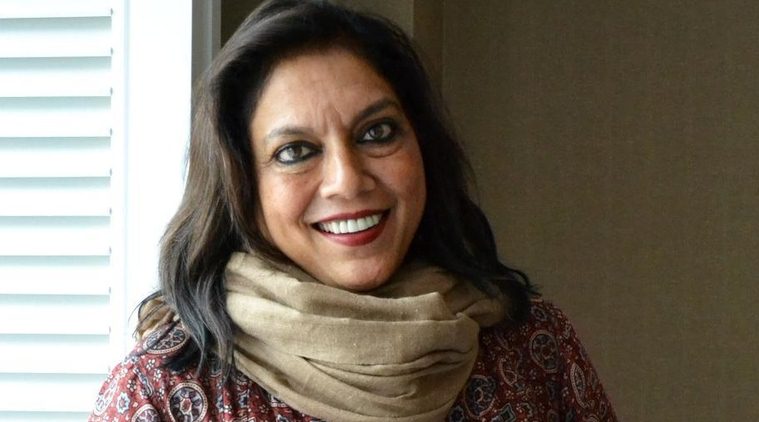
Niharika Lal (BOMBAY TIMES; October 7, 2021)
“If we ever deserve the title of an artist, we must welcome madness as a vital guest,” believes filmmaker Mira Nair, whose nickname happens to be ‘Pagli’. She also adds that filmmaking is a disease, which means she is “super sick”. The Namesake director recently shared some of the highlights from her 40-year filmmaking journey during the 23rd convocation ceremony of FTII (Film and Television Institute of India). From Monsoon Wedding (which she considers to be a ‘reality check’ on Indian weddings) to the Reluctant Fundamentalist (a film about a “South Asian boy who loves America and feels betrayed by it”), she walks us through her acclaimed works. Excerpts:
‘ABROAD, IN THE ’80s, I HAD TO TOLERATE AUDIENCES WHO ASKED ME HOW I SPOKE SUCH GOOD ENGLISH’
“As an Indian filmmaker in New York in the ’80s, I would ride the bus with all my documentaries under my arm, and would show them to anyone who would want to see them – women’s groups, NGOs, universities, and anyone else. I had to tolerate audiences who would ask me if there was tap water in India, and how come I spoke such good English?”
“Those years, I must say, I discovered the loneliness of being an artist. I didn’t want to be a cultural ambassador of my country, educating Americans about my homeland, but back home in India, my films were also seen as alternative. My documentaries were the opposite of anything that came out of what is now known as Bollywood. I was a complete outsider.”
“There is a saying in our country – ‘dhobi ka kutta na ghar ka na ghat ka.’ And for years of making films, I felt like that dhobi ka kutta. Not understood at home, but considered a novelty abroad. I found that people who inhabit different worlds can see through each of them. It is such people who have a sense of modesty who know that there are other ways of seeing and who develop an appreciation for it rather than a mere charitable tolerance for the other ways of life.”
“As a young person, I grappled with the question, ‘Can art change the world? Can art impact the world?’ My first feature film Salaam Bombay! in 1988 grew out of my documentary roots. I worked with training street children in film acting so I could accurately portray their reality in my film. I also wanted the story of Salaam Bombay! – a mix of street kids with actors like Irrfan (it was his first role in any film) Raghubir Yadav, Nana Patekar and Anita Kanwar.”
‘WE’D ALL SEEN HUM AAPKE HAI KOUN..!, BUT NOTHING RESEMBLING ACTUAL DELHI PUNJABI WEDDINGS’
“Mississippi Masala (1991) was a radical film then. Brown and black (faces) had never been seen together in a frame, leave alone falling in love. I was attacked soundly by members of the Indian community here (US). But it is a film that lives on. It is still radical – black and brown faces in a frame, celebrating both our commonalities and differences.”
“I then made Monsoon Wedding (2001) largely with members of my family and a script of a student of mine at that time – Sabrina Dhawan. I wanted to very much make a ‘reality check’ version of our shaadis. We had all seen Hum Aapke Hain Koun..! and other great Bollywood movies on weddings, but there was nothing that resembled what it really felt like going to a Punjabi wedding in Delhi where I live. So, we made Monsoon Wedding. As much as it was about masti, music and intoxication of life that Punjabis are known for, it was also more importantly about the blanket of silence that lies in the hallowed ground of families – the secrets and conflicts in family that are never spoken of.”
‘NOW IS THE TIME WHEN WE MAKE OUR STORIES OUR OWN WAY’
“The Namesake (2006) is about the movement and the crossings of people like us – the bridges, trains, planes and airports. These would be the threads of the film that gave us the tapestry that covered 30 years of Ganguly family’s life between New York and Kolkata. The duplicity of worlds is something that I know well, and this is something that cinema realises in such a powerful and effective way. Because of this, I feel in the creative realm, borders and bridges need to be fluid. I try to tell stories in which people can see themselves. It takes courage to be original, especially for those who have been told from the past few centuries that the west is the mirror where they can see their future, which I don’t subscribe to.”
“I was then inspired to make a contemporary film about Pakistan – The Reluctant Fundamentalist (2012) – especially in this day and age, when the perceived schism between Islam and the world becomes more pronounced. The west has its coming-of-age stories, but where is the one which is about a South Asian boy who loves America and feels betrayed by it? It was always time for our stories, but now is the time when we will make them our way. The cruellest impact of colonialism is the belief that we are incapable of representing ourselves. We must put this crisis of self-confidence behind us.”

Subscribe to:
Post Comments (Atom)
Post a Comment