Showing posts with label Film and Television Institute of India. Show all posts
Showing posts with label Film and Television Institute of India. Show all posts
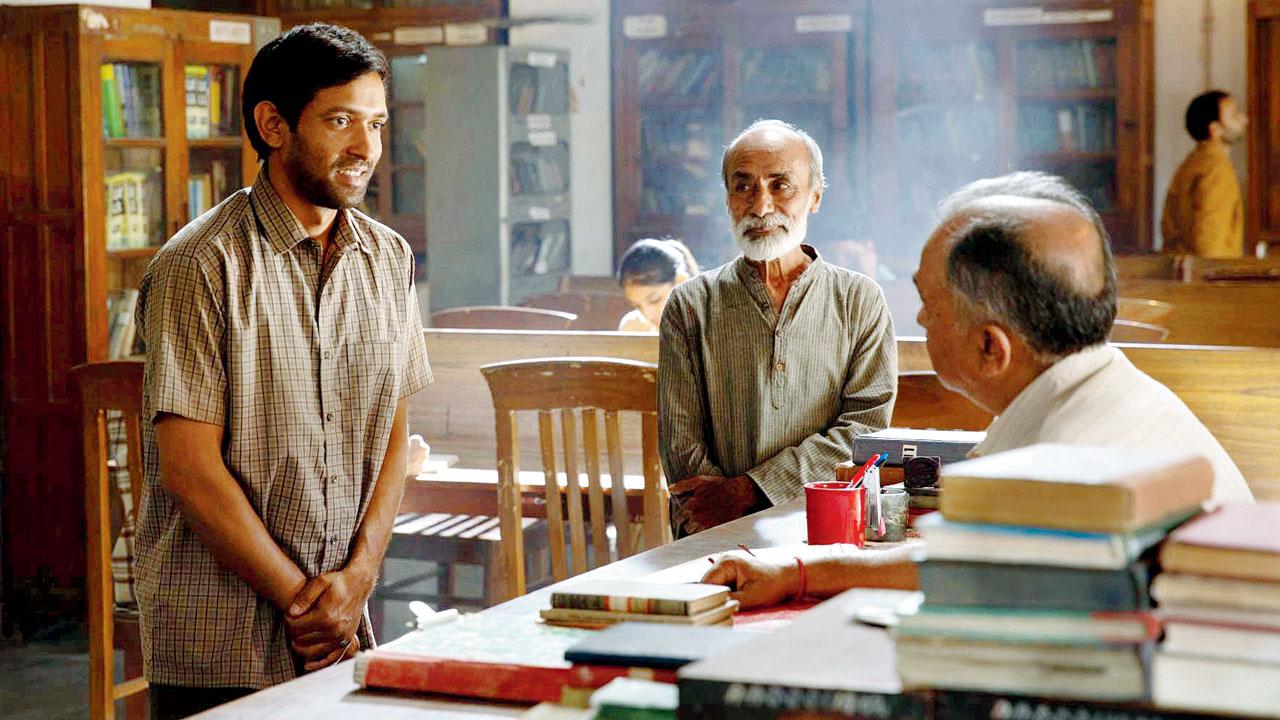
I feel like I’m the face of a new kind of Bollywood-Vijay Varma
4:51 PM

Onkar Kulkarni (BOMBAY TIMES; October 20, 2026)
Dussehra is a celebration of the triumph of good over evil, a theme that resonates as much in our epics as it does on screen. This year, Vijay Varma celebrated the festival exclusively with Bombay Times, bringing a touch of tradition to the occasion as he arrived dressed in traditional attire. In a conversation with us, he recounted childhood memories of Dussehra, reflected on the timeless significance of the festival, and shared his thoughts on what it takes to be the new-age leading man.
‘I have two distinct memories of Dussehra’
Sharing his memories from Hyderabad and Rajasthan, Vijay says, “I have two distinct memories of Dussehra, each rooted in a different place. One is from Hyderabad, where I was born and raised. We would go to a mela held on a massive ground near the Old City, where they would burn the effigy of Ravana. It used to be incredibly crowded, and I remember sitting on my father’s shoulders to get a better view of the ceremony. That image has stayed with me. My second memory is from Rajasthan, where I lived with my grandmother for a few years. The Ramleela performances there were beautiful.”
‘My understanding of grey helps me understand both white and black’
Reflecting on Dussehra’s age-old theme of good triumphing over evil, the actor believes that human nature cannot always be separated as black and white. He says, “I find humanity in everything. You may disagree with a lot of things about people, and some people may be terribly wrong, but as an artiste, my job is to investigate those who are seemingly discarded as bad people. If there is no representation of different kinds of personalities, our collective understanding of them remains limited.”
The actor, who headlined the series Matka King this year, one of the highlights of his career, adds, “Great drama lies in conflict, and conflict cannot exist only in white; it has to have shades of grey. My understanding of grey helps me understand both white and black. I don’t see white and black as complete in themselves. Any flaw in a character becomes an opportunity for me to understand him. I cannot understand a flawless person. My job is to shed light on these complexities and portray them truthfully so that the story works.”
‘Every new character pushes me to break my inhibitions’
He adds that every role pushes him to confront his own inhibitions and prejudices. Citing Matka King, he says the character’s honesty in a corrupt system made him particularly fascinating to explore. He says, “Every new character pushes me to break my inhibitions and set aside my personal biases and prejudices. In Matka King, I found a fascinating character in a man whose superpower is his honesty. In a system where people can be bought and manipulated, an honest person becomes dangerous.”
‘Ultimately, the pursuit is to become a better version of yourself’
The burning of Ravana’s effigy represents the destruction of negativity. Reflecting on the personal and professional obstacles he has overcome, the actor says learning to rise above failures and self-doubt has been an important part of his journey.
“As artistes, we have to go deeper, overcome our inhibitions, biases and prejudices, and work on the obstacles that hold us back. I spent years with no recognition, success, work or money, and no certainty about tomorrow. The biggest challenge was to keep going with hope, without letting my spirit break. Failures can bring you to rock bottom, but they also help you rediscover your strength and improve yourself. Ultimately, the pursuit is to become a better version of yourself.”
‘I feel like I’m the face of a new kind of Bollywood’
From playing Moeen, the drug peddler in Gully Boy, Hamza, the abusive husband in Darlings, to Anand Swarnakar, the serial killer hiding behind the facade of an ordinary family man in Dahaad, the characters he portrays are flawed, morally complex and far removed from the traditional leading man. Does he believe he is part of a new generation redefining what it means to be a hero?
He explains, “I feel like I’m the face of a new kind of Bollywood, because the traditional kind of films that used to be made are not being made now. In fact, they are not making those films even with younger stars. Where is Jaane Tu Ya Jaane Na? Where is a film like that? Where are the films that Shahid Kapoor starred in during his earlier days? That switch has happened. I am just fortunate to be in this place where stories that I like are being made. There are actors who are very good at bringing people to the theatres, but I think I am an actor that will make sure that people will not leave the theatre. An actor’s job is to capture them and give them an immersive experience where they don’t even want to look at their phones.”
‘I have portrayed my own versions of Ravana’
Talking about being a part of Ramleela on stage, he shares, “I have been part of a Ramleela during my time at FTII. Jaideep Ahlawat played Ravana, another friend played Ram, Sunny Hinduja was Hanuman, and I played Jatayu. Later, I even played Sita in one of the short films we made as students. I have never played Ravana on screen, but I have portrayed my own versions of the character in different ways.”
(Location Courtesy: The Tanjore Tiffin Room, Versova)
Its embarrassing to judge a film by its box office numbers-Divyenndu
10:07 AM

Toshiro Agarwal (BOMBAY TIMES; October 16, 2026)
When we reached actor Divyenndu’s hotel in the city—huffing and puffing—and asked the security personnels to lead us to the celebrity’s room for his interview, a group of men came running with a plastered smile on their faces, declaring, “Haan! Munna Bhaiya aa gaye hain.” Upon hearing this anecdote, a visibly proud and evidently flattered Mirzapur-star replies, “This character is not mine, it’s theirs. They have the ownership of this more than me.”
But this level of adulation should come as no surprise to anyone who has followed the actor’s career trajectory. His Pyaar Ka Punchnama character Liquid, for instance, is a classic example of that. Perhaps his sense of perspective that the audience immortalizes iconic charcaters on screen comes having spent years navigating an industry that has changed considerably since he first arrived in Mumbai. For Divyenndu, however, the journey began in Pune, at the Film and Television Institute of India (FTII), an experience he still carries with him.
Pune and ‘Planet FTII’
“Pune will always have a special place in my heart because those two-and-a-half magical years at FTII changed a lot of things for me,” he says,” adding, “I learnt so much about cinema and spent my days watching films, learning, shooting and discussing cinema with students from different parts of the country. It was such a magical experience, and that's why Pune remains so special to me,” he recalls.
The atmosphere was so immersive that students had a name for it - Planet FTII. Why? “Because the campus had everything. Once you entered, you didn't feel like going out,” says Divyenndu.
‘Don’t have a sob story to tell’
About 15 years into his career, Divyenndu doesn't see himself as someone who has finally figured out the industry.
“I don't think I understand the industry any better now,” he admits, adding, “I don't really have a sob story to tell because I got lucky that my first film was a hit, and my second film was a hit too.”
What followed, he feels, was partly ‘self-inflicted pain’. Despite receiving offers, there was always the keeda of not wanting to play certain kinds of roles, prompting him to turn down projects. Looking back, though, he sees an industry that has evolved alongside him.
“It’s more organized now, there are more opportunities for outsiders like me, and audiences have developed a much more varied taste. They are more accepting of flawed, layered characters and different kinds of stories. Writers have also come a long way. I'm just happy that I've been part of that movement and have witnessed this change,” says the Madgaon Express actor.
‘You never really know what audiences will connect with’
Divyenndu is uncomfortable with the increasing emphasis on box-office figures and the industry’s tendency to celebrate opening-day or opening-weekend numbers. “I find that quite embarrassing because filmmaking shouldn't be reduced to box-office numbers,” he says. He acknowledges that numbers matter to the business but doesn't believe they necessarily determine the quality of a film. More importantly, he doesn't think audiences should be made to feel responsible for supporting a particular film or filmmaker.
“Whatever they see in a trailer should engage them and they should decide for themselves whether they want to watch it in a theatre or later on OTT. The beauty of this field is that you never really know what audiences will connect with. I would never want to burden them with that choice,” he shares.
‘There should be some mystique to an artist’
At a time when actors are expected to remain as visible as possible, be it on social media or at events, Divyenndu is comfortable with the idea of disappearing. “I'm not a publicity-hungry actor who's always out there,” he adds, “I believe there should be some mystique to an actor or an artist. Do your job, go back and do whatever you want. Go stare at a wall if you want to, but you don't have to tell people that you're sitting and staring at a wall.”
For him, there is an important distinction between being relevant and being constantly visible. He worries that constantly projecting a public persona can eventually make actors lose sight of who they really are. “You can eventually lose the real you in all of it. You start projecting a certain image of yourself, and that behaviour can reflect in your work,” he says, adding, “For me, life is much better when you're seen less. Sometimes I even feel like quitting social media altogether.”
People hardly know me, want to remain that way, says Hanuman Ansh's Shobhinaw Satyaa
10:26 AM

Deep Saxena (HINDUSTAN TIMES; September 10, 2026)
With Hanuman Ansh emerging as one of the year’s surprise box-office successes, its 31-year-old lead Shobhinaw Satyaa has found sudden fame playing spiritual guru Neem Karoli Baba.
But the actor would rather remain an enigma: “People hardly know anything about me, and I want to remain like this and about my personal life details. I have a reserved nature! Now, I use Instagram somewhat, but before the film’s teaser release I had hardly 2-3 posts and about 200 followers (now 225K). I prefer staying away from my mobile for hours.”
Satyaa says he takes inspiration from late actor Amrish Puri. “I am a big fan of Amrish sir for how he kept his real life and voice hidden from public glare and kept it for the screen. I will keep following the path that Hanuman ji shows – jahe vidhi rakhe Ram, tahe vidhi rehiye!”
'Trailer started 10 years back'
His casting in Hanuman Ansh, directed by Dr Vishal Chaturvedi, was itself unexpected. On his magical journey he says, “Everyone knows that from an assistant director, I landed in this role after the actor fell ill but the magic started 10 years back. I was assistant director in a student film Dhai Kalo by Vivek Kelkar in FTII, Pune and the lead actor got stuck and I did the lead role. Hanuman ji ne then tab trailer dikhi thi ab puri picture dikha di.”
Shobhinaw knew he had a career in acting but had no idea how to go about it. “I just wanted to do something big and now my friends say you manifested it but I did not realise it then. It has been 10 years and I kept my promise to myself that kuch chota-mota role nahi karoonga!”
No to abuse and voilence on screen
He reveals that not been approached by anyone till now. “I am not even thinking about it right now and focusing on how this film and Baba’s name can reach everyone and everywhere. I will surely experiment but apni maryada ka khayal rakhonga my whole life – any saint, culture or great Indian personalities. I can’t abuse and do violence on screen as in real life too. I don’t speak such language, nor do I smoke or drink and live a satvik life. So, I will not do what I am not as I won’t be able to do justice to it!”
He feels that actors don’t get typecasted anymore like during the days of old Ramayana, Mahabharata and Sai Baba shows. “Now, things have changed. Earlier, people used to get stuck in one image but now industry and audience both accept actors, thanks to the Internet and social media.”
About Shobhinaw:
Shobhinaw was born in Khairabad, Sitapur and then after class VII shifted to Lucknow after hiis father’s posting and studied from Brightland Inter College.
“I joined Lucknow University but man nahi laga so did graduation from Faizabad University and simultaneously did acting course from Opulent School of Acting & Films in Lucknow and a small course at FTII, Pune. My father retired from the education department, mother has been a teacher, and I have a younger sister. They watched the film and had tears in their eyes. But, they roasted me in an interview saying ‘yeh ansoon baba ke liye hain, Shobhinaw ke liye nahi’.”
‘Please don’t touch my feet’
“When people touch my feet, I get very embarrassed as mere liye paap hai yeah. I tell them to hug and go touch the feet of Baba’s Shrimurti as I am only his daas and I have done this role on his direction,” he says and adds, “I first got introduced to Baba in 2009 when I was in High School when my friend Shubham Mishra showed my Baba’s story and his grandfather has done seva of the Baba so I heard many stories of him and since then I have become his follower.”
Everyone told me he was a famous director, but that I should work with someone like Shyam Benegal-Mita Vasisht
4:47 PM
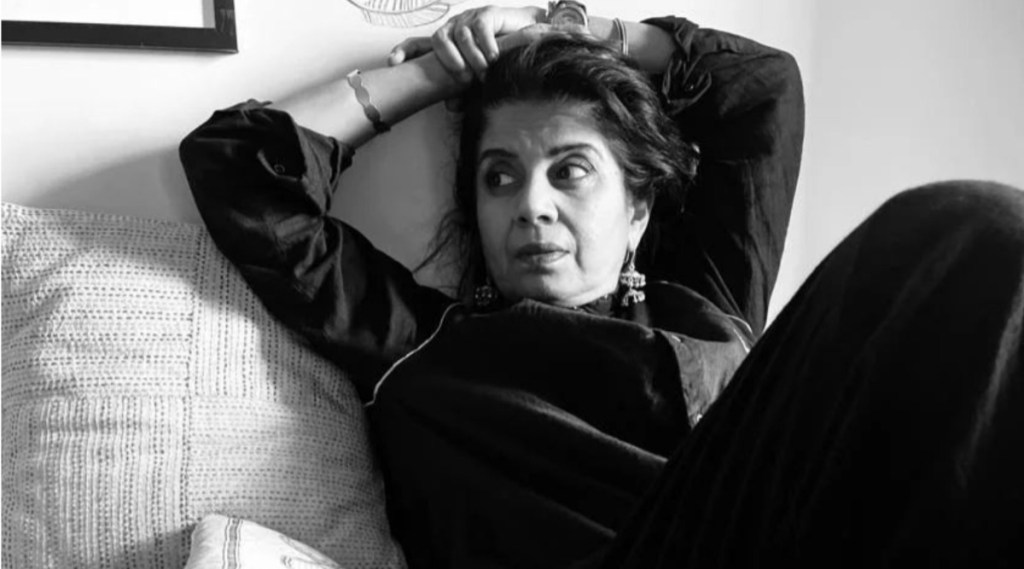
Veteran actress Mita Vasisht revisits the lessons she learned from filmmaker Mani Kaul, ahead of her feature’s Mumbai premiere
Soniya Pondcar (MUMBAI MIRROR; July 15, 2026)
It is easy to forget that before she became a familiar face across television, theatre and cinema, Mita Vasisht was simply another young actor fresh out of the National School of Drama, hoping for the role that would change everything. That opportunity came after her striking turn in Kumar Shahani’s 1986 short Var Var Vari caught the attention of Mani Kaul who, by then, had already secured his place among the defining voices of India’s New Wave cinema with films such as Uski Roti, Ashadh Ka Ek Din and Duvidha.
Kaul would go on to become her mentor, teacher and, ultimately, a lifelong guide. “It was after he saw Kumar Shahani’s film that he decided to offer me Siddheshwari,” Vasisht recalls, referring to the docu-feature on the Thumri artist that turned her from a budding actress into an arthouse regular.
“I hadn’t seen any of his films. I didn’t know who he was; I was just a young actress at the time. Everyone told me he was a famous director, but that I should work with someone like Shyam Benegal instead, to win National Awards. For some reason, though, I was drawn to him.”
Thirty-seven years after that breakthrough, Vasisht has chosen to honour the man who shaped her craft. Her film, Mani Kaul And That Thing Called The Actor, celebrates his mind. After a screening at the Film and Television Institute of India, Pune, on June 6, the anniversary of Kaul’s death, Vasisht brings the film to Third Bell Studios, Versova, on July 16.
An artistic paradox
Kaul was a man of many quirks, and one shaped the very title of Vasisht’s film: his distrust of trained actors. “He disliked trained actors,” she laughs. “I had trained for four years at NSD, and before that at the Department of Indian Theatre in Chandigarh. Yet he cast me in the lead role. I later realized he wanted to challenge me, to help me break free of every convention I had learned.”
This insistence, Vasisht discovered, was Kaul’s way of letting an audience find its own emotional response rather than have one imposed on it. “We were taught us things connected to acting: painting, sculpture, music, poetry,” she says.
“Most people considered him a non-actor director, but I found him deeply connected to the craft, with no patience for loud, outward performance.”
Real and reel
Capturing the life of such an unconventional figure proved a creative challenge. Vasisht refuses to call her project a documentary, preferring the term “fiction feature”. “It follows an actress and a young musician who travel through a director’s mind while they prepare for Siddheshwari,” she explains.
“The film moves before and after that making of the film, and deconstructs the process of its own making.” Vasisht wanted to present the auteur’s psyche, beyond the reach of a conventional biopic.
“I don’t know if Kaul ever wanted to be an actor. He thought he might, but he never appeared in a film beyond his diploma projects.”
After FTII, Kaul turned to direction and produced his acclaimed debut Uski Roti at twenty-five, “an extraordinary film by any measure.”
Both sides of the lens
“I studied Kaul closely and noted everything he told the cinematographer or the costume designer. Few realise how much work goes into a single moment on camera,” says Vasisht. Aside from him, though, she credits directors like Shahani and Govind Nihalani for her path into filmmaking.
“I observe directors very closely to see what they’re searching for. What they ask for isn’t always what they’re actually trying to achieve.”
The film is, in many ways, less a tribute than that conversation continued across time. Vasisht hopes it will introduce a new generation to not just Kaul but to ideas that remain as radical today as they were nearly four decades ago.
In FTII, I was very close to shifting from acting to direction-Sayani Gupta
8:28 AM

Priyanka Sharma (MID-DAY; April 6, 2026)
“Finally!” That has largely been the reaction of her co-stars and batchmates at Film & Television Institute of India (FTII) when Sayani Gupta told them about her directorial debut. The actor has turned writer, director, and producer with the upcoming short film, Aasmani.
Gupta always knew that her work in the movies would go beyond acting. “I had taken specialization in acting, but I was always interested in understanding how films were made. While studying [at FTII], I was doing well in other departments. In fact, I was very close to shifting from acting to direction. A lot of my directors and co-stars have asked me about when I would make a film because I’ve always been a filmmaker and not just an actor on a set,” she told mid-day.
After the pandemic, Gupta took some time off from her acting projects and wrote Aasmani. “I never thought I’d make a short film. I always thought I’d make a feature,” she smiled.
The short film is the first-time director’s homage to the strong women who raised her. She found another inspiring woman in Revathy, her leading lady. “I lucked out with her. She has worked with a lot of first-time directors, all of them women, and being a director herself, her understanding is top notch. Yet, she was like a student.”
We used to stay in rooms that cost Rs. 50 per night and watch around four films a day at IFFI Goa-Vijay Varma
9:31 AM
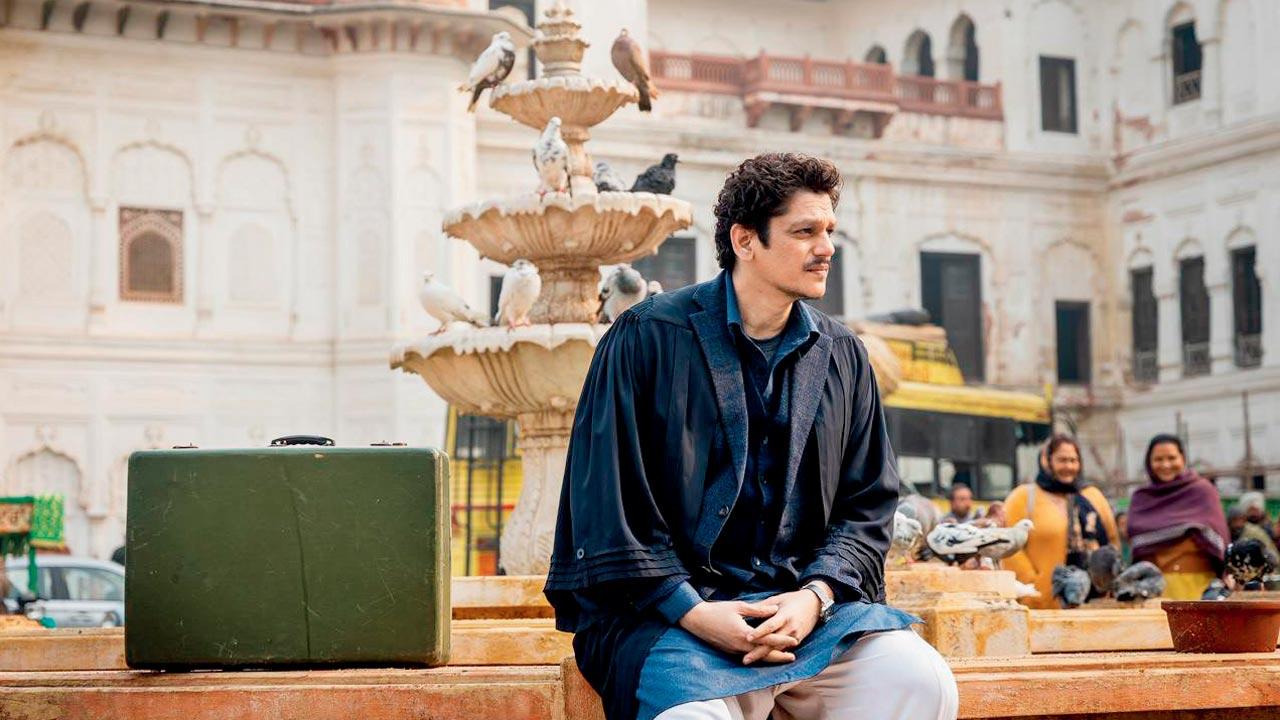
Kimberly Colaco (BOMBAY TIMES; January 19, 2026)
From staying in rooms that cost just Rs. 50 a night during his early visits to the International Film Festival of India (IFFI) to returning to Goa years later for the premiere of his own film, actor Vijay Varma says his journey has come full circle. Speaking to us, Vijay recalls attending IFFI between 2005 and 2008 as part of the Film and Television Institute of India (FTII) tour.
“We used to stay in rooms that cost Rs. 50 per night and watch around four films a day. This is where I learnt about cinema,” he says, adding, “Going back to Goa for the premiere of my own film, Gustaakh Ishq, where I play the lead, truly feels like a full circle.”
‘OTT IS BENEFICIAL FOR EVERYONE INVOLVED’
Known for his intense roles in films and series, the actor also shared his thoughts on the growing OTT space.
“OTT is a win-win situation for both viewers and makers. When a new avenue opens up, it creates more opportunities, especially with streaming, which offers the freedom to tell stories that may not traditionally make it to the screen due to budget, subject or star power.”
He added that OTT platforms have ushered in a new wave of storytelling and audiences. “It has created a strong fandom and opened doors for actors, writers, directors and technicians alike. It’s truly beneficial for everyone involved,” said Vijay, who was recently seen in Gustaakh Ishq with Fatima Sana Shaikh.
Ever since I came to Mumbai, I haven’t missed a single play that Naseeruddin Shah has done-Vijay Varma
9:08 AM
Vijay Varma discusses how he turned down several conventional romantic dramas before saying yes to his first love story in ‘Gustaakh Ishq’
Priyanka Sharma (MID-DAY; November 24, 2025)
Enough of embracing dark and intense characters — be it in Darlings (2022), Jaane Jaan (2023), or Dahaad (2023). Now, Vijay Varma is in the mood for love. The actor attempts his first love story with director Vibhu Puri’s Gustaakh Ishq, opposite Fatima Sana Shaikh. To the audience, his switch from brooding characters to a lover boy may seem like an aberration. But to Varma, it feels natural.
“I wasn’t surprised that Vibhu offered me this part. I came from a stage background, the memories [of being part of romantic dramas] are living within me. When the announcement happened, it looked like an anti-casting because Mirzapur, Dahaad, and Darlings came back-to-back and [gave me] the intense tag. That tag won’t be dropped even with this film,” he says.
Gustaakh Ishq isn’t the first romantic script to have been offered to the actor. A lot of nos were said before he lost his heart to the period love story. “Many romantic films came to me all these years, but I didn’t see myself in them. I don’t want to dance a lot in movies. I don’t want to sing and dance because they are not my forte. So, I needed to pick the script that works for me.”
There was another reason to say yes to the movie — Naseeruddin Shah. Varma starred with the veteran actor in IC 814 (2024), but they didn’t share screen space. To finally face the camera with Shah is a moment of pride in Varma’s 17-year career. “He was my teacher [at Film and Television Institute of India]. I have worked backstage in his theatre productions. Ever since I came to Mumbai, I haven’t missed a single play that he has done. I’ve idolized him. I feel like patting my own back because as a boy in Hyderabad, I wished to meet him. And here I spent two months with him in the winter of Amritsar, enjoying delicacies together,” he marvels.
Starring in a romantic drama? Check. Sharing screen space with your hero? Check. Does Varma have any more wishes? “I have to do a comedy, not because I want to break an image, but because I want to do every kind of film. It’s just a matter of time with the right script,” he smiles.
Satish Shah and I knew each other for 50 years; he was full of life-David Dhawan
8:16 AM

Rishabh Suri (HINDUSTAN TIMES; October 26, 2025)
Filmmaker David Dhawan turned emotional as he remembered his friend of five decades, Satish Shah, who died on Saturday.
“You don’t even know how close we were,” Dhawan tells us. “We passed out from the Film and Television Institute of India (FTII) together. Forget the number of films we did, we knew each other for 50 years! I did editing, he did acting. This news is a shock,” he adds.
Calling Satish “full of life”, the director adds, “I have such great memories with him. He used to get his dialysis done at Lilavati Hospital. If I was shooting at Mehboob Studios, I’d call and ask, ‘Aayega?’ and he would come! He was perfectly fine; problems started only after the kidney transplant. He was in Kolkata too for some time.”
The two worked together in comedy hits such as Hero No.1 (1997) and Saajan Chale Sasuraal (1996). “As an actor, Satish was superb,” says David. “Usko yaad karke hanste the hum sab FTII wale. His friend circle was very big. We spoke often on the phone, he would send me random messages or cartoons, and I’d reply, ‘Kya kar raha hai, Satish!’ He had stopped working some time back and told me, ‘Bahot kaam kar liya, ab aaram karna hai.’ I said, ‘Meri film main shuru karunga, terko lena hai usme,’ and he replied, ‘Haan, teri wali kar lunga’,” David shares.
Pausing for a moment, the director adds softly, “Bahot rhythm thi Satish mein. He could dance, sing, act, kamaal ka tha. What can I say… Satish.”
A junoon without parallel: Shyam Benegal sowed Ankur of new cinema, rediscovered Bharat
8:13 AM
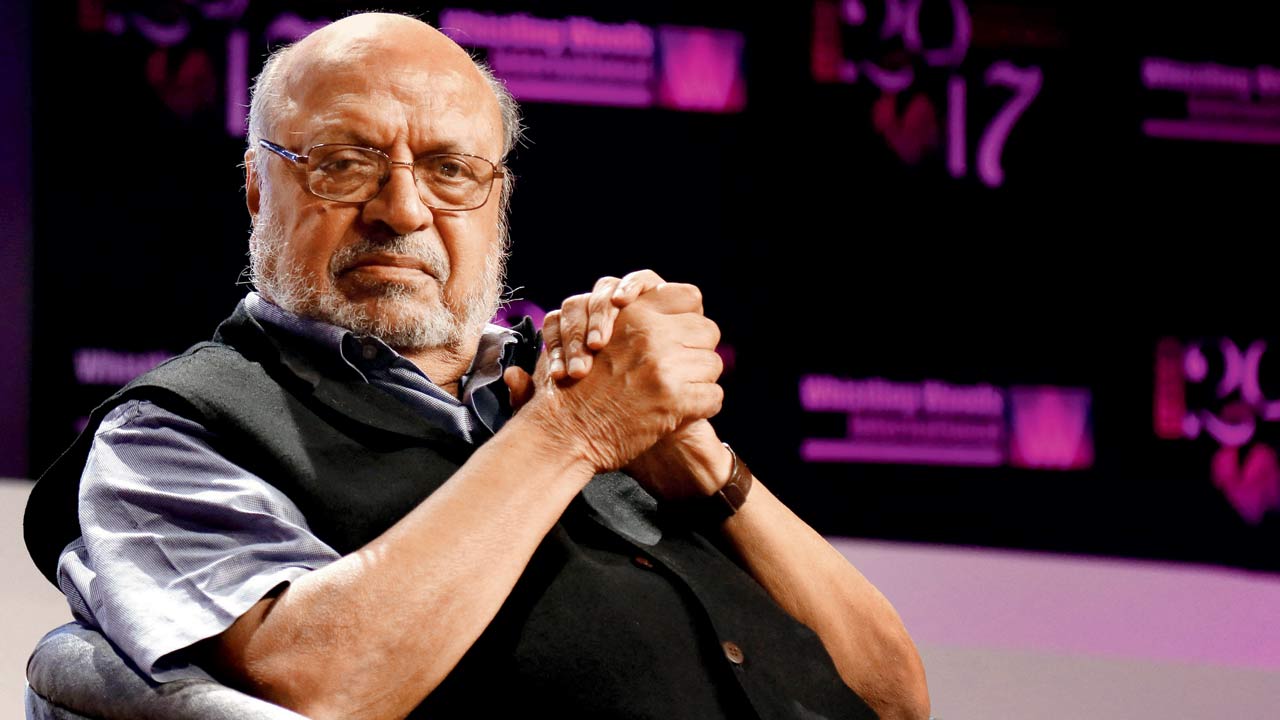
Benegal Pioneered New Wave Cinema, Created Cult Classics
Sunil Nair (THE TIMES OF INDIA; December 24, 2024)
Shyam Benegal came out of nowhere and lit up the Hindi film scene in the 1970s at a time when the industry was "an absolutely closed shop", as a close associate recalled it. It was the age of melodrama and action - 'Roti Kapda Aur Makaan' and 'Sholay' were big hits - and every release flaunted a roll-call of stars. "There was no possibility for any young filmmaker to get into it at all," is how Girish Karnad, who was then director of the Film and Television Institute of India, described it.
Benegal's neorealism struck a deep chord with a generation keen on films that would mirror the social and political tensions of their time. His debut film 'Ankur' (The Seedling), a tale of sexual exploitation set against a feudal background with a cast of unknown yet riveting newcomers, ran 25 weeks at the landmark Eros theatre in Bombay. He had begun writing the script of 'Ankur' when he was in college in Hyderabad and spent 20 years looking for a financier before an ad film distributor agreed to produce it. Its success staked out new ground for the 'art/parallel cinema' movement that over time showcased new talent such as Naseeruddin Shah, Shabana Azmi, Smita Patil, Om Puri, Govind Nihalani, Vijay Tendulkar and Vanraj Bhatia.
Benegal, who pioneered parallel cinema in India and created the 53-episode Bharat Ek Khoj, and whose last project was a 2023 biopic on Mujibur Rahman - 'Mujib: The Making Of A Nation' - passed away in a hospital in Mumbai, days after he turned 90 on Dec 14.
Shyam Benegal grew up in a cantonment town near Hyderabad in 1930-40’s where his father, a professional still photographer, introduced him to the camera. The obsession with movies began early, his appetite whetted by Hollywood and Indian releases screened at a local hall for the morale of the troops. “There used to be two programme changes a week,” he once recalled. “…like in Cinema Paradiso, I befriended the projectionist so I could see both...”
Shifting base after his education, he began working at Lintas in Mumbai as a copywriter. The next decade and a half were spent on a prodigious number of ad films and documentaries. Traces of the social concerns underpinning his cinema are evident in the shorts he made, including the earliest ones, such as A Child Of The Street, which took a compassionate look at juvenile vagrancy, and Close to Nature, a colourful take on tribal life in Madhya Pradesh.
His stint as a teacher at the Film and Television Institute of India (FTII) drew him closer to celluloid. But his bleak stories still had no takers among financiers. Lalit Bijlani of Blaze Advertising eventually stepped in. Both Ankur and Nishant, which came a year later, were set in the feudal lands of Telangana, a region under the Nizam. It was a world Benegal had seen up close in his formative years. Touted as his most striking works, the narratives and characters were situated in a rural milieu with a distinct dialect and attendant class-caste equations. Coming around the time of the Emergency, the two films spurred a movement of sorts and cemented his reputation as the high priest of the ‘New Wave’.
Benegal’s eclectic interests showed in the diversity of subjects. From Gujarat’s milk cooperatives (Manthan) to the life of a silent film era actress (Bhumika), from 1857 (Junoon) to feuding business families (Kalyug), his projects spanned periods and themes. A bearded, Renaissance figure at the centre of the ‘art film’ circuit, he was equally a mentor to actors, musicians, writers and technicians.
At a felicitation to celebrate Benegal’s 25 years as a filmmaker, actor-playwright Girish Karnad spoke of his innate ability to help artistes tap their potential. “He was not just a director but also a doctor, a psychiatrist, a father figure and a banker,” said Karnad.
The latter part of Benegal’s career was marked by biopics, including one on Gandhi’s years in South Africa and a tetralogy on Muslim women (Mammo, Sardari Begum, Hari-Bhari and Zubeidaa). By then, the ‘art film’ movement had dissipated. He had turned to a new set of collaborators, many from commercial cinema. His standout work in this period, however, was a part elegiac, part quirky interpretation of a Dharamvir Bharti novel, Suraj Ka Saatvan Ghoda. Occasional forays into television too made for interesting viewing: Bharat Ek Khoj, the mega-series based on Jawaharlal Nehru’s Discovery of India, and Samvidhaan, on the making of the Indian Constitution, were the best examples.
Benegal’s influence on the Indian film industry extended far beyond his own body of work. He headed a govt committee set up in 2016 to streamline the film certification process and lay down a framework that would allow more room for artistic expression.
--------------------------------------------
'Benegal told raw & real stories about ordinary people'
Bella Jaisinghani (THE TIMES OF INDIA; December 24, 2024)
Mumbai: The passing of Shyam Benegal, the torchbearer of New Wave cinema, evoked a lament of loss across the film fraternity Monday night. It was Shyam Babu who discovered and mentored an entire generation of the finest natural actors including Shabana Azmi, Naseeruddin Shah, Smita Patil and Om Puri, having fathered the parallel cinema movement with 'Ankur' in 1974.
In fact as recently as Dec 14, the entire clan met to celebrate Shyam Babu's 90th birthday, with happy pictures featuring Azmi, Shah, Kulbhushan Kharbanda, Kunal Kapoor of Prithvi Theatre, Divya Dutta and Rajit Kapur.
Filmmaker Shekhar Kapur posted: "He created 'the new wave' cinema. Shyam Benegal will always be remembered as the man that changed the direction of Indian Cinema with films like Ankur, Manthan and countless others. He created stars out of great actors like Shabana Azmi and Smita Patil. Farewell my friend and guide."
Actor Manoj Bajpayee whose career was baptised by his prince's act in 'Zubeidaa', termed it a "heartbreaking loss for Indian cinema. Shyam Benegal wasn't just a legend, he was a visionary who redefined storytelling and inspired generations". Actor-singer Ila Arun said, "I feel as if I lost my father. It is the end of a golden cinematic era."
Filmmaker Mahesh Bhatt said, "Shyam Benegal was a giant of Indian cinema. He told stories without pretense. They were raw and real, about the struggles of ordinary people. His films had craft and conviction. He changed Indian cinema, not with noise, but purpose."
Filmmaker Sudhir Mishra said, "Not many talk about the fact that there was a lament in his films and a sadness about the fact we were not living in the best of all possible worlds."
People from all walks of life mourned his loss. Congress leader Rahul Gandhi said, "Saddened by the passing of Shyam Benegal ji, a visionary filmmaker who brought India's stories to life with depth and sensitivity. His legacy in cinema and commitment to social issues will inspire generations. Heartfelt condolences to his loved ones and admirers worldwide."
Congress MP Shashi Tharoor recalled how Shyam Babu during his early years as ad filmmaker had photographed his sister and other children as "the first Amul Babies".
(With inputs by Swati Deshpande)
--------------------------------------------
He leaves behind a body of work so sprawling—shorts, documentaries, features, TV movies, series—that his CV alone might be longer than an obituary
Mayank Shekhar (MID-DAY; December 24, 2024)
Shyam Benegal’s last work, Mujib (2023), was possibly the most important film for Bangladesh; a biopic on the neigbouring nation’s founder, Sheikh Mujibur Rahman. He was 89, when the movie released. You did well, Mr Benegal. His first feature, Ankur (1974), was possibly the most important Hindi film for India’s art-house movement, heralding the Indian New Wave, from Bombay.
In between is a life so full of all kinds of cinema—shorts, documentaries, features, TV movies, series—that his CV alone, let alone its range, might be longer than an obituary can do justice. This would include a series of firsts; again, starting with Ankur itself, that was actor Shabana Azmi’s screen debut. Nishant (1975) was Naseeruddin Shah’s. He picked both actors, after they’d graduated from Pune’s Film & Television Institute of India.
One evening, while watching news on television, the anchor caught his eye, and he cast her in his children’s film, Charandas Chor (1975). That was Smita Patil. Bhumika remains, arguably, her greatest performance. Between Naseer, Shabana and Smita, forming an alternate, Bombay star-system of their own—besides Om Puri (Susman, Arohan), Anant Nag (Konduran, Kalyug), Rajit Kapur (The Making of the Mahatma, Suraj Ka Satvan Ghoda), and so many others—Benegal didn’t just make films.
He built an entire eco-system, for what came to be known as Hindi parallel cinema. Named such, because it did not intersect with the Bombay mainstream—remaining true to its realism, social consciousness, barely appeasing to audience’s baser instincts, or ignoring its intellect, while staying within commercial cinema, after all, for his features were still mostly privately funded (Blaze Productions, in particular).
An unassuming, gentle soul, gifted with gravitas, foremost, Benegal was a young mind. How else do you explain a career scripted over seven decades. Consider that when he made his first short, in 1962 (Ghar Betha Ganga), Jawaharlal Nehru was still India’s Prime Minister; man was several years away from stepping on the moon; and it’d be 20 years before we’d get Doordarshan (DD) for a proper national broadcaster.
Last checked, Benegal was still making movies. His partner, Nira, both in life and films, was his sounding board. He gave DD, and indeed Indian television, its greatest OTT slow-burn, decades before there was OTT, with Bharat Ek Khoj (1988), based on Nehru’s Discovery of India. He made India’s crowd-funded film, Manthan (1976), based on the life of dairy engineer, Verghese Kurien, with contribution of 500,000 farmers, decades before crowd funding became a term.
With Junoon (1979), he made the sharpest effort, until then, to take art-house into a big-budget space, with stalwarts of the time, adapting Ruskin Bond’s A Flight Of Pigeons. At the turn of the century, when multiplexes offered a short-lived window into exploring meaningful yet entertaining content, beyond simply the starry space, he brought forward intelligent comedies, Welcome to Sajjanpur (2008), Well Done Abba! (2009).
This is before he swiftly switched gear, and embarked on the astoundingly ambitious series, on the making of the Indian Constitution, Samvidhaan (2014), for Rajya Sabha TV. Yup, Benegal has always been there. Not just in terms of works, but also for how he inspired. What’s the final shot in Nagraj Manjule’s Fandry (2013), if not the stone-throwing finale of Ankur!
Given the widest possible gamut, surely, everybody has a Benegal Top 10. And each might read so different from the other. Kalyug (1981), modern adaptation of Mahabharat, set in Bombay’s corporate world, tops mine; Mammo (1994) might be a second; Mandi (1983) could be yours, or Zubeidaa (2001), if you’re younger.
A cousin of Guru Dutt, who got interested in cinema, because of his photographer-father Sridhar Benegal, who gave him access to a movie camera, when he was only 12—once Benegal moved to Bombay, from Hyderabad, he started out as a man of advertising.
It’s something he shared with Satyajit Ray, his inspiration of sorts. One of the most enlightening conversations on cinema that Benegal left behind for film buffs was his interview with Ray himself, for a documentary (that occasionally appears and disappears from YouTube).
It’s where you see Benegal for simply a curious movie mind. And a consummate movie buff, you would always spot at screenings at cinemas and festivals. The last I met him, in 2019, at his Tardeo office, which is a shrine of sorts in filmmakers in Mumbai—it was right after his Manthan actor and long-time associate, Girish Karnad, had passed on.
“Everybody’s leaving now,” he said. The very next minute, he began revealing how the then Bangladesh PM, Sheikh Haseena, had entrusted him with a film on her father, Mujib, along the lines of Richard Attenborough’s Gandhi. Benegal was 85 then—speaking about recommendations to the Indian censor board that never got implemented, or his public commitments in Goa, initiated from his Member of Parliament fund.
We discussed movies as a changing medium. He told me the cellphone was the best way to watch films—the eye’s distance should, anyway, be one and half times the length of the screen’s diagonal, and the sound doesn’t get better than a headphone. I’ve followed his advice since. There was so much more to learn. The movies remain. He lives on forever.
All We Imagine As Light director Payal Kapadia says, "I wanted to normalize female nudity"
8:25 AM
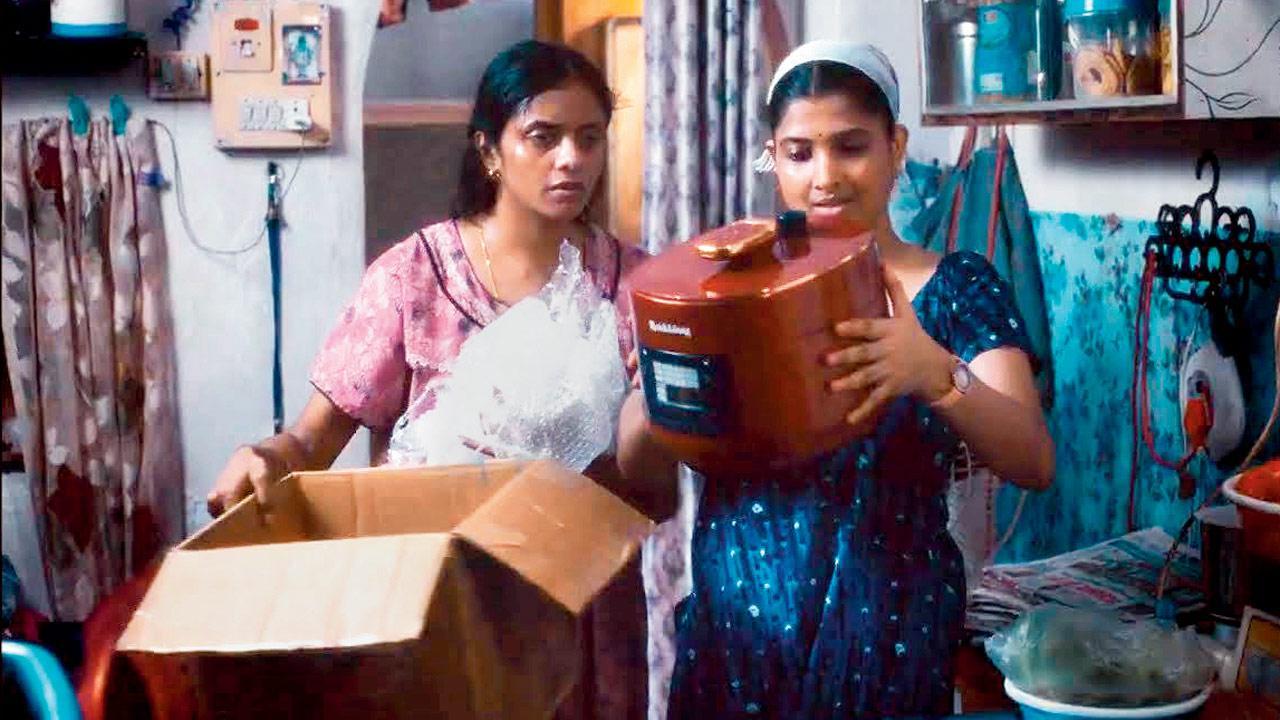
As Cannes Grand Prix-winning film All We Imagine as Light gears up for India release, director Kapadia says she wanted to authentically address the theme of desire
Priyanka Sharma (MID-DAY; November 12, 2024)
Bringing your Cannes Grand Prix-winning film home is an exhilarating feeling. But director Payal Kapadia has a specific reason, among others, to be excited about showcasing All We Imagine as Light to an Indian audience—that she won’t have to explain monsoon to viewers. “When I show my film in different countries, I have to introduce what monsoon is to us. Here when the film premièred at MAMI Film Festival, I didn’t have to explain anything,” she grins.
The Kani Kusruti, Chhaya Kadam and Divya Prabha-starrer tells the story of an unlikely friendship between women of different ages. The November 22 release is Kapadia’s attempt to resolve a conflict that has long brewed within her. “I wanted to make a generational film about female friendship. I felt it is convenient for society to be designed in a way that women shouldn’t be friends with each other. It doesn’t want us to be supportive of each other. I’ve made many mistakes with friends and other women I was close to, where I didn’t respond to them in the right way. We make films to answer certain questions that are within us. This was a core conflict, and I wanted to talk about it,” she says.
Kapadia has beautifully explored many themes pertaining to womanhood, one of them being sexual desire. As she showed female nudity, did she view it as a risk? “I wanted to normalize it. It’s a part of everyday life, like eating and drinking. I wanted to be authentic to one of the main themes, which is desire, and there are ways to get to it. But this felt the most organic thing to put into the film.”
She has had an eventful journey, from being one of the Film and Television Institute of India (FTII) students who protested against the 2015 appointment of Gajendra Chauhan as chairman and being arrested, to becoming one of the most sought-after directors. Does she feel vindicated today?
Reflecting on it, she says, “I feel FTII is a great institute. Artistes who have come before us have contributed greatly to our country. Since people from different backgrounds, regions and languages come to FTII, it adds to the diversity of the industry. Only then can interesting things happen. I’ll always be thankful for my time there.”
Sunflowers Were The First Ones To Know in race for live action short film Oscar
8:00 AM

THE TIMES OF INDIA (November 5, 2024)
New Delhi: The Film and Television Institute of India (FTII) is celebrating a significant achievement with its student film, 'Sunflowers Were The First Ones To Know', directed by Chidananda S Naik, qualified for the Oscars 2025 in the Live Action Short Film category.
This milestone follows a series of accolades, including winning first prize in the prestigious La Cinef Selection at the Cannes Film Festival earlier this year, which brought international attention to the film.
Created in Kannada, 'Sunflowers Were The First Ones To Know' is inspired by Indian folk stories and traditions. The plot centres on an elderly woman who steals a rooster, disrupting the cycle of sunlight in her village and plunging the community into chaos. In an attempt to restore balance, a prophecy is invoked, and the woman's family is exiled to undertake a journey to retrieve the rooster.
Naik, along with a skilled FTII team, brought this vision to life.
At Cannes, the La Cinef Jury lauded the film, describing it as "an illumination that, from the depths of the night, shines with humor and a keen sense of direction." Naik expressed his long-standing desire to tell this story, stating, "Our goal was to recreate the experience of not merely hearing these stories but of genuinely living them."
I have always thought of myself as Irrfan Khan’s Eklavya-Jaideep Ahlawat
8:13 AM

Renuka Vyavahare (BOMBAY TIMES; October 18, 2024)
Acting is about teamwork, and Jaideep Ahlawat strongly believes in that. “As Naseerbhai (Naseeruddin Shah) rightly says, acting is about reacting. It’s teamwork. Selfish hona bahut kharab cheej hoti hai ek actor ke liye. It’s not about overpowering a scene or hogging all the lines for yourself because that shows. The greatest actors are not selfcentric. Look at Irrfan sir, he always stayed true to his character.”
Recalling his meeting with Irrfan, he said, “I met Irrfan sir at the FTII (Film and Television Institute of India) briefly. I never got a chance to work with him, nor did he teach us at the institute, but his work taught us everything. He was so connected to his characters that no matter what he did, it always felt isse better koi kar hi nahi sakta. He made every role believable because he loved his craft so much. If you look at any of his films, what stands out is that he never had this thought of overpowering a scene. There was no selfishness, he was just true to his character and the story is what mattered the most to him. Chota muh badi baat, but I felt like I was his Eklavya. He never taught me, but I learned a lot just by watching him. Vijay (Varma) and I would scream his movie dialogues while bathing from across the common bathrooms of our respective dormitory wings that faced each other at the FTII. Hum unke Haasil ke dialogues chhilate thhe.”
Jaideep added, “I remember when I met Irrfan sahab at FTII and we were going to click a picture, we were told lambe ladke peeche khade ho jao. But I fought to sit close to him in that group photo.”
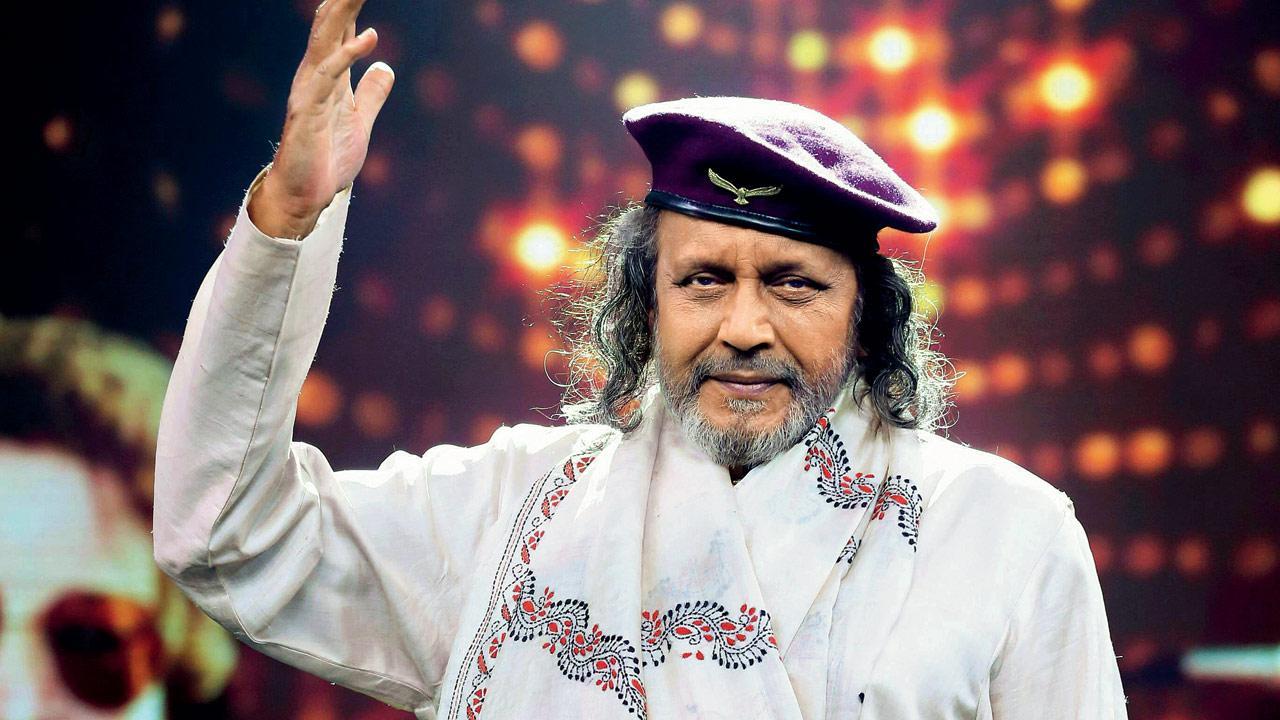
Mithun Chakraborty on Dadasaheb Phalke Award: "Don't know what I have done to deserve..."
9:42 AM
Avijit Ghosh (THE TIMES OF INDIA; October 1, 2024)
New Delhi: In the summer of 1969, Mithun Chakraborty was asked to leave Kolkata by his father for getting involved with the Naxalites, the radical Reds whose ideology had enchanted hundreds of young men in search of a cause in Kolkata. In the years that followed, among other things, Mithun slept on pavements of Mumbai and was forced to cough up a fee for the precious space. On Monday, he was declared as the next recipient of Indian cinema’s highest honour, the Dadasaheb Phalke award, by Union I&B minister Ashwini Vaishnaw on X.
Life’s been a rollercoaster for the actor who has won the National Award on three occasions. Mithun got the best actor prize for his portrayal of a wronged tribal in his first major film, Mrinal Sen’s Mrigayaa (1977) and again for his celluloid interpretation of a disillusioned freedom fighter in Buddadev Dasgupta’s Tahader Katha (1992). A third award as the best supporting actor came for his part of Sri Ramkrishna Paramhans in GV Iyer’s Swami Vivekananda (1995). The profundity that Mithun brought to these var ying parts has often been overshadowed by his image of a star of mainstream movies.
Even in commercial cinema, the 74-year-old Kolkataborn actor has done more than often given credit for. Mithun toiled for 10 years in the harsh Mumbai filmdom before finding his feet and success; 1979 being his breakthrough year when Surakksha, where he played the desi Bond, Gunmaster G-9, became a box-office winner. He was the first dancing star to emerge in the video era that the non-gentry audience loved and identified with. Nobody took dancing to the street as a way of expressing joy and celebrating weddings and festivals like Mithun.
The actor also overcame colour prejudice that was subtly embedded in the choice of heroes in colour conscious 1980s Bollywood; Mithun made dusky sexy. Even today Mithun is an icon in Russia where Disco Dancer (1983) is an intergenerational hit. In Tokyo too, there’s a shrine to the Disco Dancer. Now over four and half decades in the acting business, he acted in the 2022 blockbuster, The Kashmir Files.
Over the years, the actor widened his repertoire. He has delivered hits in mature action yarns (Ghulami), romantic dramas (Pyar Jhukta Nahi) and southern-made melodramas (Ghar Ek Mandir, Swarg Se Sundar and Pyaar Ka Mandir), not to forget in comedies (Golmaal 3).
Mithun has also acted with success in low budget films such as Jallad creating a template of such movies. His dialogues like ‘Marbo ekhane lash porbe shoshane (Hit you here, and the body will land up in the crematorium)’ in the Bengali film, MLA Fatakesto, is played on YouTube to this day.
The actor has always been at the forefront of social causes. In 1986, he took the lead in organizing the Calcutta version of Hope 86, a concert in aid of Bombay film industry workers. In the 1990s, he was often conferred with Rashtriya Samman for being one of the highest taxpayers in the country.
Politics has been a playful rainbow for Mithun. He has enjoyed its different colours and shades. After starting from the extreme Red, he warmed up to the gentler hues of CPM politicos in the 1980s. He became a Rajya Sabha MP via centrist Trinamool. And embraced BJP’s saffron in 2021.
“Mithun Da’s remarkable cinematic journey inspires generations!” said Vaishnaw in his post. The truth is that Mithun’s life has more drama than most films. It has been an exceptional life overall which will certainly inspire any ambitious young man or woman trying to reach for the stars.
-----------------------------------
Chosen for the Dadasaheb Phalke Award, Mithun Chakraborty reflects on his journey from ‘Kolkata’s lanes’ to Mrigayaa and stardom
Upala KBR (MID-DAY; October 1, 2024)
It started out as just another Monday for Mithun Chakraborty as he was shooting for Shriman vs Shrimati in Kolkata, when he received a call stating that Ashwini Vaishnaw, the Union Minister for Information and Broadcasting, wanted to speak with him. “[Next thing I know], the I&B Minister congratulated me saying I have received the Dadasaheb Phalke award,” the senior actor exclaims.
Yesterday, Chakraborty was named the recipient of the prestigious award. It is a worthy addition to his illustrious 48-year career that has seen the veteran actor, 74, win three National Awards, and the Padma Bhushan earlier this year. To him, the latest achievement has yet to sink in.
“I am sitting here dumbfounded. I cannot laugh or cry with joy; I cannot understand what I’ve done to deserve such a high honour. I was reflecting on my journey, which began in the lanes of Kolkata, then took me to Mumbai, where I lived at Five Gardens, and now here. How can somebody like me get the highest Indian award in films?”
That Chakraborty was destined to make his mark in movies was evident in his debut film, Mrinal Sen’s Mrigayaa (1976), which earned him his first National Award. “Mrinal Sen had seen me at a farewell party at the FTII [Film and Television Institute of India]. He saw my back and said, ‘That’s my Ghinua.’ He told Hrishikesh Mukherjee that he wanted this tall boy with a terrific physique for his movie. I had six-pack abs at the time,” he laughs.
What followed was a successful career in Hindi and Bengali cinema, with the actor ushering in the era of disco dancing in India with Disco Dancer (1982). He fronted several mainstream hits, including Hum Se Hai Zamaana (1983), Kasam Paida Karnewale Ki (1984) and Dance Dance (1987). “Nothing came on a platter. When I became a superstar, I had to hold on to it. That was a bigger struggle. People tell me I am a legend, but the journey was never easy.”
‘Padma and Phalke in one year’
Mithun Chakraborty’s actor-son Mimoh said he was “overwhelmed and grateful” by the recognition accorded to the veteran actor. “I’m thankful to the government for giving him this prestigious award. It’s very well-deserved. I’m happy to say that in one year, he has been the recipient of two awards, the Padma Bhushan and now the Dadasaheb Phalke Award,” he said. Describing his father as a man of simple taste, Mimoh elaborated, “When we go to Los Angeles, we have to force him to go to a store and buy clothes. Even with iPhones, we have to tell him to upgrade. He does not believe in living life extravagantly. He believes in living life honestly and [doing] everything with utmost honesty.”
- Oshin Fernandes
A life lesson I learnt from my teacher was to respect others’ point of view-Jaideep Ahlawat
9:50 AM

The actor talks about his experiences at the film institute & his favourite teacher Arvind Pandey
Renuka Vyavahare (BOMBAY TIMES; September 5, 2024)
Raazi, Paatal Lok, Jaane Jaan and Maharaj, to name a few, are testament to Jaideep Ahlawat’s acting range and command over his craft. Hailing from Rohtak, Haryana, the Film and Television Institute of India (FTII) alumnus has created a space for himself in a rather demanding industry. On Teacher’s Day, the actor looks back at his beginnings and the teachers who played a vital role in his life and career growth.
Jaideep reminisces, “There have been a couple of people who have had a positive influence on my life. If I were to talk about my acting career, I must mention my first guru Sunil Chitkara, who hails from Haryana and is now based in Delhi. He taught me how to walk on a stage and work in theatre. Shurvat ka jo abhinay maine seekha woh unhise. He was the one who helped me learn the basics before I went to the FTII.”
‘Arvind sir taught us how to craft characters’
The film institute helped Jaideep hone his talent by introducing him to workshops and gifted artistes. One name stayed with him though.
He shares, “One teacher who had a massive impact on me at the FTII was Arvind Pandey, sir. He makes you work on your basics, which is most essential for an actor, without resorting to anything fancy. He taught us how to craft characters, build a scene and why teamwork is most important. He taught us how to use our imagination to build these characters and create their background, which may not be mentioned in the script, but can make the story more relatable. Woh mere favourite thhe and I was his favourite student. Later, we also acted together in Shashank Khaitan’s segment of Ajeeb Daastaans.”
‘Uncha bolneko loud acting nahi bolte’
Beyond acting, another valuable lesson Jaideep recollects learning from Arvind sir was understanding another person’s point of view. “I never saw him angry. He was one acting teacher who never dismissed our thoughts and opinions about how we approached a character. He never shot down ideas. He always asked what the thought was behind what we did. He tried to understand your choices and the logic behind it. He made me understand that there is no good or bad acting, just believable versus non-believable. Uncha bolneko loud acting nahi bolte. Whatever is not believable is loud acting. Dus actors ek scene ko dus tarikese karenge. Everyone will have a different point of view. It’s important to not be dismissive as long as it’s relatable. He taught us to respect other person’s point of view, which is a valuable life lesson,” he says.
Jaideep’s advice for aspiring actors
On a parting note, Jaideep, who now visits FTII occasionally to boost the morale of aspiring actors, says, “I want to tell budding actors galtiyaan karnese matt daro. Don’t be conscious about who’s watching you. When you are training to be an actor, everyone wants to help you grow. Your time at the film institute is your opportunity to make as many mistakes as possible. Life doesn’t give you those opportunities once you start working.”
India didn’t have any moment at Cannes-Anurag Kashyap
8:11 AM

BOMBAY TIMES (June 12, 2024)
“India didn’t have any moment at Cannes,” says filmmaker Anurag Kashyap, stressing that the victory of independent filmmakers at the European gala is theirs alone and the country doesn’t support that kind of award winning cinema.
India won three awards at the 77th edition of the Cannes Film Festival last month – Payal Kapadia became the first-ever director from India to win the Grand Prix for her movie All We Imagine As Light, Anasuya Sengupta was awarded best actress in the Un Certain Regard strand for The Shameless, and FTII student Chidananda S Naik earned the best short film award at the La Cinef section for Sunflowers Were the First Ones to Know.
“I get very upset when it’s said ‘India@Cannes’. This is a boost... a shot in the arm for a lot of independent filmmakers but their victory is their own,” Anurag Kashyap told PTI in an interview.
‘No funding support’
He said Kapadia’s All We Imagine As Light, which was also the first film from India in 30 years to feature in the main competition at Cannes, received funding from a French company. The Malayalam-Hindi feature, which earned the second highest award at Cannes after Palme d’Or, is an Indo-French co-production between Petit Chaos from France and Chalk and Cheese Films from India.
There were several films at Cannes with either India-set stories or Indian talent, but most were co-productions with banners from other countries. Indian-British filmmaker Sandhya Suri’s Santosh and Karan Kandhari’s Sister Midnight were funded by the UK, while Konstantin Bojanov’s The Shameless was almost self-funded. However, Chidanand’s Sunflowers... is a production of the TV Wing one-year programme under the FTII. “India just likes to take credit for a lot of things, they do not support these films, and they don’t even support these films to have a release in cinema,” he said.
‘STOP TAKING CREDIT FOR CANNES SUCCESSES’
In 2021, Kapadia had won an award at Cannes for the documentary A Night of Knowing Nothing but is yet to be released in India. “Stop taking credit for it. Even if the film is released, no one will go to watch it in the theatre,” the 51-year-old said.
Kashyap, whose films such as Gangs Of Wasseypur, Ugly, and Kennedy have screened at Cannes, said he was surprised when former FTII chairperson Gajendra Chauhan took credit for Kapadia’s win. In 2015, Kapadia was one of the students who protested against the appointment of Mahabharat actor-politician Chauhan as the FTII chief. Kapadia was among the 35 students charged under Indian Penal Code sections for offences related to unlawful assembly and rioting. The chargesheet was filed in 2016, and the next hearing is scheduled for June 26.
“The worst part is the man who put the case against her, and sent some students to jail, is the first man who took the credit and said, ‘I’m proud I was the FTII (chairperson)’. What is his name? Yudhishthir ji (his ‘Mahabharat’ role), Gajendra Chauhan said, ‘I’m so proud that she was the student when I was the head’. You are the one who put the case against her,” Kashyap added.
----------------------------------
Payal Kapadia’s film (All We Imagine As Light) happened because of the French fund, India did not even give the rebate promised to that film. Sandhya Suri’s film (Santosh) was funded by the UK film lottery fund. Karan Kandhari’s film (Sister Midnight) was funded from the UK. Konstantin’s film (The Shameless) was almost self funded and the company that funded it got no support from India.
We need indie film fund like the French one that made Cannes win possible-Payal Kapadia
9:22 AM

Basking in the afterglow of bagging a historic Cannes Grand Prix, ‘All We Imagine As Light’ director Payal Kapadia speaks to Ardhra Nair about what made it possible, the various influences that have inspired her, and why filmmaking is like stitching a quilt
Ardhra Nair (THE TIMES OF INDIA; June 2, 2024)
Can you share your experience of making an independent film without the support of big banners?
The reason I was able to make this film is because of the French public funding system, and I would like to take a moment to talk about this system. In France, a small tax is levied on every film ticket sale and a tax is levied on TV channels as well. From this, a fund is created that allows independent producers and directors to apply for funding. Distributors and exhibitors also get funding to distribute these films once they are complete. In our country, charging audiences a tax would be rather unfair. However, a tax on the profits made on blockbuster films can surely help in funding an independent film fund. If such a system was made in our country with an autonomous body to run the fund, it would only encourage more independent filmmaking. For a democracy to thrive, voices need to remain independent from big studios that are run by rich industrialists.
Looking back, how do you feel about the FTII protests? Do you stand by what you all stood up for?
The protest at FTII was one of the early student protests that took place. It was followed by many others. I am happy that we could be part of the larger discourse of the relevance of public institutions in India. Being a student of FTII was very important to me. It was a space where we could not only formulate our thoughts about filmmaking, but also about the world we inhabit. Filmmaking does not exist in a vacuum. It is through debates and discussions, questions and self-reflection that we move closer to the films we choose to make. FTII was a place that encouraged independent thought. One reason this was possible was because of affordable public education. Unfortunately, public institutes are becoming more and more expensive nowadays. These spaces can only remain relevant and encourage discourse if they remain accessible to all. If they become elitist spaces like various public universities have over many years, it will be useless to the nation. There are many private institutions that are made only to give opportunities to the elite. A space like FTII is somewhere in between at this point in time. We should strive for it to be even more accessible than the direction in which it is headed.
One of your professors, Sandeep Chatterjee, mentioned that you are grounded in poetry, and this is reflected in your filmmaking. Can you tell us more about how poetry influences your work and your approach to filmmaking?
I am influenced by many different forms of art — poetry, painting, music, animation — all find their way into my work. I think of filmmaking like stitching a quilt with many small fragments that come together to give us a whole new feeling.
What kind of cinema do you like?
I am a huge cinephile and I love watching all kinds of films. However, the cinema that excites me the most is one that mixes forms of fiction and nonfiction, and sometimes even fantasy. I like when all these forms merge into one another. For some reason in India, we have a strong urge to compartmentalize each of these types of films. But I love to mix them all up and see where it takes me.
You’ve spoken before about the importance of sisterhood in your film. Can you elaborate on how sisterhood shapes the narratives you create and why this theme is so significant to you?
I have been thinking a lot about friendship in this film. It is a very open relationship that is defined only by you and your friend. In our society, women are made to feel as if they are being pitted against one another. That is very unfortunate. I think friendship can lead to greater inclusivity and solidarity. Perhaps my time at FTII has taught me that.
What do you think about the current state of the Indian film industry, and where do you see it heading?
We don’t have just one film industry in India! We have so many different industries. Especially remarkable to me is the cinema from Tamil Nadu, Kerala, Karnataka and Maharashtra. In these states, there is a range of films that are really taking on a lot of important questions. Recently, Kerala govt started a fund that supports female filmmakers as well as filmmakers from under-represented castes. I think this is the need of the hour. I hope more states start doing the same.
What stories are you looking forward to telling next?
I am interested in seeing how I can incorporate more nonfiction into my films. I am planning on doing some short experiments as a learning exercise. Let’s see where it takes me.
How do you think winning at Cannes will impact your career?
I don’t know yet! I am hoping that the next film won’t take five years to fund like the previous one did.
If your life were a movie, what genre would it be?
If my life were a movie, it would be a tragic comedy!
----------------------------------
BOMBAY TIMES (June 2, 2024)
Payal Kapadia’s All We Imagine As Light recently won the Grand Prix, the second-highest honour at Cannes Film Festival. The filmmaker, who has been showered with congratulatory messages since the win, has released a statement and shared what steps can be taken to make such accolades more common for the Indian film industry.
Addressing how the selection for Cannes made the team both “excited and nervous”, she said, “We were in the middle of completing the postproduction when we found out that it was selected for competition at Cannes. This was beyond what we had expected. It made us both excited and nervous. Just one year ago we had started preparation on the film and now exactly one year later we were all together again but in a completely different context and a completely different world. It’s always a pleasure when a unit can be like a family of friends. And this is an extension of what our film is about.”
‘WHY CAN WE NOT SUPPORT MORE INDEPENDENT FILMMAKERS?’
Reflecting on why it took 30 years for an Indian film to be selected in Cannes’ main competition section, she said, “People at Cannes asked me why it is taking 30 years for a film to be selected. While I did ask the selection committee this question, we should also ask ourselves this as well. Why can we not support more independent filmmakers? One of the reasons I was able to make this film is because of the French Public funding system – a small tax is levied on each and every ticket sale of a film as well as a tax levied on TV channels... In our country, charging audiences a tax would be rather unfair. However, a tax on the profits made on blockbuster films can surely help in funding an independent film fund. If such a system was made in our country with an autonomous body to run the fund, & would only encourage more and more independent filmmaking. For a democracy to thrive, voices need to remain independent from big studios that are run by rich industrialists.” Payal also lauded the Kerala government’s initiative of starting “a fund that supports female filmmaker’s as well as filmmaker’s from under-represented castes. I think this is the need of the hour... I’m thankful to people in the Kerala film industry. So many well established actors and producers were very supportive to our team.”
All We Imagine As Light: Called anti-national 9 years ago, Payal Kapadia is now nation’s toast
8:57 AM

Ardhra Nair (THE TIMES OF INDIA; May 27, 2024)
Nine years are all it took for FTII graduate Payal Kapadia to go from "anti-national" to toast of the nation. The young filmmaker, whose 'All We Imagine As Light' clinched the Grand Prix at Cannes Saturday, was a student at the country's cradle of cinema and TV when she braved chants of "go to Pakistan" for participating in a 139-day protest in 2015 against the appointment of actor Gajendra Chauhan as the institute's chairperson.
She, along with 34 other former students, continue to wage a legal battle over a case filed by the then institute's director, Prashant Pathrabe, alleging their involvement in gheraoing him and vandalizing his office that year.
But a day after conquering Cannes, there was not a trace of rancour in Payal's words. All she reflected was the afterglow of an unprecedented triumph that she gracefully shared with fellow filmmakers from India.
"It's a great feeling to receive this prize because there are so many good films from India alongside ours, and we feel a part of the larger family of filmmakers. We have three films from FTII directors this time. My FTII batchmate Maisam Ali's film 'In Retreat' is the first Indian entry to Cannes' ACID sidebar (Association for the Diffusion of Independent Cinema)," she told TOI from the French Riviera.
Payal’s film on 2015 FTII stir had also won Cannes laurel
Also, an FTII student’s (Chidananda Naik) film, titled ‘Sunflowers Were The First To Know’, won the main prize in La Cinef section. “It’s fantastic for us and FTII.” Payal’s batchmates and other alumni recall that the 2015 protest was “against the appointment of people who had no achievement in filmmaking” but were allegedly included in FTII’s governing council for political reasons.
Harishankar Nachimuthu, ex-president of FTII Students’ Association and spearhead of the agitation, said Payal always had a vision about where she wanted to go and was willing to fight it out. “She was denied a scholarship and a foreign exchange opportunity for participating in the four-month protest. But even she would agree that FTII made us better filmmakers, better human beings, and responsible citizens,” he said.
Payal credited her teachers and students at FTII for her success, saying that while not everyone needed to go to a film school, the institute benefited her with a structure that facilitates the dissemination of different cinematic ideas. “It is also a great place to meet people who share a love for cinema. My batchmates were instrumental in shaping my ideas. At FTII, we got to see films from all over the world and this exposure helped me make my film.”
Payal’s peers and seniors see her as a film aficionado perpetually behind the camera, documenting various subjects, and relentlessly pursuing any project she takes up to fruition.
Ajayan Adat, winner of the 53rd Kerala State Film Awards for best sound design, was Payal’s senior by two years in college. He said her big qualities were patience and diligence. “She was pained by the then govt’s attitude against the students’ protest. So she took out a camera and started filming everything. She made hours of footage into a documentary titled ‘Night Of Knowing Nothing’. It won the L’Oeil d’Or at Cannes in 2021.”
After FTII students are attacked over Remember Babri banner, union urges institute president Madhavan to step in
8:44 AM

After FTII students are attacked over Remember Babri banner, union urges institute president Madhavan to step in; calls for academic halt
Mohar Basu (MID-DAY; January 29, 2024)
Much has happened since right-wing activists, on January 23, barged into the Film and Television Institute of India, (FTII) campus and attacked students over a banner that read: ‘Remember Babri, death of Constitution.’ Soon, on January 26, 300 FTII alumni—that included Oscar-winning sound designer Resul Pookutty, Badhaai Do director Harshavardhan Kulkarni and film editor Antara Lahiri —penned an open letter condemning the violence against the students.
Now, the FTII Students Association (FSA) has called for an academic halt and urged the premier institute’s president, actor-filmmaker R Madhavan, to step in.
While a First Information Report (FIR) was lodged against the instigators at Deccan police station, on January 24, another FIR was registered against seven students allegedly by members of the organisation that orchestrated the attack.
A student, on condition of anonymity, tells mid-day, “[On Tuesday], they burnt the posters we had put up, hit our student body president Mankap Nokwoham and others. Now, they are levelling incorrect accusations against us—it’s being said that we had a box for suggestions on how to reconstruct Babri Masjid, which is not accurate. Two of the people named in the FIR, Mankalan Chakravarty and Nathan Chakropadhyay, don’t even belong to our campus. The registrar office has asked us to deal with the situation [on our own]. So, now, we’re going on academic halt. Our student bodies are writing to other student unions, including those of Tata Institute of Social Sciences and Satyajit Ray Film & Television Institute. It’s baffling that through it all, R Madhavan has kept mum. Thankfully, the alumni are taking care of us.”
Meanwhile, the alumni are rallying for increased security for students. A 2018 alumnus says, “We are writing to cops to make sure the security on campus is strengthened. It’s necessary to take prompt action against those who perpetrated violence against the students.”
I didn’t make Munna Bhai 3, and instead decided to make 12th Fail-Vidhu Vinod Chopra
2:49 PM
Vidhu Vinod Chopra on how he followed his heart and made 12th Fail over four years, forgoing an assured BO hit and a $10-million cheque
Mohar Basu (MID-DAY; October 28, 2023)
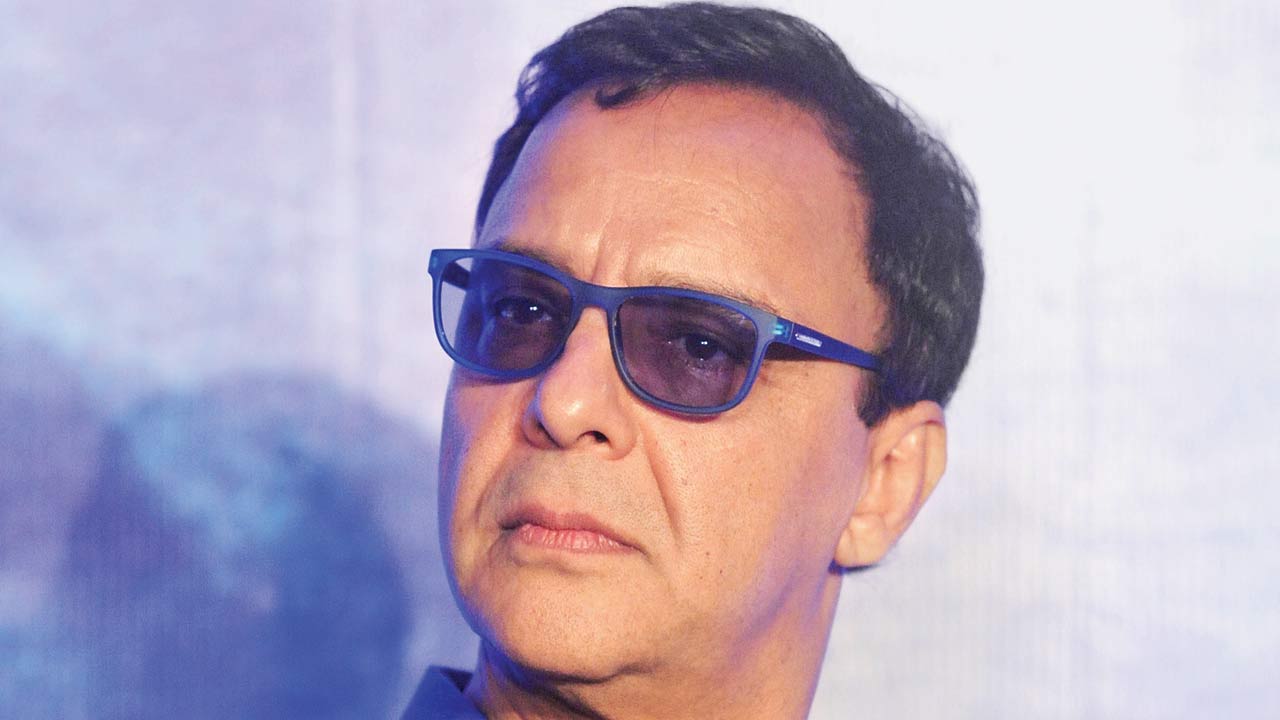
Vidhu Vinod Chopra spent the past four-and-a-half years making 12th Fail. What kept him going? His resolve to tell a story that is close to his heart. “I didn’t make Munna Bhai 3, and instead decided to make this film, which is yet to be picked up by a streamer. It’s my movie, my money. I believe you don’t have to sell your soul to make a film,” begins Chopra, who has written, directed and produced the Vikrant Massey-starrer.
Right at the conception stage, Chopra’s drive was to tell the story of those in the crowd who don’t have opportunities handed to them on a platter, those who fight the odds and make it on merit. “A line in the film goes, ‘Agar ek bhi bhed bakri ki jeet hoti hai, laakhon ki jeet hoti hai.’ It’s the story of every common man. It’s my own story in some ways. I came to Mumbai at 15 with no money. I developed anxiety neurosis when I first came here. My father told me that I would die hungry in the big city, but he instilled in me values that didn’t let me go astray.”
Almost 56 years later, the maker of iconic movies like Parinda (1989), 1942: A Love Story (1994) and 3 Idiots (2009) still lives by those values. “There have been such temptations. A few years ago, before this film, a studio head offered me $10 million to make a series. But my heart wasn’t in it. I have a life chart—I was born in 1952, I have only a decade or so left. If I have done fine for so long, do I need to be corrupt now?”
It is this trait of honesty that he wants to highlight with 12th Fail. The film is based on Anurag Pathak’s book of the same name, which is based on the real-life story of IPS officer Manoj Kumar Sharma. Through the cop’s life story, Chopra wants to show there is hope in the world as long as there is integrity.
The director states, “There are a handful of honest people in the world, and this world is running because of them. The goodness in the world needs to be represented more. When I was an FTII [Film and Television Institute of India] graduate and had little money, I found farishtas who helped me out. The then I&B minister knew I was poor, so he put me on the Governing Council of film bodies. I used to get Rs 880 as airfare, and my then-wife Renu [Saluja] and I used to live on that money all month. I’d insist they put me on more committees, so that I could make more money. Once, a secretary told me, ‘Kya Vinod, paanch saal corrupt banke thode paise kama le.’ But I told him that if you turn corrupt even once in life, then it’s forever.”
When you make such a personal story, it is crucial to find an actor who embodies the film’s spirit. To Chopra, Massey represented the integrity he was looking for. Recounting their first meeting, the filmmaker says, “When I asked him how he would play the 19-year-old, he sat on the ground in a child’s pose and started writing. We rehearsed together as a team for one year, and then shot for another year. This story is so important to me and Vikrant understood that.”
R Madhavan appointed as the president of FTII
8:51 AM

HINDUSTAN TIMES (September 3, 2023)
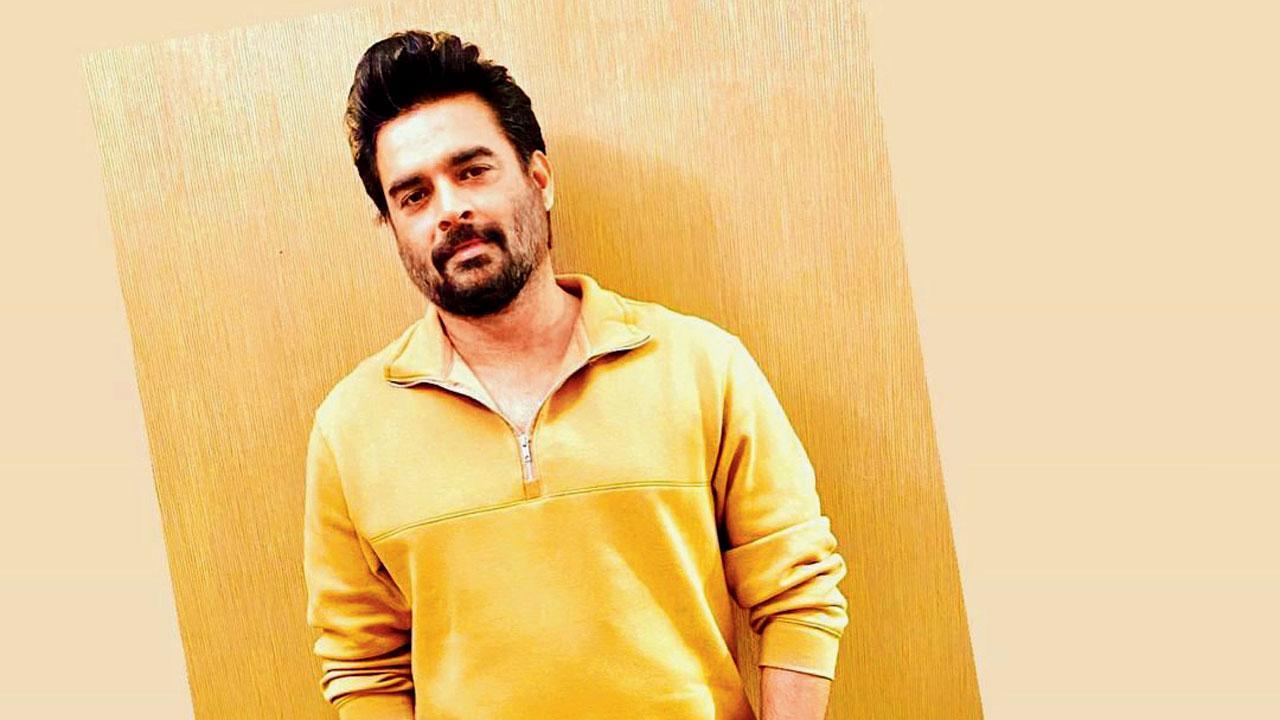
Close on the heels of R Madhavan’s directorial debut Rocketry: The Nambi Effect (2022) winning the Best Feature Film Award at the 69th National Film Awards, the actor-filmmaker has been appointed president of the Film and Television Institute of India (FTII).
Minister of Information and Broadcasting, Anurag Singh Thakur took to X to make the announcement: “I’m sure that your vast experience & strong ethics will enrich this institute, bring positive changes, and take it to a higher level. My best wishes to you (sic).”
Madhavan replied, “Thank you so very much for the honour and kind wishes @ianuragthakur Ji. I will do my very best to live up to all the expectations (sic).”
The 53-year-old, who has been appointed as president and chairman of the governing council of FTII for a period of three years, takes over from filmmaker Shekhar Kapur, whose tenure ended two months ago.
Subscribe to:
Posts (Atom)