Showing posts with label Monsoon Wedding. Show all posts
Showing posts with label Monsoon Wedding. Show all posts
Who would have thought Madhuri Grover would come on a reality show? Or Sunita Ahuja?-Farah Khan
10:45 AM

Onkar Kulkarni (MUMBAI MIRROR; July 12, 2026)
Farah Khan has worn many hats over the years — choreographer, filmmaker, YouTuber and now the host of Lock Upp: Sach Ya Sazaa on Netflix. Bringing her trademark wit and no-nonsense attitude to the reality show, Farah believes the latest season’s biggest strength lies in its refreshingly unpredictable mix of contestants. In a chat with Mirror, she opens up about the casting that surprised even her, why she had very little role in selecting the inmates, and the toughest challenge of judging people she has known for decades.
“The teams have done a fabulous job of getting these contestants,” Farah says, adding, “They are all so different and not the kind of people you regularly see on reality shows. Whether it’s Shivangi Joshi, Harshad Chopda, Ram Kapoor, Akanksha Chamola, Varun... It’s such a mixed bunch. Who would have thought Madhuri Grover would come on a reality show? Or Sunita Ahuja? Because of that, you got a completely different kind of content. They’re not just fighter cocks; they offer varied content.”
Despite being the face of the show, Farah reveals she had very little involvement in the casting process. She says, “They had already started locking contestants much before they came to me. There’s a whole team that interviews and vets them. If I feel somebody would be good, I tell them, ‘Isko try kar lo,’ but this time I came on board much later, so I didn’t have much of a role in it.”
The bigger challenge, she admits, is putting personal equations aside once the cameras start rolling. “That’s the most difficult part because I’ve known Ram Kapoor for so long. Not everyone knows that I choreographed the song Chunari Chunari in Monsoon Wedding (which features him). I have known Sunita and Govinda since childhood. Govinda’s sister was our neighbour, and Krushna Abhishek was born there. I know Madhuri and Ashneer Grover (her husband)… so many of them personally.”
But familiarity doesn’t earn anyone special treatment. In fact, Farah insists it’s quite the opposite. She shares, “When I’m doing this job, I have to be honest to the job. In fact, I think the closer you are to me, the more you get it from me because I take that liberty. Ram really got it from me in the first week. He also took the liberty of talking back because he has known me for so long. But the following week, he apologized. He said, ‘I’m really sorry I spoke to you like that.’”
For Farah, the rules are simple once she steps on stage. “When Riteish and I are standing there, it has to be about the show. Whoever deserves an earful has to get an earful. Personal relationships can’t come in the way,” she says.
Will US tariffs turn our silver screen grey or open new doors?
10:38 AM

The US plays an important character in Jaan-E-Mann, Kal Ho Naa Ho, and English Vinglish. PIC/PINTEREST@Sonika Kara; Pic/Dailymotion; Pic/Pinterest@Zofia Dycfeld
US President Donald Trump’s announcement of 100 per cent tariff on movies made outside the country is a wall between America and the rest of the film world. Will this mean roadblocks for Indian cinema, or open new doors?
Akshita Maheshwari (MID-DAY; October 5, 2025)
The American dream has lived as vividly in Indian cinema as it has in Hollywood itself. Bollywood has had its Swiss meadows and London skylines, but the United States has always represented something more aspirational. In Kal Ho Naa Ho (2003), New York’s skyline and lifestyle are inseparable from the storytelling. Kabhi Alvida Naa Kehna (2006) uses the city’s loneliness and urban pace to frame extra-marital relationships. Ta Ra Rum Pum (2007) is perhaps the ultimate representation of the American dream — fame, cars, and money, and what it means to lose it all.
My Name Is Khan (2010), New York (2009), and English Vinglish (2012), are stories that would make no sense if they were not set in the US, these cities almost becoming characters themselves. English Vinglish famously described Manhattan as aadmi, topi, dhoop ki chhaon (man, hat, tan). When he thinks of Times Square, film commentator Pulkit Kochar doesn’t picture the blinding lights or dazzling billboards. Instead, he remembers, “Salman [Khan] in the song Sau Dard [from Jaan-E-Mann (2006)] crying there.”
“My Name Is Khan encapsulates modern US [culture] like no other movie, with dark themes like racism and gun culture in schools,” says Kochar. “But beyond that also what comes to my mind is Rizwan [Shah Rukh Khan] showing a sunrise spot in San Francisco to Mandira [Kajol] and her immediately proposing marriage to him there,” a reminder of how deeply these cities are stitched into Bollywood’s imagination.
“The American dream’s kind of turned into a nightmare now, na?” laughs culture writer Sucheta Chakraborty, as the week brings a stunning new reality: US President Donald Trump has announced a 100 per cent tariff on all films made outside America. “Our movie-making business has been stolen from the United States of America, by other countries, just like stealing candy from a baby,” he wrote on Truth Social.
Every expert we spoke to admitted they are still unsure of how the policy would work in practice. “At this stage, there are more questions than answers. Would the tariff apply to licensing deals? If a US distributor buys rights from an Indian producer, would that distributor then pay tax on the value of the licensing agreement? Or would it be applied on the final product — the DCP, the digital cinema package [the encrypted exhibition copy sent to theatres]?” asks Chakraborty.
The scope is also unclear. Director of Academics at Whistling Woods International Rahul Puri asks, “Does this tariff apply to films shot abroad, or only to films whose production has taken place abroad? If it turns out to be an import tariff — a tariff on films being imported into the US — then yes, it will have a significant impact on Indian films.”
If the first interpretation is to be held true, the move could even hurt Hollywood itself. “About half of the $3.7 billion spent on making 40 of Hollywood’s biggest hits last year was spent outside of America,” says media and entertainment specialist Vanita Kohli-Khandekar. The US is a notoriously expensive shoot location, and recent box office successes like Dune (2021) and its sequel were filmed extensively abroad because of lucrative tax rebates offered by other countries. If the tariff is to take back Hollywood’s stolen candy, how come it hurts Hollywood the most?
“For India, the US is a secondary market. But it’s Hollywood’s primary market. This policy will hurt them more than us,” says Kohli-Khandekar, suggesting that domestic shooting should be incentivized if the goal is to promote the US as a shooting location.
The implications could be serious. Puri, who is also managing director of Mukta Arts, says, “The Hindi market alone makes around $100 to $150 million a year from the US; that’s what is at stake.”
Kalki 2898 AD (2024) earned US $18.57 million in North America, making it the second highest-grossing Indian film in the region, behind only Baahubali 2: The Conclusion (2017), which grossed at approximately US $20 million. Big budget blockbusters like Jawan (2023), Pathaan (2023), RRR (2022), and Pushpa (2021) also shone in American waters.
“Kalki perhaps did not do as well domestically. It relies on the diaspora audience for that extra bang,” says Puri. Big-ticket spectacles are increasingly struggling to resonate with Indian audiences but continue to draw NRIs to theatres, fuelled by nostalgia.
“The average ticket price in India is about Rs 120, whereas in the US it’s $15 to $20 (Rs 1300 to Rs 1700 approximately). So the overseas market offers a much higher bang for the buck,” Puri explains. “For producers, it’s almost pure profit, with costs mainly for marketing and distribution — not production. That profitability will suddenly be eaten away if such a tariff is applied.”
The US is considered the halo market — the one every film aspires to crack. China is the only other territory that compares in scale. “China allows about 32 foreign-language films a year. Around 18 of those slots are for US films; the rest are shared worldwide,” says Puri.
If America closes its doors, India could pivot harder toward China, where stars like Aamir Khan already enjoy massive followings. “The Indian government has already signalled a thaw in certain areas of its relationship with China,” Puri notes, “There’s no doubt we’ll need to push harder there.” According to him, Trump’s move is “yet another way to squeeze the diaspora”.
Culture wars increasingly blur into political ones under the Trump administration. In 2020, when Parasite won the Oscar, Trump mocked the decision: “What the hell was that all about? We got enough problems with South Korea with trade. On top of that they give them best movie of the year? Was it good? I don’t know. Let’s get Gone With the Wind. Can we get Gone With the Wind back please?”
The prestigious EGOTs (Emmy, Grammys, Oscar, and Tony Awards) are all American. If all high honours remain American and Trump remains hell-bent on only letting American art win them, it may spell doom for the Indian Oscar dream.
The policy is especially bad news for Indian indie cinema. These films rarely thrive at home and rely heavily on US screenings to recover costs. In 2023, Kill completed a long festival run before its India release, even premiering in the US first. Mira Nair’s Monsoon Wedding (2001) became a global phenomenon through festivals before gaining distribution. Neeraj Ghaywan’s Homebound (2025) created a name for itself through festival runs.
Without the US festival-to-distribution pipeline, many such projects could struggle to exist. “If we won’t get picked up there, maybe indie films will stop going to Sundance, Tribeca, SXSW,” speculates Chakraborty.
She also points to the deeper cultural loss. “Roger Ebert once called cinema an ‘empathy machine’ — a way to step into someone else’s shoes and see from their perspective. With this tariff, we lose that multiplicity of voices, narratives, and viewpoints. It stems from a move toward economic and cultural nationalism, but it also means perspectives outside the dominant narrative will be erased.”
The films that thrive under this policy, Chakraborty warns, will be the ones with the most “homogenized, myopic, inward-looking ‘American’ perspective.” For Indian filmmakers, this could mark a turning point in their long relationship with America. “People from every walk of life are revisiting their relationship with the US in the current climate.
Young filmmakers will look at the US through a different lens,” says Puri, “The allure of Hollywood may just be dying.” “We may have spent years looking at the US in this wide-eyed manner,” adds Chakraborty, “but that quality is getting shattered.”
The uncertainty spreads across other sectors of filmmaking as well. India’s technical prowess has made it a hub for Hollywood VFX work. Would such collaborations also be hit? What about licensing for streaming platforms? “He’s [Trump] made similar threats before — in May, for instance,” Puri reminds us, “Often, he makes big announcements but later rolls them back. Even if implemented, it usually takes months for the fine print to be worked out. We’ll only know the exact scope when that order comes out.”
Chakraborty wonders whether the way out is collaboration with US-based productions houses, adding, “Even Payal Kapadia’s All We Imagine As Light [2024] was an Indo-French co-production. As they say, it takes a village to make a film, right? Different stages of work in these co-productions can also be outsourced.”
Aditya Chopra was so kind and encouraging. DDLJ Musical gave me the debut of a lifetime-Kinshuk Sen
10:18 AM

Palash Sen’s son Kinshuk on how he landed several acting projects in the West, including the DDLJ musical, before debuting in Bollywood with Guzel Kiz
Mohar Basu (MID-DAY; March 10, 2024)
In India, he is known as musician Palash Sen’s son. But in the West, Kinshuk Sen is known for featuring in the Broadway musical, Come Fall In Love: The DDLJ Musical, and Mira Nair’s Monsoon Wedding The Musical. Not many can boast working with Aditya Chopra and Nair so early on in their career. For the actor, it is a dream come true.
“I have watched Dilwale Dulhania Le Jayenge [1995] at least 20 times. So, to play the role of Kuljit and be directed by Aditya sir, whom I have always idolised, was a ‘pinch-me’ moment. Aditya sir was so kind and encouraging. The project gave me the debut of a lifetime,” smiles Kinshuk.
The actor is equally in awe of Nair, whom he rightly describes as the “torchbearer for South Asian creatives in the West.” “She is loving, passionate, and has such a clear vision in her storytelling. She used to come backstage before every show, and give us all hugs and words of encouragement before we went up on stage.”
One can assume that working with the duo has readied Kinshuk for his Bollywood debut, Guzel Kiz, to be helmed by his musician-father. The love story, also starring Gizem Tas, is set in Turkey. He tells us, “Dad is an easy-going director who trusts his actor to bring the character to life. He likes showing a physical and emotional journey in every film.”
If one looks at his trajectory, however, Kinshuk has had better luck in Hollywood than India. That makes us ask: has he not been trying as hard in Bollywood?
“That’s a common misconception. It’s my dream to do more work in Hindi cinema, but I’ve just got more work in the West. Hollywood has opened up for Indian actors. When you see how both musicals were sold out night after night, it shows how much interest people have in seeing Brown faces and hearing our stories. On screen, women like Mira Nair, Mindy Kaling, Priyanka Chopra Jonas, Deepika Padukone and Alia Bhatt are leading the way. My identity as a Brown actor is reminded to me a lot more when I am in Hollywood, than when I am back in India. The roles are far fewer for us here [in Los Angeles], but I see a positive change. Producers here are recognizing our impact as a people,” says the actor, who will soon be seen in an action film written by Star Trek: Voyager writer Arnold Rudnick.
I am glad actors no longer need to be conventionally beautiful-Lillete Dubey
8:57 AM

Raima Ganguly (BOMBAY TIMES; September 2, 2023)
"Bengalis are very culturally inclined. So, Whenever I come here, I’m sure that the audience will be very responsive” said actress and thespian Lillete Dubey, who is in town to stage her directorial, Vodka And No Tonic (organised by Nanni Singh) – a play that revolves around the fragility of human relationships. We caught up with her for a chat, during which she told us why she feels that the film industry happened to her accidentally, how relationships are at the heart of her work, and more. Excerpts:
Slowly the winds are changing, and I am so glad! With OTT and new-age cinema, being ‘conventionally beautiful’ is no longer a prerequisite for an actor.
'I first came to Kolkata 35-40 years ago to perform at Kala Mandir. Kolkata is a culturally conscious and developed city, be it in the field of literature, music or any art form. It’s very open. And that’s a thing when you come to perform in a city that is culturally alive — it’s open to all themes.'
'Acting in TV and movies was not my game plan. I used to do a lot of theatre since college. Then I did something in Hum Log and some work in cable TV too. It was fun. It was purely by accident that I was offered a role in Zubeidaa. It was a lovely role, so I thought why not. However, I don’t feel challenged by cinema. It’s great fun, but I don’t think there has been any role that has challenged me.'
I picked up these stories (of Vodka And No Tonic) to not remember the pandemic or what we went through. I wanted to look at relationships through the lens of the crisis. There is one thread that binds all my works – relationships. Irrespective of what the theme is, relationships connect it to the audience.
On her bond with her daughters
Theatre is in their blood, but neither decided to go that way professionally. Neha, when she was in college, did Monsoon Wedding and a couple of other films. After college, she took a sabbatical and realized that her heart was not in it. So, she went abroad to pursue Masters in psychotherapy and is now a trained psychoanalyst. Theatre is something she enjoys, but it’s not her career choice. She’s a very spontaneous actor. On the other hand, Ira did a major in theatre. She is producing and co-producing plays and also working on stage, OTT and films. When I work with her, she’s my actor and we navigate things differently. But though Neha is not completely in it, the three of us do discuss theatre and it’s a great feeling.
I don’t want to play a mother to 25, 30 or 40 year olds anymore-Shefali Shah
8:05 AM

Renuka Vyavahare (BOMBAY TIMES; March 12, 2022)
Outspoken, eloquent and dignified, Shefali Shah embodies the qualities that also represent her costar Vidya Balan in their upcoming film Jalsa, which is slated to release on Amazon Prime Video on March 18. In a chat with Bombay Times, Shefali talks about ageappropriate casting, the evolution of Hindi cinema and battling self-doubt despite being an actress with an impressive body of work. Excerpts:
Vidya Balan and you play parallel leads in your upcoming film Jalsa, directed by Suresh Triveni. What is it about this script that appealed to you?
Jalsa is about human conflict, not just with each other but an internal conflict too. It shows how one incident changes the lives of everyone around it. It sheds light on what people think they may do in a certain situation, their sense of morality and how it all starts changing because of the circumstances. I may sound pompous, but I genuinely believe that Jalsa is one of the best films I have seen.
Could you elaborate on the parallels drawn between Vidya Balan and your character? So far, all we know is that she plays a journalist and you are employed in her house as a cook.
Yes, Vidya plays a journalist and I work in her house. It’s not the most intimate relationship because they are distant from each other. If I tell you more, I risk giving away the story, but I can say that Jalsa is a drama-thriller and not just a thriller. Everyone will have a different take on it as art is subjective, but they will be compelled to think about what they would do if they are found in this situation.
What was it like to work with Vidya?
I not only admire Vidya’s work, but I admire her as a person as well. I was thrilled to know that I was going to collaborate with her. Unfortunately, we don’t have a lot of scenes together, but just sharing screen space with her was special. She is an amazing person — warm, caring and so giving. It’s always a pleasure to work with good actors because it only makes your work better.
Given your extensive body of work, what do you look for in a script at this point in your career?
I am finally getting lead roles and parallel leads and I want to stick to that. I am not saying that I will never be a part of an ensemble, but it needs to be something like Monsoon Wedding. When I read a script, it has to touch me and turn my world upside down. If it does that to me, I am going to say yes.
When an actor of your calibre says that they are finally getting lead roles after all these years, do you think it took you way longer to get here than you had anticipated?
Honestly, I had stopped anticipating or expecting because I didn’t think that it would go anywhere. It has taken me forever to reach here. However, I cannot complain. After Delhi Crime, things have changed. The last two years have been great. And it’s only going to get better for me.
For talented and deserving actors to get their due in this industry, what do you think needs to change?
The change is ongoing. Earlier, when we got narrations, there was a hero and a heroine and, in some way, we were all related to them. You could be a mother, chachi, sister or friend. They didn’t have individual full-fledged characters. Also, it was all very age-related. Today, that is changing. With OTT coming in, some of the best shows have been led by women, internationally. These female characters are complex, deep and nuanced. And most importantly, these are age-appropriate roles.
Speaking of the need for age-appropriate casting, leading men in their 50s still romance women in their 20s and 30s. Women, on the contrary, are often perceived as non-leads once they cross a certain age, aren’t they?
If the actors and actresses are choosing to play these roles, who are we to comment? Nobody is putting a gun to anyone’s head and forcing them to act with XYZ whatever the age gap. I have never had a problem playing a mother or a supporting role as long as it’s a full-fledged character. My issue is why define a character merely on the basis of his or her relationship with the leads? In the past, I have played mother to a person much older than me. But at this point, I want to say, listen, I don’t want to look younger than my age. I do have children who are 18 and 19, so I am comfortable playing a character like that. But I don’t want to play a mother to 25, 30 or 40-year-olds anymore.
Even the best of actors can be nervous or consumed by self-doubt. Does that happen to you as well?
Yes. Every time I go on a set or take up a project, I have this constant fear that the director will say action and I am going to stand there all dumbfounded. I always feel that I have taken up this project, but now what am I going to do? Strangely, this works very well for me. I am my biggest critic. I question myself. I am not easy to please. I never revisit my work. I never see the monitor when I am shooting because I know I will find faults and won’t like myself.
As a filmmaker, for years I felt like that dhobi ka kutta, na ghar ka na ghaat ka-Mira Nair
8:11 AM
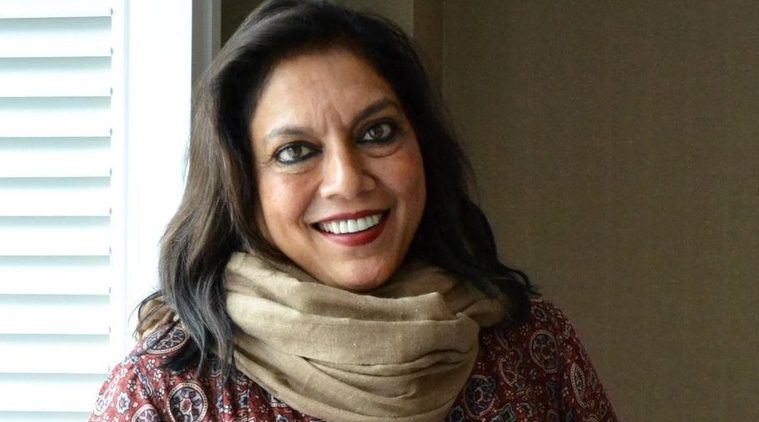
Niharika Lal (BOMBAY TIMES; October 7, 2021)
“If we ever deserve the title of an artist, we must welcome madness as a vital guest,” believes filmmaker Mira Nair, whose nickname happens to be ‘Pagli’. She also adds that filmmaking is a disease, which means she is “super sick”. The Namesake director recently shared some of the highlights from her 40-year filmmaking journey during the 23rd convocation ceremony of FTII (Film and Television Institute of India). From Monsoon Wedding (which she considers to be a ‘reality check’ on Indian weddings) to the Reluctant Fundamentalist (a film about a “South Asian boy who loves America and feels betrayed by it”), she walks us through her acclaimed works. Excerpts:
‘ABROAD, IN THE ’80s, I HAD TO TOLERATE AUDIENCES WHO ASKED ME HOW I SPOKE SUCH GOOD ENGLISH’
“As an Indian filmmaker in New York in the ’80s, I would ride the bus with all my documentaries under my arm, and would show them to anyone who would want to see them – women’s groups, NGOs, universities, and anyone else. I had to tolerate audiences who would ask me if there was tap water in India, and how come I spoke such good English?”
“Those years, I must say, I discovered the loneliness of being an artist. I didn’t want to be a cultural ambassador of my country, educating Americans about my homeland, but back home in India, my films were also seen as alternative. My documentaries were the opposite of anything that came out of what is now known as Bollywood. I was a complete outsider.”
“There is a saying in our country – ‘dhobi ka kutta na ghar ka na ghat ka.’ And for years of making films, I felt like that dhobi ka kutta. Not understood at home, but considered a novelty abroad. I found that people who inhabit different worlds can see through each of them. It is such people who have a sense of modesty who know that there are other ways of seeing and who develop an appreciation for it rather than a mere charitable tolerance for the other ways of life.”
“As a young person, I grappled with the question, ‘Can art change the world? Can art impact the world?’ My first feature film Salaam Bombay! in 1988 grew out of my documentary roots. I worked with training street children in film acting so I could accurately portray their reality in my film. I also wanted the story of Salaam Bombay! – a mix of street kids with actors like Irrfan (it was his first role in any film) Raghubir Yadav, Nana Patekar and Anita Kanwar.”
‘WE’D ALL SEEN HUM AAPKE HAI KOUN..!, BUT NOTHING RESEMBLING ACTUAL DELHI PUNJABI WEDDINGS’
“Mississippi Masala (1991) was a radical film then. Brown and black (faces) had never been seen together in a frame, leave alone falling in love. I was attacked soundly by members of the Indian community here (US). But it is a film that lives on. It is still radical – black and brown faces in a frame, celebrating both our commonalities and differences.”
“I then made Monsoon Wedding (2001) largely with members of my family and a script of a student of mine at that time – Sabrina Dhawan. I wanted to very much make a ‘reality check’ version of our shaadis. We had all seen Hum Aapke Hain Koun..! and other great Bollywood movies on weddings, but there was nothing that resembled what it really felt like going to a Punjabi wedding in Delhi where I live. So, we made Monsoon Wedding. As much as it was about masti, music and intoxication of life that Punjabis are known for, it was also more importantly about the blanket of silence that lies in the hallowed ground of families – the secrets and conflicts in family that are never spoken of.”
‘NOW IS THE TIME WHEN WE MAKE OUR STORIES OUR OWN WAY’
“The Namesake (2006) is about the movement and the crossings of people like us – the bridges, trains, planes and airports. These would be the threads of the film that gave us the tapestry that covered 30 years of Ganguly family’s life between New York and Kolkata. The duplicity of worlds is something that I know well, and this is something that cinema realises in such a powerful and effective way. Because of this, I feel in the creative realm, borders and bridges need to be fluid. I try to tell stories in which people can see themselves. It takes courage to be original, especially for those who have been told from the past few centuries that the west is the mirror where they can see their future, which I don’t subscribe to.”
“I was then inspired to make a contemporary film about Pakistan – The Reluctant Fundamentalist (2012) – especially in this day and age, when the perceived schism between Islam and the world becomes more pronounced. The west has its coming-of-age stories, but where is the one which is about a South Asian boy who loves America and feels betrayed by it? It was always time for our stories, but now is the time when we will make them our way. The cruellest impact of colonialism is the belief that we are incapable of representing ourselves. We must put this crisis of self-confidence behind us.”
The audience has given me license to dream bigger and not give in to commercial calibrations-Tillotama Shome
8:21 AM

Actor Tillotama Shome finds audiences’ praise for her recent project inspiriting
Shreya Mukherjee (HINDUSTAN TIMES; February 1, 2021)
Tillotama Shome’s poignant performance as Ratna in Rohena Gera’s Is Love Enough - Sir evokes realisations regarding class divisions inherent in our social structure. No doubt, viewers are showering praises on Shome. “The audience has given me the license to dream bigger and not give in to calculations and commercial calibrations. For good or bad, it has made me more idealistic... I’m genuinely grateful for the sudden surge of projects. But I’m taking time to decide what I want to do and why,” the actor shares.
In her career spanning two decades, Shome has been part of interesting films such as Monsoon Wedding (2001), Shadows Of Time (2005) and Qissa (2013). Many of her works, including these films, travelled to various international film festivals. But, closer to home, recognition for her has been limited. However, with Sir — that premiered at Cannes Critics Week — things have become different. If this acknowledgement had come earlier, would her career have taken a different turn?
“Who knows? But my practice of Buddhism allows me to enjoy the belief that a strong foundation takes a long time to build and is unseen. It needs time, away from the glare and the gaze of others… So where I’m is exactly where I need to be,” she replies.
Appreciation raises expectations. But Shome has a different perspective. “I’m looking at it as an anomaly, a glitch in the system, an exception... the algorithm has momentarily been taken over by audiences’ love for an independent film. It’s heartwarming. I’m grateful and it’s definitely a first. But, one is accustomed to working in the shadows and taking joy from it. This is a bonus and an encouragement to continue being an oddball,” adds the actor, who’s working in directors Rima Das, Anup Singh, Saumyananda Sahi and Madhuja Mukherjee’s upcoming projects.
Sir was the new Hindi release that opened Indian theatres, but it worked better when it released on an OTT platform. Asked if she thinks the web offers a more democratic space to creators and performers, Shome says, “I’ve not done enough work on OTT to answer this question with much authenticity or research. But I hear things aren’t ‘so democratic’ in this brave new world either. This is sad but expected, I suppose. Steering things to a more positive note, I thank the OTTs for bringing home a host of wonderful actors and writers who’re speak different tongues — the sounds are diverse, the languages embrace the richness of the vernacular and specificity of a place and time. This plurality of voices is exciting.”
I wanted to burn every print that existed of my film Kama Sutra-Mira Nair
8:16 AM

From matar paneer to the movies, that sweet taste of Indian-American success from another age
Mayank Shekhar (MID-DAY; November 21, 2020)
Mira Nair's journey as an Odisha-born/bred filmmaker in America will seem greater to you, if you consider the first thing she did, landing up as an under-grad student at Harvard in the mid '70s. She went over to her course-mate from Bombay, Sooni Taraporevala, desperately to check on who the other Indians around were.
There were only two — studying film. One of them, a gentleman named Anand Mahindra; the industrialist, whose surname carries the massive fleet of automobiles on Indian roads. "Anand was a really talented filmmaker. He's still an artist in his soul. I'll never forget the wonderful thesis-film he made, following a holy man up a mountain," Mira remembers.
Screenwriter Sooni and Mira of course became great friends and colleagues thereafter — collaborating on notable productions like Salaam Bombay (1988), Mississippi Masala (1991), and The Namesake (2006). Anand was the "big brother, who'd encourage everyone to move back to India [once done with studies]." As he did, taking over his family empire.
Speaking of famous associations from unrelated fields, a picture that once got widely circulated online was of Mira as Cleopatra and Shashi Tharoor as Mark Antony, in an inter-college Shakespearean production from the '70s. Mira was a student at Delhi University's Miranda House then; Shashi Tharoor, the undisputed star of St Stephen's College.
She's been asked about this picture on occasion during interviews. And I gauge from her responses before — it doesn't seem like she liked the college-kid Shashi Tharoor much! Did he throw big words at her? "Oh no, I just didn't like kissing him [in the play]. Back then, you know how it was — even if you got slightly physically close to someone, people would start cat-calling. It was ridiculous."
As for the Tharoorosaurus bit, "Well, we used to tease Shashi [who hadn't lived or been abroad yet] about where he had got that accent from. We used to say that his mother flew over England, when she was pregnant, and you know, wahaan se thoda atmosphere aa gaya! But he's always been a sport. He used to take it well!"
Which instantly reminds you of Vivek Gomber's character Arun Mehra from Mira's A Suitable Boy, who has similarly never set foot in England, but throws a thick British twang, chiefly to denote class: "Arun Mehra, of course, is [straight] from Vikram Seth's novel [of the same name]." On which the six-part series is based.
In fact the language/diction has been a pet peeve for a lot of people who have dissed the show. In her defense, Mira says, "I feel like we were very nuanced with the language [back then] — trying to be 'angrez', and we were taught to be so. But it is a world that people literally don't know now. They don't hear that world."
To be fair, you do hear that over-intonated, cleanly clipped British-English in old clips, especially of Indian statesmen or women from the time — say, Nehru, or Sarojini Naidu, whose black-and-white video pops up quite often on social media feeds.
"I don't get that [dialogue/language] comment from people of my mother's generation. Because that was the world familiar to them. I tempered a fair amount of dialogue that I could, during the making of A Suitable Boy — primarily, getting 20 per cent of it back into Urdu/Hindustani and Awadhi. Which wasn't the case before."
"They didn't even think of it. Anyway, so I know that it is new and different to the ear. But I stand by it. Of course, it was from the get-go written by someone else [Andrew Davies]. It could be different. But the book is what we largely followed."
For its setting (early '50s), and set-up (BBC production, streaming on Netflix), Mira has in jest described A Suitable Boy as 'The Crown in brown, within a fraction of the budget!' It is by no means her most loved work, even while rants and raves are subjective by nature. One wonders if, after over 40 years of being an active filmmaker, she cares so much for all that's written about her latest film, or debut series, as in this case?
"That I am always creatively absorbed in another world provides a protection. So I am not waiting to hear your words; what's the point? And social media is a weirdly interesting space, where I just kinda get a vibe, than actually read a full review. Especially if there is something nasty in the headline," she laughs, flipping her fingers, as if quickly turning pages!
Taking away nothing from the fact that Mira remains still one of the most critically acclaimed filmmakers — for a majority of her filmography. A creative slump/dissatisfaction, if one may call it that, is something she attributes only through self-introspection. Which is how she felt after Kama Sutra (1996): "I wanted to burn every print that existed of that film!" It's not something you'll hear many directors publicly admit, even in hindsight.
As she puts it, "It was also dovetailed with me moving to Cape Town with my husband [Mahmood Mamdani], who was heading the African Studies department at the university. Our son [Zohran] was six and I didn't want to leave him. It was a dove tailing of all those things. I didn't quite know how to work it. We made this film in two months, My Own Country [1998], which Sooni and I wrote after. That was good. I have to keep doing/making things. It was in that wandering that I found myself making a [documentary] film, Laughing Club of India [2001], in my state of malaise." What happened with the shooting of that film in the rain, using old Hindi movie songs? "On its own, it became the seed for what became the style of Monsoon Wedding [2001]. That's what I share with people — to be fallow is also important."
Mira is formally trained in cinema verite — art/technique, mostly associated with documentary filmmaking, intended to convey realism. Well before Reese Witherspoon in Mira's costume/period piece Vanity Fair (2004); even before Denzel Washington, a top-draw Hollywood star, who said yes to her mixed-race romance, Mississippi Masala (1991) — struck by the Oscar-nominated Salaam Bombay (1988) — the main muse for Mira's realistic lens was in fact the city of Bombay itself.
Which is where I'm speaking to her from, and where Laughing Club of India is set (in Malabar Hill, to be more precise). So are her two early documentaries: Children Of A Desired Sex (1987), on gender-determination foetus tests. And India Cabaret (1985), following lives of two Bombay strip-club dancers, before dance-bars became a thing (and thereafter became illegal). And anybody had thought of Maximum City, or Slumdog Millionaire!
I watched India Cabaret recently (on YouTube). And the warm yet brutal gaze still holds. As with Salaam Bombay, that it subsequently inspired: "It was not a pretty Bombay for sure — pigs careening in the mud; cruelty and violence over how men treated women…. In that type of filmmaking, you don't take holidays. It is about what is happening around you. I remember going to see Shekhar Kapur, who is an old friend, but I almost had no language to understand his Juhu life — after living the life I was, back in 'Antophi' (Antop Hill)! Most days, I would just go to a beautiful handloom shop called Kasab, which is still there on Napean Sea Road, and sit there for hours [for mental peace]."
"Now they can call me a New York-based filmmaker in Bombay, but the fact is that not many saw Salaam Bombay, right under their noses. It was a life around us. When you live in it all the time, you can't see it well — having numbed yourself to it."
This seamless transition from documentary filmmaking to fiction — something that writers of non-fiction find harder to be equally adept at — Mira admits, has helped define her work. And you can still sense strong stamps of it, even in later movies like Queen Of Katwe (2016; set in a slum in Kampala, Uganda), or the otherwise 'unfilmable' conversation she turned into the movie version of Mohsin Hamid's The Reluctant Fundamentalist (2012).
"Cinema of truth [cinema verite] sounds a little pretentious. It is very real, in the sense that you don't script everything. You just have to be humble enough to enter the world. Just be there. Of course your presence is shaping [the moment] to some extent. But it is also about being an observer to the situation, and eliciting things from [actors] — as they feel them, rather than you telling them what to say."
What this has also led to since her celebrated debut feature is — film after film, an established practice of casting 'real' people, as it were, or non-professional actors, alongside trained actors/stars, in the same frame. And watching this unique alchemy come to life on screen.
For instance, Mira discovered Sarita Choudhury, who played Denzel Washington's love interest in Mississippi Masala, biking on a street in Cambridge once. She found Tillotama Shome (Alice in Monsoon Wedding) in the corridors of Delhi's Lady Shri Ram College. Even better, she picked up Kamini Khanna for a typically Delhi-Punjabi Shashi Aunty in the same film — spotting her on the walking track of a South Delhi park. Does she think everyone is essentially an actor then?
"Not at all! It's about several things, but mostly instinct. I can tell immediately if the camera will love you or not. Or sometimes it doesn't matter if the camera won't love you, but can I use that in a way? Like [Pedro] Almodovar and his ladies are fantastic. And they so destroy the notion of what's beautiful before a camera. But the roles need that. So it depends on the role, of course."
While casting for Monsoon Wedding, she recalls, a newbie Vijay Raaz's face had caught her eye: "He'd walked in from the train station to Uma's [Da Cunha's] house in Churchgate. I don't know how I even remembered his name. Paresh Rawal, whom I admired a lot, had approached me for P K Dube's part. We had a workshop in Delhi, which Paresh couldn't join. So then I had to take Tillotama [Alice] back to Bombay to rehearse with Paresh [Dube]."
"Naseer bhai [Naseeruddin Shah] had given us space above his flat for rehearsal. The door opened, and my eyes fell out. Paresh had gained 30 to 40 pounds. He looked like Alice's father, and this was supposed to be a love-story with him as a tent-walla! He said, 'I'll just lose [weight].'"
"But we were shooting in literally four days! I just thought of the bald man with long ears and the widest mouth in the world, Vijay Raaz, and called him. I had not auditioned him, but I loved his look." The role expanded as Raaz came on board, killing it along the way. (This conversation between mid-day and Nair took place a day before Raaz was summarily arrested and subsequently bailed over a molestation charge on a movie set.)
He's had a solid career since. Several Indian actors in the Bombay film industry similarly owe their first frame on the big screen to Mira. Right from Nana Patekar and Irrfan in Salaam Bombay. Late Irrfan, she always felt, was cut from a different cloth from Bombay's leading men in the '80s and '90s. He delivered, arguably, his finest work with Mira in The Namesake (2006).
Or Randeep Hooda and Ram Kapoor, for that matter. They were debutants in Monsoon Wedding; bona fide stars now. Why, even Kamini Khanna! She's played multiple versions of Shashi Aunty in every other Bollywood movie. This contribution to the Bombay film industry in particular, I suspect, isn't acknowledged enough about the New York and Kampala-based filmmaker.
Even more than a keen head-hunter, Mira is an all-encompassing aesthete, wholly invested in cinematography, literature, production design, colours, costumes, the craft of moulding actors/characters… You can dive deep into her 'independent filmmaking' process on an expensive app called Masterclass.
A trait that unites Mira still with the time-honoured tradition of mainstream Indian filmmakers is her exquisite ear for desi poetry and music — whether that be L Subramaniam's musical interludes in Salaam Bombay, or the Monsoon Wedding soundtrack, that melodiously travels from Anu Malik to Farida Khanum. As do the poetry of Daagh, Mir and Ghalib set to ghazals in A Suitable Boy, or the sitar maestro Shujaat Khan showing up on the small screen.
The song playing in my head all through, talking to Mira (and while writing this excerpt) is the haunting Mehfil barkhaast hui by Kavita Seth in A Suitable Boy. Similarly, Susheela Raman's ear-worm version of Mukesh's Yeh mere deewanapan hai had invaded my brain for a full year after The Namesake: "It plays on the suhaag raat, which isn't like any another, because these are Diaspora kids. So there is jazz and blues, with echoes of their roots! They have seen Bollywood stuff and simply want to be stars on their honeymoon night," Mira reasons, before humming the song delightfully herself.
Surprisingly Susheela would simply not sing that track, when she once performed in Bombay, despite repeatedly loud requests from the pit right under the stage. Mira says that could be "because she must have been shy, to sing it in India, in that [British twang]! Even my husband, who is older and knows the real song, says, 'Yeh kya hai?' He can't take it!"
Given the résumé and musical references seeped into her work, besides an army of previous recruits from among top Bombay actors, I'm almost amazed that in all these years, Bollywood folk haven't ever attempted to co-opt Mira with a grand scheme/project?
"I am not looking for that either. But I have really lovely friendships. Yash Johar and I were very close. He was the production manager on one of my films, Buddha, with Warner Bros, in 1990-91. We travelled the whole country location-scouting. I really respect Aditya Chopra's mind. I had taken him on an idea — not for me to do, but for us to work together on. But, no, I don't think so. I think they think correctly — that I just make my own movies!"
On social networks, Mira goes by the rather odd handle, Pagli: "Don't forget the 'Ji'! Pagli is my nickname from childhood. I did weird things as a kid; still do. My son made me get on social media, when we were opening The Reluctant Fundamentalist. He asked, what's the name, ma? I didn't want my name on it. I thought I'd get hounded beyond belief. So I just said Pagli, yaar. And because people called me ji-vi and all that, usko bhi laga diya, Pagli ji — an honoured mad person."
That we can see in person in India, when she brings down Monsoon Wedding, as a stage musical, once pandemic ends, and hell freezes over. A film that would've brought Pagli ji back to Bombay — her early muse, and that too with Johnny Depp —was the adaptation of Gregory David Roberts' Shantaram.
Regrets — that the film fell through? "I only regretted that I gave one-and-a-half years of my life to it. And we really had a good thing going. Not, otherwise. They were starting it again, and I was not interested!"
Mira also famously let go of directing the fourth Harry Potter film, for the sake of The Namesake. She declined The Devil Wears Prada, going by the same measure of what interests her — and what she can do, better than similar directors on hire.
"I am very nihilistic like that, I suppose. I just turned down something also very huge few days ago. That's when I fell down into a khadda [a ditch on the street]," she says from her Manhattan apartment, nursing a shoulder pain.
Exuding power, all right, in an industry that when she entered it — doing theatre in New York during day, waiting tables at night — there were barely any coloured people around, let alone desis, or women. It's a world very far away from the one with M Night Shyamalans and Mindy Kalings that we know.
Mira first got on the road, splitting rent for an editing suite at a basement collective for offbeat artistes in New York. This is after she had shot Salaam Bombay. Which she knew the West had no similar reference point for.
Spike Lee, same age, also editing his film, would pay the other half of the rent! "I also used to work at a restaurant called Indian Oven, when they really didn't know how to spell India. I'd explain cottage cheese balls fried in gravy mix of peas — for a 'matar paneer'." They get her now.


Chaitanya Tamhane's Marathi film The Disciple selected for Venice Film Festival
7:52 AM

Big moment for India as Chaitanya Tamhane's The Disciple selected in the competition section of Venice Film Festival, 20 years after Mira Nair's Monsoon Wedding bagged top honour
Shaheen Parkar (MID-DAY; July 30, 2020)
 Almost two decades after Mira Nair's Monsoon Wedding (2001) bagged the Golden Lion at the Venice Film Festival, Chaitanya Tamhane's Marathi film, The Disciple, has been selected in the competition section of the 77th edition of the prestigious gala. Scheduled from September 2 to September 12, it is one of the first film festivals to be held in the wake of the pandemic with strict social distancing guidelines and screenings in outdoor venues.
Tamhane is overwhelmed that his sophomore directorial venture is set to compete with Majid Majidi's Sun Children and Andrei Konchalovsky's Dear Comrades, among others. "The competition section has showcased some of the best films in cinema history. The selection of The Disciple is a milestone in the Indian independent cinema movement. I am relieved that it has found such a great start even in these tough times," says the director. The Disciple, which is set in the world of Indian classical music, chronicles the journey of a vocalist, who has to balance life in contemporary Mumbai with his chosen vocation. "We have poured every ounce of energy and effort into the film over the last four years," adds the filmmaker.
Counted among the finest storytellers in Indian cinema, Tamhane will return to the festival after six years. His directorial debut, Court (2015), had premiered at the gala, where it bagged the Best Film in the Orizzonti section and the Lion of the Future award. Back home too, the film — a commentary on the Indian judicial system — bagged the National Award and was India's official entry to the 2016 Oscars.
Producer Vivek Gomber, who has teamed up with Tamhane after the 2015 outing, says, "I hope this makes it easier for new voices in our country to follow their paths."
June premiere of Monsoon Wedding musical in London delayed due to Coronavirus pandemic-Namit Das
8:12 AM

Mohar Basu (MID-DAY; March 30, 2020)
 Almost 19 years after its glorious run at several international film festivals followed by an adaptation at Berkeley, Mira Nair's Monsoon Wedding was to get a stage rendition at two of the most prestigious theatres in the UK. The musical was to open at Leeds Playhouse on June 22 for a three-week run followed by shows at The Roundhouse in London from July 17 to August 29. However, the musical — that reflects the Indian culture through the story of a Delhi-based family coming together for a lavish wedding — has now been postponed.
 Namit Das, who is a part of the cast, says, "[The shows are] unfortunately cancelled because of the COVID-19 outbreak. We will do the show in 2021 once the pandemic subsides."
The actor, who has worked closely with Nair for a long time, will also be seen in her web series, A Suitable Boy, based on Vikram Seth's best-selling novel of the same name. "Monsoon Wedding [the musical] is where I met Vishal ji [Bhardwaj] and other delightful musicians from all over the world. Mira keeps throwing surprises at us, and we become better artistes as we move along with her. A day of work with her feels like an achievement."
Why were 1,845 Indian films rejected at the Cannes Film Festival this year
8:30 AM

File photo of Amitabh Bachchan breezing through the French Riviera, 2002
While Bollywood glamour has been flashing on the Cannes red carpet, concluding today, as many as 1,845 Indian films were rejected this year by the festival’s decision-makers
Khalid Mohamed (MUMBAI MIRROR; May 25, 2019)
Sipping on a fruit smoothie, offseason on the French Riviera’s Croisette, Amitabh Bachchan had asked seriously, “So what does it take to get one of our films to compete at Cannes?”
“A serious theme and plenty of marketing,” an aide had replied succinctly, Bachchan had nodded, non-committally, and had completed his breakfast with a croissant.
This was circa 2002. Bachchan was travelling through Paris-Nice-Cannes-Monte Carlo in connection with the release of a fragrance named after him. Whether the superstar ever followed up the Cannes reverie, is doubtful – since no film of his has ever competed for the award of awards, the Palme D’Or.
Along with his The Great Gatsby co-star Leonardo DiCaprio, he did announce the opening of the event in 2013.
Despite constant grouses by trackers of the world’s most in profile international film festival, the Cannes bosses have still not opened the floodgates of its Palais des Festivals for Indian cinema.
In fact, this year – the 72nd edition of the event which ends today — marked a new low. A sizeable number of 1,845 films were submitted for consideration. None made the cut, except for the short film Afternoon Clouds directed by the Pune Film Institute graduate Payal Kapadia.
Neither was any filmmaker or actor included on the jury unlike Chetan Anand, Mrinal Sen, Shekhar Kapur, Mira Nair, Sharmila Tagore, Aishwarya Rai Bachchan, Nandita Das and Vidya Balan in earlier years.
Mira Nair, whose debut-making Salaam Bombay! way back in 1988 had bagged the Camera D’Or as well as the Audience Award, lately remarked in an interview, “The tastes and agendas of the selection committee and that of Indian cinema don’t necessarily align.” Quite.
Perhaps the usually feisty director was being polite. Without a doubt, she was left chagrined when her widely-hosannaed films Monsoon Wedding (2001) and The Namesake (2006) had been rejected. Ironically, Monsoon Wedding picked up the Golden Lion at the Venice festival.
Indefatigably, the late New Delhi critic, radio broadcaster and government civil servant, Indra Mohan Sahai, had addressed the festival’s then-President, Gilles Jacob, time and again about “the all to apparent prejudice” against Indian entries. To a degree, Jacob and the current President Pierre Lescure, did attempt to remedy this criticism but in fits and starts.
Suddenly Sanjay Leela Bhansali’s Devdas (2002) was showcased to mixed response among the Cannes cognoscenti. Steadily the Bollywood set, among them Shah Rukh Khan, Sanjay Leela Bhansali, Karan Johar and Preity Zinta, began fetching up for photo-ops at the Cannes famed Carlton Hotel.
Last year, Nandita Das’ Manto in the Un Certain Regard section and Rohena Gera’s Sir in the Critics’ Week had at the very least, stirred the attention of the festival goers.
Meanwhile over time, in lieu of Indian films, high-profile Bollywood heroines have been making a splash on the red carpet, merci beaucoup to top global beauty product conglomerates and fashion houses.
Cannes, then, in the public mind, is associated with the haute couture cool displayed most notably by Aishwarya Rai Bachchan and Sonam Kapoor. Ditto Priyanka Chopra. This time around, Kangana Ranaut, Deepika Padukone, Hina Khan, Huma Qureshi and the irrepressible Mallika Sherawat received their share of the paparazzi’s flash bulbs on the red carpet.
Director Anurag Kashyap and his team gained their share of the Riviera limelight with the screening of Gangs Of Wasseypur (2012). Four years ago, Neeraj Ghaywan’s Masaan, became an exception to the Cannes rule, by being laureled in the Un Certain Regard section besides bagging the FIPRESCI award, adjudged by the International Film Federation of Film Critics.
Yet, there’s no gainsaying that Cannes hasn’t opened up hidden masterworks by indie and rising auteurs of Indian cinema. Shyam Benegal flanked by his Nishant (1975) stars Shabana Azmi and Smita Patil, had made an impact. But were many of Benegal’s subsequent films screened there? No.
Ray’s Ghare Baire (1984) and Mrinal Sen’s Genesis (1986) did compete for the Palme D’Or, in vain.
Indian films which have aced Cannes are few and far between. Besides Masaan and Salaam Bombay!, count Ritesh Batra’s The Lunchbox (2013) declared as the Critics’ Week Viewers Choice, Murali Nair’s short film Marana Simhasanam (1999) lavished with the Camera D’Or for a debut director and Mrinal Sen’s Kharij (1982) presented the Special Jury prize.
Ray’s Pather Panchali (1956) was recognised as the Best Human Document, Bimal Roy’s Do Bigha Zameen (1954) was saluted with the Prix Internationale, V. Shantaram’s Amar Bhopali (1951) was thumbed up for Excellence in Sound Recording, and Chetan Anand’s Neecha Nagar was garlanded with the Grand Prix du Internationale du Film (the earlier name for Palme D’Or).
How many milestones of our cinema, in the last seven decades, have gone cavalierly ignored at Cannes is another story.
Perhaps the key reason for this rebuff is the fact that the nation’s meaningful cinema has been hardly marketed and promoted if at all. The National Film Development Corporation does set up a stall — complete with free cups of teas and samosas — at the Marche du Film. But do the spends of the ever-enlargening delegations fructify in monetary deals? Debatable.
To conclude on a positive note, here’s wishing Cannes unconditionally embraces the best of our quality cinema — and there’s plenty of that, I can assure you, compared to the best of Hollywood or any Wood.
And then who knows? Mr Bachchan will no longer have to ask, “What does it take to compete at Cannes?”

Richa Chadha, Neeraj Ghaywan, Shweta Tripathi and Vicky Kaushal at Cannes where their film Masaan premiered on May 19, 2015

Shyam Benegal with his Nishant actors Shabana Azmi and Smita Patil
I wanted to avoid the whole Naseeruddin Shah influence in Monsoon Wedding musical-Jaaved Jaaferi
8:05 AM

Moving out of the periphery of pop culture consciousness, Jaaved Jaaferi hits the reset button again as the star of Monsoon Wedding’s recent musical
Shaikh Ayaz (MUMBAI MIRROR; August 13, 2017)
"The point is, I was the last one on.” Jaaved Jaaferi’s booming voice, instantly recognisable thanks to his various avatars over the years as a film actor, funnyman, dancer and TV host, ricochets in his 17th floor apartment in Lokhandwala complex. “They had three workshops over the past year and a half. Everybody knew what they had to do. I didn’t. So, when I landed in New York I was totally raw, and, kind of, nervous. This is the first time I was doing a full-fledged musical. Eight shows a week.” He feigns exhaustion.
Jaaferi has recently returned from the US, having acted in the musical version of Mira Nair’s 2001 cult film Monsoon Wedding. The musical premiered at the Berkeley Repertory Theatre in California and will travel to Broadway next year. Last seen on Hindi screens as a flamboyant baddie opposite Hrithik Roshan in Bang Bang! three years ago, Jaaferi plays Lalit in the musical, the role of the bride’s father, made memorable by Naseeruddin Shah in the original.
To conjure Lalit, Jaaferi didn’t revisit Monsoon Wedding. He wanted to avoid “the whole Naseer bhai influence.” Instead, he says he channelled his inner Tevye, the Yiddish daddy from his favourite Hollywood musical, Fiddler On The Roof. As an actor, he usually starts with a point of reference — “to refer your character to something in real life.” For instance, in the 2007 comedy Dhamaal — his most prominent mainstream success yet, alongside 2005’s Salaam Namaste — he dropped his baritone completely to assume the voice of a 10-yearold.
His character Manav was a dungaree-clad, beret-sporting man-child with a penchant for getting his friends and himself into trouble. “When you play a character you try to make a new person, which obviously incorporates the way he walks, thinks, and the voice. For Manav, I took on the demeanour of Laurel & Hardy and the slouch. I gave him a lisp because we had to make him a weak character,” he says, forgetting to mention that so much of his performance in that film is more an ode to Mr Bean. Similarly, the cowboy of Salaam Namaste had shades of Crocodile Dundee and Feroz Khan.
Explaining his approach, especially with impersonation (he balks at the term “mimicry”) he says, “You have to caricature it a bit. If RK Laxman draws Mr Bachchan, he will probably extend his nose or make his eyes droop. A cartoonist takes a prominent feature of a personality and pushes it a little to make it funny.” A man of many talents, Jaaferi calls himself a keen observer of life and people. “It’s all about your power of observation. It’s like having a database. You can take from whoever you want, but make it your own. When A R Rahman takes a riff from Michael Jackson, he makes a new song.” Jaaferi has a madcap mimetic gift. He is devastatingly funny. But that’s reserved only for the camera.
In person, Jaaferi is very, very serious — even mournful. “It’s assumed that a comedian has to be funny all the time. From Chaplin to Johnny Walker saab to Mehmood saab, they were all serious people.” Spend some time with the Janus-faced star and a portrait emerges of a man who has the supple flexibility to draw from his bag of tricks and become anyone he wants. His Twitter bio reads: “Biodegradable Entertainer. Actor, producer, director, stand up comedian, choreographer, voice artist, occasional pessimist, frequent optimist. Aam Aadmi.”
The son of Jagdeep, a much-loved Bollywood comedian, humour has always been his sweet spot. But how on earth did he inherit a talent for dance? Jaaferi was the face of Boogie Woogie, the dance TV show that ran for so long, one female participant who was then 15 and is now a 33-year-old soccer mom “calls me uncle.” In fact, Jaaferi got his Bollywood break in 1985 when he landed the role of a rock-n-roll villain in Subhash Ghai’s Meri Jung. A friend dropped his “video tape” off at Ghai’s office and the next thing he knew, he was cast as the “dancing villain, a first in Hindi cinema.”
Today, looking back, Jaaferi says with a touch of regret, “It was a mistake.” His life would have turned out differently if he had been launched as a hero instead. “It was a wrong decision because at that point, villains were well-defined. Villains were bad people. Dancing was done by good people. If ever a villain danced, he was bad at it, but I could kill with dance, I was so good.” “It’s like Govinda. Govinda came in a year and half after I did. And he was also a dance guy. If I had come as a hero, I would have been somewhere in that zone.”
Post Meri Jung, he quickly got typecast. Bollywood soon put him on a musical chair and before long, he was relegated to middling multi-hero films. Over the years, Jaaferi has tried to repackage himself but all efforts to hit the reset button on a promising career have been met with mixed results. And yet, he has stuck around. Whether it was his VJ-ing days during which he did side-splitting skits on Bollywood, the zany voiceover for the dubbed version of the Japanese game show Takeshi’s Castle (he reimagined General Lee as Dilip Kumar), or the “It’s different” refrain from the Maggi ad, our pop culture is somewhat incomplete without Jaaved Jaaferi’s minor presence. Now, having been around for 30 odd years — “there were some even, also,” he deadpans — what excites him most is the chance to be a “principal” actor in a film.
“I would have loved to play Boman’s (Irani) role in 3 Idiots,” instead of the real Ranchoddas Shamaldas Chanchad (his appearance in the Raju Hirani blockbuster, was brief but important, plot-wise). By his own admission, Jaaferi is a victim of “image.” Assume, he entreats, “The director would never have cast me for Boman’s role, because I am not old enough to be Kareena’s (Kapoor) father and not too young, either.” He believes he belongs in the same space as Irrfan Khan and Nawazuddin Siddiqui but nobody will cast him in their roles. Again, that damn “image”.
At 53, Jaaferi looks young enough to match his graduation photograph. And yet, he’s a father of three teenagers. One of them, Meezaan, is following in his father and grandfather’s footsteps. Tipped to be launched by Sanjay Leela Bhansali, Jaaferi observes nostalgically, “He’s coming in approximately at the same age I did — 22. The way he’s coming in is also the same. Out of the blue, you get an offer and you’re in.”
The same could be said about Jaaferi’s blink-and-you- miss-it political career. A political rookie, he contested for 2014 Lok Sabha elections from Lucknow on an Aam Aadmi Party ticket, but lost to BJP heavyweight Rajnath Singh. Joining politics was a kneejerk reaction. Even his family was surprised. “I didn’t want to be a politician. I just wanted to say I believe in this, ‘put your money where your mouth is’ kind of a thing.” He still believes in AAP’s promise of “political change”, but washes his hands of active politics. “Bachchan saab burnt his fingers in politics. I should have, perhaps, learnt my lessons.”

Sukhwinder Singh's Kaawan Kaawan to now feature in Farhan Akhtar-starrer Lucknow Central
7:52 AM

Avinash Lohana (MUMBAI MIRROR; July 27, 2017)
Sukhwinder Singh’s “Kaawan Kaawan” from Mira Nair’s 2001 film Monsoon Wedding now finds its way to Nikkhil Advani’s Lucknow Central, which has Farhan Akhtar in the role of a prisoner and is directed by Ranjit Tiwari. “We were looking for a blockbuster song which can evoke that kind of nostalgia and can be converted into an anthem. After much deliberation, we zeroed down on 'Kaawan Kaawan”', which is popular even today at social gatherings. People dance to it when it’s played,” says Nikkhil.
The recreated version has been sung by Divya Kumar and composed by Arjunna Harjaie. “Farhan and his jail mates don’t have musical instruments in the prison, which is why they use mouth and body percussions. Taufiq Qureshi and Omkar Sulankhe have created two songs, including this one with the same technique and no musical instruments, which have panned out really well,” Nikkhil reveals, adding that it’s a dance number choreographed by Bosco.
Prod him on why he chose to recreate an old song and he says, “If somebody recreates 'Kal Ho Naa Ho', 'It’s The Time To Disco' or 'Maahi Ve' it will be for an audience who may be 14 but were four then. I think it’s wonderful for the younger generation to experience great music from that time. I hope we make Mira Nair, Mychael Danna (Monsoon Wedding composer) and Sukhwinder Singh proud,” Nikkhil says.
I got to play Sridevi's husband, real life mein nah sahi, screen pe hi sahi-Adnan Siddiqui
7:52 AM

Usman Ghafoor in Lahore (MID-DAY; July 23, 2017)
A few years ago, when Adnan Siddiqui opted out of Yash Raj Films’s Mardani because the part that was originally offered to him was changed at the last minute, he thought Bollywood would never have any meaty parts for him. Then, Boney Kapoor’s Mom came along. Today, post the film’s successful release, this well-known Pakistani actor of hit serials such as Maat, Mere Qatil Mere Dildar and Doraha, some of which were also aired on Zindagi, has been lapping up accolades after acting with Sridevi, Nawazuddin Siddiqui and Akshaye Khanna.
A Sridevi fan, Siddiqui says Mom meant acting alongside the veteran actress, especially playing Sridevi’s husband. “Real life mein nah sahi, screen pe hi sahi,” he chuckles.
Mom isn’t his first international acting assignment. Earlier, Siddiqui did a cameo in a Hollywood film, A Mighty Heart (2007), alongside Angelina Jolie. Back home, he has just released his first feature, Yalghaar. It is touted to be the most expensive film in Pakistan’s history.
Clearly, Siddiqui is on a roll. Yalghaar and Mom have scored big at the box office. My first question to him is obviously about his experience with the Bollywood crew and, particularly, Sridevi. “I’d be insane if I said I didn’t love the experience. And, honestly, I would’ve said so if I hadn’t loved it, I am that crazy!” Our conversation is briefly interrupted by a phone call. “It’s Boney sahib,” Siddiqui murmers, before he rushes to answer the call. He returns shortly, and begins to relate how he enjoys a “great rapport” with the producer. “We’re on the same page; we’re always exchanging notes on the film.”
Interestingly, Mom’s director (Ravi Udyawar) is a debutant, and so is Sajal Ali, another Pak import. Siddiqui attributes it to his producer. “You’ve to hand it to Boney sahib for trusting so many newcomers with his film.” Excerpts from an interview.
How did Mom come your way?
India se mujhe pehle bhi offers aa chukhein hain, but nothing excited me. I was approached for Mardaani (2014), for the villain’s part. Later, I was asked to play the cop instead. So, I refused. Last year, when the makers of Mom approached me, my instinctive response was, “I hope I am not wasted in the role.” I was concerned because I have worked hard, over the past 27 years, to get where I am. I didn’t want it to go down the drain.
You finally accepted the role, despite its length?
Roles aren’t big or small, but the actors are. I was convinced that I wasn’t looking at the length of the character as much as its significance to the plot. When I was told that it was Boney Kapoor’s film, and that I’d be playing Sri ma’m’s husband, I jumped with joy. I have always admired her work, her range as an actor, and her beauty. If you take her film Mr India (1987), for instance. She is a seductress in one song, a comedienne in another. She also makes you cry in that particular scene when she learns that the children are starving. Similarly, she had amazed me in Sadma (1983). I am proud of my Pakistani co-star Sajal’s performance also. I think it’s a great achievement for her that she got the chance to debut in a film that stars Sridevi, and yet she could hold her own.
Were you concerned that your role might be slashed at the editing table, especially after relations between India and Pakistan got worse in September last year?
Never. I had full faith in Boney sahib.
It was reported that you and Sajal weren’t going to return to India for the remaining shoot, because you were concerned about your safety?
That was pure assumption. In fact, we got our visas despite tension at the borders. Boney sahib is a well connected person. He didn’t want us or his team to get into any awkward situation, and so decided to shift the shooting location to Bangkok. It must’ve been a tough choice, financially also, since he had to fly the cast and crew from India and us, from Pakistan. Earlier, the part in the film which is supposed to be Kashmir was shot in Georgia because being Pakistanis, we would not be allowed there. I often told Boney sahib that it was because of us that the film’s budget had gone up, and he’d comfort me by saying, “Arrey yaar, we are professionals, we don’t think that way!” It was a big thing for me.
You weren’t required for dubbing?
No, because Mom was shot in sync sound.
Where did the shooting locations take you in India? In an April 16, 2016 tweet, you said, “My stay at one of the most beautiful palaces in Jaipur, ‘Jai Mahal Palace’ was nothing less than royal.”
We shot in Delhi and Mumbai. But, you know, Boney sahib pampers his actors a lot. There was a gap of 10 days between our two shooting spells, so he planned trips for us in India. He told us visit Agra and Jaipur at his expense. He could’ve told us to hang in in our hotel rooms, but he wanted us to enjoy our time. He took care of everything for us, from our travels to our food. He had arranged a special cook for me, named Afzal, who would make sure I get halal meat.
Did you get any other offers during your stay in India?
I was called to audition for Mira Nair’s Broadway musical, which is loosely based on her own film, Monsoon Wedding (2001). It was for the role of Lalit, played by Naseeruddin Shah. As I was shooting for Mom in India, I had to give it a miss.

Composing for Monsoon Wedding musical has inspired me to write plays-Vishal Bhardwaj
8:01 AM

Divya Kaushik (BOMBAY TIMES; May 30, 2017)
When Vishal Bhardwaj and
Mira Nair set out to work on a Broadway adaptation of her 2001 release
Monsoon Wedding, little did Vishal know that this experience will
finally lead him to start writing plays something that has been in the
pipeline for long, especially after he directed the opera A Flowering
Tree, which premiered in Paris in 2014. Vishal tells us that composing
for the musical, that is currently running housefull at Berkeley
Repertory Theatre in California, was more liberating than composing for a
film.
THEATRE HAS INSPIRED ME TO WRITE MORE PLAYS'
Sharing with us his theatre experience, Vishal says, “Even before directing the opera, I had written lyrics for a play by Naseeruddin Shah in Mumbai. I have done backstage work at the National School of Drama too, when my friends used to work there, so I was acquainted with theatre. But I didn't know the joy of doing theatre until I worked on this musical.“
Vishal says the experience was different from that of making films. “When I directed an opera, I realised the difference between theatre and films. In theatre, you have limited space to create a scene, so one has to be more creative and imaginative. The theatre audience is more accepting and they believe in what you put out there. You also get more liberty to express yourself in theatre than in films. After doing an opera, mera bahut man tha ki main aage bhi stage direction karun. After doing the Monsoon Wedding musical, I feel that more strongly. I also want to write plays. There are so many stories, social, political issues and subjects on which you can't make films. Making films on such topics puts you under a lot of pressure, you need big money and a star to justify that money. All these ideas come to me when I am out of Mumbai, but when I go back to Mumbai, I get busy with the usual things. But this time, I am making a conscious effort to work on it.“

'COMPOSING MUSIC FOR BROADWAY WAS MORE LIBERATING THAN COMPOSING FOR MY OWN FILMS'
Vishal composed around 40 songs for the musical, of which 21 are part of the final production. He tells us that working with Mira, “not as a composer, but as a partner to the musical“, was a great experience. “It was a great experience working with Mira and the medium is new for both of us. We became good friends while exploring it together. In our industry, we do not make musicals like Chicago. So as a composer, I got a chance to do something which I was not doing even in my films, so it was great fun. When we create music for Bollywood films, there is so much pressure to create hit songs they should be popular and hit irrespective of the film. It doesn't matter if the song fits the story or not, it should just work with the audience. That sometimes deviates you from real music. You feel much more liberated when working on a musical.“
About how he adapted to writing music for English lyrics, Vishal says, “Sometimes, when I was composing, the lyricist, Susan Birkenhead, who is also a senior poet, would write an English poem, then I would change my music's expression as per those lyrics. Initially it was difficult for me as I had not composed for English lyrics, but as I got the hang of it, my Indian musical expression combined with English lyrics, creating an unique experience. Gale ki harkatein Indian hai, par language English hai. It had the risk of sounding funny, so I had to be very careful. Also, whenever there was an emotional situation or a conflict in the story, we had to musicalize it, and that was very interesting. In the Broadway language, a script is called a book, so whenever there were two pages of dialogues in the book, we needed a song. We also wrote a song to explain Shefali Shah's character in the film, who was subject to abuse in her childhood. This is the kind of music you don't usually get to make.“
Vishal adds, “I was not working as a director after a long time. Usually the director has the last ally the director has the last word, and here I was not the director, woh bhi bada maza aaya mujhe, I got to observe another director. I also now know what people talk about backstage (laughs). The other good thing of a Broadway musical is that the author has the same powers as the director, which is rare. So, there are three authors for a musical lyricist, composer and the book writer, and they have the equal amount of say, power and creative liberty. This was actually very exciting to me that I am not a hired person, I am a partner to the project.“
Vishal says the only experience that comes close to this was composing Bismil from Haider. “I have been saying this that I became a director so that I can employ myself as a composer, jis tarah ke gaane mai banana chah raha tha woh kahin nahi thay. Jaise Haider ka woh gaana hai Bismil Bismil, us tarah ka situation milna impossible hai kisi film mein. That song has the feel of a Broadway musical, where a song explains the story, the plot,“ says Vishal.
 'WE WANT TO BRING THE MONSOON WEDDING MUSICAL TO INDIA'
Before a musical hits Broadway, it is staged at another high-end venue, so that improvisations can be made to it. During its run at Berkley, Vishal had a special guest, filmmaker Francis Ford Coppola, who wanted to come and watch the Musical. “He lives in California, where the Berkeley Repertoire theatre is. Berkeley is most prestigious in California and I got a mail that it has broken all records. Francis Coppola contacted the theatre and watched the musical and he loved it. I have a prior connection with him 10 years back, he had to shoot something in Mumbai, we have a common friend and he contacted me. We (his company) shot for him since he was unable to come to Mumbai, so when I met him I told him that we had worked together. He was very happy after watching the musical and said, 'Bring more Indianness to America, this is so unique to Americans.' He also gave some suggestions to Mira and told her that something like Monsoon Wedding is an unseen and unheard scenario in America, so do it as much as possible,“ Vishal tells us. After the musical hits Broadway , the plan is to bring it to India. “We want to create this musical in Hindi and everything will be live on stage, something that the audience here hasn't seen in musicals, it is usually recorded music.“
THEATRE HAS INSPIRED ME TO WRITE MORE PLAYS'
Sharing with us his theatre experience, Vishal says, “Even before directing the opera, I had written lyrics for a play by Naseeruddin Shah in Mumbai. I have done backstage work at the National School of Drama too, when my friends used to work there, so I was acquainted with theatre. But I didn't know the joy of doing theatre until I worked on this musical.“
Vishal says the experience was different from that of making films. “When I directed an opera, I realised the difference between theatre and films. In theatre, you have limited space to create a scene, so one has to be more creative and imaginative. The theatre audience is more accepting and they believe in what you put out there. You also get more liberty to express yourself in theatre than in films. After doing an opera, mera bahut man tha ki main aage bhi stage direction karun. After doing the Monsoon Wedding musical, I feel that more strongly. I also want to write plays. There are so many stories, social, political issues and subjects on which you can't make films. Making films on such topics puts you under a lot of pressure, you need big money and a star to justify that money. All these ideas come to me when I am out of Mumbai, but when I go back to Mumbai, I get busy with the usual things. But this time, I am making a conscious effort to work on it.“
'COMPOSING MUSIC FOR BROADWAY WAS MORE LIBERATING THAN COMPOSING FOR MY OWN FILMS'
Vishal composed around 40 songs for the musical, of which 21 are part of the final production. He tells us that working with Mira, “not as a composer, but as a partner to the musical“, was a great experience. “It was a great experience working with Mira and the medium is new for both of us. We became good friends while exploring it together. In our industry, we do not make musicals like Chicago. So as a composer, I got a chance to do something which I was not doing even in my films, so it was great fun. When we create music for Bollywood films, there is so much pressure to create hit songs they should be popular and hit irrespective of the film. It doesn't matter if the song fits the story or not, it should just work with the audience. That sometimes deviates you from real music. You feel much more liberated when working on a musical.“
About how he adapted to writing music for English lyrics, Vishal says, “Sometimes, when I was composing, the lyricist, Susan Birkenhead, who is also a senior poet, would write an English poem, then I would change my music's expression as per those lyrics. Initially it was difficult for me as I had not composed for English lyrics, but as I got the hang of it, my Indian musical expression combined with English lyrics, creating an unique experience. Gale ki harkatein Indian hai, par language English hai. It had the risk of sounding funny, so I had to be very careful. Also, whenever there was an emotional situation or a conflict in the story, we had to musicalize it, and that was very interesting. In the Broadway language, a script is called a book, so whenever there were two pages of dialogues in the book, we needed a song. We also wrote a song to explain Shefali Shah's character in the film, who was subject to abuse in her childhood. This is the kind of music you don't usually get to make.“
Vishal adds, “I was not working as a director after a long time. Usually the director has the last ally the director has the last word, and here I was not the director, woh bhi bada maza aaya mujhe, I got to observe another director. I also now know what people talk about backstage (laughs). The other good thing of a Broadway musical is that the author has the same powers as the director, which is rare. So, there are three authors for a musical lyricist, composer and the book writer, and they have the equal amount of say, power and creative liberty. This was actually very exciting to me that I am not a hired person, I am a partner to the project.“
Vishal says the only experience that comes close to this was composing Bismil from Haider. “I have been saying this that I became a director so that I can employ myself as a composer, jis tarah ke gaane mai banana chah raha tha woh kahin nahi thay. Jaise Haider ka woh gaana hai Bismil Bismil, us tarah ka situation milna impossible hai kisi film mein. That song has the feel of a Broadway musical, where a song explains the story, the plot,“ says Vishal.
Before a musical hits Broadway, it is staged at another high-end venue, so that improvisations can be made to it. During its run at Berkley, Vishal had a special guest, filmmaker Francis Ford Coppola, who wanted to come and watch the Musical. “He lives in California, where the Berkeley Repertoire theatre is. Berkeley is most prestigious in California and I got a mail that it has broken all records. Francis Coppola contacted the theatre and watched the musical and he loved it. I have a prior connection with him 10 years back, he had to shoot something in Mumbai, we have a common friend and he contacted me. We (his company) shot for him since he was unable to come to Mumbai, so when I met him I told him that we had worked together. He was very happy after watching the musical and said, 'Bring more Indianness to America, this is so unique to Americans.' He also gave some suggestions to Mira and told her that something like Monsoon Wedding is an unseen and unheard scenario in America, so do it as much as possible,“ Vishal tells us. After the musical hits Broadway , the plan is to bring it to India. “We want to create this musical in Hindi and everything will be live on stage, something that the audience here hasn't seen in musicals, it is usually recorded music.“
Meeting Vijay Raaz would have been a convenient option-Namit Das
7:49 AM

Namit Das (second from left) and Mira Nair (in white) during rehearsals
Namit Das on gearing up to reprise the iconic role of PK Dubey in the Monsoon Wedding Broadway musical
Mohar Basu (MID-DAY; October 17, 2016)
The first thing that Namit Das tells us about Mira Nair’s Monsoon Wedding is that it was the first film he watched with his first girlfriend at a Bandra theatre. Now prepping for the musical adaptation of the 2001 award-winning film to open on Broadway next year, the actor says it will be a three-way attack.

Even if he’s nervous, he does well not show it. Last seen in television show Sumit Sambhal Lega, a remake of Everybody Loves Raymond, the actor will reprise the role of PK Dubey (played by Vijay Raaz) for the musical. “I was selected on the basis of my skill set — singing and dancing, specifically. I am not considering a career in Broadway, but I want to do a good job at it. I don’t want anything to hamper my growth as an actor,” he says, insisting that he has decided not to meet Raaz for insight into the character. “That would have been a convenient option, but I want to bring my own to it.”
Interestingly, the musical will be a heady mix of English writing and Indian classical notes composed by Vishal Bhardwaj. “The tunes are intrinsically Indian and mostly raag- based, but the words are in English. I am doing my riyaaz every morning. I also have a band, so my vocal skills never lack rehearsal. Vishal sir is quite busy with Rangoon, but soon enough, I must visit his house and understand a few nuances he had mentioned to me in the last workshop,” says Namit.
Namit believes Broadway culture in America is on the brink of a massive change. “People tend to play safe at times. But, that’s not Mira’s style. Broadway is opening up to new ideas. Their current favourite play is Hamilton and it traces the history of rap music. That’s unusual too,” he says.
Vishal Bhardwaj has written the most amazing score-Mira Nair
3:26 PM

Director Mira Nair, from New York, on Broadway adaptation of Monsoon Wedding, and her next, Queen of Katwe
Mayank Shekhar (MID-DAY; September 19, 2016)
'Queen of Katwe' is a Disney film. You've been working in the Hollywood studio system for years now, the exact variants of which, and the same suits, operate out of Bollywood as well. Surprising that you haven't made a film from Bombay's Hollywood studio network yet...
'Queen of Katwe' is actually an 'independent' film. And very much 'my' film at its core, set in my front-yard in Kampala, Uganda, where I've been living for 27 years now. When Tendo Nagenda, the Ugandan born vice-president at Disney, came to me with a remarkable story (of chess prodigy Phiona Mutesi) that he'd read in a newspaper article (by Tim Cothers), I didn't know about it, although it took place 16 minutes away from my house. I am inspired by people who make it from nothing. It's the same values that embody Disney, but the style is radically different. Disney has never made a film set in modern-day Africa without animals in them! But they never asked me to sanitise it either. It's truthful, stylish, and about the place.
Also interesting that the crew mainly comprises alumni from Maisha, the film school you've been running from Uganda for 11 years.
Yes, 30 per cent of the Hollywood crew are former students of Maisha. But the most famous alumnus is (the Oscar-winning lead actor) Lupita (Nyong'o), who graduated from our school in 2006.
And you've called it a "100 per cent African film". I'm sorry for harping on this, but we are talking to you from Mumbai. When do we see a "100 per cent Indian film"? We've been missing you since Salaam Bombay, Monsoon Wedding, Mira.
Aa rahee hoon meri jaan! Lo, ab aayi! (I'm coming over soon, my love). The style invented in Monsoon Wedding, we are trying to adapt to Broadway.

Yes, there is much excitement over that!
We've been developing it for nine years, and it opens finally on May 19, 2017, at Berkeley Theatre in California, and then Broadway at the end of next year. Vishal (Bhardwaj) has written the most amazing score, with 21 new songs. Namit Das is the new PK Dubey, and we have a fantastic new actor, Sharvari Deshpande. Others you'll discover soon as the time's right to reveal. We've been through several rounds of rehearsals and workshops over the years, with the fantastic Sabrina Dhawan (original writer of Monsoon Wedding), and the veteran Susan Birkenhead as lyricist.
And you just mentioned this — right from Salaam Bombay to The Reluctant Fundamentalist set in New York, and now 'Queen of Katwe' in Kampala, there appears to be a recurring theme of chronicling the marginalised in places you know. Is that conscious?
I just get inspired by people who focus on what they have, rather than what they don't. That story is eternally inspiring. Also, there is the question of who considers whom the margialised, or the 'other'. What I'm trying to do (with 'Queen of Katwe') is in a sassy, vibrant way, show the dignity of Kampala, with the confidence of an insider's view. Uganda is the most courteous country in the world. Even with half an inch of water to bathe, you'll find people who look the most stylish. That is inspiring. My film is not a picture of utter despair with the white man as the saviour. It is also not a sports genre movie. It is more complex. You can find genius everywhere. But you need a family and society to see it and nourish it. You need a village to help you make it.
The other common theme that one notices, especially while watching your super-serious last film, The Reluctant Fundamentalist, is an over-arching sense of music — soundtrack, background score — which is true for almost all your films. Does that come from the fact that you happen to be fundamentally an Indian filmmaker?
Happen to be how? I am fundamentally Indian! Music is such a gift, and I have always breathed it as oxygen. Being Indian allows me to be liberal, with the use of music. With Salaam Bombay that I re-watched recently, I discovered that you have to use silence in equal measure. Music is often the seed of the movies I want to make. In Reluctant Fundamentalist, the 'qawaal' world of north India hit the nerve, given what Mohsin (Hamid) had written.
The Oscar season has just begun, and I've been reading blogs about how 'Queen of Katwe' could be the perfect Oscar bait. It checks all the right boxes: it's a biopic, has a stellar cast, and pardon the expression — not mine — it's a tear-jerker! Would you agree?
Arre yar, apan ka kaam hai banana! (My job is to make). Hope the film rides a wave, not for any (Oscar) bait at all. But to capture people's hearts. And the (Academy) votes? Well, that won't be a bad thing. I want bums on seats. The film received an enthusiastic reception at Toronto (film festival). I'm now trying to be calm amid the hoopla!

Subscribe to:
Posts (Atom)