Showing posts with label Mississippi Masala. Show all posts
Showing posts with label Mississippi Masala. Show all posts
I didn’t want to make romcoms with white people-Mira Nair
7:55 AM
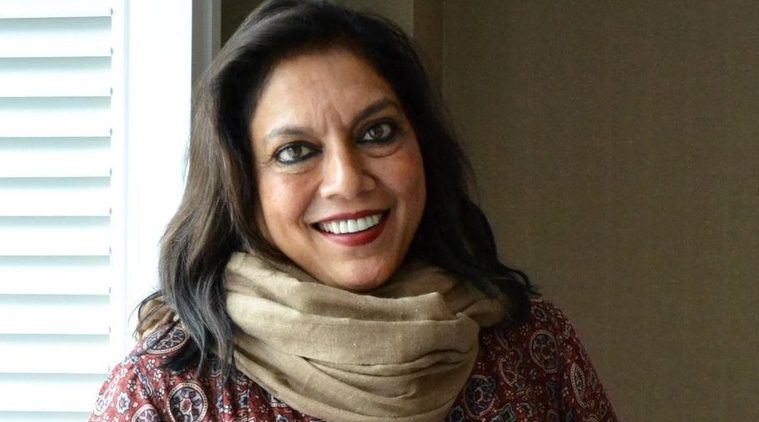
Renuka Vyavahare (BOMBAY TIMES; November 3, 2023)
If a film stands the test of time, you know it’s special. Mira Nair’s illustrious filmography boasts of films that continue to fascinate and move you. Think about Salaam Bombay!, The Namesake, Monsoon Wedding, Mississippi Masala, The Reluctant Fundamentalist, to name a few. Articulate and in-depth, her masterclass at MAMI Mumbai Film Festival 2023 revolved around various crucial topics like cinema crossing borders and not pandering to the West. She also revealed what went behind the making of her initial acclaimed documentaries like So Far from India and India Cabaret, before she moved to fiction filmmaking. Excerpts…
‘Life will always be more powerful than fiction’
Remembering her documentary ‘India Cabaret’, Nair said, “I wanted to delve into the deep double standards of our patriarchal society where we are quick to judge these women who are strippers. There is a dividing line between the women who are considered proper and those who are outside goodness. It’s to do with sexuality and economics. I didn’t want to work with prostitutes because prostitution is simple to dismiss. I chose the world of dancers. At that time this dance culture was proliferating. I lived with Rekha and Rosy (girls who featured in the docu), in their home at Antop Hill (Mumbai), before I made this documentary. That life, the dark underbelly of Mumbai was extremely bleak, but their spirit was uplifting. Once these girls are off the dance floor, there is a deep sense of modesty. They would cover themselves immediately. I even went to Hyderabad with Rosy when she went to see her ailing mother. The mother took the money and asked her daughter to stay out of the house as she would pollute it with her presence. Life will always be more powerful than fiction.”
She added, “‘So Far from India’, was about a Gujarati man in the US, who was married off in India to a woman called Hansa before he moved to the US. After his son is born, he comes to India but returns to America without taking Hansa along. After watching it, I remember Satyajit Ray telling me, ‘If you would have cast a more attractive woman, he would have taken her back’. (laughs)”
India Cabaret let to Salaam Bombay
The actress revealed that wanting an audience led her to the world of fiction filmmaking. “I come from Delhi, but Bombay became the subject of my earlier film work because I went and lived in Antop Hill, Bandra chawls. India Cabaret led to Salaam Bombay. I didn’t want actors to play street kids. I remember telling this to Danny Boyle as well when he made Slumdog Millionaire.”
I am not turned on by this portrait of an apologist, third world, we are so poor, kind of cinema. We live in incredibly vibrant places where injustice prevails. I am interested in those layers, juxtaposition of have and have nots. I have rarely entered studios. My life and pulse are the streets. I remember Steven Spielberg asking me, ‘What was the budget of Salaam Bombay! There are so many people in there’. We never compromised on quality even though it was tough to find financiers.
Cinema transcends borders
The director is known for telling stories that transcend borders and cultures. She said, “I still have a huge accordion Indian passport, visa dete jao dete jao.. but I deeply understand what it's like to look outside the window in New York City and instead of the Hudson River see my garden in Kampala. Cinema allows you the notion of living between worlds. Always keep your distinctiveness as your calling card. I didn’t want to be a cupcake. I didn’t want to be like everyone else. I didn’t want to make romcoms with white people. I was not interested in being in the A list of Hollywood. Salaam Bombay became a smash hit and they thought they could use my sensibility to say their things and I didn’t want that. I was interested in being a brown person and telling stories that only I could tell and that became Mississippi Masala, the hierarchy of colour.”
‘Try to steer clear of boredom and nobility’
Nair credits her instinct as her guiding force. She explained, ‘Don’t ever hold back with the actors. The instinct for me is very powerful. I do not give up until I get what I want from my actors. I am not Woody Allen to reshoot movies. Always listen to your intuition and don’t subscribe to what the next person asks of you. Try to steer clear of boredom and nobility. Just telling the stories of the downtrodden doesn’t sell tickets. The downtrodden are never down. They have the greatest spirit of all. Whatever moves you make it come alive.”
Mira Nair’s Mississippi Masala to re-release in USA on April 15
4:13 PM

Titas Chowdhury (HINDUSTAN TIMES; April 13, 2022)
Thirty one years after it first premiered in France, filmmaker Mira Nair’s Mississippi Masala (1991) is set to re-release in a remixed and remastered format in the USA on April 15. The film starring Denzel Washington and Sarita Choudhury revolves around Indians being subjected to racism and xenophobia in Uganda.
Its screenplay writer Sooni Taraporevala feels that the film will have a strong impact on the new generation of the Indian diaspora. She says, “When the film came out, I was in India and there were comments like, ‘We aren’t like that, we aren’t racists’, but it’s not true. We like pointing fingers at others and call them racist, but deny it when it comes to us. It’s going to be relevant for the next generation, because sadly, not much has changed.”
Sharing her excitement about the film’s re-release, Taraporevala, who bagged the Golden Osella for Best Original Screenplay for it at the Venice international Film Festival in 1991, says, “In a climate where new films aren’t releasing theatrically, it’s amazing that a film that’s 30 years old is re-releasing.”
The Salaam Bombay! (1988) and The Namesake (2007) writer feels that it’s imperative to introduce the younger NRI audience to cult classics that offer them a glimpse into their culture. She says, “It’s always important to expose them to what came before, provided it’s relevant, especially in today’s times where attention spans are zero. Nobody reads and so, there’s no concept of history today.”
Taraporevala further reveals that Mississippi Masala holds a special place in Nair’s heart because of personal reasons. “Mira met her husband, Mahmood Mamdani, when we went to Kampala (Uganda) to do the research. The house in the film is now her house. Her son was born there,” she ends.
As a filmmaker, for years I felt like that dhobi ka kutta, na ghar ka na ghaat ka-Mira Nair
8:11 AM
Niharika Lal (BOMBAY TIMES; October 7, 2021)
“If we ever deserve the title of an artist, we must welcome madness as a vital guest,” believes filmmaker Mira Nair, whose nickname happens to be ‘Pagli’. She also adds that filmmaking is a disease, which means she is “super sick”. The Namesake director recently shared some of the highlights from her 40-year filmmaking journey during the 23rd convocation ceremony of FTII (Film and Television Institute of India). From Monsoon Wedding (which she considers to be a ‘reality check’ on Indian weddings) to the Reluctant Fundamentalist (a film about a “South Asian boy who loves America and feels betrayed by it”), she walks us through her acclaimed works. Excerpts:
‘ABROAD, IN THE ’80s, I HAD TO TOLERATE AUDIENCES WHO ASKED ME HOW I SPOKE SUCH GOOD ENGLISH’
“As an Indian filmmaker in New York in the ’80s, I would ride the bus with all my documentaries under my arm, and would show them to anyone who would want to see them – women’s groups, NGOs, universities, and anyone else. I had to tolerate audiences who would ask me if there was tap water in India, and how come I spoke such good English?”
“Those years, I must say, I discovered the loneliness of being an artist. I didn’t want to be a cultural ambassador of my country, educating Americans about my homeland, but back home in India, my films were also seen as alternative. My documentaries were the opposite of anything that came out of what is now known as Bollywood. I was a complete outsider.”
“There is a saying in our country – ‘dhobi ka kutta na ghar ka na ghat ka.’ And for years of making films, I felt like that dhobi ka kutta. Not understood at home, but considered a novelty abroad. I found that people who inhabit different worlds can see through each of them. It is such people who have a sense of modesty who know that there are other ways of seeing and who develop an appreciation for it rather than a mere charitable tolerance for the other ways of life.”
“As a young person, I grappled with the question, ‘Can art change the world? Can art impact the world?’ My first feature film Salaam Bombay! in 1988 grew out of my documentary roots. I worked with training street children in film acting so I could accurately portray their reality in my film. I also wanted the story of Salaam Bombay! – a mix of street kids with actors like Irrfan (it was his first role in any film) Raghubir Yadav, Nana Patekar and Anita Kanwar.”
‘WE’D ALL SEEN HUM AAPKE HAI KOUN..!, BUT NOTHING RESEMBLING ACTUAL DELHI PUNJABI WEDDINGS’
“Mississippi Masala (1991) was a radical film then. Brown and black (faces) had never been seen together in a frame, leave alone falling in love. I was attacked soundly by members of the Indian community here (US). But it is a film that lives on. It is still radical – black and brown faces in a frame, celebrating both our commonalities and differences.”
“I then made Monsoon Wedding (2001) largely with members of my family and a script of a student of mine at that time – Sabrina Dhawan. I wanted to very much make a ‘reality check’ version of our shaadis. We had all seen Hum Aapke Hain Koun..! and other great Bollywood movies on weddings, but there was nothing that resembled what it really felt like going to a Punjabi wedding in Delhi where I live. So, we made Monsoon Wedding. As much as it was about masti, music and intoxication of life that Punjabis are known for, it was also more importantly about the blanket of silence that lies in the hallowed ground of families – the secrets and conflicts in family that are never spoken of.”
‘NOW IS THE TIME WHEN WE MAKE OUR STORIES OUR OWN WAY’
“The Namesake (2006) is about the movement and the crossings of people like us – the bridges, trains, planes and airports. These would be the threads of the film that gave us the tapestry that covered 30 years of Ganguly family’s life between New York and Kolkata. The duplicity of worlds is something that I know well, and this is something that cinema realises in such a powerful and effective way. Because of this, I feel in the creative realm, borders and bridges need to be fluid. I try to tell stories in which people can see themselves. It takes courage to be original, especially for those who have been told from the past few centuries that the west is the mirror where they can see their future, which I don’t subscribe to.”
“I was then inspired to make a contemporary film about Pakistan – The Reluctant Fundamentalist (2012) – especially in this day and age, when the perceived schism between Islam and the world becomes more pronounced. The west has its coming-of-age stories, but where is the one which is about a South Asian boy who loves America and feels betrayed by it? It was always time for our stories, but now is the time when we will make them our way. The cruellest impact of colonialism is the belief that we are incapable of representing ourselves. We must put this crisis of self-confidence behind us.”
It’s not like we always saw our father going to work and mom at home. We actually saw the reverse-Soha Ali Khan
8:17 AM

Rachana Dubey (BOMBAY TIMES; May 9, 2021)

Your mother and you have joined hands for a cause that will see you auction items from your closets. What was the thought behind this initiative?
We have been associated with this group’s initiatives for a while now. This initiative gives us a chance to encourage the philosophy of pre-loved articles. It gives us a chance to look through our cupboards and put what we’re probably hoarding for years to good use. Someone will find some joy in them. The proceeds will be used for animal rescue programmes and other social causes. Giving brings its own kind of joy and peace. This is a good way and a good time to start giving back to society in some way.
Your daughter Inaaya is over three years now. How much has life changed for you in these years?
Being a mother is a life-changing experience. Motherhood changes you profoundly. Once you become a mother, things are never the same. The centre of your world changes...a part of your heart goes out of your body in the form of another living being. It’s incredibly humbling and magical to see how you create life. You might think the child is half you and half your partner, but they are 100 per cent their own people. It’s fascinating to see that my daughter, at her age, has her own, unique personality. Our job as parents is to help the child become what they want to be, without forcing our dreams on them. Of course, you have to intervene as and when needed, but even with the best intentions, you have to take a backseat and let them become who they want to be

By the time I was born, my parents had super busy careers and were known as star achievers. Mom, by then, had begun to wind down her career.
When I was a little girl, she was away to shoot Mississippi Masala for about three months. I would write her a letter every day. My father would collect them and post them every Sunday to her. When I was shooting in Delhi recently, Inaaya would make video calls whenever she wanted to see me and speak to me. We didn’t have that option back then. My mother had once said that it was hard for her to be a working mother. You’re almost always hard on yourself. There were so many occasions when we wouldn’t be together on her birthday or one of our birthdays, because of her work schedule. But we would not hold it against her. Instead, we celebrated when we got the time with her. Around the time I was born, my dad had become a stay-at-home father, moving his engagements at home. It’s not like we always saw our father going to work and mom at home. We actually saw the reverse — dad was with us and mom would be away for her work. Since an early age, it taught us that mothers have their own dreams, ambitions and careers, too. It taught us that we should create a supportive environment for that. Amma and I have holidayed, been on car trips and played word games together. My parents were particular that the time at the dinner table was for conversations with family — no reading books or anything else. It was about spending quality time together. I am glad I had a role model in my mother who taught me that it’s okay to have a career and dreams along with having children.
Do you often reach out to your mother on her opinion on parenting matters?
My mom is wise. As daughters, sometimes, the last person you want advice from is your own mother, especially when it comes to being a mother. You want to find solutions to your problems, and have an identity of your own as a parent. Sometimes, you even fight against their advice because what they did in their time may not be applicable anymore. When I became an actress, and I was asked if my mother ever advised me, and I had quoted Amma then, she had said, ‘There is one captain of the ship. Your director.’ Similarly, when I became a mother, she told me that my pediatrician is the captain of the ship when it comes to medical advice, and I should turn to the doctor when the need arises. Inaaya, Amma and I were in Pataudi recently, when I got into an argument with my daughter. Inaaya was not interested in listening to me. My mother was right when she said that you can’t win against a three-year-old. You need to empathise with the child at that moment. Later, you can explain these things to her when she is in the space to listen. She was right about that and many such things. I love the fact that my mother is never overbearing when it comes to giving advice.
To each person he knew, he was always “my Ranjit”-Quasar Thakore Padamsee
8:25 AM

Theatre director Quasar Thakore Padamsee pays tribute
As told to Reema Gehi (MUMBAI MIRROR; April 18, 2020)
Ranj”, “Jeet”, “Chottu”, “Freako”. Growing up, I knew Ranjit (Chowdhry) on screen. He had acted in films such as Khatta Meetha, Baton Baton Mein and Khoobsurat. He had even acted in Badal Sircar’s play, Evam Indrajit—he acted opposite my mum (Dolly Thakore)—directed by Vikram Kapadia.
Even though he may have played the role of a shopkeeper or taxi driver, he paved the way for the early generation of actors to be featured in American television. The absolute gamut of the work he has done has been incredible. Many people now know him as that recurring character in Cosby or Vikram, the telemarketer in the American TV show, The Office.
He wasn’t a salesman of his own work. He loved cinema, but he had cut his roots in theatre. Not because of his mum (Pearl Padamsee) or dad (Alyque Padamsee), but he really cut his teeth in theatre.
Ranjit was in and around Bombay a lot when I was growing up. When I was a kid, I always found him ‘cool fun’ to hang out with. He always made you feel at ease. He got married and went off to work in Toronto. And I didn’t see him much. Then, when I was 14, I went on my first trip abroad with my father to New York. AP and I were walking on the road, when we heard someone scream, “Alyque”. We were surprised to see Ranjit and he said if he did shout ‘dad’, all of NYC would turn. He had that kind of presence. Within hours of that meeting, Ranjit and I took off. AP loved New York but hated all the touristy stuff. So Ranjit took me to the Empire State Building and Statue of Liberty. We were waiting in the line to go up the Statue of Liberty, when a few people came up to him and told him that they loved him in Mississippi Masala. It was a fantastic moment. I do believe that he should have worked more than he did. When you see him play a street urchin in the children’s film Hungama Bombay Ishtyle, you realise how much the camera loved him.
But acting is the work of his you saw; what I loved about him was his mind. Ranjit was a wonderful writer. He was one of the writers of Malgudi Days. Everyone loved the show, but since I knew him, there was a certain excitement to it. And because he had a writer’s mind, he brought great pathos to all his characters. You see that in the film Sam & Me (a film he wrote and acted in), and for which he received great acclaim in Cannes. How he would read a line was different than most actors would.
One of the aspects of living away was that he couldn’t be there for every occasion. So, he would send us a letter to be read. Farid (Currim, actor) and I would “arm wrestle” over it. Because whoever read the letter, invariably, became the star of the evening. His take on things was always hatke—he would say something fun on a solemn occasion or speak about the beauty in a fun evening. He encapsulated his quirkiness in a letter in an incredible way. In fact, when Dad would receive letters from Ranjit, he would send it to all of us just to read because they were written so beautifully.
Though our meetings were few and far between, there was always some kind of connection. As we grew up, we became four children (Raell, Shazahn, Ranjit and I) of my father. When Ranjit’s son (Avi) was born, there was so much excitement because we became uncle and aunts. It was a big moment for all of us, I remember.
We both bonded over our disdain for the IPL. He, like me, felt IPL was not cricket. AP, however, loved the IPL and we would fight with him over this. Ranjit would send me emails discussing it. Aside of cricket, we would often discuss different writing styles and other preoccupations in the world. It was like having an intellectual soulmate.
Ranjit had an acerbic tongue; his humour was always tongue-in-cheek. But despite all of that, he was remarkably tender and gentle and created that feeling with everyone around. He could appear as this constantly complaining grouch. But that was a veneer. We always had a mothering attitude towards him. He brought out in everyone that illicit warmth towards him. To each person he knew, he was always “my Ranjit”.
Subscribe to:
Posts (Atom)