Showing posts with label Shree 420. Show all posts
Showing posts with label Shree 420. Show all posts
Raj Kapoor to Ranbir Kapoor, the India-Iran reel connection lives on
8:34 AM

‘Subah-o-Shaam’ was the first official Indo-Iranian project to be shot in Iran
Tehran was among the first global stopovers for Hindi cinema. Even as that bond survived the revolution and censorship, Iranian auteurs found a devoted audience in India
Shruti Sonal (THE TIMES OF INDIA; June 29, 2025)
When a 20-something Sreemoyee Singh was first introduced to Iranian films as part of her film studies program at Kolkata’s Jadavpur University, she had no idea that one day, she’d roam the streets of Tehran, with a camera in her hand and legendary filmmaker Jafar Panahi by her side. Or that seven years after first landing in the country, her documentary would be screened globally — from film festivals like Berlinale to packed auditoriums in Delhi.
“I wanted to see for myself how artists could live in a place where they were heavily censored and yet tell their stories,” says Singh. That curiosity led her to Iran in 2015 — after four years of planning, enrolling in a PhD, saving every rupee, and learning Farsi. The result was ‘And, Towards Happy Alleys’, a love letter to Iranian poetry and cinema, also chronicling the fight of women for their rights, especially their resistance to the mandatory hijab.
Farsi helped, but Singh says her Indian identity opened many doors in Iran, where love for Hindi cinema has persisted despite the strict film censorship.
“From taxi drivers to govt officials, many had memories of watching films like ‘Sangam’ and ‘Sholay’ in theatres while they were growing up. Younger fans would invite me to watch parties, as local TV channels showed films of Shah Rukh Khan on Sundays,” she adds.
A FORGOTTEN GOLDEN ERA
While stories of Amitabh Bachchan being mobbed in Egypt and SRK’s fame in Germany are well-known, Iran was in many ways the first global stopover for Bollywood, says veteran film critic Ajit Rai. “From the 1950s to 1979 was the golden period for Hindi cinema in Iran. Raj Kapoor’s ‘Sangam’ ran in Tehran theatres for three years, while ‘Sholay’ and ‘Mother India’ also ran successfully for a whole year,” Rai says.
Surprisingly, this cultural bridge was built by industrialists. As Rai details in his book ‘Hindujas and Bollywood’, Parmanand Deepchand Hinduja opened an office in Tehran in 1919, and later his sons brought Hindi films to entertain Indians working there, as well as to promote Indian culture. In 1955, they released ‘Shree 420’ in Iran with Persian subtitles. Raj Kapoor even attended the premiere. Soon, Hindi films began replacing Hollywood ones in theatres. Adjustments were made for local sensibilities: ‘Durgesh Nandini’ became ‘Farman-e-Akbar’. ‘Guide’ was retitled ‘Rahnuma’.
Poet-professor Akhlaque Khan ‘Ahan’ of JNU’s Persian Studies department says the crossover worked because of shared language and values. “Bollywood films and songs had a long history of using farsi words like dil, deewana, shayad etc. Epics like Laila Majnu, Rustom and Sohrab, and Razia Sultana are popular in both countries, while themes of honour and family are also common,” says Khan.
FILMI CROSSOVERS
It wasn’t just Hindi films making their way to Iran, but also a few Indian filmmakers. In 1933, Ardeshir Irani — credited with directing India’s first film with sound ‘Alam Ara’ — produced and directed the first Persian talkie, ‘Dokhtar-e-Lor’. The script was written by Iranian film writer-director Abdolhossein Sepanta who also acted in the film.
Many years later, Tapi Chanakya directed the 1972 film ‘Subah-o-Shaam’, which was the first official Indo-Iranian project to be shot in Iran. Two years later, another joint production called ‘International Crook’ (titled as ‘Kala Bazaar’ in Hindi) was released, directed by Pachhi and starring Dharmendra, Feroz Khan and Saira Banu.
THE CURTAIN FALLS, AND RISES
The Islamic Revolution of 1979 brought an end to this exchange as public screenings more or less came to a halt, and dance, song, and ‘vulgarity’ was looked down upon. In their place arose state-sanctioned cinema, glorifying the revolution and war with Iraq. Though they rarely got a domestic release, the circulation of bootleg copies and secret film clubs kept the love for cinema alive among Iranians.
Against this backdrop, there also emerged a new wave of Iranian filmmakers like Panahi, Abbas Kiarostami, Majid Majidi and Mohammad Rasoulof who won acclaim abroad though they faced travel bans and even jail time at home. Panahi’s ‘This Is Not A Film’ was smuggled out of Iran on a USB stick buried inside a cake. Rasoulof’s Oscar-nominated ‘The Seed Of The Sacred Fig’ was conceived in prison, directed secretly from his sofa, and finished in exile.
Though they may not have got screenings at home, Iranian filmmakers have been part of most major Indian film festivals winning fans for their refined visual language. In 2022, filmmaker Mahnaz Mohammadi sent a lock of her hair to the International Film Festival of Kerala because she could not come in person to receive an award.
There have been some joint collaborations too, with ‘Salaam Mumbai’ directed by Ghorban Mohammadpour, starring Iran’s Mohammad Reza Golzar and India’s Dia Mirza in the leading roles. A year later, ‘Beyond The Clouds,’ a Hindi drama film written and directed by Iranian legend Majid Majidi, starring Ishaan Khatter, was released. Last year, ‘Jamal Kudu’, a Persian song from the 1970s went viral after it featured in the Bollywood film ‘Animal’.
SECRET SCREENINGS
Back in Iran, the soft corner for Bollywood persists. Khan says, “A few years ago, I went to a friend’s home in northern Iran. Her mother told me that she wants to see some of the old films like ‘Sangam’ and demanded that I get DVDs on my next visit.”
During another trip to the country, the poet-professor was surprised when he found locals glued to a dubbed version of Dharmendra’s ‘Hamla’ on a long bus journey from Tehran to Ishafan. Even contemporary films get dubbed in Persian and are pirated into the country, Khan adds, noting that he also found a channel dedicated to Indian films in Persian.
A book printed by the ministry of culture in 1982 that this reporter found stocked in Delhi-based Iran Cultural House library also spoke of Indian cinema in a favourable light. “It should be a matter of grave concern to us that we should feel more at home with the cultures of a consumer society cunningly represented to us through glossy vehicles such as Elizabeth Taylor and John Wayne, than with the more humane traditions we encounter in films by first rate directors from Japan, India or Algeria.”
Lina*, an Iranian married to an Indian, says Bollywood fandom continues through small private screenings attended by young women like her. Inside the dark theatres, fans mouth dialogues, hum the songs that they know by heart, and even try to copy the hook steps in dance sequences. “Many people in Iran are still crazy about Bollywood. They just can’t talk about them openly,” she says over email.
*Name changed on request
100th birth anniversary of Raj Kapoor: The phenomenon of India’s first major global star
9:18 AM
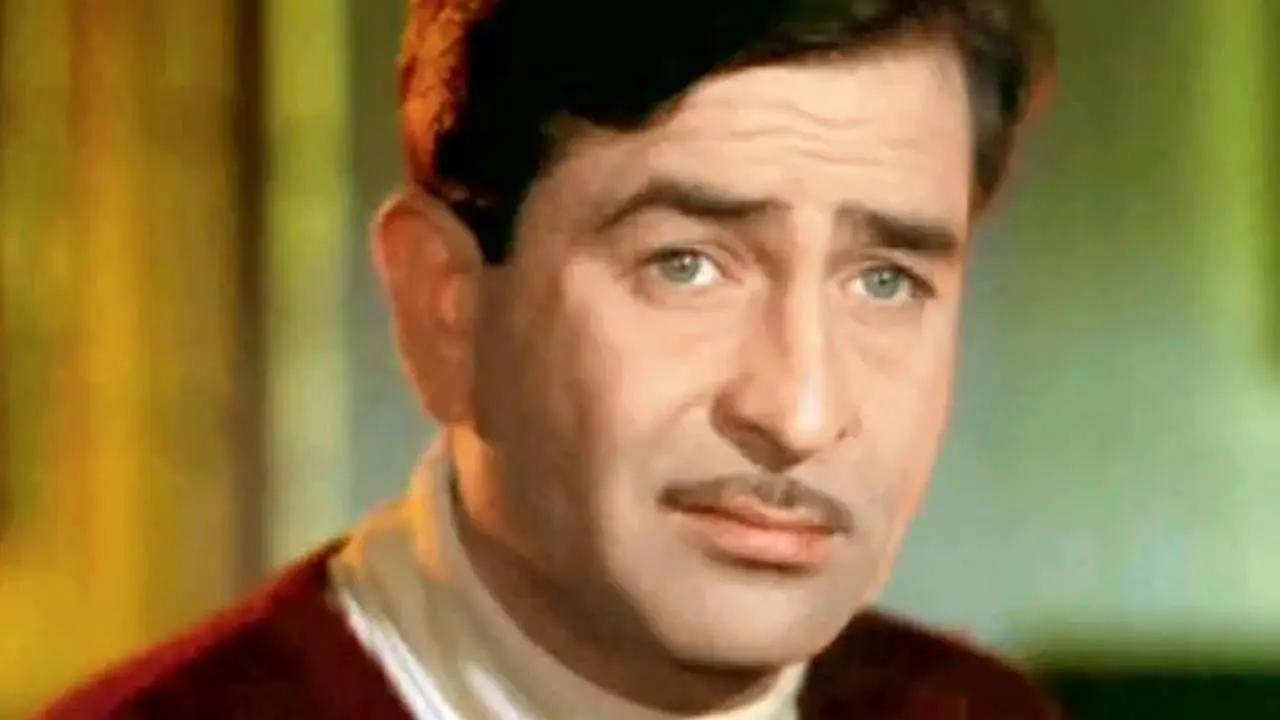
From USSR to North Africa and from South America to Iran, Raj Kapoor’s films swept the world in the 1950s and 1960s. On his 100th birth anniversary today, TOI rewinds to recreate the phenomenon of India’s first major global star
Avijit Ghosh (THE TIMES OF INDIA; December 14, 2024)
On arriving in Moscow in the summer of 1982, Raj Kapoor discovered that he’d left behind his visa papers. The actor-director was stopped by immigration. Frantic telephone calls were made. Nobody was sure what was to follow. But they need not have worried. A senior official soon arrived, embraced Kapoor, kissed him on both cheeks and warmly escorted him out.
“Is there anybody else in the whole wide world who could enter Soviet Russia without a valid visa? You should have seen that sight — it was a sight for the gods,” actor-director Sanjay Khan, who was also part of the film delegation, is quoted as saying in ‘Raj Kapoor: The Fabulous Showman’ by Bunny Reuben.
Another encounter of the fondest kind further underlines how Kapoor continued to command a hallowed place in the land of Tolstoy and Tarkovsky decades after the Awara craze swept the USSR like a forest fire in 1954.
In 1993, Russian president Boris Yeltsin told Kapoor’s daughter, Ritu Nanda, “I was in love with your father Raj Kapoor, and I remember him even today.” The anecdote is recounted in the book, ‘Raj Kapoor: The One And Only Showman’.
It wasn’t just the post-Stalin Soviet Union. In the 1950s, China, Iran, Turkey, Israel, Greece, North Africa and Eastern Europe were captivated by Kapoor’s movie and its title track. Slowly the film and its title song became an unofficial anthem, a cultural marker and a totem of national recognition.
It was also a diplomatic ice-breaker. TOI reported in 1994 that the then Chinese Premier Li Peng recalled Awara and its title track when he met India’s human resources minister Arjun Singh in Beijing. That hasn’t changed. “Every Chinese knows this movie,” goes a comment on YouTube. Awara anecdotes can fill a book.
As the nation today celebrates the 100th birth anniversary of India’s first actor-director who became a major global star in a pre-globalised era, what better time to re-appraise the magnitude of the impact that Kapoor’s movies have had across the world.
Inspiration For Turkish Poets
Awara has provided inspiration to much that is popular in Turkish culture: films like Genclik Hulyalari (1962) and Kader Bu (1976), songs and even novels, Turkey based academic and critic Ahmet Gurata told TOI. “A favourite of my mine,” Gurata said, “is a poem by Lale Muldur, which goes like this: ‘“Awaara hoon / Those kids who neither have a Barbie nor a Ken / They always wanted to be visited by Raj Kapoor one night / They would like him to enter their room and bring milk with gold-leaves... and baklava too / How many stories are embedded in the eyes of those shoeshine boys / Who have been paying the price for their genetic sins, / Did you know awaara hoon?”’
Muldur was born in 1956, a year after Awara was released in Turkey. The poem, taken from her ‘Book of Series’ (1991), is yet another testimony to how the gold hearted tramp continues to stir a generation’s imagination.
In his seminal article, ‘The Road to Vagrancy’, Gurata quotes a newspaper advertisement that says “the film was attended by 100,000 spectators during its first week and another 100,000 were unable to watch the film since it had sold out”. He also notes that Awara was voted as the best movie of 1955 by the readers of the popular daily Milliyet, beating Hollywood films such as Roman Holiday (1953) and Limelight (1952). “The film’s director and star Raj Kapoor ranked third on the list of best actors in the Milliyet survey,” he adds.
The title song was a top-selling record and even featured in official functions. “Several Turkish singers circulated it as a Turkish record in music markets. The song literally became part of folk culture when Turkish folklorist Ilhan Basgoz recorded a folk version in 1957,” Gurata writes.
‘Tramp’ Who Was Irresistible In Greece
Watching it under the title, ‘The Tramp Of Bombay’, Greeks too were besotted by the Nargis-Raj Kapoor pairing. Many Raj Kapoor films such as Shree 420, Aah, Anhonee, Paapi, Chori Chori, Pyaar, Amber, Sangam and Do Ustad made their way across over the next 10 years, film researchers from Greece say.
Indian films were not only shown in Athens, but also in villages at improvised open-air cinemas during summers. The songs were often rehashed with minor variations by Greek composers, creating a subgenre of such songs called Indo-Prepi.
Helen Abadzi and Manolis Tasoulas, who have extensively researched the influence of Hindi films in Greece, have identified at least 25 Greek songs whose melodies come from songs composed by Shankar Jaikishan for Raj Kapoor films.
“For instance, the song, ‘Ramaiya Vastavaiya’, from the film, ‘Shree 420’, became a Greek song titled, ‘When I kiss him and when he kisses me’, and was sung by Achilleas Koulaxizis and Filitsa in the Greek film drama, ‘Why was I born poor’,” Tasoulas told TOI.
Tasoulas also provides a fascinating anecdote that underlines the popularity of the Nargis-Raj Kapoor pairing. When in the early 1980s, Mehboob Khan’s film, ‘Aan’, was rescreened in Greece, the local advertisers wrote Raj Kapoor and Nargis as protagonists, instead of Dilip Kumar, Nadira and Nimmi, in the Greek posters. “Few understood the difference, because many years had passed since Kapoor’s films had been screened in Greece, and fans did not remember their faces as much as their names,” he says.
Sangam, Hindujas and Shah of Iran
‘Sangam’ (1964) floored Iran. Radhu Karmakar, who was Kapoor’s regular cinematographer, writes in his autobiography ‘The Painter of Lights’, that the film was a major hit, especially in South America and Iran, where it ran for over a year. Made approximately on a budget of Rs 1 crore, ‘Sangam’ earned over Rs 12 crore, including Rs 5 crore in foreign exchange, he estimates.
Karmakar remembers how the film’s success helped the Hindujas expand their business. The Hindujas, who distributed the film, invited Raj Kapoor and Vyjayanthimala for the golden jubilee celebrations in Iran and, in turn, got invited to a dinner reception hosted in Tehran by Iran’s ruling family. Karmakar says that the Hindujas “till then were film distributors and contractors, trying unsuccessfully to get bigtime business contracts... The Sangam golden jubilee reception opened the palace doors to the Hindujas and thereafter they moved into the big-time league with large arms contracts and business gains”.
“Everyone also knew the singing-dancing persona of Raj Kapoor in Bulgaria. His popularity was witnessed by many from my generation who grew up in the 1960s. This was mainly courtesy of Awara, which many people had seen more than once,” says Bulgaria-born Dina Iordanova, emeritus professor of global cinema at University of St Andrews, Scotland.
Secret of Kapoor’s Success
Kapoor, who produced and directed the film and played the male lead, was a prodigious 27-year-old when Awara was released in India in 1951. He created a Hindustani Chaplin — a survivor of class inequity and circumstance (Awara, Shree 420) — and the naive and sentimental underdog with a heart of gold who could stray but eventually return (Shree 420). These stories found a global echo, especially in places of limited cultural freedom. The sloshing of socialism and songs with a slice of the sensuous had an affirmative resonance for millions, converting RK Films into a premier banner. His name was synonymous with Indian cinema. As PM Narendra Modi said in his interaction with the Kapoor family on Wednesday, “He created India’s soft power before the term, soft power, was born.”
K A Abbas, who co-wrote the story with V P Sathe, remembered in his autobiography, ‘No Man Is An Island’, what a student told him during their 1954 USSR visit: “We are tired of the war, we went through it, and now must we relive it in every book we read, in every film or play that we see? Instead of war, we want to see love on the screen, we want to see carefree happiness, we want someone to make us laugh. That’s why we are crazy about Awara.”
Many young students bragged that they’d seen Awara 20-30 times. A young Russian interpreter noticed that a dialogue in the film was borrowed from Krishan Chander’s short story, ‘The Night of The Full Moon’. “No one had noticed it in India,” he wrote.
As Kapoor himself said once, “Awara was my little contribution to USSR-India friendship.”.
---------------------------------------------------------
When Kapoor met Chaplin
Ranjan Dasgupta (THE TIMES OF INDIA; December 14, 2024)
Raj Kapoor was a born serio-comedian whose face conveyed every emotion perfectly. According to Satyajit Ray, Kapoor was a better actor than a director. Mehboob Khan once confessed to Film India editor Baburao Patel that Raj Kapoor perfected his shots in fewer takes than Dilip Kumar.
Kapoor understood his limitations well. He modelled himself along the lines of Charles Chaplin. Kapoor always shared fond memories of his interaction with Chaplin at the latter’s residence in Montreux. Along with Dev and Chetan Anand, Nargis, Balraj Sahni, KA Abbas and Bimal Roy, Kapoor was part of the first Indian film delegation to visit Venice in 1953. Chaplin invited the delegation for a discussion.
During the interaction Kapoor spoke the most. He asked Chaplin how serio-comedy could be performed effortlessly. Chaplin was silent for a minute. Then looking into Kapoor’s eyes, he asked him to emote silently. Kapoor obliged the legend for three minutes. Chaplin was deeply moved by Kapoor’s performance and advised him to follow his own instincts. As they left, Kapoor kept waving to Chaplin with tears of joy in his eyes. Nargis simply told Kapoor to control his emotions, laughing her heart out.
The Kolkata-based writer interviewed Kapoor many times
Ranbir Kapoor on Animal, Sanju: "We have to be more responsible towards the kind of films we make"
8:26 AM
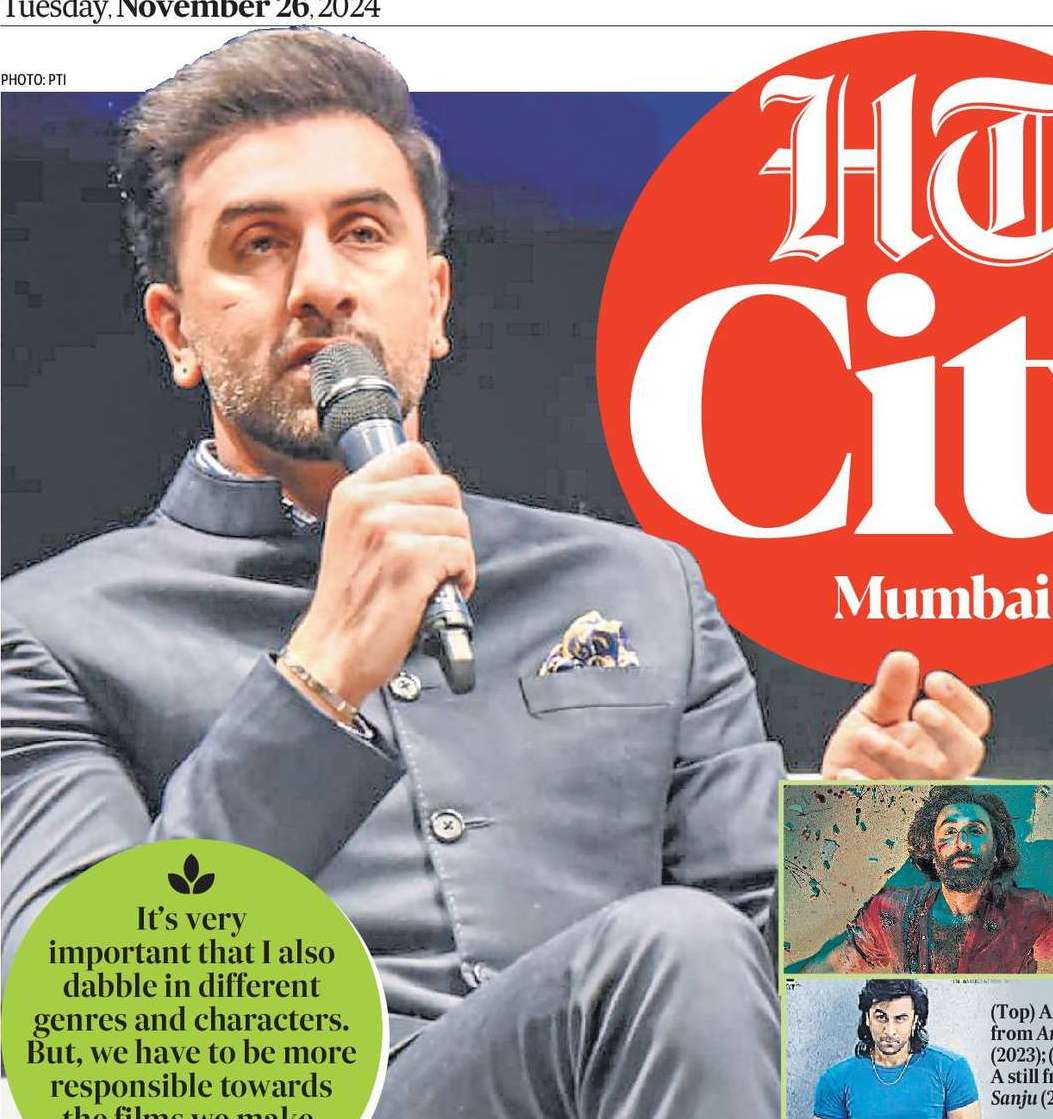
Niharika Lal (BOMBAY TIMES; November 26, 2024)
Ranbir Kapoor recently took the stage at the ongoing International Film Festival of India (IFFI) in Goa for a discussion celebrating the work of Raj Kapoor. “He was this big man with blue eyes,” the actor said as he began reminiscing about his grandfather. Ranbir confessed that it was only after he began understanding cinema that he fully grasped Raj Kapoor’s contribution to Indian cinema.
Sharing that 10 of Raj Kapoor’s films are being restored, Ranbir said that some of them will be screened at a film festival next month. “Raj Kapoor was Raj Kapoor because he didn’t follow any model. I think that if you want to carry any legacy forward, you have to approach it in a very individualistic way,” he told the audience.
‘I would love to have a take on Shree 420’
When asked which of Raj Kapoor’s films he would like to remake as a director, Ranbir said, “I would have directed every film in a different way, but all of them would have been atrocious. I don’t believe in remakes; I think every film is made to the best of its capabilities and should not be touched, especially Raj Kapoor’s. But I would love to have a take on Shree 420 – it is my favourite film.”
‘RAJ KAPOOR WAS CONSTANTLY IN TOUCH WITH THE COMMON MAN, THE MASSES’
In response to a question, Ranbir said, “Honestly, I want to say this – I’m a bigger fan of Raj Kapoor as a director than as an actor.” Raj Kapoor, the filmmaker, always explored different themes at different stages of his life.
Talking about his oeuvre, Ranbir shared, “If you look at his early films, Awara was based on casteism, in Shree 420, he spoke about greed.” Ranbir spoke about how in the later years of his career, Raj Kapoor made powerful films grounded in Indian moral values, tackling societal issues in a commercial and really entertaining way.
“Raj Kapoor had the courage to make a film with newcomers – a 50-year-old man making a film (Bobby) for the youth. It means that he really kept up with the times. He wasn’t stuck in a cocoon. He was not high up in an ivory tower. He was constantly in touch with the common man, the masses, and the kind of stories people would like to see,” Ranbir said.
The National Film Development Corporation of India (NFDC), National Film Archives of India (NFAI), and Film Heritage Foundation (FHF) and Kunal Kapoor have started restoring 10 films of Raj Kapoor. Ranbir said, “We are going to organize the Raj Kapoor Film Festival from December 13 to 15 all over India. We will show the restored version of 10 of Raj Kapoor’s films.”
-----------------------------------
Which film of his would Ranbir have wanted to be directed by Raj Kapoor?
Yeh Jawaani Hai Deewani (2013)
Which Raj Kapoor film would he like to direct?
Shree 420 (1955)
For which of his films did he take inspiration from Raj Kapoor?
Barfi! (2012)
-----------------------------------
Actor Ranbir Kapoor, who took the brunt of criticism for portraying toxic characters in his recent projects, opened up about leaning towards more responsible storytelling at a recent event
HINDUSTAN TIMES (November 26, 2024)
Actor Ranbir Kapoor’s films Sanju (2018) and, more recently, Animal (2023), have been at the end of fierce criticism for glorifying violence and toxic masculinity. Addressing the same on Sunday, the actor shared his take on the widespread debate at the 55th International Film Festival of India (IFFI) in Goa.
Prompted by an attendee, who asked him about “responsible storytelling” in context with Animal and Sanju, the actor responded, “I completely agree with your opinion. As an actor, it is our responsibility to bring movies which bring a positive change to the society.”
However, the 42-year-old maintained that doing diverse roles is important to him. “Having said that, I’m an actor, it’s very important that I also dabble in different genres and characters, and play varied roles. But what you are saying is absolutely correct. We have to be more responsible towards the kind of films we make.”
Earlier this year, in Nikhil Kamath’s podcast People by WTF, Ranbir had responded to the criticism that Animal had received, stating, “Social media played havoc. They needed something to talk about, so they really went to town claiming it was a misogynistic film.”
On a separate note, Ranbir also touched upon his dream of creating a biopic on his grandfather, late filmmaker-actor Raj Kapoor’s life, calling it a “challenging yet worthwhile endeavour.” Revealing his take on a biopic, the actor said at the event, “A biopic is not just about celebrating someone’s success but honestly portraying their struggles, relationships and low points. I’ve spoken to (filmmaker) Sanjay Leela Bhansali about it, but it’s a tough project. I’m not sure if my family would agree to show that side of his life.” htc
Ranbir reveals Alia didn’t know about Kishore Kumar
Speaking at IFFI, Ranbir disclosed that his wife, actor Alia Bhatt didn’t know about the legendary playback singer, musician and actor Kishore Kumar. “The first time I met Alia, she asked me, ‘Who is Kishore Kumar?’ [But] it’s just the circle of life. People forget [old artistes] and then new artistes come in. So, I think it’s very important to remember our roots.”
The video, which has now gone viral, has been dubbed as ‘Ranbir’s revenge’ by social media users, as a response to Bhatt’s earlier interview where she had claimed that Ranbir asked her to “wipe off” her lipstick. One social media user shared, “He took the revenge for ‘wipe it off’”, while another said, “Are these two in a competition: who can embarrass the other more... (sic).”
Shailendra's 100th birth anniversary: As a Dalit, he had a first-hand experience of misery and caste discrimination-Sheoraj Singh
8:36 AM

Shailendra (left) and music director Roshan. The two collaborated for the songs in films like Soorat Aur Seerat (1966). (Below) The song Awara hoon from the film Awara was a worldwide hit
Avijit Ghosh (THE TIMES OF INDIA; August 30, 2023)
For decades, Awara Hoon (film: Awara, 1951) was a passport to warmth for any Indian visiting the USSR, Turkey, Egypt, China and parts of Africa. The best-selling track even finds mention in dissident Soviet writer Aleksandr Solzhenitsyn’s novel, Cancer Ward (1966). And Mera Joota Hai Japani (film: Shree 420, 1955) makes appearances in films as diverse as Mississippi Masala (1991) and Deadpool (2016). The lyrics of Shailendra, whose birth centenary falls today, could remarkably create the universal from the local and the personal.
Shailendra’s life was his poetry’s wellspring. His roots lay in Dhuspur village near Bihar’s Arrah town. But he was born in Rawalpindi (now in Pakistan), where his father worked as a contractor. When his father fell ill, the family fell on hard times and shifted to Mathura where they would subsist on “a meal a day and a beedi at night,” says the preface of Andar Ki Aag (2013), a book on his previously unpublished poems.
The experience finds expression in the slum dweller song of Shree 420, ‘Bhookh ne hai bade pyaar se pala’. (hunger raised me with love). Only someone who had experienced hunger could dream of roti (bread) as he does in Ujala (1959): ‘Chulha hai thanda bada aur pet mein aag hai/Garma garam roti kitna hasi khwab hai’ (The hearth is cold and my stomach rages with hunger/To dream of bread is so beautiful).
The book also talks about Shailendra’s real name (Shankardas Rao), his Dalit background and the caste slurs he faced playing hockey (‘Ab yeh log bhi khel khelenge’ (Now even these people will play the game) making him give up the sport.
Writer Sheoraj Singh “Bechain” says that during the Progressive Artistes era in the 1940s, many writers wrote on the oppressed. “But as a Dalit, Shailendra had a first-hand experience of misery and caste discrimination. Distress isn’t just economic but also social and cultural,” says Bechain, a Dalit, and author of the acclaimed biography, ‘Mera Bachpan Mere Kandhon Par’.
Shailendra left Mathura for Bombay where he worked in the railways and became part of the Left-cultural forum, IPTA. The story of Raj Kapoor being impressed by his poem ‘Jalta Hai Punjab’, asking him to write in his films, Shailendra’s initial reluctance, and then later writing the last two songs of ‘Barsaat’ (1949) because he needed the money has been written before. In time, he would become a regular in films of Kapoor and Bimal Roy; his lyrics seamlessly fitting into their socially-conscious narratives.
A running thread in Shailendra’s celluloid verse is his empathy with the disadvantaged. “Staying within the matrix of the film’s script and the character’s needs, he commented on society and politics of the times. And he spoke up for the last human who’s uncared for by the government, the society and everyone else,” says radio personality Yunus Khan, who is writing a book analysing Shailendra’s poetry.
Lyricist Raj Shekhar (Tanu Weds Manu) adds to the view saying while many lyricists wrote emphatically about the marginalised, one can see a distance between the writer and those being written about. “But when you listen to Shailendra, you feel that distance has been dissolved. He seems to be one of them. And that’s because he is writing from lived-in experience,” he says.
In times when poets were often prisoners of pompous words that evaded ordinary people, Shailendra was accessible even to the rural illiterate. And yet as the late songwriter Dev Kohli once said, “Like the dohas (couplet) that Kabir wrote, he could encapsulate a world in a few words.”
‘Sajan Re Jhoot Mat Molo Khuda Ke Paas Jaana Hai’ (film: ‘Teesri Kasam’, 1966) is simple yet profound. ‘Aa Chalke Tujhe Main Lele Chaloon’ (film: ‘Door Gagan Ki Chhaon Mein’, 1964) imagines a world without discord (‘Jahan Bair Na Ho’) and hope much like John Lennon’s ‘Imagine’ (1971). That he could also write, ‘Chahe Koi Mujhe Junglee Kahein’ (film: ‘Junglee’, 1961) or the fun tracks of ‘Half-Ticket’ (1962) is a tribute to his versatility.
Shailendra produced ‘Teesri Kasam’. The Basu Bhattacharya-directed film, now hailed as a classic, flopped then. The poet passed away the same year. But even today much of his poetry remains quotable and relevant, none more than the line from ‘Jis Desh Mein Ganga Behti Hai’ (1960): ‘Mil jul ke raho aur pyaar karo, ek cheez yahi jo rehti hai’ (Stay together in harmony, love each other, this is all that lives in the end). As Bechain says, “His poetry rises above caste and religion, and seeks to establish a bond between humans.”
---------------------------------------
Indrajeet Singh (THE TIMES OF INDIA; August 30, 2023)
Released in India in 1951, ‘Awara’ was first shown in Russia in September, 1954. The film was dubbed in Russian but the songs remained in Hindi. The title song became an anthem of Indian culture and friendship for Russians. Tagore, Premchand, Kabir are also very popular in translation. But Shailendra’s songs were embraced by Russians in their original form. I have lived in Moscow for six years and a witness to the immense popularity of Raj Kapoor and Shailendra.
I was told by a Russian scholar of Hindi, E Chelishev, in 2003 that he had edited a collection of poems, ‘Poets of India,’ in Russian way back in 1958. The collection also included two poems by Shailendra: ‘Janmabhoomi’ and ‘15 August.’
When Shailendra visited Moscow in March 1962, he was very happy to learn that two of his poems had been translated into Russian. Shailendra was fond of the great Russian poet Pushkin. There was a similarity between the two. Both were great poets of love and revolution. Both died at a relatively young age. Raj Kapoor used to address Shailendra as Pushkin.
The author’s monograph, Bharatiya Sahitya ke Nirmata: Shailendra, will be out Saturday
---------------------------------------
Avijit Ghosh (THE TIMES OF INDIA; August 30, 2023)
Shailendra also performed cameos in a few films such as ‘Boot Polish’ (1954) and ‘Musafir’ (1957). In ‘Boot Polish’, he lip syncs a folk song he wrote, ‘Chali kaun se desh’ (singers: Talat Mehmood and Asha Bhonsle, music: Shankar-Jaikishan). Indeed, he was a master at writing songs flavoured with folk.
Sahitya Akademi recipient poet Anamika says that Shailendra was especially sensitive to soundscapes and was all ears for the chitchat on the footpaths and the folksongs floating in the villages of Bihar, Punjab and Maharashtra. “This is what gives his lyrics an epical dimension and makes him a popular writer of chorus,” she says.
Anamika also points out Shailendra’s sensitivity to “the push and joy of women’s language especially in the folkloric mode and the subversive quality of their humour which hoots out and titillates in the same go”. ‘Paan khaye saiyan hamaar, (film: Teesri Kasam) is a case in point.
Shailendra’s some other note worthy folk songs include ‘Ho daiya re daiya chadh gayo papi bichhua’ (film: ‘Madhumati’, 1957) and ‘Lali lali doliya pe laali re dulhaniya’ (film: Teesri Kasam). He also wrote the songs of the first Bhojpuri film, ‘Ganga Maiya Tohe Piyari Chadhaibo’, 1962), including the classic, ‘Sonwa ke pinjra mein’ (singer: Mohd Rafi, composer: Chitragupt).

My mother dreamt of becoming an actress and called herself the Beauty Queen of Bengal-Deepti Naval
8:36 AM
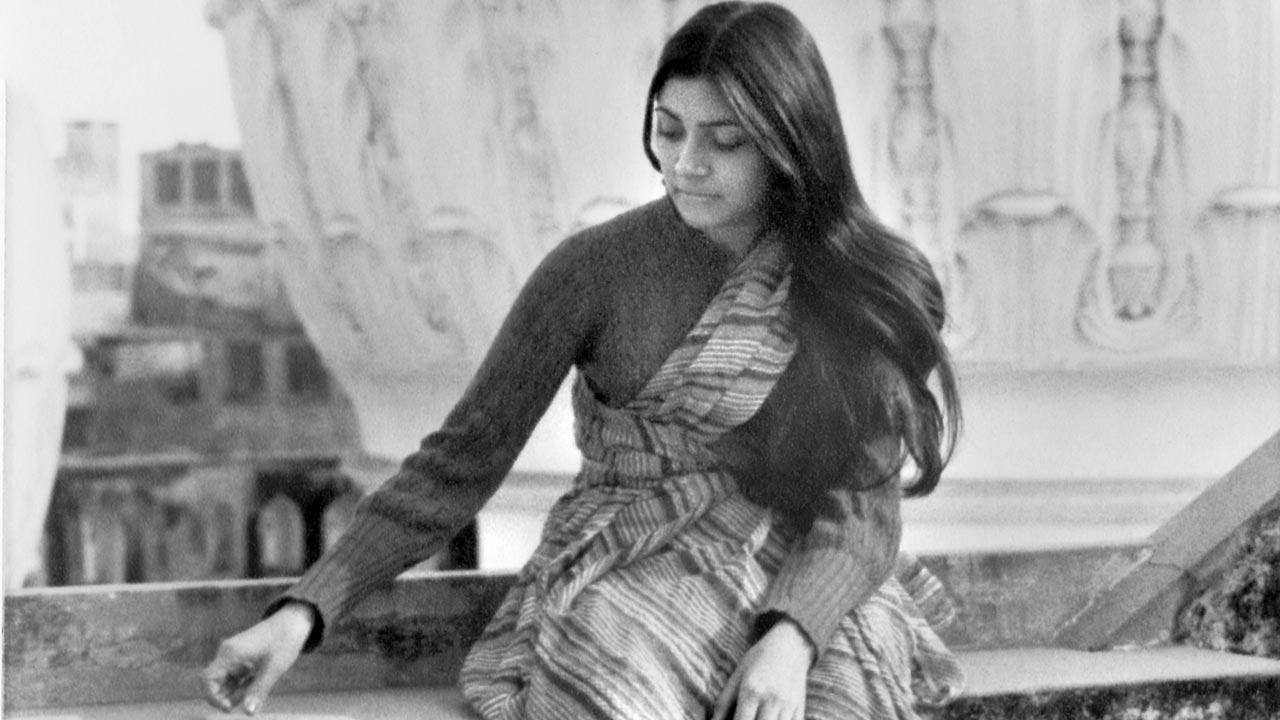
Deepti Naval, 18, at her home in Amritsar. Pic Courtesy/A Country Called Childhood: A Memoir, Aleph Book Company
In a just-launched memoir, quintessential girl-next-door Deepti Naval recalls how her mother’s love for dramas and star-struck cousins inspired her to be an actor
MID-DAY (July 3, 2022)
My family loved cinema but if there was one member of the family who actually loved to sing and dance, it was my mother. I have with me old black and white photos that are a visual record of this aspect in my Mama’s life. She was especially fond of doing dramas; she would direct plays, and also act in them along with other young women. I have one distinct memory of a scene being enacted in our house. I’m standing beside the dark blue curtain in the hall kamra and watching Mama rehearse with other women. She is in a saree and her hair is tied in a loose bun. She is wearing high heels and is holding a purse. I recall her entering the room, dangling the batua in her hand. She walks in and there’s some dialogue with the other two women, words that I no longer remember. I watch the scene being performed in front of me with fascination. The door opens and shuts as Mama walks in repeatedly from the thhada entrance, revealing street activity behind her. Light filters in as she stands backlit at the entrance, looking like a veritable star. I wish I could recollect details of the scene being enacted but that’s as far as it goes, my memory of that rehearsal.
Once, some cine stars from Bombay came to our city for a cricket match. Among them were Shyama, Nirupa Roy, and Bhagwan Dada. They performed a show at the Chitra Talkies. That’s the time my mother also performed along with them. When she made her entry on stage, Didi, sitting next to me in the hall started to shout, “Mama! . . . That’s my Mama!” All heads turned to look at us. It was a moment that embarrassed my mother but she’d recall it always with a lot of love. I assume that my mother did some more plays during my baby years, but by the time I was old enough to properly appreciate her talents as an actress she had stopped. Years later, she told me that Bibiji had once said to her, ‘The women at the Women’s Conference say that your daughter-in-law does dramas!’
“After that day,” said Mama, “I stopped. I never did another play. Never uttered a word to my mother-in-law. I just silently gave up everything.”
I was not aware of the impact of that finale in my mother’s life, for she never showed any bitterness. But I know what that sacrifice must have meant to her. This was the woman who dreamt of becoming an actress and called herself the Beauty Queen of Bengal. Today, as I live my life as an artiste, I realize the gravity of those words. “I silently gave up everything...”
It also made me think of Mama’s cousin in Burma, Sunny Bowrie, who had run away from Rangoon to become a dancer in Bombay Talkies. Brian Uncle once told me that Sunny was seen among the group dancers in the song Ramaiya Vasta Vaiya in Raj Kapoor’s film Shree 420. I have since been looking hard at the screen, peering crazily at the dancers in the back rows, looking for Sunny Bowrie, the face in Mama’s box of photographs, to somehow be able to spot him dancing in a movie, a dream that he’d left his home for. But according to Mama, Sunny Bowrie was lost to the family a long time ago.
Besides my mother, others in the family who loved the world of acting, or more properly Hindi movies, were my buas, my father’s sisters. Once a year, my buas would come down from Delhi to Amritsar along with their children. All of us cousins—Manju, Babbu, Indu, Ashu, Alok, Cheenu, Bunny, Didi, and me—would be quite a handful for the elders. In the afternoon, the women would put us kids to sleep and sneak out of the house, to go and see the matinee show at Chitra Talkies.
On hot summer afternoons, all of us kids would lay down for an hour on the terrazzo floor, its touch cool against the skin. The chicks would be drawn in the veranda to keep the sun out as we were all required to take our afternoon nap. That’s when my buas would get up from the floor, one by one, stand before the hat stand mirror, brush their hair, put on various shades of red lipstick, and one by one, slip out of the house. That was their ultimate getting-ready-real-fast trick—comb your hair, apply red lipstick, and off you go!
All the kids knew exactly what was happening, but almost all the time we pretended to be asleep. Occasionally, we’d open our eyes, glance at each other, and suppress giggles.
The biggest influence in my life as an actress perhaps was Indu Bhaiya, my older cousin. Indu Bhaiya, Santosh Bua’s older son, first came to live with us in the year 1958. I was six years old at the time and Bhaiya was probably in eighth class. He had not been doing well in school, so Pitaji suggested that Indu be sent to Amritsar so he could personally supervise his studies. I remember Didi, Indu Bhaiya, and me, playing with white plasticine balls, turning them into pigeons and buffaloes.
The second time that Indu Bhaiya came to Amritsar was in 1962. Bhaiya was by now eighteen, and I was ten. I sported the, then famous, Sadhana Cut, the much in vogue fringe those days, after the look in Love In Simla, and roamed around in my pinafore. Indu Bhaiya would every now and then tease me about looking like Sadhana, the star of those days. This was also the time I was just starting to become self-conscious as a girl. Indu Bhaiya had told his family that he wanted to go to Bombay to become an actor. He would tell us all about Dev Anand; he seemed to be obsessed with the film star.
• • •
Some years down the line, Indu Bhaiya went to Bombay nevertheless and joined films. I was ecstatic—my Bhaiya was so handsome, he looked like Dev Anand, he’ll surely make it. We heard that he’d already got work in a film produced by Rajshri Productions called Dosti. Though Bhaiya was in the supporting cast, for me this was exciting enough.
After his three-year stint in the film industry, and a few more roles, we were told that Bhaiya had given up on Bombay and come back home. When I saw him at Manju Didi’s wedding after his return, I was a bit taken aback. Bhaiya seemed to be in a disturbed state of mind. He later confided in me and told me how he’d fallen in love with an actress in Bombay, but was left heartbroken. He’d lost his mental balance and had briefly undergone treatment as well. Luckily, for him and the family, things would later fall in place for Bhaiya as he put his dream behind, and decided to move on with his life.
But for me, Indu Bhaiya was and has always remained a hero.
Excerpted with permission from A Country Called Childhood: A Memoir by Deepti Naval, published by Aleph Book Company
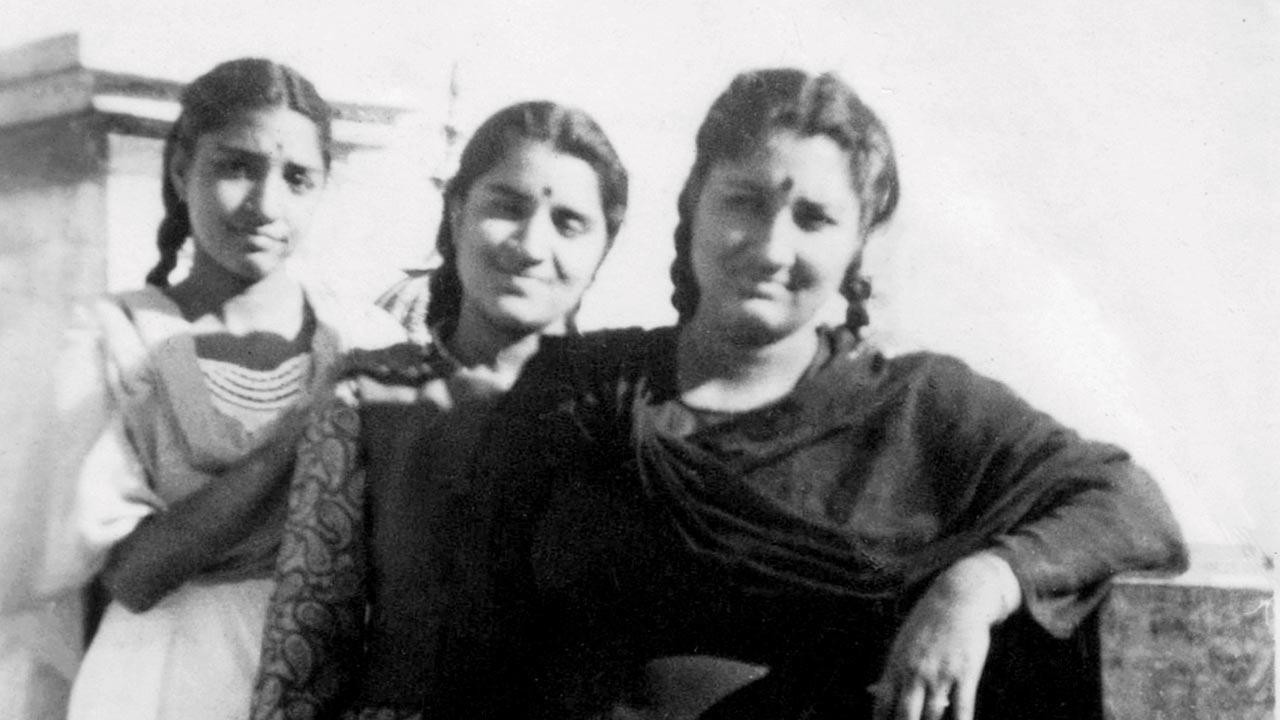
Naval’s buas
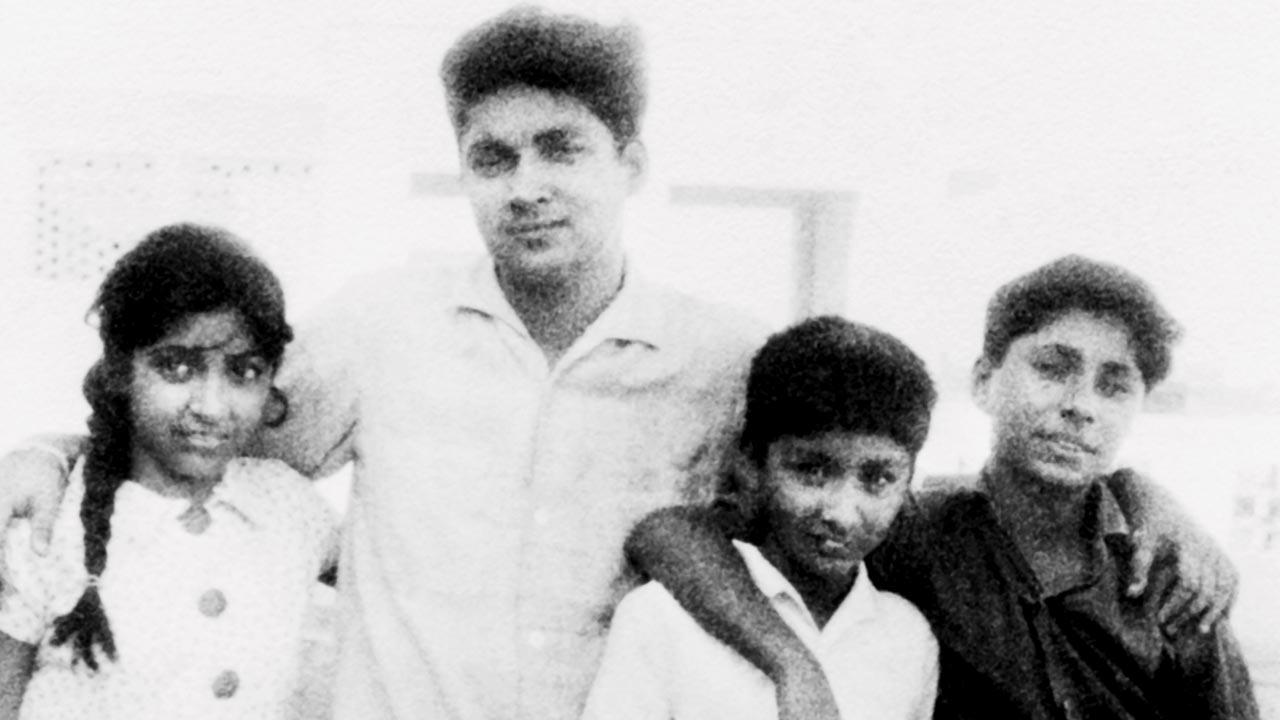
With Indu Bhaiya, Bunny, and Ashu
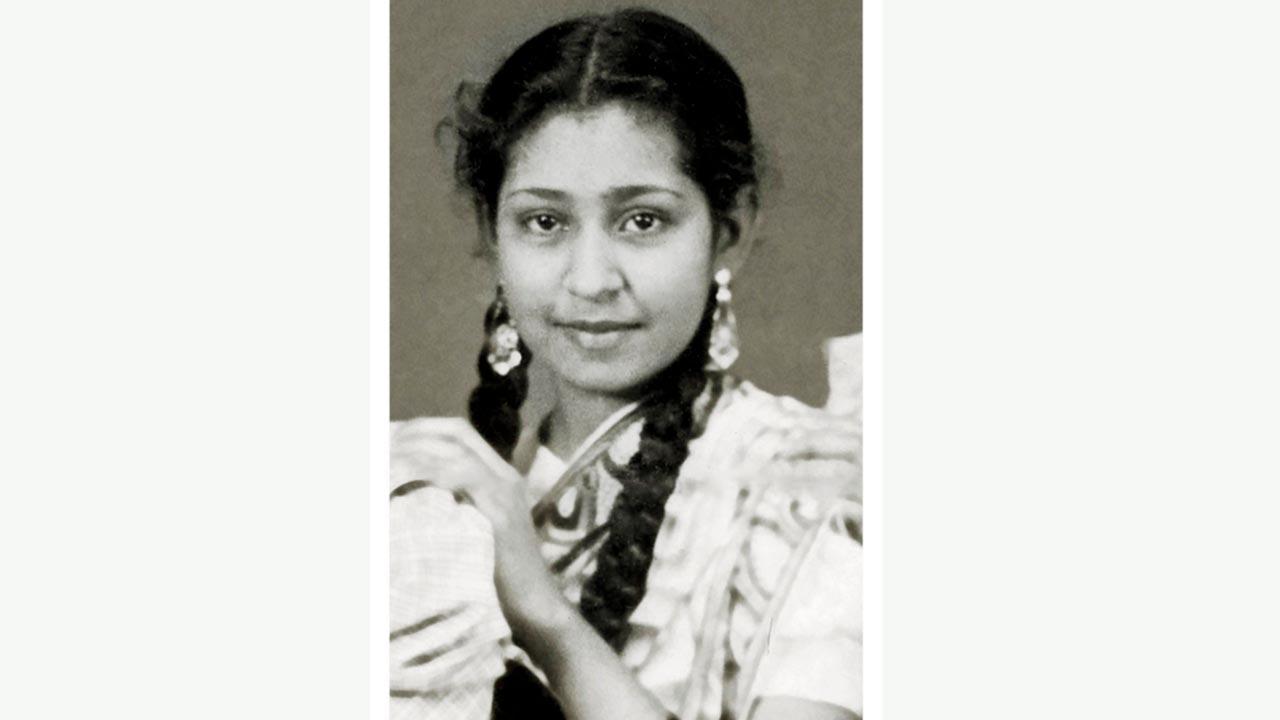
Deepti Naval’s mother Winnie, born Himadri Gangahar. Pics Courtesy/A Country Called Childhood: A Memoir
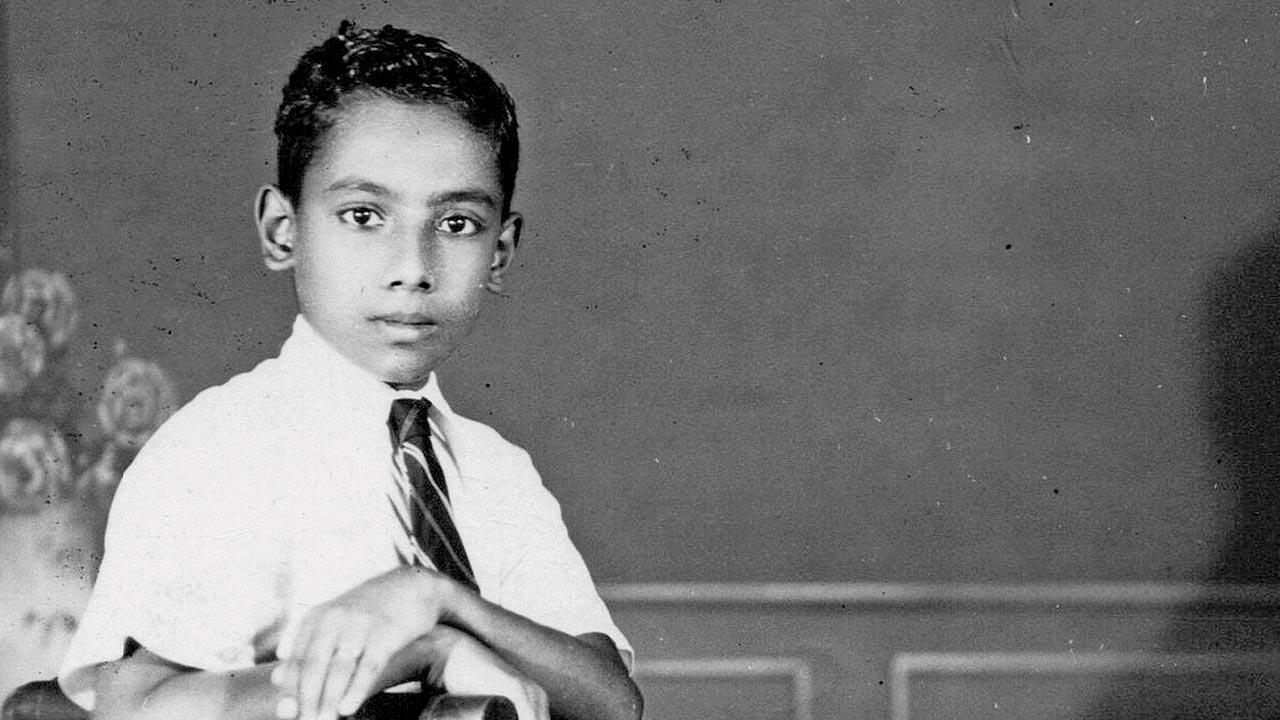
Sunny Bowrie
I was hesitant about screening Disco Dancer in Russia but Smita Patil convinced me-B Subhash
8:28 AM

Sonam Joshi (THE TIMES OF INDIA; March 29, 2022)
The year was 1983. Film director Babbar Subhash’s ‘Disco Dancer’ had just been invited for the Moscow film festival by a Mumbai-based agency Sovex Fort. “I was hesitant because it was a modern film with modern music and mostly dark films such as ‘Do Bigha Zamin’ have been successful in Russia but Smita Patil convinced me otherwise,” Subhash recalls.
By the time the movie screening ended, over 3,000 people in the auditorium were clapping and dancing along to the title track. “It was one of the best days of my life,” he says. ‘Disco Dancer’ went on to sell 120 million tickets in the Soviet Union, and even WhatsApp’s Ukrainian cofounder Jan Koum recalls watching the film as many as 20 times as a kid in Kyiv.
With Hollywood movies banned in the USSR during the Cold War, the Soviet government began promoting Indian movies from the 1950s onwards. The first big hit was Raj Kapoor’s ‘Awara’ selling 64 million tickets followed by ‘Shree 420’. Then came movies such as ‘Dhool Ka Phool’, ‘Love In Simla’, ‘Bobby’, ‘Barood’, ‘Seeta Aur Geeta’, ‘Muqaddar Ka Sikandar’.
Dr Sudha Rajagopalan, senior lecturer in East European Studies at the University of Amsterdam, estimates that 210 Indian films were screened in Soviet theatres between 1954 and 1991, around 190 of which were mainstream Hindi films from Bombay. “Indian popular films often surpassed both domestic and other foreign cinema in viewer turnout,” she writes in her book.
Elena Doroshenko, a Moscow-based journalist and linguist who has watched the old hits as well as the relatively newer ‘Kal Ho Naa Ho’ and ‘Paheli’, says they struck an emotional chord with Russians. “The films spoke the same emotional language — even though we were different, we understood the emotions and passions,” she says.
The success of Hindi films in the USSR also led to joint productions such as ‘Alibaba Aur 40 Chor’ and ‘Sohni Mahiwal’. However, this changed after the fall of the Soviet Union in 1991. “There was a flood of various films from the West and we wanted to imitate that lifestyle,” Doroshenko says. “Indian films were still on TV — it’s not that they were forgotten but they stopped being a sensation.”
Dancer Svetlana Tulasi, who was born to an Indian dad and Russian mom and raised in Moscow, recalls watching Bollywood movies on cassette tapes, then cable TV, then DVDs and eventually on the internet. She shot to fame a few years ago with her viral Bollywood-Kathak fusion dances at Russia's Got Talent and Ukraine's Got Talent.
On YouTube, there are Russian fan channels devoted to Mithun Chakraborty, and dance performances set to the song ‘Jimmy Jimmy’. There are even a couple of restaurants by that name in Vladivostok and the Georgian capital of Tbilisi.
The Georgian ‘Jimmy Jimmy’ was inaugurated in 2019 by none other than Raj Kapoor’s son Rajeev Kapoor. “When we visited Georgia for the first time, we were surprised to see that taxi drivers were playing ‘Jimmy Jimmy’ and ‘Mera Joota hai Japani’,” says owner Shubham Joshi whose customer base includes both locals as well as Indian students.
I can’t explain how much it hurts to not be able to speak to Rishi every day-Randhir Kapoor
7:54 AM

Today marks one year since the death of one of Indian cinema’s most loved actors, Rishi Kapoor. His brother, Randhir Kapoor recently spoke to us about how difficult it has been to move on without his brother-buddy and that life can never be the same without him
Rachana Dubey (BOMBAY TIMES; April 30, 2021)

(Cuts in…) Can you believe it? Dekhte hi dekhte, ek saal ho gaya. In a matter of 10 months, I lost both my buddies, my brothers Rishi and Rajiv. It’s been the most painful year for my family and me. It’s been an extremely sad year for Raj Kapoor’s clan. I loved my brothers dearly. Rajiv and Rishi left us one after the other, and life has not been the same without them ever since. We’re a close-knit family and we spent most of our time with each other when we were not at work. We loved being around one another and our camaraderie was something else. We’d meet for drinks, meals and sometimes, just to talk to each other and relive old memories. Life is dotted with happy and sad moments, but the last 10 months have been a terrible jolt. Life can never be the same without Rishi and Rajiv. I loved them dearly, and I will always miss both of them.
They say time is a healer. How are you coping?
I am not feeling healed. Time is not healing me in any manner. Just when we were slowly coming to terms with Rishi’s passing away, my youngest sibling Rajiv left us. I feel lonely without them. They were not just my brothers, they were my confidants and my closest friends. We grew up together; our parents brought us up in such a way that we grew up to become each other’s pals, secret-keepers and what-have-you. We were each other’s strength and shoulders to lean on. I don’t have them here anymore.
Yes, time will heal us but I definitely feel a vacuum. In Rishi’s case, Neetu, Ranbir and Riddhima have felt a greater sense of loss. Rishi’s absence must be hurting them so much more, every single day. I am slowly coming to terms with his absence, too, but it will take a long time for it to settle in.

We had such great times together. That void of the brother-buddy can never be filled up. For the world, he was a great actor, who left behind scores of wonderful movies to enjoy and love. For us, he’s left loads of happy memories of the times we’ve laughed, hung out, eaten and chatted with abandon. Of course, I can go back and I do go back and watch all his films and that’s how I end up seeing him virtually, every day.
The connection we shared ran really deep. Rishi was a great friend to have - reliable and honest. My sister Rima and I feel his absence all the time. We’re left alone now — out of five siblings, it’s just she and I now. In the last three years, we lost our mom, our R K Studios and millions of invaluable memorabilia, our brothers, our sister and Shashi uncle. It’s all happened too soon. Today, when I watch Pyaar hua ikraar hua from Shree 420, I see my siblings in it and it pains me that memories of that movie have been lost forever. What you see in that song is what we’ve lived by — my siblings and I grew up to respect our elders and be extremely protective of one another.
For us, Christmas was always at Shashi uncle’s house, Holi was at Chembur and Diwali would be at one of our homes. All that is somewhat dwindling now. It doesn’t feel the same anymore, especially without my brothers. There’s hardly anyone there now from that generation of people in the family to which my brothers and I belonged. In this one year, my kids have supported me a lot, ensuring that I don’t feel lonely, but nothing can fill the void that my brothers have left behind. I miss that sibling bonding.
I saw them going in front of my eyes and it pains me to think of those days and times when I had to bid farewell to them. Emotional jolt! Time will heal me, I am sure. But, I can never get Rishi or Rajiv out of my mind. I am hoping that I will come to terms with their absence. The show will go on.
What runs through your mind when you watch their films now?
I almost feel like calling them up and telling them what I feel, and then I realise, it’s not going to happen. There’s not one day when Rishi and I didn’t speak to each other in all these years. There’s been a silence for the last one year. It’s beyond words to explain how much it hurts to not be able to speak to Rishi and share my thoughts with him. The lunch and dinner times, our drinking windows in the day, the time when we would hang out together...there’s not one moment in the day when I don’t miss Rishi and Rajiv. Rishi was so happy about his second innings in cinema with all those lovely roles. He was very pleased with the work that he was getting, all these different characters. He would say ‘Dabs, I can’t imagine myself in some of these roles but yeh directors aur writers toh kamaal kar rahe hain.’ He had loved a whole lot of scripts that came to him even as he came close to his last days. Who knew this would be it? He just could not be there to relish his success in the second innings, which he worked so hard for.
Like you said the show must go on, will you sit back and watch one of your favourite Rishi Kapoor films today?
I will be thinking of Rishi, like every other day, and it’s not a conscious thing. It happens on its own. We were emotionally close to each other. Life will go on, it moves us on. My father (Raj Kapoor) believed that the show must go on and it will. He’s left plenty of great films behind, unko dekh kar yaad karunga apne bhai ko. My brother was such a charming man, a good husband and a loving father. His children made him so happy. C’est la vie... I hope Chintu is happy where he is now.

In Urdu, ‘awara’ means ‘khushboo’ and even today, the ‘fragrance’ of Raj Kapoor fills our senses-Manoj Kumar
8:22 AM

Manoj Kumar with wife Shashi and Raj Kapoor at a suburban hotel, celebrating his National Award win for Shaheed; with Rishi Kapoor in Mera Naam Joker (below; right)
Roshmila Bhattacharya (MUMBAI MIRROR; June 3, 2020)
 I knew about the Joker long before Joaquin Phoenix brought him home to me. And unlike his trigger-happy Arthur Fleck or Pennywise the Dancing Clown of It, my funnyman with the painted smile and cherry nose did not give me the shakes; he made me smile, sigh and sing, “Jeena Yahaan, Marna Yahaan, Iske Siva Jaana Kahaan.” On Raj Kapoor’s 32nd death anniversary on June 2, I decided to rewind to the film closest to his heart, Mera Naam Joker, with the man, who, though on screen for a short time as David who woos Mary away from an adolescent Raju, had a major role to play in this 224-minute story.
Let’s start with Raj Kapoor’s Shree 420, which released in the Capital’s Regal cinema. Among those who queued up for tickets, first day, first show, was a young boy fondly called Ghulu. He entered the auditorium, took a corner seat and, as the lights dimmed, gave himself up to the story of Raj, Vidya, Maya and a life gone astray. Suddenly, when the song, “Shaam Gayi, Raat Aayi Ki Balam Aaja” came on, a group of men stood up, started to whistle and create a commotion.
“In a flash, a man dressed in white raced past me towards the stage. As he went up on the dais, the lights came on and I saw an enraged Raj saab calling the men, hired by rival distributors to run down the film, ‘bhaade ke tattu’. He told them that he’d made the film with heart and honesty and God would reward him. Pointing to the door, he told them to get out and shame-faced, the men complied,” Ghulu, who grew up to become Manoj Kumar, reminisces, adding that at night, when his naani wondered why he couldn’t sleep, he told her all that had transpired and asked her who was this man who could talk so fearlessly. “‘He’s a karmayogi—one who connects with God through actions’—she told me, and the words stayed with me.”
A decade later, Manoj saab was shooting for Raj Khosla’s Anita at Mehboob Studio when he got a call from Raj saab, who wanted to come over and meet him. He offered to drop by himself and a couple of days later, was at RK Cottage at 2 pm, where Raj saab requested that he oblige him by doing a cameo in Mera Naam Joker. “I immediately agreed. We decided to shoot after I’d released my Upkar,” he narrates.
Soon after, while he was away in Delhi or maybe Kolkata, Raj saab tried calling him and was brusquely told he had got the wrong number. On his return, Manoj saab was surprised when singer Mukesh relayed this to him, saying Raj saab was upset, thinking that he was being avoided as Manoj saab didn’t want to do Mera Naam Joker. Almost immediately, Manoj saab called Raj saab and asked to see him.
“We met at 4 pm at (composer) Jaikishan’s residence, where I assured Raj saab that neither I nor my wife Shashi would dare discomfit him. I told him I was looking forward to working with not the showman but a karmayogi and went on to tell him about the earlier incident at Regal. Raj saab quietly heard me out, then, put his head in my lap and started crying,” he recounts.
Soon after, Manoj saab flew down for the shoot in Ooty where, while narrating a scene that they were to shoot the following day, Raj saab stopped abruptly, alerted by the expression on his face that he didn’t agree with something. When prodded, Manoj saab pointed to a certain dialogue which made a reference to Gandhi ji’s assassination. He pointed out that since Raju was an adolescent then, the Father of the Nation would have been alive. Taken aback, Raj saab retreated to his room on the first floor, but after half an hour, came down, telling Shashi ji to persuade Manoj saab to re-write the scene for him. “When I demurred, pointing out that (K A) Abbas saab (who had penned the story and screenplay) was a senior writer, he made me speak to him on the phone and he gave me his permission,” the writer-actor-filmmaker reveals.
Raj saab was so impressed with his dialogue, particularly one where, in response to young Raju’s query about who’s the biggest joker till date, David points his thumb towards the sky and reacting to Raju’s “Bhagwan” reasons that God, like the joker, does everything for others, apne liye kuchh nahin. “Appreciating that dialogue, Raj saab called (DoP) Radhu Karmakar and a few others to listen to me as I narrated what I’d written, pointing out that I had encapsulated the philosophy of the joker in these lines,” Manoj saab recalls, adding, “The first story in this three-story film was reworked by me, but I didn’t do it for name, fame or money. I paid for my travel expenses and hotel stay and refused to take credit as writer. Mera Naam Joker was my tribute to karmayogi Raj Kapoor. In Urdu, ‘awara’ means ‘khushboo’ and even today, the ‘fragrance’ of Raj Kapoor fills our senses.”
Memorabilia of Raj Kapoor films passed on to Film Heritage Foundation
8:00 AM

As RK Studio makes way for residential project, Randhir gives Raj Kapoor's first camera, film posters and other memorabilia to Film Heritage Foundation
Mohar Basu (MID-DAY; September 25, 2019)
 Five months after the iconic R K Studios was acquired by a realty giant for a luxury residential project, the magic of Raj Kapoor's cinema continues to reside in fans' memories. Now, in good news for film enthusiasts, the memorabilia of Raj Kapoor films — including posters, cameras used by the showman over the decades and other artefacts — have been passed on to Film Heritage Foundation for preservation.
Shivendra Singh Dungarpur (left), the founder of the Tardeo-based organisation and archivist, says he is grateful to be the safe keepers of these precious possessions, each telling a beautiful chapter of the showman's life and, by extension, of the evolution of Hindi cinema.
 "Randhir Kapoor gave us most of the materials, including posters, photographs, lobby cards and Raj Kapoor's books. In fact, we also have the camera that Raj saab used to shoot his first film [Aag, 1948]. He used the same camera for several films thereon. These things have to be kept in a temperature-and humidity-controlled environment, and I am grateful that Randhir saab thought that the best place to preserve all of it is with us," says Dungarpur.
A film aficionado, he rues the loss of cinematic gems in the 2017 blaze that reduced the 70-year-old Chembur studio to ashes. "I made a documentary, The Immortals, in which I had shown Raj Kapoor's coat and shoes from the song, Mera Joota Hai Japani [Shree 420, 1955]. We would have loved to take care of these rare pieces, but unfortunately, the entire make-up and costume department got burnt. As for the manuscripts, letters and scripts, they are well-preserved by the family."


R K Studios fire: A legacy gutted, and the Kapoors are mourning
8:10 AM

Raj Kapoor's iconic Mera Naam Joker mask, and costumes worn by all R K banner heroines from Nargis to Aishwarya among the memorabilia lost in Saturday's fire at R K Studios, says Rishi Kapoor
Meena Iyer (MUMBAI MIRROR; September 18, 2017)

Just the memory of the calamity brought a lump to Rishi's throat. “I still cannot believe it. I'm partially in denial even now. I spent several hours looking around the studio and as the embers fell, I felt distressed and helpless. Yet, here I am at home and I'm still thinking that perhaps it was just a bad dream,“ Rishi told Mumbai Mirror. His son Ranbir, who heard about the incident in London, is rushing back.
Rishi was not in a position to comment on the exact cause of the fire because everything he heard was “conjecture“. While the police and the Fire Brigade officials have begun the process of a panchnama to ascertain the exact cause, it is said that on Friday, a reality show, Super Dancer 2, was shot on the floor till the early hours of Saturday. Post pack-up, the lights on the set and in the makeup rooms were switched off.
Rishi recalled some of the films that were shot in the studio, on the very stage that has now been gutted: Awara, Shree 420, Jis Desh Mein Ganga Behti Hai, Mera Naam Joker, Satyam Shivam Sundaram, Ram Teri Ganga Maili, Dharam Karam, Prem Rog, to Rishi's own directorial film, Aa Ab Laut Chalen in 1999... “My own journey at the R K Studio started at the age of two when I shot with my elder siblings, Randhir and Ritu, for the song 'Pyaar Hua Iqraar Hua' from Shree 420. I kept crying because I had to walk through heavy rain and Nargisji bribed me with a Cadbury chocolate, promising to give it to me if I did what my father asked me to do. That aside, can you now imagine, how devastated I was when I saw the fire destroy everything around me? I am 65 now. It's a place I have been frequenting for 63 years. So have my siblings. It is an equally big blow for Randhir and Rajeev,“ Rishi said.
He said it was all the more heart breaking for the matriarch, Krishna Raj Kapoor, who has been a gracious host at countless events at the studio. “My mother is devastated. She keeps indifferent health and we asked her not to come to the studio because the fire was quite bad. There was smoke bellowing all around,“ he said.
When asked about the losses, Rishi said “everything was gone“, including the famous joker mask Raj Kapoor wore in Mera Naam Joker. “There were costumes from every RK film, from Awara to Chalen. Most of the stuff was kept neatly in trunks and some of it was even labelled. The costumes worn by every RK heroine, from Nargis to Aishwarya Rai Bachchan, is lost. The jewellery worn by Padmini in Jis Desh Mein Ganga Behti Hai was also stored here with a lot of love. There were spears, sabres, artefacts, furniture and other regalia used for the various shoots. The Mera Naam Joker mask and clothes... Dabboo and I couldn't believe what hit us. This is probably why they say that one should never put all eggs in one basket. But for us, this was our father's legacy, and it was a treasure trove.“
R K Studio had seen several tragedies. In 1970 when Mera Naam Joker flopped, Raj Kapoor had to mortgage the studio. Then, towards the end of his life, the Kapoor patriarch sold two stages of RK Studios for a paltry sum. But even after Raj Kapoor's death, his sons never contemplated selling any part of the property. “We hung on to our father's legacy,“ Rishi said. “Today I feel a sense of deep bereavement because we lost all of this.“ Echoing Randhir Kapoor's statement that the family may come to terms with the financial loss but not with the emotional loss, Rishi said, “My father didn't buy a home for his family until Bobby's success. He put all his earnings into the studio because cinema was his religion.“
 It is said that back in 1951, Raj Kapoor had constructed just four
walls on Stage One, which didn't even have a proper roof because he used
natural light to shoot. “My brothers and I can build the four walls
again and even add a roof. But how can we compensate the loss of the
precious memorabilia? That will never come back. Countless films,
besides those made under our home banner, have been shot at R K Studio. It
has also been the venue for our Holi and Ganpati celebrations. The loss
is not just ours as a family, it is a loss for the entire film
fraternity,“ said Rishi.
It is said that back in 1951, Raj Kapoor had constructed just four
walls on Stage One, which didn't even have a proper roof because he used
natural light to shoot. “My brothers and I can build the four walls
again and even add a roof. But how can we compensate the loss of the
precious memorabilia? That will never come back. Countless films,
besides those made under our home banner, have been shot at R K Studio. It
has also been the venue for our Holi and Ganpati celebrations. The loss
is not just ours as a family, it is a loss for the entire film
fraternity,“ said Rishi.He recalls that RK came into being in the year of Awara. “My father shot the famous dream sequence here. At that time there were just four walls and no roof. The entire dream sequence was shot after sundown because Chembur got electricity only in the nights in the 1950s. During the day, my father toiled for other filmmakers as an actor...and then at night he put his earnings into his own film,“ he said.

R K Studios: Raj Kapoor shot all his movies after 1950 in 4-acre space
8:02 AM

Bella Jaisinghani (THE TIMES OF INDIA; September 17, 2017)
Hindi cinema's famous showman Raj Kapoor constructed R K Studios in Chembur in 1950, reportedly with profits earned from his first hit picture, Barsaat in 1949.
This sprawling four-acre campus also served as the headquarters of his film company, RK Films, which had been founded two years earlier in 1948. His first film as independent director was Aag.
Raj Kapoor reportedly shot all his pictures after 1950 here at RK, beginning with the famous dream sequence of Awara to Mera Naam Joker, Bobby, Jis Desh Mein Ganga Behti Hai, Kal Aaj Aur Kal, Satyam Shivam Sundaram and Prem Rog. Shree 420 and Sangam were also filmed in studio.
Over the decades, the fortunes of RK Studios peaked as hundreds of popular movies, not just those under the home banner, were shot here. Studio representative Kishore Darekar said on Saturday, “Manmohan Desai shot all his pictures here. Newer RK productions such as Henna, Ram Teri Ganga Maili and Aa Ab Laut Chalein were filmed here.“
As time passed, private bungalows and outdoor locations became more economically viable and a popular option to shoot rather than creating lavish expensive sets in film studios. The family stopped making films a few years after Raj Kapoor's death. Television shows do continue to rent the space, though.
Bollywood rewind: The tale of the first Bollywood crore
9:26 AM

In an era of Rs 400- crore hits, here’s a flashback to the first Hindi film to make a crore, and other financial milestones
Divya Unny (BOMBAY TIMES; March 16, 2014)
A few weeks ago, the unthinkable happened. A Salman
Khan film failed to hit the coveted Rs 100 crore mark in its first week
of release. This was a rarity for the Bhai of Bollywood, who has
delivered back-to-back super hits since 2010. Yet, Salman is unlikely to
be affected by the film’s flat performance. If trade experts are to be
believed, Khan made his Rs 100 crore even before Jai Ho hit screens.
Says trade analyst Komal Nahata, “The film, budgeted at about Rs 75 crore, including print and publicity costs, and was sold to Eros International for Rs 120 crore. Its broadcasting rights were about Rs 55 crore and music around Rs 13 crore. So, the film had made Rs 113 crore even before release. This isn’t too bad a start for a film.”
The current era though is a far cry from the times when films depended solely upon crowds filling up single screen theatres across India. There were no elusive ‘100-crore’ clubs.
First one crore movie

One of the first films the masses showered with love and money was Lanka Dahan (1917), a mythological silent film by Dadasaheb Phalke. Veteran film historian Amrit Gangar says coins from ticket counters were apparently collected in gunny bags and transported on bullock carts to the producer’s office. “Lanka Dahan was a silent film, but people went crazy about it. There were long queues at Majestic cinema in Bombay where people would fight for tickets and toss coins at the ticket counter because the film was mostly houseful.” However, it was in 1943, that Kismet, directed by Gyan Mukherjee, became the first film to reach the coveted box office milestone of Rs 1 crore. Who would have thought that the journey of the crore in Indian films would begin with a movie made for under Rs 2 lakh? It was a time when India was in the throes of patriotic fervour. The Quit India movement had just been launched. Kismet, a crime thriller with patriotic sentiments, tapped into this feeling.
In the lead role was Ashok Kumar, playing a Robin Hood-like character who doesn’t mind breaking the law for the greater good. Says film scholar and archivist PK Nair, “Ashok Kumar was a superstar and people loved his part as a pickpocket who dodged the system to help the public.” Kismet was produced by Bombay Talkies. “It ran in Calcutta’s Roxy theatre for almost three years. It was by all estimates the first film to make a crore. It was released in undivided India, so the crowd was bigger,” adds Nair.
The song ‘Door hato ae duniyawalon, Hindustan humara hai’ then became an anthem. “At that time, films were allowed to be made only on restricted raw stock, as it was expensive and had to be imported. Between 1939-45, films had to be made with a maximum 12 reels. However, the British made an exception for movies that were considered a boost to their war efforts. The song ‘Door hato ae duniyawalon’ took an indirect dig at the British, but they never found out how,” says Nair.
The golden ’50s
 Post-independence
was a golden era for Indian cinema, when the industry started to
flower. The Partition caused a disintegration of the hitherto
influential film companies, such as Lahore’s Shorey Studios and Pancholi
Studios, and the era of independent producers began. Producer-directors
like Raj Kapoor, Guru Dutt, Mahesh Kaul and Mehboob Khan, among others,
brought out one masterpiece after another. “Guru Dutt paid homage to
Gyan Mukherjee in his film Pyaasa, because Kismet was such a cult.
Pyaasa created history of its own,” says Nair. It was the showman Raj
Kapoor, however, who really flourished financially with films such as
Barsaat, Awara and Shree 420. “Shree 420 was the film that made over Rs 2
crore and broke Kismet’s record,” adds Nair.
Post-independence
was a golden era for Indian cinema, when the industry started to
flower. The Partition caused a disintegration of the hitherto
influential film companies, such as Lahore’s Shorey Studios and Pancholi
Studios, and the era of independent producers began. Producer-directors
like Raj Kapoor, Guru Dutt, Mahesh Kaul and Mehboob Khan, among others,
brought out one masterpiece after another. “Guru Dutt paid homage to
Gyan Mukherjee in his film Pyaasa, because Kismet was such a cult.
Pyaasa created history of its own,” says Nair. It was the showman Raj
Kapoor, however, who really flourished financially with films such as
Barsaat, Awara and Shree 420. “Shree 420 was the film that made over Rs 2
crore and broke Kismet’s record,” adds Nair.
Randhir Kapoor, Raj Kapoor’s eldest son, says “My father never thought of money. He used to make movies for the passion of it and he’d do anything to fulfill his creative urges.”
 Another filmmaker who did not compromise on his
grand vision was Mehboob Khan. After his film, Aan, become a massive
hit, he made Mother India (1957), included among the 100 best films of
World Cinema by Empire magazine, was made with 26-year-old Nargis Dutt
playing mother of two.
Another filmmaker who did not compromise on his
grand vision was Mehboob Khan. After his film, Aan, become a massive
hit, he made Mother India (1957), included among the 100 best films of
World Cinema by Empire magazine, was made with 26-year-old Nargis Dutt
playing mother of two.
In an interview to The Telegraph, the late Sunil Dutt, Nargis’ co-star in the film and her husband, had said “We were amazed with Mehboob Khan’s conviction to be able to pull off a film like this. We shot in several states across the country and he spent more than Rs 35 lakh on it, which was a big amount in those days.” Mother India, the first Indian film to be nominated at the Oscars (in 1958), made approximately Rs 4 crore and ran for over a year at Liberty theatre in Bombay.
 The star system started to gain prominence in the ’50s
as well. The decade marked the rise of Dilip Kumar, Dev Anand, not to
mention Raj Kapoor. Dilip Kumar became the first actor to charge Rs 1
lakh per film. Sidharth Bhatia, author of Cinema Modern: the Navketan
story, says, “In the ’50s some South Indian producers had approached
Dilip Kumar with an offer. When he refused to take it up, Sriramulu
Naidu, a producer from the South who was making Azaad, offered him an
exorbitant amount to act in the film, which Dilip Kumar accepted.”
The star system started to gain prominence in the ’50s
as well. The decade marked the rise of Dilip Kumar, Dev Anand, not to
mention Raj Kapoor. Dilip Kumar became the first actor to charge Rs 1
lakh per film. Sidharth Bhatia, author of Cinema Modern: the Navketan
story, says, “In the ’50s some South Indian producers had approached
Dilip Kumar with an offer. When he refused to take it up, Sriramulu
Naidu, a producer from the South who was making Azaad, offered him an
exorbitant amount to act in the film, which Dilip Kumar accepted.”
The advent of colour
At the start of the 1960s came another epic, K Asif’s Mughal-E-Azam. Asif’s dream was to release it in technicolour. But the film’s mammoth budget of Rs 1.5 crore kept the film under production for nine long years. Says Haya Asif, granddaughter of K Asif, “There was a scene in the film where they had to show pearls being thrown on the floor. He (Asif) wanted real pearls. The financers initially refused, but he got it done eventually.” The film ran for over three years and made over Rs 5 crore. “Ticket prices were hiked from Rs 1 to Rs 50 and Rs 100,” says Nair.
Interestingly, the advent of Eastmancolour in the ’60s was one of the biggest factors in the success of films in India. Then came foreign shoots, the trend starting with Shakti Samanta’s Shammi Kapoor-starrer, Singapore (1960). Raj Kapoor, too, filmed several films abroad. Manoj Kumar shot Purab Aur Paschim extensively in England, France, Rome and Switzerland.
Another expensive film of those times was Vijay Anand’s Guide (1965). Says Sidharth Bhatia, “Guide was made for about Rs 60 lakh and this budget doubled because the American filmmaker, Tad Danielewski, who was directing the English version, had a falling out with Chetan Anand after the first three schedules. So they had to revisit many places and reshoot the English version. Also, Guide was a rich film when it came to locations since a lot of it was shot in palaces. Though it did make money when it released, it was much later that people recognised it as such a cult.”
The ’60s saw ground-breaking trends with films such as Dosti where the producers (Rajshree Productions) spent on publicity. Says PK Nair, “I remember that Dosti was made for about Rs 20 lakh. They spent almost the same amount publicising the film because it did not have many stars. There were hoardings and full-page ads in newspapers, which was new for a Hindi film. The first film to put out a full-page newspaper ad was a South film called Chandralekha (1948).”
When multi-starrers ruled
 The
’70s saw the superstardom of Amitabh Bachchan, considered the first
actor to command a fee of Rs 1 crore per film. The decade also saw the
rise of the multi-starrers, a trend set by Manmohan Desai with films
like Parvarish and Amar Akbar Anthony. Rosie Thomas, professor of film
at London’s Westminster University, who has been studying Indian cinema
for the past 35 years, says, “I came to Bombay from England in the 1970s
and I spent a lot of time with Manmohan Desai trying to understand the
mindset of filmmakers. I distinctly remember a story session I sat in
on, where they were segregating Hindu, Muslim and Christian characters
with different coloured chalks on the blackboard. It was fascinating how
stories were deliberately being targeted towards sections of crowd so
that it reached maximum people.”
The
’70s saw the superstardom of Amitabh Bachchan, considered the first
actor to command a fee of Rs 1 crore per film. The decade also saw the
rise of the multi-starrers, a trend set by Manmohan Desai with films
like Parvarish and Amar Akbar Anthony. Rosie Thomas, professor of film
at London’s Westminster University, who has been studying Indian cinema
for the past 35 years, says, “I came to Bombay from England in the 1970s
and I spent a lot of time with Manmohan Desai trying to understand the
mindset of filmmakers. I distinctly remember a story session I sat in
on, where they were segregating Hindu, Muslim and Christian characters
with different coloured chalks on the blackboard. It was fascinating how
stories were deliberately being targeted towards sections of crowd so
that it reached maximum people.”
 In
1975 came Sholay, the highest grosser of all time for almost two
decades. Ramesh Sippy started to make the film with a budget of a crore,
but spent an additional Rs 2 crore. Among the many things that made
Sholay an expensive and challenging film to make was the number of
extras and production people on set, believed to be the highest in
Bollywood history. Sippy says, “There were more than 200 people on set
at any given time. We had to build roads from scratch for many action
sequences. The film ran for five years (amounting to Rs 15 crore gross)
because there were no DVDs or video tapes or multiple screens at the
time. If I release Sholay with 5,000 prints today, it’s never going to
run for that long. Today a film will have to make at least Rs 1,500
crore to be equivalent to what Sholay made in its time.” Sholay’s box office record was broken 19 years later by Hum Aapke Hain Koun (1994), which earned approximately Rs 69 crore.
In
1975 came Sholay, the highest grosser of all time for almost two
decades. Ramesh Sippy started to make the film with a budget of a crore,
but spent an additional Rs 2 crore. Among the many things that made
Sholay an expensive and challenging film to make was the number of
extras and production people on set, believed to be the highest in
Bollywood history. Sippy says, “There were more than 200 people on set
at any given time. We had to build roads from scratch for many action
sequences. The film ran for five years (amounting to Rs 15 crore gross)
because there were no DVDs or video tapes or multiple screens at the
time. If I release Sholay with 5,000 prints today, it’s never going to
run for that long. Today a film will have to make at least Rs 1,500
crore to be equivalent to what Sholay made in its time.” Sholay’s box office record was broken 19 years later by Hum Aapke Hain Koun (1994), which earned approximately Rs 69 crore.
Then came another monster hit, Dilwale Dulhaniya Le Jayenge. The film also marked the beginning of the end of the silver and golden jubilees. Very soon a new business model would redefine the industry, bringing in crores of money even though the film itself wouldn’t last at the theatre or in public memory beyond a few days.
The magic of multiplexes
Multiplexes and film studios changed the dynamics of the business. Increasing number of digital prints and extended weekend releases resulted in films raking in more moolah faster than expected.
 “Earlier,
a film released in about 25 cinemas with four shows a day, making it
700 shows a week. Today if a film releases in 100 cinemas with 25 shows
per day, that makes it 1,625 shows per week,” explains Nahata.
“Earlier,
a film released in about 25 cinemas with four shows a day, making it
700 shows a week. Today if a film releases in 100 cinemas with 25 shows
per day, that makes it 1,625 shows per week,” explains Nahata.
This and an aggressive marketing campaign paved the way for Aamir Khan’s Ghajini (2008) the first 100-crore film ever. The success of Ghajini was followed by 3 Idiots (2009), which garnered over Rs 202 crore till Shah Rukh Khan’s Chennai Express broke this record, Aamir’s film Dhoom 3 broke the record again with over Rs 260 crore.
But the winners are also the producers who make smaller budget films, and yet set cash registers ringing, leading to big profits.
 According
to filmmaker Mahesh Bhatt, that is an important yardstick for measuring
a film’s financial performance. Vishesh Films, owned by Mahesh Bhatt
and his brother Mukesh, have adopted this prudent approach. Mahesh Bhatt
says, “What gets lost in the hype over collections is profitability.
The mindset is to make expensive, big budget films, but the actual
profit of these films may not be very high. Unlike these, Aashiqui 2 was
made with a modest budget of 35 crore, and yet made almost Rs 100 crore.”
According
to filmmaker Mahesh Bhatt, that is an important yardstick for measuring
a film’s financial performance. Vishesh Films, owned by Mahesh Bhatt
and his brother Mukesh, have adopted this prudent approach. Mahesh Bhatt
says, “What gets lost in the hype over collections is profitability.
The mindset is to make expensive, big budget films, but the actual
profit of these films may not be very high. Unlike these, Aashiqui 2 was
made with a modest budget of 35 crore, and yet made almost Rs 100 crore.”
Filmmaker Shekhar Kapur says that in many ways, the most successful film in Bollywood history is Monsoon Wedding (2001). “That film was made within a crore and technically speaking is probably the most successful Indian film in years (it earned Rs 180 crore overseas). But they are not the people who aspire to be part of the crore clubs.”
Interestingly, Kapur’s Paani, being produced by Yash Raj Films, is said to be among the most expensive films to be made in India. “The budget will be not less than $150 million. At that rate my revenue should hit at least Rs 5,000 crore,” says Kapur.

Says trade analyst Komal Nahata, “The film, budgeted at about Rs 75 crore, including print and publicity costs, and was sold to Eros International for Rs 120 crore. Its broadcasting rights were about Rs 55 crore and music around Rs 13 crore. So, the film had made Rs 113 crore even before release. This isn’t too bad a start for a film.”
The current era though is a far cry from the times when films depended solely upon crowds filling up single screen theatres across India. There were no elusive ‘100-crore’ clubs.
First one crore movie
One of the first films the masses showered with love and money was Lanka Dahan (1917), a mythological silent film by Dadasaheb Phalke. Veteran film historian Amrit Gangar says coins from ticket counters were apparently collected in gunny bags and transported on bullock carts to the producer’s office. “Lanka Dahan was a silent film, but people went crazy about it. There were long queues at Majestic cinema in Bombay where people would fight for tickets and toss coins at the ticket counter because the film was mostly houseful.” However, it was in 1943, that Kismet, directed by Gyan Mukherjee, became the first film to reach the coveted box office milestone of Rs 1 crore. Who would have thought that the journey of the crore in Indian films would begin with a movie made for under Rs 2 lakh? It was a time when India was in the throes of patriotic fervour. The Quit India movement had just been launched. Kismet, a crime thriller with patriotic sentiments, tapped into this feeling.
In the lead role was Ashok Kumar, playing a Robin Hood-like character who doesn’t mind breaking the law for the greater good. Says film scholar and archivist PK Nair, “Ashok Kumar was a superstar and people loved his part as a pickpocket who dodged the system to help the public.” Kismet was produced by Bombay Talkies. “It ran in Calcutta’s Roxy theatre for almost three years. It was by all estimates the first film to make a crore. It was released in undivided India, so the crowd was bigger,” adds Nair.
The song ‘Door hato ae duniyawalon, Hindustan humara hai’ then became an anthem. “At that time, films were allowed to be made only on restricted raw stock, as it was expensive and had to be imported. Between 1939-45, films had to be made with a maximum 12 reels. However, the British made an exception for movies that were considered a boost to their war efforts. The song ‘Door hato ae duniyawalon’ took an indirect dig at the British, but they never found out how,” says Nair.
The golden ’50s
Post-independence
was a golden era for Indian cinema, when the industry started to
flower. The Partition caused a disintegration of the hitherto
influential film companies, such as Lahore’s Shorey Studios and Pancholi
Studios, and the era of independent producers began. Producer-directors
like Raj Kapoor, Guru Dutt, Mahesh Kaul and Mehboob Khan, among others,
brought out one masterpiece after another. “Guru Dutt paid homage to
Gyan Mukherjee in his film Pyaasa, because Kismet was such a cult.
Pyaasa created history of its own,” says Nair. It was the showman Raj
Kapoor, however, who really flourished financially with films such as
Barsaat, Awara and Shree 420. “Shree 420 was the film that made over Rs 2
crore and broke Kismet’s record,” adds Nair.Randhir Kapoor, Raj Kapoor’s eldest son, says “My father never thought of money. He used to make movies for the passion of it and he’d do anything to fulfill his creative urges.”
Another filmmaker who did not compromise on his
grand vision was Mehboob Khan. After his film, Aan, become a massive
hit, he made Mother India (1957), included among the 100 best films of
World Cinema by Empire magazine, was made with 26-year-old Nargis Dutt
playing mother of two.In an interview to The Telegraph, the late Sunil Dutt, Nargis’ co-star in the film and her husband, had said “We were amazed with Mehboob Khan’s conviction to be able to pull off a film like this. We shot in several states across the country and he spent more than Rs 35 lakh on it, which was a big amount in those days.” Mother India, the first Indian film to be nominated at the Oscars (in 1958), made approximately Rs 4 crore and ran for over a year at Liberty theatre in Bombay.
The star system started to gain prominence in the ’50s
as well. The decade marked the rise of Dilip Kumar, Dev Anand, not to
mention Raj Kapoor. Dilip Kumar became the first actor to charge Rs 1
lakh per film. Sidharth Bhatia, author of Cinema Modern: the Navketan
story, says, “In the ’50s some South Indian producers had approached
Dilip Kumar with an offer. When he refused to take it up, Sriramulu
Naidu, a producer from the South who was making Azaad, offered him an
exorbitant amount to act in the film, which Dilip Kumar accepted.”The advent of colour
At the start of the 1960s came another epic, K Asif’s Mughal-E-Azam. Asif’s dream was to release it in technicolour. But the film’s mammoth budget of Rs 1.5 crore kept the film under production for nine long years. Says Haya Asif, granddaughter of K Asif, “There was a scene in the film where they had to show pearls being thrown on the floor. He (Asif) wanted real pearls. The financers initially refused, but he got it done eventually.” The film ran for over three years and made over Rs 5 crore. “Ticket prices were hiked from Rs 1 to Rs 50 and Rs 100,” says Nair.
Interestingly, the advent of Eastmancolour in the ’60s was one of the biggest factors in the success of films in India. Then came foreign shoots, the trend starting with Shakti Samanta’s Shammi Kapoor-starrer, Singapore (1960). Raj Kapoor, too, filmed several films abroad. Manoj Kumar shot Purab Aur Paschim extensively in England, France, Rome and Switzerland.
Another expensive film of those times was Vijay Anand’s Guide (1965). Says Sidharth Bhatia, “Guide was made for about Rs 60 lakh and this budget doubled because the American filmmaker, Tad Danielewski, who was directing the English version, had a falling out with Chetan Anand after the first three schedules. So they had to revisit many places and reshoot the English version. Also, Guide was a rich film when it came to locations since a lot of it was shot in palaces. Though it did make money when it released, it was much later that people recognised it as such a cult.”
The ’60s saw ground-breaking trends with films such as Dosti where the producers (Rajshree Productions) spent on publicity. Says PK Nair, “I remember that Dosti was made for about Rs 20 lakh. They spent almost the same amount publicising the film because it did not have many stars. There were hoardings and full-page ads in newspapers, which was new for a Hindi film. The first film to put out a full-page newspaper ad was a South film called Chandralekha (1948).”
When multi-starrers ruled
The
’70s saw the superstardom of Amitabh Bachchan, considered the first
actor to command a fee of Rs 1 crore per film. The decade also saw the
rise of the multi-starrers, a trend set by Manmohan Desai with films
like Parvarish and Amar Akbar Anthony. Rosie Thomas, professor of film
at London’s Westminster University, who has been studying Indian cinema
for the past 35 years, says, “I came to Bombay from England in the 1970s
and I spent a lot of time with Manmohan Desai trying to understand the
mindset of filmmakers. I distinctly remember a story session I sat in
on, where they were segregating Hindu, Muslim and Christian characters
with different coloured chalks on the blackboard. It was fascinating how
stories were deliberately being targeted towards sections of crowd so
that it reached maximum people.”In
1975 came Sholay, the highest grosser of all time for almost two
decades. Ramesh Sippy started to make the film with a budget of a crore,
but spent an additional Rs 2 crore. Among the many things that made
Sholay an expensive and challenging film to make was the number of
extras and production people on set, believed to be the highest in
Bollywood history. Sippy says, “There were more than 200 people on set
at any given time. We had to build roads from scratch for many action
sequences. The film ran for five years (amounting to Rs 15 crore gross)
because there were no DVDs or video tapes or multiple screens at the
time. If I release Sholay with 5,000 prints today, it’s never going to
run for that long. Today a film will have to make at least Rs 1,500
crore to be equivalent to what Sholay made in its time.” Sholay’s box office record was broken 19 years later by Hum Aapke Hain Koun (1994), which earned approximately Rs 69 crore.Then came another monster hit, Dilwale Dulhaniya Le Jayenge. The film also marked the beginning of the end of the silver and golden jubilees. Very soon a new business model would redefine the industry, bringing in crores of money even though the film itself wouldn’t last at the theatre or in public memory beyond a few days.
The magic of multiplexes
Multiplexes and film studios changed the dynamics of the business. Increasing number of digital prints and extended weekend releases resulted in films raking in more moolah faster than expected.
“Earlier,
a film released in about 25 cinemas with four shows a day, making it
700 shows a week. Today if a film releases in 100 cinemas with 25 shows
per day, that makes it 1,625 shows per week,” explains Nahata.This and an aggressive marketing campaign paved the way for Aamir Khan’s Ghajini (2008) the first 100-crore film ever. The success of Ghajini was followed by 3 Idiots (2009), which garnered over Rs 202 crore till Shah Rukh Khan’s Chennai Express broke this record, Aamir’s film Dhoom 3 broke the record again with over Rs 260 crore.
But the winners are also the producers who make smaller budget films, and yet set cash registers ringing, leading to big profits.
According
to filmmaker Mahesh Bhatt, that is an important yardstick for measuring
a film’s financial performance. Vishesh Films, owned by Mahesh Bhatt
and his brother Mukesh, have adopted this prudent approach. Mahesh Bhatt
says, “What gets lost in the hype over collections is profitability.
The mindset is to make expensive, big budget films, but the actual
profit of these films may not be very high. Unlike these, Aashiqui 2 was
made with a modest budget of 35 crore, and yet made almost Rs 100 crore.”Filmmaker Shekhar Kapur says that in many ways, the most successful film in Bollywood history is Monsoon Wedding (2001). “That film was made within a crore and technically speaking is probably the most successful Indian film in years (it earned Rs 180 crore overseas). But they are not the people who aspire to be part of the crore clubs.”
Interestingly, Kapur’s Paani, being produced by Yash Raj Films, is said to be among the most expensive films to be made in India. “The budget will be not less than $150 million. At that rate my revenue should hit at least Rs 5,000 crore,” says Kapur.
Big ticket collectionBetween 2008 and 2013, over 25 films crossed the Rs 100 crore mark. Dhoom 3 holds the record for the highest grosser in Indian cinema, earning, over Rs 260 crore in India and Rs 169 crore in the overseas market so far
Subscribe to:
Comments (Atom)