Showing posts with label Shakun Batra. Show all posts
Showing posts with label Shakun Batra. Show all posts
I begged for an audition for Lust Stories 3 and by God’s grace, I got it-Radhika Madan
9:47 AM

Akash Bhatnagar (HINDUSTAN TIMES; May 22, 2026)
Actor Radhikka Madan says she still “begs for auditions” despite earning praise for her performances, admitting that every project feels like a “do or die” situation. The actor, recently appreciated for her work in Subedaar by filmmaker Hansal Mehta, will next be seen in Lust Stories 3 in a segment directed by Shakun Batra alongside Ali Fazal.
“I have been a huge fan of Shakun’s work and when I got to know about the film, I begged for an audition for Lust Stories 3 and by God’s grace, I got it,” says Radhikka, who made her acting debut with TV show Meri Aashiqui Tum Se Hi before transitioning to films with Vishal Bhardwaj’s Pataakha in 2018.
Despite building a credible body of work, the actor says she cannot afford complacency. “I can’t afford to give an average performance. There are a lot of people in line for every role. Every work is a do or die situation for me. If I need to survive, I need to kill it,” she says.
Radhikka adds that she has no hesitation in chasing opportunities. “Even now, if there is a project people are not thinking of me for, I beg for an audition and I’m very comfortable with it. I don’t have that ego. I have a problem when I don’t even get the opportunity to audition and am crossed off because of my last name,” she says.
Radhikka also credits “actors like Kangana Ranaut, Vidya Balan, Deepika Padukone, Alia Bhatt and Tabu ma’am” for paving the way for stronger female-led roles in Bollywood.
Ali Fazal reveals Aamir Khan's partition drama Batwara 1947 took a toll on him: "You can't switch off from it easily"
10:09 AM
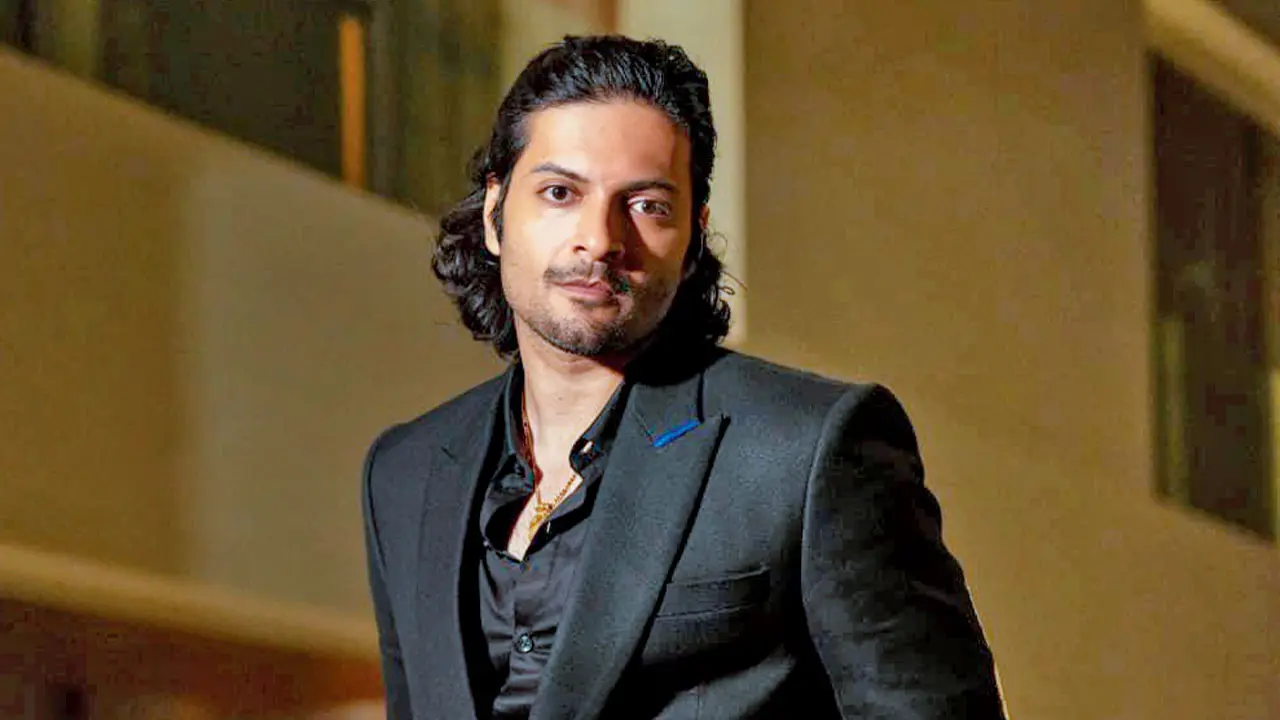
Mohar Basu (MID-DAY; April 18, 2026)
Adding Aamir Khan’s production, the tentatively titled Batwara 1947, to his filmography has been a moment of pride for Ali Fazal. But being part of an intense Partition drama takes a toll. The actor admitted that it wasn’t easy to leave the story behind after wrapping the film.
“It’s not something you can switch off from easily at the end of the day. The role stayed [with me] as it’s heavy, internal, and required sustained emotional investment,” he said.
Fortunately, he found a light-hearted offering in Lust Stories 3, giving him just the right contrast after the intense movie. To Fazal, director Shakun Batra’s segment with Radhikka Madan offered a different creative rhythm, allowing him to explore more personal shades.
Speaking about the contrast, the actor added, “You should constantly put yourself in uncomfortable spaces, and this year was [just that]. What excites me is this constant shift in energy. I’m enjoying that directors are making us see ourselves in a different light.”
Fawad Khan asked me, ‘Is the homosexuality a whisper or a shout?’-Shakun Batra
4:15 PM

Natasha Coutinho (HINDUSTAN TIMES; March 17, 2026)
As Kapoor & Sons clocks 10 years tomorrow, director Shakun Batra reflects on the making of the family drama, starring Rishi Kapoor, Fawad Khan, Sidharth Malhotra, Ratna Pathak Shah, Rajat Kapoor, and Alia Bhatt.
“There was a two-year gap between when it was written and when it finally got made,” Shakun reveals, adding, “Many actors turned it down. Actors were not comfortable playing homosexuals back then. At one point, I thought I’d never get to make it.”
Eventually Fawad came on board after a brief but defining conversation. “He asked me, ‘Is homosexuality a whisper or a shout?’ I told him it’s a whisper and he agreed immediately,” Batra shares, adding, “We didn’t show anything off-putting. The scene where Fawad breaks down in front of Ratna Pathak Shah saying he isn’t the perfect son, I watched it from the lens of an audience, not a filmmaker.”
The filmmaker also fondly recalls working with late veteran Rishi Kapoor. “There wasn’t a single day when Rishi ji and I did not argue on set, but after watching the film he showered me with so much love... His prosthetics were done by Greg Cannom, the Oscar-winning makeup artiste who worked with Brad Pitt in The Curious Case Of Benjamin Button (2008). Even Neetu ji (Kapoor, Rishi’s wife) didn’t recognize him in the get-up.”
Rajkumar Hirani's son Vir to make his acting debut with father's first web series Pritam Pedro
9:41 AM
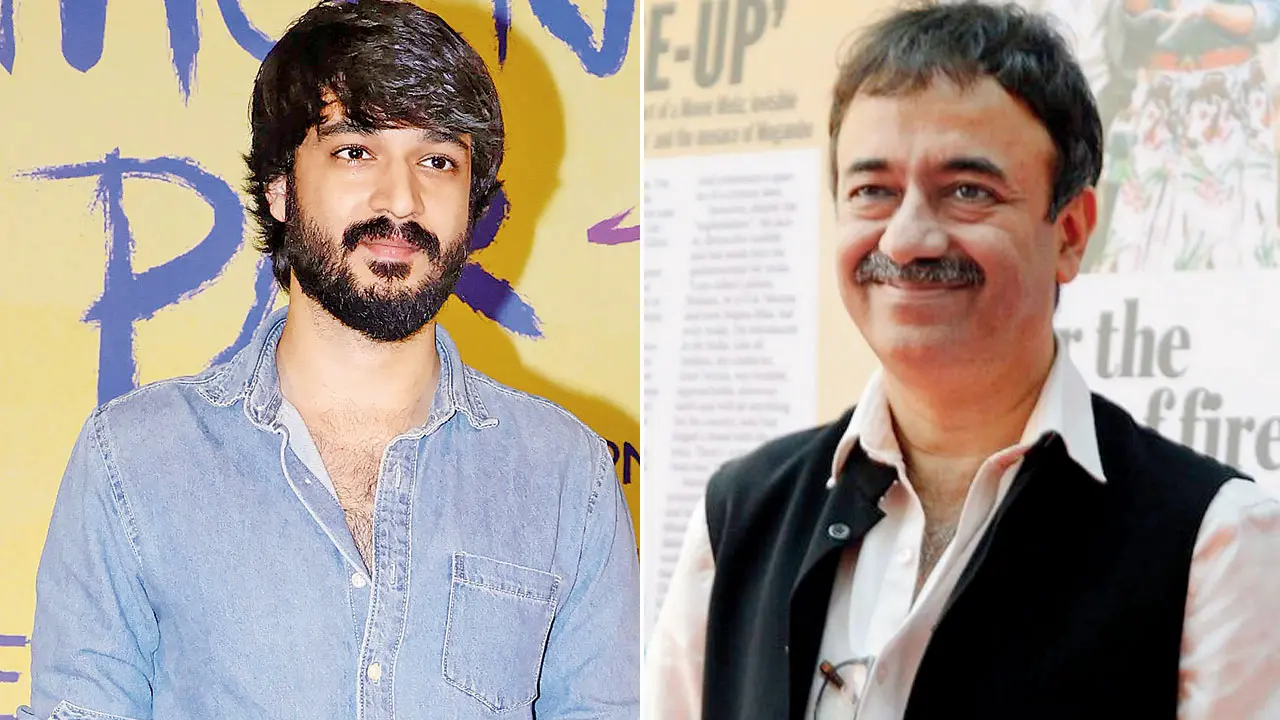
Sources say Pritam Pedro, which marks Rajkumar Hirani’s first web series and his son Vir’s acting debut, will drop online in May
Priyanka Sharma (MID-DAY; March 10, 2026)
Joining the list of newcomers making their acting debut in 2026 is Vir Hirani, son of filmmaker Rajkumar Hirani. If things go as planned, the new kid on the block may appear on screen as early as this summer. mid-day has learnt that Vir’s maiden series, ‘Pritam Pedro’, which also marks the filmmaker’s first web offering, is being lined up for a May release on JioHotstar.
A source revealed, “The cyber crime thriller was originally mentioned in the streamer’s 2025-26 slate. But as work on the series went on for long, it is finally arriving this May.”
‘Pritam Pedro’ sees Arshad Warsi portray an old-school cop, compelled to team up with Vir’s young officer, who is a computer geek and uses technology to solve cases.
Rajkumar, who serves as the co-producer and showrunner, had originally cast Vikrant Massey in the role of the young cop. The actor, however, had to exit the project. “Vir wasn’t supposed to be launched with ‘Pritam Pedro’. But during casting changes, Hirani felt Vir could fit in as a young tech geek,” said another insider.
----------------------------------------
Vir Hirani will also be seen in director Shakun Batra’s next, an OTT film that is expected to roll soon
Ali Fazal teams up with Shakun Batra for a new film
9:55 AM

The movie will explore the impact of social media on modern-day relationships
Renuka Vyavahare (BOMBAY TIMES; December 9, 2025)
Actor Ali Fazal, who is currently juggling a tight schedule with Mirzapur: The Movie and Aamir Khan’s production Lahore 1947, is now making headlines for an unexpected new collaboration. Industry sources reveal that Fazal is set to team up with filmmaker Shakun Batra for his next project, sparking buzz across the industry.
The speculation intensified after Ali shared a cryptic Instagram Story reading, “It’s a wrap,” hinting at the completion of a project that had not been publicly announced. According to insiders, the actor has been quietly working on a new film with Batra, the director known for Gehraiyaan and his signature, emotionally layered storytelling.
The upcoming film is said to revolve around the evolving and often chaotic realm of social media—its pressures, contradictions, and its influence on modern identity and relationships.
A source close to the development shared, “Ali has been working on something very exciting. His ‘It’s a wrap’ post has only added fuel to the fire. This collaboration with Shakun Batra goes deep into the impact of social media on personal lives. It’s one of Ali’s most unique projects yet.”
For me, AI is a tool, not an author-Shakun Batra
10:32 AM
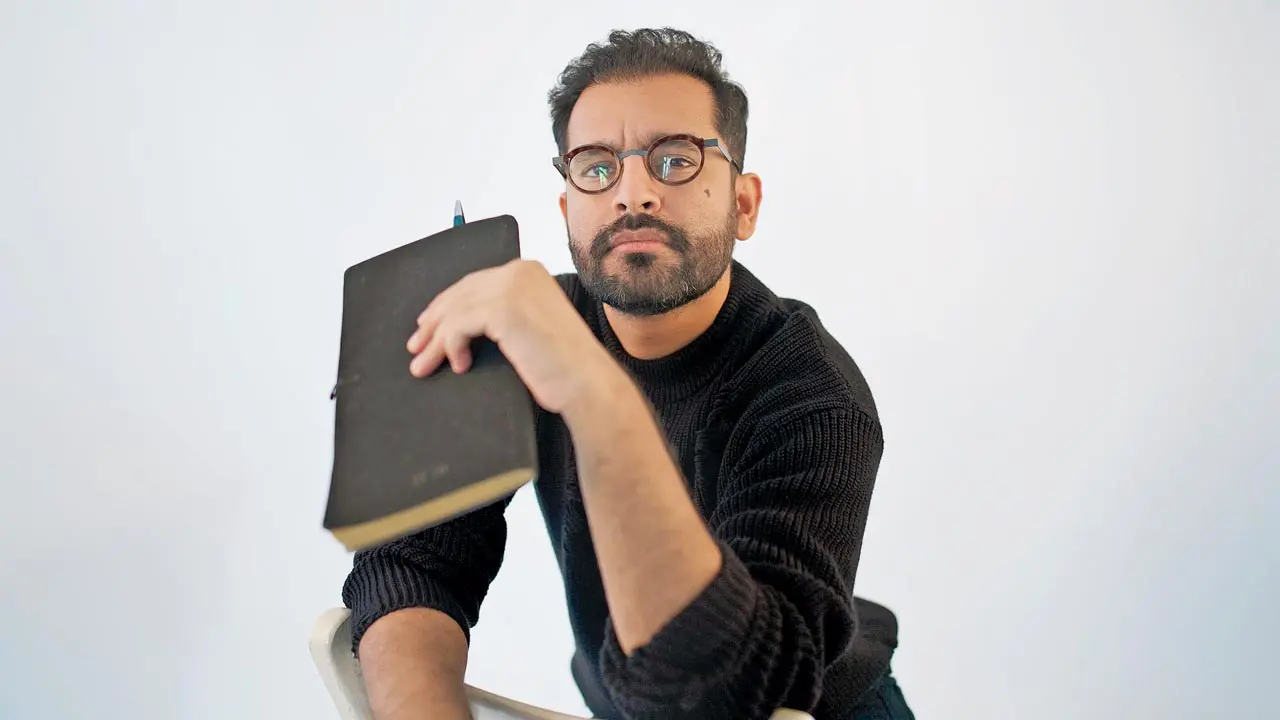
As one of the judges at the city’s first-ever AI Film Festival, director Shakun Batra discusses benefits of the technology and the criticism it faces
Priyanka Sharma (MID-DAY; November 13, 2025)
Artificial intelligence (AI)-powered films have already become a reality, so a film festival dedicated to them was only a matter of time — and it has finally happened. On October 31, India’s maiden AI Film Festival, the Mumbai AI Filmmaking Festival (MAFF), was held at the Royal Opera House, Mumbai. The three-day festival featured 15 AI-powered short films by creators from across India and around the world. Director Shakun Batra, who served on the festival’s judging panel, is thrilled that, for the first time, there is a platform in the country that allows filmmakers to “play, fail, and find their voice.”
“This feels like the beginning of something real for the AI filmmaking ecosystem in India. It’s not about hype, it’s about access. For the first time, filmmakers who aren’t from traditional film backgrounds are experimenting and being seen. That’s a powerful start for any movement,” he says.
Batra was joined by filmmakers Ram Madhavani and Karan Anshuman, and actors Kunal Kapoor and Abhay Deol, among others, on the panel, which awarded one of the 15 films the top prize of Rs 20 lakh.
The festival — curated by Hardeep Gambhir and co-organised by Chandan Perla — follows close on the heels of the première of JioHotstar’s AI-powered series Mahabharat: Ek Dharmayudh. mid-day had earlier reported that Maddock Films is developing an AI film for its horror-comedy universe (Woh AI hai, woh kuch bhi kar sakta hai, 25/10/2025).
So, is the industry staring at the possibility of artificial intelligence becoming an integral feature of Indian filmmaking, we ask Batra. “It’s inevitable,” he replies, before adding, “But the question is how. The best use of it won’t be to replace artistes, but to expand what’s possible, to make the ambitious more accessible, and the intimate more expressive. If we approach it with intention rather than fear, it can actually deepen the craft.”
Many creators, who are otherwise at the mercy of a producer’s backing, argue that AI enables them to be independent. It only requires the technology to bring their vision to screen. Batra, who directed an AI-powered five-part series earlier this year, agrees and calls AI “a great equalizer if used with the right intent.”
Batra might be a staunch endorser of AI-integrated cinema, but louder are the voices of its critics, who have compared AI-powered storytelling to creative theft, claiming it lack emotions and devalues labour. While Batra acknowledges the criticism, he believes AI cannot define a filmmaker and can “only replicate technique, not soul.” He says, “The soul still comes from the filmmaker — from intention, choices, and emotion. For me, AI is a tool, not an author.”
Did you know?
Shakun Batra created a five-part film series, ‘The Getaway Car’, on X with Google Gemini and Google’s advanced AI video generation model.
Job loss for actors
Shakun Batra believes that both actors and AI can co-exist. “Nothing can replace the feeling of directing an actor and watching them bring a moment to life. No technology can replicate that exchange and spark. It’s what reminds you why you fell in love with filmmaking in the first place,” he says.
Cinema and AI: As AI-made series hit OTT, filmmakers weighs creativity against convenience
3:38 PM

For aspiring actor Vinayak Vasudeva, the biggest loss from AI isn’t employment, but individuality. Pic/Nimesh Dave
As an epic AI-made series hits the OTT screen, questions arise —filmmaking may get cheaper, but will it lose humans in the bargain?
Tanisha Banerjee (MID-DAY; November 2, 2025)
When Mahabharat: Ek Dharmayudh recently rolled its credits, there weren’t 300 names listed as is typical for a mainstream epic in India, but just 15 to 20.
On one hand, this is a mythic story retold; on the other, it is a new business model. This was a series made via artificial-intelligence-driven workflows, where massive crews are replaced by algorithms and lean teams.
Morgan Stanley Research projects that GenAI can trim overall media-production expenses by about 10 per cent and cut costs in television and film by as much as 30 per cent when the technology will be fully integrated into scripting, pre-visualization and post-production workflows. The question at the heart of this transformation is, is AI poised to become Bollywood’s biggest cost-cutting tool? For some filmmakers, it promises creative liberation, enabling stories without giant budgets. For others, it signals an industrial shake-up of seismic proportions.
This AI-reimagined series has opened the floodgates of a new era, but the real disruption is already unfolding in the backrooms of production studios. Across the globe, AI tools are quietly trimming timelines and budgets. Indian studios, too, are adopting these systems; a 2025 Broadcast and Film industry report estimates that AI could reduce overall production costs by 20–30 per cent by 2026, especially in post-production and set design.
For filmmaker Shakun Batra, who founded the experimental studio Jouska, AI is an invitation to rethink access apart from being a technical shortcut. “For Indian cinema, I think AI opens up a space for risk. We’ve always had incredible storytellers, but access — financial, logistical, or geographic — has been a real barrier. It creates a space where experimenting at scale becomes possible,” he says. His own experiments began out of curiosity but soon evolved into a hybrid workflow model where human storytelling meets algorithmic precision.
In traditional filmmaking, hundreds of people handle lighting, costume, and continuity. With AI-assisted systems, Batra envisions small, agile teams capable of producing near-studio-quality films for a fraction of the cost. The technology, he argues, may finally give independent filmmakers a seat at the table, giving access to what was once an exclusive, capital-heavy industry. Globally, studios are calling it a “business reboot.” In India, it’s beginning to look like a creative revamp.
Pre-visualization that used to take three to four weeks will now be completed in less than five days. Crowd simulations were once considered a logistical nightmare requiring hundreds of extras. Now they will be generated by neural renderers that create lifelike digital bodies, moving, emoting, and even reacting to camera angles. Lighting grids that took an entire crew half a day to set up will now be mapped virtually through AI-led scene design tools like Wonder Dynamics and Runway.
The result is staggering time compression. Where a traditional shoot could span 90 days, AI-assisted workflows are reducing production schedules by up to 40 per cent according to the Broadcast & Film industry report. India’s AI-in-entertainment market is projected to grow at 22 per cent annually through 2030, with potential savings of '70–80 crore on large-scale productions as stated in Pwc’s 2024 Entertainment and Media Outlook.
Batra describes it as “a meeting point between art and algorithm.” His teams run like creative start-ups where AI handles the grunt work, freeing humans to focus on taste, pacing, and emotion. A Rs. 100-crore fantasy once requiring multiple studios and financiers could now be visualized for Rs.. 30 crore or less. And that doesn’t just save money. It redistributes power. The question is no longer who can afford to tell a story, but who dares to.
For all the speed and savings that AI promises, a debate runs beneath the surface about what is lost when technology begins to stand in for the human touch. Actor and director Anshuman Jha, who has spent nearly two decades in cinema, calls AI “a music box pretending to be a violinist.”
“Artificial intelligence may perfect imitations,” he says, “but it can never capture the tremor of a human heartbeat. Breath is at the base of acting where every emotion has a rhythm, every performer a pulse. Replace that with code and the notes may still play, but the soul that wavers between them disappears.”
Jha sees the value in AI-assisted VFX and animation. But to use it to make a film from scratch — devoid of a set, tangible costumes and human faces — is simply a shortcut. “It’s laziness if used 100 per cent to create,” he says. “AI can function off information, but filmmaking is built on knowledge which you earn through experience, not through prompts. In today’s age, you can shoot a film using a mobile phone. Filmmaking is hard work. You can’t find a short cut way out of that.”
Addressing the loss of imagination and sensitivity of a human, Batra comments, “Yes, people will use AI to outsource creativity. But honestly? That’s the laziest way to use these tools. AI can speed things up, yes but that doesn’t mean it brings meaning. That still has to come from the filmmaker. For me, the human touch isn’t just about emotion—it’s about decisions. Why does a scene pause? Why does the silence matter? These are questions AI can’t answer unless we feed it something real to begin with.”
Jha’s critique points to a cultural crossroads. AI filmmaking is undeniably cheaper and faster, but the danger lies in what those efficiencies normalize. A creative process where irregularities like the slight tremor in a voice, the unplanned shadow in a frame, all get edited out in pursuit of polish. As the industry leans toward automation, Jha reiterates that, “at best it is a tool to make the process easier, but it can’t replace the human connect in traditional filmmaking.” In this new cinematic economy, the question is whether the stories will still breathe.
Similarly, the bustle of a set with its tailors stitching, brushes sweeping, fabrics rustling may be replaced by keyboards and prompts. For costume designer Rick Roy, this efficiency carries a cost. “Art has always been a human creative expression of emotions,” he says. “With AI, it’s visual, algorithmic, and devoid of humanness.”
Roy’s concern is anatomical. The way silk moves under studio lights or the quick fix of a safety pin before a take can’t be coded. Yet he’s pragmatic about what comes next. “If AI takes over, we’ll have to adapt. Designers will move from stitching to guiding — learning to teach AI what to create.” The craft, he believes, will survive as long as physical filmmaking does; the designer may just evolve into an AI stylist, a curator of digital texture and silhouette rather than cloth and thread.
Makeup artist Anuradha Raman, a decade into her career, sees a similar fault line. “AI can replicate faces with eerie precision,” she says, “but it loses the rawness that imperfections bring.” For her, makeup brings about emotional scaffolding. “When an actor wears a scar I’ve created, it changes how they perform. AI symmetry doesn’t bring the rawness to one’s character.”
The first revolution in Indian cinema was perhaps the arrival of colour, and the second might just be code. Author Amish Tripathi, who has watched AI transform video game development through his upcoming title Age Of Bhaarat, calls it “the next leap in storytelling logistics.” He’s not talking about automation as replacement, but augmentation. “AI won’t replace creatives,” he says, “but creatives with AI will replace those without it.”
While labour in the film industry may continue to have jobs, each stint will get shorter. For Tripathi, the promise lies in scale. What took game developers two years can now be done in five months. “Your biggest cost is time,” he explains. “If you’re paying people monthly, cutting that timeline changes the entire business.”
In film, that means a writer in Bhopal or a regional director in Kochi could now build an AI-rendered world and walk into a studio meeting with a 20 minute proof-of-concept — a tool once reserved for those with millions in pre-production funds.
Every technological leap in cinema carries its shadow. AI’s efficiency is rewriting the economics of labour. Actor Vinayak Vasudeva sees the shift as more existential than financial. “Already our mainstream cinema is made for reels. Visuals that are flashy, fast, and give you an easy dopamine,” he says.
“We’re AI’s ideal customers because what actors hesitate to do can now be generated. An item song without paying anyone for it — that’s hard to think about.” For him, the biggest loss from AI isn’t employment, but individuality. “AI can’t bring emotion or human complexity. Acting is built on individuality, which is everything that AI lacks.”
Tripathi compares this to the transition from practical effects to CGI. “There was panic then too. However, with computer graphics coming in, people’s imagination became even bigger. Stories that weren’t even attempted started being made possible.” The same may hold true here. As AI lowers costs, it could multiply the number of films being made. The industry may lose some roles but gain entirely new kinds of creators.
When Shakun Batra looks ahead, he sees not machines replacing artistes, but a new industrial chain forming around them. “We’re already experimenting with hybrid workflows that bring traditional filmmaking and AI together, not as opposites, but as collaborators,” he says. “The hope is to find a balance that’s not just efficient but creatively honest.”
Globally, that vision is already taking shape. Netflix is using AI to forecast content success and tailor thumbnails to viewer emotion; Disney’s virtual production units like StageCraft cut shooting costs by up to a third. India has always been at a disadvantage globally in terms of graphics, and perhaps this will even out the playing field. Indian studios are watching closely. The Broadcast and Film report estimates that AI-driven production could add nearly Rs, 5000 crore to the media economy by 2030, spawning an entire ecosystem of AI designers, creative engineers, and virtual production specialists.
Yet, the irony is picturesque. Mahabharat, a 5,000-year-old tale of gods and men, has become the country’s first AI-made epic. The technology that claims to simulate emotion has retold the story that once defined it.
Spot boy Pinto, who fortunately did not realize that the advent of AI may cost him his job, said, “If there is no work here, we’ll simply go back to our hometown and take up farming.”
Perhaps the question for India’s film industry isn’t whether AI can make better movies, but whether it can still make us feel. If cinema is the art of human reflection, how much of that humanity are we willing to trade for cost-effectiveness?
Shakun Batra has made me much more independent as an actor-Ananya Panday
8:48 AM
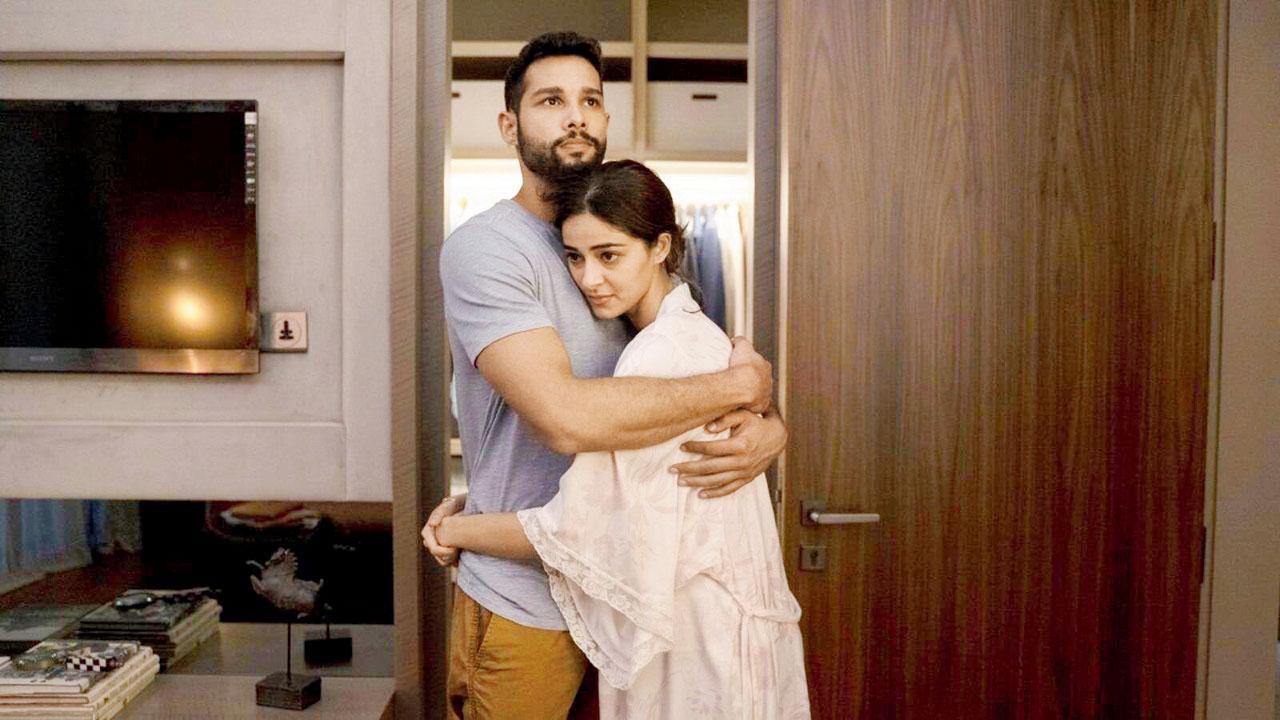
Vying for Best Supporting Actor: Film gong at mid-day and Radio City Hitlist OTT Awards, Ananya recounts how Gehraiyaan director helped her play the emotionally complex role
Priyanka Sharma (MID-DAY; February 21, 2023)
When filmmaker Shakun Batra approached Ananya Panday, only two films old then, for Gehraiyaan, the actor was surprised. “When he called me, I said, ‘I’ll do anything.’ I just wanted to work with Shakun,” she recollects.
However, her initial excitement turned into doubts when she read the script of the noir relationship drama. “I was not expecting it to be such a complex film. But once I lived with it for some time, I felt that I had to do it,” she recounts.
Gehraiyaan, also starring Deepika Padukone, Siddhant Chaturvedi and Dhairya Karwa, studies infidelity and betrayal through two modern-day couples. Panday walked the fine line between naiveté and maturity as she portrayed Tia, whose fiancé cheats on her with her cousin. Her performance has earned her a place in the Best Supporting Actor: Film category at the mid-day and Radio City Hitlist OTT Awards.
“The character is a little older than I am in real life. Also, she was going through something that I’ve never personally experienced. I was nervous about how I would make it believable, and have a sense of maturity while playing it,” says the actor, who then found an able guide in her director.
Batra held multiple workshops with the actors before shooting the film. “We had a lot of conversations, did many workshops and readings. So, by the time I reached the set, I felt prepared. Shakun helped me break away from the [stereotypical notions] of acting, and tap into something internal. He has made me much more independent as an actor.”
Cast your vote for the Hitlist OTT Awards
Ananya Panday has been nominated in the Best Supporting Actor (Female): Film category for Gehraiyaan.
The other nominees are:
- Bhumi Pednekar (Govinda Naam Mera)
- Juhi Chawla (Sharmaji Namkeen)
- Radhika Apte (Monica O My Darling)
- Shefali Shah (Darlings)
- Swastika Mukherjee (Qala)
There are 16 categories that the public can vote in. Log on to www.radiocity.in/hitlistott to cast your vote.
Voting lines close on February 22.
What's a hit on OTT? Amid lack of any public data, makers and actors ponder the definition of success in web space
8:09 AM

Rishabh Suri (HINDUSTAN TIMES; June 11, 2022)
The one major thing that differentiates OTT and theatrical releases is the absence of numbers. There’s no box office online, and the entire focus is on the kind of content. So then, what defines a hit project on the web? No data gets released regarding the number of viewers as well.
Filmmaker Shakun Batra, whose film Gehraiyaan released directly on an OTT platform, had told us earlier, “I have the same question. Given how the industry is moving forward, we will have to define a new metric of success for films on OTT. Now, it is generally word of mouth like, ‘Oh a lot of people watched it’. I wouldn’t be surprised if we soon get metrics [for web space] that can be compared.”
For now, however, that seems unlikely. And actors are only too happy that people will watch something not just based on the hype around how much money it has earned. Actor Maanvi Gagroo, who has done popular web shows, such as Tripling and Four More Shots Please! (both have third seasons coming up), shares, “I have to rely on audience reactions to know whether my show has worked or not. And that’s a big change that social media has brought about. Earlier, there were very few avenues, and we’d get to interact with our viewers only through middlemen. Now, I can talk directly to people, though it’s still filtered.”
Mozez Singh, who directed the medical thriller Human, says they do get access to internal data through the OTT platform, but it’s never released. “I can just can say that the amount of people who reached out to me, the way they reacted to it... it was utterly overwhelming. I never experienced such adulation for my work, so I can call it a hit,” he tells us.
There have been instances where makers had allegedly fudged box office numbers to show inflated figures for their films. So, Sharib Hashmi feels things are more “transparent” on web. The actor, who has done popular OTT shows such as Asur and The Family Man, adds, “The reactions on social media are enough to know how well a project is doing. It’s better than any numbers... No talk about collections is good. Hit ya no hit, baat kaam ki hoti hai.”
Rasika Dugal concurs as she states, “The audience is very smart today. They know what they like and what they don’t. It’s encouraging to see that they watch [something for] the content and don’t focus on anything else. That’s what makes a project hit on this medium.”

Is Shakun Batra’s series on Ma Anand Sheela shelved? Here’s what he says
8:32 AM

Rishabh Suri (HINDUSTAN TIMES; April 4, 2022)
There was a buzz around director Shakun Batra’s web series on the life of controversial Godman Osho and his disciple, Ma Anand Sheela. Actors Alia Bhatt and Aamir Khan were rumoured to be headlining the project, but the buzz fizzled out soon.
Ask Batra about it, and he says, “The story is very close to my heart. Of late, I didn’t have the time, as I was finishing Gehraiyaan. It’s something I do want to venture back into. I don’t know the timing of it, I don’t know if it’s next or after that, but it’s close to me.”
Like this web series, the 39-year-old’s choice of film subjects has always been offbeat — Ek Main Aur Ekk Tu (2012), Kapoor & Sons (2016), and Gehraiyaan, for instance. Does he ever get advised to make more mainstream films? “The idea is to never make mainstream [films], it’s always about what’s playing on my mind, what I feel and the story I am keen to tell... I am fortunate to have people who support me. Whether a film becomes mainstream or not, that’s something you can never know. A film gets accepted [by the audience] all of a sudden, and that makes it mainstream,” says the director.
He cites the example of Kapoor & Sons, which dealt with subjects like LGBTQI+ and infidelity themes. “It was considered extremely independent, but did much better than some films considered mainstream. So, I think we have to tell interesting stories. The films that I make will never be massy or entirely independent. I exist somewhere in between. With every film, I get surprised, which side the audience will put it on,” he ends.
People are too judgemental, says Pavleen Gujral on response to Gehraiyaan
8:45 AM

Rishabh Suri (HINDUSTAN TIMES; March 2, 2022)
Actor Pavleen Gujral had a small role in Gehraiyaan (she played actor Deepika Padukone’s mother), but she’s been happy with the response. “I start the film and I’m there throughout, in bits and parts. I am overwhelmed with how things are going,” she says.
Prod her about the polarising reviews the film has got and she feels that people are being “a little too judgmental”. She adds, “We are living in the 21st century. I am not saying whatever was shown in the film (infidelity) was wrong or right, but such things happen. The film focuses on why such things happen. Rather than what happened, we should appreciate the gumption that the filmmakers have shown.”
Gujral agrees that today, in the times of social media, people get extreme, and nasty, too. That’s why the tonal shift of the film from infidelity to thriller was received in a polarising way: “I went for the screening and didn’t think it would get this kind of a reaction. I told Shakun (Batra; director), ‘I can’t get over the film post interval.’ After that, I saw people talking about an entirely different topic. People are behaving like pigeons, with their eyes closed.”
Vikkramm Chandirramani claims that the plot of Gehraiyaan is a copy of his short film
8:46 AM

Juhi Chakraborty (HINDUSTAN TIMES; February 15, 2022)
Writer-director Vikkramm Chandirramani has slammed the makers of Gehraiyaan, alleging that they took inspiration for their plot from his 2019 short film, The Perfect Murder.
Chandirramani, who also took to social media to point out 10 detailed similarities between his film and the Shakun Batra-directed project, tells us that no permission was sought from him.
“After Gehraiyaan was released, people started calling me to tell me how it was similar to my film. When I watched it, I felt the same. But, nobody asked me before (making this film).”
He further says that if the makers had asked him, he would have been okay with giving them permission to take inspiration from his 18-minute short film.
“They have credited four writers for the movie. But I was the sole writer of my film. I don’t expect to hear from them. I doubt they will get in touch with me to sort this out,” he adds.
He reveals that his film won the Best Director of a Foreign Language Short Film award at the South Europe International Film Festival held in Spain in May 2019, the Best Drama award at the NCCC Film and Animation Film Festival held in Niagara County, USA. And it has got over four million views on YouTube.
So, is he planning to take any action against the production house? “It is such a big production house, rooted in the industry, so I cannot do anything. I am only pointing it out because somebody has to say it,” he ends.
We reached out to the makers of Gehraiyaan for a comment, but were not met with a response.

I got a message on Instagram from Gehraiyaan director Shakun Batra, says Doobey composer OAFF
8:12 AM
The last few weeks have seen the Indian independent music scene make a strong presence in Bollywood. Those who struck gold tell us how it happened
Nidhi Lodaya (MID-DAY; February 13, 2022)
For anyone who has been active on Instagram recently, the last few weeks have been owned by the songs of this month’s Amazon Prime release, Gehraiyaan. The title track and Doobey have made it to every second Reel. Interestingly, not Bollywood daddies, but an indie Mumbai-based composer-producer is behind it. “I got a message on Instagram from Shakun Batra [Gehraiyaan director],” recalls Kabeer Kathpalia aka OAFF. Batra said he had heard and liked his and partner Savera Mehta’s work.
This pair isn’t alone. Singer-songwriter Maalavika Manoj aka Mali, who divides her time between Chennai and Mumbai, has sung Maange Manzooriyan, a track in the upcoming Bhumi Pednekar and Rajjkumar Rao-starrer Badhaai Do.
Manoj landed the opportunity through music director Khamosh Shah with whom she had collaborated on an advertisement. “He called me during the lockdown saying that he was working on a film for which he wanted to pitch my voice,” she recalls. “For them to take a chance on someone new is actually quite refreshing,” she thinks. Manoj, who writes the lyrics to her songs, says it was novel to just turn up and sing.
Delhi-based singer-songwriter Kamakshi Khanna was on the vocals for Chhan Chhan Chhan from Kaun Banegi Shikarwati, Zee5’s latest series. Khanna has been part of the song Tere Jaisa from Kota Factory Season 2, but for Kolkata-based pop duo Parekh & Singh (Nischay Parekh, Jivraj Singh), it was their first brush with Bollywood when they came on board as composer-producer for the song. “Our entry point was through social media,” says Nischay Parekh. “We have been making music for a while and Ananya Banerjee [the lyricist] was a fan.”
While it seems that social media is the new place for musicians to get noticed, Manoj thinks the scene is crowded, cutting down your chances. “You have to know how to do things differently, tag the right people and be consistent if you wish to earn the attention of producers over time. Luck also plays a part.”
Parekh agrees that the bubbles in which Bollywood and indie music once existed have popped, and a healthy osmosis is underway. “We have been making the music we want to make, and Bollywood is now approaching us from a perspective that says that they like what we do artistically, instead of trying to change what we do.”
With Chhan Chhan Chhan, Parekh & Singh got to experiment since the show is set in Rajasthan. This required that they explore Indian instrumentation, something they say they wouldn’t do for the Parekh & Singh sound. “In independent music, we are usually asking ourselves all the questions and we don’t have genre limits to expand our horizon. So, it is nice to get somebody else into the picture to challenge our creative process.”
The big learning, he says, has been that, it’s important to edit your work. Khanna agrees. “There is no such thing as the final version that we can control. What actually ends up playing on screen is what’s final, and this has meant that we learn how to detach themselves from their work.”

Maalavika Manoj
Kamakshi Khanna. Pic/Nishant Singhani
I hope people tell stories that are in their hearts without fear-Deepika Padukone
8:10 AM

Madhureeta Mukherjee (BOMBAY TIMES; February 9, 2022)
We have witnessed many shades of Deepika Padukone unfold on screen — glamourous, romantic, brave, real and royal. And every time, she comes shining through, revealing yet another facet of her talent and her willingness to wade through unvisited territories as an actor. Even if that means going into the deep end, Deepika takes the plunge. With Gehraiyaan, releasing on Amazon Prime Video on February 11, she is taking one of her deepest outings ever. In a conversation with us, she talks about her fascination for relatable stories, what prompts actors to make brave choices, and how we are constantly finding ourselves in everything that we do. Deep, huh? Read on...
You have featured in films like Cocktail and Tamasha, where relationships and love have been explored, but not entirely in the conventional way. Now,we will see you in Gehraiyaan, about which you have said, ‘This is my first of its kind.’ Would you say that you get drawn to subjects that delve into this space with a certain honesty and realism, while breaking barriers on various levels?
I think with Gehraiyaan, I really wanted to work with Shakun Batra and that was the starting point for me. Beyond that, even while growing up, I was drawn to stories that were more relatable and realistic. I think it comes from my fascination with everything that is as close to real life as possible. Even if I am sitting at home and watching a film on OTT, I am more likely to watch something like this versus maybe a fantastical sort of film. In my 15-year-long career, I have done all sorts of films — from a Chennai Express and Yeh Jawaani Hai Deewani to Piku and now Gehraiyaan, and of course, I enjoy all of them, but this genre, specifically, where characters are true to life has a special place in my heart.
You have also played characters that are set in a certain period, which are intense — with the heavy costumes, dance sequences and extensive scenes. While a part like that has its own challenges, would you agree that a role like this one is more internal and intimate, and is set in a space where you can draw from your own life experiences?
That’s the process of an actor. I think you live life and when you are given certain characters, you draw from various experiences. I think that is the natural process of acting. Sure, there are times you don’t relate to certain situations and characters, but that’s your job as an actor — to make it believable, authentic, real and humanise a character.
There will be times when you will get roles and characters that you can relate to, and there will be times you won’t. It certainly comes from a place of different experiences, and not just relationships. It’s not that just because I am doing a relationship drama, I am drawing from my relationships, or necessarily past romantic relationships. You draw from life. Hence, I feel it is important for actors to lead a life that is full of different kinds of experiences, and eventually, from some of that experience, engagement or interaction with someone, you can draw bits and pieces and put them into the work you do.
Shakun Batra roped in intimacy director Dar Gai, who was present on the shoot. Elaborating on that process, during my chat with him, he explained that it is literally about creating a space where people can openly talk about it, as opposed to being shy. How much of that effort, which is a first of its kind for our cinema, helped you pull off this character?
Yes, it is the first time an Indian film is doing something like this, but at the same time, at least in my head, it’s not such a big deal that we have an intimacy coordinator. If we were shooting a song sequence, we would have a choreographer, likewise, if we were shooting an action sequence, we would have an action director on set. So, if we are doing a film that has intimacy, you are going to have an intimacy director on board. So, for me, it’s not any different from any other sort of specialization that you need to bring on to make the characters and story as relatable as possible. But of course, you feel safer. Once you know what you are comfortable with, it’s easier during execution.
Given that this is a zone you have never stepped into before, and given how intimate the story is in the way it is narrated, what was your first reaction when you read the script?
When Shakun narrated the script to me in London (where we were shooting for 83), I remember allowing it to sink in. It’s not that I haven’t played similar characters before, like Veronica in Cocktail, and Piku, which was even closer to real life. However, this was far more nuanced and layered. So, it took me a while to commit to, as I knew that this would take a lot of my mental and emotional energy. But I remember being fascinated by the story. Well, the story has also evolved from there. When you make stories like this, it’s not like a biopic where you don’t have much room to play. In films like this, where the characters are real, you can always tweak, add and refine it. The script that I had heard two years ago was slightly different, we added a lot more layers to it and worked on it during the lockdown when we had time on our hands. I remember falling in love with my character.
The film has an interesting mix of actors — Siddhant Chaturvedi, Ananya Panday and Dhairya Karwa — a fairly new bunch of talent who are in awe of you. Something that they even spoke about in their interviews. How did the equation warm-up on set, as it is evident that the characters needed to share a certain kind of chemistry and warmth?
It was certainly something that I was cognisant of, as at any point, I didn’t want to make any of them feel intimidated or threatened. In fact, I gave Shakun the idea that we all go to Goa earlier and hang out, get to know each other and keep reading the script, as it is the kind of film where the relationships feel extremely real and organic. I would like to believe that I made them feel as comfortable as possible and not think of me with any preconceived idea of who I am. And to sort of connect with me the person, instead of the idea of me that they might have.
Did you do anything specific to help them open up, ease their pressure, or just be able to connect with you?
No, not really. Also, I am not the kind of person who walks into a movie set with the feeling that you have to take me seriously or that I am this actor with 15 years’ experience. I would like to believe that I don’t carry that kind of energy, whether it is on set, or while hanging out before or after shoot, or even during prep. I wanted them to embrace the person that I was. A large part of me is also like that, as I like being very normal. In my routine and the way I am, there are no frills. So, I didn’t have to do anything different. I was just being who I am.
In recent times, we are gradually seeing a shift where various such shades of relationships — complex, confusing, deep, fragile, dark — are being depicted in our cinema and our filmmakers are not as fearful of digging deeper into the human psyche and reflecting the same in their stories. Do you think this change has come about with the evolution in the audience’s choices or that new-age filmmakers now have the courage to venture into these spaces?
I think it is the audience that is giving us cues and telling us that we are ready for content that we haven’t seen before. I am certainly taking my cues from the audience. In fact, I feel they often shun the predictable and the obvious, and they are constantly searching for something new and different. I think that is where actors, directors and writers today are getting the confidence to go ahead with their ideas and being brave in making those decisions and choices.
The pandemic has changed so much for so many people around the world. How much has life and the kind of choices you make for yourself changed — professionally and personally?
The choices I make as an actor haven’t really changed. I was doing this film even pre-pandemic. The difference is that today we can release a film like this on OTT because there has been a boom in the last two years. So, was India headed there anyway like the West was? Certainly, but I think the pandemic only accelerated the growth of the OTT space in India. We didn’t set out thinking this film would be an OTT release, it was meant to be a theatrical release. When we started out two-and-half years ago, no one was thinking of OTT in that sense. I remember doing a meeting with Karan Johar (producer of Gehraiyaan) as he thought that I would resist it. I know he wanted to meet me to convince me, and he was pleasantly surprised when the meeting got done in 30 seconds. He said that he believed that this film was best for an OTT release. I told him, ‘Karan, even I have come here to tell you that this film is best for OTT.’ I would have done this film anyway, so I don’t think the choices have changed. On a personal level, of course, a lot has changed for a lot of people, like the fragility of life and the uncertainty of it all. Now we are more about living in the moment, gratitude and work-life balance. It has opened up people’s minds to a lot more. It’s been extremely rough on people around the world, but hopefully, there is only something to learn from this.
Gehraiyaan also speaks about how we are in many ways continuously finding ourselves. Do you see that process, that kind of evolution happening in your life and relationships continuously?
Of course, we are constantly finding ourselves in everything that we do. In different experiences, relationships, and sometimes, even in crisis situations, you learn so much about yourself and the people around you. So yes, the journey ought to be like that, otherwise, you are going to stagnate, if you are not going to look inwards, learn, grow and evolve.
Do you think this film will pave the way for more mature stories that can be told with sophistication and realism?
Hopefully, people will continue to tell the stories that they want to. Firstly, the audience is ready for it, secondly, you have umpteen number of platforms to tell these stories. I hope people tell the stories that are in their hearts without fear.
This notion that a big film is for the big screen & a small film is for the small screen, that is going to change-Shakun Batra
8:33 AM
Madhureeta Mukherjee (BOMBAY TIMES; February 8, 2022)
He doesn’t claim to make tentpole films replete with elaborate song and dance moments. However, his stories are infused with several tender, yet emotionally powerful moments to hold on to, and in his own words, “It takes you on an emotional journey and makes you connect with characters and relationships.”
His last directorial was Kapoor & Sons, and now, the upcoming Gehraiyaan, an emotional and intimate drama that releases on Amazon Prime Video on February 11, seemingly dives into the deep end of love and relationships. And yes, it’s complicated. Read on…
From what it appears, the film delves with a certain maturity into the complexities and messiness that creep into a relationship. Has the attempt been to give a new voice to the way grown-up relationships and love is depicted on screen?
Yes, that was the intent from the word go. I had been thinking about the kind of oversimplified version of relationships we have been watching, and I felt that I wanted to make a grown-up film about grown-ups and see relationships from where I am today, at 40. I felt like all relationships came across like they were in their twenties. I constantly felt starved for stories that reflected more mature and complex relationships. That was a beginning point for me. I hope that comes across.
The last line in the trailer where Deepika asks Siddhant, “Are we just messed up people,” and he turns around and tells her, “ Haan, shaayad.” There is no pretence, it comes across with ease on screen, but at the same time, carries a lot of weight and depth. In our cinema,we seldom see characters baring their flaws and broken selves. And, of course, showing infidelity on screen has its challenges. Were there any moments of uncertainty about how it would unfold, what would be the reactions and how far could you go with the idea?
You are right, it carries a certain amount of weight and also gives you an insight into these characters. These are characters in their early thirties who are carrying the weight of their past, and they are aware of it. We wanted to make a film about relationships in your early thirties, and you know, physicality, your body and desires play a huge part. We have shied away from it, including myself, in my first film Ek Main Aur Ekk Tu. This time around, it was very important for me to make sure that I address intimacy in a way that comes from these characters and helps take the story forward. I was scared and shy, and I started reading a lot and understanding how it was being done in the West.
And then, the idea of getting an intimacy director on board came about?
Yes, I came across the idea of an intimacy coordinator in a post #MeToo world, and then, I called my very dear friend Dar Gai, and I brought her on board to collaborate. It made my life easy as we sat down and chalked out a process, routine and workshops. Those things are no different than a trust-building exercise. You create a safe environment for people to feel vulnerable, you create boundaries and understand consent. I was keen to also take a step in the right direction as a filmmaker and try to reform the system in whatever small way we could. As we do more grown-up storytelling, these things like having an intimacy director on board will become a more integral part of filmmaking. Right now, we are talking about it as it’s still new. My hope is to normalise it, so it isn’t a conversation.
In a film where the core lies in the interplay of emotions, I would assume that a lot of spontaneity unfolds on set. Even if there is a very well-etched-out character on paper, eventually, in front of the camera there could be ample room for improvisation, right? That, I guess also explains why your actors have been saying that you are a director of many takes...
Honestly, I am ambitious about where I’d like to see my actors go in their scenes. I want them to go to places where I haven’t seen them before, and sometimes, that doesn’t happen in take 5 or 6. I love this David Fincher (American director) quote where he talks about how we make these huge sets, we write our scripts, actors come and we put them up in hotels, and we are spending thousands of dollars in a day, and it’s not so that everyone can quickly run back. No, you do that so that you have an environment where you can come closest to the best version of the scene and story. I do have my own OCD sometimes, but I also know that my actors are workhorses. They wouldn’t be satisfied if they didn’t get to a place where they felt that they justified the scene. I have a process that is demanding, and I am not apologetic about it. It’s not like we are repeating the same take, we are trying to arrive at a take that is a little more nuanced and textured, and those are the things that I love.
Do a lot of your own life experiences go into writing such characters that are deep and complex?
For me, filmmaking is a way of exploring myself. And I think it would only be a half-interesting profession if I didn’t use the movie to do that for me. It is so fascinating that we do not do 9-5 jobs, instead, we are in a profession that makes us delve deeper into our own psyche and feelings. So, a part of the reason and as hard as it is to come up with a story, I really feel that the most rewarding part of making a film is that it changes you. It has an impact on your life, it changes who you are and makes you come to question things that you didn’t even know you had in your mind. I don’t know if you will ever find an answer to them, but it makes you reflect. I am not saying that you have to make dramas and serious films, but it’s a privilege to know that you have a job that pushes you to delve deeper.
Do you think that in the times ahead, the audience will be discerning about the kind of films that they want to watch on the big screen and what they want to view from the comfort of their homes, and ultimately, that will dictate which medium a filmmaker will choose to release their film?
I feel what will happen is the method of success will change. Right now, we are extremely seduced by the idea of box office as the metric of success. We need to redefine that. A lot of people are still running
after box office numbers, as that gives you a clear idea of how the film is received. Some people don’t want to go the OTT way, and they are like...‘Oh, it should not look like a small film.’ Also, I think that this notion that a big film is for the big screen and a small film is for the small screen — that is going to change. There is also a notion that big stars are meant for the big screen. However, that perception seems to be evidently changing course. Look, we know that the industry will not be how we see it today in the next five years. Instead, the idea is not to fight it, the idea is to open ourselves to change. Am I somebody who has a clear vision of what it will be? No. I think we are all taking a journey together in that direction, and I am 100% open to seeing how things change and the conversations that happen around redefining success. So, I want to be part of this change that is happening. That is what matters, not the size of the screen or the format.
Your film apparently belongs to the domestic noir genre. Now, we haven’t heard of that in the context of our Indian cinema...
I love that genre; it is my go-to thing for movies, at least it was. People are used to putting things in a box and understanding the label before anything, especially, if you are trying to do something that steps out of the conventional. So, it becomes your responsibility to define it for them. When I am pitching a movie, I always come up with these interesting terms that make people go and look up online (laughs!). It is part of my strategy, and it has done well so far. Is this film domestic noir? I would love to know your definition once you have watched it.
Main thoda darr gaya ke itna kya hai picture mein jo intimacy director ki zaroorat pad gayi-Siddhant Chaturvedi
7:29 AM

Renuka Vyavahare (BOMBAY TIMES; February 5, 2022)
On the surface, Siddhant Chaturvedi is a confident newcomer, well-aware of his potential. A writer at heart and a firm believer in eternal love, he finds the cynicism of contemporary times hard to connect with. It was thus tough for the actor to keep his thoughts aside and dive into the complex layers of love and infidelity, as observed by director Shakun Batra in Gehraiyaan. In Gully Boy, Bunty Aur Babli 2 and now Gehraiyaan, which drops on February 11 on Amazon Prime Video, the actor holds his own onscreen, no matter who he shares screen space with. In a chat with BT, Siddhant talks about romancing Deepika Padukone, his career choices and more. Excerpts:
In a recent interview, Shakun Batra said that love has been oversimplified in Hindi films. You’ve been extremely filmy right from your college days. Do you agree with him?
Be it love, choices or consequences, you are conditioned to think a certain way based on the films you watch. I am a diehard romantic who adores Shah Rukh Khan. I am a huge rom-com fan. Our idea of love is shaped by the films we like. For me, it was waiting for that one person your whole life philosophy. Love for me is forever. I always wanted to do a quintessential rom-com, but times have changed. Such love stories aren’t made that often these days. I was on the lookout for an out-and-out love story, and no scripts were convincing enough. I later realised that the stories I expected were nostalgic, but not reflective of the current times. When Shakun offered me this film that gets under the surface of love, I thought to myself, this is a film that begins after Raj and Simran ride off into the sunset. What happens after they get onto that train in the end? Do they feel stuck after the initial heady phase of romance? Do you not feel loved anymore? Gehraiyaan touches upon that layer. It starts off where most romcoms end. It shook me. I had to unlearn everything personally and also as an actor. I had to stop judging because you realise, we all are messed up in our own ways. He made me look within. Having said that, I will never stop believing in the made-for-each-other notion of love.
Be it love, choices or consequences, you are conditioned to think a certain way based on the films you watch. I am a diehard romantic who adores Shah Rukh Khan. I am a huge rom-com fan. Our idea of love is shaped by the films we like. For me, it was waiting for that one person your whole life philosophy. Love for me is forever. I always wanted to do a quintessential rom-com, but times have changed. Such love stories aren’t made that often these days. I was on the lookout for an out-and-out love story, and no scripts were convincing enough. I later realised that the stories I expected were nostalgic, but not reflective of the current times. When Shakun offered me this film that gets under the surface of love, I thought to myself, this is a film that begins after Raj and Simran ride off into the sunset. What happens after they get onto that train in the end? Do they feel stuck after the initial heady phase of romance? Do you not feel loved anymore? Gehraiyaan touches upon that layer. It starts off where most romcoms end. It shook me. I had to unlearn everything personally and also as an actor. I had to stop judging because you realise, we all are messed up in our own ways. He made me look within. Having said that, I will never stop believing in the made-for-each-other notion of love.
How unnerving was it to portray that intimacy with Deepika and make it appear so casual and real on the screen?
In my head, I was like, ‘Wow’ she’s Deepika! How am I going to romance her! She has worked with the likes of Shah Rukh Khan, Ranveer Singh, Ranbir Kapoor. Look at my competition.’ It is a romantic film and I didn’t want people to say, ‘Nahi kar paya.’ When I was heading to Goa, you had asked me about the intimacy workshop. I was panicking at the time because I didn’t know, and you were the first person to tell me about it. I didn’t have an idea at all. Of course, Shakun narrated the story to me and since I was eager to work with him, I said I am on. We knew there was intimacy, but we didn’t know to what extent. The screenplay didn’t particularly mention that because it wasn’t erotic poetry or something. The workshops and readings happened later. Then I got to know that to make ourselves comfortable, we had an intimacy director, Dar Gai, on set. Pehli baar jab maine suna toh thoda darr gaya ke itna kya hai picture mein jo intimacy director ki zaroorat pad gayi (smiles)! But I realised that’s how Shakun likes to work. His portrayal of intimacy isn’t just physical, but emotional and nuanced. The camera doesn’t tell you that look, two people are kissing. It flows organically.
A lot has been said about these rehearsals. How did they help exactly?
It was a team-building exercise, something I even did in Mithibai College when we did theatre. In Goa, all of us did yoga at 7 in the morning, followed by breakfast at 10 am. At noon, we had a body coach who trained us to loosen up, and then we had Dar, who made us understand comfort and consent. These experts should be on every set. There are so many things that I didn’t know about myself. I am extremely shy, but this one month in Goa with all of us staying together and eating together, broke my inhibitions.
What did your parents think of the film and were you comfortable watching it with them?
I didn’t sit with them. I was sitting in one corner and they were in the other. After watching the film, I returned home in my car. I didn’t even travel back with them. I rushed to my room and went to bed. Dad knocked and came in. He wanted to talk about the film because he loved it, but I just wanted this day to pass (laughs!), so we did speak about it later on the phone. That’s when he said, ‘Yeh film samaaj ka darpan hai. Ismay kuch sahi galat nahi hai.’ (It holds a mirror to the society). Koi message nahi de rahe hai hum. The world has changed and these kinds of stories exist.
You have already worked with directors like Zoya Akhtar and prominent banners like Dharma, in a relatively short span of time. As an outsider, are you getting used to the life of a movie star?
I am working with those people who I have looked up to my whole life. I am still in my learning phase, but I want to be approachable and accessible even in the future. Banna toh mujhe hero hi tha pehle se, but I want to avoid the negative parts that come with it. I love it when people love my work and they should be able to tell me that. Actor ban gaye toh, sir ke paas mat jao, unka mood nahi hai... that kind of stuff I don’t like.
Even before I bagged Gehraiyaan, I had told Deepika Padukone that I am going to do a film with her-Dhairya Karwa
8:20 AM

Onkar Kulkarni (BOMBAY TIMES; February 3, 2022)
“I guess I have just been lucky,” says Dhairya Karwa, who bagged an envious part in the upcoming film Gehraiyaan. Four years ago, when he arrived in Mumbai from Delhi, he wanted to be a model. However, the city and his love for Bollywood made him pursue a career in films instead. He calls himself lucky because, unlike many other strugglers, Dhairya, since the time he began in 2016, kept getting interesting roles in reputed projects that helped him learn as an actor and get noticed by filmmakers. His upcoming film Gehraiyaan, which releases on Amazon Prime Video on February 11, features him along with Deepika Padukone, Siddhant Chaturvedi and Ananya Panday.
“I was busy cracking exams to head abroad to study in a business school. People used to ask why wasn’t I trying my hand at modelling,” he says, adding, “Once in Mumbai, the kind of welcome I got made me chase a career in acting. I am happy to have scored roles in films like Uri: The Surgical Strike, '83, which was followed by the web show, Made In Heaven. ”
Dhairya says, “Then, when I was offered Gehraiyaan, it felt like a dream come true. It’s like this big Karan Johar project, getting an opportunity to act opposite Deepika, a chance to work with actors like Siddhant and Ananya and getting to learn under a director like Shakun Batra… it’s like every actor’s dream.”
He adds, “I am not a trained actor. I have learnt on the job. The experience and the time I spent on my initial projects prepared me for a film like Gehraiyaan. Now that I look back, the experience and the confidence I gained from my first two films was necessary for me to be the actor that I am today.”
Apart from his work experience, he is thankful to Karan and Deepika, who made him feel extremely comfortable on set. “When I met Karan for the project, he gave me the biggest and the warmest hug. He told me you are here, and you are here for a reason. You are good, now just enjoy it. Don’t take any pressure and keep doing what you are doing. His words were very reassuring and comforting. As for Deepika, I was just smitten by her. She is everything you would expect her to be and more. We know of her as this humongous star and a fabulous actor, yet she’s so simple and warm.”
Dhairya remembers meeting Deepika at the wrap-up party of '83, in which she played Kapil Dev’s (essayed by Ranveer Singh) wife and the former played Ravi Shastri’s part. He shares, “I remember at the party, people were busy clicking pictures with her. I didn’t do that. At one point, I saw she was all by herself. I mustered up the courage, went up to her and told her I am not going to click pictures with you because I am going to do a film with you. At that time, Gehraiyaan was not even being discussed. When I met her for the first time for this film, she was surprised that we indeed were doing a film together.”
Gehraiyaan is creating buzz for its beautifully shot, intimate sequences. Talking about it, Dhairya says, “The credit goes to Shakun, who’s the captain of the ship. For these scenes, we had an intimacy director on board. Intimacy is not a part of the film for a shock value, but because it is essential to the story. We dealt with intimacy with so much care and sensitivity when we performed these scenes. The set felt so safe and secure for us to express ourselves during these sequences.”
The young actor hopes that the film opens up more avenues for him. He says, “Surviving in Mumbai itself is a challenge and Bollywood is an altogether new field for me. Finding your feet can be challenging. But then everything comes with its own challenges. It is all about your outlook towards it. The nature of the business is that it is going to be disheartening for you as the rejections are always going to be more than the acceptance you receive. However, the rejections are never personal. You need to understand that you didn’t suit the part and hence you didn’t qualify for the project. That’s it. But at the end of the day, we are humans and have a heart. We tend to get affected, and at times, it does break you. Instead of crying over the opportunities that I missed, I celebrate the fact that I got to be a part of three fabulous films. That’s all that matters.”
---------------------------
Teaming up with Deepika in Gehraiyaan, Dhairya discusses approaching director Shakun’s take on infidelity without judgment
Uma Ramasubramanian (MID-DAY; February 3, 2022)
Landing a Dharma film is every upcoming actor’s dream. But for Dhairya Karwa, being part of a Shakun Batra film was a bigger high. The actor, who plays one of the leads in Gehraiyaan, says it was a joy to be directed by Batra so early on in his career. “I have been an admirer of his work. I remember watching Kapoor & Sons [2016]; it’s a film that hits you hard. Apart from being a bright mind, Shakun is also a warm person. Another sterling quality of Shakun is that he is open to ideas, and always considers your input. We all surrendered to him because we trusted his vision,” he says.
In the Amazon Prime Video offering, Batra teams up with Deepika Padukone, Siddhant Chaturvedi, Ananya Panday and Karwa to examine infidelity as he tells the story of two modern-day couples. True to his style, the director is more interested in observing the nuances of such relationships than in judging them. “We have been so conditioned by the conventional take on love stories. Here, it’s a take on modern-day adult relationships. We are not trying to judge anybody; instead, we are trying to look at things as they are. Some [viewing] from a societal lens may [deem] them [morally] bad characters. But we are merely observing relationships, not promoting [infidelity],” says the actor.
Karwa, who previously featured in 83 (2020) and Uri: The Surgical Strike (2019), heaps praise on co-star Padukone. “Someone in my position would think it would be intimidating [to work with her]. [But my fears vanished] after I met her. She is warm, considerate and immediately makes you feel comfortable.”

Infidelity is a deal breaker for me, but 10 years down the line, I don’t know if I will feel the same way-Ananya Panday
8:01 AM

Rachana Dubey (BOMBAY TIMES; February 1, 2022)
Deepika Padukone, in her very first interaction about Gehraiyaan, was all praises for Ananya Panday, her young co-star who plays her cousin Tia in the relationship drama. As the film inches closer to its release on Amazon Prime Video, the chatter around Ananya’s performance is gathering momentum. Talking to BT, Ananya opens up about how this film has deeply impacted her professionally and personally. Excerpts:
During our previous interaction this year, you mentioned how excited you were about teaming up with actors like Deepika Padukone, Siddhant Chaturvedi and Dhairya Karwa. As the buzz around the film is gaining momentum, how would you describe your feeling at this point?
I am curious right now. We have attempted to do something different, and all of us are looking forward to finding out what the audience thinks of the film, the characters, the story and the way it all plays out. Whatever I say will not do justice to how much this film has changed me. I think we were among the lucky few to start filming in the middle of the Coronavirus pandemic. It was hard. It was a fresh set of challenges that stood before us — there is heavy intimacy and warmth in the film, and everyone around us was in masks and PPE kits. From the time we started doing workshops and intimacy training sessions, we became like one family.
I learned so much from my co-stars, from Shakun Batra (director) and everyone involved in the making. With this movie, I have fallen in love with the process of acting, and I have discovered the tipping point or the beginning of my process as an actor going forward. I don’t ever want to say that I have completely cracked it, but this is how I want to do things. I am all of 23 right now. I shot this when I was about 21. I have seen myself growing up; it’s been captured in the film. It has made me non-judgemental as a person. It’s an observational film and not the kind that spoon-feeds the audience about what they should feel at some point. How the audience reacts to characters will also show how they perceive modern relationships.
You have also said that playing Tia was a cathartic process in some ways. Could you elaborate on that?
Most people don’t know me as a person as such. But those who do know me know that I am a lot like Tia. So, I didn’t have to look at relationships around me to understand her psyche. Shakun had realised that even before I knew it. Playing the part was cathartic in the sense that it can be scary. It’s not like I was playing myself, but I had to borrow a lot of myself for the role. I can’t say that I have felt everything the way and with the magnitude that Tia feels in the film, but I have felt most of the things that she feels. Maybe I have felt them in smaller proportions and not in the manner in which she goes through them, and probably at a superficial level. So, while playing her, I had to dive in deeper and imagine myself in even more uncomfortable situations to aptly depict Tia’s fragility, vulnerability and insecurities. You build barriers around you, so people don’t see that side of you, and then you have to play it out on screen for millions of people to see. The thought is scary, but once you get past that, it can be one of the most liberating feelings. Although in the film, my character goes through something much higher than I have experienced, I’ve also had my heart broken, felt cheated and hurt and even my view is as innocent as her where I like to see the best in people.
While you were surrounded by a set of solid performers in the film, did that push you to up your game?
Honestly, I have always wanted to be an actor. This is only my fourth film. From the time I started out, I had realised that this is what I want to do for the rest of my life. There is a lot that I want to do, show, achieve and continuously grow with. With Gehraiyaan, I figured that this is the kind of cinema I want to do where you are lost in the process of acting and where one gets to play off of the performances of some fantastic actors. I hope Gehraiyaan creates a new path for me and people see a different side of me. I have seen the film, but the first time I see my work, I am extremely critical. Also, I have seen it in parts during the dubbing. Now, I want to see it in one flow. I want the audience to like my work. I am curious to see their and my own reaction to my performance.
Given how deeply intimate the film is and the fact that your family might not have exactly seen this side of you, are you nervous about how they would react to your performance?
I am actually excited. My mom reads all the scripts that come my way, but dad (Chunky Panday) doesn’t. Especially when I decide to do something, he doesn’t want to be told much about it. He wants to see it as a fresh piece. My parents are my biggest cheerleaders and also my critics. I am looking forward to what they think. I am also hoping that my sister Rysa likes this film. She is very hard to please, and wants to be a filmmaker herself. She loved the trailer.
How much did working on Gehraiyaan affect you on a personal level?
It helped me stop being judgemental about things, especially when it’s about relationships and things I am not aware of. Relationships are always between two people and what happens is often between them. No one knows what makes them happy and what makes it all work. Personally, I feel, at this point, infidelity is a deal-breaker for me, but 10 years down the line, I don’t know if I will feel the same way. I haven’t lived and experienced enough on my own, but through the film, I learned that you need to place yourself in others’ shoes and be empathetic towards what’s happening, the place and the time when it’s happening and how things are playing out internally. It has changed my perspective on relationships completely.

Family equation provide a great fodder for storytelling. There’s always a past history-Shakun Batra
8:30 AM

Rishabh Suri (HINDUSTAN TIMES; January 31, 2022)
His films, including directorial debut Ek Main Aur Ekk Tu (2012), Kapoor & Sons (2016) and now Gehraiyaan, have all had one thing in common — they revolve around family. And director Shakun Batra explains why the subject is close to his heart: “Family equation — the internal dynamics between people — provide a great fodder for storytelling. There’s always a past history. When you make stories about people who have recently met, there is no history. I’ve always enjoyed characters that share a common past, as it makes for interesting viewing.”
Starring actors Deepika Padukone, Siddhant Chaturvedi, Ananya Panday and Dhairya Karwa, the film was anticipated to release on the big screen. But, the makers decided to go ahead with an OTT release for the project. “I grew up on films I absolutely loved and admired, which made me want to become a filmmaker. I watched all of them on TV, DVDs or laptop. I feel a good story will always connect, regardless of how and where you watch it,” says the 39-year-old.
And the pandemic played a role in this decision, too. “Given the current Coronavirus situation, people need to be safe. I didn’t want to keep holding this film for long. It was ready and I felt the need to put it out. I always set out to make this film for a mature audience, and it’s already there on OTT platforms,” says Batra.
For Gehraiyaan, I revisited experiences, mental health issues-Deepika Padukone
8:24 AM

Collaborating with Shakun for the first time on noir relationship drama Gehraiyaan, Deepika says she dug deep to play “vulnerable” character
Uma Ramasubramanian (MID-DAY; January 21, 2022)
Shakun Batra has a way with relationship dramas, showing us the ache of unrequited love in Ek Main Aur Ekk Tu (2012), and the frailty of familial ties in Kapoor & Sons (2016). With Gehraiyaan, whose trailer dropped online yesterday, he scrutinizes modern-day romances. At the centre of his noir drama is Deepika Padukone. The actor admits that finding her footing initially wasn’t easy as the role required her to be “emotionally naked”.
“To be able to [portray] that on screen, [the emotions] had to come from a deep place. I had to dig deep and revisit places that weren’t pleasant,” says Padukone, who turned inwards for inspiration. “I had to revisit experiences from my own life, as well as [my experience of] dealing with mental health issues. All of that [helped me play] this character that needed to be raw, naked and vulnerable.”
The Amazon Prime Video offering, also starring Siddhant Chaturvedi, Ananya Panday and Dhairya Karwa, marks Batra’s first collaboration with Padukone. The director notes that her emotional transparency enhanced her act. “The hunger she had for this [role] surprised me. We spoke about her anxiety, her experiences in different relationships and how we can make that a part of the story. I was trying to draw her real self into the character.”
In an industry that loves its frothy romances and happily-ever-afters, a story on infidelity is a change of pace. Batra asserts that his film is less about love, and more about choices and their consequences. “I have seen infidelity [being explored] in Kabhi Alvida Naa Kehna [2006] and Kabhi Kabhie [1976], but they spoke about finding a soul mate. Here, infidelity is not under the garb of finding that one true love. I am trying to explore relationships that step outside the conventional boundaries.”
Subscribe to:
Posts (Atom)