Showing posts with label Shaan. Show all posts
Showing posts with label Shaan. Show all posts
Shaan, wife Radhika Mukherjee buy 3 Bandra flats for Rs. 48 cr
10:19 AM

Singer and wife Radhika Mukherjee bring three apartments together to create a grand 6,300-sq-ft luxury home
Diwakar Sharma (MUMBAI MIRROR; August 22, 2026)
Bollywood singer Shantanu ‘Shaan’ Mukherjee and his wife Radhika Mukherjee have made a sizeable luxury property purchase in Bandra West, spending Rs 48 crore on a sprawling 6,300-sq-ft residence created by combining three apartments.
The property is part of Palmera by NVK Realty, located at the junction of Turner Road and St Martin’s Road. Sources told Mirror that the Mukherjees’ residence is on the 18th floor of the 22-storey luxury tower.
The deal was brokered by Propbay India LLP and registered on August 20, said Vikas V Bhatia, who handled the luxury transaction in Mumbai.
The three units have been combined across roughly one-and-a-half floors. Two apartments are interconnected, while the third remains an independent unit.
“It is a luxury property on Bandra’s Turner Road. The three units have been combined across approximately one-and-a-half floors,” a source said.
Palmera, a 22-storey residential tower, was constructed after the demolition of the old bungalow of actress Mala Sinha. The building also has a pool and bar on the 23rd floor, although its Occupancy Certificate (OC) is yet to be issued, sources said.
The Rs 48-crore purchase adds another chapter to Shaan’s longstanding association with Bandra. The singer has been a longtime resident of the suburb, with his family’s connection to the area spanning generations. His father, musician Manas Mukherjee, was also associated with the music industry, making Bandra a familiar family address.
The latest acquisition comes amid a bustling luxury housing market in Mumbai. The city recorded 1,499 luxury property registrations worth Rs 14,903 crore between April and June, according to the latest Quarterly Luxury Real Estate Report by Lighthouse Luxury.
The report, based on verified Maharashtra stamp duty and registration data, said Mumbai’s luxury market is clocking roughly 16 transactions of homes priced at Rs 5 crore or more every day. It pegged the average value of luxury transactions at around Rs 164 crore a day during the quarter.
For Shaan, though, the latest purchase has a more personal ring to it. His new Bandra address brings three apartments under one roof while continuing his family’s longstanding association with the suburb — albeit on a considerably grander scale.
Helen returns to acting after 14 years with Karisma Kapoor's web series, Brown
9:29 AM
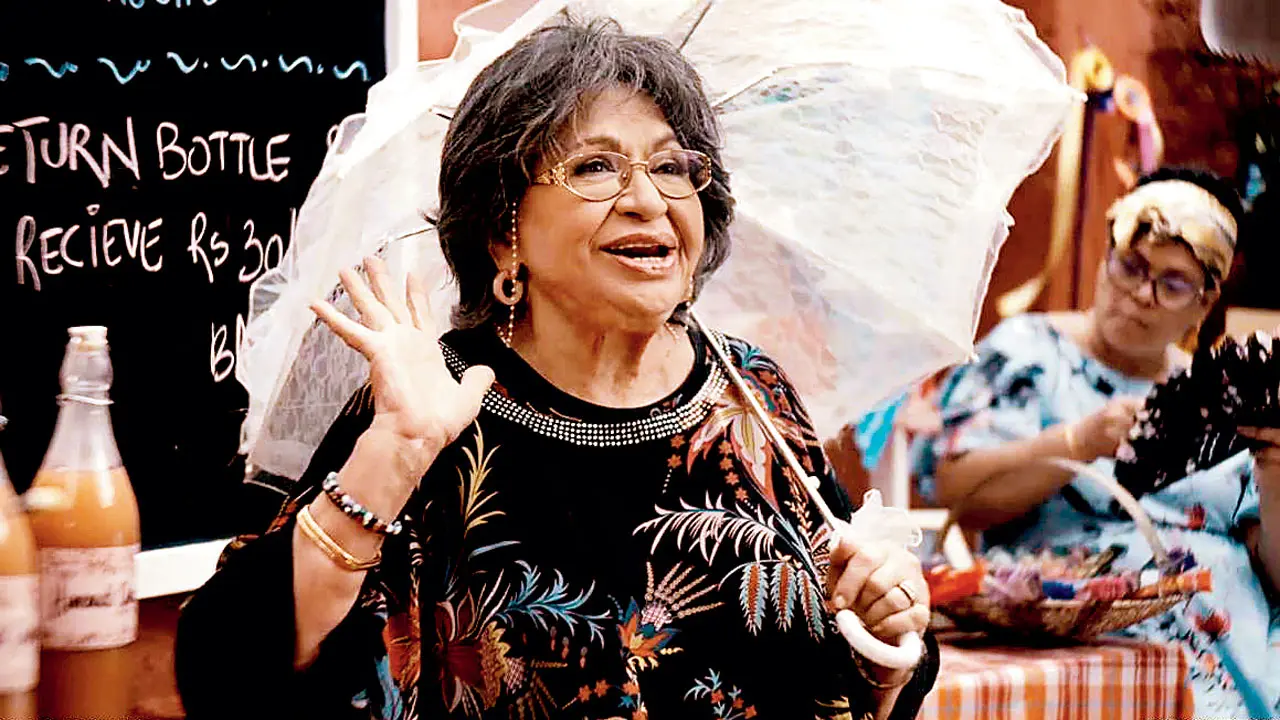
Returning to acting after 14 years with ‘Brown’, veteran actor Helen says she was delighted to reconnect with her craft through the light-hearted role
Mohar Basu (MID-DAY; May 28, 2026)
That inimitable grace and natural charm — we’ve missed seeing Helen on screen. Fortunately, the makers of Brown heard us. Sure, the noir crime thriller is being awaited as it marks Karisma Kapoor’s return to a web series six years after Mentalhood (2020). The cherry on top is that with it, Helen faces the camera after almost 14 years.
We aren’t the only ones excited about the special appearance. The veteran actor revealed that she, too, was thrilled at the idea of going to a set again. “It’s been such a long time since I faced the camera. Returning to acting, even for a small role in Brown, has been delightful. Sometimes, it’s not about the length of the role, but the joy of being part of something special,” she beamed.
Set to première on Zee5, Brown — directed by Abhinay Deo — follows Kapoor’s alcoholic cop, who investigates a string of brutal murders in Kolkata. While the story explores themes of trauma, guilt, and redemption, Helen’s character offers moments of levity in the intense narrative. She shared, “My character brings in moments of lightness and comic relief. I’m so glad I was considered for this part — it gave me the chance to reconnect with my craft and relive the magic of being on set.”
Making the experience richer were her co-stars, be it Kapoor or Soni Razdan. Helen added, “Working with Soni and Karisma was an absolute pleasure. I’ve known them both for years, and sharing the screen with them felt so natural and full of warmth.”
You’ll spot another unexpected face in the crime thriller. Singer Shaan is making his OTT debut with the series. He said, “It’s a sweet role, but one that adds an emotional layer to the story. What made this project close to my heart is that it’s rooted in Kolkata. With so many Bengali nuances woven into the narrative, there were moments I could deeply relate to.”
Shaan remembers Asha Bhosle: "Her aashirwaad was my greatest achievement"
4:29 PM

Debarati S Sen (MUMBAI MIRROR; April 14, 2026)
The passing of legendary playback singer Asha Bhosle on April 12 at the age of 92 marks the end of an era in Indian music. Tributes have poured in from across the industry, but among the most heartfelt is that of singer Shaan, who shared intimate memories of his conversations and bond with the icon.
LATE-NIGHT CALLS AND LIFELONG MEMORIES
For Shaan, his connection with Asha Bhosle was not defined merely by professional admiration, but by personal warmth and unexpected moments. He has been a part of multiple shows and performed with her on stage for decades.
“I've had the privilege and the good fortune of having a lot of conversations with Asha ji on the phone,” he recalled. “Mostly I would never know how to reach out to her. So she would call… whenever she would call, we would get to speak.”
One such memory remains etched vividly in his mind, a late-night call that came without warning. “It was quite late that night, around 11 or 11:30, and suddenly I see her name flashing on my phone,” he said.
True to her personality, Asha Ji skipped pleasantries. “She was always very straight to the point… she said, ‘Accha sun, Tera beta gaane laga hai main sunn rahi hoon. Log keh rahe hain ki theek thaak hi gaata hai woah. Yaad hai, humne jab show kiya tha tab tere god mein tha woh.’ So, I told her that was my older boy. That show was in 2004 when we had performed in London together. Soham was crying and she said, ‘Isko godi mein le le’ and I held him up. And that time she announced on stage, ‘Yeh jo baccha dekh rahe ho aap, iske Dadaji, (my father) ke saath maine perform kiya tha. Aaj bete ke saath perform kar rahi hoon aur jab yeh baccha bada ho jayega, main iske saath bhi perform karoongi!’”
And that is what she reminded me again. “She said, ‘Ab toh tera beta bada ho gaya hai, bula usko ghar pe, kuch gaana kartein hain uske saath!’ I was absolutely stunned. The fact that she remembered all this and actually said that about my son. I told my son Mahi. And he was absolutely elated. He took her blessings.”
A MISSED OPPORTUNITY, A LASTING REGRET
Despite the emotional weight of that invitation, Shaan admits he never followed up. “I didn’t know how to really go about doing that,” he said. “Whenever she would call, we would speak… but I rarely reached out to her. I guess its my personality that I never reached out to her.” That hesitation now lingers as a quiet regret. “And now, I guess I never will,” he said.
‘HER BLESSINGS WERE MY GREATEST ACHIEVEMENT’
Beyond memories, Shaan emphasized the profound influence Asha Bhosle had on his life and career. “I have always mentioned this-Asha ji’s aashirwaad and fondness for my voice will remain my greatest take back from my singing career,” he said. “No other achievement or compliment can match up.” He described her as a towering inspiration. “She is my greatest inspiration to work hard and focus on what is in one’s control.”
AN UNMATCHED MUSICAL LEGACY
As the industry reflects on her unparalleled contribution, Shaan echoed a sentiment shared by many: that Asha Bhosle’s legacy is simply beyond comparison. “Her body of work is unparalleled… she has set the bar so high that it’s impossible for anyone to match up,” he said. Yet, even in her absence, her influence remains indelible. “She will continue to inspire and give us hope that if we work hard, there is no limit to what we can achieve.”
Shaan on trolls: "Samjhane se behtar hai khud samajh jao"
10:00 AM

Akash Bhatnagar (HINDUSTAN TIMES; February 16, 2026)
Singer Shaan, who has seen the music industry evolve from a pre-social media era to today’s hyper-digital space, says he now enjoys engaging online, even if it comes with occasional unpleasant moments. Many younger users recognize him from an Instagram Live where he responded to online abuse, but the singer says he has no regrets.
“I enjoy this whole new medium and feel it’s a great way to directly connect with your audience. It’s a good time pass and I don’t take it very seriously,” he says.
On dealing with trolls, he adds, “Earlier, it would affect me a little. I’d try to clarify because sometimes they hold the wrong end of something, but later I realized there’s no point. Samjhane se behtar hai khud samajh jao.”
The 53-year-old recently composed the track Ankhiyaan, marking singer-turned-politician Babul Supriyo’s return to Hindi music after more than seven years. Asked whether the composer in him gets overshadowed by the singer, he says the move was “never about proving a point”.
“We all go through phases in our career and, at the end of the day, you want to sing. So I thought I will compose my own songs. For any singer, the best thing is to be busy behind a mic,” he says.
He adds the decision was also about creative independence. “I wanted to stay busy in my music and not keep worrying about when the phone will ring and some composer will call me to sing. The composing was also so I could create the Shaan music label, put my compositions out and fulfil my creativity.”
Our Prime Minister did not want me to continue singing-Babul Supriyo
8:13 AM

The singer-politician shares what kept him away from music for over seven years, his comeback and wanting to bring music into politics
Akash Bhatnagar (HINDUSTAN TIMES; February 11, 2026)
After over a seven-year hiatus, singer-politician Babul Supriyo, currently serving as a Cabinet Minister in the West Bengal state government, has returned to Hindi music with the track Ankhiyaan, a collaboration with singer Shaan.
“Luckily, I got a chance to split my time between Mumbai and Kolkata. Shaan has been a great composer for a very long time. I keep hearing his work,” he says.
Revealing that earlier he was not allowed to sing due to his political career, he calls his return as “Babul 2.0”.
“Music is my passion and my better half. I resigned once in 2017 as I was not permitted to perform. Even my American tour was cancelled. But then, if given a choice, I would leave politics. I enjoy it, but it is very vitriolic, so I am trying to bring some music into politics,” he adds.
The 55-year-old entered politics in 2014 with the Bhartiya Janata Party (BJP) before joining the All India Trinamool Congress (TMC) in 2021.
Reflecting on his break from music, Babul says it wasn’t voluntary, adding that even at serious platforms, he was repeatedly pushed to perform. “No matter the speech, what made it to TV were the songs they made me sing, turning every appearance into an ‘entertainment quotient’,” he shares.
The singer-politician adds, “Our Prime Minister did not want me to continue singing because he felt it would dilute my position as a Union Minister, so I had to abide.”
However, the artiste credits West Bengal Chief Minister Mamata Banerjee for allowing his return to music. “My CM promotes music. She has given me full liberty to do anything," he ends.
Celebs react to A R Rahman's 'communal bias' remark
3:05 PM

A R Rahman hints at losing work in Bollywood due to bias. Industry veterans reject the claim, praising his talent and success
HINDUSTAN TIMES (January 18, 2026)
Oscar winner A R Rahman is considered one of the best Indian musicians. His work has garnered global acclaim. So when he says he lost out on work in India due to communal bias, people are bound to notice.
In a recent BBC interview, when asked if he faced any prejudice in the Indian industry when he started out in the 1990s, Rahman indicated that he has felt communal undercurrents lately. However, his industry colleagues have rejected Rahman’s doubts. HTC
JAVED AKHTAR, LYRICIST
Javed Akhtar told IANS, “I have never felt this way. I meet people here in Mumbai. They have great respect for him. Rahman is such a big man. Even a small producer is afraid to go to him. But I don’t there is any communal element in this. Why don’t you see him? He will definitely come.”
ANUP JALOTA, MUSICIAN
Singer Anup Jalota has also dismissed Rahman’s remarks that the latter is getting less work because of communal bias against him. “This is absolutely not true,” Jalota said adding that the amount of work that Rahman has done in 5 years is what others do in 25 years. “What more can be said… He has done a lot of work and delivered excellent projects,” said Jalota.
SHAAN, SINGER
Shaan told IANS, “I have been singing for many years and am not getting much work, but I don’t dwell on it. I don’t think there’s any communal angle. In music, what matters is doing good work and making good music, not worrying about such things.”
A R Rahman, Composer
“Maybe I never knew, or it was concealed by God, but I didn’t feel it. In the past eight years, maybe, because the power shift has happened… People who are not creative have the power now to decide things, and this might have been a communal thing also, but not in my face. It comes to me as Chinese whispers that they booked you, but the music company went ahead and hired their five composers. I said, ‘Oh, that’s great, rest for me, I can chill out with my family.”
Whenever I sing, I imagine an 18 or 20 year old singing-Shaan
4:21 PM

Priyanka Sharma (MID-DAY; September 15, 2025)
How does one keep the passion for their art alive over a 26-year singing career? With riyaaz, dedication, and the knowledge that the craft is almost like a lover you can’t stay away from, chuckles Shaan. In a free-wheeling chat with mid-day, the singer — who voiced Bam Bam Bhole in Sikandar and is looking forward to his upcoming song from Farhan Akhtar’s 120 Bahadur — opens up about holding on to the magic of one’s voice despite ageing, and his secret to sounding young, year on year. Excerpts from the interview.
Is it tough to keep a 26-year relationship with music alive?
Love happens first, and then it turns into a profession. What comes first will stay till the end. Obviously, there will be a point when the voice may not be how it should be. But in terms of appreciating and having an ear for music, that will always stay. For me and any singer, it can be frustrating [to be at a point] when we’re alive and not able to sing. It’s like being estranged from your lover. We have a crazy, ek tarfa pyaar with our voice.
With love comes commitment that an artiste has to their craft. After all these years, is it difficult to be disciplined and adhere to your riyaaz?
Honestly, my riyaaz has increased because after a certain point, the voice gets delicate. I started doing more riyaaz after my 40s. Until I met my guruji, my riyaaz was erratic. Sitting down, practising a bandish or doing a sargam — all that started only after 30. But by the time I got to 40, I could see a slight [change in my voice]. I could also see a lot of my seniors sounding older. I wouldn’t want that to happen with my voice. So, the only way I could postpone it was by doing riyaaz.
What do you feel is the key to your voice sounding young?
I feel young. Whenever I sing, I imagine an 18- or 20-year-old singing. Also, I often get youthful songs. If I were told that I would be singing for a mature, aged person, I would modulate my voice that way. But mostly, our romantic heroes are young. Even if they’re in their 50s or 60s, it’s important to sound young for them (laughs).
As a ’90s kid, I grew up listening to you, Sonu Nigam and many other voices, each of which was distinct. Today, it gets difficult to differentiate one singer from another, except Arijit Singh. Is it the demand today that voices sound similar?
It’s the Arijit effect; everyone wants to sound like him. Arijit is an intelligent singer. So, sometimes he surprises you with a different tonality. His voice is so popular with the [decision makers] in the industry that they think, ‘If we can’t get Arijit, at least let us get someone who sounds like him’. A singer doesn’t have much choice.
Also, aspiring singers, who have been listening to Arijit and Atif [Aslam] for 10-15 years, will think that if they sound like them, they will probably get a job. I had a similar situation when I started out. They would ask me, ‘Are you Kishore Kumar or Mohammed Rafi?’ They were two strong schools of singing. Udit ji [Narayan] had a touch of Rafi saab’s style of singing, and [Kumar] Sanu da was from the Kishore Kumar school.
So, what did you do?
I came from Hindi pop and there was no precedent to it. There was no one who was doing pop for me to copy. So, I was an original voice.
Dad (Shaan) never pressures me, but there’s an unspoken responsibility-Maahi
9:22 AM

Singer Maahi, who recently dropped the single Jaan Se Zyaada, on charting his own path while carrying his father Shaan’s legacy forward
Komal RJ Panchal (MID-DAY; June 23, 2025)
He knew where he always belonged — in a recording studio, behind the mic. At 20, Maahi has made his way there. The youngster, son of singer Shaan, made his playback debut with Nadaaniyan’s track, Tera Kya Karoon, earlier this year. Now, with his latest single Jaan Se Zyaada landing him a billboard in Times Square, the singer is ready to chart a path of his own.
“I’m at a place where I’m discovering myself not only as an artiste, but also as a human. There is a certain motivation that kicks in when you’re in your 20s. I want to make an impact through my music,” says Maahi.
Growing up in the shadows of his grandfather Manas Mukherjee, who was a composer, and father Shaan meant that music was an integral part of his life.
“I never met Dadu, but his music has been an inspiration. Dad never pressures me, but there’s an unspoken responsibility. I want to carry the legacy forward while also creating something that’s mine.”
While music has been a part of his life as long as he can remember, Maahi began riyaz seriously at the age of nine. It took a few years and a stern family conversation for him to understand the discipline required.
“When I was 13 or 14 years old, I realized if I want to do this, I need to be all in. In a country with so much talent, you have to give your 100 per cent.”
Years of training and his ambition have brought him to this point — he has several songs under his belt, including Jaadugari and Sorry. As someone creating music in the age of Gen Z, he believes the audience today connects with authenticity.
He shares, “People want to hear something real, not fabricated. Also today, releasing a song isn’t enough. You have to give it life through visuals and reels.”
Maahi knows it’s not his journey alone; it’s also about carrying his family’s legacy ahead. Has his father given him words of advice? He says, “Baba’s guidance is more about life. But musically, he taught me two things: you have to really love singing, and you must never stop learning.”
Imtiaz Ali, Ajay Devgn, Sharvari join hands for a special World Environment Day campaign
9:50 AM

Upala KBR (MID-DAY; May 27, 2025)
People tend to listen when their favourite actor champions a cause. This belief has made Bollywood artistes join forces ahead of World Environment Day on June 5 every year, to raise awareness about nature conservation. This year, Ajay Devgn and Sharvari have taken the lead. The actors have shot for two special videos, helmed by Imtiaz Ali, as part of the World Environment Day campaign that aims to fight plastic pollution.
In the past few years, many stars — including Alia Bhatt, Abhishek Bachchan, and Bhumi Pednekar — have fronted music videos to drive home the message. But Asif Bhamla, whose foundation spearheads the World Environment Day campaign, reveals that they changed tack this year.
“This time we have taken a break from music videos. When I initially reached out to Ajay for the music video, he said that dance is not his forte, but he will do it as a video message. He added that we should create something that can run at the theatres too; that way, we can reach out to maximum people. We have three videos, [two of which are] titled Tik Tik Plastic 3.0 and Earthing. While Ajay and Sharvari have starred in two, the third stars Zeenat Aman and singer Shaan,” says Bhamla.
Ali based the campaign on a simple truth — that even the smallest acts of environmental preservation can make a big difference. While one video sees Devgn urging people against plastic use, the second was shot in a Bandra garden and has the two stars reconnecting with nature.
The director shares, “While writing the two short films, I wanted to ensure that the tone is not preachy or boring; instead, it should be something that the country’s youth relate to. Ajay felt the same way.”
For Devgn, the campaign not only marks his first collaboration with Ali, a director he has been keen to work with, but also mirrors his own beliefs. “I have been advocating for conscious, eco-friendly living, and this campaign is a natural extension of that journey. Our aim is to reach everyone with the message that even small actions, done consistently, can make a big difference.”
Sharvari adds, “To be directed by Imtiaz Ali was a dream come true. I have always wished to be on a set with him. To be in the same frame as Ajay Devgn sir was a fantastic experience. There is so much to learn by just seeing him perform.”
Another producer could not have taken the pressure of Thug Life-Kamal Haasan
8:22 AM
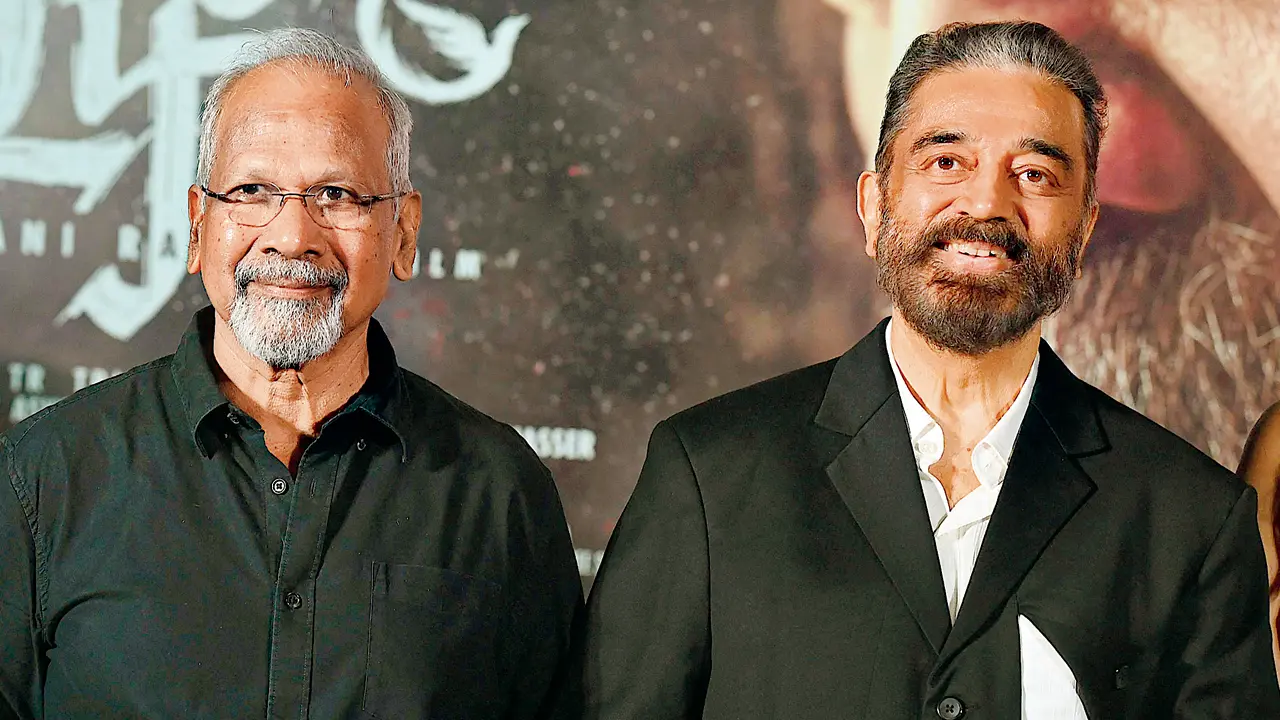
Reuniting with Mani Ratnam after 38 years for Thug Life, Kamal Haasan on how they don’t care for stardom and would rather use their money to realise their cinematic vision
Priyanka Sharma (MID-DAY; May 24, 2025)
What took you more than 30 years to reunite with Mani Ratnam? - This question has made a frequent appearance since Kamal Haasan kicked off the promotions for his next, Thug Life. When we express our curiosity, the superstar smiles before saying, “I’m almost tempted to request all of you not to ask that question because I can only say sorry, it’s our fault. We should have done it earlier.”
In 1987, the two gave Indian cinema the much-loved Nayakan. Thirty-eight years later, as the actor reunites with one of his favourite filmmakers for the gangster action drama, he reveals that an encore was always on their mind.
“Sometimes, we were thinking too big, and at other times, we would think something small and then [shoot it down] believing that these are the days of big films. Sometimes, I’d come up with an idea, and Mani would already be working on something else, and vice versa. But we were gently, subconsciously, and from a distance, inspiring each other,” grins the actor.
That decades-long inspiration has resulted in Thug Life, which also stars Silambarasan T R, Trisha Krishnan, Abhirami, Ali Fazal, and Sanya Malhotra. How was it working together considering they both have come a long way from Nayakan? Haasan is an even bigger star today, and Ratnam, one of the greatest filmmakers in the country. Did the actor try to impress his director this time?
“I can’t impress the director; the character can. He booked Kamal Haasan not because of the stardom. Left to us, I think we are both overpaid. But then if we let that go, they [the industry] won’t respect us. So, we will take our cut.”
This time around, their collaboration has also taken a different turn. Haasan not only leads the June 5 release, but has also co-written and co-produced it with Ratnam. And he firmly believes that nobody else could’ve done justice to the film as far as production is concerned.
The superstar states, “[We are the kind] who will put our money into the film. Suppose all that we have shot is destroyed, we won’t panic. We will go ahead, put our own money, and do it [again]. Another producer could not have taken the pressure of Thug Life. We made some difficult decisions.”
Production and direction were a natural graduation for the actor. It all stems from his endless love for movies and deep respect for the craft. His passion is evident as he says, “I never walk out of a film because that would [mean] insulting my peers. We’ve made stupid films. When I say that, I don’t include Mani’s films in it. But I have, because I needed finance for my own productions.”
That is a career lesson Haasan learnt from late actor and filmmaker Shashi Kapoor. “He would be singing a song on top of an elephant in Shaan [1980], and the same elephant would be beside him in Junoon [1978]. I had asked him, ‘Can I also [juggle mainstream and parallel cinema]?’ He said, ‘Sure. It’s pragmatism. Don’t mistake it for valour.’ Some of the great Italian directors did commercial films, made money out of them, and [used that] to make films that would live on.”
Wise career lessons, unmatched talent, and a progressive worldview have come together to shape Haasan’s enviable filmography that spans over six decades and different branches of filmmaking. Through his films, he has positioned himself as an artiste who often mirrors society’s fractured reality. In Nayakan, he showed the perils of violence. But today, how does he view Indian storytelling’s penchant for violence and the audience’s love for it? He points to a chapter in history to make his case.
“You know, after the Second World War, America kept making musicals; they didn’t want any violence. Now we’ve had enough peace. Now, the time of violence has begun, and that’s reflecting on screen. Earlier, the angry young man was only angry; now he will become violent if his voice is not heard. At least, a soapbox oratory should be allowed in front of the Red Fort. Listening to [the common man’s] voice is what great leaders have always done. After Partition, look at the kind of films we made — Naya Daur [1957] and Waqt [1965]. Even now, cinema is reflecting society, and [the violent films imply] that society has become violent. If you want proof, watch any television channel.”
We were asleep when fire broke out in our building, and were rescued 40 minutes later-Shaan
8:25 AM

Soumya Vajpayee (HINDUSTAN TIMES; December 25, 2024)
A fire broke out in the wee hours of Tuesday at Mumbai’s Fortune Enclave building in Bandra (W), which houses singer Shaan. While the blaze erupted on the seventh floor, the musician and his family were asleep in their home on the 11th floor.
Talking about the ordeal and how he managed to evacuate safely with his family, Shaan tells us, “The fire broke out around 12.30 am. We were asleep and were woken up around 1 am. Most of the people who stayed on the seventh floor and below had already been evacuated. We were told to go to the terrace, but since it was locked and the smoke was mounting, we took refuge at our neighbour, Mrs Kazi’s home, on the 14th floor. Unfortunately, they were stuck, too. We were there for about 40 minutes until the firemen came and escorted us down.”
After being alerted, four fire engines and other fire-fighting vehicles rushed to the spot. The fire could be doused only after trying for nearly two-and-a-half hours, an official said. “The seventh floor is completely gutted. The sixth and eighth floors are partially burnt, but there isn’t much damage to the building. Our home is fine,” shares Shaan.
His wife, entrepreneur Radhika Mukherji adds, “Our younger son, Maahi, was out and it was Soham (elder son) who woke us up. The three of us had to be rescued besides our two househelps and two fur babies. Panic is inevitable in such situations, but we tried to stay as informed and prepared as possible. The first thing we did as a family was switch off all the mains and cover our faces with wet cloths to minimize smoke inhalation. We made three attempts to get to higher floors. Initially, we managed to reach the 15th floor, but the smoke was too overwhelming to go further.”
The younger generation considers me as their elder sister, mother, aunt, or grandmother-Usha Uthup
7:54 AM

What makes her the perfect addition to the line-up of younger artistes set to perform at NH7 Weekender? According to Usha Uthup, it is her ability to treat the “young generation like you would your contemporaries”
Sonia Lulla (MID-DAY; November 25, 2024)
For Usha Uthup, the opportunity to be part of NH7 Weekender was special owing to the diverse lineup that she was set to join.
“The variety that will be seen and the passion with which it has been created motivated me to be part of it. This is the opportunity to get music lovers from across the country to listen to good music, and not everyone would like the same kind of music,” says the veteran, who will join musicians like Amit Trivedi, King, Raftaar, and Dhvani Bhanushali, among others, at the December festival.
Uthup’s name inarguably appears to be a seamless fit among a lineup of younger composers owing to her ability to strike a chord with listeners across generations. She credits the knowledge she receives from her grandchildren on the music tastes of the young generation, as well as her own ability to speak their language, for her popularity among them.
“When they see me sing Skyfall in a sari, or sing songs like Ramba Ho (in Armaan) and Shaan [Doston Se Pyaar Kiya], they wonder how I handle it. Because I’ve been a nightclub singer, it comes to me naturally. Then, I also render [English] songs like Miley Cyrus’s Flowers, which my daughter insists I should sing. So, my family keeps me grounded. Today, [singers] should be grounded to listen to what children are saying because the kids will teach you what you ought to know. The younger generation considers me as their elder sister, mother, aunt, or grandmother. It doesn’t matter, because after a point, once they hear the music, they forget everything. I talk their language. I don’t look down upon them or speak to them [without respect]. I treat them like I do my contemporaries. And that’s important when you want to be part of their lives.”
Uthup may not be an avid consumer of English music, but she adheres to the suggestions of her grandchildren when it comes to selecting songs for her shows. “I also listen to music on YouTube and pick songs that I think our band could perform well. [Music by] Daft Punk is like that. [Their music has] also won the Grammy Award. These things matter when it comes to song selection.”
I try to keep my wife company by fasting for her on Karwa Chauth-Shaan
8:43 AM

Soumya Vajpayee (HINDUSTAN TIMES; October 20, 2024)
As they celebrate their 25th Karwa Chauth together, singer Shaan and his wife, Radhika, shoot exclusively for HT City, as they tell Soumya Vajpayee how the day reiterates the value of love and companionship
For singer Shaan and his wife, entrepreneur Radhika Mukerji, this Karwa Chauth is extremely special. Why? “It’s our 25th Karwa Chauth together”, says Shaan, as he and Radhika shoot for HT City to mark their landmark “day of love”. For Radhika, this day holds a lot of value. “It’s the only day of the year when I dress up like a bride. I enjoy doing all the shringaar, doing the pooja, reciting the katha and praying for my husband. Our love for each other has only grown over the years and this day definitely plays a role in keeping us grounded,” she says.
For Shaan, too, Karwa Chauth holds a lot of value: “Initially, after our marriage, I would find it very filmi. Being a Bengali, we never had the culture of celebrating Karwa Chauth at home. But over the years, this day has meant so much for us. It reiterates that there’s someone in your life who’s doing something as intense as fasting to pray for your well-being. Irrespective of whether I am at home or travelling for shows, I try my best to keep my wife company by not eating anything. But I do have water or coffee.”
Radhika adds, “I just have a glass of masala milk in the morning for sargi and then go waterless until moonrise. For me, it’s a day of gratitude, when I thank God for blessing me with a life partner like Shaan. While I fast for him, he gets so anxious by the evening that he keeps tracking the moonrise and has a childlike excitement the moment he spots the moon. When we do the puja, our sons act as our photographers. I love the looking at the moon through the channi and then looking at your partner ritual. There’s something so romantic about it.”
As Shaan hums the romantic number Tere Mere Sapne from Guide (1965) for Radhika, we ask if he has any Karwa Chauth gift planned for his wife. “I don’t really wait for occasions to pamper her, but I would love to gift her whatever she wishes for,” he replies, as Radhika immediately adds, “I want a chaandi ki payal from you.”
Our most memorable Karwa Chauth
“It was our first Karwa Chauth after marriage and Radhika excitedly fasted for me. After breaking the fast, she threw up. I thought it was due to hyperacidity,” says Shaan. Radhika recalls, “I threw up a couple of times and a friend suggested I took a pregnancy test. I tested positive when I checked the next morning, and by next Karwa Chauth, we had our son Soham with us.” Hence, our first Karwa Chauth after marriage continues to be our most memorable one.”
I have a family connection with the Olympics-Shaan
8:03 AM
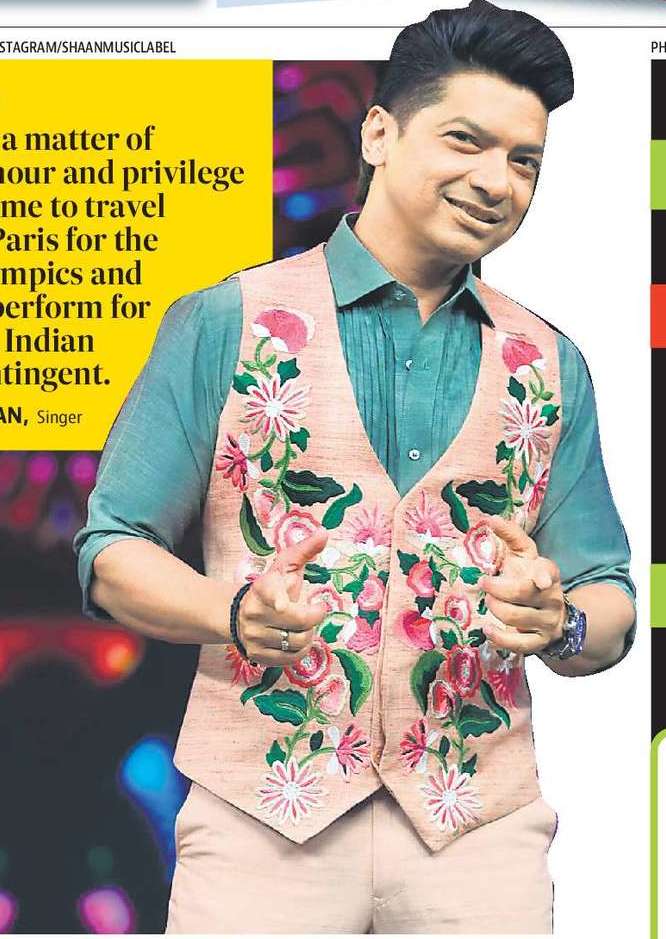
Akash Bhatnagar (HINDUSTAN TIMES; July 24, 2024)
Paris 2024 Olympics will commence on July 26 and singer Shaan will give a soulful start to it with a performance at the first-ever India House in Paris, France. “It’s a matter of honour and privilege for me to be there at the inauguration of the India House to perform for the Indian contingent and encourage all Indians cheering for the Indian athletes,” he exclaims.
Shaan reveals that he has a special connection with the Olympics. “My first cousins Rahul Banerjee and Dola Banerjee, who have represented India at the highest level in archery, will be there as coaches this time. So, I have a family connection with the Olympics,” he says, adding that sports and music go hand-in-hand: “A lot of my friends in sports tell me that music plays a huge role in getting them in the zone and helping them relax.”
India House at the Olympics has been conceptualized by businessperson Nita Ambani’s Reliance Foundation, and Shaan will deliver a 90-minute performance on day one.
“There’s a song that I recorded for Chandu Champion, but it wasn’t used in the film. I will be performing that for the first time, dedicating it to the Indian athletes. We will also perform a medley of songs related to sports and patriotism. Besides that, I will also sing songs such as Deewangi Deewangi (Om Shanti Om; 2007), Dus Bahane (Dus; 2005) and Koi Kahe Kehta Rahe (Dil Chahta Hai; 2001), among others.”
This is Shaan’s first time at the Olympics and he’s excited to be there. “For the first time, I will see some of the Olympic events live,” he ends.
World Music Day: IPRS and ISAMRA musicians talk about their long struggle for copyright and royalties
4:44 PM

On World Music Day today, musicians, who are part of copyright and licensing societies in India like the IPRS and ISAMRA, talk about their long struggle for copyright and royalties, and how its bearing fruit
Soumya Vajpayee (HINDUSTAN TIMES; June 21, 2024)
The lack of copyright compliance remains a hot topic in Indian music industry. On World Music Day today, artistes who are a part of copyright and licensing societies in India, such as the Indian Performing Right Society Limited (IPRS) and Indian Singers’ and Musicians’ Rights Association (ISAMRA), talk to HT City about the ongoing struggle.
It’s unlikely for a music aficionado in India to not know about the issue surrounding the distribution of royalties for music creators and not just music labels and producers, which started in the 1960s. With music societies like the Indian Performing Right Society (IPRS) and the Indian Singers and Musicians Rights Association (ISAMRA) spearheading the mission, the industry has come a long way.
On World Music Day today, musicians Sonu Nigam, Shaan, Sameer Anjaan and ISAMRA Founder-CEO Sanjay Tandon, in an exclusive sit-down with HT City, delve into the topic of music copyright and how these societies — which are of the musicians, for the musicians and by the musicians — safeguard the democracy of music in India by ensuring justice for all the stakeholders, including composers, singers and lyricists.
Sanjay Tandon (Founder, Director and CEO of ISAMRA)
Unfortunately, in India, copyright is the least talked-about subject. If you compare the music of India to the scene in the US, UK and Europe, it’s suffering because these places have a proper copyright structure in place. In the initial years, more than the money, establishing the principle that you have a right is the greatest challenge. Also, while a lot was being done to safeguard the rights of composers and songwriters, singers were not really thought about. So, I decided to spearhead that mission.
Sameer Anjaan (Lyricist and Board of Director at the IPRS)
I had returned from London in 2002 after a meeting with PPL (UK’s music licensing company) and Nadeem (one half of the composer duo Nadeem-Shravan) told me how important it was to preserve my rights as a lyricist. He said, ‘Future digital hai aur agar humare rights humare paas nahin honge, toh humein kuch nahin milne wala’. So, I met Sanjay (Tandon) and sought his support for the IPRS. We wanted to take the matter to the government. We were lucky that Javed (Akhtar; lyricist and Chairman of the IPRS) sahab became a part of this mission.
‘Javed sahab nahin hote toh kuch bhi nahin hota’
Sameer Anjaan says, “Javed Akhtar sahab felt so strongly for the rights of the fraternity that he decided to spearhead the mission and since he was a Member of Parliament, it worked in our favour. He had a meeting with all music labels so that we could mutually sort things rather than going to court. But they weren’t ready. In fact, some music companies said, ‘Hum royalty nahin, aapko bheek de rahe hain’. Javed sahab was told, ‘Aap jo gaane likh rahein hain, chup chaap likhiye, warna woh kaam bhi aapko milna band ho jayega’. Uske baad, Javed sahab ne kaha, ’Ab baat meri zidd pe aa gayi hai’. He did research for three years about copyright from across the world, made a file and took a delegation to meet the government. It symbolised our unity as a fraternity, and both the ruling party and the opposition supported us. That’s when the Copyright Act was amended.”
‘Lata ji was always with us’
Sanjay Tandon says, “In August 1991, Lata ji and I attended a conference in Delhi and a minister in his speech said that singers are mere vocal instruments. That hit us hard. She was so upset that she wanted to walk away. Post that, I told her, ‘The mistake is ours. Bina roye to bachche ko maa doodh bhi nahin deti... Kya humne as a music community kabhi apna haq maanga?’ She asked me to promise her that alongside fighting for composer and lyricist rights, I would also fight for the royalties for singers. Lata ji, Sonu ji, Alka (Yagnik; singer) ji and Kavita (Krishnamurti; singer) ji fought for the rights of the singers since the beginning and Lata ji would accompany us to all the meetings. Her contribution to our mission was unparalleled.”
Shaan (Singer and Board of Director at ISAMRA)
A lot of our contemporaries who joined us in the mission were not hopeful of a result. Kitni baar humari himmat bhi toot jaati thi. Kaafi singers ne yeh assume kar rakha tha that if they joined us, they wouldn’t get work. They were so fearful of getting on the wrong side of the music companies. But ab sab cheezein sahi direction mein hain aur woh singers jo pehle shak karte the ab dekh sakte hain ki sabke ghar mein cheques aa rahe hain. It’s great that all music companies are now with us and we work in tandem.
Sonu Nigam (Singer and Board of Advisor at ISAMRA)
Jab se main iss industry mein aaya hoon, main nirantar ismein laga raha (fighting for musician rights and royalties). A lot of singers became part of the mission and quit after a while. But some of us, who were at the peak of our careers, were perseverant to not give up. We wanted to fight for the rights of our fraternity and we also lost work because of that. I am glad that we have come a long way and our efforts are bearing fruit. Achcha lagta hai jab humari meetings hoti hain. Saari music companies aur hum log pyaar se milte hain, achcha khaana khate hain and we discuss the way forward. Mere baare mein jo bhi negativity unmein (music labels) thi, ab sab theek ho gaya hai, so I am busy again (laughs).
Fact check
- Earlier, songs belonged to composers, lyricists and the music labels. Singers were neither considered owners of the copyright, nor were entitled to any royalty. In 2012, this anomaly was fixed with a landmark amendment to the Copyright Act, 1957, which recognised ‘Performer’s Rights’ of the singer of a commercially recorded song for 50 years from the beginning of the calendar year in which the performance is made.
- Until March 2024, the IPRS claims to have distributed Rs. 500 crore among the artistes. “And this is still the tip of the iceberg,” says Anjaan.
- The royalties start ticking from the day a song is released, and is credited to the artiste after almost a year.
- The IPRS distributed its first royalty, Rs. 14,000, for the song Aayega Aanewala (Mahal; 1949) in 2013.
- The ISAMRA distributed its first royalty, Rs. 51,000, for the song Lag Jaa Gale (Woh Kaun Thi; 1964), says Tandon.
I don't have big shoes to fill because the shoes are already filled with my father Shaan's feet-Maahi
8:19 AM

Yashika Mathur (HINDUSTAN TIMES; June 4, 2024)
He is just two songs old, but the internet has already taken notice of singer Shaan’s son Maahi and it’s not just for his singing. And the 19-year-old, who has the songs Sorry and Jaadugari to his credit, feels flattered.
“Any comparison to dad is huge since he is such an accomplished man. My priority at this moment is to do my riyaz, make more music and deliver on people’s expectations,” says Maahi, who wants to make his own mark, not only as a musician, but on the screen, too.
“It will probably be music videos for now but I’d also love an opportunity on the big screen. It’s on the cards. I have [done] a couple of acting workshops, getting my chops in place,” he says.
Insta Reels and memes featuring the father-son duo, with their near-identical voice texture as well as youthful charm, often send social media users on a nostalgia trip. But the singer doesn’t feel the pressure of Shaan’s legacy.
“A lot of people tell me that I have big shoes to fill, and my go-to response is, ‘I don’t — because the shoes are already filled with his feet.’ I am wearing my own shoes,” says Maahi, though he’s grateful for one thing: “My daadu (composer Manas Mukherjee) was in the industry but dad lost him pretty early on, so I don’t know how the good times and the bad times will affect me but I know I have my father.”
I’m excited about my son’s performance at Cannes-Shaan
8:25 AM

The singer is introducing three new pop stars at the Cannes Film Festival this year, one of them is his son, Maahi
Debarati S Sen (BOMBAY TIMES; May 17, 2024)
This is Bollywood singer Shaan Mukherji’s first time at Cannes, and what makes it more exciting is that he is at the festival with his son, Maahi.
Talking to us from the French Riviera, the musician said, “I am so glad to be a part of the film festival this year. This is my first time here, so I’m very curious and extremely excited.”
At the 77th Cannes Film Festival, the proud father introduced his son, singer Maahi, who performed on stage on May 16 and is all set for another performance on May 17.
The prestigious festival that began on May 14 will go on till May 25, 2024.
“I am introducing three new pop stars at Cannes this year, one of them is my son. Maahi has already released his first song and is about to release his second, which has been produced by my other son, Soham. I feel so proud of them. This special performance of Maahi at Cannes gives me a great opportunity to witness this wonderful festival, which I have never seen before,” said Shaan.
The singer, who was also accompanied by his wife Radhika, added, “We are spending quality time here as a family.”
Shaan elated to spend time in the French city said, “Being here with my sons and my wife Radhika is great. We are really looking forward to the whole experience of the red carpet here and the performances and the whole festival. I am hoping to catch some films too!”
At 18, I was crap. I was terrible, but Maahi is fantastic-Shaan
9:02 AM

Akash Bhatnagar (HINDUSTAN TIMES; March 26, 2024)
Singer Shaan has been a part of the Indian music industry for over two decades. In February this year, his younger son, Maahi, decided to follow in his footsteps. The 18-year-old released his first single, Sorry. The song struck a chord with the audience and Shaan is a proud father.
“Maahi is only 18, but he has been preparing for this for so many years. It’s his dream to be a pop star and we have been harnessing it together for the last three-four years. Every day he would sing something, show me a dance step. He has also been going to the gym and doing his classical music,” says Shaan.
The 51-year-old goes on to rave about his older son, Soham: “Even my older boy has his own band and they’ve already had 18 releases. Both my sons have their own different styles, even different from what I do.”
Shaan adds, “As parents, you want to guide them, but also not spoon-feed. I don’t ask Maahi to come with me or perform at my shows. He should have his own identity, his own vocal style, personality and his own journey.”
Mention that Maahi reminds of the charm Shaan possesses, and he disagrees. He quips, “At 18, I was crap. I was terrible, but Maahi is fantastic.” He credits it all to Maahi’s dedication. “A lot of people say that this new generation wants to get things smart, but they don’t work hard. I have a fantastic example of just the opposite,” Shaan signs off.
Radio is far from dying-Shaan
10:21 AM
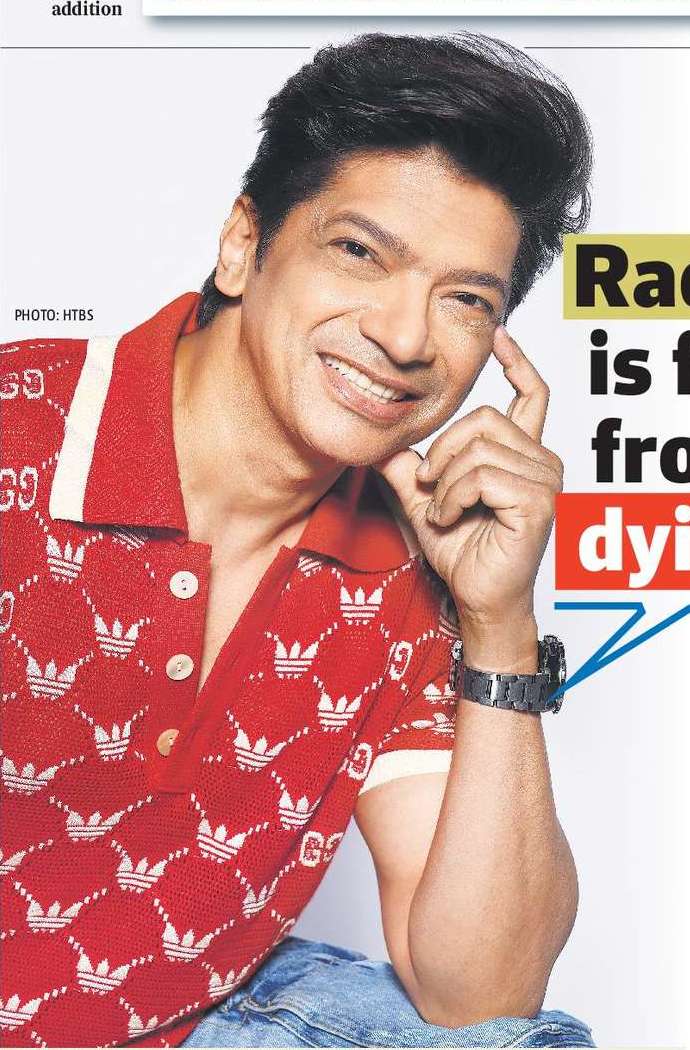
Akash Bhatnagar (HINDUSTAN TIMES; March 10, 2024)
In his illustrious career of over two decades, Shaan has time and again proven his mettle across fields — be it singing, composing, writing or hosting. Adding another feather to his cap, he is now turning RJ with Fever FM’s Crazy For Kishore.
“It’s a blessing that people approach me to try new things and I get these opportunities. If I had just stuck to playback, I would probably have retired or quit,” he tells us.
By trying his hand at a medium that is often misunderstood as outdated, the 51-year-old is proving this label is far from true: “On the contrary, the consumption of audio has gone up in a big way. People today want to use all their senses and multitask. The wonderful thing that radio brings is a sense of surprise, and no other medium can give you that. So, radio is far from dying.”
The singer is glad that through his show, he is getting the chance to honour the legendary Kishore Kumar. When asked how “crazy” he truly was for the late singer growing up, he responds, “Were? I still am and will always be. My connection with him is getting stronger with this show, as I got to know many stories about him that I didn’t before.”
When prodded to dish out one such Kishore da anecdote, Shaan reveals, “When he was very young and Ashok Kumar (late director) sahab was shooting with Madhubala ji (late actor), he hid on the set with a mask on to scare her. She came out screaming from there, and this was their first encounter. Later, they became man and wife.”
Shaan bahut badmash hai, kya kya bol jaata hai logon ko, main toh phir bhi soch leta hoon-Sonu Nigam
8:29 AM

Debarati S Sen (BOMBAY TIMES; June 21, 2023)
The film-music industry is fiercely competitive. Tell us about your professional relationship that has lasted for decades.
Shaan: There is a lot of mutual admiration and while people might think we are competitors, we aren’t. Sonu is my senior and from a very early stage in my career, he’s been an inspiration. I love his tenacity and how hard he works to achieve perfection in music. I think of him when I want to push myself creatively, otherwise, intrinsically, I am lazy! We’ve seen good times and bad times together.
Sonu: I heard Shaan’s voice before I met him and mujhe itna accha laga tha. I hadn’t really acquired that kind of modernized singing before that. And Shaan was my first inspiration. I learnt that modern style of singing from him.
Sonu, you have been embroiled in several controversies over the years, whereas Shaan, you’ve usually stayed away from them. What do both of you think of each other’s reactions to situations?
Shaan: Sonu has always spoken his mind and sometimes he is impulsive. Certain situations just happen with him, but good thing is that he comes through unscathed and comes back stronger. Sonu knows me; I am probably more impulsive and have more foot-in-the-mouth situations than him. People just don’t perceive me like that, so I have gotten away with it.
Sonu: Arre, Shaan bahut badmash hai, kya kya bol jaata hai logon ko, main toh phir bhi soch leta hoon. But that’s because he is childlike, extremely seedha and very loving. And main controversy mein nahi jaata, main sach bolta hoon. When I am asked something, I speak up. Ya toh pucho hi mat, pange mat lo, because if you ask me about certain things, I will surely tell you the truth, otherwise I don’t speak.
It’s great to see two talented people in same cut-throat industry rooting for each other. Does your connection go deeper than music? How do the both of you connect at a personal level?
Shaan: We have a lot in common and our sense of humour is also similar. We get the same jokes and the same ideas when together at parties. We are proud sons of very talented fathers and that is a big connection.
Sonu: When I first met Shaan, he told me he is Manas Mukherjee’s son. Little did I know then that his father and my parents had a history together. My mother used to sing for his father. So humara rishta humare paida hone ke pehle ka hai. Our fathers had met each other during their struggling days.
What does World Music Day signify for you?
Sonu: India is now the melting pot of music. Our country has always had traditional, classical knowledge of music, but now there are some singers in India who can sing jazz in classical sargam! No other country in the world can do this. People like Shaan have so much love in their voice, people like Arijit (Singh) are so astoundingly versatile, and we also have young singers like Salman Ali. We have so much talent here including producers, arrangers, programmers and sound engineers. India has become the hub of music talent and world music, and we should celebrate.
Shaan: Music is a universal language and there is no part on earth where it isn’t celebrated, and no Indian celebrations can happen without music. So, to have one day in the name of music across the world makes a lot of sense. Music is the glue that holds the world together. World Music Day is perfect to bring the world together with music.
Tell us about the first time you both met.
Shaan: We met at composer Babul Bose’s recording. Once I was sitting at the T Series office and aap dub kar rahe theyy, that’s when I first saw you.
Sonu: We were recording for Babul Bose, and he came in. He had long hair in those days. First minute se hamari bonding bahut acchi hui. I first heard of Shaan was from composer-musician Raju Singh. We were at a studio when Raju ne kaha, ‘Sonu sunn zara. Ek naya singer hai, uska naam Raja hai. Expressions dekh iss ladke ka, feel dekh iski.’ When I heard the song, I was blown.
Haven’t you ever had skirmishes, fights?
Sonu: Ek baar aisa hua tha, bahut saalon pehle ki baat hai and then I didn’t speak with Shaan for six-seven months.
Shaan: Yes. That was a misunderstanding we had. It was some miscommunication and luckily, we cleared that out.
---------------------------------
Sonu had created a song for Shaan and his wife Radhika after attending a party hosted by the couple. “We were leaving Shaan’s home after a very late-night party and he and Radhika came to drop us to our car. On the spot I created a song in the style of composers Laxmikant–Pyarelal and singer Shabbir Kumar and sang it for them. It’s titled ‘Hospitality’ (and sang it for us),” says Sonu.
Shaan adds, “It had an LP feel to it in Shabbir bhai’s awaaz. And since that night, he sings this song for us every time after a party. We have had some great times. There have been parties at our Karjat farmhouse.”
Subscribe to:
Posts (Atom)