Showing posts with label Rishab Shetty. Show all posts
Showing posts with label Rishab Shetty. Show all posts
Bhumi Pednekar to play warrior queen Belawadi Mallamma in The Pride Of Bharat - Chhatrapati Shivaji Maharaj
2:49 PM

Neha Maheshwri (BOMBAY TIMES; July 27, 2026)
Bhumi Satish Pednekkar has come on board the cast of The Pride Of Bharat - Chhatrapati Shivaji Maharaj. The actress will portray Belawadi Mallamma, the warrior queen of Karnataka, in the historical drama headlined by Rishab Shetty, who essays the role of Chhatrapati Shivaji Maharaj.
Bhumi says, “I’m honoured to be part of a film on the life and legacy of the great Maratha warrior-king, Chhatrapati Shivaji Maharaj. It’s a privilege for me to play Karnataka’s brave warrior queen, Belawadi Mallamma, and bring her to life on screen. I am a huge Kantara fan, and Rishab Shetty’s stunning performance blew me away. So, the moment Sandeep narrated the film, the actor in me instantly said yes. This is unlike anything I’ve done before, and I’m grateful to the makers for seeing me in a completely new light.”
Directed and produced by Sandeep Singh, The Pride Of Bharat - Chhatrapati Shivaji Maharaj is a two-part saga. The film also stars Arjun Rampal and Vivek Oberoi and is set to go on floors later this year.
As reported by us earlier, following Pritam’s decision to take a break from mainstream music, the makers roped in Amit Trivedi to compose the music for the historical drama.
A source had shared with us, “The team believes Amit Trivedi’s ability to blend powerful orchestration with deeply rooted Indian melodies makes him an ideal fit for the film’s vision. The music has to capture Chhatrapati Shivaji Maharaj’s courage, vision, legacy and the emotional heartbeat of the story. The makers were looking for a composer who could balance scale with emotion, and they are confident Amit’s music will elevate the film’s narrative while staying true to its historical essence.”
Amit Trivedi to compose for Rishab Shetty’s historical epic The Pride Of Bharat - Chhatrapati Shivaji Maharaj after Pritam’s exit
2:46 PM

Neha Maheshwri (BOMBAY TIMES; July 1, 2026)
Pritam’s decision to take a break from mainstream music prompted the makers of The Pride Of Bharat - Chhatrapati Shivaji Maharaj to rope in Amit Trivedi for their upcoming historical drama. The composer, who was originally set to helm the music, announced his decision in a birthday post on Instagram last month, revealing that he wanted to “live life differently” and explore “roads unexplored” after years in the mainstream.
With Pritam stepping away from the project, Amit has now come on board to score the music for director Sandeep Singh’s two-part historical saga, starring National Award-winning actor Rishab Shetty as Chhatrapati Shivaji Maharaj.
According to a source close to the production, Amit’s musical sensibilities made him a good fit for the project. The source says, “The team believes Amit Trivedi’s ability to blend powerful orchestration with deeply rooted Indian melodies makes him an ideal fit for the film’s vision. The music has to capture Chhatrapati Shivaji Maharaj’s courage, vision, legacy and the emotional heartbeat of the story.”
Led by Kantara star Rishab Shetty in the titular role, the two-part historical saga, with lyrics by Prasoon Joshi, also features Arjun Rampal and Vivek Oberoi. It is expected to go on floors later this year.
In his birthday note last month, Pritam thanked fans for their wishes and reflected on wanting to make space for new experiences in life. “Thank you for all the wishes. Can’t answer everyone individually, but please accept my sincere gratitude. Today, I have decided to gift myself a few years to live life differently. To catch up on what I’ve missed.” He further hinted at pursuing long-delayed aspirations and interests beyond his mainstream work.
His post read further, “Time to set off on new journeys, which have been kept on the back burner for long. Mainstream is a great ride, But I’ve always been more curious about the roads unexplored. Thank you for all the love & support, Always.”
Big budgets, bigger losses: Is pan-India ambition hurting Kannada cinema?
8:39 AM

Single screen theatres are banking on re-releases. The re-release of Puneeth Rajkumar’s ‘Appu’ in 2025 and ‘Jackie’ in 2024 witnessed houseful shows and contributed significantly to the revenue. Credit: DH file photo
S R Ramakrishna, Pranati A S (DECCAN CHRONICLE; March 15, 2026)
Bengaluru: Kannada cinema, with a history of 92 years, is grappling with a new dilemma — should it cater to the pan-India expectations generated by blockbuster hits such as KGF and Kantara, or make less expensive cinema with better box office prospects in Karnataka?
In the six years since the gangster drama KGF hit the screens, many filmmakers in Karnataka have attempted richly mounted, big canvas productions, with national and international audiences in mind. Not many have succeeded, and the focus on scale has created a void in an industry otherwise conservative in its spending.
The industry is paying a hidden price for its obsession with pan-Indian cinema, many insiders told DH.
The sequels to KGF and Kantara (in the latter case, the story goes back in time from where the first film began) have continued their winning streak at the box office, but most other ambitious ventures have tanked.
Kabzaa (2023), starring Shivarajkumar, Upendra and Sudeep, and 45 (2025), starring Shivarajkumar, Upendra and Raj B Shetty, are just two of the many films that came in the wake of the big hits and lost their way. Some films have fared so poorly that their producers have sworn off films for life.
Of the 253 Kannada films produced in 2025, only a handful have recovered their investments. The numbers were equally discouraging in 2024, with just 10-12 moderate grossers and almost no big hits. Film production is always a gamble, but when the odds are so bleak, the enthusiasm for creative risks takes a hit.
Ravichandra A J, producer of the sleeper hit Blink (2024), believes production houses with deep pockets — for example, Hombale Films, which made KGF Chapter 1 and 2 — should not remain wedded to lavish spectacles. “They should back young filmmakers,” says Ravichandra, who has distributed Shakhahari and Second Case of Seetharam, films with tight budgets.
The theatrical success of Blink, a sci-fi shot with theatre actors on a shoestring budget, brought hope. While most films pitched to pan-Indian audiences failed, Blink went from being hyper-local to becoming pan-Indian, finding love on OTT. It was dubbed into six Indian languages and released on Amazon Prime.
A producer who requests anonymity believes the gloom can be dispelled by enlightened project choices. “When an industry is in distress, production houses must make films with reasonable budgets, say with Rs 50 lakh to Rs 100 crore. An industry needs films made at different budget points. In Telugu, six or seven production houses are actively making all kinds of films. Mythri Movie Makers, for example, makes a Rs 500 crore film and follows it up with a Rs 5 crore film.”
The production numbers are high mainly because of Karnataka’s subsidy policy. More than 200 films are made every year, many with an eye on the subsidy rather than the box office. The government gives subsidies to 100-125 films a year, with each film getting Rs 10 lakh. Subsidies have hit a road block though. Citing a financial crunch, the government hasn’t given subsidies from 2018-19. Just last week, Chief Minister Siddaramaiah promised to clear the dues, and the talk is that, going forward, subsidies will be discontinued.
Amid the despondency, cinema from the Karnataka coast has driven home many telling points. Su From So (2025), scripted and directed by J P Thuminad, did not bank on big promotions; instead, it went entirely by word of mouth. The comedy, produced by Raj B Shetty’s Lighter Buddha Films, drove home an anti-superstition message, and became the second-highest grosser of the year. Rare hits of the past couple of years, such as Su From So, owe their success to their writing, and not so much to stars or big banners.
Actor-producer Dhananjaya K A believes actors and producers who have reaped the fruits of blockbuster hits should encourage younger filmmakers from diverse backgrounds, and that is the way to keep the industry ticking.
He tasted success as an actor with Tagaru (2018) and the Telugu hit Pushpa: The Rise (2021), and set up Daali Pictures in 2021 with the objective of promoting fresh talent. His productions Badava Rascal (2021) and Tagaru Palya (2023) impressed audiences with their storytelling strength and production compactness.
Craft of writing
Some filmmakers such as Rishab Shetty assert, and rightly so, that truly local stories can have universal appeal, but the lens is blurred when an entire industry begins to chase pan-India dreams. As film critic Swaroop Kodur says, stories are no longer rooted when an industry is obsessed with catering to huge, imaginary audiences.
A consequence is that films blindly follow other films, with no attention being paid to original writing. When a film is structured exactly like last year’s hit, it is more redundancy than inspiration. Kabzaa came out of KGF, and so many 'Kantaras' are still in the making.
Formulaic films have existed since the beginning of cinema, and certain tropes are indispensable in storytelling, but for a film to be fresh, filmmakers trying to break the mould say, it must draw from contemporary realities. “Big films have always captured our imagination, but we are at a point when we are exhausted by the hype. There is so much to deal with in real life, and then we have a visual overload because of social media, and so increasingly, cinema is taking a backseat,” Kodur says.
In Karnataka, unlike in neighbouring Kerala, the literary community has remained distant from the film industry. Some Kannada directors, such as Puttanna Kanagal, were aware of literary works, and often based their films on novels and their songs on the poetry of the greats, but that was another era. With some exceptions, most filmmakers in current Kannada cinema are oblivious to the wealth of possibilities in contemporary literary writing.
Aravind Kaushik, director of offbeat films Nam Areal Ond Dina (2010) and Tughlaq (2012), says the industry lacks filmmakers who see their art as a medium to express their unique perspectives. “Instead, the focus has shifted towards market-driven content, prioritizing entertainment and box office success over meaningful storytelling. This disconnect leads to inflated budgets and a loss of connection between the film and its audience,” he says.
Ticket pricing
Multiplex culture, with its premium ticket pricing, is designed for big-budget films, and so it is detrimental to smaller, independent cinema, he says, advocating a curated distribution system that works on the lines of film festivals and cinema clubs. A ticket should ideally be priced below Rs 200, and that would make cinema more accessible and democratic, Kaushik says.
Producers are flooded with pitches, and they see a pattern. “Every director wants to make a pan-India film. Out here, Kannada audiences have lost trust in the industry. We have to first gain their trust back. We have to understand the market here and the focus should be on the market here. Instead, everyone is after the ‘pan-India’ market,” says a producer. Talking about the Arjun Janya directorial 45, a multi-starrer produced by Ramesh Reddy that fizzled out at the box office, he says, “Good producers sadly are falling into the wrong hands.”
Ravichandra believes that nothing may come out of the Rs 200 ceiling on tickets in the short term. As a marketing strategy, Second Case Of Seetharam, a slick police procedural starring Vijay Raghavendra, opened preview shows for Re 1. And yet the halls remained empty, he says. Subsequent reports said the film had picked up and was doing well in Tamil Nadu. Ravichandra argues that the ceiling on ticket rates, if implemented, will create a more democratic cinema viewing culture in the future. A production house in Bengaluru is contesting in court the Siddaramaiah government’s decision to cap ticket rates at Rs 200.
Cinema as ‘content’
Where writing is concerned, Kaushik underlines the importance of the individual voice: “Any form of art including cinema becomes a product later. It is primarily an expression of who the artist is.” The market for mass-produced ‘content’ reaches a point of saturation, and that is where the Kannada film industry is at today, he says.
“We have to up our game as far as storytelling is concerned. Filmmaking in itself is not very difficult today. So the primary question we have to ask ourselves is why we are making a film. Everyone is running behind big budgets, where every actor aims to become a star and every movie aims to become a pan-Indian movie,” he says.
Insiders agree the industry is facing numerous challenges — the inability to invest in writing, the refusal to accept failure, and a focus on short-term gain rather than long-term consistency.
A new problem is the paranoia that has gripped filmmakers when their productions are panned by critics. Many production houses orchestrate a positive reception for their films by paying TV and social media channels for promotions. The first three days after a release are crucial for a film’s success, and many producers set aside money to create a buzz. Sometimes, they end up blaming independent critics for the failure of their films.
OTT challenges
A season of misselling may have created a crisis of credibility for Kannada films when it comes to OTT. “They treat calls from Kannada productions like credit card spam calls,” a filmmaker says. When hyped films, sold to OTT in 2023 at fantastic rates, fared miserably at the theatres, the OTT bosses became wary.
Amazon Prime Video now follows a pay per view model for Kannada films — Rs 4 per hour of viewing. If a viewer watches a full film, the producer gets Rs 10. Netflix buys outright streaming rights for Telugu and Hindi films, and JioHotstar is picking up films in Tamil, Telugu Malayalam and Hindi. Zee buys both streaming and satellite rights of films that have performed well in theatres.
The argument that Kannada cinema has a limited market is often countered by hits that defy the odds, and film buffs recall fondly how, when Rajkumar, Vishnuvardhan, Ananth Nag, Shankar Nag, Srinath and Ambarish were delivering commercial hits, a cinema inspired by literature emerged parallelly. The industry is at such a crossroads all over again.
You can’t expect a Pushpa, Kantara or RRR from Bollywood; makers want to play safe-Madhur Bhandarkar
10:10 AM

Toshiro Agarwal (BOMBAY TIMES; December 19, 2025)
Filmmaker Madhur Bhandarkar feels that talent can emerge from any platform when it comes to showbiz—theatre, TV, OTT or films. “Also, if a filmmaker wants to narrate a story today, all they need to do is take out a mobile and create the entire narrative,” he adds. Speaking to us on the sidelines of the second edition of Symbiosis Film Festival, the Page 3 and Fashion director touched upon his style of filmmaking, Bollywood’s lack of conviction and more. Excerpts:
‘My movies are grounded and my stories, basic’
In the 2000s, Madhur’s brand of cinema was celebrated as raw and realistic. Ask him how his storytelling has evolved over the years and he says, “My storytelling hasn’t evolved at all. I’m still making what I used to make back in the 2000s. I always say that I am a storyteller, not a tech-savvy filmmaker. My movies are very grounded and my stories are basic, about everyday lives of people. It’s just that my films have aged well as I mainly focus on human dramas.”
The Babli Bouncer and India Lockdown filmmaker adds that human drama is something that will connect with you ‘even after 100 years’. “Technology will come and go, but the emotions or complexities of relationships will always be relevant no matter what the backdrop is, be it a corporate world, or politics, or even the film industry. My style is to make realistic cinema and I will continue to do so,” he says.
‘Storytelling has changed, but Bollywood lacks conviction’
“Every five years, there is a major revamp in the film industry,” says the filmmaker, who will return to the big screen next year with The Wives. He feels that with OTT, a lot has changed. “The audience is now more aware of world cinema. As a result, Bollywood’s storytelling also has changed a lot. However, Bollywood lacks rawness and conviction. If tomorrow somebody narrates a story like Kantara to a Bollywood filmmaker, they will not be entertained,” opines Madhur.
Applauding Rishab Shetty for his vision, the Heroine filmmaker adds, “You can’t expect films like Pushpa, Kantara or RRR from Bollywood. Because Bollywood wants to play safe with tried and tested remakes of south Indian films. Actors ko original movie dikha denge, bol denge zyada mehnat nahi karni hai, yeh picture hai, South mein chal gayi yahan bhi chal jayegi. Despite this, in the last five years, most Hindi remakes of south films have flopped. There are so many stories in Bollywood that are waiting to be explored.”
‘There’s a lot of noise about everything due to social media’
His films have drawn contrasting opinions, and Madhur says he understands that. “There will always be people who liked something and others who didn’t like it. The reception of a film will never be unanimous,” he says, adding, “But, nowadays everyone is just picking films apart. Thanks to social media, everyone has a voice and now there is a lot more noise. Having said that, I care only about my audience. They are the reason I am where I am today.”
On the backlash on Ranveer Singh’s Kantara reenactment at IFFI
Madhur was at IFFI when the incident involving Ranveer Singh trying to mimic Rishabh Shetty’s Kantara performance happened. Sharing his stance on the controversy, he says, “I felt that he took it a little too far. That said, he owned up to it and apologised, which is commendable. I think he was praising the performance and got lost in the flow. In the process, he crossed a line.”
Rishab Shetty reacts to Ranveer Singh’s Kantara mimicry controversy
9:51 AM

At the International Film Festival of India (IFFI) in Goa, actor Ranveer Singh courted controversy when he mimicked daivas on stage. Now, Kantara actor-director Rishab Shetty has commented on the incident at an event in Chennai.
Without naming Ranveer, Rishab spoke on stage about how there’s always a risk when making a film like Kantara that culture and tradition may be reduced to pop culture. He stated that as a filmmaker, he took the guidance of several elders to ensure that everything was portrayed with respect.
He said that once a film releases, people tend to mimic it. “That makes me uncomfortable. While much of the film is cinema and performance, the daiva element is sensitive and sacred. Wherever I go, I request people not to perform it on stage or mock it. It is emotionally deeply connected to us”, said Rishab.
Controversy arose when Ranveer mimicked daivas while meeting Rishab at IFFI, ignoring his request not to. Ranveer later apologised on Instagram, saying he respected all cultures and traditions.
Major Mohit Sharma’s brother on CBFC clearing Dhurandhar: "Could have organized a screening for parents"
10:52 AM

Neha Sharma (HINDUSTAN TIMES; December 3, 2025)
Aditya Dhar’s upcoming film Dhurandhar, starring Ranveer Singh, ran into legal trouble last week after the parents of late Major Mohit Sharma approached the Delhi High Court seeking a stay on its release. On Monday, the court directed the Central Board of Film Certification (CBFC) to examine the family’s objections and, if required, consult the Indian Army before issuing a certificate. By Tuesday, the CBFC cleared the film for release, categorizing it as a work of fiction.
Speaking to us, Major Sharma’s brother, Madhur Sharma, said, “I am sure they’ve followed the process, and they were very quick to take a decision, which is good. We don’t know what data the CBFC has relied on, but I am sure they have done their due diligence.” Madhur, however, adds that they could have taken the parents’ concern into consideration.
“I just feel that a screening could have been organized for the parents so that any misconceptions floating on social media could have been clarified. People who have lived their entire life with him are in a better position to tell if anything in the film replicates his life, rather than someone outside the ecosystem.”
Social media comparisons between Major Mohit Sharma’s life and Ranveer Singh’s character in the film intensified after the trailer’s release. Many tweeted, including Madhur, asking for a public clarification. To those questioning why the petition was filed despite Dhar’s denial, Madhur says the timelines explain it: “There is a 36–48 hour difference between my tweet and Aditya Dhar’s reply. The petition was filed during that time.”
He maintains the family is only seeking acknowledgement. “There is no benefit the parents are looking for. This is not just for us but for every family that has lost a son (in military operations).” Major Mohit Sharma of 1 Para (SF) was killed in action in 2009 and posthumously awarded the Ashok Chakra.
Ranveer Singh issues apology
Actor Ranveer apologizes for imitating a scene from Rishab Shetty’s Kantara: Chapter 1 at the closing ceremony of the 56th International Film Festival of India (IFFI) in the presence of the actor. Ranveer stuck his tongue out and imitated the sacred Daiva scene from the Kannada film and called the local folk gods Daiva as a ‘female ghost’. He was brutally trolled online, with many calling the actor a ‘clown’ and wondering why he would do such a thing days before the release of his next film Dhurandhar. Now, Ranveer has apologized as he wrote on his Insta post (inset).

When Rishab Shetty narrated Kantara, I thought, ‘If I don’t do this, I’m an idiot’-Gulshan Devaiah
10:26 AM

Mohar Basu (MID-DAY; October 11, 2025)
A man of cinema — that was Gulshan Devaiah’s first impression of Rishab Shetty when they met in 2019. The impression only strengthened when he saw Kantara (2022) and was admittedly blown away by it. “We tried to work together on two or three films, but it didn’t happen. I knew he’d call me someday. When he did, he said, ‘I’ve written a part for you’,” recalls Devaiah, who is being widely praised for his performance as the eccentric King Kulashekara in Kantara: A Legend Chapter – 1.
Devaiah vividly remembers Shetty’s narration of the mythological drama. “When Rishab narrated it, I thought, ‘If I don’t do this, I’m an idiot’. I knew it wasn’t the biggest part or that I wasn’t the protagonist, but the main attraction was Rishab — his passion towards telling his stories. You learn by working with such people.”
Kantara: A Legend Chapter – 1 marks Devaiah’s Kannada debut. Not many know that the actor hails from Karnataka. “I belong to Kodagu. I grew up speaking the language, so what a debut this is,” he exclaims.
Before facing the camera for the Shetty and Rukmini Vasanth-starrer, Devaiah did extensive workshops to bring his character alive. His attempt was to go beyond the written word. “I came up with many ideas. Part of the character was made in the script, part in my head, and the rest was made on set. Rishab gave me a lot of creative freedom,” he smiles.
Recently, he called his character Kulashekara as an “entitled, jealous, good-for-nothing, perpetually drunk idiot.”
Ask him to elaborate, and he says, “Humans like Kulashekara exist — perpetual drunks with sensitive egos. Even in our film industry, there are so many like that. If your approach is sincere, such characters will feel real. Kantara is a fantasy, but I had to give it the feeling of being real. You see glimpses of humanity in him, especially in his brief interactions with his daughter. From the film’s perspective, he’s a villain. From his perspective, he’s the beginning and end of everything — a self-indulgent person. Both views are valid.”
mid-day recently reported that after people showed up in theatres dressed up as Daiva, Shetty urged his fans to refrain from such acts, deeming them disrespectful. Devaiah reflects, “When I saw the film, it made me feel in a way I didn’t expect, and I respected that. I support the makers’ plea. People should refrain from making it a cheap gimmick for virality.”
Chhaava opened up Maharashtrian history to the world-Siddharth Singh, Garima Wahal
8:39 AM
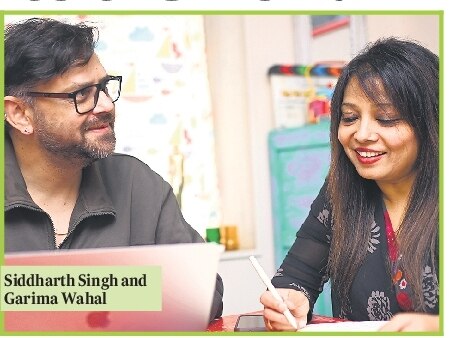
Akash Bhatnagar (HINDUSTAN TIMES; April 13, 2025)
Two months after its release, Vicky Kaushal-starrer Chhaava is still seeing an impressive theatrical run. Now, lyricist-writer-director duo Siddharth Singh and Garima Wahal are hoping to use this success to lay the groundwork for their film on Chhatrapati Shivaji Maharaj.
Siddharth says, “In a sort of subtle way, (films like Chhaava) open up Maharashtrian history to the world.” Garima agrees, “They have touched upon this one incident and that worked well with the people. There is so much more to say and to show that it’s hard to contain in a single film.”
The project, which goes on floors soon, stars actor Rishab Shetty as Chhatrapati Shivaji Maharaj. Ask if a Kannada actor can accurately portray a Maratha King and Siddharth replies, “The region used to be called Dakkhan (Deccan) back then and included not just Maharashtra but Karnataka, Andhra Pradesh and Telangana, etc. Also, all actors are dying to portray larger-than-life characters. You just have to find a match.”
Garima tells us, “Rishab is a powerhouse of an actor. He brought alive mythology in Kantara (2022). When films were falling at the box office left, right and centre, he brought out something so original.” She adds, “So, to us, there is no one better than Rishab to portray the iconic role of Chhatrapati Shivaji Maharaj.”
No violation of norms; Kantara 2 gets clean chit from forest officials
9:03 AM
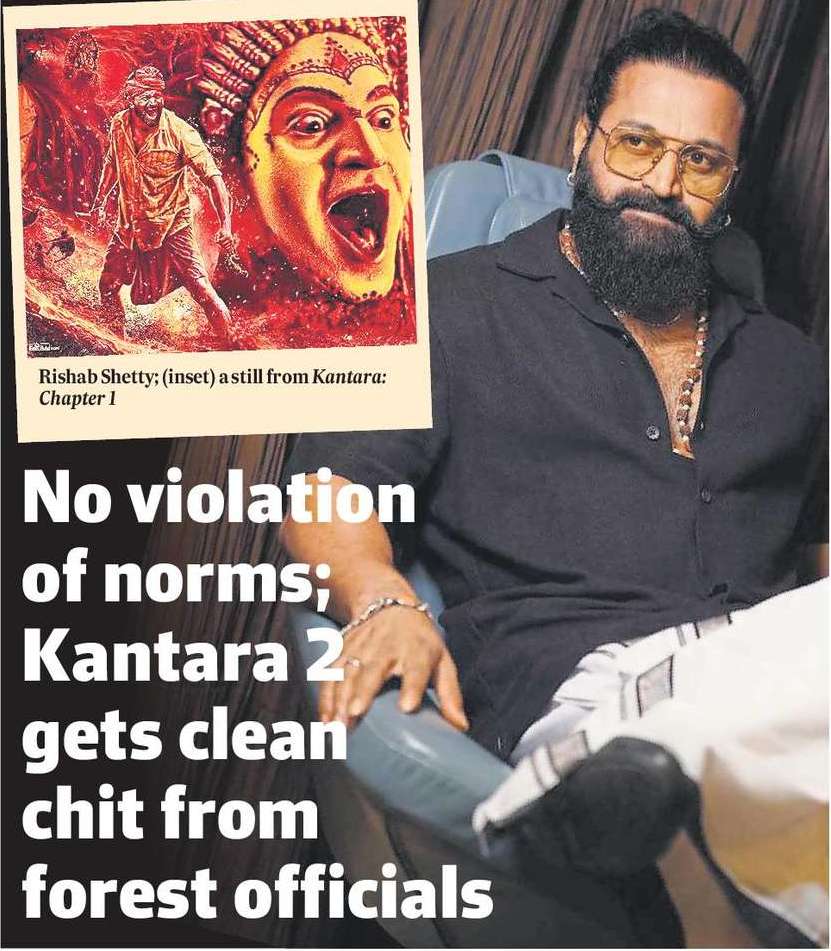
HINDUSTAN TIMES (January 22, 2025)
Following allegations by local villagers that the crew of Kantara: Chapter 1 has violated norms during the shoot of the film in the Heruru forest area of Karnataka, Forest Department officials have refuted the claims.
A prequel to Kantara (2022), Kantara: Chapter 1, acted in and directed by Rishab Shetty, is expected to release later this year, and is currently being filmed in the forests of Karnataka. According to the villagers, the crew had brought the filming equipment to the location without obtaining the necessary permissions. The Forest Department officials then imposed a fine of Rs. 50,000 on them and granted permission to shoot from January 5 to 25, they said.
The local people further said that the crew was causing destruction by bursting crackers in the forest, which forced wild animals to flee into the nearby villages. They also accused the unit members of assaulting them over raising objection.
However, Forest Department officials have refuted the allegations after inspecting the shooting site. Yesaluru Deputy Range Forest Officer Somashekar told Deccan Herald, “They had created a small fire on the gomala land, where the team has obtained permission for shooting. However, no rules were violated in the deemed forest area.”
Deputy Conservator of Forests Saurabh Kumar added, “The film team is shooting after obtaining necessary permission. The officials have inspected the spot. Suitable measures would be taken based on the report”.
Ashutosh Gowariker on collaboration rumours with Rishab Shetty: "It would fit if we work together"
8:24 AM
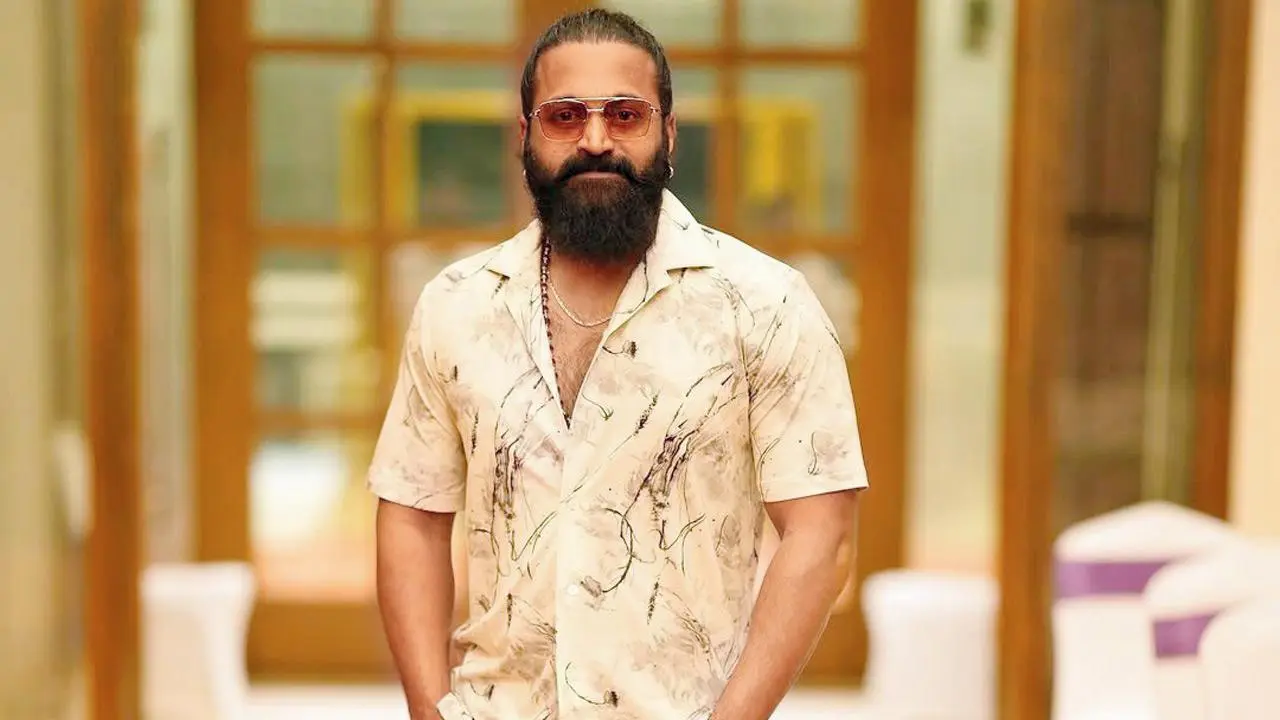
Revealing that he met Kantara star Rishab Shetty as they admire each other’s work, filmmaker Ashutosh Gowariker says a collaboration though desirable isn’t imminent
Priyanka Sharma (MID-DAY; December 25, 2024)
In January this year, rumours were rife that Kantara (2022) star Rishab Shetty was teaming up with filmmaker Ashutosh Gowariker on a period drama centred on a ruler of south India. The buzz gained further credence when the Kannada star was spotted leaving the filmmaker’s office. As we catch up with Gowariker, who completes 20 years as a producer this month, we ask him the obvious question: Is a collaboration on the cards?
“Not yet. It was a meet-and-greet because we like each other’s movies. It would fit if we work together. Let’s see,” he smiles, his reply leaving ample room for interpretation.
For now, Gowariker is prepping for his next, which will mark his return to direction six years after his last offering, Panipat (2019). Though he doesn’t divulge whether it will be a big-scale period drama, a genre that he has made a mark in, the filmmaker is aware that spectacles are the flavour of the season.
“We always made big films. Making a successful film is on everyone’s mind. When a trend comes in, it makes it easier. I have nothing against trends and people making several movies of the same genre. [But] my thought was never to create a trend. It was more about the theme I wanted to tackle. In Swades [2004], I tackled nationalism; in Jodhaa Akbar, it was religious tolerance. I’m not necessarily thinking big when I’m thinking of world-building. I don’t make an effort to make it larger than life, but perhaps that’s in my filmmaking process.”
The stardom of his leading actors—from Shah Rukh Khan to Hrithik Roshan—was a prominent aspect of Gowariker’s films. But he believes the younger actors today have a disadvantage. “The second [rung of] actors today aren’t able to choose the right films because they don’t know which one will open in cinemas and which will go to OTT. Hence, the chaos,” he reasons.

Chhatrapati Shivaji is a national hero; I feel immense pride in bringing his story to the screen-Rishab Shetty
2:36 PM

Sridevi S (BOMBAY TIMES; December 6, 2024)
Rishab Shetty is stacking up some interesting roles in the near future. After wrapping up Kantara Chapter 1, he is expected to join Prasanth Varma’s Jai Hanuman, and post that, he will be playing the titular role in Sandeep Singh’s historical saga, Chhatrapati Shivaji Maharaj.
In an exclusive chat with Bangalore Times, the national-award-winning actor, revealed that besides the two films, he has two more projects in the line-up, and one of them will make Kannadigas very, very proud. “My plate is full, but not overflowing,” Rishab says. Excerpts:
‘Playing Shivaji is an honour beyond words’
Every actor’s dream is to explore different characters, says Rishab. “I am glad that opportunities are knocking on my door. I haven’t ventured out or sought these roles intentionally. They are coming to me, and I feel so privileged to have achieved this. Shivaji’s life and legacy have always fascinated me, and there is a deep sense of pride in being associated with such a great historical figure. Opportunities like biopics come only once in a lifetime. As an actor and a performer, I feel that it’s an honour to bring his story to life on the big screen. Sandeep’s vision for the film was so grand, that as soon as I heard the film, I said yes without blinking an eyelid. He is a national hero whose impact transcends history, and I feel immense pride in bringing his story to the screen. And to put myself in the shoes of one of the most revered iconic characters of Indian history is a blessing in itself,” he explains.
‘I know this biopic will be full of drama, grandeur and emotions’
Back in time, there was no concept of nations, only Kingdoms. So, for me, the chance to share Shivaji’s life with people is appealing. As actors, we look for scripts that excite the audience and that have a storyline peppered with ample drama, grandeur, and emotions, and I can say with confidence that this will be one such film.
‘For the next two years, I am dedicated to being a director’s actor’
Rishab reveals that besides these two magnum opus projects, he has signed two more films that he will be working on in the next two years.
“I cannot reveal much, but among the two, one of them is going to make Kannadigas very proud. Post Kantara Chapter 1, I am not directing any films anytime soon, and I will only be acting in all four projects. I am looking forward to bringing my directors’ visions on screen for the next two years.”
Nani on Rishab Shetty’s view on Hindi films: "I don’t think Bollywood shows India in a negative light"
8:22 AM
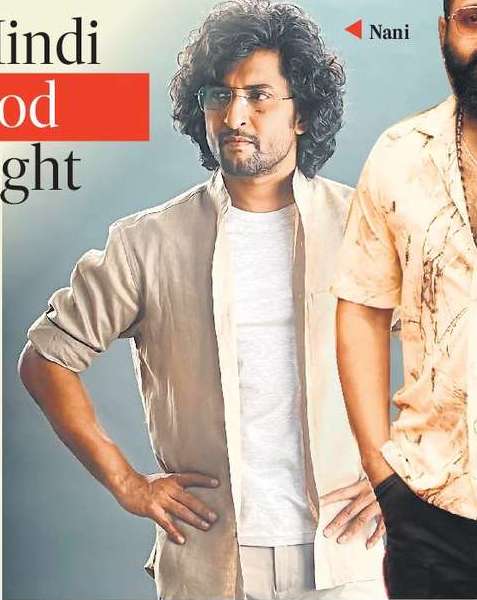
HINDUSTAN TIMES (September 2, 2024)
Nani thinks actor-director Rishab Shetty meant well when he said that Bollywood does not portray India in a positive light. Sharing his perspective on Shetty’s comment, the actor said that some “great, magical films” are being made in Bollywood.
“I don’t think Bollywood shows India in a negative light. I don’t think Rishab meant it that way. I think what he was referring to was more rooted stories,” Nani told India Today.
Talking about Hindi films, he added, “In a few [Bollywood] films, a lot of importance is given to the technique and style of filmmaking rather than the core of the emotional story. But there are some great, magical films in Hindi too.”
Recently, after winning a National Film Award for his film Kantara (2022), Shetty told MetroSaga in Kannada: “Indian films, particularly Bollywood, often portray India negatively. These so-called art films get showcased at international events and receive special attention. For me, my nation, my state, and my language are sources of pride. I believe in presenting them in a positive light to the world, and that’s exactly what I strive to do.”
Indian films, particularly Bollywood, often portray India negatively-Rishab Shetty
4:17 PM
HINDUSTAN TIMES (August 22, 2024)
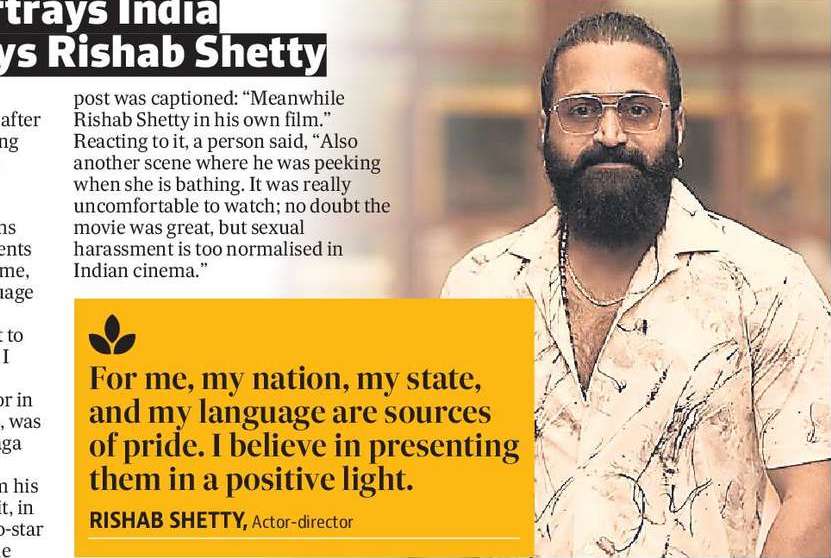
The internet isn’t happy with actor-director Rishab Shetty after he criticized Bollywood, saying that it presents films in a negative light.
“Indian films, particularly Bollywood, often portray India negatively. These so-called art films get showcased at international events and receive special attention. For me, my nation, my state, and my language are sources of pride. I believe in presenting them in a positive light to the world, and that’s exactly what I strive to do,” Shetty, who won a National Film Award for Best Actor in a Leading Role for Kantara (2022), was quoted while speaking to MetroSaga in Kannada.
Meanwhile, a clip of Shetty from his film Kantara was shared on Reddit, in which he was seen pinching his co-star Sapthami Gowda on her waist. The post was captioned: “Meanwhile Rishab Shetty in his own film.”
Reacting to it, a person said, “Also another scene where he was peeking when she is bathing. It was really uncomfortable to watch; no doubt the movie was great, but sexual harassment is too normalized in Indian cinema.”
Led by Aattam, South Indian cinema walks away with top honours at National Awards
9:10 AM

Best Director Award For Barjatya Marks Bollywood’s Presence
Manash Gohain (THE TIMES OF INDIA; August 17, 2024)
New Delhi: Southern cinema grabbed centerstage winning a clutch of major awards in the 70th National Film Awards. The best feature film award went to the Malayalam movie “Aattam: The Play”, while Rishabh Shetty received the best actor award for the Kannada hit “Kantara.” Best actress prize was shared by Nithya Menen for the Tamil film “Thiruchitrambalam” and Manasi Parekh for the Gujarati movie “Kutch Express”.
Sooraj R Barjatya (Hum Aapke Hain Koun) seized the best director award for “Uunchai”, marking Bollywood’s presence among the top categories. Nina Gupta received the best supporting award for the same film while Pavan Malhotra, known for his riveting performances in films such as Salim Langde Pe Mat Ro and Bagh Bahadur, earned the supporting actor award for Haryanvi film, Fouja.
The jury members presented the list of winners for 2022 to Union I&B minister Ashwini Vaishnaw on Friday.
Malayalam cinema led the charge, winning eight awards, including for best child actor, best screenplay, and best editing. Overall, 20 south Indian films bagged awards a cross various categories in the feature film segment. In the feature film category, out of the 24 awards, excluding the sub-category of best feature film in each language, 20 awards were shared by Malayalam, Haryanvi, Kannada, Gujarati, Tamil, and Bengali movies. Only six awards were bagged by three Hindi films, with two being shared with other regional language movies.
“Fouja” won two other awards: best debut film by a director for Pramod Kumar and best lyrics by Naushad Sadar Khan.
The award for Best Popular Film Providing Wholesome Entertainment also went to a non-Bollywood film, the Kannada blockbuster “Kantara”, which explores the intricate connection between humanity and nature through its folklore-based storytelling. Rishabh Shetty played the dual roles of a father and son in this film.
The top honour, the best feature film “Aattam: The Play”, directed by Anand Ekarshi, revolves around a theatre troupe and the changing dynamics after its only woman member alleges she has been groped by one of the men.
The best female playback singer award went to Padma Shri awardee “Bombay” Jayashri Ramnath, a champion of Indian Carnatic music, for the track “Chaayum Veyil” from the Malayalam film “Saudi Vellaka CC 225/2009” (Saudi Baby Coconut CC.225/2009), which also won the best Malayalam film award.
A R Rahman won the National Film Award for best music director (background music) for his work in Mani Ratnam's ‘Ponniyin Selvan-Part 1’, which was also named the best Tamil film. Pritam got the award for best music director (songs) for ‘Brahmastra-Part 1’.
------------------------------------------
Rishabh Suri, Mugdha Kapoor, Soumya Vajpayee, Yashika Mathur, Akash Bhatnagar (HINDUSTAN TIMES; August 17, 2024)
I was not expecting it: Manoj
It’s Manoj Bajpayee’s fourth National Award and this time it’s a Special Mention for the actor for the film Gulmohar (2023). We break the news to him, and he exclaims, “Wow! Best Hindi film too! I must call my director (Rahul V Chittella) right away. I was not even expecting an honour. He is deserving of it, as he made such a beautiful film.” Bajpayee feels grateful that his work is getting recognised now: “There have been performances and films that went unrecognised.”
I am still processing it: Manas
Manasi Parekh, who bagged the Best Actress award for Kutch Express (2023), says, “I am shooting for my new film, and got a message from (actor-filmmaker) Anand Tiwari: ‘Congratulations on the National Award’. I exclaimed, ‘What!’ I am still processing it, I can’t believe it.” The actor looks at the award as a vindication for her hard work: “I love what I do. What makes this win sweeter is that my husband and I produced Kutch Express. I want to do the best work and make the best of films.”
Kantara is a tribute to our land: Rishab Shetty
Rishab Shetty, who won Best Actor for Kantara (2022), with the film also winning the Best Film Providing Wholesome Entertainment award, tells us exclusively, “The win feels overwhelming. I wanted to bring authenticity and a raw portrayal of our heritage. The film is a tribute to our land and the deep-rooted stories that have been part of our cultural fabric for many years, true to the essence of the Kannada culture. I’m thankful to the Daiva for their divine blessings and dedicate this award to the Daiva Nartakas.”
This feels so special: Pritam
Pritam Chakraborty, who won the Best Music Director award for Brahmāstra: Part One – Shiva (2022), says, “This feels so special. I am really grateful to the jury. I want to thank the makers and everyone who was associated with the movie for their support and trust in me. But, most importantly, a big thank you to the audience for their love to our music.”
’This is such an auspicious day’
“I didn’t know that the National Awards were going to be announced today!” says director Chandoo Mondeti, whose film Karthikeya 2 won the National Award in the Best Telugu film category. Mondeti also tells us how he heard of the win after a friend called to congratulate him. “It is such a happy day for us. Karthikeya 2 is a very special film. This is such an auspicious day,” the filmmaker beams, adding that celebrations will follow right away: “It is such great news for me and everyone associated with the film.” This is Mondeti’s first ever National Award.
Like a pat on the back, says Pavan Raj Malhotra
Actor Pavan Raj Malhotra, who won the National Film Award for Best Supporting Actor in the Haryanvi film Fouja, says, “This is my second award, and it feels really good. I remember the first time around, there used to be a rehearsal before the main ceremony without the President and I was wondering how to greet him. Suddenly, I uttered the words ‘Jai Hind’ and it was perfect. This kind of recognition is what every artiste works for. It’s like a pat on the back and as far as I know, these awards are not manipulated. Fouja is actually close to my heart as it is about the desire to join the army; it is a great honour to be a part of the Indian Army. I don’t know how much of an impact this might have, but I have been working for 40 years now. If you keep working and doing what you like, these awards just make you feel appreciated.”

I won’t leave the Kannada film industry for other languages-Rishab Shetty
8:26 AM

Niharika Lal (BOMBAY TIMES; December 2, 2023)
Rishab Shetty, who was in Goa for IFFI, had recently announced the prequel to Kantara. There, he spoke about how he had the idea of a prequel in mind while filming for the first part.
“While doing Kantara, I had it in my mind; I had story elements; the story was in two parts. During promotions, the filmmakers ended up announcing a franchise, but I didn't want to do that. While I had this thought in mind, I kept it to myself and thought we would make a second film only if the first one is received well by the audience.”
He also spoke about why he sees the success of his film, Kantara, as a responsibility, the flawed concept of talking endlessly about a film during promotions, and the importance of word-of-mouth publicity. Excerpts:
‘IT’S NOT US WHO SHOULD BE TALKING ABOUT THE FILM, IT’S THE AUDIENCE'
Rishab says that people now only want to talk to him about his upcoming film, but that is something he is not on board with. “I feel that, in the name of promotions, we actors and directors end up talking more about the film than the audience. It's not us who should be talking about the film, it's the audience. Baat toh kaam pe hona chahiye, aur woh logon pe chhorna chahta hoon main,” he said.
RISHAB SHETTY WON THE SPECIAL JURY AWARD FOR KANTARA; IT’S THE FIRST KANNADA FILM TO WIN THE AWARD AT IFFI
“Last year, we came to IFFI to promote Kantara. It was a really proud moment for us this year that Kantara was in the competition section at IFFI. In fact, it was the support and love of the audience because of which the film not just found a place at the box office but in the history of Indian cinema,” he says.
‘FOR STATES OUTSIDE KARNATAKA, I AM JUST A ONE FILM WONDER’
“For outside states (other than Karnataka), I’m considered a one-film wonder. They feel I have done one movie and (wonder) what else I will do! This question will always remain. So, I feel it is my responsibility to do my next film with all my strength,” says Rishab, who has directed four films, and acted in over 16 films in Kannada.
‘NO MATTER HOW EXCITING THE OFFERS ARE, I WILL NOT LEAVE THE KANNADA FILM INDUSTRY’
When asked if he would be interested in doing Hindi films, Rishab said, “After the success of Kantara, I received offers not only from Hindi films but from several other languages besides Kannada. There are many beautiful opportunities that I am missing because I feel I should not leave the Kannada film industry. It’s a sentiment. ‘Ek film hit hua toh ye industry chhod ke ja raha hai, aisa nahi hona chahiye.’”
‘IF THE MOVIE’S CONTENT IS GOOD, IT CAN GO BEYOND THE LANGUAGE BARRIER’
Speaking about the fact that now movies are doing well, irrespective of language, Rishab shared that if his Kannada film reaches people in other states, he’ll dub the film and release it. He said, “Hindi cinema is still performing much better when it comes to theatrical performance. If content is good, then people will appreciate the film, irrespective of language. We need to explore it and make sure our content should be globally rich.”
‘OTT PLATFORMS ARE NOT TAKING KANNADA MOVIES AT PRESENT’
“Festival films get limited exposure in theaters, but there should be a way to get these films released in theaters. However, OTTs are not entering the Kannada industry at present, after a few films backfired. They are refusing to take more Kannada films, and if this is the case, we won’t be able to recover our money from the theatrical release of Pedro, Shivamma, and another Film Bazaar film that is a work-in-progress. If I release them theatrically, these three will be my last movies from my own production house,” he says.
Rishab Shetty confirms Kantara 2; says it will be a prequel
7:57 AM

HINDUSTAN TIMES (February 8, 2023)
After the roaring success of Kantara (2022), actor-filmmaker Rishab Shetty has confirmed the release of highly-anticipated Kantara 2. Speaking at an event in Bengaluru, that was organised to celebrate the 100-day theatrical run of the film, Shetty shared that Kantara 2 is indeed in the making and will hit the theatres in 2024. The 39-year-old also revealed that the upcoming film will be a prequel to the blockbuster.
“We thank the audience for their immense love and support for Kantara. With the blessing of almighty Daiva, the film has successfully completed 100 days and I would like to take this opportunity to announce the prequel of the film,” said Shetty at the event.
Talking about the prequel he added, “What you have seen is actually Part 2, Part 1 will come next year. The idea came to my mind while I was shooting for Kantara. It is because the history (of the film) has more depth to it. Currently, we are digging for more details. As research is still underway, it would be early to reveal details about the film.”
I keep reliving Kantara's climax scene; I want to know how Rishab Shetty did it-Amit Sadh
8:53 AM
Ashish Kumar Singh (HINDUSTAN TIMES; January 20, 2023)
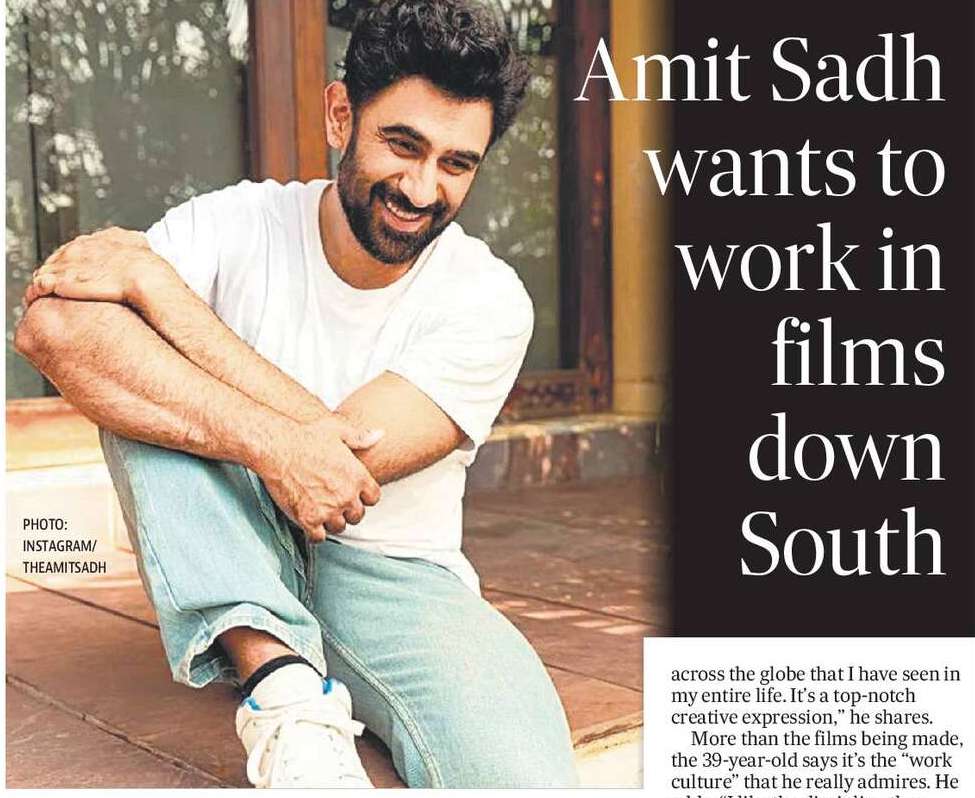
As the craze of pan-India films continues to gain momentum and break box-office records, it’s only understandable to see many in Bollywood wanting to take that route — actor Amit Sadh being the latest of the lot. All praise for films being made by makers in the Telugu, Malayalam, Tamil and Kannada industries, he wishes to walk that road someday.
“This is the first time I am sharing that I’ve sent my showreel to casting directors down south, saying that if there is a good role, please consider me,” reveals Sadh, who was last seen in the second season of the web series Breathe: Into the Shadows.
Calling the Kannada film Kantara (2022) a “cinematic marvel”, he adds, “It speaks volumes of the richness of creative expression Rishab (Shetty; actor-director) and his team put forth.”
Sadh confesses it’s the climax of the film that floored him. “I keep reliving those scenes... I want to know how Rishab did it. Without a doubt, it’s one of the best performances in cinema from across the globe that I have seen in my entire life. It’s a top-notch creative expression,” he shares.
More than the films being made, the 39-year-old says it’s the “work culture” that he really admires. He adds, “I like the discipline they imbibe. While I work here (Bollywood), I’d like to bring that mindset to the movies I do. Whenever there is a good role for me [in a south Indian language film], I will just jump the gun.”
However, the actor believes it’s not fair to compare Hindi films to those of south Indian languages. “It’s all Indian cinema. In every language, there are films that work and those that don’t. Great filmmakers are everywhere. Jo mehnat karega, uski film achhi hogi aur chalegi. There is nothing like south or east, north or west,” he concludes.
In Kantara, no viewer asked about the budget of the film. They felt a connect with the film-Rishab Shetty
8:27 AM

Niharika Lal (BOMBAY TIMES; November 29, 2022)
Kantara director Rishab Shetty spoke about the importance of telling a hyperlocal story, exploring the theme of nature in his latest film and why he thinks pan-India films is a flawed concept. Shetty, who was also the film’s lead, discussed these topics with veteran film producer TG Thayarajan at an IFFI (International Film Festival of India) session titled Representing Cultural Diversity and Identifying New Markets.
‘I WROTE KANTARA BECAUSE I WANTED TO EXPRESS THE ANGRY YOUNG MAN INSIDE ME’
Talking about his character in Kantara, Rishab said, “I wrote Kantara because I wanted to act in it. For years, I wanted to play a character like Shiva but I never got a chance to do that and got busy with direction. I was the lead in Bell Bottom, which is a comedy genre, and after that I was offered a lot of comedy and underdog roles. I felt that if I will accept these roles then I will be limiting myself to this particular genre and I won’t be able to express the angry young man who’s inside me. That’s why I wrote this role.”
‘I BELIEVE THE MORE REGIONAL A STORY IS, THE MORE UNIVERSAL IT IS’
Asked if he thinks the world is warming up to regional films from India, Rishab said that it is the power of cinema. He said, “There is a need to tell local stories because the more rooted and local a story is, the more unique it would be and these unique stories have a universal appeal.”
He added, “If I am going to tell you a story of my own village, which I did in Kantara, then you will not get that particular story from that particular village on any OTT platform or in world cinema because that story is unique to my own village. Hence, I feel that there is a dire need to tell unique stories. So if I bring a story from my village and present it in a new format then people are going to like it. There is nothing new in stories. It is just the treatment of the story that is always new. I believe that the more regional a story is, the more universal it is.”
‘KARNATAKA MERI KARMBHOOMI HAI AUR MAIN UDHAR HI FILM KARNA CHAHTA HOON’
Kantara was dubbed after its release in five languages, including Hindi, because of the demand. Rishab said, “Now it has become a pan-India film. There is no formula for a pan-India film. It is the audience connect that matters.”
In response to a question if he would be interested in doing films in other languages besides Kannada? Rishab said, “Main Kannada film karna chahta hoon. Across the country and even the world, people have transcended the language barrier and watched Kantara, and showered me with so much love and respect, but I’ve come from the Karnataka film industry and Kannada people have given me a platform to tell my stories. Karnataka meri karmbhoomi hai aur main udhar hi films karna chahta hoon. If my film in Kannada language reaches people in other states – be it Hindi, Tamil, Telugu, Malayalam then I’ll dub the film and release it.”
Rishab also confirmed that Kantara is being dubbed in multiple foreign languages.
‘AUDIENCE DOESN’T CARE IF IT IS A BIG OR A SMALL BUDGET FILM, THEY ONLY CARE ABOUT CONNECTION’
Rishab dismissed the idea of pan-India films and the notion that producers have to increase the budget to reach a wider audience. He said, “Now, the reach of cinema has become limitless. If the content is strong in today’s time, then it can reach any place in the world. The audience doesn’t care whether it is a big-budget film or a small-budget film, all they care about is a connect with a film. When you think that the film should be pan-India and we increase the budget, then at that step itself you are facing a huge loss. I don’t believe in the concept of pan-India films. Producers mislead bhi hote hain – they think a big budget means wider reach which is definitely not true. Now in Kantara, no viewer asked about the budget of the film. They felt a connect with the film, liked the story and watched it. Word-of-mouth is the most inexpensive form of marketing and it contributed to the success of Kantara. Any film can perform well if the audience can connect with the content. I decide the budget of my films on the basis of what the film needs.”
‘MAIN SOCIETY SE KUCH LEKAR FILM MEIN DIKHANE KI KOSHISH KARTA HOON’
When asked how he selects the subjects for his films, Rishab said, “I don’t think much about the subject of the film. I even read very less. I was a below-average student in a Kannada medium school and you all are asking me to speak in English so I was wondering if should I speak in English or not? Main sota (sleep) bhi Kannada mein hoon aur khata bhi Kannada mein hoon. Main sab Kannada mein karta hoon. To choose the subject of my film, I observe what is happening in society and around us, what is the political scenario, and what are the discussions going around, and then I take inspiration from that. Yeh sab zyada sochta hoon main aur society se kuch lekar film mein dikhane ki koshish karta hoon.”
When asked if he believes in rituals that are shown in Kantara? He said, “I belong to a family that believes in those rituals and every year we do these rituals. Hamara mool wohi hai. If I would not have believed in those rituals then the audience would not have believed in those rituals shown in the film.”
Mujhe pan-India mein interest nahin tha, to begin with-Rishab Shetty
10:51 PM

The actor-director talks about his latest release earning love across the country and how language is not a barrier anymore
Rishabh Suri (HINDUSTAN TIMES; October 25, 2022)
Kannada actor and director Rishab Shetty is feeling overwhelmed these days, as his latest directorial venture, Kantara, has become the talk of the town. Viewers and industry insiders have been praising it galore, including actors Shilpa Shetty Kundra and Anushka Shetty.
Rishab never expected the film to do “this well”. Hence, the makers didn’t dub it in any other language initially. “The film is about man and nature’s relationship. It’s a part of Karnataka’s folklore. So, I wanted to present this to people in my original language. But then, the demand started for other versions as well. On Twitter, people would message me, ‘Hindi, Telugu, Tamil mein release karo, isko pan-India karo’. Mujhe pan-India mein interest nahin tha, to begin with,” says Rishab, contrary to the current trend of pan-India films doing well.
The 39-year-old adds, “There are no language barriers now. There are no regional languages; it’s Indian cinema, isiliye itna pyaar mil raha hai Kantara ko.”
Rishab, who played the lead role in the film, released the film in select theatres initially. The fact that the film was received well prompted the makers to expand to more theatres. “People have promoted the film so much on social media. It is all word of mouth. Logon ka taste badal raha hai. They have begun to get conscious of Indian traditions,” says the Kirik Party (2016) director.
He has spent 18 years in the film industry and he likes how things are changing: “It’s not as if I have worked only for this (good box-office numbers), bas ab thoda balance ho raha hai.”
Rishabh Shetty was extremely supportive and sweet-Sapthami Gowda
10:46 PM
Aayushi Parekh (HINDUSTAN TIMES; October 25, 2022)
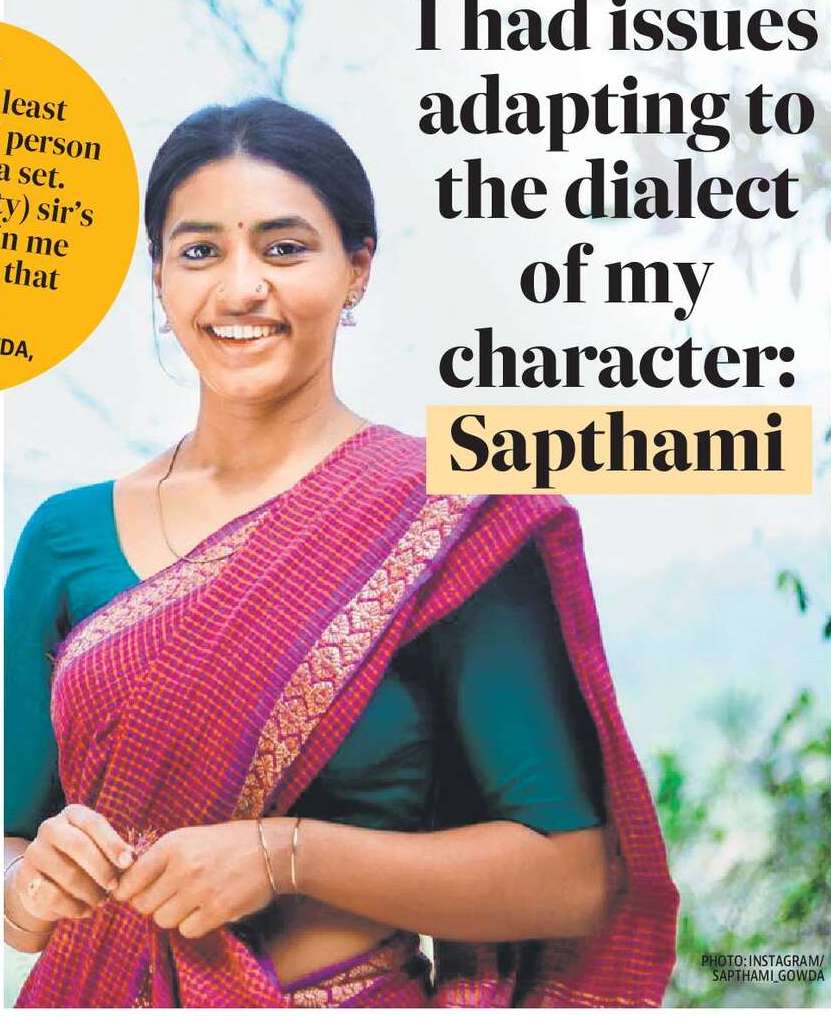
Riding high on the global success of her recent film, Kantara, actor Sapthami Gowda says the audience reception to the film has been “unprecedented”.
“We did not expect a success of this kind. Within a week of its release, the film blew up globally. During the filming, we knew that we’d get due credit for all the hard work we put in, but this was unprecedented. We just focused on putting our heart and soul into the film,” she says.
The 26-year-old says she could not believe it when she was cast for the role. “I was the least experienced person on set. Every single member of the cast and crew were years ahead of me and I was struggling on the second day of filming. I had issues adapting to the dialect of the character as she speaks Magalorean Kannada,” narrates the Popcorn Monkey Tiger (2020) actor.
She credits director Rishab Shetty with helping her accomplish the task: “In the beginning, everyone had their doubts whether I’d even be able to pull off this role, but Rishab sir’s confidence in me helped turn that around. He was extremely supportive and sweet. He even got me a language coach.”
Ask if she feels the pressure of living up to the film’s success with her upcoming projects, and she says, “I went into this film with little experience and an ambition to learn, and look how it turned out! I will do that for every film that comes my way, and just go with the flow.”
Talking about the films she wants to work on in the future, she says, “I love (filmmaker) Mani Ratnam’s work and really want to be part of a classic romantic film or a mythological film. When it comes to language, I want to stick to the ones I’m fluent in, but I’m ready to learn if the story is great.”
Subscribe to:
Posts (Atom)