Showing posts with label Pippa. Show all posts
Showing posts with label Pippa. Show all posts
Salman Khan’s Maatrubhumi undergoes reshoots and Army consultations?
4:15 PM

Niharika Lal (BOMBAY TIMES; April 13, 2026)
The title of Salman Khan’s forthcoming war drama Battle Of Galwan was changed to Maatrubhumi last month. Salman had shared a new poster of the film with the revised title, writing, “May War Rest In Peace #Maatrubhumi.”
While there has been no official statement from the makers regarding the reason for the title change, industry speculation suggests that the decision may have followed discussions with authorities. Chinese state media outlet Global Times had previously accused the film of distorting facts following the release of its teaser.
Between the two titles, the film’s plot has reportedly been modified. “There have been industry discussions for months, but we are not aware of anything official. The release date has been announced, but there is still speculation about when the film will be in theatres,” says exhibitor and veteran business analyst Raj Bansal.
‘For a movie that has not had its script approved, if the ADGPI becomes aware of it, they get in touch with the producer’
There are also industry talks about the film facing several hurdles with the CBFC. Major (Retd) Sandeep Sangwan, who is also a defence consultant on films like Pippa, explains what could have happened.
“When there is a movie based on a battle or war, the script is submitted to the Additional Directorate General of Public Information, IHQ of MoD (Army) (ADGPI). Most major changes, if any, are suggested by the ADGPI, and producers incorporate them. The changes are suggested at the script stage, and then the movie moves into the production phase. In the post-production phase, when the movie is ready, a special screening is conducted for the ADGPI. If they find that further changes are required, they suggest them. For instance, with Sam Bahadur and Pippa, I am aware that a couple of changes were suggested by the ADGPI after screening, and the films were released after those changes were made.”
He further adds, “First, the title itself could have been an issue because even China does not officially name Galwan. Accurate locations or references are often avoided. In general, when a film deals with the Army, the CBFC asks producers to first get a go-ahead from the ADGPI. The CBFC only clears the film once ADGPI approval is in place. Now, for a movie that has not had its script approved, if the ADGPI becomes aware of it, they get in touch with the producer and ask for submission and changes.”
The makers and the ADGPI are yet to comment on the issue.
‘Any kind of wrong optics, involving a popular star like Salman, can have an impact’
Since the new title of Battle Of Galwan was announced, industry chatter suggests nearly 40% of the film is being reshot, with references to China removed and a fictional twist added.
Exhibitor and industry expert Akshaye Rathi says, “No statement has been issued by the makers of the film yet and we are only hearing from industry sources. Obviously, national interest is paramount. Any kind of wrong optics, especially involving a popular star like Salman Khan, can have an impact on how things are perceived by citizens of other countries or by the Chinese Embassy in India.”
‘Uri’ effect? Bollywood full of josh for military movies
8:32 AM

Wartime stories and biopics of heroes are the new favourite with filmmakers, many of whom are trying to make them more authentic with real weapons and research
Himanshi Dhawan (THE TIMES OF INDIA; January 28, 2024)
Bollywood is going to war! Well, not literally but visually. Don’t get us wrong. The staple Bollywood masala hero must still overcome insurmountable challenges, romance the girl and win in the end. But if a hero can also fly a plane, shoot enemies of the country, survive a couple of bullets, there is a better chance of box office success.
No wonder filmmakers have dusted off archival material to bring old war stories to celluloid — the 1971 war with Pakistan is a hot favourite. ‘Fighter’, starring Bollywood biggies Hrithik Roshan and Deepika Padukone who play fighter pilots in the Indian Air Force, released this week, and there are more such military-themed movies in the pipeline.
‘Ekkis’ by director Sriram Raghavan— slated for a 2025 release — is based on the youngest Param Vir Chakra awardee Lt Arun Ketrapal who lost his life during the 1971 war. Director Aanand L Rai has announced ‘Gorkha’ on Gorkha regiment’s Maj Gen Ian Cardozo and the pivotal role he played in the 1971 war, while Tamil director Rajkumar Periyasamy has begun shooting for a film on Major Mukund Varadarajan who killed three terrorists in J&K’s Shopian district and was awarded the Ashok Chakra posthumously.
‘Fighter’ co-producer and filmmaker Ramon Chibb has announced a film on Narendra ‘Bull’ Kumar recently. Col Kumar, who was awarded the Padma Shri, carried out multiple expeditions in the Siachen glacier area in the late 1970s and early 1980s which laid the basis for the Army’s success in Operation Meghdoot.
Last year, there were three Bollywood films on the armed forces, including the Sam Bahadur biopic starring Vicky Kaushal, and ‘Pippa’ that was released on OTT featuring Ishaan Khatter and ‘Tejas’ that showcased Kangana Ranaut as a woman fighter pilot helming a military spy operation. The first two received critical acclaim for their portrayal of the military. ‘Major’m based on NSG commando Sandeep Unnikrishnan’s bravery during the 26/11 Mumbai terror attacks, was released in 2022.
Military historian AVM Arjun Subramaniam says military movies have been an influential genre in the West that India is catching up to. “Indian filmmakers had it tough in terms of authentic research and access to material and people. Now, there are more sources of information, more books, and more articulate officers. Also, the defence establishment has realised that this is an effective form of outreach to show how the military that embodies the values of inclusiveness, secularism and multiculturalism has contributed to democracy.”
Subramaniam, who was advisor for ‘Sam Bahadur’, says it is amongst the few military biopic made after Independence and a good indicator of how nascent the genre is in India.
Many took their cue from the resounding success of ‘Uri: The Surgical Strike’ in 2019. “How’s the josh?” a dialogue by Vicky Kaushal’s character captured the public imagination. In 2021, ‘Shershaah’, based on Captain Vikram Batra who lost his life during the 1999 Kargil war, was also a success. ‘LOC Kargil’, ‘Lakshya’ and ‘Gunjan Saxena: The Kargil Girl’ have been some of the other films on the subject.
Chibb, who wrote the story for ‘Fighter’ besides co-producing it, says that there is a marked change in how Bollywood approaches the subject. For starters, it’s ditching the earlier clichés of bandook and badi mooch. “Filmmakers are more sensitive to historical facts and are veering towards realism whether it is action, operational details or equipment. Earlier, there were times when the film would carry the wrong medals, uniform and weaponry,” he says.
Cringe-worthy scenes like an army officer wearing police medals, or a 25 or 26-year-old being portrayed at a senior position like a Lt General that takes 25 years of service come to mind. Chibb says ‘Fighter’, which has extensive aerial manoeuvres and authentic weaponry and equipment, will hopefully show the way.
Chibb says that he would watch Hollywood films like ‘Guns of Navarone’ and ‘Top Gun’ and find that ‘cool’ quotient missing in Bollywood films. He singles out ‘Vijeta’ (1982) and ‘Prahar’ (1991) as exceptions and close to authentic. “The industry has realized that military stories lend themselves to the screen: they have action, mystery and drama. When big stars are willing to play the characters, it makes a huge difference. It raises awareness about the military and increases recruitment,” he says.
After the controversy sparked by the release of ‘Gunjan Saxena’, where the military felt that facts had been distorted to show the air force as gender biased, it mandated that scripts would be cleared by the Additional Directorate General of Public Information (ADGPI). ADGPI can also recommend defence consultants for projects.
“The military has also opened access to cantonment areas, equipment and even using real soldiers that adds authenticity to the film,” says Major Sandeep Sangwan who was a defence consultant for ‘Pippa’. The movie was shot at the Armoured Corps School and Centre in Ahmednagar, Maharashtra. In ‘Sam Bahadur’, Kaushal was allowed access to not only Field Marshal Sam Maneckshaw’s car but also his driver for the film scenes.
Filmmakers might have upped the standard with research, but critics say many of them still border on jingoism. Unlike films like ‘Dunkirk’ that examine military strategies or ‘American Sniper’ that explores PTSD in soldiers, most Bollywood films do not look at layered characters.
Subramaniam says, “Our DNA is not structured for an open investigation or learning from mistakes. Issues of national security are cloaked in secrecy. The public does not easily understand these matters.” This reflects in the paucity of books or availability of declassified archival material on the battles India has lost. Indian filmmakers also succumb to the temptation of adding romance and songs.
The military is one of the few institutions for which public support transcends regional and communal loyalties and that means serious moolah, an opportunity that Bollywood is gunning for.

Give us our due, why do we have to beg for it?, ask Bollywood choreographers
8:26 AM

After Bosco Martis raised the issue of choreographers not getting due credit, others from the fraternity join the discussion
Neha Maheshwri (BOMBAY TIMES; January 3, 2024)
Renowned choreographer Bosco Martis’s recent post on Instagram demanding due credit for choreographers on promotional platforms, especially on posters, radio, and YouTube, has garnered support. Calling it a fight of 22 years, he wrote, “When the music director, lyricist, singer or the writer is celebrated, then why not the choreographer who makes the actors and the nation dance. It’s heartbreaking.”
Talking about the need to recognize the hard work put in by choreographers, Bosco says, “The entire nation celebrates our hook steps and dance moves, but we rarely get credit. Even on YouTube, choreographers are seldom mentioned. Every time I choreograph a song, I have to insist on having our names on the poster. Unfortunately, our names don’t find a place even in teasers and trailers. Why should we beg for credit? It should be respectfully given to deserving people.”
He adds, “‘Naatu Naatu’ from ‘RRR’ reached the Oscars, but it was disheartening to see that the choreographer’s (Prem Rakshith) name was not acknowledged. I believe it was the choreography that contributed immensely to the song’s success.”
‘Established choreographers need to unite and fight for this cause’
Bosco hopes to get more support from the industry on this. “A film’s director, actor, and producer should be the first to acknowledge our work. This is just the beginning. Established choreographers need to unite and fight for this cause. It’s not about one choreographer’s credit, it’s a fight demanding a fair deal for everyone,” he says.
Meanwhile, the latest development is that Hrithik Roshan has initiated a dialogue with the makers of his upcoming film Fighter to include Bosco’s name in the latest track.
‘Logon ko lagta hai naachna asaan hai, which is a misconception’
Choreographer Mudassar Khan says, “Bosco’s post has struck a chord with every choreographer in the country — dil ki baat kar di. It’s strange to watch a song without knowing who put together those steps and movements. In Bollywood, a song gains popularity primarily after its visual presentation. What if a filmmaker likes the choreography, but how will they approach us if our names are not mentioned? Unfortunately, the industry always puts the lyricist, singer, and music director above a choreographer. Logon ko lagta hai naachna asaan hai, which is a misconception. Only 10 per cent of makers take the initiative to credit us in songs on TV and other platforms.”
‘Dance in the industry has lost its position as an art form’
Karishma Chavan, who has been part of the industry for 20 years and has choreographed for several films, including ‘Veere Di Wedding’, shares, “In the past, choreographers got their due, but dance in the industry has now lost its position as an art form. There is a lack of credit and monetary compensation for our experience, let alone respect. Bosco is justified in taking a stand and addressing the growing disrespect. The only way forward is for technicians to stand united on this.”
‘It’s a constant fight to ensure our names are mentioned’
Vijay Ganguly, who became an independent choreographer in 2013, says, “I was surprised when Bosco sir posted about this issue, as I would think it happened to those relatively new in the industry. Often our songs are released on platforms like YouTube, and credits are given to everyone but choreographers. It’s a constant fight to ensure our names are mentioned. For films like Sam Bahadur and Pippa, I requested the makers to mention the dancers in the end credit because they put in significant time and effort. I am glad they complied. Seeing our names on the big screen makes a significant difference to us.”
‘Even after 36 years in the industry, I feel unrecognized’
Jyothi D Tommaar, who choreographed the National Award-winning song Ghoomar in Padmaavat (2018), along with Kruti Mahesh, says, “I am grateful to filmmaker Sanjay Leela Bhansali for ensuring that Kruti and my name is mentioned every time the song is showcased. However, if others have had negative experiences, I will certainly support them. Unfortunately, choreographers face struggles despite bringing life to songs. Even after spending 36 years in this profession, I still feel unrecognized in the industry. If you don’t actively promote your name and achievements, recognition remains elusive. I empathize with Bosco and stand in solidarity with him.”
‘A song belongs as much to the choreographer as it does to the music director or the singer’
Vrushali Chavan, who assisted Farah Khan before starting independently in 2015 and has choreographed the single ‘Swag Mera Desi’, among others, asserts, “Every artiste deserves rightful acknowledgment. A song belongs as much to the choreographer as it does to the music director or the singer. In many cases, a visually appealing song serves as an invitation to watch the film. I have faced this situation – choreographed all three songs in a film only to find my name missing from the credits on YouTube. I had to request them to add my name, but by the third song, I gave up. It’s a sorry plight that we have to ask and remind people of our contribution.”

Films should have rich classical music, why dumb things down?-A R Rahman
8:29 AM

Niharika Lal (BOMBAY TIMES; December 4, 2023)
Wrapped in their jackets and shawls, Delhiites turned up to hear AR Rahman talk about storytelling, films and music at the Kathakar festival in Sunder Nursery on Friday evening. Rahman received so much love from the Delhi audience that they didn’t want to let him go, with Rahman saying, “I love you guys so much. I will come back again.” Rahman shared some insightful and straightforward comments on the music scenario in India.
‘WHY DO YOU WANT TO DUMB IT DOWN FOR THE AUDIENCE?’
Rahman shared that these days, filmmakers often want to oversimplify things. In reference to Gulzar’s comment that Rahman and Mani Ratnam didn’t interfere with excessive Urdu usage in songs in Dil Se.., he said, “That’s how it should be. It happens a lot these days – you dumb things down. ‘No, no, people are not going to understand that. Make it simple. Don’t do this and don’t do that.’ A poet or lyricist has a responsibility to the audience. Why do you want to dumb it down? Okay, you can dumb down one song, but not all songs. I feel like film music should have rich classical music – thumris, khayals. If you want one item song, it’s fine, do it. But for the rest of the stuff, let it live and breathe. Why can’t you figure out a way that the screenplay doesn’t make it boring? That’s the question I keep asking people.”
‘HATRED COMES WHEN ONE FAILS TO UNDERSTAND THE HUMANITY BEHIND ANY CULTURE’
Speaking about the films he wrote and directed, such as Le Musk and 99 Songs, Rahman said, “I’m slowly getting into storytelling. If people don’t have their own narratives, their narratives are just taken over. It is important to tell beautiful stories so that people can understand each other and different cultures. Hatred comes when you don’t understand the humanity behind any culture.”
When the host of the evening Mohit Chauhan asked Rahman how he identifies himself with music, Rahman responded, “That’s the question I’m asking myself. I’m still discovering myself. Long ago, my agent asked me, ‘How do I pitch you to people? You’re like a supermarket – you’re doing classical, Indian folk, film songs.’ But I love all kinds of music. I respect all cultures and people, and I never make fun of anything. I go deeper, and I find the truth in it.”
Recently, Rahman’s rendition of a poem by Bengali poet Kazi Nazrul Islam for the film Pippa was in the news after the poet’s family said that the new version distorted the original tune and rhythm. Without mentioning the song, Rahman said at the event, “Sometimes I get it, and sometimes I get caught in embarrassing situations, like the one last month. There are no bad intentions; there is no disrespect to anyone.”
‘YOU CAN’T MISS NIZAMUDDIN DARGAH IN DELHI’
“In Delhi, you can’t miss Nizamuddin sahab Dargah. For the song Kun Faya Kun (from Rockstar), Imtiaz Ali ji called me and asked ‘Can you add the word Nizamuddin in it?’ And I was like of course! It was not there initially; it was not meant to be there. It’s beyond religion and beyond everything. The President of Berklee (College of Music) told me, ‘One song of yours that I love is Kun Faya Kun.’ I don’t know what he understood about that song. Inherently, there is something in it.”
Kazi Nazrul Islam's kin call for removal of Pippa song, makers issue apology
8:37 AM
Ruman Ganguly (BOMBAY TIMES; November 16, 2023)
The controversy:
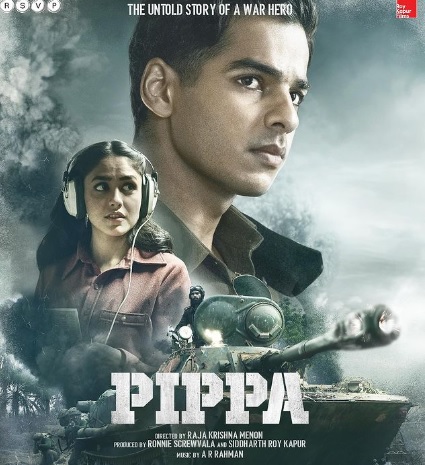
An iconic song by revolutionary poet, composer Kazi Nazrul Islam, Karar Oi Louho Kopat, has been in the eye of a raging controversy ever since it was featured in the OTT film Pippa, starring Ishan Khatter and Mrunal Thakur. The original song, composed in 1922, was one of the most powerful clarion calls against British Raj. Later it also became a call to action during the Bangladesh Liberation War of 1971, which is central to the film in question.
However, it has been re-imagined by A R Rahman, with a new tune and arrangement, sung by a clutch of young performers. Followers of Nazrul, who is also the national poet of Bangladesh, have been sharing their disappointment over the new composition, which they feel has "taken away from the essence of the song." Protests have been particularly sharp in among the Bengali diaspora, and in Bangladesh where they have urged the Prime Minister to intervene and ensure that the song is removed from the film.
---------------------------------------------------
“We're all familiar with AR Rahman as a genius composer and a thoughtful individual. He's also a good friend of mine. However, it's distressing to discover that the iconic song of the legendary rebel poet and composer, Kazi Nazrul Islam, has been brutally murdered. Like many others, I'm deeply shocked by this tragedy. It's a nightmarish scenario, and even as a standalone piece, the impact is truly shocking.”
--- Music composer Debojyoti Mishra
The family tangle:
The controversy took a different turn when it emerged that in 2021, Nazrul's daughter-in-law Kalyani Kazi had granted the license of this song to the makers (Roy-Kapur Productions Pvt Limited) of the film for Rs 2 lakh only. It appears that she had introduced herself and one of her sons (Anirban) as sole living heirs of the rebel poet. Kalyani passed away in February this year. Her US-based daughter told TOI, she had no inkling of any such contract being signed.
Meanwhile, Kazi Arindam, Kalyani's other son, has called for a press conference later this week in Kolkata. Speaking to us about the controversy, he said: "Kazi Nazrul Islam had two families – Sabyasachi and Aniruddha (which is us). The whole situation was created by my brother Anirban, who kept our 85-year-old mother in the dark, forcing her to sign documents claiming he is the sole survivor of our illustrious family. However, he has to prove what he has claimed, knowing fully well that we are all alive and well."
"We request the production house (Ray Kapur Films) and the director to remove the song from the film because while they have worked on it with stalwarts of the industry, it is unfortunate that they haven't understood the history and the meaning behind it. They could have done it meaningfully."
The apology:
With calls to boycott the new version of the song gathering steam, makers of Pippa recently issued a statement, defending their right to have reimagined the song and apologizing for inadvertently causing anguish.
"We wish to clarify that our rendition of the song is a sincere artistic interpretation, embarked upon only after securing the necessary adaptation rights from the estate of the Late Mr. Kazi Nazrul Islam. We have deep respect for the original composition and for the Late Mr Kazi Nazrul Islam, whose contribution to the musical, political and social landscape of the Indian subcontinent is immeasurable. This album was created as a tribute to the men and women who dedicated their lives to the liberation of Bangladesh and keeping in mind the sentiments of their struggle for freedom, peace and justice."
Claiming that they had stuck to the legal agreement, they said: "We approached the making of this song by faithfully following both the letter and the spirit of the license agreement for the lyrics, as duly signed with Late Mrs Kalyani Kazi and witnessed by Mr Anirban Kazi. Our intent was to pay homage to the cultural significance of the song while adhering to the terms set forth in our agreement, which permitted us to use the lyrics with a new composition."
Recognizing the emotional bonds that millions of Bengalis had had with this song for generations, the makers wrote: "While all art is inherently subjective, if our interpretation has hurt sentiments or caused unintended distress, we offer our sincere apologies."
At the time of going to press, A R Rahman was not available for comment.
Even though we created Bangladesh, our contribution is not recognized by the Government of India-Brigadier Balram Singh Mehta
8:21 AM
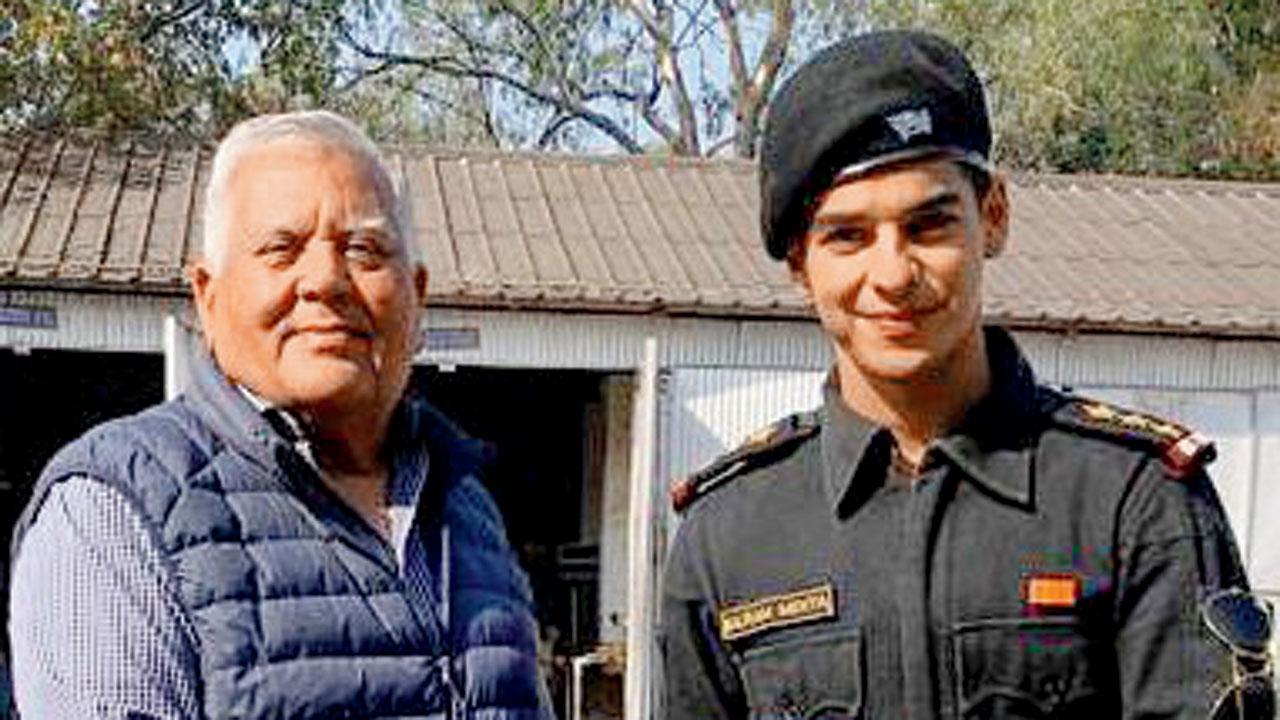
Brigadier Mehta, whose book has inspired Pippa, hopes Ishaan’s war drama will put spotlight on the Indian Army’s valour in the 1971 Battle of Garibpur
Mohar Basu (MID-DAY; November 11, 2023)
For Brigadier Balram Singh Mehta, Pippa is the realization of a promise he had made to his unit. In 2015, he wrote the book, The Burning Chaffees, as an ode to their bravery in the 1971 India-Pakistan War. As the story is retold on the screen with the Ishaan Khatter and Mrunal Thakur-starrer, Mehta says the valour displayed during the Battle of Garibpur must reach people.
“It was a battle fought for the freedom of another country. Over 10,000 refugees came to India and they needed a land that they could call their own. The battle had been launched by Lt Gen AAK Niazi [of Pakistan] to teach the Indian Army a lesson,” he recalls, before delving into the details.
“The story goes that the then-Indian Prime Minister Indira Gandhi was kept waiting in the White House, despite an appointment, for 40 minutes. This couldn’t be taken lightly. She returned from the tour and allowed the Indian Army to cross 10 kilometres into the borders of another country. The Pakistan Army’s sophisticated artillery confirmed the doubts of USA’s involvement. Our victory at Battle of Garibpur became breaking news. But even though we created Bangladesh, [our contribution is] not recognized by the Government of India. The unit has not been granted battle honour on the simple premise that the war had not been declared by Pakistan.”
For Mehta, it took one lunch with producer Siddharth Roy Kapur to set Raja Krishna Menon’s directorial venture into motion. “I had written The Burning Chaffees as a promise made to the tank troops in 1971. Siddharth believed it was a story that had to be told. I was present at the Durgapur schedule and saw the director’s motivation [to tell the story with authenticity].”
The war veteran, who is played on screen by Khatter, remembers his first encounter with the leading man. “I could size him up in the first few minutes, and he fitted the role of a cavalier captain.”
While the war drama premièred on Amazon Prime Video yesterday, the makers had held a special screening for military veterans earlier. At the screening, he says he was too intently looking at the reactions of army officers and highly placed bureaucrats of MoD. “They were transfixed,” he smiles.
It’s hard to root for a war drama when Ukraine and Russia have been at war all year, while Israel has reduced Gaza to rubble, amidst cries of freeing Palestine. As a military veteran, Mehta says Pippa will trigger conversation about the futility of war.
“What’s happening in Ukraine and Gaza, these wars are only destroying humanity. The [stakeholders] will eventually have to sit across the table and work out terms of learning to live together. War is a loss for all, mostly humanity. The sooner it ends, the better.”
(Crisp) Movie Review: PIPPA by FENIL SETA
2:26 PM

Pippa, which has released today directly on Amazon Prime Video, is based on a real-life incident and is also a story of three siblings, working for the country. The first scene is chilling and the initial sequences keep the interest going. But the interest soon dips as it doesn't have clapworthy moments, which is a must in a big-scale war film. Moreover, we have seen films like Uri (2019) and Shershaah (2021) which were better even in terms of emotional scenes. Pippa is nowhere close. Ishaan Khatter puts his best foot forward but looks too young for the part. Mrunal Thakur is impressive. However, she has limited screen time. Priyanshu Painyuli is quite good and restrained. Soni Razdan gets limited scope. Inaamulhaq (Shibli) hams. Soham Majumdar, Chandrachoor Rai (Daljit Singh Narag aka Chiefy) and Anuj Singh Duhan (Tejinder Singh aka Speedy) leave a mark. Leysan Karimova (Russian translator Zena) is okay. Kamal Sadanah is a surprise as Sam Manekshaw. All in all, Pippa fails to make a mark.
My rating - ** out of 5!
My rating - ** out of 5!
You don’t have to generate feelings of hate towards another country to be proud of your own-Ishaan Khatter
8:22 AM
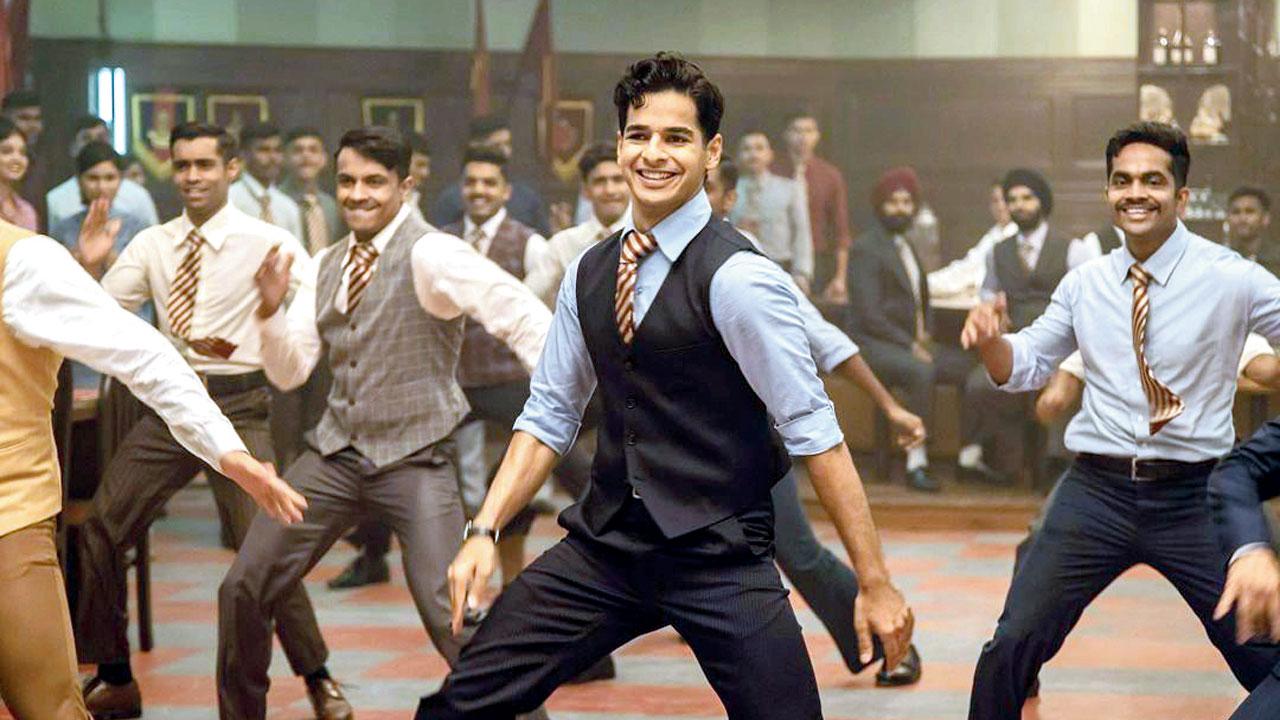
Noting that Pippa doesn’t adopt jingoism as it retells the 1971 Indo-Pak war, Ishaan is happy that drama will reach wide audience through OTT release
Mohar Basu (MID-DAY; November 2, 2023)
Since the announcement of Pippa, it was known that the war drama borrows its name from the Russian tank that the Indian Army used in the 1971 Indo-Pakistan war. But the trailer tells you its significance. “It’s among the few tanks that can float in water. It actually helped India win the war,” says Ishaan Khatter, when we get on a call with him.
The actor steps into the shoes of Brigadier Balram Singh Mehta, whose book The Burning Chaffees is the foundation for the film. It’s evident that he joined Raja Krishna Menon’s directorial venture, armed with a lot of academic learning. To him, studying for a role is the most exciting part of the process.
“With this film, there was a lot of studying required. It is a gargantuan responsibility to represent the Defence Forces. [As prep], we lived for seven days each at two army cantonments, one in Rajasthan and another in Maharashtra. We were taught how to drive tanks. We shot in West Bengal for 45 days and filmed important events like the Battle of Garibpur. Interestingly, we shot the battle sequence 50 years to the day it actually happened [November 20 and 21, 1971].”
It’s easy to see that Pippa, also starring Mrunal Thakur and Priyanshu Painyuli, holds a special place in Khatter’s heart. Does it bother him then that the movie—a war drama whose grand scale should have been enjoyed on the big screen—is having a direct-to-OTT release?
“We wanted to give it a wide and solo release. The theatrical ecosystem is very crowded for at least the next six months, and this film has been waiting in the wings for long. Amazon Prime Video offered a solo release window on Diwali. What’s more important is for it to reach as many people as possible. Here, it reaches 240 countries.”
What strikes you in Pippa is the absence of jingoistic overtones—something that Khatter is proud of. “This film is patriotic and rousing. We highlight that as a nation, we should feel proud about liberating a country. But it cannot come at the cost of hating another country. You don’t have to generate feelings of hate towards another country to be proud of your own. With Pippa, that’s what I am most proud of.”
There’s so much to learn from Nicole Kidman-Ishaan Khatter
8:35 AM
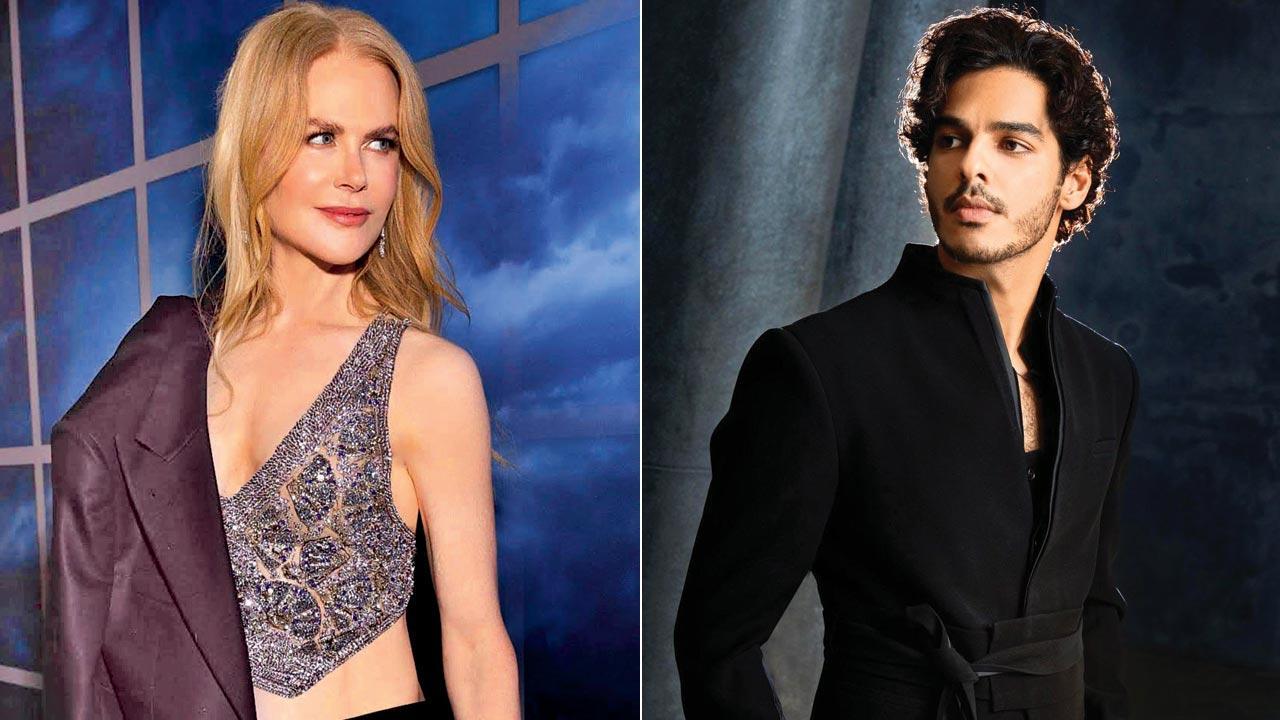
Wrapping up The Perfect Couple with Nicole Kidman, Ishaan on the joy of working in an international series and seeking diverse stories
Mohar Basu (MID-DAY; July 26, 2023)
It’s hard to place Ishaan Khatter. He makes his acting debut with a Majid Majidi film, and follows it up with Karan Johar’s production Dhadak (2018). Mira Nair’s drama A Suitable Boy (2020) shares space with horror comedy Phone Bhoot (2022) in his filmography. But then, the ability to fit into different worlds is one of the hallmarks of an actor. Khatter’s next is The Perfect Couple, an international series headlined by Nicole Kidman. So, is it a deliberate move to take on diverse projects?
“I don’t think it’s by design. I’m trying to discover myself as a performer and make the most of the opportunities I have. Sometimes, the diversity of work surprises me too,” he smiles.
The actor has recently returned from the US after wrapping up the shoot of the Netflix limited series, which also stars Liev Schreiber and Dakota Fanning. Working with accomplished Hollywood actors is a feat he is proud of, but Khatter notes that the experience isn’t too different from that on a Bollywood set.
“Nicole is an actor par excellence and an icon. It’s a pleasure to share the screen with her. There’s so much to learn from her. But in a broader sense, what we artistes do is the same. There isn’t a major difference between a local and international crew. We’re all trying to tell stories in an engaging way.”
This is Khatter’s second international series after A Suitable Boy. Asked if he is attracted to long-format storytelling, the actor says, “Some stories can be told in a more efficient way through long-format. The trick is to recognise which material is better suited to the cinematic format, and which belongs to long-format.”
Up next for him is director Raja Krishna Menon’s Pippa. The drama is a retelling of the 1971 India-Pakistan war, with Khatter stepping into the shoes of Brigadier Balram Singh Mehta. He terms it an “incredible experience” to be part of a chapter of Indian history.
“I was fortunate to interact with Brigadier Balram Mehta sir for the role. I’ll be happy to share more when we get closer to release.”
It is a privilege to have done a film like Pippa so early on in my career-Ishaan Khatter
8:11 AM
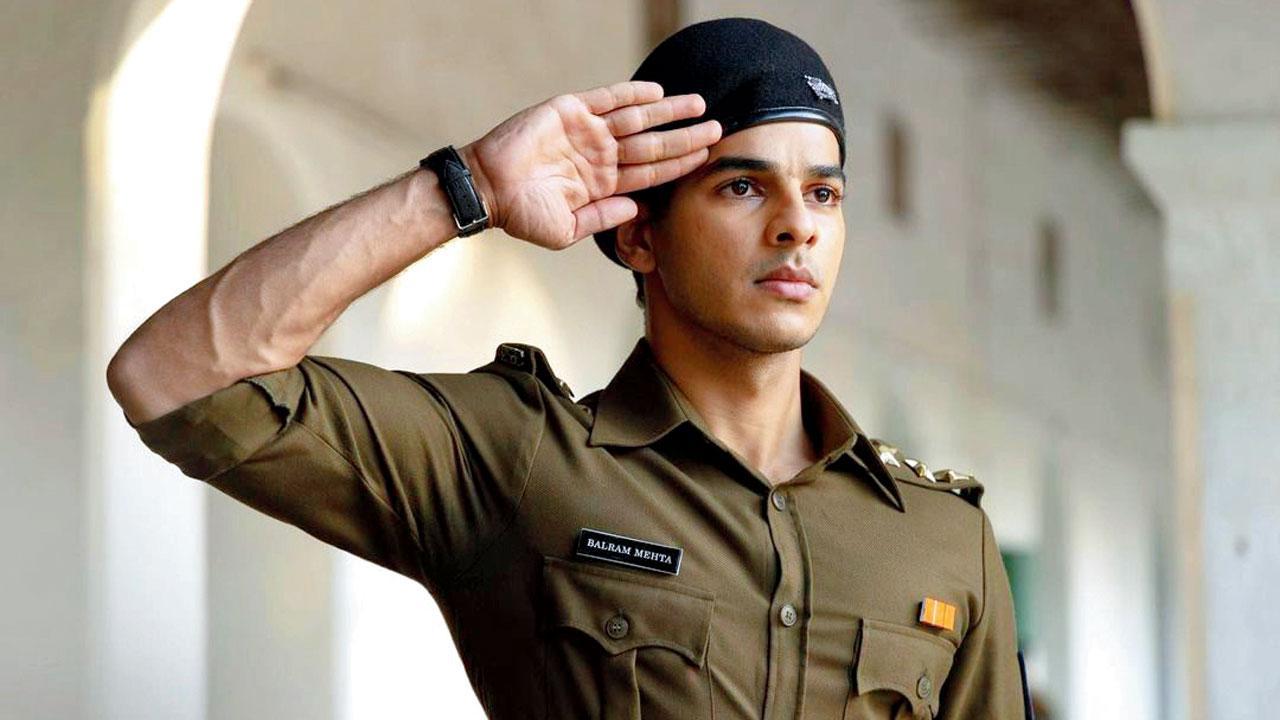
Taking Phone Bhoot’s underwhelming run in stride, Ishaan feels lucky to shoulder war drama Pippa so early on in his career
Priyanka Sharma (MID-DAY; December 10, 2022)
Flitting from one universe to another is one of the many joys of being an artiste. Ishaan Khatter knows it well, as he gears up for war drama Pippa, after the release of Phone Bhoot. The horror comedy may not have set the box office on fire, but it’s all a part of the learning for the actor, who says, “Phone Bhoot happened two-and-a-half years ago, when I was trying to find my groove. It was my first comedy. I wanted to see if my funny side could translate on screen. I hope it will be viewed by more people on OTT.”
Now, he is ready for a new battle. Director Raja Krishna Menon’s Pippa, based on the 1971 India-Pakistan war, is an adaptation of The Burning Chaffees by Brigadier Balram Singh Mehta. For Khatter, the movie stands out for its sheer scale and depiction of patriotism.
“Pippa is a big-screen spectacle. It was a dynamic experience to shoot the action scenes. It is a war drama told in a compelling and relevant way. It’s a patriotic film in the true sense; it’s not trying to be what it’s not. It is a privilege to have done a film like this so early on in my career.”
While the Mrunal Thakur and Priyanshu Painyuli-starrer was originally slated to release this month, it has now been pushed to 2023 summer. What led to the delay?
“The film is being worked on so that it can be in its best form before [reaching the audience]. Hopefully, there will be an announcement soon,” says the actor, who recently shot for an MTV rap music video with MC Square to celebrate the ongoing FIFA World Cup.
Getting to play the youngest sibling to Ishaan and Priyanshu a role reversal for me-Mrunal Thakur
8:00 PM

Mrunal Thakur on playing the younger sibling to Ishaan Khatter and Priyanshu Painyuli in 'Pippa'
Mohar Basu (MID-DAY; March 17, 2022)
It takes years to create life-long bonds with strangers, but for Mrunal Thakur the process took just one shoot schedule. The actor, who has given hits including Super 30 and Toofaan, has begun shooting for Pippa directed by Raja Krishna Menon of Airlift fame.
Thakur will be seen playing the youngest sibling to Ishaan Khatter and Priyanshu Painyuli in the drama based on the 1971 Indo-Pakistan war. “Pippa is a special project. Getting to play the youngest sibling to Ishaan and Priyanshu [is kind of] a role reversal for me,” says the actor, who in real life is the eldest sister to siblings, Mandar and Lochan Thakur.
Hoping that the familial bond she felt on set transcends on the screen, she says, “Working on this film felt like I was around family. I was truly pampered on set. These bonds have surely been formed for life. I hope that reflects on screen and the audience enjoys watching the film.”
Army Day special: Soldiers insist they want to see 'less jingoism, song & dance; more authenticity & originality' in war films
8:13 AM

Niharika Lal (BOMBAY TIMES; January 15, 2022)
While the Army has featured as a character – central, as well as peripheral – in several Bollywood movies, few have gotten the nuances of military life right or managed to nail the details related to Army personnel and the war zone down to the T. On Army Day, we spoke to some serving and retired Army personnel on how they think Bollywood movies captured their lives and battles, including all the things they got right – and wrong – on screen.
‘HAQEEQAT, LOC: KARGIL, SHERSHAAH ARE AMONG THE MOST REALISTIC FILMS’
What is surprising is that over a dozen officers (retired and those still serving) – when asked about their favourite Army films – could only think of two-three names that did justice to the Forces. Among these was Chetan Anand’s Haqeeqat (1964), starring Dharmendra and Farhan Akhtar’s Lakshya (2004) starring Hrithik Roshan – both of which featured a realistic portrayal of soldiers’ lives.
Major (retd) Sandeep Sangwan, who is also a defence consultant for the upcoming film Pippa, starring Ishaan Khatter and based on the Indo-Pakistan war of 1971, says, “If one were to judge a film on the parameters of weapons, equipment, uniform and the movement of the troops, then Border, LOC: Kargil, Lakshya, Uri: The Surgical Strike, and Shershaah score the highest.”
Major Mohommed Ali Shah, a former Army officer, who has acted in several films and web series, says, “Films that I feel were quite close in their depiction of the life of soldiers are Lakshya and Uri — if we don’t count the drone scenes and jingoism in the latter. Uri showed operations like no other film had before, and had all the accurate details, be it the uniform or the operations procedure.”

‘DON’T APPRECIATE FILMS WITH SOLDIERS DANCING ON THE BATTLEFIELD, GLORIFICATION OF WAR AND JINGOISM’
While several defence personnel may have appreciated Border, Lt Gen Zameer Uddin Shah, former Deputy Chief of Army Staff, who fought in the Battle of Longewala, isn’t a fan. He says, “The image that Indian films often portray of a soldier — as an alcoholic who sings and dances in the mess, and at times even on the battlefield! — isn’t true. Wars are nasty, but our films glorify them and have so much jingoism. Either they don’t hire any defence consultant or they don’t listen to them. I think Haqeeqat is a film that is better out of the lot, and I do think that films have improved in recent years.”
An Army officer who didn’t wish to be named, adds, “War is glorified and even politicised at times in Bollywood films, and they often imply that all soldiers do is to fight, which is definitely not true. Soldiers are quite well informed and they have to study and do a lot of research too, which is unfortunately never shown in films. Apart from films like Haqeeqat, I really liked Shaurya — inspired by Tom Cruise’s A Few Good Men — in terms of its portrayal of Army personnel. It is quite a wonderful film.”

‘WHAT’S THE POINT OF MAKING A FILM BASED ON THE LIFE OF A SOLDIER AND NOT GETTING THE BASICS RIGHT?’
Major Sangwan believes that to get the details right, it’s important to have defence experts on board. “While filmmakers do a lot of research when it comes to uniforms, they would not know the nuances of the uniform as compared to a person who wore it. While an artiste may believe they are wearing a ‘costume’, a uniform is not a costume. In fact, while portraying a soldier, one should know every aspect of that uniform.”
Major Shah adds, “Many makers have this misconception that they can’t show an accurate uniform on screen because ‘it is not allowed’.”
Having starred in the military drama series Avrodh: The Siege Within (2020) — for which he was also a defence consultant — and the film Haider (2014), he believes it is, in fact, necessary to get the details right. “In Haider, it was just a matter of a few scenes, but even then we got these details right. When there is a web series or a film based on the life of a soldier, if you can’t get these basics right, then what’s the point?”
Major Sangwan adds, “For Pippa, we trained junior artistes on how to talk, mannerisms, and decorum so that nuances weren’t lost. As compared to 20-30 years ago, films today are also more realistic because makers can use CGI, VFX, and other special effects.”

Ishaan Khatter-Mrunal Thakur’s war drama Pippa to go on floors in September
8:18 AM
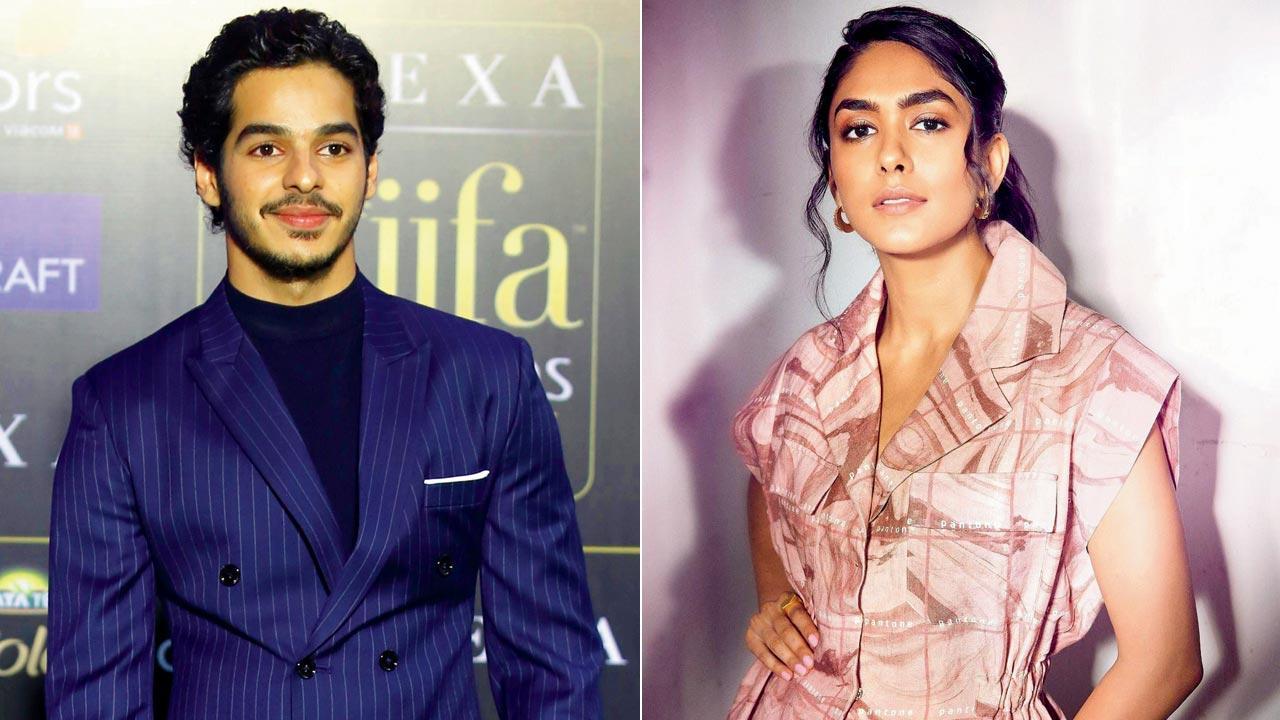
Initially slated to roll in March, Ishaan Khatter-Mrunal Thakur’s war drama Pippa to go on floors in September
Mohar Basu (MID-DAY; July 26, 2021)
While Pippa was originally scheduled to roll in March, director Raja Krishna Menon had to hold it off as the second wave of the pandemic hit India. Leads Ishaan Khatter, Mrunal Thakur, Priyanshu Painyuli as well as producers Ronnie Screwvala and Siddharth Roy Kapur agreed that shooting amid the restrictions wouldn’t be ideal for the war drama that was envisioned on a grand scale. Over four months on, as shoots have now resumed in full swing, the team has been informed that the period drama — based on Brigadier Balram Singh Mehta’s book, The Burning Chaffees — will tentatively go on floors in September.
“The film, set against the backdrop of the 1971 India-Pakistan war, will require multiple levels of prep. The actors’ reading sessions will begin by mid-August. They not only have to fully familiarise themselves with the Battle of Garibpur that forms the crux of the story, but also have to physically prep from the first week of August to do justice to the combat and war sequences on camera,” says a source. The first schedule will kick off in Mumbai.
My Toofaan character inspires Farhan Akhtar's character but in real life, he inspired me-Mrunal Thakur
7:47 AM

Kavita Awaasthi (HINDUSTAN TIMES; March 20, 2021)
Mrunal Thakur is in a happy space as she is looking forward to three releases this year. “I am glad that finally, the amount of hard work that we have put in our films in 2020, will be witnessed by the audiences. My first release is Toofaan, which is close to my heart. I worked with a fabulous team including Farhan Akhtar and Rakeysh Omprakash Mehra sir and the journey, the experience, the growth, not just as an actor but also as a human, was enormous. I feel I am a different person today because of it,” says the Super 30 (2019) actor.
Thakur calls OTT platforms a blessing for those who can’t go to theatres. “Even during Coronavirus, there is a way to entertain our audiences. OTT has a huge reach global reach. As for box office success, I never took that pressure as an actor. My film is a complete package. It will entertain people but it will also inspire, allow us to never give up, and follow our dreams. We all need that one push to keep us on track and guide us on the right way. That’s what my character does. However, in real life, Farhan inspired me (laughs). It was enchanting to work with him,” she explains.
The actor has Jersey with Shahid Kapoor next, and Aankh Micholi. She will also start Pippa co-starring Ishaan Khatter soon.
The shoot for Jersey had begun in early 2020 but it had to be stalled due to the lockdown. Later, in October, right after the unlock, the unit began shooting again. Talking about the experience of shooting amid the pandemic, she says, “I was scared but the joy of being on a movie set was great. It was a long process and back then, we didn’t know what measures we needed to take. By the end of the schedule in Dehradun, we were happy to be back to work.”
Priyanshu Painyuli reads Balram Singh Mehta's The Burning Chaffees before filming Pippa
8:03 AM

Mohar Basu (MID-DAY; December 16, 2020)
While some actors go solely by the screenplay, Priyanshu Painyuli finds it easier to gradually get sucked into the world of the film by revisiting the source material. So, the actor purchased a copy of The Burning Chaffees, the adaptation of which is being adapted for the screen by Raja Krishna Menon. Titled Pippa, the film is set against the backdrop of the 1971 Indo-Pakistan war.
It narrates the story of Brigadier Balram Singh Mehta of the 45th Cavalry tank squadron who, along with his siblings, fought on the eastern front in 1971. "Brigadier Mehta's story was first chronicled in the book. The written word often has a strong impact on the mind. It's necessary to know the plot points and milieu, and experience it as a reader before I start filming the project," says Painyuli, who hopes to finish the book before the script reading sessions begin.
"It's a story of love and humanity. The book will help drill into me the essence and wholesome perspective of the film. We start our workshops in a few weeks," adds Painyuli of the war drama that also features Ishaan Khatter and Mrunal Thakur.
People ask me why I was playing a sister and I wonder if there is a clause stating I shouldn’t-Mrunal Thakur
8:12 AM

Mrunal Thakur insists she’d play sister and mother than turn down good scripts
Ankita Chaurasia (MUMBAI MIRROR; November 26, 2020)
After spending Diwali in Mumbai, Mrunal Thakur is back in Chandigarh with Shahid Kapoor for the last schedule of their film Jersey. “Now, you have to allot an extra week before and after for quarantine. But we are so excited, we don’t want to stop shooting,” gushes the actress.
While for many the lockdown resulted in increased social media activity, Mrunal had deleted all apps from her phone, not wanting to know who is having an OTT release, who has achieved what, bringing on increased stress and in some cases, depression too. Instead, she used the time constructively to learn cooking. “Earlier, I couldn’t even brew a cup of tea, now, I can lay out a meal. And from my 20-year-old cousin I’ve learned that intermittent fasting is upvas and a balanced Indian meal in proportion is the key to good health,” she says knowledgeably, sharing that her father did not miss going to the bank for a single day during the ongoing pandemic and her mother concocted every possible kaadha (herbal medicinal drink) to boost immunity.
She herself has been most disciplined through the downtime, going to bed by 10 pm and waking up at 5:30 am. “My parents would walk 10 laps around the house as a workout. I took yoga and strength training sessions with them, and also enrolled for ballet classes in the afternoon,” she informs, admitting her siblings, Lochan and Mandar, couldn’t wait for her to resume shooting so they could sleep in late.
Talking of siblings, she plays Ishaan Khatter and Priyanshu Painyuli’s sister in the war drama Pippa, based on Balram Singh Mehta’s book The Burning Chaffees. “People ask me why I was playing a sister and I wonder if there is a clause stating I shouldn’t. I play a mother in Jersey, after mothering two kids in an ad at 21. I’d be foolish to turn down good scripts due to such inhibitions,” she shrugs.
After she wraps up Jersey, Mrunal will get back to the Bay to prep for the Thadam remake that pairs her with Sidharth Malhotra. Her Toofaan co-star, Farhan Akhtar, has already got her training in Mixed Martial Arts so she won’t have to start from scratch. “Every morning, I practice on the beach as the sand helps with balance and engages the core. It’s helping me get the body language and mental make-up of a cop,” she avers, adding with a laugh that after ODing on Keanu Reeves in John Wick, she can’t wait to show off her action chops.
Before the lockdown, she wrapped up Umesh Shukla’s laugh riot, Aankh Micholi, revealing that she was so much in awe of co-star Paresh Rawal, she’d forget her lines at times. “He was two different people during Toofaan and Aankh Micholi,” she says, wonderstruck that she’s living out a dream that crystalised when she saw Salma Hayek’s Frida and fell in love with acting. “I had a DVD library membership even as a child and Smita Patil is my inspiration,” she shares.
It wasn’t easy getting her parents’ approval because they believe any publicity, good or bad, is to be avoided. “Now, my parents are my biggest PRs, turning misty-eyed whenever my name rolls in the end credits,” she chuckles.
Her sister is a makeup artist; Super 30 was their first film and they’ve been working together since. “After doing my dandiya, Christmas party, and annual day makeup, my sister knows my skin best and helps me push the envelope. Earlier, I was conscious about what others think, now I dress up for myself. We even create looks of characters that I want to play and put a wish out to the universe so it materialises,” she confides, adding her brother, who is just 16, wants to produce music and pursue a career in gaming. “Currently, he is building his own computer,” she concludes.

Ishaan Khatter bags Pippa, based on Battle of Garibpur of 1971
9:13 AM

Ronnie Screwvala & Siddharth Roy Kapur’s new film, Pippa, helmed by Raja Krishna Menon, revisits the 1971 war
MUMBAI MIRROR (August 14, 2020)
 Ronnie Screwvala and Siddharth Roy Kapur announce their next, Pippa—an action-packed war film with a celebrated army tank at its centre—with director Raja Krishna Menon and starring Ishaan Khatter. The young actor portrays the part of war veteran Brigadier Balram Singh Mehta of the 45th Cavalry Tank Squadron, who, along with his siblings, fought on the eastern front during the 1971 Indo-Pak War.
It was with this battle, which took place in Garibpur, that India infiltrated the enemy land for the first time, thus leading to the liberation of our neighbour Bangladesh. Based on the book, The Burning Chaffees authored by Brig Mehta himself, the film’s unique title highlights the magnificent Russian amphibious war tank called PT-76, popularly known as ‘Pippa’, an empty ghee da dabba that smoothly floats on water. In their Pippa, Brig Mehta and his tank squadron fought the riveting 48-hour battle that influenced the outcome of war in India’s favour.
The film also portrays the coming-of-age of a young Mehta as well as of our nation, as both stepped up to prove themselves in a war for the liberation of another country. The battle paved the path for India’s triumph as Brig Mehta rose to the occasion and led his troops to victory. The key roles of Mehta’s elder brother and younger sister, who also bravely conducted themselves during the war, are in the process of being cast.
Siddharth points out that “the covert operation that became the Battle of Garibpur, one of the lesser-known chapters of the widely documented 1971 Indo-Pak wars, played a significant part in India’s eventual victory.” He elaborates, “This is the war that is often heralded as the only ‘just war’ in history because it was fought to save human lives and free a nation. Brig Mehta’s fascinating account resonated with us deeply, and we instinctively knew that Ishaan would be ideal to play him.” Talking about the actor, Siddharth adds, “Ishaan’s raw, youthful energy perfectly complements Brig Mehta’s valour. His acting chops paired with Raja’s sensitivity towards the subject, knowledge of every facet of this war and panache for largescale action dramas, makes this all the more compelling a story for us to take to the screen!”
 An excited Ishaan says, “I’m exhilarated to be a part of a film of such magnitude and importance, and getting a chance to play the role of the suave and spirited tank commander, Brig Mehta is a true privilege. I’m honoured by the faith shown in me by Ronnie sir, Siddharth sir and Raja sir and I’m looking forward to the exciting experience of Pippa.” Ronnie, who produced Uri: The Surgical Strike, one of the biggest war films, says, “It’s not just about a great patriotic battle. The story of the 45th Squadron led by Brig Mehta is one that needs to be told to this generation. This film is a visual celebration of not only India’s valour, but also our sharp strategy during the 1971 war along with our alliance with Bangladesh, seen through the eyes of the Mehtas and their internal and external conflicts”
 Raja states that apart from being a war movie, “Pippa also has an emotional core celebrating the triumph of love and humanity.” He adds, “The fact that there is going to be some never-seen-before tank war action is extremely thrilling to me as a filmmaker, but it’s the heroism and patriotism displayed by the young Brig Mehta, despite all that he was going through in his family, that really connected with me when Siddharth shared this story. I’m very happy that Ronnie and Siddharth have shown tremendous belief in my vision and I can think of no one better to do justice to the role than the terrifically talented Ishaan. This is truly going to be a special one!” Pippa, produced by RSVP and Roy Kapur Films, will open in cinemas late next year.
Subscribe to:
Posts (Atom)