Showing posts with label PK. Show all posts
Showing posts with label PK. Show all posts
Vijay Crishna, who played Shah Rukh Khan's father in Devdas, passes away at 80
11:05 PM

THE TIMES OF INDIA (March 5, 2026)
Mumbai: He walked kilometres to school in the hills of Shimla, climbed a 20,000-ft peak in Ladakh in his seventies, and trekked through Antarctica and South America. Somewhere in between, Vijay Mohan Crishna became one of India's most quietly distinguished actors straddling stage and screen. Best known for playing Shah Rukh Khan's stern father in Devdas and for his decades-long association with Mahesh Dattani's Dance Like a Man, Crishna — former executive director of Godrej Industries — passed away on March 4, aged 80. The cause of death has not been disclosed.
Crishna's acting life began on a Delhi stage in the 1960s, where the young man from Shimla discovered theatre—and, by happy accident, a fellow theatregoer named Amitabh Bachchan. By 1971 he had moved to Mumbai, throwing himself into its theatre scene. He played a tender gangster in Pearl Padamsee's play Orphans, took the title role in Alyque Padamsee's tantric-inflected Macbeth, and directed Shaw's Saint Joan.
His greatest association, though, was Dattani's Dance Like A Man —as Jairaj, a Bharatanatyam dancer past his prime — a role he performed on stage for over 25 years and reprised in Ritesh Menon's 2014 film adaptation.
His tryst with cinema began with Richard Attenborough's Gandhi (1982) but it was Sanjay Leela Bhansali's Devdas (2002) that gave him his most memorable screen moment — as the stern, heartbreaking patriarch Narayan. He later appeared in Guzaarish and Rajkumar Hirani's PK.
None of this was his only life. After eight years of management experience in Kolkata and five years in advertising in Mumbai, he had joined Lawkim Ltd in 1977 and helped turn the bankrupt company taken over by the Godrej Group around. Crishna, who then served Godrej Enterprises Group for 45 years, stepped down from the board in 2021 due to advancing age. A lover of wildlife, hiking and racing, his greatest relaxation, he once said, was the daily drive to the workplace in Vikhroli.
Actor Anupam Kher expressed his grief and co-actor Lillete Dubey wrote on Instagram: "RIP my Jairaj... you will never be forgotten."
He is survived by wife Smita Crishna-Godrej and daughters Nyrika Holkar and Freyan Crishna Bieri.
Top 10 films in Mysore circuit: Dhurandhar beats Jawan by a huge margin
10:18 AM

Box Office India Trade Network
DHURANDHAR has smashed records in Mysore by crazy margins as the film stands at around 69 crore nett which is 20 crore nett more than JAWAN, the previous record holder. JAWAN itself set a record by a considerable margin. Not only that, the film will be beating all the the local Kannada films released in 2025 apart from two of them and here its Mysore for us and Karnataka for them which includes all of the state while for us, some of the state goes into Mumbai circuit.
The circuit has shown immense growth post pandemic and this is reflected by the fact that a film like FIGHTER gets 20 crore nett in the circuit and stands just outside the top ten which is more than films like SANJU and SULTAN from before the pandemic. Actors like Aamir Khan, Shah Rukh Khan and Hrithik Roshan are stronger in this circuit and this could be another reason why FIGHTER did well here also but no doubt the circuit has grown.
If we count all films including the South ones, then this Mysore collection will be just outside the top ten but if we add the numbers of North Karnataka, which is in Mumbai circuit, then the film will be among the top ten grossing films in the state. Now with the second part this figure could go even higher and if the does three times DANGAL, its pretty much unthinkable as that film was considered insane in the circuit pre pandemic and now here is a film which may do three times the business.
The top ten grossers in Mysore are as follows.
1. Dhurandhar - 69,00,00,000 apprx
2. Jawan - 48,24,00,000
3. Animal - 36,69,00,000
4. Pathaan - 35,77,00,000
5. Stree 2 - 33,08,00,000
6. Chhaava - 31,00,00,000
7. Dangal - 27,81,00,000
8. Uri - 25,00,00,000
9. Padmaavat - 23,87,00,000
10. PK - 23,85,50,000
I am loyal to cinema first, and then to theatres-Aamir Khan
9:20 AM

Madhureeta Mukherjee (BOMBAY TIMES; August 11, 2025)
Breaking the mould is second nature to him. Now, in a bold move that challenges the norms of a largely risk-averse industry, Aamir Khan has chosen the pay-per-view model on his YouTube channel for his latest film, Sitaare Zameen Par (SZP), which had released in theatres in June. This aligns with his decades-long pattern of being a disruptor – as an actor and filmmaker. In this freewheeling conversation with us, the superstar talks about access, affordability and the future of cinema beyond theatres. Aamir also confesses that he’s not fearless, unlike what most would assume, and tells us why, at 60, comfort is not an option — “ab comfort hai hi nahi, toh kuch karna padega.” Read on...
How do you think the pay-per-view model gives more power and choice to both the audience and the producer?
You are aware that we are able to reach only 2-3% of our population in the theatrical business, and this is for the biggest hit. For a film like Sitaare Zameen Par, around one crore people would have watched it by the end of its theatrical run. In the absence of enough theatres being built, this model is perhaps the only way to reach the vast majority of India, especially with rising internet penetration. In one stroke, this solves that problem for everyone. It’s great for filmmakers because it strengthens them and empowers them to make better films.
To be able to watch a movie, access and affordability are key. Was this model born out of that philosophy – to make both these points a reality?
Today, cinemas in India, and here I am talking about the multiplexes, are trying to give a unique experience, but that costs money. So, over the years, theatres have evolved from the time when I started out with Qayamat Se Qayamat Tak (QSQT). Back then, the average ticket price was Rs 10. Today, the ticket prices are not affordable for a large section of society. And multiplexes, because of the high cost and heavy investment (in terms of rent, etc), have also started catering to an audience who can afford to come there. So, who will cater to the masses? This model caters straight to the masses.
Continue…
In every press conference prior to my film’s release in the past 10 years, I would be asked, ‘Aap filmbana rahe ho, jo masses hai woh kaise dekhenge?’ The answer to this and the pricing of tickets is not in my hands. I can’t tell theatre owners who have invested a lot of money to go into a loss. If this model works, it will dramatically change the way we distribute films. From an economical point of view, I had strong OTT offers for SZP, if I were to accept that, it would have been a safe bet. I chose not to. I would rather earn Rs 100 from each Indian who watches my movie. Also, this is a great opportunity for younger filmmakers who are trying to break in and don’t get a chance to showcase their work. It will give creative voices more freedom. It will give them the freedom to price their content the way they want to.
You are a theatre loyalist and have spoken about ‘protecting our theatres’. What are some ways exhibitors and filmmakers can work together to reimagine cinema-going as a more inclusive, feasible experience?
Let me clarify, my loyalty is to cinema. Cinemas came first, then theatres came to serve cinema. Earlier, there was no theatre. Cinema dikhaneke liye pardah laga dete the, and it would be shown through a projector. Phir tent aaya, wahan dikhate the. Then permanent theatres came about. Cinema is what I am protecting, and emotionally, I am very tied to theatres. I believe that the theatrical experience cannot be replaced by anything else. When you are sitting in that dark space with 300 people around you, it’s a group experience where you laugh and cheer together. Imagine watching Lagaan, where the whole theatre is cheering...abhi woh experience aapko ghar pe baithke apne family ke saath bhi nahin milega. I am loyal to cinema first, and then to theatres, clearly in that order. To answer your question, I think first of all, we need more theatres. In districts where there is no single screen, not even a single theatre, we should at least have one theatre. India needs many more theatres, but they should be economical theatres.
Do you believe that, at some point, the theatrical business will start thriving again?
Yes, of course. I really hope so.
Do you think that, as makers, focusing on tier-2 and tier-3 cities is key, as therein lies the scope for theatrical recovery in India?
Absolutely! I believe that we need theatres in tier-2 and tier-3 cities. The tier-2 cities have theatres, but as we go deeper, we don’t. I also feel that it’s not that people want to watch only action films in theatres – that was the feeling for some time. If that were the case, SZP wouldn’t have done well, and Saiyaara wouldn’t have been such a success. These are phases that keep coming and going. When I did Ghajini, everyone told me that you are doing an action film at a time when this genre was not working. It worked. I think audiences are interested in watching films irrespective of the genre.
So, the genre of your film and how it fits with current trends and mood doesn’t concern you?
No, it doesn’t. Stories that inspire me and affect me the most are what I gravitate towards.
You’ve consistently been a disruptor — as an actor and a filmmaker. In an industry that often plays it safe, where does this creative fearlessness come from?
No, no, there is a lot of fear. There is fear every time I am doing a film, and unfortunately, my choices are also unusual, but I can’t help but make them. When I was doing Dangal, I felt that dus saal baad karte hain, abhi mein itna mota, buddha dikh raha hoon. Just before that, I had done PK and Dhoom 3. People thought I am 30-35, they didn’t know I am 55. I thought yeh film karoonga toh meri asliyat saamne aa jayegi (laughs). It was in my blood; I had to do it. I am not a fearless person. Before the release, you can’t assume the film will work, at least my films. There were exceptions like Ghajini and Dhoom 3, where you could say yeh kuch toh karegi. But with the unusual ones, it’s difficult to tell. I go with my instinct and my heart. So, I am not thinking about what the audience wants to see. I am thinking mujhe kya banana hai.
There’s still this restless energy about you. Does that fuel your creativity?
I suppose so. If the status quo is comfortable, I have no problem with it. But when it’s not, then I want to do something to correct it. I am comfortable about being comfortable, but ab comfort hai hi nahi, toh kuch karna padega, haath pair marna padega, because in today’s times it is difficult for creative people to make what they want to make. Unless you have a subscription model pre-sale, you can’t greenlight a project. That’s not a comfortable situation to be in for creative people.
Knowing the kind of connection and influence you have with audiences across generations, do you feel a certain sense of responsibility when you take on a film?
I do feel a sense of responsibility, so I don’t do films that propagate any thoughts, views or ethos which are not mine. At the same time, I also believe in having my freedom as an artiste, as that’s how I always operated from the beginning. I have selected films that I wanted to do. Some of them worked, some didn’t. Fortunately, most of them did. I have tried not to take the unnecessary load, ki meri har film 300, 500 ya 600 crore banayegi. I am not chasing that. Mujhe Talaash ki script pasand aayi aur mujhe pata tha yeh 500 crore ki film nahin hai, yeh 200 crore ki bhi nahin hai. In fact, I remember telling the team that I believe the film will do about 70 crores. It went on to do 95 crores. I did the film as I loved the story. Just because I knew it wouldn’t break my Ghajini record, didn’t mean I wouldn’t do it. I can’t think like that. This comes from my excitement as an artiste, and also because I can’t keep doing the same kind of films again and again; I don’t know how to do that.
You said that you feel a sense of fear every time you embark on something new. Can you recall what you felt on the first day first show of QSQT?
I still remember that moment – I remember the premiere show of the film. My uncle (Nasir Hussain) had booked the balcony, and the stall was for the paid audience for the first day, 6 pm show. And Shammi (Kapoor) uncle had come, in fact, he was the only star my uncle had called from the film industry. I remember walking into the film with no one recognizing me, and when the film got over and I walked out, I was mobbed.
I wanted PK to speak for itself-Rajkumar Hirani
11:04 PM

Niharika Lal (BOMBAY TIMES; January 2, 2025)
It’s been a decade since Rajkumar Hirani made PK. The director shares that it was only a few weeks ago that Aamir Khan called him and shared that he was shooting in Sambhar – the location where the film’s opening scene was shot and where alien PK landed over 10 years ago.
“Aamir said, ‘I’m here and have so many memories.’ That’s where we shot his nude scene, which became the iconic poster, and Aamir so sportingly did it all. From Sambhar to Jaipur, Delhi, and even Belgium, where we shot with Anushka and Sushant at the time, PK took us to many places. Like every film, I have tons of great memories from this one too,” he says. Now a decade later, the director takes us on a journey to the making of this cinematic hit.
Aamir said, ‘I’ve always wanted to do Bhojpuri. What if PK speaks Bhojpuri?’
PK had some of the memorable dialogues – ‘Lul ho gayi humri life, humra gola par log jhoot nahi bolat hai, aise tukar tukar ka dekhat ho?’ Initially, since the character lands in Rajasthan, the idea was that he would hold someone’s hand, learn their language, and speak Rajasthani.
Hirani shares, “But at some stage, Aamir said, ‘I’ve always wanted to try Bhojpuri, and it might sound more interesting.’ Then, we assumed that the person whose hand he holds is from Bihar. When Aamir delivered the lines in Bhojpuri instead of Rajasthani, it sounded so much more interesting. So, we decided to go with Bhojpuri.”
Hirani shares, “I’ve always felt that India’s diverse languages and dialects add so much richness to storytelling. Giving PK a dialect instead of plain Hindi brought a lot of colour to the character. It’s like in Munnabhai, Mumbai slang – ‘Watt lag gayi meri’ is so much more fun than saying, ‘Main phans gaya’ or ‘Main mar gaya’.”
‘Wanted PK to speak for itself’
Before the release of the film, no one knew what it was about. Hirani recalls, “Certain things, when included in promotions, aren’t always very inviting to watch a film. For example, when we were working on Lage Raho Munna Bhai, the initial title was Munna Bhai Meets Mahatma Gandhi. At some point, I felt that the mention of Mahatma Gandhi might not seem very exciting for an entertaining film. People might not feel compelled to watch it and could even be repelled by the idea. I thought, let’s first bring the audience in. Once they’re in, they’ll understand what we’re trying to say. That’s when we changed the name to Lage Raho Munna Bhai. Similarly, for PK, we didn’t want to reveal upfront that it was a film about God and religion. I decided to let the audience come in first. As a result, there were a lot of speculations: maybe the film was about an alien, or maybe the title PK referred to a drunkard, or perhaps Aamir’s character was a loony. The confusion created curiosity. The way Aamir looked in the trailers made people wonder if he was a drunkard or an alien. I wanted the audience to come in and let the film speak for itself.”
None of Sushant Singh Rajput’s films had been released at the time of PK, but Rajkumar Hirani had seen some footage and decided to cast him. He recalls, “I remember we were shooting with him when his first film was released. We all went to see his first film at that time”
Talking about how Aamir Khan came on board, Rajkumar Hirani shares, “I had kind of narrated the core idea to Aamir. He said, ‘Yes, it’s a great idea, but it’s a difficult script to write. So, if you manage to write it, let me know.’ After a year or so, when the script was finally ready, he was the first person I went to and narrated it to. He loved it and immediately said he wanted to do it.”
The film was initially titled Tully
At one point in the film, PK says, “Naam kucho nahi hai hamaar, lekin pata nahi kaahe sablog hamka Pk-Pk bulwat hai”. Why? “The film was initially titled Tully,” Hirani reveals, “It felt too slangy, so we decided to call it PK. Wherever Aamir’s character went, people called him PK. He goes to the police station to file a complaint against God, and the policeman asks, ‘Pi ke hai kya?’ Then he goes to a temple and asks for his donation back, and again, someone says, ‘Pi ke aaya hai kya?’ That’s when his character begins to think that his name is PK. The idea was to make him seem drunk because the things he was saying were so absurd.”
----------------------------------------------
“Boman Irani tested for the role of the godman or guru, but the director felt he somehow didn’t fit the image. So, we tried several actors and came to Saurabh Shukla. Saurabh had that perfect look and was ready to shave his head for the role, which made him even more fitting for the character,” Hirani shared.
----------------------------------------------
Rajkumar Hirani says, "Reality is far more interesting than fiction. Primarily, the idea behind making PK or any of his films is to entertain people. You don’t go out and say that you want to really put a message."
----------------------------------------------
Rajkumar Hirani says, "The climax scene of PK reflects exactly that - the reality is, we never know who made us or why we are here. Obviously, there is some larger presence, which you can call anything - God, nature, or some mystery. So, we ended up saying in the film that there are two Gods - one we know nothing about, and the one we created."
Stree 2 is second biggest grosser ever in CI after Baahubali 2; crosses Gadar 2
8:24 AM
Box Office India Trade Network
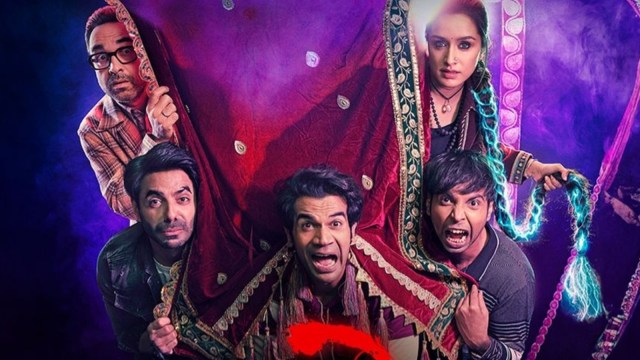
STREE 2 has emerged the second biggest grosser ever in CI and the third film to cross the 20 crore nett mark after BAAHUBALI 2: THE CONLCUSION and GADAR 2. The circuit is a mass barometer and figures never lie. With the three films on top and the gap to the rest, it pretty much shows which films have had biggest mass penetration in the last ten years or so.
The word mass is used a lot today with all these South films being called MASS films but you do not become a mass just because the hero is beating 50 goons or what down south they call elevation scenes with the entry of the hero. Films like THE GREATEST OF ALL TIME and DEVARA are called MASS films due to the elements but they hardly get reach outside their own states. A mass film is always about REACH and in India if you cant reach the heavy populated areas, you are NOT a mass film as you not reaching the masses.
STREE 2 may not have the elements of what is seen as a mass film but the fact is the film is a bigger mass film than even the likes of ANIMAL, JAWAN and PATHAAN as it has easily smashed the numbers of these films in the heavy populated states which indicates better satellite than these films in the long run also. BAAHUBALI 2: THE CONLCUSION remains the biggest film in CI but GADAR 2 would have comfortably beaten it if it had better ticket pricing and that is not taking the clash into as consideration as OMG 2 would not be a much of a factor here.
Taking GADAR 2 comfortably crossing 25 crore nett with better pricing means that PUSHPA 2 - THE RULE can actually target the 30 crore nett mark in this circuit if the film is as good as the trailer. This figures is almost double of ANIMAL and more than double of PATHAAN and JAWAN. The numbers can get higher and higher in this circuit when films have real reach.
The top ten grossers in CI of all time are as follows.
1. Baahubali 2: The Conclusion - 24,51,00,000
2. Stree 2 - 22,88,00,000
3. Gadar 2 - 22,62,00,000
4. Animal - 17,98,50,000
5. KGF - Chapter 2 - 16,08,50,000
6. Jawan - 14,84,50,000
7. Pathaan - 14,19,50,000
8. Dangal - 14,18,00,000
9. Tiger Zinda Hai - 12,83,50,000
10. PK - 12,59,00,000
Baahubali 2 is the top grosser in Mumbai circuit by a margin
10:10 AM
Box Office India Trade Network
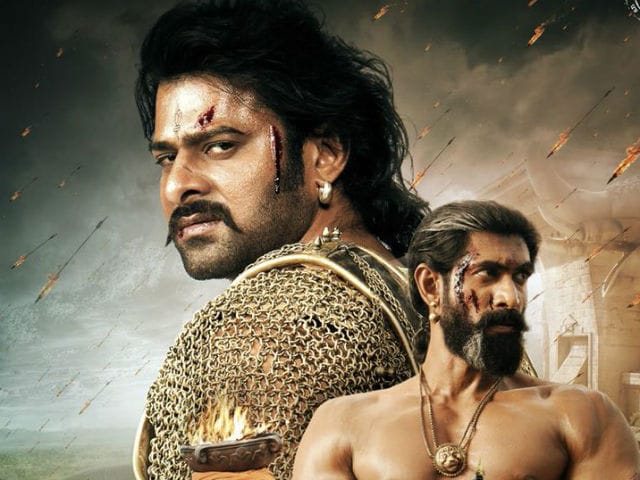
BAAHUBALI 2: THE CONLCUSION still remains the top grossing film in Mumbai circuit and that too by a distance. In fact the top two films in the circuits are from South with KGF - CHAPTER 2 holding second spot. GADAR 2 would have been ahead of KGF - CHAPTER 2 if it had a solo release and pricing of the other blockbusters of 2023 but even with that it would not have reached the BAAHUBALI numbers.
If we take original Hindi content then its TANHAJI: THE UNSUNG WARRIOR leading in Maharashtra and GADAR 2 in Gujarat. Despite these huge grossers in 2023, the circuit generally was an underperformer but things look better now. There are chances that 200 crore nett can be hit in the circuit and the best shot at that will be PUSHPA 2 - THE RULE if the film has the merits of PUSHPA: THE RISE - PART 01.
Actually the films that can set huge numbers in this circuit in 2024 are both scheduled for a clash in August. Both PUSHPA 2 - THE RULE and SINGHAM AGAIN are at the moment set for an August 15th release date and both teams are adamant at the moment. So much work is left on both films that its a race against time and normally time wins in these scenarios. Both these films, if they work, will outperform in Mumbai and at the end of 2024, both will be among the top three.
The release date is outstanding with Independence Day on Thursday, Rakhsha Bandhan on Monday and then Janmashtami on second Monday. Gowever unlikely it looks at the moment, it would be great for the box office if one of the films could come as otherwise the period will not get the huge numbers it should.
The top ten grossers in Mumbai circuit at present are as follows. The only other film outside the list below to cross 100 crore nett is SANJU.
1. Baahubali 2: The Conclusion - 1,82,56,00,000
2. KGF - Chapter 2 - 1,45,45,00,000
3. Gadar 2 - 1,43,98,00,000
4. Tanhaji: The Unsung Warrior - 1,43,85,00,000
5. Jawan - 1,40,05,50,000
6. Animal - 1,36,84,00,000
7. Pathaan - 1,35,82,00,000
8. Dangal - 1,04,26,00,000
9. PK - 1,04,21,50,000
10. Tiger Zinda Hai - 1,03,40,50,000
Not many people know this, but I keep listening to Bollywood songs on set while shooting-Hande Erçel
8:27 AM

In India for the first time, Turkish actress Hande Erçel says she would love to collaborate with Indian filmmakers
Renuka Vyavahare (BOMBAY TIMES; March 9, 2024)
One of Turkey’s biggest stars, Hande Erçel has a whopping 31.8M followers on Instagram, making her one of the most influential names in the Turkish film and TV industry.
In her first visit to India for FICCI Frames 2024, we caught up with the actress in Mumbai for an in-depth exclusive chat and even made her try the city’s iconic cutting chai! Deeply observant and excited about her first visit here, though it’s just for 4 days, Ercel spoke about Indian cinema, beauty standards for women, social media and more. Excerpts…
Turkish heartthrob Burak Deniz was here last year for this event and this year it’s you. Did you speak with him before getting here?
Yes, we spoke. He loved the food and he talked about it a lot. What struck him the most about India was the kindness and warmth in people here. They are extremely loving and it’s true. I was aware that people knew me here but didn’t know I was this popular. This is my first time here. I had heard a lot about Indian culture, people, and music. I had so much curiosity and wonder about India and the country surpassed my expectations. The weather’s good and I like bright sunshine over cold conditions, so this is perfect. It’s a short visit, but I went to the Sanjay Gandhi National Park and liked it. I also hope to visit the famous Ganpati temple (Shree Siddhivinayak) and Dhobi Ghat in the city. It won’t happen this time but it’s a dream to witness the The Taj Mahal in Agra. It’s gorgeous.
Are you familiar with Indian cinema?
I loved watching this film called Black (by Sanjay Leela Bhansali). I like Indian actors a lot, too. I like Dev Patel (British actor of Indian origin) and Hrithik Roshan. I know Ranveer Singh and of course Aamir Khan, who is big in Turkey. I enjoyed PK and 3 Idiots. Not many people know this, but I keep listening to Bollywood songs on set while shooting. You’ll always find Bollywood music on my playlist. I would love to collaborate with Indian filmmakers.
You are one of the most followed Turkish actors on Instagram. Is that a pressure sometimes? To be constantly watched and judged.
It’s good pressure. It makes me more thoughtful, responsible, and inspirational by wanting to do good things for people. I ensure I separate my private and professional life. That can help you strike a balance between how much of you you put out there. I like to be sincere instead of putting on a mask and present a different persona online. It’s important to stay true to who you are as a person. I am aware of the pressure on women to always look perfect. Young girls look up to their screen idols and want to imitate them. That’s why I try to be as natural and organic on social media. I want to tell them that nobody’s perfect. Every woman is beautiful and distinct. We radiate beauty due to the light and warmth we have within, which matters the most. Believe in yourself.
Any person that you look up to?
Cate Blanchett is inspirational as an actor and a person. I like the way Anne Hathaway carries herself and most importantly my mother is my idol.
What are your thoughts on marriage?
Everything has a time. I believe in marriage. I would love to have kids and bring them up in a way that they do good for society.
If Rajkumar Hirani cries while narrating a story, I know the nation will cry-Abhijat Joshi
8:23 AM

A movie becomes bigger than an actor or a director when everybody is aligned to make it work, say filmmaker Rajkumar Hirani and writer Abhijat Joshi during a discussion in Delhi
Niharika Lal (BOMBAY TIMES; February 26, 2024)
Rajkumar Hirani and writer Abhijat Joshi came together for the first time when they made Lage Raho Munna Bhai (2006). Over the past 18 years, they have collaborated to deliver movies like PK, 3 Idiots, Sanju and Dunki. During a recent discussion in the city, the filmmaker and the writer gave a sneakpeek to the audience into their creative world.
‘FILMS ARE NOT MEANT TO PREACH’
Hirani said that as a director, he never does a film to preach but to tell an entertaining story. He said, “For 3 Idiots, we never started with the idea that we will talk about education. I used to love the college hostel vibe and I thought that this has not been shown well in cinema. So it started from there. And once you start writing, various nuances and your beliefs start pouring into the story.”
‘IF RAJU CRIES WHILE NARRATING A STORY, I KNOW THE NATION WILL CRY’
Hirani’s films have a mix of emotions – they are not just funny, but are also sentimental. On going through the gamut of emotions,
Hirani said, “It invariably happens that when you’re writing a scene, and at that moment you cry, you might do that in Mumbai, somebody watching that scene in Jabalpur must be crying while watching it. That emotion translates.”
Abhijat Joshi added, “Raju narrates his own scene and he cries a lot while narrating his scenes... But when Raju cries, I feel elated, I am jubilant. I know (while writing that scene) that the whole nation is going to cry.”
‘Every time I start a film, the attempt is to find a unique idea’
Hirani shared, “Every time I make a film, the first thing written on my board is to find a unique idea. Whether it’s PK, where an alien is in search of godman, or Mahatma Gandhi meeting a gangster, the attempt is always to find unique stories, something that has not been told before. Every business has to tell stories, and there has to be some honesty and truth in it, but then people will sniff it.”
From where does Rajkumar Hirani get his ideas? For instance, how did he think of Munna Bhai MBBS (2003)? Hirani said, “I grew up in Nagpur, and many of my friends from class 12th went to join a medical college, so I saw that world. I always wanted to tell a story about a medical college. My initial idea was about three students in a medical college, and I kept on writing it for many years, but it was not going anywhere until I got this idea – what if a 40-year-old man – a gangster, goes to a medical college? The genesis was coming from something that was already within me.”
‘As citizens what do we feel outraged about – that’s what our cinema is about’
Abhijat Joshi said that when they were writing PK, Hirani told him that they are not setting out here to hurt anyone. He shared, “There was a certain humility and respect that let’s have a dialogue. We are not here to impress that hum ye soch rahe hain aur yahi sahi hai, tum bewakoof ho. Ye hona nahi chahiye. With a lot of respect, you have to engage in a dialogue. Raju has been consistent that he wants to discuss an idea. He does not want to thrust an idea on the audience.”
Joshi added, “As citizens, what do we feel outraged about – that’s what our cinema is about. It is not satire; it is a very gentle form of humour.”
‘When everybody wants the film to work, it becomes bigger than an individual’
Hirani said, “As a director, you have to do two things: communicate your vision to your entire team and, second, draw inspiration from others. I make sure that once the script is written, I communicate it to the camera team and actors as many times as possible. I keep narrating, seeking reactions, and every time I narrate, they come up with some problems with it. Then we find solutions. However, in collaboration, a lot of tussles can also arise. I have been lucky to work with some extremely wise people. Collaboration with a writer is the toughest. When I tell Abhijat that a scene is not working he immediately starts reworking it.”
Hirani added, “When everybody wants the film to work, the film becomes bigger than an individual.”

I have great respect for Aamir Khan. He is the greatest actor in the world-Burak Deniz
8:14 AM
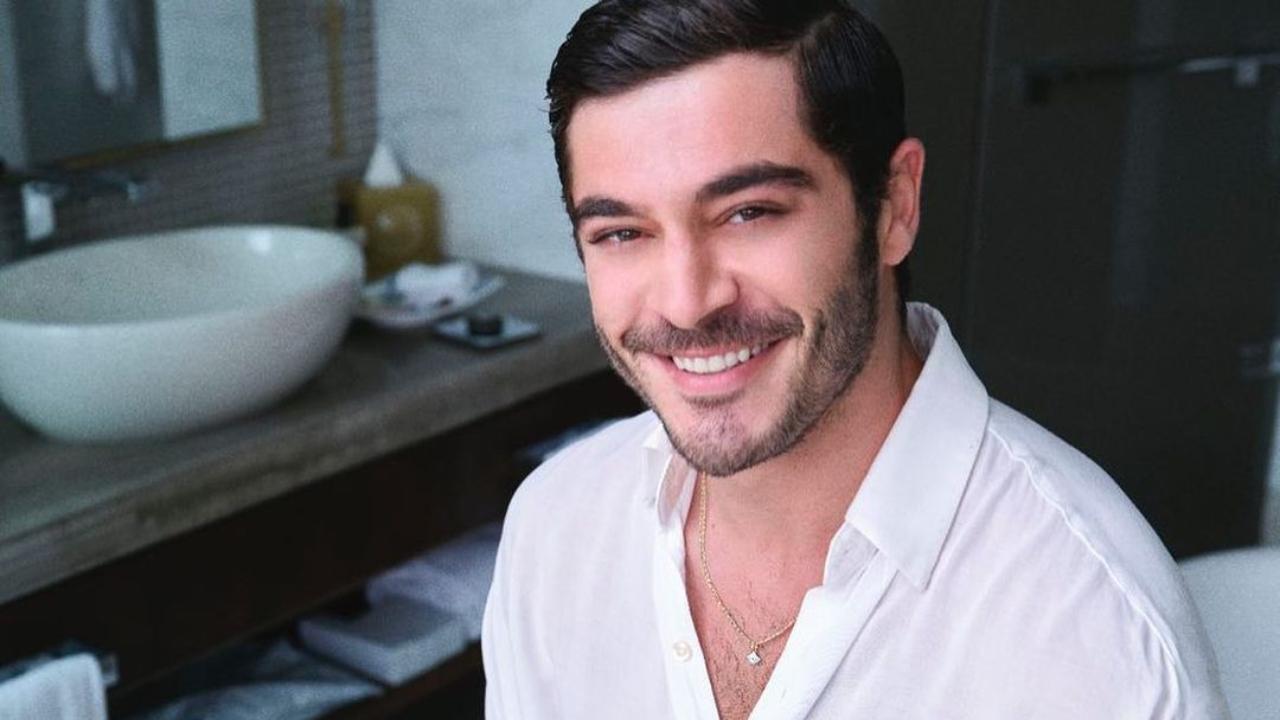
On his first visit to India, Turkish actor Burak Deniz said he is curious about the country’s culture and lifestyle
Niharika Lal (BOMBAY TIMES; May 9, 2023)
Turkish actor Burak Deniz, who was recently on a visit to India, said that it was his first visit to the country and he will be back soon. During a session at FICCI Frames in Mumbai, Deniz realised the massive fan following he had in the country, with many fans requesting selfies and videos with him.
At his FICCI Frames session, Burak spoke a couple of lines in English and then chatted in Turkish, which was translated to Hindi via his translator, who had joined on video call from Turkey.
Turkish producer Stare Yildirim, who had joined him on stage, said, “I want to say why are we doing this and connecting a professor from Turkey – it’s because we want to respect all languages and that’s why we didn’t do it (the translation) just in English.”
‘REALLY IMPRESSED WITH INDIA’S HOSPITALITY’
Even though some of what Burak expressed was lost in translation, the rapt audience was keen to find out what he had to say. Burak shared that what struck him when he landed here – and what he’s gonna remember from his visit – is spicy food, warm people and hot weather.
He said, “Your weather is hot. It is too hot! It is my first visit to India and I was always really curious about the culture and lifestyle of the country. It was a quick visit, but I’d like to come again soon. I was really impressed with the hospitality, but I must say that Indian food is really, really spicy.”
‘PK IS MY FAVOURITE FILM FROM INDIA’
Burak Deniz, who is a popular name among fans of Turkish shows across the world, spoke about his upcoming projects and passion for acting. “In the beginning, acting was like a job for me, but it eventually became my passion. Now, it is indeed much more than a job. I find peace in acting. Whenever I pick a film or series, I ensure that I’m not repeating roles.”
Burak, who recently posted a video of him grooving to Salman Khan’s songs, also talked about Bollywood. “PK is my favourite film from India, and I have great respect for Aamir Khan. He is the greatest actor in the world. If I have to do an Indo-Turkish co-production, then I’d like to collaborate with Aamir Khan, Shah Rukh Khan and Priyanka Chopra and PK director (Rajkumar Hirani).”
Anupam Kher on Laal Singh Chaddha boycott: "It wasn’t a great film"
8:30 AM
HINDUSTAN TIMES (May 2, 2023)
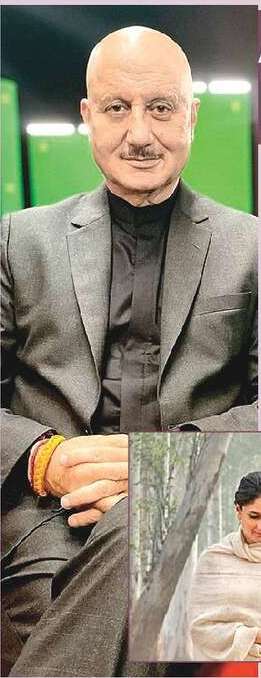
Calls for boycotting Laal Singh Chaddha grew louder closer to its release in August 2022. Despite all the anticipation around the Kareena Kapoor Khan and Aamir Khan-starrer, the film tanked at the box office.
But, actor Anupam Kher feels that nothing could have stopped Laal Singh Chaddha from working “if it were a great film”.
Kher, during a recent podcast, told ANI, “Laal Singh Chaddha was not a great film. If it was a great film, then no power would’ve stopped it. Aamir Khan’s PK (2014) worked really well. The point is, you need to accept the truth.”
The Uunchai (2022) actor added, “I am not for boycott trends, not at all. But, you can’t stop somebody from doing what they want to do. If your product is good, it will find its audience. In fact, they (those calling for boycott) will go with a vengeance. The only way to kill this trend is to make brilliant work.”
A number of other films, including Akshay Kumar-starrer Raksha Bandhan (2022), also faced such ‘boycott’ calls prior to release. But, Kher feels this ‘boycott’ trend will not affect a film. “If a film is good, it will work. If a film is bad, it will not [work], but not because of the boycott trend,” he reasoned.
The actor went on to mention that everybody is entitled to expressing their views and if an actor has the right to say something about a situation, they should also be brave enough to go through the consequences.
The boycott call against Laal Singh Chaddha began after Khan’s 2015 interview — where he said his then-wife Kiran Rao suggested they move out of India because of “growing intolerance” — resurfaced on social media.
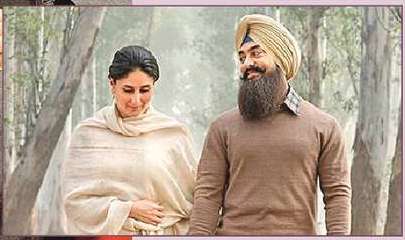
Top ten first weeks of all time - Pathaan sets a new benchmark by a huge margin
8:35 AM

Box Office India Trade Network
PATHAAN crossed the 300 crore nett mark in week one as it collected 315 crore nett and just smashed records of all films released. The main one is KGF - CHAPTER 2 which is a recent release while others are generally old releases.
The final circuit numbers are yet to come but it looks like PATHAAN has beaten KGF - CHAPTER 2 (Hindi) in most of the circuits and that is more important than the all India number as KGF had a limited release down South due to its original format and dubbed into other languages being the main format of the film there.
PATHAANhas averaged 45 crore nett a day over its first week. This was pretty much unthinkable before release even with the advances. The numbers are there going by the market and the potential is even higher but its not about the market as eventually a film has to achieve the numbers and it becomes about the content and PATHAAN obviously had that.
Hopefully, PATHAAN is the turning point for the Hindi film industry as more action commercial mass films will be made which are original and with more of a North Indian presentation rather than South Indian.
The top ten first weeks of all time are as follows.
1. Pathaan - 3,15,00,00,000
2. KGF - Chapter 2 - 2,50,51,00,000
3. Baahubali 2: The Conclusion - 2,46,47,00,000
4. Sultan - 2,08,99,00,000
5. Tiger Zinda Hai - 2,06,04,00,000
6. War - 2,03,39,00,000
7. Sanju - 2,00,16,00,000
8. Dangal - 1,92,38,00,000
9. Bajrangi Bhaijaan - 1,83,52,00,000
10. PK - 1,81,26,00,000
On the 20th or 25th day, I started humming something which wasn’t for a movie-Shantanu Moitra
8:29 AM
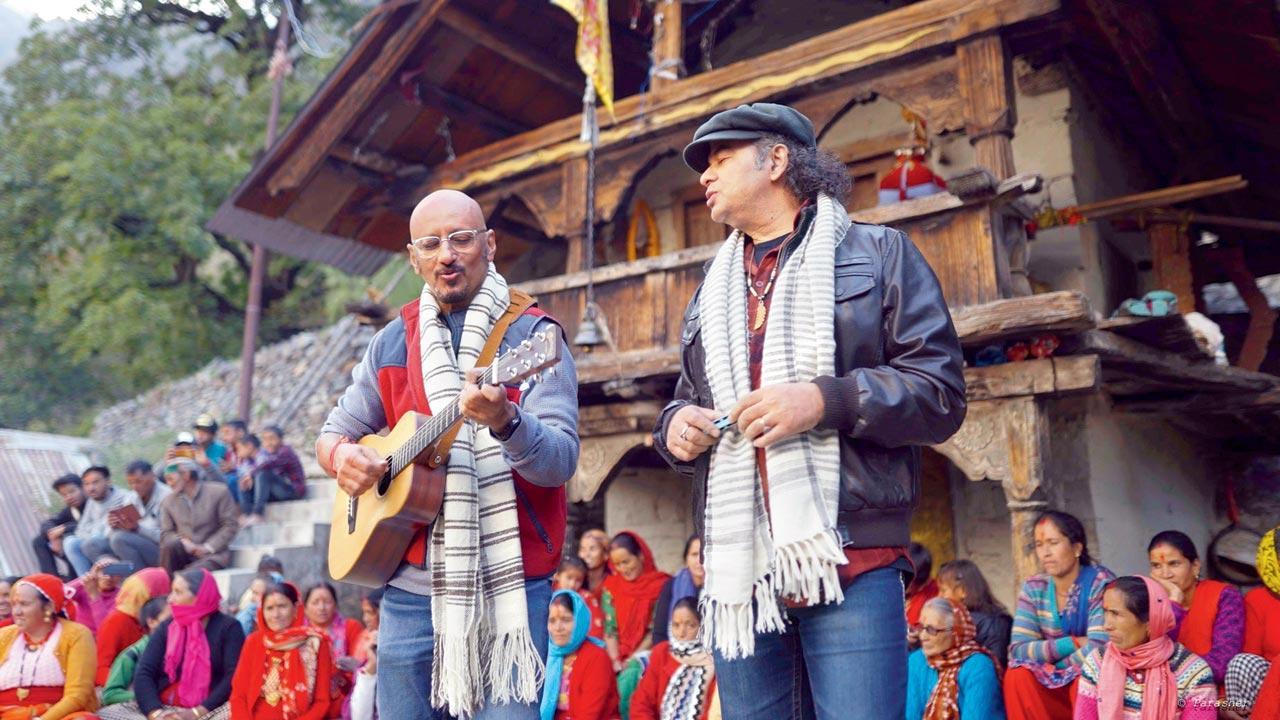
Here’s how Bollywood composer Shantanu Moitra embarked on a cycling journey along the banks of the Ganga, composing music along the way, and discovering a new India for a six-episode documentary
Nidhi Lodaya (MID-DAY; October 9, 2022)
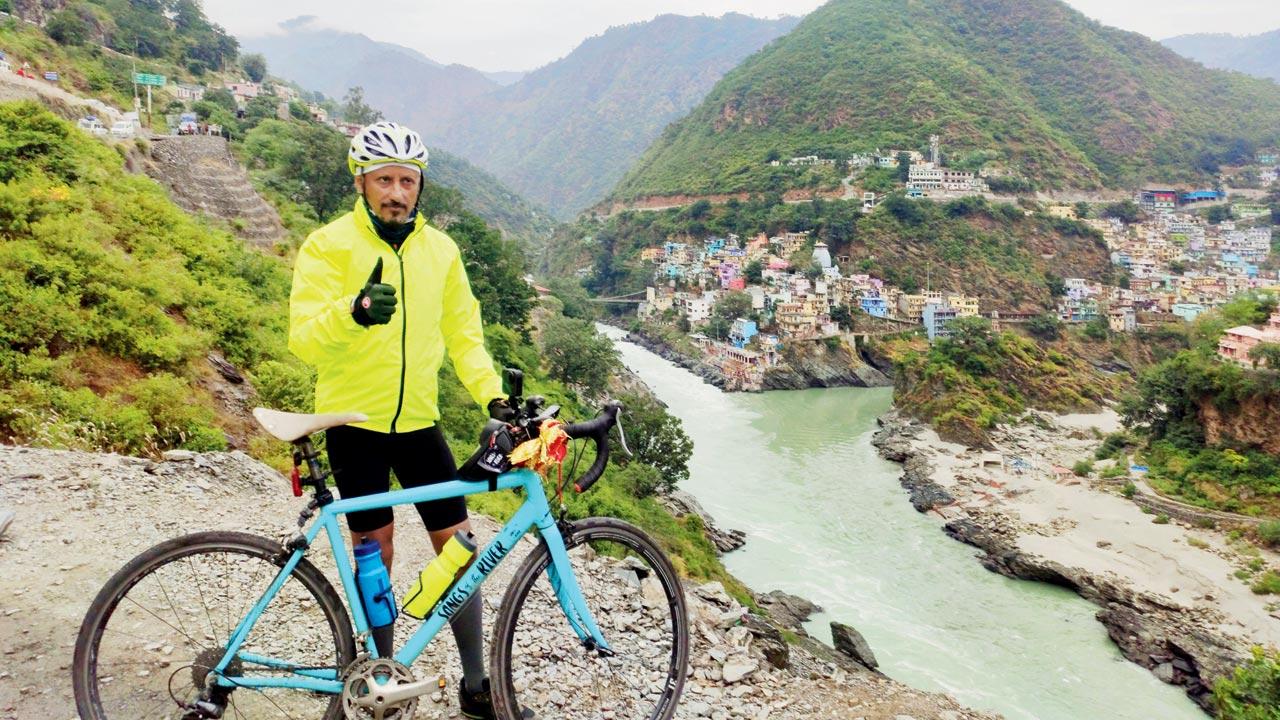
Shantanu Moitra says that his love for trekking, and travelling in hilly terrains, stems from the fact that he is a “Bengali raised in Delhi. Trekking was a big part of my life, just like music.” He has now taken that love seriously, and is talking to us about Songs Of The River, a six-episode expedition of cycling along the banks of the Ganga.
The composer behind hits like PK (2014) and 3 Idiots (2009) wasn’t always a musician. In fact, it was a need of the hour to fund his travels that forced Moitra to take up music as a profession. His first job was at a bank and that is where he realized that, “the romanticism of me travelling around the country will not be possible if I get into a corporate job.”
After quitting his job at the age of 35, he started composing jingles to sustain himself financially and to travel. It worked! In fact, after he did PK, he declined all offers and spent the next 100 days travelling across the Himalayas. “Music was not the ideology here,” he shares with mid-day over a telephonic interview.
“[You could say that] I was running away from music and wanted to rediscover my love for travel. But in the process, on the 20th or 25th day, I started humming something which wasn’t for a movie. This composition was steeped in folk and classical music,” he says. This adventure later turned into his project 100 Days In The Himalayas, where he engaged with musicians beyond Bollywood and discovered another world of music.
Songs Of The River came as Moitra “got the mad idea of cycling down the river, which gradually became an obsession.” He began working on this in 2018. He recalled how his father was involved in the entire process, and losing him to Coronavirus was what pushed him to finally embark on the journey.
His 70-day trip started from Gomukh, all the way to Gangasagar, where he covered 3,000 kilometres on his cycle. “I experienced small-town India and saw what community living, sharing and living together meant. It became clear that no pandemic can bend the spirit of this India.” As part of a social media campaign, he started the Ananth Yatra where he received thousands of pictures from people who had lost their loved ones to COVID and hadn’t been able to get a last glimpse.
“The idea behind this journey was to discover the Ganga, and myself, and keep the promise I made to my father; he wanted me to travel and find inspiration for music. My inspiration of course came from Che Guevara’s Motorcycle Diaries.”
His biggest learning from this journey? “I transcended from me to us,” he says.
In Bollywood, women get screen time but very little talk time
8:24 AM

Study of box-office hits reveals female characters get 25 mins of speaking time in 2.5-hr movie
Mohua Das (THE TIMES OF INDIA; March 21, 2021)

However, research tracking speaking parts in the world’s biggest movie-making industry reveals that in the biggest pan-national box-office hits from the past five years — on an average, “women have less than a third of the dialogue”. In other words, men significantly out-talk the women.
This data measuring dialogue share of women in popular Hindi films comes from Shrayana Bhattacharya, a Delhi-based economist who, while researching for her book Desperately Seeking Shah Rukh that releases in October, stumbled upon this irony of Bollywood’s box office hits largely featuring what she calls “gorgeous mute women.”
“Since 2006, through various research projects on women’s employment and labour, I’ve met working women across India. During breaks, we would talk about our favourite movies and film stars which introduced me to Shah Rukh Khan (SRK) fangirls from diverse communities,” recounts Bhattacharya who followed several such fangirls for more than a decade to realise that one reason why the actor appealed to women from Jor Bagh to Jharkhand was how his on-screen characters would talk to women — lovers, mothers, friends and sisters — unlike films with other male actors. Bhattacharya decided to back this anecdotal evidence with data. “The only way to do this was to measure what share of dialogue was spoken by men and women in popular films.”
But deter mining speech patterns in nearly 50 Bollywood films between 1995 and 2020, replete with a chorus of singing voices, posed a challenge. Using a voice recognition program didn’t work so she coded and collected the data manually by watching each film closely, noting down the number of sentences and the gender of the speaker for each minute of the film. “For 15 films, I also measured the minutes that women would speak.”
What she found disrupts the age-old assumption that women speak more than men. “Four of the biggest hits of the past five years had women speaking for an average of 25 minutes in a runtime of at least 2.5 hours. Women occupy half the screen time but a quarter of the dialogue,” she observed.
Although in recent “multiplex” films like Queen, Kahaani and web-series such as Made In Heaven, women’s voices are emerging in full force, a disproportionate amount of movies are dominated by men who get more lines than women across different genres. And with ensemble casts, as the number of characters grow, so does the gender inequality.
For instance, in Dangal, a biographical drama centred on two female wrestlers or in PK featuring Anushka Sharma in a prominent role — there was an awful lot of talking by the men. “The narrator is a male and men speak much more dialogue in Dangal whereas in PK, Anushka spoke for approximately 35 minutes and there’s a full 45 minute segment where no women have speaking roles,” measured Bhattacharya.
Her study also reveals that speaking roles for women in “big mass hits” have only reduced over time. “Most of the ‘mass’ hits of the past five years have been heavily masculine action films where the universe is full of superman-type characters who talk amongst themselves — be it War or a Baahubali that had around 15 male speaking characters and five women,” she pointed out, as opposed to hits in the late 90s that were usually romances or family-dramas and featured more female characters and dialogue.
“As a result, while women only speak 28% of the dialogue in Baahubali: The Beginning, they have 60% of the dialogue in Kuch Kuch Hota Hai that had nine female speaking parts and five male,” tabulated Bhattacharya.

While Vohra attests to the fact that “recent cinema is far more masculine than before,” Shohini Ghosh, documentary filmmaker and media professor, feels the importance of a character in a film cannot be measured only through dialogue spoken by the character. “Film has its own language in which silence can be as eloquent as speech. The famous opening sequence of Charulata is almost wordless but a world of information is conveyed about the female protagonist. I personally feel much is changing especially with the advent of streaming platforms which show great diversity in the representation of genders and sexualities.”
Aamir Khan and Ranbir Kapoor-starrer PK up for second round
8:53 AM

Producer Vidhu Vinod Chopra says a sequel to Aamir Khan’s 2014 blockbuster PK will be made in due time; hints Ranbir Kapoor’s character may take the story forward
Uma Ramasubramanian (MID-DAY; February 20, 2021)
While fans have been eagerly awaiting news on the third instalment of Munna Bhai, producer Vidhu Vinod Chopra may be doling out another successful franchise. The filmmaker, who had collaborated with Aamir Khan to deliver the blockbuster, PK, says he will take the story forward in good time. “We will make the sequel. We had shown Ranbir [Kapoor’s character landing on the planet] towards the end of the film, so there is a story to tell. But Abhijat [Joshi, writer] has not written it yet. The day he writes it, we will make it,” he says.
The 2014 runaway hit, also featuring Anushka Sharma and the late Sushant Singh Rajput, saw Khan as an alien who lands on Earth and loses the device that helps him communicate with his spaceship. Told through the curious eyes of the protagonist, the satire questioned religious divide and archaic beliefs, and had won wide acclaim upon its release.
Knowing well that film franchises can be a money-spinner, the producer asserts that he is driven by powerful stories over financial gains. “We are not in the business of making money, we are in the business of making cinema. If making money [was our goal], by now, we would have made six to seven [instalments of] Munna Bhai, and two to three [editions of] PK. We seek joy, happiness and peace over a few crores.”
Fenil's Bollywood Talk # 626
10:19 AM

A LOOK AT SUSHANT SINGH RAJPUT’S BOX OFFICE PERFORMANCE
June 14 seemed like any other Sunday. But then, at 2 PM IST, news came in that prominent actor Sushant Singh Rajput has ended his life. It was a bolt from the blue and has led to brouhaha like never before. Instead of getting into it, let’s look at the track record of this actor at the box office.
Sushant Singh Rajput has been a part of 11 films till now. Of which, 9 have already released in cinemas. Drive released on Netflix while Dil Bechara, the official remake of The Fault In Our Stars, remains unreleased. Out of 9, 6 films were decent successes at the box office.
He started his career with Abhishek Kapoor’s Kai Po Che, released on February 22, 2013. Despite having newcomers and being a bit of a niche film, it created buzz among urban audiences. It opened at Rs. 3.68 crore which was great and it’s lifetime was Rs. 43.58 crore. The same year, he was then seen in Yash Raj Films’ Shuddh Desi Romance. This film created a bigger hype which led to a fine opening of Rs. 6.38 crore. Incidentally, it co-starred Parineeti Chopra, whose sister Priyanka Chopra’s film Zanjeer released on the same day. Zanjeer was more commercial and yet had a dismal opening of Rs. 2.84 crore. Shuddh Desi Romance meanwhile netted a lifetime of Rs. 46.26 crore. It became clear that in a span of 6 months, this newcomer had given two successive hits.
In 2014, he was seen in a 20-minute appearance in Aamir Khan’s PK. The actor rocked the show despite limited screen time and in fact, dominated the climax. It emerged as an all-time blockbuster, earning Rs. 337.72 crore.
Few months later, in April 2015, he acted in Detective Byomkesh Bakshy, directed by Dibakar Banerjee. Despite being very niche, Sushant’s presence helped the film get an opening of Rs. 4.01 crore. The word of mouth was positive but wasn’t enough to attract audiences in hordes due to it’s theme. Hence, it ended it’s lifetime with Rs. 26.21 crore. This was Sushant Singh Rajput’s first flop.
1 ½ years later, in September 2016, Sushant Singh Rajput bounced back with M S Dhoni - The Untold Story. It was based on the life of celebrated cricketer Mahendra Singh Dhoni. Despite having a run time of 185 minutes, it had created humongous excitement and had an opening of Rs. 20.13 crore! Sadly, the word of mouth was a bit mixed. Hence, it had a lifetime of Rs. 119.09 crore. Though this was a huge figure, the high cost of the film prevented it from being hailed a ‘Super Hit’. It was, at best, a hit.
In June 2017, he gave another flop in the form of Raabta. It was a much-talked about film thanks to Sushant’s pairing with Kriti Sanon. Songs worked but trailer didn’t. Hence, the opening was poor at Rs. 4.63 crore. Word of mouth was horrible and hence, collections came down in the weekend instead of increasing. Its lifetime was just Rs. 21.68 crore.
Almost after 1 ½ years, Sushant Singh Rajput’s Kedarnath released. The word of mouth was mixed but the opening was huge, at Rs. 7.09 crore. It’s lifetime was huge at Rs. 70 crore. 6 months later, he was seen in Sonchiriya. This was an odd man out. Films like Raabta and Detective Byomkesh Bakshy at least had some sort of respectable opening. Sonchiriya, meanwhile, opened horribly at Rs. 1 crore! There was no growth and the lifetime was a mere Rs. 5.63 crore! The word of mouth was excellent but the theme was such that audiences were just not interested.
Sushant Singh Rajput’s last theatrical release was Chhichhore. It was directed by Dangal director Nitesh Tiwari and produced by Fox Star Studios and Nadiadwala Grandsons. It opened at Rs. 6.92 crore which was decent. However, the word of mouth was crazy and hence, audiences went to see it in hordes. From Rs. 6.92 crore on Friday, it jumped to an insane Rs. 16 crore on Sunday! The numerous holidays in the weekdays along with public response helped the film immensely. It’s lifetime was Rs. 147.32 crore and hence, it emerged as a super duper hit!
Hence, one can see, Sushant Singh Rajput’s track record, despite flops, was quite good. Even opening day numbers were fine, though it was never record breaking in most films. Yet, the opening day figures prove audiences liked his work and came to see the films for him, amongst other reasons. It’s highly unfortunate that he’s no more today. If he was, he would have done quite well for himself and given us many more entertaining and meaningful films. RIP.
Judwaa 2, Tiger Zinda Hai, Golmaal Again, Baaghi 2 prove to be blockbusters on TV
7:51 AM

Box Office India Trade Network
BAAGHI 2, GOLMAAL AGAIN, JUDWAA 2 and TIGER ZINDA HAI are continuing to prove huge blockbusters on television. BAAGHI 2 and TIGER ZINDA HAI had recent showings and had solid viewership. JUDWAA 2, GOLMAAL AGAIN and TIGER ZINDA HAI as well as SULTAN (3 huge screenings in last 2 months) have proved to be the biggest films post release after the BAAHUBALI 2: THE CONCLUSION films this decade. BAAGHI 2 looks set to follow in the same footsteps.
The biggest factor for the huge success of these films is that they are all entertainers. The likes of BAJRANGI BHAIJAAN, PK and DANGAL which are bigger blockbusters theatrically have not even done this well. BAAHUBALI 2: THE CONCLUSION is on a different planet be it theatrically or television. There is no doubt now it is the biggest motion picture of this era. The film is topping 12.5 crore impressions on ten screenings. Below are the figures of JUDWAA 2, GOLMAAL AGAIN, TIGER ZINDA HAI and BAAGHI 2 till date on television. The number is the impressions which is basically the number of television sets which viewed the film.
Judwaa 2
1st - 1,52,66,000
2nd - 92,78,000
3rd - 63,78,000
4th - 64,53,000
5th - 40,60,000
6th - 34,14,000
7th - 42,80,000
8th - 35,65,000
TOTAL - 5,26,94,000
Golmaal Again
1st - 1,63,52,000
2nd - 1,58,71,000
3rd - 82,70,000
4th - 51,50,000
5th - 49,16,000
6th - 42,19,000
TOTAL - 5,47,78,000
Tiger Zinda Hai
1st - 13,70,04,000
2nd - 1,03,96,000
3rd - 71,82,000
4th - 74,14,000
5th - 51,28,000
TOTAL - 4,38,24,000
Baaghi 2
1st - 1,61,45,000
2nd - 90,84,000
3rd - 61,07,000
TOTAL - 3,13,36,000
Actor Shrivallabh Vyas passes away at 60 in Jaipur
7:53 AM

Sanyukta Iyer (MUMBAI MIRROR; January 8, 2018)
Shrivallabh Vyas, who rose to fame as Eeshwar Kaka in Aamir Khan’s Lagaan, and has previously featured in Sarfarosh, Shool, Virasat and Dil Bole Hadippa, passed away at the age of 60 on Sunday at his Jaipur home. The actor, fondly known among friends as Pallav, had also essayed the character of Mohammad Ali Jinnah in Ketan Mehta’s Sardar, besides doing over 60 movies across Hindi, Marathi, Gujarati and Bhojpuri, as well as TV shows.
While shooting in Gujarat in 2008, Vyas had fainted in the washroom in the middle of the night and injured his head. Next morning, he was found in a pool of blood and doctors said that he’d suffered a brain stroke. The National School of Drama graduate was operated upon but was left paralysed. Due to financial constraints, his wife, Shobha, with their two daughters had to relocate first to Jaisalmer and then to Jaipur.
Aamir, NSD alumni Irrfan Khan and Manoj Bajpayee, and Arun Bali had come to the family’s rescue financially. While filming Rajkumar Hirani’s PK in Jaipur in February 2013, Aamir had also visited the actor and his family
The Khans are Bollywood’s favourite Santa Claus
8:10 AM

Meena Iyer (DNA; December 26, 2017)
A Khan is to Bollywood’s Christmas, what Santa Claus is to the rest of the world. Aamir Khan, Salman Khan, and Shah Rukh Khan are harbingers of good luck and cheer. The triumvirate comes bearing gifts in the form of huge box office collections.
When Aamir released Ghajini (2008) during Christmas, he set a precedent of sorts. Not only did the film pave the way for the coveted Rs 100 cr club, but it also made other superstars realise the potential of the holiday season; clearly the 10-day window from Christmas Eve until January 2 set the cash registers ringing across the globe and proved to be the most lucrative for Hindi cinema, too. “The period starting from Christmas until New Year is the most profitable for a film to hit the marquee,” says exhibitor-producer N R Pachisia. He adds that unlike Diwali, which has pujas, card parties and family traditions (like bhaidooj) to accommodate besides films, the Christmas-New Year holidays are mainly reserved for having fun, relaxing and watching movies. “So, movies released during this period, really do bring in enviable numbers,” he states.
For years on end, Christmas holidays were the most-sought-after phase to release Hollywood flicks in India. However, over the last nine years, Bollywood too has reaped big profits during this time frame. “And, mostly it’s a Khan who has always benefited,” says a trade expert. Aamir has, of course, proved to be the smartest as far as getting Christmas into his kitty goes. In 2009, he released 3 Idiots (Rs 202 cr), in 2013, he had Dhoom 3 (Rs 265 cr), in 2014 he had PK (Rs 325 cr) and his 2016 Christmas release Dangal (Rs 375 cr) is the highest-grossing Hindi film ever.
Following closely in Aamir’s footsteps was Salman, who brought Dabangg 2 during Christmas 2012. Though the film wasn’t able to replicate Aamir’s box-office magic, it did earn a commendable Rs 148 cr. It also made Salman aware that besides monopolizing Eid-ul-Fitr, he could capitalize the Christmas time, too.
In fact, this year, he brought his highly-anticipated Tiger Zinda Hai and the espionage thriller has managed a blockbuster opening. “If the opening trend is closely monitored, the film may go on to do huge numbers,” says trade analyst Girish Johar. Reports say that in just three days, TZH had already crossed the Rs 115 cr mark, making the industry rejoice because from here on, the sky is the limit.
Unfortunately for Shah Rukh Khan, the holiday period of 2015 didn’t prove very lucrative when his Dilwale clashed with Ranveer Singh’s Bajirao Mastani. Since Bajirao received bouquets and Dilwale got brickbats, SRK had to settle for less at the box office. Still in that year, Christmas cumulatively saw a box office collection of Rs. 314 cr. So, the period didn’t fail the films. In fact, Ranveer tasted his first mega success with Bajirao Mastani.
Everyone in the trade now agrees that the Christmas weekend has emerged as the highest revenue-generating period. In the last decade, this phase has stolen a march over other festival weekends like Eid-ul-Fitr and Diwali.
So far, actors have been civil and reserved different festivals for themselves. However, after the thumping opening of TZH, one can expect a Christmas clash in Bollywood. Going forward, each of the B-Town biggies is going to try and reserve Christmas for themselves. SRK has already laid claim to Christmas 2018 for his untitled Aanand L Rai film. And, Abhishek Kapoor’s Kedarnath with newbies Sara Ali Khan and Sushant Singh Rajput is meant to release on the same day. As of now, Ranveer is slated to arrive a week later with Simmba.
Like we said, suddenly there’s a war-like atmosphere building around the Christmas period. Will there be cheers or tears, who knows. but many Bollywood egos will definitely be at play.
[Figures (nett gross): Box Office India]
Check out the top ten grossing films in India across all languages
3:04 PM

Box Office India Trade Network
The question that pops up in the mailbox regularly is that why is not the business of dubbed versions not included on the website especially when major Hindi films are dubbed in other in languages. Basically dubbing films is a token gesture and business will be in the 3-5% range of the Hindi version. Even a film collecting 10 crore nett in Hindi can be dubbed and it can do upwards of 25 lakhs nett.
The biggest problem is when dubbed business is included than you have to include films of that language as well to have the correct picture. Then the tax picture comes into play as a film doing a huge proportion of its business in Tamil will be paying much less tax than a predominantly Hindi film so NETT numbers make little sense. This can be explained better by the two charts below. First one is the top ten grossing films in HINDI and then the second one is top ten grossing films in all languages. In the second one some regional films come into play, even the topmost one then becomes a non Hindi release.
Top Ten Grossing Hindi Films NETT
1. Dangal (2016) - 3,74,53,00,000
2. PK (2014) - 3,37,72,50,000
3. Bajrangi Bhaijaan (2015) - 3,15,49,00,000
4. Sultan (2016) - 3,00,67,25,000
5. Dhoom 3 (2013) - 2,60,63,00,000
6. Kick (2014) - 2,11,63,00,000
7. Chennai Express (2013) - 2,07,69,00,000
8. 3 Idiots (2009) - 2,01,37,25,000
9. Prem Ratan Dhan Payo (2015) - 1,94,30,50,000
10. Ek Tha Tiger (2012) - 1,86,14,50,000
Top Ten Grossing Films NETT (All Languages)
1. Baahubali (2015) - 4,19,56,00,000
2. Dangal (2016) - 3,87,28,00,000
3. PK (2014) - 3,37,72,50,000
4. Bajrangi Bhaijaan (2015) - 3,15,49,00,000
5. Sultan (2016) - 3,00,67,25,000
6. Dhoom 3 (2103) - 2,71,63,00,000
7. Robot (2010) - 2,13,84,00,000
8. Kick (2014) - 2,11,63,00,000
9. Chennai Express (2013) - 2,07,69,00,000
10. Kabali (2016) - 2,05,16,00,000
As can be seen above, the dubbed business changes the rankings totally. Another point to note is when a film is dubbed into another language then that business is not coming from a HINDI film, sometimes even the name is changed.
The figures in GROSS for all languages will change the rankings due to lower taxes for regional films and those are the ones that have to be used when you are not comparing like for like and they will put up tomorrow.
GST (Good and Service Tax) is supposed to be implemented soon and it will probably be one slab across the country which will give fairer playing field but its probable the state governments will give some sort of exemptions to regional films to make tax lower while there will be no relief as usual for Hindi films which always get step motherly treatment from the government. The plus will the highest slab in GST will be a little lower than the present taxes at an all India level.
Nobody needs to help me financially-Anushka Sharma on doing things the right way
8:12 AM

Nayandeep Rakshit (DNA; March 23, 2017)
I walk into Anushka Sharma’s office and she Snapchats the moment and captions it: “He’s promised to finish the interview in three minutes.” She laughs at my shocked reaction. But then, we end up chatting for close to an hour. Eventually, her pet cats come knocking on the glass door to remind us that the clock is ticking. During that time, the actress talks about her upcoming film, her ideas behind production, her strategies as an actor and producer, and more. Read on...
Most ghost stories are scary. Phillauri isn’t.
We don’t know how ghosts behave, so we can take the leap of faith and decide that this one is a friendly ghost. Phillauri is definitely an interesting take on ghosts. It’s in a fun space. I did find that different and exciting.
Did you deliberately make a fun film because your first production (NH10) was hard-hitting and intense?
As producers, we just want to tell stories. Sometimes, it might be a thriller, or a film like Phillauri, which is a complete family entertainer and sometimes, it might just be a scary horror film. There are no pre-conceived ideas about what we want to do next. We just react to stories. That’s about it.
Do you like watching ghost films?
I do like watching them but I like thrillers more than ghost films. I don’t remember too many. The Conjuring was scary. The Exorcist was amazingly scary, too.
Do you get scared while watching a film?
Who doesn’t? If someone says they aren’t, they are lying. When you watch these films, you get scared, you close your eyes, watch it through the gaps of your fingers. And my brother Karnesh and I always used to watch the show called Woh like that. Do you remember? It was so good.
Reports suggest Phillauri is similar to The Corpse Bride...
Absolutely not! The only similarity is that there is a ghost and there’s a man and the marriage that happens between them. Our concept is about a man who gets married to a tree, which is an entirely Indian concept. Then, there is a love story of the ghost. In The Corpse Bride, the ghost forces the guy to get married to him because she wants marriage. This is completely the opposite. Here, the ghost is as scared as the guy.
The films you are producing might not be women-centric but they’re always from a female protagonist’s perspective. Does that play in your mind when you select scripts?
How you are as a person, what your sensibilities are — these things are parameters on the basis of which you will decide things in life. You will always get attracted to things that match your desires and sensibilities. So who I am as a person matters a lot when I say yes to a film. When I am narrated a story, I won’t relate to something which is regressive or isn’t the right portrayal of a character or a girl. That’s how I deal with my choices as an actor and a producer. In fact, even more so because my brother and I both strongly feel about this. It’s about our upbringing and the way we see the world that plays an integral role in the scripts we pick. And for me, I want my characters to have a voice. If I’m playing a character where I don’t have a perspective, a point of view or have anything to say, then I don’t understand what I’m doing in the film.
There’s a huge disparity in the wages of men and women in the industry. As a female producer, does the same disparity happen with investors and budgets?
I think you are addressing what Sonam said on the same issue. Honestly, I don’t know what the budget of her film is. So I won’t comment on it. But yes, I just know that with the success of NH10, it was a lot easier to get Phillauri greenlit. Also, I am in a different and I would say, in a better position in my career than what I was when I did NH10. So it depends from film to film. I don’t know what a male actors’ contract is with the studio when they make a film. But if there’s disparity in general, I’m sure it will be there in this equation. Exactly what it is, I don’t want to be careless and make a comment. But just knowing the way things are, it is possible. I also think that while we speak about all of this, which is correct and everyone should speak about, we should choose and do things that help change the system. And helps in making the stand of female actors stronger. Our choices should lend its way to doing all that and that will be the way forward. That is why I feel very empowered as an actress when I’m producing a film. It’s a bigger sense of responsilibility and ownership. The possibilities are so much more of what things can be and where you can take it to.
But had NH10 not worked, do you think situations would have been different now?
It’s a hypothetical question and I really don’t know. I am a very instinctive person and I react to everything. So I don’t know how I would have reacted had it not worked. I was quite confident of the film honestly and how the film would go on to do. I knew we had a great film in hand which will be respected. The fact that it made money as well is a big thing. So I didn’t think about the flip side of it. There’s no point also. I mean why? How would it help? I don’t think about a film’s failure that I have signed up for. It’s stupid. The time that you took to make a decision of whether to do it or not — that’s the time when all these questions should be answered within you. That itself is going to be the deciding factor. If you have chosen the film for wrong reasons, without enough understanding the potential of the film, then you can be worried about it. But when you choose a film with conviction, you go on the sets, do your best and then uske baad worry karna is mindless. As a producer, I am doubly sure before I do a film. With Phillauri, we have been involved with it since the inception, we know what we have in hand. But then again, it might not work because nobody really knows the hit formula for any film. But content driven films with unique subjects always do well and we have seen that in the past as well.
Your films PK and Sultan both did 300 crore business. Does it put more pressure on you to deliver with your other films?
I won’t say there’s pressure but obviously, you want to deliver at the box office with all your films. It is not a burden. I don’t take it as one because as a person, I don’t take myself too seriously. I am very practical about things. If I have taken a decision to produce, I have to be very confident about the content I have. Uske baad, how much the film does, no one can profess. But me being a bankable actress today or with the success of the films that you’ve mentioned, helps and allows me to get film greenlit if I’m in it. So it’s easy for me to make those films. The responsibility then is to make profits from it because there’s a studio involved in it. It is a business at the end of the day which you are working towards. But I don’t take baggage of some other film for this film. That’s why we call it Clean Slate Films. There’s no prejudice or baggage. We treat each film differently. This film has its own journey, life and its own audience. It’s a different space altogether. You don’t know what will happen because such a film has not been attempted before. Even I’m excited to find that out. The idea is to make your films financially viable and according to me, you do that by offering strong content, something new and extraordinary to people. See, Khan films are huge films because they are huge stars and they have been that over generations. That guarantees them a certain audience. Today, when you have access to so much with Netflix and all on your laptop, if you ask audiences to come and watch a film, you really have to offer them something very extraordinary or unique for them to increase footfalls at the theatre. We are creating that to intrigue people. That’s what I am doing. I won’t compare the success of some other film which is in a completely different space with this one.
When you are producing a film on a limited budget and getting big returns, is it more satisfying then doing a big with big budget and big numbers?
People don’t really understand the term ‘return on investment’ well. People only relate to a film doing so much money whether it’s 100 crore or whatever. Of course, Sultan and PK made a lot of money for the producers too. But I’m just talking in general. When people talk about films ki yeh film ne 100 crore kama liya, nobody is actually talking about how much the film is made for. It’s very fashionable to say it’s 100 crore film but what’s more important is the return on investment. That’s what we are interested in. NH10 returned on investment. How much it was made for and how much it made — that’s what is important and that’s our way of working. Sultan, PK, Dangal they obviously had made that much money and also in terms of ratios, they had higher returns. But then, there are also films where that is not the case. Only perception is created that these films are actually huge. I guess, with medium budget films, if they are made right, as we have seen in the past, the ratio of return on investment is much more.
In an interview, Kangana Ranaut said actresses who work with Khans don’t have longevity. You have worked with all of them. Your comment?
I cannot comment on what Kangana said because I don’t know what the context was and what she actually said. But I also have the same belief that I won’t just be a showpiece in a film. Just like Kangana thinks, rightfully so. I wouldn’t have done the film if I was just another showpiece. The fact that I’ve done the film is because I had a role to play and a contribution to make to the film which was recognised and stood out. So I won’t completely agree with that.
You have decided not to talk about your personal life...
I am not comfortable talking about my personal life and that’s completely my decision. It is not about actor or actresses. I might be an actor, but I am also a person with life principles and according to me, being open about my relationship is not something I feel I need to do. I’m guarded as a person and I have always been like this.
There was a time when people wrote about Virat backing your banner financially. Do you think people today don’t like watching a strong independent woman?
I think it comes from there — a very, very deep rooted misogyny. Where people feel that if a girl is doing something great on her own, obviously she has got some help. People who speak this way have no spine. All working women know this by now that we will experience such things because whenever there’s a change or you do something different from what people are used to, they will react this way. They are not used to a girl doing something on her own because they might not have ever done something like that. And then, suddenly they see a girl who is independently getting into something, obviously it is going to disturb them. When people are used to something and that is challenged or changed, it disturbs them. I think all of us should accept that this will happen. I felt sad, angry but I’m not going to let them get in the way. I believe that whenever you will do something good, there will always be someone to pull you down or make you feel like s**t. You just have to ignore it. Don’t give a damn and keep walking. And as you go further and further on the road, the noises become quieter and quieter.
Because of these rumours, would you never ask Virat for help, even if it’s not financial? Maybe just to avoid such stories?
Nobody needs to help me financially. I am very, very independent financially and I’ll be that for the rest of my life. I will never change the way I am because of what people expect or think of me because if I’d done that, I wouldn’t have come so far in my life. I don’t need any financial help from anybody and I don’t say that with arrogance, I say that with pride. It’s just that I have reached so far, on my own accord and nobody can take away my credit away from me.
Subscribe to:
Posts (Atom)