Showing posts with label Doordarshan. Show all posts
Showing posts with label Doordarshan. Show all posts
I have been in relationships since I was 16; I am as free as a bird now-Pooja Bhatt
9:53 AM

Onkar Kulkarni (BOMBAY TIMES; April 17, 2026)
From Bombay Begums and Big Girls Don't Cry to Bigg Boss OTT 2, Pooja Bhatt has made her way in the digital entertainment space. The actress, a prominent name in the 1990s who later transitioned to filmmaking and took a long hiatus from acting, made her comeback through OTT platforms. But she insists she’s no newcomer to this medium — after all, Doordarshan was her version of OTT back in the ’90s!
‘Doordarshan was the OTT of those days’
For Pooja, streaming might be the current trend, but she appeared in living rooms long before it became a phenomenon. She explains, “My birth came from OTT when I was 17. I was in a film called Daddy, produced by DD, and it was released on TV. So, Doordarshan was the OTT of those days. This medium is not new to me. These platforms are modern OTT.”
‘Film schools don’t teach you how to deal with failure’
Pooja, who hosted the podcast The Pooja Bhatt Show last year, hopes that shows like these offer young actors a reality check. “Someone needs to tell them that showbiz is not only a glitzy road full of highs. You are signing up for a lifetime of uncertainty and doors being slammed in your face. It’s a journey where you will be second-guessing yourself and asking, ‘Am I really good?’ These are things they don’t teach you enough in film schools. They won’t talk about failure, loss or how to deal with replacements.”
‘I have been in relationships since I was 16. I am as free as a bird now’
Following her divorce in 2014, Pooja has embraced singlehood and lives life on her own terms. “It is glorious. I am enjoying being single. I have been in relationships probably since I was 16. I am as free as a bird now. I am the captain of my own ship. I call my own shots. I have so much love to offer to the world. I have friends, cats, books and my craft. I am a nomad and I travel a lot. I want to be able to pick up my bag and go whenever I want. I discovered gymming at the age of 50. For me, my gym is my temple now.”
‘I will always be somebody who will celebrate love’
Sharing her thoughts on marriage and love, she continues, “I will always be someone who will celebrate love. I have a combination of friends - some who have been married for 40 years and some who have been divorced four times. I am not missing out on anything. For the first time in my life, I feel complete. I think it has taken me a long time to realize that it is not only about finding the right person, but about being the right person. I quit alcohol eight and a half years ago. Quitting alcohol was the easy part, but when you do that, you realize what you were running away from while that drink was being used as a painkiller. Love is no different.”
It was Amitabh and Jaya Bachchan’s idea that I should establish a foundation to preserve our heritage-Shivendra Singh Dungarpur
4:08 PM

Niharika Lal (BOMBAY TIMES; February 20, 2026)
Indian classic films are finding renewed life on the global stage, with restored versions travelling to major festivals such as Cannes, Venice, Toronto, and now the Berlin International Film Festival. Organizers said the screening of In Which Annie Gives It Those Ones (1989) played to a packed house. The audience extended beyond cinephiles, with several attendees saying they came because they follow Arundhati’s work. Shivendra Singh Dungarpur noted that representatives from Criterion, Berlin Classics, and MoMA were present to discuss the renewed momentum behind Indian film restoration.
Arundhati Roy skips screening, Wim Wenders attends it
The film has been making headlines over the past few days after its writer and lead actor, Arundhati Roy decided to withdraw from the Berlinale after the film festival’s international jury president, Wim Wenders, said that filmmakers must stay out of politics. Announcing her withdrawal, Arundhati described the remarks as unconscionable.
However, Wim Wenders joined the Indian team at the Berlin Film Festival for the film’s screening. Before it began, director Pradip Krishen – who is also Arundhati Roy’s husband – addressed the audience.
He said, “I know she has a very special place for Berlin in her heart. Based on the two book tours I accompanied her on in Berlin, I believe Berlin loves her as well. But she has strong principles and strong beliefs, and I stand with her.”
‘It was Mr and Mrs Bachchan’s idea that I should establish a foundation to preserve our heritage’
As part of the festival’s focus on film heritage and preservation, a masterclass on Indian film heritage was organized in conversation with Film Heritage Foundation (FHF) founder Shivendra Singh Dungarpur, moderated by Josh Siegel. Dungarpur began by reflecting on the limited awareness of film preservation in India. Recalling his early efforts to restore Kalpana, a 1940s film by Uday Shankar, he described his shock at the condition of the reels.
“At the time, people in India barely understood what film preservation meant. Despite producing over a thousand films a year, we were losing our cinematic heritage. That realization led me to document what was being lost, which eventually became a film itself, and later to founding a preservation initiative. It was Amitabh Bachchan and Jaya Bachchan’s idea that I should establish a foundation to preserve our heritage.”
‘In Which Annie ... was initially called Chapter 5’
“The film was initially called Chapter 5 because it was about fifth-year students in that architecture school (as shown in the film). But we felt it was too generic a title. We wanted something that people in their 60s and 70s would relate to – and that’s why we chose the title we did. The film was screened on Doordarshan after 10.40 pm without any advance notice. It was almost as if the channel was ashamed to show it. After that, the film developed an underground following. It only lived on as a pirated, low-grade version on YouTube. It became a rite of passage for architecture students,” said director Pradip Krishen.
‘The focus has always been on grassroots’
Josh Siegel placed the discussion in a broader institutional context. “MoMA has a long history of presenting Indian cinema dating back to the 1930s, particularly from the 1950s. I cannot overestimate the contribution you have made,” he said.
Dungarpur explained that the foundation chose to work across regions and languages. “We began restoring films across languages and regions – Malayalam, Odia, Manipuri, and others and also extended our work beyond India, collaborating on archival efforts in Sri Lanka, Nepal, Bangladesh, and Bhutan. The focus has always been grassroots: training people, building smaller regional archives, and working directly on the ground.”
When I heard my name alongside Shah Rukh Khan’s, I felt proud-Gauahar Khan
8:53 AM
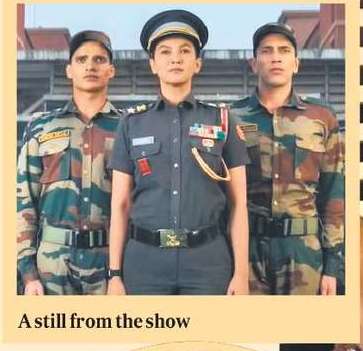
The model-turned-reality TV star makes her fiction TV debut in Fauji 2, fulfilling a long-awaited dream
Akash Bhatnagar (HINDUSTAN TIMES; December 9, 2024)
Gauahar Khan, a household name in the reality TV circuit, has taken a significant step forward in her career by making her fiction TV debut with Fauji 2. This spiritual sequel to actor Shah Rukh Khan’s iconic 1999 show has given her an opportunity to fulfil a long-held dream.
“For me to do acting on television, I needed it to be treated in a way that it doesn’t come across as I’m taking my acting lightly, like I’m doing it only to churn money. It needed to satisfy my brain as an actor. I’m just happy that if I had to debut on TV, this is how it should have been. I wanted a role that let me perform. Every scene I shoot is a performance of the character; it’s not just ‘say the line and move on,” she tells us.
Joining the show on the national broadcaster, Doordarshan, is particularly nostalgic for Gauahar. “Doordarshan is the definition of my childhood entertainment — Chitrahaar, Fauji, Mungeri Lal ke Sunehre Sapne and Malgudi Days. It’s almost like living my childhood dream,” she says.
Despite some seeing the channel as dated, Gauahar is optimistic about its progress. “I know their plans are huge. DD always does something substantial; they know their audience and what they desire. Their OTT platform is a big step into the digital market.”
When asked about the show’s connection to SRK, Gauahar admits the legacy comes with pressure. “When you think about the legacy, the pressure is too much. But when I first heard that my name was mentioned alongside Shah Rukh Khan’s, I felt proud. I haven’t worked with him yet, but I hope to. Just being mentioned in the same line as his name is a big thing for me,” she says.
This new book explores Shah Rukh Khan's fandom
3:01 PM
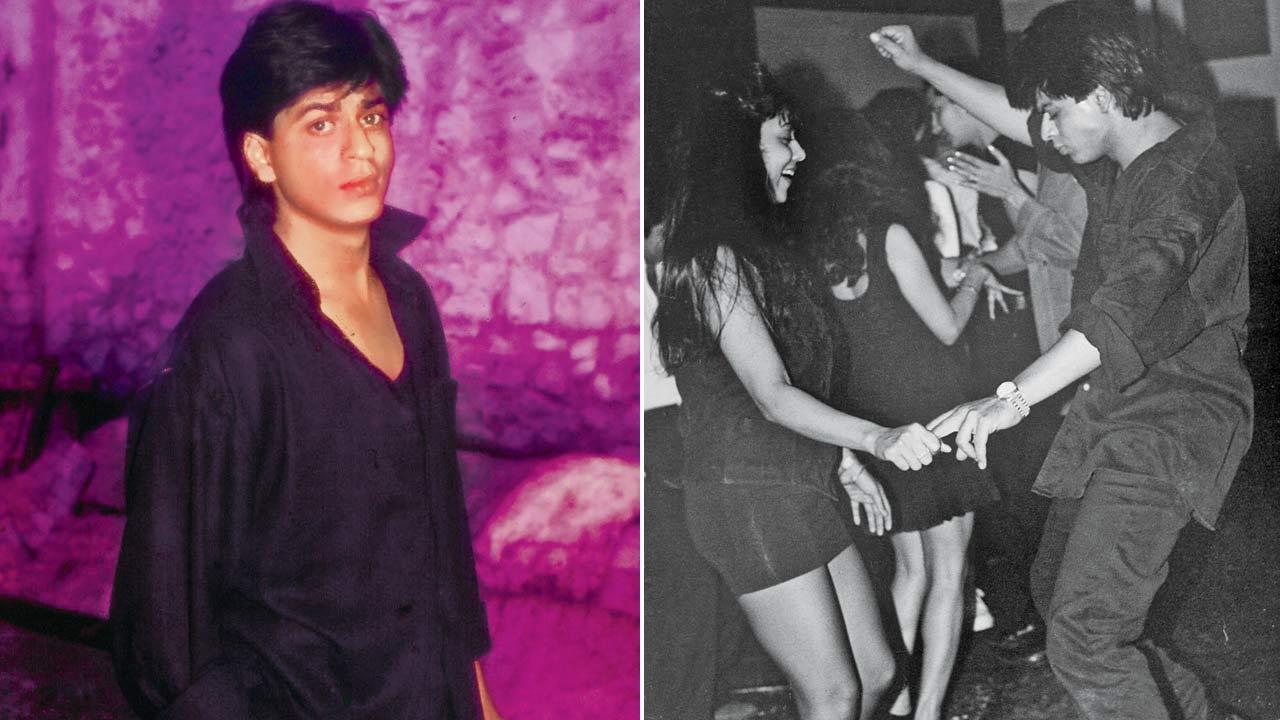
Shah Rukh Khan; (right) Dancing through life: Shah Rukh and Gauri show young love’s got rhythm
A new book aims to encapsulate what actor Shah Rukh Khan means to his fans. This extract talks about an early hit, Fauji, and how it heralded the birth of the superstar we know, and love, even now
Mohar Basu (MID-DAY; November 10, 2024)
Shah Rukh’s breakthrough in television came with Fauji, helmed by the jovial Colonel Raj Kapoor, who appeared on Jeena Isi Ka Naam Hai to talk about the actor.
Speaking about Colonel Kapoor, Shah Rukh said, “I never thought I could act on screen. Let me share a story: After my father passed away, my mother and I were searching for a house to rent. When we found one, my mother insisted that I see it first before confirming. When asked where I was, she replied, “He’s off acting.”
Kapoor’s son-in-law Kamal Dewan suggested I go to him, who was directing a serial. That’s how Fauji, which was aired in 1989 and had thirteen episodes, came to be.
Fauji served as Kapoor’s homage to the Indian Army, presenting a realistic portrayal of cadet life as young men trained to become commandos. Shah Rukh was already acting in another serial titled Dil Dariya at that time and shot for Fauji during lunch breaks—such shooting schedules were common for actors then who worked on multiple projects at the same time. The audition for Fauji involved a rigorous physical test, including a 1.5-mile run at dawn, followed by an impromptu boxing match. Shah Rukh impressed with his discipline, by not giving up on the race even when many co-auditioners dropped out. He was initially designated to land a smaller role while Kapoor’s son Bobby was to play one of the leads, Abhimanyu. But Bobby, who was already the cameraman, had to bow out.
It’s the way of this industry, as Karan Johar points out in Zoya Akhtar’s debut movie Luck By Chance: “Industry mein outsiders aise hi toh aatey hai. Koi alag tarah ka role likhta hai, koi badaa star nahi karta hai and finally ek naye ladke ko break mil jata hai [This is how outsiders get into the film industry. Someone writes a different sort of a role, big stars refuse to do it and then finally a newbie gets his break]. Zanjeer was turned down by seven actors before a struggling star, Amitabh Bachchan, picked it up.”
Shah Rukh has been destiny’s child in that sense, or probably was always at the right place at the right time. His two big Bollywood hits, Darr and Baazigar, landed in his kitty just like that.
How Shah Rukh landed Fauji, over and above the rigour he showed, is funny, to say the least. At the launch of Samar Khan’s and Sonali Kokra’s book SRK: 25 Years of a Life, he recounted, “I went there, I auditioned and he gave me a sweet role—in the whole Fauji serial, the Colonel orders me to go and count the crows on the tree. I would run and say, ‘There are four crows’. This was my role in the whole serial. I thought this was so strange… How could I tell my family that this was my role? … I did that and it was one of the nicest roles, and they’ve all loved me like a family. I am not saying this with false humility, but maybe the goodness I have at this age is because of the wonderful men and women I’ve met in my life.”
Amina Shervani, who wrote and acted in Fauji (as Kiran Kochar), said that for its time, Fauji was an extremely expensive show to make. It cost nearly Rs 2 lakh per episode to shoot. It was facing a four-year delay in its pilot launch. The Fauji team rallied in 1988 to ensure an early release the following year. They obtained permissions from the Ministry of Defence, Doordarshan and the Army headquarters. Despite challenges, the dedicated team pooled their talents and resources to bring the series to fruition.
In an interview to The Print, Shervani said, “I remember the Army was supposed to give us sten guns and other equipment to use, but they didn’t let us touch anything. So I flirted with a commando to steal a broken, defunct sten gun, and made a mould of it. We made twelve aluminium moulds that looked quite real. And one day, I was carrying them back from the studio in an auto, and the cops stopped me, and there I was—with twelve real-looking guns. Fortunately, we had done films for Delhi Police before that, so the police commissioner knew what we were really doing.”
This was the late 1980s and the turmoil in Punjab meant that procuring materials such as fuel for the demolition and explosion scenes was difficult, as the authorities had put strict rules in place. And so, for the scenes in the show, these had to be sourced from Shah Rukh’s mother, who owned a kerosene company. Dynamite was acquired through connections with friends who had contracts for stone and mica mining in the Aravallis, allowing the team to create their own explosives.
One would think these would be the biggest challenges in the making, but the real hurdle was getting Shah Rukh to cut his hair. Shervani said, ‘”Shah Rukh just wouldn’t cut his hair. He would keep smoking, and his mother would be worried that nothing would come of his passion for theatre.”
When Fauji was aired, it resonated with people in a big way. Shah Rukh’s charm captivated viewers, propelling him to the forefront of the show. His character, Abhimanyu, became central to the story, showcasing Shah Rukh’s knack for both romance and action. This was the first time he started becoming a household name. One of the many fans of Shah Rukh from that era is my own mother, Ellora Basu. When I first told her I am working on this book, she recounted to me how her love for Shah Rukh dates back to the late 1980s.
“Watching Fauji was like witnessing the birth of a superstar. Shah Rukh Khan’s charm as Abhimanyu Rai was not to be missed, and we knew he was destined for greatness from the very first day the show aired.”
As a child of that time, she told me how there was a general sense of fatigue with the trope of the ‘Angry Young Man’ that ruled movies and television then. “I wasn’t interested in television until Fauji came along. That was a young show. It had stories that my siblings and I could relate to. The show brought in young people to television viewing. A large part of our love was because of Shah Rukh. He was always a sincere actor, but more than anything else, he had the ability to charm you. It could be called screen presence, but in his unique goofy, boy-next-door way, he was someone you’d want to root for in a story. That’s the sign of a hero!”
Extracted with permission from Shah Rukh Khan: Legend, Icon, Star by Mohar Basu, HarperCollins India
----------------------------------------------------
‘Even at his worst, he finds it in himself to be a kind person’
Author and mid-day writer Mohar Basu says that the book, Shah Rukh Khan: Legend, Icon, Star, came into existence because they wanted to view Shah Rukh and his influence on cinema, culture and community from a third eye perspective including the lens of his fans. We spoke to her about what inspired her most as she wrote the book, and how she managed to write it as a detached writer, and not die-hard fan.
Excerpts from an interview.
What anecdote about SRK inspired you the most personally after writing this book?
There are a lot of absolutely fantastic stories about Shah Rukh, and a great selection of these has made it to the book. But the one that stuck with me was this story about Shah Rukh rushing back to India after his wife had a miscarriage while he was in New York shooting for Pardes. To get home quickly, he flew from LA to New York and then caught an Air India flight to India. There was rush and confusion at the airport and a fan persistently followed him for an autograph, despite seeing him flummoxed. When he finally reached his gate, he realised the lady actually was Akshay Kumar’s fan and thought he was Akshay. He didn’t want to break her heart so quickly signed an autograph as “Akshay Kumar”. This story shows what makes him as loved as he is. Even at his worst, he finds it in himself to be a kind person.
As a journalist, writing about fans and a star, what were some things you were careful about—so that it didn’t end up pandering to a star, but spoke of something deeper?
The relationship that fans have with the star they love has been a point of academic research. We all know how powerful and dynamic fandoms are. The approach we had decided early on in the project was to view Shah Rukh and his influence on cinema, culture and community from a third eye perspective including the lens of his fans. Why do people love him so much for so long is a question that was repeatedly asked at every step along the way. My editor at HarperCollins India, Bushra Ahmed, in fact, kept reminding me that fan psyche was at the forefront of this book. This is why we decided to write an entire chapter about why people love and desire him and tackled every aspect of it. Most interviews were done for this chapter because everyone found different things that drew them to him. Married women loved his love story, younger women saw him as a benchmark of what they seek from a man they are in a relationship with, some love the fact that he is a great father and everyone finds themselves drawn to him because he is respectful. The men loved his ability to work hard. The approach was pretty sociological. Some amount of my own training as a journalist and my education in sociology came in handy. We have tried to create a multi-layered, non-lateral narrative which I hope best portrays the power that SRK holds. The love for Shah Rukh runs deep and his charm is an added bonus.
What’s something your book has that you don’t think has been ever addressed about SRK before?
The impact of Shah Rukh Khan on community and culture, not just cinema, is at the heart of this book. The broad highlights of his life are well-known but this book looks deeper into the phenomenon that is SRK. For instance, take my favourite SRK film—Chak De India. The finest sports film India has ever made. And why has that movie been hard to top? It blended in entertainment and social themes perfectly. No other film has been able to reflect how diverse the country is and then SRK says that iconic dialogue— “Mujhe states ke naam na sunai dete hai, na dikhai dete hai. Bas ek mulk ka naam sunai deta hai.” Or more recently, a film like Dear Zindagi. A fan spoke about how she had always felt different and knew she wasn’t okay but Dr Jug made her to check in to therapy and she is better because of it. We often discuss how stars, especially in a country like India, actually impact real lives and how fans look up to them to inform their own perspectives. This book attempts to do show you how Shah Rukh Khan goes beyond being just a superstar.
Sandeep Singh informed Shah Rukh Khan, and he was quite happy about Fauji 2-Vicky Jain
2:10 PM
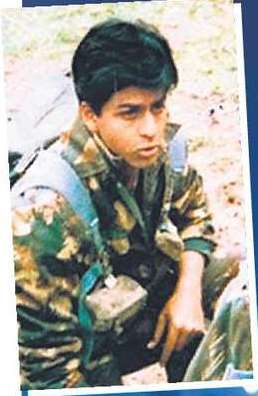
Akash Bhatnagar (HINDUSTAN TIMES; October 19, 2024)
After his stint in multiple reality shows with his wife, actor Ankita Lokhande, Vicky Jain is all set to venture into his partner’s profession. The businessman is making his TV acting debut with the show Fauji 2, and he is quite excited about it: “I’m fortunate enough to be acting. By now, I have gained a little experience in facing the camera. So, that was not difficult, but I must say that acting is a serious business. Usually, Ankita helps me out. This is the first time she’s not around, and I had that fear in my mind. But then she told me that it’s my time to just go out and have fun.”
Crediting his wife for her full support, Jain says, “Ankita has been my rock. She boosts my confidence saying, ‘Yes, you can do it and I’m going to be there’.”
Fauji 2 takes the legacy of actor Shah Rukh Khan’s acting debut project (Fauji, 1989) ahead, and Jain says that they have the superstar’s approval: “Sandeep (Singh, producer) informed him, and he was quite happy about it. We might visit him soon and take his blessings.”
Ask Jain why the show chose to air on Doordarshan and not on any General Entertainment Channels (GEC) or OTT platforms and he says, “The TRP of Doordarshan is much bigger than any other GEC because it is widely watched in remote areas, where cables and dishes are still non-existent. Secondly, Doordarshan is planning to reinvent themselves. They are planning to come with their OTT channel as well.”
Congress, CPM protest The Kerala Story’s telecast on Doordarshan
8:40 AM
THE TIMES OF INDIA (April 6, 2024)
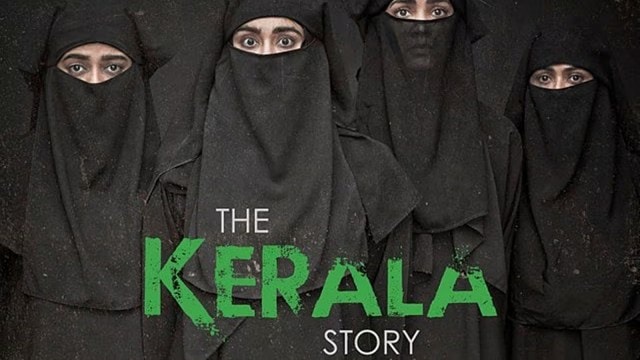
Thiruvananthapuram: A Friday evening telecast of the controversial 2023 movie The Kerala Story on DD National raised CPM and Congress's hackles, with both parties slamming the screening as a slight on the people of the southern state. Hours before the film was aired at the scheduled 8pm slot, CM Pinarayi Vijayan demanded that DD cancel the telecast.
A petition was filed in Kerala HC to stop the screening, but the court didn't issue an order, saying DD should have been given more time to respond.
Leader of the opposition V D Satheesan and CPM state secretary M V Govindan wrote to the Election Commission, alleging that the telecast was at BJP's behest and meant to appease a certain section of people ahead of elections.
DYFI, CPM's youth wing, protested in front of Doordarshan Kendra, while Congress's Thiruvananthapuram MP Shashi Tharoor termed the choice of film "propaganda at its cheapest and worst".
‘Kishore would sing to anybody’s tune but not the government’s’: A new book traces the life and times of Kishore Kumar
8:48 AM
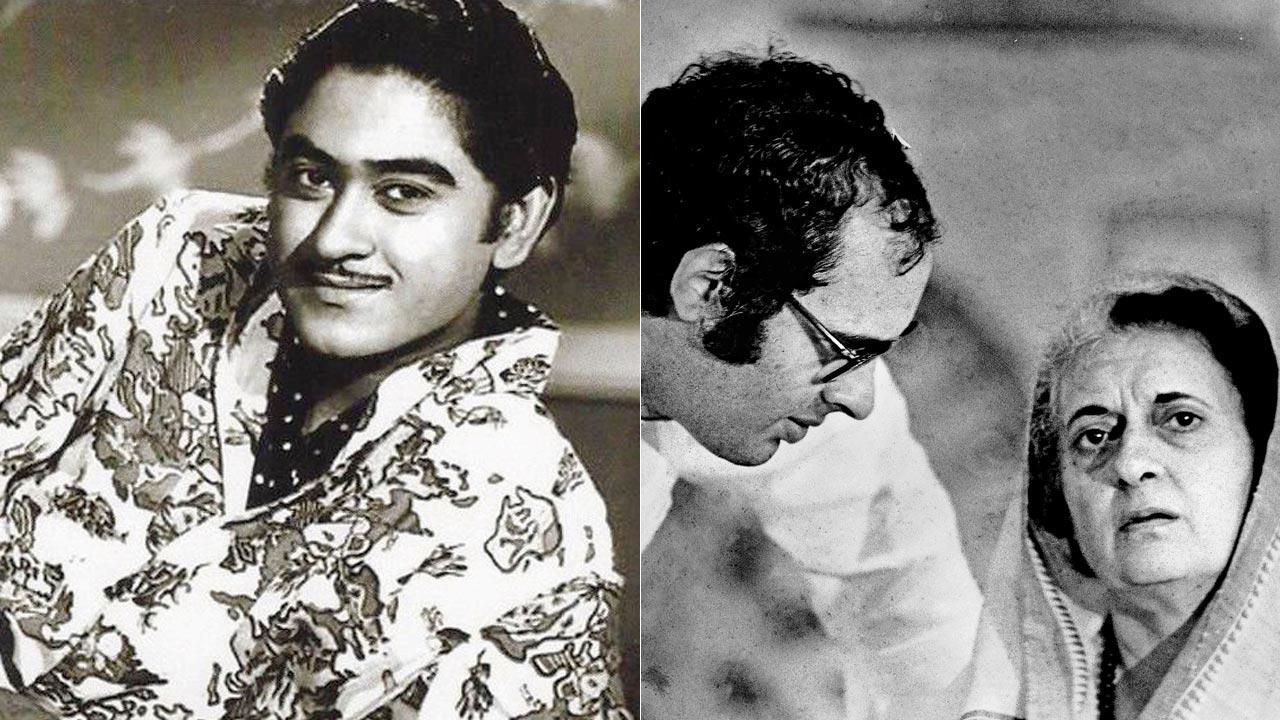
Pic/Wikimedia Commons; (right) Sanjay Gandhi with his mother, Indira Gandhi during the Assam session of the All India Congress Committee, November 19, 1976. Pic/Getty Images
He snubbed Sanjay Gandhi, and cared less about repercussions. A just-released biography looks back at the life and times of veteran singer-actor Kishore Kumar, whose impertinence was as legendary as his music
MID-DAY (October 16, 2022)
It was around January 1976. Geeton Bhari Shaam was Sanjay’s brainchild, and it was decided to rope in film celebrities to do films for television eulogising the Twenty Point Programme. The session was to be the antidote for a nation engulfed in despondency. And who better to lift them from the despair than Kishore, by now the authority on live shows?
He wanted Kishore to sing jingles in praise of the government and its schemes. “Wanted” would be a wrong choice of word for Sanjay of those days. It was more of a demand than an appeal. Kishore was basking in the glory of a Filmfare Award, his first in six years, when the trunk call came from Delhi. Not known to pick up phone calls directly, Kishore had made an exception that day.
“You have to come to Delhi. Sanjay Gandhi ka programme hai.”
“Who are you?” Now it was Kishore’s turn to “demand”.
“Burney.” It was a voice that reeked of unmerited power.
An infuriated Kishore was unusually cool and, for a change, politically correct.
“Please talk to my secretary or else take prior appointment.”
In his interview with Pritish Nandy, Kishore would set the record straight some nine years later. “Who knows why they come? But no one can make me do what I don’t want to do. I don’t sing at anyone’s will or command.”
The conversation would end there, but the confrontation had just begun. In those days, the Gandhi scion would not take no for an answer. Shukla needed to act in a hurry to save his job and honour.
Sayed Muzaffar Hussain Burney, the then Secretary in the Ministry of I&B, reported the conversation to his boss and was swiftly directed to arrange a meeting with some government officials and industry representatives in Bombay. The said meeting took place on 29 April 1976 and was attended by G P Sippy, the then head of the All-India Film Producer’s Council, director Shriram Bohra, B R Chopra, Subodh Mukerji and Nasir Hussain, among others.
Sippy tried to convince Kishore for the show but was snubbed. Sippy then explained to the officials that convincing Kishore was not their cup of tea and that ministry officials should contact him directly.
Next, it was the turn of Joint Secretary C B Jain to engage with Kishore. He spoke to the singer directly on phone and explained the government’s stance on the matter. Jain even suggested visiting Kishore to discuss the matter but was told that Kishore was not to see anyone as per medical advice. Kishore, during these years, was indeed suffering from hypertension, eosinophilia and other issues for which some live shows had to be curtailed midway.
By this time, Kishore was also mentally prepared to make a debut on the streets. With a harmonium hanging from his shoulders, he would sing to anybody’s tune but not the government’s:
I did what I thought best. Singing at private functions is definitely not an anathema. With genuine love and respect, I am only too eager to bend. However, if someone decides to rest his foot in my head, he will not have the good fortune to witness the best of my courtesies.
The film industry had attuned themselves to the eccentricities of Kishore, but for the mandarins at Delhi, this “impertinence” was not to be taken lightly. Note sheets were initiated, and the job was entrusted to Jain.
Jain’s note started with the meeting at Burney’s office, where Kishore Kumar’s name was mentioned as being one of those who was “non-cooperating”.
Therefore, the government needed to immediately ban the playing of Kishore Kumar records on AIR and Doordarshan for three months. Contact had to be made with the gramophone recording companies to request them to “freeze all records of Kishore Kumar’s songs” and to see that “no record of his should be sold”.
Jain had not finished yet. A list of under-production films with Kishore Kumar as the playback singer was also to be produced so that steps could be taken not to release any raw stock to “these productions”. It was also to be examined whether “such films could be refused censor certificate(s)”.
Still not satisfied, Jain took the matter to ridiculous proportions by exploring options regarding the broadcasting of songs by the BBC and if anything, “can be done to stop this”.
Based on Jain’s note, Burney would initiate his on 30 April, which Shukla would approve on 11 May 1976. The note read thus:
All the songs of Sri Kishore Kumar should be banned from AIR and DD and that all films in which he was the playback singer should be listed out so that suitable action can be taken against these films. Besides, the representative of HMV and Gramophone recording Companies should be sent for and, in consultation with the Ministry of Education, the sale of Sri Kishore Kumar’s records and discs should be frozen.
Strangely, the orders were issued even before Shukla had vetted the proposal. Exactly a week before that, on 4 May 1976, orders were issued by the Director General of AIR that songs by Kishore Kumar should not be broadcast and that film excerpts or films featuring him as a playback singer should not be shown on TV. All records of his songs should be kept in the “personal custody” of the head of the various AIR and TV centres. Three days later, on 7 May, another order followed, this time related to advertising spots featuring Kishore Kumar’s voice. They could be used but only without any mention of his name.
The ban had well and truly begun. For Doordarshan, which had just been separated from AIR a month previously, the start could not have been more inauspicious.
Reproduced with permission from Kishore Kumar: The Ultimate Biography by Anirudha Bhattacharjee and Parthiv Dhar, published by HarperCollins India
Why Doordarshan didn't have a recording of its launch broadcast
8:35 AM
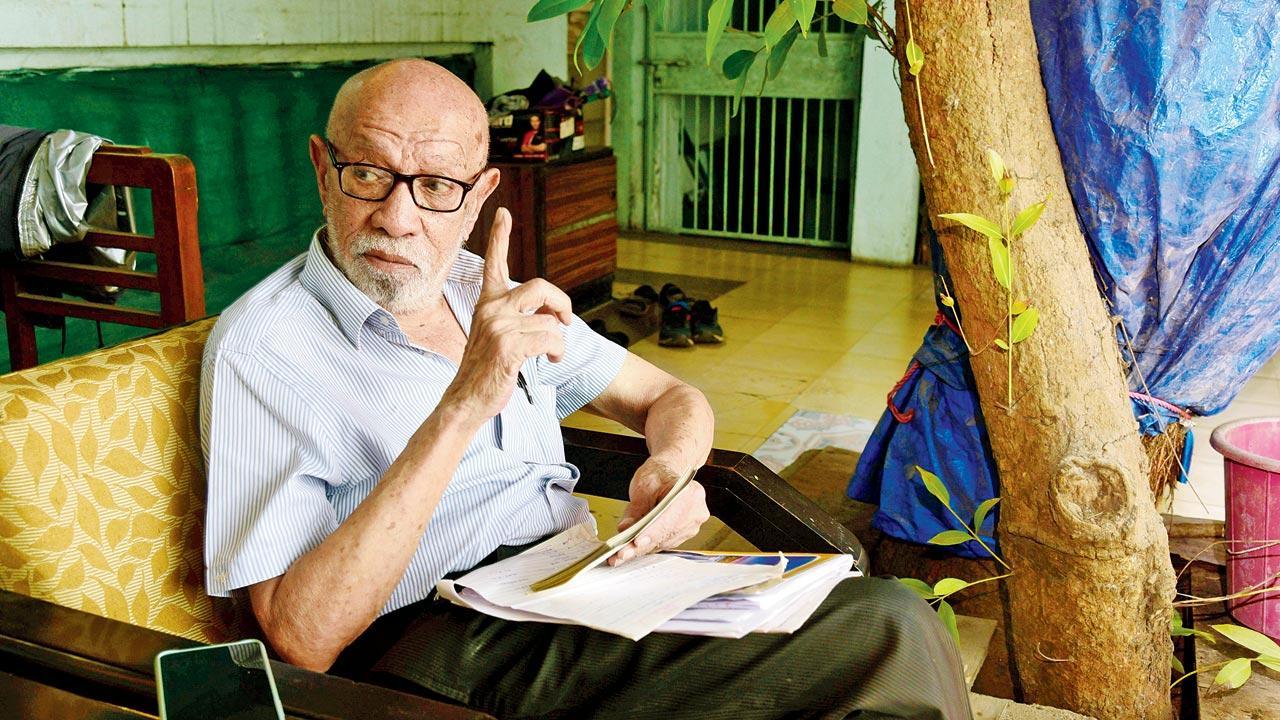
Now 88, Mumbai Doordarshan’s first staffer regales mid-day with the many successes and little bloopers that made up the initial years of the public service broadcaster
Heena Khandelwal (MID-DAY; October 9, 2022)
It was the year 1980. Yakub Sayed, then assistant director at Mumbai Doordarshan, now called DD Sahyadri, received a phone call. It was to inform him that actress Nargis Dutt, who was in New York for medical treatment after being diagnosed with pancreatic cancer, had passed away. He informed his director, and a call was made to the I&B Ministry, which then connected with the Prime Minister’s office.
“We were informed that PM Indira Gandhi is on her way to Bombay and somebody should go to the airport to let her know the news. I was given this task. I went along with my cameraman. Just as she [PM Gandhi] began descending the airstair, I asked the cameraman to start shooting. When I informed Mrs Gandhi, she said that she was deeply saddened at the news. But it was a small reaction. To get more, I decided to pay a visit to Dev Anand’s office, which was in the vicinity. After I had broken the news to him, he offered us a long byte. To make it a whole package, I decided to pay a visit to Sunil Dutt’s home, hoping to get a reaction from the househelps and drivers. But once I reached there, I saw Sanjay Dutt having tea with his friends, laughing. I asked the cameraman to stay put and decided to ask him about his mother and he said, she is doing better,” Sayed tells mid-day between laughs.
By the time he had reached DD’s Worli office, everyone had heard what had happened. “I behaved like I didn’t know. They told me I must pay Mrs Gandhi a visit and confess the blunder because she had already offered her condolences at a meeting that day. I refused, saying, I would rather resign than tell her that… she was known to have a temper. Someone else was given the task and I am sure a few people lost their jobs that day.”
A year later, when a call came saying Nargis Dutt had passed away, Sayed took a taxi and went to Breach Candy Hospital where she was admitted. It was only after he saw a crowd of mourners that he was convinced that the news was in fact, true. “But, it was a Sunday. So, everyone was on chhutti. I went to her brother Anwar Hussain asking if he had the reel of her last film, Raat Aur Din. He had the negatives. I got them developed, and that’s what we aired that evening,” recalls Sayed, now 88. “The viewers, I heard, loved that telecast.”
Mumbai Doordarshan completed 50 years last Sunday. Sayed, who was present at the ceremony held at its Worli studio, served the public service broadcaster from 1972 to his retirement in 1992, when he left as director of Doordarshan Kolkata, or DD Bangla.
We met him on a weekday afternoon in Bhiwandi where he put up for the day in an ancestral home that belongs to his daughter and son-in-law. “I moved here from Kurla because my daughter thinks I am too old to live by myself,” he says.
Over the next hour, Sayed takes us on a journey through the initial years of Mumbai Doordarshan, sharing anecdotes that shaped his life. This, however, wasn’t his first job. After a Master’s in Arts degree from Pune University, Sayed bagged a job at All India Radio. “It was after working there for a decade that I was told I have been selected for television and would have to undergo a six-month training at FTII [Film and Television Institute of India],” he says, of the broadcaster when it had just about 100 employees.
“Since Bombay was catering to the Marathi-speaking population, about 80 per cent of our content was in Marathi. The most popular among this were the Marathi plays. On Saturday, we would show a 2.5 hour-long play which enjoyed better viewership than films; Maharashtrians love their theatre.”
Sayed directed and produced 180 plays himself, including the popular Dinucha Sasubai and Radhabai, Shyamchi Aai, Sharda, Naukri and Piano. “In fact, during the broadcast of Piano—a love story where a female piano player plans to elope with her lover after a performance but cannot—I got a call from Raj Kapoor asking about the actress. He asked me to send her to his office and she was offered the role of heroine in his film; she however, refused saying she was to get married. The film was Prem Rog; the role eventually went to Padmini Kolhapure.”
Another play that Sayed worked on, Beimaan, the story of two friends, was also turned into a film. “Hrishikesh Mukherjee made it into Namak Haraam in 1973 starring Rajesh Khanna and Amitabh Bachchan.”
Besides theatre, Sayed says shows that enjoyed large audience include a children’s shows called Khilbil; a light entertainment programme Garba that focussed on small skits; Aamchi Maati Aamchi Manasa which tackled challenges faced by farmers; a show revolving around home called Sundar Maze Ghar; a comedy called Has Parihas and a chat show featuring the legendary Tabassum, Phool Khile Hain Gulshan Gulshan.
“Tabassum’s Phool Khile Gulshan Gulshan [which aired until 1993] was then what Koffee With Karan is today. She interviewed top actors and musicians show from Prem Nath to Amitabh Bachchan, RD Burman, Shatrughan Sinha and Ashok Kumar, some even multiple times… only Raj Kapoor and Dilip Kumar refused saying they aren’t comfortable being interviewed by someone who was younger to them,” Sayed recalls.
For one of the shows, he turned actor, bringing him public fame. “In one of the meetings, we discussed the need for a comedy programme. The arrow pointed at me. I thought everybody who picks up newspapers does read a joke, why not enact them on television? The show was called Has Parihas. It began in 1973 and became very famous… Mahmood, Jeetendra, Daboo [Randhir Kapoor], everybody came on the show. Lata [Mangeshkar] would also request for jokes… It gave me a lot of fame,” he says, adding, “You know who was my biggest fan? Morarji Desai. He once asked me to meet him, saying he always calls for my tapes and watches them. He even asked why the show was shut down.” After airing for three years, the show stopped after his co-actor on the show Baban Prabhu passed away.
Interestingly, television was still in a nascent stage and those who had TV set at home struggled with its operation. “Once I got a call from a minister, asking me to come over to his residence. Because he was an important man, I dropped everything and went across. He told me his TV was not working. I was no engineer. I asked his staffer to go to the roof and continue to gently move the antenna till I asked him to stop. When it was adjusted enough to sit parallel to the TV, the set came on.” In return as a goodwill gesture, the politico agreed to come on Kilbil as guest.
But Sayed’s favourite story is from the inaugural day of Mumbai Doordarshan—October 2, 1972. “At around 6 pm, we realised that the hustle-bustle that should have marked the arrival of the chief minister was missing. On calling his secretary, we were told that his diary had a wrong date entry. The event that should have started at 6.30 pm was delayed; this irked Bismillah Khan [shehnai maestro], who had to miss his evening namaz. Then a cup broke in the green room and hurt Asha Parekh’s foot and she started to bleed. I went downstairs to find a doctor. To top it all, we ran the programme live but forgot to record it. DD Mumbai does not have a recording of its debut broadcast.”
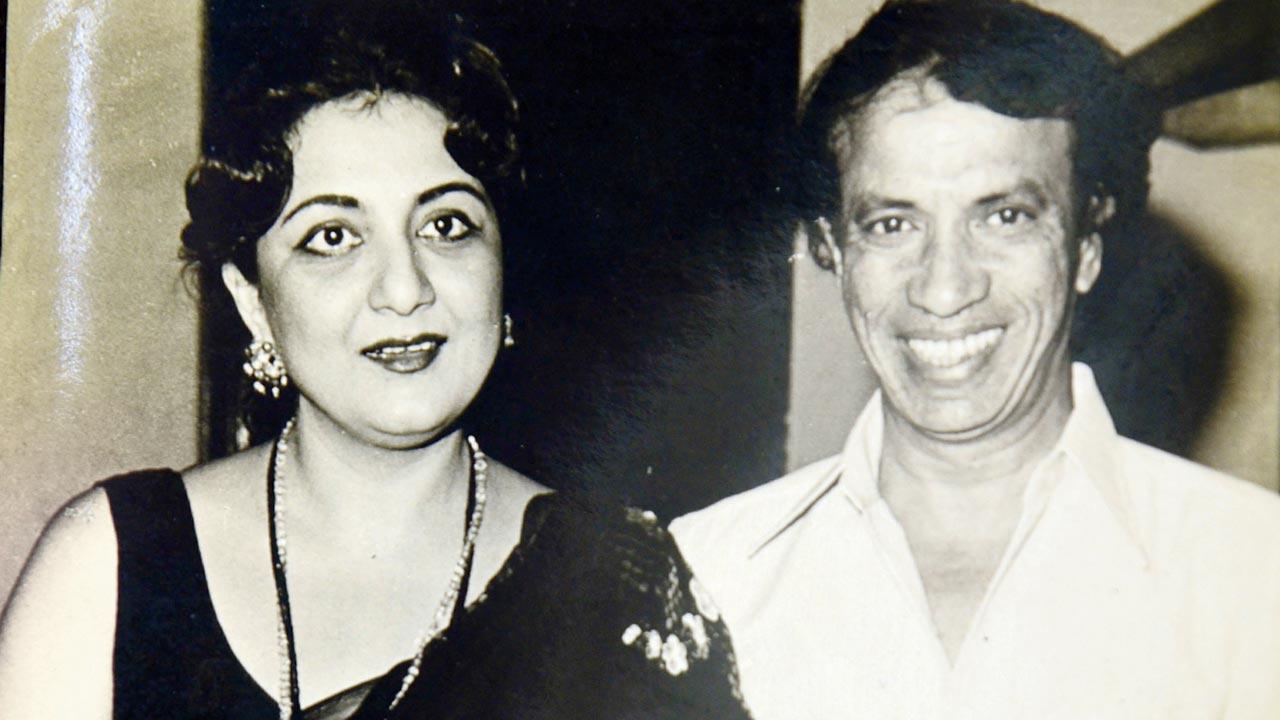
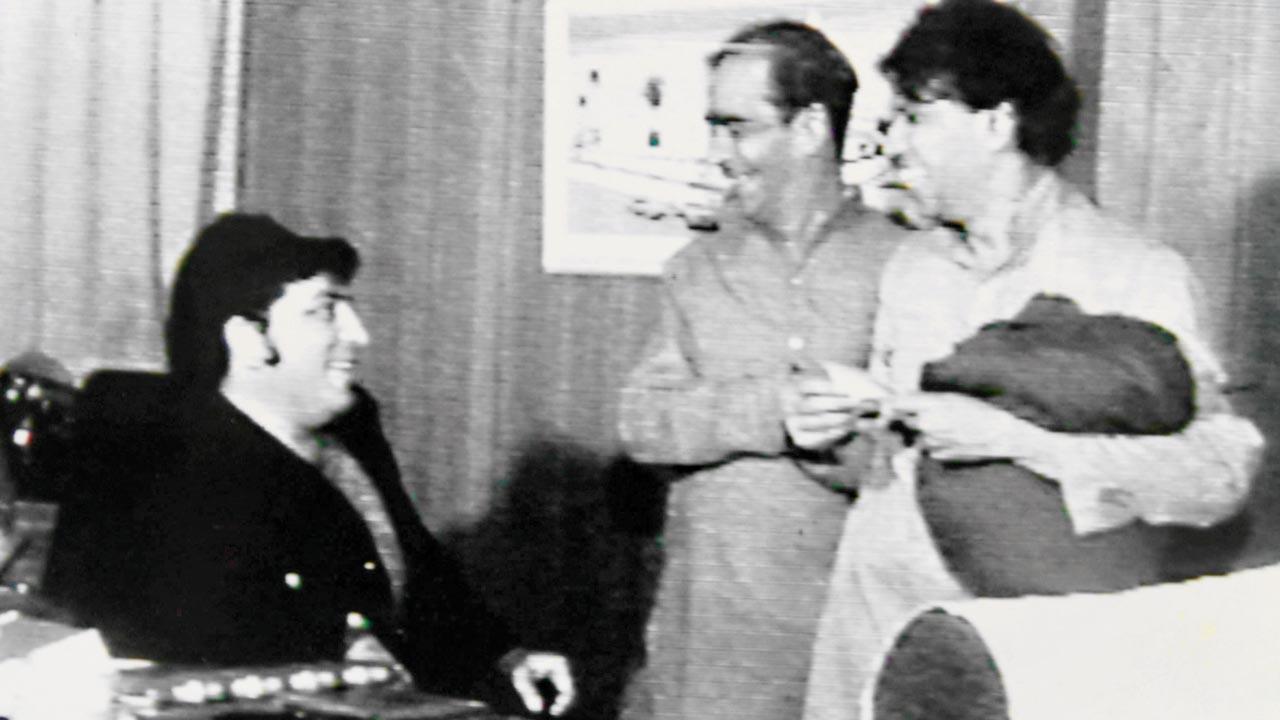
Yakub Sayed with actress and television host Tabassum whose chat show Phool Khile Gulshan Gulshan was very popular and saw the presence of every prominent actor and musician
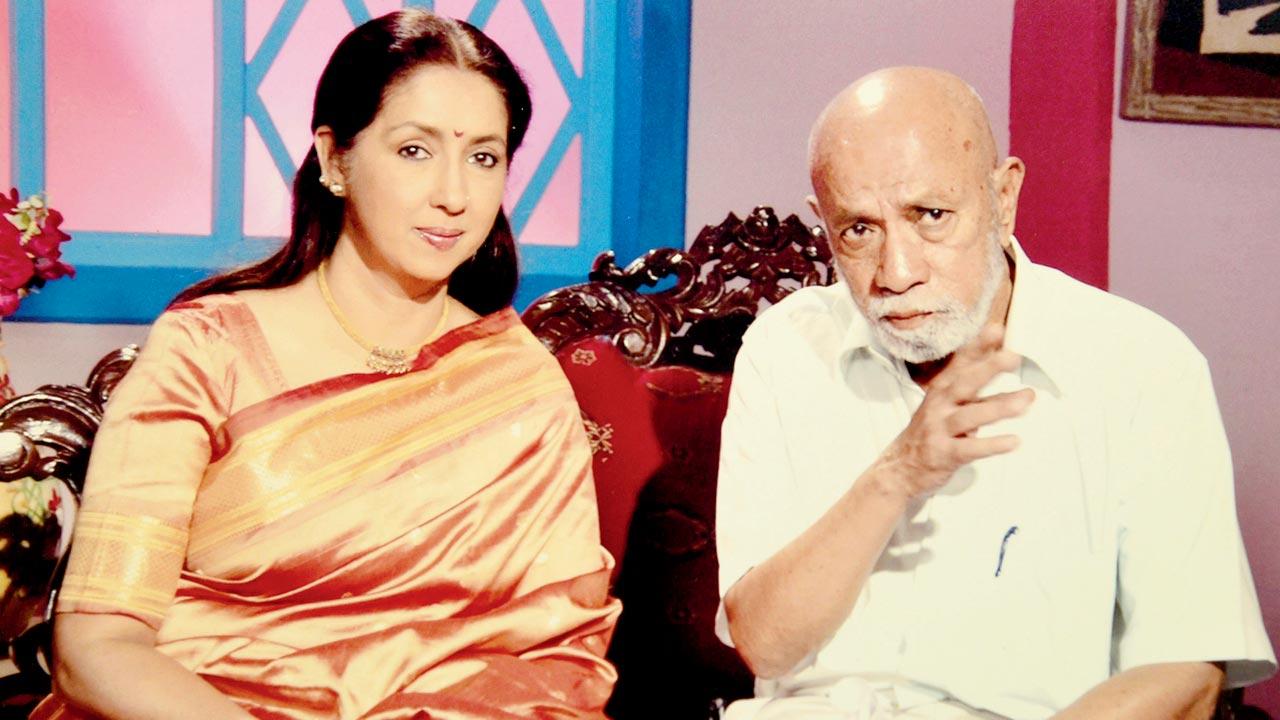
Yakub Sayed with popular Marathi actress Neena Kulkarni, who began her career in the 1970s with theatre
 l
lYakub Sayed and his co-actor on the show Has Parihas, Baban Prabhu with Amjad Khan
Prasar Bharati ties up with OTT platform Yupp TV to wide Doordarshan's reach
8:12 AM
THE TIMES OF INDIA (March 8, 2022)
New Delhi: India’s public service broadcaster Prasar Bharati on Monday said it has tied up with OTT platform Yupp TV to widen the reach of Doordarshan India in newer regions, including the Middle East, US, UK and Australia.
As a result of the agreement, DD India, the government said, will be able to “put forth India’s perspective on various international developments on global platforms”.
The agreement between Yupp TV and Prasar Bharati is part of the broadcaster’s “vision” to expand the global reach of Doordarshan’s DD India and to showcase India’s culture and values to the world.
“With this, DD India is now available on the OTT platform of Yupp TV in the USA, UK, Europe, Middle East, Singapore, Australia and New Zealand,” it added.
Dilwale Dulhania Le Jayenge was the first in India to use behind the scenes-Uday Chopra
8:25 AM

Rishabh Suri (HINDUSTAN TIMES; October 17, 2020)
Iconic in every sense of the word, Dilwale Dulhania Le Jayenge, which completes 25 years of its release on October 20, remains the benchmark for romantic films in India. Written and directed by the then debutant Aditya Chopra, the film starred Shah Rakh Khan and Kajol, and broke several records upon its release. But few know it was the first film in Indian cinema to produce a making of the project!
Actor Uday Chopra, brother of Aditya, shot the behind-the-scenes (BTS). “Adi wanted to do something no one had ever done in India, with DDLJ. He asked me to be in charge of directing the ‘making’. Since this had not been done before, I had to pretty much invent how to go about it. Having just returned from film school in California, I decided this would be a great opportunity to try my hand at another aspect of filmmaking,” he reveals.
Uday recalls he would have a camera in one hand and clap in the other, with a utility belt for batteries and spare parts. “I was quite a sight on set! The advantage, I later discovered, was all artistes were very comfortable with me being right in their faces, this made for some really interesting and intimate shots, which helped the footage tremendously,” he says.
He adds the footage was also telecast on Doordarshan, again a first. “The channel made a special show of the exclusive content. DDLJ’s BTS was an eye-opener for the industry,” says Chopra.

You will really have to search for me in Apaharan-Pankaj Tripathi
10:32 PM

As told to Ankita Chaurasia (MUMBAI MIRROR; October 14, 2020)
The first time I faced a camera was in Patna when I played a prince in a Doordarshan documentary on festivals of the Mithila region. I was pretty clueless about where to look and what to do and just about managed to pull it off.
The next time, it was for the Kannada film, Chigurida Kanasu, which was shot in the Banaras Hindu University campus. I was a National School of Drama student at the time and a bunch of us were chosen to play the protagonist Shankar’s friends. Like most friends of the hero, we were happier than him in happy times and sadder than him when he was in distress. It was a very critical role, you see!
I then shot for Hrithik Roshan’s Lakshya when I was in Delhi. Unfortunately, my part was chopped off on the editing table and I didn’t make the final cut. When I came to Mumbai, looking for work, Prakash Jha’s associate asked me to audition for a role in Nashik. Upon reaching there, I realised I had already got the part, although a small one in Apaharan. But you will really have to search for me.
Since I didn’t come to Mumbai to be ‘launched’ and was only looking to making my passion into a profession, I wasn’t nervous. I just wanted to earn enough money while trying to do interesting roles. Someone who wanted to be a hero would never play one of five henchmen in films. By the time I landed Gangs Of Wasseypur, I had been working in films for eight years and had played a gun-toting villain so many times that I didn’t realise I would become a known face after it. But it was only thanks to Anurag Kashyap and the arc that he gave Sultan Qureshi that I got noticed.
I wasn’t ever lured by the glamour of showbiz. The first time I watched a film was when my father, a priest, was called to perform a pooja at a theatre, Vasant Talkies. It was Jai Santoshi Maa. I watched spellbound but never imagined that I would appear on the same screen one day, that someone would want to click a selfie with me or that a fan would visit my parents with a gift of clothes all the way from Delhi. My parents still don’t own a TV set and have no idea that people know me now.

Fenil's Bollywood Talk # 618
10:25 AM

OTT PLATFORMS, TELEVISION WITNESS A SPIKE IN VIEWERSHIP
Film is a powerful medium and is widely consumed by people across the country. A major chunk of this population regularly watches movies in cinemas. Sadly, theatres have been shut since more than a month due to lockdown and amid rising Coronavirus cases. Most of the people are locked up in their homes and to tide over their boredom, they have started watching more of television and OTT. As a result, their ratings have increased substantially.
Talking of television, the shoots have come to a halt because of obvious reasons. The channels have therefore started to air old episodes of popular daily soaps. Yet, they are getting good viewership. Meanwhile, a masterstroke was pulled off with the decision to have the re-run of successful mythological shows like Ramayan and Mahabharat. These were aired on Doordarshan, just the way it was done in the late 80s. The response was mind-blowing. Doordarshan emerged as one of the top channels in terms of viewership, which has not happened in a long time. Their other shows like Buniyaad, Shrimaan Shrimati etc too have made a comeback and have been lapped up.
Meanwhile, the movie screenings too have recorded an increase in viewings. Last year’s biggest hit War had its television premiere during lockdown and got a huge 2 crore impressions approx, one of the highest ever. The other films like Housefull 4, Total Dhamaal, Pati Patni Aur Woh etc too are doing very well, more so because of the lockdown.
As for OTT, it too has taken advantage. The subscribers of almost all streaming platforms have increased. Some popular series released new seasons of their shows like Money Heist, Four More Shots Please etc and the response has been very encouraging. Also, viewers have been discovering many more shows and movies which they previously missed because of lack of time. Amusingly, a 2011 film, titled Contagion, became one of the most watched films worldwide. It tells the story of a disease that goes out of control and is eerily similar to the current Coronavirus pandemic.
The lockdown or rather the restrictions are expected to go on till a long time. And if you feel, OTT and TV channels will continue to benefit, then you might be mistaken. There’s a fear that viewers will soon reach a saturation point and might move away from these mediums. At a webinar recently, a speaker remarked that many have consumed the material that they would have otherwise consumed in 3 years in just 3 months! Also, OTT platforms, after a point, won’t have anything new to offer as their productions have halted as well. So a few months down the line, they too will feel the pinch as they’ll struggle to bring out new content. There’s similar fear about re-runs of TV shows as well.
Ultimately, the hope is that the curve gets flattened soon and things get back to normal.
I am not whining. I think this is the perfect time to recharge-Rohit Roy
7:59 AM

Kavita Awaasthi (HINDUSTAN TIMES; April 23, 2020)
With the re-telecast of iconic shows Ramayan and Mahabharat, Rohit Roy, who rose to fame with Doordarshan’s afternoon show, Swabhimaan (aired in 1995), says he would love to see the show back on television.
“The cast has been in touch all these years through a chat group and we keep talking about the show. In fact, a while ago, we had a reunion too. But as for the show airing again, that might not be possible on Doordarshan as the rights of the show are not with the channel but with an OTT platform. I wish it aired on DD again, as the content of the show is still relevant and fresh. Moreover, imagine the recall value as so many talented actors featured on the show,” he says. Manoj Bajpayee and Ashutosh Rana featured in the show in the initial phase of their careers.
Roy shares being in a Coronavirus lockdown is working for him and he is happy being at home. He has finished the script of his directorial. “I am not whining. I think this is the perfect time to recharge. I have had a lot of clarity about my work in the last month, so much so that I finished my script with dialogues for my film. There are no distractions and no clutter in the mind,” he says.
The Sanjivani actor is sticking to a routine of workout, working and chilling at home. He feels this is the time to be creative and productive. “Spending time with family is a must, but taking out some hours in the day to work on yourself or focus on your work is essential too. After the lockdown, it will be a challenging time for everyone,” he adds.
Doordarshan emerges as the most-watched channel across genres
8:24 AM

As Doordarshan bags top slot among the most-watched channels, we find out what’s attracting audiences to old, iconic shows
Prashant Singh (HINDUSTAN TIMES; April 13, 2020)
 Back in the ’80s and ’90s, Doordarshan’s viewership would regularly go through the roof. And then, private GECs (general entertainment channels) took over. But now, history is repeating itself as DD — as per the data by Broadcast Audience Research Council-Nielsen — has emerged as the most-watched channel across genres, in the week of March 28 to April 3. In the week before that (March 21-27), DD National didn’t even feature in the top 10 most-viewed channels in Hindi GECs category.
During the ongoing national lockdown due to Coronavirus, DD has brought back many of its iconic shows such as Ramayan, Mahabharat and Shaktimaan. And the idea has worked. As per the data, DD National’s viewership went up to 580 million impressions in the 9 am-10.30 am slot [in the week of March 28 to April 3], compared to one million impressions in the previous week. Likewise, in the 9 pm-10.30 pm slot, the corresponding numbers stood at 835 million impressions, which was two million in the previous week.
 TV industry insiders and experts feel DD shows “will always have a strong emotional connect and recall value.” “They will always remain classics. Also, these days, when people’s mood is gloomy, these shows bring positivity, and also make for a great family watch. Plus, they also stand out for their innate simplicity,” says TV director-producer Rajan Shahi. For trade analyst Taran Adarsh, it goes on to “prove the power of quality content”. “That’s why even if one may not have heard of the actors who worked in them, the shows still attract people,” he says.
According to TV producer Sumeet Mittal, people will “always have loads of nostalgia attached to DD shows”. “Also, there are no fresh episodes of the new shows. But it’s great that people are reconnecting to the classics,” he says.
Shaktimaan actor-producer, Mukesh Khanna puts things in perspective: “It’s a great move by DD to bring back the iconic shows, which were extremely rich in content and educative, too. Today’s kids need much more ‘maarg darshan’ than the kids of that time,” he says.

Lockdown effect: Now other channels bring back CID, Aahat, Ayushmann Khurrana's 2008 soap and a lot more
8:33 AM

With episode banks running dry due to the lockdown, TV channels decide to revive yesteryear hits
Himesh Mankad (MUMBAI MIRROR; April 6, 2020)
 On March 27, Information & Broadcasting Minister Prakash Javadekar announced that in light of the 21-day lockdown, enforced to flatten the Coronavirus spread curve, Ramanand Sagar’s magnum opus Ramayan would be brought back on DD National. Soon after, it emerged that the channel would be rereleasing other yesteryear hits from its oeuvre, including Mahabharat, Shrimaan Shrimati, Dekh Bhai Dekh, Chanakya, Circus, Byomkesh Bakshi and Shaktimaan.
On Thursday, Shashi Shekhar, CEO, Prasar Bharati—India’s public service broadcaster which runs Doordarshan and All India Radio—tweeted, “Thrilled to share that the re-telecast of Ramayan on @ddnational has garnered the highest ever rating for a Hindi GEC show since 2015.” Now, Mahabharat is poised to follow suit.
 Meanwhile, with the lockdown having considerably depleted their episode banks, private channels, too, are forced to revisit their older shows. Colors has already brought back the recently-concluded season 13 of Salman Khan’s Bigg Boss, along with popular daily soaps like Dil Se Dil Tak and Belan Wali Bahu. Manisha Sharma, Chief Content Officer, Hindi Mass Entertainment, Viacom18, calls the channel’s old titles “seasoned shows”, adding, “We are facing an unprecedented situation. But we want to make sure that we keep providing wholesome entertainment to our audience, even in the time of social distancing.”
 Kapil Sharma’s maiden solo stint on TV, Comedy Nights With Kapil, is also poised for a return with weekend special episodes on Colors. Interestingly, competitor Sony will be airing re-runs of the on-going season of The Kapil Sharma Show. CID, India’s longest-running TV show that went off air in October 2018 after 21 years, is back on Sony. Best of Crime Patrol and Superstar Singer are also returning to primetime. Horror fans will be particularly pleased to learn that the channel has reserved its cult show, Aahat, for midnight viewing. Sab TV, on the other-hand has placed its safe bet on Taarak Mehta Ka Ooltah Chashmah.
 Mythology seems to be the flavour of the season. After Doordarshan, Star Plus is sprucing up with three of its own past mythologicals— Mahabharat, Siya Ke Ram and RadhaKrishn. Daily staples from the same channel—Saathiya, Diya Aur Baati Hum and Pratigya—are back as well, and sources confirm, are registering considerably higher ratings than during their original run. Star Bharat has decided to get back the two comic classics, Sarabhai vs Sarabhai and Instant Khichdi.
 Meanwhile, Zee TV has come up with a unique strategy of bringing their web-shows to the small screen, which includes Sakshi Tanwar and Ram Kapoor’s Karrle Tu Bhi Mohabbat, Baarish featuring Sharman Joshi and the Ronit Roy-led Kehne Ko Humsafar Hain to combat vacant slots in the 9 pm-11 pm duration. “The cessation of shoots across daily primetime soaps lead us to evaluate alternatives in the absence of the core staple,” says Aparna Bhosle, Business Head, Zee TV, adding, “Given that we have access to a vast repository of content across multiple platforms, we decided to look within the network to arrive at this decision.” For the afternoon slots, the channel has revived Brahmarakshas, Pavitra Rishta, Choti Bahu, Kasamh Se, Jamai Raja, Jodha Akbar and Zindagi Ki Mehek.
 Ayushmann Khurrana is also returning to the telly, through his 2008 show Ek Thi Rajkumari, which will soon start airing on &TV. The National Award-winning actor played the antagonist Prem in this love triangle. Incidentally, the channel is also bringing back the 56-episode, 2012 version of Ramayan, which had Gagan Malik as Ram, Neha Sargam as Sita and Sachin Tyagi as Ravan. “As the entire country fights the (Coronavirus) threat, there’s nothing better to bring families together than this fight between good and evil,” says Vishnu Shankar, Business Head, &TV.
 Mukesh Khanna, who played Bhishma Pitamah in Mahabharat and India’s first superhero in Shaktimaan, says, “I’d never imagined that Ramayan and Mahabharat would air on the same day. It’s surreal. Back in the day, the government asked us not to air two epics in one day, as they were considered heavy shows for viewers. So, the premiere of Mahabharat was pushed by a year-and-a-half,” the veteran actor recounts.
He believes that the two mythological shows, along with his superhero outing, have given people a chance to revisit Indian culture. “After I heard about Ramayan and Mahabharat being brought back on TV, I spoke to the CEO of Prasar Bharati to air Shaktimaan, too. All it took was an e-mail,” he informs.
When asked if there are plans to take Shaktimaan’s story forward, the actor reveals that plans are afoot for season 2. “Shaktimaan was India’s first superhero, not RA.One or Krrish. I wanted to bring the character to the 70 MM format but couldn’t due to monetary issues. I have been working on Shaktimaan’s return for three years now, and there’s a concrete plan in place now,” he signs off enigmatically.

Everyone doesn’t have a subscription to OTT channels. Many still watch Doodarshan-Neena Gupta
8:16 AM

Sonil Dedhia (HINDUSTAN TIMES; April 6, 2020)
When it comes to giving life advice, very few come close to the intellect that Neena Gupta possesses. The actor, who is currently in Mukteshwar (Uttarakhand), where she reached just two days before the Coronavirus lockdown, is keeping herself busy by making her own Instagram video series titled Sach Kahoon Toh, in which she gives her opinion about various topics. These include — not falling for married men and how to cope with stress during this crisis. “I speak from the heart and like to share whatever I feel I can with women. It’s not necessary that I make these videos every day or give advice all the time. The other day, I just felt like dancing and telling people to stay in their houses. I am planning to make a video about how one can do away with fancy shampoos and soaps during this time. It’s a way of keeping myself and the audience entertained,” she says.
The actor says that it is ideal to avoid discussing negative subjects and instead do things that please us at the moment. “It’s very difficult to stay positive in this time. I keep myself busy so that I don’t have time to think. I am taking online classes for classical singing. Apart from that, I am cooking, too. The other day, I tried my hand at rava dosa and it turned out well,” she says.
Gupta, who has spent four decades in the industry, was part of many television shows including Buniyaad, which the government has decided to re-telecast on Doordarshan. “Everyone doesn’t have a subscription to OTT channels. Many still watch Doodarshan. So, I think it’s a great initiative. Even the younger generation will be exposed to the series which I think is relevant even today and has stood the test of time. While I don’t have a huge role in it, I have fond memories of the serial,” she concludes.
Some think my father was British or that he came here as a hippie-Jamie Alter
8:49 AM

What does it mean to be white and desi? Late actor Tom Alter's YouTuber son, who is also an established sports journalist, breaks it down one video at a time
Jane Borges (MID-DAY; April 5, 2020)
 A Hindi-speaking, white man is an anomaly. The last person, we remember, who made it look so easy on stage and screen, was late actor Tom Alter. It was then but natural that when the co-writers of the mini-series Afsos, which released on Amazon Prime in February, were looking at casting a white man for the role of Dr Goldfish, whose grasp over Hindi is a defining twist in the plot, they would be reminded of the veteran. "After searching a lot, when we did not get anything [a person who fit the bill], we thought Tom Alter would have been great for this role," Sourav Ghosh, who has co-written the Gulshan Devaiah-starrer mini-series, had later shared. "We decided to check if Tom Alter has any family." A Google search led them to his son Jamie Alter, who not known to many, had enjoyed a popular stint as funnyman Tinku Jiya, an anchor on a news satire show, Fake It India.
"Namaskar doston, main hoon apne ghar waalo ka lalla aur aapke jigar ka challa, Tinku Jiya," the opening lines, which Jamie rattled effortlessly on his show, won the writers over. "It was extremely overwhelming. Someone had seen me in a role that I had never envisioned myself in. But it had come at a perfect time," says Jamie, 39, over the phone from Noida.
Jamie, unlike most children who grew up in homes where acting was bread and butter, never took a shine to it. His father, lived two lives every day, he says. "It used to be surreal to see him at home, as this man, who drinks tea, eats mangoes and toast, watches cricket and plays games with us. And then, as soon as he was out, he'd put a wig on, wear a white suit, and hold a machine gun."
"I actually had a great time, joining dad on the outdoor shoots, visiting him on set and attending those movie premieres and screenings. But, as I hit my teenage years, I grappled with whether I should be doing what my father was doing, or try something different." Jamie found his passion in sports journalism, and continued at it for nearly 15 years, while his father, followed his success from the side-lines. "Dad, I think, was happier that I got into journalism. It was something he did, too. In fact, he had been associated with mid-day, ever since the newspaper launched, and balanced a lot of sports writing with his acting in the 1980s and early '90s."
Even until the last few months before he passed away in September 2017, Jamie remembers his father taking a keen interest in his writing. "Once, when he was to come to Delhi for work, he called, saying, 'I don't have the time to read online, but will you get me the print-outs of all your articles when we meet.' He was so happy the first time, I interviewed Rahul Dravid."
Jamie's stint as Tinku Jiya—the name has been lifted from a Bollywood music number—came about in 2017, when he was a digital sports editor with a newspaper. "During one of our very dull, daily edit meetings, my colleague Neeraj Badhwar, a humourist, suddenly had a brainwave and asked if I would play a character that he had in mind, for his show. He told me, 'You are the white guy, speaking in Hindi. It's disruptive as an idea. People are going to catch on, and love the show." As Badhwar predicted, Tinku Jiya really took off. Alter, who happened to see just two shows that featured his son, was impressed. "He said this [my character] was real fun, and that I should keep doing it. Dad was always so encouraging and supportive. I still remember the number of actors who'd show up at our house, requesting five minutes of dad's time… he'd give them five hours."
Tinku Jiya took a break, after Jamie switched jobs. But the demand from his followers continued. "I went back to Neeraj, after I started freelancing last year, and we revived the character," he says.
Last year, Jamie started his own YouTube channel, which currently has 85.2K subscribers. Here, he shares videos that include everything from comedy sketches, to cricket discussions, stories of his father, and his white identity. "There are a lot of misconceptions around my identity. I have also been asked if I am an albino. Some think my father was British or that he came here as a hippie. That was not the case at all."
Alter was the son of American missionaries. His grandfather moved to India in the early 1900s. "I attempt to answer those questions through these videos," he says. "I also enjoy humour. I did an episode on what it means to be travelling abroad with an Indian passport, and being white. That got me seven lakh views."
For now, Jamie is enjoying this phase, where he is trying just about everything that's coming his way. But, he says, when it comes to acting, the legacy his father left behind, will be unmatched. Some of his fondest memories are of watching him in the Doordarshan show, Jugalbandi, which also featured Radha Seth and Girish Karnad. He even tweeted to DD National last week, asking if they would consider a re-run of the show, during the national lockdown. "As actor, I don't have the drive that my father did. It is humbling that people have such nice things to say about my work. But, we both did very different things. I make YouTube videos, and dad was a great stage actor. Afsos, which is possibly my only body of acting work, literally fell onto my lap. Nothing came easily for dad. He worked very hard for it."
Dekh Bhai Dekh resurrected my career-Shekhar Suman
8:45 AM

Kavita Awaasthi (HINDUSTAN TIMES; April 3, 2020)
Shekhar Suman’s social media feed is inundated with posts from his followers about the return of the iconic comedy Dekh Bhai Dekh (DBD) — a comedy show that captures the lives of the three generations of Mumbai-based Dewan family who live together under one roof — on Doordarshan. In a move to keep audiences entertained during the lockdown, the channel has been airing old TV shows which were popular and are still remembered by viewers.
Thrilled that his superhit sitcom DBD is airing again, Suman says, “I am happy that a family entertainer will be watched by youngsters. They will realise the joy of living together in a joint family. We need the spirit of being together with our loved ones in tough times like these.”
He reminisces that the show was a huge hit from day one. “Doing TV wasn’t the plan but DBD resurrected my career. I debuted with Utsav (1984) and had a few hit films but then my career dipped badly. I got B-grade film offers so I didn’t take them on and waited at home for two years. I was at my all-time career low. So, when I was approached for DBD in 1993, I was skeptical,” he shares.
During this lockdown, Suman is catching up with life and “being reintroduced” to himself. He feels in the fast pace of life, one forgets who we are. “It’s ironic that most people dream of owning a big house but how many of us stay at home to enjoy it? Circumstances have now forced us to stay at home. This is the time to catch up with life, learn more about yourself and appreciate what you have. This virus is nature’s way of teaching us a lesson. It has taught us to slow down. The pandemic has ambushed us and we have to fight it out,” he says.
We all need a backup plan in life-Emraan Hashmi
8:25 AM

Actor Emraan Hashmi on his journey in Bollywood, and what his son taught him about life
Suman Sharma (TIMES LIFE; March 29, 2020)
Looking back, do you have any regrets?
I’m proud of whatever I have done. I don’t have any regrets. What I’m today is because of certain films. I gained from that kind of cinema. There are many films, which you feel were not made for you or were not made as they should have been made. But that’s a learning process. How will you grow if you do not make mistakes? You have to do justice to whatever comes your way.
Given the competition around, do you feel insecure as an actor?
I don’t feel insecure ever because the industry is a big place. It always welcomes talent. Today, so many new avenues have opened up. All kinds of films are being made. The medium doesn’t matter. What matters is talent. If you have talent, you’ll get opportunities. There’s work for all. In fact, we should learn from the newcomers. They bring in fresh ideas.
What do newcomers have today that you did not possess when you began?
The current generation has got more exposure. What my son, Ayaan, grasps from watching films is much more than what I did as a youngster. He has access to the OTT platforms, YouTube, social media... I was born in the ’80s, when there was only one channel, Doordarshan. We absorbed whatever we could from it. Satellite TV came in later. When youngsters are exposed to so much stimulation, they are bound to create wonders.
Is it frustrating to wait for a good script to come your way?
There’s no frustration as such. You just have to keep on working, putting in efforts to enhance a film. Slowly, you’ll start getting the films to your liking. The more you learn; the more your acting will improve. I never felt frustrated. My films could be hits or flops, the industry always gave me work. I didn’t have to sit at home. Also, I can make the films I want through my production house.
Turning point in your career...
Every film is a turning point. The route is never linear. You can never predict your next Friday. Personally, the birth of my son was a turning point for me.
How have you changed as a person over the years?
As a person, I’m the same as I was 10 years ago. But you develop a world view. You evolve as a human being. My perception has changed towards people, towards films… It’s difficult to put it in words. You change along the course of your profession. You change after marriage, after parenthood. When you experience the death of a close one, you change. Experiences surely change you.
Has the way you look at life also changed after Ayaan’s fight with cancer?
Yes. Earlier, I thought too much about the future. But all that has changed now. Today, I’m satisfied with what I have. I live in today. I experience every moment and try to live it fully. My attitude is to take one day at a time, to behave responsibly and with discipline. Parenthood has taught me responsibility. As teenagers, we lack balance. At 20, I used to run away from responsibility. You turn accountable when you marry, and more so, when you become a parent.
Which of your films does Ayaan enjoy?
He has not seen any of my films. I don’t wish to show them to him. (Laughs) All my films are censored as he’s just 9 years old. Ayaan wants to become an actor. The atmosphere around him is such... but for now, he has to study, enjoy life and experience it. When he turns 20, he will understand things better. Most probably, cinema will be different then. He may even change his mind. But yes, he has to keep a back-up plan ready. Life is unpredictable here. I did not have a back-up plan. That’s a terrifying thought. Thankfully, things turned out good for me.
The Forgotten Army is a story that was 20 years in the making-Kabir Khan
7:55 AM

His debut directorial venture for Doordarshan staying with him for two decades, Kabir Khan on revisiting the subject of WWII in the web show
Sonia Lulla (MID-DAY; December 19, 2019)
 Even as he gears up to bring the story of India's first World Cup victory to life with Ranveer Singh-starrer '83, Kabir Khan is garnering the attention of cinephiles with a project that has stayed with him for several years. It was in 1999 that the filmmaker made his directorial debut with The Forgotten Army — based on Subhas Chandra Bose's Indian National Army — a Doordarshan project that had such an impact on him that he harboured the desire to recreate it on an elaborate scale, ever since.
"This is a story 20 years in the making," Khan tells mid-day of his upcoming web offering, The Forgotten Army — Azaadi Ke Liye. "The story moved me passionately as a filmmaker ever since I made a documentary on the subject. I have always wanted to tell this largely unheard story of our valiant INA soldiers, who were fighting for our country's independence in a land far away from Indian soil."
Revisiting those events that concerned India before and after the second World War, the show, a source says, was filmed in locations that were crucial to the events that transpired then. "We shot in Thailand, Singapore and Malaysia. [Certain] locations were recreated in Mumbai on a mammoth scale, even if that meant investing heavily for a mere four-day shoot that required the set-up. The team wanted to make the series look as authentic as possible," says the source.
Subscribe to:
Posts (Atom)