Showing posts with label Dilip Kumar. Show all posts
Showing posts with label Dilip Kumar. Show all posts
Asha Bhosle looked weak at Arjun Tendulkar's wedding reception-Saira Banu
8:21 AM

Samarth Goyal (HINDUSTAN TIMES; April 14, 2026)
The passing of Asha Bhosle on Sunday in Mumbai has left a profound void in Indian music. For veteran actor Saira Banu, the loss is both personal and deeply emotional.
“I had spoken to her during Ramzan, but then I didn’t realise that would be our last conversation. When I heard about her health, it was a complete shock,” she tells us, adding, “I saw a video of her at a function (cricketer Arjun Tendulkar’s wedding in March). She looked so weak. I had never imagined she would become unwell so suddenly.”
Looking back at their early years, Banu, 81, paints a vivid portrait of Bhosle’s warmth. “Lata bai (Bhosle’s sister, late veteran Lata Mangeshkar) sang for me most of the time. But whenever Asha tai recorded for me, she would be in a playful mood,” she shares.
Banu recalls shooting for the 1961 film Junglee, when she was “very young” and her voice was “quite thin”: “While singing (in the recording studio), Asha tai would gesture towards her throat, as if to say that she was matching my softer pitch. It would make me laugh endlessly!”
Beyond the humour, Banu also remembers Asha’s personality, which she believes is the reason behind her legacy. “There was something regal about her presence. She carried herself beautifully,” she says.
“She and Lata bai were like family. Dilip sa’ab (Kumar, late actor and Banu’s husband) and I shared so many moments with them: music, conversations, food. Losing her feels like losing a part of that world. It’s a void that can never truly be filled,” she ends.
Being a child actor wasn’t something I chose-Honey Irani
10:37 AM

As child actors, Honey Irani (left) and her sister Daisy were household names in the 1950s and ’60s
Forced to go before cameras while never having the chance to go to school or play with other children: former child actor and acclaimed screenwriter and director Honey Irani recalls her difficult childhood in this extract from a new book, Behind the Big Screen
MID-DAY (February 1, 2026)
The world of cinema has a way of pulling you in, even before you realise what’s happening, and overpowering you. For Honey Irani, it began when she was just two and a half years old. She remembers it vividly. ‘I was a tiny bundle of curiosity, scampering around our modest home in Bandra, Mumbai, when a man named Dulal Guha walked into our lives. He was a film producer, there to sign my older sister Daisy for a role in his movie, Ek Gaon Ki Kahani (1957). I was just a bystander, or so I thought, playing nearby as he spoke with my mother.
As he removed his hat, he revealed a bald head, I couldn’t help myself. “Mama, yeh toh takla [bald] hai!” I blurted out, pointing at him. The room froze. My mother’s face turned crimson, and before I could blink, her hand met my cheek with a sharp slap. “You don’t speak like that!” she scolded. But Guha, instead of being offended, chuckled. He looked at me, his eyes twinkling with interest. “How old is she?” he asked my mother. “Two and a half,” she replied, still flustered. He paused, then said, “If you don’t mind, can I sign her instead of Daisy? I did need someone younger actually.”’
And just like that, her life changed. ‘My mother, always quick to seize an opportunity, agreed. I was too young to understand what it meant,’ says Honey. And so she was suddenly a child actor, thrust into the dazzling, chaotic world of Indian cinema.
From that moment, right up until she was about twelve, her life revolved around film sets. Within this period, she acted in some seventy films including Chirag Kahan Roshni Kahan (1959), Zameen Ke Tare (1960) and Pyaar Ki Pyaas (1961). Irani also appeared in numerous Tamil, Telugu and Marathi films, each one a whirlwind of lights, cameras and endless takes. Hers was nothing like a typical childhood. There were no lazy afternoons playing with friends, no regular drone of school days, no carefree summers. Instead, her days were filled with call sheets, costumes and the hum of studio life.
‘Schooling was a patchwork affair. I attended Hillview School briefly, then Mount Mary’s Convent on Bandstand, but I was never there long enough to settle in. The demands of shooting were relentless, and schools in those days were strict about attendance. A few months here, a few there and then a long gap for filming. Eventually, my mother arranged for home tutors, or sometimes someone would teach me on set between takes. I scraped through fifth standard, but that was the extent of my formal education. Looking back, I don’t resent it entirely — it was the price of the life we lived — but I did miss the normalcy of school, the chatter of classmates, the rhythm of a classroom,’ says Honey.
‘Being a child actor wasn’t something I chose; it was something that happened to me. I hated the studio gates. The sight of them would make me wail, “I don’t want to go!” My mother, ever resourceful, would bribe me with promises of ice cream or a movie, only to deliver me to the set. But once I was there, something shifted. The actors I worked with — legends like Meena Kumari, Dilip Kumar and Nargis — became my surrogate family. They transformed the intimidating world of filmmaking into a place of warmth and comfort.
Meena Kumari, in particular, was her haven. She was more than a co-star; she was a mother figure who enveloped her in love. Honey would ride home with her in her car, stay at her house and fall asleep to her soothing voice. ‘She’d bathe me, feed me with her own hands and tuck me in. One memory stands out. During the filming of Chirag Kahan Roshni Kahan (where she played a boy), we were shooting a scene where I needed to cry. I wasn’t getting it right, and the days were dragging on. In a moment of desperation, Meena pinched me — hard. I burst into tears, shocked, and the cameras rolled. Afterwards, she was inconsolable, hugging me and apologizing profusely. “I’m so sorry, my bacha,” she kept saying, kissing my forehead. That was Meena — professional to a fault, but with a heart that overflowed with care.’
Her mother was the driving force behind her career. She was ambitious, fiercely so, and saw in both Daisy and Honey a chance to live out dreams she’d never realized herself. Daisy, older and more aware, bore the brunt of that ambition. ‘Daisy was protective of me, always keeping an eye out, but her own experiences as a child actor left her with scars I was spared. While I escaped the worst of it, I can’t deny that home wasn’t always a sanctuary. There were tensions, moments I’d rather not revisit, that made the studio feel like a safer place. I’d rather be on set, surrounded by the camaraderie of actors and crew, than face whatever waited at home.
‘I don’t dwell on those memories. They’re part of who I am, but I’ve chosen to focus on the positive. The hardships taught me compassion, resilience and an ability to connect with people. They made me a better mother to my own children, a better person. I’m not bitter about my past — I can’t change it, so why let it weigh me down? Instead, I carry forward the lessons and the love I found along the way.’
The sets thus became her playground. They were filled with moments of joy and fatigue, and Honey learnt to welcome both. ‘I remember shooting Pyaar Ki Pyaas [one of my favourites] when I was about seven or eight. I was exhausted, barely able to keep my eyes open and the crew kept promising “one last shot”. Fed up, I pulled out my false tooth — a replacement for a lost milk tooth — and tossed it into a pond. Without it, they couldn’t shoot. The crew scrambled, and I got my rest. It was a small act of rebellion, but it felt like a victory.’
Then there were other lighter moments, like the lunch breaks during which Dilip Kumar and other actors would fly kites or play cricket. ‘I’d hold the firki [spool] for their kites or cheer as they bowled underarm to us kids. Other child actors became my companions. We’d laugh, share stories and navigate the strange world of fame together. I worked with Babloo and a girl called Purnima. I knew Raja, who played boys’ roles despite being a girl, [and she] somehow left a lasting impression. Years later, I ran into her at an airport, where she worked. It was a bittersweet reunion, a reminder of how time scatters us.’
Extracted with permission from Behind the Big Screen by Sunanda Mehta and Suchitra Iyer, published by Bloomsbury Publishing India
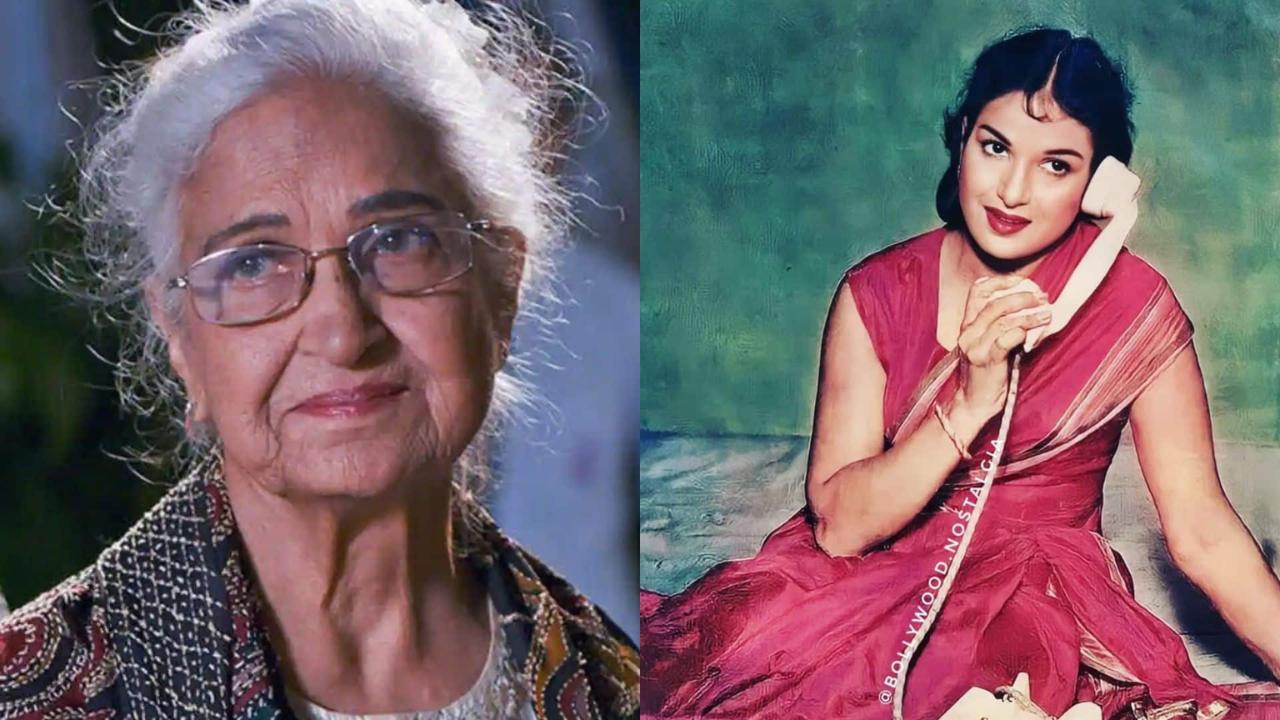
Kamini Kaushal, leading lady in first hits of Dilip Kumar and Dev Anand, passes away
8:35 AM
Avijit Ghosh (THE TIMES OF INDIA; November 14, 2025)
Kamini Kaushal, who made her film debut in Chetan Anand’s classic ‘Neecha Nagar’ (1946), who sparkled as the leading lady in the first box-office hits of Dilip Kumar (‘Nadiya Ke Par’, 1948) and Dev Anand (‘Ziddi’, 1948), and who enjoyed a fruitful second innings as character actor in films such as ‘Upkar’ (1967) and ‘Do Raaste’ (1970), passed away at her Mumbai residence late Thursday night. She was 98. The news was confirmed by Sajan Narain, a close friend of the family, to news agency PTI.
Like the leading character of her last film, ‘Laal Singh Chaddha’ (2022), Lahore-born Kaushal’s career too was marked by her presence in significant moments of film history. ‘Neecha Nagar’ was a Grand Prix winner at Cannes. Raj Kapoor also acted with her in his second film, ‘Jail Yatra’ (1947).
Kaushal was the first heroine with whom Dilip Kumar formed a winning pair. ‘Shaheed’ (1948), ‘Shabnam’ (1949) and ‘Arzoo’ (1950), being three other films. In the opening credits, she was billed above Kumar in all these films, which underscores her seniority and star value at the time.
Director Bimal Roy’s ‘Biraj Bahu’ (1954), based on Saratchandra’s 19th century novel, was the high noon of her acting career. Kaushal was pitch-perfect in the title role capturing the tone and tang of a rural Bengal homemaker whose life unspools from idyllic to calamitous.
The Times of India described her performance as “dignified, refined, sympathetic, beautiful, rounded to the last nuance and shade and tone of expression, a histrionic gem of flawless perfection, the finest of her career.” It fetched her Filmfare’s best actress award.
Her second innings as a supporting actor began with Manoj Kumar’s ‘Shaheed’ (1965), where she played his mother. She became a regular in his positive nationalism films. ‘Upkar’ (1967) offered her the stand-out part of a widow torn between two sons with opposing approaches to life. Another notable role came in Raj Khosla’s superhit family drama, ‘Do Raaste’ (1969), where she played an amiable bhabhi who tries her best to keep the family from falling apart. In Ravi Tandon’s ‘Anhonee’ (1970), Kaushal delivered a deliciously wicked surprise to her fans playing the devious and plotting stepmother willing to kill for money.
Life dealt her unkind cuts. Born on Feb 24, 1927, Uma (her real name) lost her renowned botanist father, Shiv Ram Kashyap, when only 7. The five siblings -- two brothers and three sisters -- were brought up by her mother. Undeterred, she graduated from Lahore’s Kinnaird College displaying a flair for sport and plays.
Then Kaushal’s elder sister died in a motor crash and she “came to Bombay to nurse her two little nieces and her brother-in-law BS Sood who had been seriously injured. She decided to look after him as a wife for the rest of her life” wrote Sushila B Rani in the book, Stars of the Indian Screen (1952). Sood was an officer with Bombay Port Trust.
At this stage, she was offered ‘Neecha Nagar’ by Chetan Anand, who named her Kamini Kaushal. In 1954, she also acted and produced ‘Chalis Baba Ek Chor’, a comedy with a bunch of kids that flopped.
Kaushal participated actively in public life and freely spoke her mind. While inaugurating a women’s section of the Indo-Soviet Cultural Society in Bombay in 1958, she underlined the need to build closer understanding between the peoples of India and the Soviet Union. “Cinema was never my be-all and end-all,” she told TOI in 2008.
In 1969, G D Khosla committee’s report on Film Censorship spoke up in favour of celluloid kissing which created a strong conservative backlash. Kaushal supported the report. “A kissing sequence done gracefully would be a good substitute for blaring erotic songs,” she said at a Lions Club function in Delhi that year.
Making puppets was a passion in her late life. She was also an active chairperson for the Children’s Film Society of India. Kaushal floored everyone with her spirit, elegance and self-deprecating humour while delivering the Filmfare Lifetime Achievement award acceptance speech in 2015. “Ours was a quieter period…may be our eyes spoke more than our bodies,” she said. The audience connected and clapped.
But there was also a tinge of sadness. “I am missing our gang today. Most of them are gone. Just not fair. I feel very lonely here today. All of them are disappearing and going away one by one. Which breaks your heart…,” she said. Everyone stood up when she finished her speech.
Now Kamini Kaushal has joined her gang.
Being a star’s son is a double edged sword-Kunal Goswami
9:40 AM

Tanvi Trivedi (BOMBAY TIMES; May 20, 2025)
Legendary actor and filmmaker Manoj Kumar, celebrated for his patriotic films and notable contribution to Indian cinema, passed away on April 4. In a conversation with BT, his son and actor Kunal Goswami reflects on his father’s legacy and his own journey in films. Excerpts:
How would you describe your bond with Manoj Kumar — as both a son and an actor?
As a son and actor, I’ve had the privilege of learning and unlearning many things about cinema and life from him. My father was affectionately known as Mr Bharat because he embodied patriotism. He pursued acting with great passion and dedication. Films like Upkar, Purab Aur Pachhim and Shaheed reflect how deeply patriotism was rooted in him — and we, his children, saw and lived that passion every day.
Did you always want to become an actor?
I was too young to make that decision myself. One day, my father simply said, “Chalo, aana hai set pe?” and suddenly, I was surrounded by the media and thousands of people while he was directing a scene with Dilip Kumar saab and Hema Malini ji. I was around 14 when I made my debut. I went on to work in Ghunghroo with Prakash Mehra and Kalakaar with Sridevi, which became popular for its music. I acted in around 10 films, but things didn’t quite take off. After my father directed me in Jai Hind (2000), I decided to step away from the film industry.
Was it a tough decision to make?
I didn’t want to cling to the idea of “once an actor, always an actor,” especially if it meant accepting roles that didn’t feel right. Being a star’s son is a double-edged sword — you get an initial platform, but there are assumptions. Many filmmakers believed they had to approach me through my father, who wasn’t very social or easily approachable. This hesitation worked against me. I reached out to filmmakers myself, but strong roles never came my way. Others like Kumar Gaurav and Chimpoo Kapoor went through similar struggles. Eventually, I moved into the catering business. My father encouraged me to stay in films because he saw my creative side, but he never forced me. Acting may be behind me, but I do hope to direct a film someday.
Do you plan to remake any of your father’s films to take his legacy forward?
No, I don’t think those films can be remade. You can remake a Don — it’s a commercial film, much like James Bond — but films like Upkar, Purab Aur Pachhim or Roti, Kapda Aur Makaan are in a league of their own. The emotional depth and context they carried can’t be replicated. Even though multiple versions of Shaheed have been made since, people still remember Manoj Kumar as the original Shaheed Bhagat Singh.
Manoj Kumar said he would shelve Purab Aur Paschim if I didn’t feature in it-Saira Banu
3:18 PM

Saira Banu recounts how the veteran actor convinced thespian Dilip Kumar to have her star in Purab Aur Paschim after their marriage
As told to Upala KBR (MID-DAY; April 5, 2025)
A wonderful man has left us today. Manoj Kumar ji and I worked together in Shaadi [1962], Purab Aur Paschim [1970], and Balidaan [1971]. As soon as my first film Junglee [1961] became a big hit, I received many offers, among which was Shaadi. I used to be awkward while doing romantic songs. I had requested my dance director Satya Narayan ji to have one of his dancers as a stand-in for me, for the first song, Aaj ki raat naya chand. Manoj ji was very understanding. When my solo shots were being filmed, he’d quietly move away from the set.
A few years later, my family and I were attending a première at Metro cinema. After the film ended, I noticed Manoj ji at a distance, signalling something to my brother Sultan, but we could not reach him due to the crowd. The next day, he called my brother and suggested casting me in Upkar [1967]. I was also considered for Neel Kamal [1968]. Unfortunately, my dates were committed to other ventures. So, there went my chance of doing two films with Manoj ji!
His idol was Dilip [Kumar] Saab and when I married him, I could see that they both were close—always venturing together to make different types of omelettes, and indulging in sher-o-shayari. While shooting a scene in Aadmi [1969], Manoj ji started emulating Saab so much that Saab joked, “Yaar tu meri tarah shots kar le, main koi aur tarika nikalta hoon!”
After our shaadi, Saab and I had decided that I would not continue with my film career. But as luck would have it, one of the films I had signed just before the wedding was Purab Aur Paschim. After Saab and my wedding, Manoj ji came home and declared that he would shelve his project if Saab did not allow me to feature in it. Later, when I took ill during the shoot, Saab told Manoj ji that he could have me replaced. But Manoj ji said that he would rather shelve the film than replace me. I will always respect him for this magnanimous gesture.
In Balidaan [1971], Manoj ji played a dacoit. His wife Shashi was very close to us, and used to tell me, “How will he play a daaku? He won’t sit on the horse as he is very scared.” She joked that even if a bee came into the bedroom, Manoj ji would hide and tell her to drive it out.
When Dilip Saab starred in Kranti [1981], Manoj ji kept a special screening for me and my friends. After the show, when he asked me my thoughts about the movie, I said, “I missed seeing more of Saab in the movie.” To this, Manoj ji said that he wished that Saab would be in every frame.
Had Dilip Kumar or Amitabh Bachchan played Dr Dang, they would have been considered heroes but not me-Anupam Kher
8:07 AM
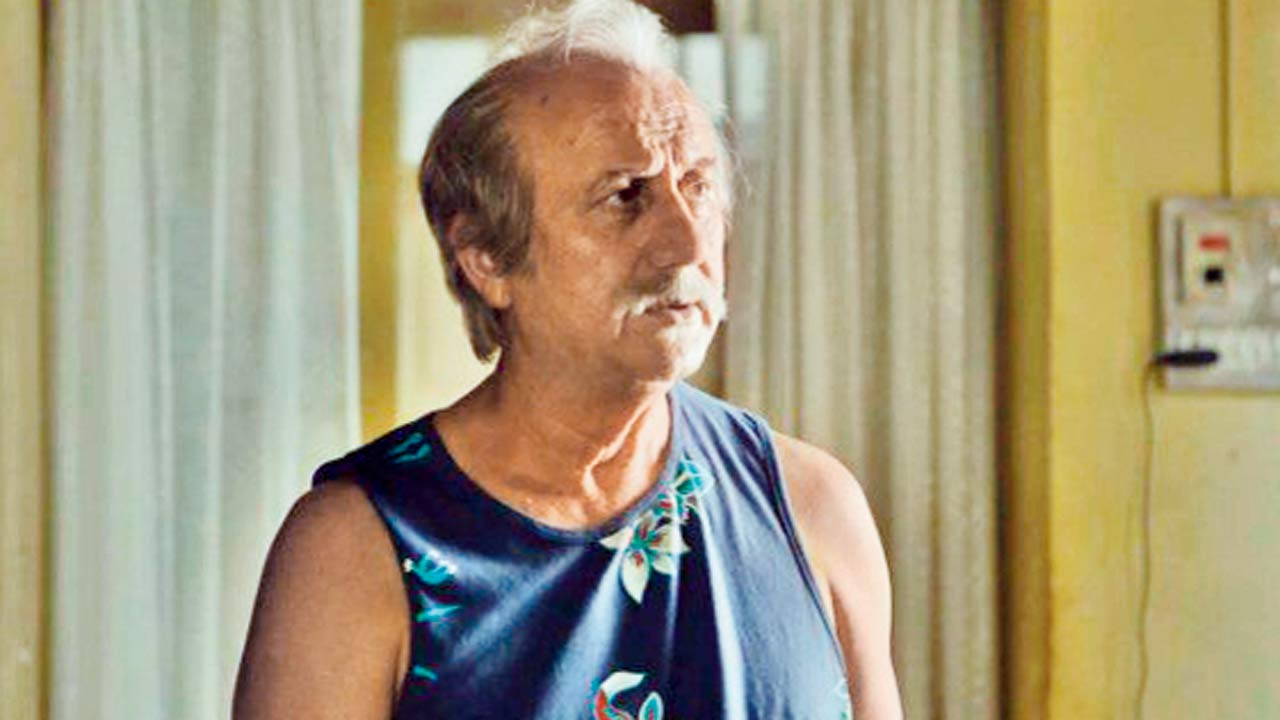
Vijay 69 actor Anupam Kher on learning to swim to play role of a 69-year-old athlete
Priyanka Sharma (MID-DAY; November 2, 2024)
Never one to disappoint with his film choices, Anupam Kher gripped the attention of cinephiles when he announced that he was set to play a 69-year-old man with aspirations of competing in a triathlon. Kher, also 69, says that like his character Vijay, he also believes that there is benefit in “attempting things that are considered difficult”.
“I am the actor who likes to break stereotypes. I want to push boundaries and do things that people say are not possible. People try their best to ensure that one remains mediocre, because [that’s how they] see [themselves]. Who decides if you can do something or not?” he enthuses with the passion he showcases on screen.
“I didn’t know how to swim, but this film required my character to do so. I could have easily told the team to work with a body double for those sections. But the film is about courage, and if the actor did not showcase that, it would be a contradiction. I didn’t want that,” he says.
Featuring in Akshay Roy’s directorial venture, Kher says, has left him yearning for similar challenges. As physically taxing as it may seem, Kher says he’d like to feature in a film like Vijay 69 “every two years”. “When you have done so much work, you have to make your job difficult.”
Place power in the hands of bankable actors like him, and it’s easy to see that a film will have several takers. In fact, Kher’s vast body of work is testimony to the fact that films based on aged characters have found favour among the masses. We are compelled to ask the actor why similar stories that revolve around elderly protagonists are not brought into the market. Kher opines that the masses are “conditioned to believe” that the kind of success that the protagonist of the film enjoys is reserved for the young.
“We believe in clichés. We like success stories. But Vijay 69 is also a success story. Our society tends to look at older characters from a sympathetic lens. In Vijay 69, my character is ready for a fight anytime. There’s no age barrier in his head. He is quite unabashed in his approach. And that’s such an attractive quality about him,” he shares.
Having worked for nearly four decades, Kher has been part of a diverse filmography. However, it was early on in his journey that he learnt a crucial aspect about the disparity between acting and popularity.
“I always considered myself the hero of a film. I had told Subhash Ghai [director] that my character in Karma [1986], Doctor Dang, is the hero. Had Dilip Kumar or Amitabh Bachchan played that role, they would have been considered the heroes. But, when Anupam Kher plays it, that’s not how it is referred to. An actor who has knowledge will know that anyone who acts well is a hero. I understood this because I was an educated actor. In our industry, those who act poorly are considered good actors, and the one who would perform well would be called character actors. It was torturous, sometimes. I used to look at a hero and think, ‘He is such a bad actor.’”
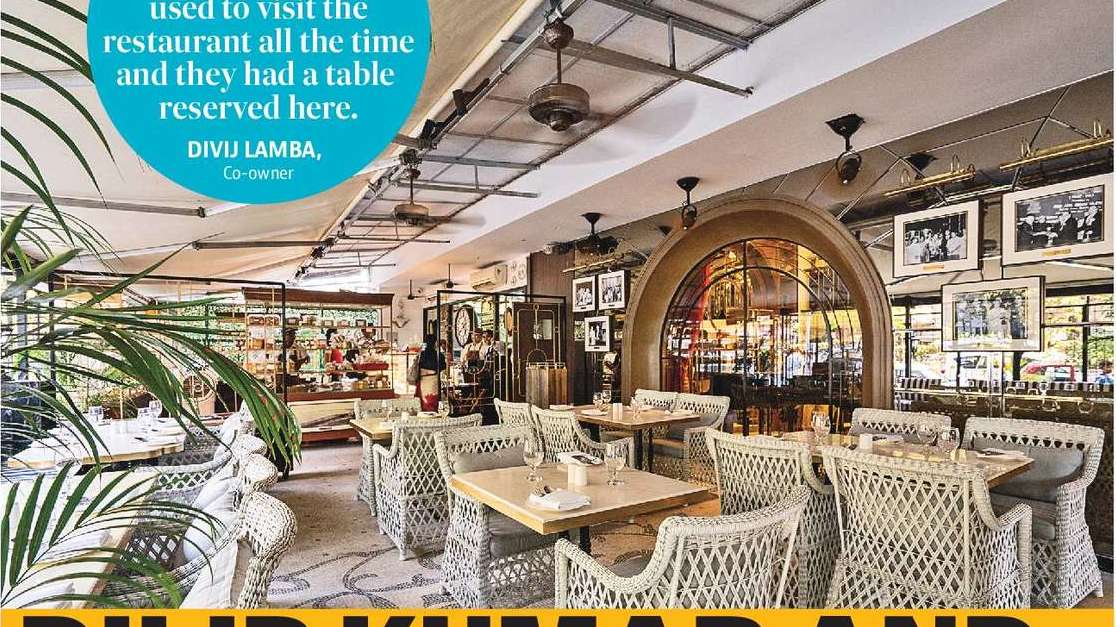
Shankar-Jaikishen used to visit Gaylord all the time and they had a table reserved here-Divij Lamba
10:09 AM
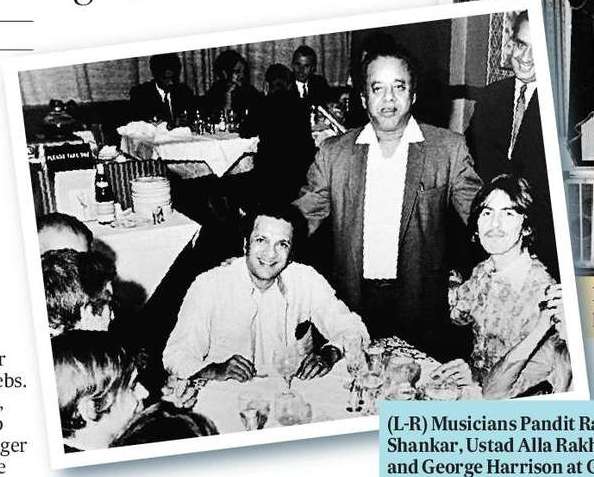
(L-R) Musicians Pandit Ravi Shankar, Ustad Alla Rakha Khan and George Harrison at Gaylord
The city’s iconic eatery serves up rich history and memories to today’s power-dining frat
Ismat Tahseen (HINDUSTAN TIMES; May 4, 2025)
Mumbai is on the list of the Best Food Cities in the World for good reason. And one establishment in the city that holds the torch out to this culinary heritage is Gaylord, which opened in 1956. The flagship dining house in Churchgate embodies a rich history, having been the flavour of international and Indian celebs. Bollywood veterans B R Chopra, Raj Kapoor, Rishi Kapoor, Dilip Kumar, Rajesh Khanna and singer Lata Mangeshkar had their fave delicacies here, so did the iconic musicians Pandit Ravi Shankar and The Beatles!
After it’s first-ever extended closing, Gaylord has reopened. It’s a case of old-meets-new, as co-owner, Divij Lamba, calls the decor, “a love letter to our past”.
‘For cricketers, this was the post-match destination’
Divij goes back in time as he shares how his great-grandfather, Pishori Lal Lamba launched Gaylord in collaboration with Iqbal Ghai (both Delhi-based entrepreneurs who established the Kwality restaurant chain in 1947).
Divij and his brother Dhruv grew up hearing stories of the who’s who dined at Gaylord. He says, “Celebrities were regulars here, so were a lot of cricketers. They made it their post-match destination as CCI Club almost opens into Gaylord. Veteran composer duo Shankar-Jaikishen also used to visit all the time and they had a table reserved here.”
The transformation sees Gaylord’s iconic alfresco-style seating now exuding a warm and contemporary Parisian vibe along with red couches on its mezzanine floor. But the makeover apart, Gaylord also holds on to its past. “We’ve made sure that history is not lost; the decor still takes people to another age,” adds Divij as he points to a collection of 155 photos around — sitar maestro Pandit Ravi Shankar with George Harrison. French designer Christian Louboutin had also visited.
‘The past is the real treasure’
Of course, the food undeniably does the talking, too. Divij adds, “We’ve ensured that the faves — Chicken à la Kiev and Lobster Thermidor are back. So is the signature butter chicken, given the North-Indian lineage of the restaurant.” The revamped space has plans to host cultural nights from live grand piano recitals, to live music events and specially curated high tea parties.
Today, as the brothers helm the business, Divij admits, “There is this sense of responsibility to carry forth our legacy. We’ve tried not to change the DNA of the place as that is what Gaylord is known for. The idea is to maintain the past, as that is the real treasure.”
How did it get its name?
Gaylord is a combination of both the partner’s names ‘Ghai’ & ‘Lamba’. Lamba had posted an advertisement asking for suggestions and one of the reader suggested the name ‘Gaylord’. They liked it as it had both partners initials.
BT Exclusive: Dilip Kumar and I would often exchange love notes-Saira Banu
10:14 AM

Renuka Vyavahare (BOMBAY TIMES; February 14, 2024)
“Don’t you guys send love notes or messages over the phone anymore?” asks Saira Banu at the start of the conversation. On Valentine’s Day today, the actress talks about the beauty of old-world romance and shares some of the love notes that she exchanged with her husband, legendary actor Dilip Kumar.
“Duniya kaafi badal gayi hai. There was a certain restraint back in our time, but there was a beauty to it,” she observes.
She adds, “Telegrams milna would be a big deal. Mobiles didn’t exist and telephones would barely work if you were shooting outdoors. For almost 20 days, you had to survive without hearing from your loved ones.”
In her growing up days, Saira Banu’s grandmom would accompany her to school in London. She recalls, “You could write to someone or court them only if you were officially engaged or committed. I know things have changed now, but I am old-school that way. I appreciated that culture.”
The language of love has changed over the years. In the age of app-inspired romance, text messages and emojis have taken over hand-written notes, poetry and love letters. The veteran actress still holds the hand-written notes she exchanged with her husband close to her heart.
She says, “Aaj kal ke mashooq kaise apni dil ki baaten bayan kar lete hai. We used to have poetry and couplets. I was well acquainted with English, French and Latin as I studied in London, but I learnt Urdu and Persian because my husband was well-versed in them. He would write to me in English and Urdu. When I would struggle to read the Urdu words, he would tease me.”
Speaking of love notes, she remembers, “Ours was a great love story. We would exchange notes through the air hostesses when he would be obliged to go and sit with someone else for some time. I would write to him, ‘Jaan, don’t you think I have been alone for too long? Will you come back to me?’ I missed him and wanted him back beside me. He would write back, ‘I’ll be back in a jiffy’, which would be an hour or more. I would leave notes under his folded shirts in his bag when he travelled for work so that he could wake up to them each day.”
She concluded, “Dilip sahib would always ask, ‘Aap kaha ho’, if I wasn’t seated next to him, and I would say, ‘Main aapke ird gird hi hoon’. He loved me with all his heart, but I would tease him by saying, ‘It’s okay if you don’t love me. I love you enough for the both of us’.”

Rajesh Khanna’s guru kurtas were designed by Supriya Pathak’s father
8:22 AM

Natasha Coutinho (BOMBAY TIMES; January 22, 2024)
Actresses and sisters Surpiya Pathak and Ratna Pathak Shah are veterans of Hindi cinema, but did you know that their dad Baldev Pathak also had a filmi link? Baldev was a stylist to Rajesh Khanna and Dilip Kumar long before styling an actor’s look came into vogue.
Supriya says, “My dad used to be a dealer of imported cars and sold one to the late Dilip Kumar. That’s how he got connected with a lot of Hindi film actors.”
How did the switch to fashion happen? “He started a store for men’s clothing near the Gateway of India. A lot of leading actors from the film industry started visiting the store to get custom-made outfits. Soon enough, my dad took up designing and styling Rajesh Khanna’s off-screen looks, including the guru kurtas, long shirts with belts and shirts where the stitching would show. Many of these became popular trends. I have fond memories of Dilip Kumar and Rajesh Khanna attending the Diwali puja at our store.”
Their mum Dina Pathak was an actress and director of Gujarati theatre and film actor. She was an activist and President of the National Federation of Indian. She acted in over 120 films in a career spanning over six decades.


55 Years of Padosan: I used to laugh uncontrollably so much that the unit would turn off all the lights-Saira Banu
2:25 PM

Saira Banu took to social media to share some fond memories of the shoot of her film Padosan (1968), which clocked in 55 years on November 29. The film featured her with Sunil Dutt, Mehmood and Kishore Kumar. She wrote, “We are talking about one of the most favourite films of my career, mine, and the public in general. It is Padosan, a film for all occasions and ages. I am glad that I did this because I had refused any work soon after my marriage. It was understood that I would not be carrying on with a professional career.”
She continued, “It was then that Mehmood Bhai as he had earlier approached me for this film came running to Sahib, hugged him close, and kept saying in a rhetorical tone, ‘Yousuf Bhai you have to let Saira do this film for me. I will not let go of you until you say yes please, please.’ Sahab was tickled to the bone and kept repeating laughingly, ‘Mehmood, it is entirely up to Saira, You have to convince her. You have my absolute permission’.”
The veteran actress added, “The cast was so perfectly chosen that even I was initially surprised to see Dutt Saab as a simpleton ‘Gaonwalla’, I mean who could have imagined it? Dutt Saab would humorously say, ‘Saira ji, yeh kyaa hain, yeh hum kyaa kar rahein hain? Hamein toh Anthony and Cleopatra mein kaam karna chahiye, something romantic and glamorous’ (sic).”
‘IT WAS DIFFICULT FOR ME TO STOP LAUGHING ON THE SETS OF PADOSAN’
Directed by Jyoti Swaroop, the musical comedy was a remake of the Bengali film Pasher Bari. Saira Banu concluded her note by saying, “Until Padosan, I hadn’t worked with Dutt Saab, who turned out to be lively and funny. On the contrary, Kishore ji was a very subdued gentlemanly star who would get up from his seat respectfully as soon as any lady walked in. The shooting was a killer. I used to laugh uncontrollably so much that the unit would turn off all the lights and say ‘Ruk jao, abhi madam hass rahin hain’. It was that difficult for me to stop (sic).”
------------------------------------------
ETIMES (November 30, 2023)
Saira Banu reminisces the magic behind 'Padosan' - where Mehmood Bhai's dedication, Sunil Dutt's rib-tickling humor, and Kishore ji's spontaneous creativity turned every scene into a timeless laughter symphony. From the quirky head-shaving ceremony to the stroll in 'Brindavan Gardens,' the film's behind-the-scenes tales are as delightful as its iconic melodies.
In her continued post she wrote, "Continuing with the PADOSAN series, I want to talk about Mehmood Bhai's dedication to his roles. At the "Vrindavan Gardens" Palace, Mehmood Bhai joined our unit to start shooting scenes with me. Soon after his arrival, he sat in the palace verandah with his barber and then we witnessed the funny ceremony of him shaving off his head, giving off his beautiful hair to portray the bald dance teacher Master Pillai with romantic intentions towards 'Bindu'. As the barber shaved, "Tup Tup", tears rolled down his cheeks. We were both sad and amazed, momentarily forgetting our laughter.
The funniest scenes were where Master Pillai alias Mehmood was constantly trying to win over the affection of Bindu. In one scene I am trying to make Bhola jealous when he is standing in the window opposite. In this, I had to hold hands with Mehmood Bhai and rest my head on his big shoulders! It was a scream for both of us because all our lives he had been like a lofty big brother and now doing this scene to enrage Bhola, Sunil Dutt was rib-ticklingly funny. Another favourite scene is where I am strolling in “Brindavan Gardens” with Master Pillai amidst the beautiful greenery and fountains all around, Dutt Saab, Kishore ji and other comedians are walking right behind us eavesdropping trying to hear what we two are talking about (hidden with mobile branches of leaves and trees).
We had an able director Jyoti Swaroop who tried to control us in our fun and frolics while shooting but the major contribution to the making of scenes was inspired on the spot by Kishoreji, Mehmood, and Dutt Saab. For instance, the song “Meri Pyaari Bindu” was choreographed from start to finish by Kishore ji.
"PADOSAN" gifted the world of cinema with timeless melodies and the music of the film was directed by none other than R.D Burman Saab, among them was "Bhai Battur," a melody delivered by the Nightingale of the Indian Music Industry, Lata ji. In one of her interviews, Lata ji expressed that singing "Bhai Bhattur" was a remarkable experience for her, given the song's unique and distinct nature compared to other tunes of the 60s. Similarly, I found shooting for this particular song to be an extraordinary experience".
Camera, action: How a Mangaluru family left its mark on Indian cinema
8:31 PM

P L Rai with Bollywood actor Rajendra Kumar at his shoulder
Three of them worked in the Madras and Bombay film industries from the 1930s to the 1980s. Sham Sundar Shetty was stunt guru to the likes of Dilip Kumar and Rajesh Khanna, and his cousins P Lakkappa Rai and M Vishwanath Rai were cinematographers in over 100 films, including Lava Kusha, Julie and Jaag Utha Insan
Deepthi Sanjiv (THE TIMES OF INDIA; November 20, 2023)
Aishwarya Rai and Shilpa Shetty have legions of fans across India. So does director Rohit Shetty with his brand of action flicks. But few viewers outside of the South know that these three, along with dozens of other famous cinema personalities, such as Suniel Shetty, Prakash Raj and Pooja Hegde, belong to the Tulu Bunt community that has its home in Karnataka’s coastal region. And the community’s contribution to Indian cinema can be traced all the way back to the black-and-white era.
Ask Thimmangoor Subbaya Shetty, entrepreneur and former president of the Kanara Chamber of Commerce and Industry, who has been documenting the achievements of three cinema luminaries from the Maganathady family who played an important role behind the scenes in the 1980s.
He says he got interested in the project when Kannada film star Shiva Rajkumar visited the Koragathaniya shrine in Mangaluru and saw a photograph of actor and stunt director Sham Sundar (Subbaya) Shetty in the Maganathady house. “When Shiva Rajkumar exclaimed Sham Sundar had been his master, we told him he had been our yajamana (head of the family responsible for religious ceremonies and rituals).”
Stunt Master To Stars
Born in 1913, the tall and handsome ‘Stunt Master’ Sham Sundar Shetty left for Mumbai – then Bombay – in 1935 for a career in the film industry. He learnt swordsmanship and bodybuilding there before moving on to Chennai – then Madras – in the 1940s. Madras was the hub of the South Indian film industry those days and Sham Sundar joined Gemini Studios as a sound recordist and actor, and honed his action skills.
Thimmangoor Shetty says S S Vasan, founder of the storied Gemini Studios, recognized Sham Sundar’s talent, and together they toured Singapore, Malaysia, Japan, Germany and other countries. M G Ramachandran, a rising star at the time, was highly impressed with Sham Sundar’s work and roped him in as his stunt director. Gemini films like Chandralekha and Insaniyat, in which Sham Sundar directed stunts, achieved great success at the box office.
Sham Sundar also worked as a stunt director in Bollywood for actors like Dilip Kumar, Rajendra Kumar and Rajesh Khanna, winning a gold medal for his work in Hindi cinema and silver for stunt direction from the government of Tamil Nadu. Altogether, he worked in 423 movies and dramas across Hindi, Tamil, Telugu, Kannada and Tulu. He was instrumental in the formation of the Stunt Masters’ Association in Chennai and Bengaluru.
Camera Maestros
Sham Sundar’s success inspired his cousins P Lakkappa Rai and Vishwanath Rai to become cinematographers. What the Mistry brothers Fali and Jal were to Bollywood, the Rai brothers were to the Madras film industry. Together, they have over 100 films to their credit.
P L Rai was two years younger than Sham Sundar and came to Bombay in 1938. He apprenticed under the renowned cameraman of that era, Govardhan Bhai Patel, at Ajanta Studios. In 1942, he moved to Madras to begin his career as an assistant cameraman at Sundaram Studios, eventually becoming chief cameraman in 1951. His work shines in films like Prithviraj Samyukta, Mangayar Thilakam and Bhagyavathi. In 1962, he achieved immense success with the Telugu colour film Lava Kusha that ran for an unprecedented five years.
His association with Telugu stars like N T Rama Rao and Nageswara Rao got him more opportunities, and he left his imprint on Hindi cinema also with films like Milan, Doli, Julie, Jwar Bhata, and Rakhwala. In 1984, P L Rai received the Filmfare trophy for Best Cinematographer (colour) for the film Jaag Utha Insan.
His younger brother M Vishwanath Rai, born in 1928, wanted to be a commercial pilot until an ear injury suffered at Pahilwan Sankappa Shetty’s godhe (wrestling school) in Mangaluru nudged him towards Neptune Studios’ (later Sathya Studios) camera department in 1953.
Starting in the mid-1960s, Vishwanath Rai’s 30-year collaboration with director A C Thirulogchander (ACT) delivered more than 25 movies in Tamil, Telugu and Hindi. Most of these Tamil films starred Sivaji Ganesan. His brilliant cinematography in the Tamil films Avanthan Manithan and Dr Siva earned him the Best Cinematography award from South Indian Film Fans’ Association. In 2016, on Ganesan’s 88th birth anniversary, Rai was bestowed with the prestigious Dr Sivaji Ganesan Memorial Award.
Vishwanath also ran the camera in the first-ever Sivaji Ganesan-Rajinikanth starrer, Naan Vazhavaippen. Among his films, Badra Kali was perhaps the most challenging as Rani Chandra, the leading lady, had died in an airplane crash before the film was finished. Nearly 50% of the film, including two songs and the climax, had to be shot with duplicates.
I never planned to be an ace dancer, woh meri majboori thi-Govinda
8:24 AM

Renuka Vyavahare (BOMBAY TIMES; October 17, 2023)
Govinda has always been known for his signature dance moves and his unique style of dancing. When he is on the floor, he dances with all his heart and like no one is watching him.
When we spoke to the Hero No 1 actor for being the Baap of Bollywood dancing in his era, he said, “I didn’t know how to dance. Dance seekhna meri majboori thi. All the top stars of that time, like Amitabh Bachchan and Mithun Chakraborty were award-winning actors. I had to have some talent beyond acting that could help me stand out. Ghar kaise chalta? I wondered, 'Main aisa kya karun jissay aagey nikal payunga?'”
He added, “Someone suggested, 'Tere picture se zyada tere gaane chalte hai.' All my songs (Aap Ke Aa Jane Se, I Am A Street Dancer, Bam Bam Bambai) were superhits, so I decided why not ace my dancing skills? Jaldi hi mera naam as a dancer hua. Woh karte karte, I started working with the best actors in the industry. I could work with Dilip Kumar sahab, Dharmendra ji, Jeetendra ji, Shatrughan Sinha ji, Amitabh ji, Rajesh Khanna ji and I was also recognized as an actor. Nothing was planned.”
Lights, camera, rewind: Why old classics are new stars of cinema
8:44 AM

Reruns began as a way to lure audiences back into theatres after the pandemic, but have now taken a life of their own
Shruti Sonal (THE TIMES OF INDIA; October 15, 2023)
Twenty-two-year-old sociology graduate and theatre artist Darshana Choudhary had grown up listening to old Hindi songs, courtesy of her parents. One of the albums that played the most in her house was ‘Guide’, which had gems such as ‘Tere mere sapne ab ek rang hain’ and ‘Aaj phir jeene ki tamanna hai’. However, despite her fascination with the album, Choudhary had never watched the 1965 film. So, when it was announced that the film would be screened across multiple theatres in India to commemorate Dev Anand’s 100th birth anniversary, along with ‘CID’, ‘Jewel Thief’ and ‘Johnny Mera Naam’, she booked tickets instantly.
“I realised that such movies require the audience to surrender to them. I couldn’t do that on YouTube,” says Choudhary.
Like her, many young and old moviegoers across the country are filling up theatres to catch a rerun of films first released years ago. Like Dev Anand, similar screenings in PVRs and single screens have been held by the Film Heritage Foundation (FHF) to commemorate iconic films of superstar Amitabh Bachchan and Dilip Kumar. To celebrate his 45 years in Bollywood, director Vidhu Vinod Chopra’s best films hit the big screen on Friday.
Shivendra Singh Dungarpur, archivist and founder of FHF, is leading this initiative. “My dream was to make classics accessible to the public, and not just restrict them to film festivals. Most of these films are available on OTT platforms but I always felt that the films made with so much effort are our heritage, and deserve to be screened on the big screen,” says Dungarpur.
Ahead of Big B’s 80th birthday last year, Singh reached out to PVR, producers, and the actor himself, to figure out a way to screen films such as ‘Deewaar’, ‘Don’, and ‘Mili’. Most of the responses were skeptical, he says, including that of Bachchan, who very politely asked why people would pay to see such old films in the theatre again?
However, FHF’s persistence paid off and some exhibitors agreed to screen the films across three days in October. The event was a huge success, with most shows sold out. It was followed by similar screenings to pay tribute to Dilip Kumar in December last year, and then Dev Anand this September. The ticket prices ranged from Rs 100-150, and the posters were redesigned to appeal to the young and old.
The trend began last year, when theatres were struggling to bring back audiences after the pandemic, but has now taken a life of its own. “For Mr Bachchan’s films, we had screenings in 17 cities. For Dilip Kumar, it increased to 27 cities, and for Dev saab, we were able to reach 30 cities and 58 cinemas!” says Singh, with pride.
From big production houses such as Yash Raj Films bringing back their biggest romantic hits for Valentine’s Week this year to small-budget films with a cult following, there’s room for multiple genres and stories today. Among the upcoming releases is Kamal Hassan’s 1987 silent black comedy ‘Pushpak’.
Director and writer Pawan Kumar’s landmark Kannada film ‘Lucia’ was re-released in September, ten years after its initial run at the box office. This small-budget debut venture has been lauded by fans and critics for its alternate style of filmmaking. However, the director never thought that he’d see people buying tickets for it again. “Even at a time when shows of a big film like ‘Jawan’ were running housefull, people agreed to give a few screens to us. I took my daughter to see the film; she was not even born when it was first released,” Kumar says.
It’s the coming together of commerce, nostalgia, and heritage. Above all, it’s an excellent way to reach two generations, says Vebhuti Duggal, film studies professor at Delhi’s Ambedkar University. “For the generation that has seen the films and stars on screen, rewatching them with their family holds value and nostalgia. Then, there’s a generation that has only watched them on television or on YouTube, and has been curious to see them on the big screen,” she says.
Film producers and multiplexes are also waking up to the commercial value of classic films, like music labels did decades ago. “When the trend of remixing old songs or creating new renditions became popular, music labels such as HMV and T-Series remastered old tracks, and re-released them online, via cassettes, and vinyls,” she says.
For PVR Pictures’ chief executive Kamal Gianchandani, the trend is a sign of the value that the moviegoing experience holds even today. “It’s a big validation of theatres because all these films are freely available on so many platforms, and yet people choose to buy tickets. It also makes business sense because on a long-term basis, this is helping us get new customers. And as for those ones who already come to the cinema, this is helping us increase their frequency,” he says.
Beyond the commerce, Durganpur says the films are also helping drive conversations around the importance of preserving film heritage. More and more youngsters are attending workshops to know more about the process, and flocking to see screenings of rare prints of black and white films such as Kamal Amrohi’s Mahal (1949).
Choudhary says that a crucial part of the experience of watching old movies in a theatre is a sense of community. “We are together to celebrate a film that we love.”
Dilip Kumar never raised his voice, but his silence was unbearable-Saira Banu
8:18 AM

On their 57th wedding anniversary, Saira Banu takes us through the pages of her love story with legendary actor Dilip Kumar
Renuka Vyavahare (BOMBAY TIMES; October 11, 2023)
It's a classic real-life story of an eternal romance. Saira Banu and Dilip Kumar tied the knot on October 11, 1966, and 57 years later, she is as much in love with him as she was when they started out as a couple. India’s most eligible bachelor at the time, he initially maintained a respectful distance on and off the screen given their massive (20-year) age difference before eventually falling for her enchanting beauty, innocence, and devotion for him. Unlike today’s high-profile destination weddings, the legend of Indian cinema, Dilip Kumar, married a young Saira Banu in a homely ceremony in Mumbai. “So many gatecrashed our wedding that we ran out of food,” chuckles the actress. On her wedding anniversary, she looks back at her real-life fairytale. Excerpts…
Your life has been no less than a fairytale. Dilip Kumar was the heartthrob of our nation when you married him. What did that feel like?
I wanted two things in life. I wanted to marry the man of my dreams and I wanted to be a film star like my mother Naseem Banu. Both my dreams were fulfilled. I couldn’t have asked for more. My mother wanted me to study further and become a lawyer, as she couldn’t do that. She never wanted me to be an actor, but I wanted to be like her. As far as Dilip sahib is concerned, I was obsessed with him as a teenager ever since I saw his film ‘Aan’ (1952) in London. I studied there at the time. I fancied men like James Dean, Rock Hudson and Elvis Presley. I had their photos on my wall. Calling Dilip sahib a crush would be wrong. I was head over heels in love with him. I was smitten to the point that I envied Vyjayanthimala because one of the promotional stills of Madhumati (1958) had Dilip sahib almost kissing her forehead. That pose was way too intimate and bold for those times. I remember taking a pair of scissors and cutting her out from that photo (laughs). I became a fan of hers later. I call her akka (elder sister) and she calls me an angel. We got closer over the years. She was pleasantly amused when I recounted this incident to her.
How did this teen idol worship translate into a romantic relationship?
Our families knew each other and had common interests like music. His younger sister was close to my mother so we would often have these get-togethers. I returned from London and met him for the first time at a dinner party hosted by the legendary filmmaker Mehboob Khan (known for ‘Mother India’) and his wife, who I fondly called Akhtar aunty. He was dressed in a plain white shirt and trousers. He was so simple and humble despite the fame. There was this luminous aura around him. A girl like me, who was shy and introverted, would retire to my room as soon as someone knocked on our door, something changed. As soon as I saw him, I went up to him and blurted, “Aap mere saath kaam kijiye.” He had seen me as a little girl, so showing me his grey strands, he replied with a smile, “Kya tumne mere grey baal dekhe hai?” I told him they make him look distinguished. At the dinner table he added, “I eat like a pig.” He refused to work with me even after Junglee (1961) became a hit, as he was conscious of the age gap. The part played by Mumtaz in Ram Aur Shyam (1967) was initially offered to me, but he said she is too young to work with me. I kept saying, “I am big enough to work with you.” That’s when he realized I was serious about him.
When did he propose marriage?
The day was August 23, 1966, and it changed my life. My mother had invited him for my birthday at our new Pali Hill residence. He was shooting in Chennai for Ram Aur Shyam and flew all the way back just for my birthday. ‘You have grown into a beautiful girl,’ he said that evening. I was dying to hear those words for years! The man was finally attracted to me. For the next few days, he travelled from Madras to Bombay every other night and had dinner with me. At the end of 10-11 days, he said, ‘I am constantly flying in and out. Will you consider one thing? Will you marry me?’ Thrilled but a bit surprised, I asked, ‘How many girls have you said this to!’ He was the most eligible bachelor of that time, and I had barely acted in films for four years. When he approached my grandmother and asked for my hand, I knew he was serious. The media and public were equally puzzled, I guess.
Unlike today’s high-profile Bollywood weddings, yours was a simple ceremony at home. In hindsight, did you want it to be an elaborate affair?
Not at all. It’s a real-life Cinderella story. It felt like sharing a throne. I got Dilip Kumar! I would have married him in rags if need be. Uss Zamane mein tailor hua karte the. My bridal outfit was simply stitched. No fancy jewellery either as we planned the wedding in 3 days. Security was not so high as it is today so there were gatecrashers. We ran out of food on our wedding day, so people had to go fetch more.
What made him so special beyond the great actor that he was?
Ours was a great love story. We would exchange notes through the air hostesses when he would be obliged to go sit with someone else for some time. I wrote to him that I missed him and wanted him back beside me. If he was away for a week, I would leave 7 notes under his folded shirts in the bag so he could wake up to that each day. He was a gracious man who never spoke ill of anyone including the ones who wronged him. He wasn’t judgmental and always spoke the truth. He encouraged me to see the good in people. The age gap didn’t matter because I learnt so much from him. We loved sports… Tennis, Golf, football. He was extremely fit.
He was linked to some beautiful women including Madhubala. How did you deal with that aspect of his life that tends to follow immense stardom?
I never gave credence to these girlfriend theories. I was the wife. He never spoke about his past girlfriends. I never asked either. Unki merese shaadi ho gayi. Mujhe duniya mil gayi. I didn’t care about the linkup stories as the media can be irresponsible. I was also linked to a dashing cricketer, who was the Indian captain. I won’t take names, but I had never seen the guy in my life. The first time we saw him was at Wimbledon.
A marriage as eternal as yours is rare and precious in today’s world of hookup culture and dating apps. What would you tell those who are sceptical about believing in ‘happily ever after’?
I hope your generation gets to see what he was like as a person. I made my Instagram debut for this purpose. Koi bhi shaadi ya relationship mein, ‘Sabar aur adab’ (patience and respect) ki bohot zaroorat hai. If sahib and I had an argument, it wouldn’t last for more than ten minutes. You must communicate. He was the one who never raised his voice but his silence was unbearable. I, with my own choice, would be the first to apologize. He wasn’t the man who had ego or would throw his weight around. To me, marriage is a perfect union based on love, faith and immense unspoken understanding. If you make a mistake, you should have no shame in saying sorry.

Nostalgia drives re-releases of classics and popular movies
8:17 AM

Niharika Lal (BOMBAY TIMES; September 23, 2023)
When veteran actress Waheeda Rehman heard that four classics of Dev Anand, including Guide which also featured her, were being re-released, she wondered if moviegoers would be interested in watching 60–70-year-old films in cinemas. She was surprised to know that the shows of these films C.I.D. (1956), Guide (1965), Jewel Thief (1967) and Johny Mera Naam (1970), which will happen over this weekend as part of Dev Anand’s birth centenary celebrations, had been sold out.
"Restored and remastered films provide a higher-quality viewing experience. Post the pandemic younger audiences are going out for movies while the older audience has stayed away. Re-release of classic titles has enabled us to bring back this audience to cinemas."
- Gautam Dutta, Co-CEO, PVR INOX Limited
---------------------------------------------------------
“These special screenings offer a chance to relive iconic moments and share the magic of timeless films with a new generation of cinema enthusiasts. The response to re-releases has been overwhelming."
- Devang Sampat, CEO Cinepolis India
---------------------------------------------------------
"When I recently met Waheeda ji to invite her to the Dev Anand film festival, she was shocked to discover that there is a huge craze among people for these classics. She couldn't believe that the shows of these re-releases were mostly sold-out."
- Shivendra Singh Dungarpur, film archivist and director of Film Heritage Foundation
SOME MAJOR RE-RELEASES IN THE RECENT PAST
- Khalnayak, on completion of 30 years of the film
- Koi Mil Gaya, to celebrate its 20th anniversary
- RRR, before the Academy Awards ceremony
- Avatar, before the release of Avatar 2 Gadar, before the release of Gadar 2
- Dilwale Dulhania Le Jayenge, to celebrate Shah Rukh Khan’s birthday
‘Re-releases offer youngsters a chance to discover classics’
A part from the Dev Anand films, Kamal Haasan’s 1987 film Pushpak is set to be re-released in theatres soon. Exhibitors say that in the last year, several films have been re-released to celebrate actors’ birth anniversaries, film anniversaries, and even to hype some upcoming sequels. Industry insiders say that the reason why there’s such a huge demand for these films is because “re-releases give young moviegoers a chance to discover classics on the big screen and evoke nostalgia in the older generation”.
SPECIAL FESTS TO SCREEN OLDER FILMS VALENTINE’S WEEK FILM FESTIVAL
Movies like Titanic (English), Dilwale Dulhania Le Jayenge (Hindi), Ticket to Paradise (English), Ved (Marathi), Geetha Govindam (Telugu), Vinnaithaandi Varuvaayaa (Tamil), Hridayam (Malayalam), Googly (Kannada), Love Ni Bhavai (Gujarati) were re-released as part of the festival in multiple cities
DILIP KUMAR HERO OF HEROES
To mark Dilip Kumar’s birth centenary, Aan (1952), Devdas (1955), Ram Aur Shyam (1967) and Shakti (1982) were released in 31 cinemas in 21 cities
CHRISTOPHER NOLAN FESTIVAL
Interstellar, Inception, The Dark Knight and Dunkirk were re-released ahead of Oppenheimer’s release date
SUPERSTAR RAJINIKANTH BIRTHDAY SPECIAL
It was held in Chennai and Coimbatore last year with shows of Baba (2002), Sivaji: The Boss (2007), 2.0 (2018) and Darbar (2020)
BACHCHAN BACK TO THE BEGINNING
To celebrate Amitabh Bachchan’s 80th birthday, a film festival was organized in 17 cities where Kaala Patthar, Kaalia, Kabhi Kabhie, Namak Halaal, Abhimaan, Don and Deewaar were screened
Dilip Kumar’s bungalow on Pali Hill, Bandra West to make way for an 11-storey building
8:32 AM

The Legend by Ashar: Dilip Kumar’s iconic bungalow to be transformed into an 11-storey building with a museum honouring his legacy
MID-DAY (August 5, 2023)
Dilip Kumar’s bungalow on Pali Hill, Bandra West is all set to be turned into an 11-storey building. The construction is on, and possession is slated for 2027. The project was announced at a launch late Wednesday evening. Realty developer Ashar Group said a significant aspect of the project would also be the legacy of Dilip sahab. The name itself – The Legend by Ashar, and a museum being planned within this space.
At the launch, Ajay Ashar, chairman & managing director of Ashar Group, said, “The legacy of Dilip sahab is a piece of history, culture, and art fused together. I am sorry that I could not start this project earlier. Today, Saira Banu ji treats me like a son, and I am truly thankful for that.”
The group spokespersons concurred that without the late actor’s family’s support and trust, they would not be where they were.
Ayushi Ashar, director, Ashar Group, said, “We are also bringing to life Saira Banuji’s long cherished dream of immortalising Dilip sahab’s legacy through a museum space celebrating his life and journey.”
When asked later what the museum is going to include, she said, “The memorabilia for the museum is still being collected from different sources. We plan to keep it open to the public but with a separate entrance, of course. This is still nascent and being worked out.”
Artist Jaideep Mehrotra will be working on an art piece to be installed in the building lobby. Mehrotra, who is a Worli resident said at the launch, “It will capture the essence of Dilip sahab.” When asked whether it will be a painting or a sculpture, Mehrotra said, “It may be a bit of both. You will learn about it eventually.”
Mehrotra is a well-known, though self-effacing artist who created a public artwork of cricketer Sachin Tendulkar some years ago called Between the Lines, which stood at the Sasmira, Worli traffic island.

Saira Banu settles row; FIR against builder quashed
8:10 AM

Swati Deshpande (THE TIMES OF INDIA; June 21, 2023)
Mumbai: Veteran actor Saira Banu Khan last week gave her consent to the quashing of a criminal cheating case lodged by her against a builder in 2021 over a 2010 agreement for developing a prime plot at 16, Pali Hill, Bandra (West), along with a bungalow on it, which belonged to her late husband, thespian Dilip Kumar.
The Bombay high court bench of Justices N W Sambre and S U Deshmukh on June 13 considered the “amicable settlement” between the parties and quashed the 2021 first information report (FIR) registered against Prajita Developers Pvt Ltd and builders Altaf Wahedna and Arshad Wahedna in Bandra police station. Saira Banu is the power of attorney (POA) holder of Dilip Kumar.
The FIR was based on non-performance of the development agreement assigned by Kumar through his POA to Prajita Developers for developing his land, said the builders’ lawyer Satyam Nimbalkar, seeking orders to quash it, as he said a settlement had been reached with Saira Banu who unconditionally withdrew all allegations. The dispute gave rise to multiple court proceedings and led to the filing of arbitration proceedings last year as it was a civil dispute, argued Nimbalkar. The builder filed a quashing petition this year.
“The offence is based on the non-performance of the promise as made in the deed of assignment dated 20/04/2010,” noted the HC order, adding, “The aforesaid differences between the parties has led to filing of the arbitration proceedings giving rise to commercial arbitration.”
The builder and Saira Banu had tendered consent terms before the HC in the arbitration petition and in March the dispute was disposed of, based on the consent terms, noted the HC bench.
Saira Banu, represented by advocate Ekta Dalvi, appeared before the bench via video-conferencing in view of her health. The bench noted she had “in categorical terms” confirmed her consent for quashing the FIR. Her affidavit said she was the sole heir and representative of the late Yusuf Khan alias Dilip Kumar and the complaint was lodged due to a “misunderstanding” and the dispute, “purely civil in nature,” was “resolved amicably”.
When Kishore Kumar's biopic gave Soumik Sen the idea for Jubilee
8:23 AM
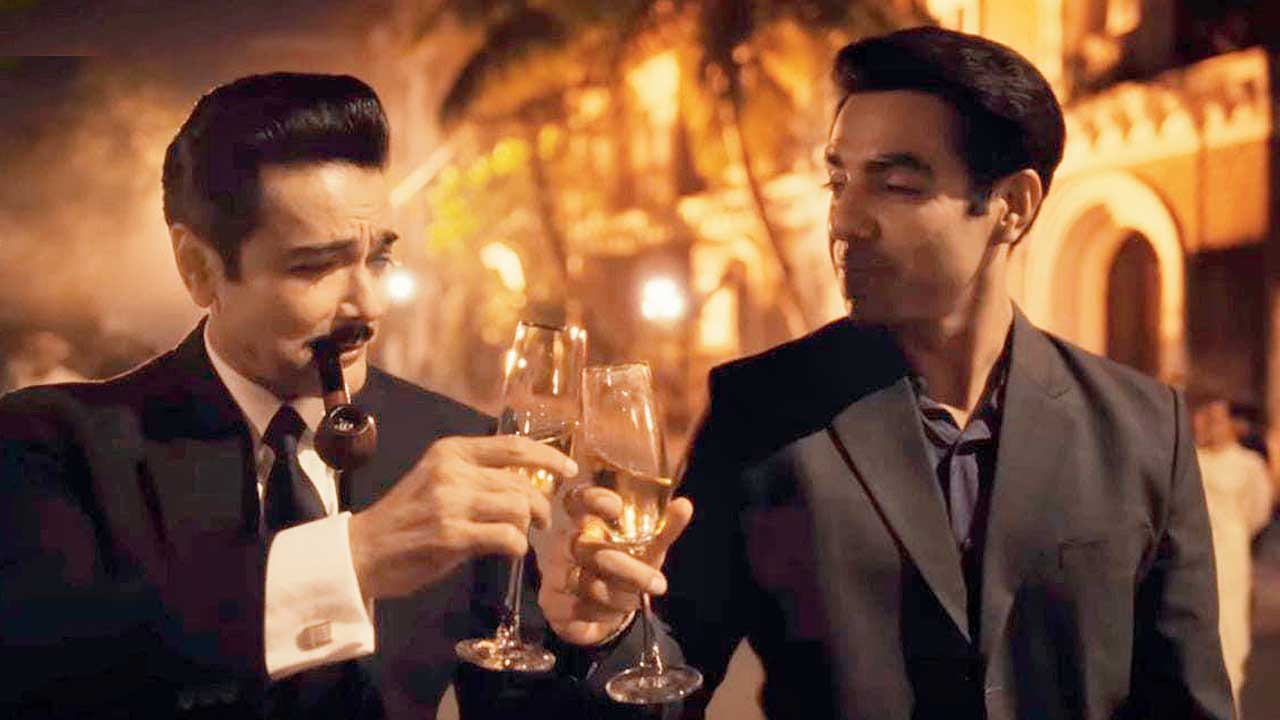
Jubilee co-creator reveals how scripting of Kishore Kumar biopic led him to explore ’50s film industry that forms the series' crux
Hiren Kotwani (MID-DAY; April 7, 2023)
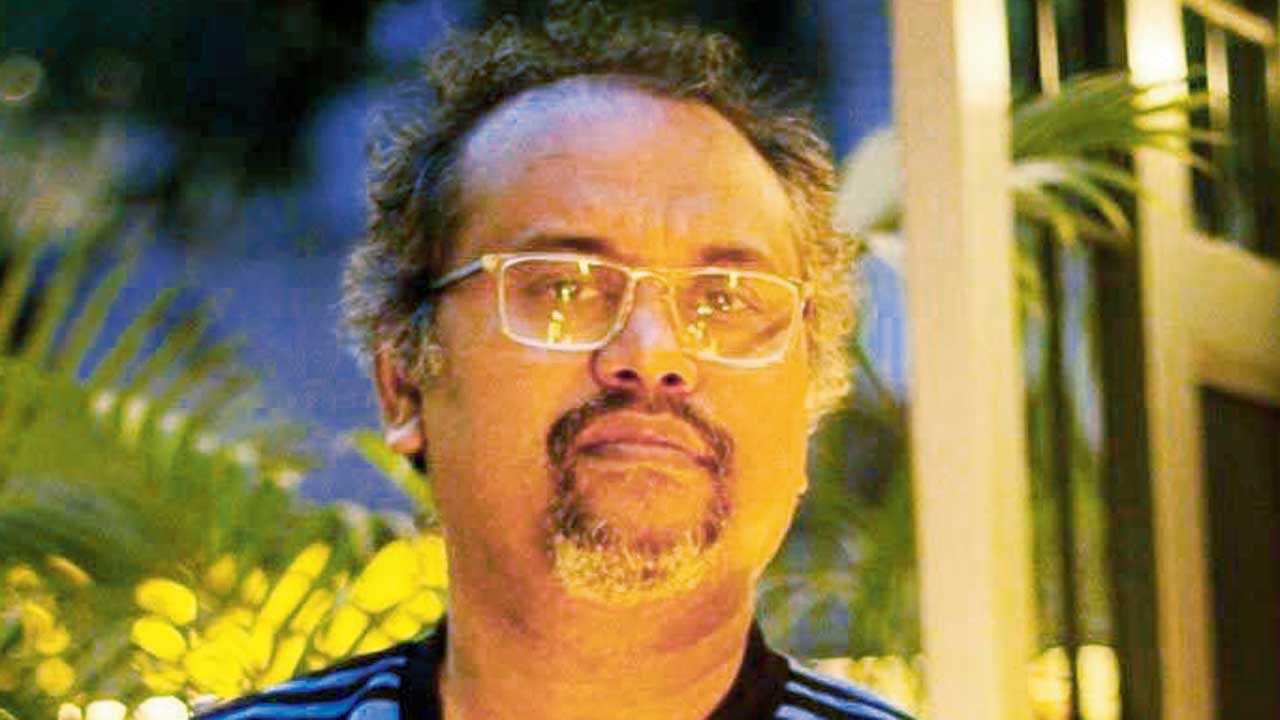
Their love for cinema has seen many filmmakers tell stories set in the Indian film industry. Vikramaditya Motwane and co-creator Soumik Sen take a stab at it with Jubilee, Amazon Prime Video’s marquee series that stars Prosenjit Chatterjee, Aditi Rao Hydari, Aparshakti Khurana and Wamiqa Gabbi. Sen surprises us when he says that the period drama has its roots in the Kishore Kumar biopic that he was scripting for Anurag Basu, and was to star Ranbir Kapoor.
“While working on the Kishore Kumar biopic, my research extended to R D Burman, the music of those times and the era before that. In the process, I went through old magazines that gave insight into the functioning of the film industry,” recounts Sen.
It led him, along with Motwane and Atul Sabharwal, to create a fictional tale set in the Hindi film industry of the ’50s and ’60s. Jubilee studies love, power and burning ambitions set against the backdrop of the studio system.
Reminiscing the time actors like Ashok Kumar and Dilip Kumar opted out of studios, Sen shares, “Actors went their independent way when [their star power] became the reason for commerce.”
He adds that the studio system eventually gave way to the star system. “Whenever a new actor is given a break, he likes to associate with a certain production house — like Rajesh Khanna did with Shakti Samanta Productions, or Amitabh Bachchan did with Prakash Mehra.”
While Sen is awaiting the audience’s reaction to the series, we prod him about the fate of the Kumar biopic. “Kishore da’s family would be in the best position to share any details about it,” he says.
With Pathaan's success, Shah Rukh Khan passes where Amitabh Bachchan and Dilip Kumar did not
8:44 AM
Box Office India Trade Network
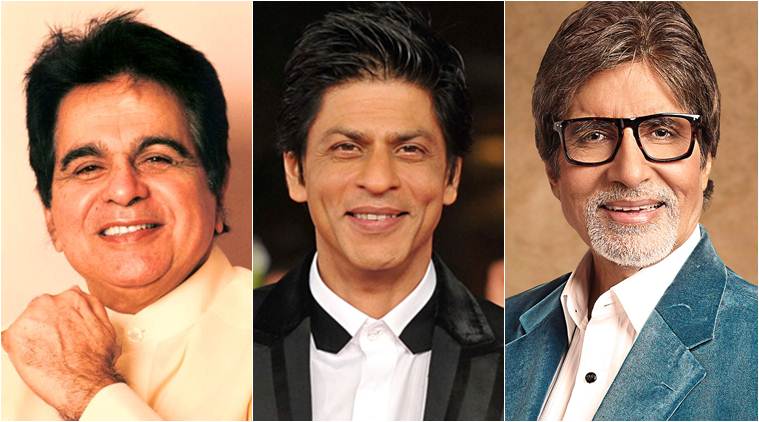
The 100 year plus history of cinema in India has seen around seven genuine superstars or megastars. We say genuine as regional superstars are called superstars today while stars and mini stars also get called superstars; so the word superstar looses value. When historians write about Indian cinema, then it may well be that the names of Dilip Kumar, Amitabh Bachchan and Shah Rukh Khan will be at the top of the pile due to various reasons.
In reality, these things are very region based as X can be the biggest ever in one region and then this X can be number 5 of all time in another region and huge essays can be written who was greatest where and when but that is for another day. However, there is a huge huge similarity in the career of Dilip Kumar, Amitabh Bachchan and Shah Rukh Khan and it becomes even more uncanny that all three are among the biggest superstars if not the biggest India has ever seen.
All the three superstars had a hiatus in their respective careers and not only were they all at a similar age but it was also for a similar period and it looks like Shah Rukh Khan may have passed where the other two legends did not.
Dilip Kumar took a break at the age of 53 post BAIRAAG in 1976. This film is seen as a flop in the industry but as per box office collections, it was a HIT or even SUPERHIT. But prior to this Dilip Kumar had not seen a hit for six years and BAIRAAG was a much delayed release. Som the decision to take a break was probably taken much before the release of BAIRAAG.
BAIRAAG was released in October 1976 and then Dilip Kumar came back with KRANTI in February 1981 which was a break of 52 months. KRANTI broke all first run box office records but Dilip Kumar came back as character artist rather than the lead. Its another matter that he set a precedent that his films become set around this older character rather than leads and many also became huge BLOCKBUSTERS. This sets him apart from all the actors and is basically why he is the greatest ACTOR India has ever seen.
Amitabh Bachchan took a break at the age of 49 post the release of KHUDA GAWAH. This film did not live upto expectations due to the huge costs but was a good grosser and the biggest of that year in some circuits. But generally except for AAJ KA ARJUN, the films of Amitabh Bachchan had not been performing as they should for a few years. KHUDA GAWAH was released in May 1992 and it was break of 60 months as MRITYUDAATA came in May 1997. He did a guest appearance in INSANIYAT in between but that was a long delayed film. Amitabh Bachchan came back as main lead but the film just did not work and nor did others as lead. Hence, he eventually had to shift to character roles. It was still a great career as a character artist and is still going strong today but the sort of films and roles Dilip Kumar got was not there for Amitabh Bachchan.
Shah Rukh Khan took a break at the age of 53 post the release of ZERO and there is not much to say about the fate of this film and also the few films that came before ZERO. ZERO was released in December 2017 and Shah Rukh Khan came back with PATHAAN in January 2023 which was break of 61 months and it has smashed the box office. The difference here is that Shah Rukh Khan has not comeback as a character artist like Dilip Kumar but main lead. And when Amitabh Bachchan did come back as main lead, it led to failure while Shah Rukh Khan has succeeded and how. Basically he has gone to where the legends could not go post the hiatus they all took.
There can be a new chapter of super success written depending on how the story unfolds from here. This is a different Shah Rukh Khan from before just not on screen but as the way things are done also. Shah Rukh Khan was the king of promotion and it was his methods that the rest followed and are still following today. This is while Shah Rukh Khan himself has changed to keeping a low profile which is actually still a must for a genuine superstar or star though many don't see it that way. You see all these actors promoting films with stupid interviews all over the digital space, there are these Instagram videos and shorts or reels or whatever they are called sort of telling the public you can see me on these regularly for free so no need to come and watch my films and the public does as they say. The difference now with SRK maybe is that the message will be that if you want to see me then see me on the big screen and with this scene of exclusivity with the correct product and the sky will be the limit. Both will have to go hand in hand but the potential to create history with this mix is huge.
Also if this is the way SRK goes, then just like he taught the industry about promotion and he may now teach that it is all pretty pointless now and its your film and your exclusivity that urges fans to watch you in the cinema hall. This actually would be far important than any box office history as it will put the film industry on the correct lines.
India has seen seven stars achieve megastardom and two of them are Salman Khan and Shah Rukh Khan
8:59 AM

Box Office India Trade Network
PATHAAN has smashed records at the box office and it should put into no doubt who are the superstars of INDIA are. The film confirms the box office clout of Shah Rukh Khan which had not gone anywhere despite the last decade not being as kind as the decade before. There was a box office change towards the end of 2000-2010 decade where digital prints allowed far wider releases on day one and as this process got bigger and bigger, it meant the genre which was the forte of Shah Rukh Khan was never going to get record numbers. But through the 2010-2020 decade, the numbers coming with films which were not action films were still huge.
PATHAAN had a guest role for Salman Khan and the public response has to seen to be believed and this should be enough for the naysayers who have appeared due to his last few films not doing as well as expected. Stardom does not disappear with a few films failing at the box office, just like it does not come overnight and takes many films to establish.
The Hindi film industry is probably the most secular place there is in India but the fact that the biggest stars of India over the last two decades are Muslim has not sat well in some quarters of the country and the media over the last few years. In fact the third biggest also with Aamir Khan though this is arguable with Hrithik Roshan and Akshay Kumar in the fold as well. The cinema going audience does not care one bit about religion and within the industry, nobody notices the religion baring when things get bought up from the outside. There are these non secular voices also within the industry but the way the industry has functioned for decades, these people soon become outcasts and work will just dry up.
The last few years has seen this Pan India thing pop up so you have regional stars names being put up as the biggest superstars of the country, laughable as it may seem. There are no doubt some great directors in the Southern industries and so, it is possible their films can do well in the Hindi belts but that hardly means the actors in these films become stars and superstardom is far away except for the regional one which they probably have already..
India has seen seven stars achieve megastardom and two of them are Salman Khan and Shah Rukh Khan. The others being Dilip Kumar, Rajendra Kumar, Dharmendra, Rajesh Khanna and Amitabh Bachchan. There is not one name in sight from regional film industries and yet today you see names like Prabhas, Yash, Allu Arjun and others put up with there with two superstars who are not only the biggest superstars of the day but among the biggest ever.
This is not to say that someone from the regional industry cannot become a huge superstar tomorrow because if the public takes to you then anything can happen. But to reach the level of above names will take some doing not only for the regional stars but even for Hindi film stars.
The simple reason why the the big superstars have come from the Hindi film industry is because the language has a wider reach. If other languages had a reach as wide as Hindi, then maybe it would be a different story. Yes movies can be dubbed but that is the film reaching out and not the actor.
Basically the negativity towards the Hindi film industry has led to many claims as to which is the biggest film industry and who are the biggest stars and when the national media is like this you get the regional one badmouthing Hindi cinema as and pushing their own which is natural. But at the end of the day, nothing much has changed despite the claims as the HINDI film industry easily remains the biggest film industry in India as content may go wrong but that does not change the reach. As for the stars, Salman Khan and Shah Rukh Khan remain the biggest stars in India and that does not look like changing for sometime yet even though the star power may not be as big as it was other points in their careers.
Subscribe to:
Posts (Atom)