Showing posts with label Dev D. Show all posts
Showing posts with label Dev D. Show all posts
Curious to see how the new generation responds to Dev D-Anurag Kashyap
8:57 AM

The film’s team weighs in on the impact it had on Indian cinema as the movie gears up for its re-release
Renuka Vyavahare (BOMBAY TIMES; April 4, 2026)
Anurag Kashyap’s Dev D (2009), a contemporary reimagining of the classic Bengali novel Devdas by Sarat Chandra Chattopadhyay, achieved cult status for its unconventional storytelling and outlook on modern day relationships. Co-written by Kashyap and Vikramaditya Motwane, the film, headlined by Abhay Deol, Kalki Koechlin, and Mahie Gill, is all set to re-release in select theatres on April 24, through PVR INOX.
‘Curious to see how the new generation responds to Dev D’: Anurag Kashyap
Talking about the re-release, Anurag Kashyap explained, “When we made Dev D, it came from a place of rebellion. I wanted to strip away the poetry and confront the contradictions, the very human mess beneath a protagonist (Devdas) who had long been romanticized. The film was a provocation, taking a story steeped in nostalgia and tragic romance and thrusting it into the chaos of contemporary India. This Dev isn’t a romantic hero. He’s entitled, impulsive, and often deeply unlikable. His self-destruction isn’t noble; it’s reckless and painfully real. Paro, too, is no longer just the waiting lover. She has agency, desire, and anger; she chooses; she resists. And Chanda, shaped by the realities of today, isn’t defined by sacrifice but by survival and reinvention. To see Dev D return to the big screen feels special. It’s a film meant to be experienced collectively with Amit Trivedi's pulsating music and Rajeev Ravi’s cinematography powering the narrative. I am curious to see how the new generation responds to it."
The best part about shooting Dev D was not knowing anything about filmmaking: Kalki
Thrilled by the news, Kalki Koechlin shared, “My first film Dev D is re-releasing! Crazy. I remember being so nervous about my Hindi lines that every morning on set I would wake up and do 'a aa e ee o oo' practicing all my vowels and consonants in Devanagari for my correct ‘uchaaran’ (pronunciation). The best part about shooting Dev D was not knowing anything about film making, because it meant I didn’t care about which angle, how I looked on camera, I gave 100 percent in the takes, not knowing if the camera is pointed at the back of my head, not knowing I could do it again. I was totally un-self-conscious.”
My idea was to call out Devdas’ misogyny: Abhay Deol
Recalling how the film was considered arty back then, Abhay Deol says, “I remember the days I would narrate the idea of Dev D to people, friends, and industry, and the most common reaction I got was that it was too 'arty' to be made. When I narrated it to Anurag, I didn’t tell him it was a contemporary treatment of Devdas, I just narrated a love story. He did not guess what it was that I was actually narrating and when I revealed that it was a contemporary Devdas he went quiet for 20 minutes imagining it in his head. He was hooked and he also loved the idea of treating it with a musical score that took the story forward one song at a time. Although he went with a different ending (I stuck to the original with Dev dying in the end), my idea was to call out Devdas’ misogyny and highlight the women’s resilience. It’s my only idea that got made into a movie so it will always remain a personal triumph for me.”
Dev in Dev D didn’t deserve the poetic martyrdom of Devdas. Didn’t want to give audiences a sanitized, feel-good ending: Anurag Kashyap
Talking about why the ending of the film differs from the one narrated to him by Abhay, Anurag explained, "I was very clear about one thing: I didn’t want to romanticize self-destruction. The original Devdas myth is built around a man who drinks himself to death and is almost glorified for it. Dev in Dev D didn’t deserve that kind of poetic martyrdom. At the same time, we didn't want to give audiences a sanitized, feel-good ending either. The ending isn’t about resolution. It’s about discomfort. It pushes one to confront their own ideas of forgiveness and accountability. Dev doesn’t suddenly transform into a better human being. He doesn’t arrive at redemption in any conventional sense. He simply becomes aware, or at least there's a fleeting recognition of the fragility of life itself, and I thought that was the best way to end the film. Everyone in life deserves a second chance."
Dev D helped me find my voice as a composer: Amit Trivedi
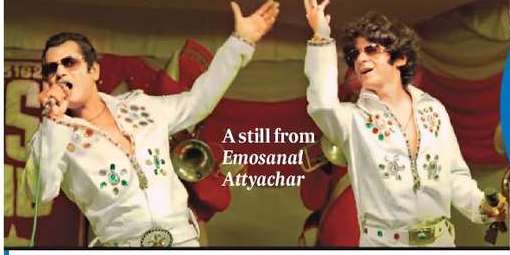
Music composed by Amit Trivedi formed an integral part of the film’s identity. He shares, “Dev D was a turning point in my career indeed. Before that, I was just trying to find my space, making music without knowing if it would ever reach people. Anurag placed immense trust in me and gave me complete creative freedom, and that changed everything. We weren’t just composing songs; we were shaping the emotional pulse of the film. Each song was instinctive, deeply rooted in the narrative, whether it was the wild, experimental energy of ‘Emosanal Attyachaar’ or the quiet ache of ‘Nayan Tarse'. When the film released, something shifted for me. It helped me find my voice, and I remain deeply grateful that audiences embraced something so raw and unconventional. Seeing Dev D return to cinemas is so emotional; it reminds me of a time when we were fearless, curious, and simply creating from the heart."
Niharika Bijli, Lead Strategist, PVR INOX Limited, said, “We are constantly looking for definitive titles, films that have shifted something, and Dev D is undoubtedly one of them. It is a film meant for the big screen; the landscapes, the music, and the emotions all feel far more immersive when experienced in a cinema, shared with an audience reacting in unison. Dev D is also an essential watch to understand the diversity of storytelling that Anurag Kashyap brings to his craft. It's exciting to bring Dev D back to PVR INOX; this is not a film one should miss experiencing in theatres.”
The one thing everyone has been asking me is Zindagi Na Milegi Dobara's sequel coming?-Kalki Koechlin
9:07 AM

Onkar Kulkarni (BOMBAY TIMES; December 6, 2024)
While Kalki has had a busy year, the actress always prioritises spending time with her four-year-old daughter Sappho over everything else. In a chat with us, she talks about balancing parenting duties and her career, how she longs to continue working and how excited she was when Zindagi Na Milegi Dobara (ZNMD) re-released in theatres earlier this year. Excerpts:
‘I narrate bedtime stories through voice notes for Sappho when I am away’
Kalki, who is based out of Goa, has to keep travelling for her work, even to foreign locations. Ask Kalki, who shot for Her Story this year, how she manages her shooting schedules while being a hands-on mom, and she says, “The longest I have been away from Sappho is three weeks for a shoot. Earlier this year, when I was in France for a whole month for a shoot, I spoke to her much earlier and told her I would be away. Sometimes, she bargains with me on the number of days I can be out. Whenever I am out working, I narrate bedtime stories through voice notes. She listens to them before going to sleep. It can be difficult, but we have to face it together because even I long to work.”
‘People keep asking me about the sequel to ZNMD’
Earlier this year, ZNMD, which featured Kalki along with Hrithik Roshan, Abhay Deol and Farhan Akhtar, was re-released in the theatres. Talking about the response the film got, Kalki said, “Now the one thing everyone has been asking me is when’s the sequel coming? I have no answer to this question (laughs). I feel excited that the movie has been relived and rewatched after so many years in theatres.”
The Zoya Akhtar directorial released in July 2011. Kalki, who usually doesn’t like watching her own films, has seen the film thrice. “Even Guy (husband, Guy Hershberg) enjoyed the movie. He found my character funny because it is very different from what he sees of me in real life. I think Sappho has danced on the film’s track Sooraj Ki Baahon Mein in her school,” says the actress.
‘Didn’t feel the hierarchy while shooting for ZNMD’
Reminiscing about the days of shooting ZNMD, she shares, “It was my first big Bollywood film. Of course, I did have a good start with Dev D, but it was still an off-beat kind of film. I got along well with Hrithik Roshan while shooting ZNMD. We share our birthday. We bonded over similar things. I shared with him how I struggle with dancing, and he spoke to me about his struggle with speech.”
Talking about what made the shooting experience special, she said, “We shot the film abroad (Spain), and the nature of the film was such that everybody was together. The separation was not there, and that hierarchy was not felt. I really didn’t appreciate how important and special it was at that time because as time went by and I did more movies, I realized that the separation or hierarchy is something that is ingrained in our system, and ZNMD was indeed a special experience.”
As a DJ, I feel more confident now to perform in front of people-Abhay Deol
10:03 AM

Kanksha Vasavada (BOMBAY TIMES; May 4, 2024)
Abhay Deol, who dons many hats (actor, producer, art lover), recently made his debut as a DJ at a newly opened arcade, Ballers Ahmedabad on Sindhu Bhavan Road, Ahmedabad. The Zindagi Na Milegi Dobara (ZNMD) actor tells us, “I love music and used to make mixtapes as a child. I learnt how to work on a DJ console, and this was a natural progression. Now, I can mix the music that I have collected over the years and play it.”
He adds, “I feel humbled by the response I received for my gig. Amdavadis are really warm.” Will he do a DJ tour now? “It is a hobby and I will be back to shoot for films soon. But as a DJ, I feel more confident now to perform in front of people. So, if I get offers, I may be up for it unless I am busy.”
‘I don’t label films as mainstream or independent’
Is it a conscious choice to choose films that aren’t exactly mainstream? He says, “I am always attracted to scripts that are relatable, insightful yet entertaining. I choose films that aren’t completely arthouse or completely mainstream. Be it Socha Na Tha, Dev D, Oye Lucky Lucky Oye or ZNMD, all my films have managed to strike a perfect balance between the two.”
Abhay, who has done independent movies like Road, Movie, adds, “Also, I don’t label films as mainstream or independent. For me, the subject is the main thing. When we use words like ‘independent’ for a film, it means it wasn’t mainstream, and was difficult to make and sell. I make movies that usually don’t get made. They get labelled as independent films as they don’t have the backing of big producers, distributors or directors. Even Ek Chalis Ki Last Local, Oye Lucky… were called independent films back then but had a big producer backed them, that wouldn’t be the case.”
‘Had a great time while working with Shabana Azmi and Zeenat Aman’
Abhay recently wrapped up the film Bun Tikki, which also stars Zeenat Aman and Shabana Azmi. Both the actresses have worked extensively with his uncle Dharmendra, whom he lovingly calls ‘papa’. Abhay says, “I had a great time. Zeenat Aman is the most warm, sweet, and polite person you will meet, and extremely professional. I have also known Shabana for a while. Zeenat ji feels papa is a gentleman, while Shabana is fond of him too. They remembered the good old days of working with him.”
‘Feel blessed that people love my film choices’
Having played unconventional characters, does he feel people expect that from him now? Abhay says, “I feel an actor’s image is built organically. I have always experimented with my characters. So, if my image is that I experiment with my roles, and people say they love my choices, it’s a blessing. I feel humbled. I want to do challenging roles-things that I haven’t done before.”
‘Being rebellious got me this far’
In recent times, Abhay has spoken about how he could have done certain things (like handling fame after Dev D) differently in his career. Elaborating on it, he shares, “When you are young and inexperienced, you are ignorant about certain things. As we grow up, we deal with the same situations in a more mature way. I was a rebel, but I am more diplomatic now. Being rebellious got me this far, as it was difficult to make the kind of movies I wanted. While the movies I made between 2005 and 2007 are considered relevant today, it was hard to make them back then. Now, I feel that being diplomatic is going to take me ahead.”
‘I hope that OTT platforms evolve more’
Abhay, who has done OTT projects like JL50 and Trial by Fire, believes there is room for improvement (for OTT platforms). He says, “When a medium is new, it has nothing to lose and you can experiment with everything. But once you grow bigger, you have a certain responsibility, and you tend to take fewer risks. When organizations prioritize business over creativity, the downfall begins. So, I hope that platforms can evolve more because I feel it’s time to be bold and take risks once again.”
I found fame intrusive and ran away from it, which I regret now-Abhay Deol
8:52 AM

Jaspreet Nijher (BOMBAY TIMES; April 3, 2024)
After the stellar success of his dark comedy Dev D, Abhay Deol says he was unable to handle the fame, and he left the country. In Chandigarh for a film festival, Abhay spoke about how he feels vindicated today about his choice of films in his initial years.
“Cinema, with its larger-than-life persona, was considered a means of escapism back in the day,” he said, adding, “But while growing up I didn't want another escape, I wanted to retain my authenticity.”
On the question of catering to popular tastes while making films, he said, “I didn’t agree with that idea because I thought if I didn't like my movies, how will the audience appreciate it? Indian filmmakers were making only one kind of cinema and by always conforming, how can we create change?”
However, after Dev D, Abhay got scared of fame. “I had issues with fame because I had seen its repercussion on my family and found it intrusive. So, I ran away from the country and thought the worse was going to happen. I didn't like the idea of marketing myself, and thought it was cheap. So, I missed the fame that followed, which I kind of regret now,” he said.
Abhay’s choices of films were met with skepticism during that time. “When my films didn’t work, they criticized me. When they did, they said, ‘you are 10 years ahead of your time’. The struggle of dumbing yourself down was always there, though I proved my point with Oye Lucky! Lucky Oye!”
Commenting on modern day content Abhay says despite the evolution of cinema, the struggle remains. “Just because my web series Trial By Fire was a success, doesn’t mean acceptance comes easy now and is still a struggle,” he said, adding, “Though digital space is limitless, OTT is also looking for subscribers. Till there is resilience of some filmmakers to create change, and as long as they have strength to do so, change will continue.”
15 Years of Dev D: I thought it would be my first and last film-Amit Trivedi
8:34 AM

Soumya Vajpayee (HINDUSTAN TIMES; February 6, 2024)
He made his Bollywood debut in 2008 with Aamir and the soundtrack of Dev.D (2009) propelled Amit Trivedi into the stratosphere. Besides earning a cult status, the album won the composer a National Film Award.
As the Anurag Kashyap directorial clocks 15 years today, Trivedi tells us, “I never thought it will become this big, cult status toh door-door tak nahin. In fact, I thought it would be my first and last film because it was the complete opposite of what was going on in the film music space back then. I am glad I was wrong.”
Talking about the most difficult song from the album, Trivedi adds, “Emosanal Attyachar was challenging because I had never done a song with a raw wedding brass band, but once I cracked it, it was fun. Around 12 members from a brass band in Bandra (Mumbai) were in the studio the entire day with me and we recorded till late in the night.”
The Jubilee (2023) composer says he was “overwhelmed” with the kind of love and work that came his way since then. “There was no looking back for me after that. The album means the world to me. I still perform a lot of its songs on stage.”
Now directors don’t feel the need to explain my skin colour in films-Kalki Koechlin
9:28 AM

Onkar Kulkarni (BOMBAY TIMES; November 27, 2023)
Since she started out in 2009 with Dev D, Kalki Koechlin has done a range of commercial and offbeat films. However, she did face various challenges, including being stereotyped because of her skin colour. The actress talks to us about how perceptions have changed in Hindi cinema since her first film and her keen interest in South films.
‘Dev D wasn’t an overnight hit’
With movies like Zindagi Na Milegi Dobara (2011), Yeh Jawaani Hai Deewani (2013) andMargarita With A Straw (2015) in her filmography, Kalki feels lucky to have come a long way.
She says, “Every actor dreams of success and reaching a point where they can choose their work. All of those dreams are there, but you can’t predict success. Dev D wasn’t an overnight hit. It was a slow, simmering cult film that, over the years, gained a lot of popularity. It dawned on me slowly.”
‘I felt misrepresented after Dev D’
Talking about the reactions to her debut film, Kalki shares, “After the film released, I was very upset as someone from the media referred to me as a Russian girl and also wrote that girls like us, who cannot speak Hindi, come to Mumbai, do one film and go back. And I was like, ‘Hey! That’s not my story.’ I was born in Periyamudaliyar Chavadi. I am a Tamilian with white skin (given her French descent). I just felt misrepresented, that’s all, but now, things have changed, since people know my story and my background. And so, they (filmmakers) don’t feel the need to explain my skin colour in films. Of course, it limits me to certain kinds of characters, but at the same time, I have been cast in interesting roles because of it and the way I am.”
‘A lot of South films are being remade in Hindi, so I wanted to be part of an original film’
In 2019, Kalki made her debut in the Tamil film industry with Nerkonda Paarvai, with a cameo. After Paava Kadhaigal in 2020, she’s back to doing a feature film in her mother tongue (Tamil), for which she shot in Portugal.
Talking about exploring South cinema, and how comfortable she was speaking dialogues in Tamil, she says, “A lot of South films are being remade in Hindi, so I wanted to be part of an original film (laughs). Tamil is one of my mother tongues. I speak French too. My dialogue writer was helping me with my lines and pronunciation. I speak rural Tamil because I was born in a very small village, but for this film, I had to speak it in a different manner.”
‘Anurag’s daughter Aaliyah is somebody I am close to’
A few months ago, Kalki, along with her partner Guy Hershberg and daughter Sappho, attended her ex-husband Anurag Kashyap’s daughter, Aaliyah’s engagement party.
Talking about the equation she shares with the Kashyaps, she says, “It’s great that we all get along. Aaliyah is somebody I am close to because I knew her when I was with Anurag. She was a kid, and we had a good time together. I am in touch with her mother, Aarti (Bajaj) as well. It’s wonderful that we have come to a point where we all can be in the same room. My daughter thinks Aaliyah is a real princess.”
I won’t do film albums that have more than one composer; public will not know ki kiska gaana kya hai-Amit Trivedi
8:54 AM
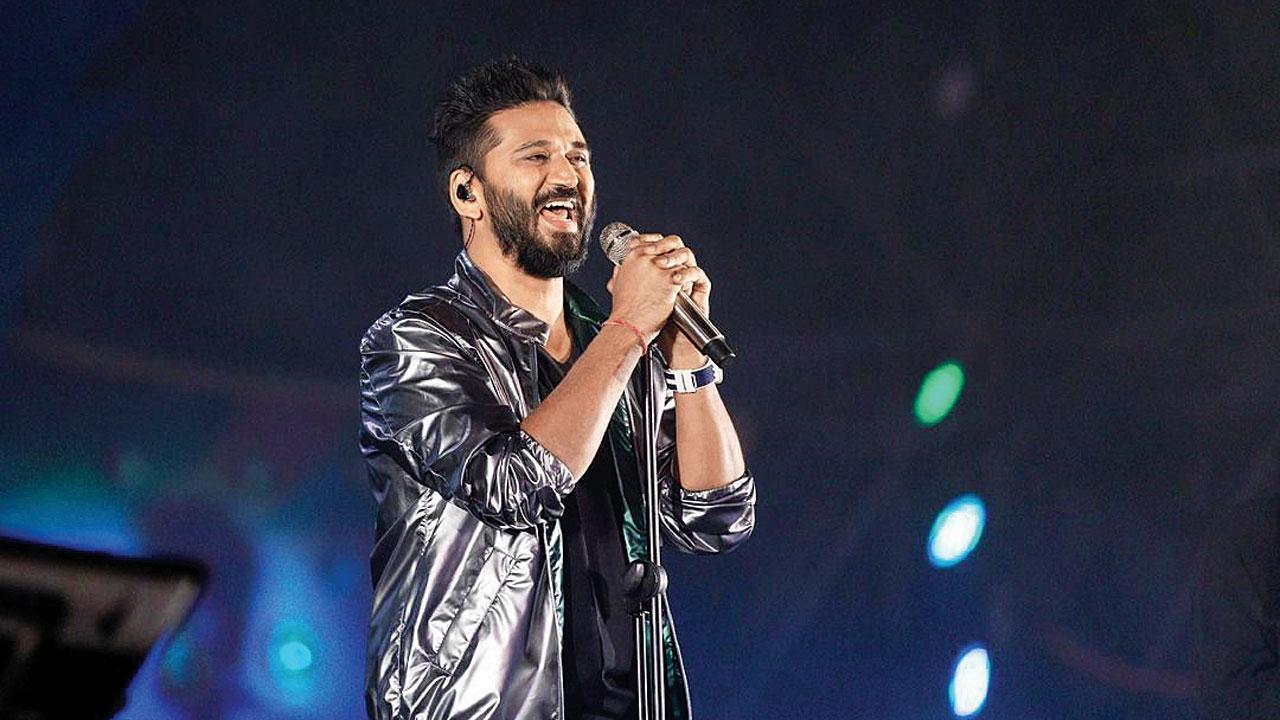
Debarati S Sen (BOMBAY TIMES; October 14, 2023)
In 2009, Amit Trivedi’s soundtrack of Dev D changed the way Hindi film music sounded. Over the years, his willingness to experiment with diverse musical landscapes, blending of traditional elements with contemporary sounds, resonated with music lovers and his songs like Iktara (Wake Up Sid), London Thumakda and Kinare (Queen) to the electrifying beats of tracks from Udta Punjab gave Indian cinema a refreshing musical identity.
In a candid conversation with the musician at his Andheri studio, we discussed his love for freedom as a music composer, how he works multiple mediums whether it's films, OTT or the independent space, and more. Excerpts from our interview…
Mostly, all your film work has been complete albums. But there are many that have three to four composers working on one single film. Did you consciously take a stand against such albums?
Yes, I have said a no to such work. I won’t do film albums that have more than one composer. I feel bad for composers who do that because the public will not know ki kiska gaana kya hai and so your identity will be lost. In the long run, no one will remember. But if it is an individual composer then people would know and recall far more easily. For example, if it's Pathaan, we all know it is Vishal-Shekhar.
Did you ever have to give up your creative freedom for others? For the director or producer of the film?
That keeps happening. I won’t take names but when my fans feel ‘this song isn’t an Amit Trivedi one’, those are the times when I have faced this interference! In those songs mujhe creative freedom nahi diya gaya tha. Curb kartein rahein. Yeh mat karo, woah karo etc. And that is when the result is like that. Whenever I have not had any interference, those tracks and albums have worked extremely well like a Dev D, Udaan, Lootera, Kai Po Che, Queen. In Udta Punjab thoda bahut interference tha, but not much. I did the music for Qala in just three days. I didn’t let anyone interfere at all, kisi ko mauka hi nahi diya! That’s my learning after all these years in this industry!
You’d completed the first six songs of the Dev D album in six months, and it was released without any changes. Has that ever happened in recent years?
It happened with Qala and Jubilee. It is such a pleasure to work with filmmakers like these. They just let you be. They give you that freedom to create. Their ideas and visions are really great. What they want to say in their films is also unique and working on such projects is an experience. To be a part of that vision and getting to create the way you want to and the freedom to bring in what you can in that space, is magic. But if you are chasing a certain parameter of success, whether it is commercial or there is a certain mindset, it is a different ballgame, and I don’t operate from that level.
It’s been 15 years as a composer in the Hindi film music industry. Would you say your journey has been more about ups than downs?
Life is like that – ups and downs toh rehta hi hai. Mostly ups and very little downs so far, and it has been a beautiful journey and I am immensely grateful for that. Jo bhi bura hona hai woh toh hota hi hai. But then, I have a habit of rubbing things off and moving forward constantly. I never look back. Never have. Always aage chalo. Keep working. I never look at the lows in life.
I don’t fit in, but after 17 years, I’m still around-Abhay Deol
8:17 AM
Renuka Vyavahare (BOMBAY TIMES; March 3, 2023)
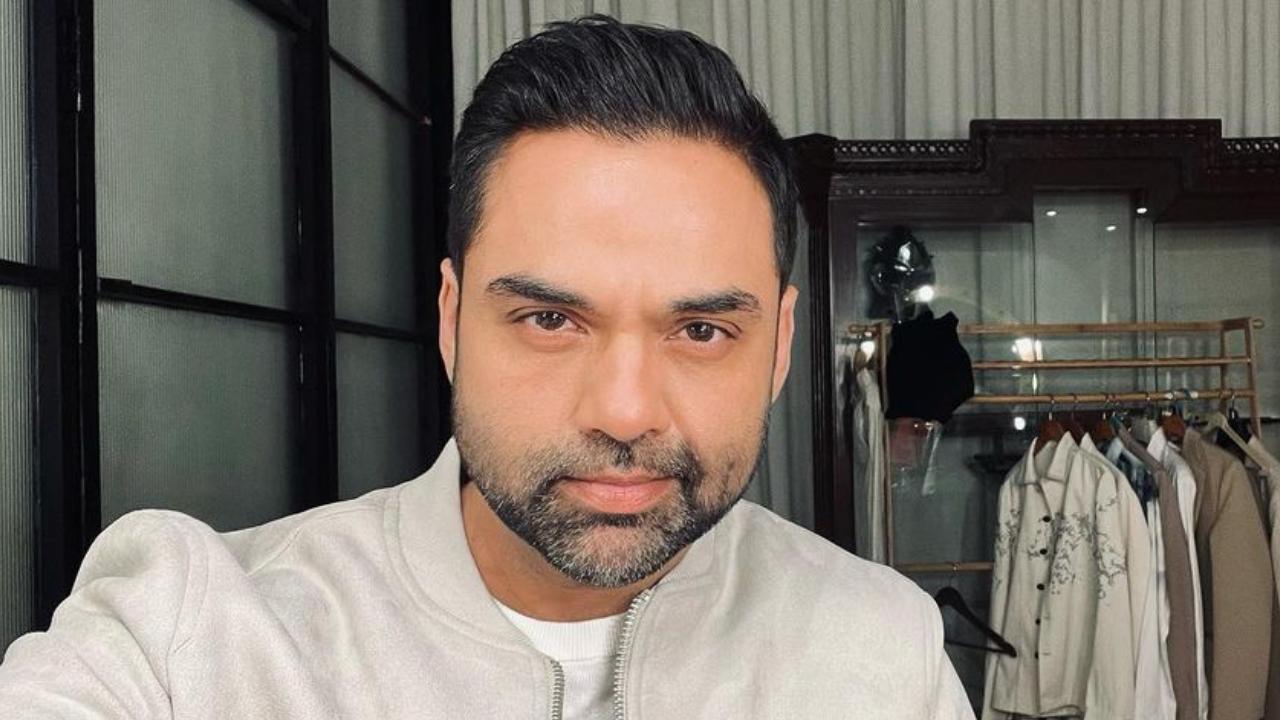
In an industry where a lot of actors prefer diplomacy over frankness and prefer to follow the herd mentality, Abhay Deol has always stood by his own rules. He has a mind and a voice of his own that don’t crumble under pressure. And, of course, his choice of movies and other projects strongly reflect his belief and thought process. In an interview with Bombay Times, the actor talks about his career, beliefs, choices and how the industry accommodated him though he dared to do things differently. Excerpts:
Speaking your heart out is often misinterpreted as defiance or disrespect. Has your outspokenness worked as a double-edged sword for you?
In our space, speaking up can be mistaken as disrespect. All you are doing is speaking your mind and being honest. No one’s there to tell you whether you are right or wrong. You are just frowned upon, but that’s okay. I don’t think I was labelled as a troublemaker, so I would say the film industry has been accommodating towards me.
They may not have agreed with my methods, but they respected the stands I took. It’s highly possible that I may have lost work because of my outspokenness, but that’s okay. It’s just the consequence of you being you. There will always be work. It’s been 17 years, and I am still around. People like my work and I feel grateful. I have no regrets, anger or bitterness towards anyone. I am in a good space, and so is the industry.
As a globe-trotting actor, did you ever feel out of place in Bollywood?
I did find myself out of place. I was born in the industry, so I am very much an insider, but I became an outsider. However, I can’t be considered an outsider because I was born into a film family. So, I am neither here nor there. There was a learning process for me. I still don’t necessarily fit in, but there are a lot more people like me in the industry today than at the time that I started out. Time heals everything. I am glad I stuck to my guns.
Based on the Uphaar Cinema tragedy (1997), your recent web show Trial By Fire was a moving, undramatic portrayal of grief and the pursuit of justice. How difficult was it to revisit the incident and tap into that state of mind?
It wasn’t difficult getting into the role because the tragedy was so hard…. The pain of losing a child. So maybe you can imagine what your parents would go through if you had died. None of that is easy to deal with. Falling into that sort of tragedy because it’s a true story was easy, but getting out of that zone was difficult. This was a real incident; these are real people. You are not portraying fiction, so you can empathise and understand these people easily. It was hard to get out of it because you couldn’t shake off the fact that you just reenacted a trauma that some people went through.
Some of the films that you did back in the day were ahead of their time. Today, we are seeing that kind of content being created for OTT. For an actor like you, isn’t this phase conducive for the type of projects that you like to be associated with?
There’s a lot more of provocation, experimentation and bringing out individual artistes and their voices today than when I started out. Getting non-formulaic movies made back then was more difficult. I mostly worked with directors at the beginning of their career because they were the ones with the freshest ideas. They weren’t under the pressure of commercial constraints. I came up with more indie movies because when I was working on them, the multiplexes were just coming up. For a brief period, there was experimentation so I could bring out films like Dev D, Honeymoon Travels Pvt Ltd, Ek Chalis Ki Last Local, Oye Luck! Lucky Oye and Manorama Six Feet Under. Once the multiplexes were established and stopped expanding, things went back to what they were before, which means less experimentation. With the OTT platforms coming in, they have opened doors for people like myself too.
Meena Kumari is iconic & represents older period in cinema; Kajol symbolizes 20th century-Maithili Rao
8:11 AM
Abigail Banerji (HINDUSTAN TIMES; March 1, 2023)
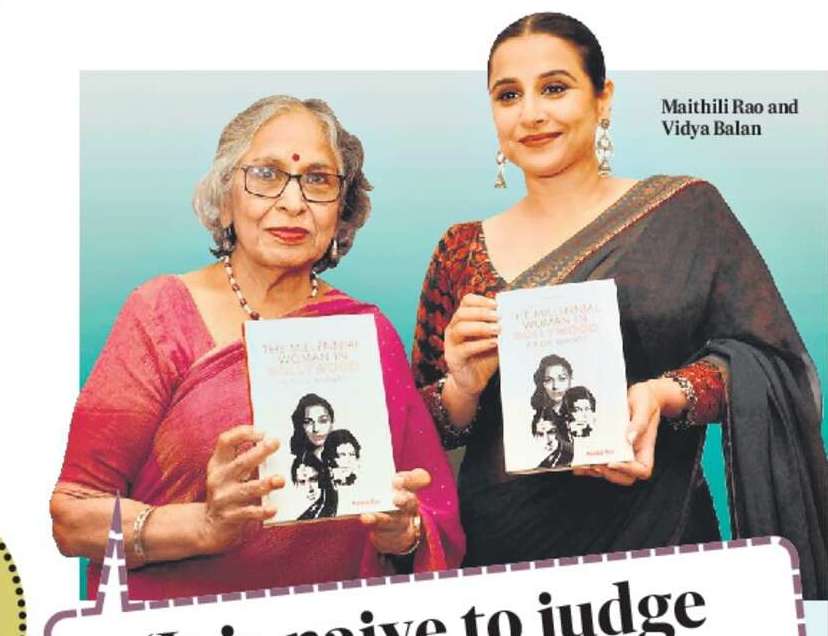
“I must have watched at least 100 or more Bollywood films when I was writing the book,” says author Maithili Rao. Her third book, The Millennial Woman In Bollywood: A New ‘Brand’? was launched by actor Vidya Balan in Mumbai recently. The duo engaged in an animated discussion on the role of women in cinema. In her book, Rao explores the nature of female characters and the change they have undergone.
She first started writing the book in 2019 and had a draft ready by 2020. “But I lost two chapters and I had to rewrite them as I am not very tech-savvy,” she laughs.
Talking about the book, she says, “This idea has been with me since 2015 after I wrote my book on (late actor) Smita Patil. I didn’t want to focus on any one actor (male or female) or filmmaker.” Out of all the chapters she wrote, Rao reveals she enjoyed writing about the subversives — Devdas (2002), Dev D (2005) and Saheb Biwi Aur Gangster (2011). “It was fun to write. The characters were positive and took charge of their lives.”
During her travels to the US, she was exposed to the idea of millennial women. The curiosity behind this phenomenon in India made her want to further explore it in her writing. “Millennial women are independent, don’t get involved in politics and are a part of the I, Me, Mine generation,” she adds.
Understanding and writing about female-centric characters was always her priority. The 80-year-old writer says, “My work made me consciously look at and deconstruct how women have been portrayed in cinema. It is naive to judge every female character based on whether they are feminist enough or at all. It is more interesting to create complex characters that engage with you.”
While the book looks at films from the 2000s, Rao says, “You can’t just write about the last 20 years without looking at the films that came before. I write about the idea of an archetypal Indian mother which has changed over the years. She is now younger, no longer desexualized and sitting and making aloo parathas for her laadla beta,” she explains.
The cover of the book features three female actors from different time periods — late Meena Kumari, Kajol Devgn and Vidya Balan. Ask her about it and she explains, “Meena Kumari is iconic and represents the older period in cinema, while Kajol symbolizes the 20th century. For me, in the current period, it had to be Vidya as her films show the evolution (of female roles).”
I am ready to apologize again to Abhay Deol-Anurag Kashyap
9:07 AM
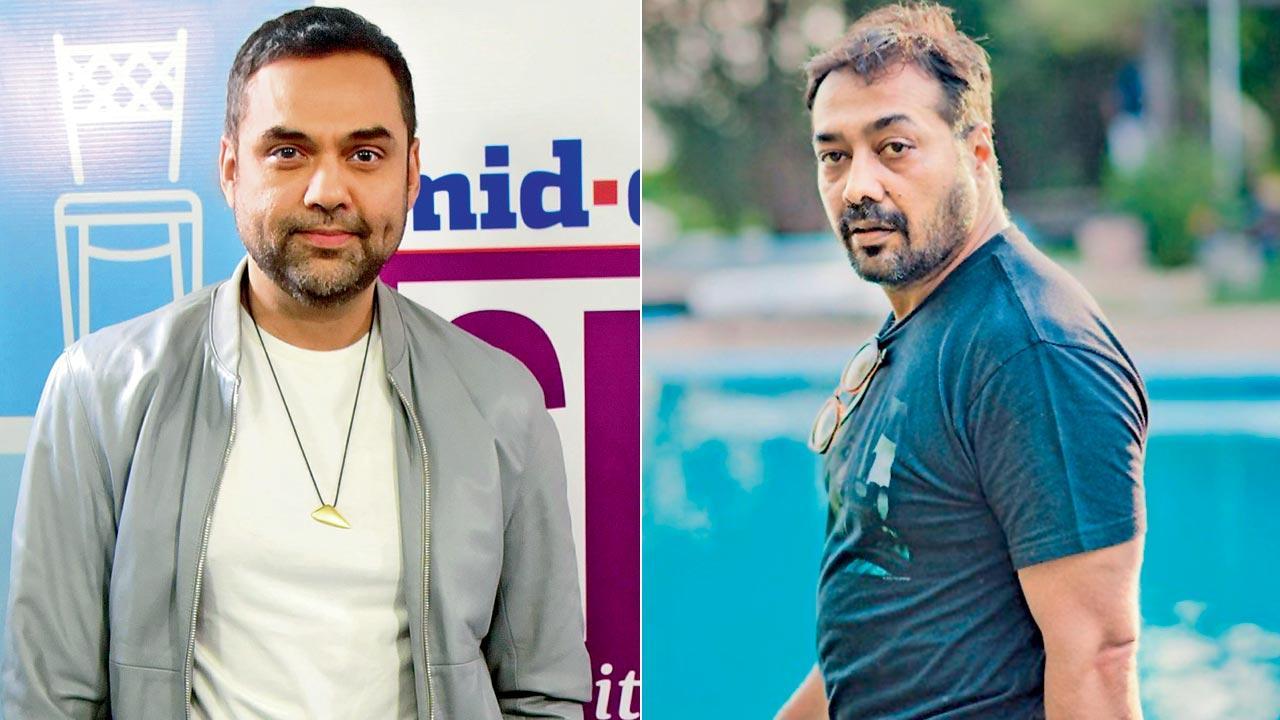
After Abhay Deol accuses Anurag Kashyap of spreading “lies” about him, filmmaker wants to let bygones be bygones and celebrate the actor’s recent success
Priyanka Sharma (MID-DAY; January 22, 2023)
More than a decade ago, Anurag Kashyap and Abhay Deol had united for the pathbreaking Dev D (2009). While the audience wished for another brilliant collaboration between the duo, Deol and Kashyap only grew apart. In the latest edition of Sit with Hitlist (OG A-B of Bollywood Indie 21/01/2023), Deol, who is basking in the success of Netflix’s Trial by Fire, opened up about his falling-out with Kashyap, over the latter’s scathing words in a 2020 interview. The director had called working with the actor “a painfully difficult” experience. He had said that Deol wanted to do artistic movies but also wanted the mainstream benefits—the luxuries of being a “Deol”.
In the recent episode of Sit with Hitlist, Deol reacted to Kashyap’s allegations, saying, “[Kashyap] went in public, and told a lot of lies about me. One was that I demanded a [five-star] hotel room [during the shoot of Dev D]. He had actually come up to me and said, ‘Listen, you can’t stay with us, you are a Deol. So, I want to put you up in a hotel room.’ He literally told me that. What he told the press was that I demanded it.”
When mid-day contacted the Gangs of Wasseypur director, he says he had apologized to Deol once and “is ready to apologize again”. He further says that he understands if the actor felt attacked by his previous comments in the press. “It is okay if that is how he feels. Everyone has his own version of the truth. Maybe he felt attacked about what I had spoken about him earlier. I have personally apologized to him for hurting his feelings,” Kashyap says.
While he is apologetic, the filmmaker also insists that his opinion was based on how the actor was in the past. “What I said was what he was [like] in the past,” he emphasizes. Kashyap added that he doesn’t wish to drag the matter, and instead hopes to celebrate Deol’s latest work. “We all evolve with time. He has done a great job in [Trial By Fire]. I think it is time to celebrate his strong performance rather than playing the ping-pong of who said what.”
I was born an insider, but I pretty much lived as an outsider-Abhay Deol
8:53 AM
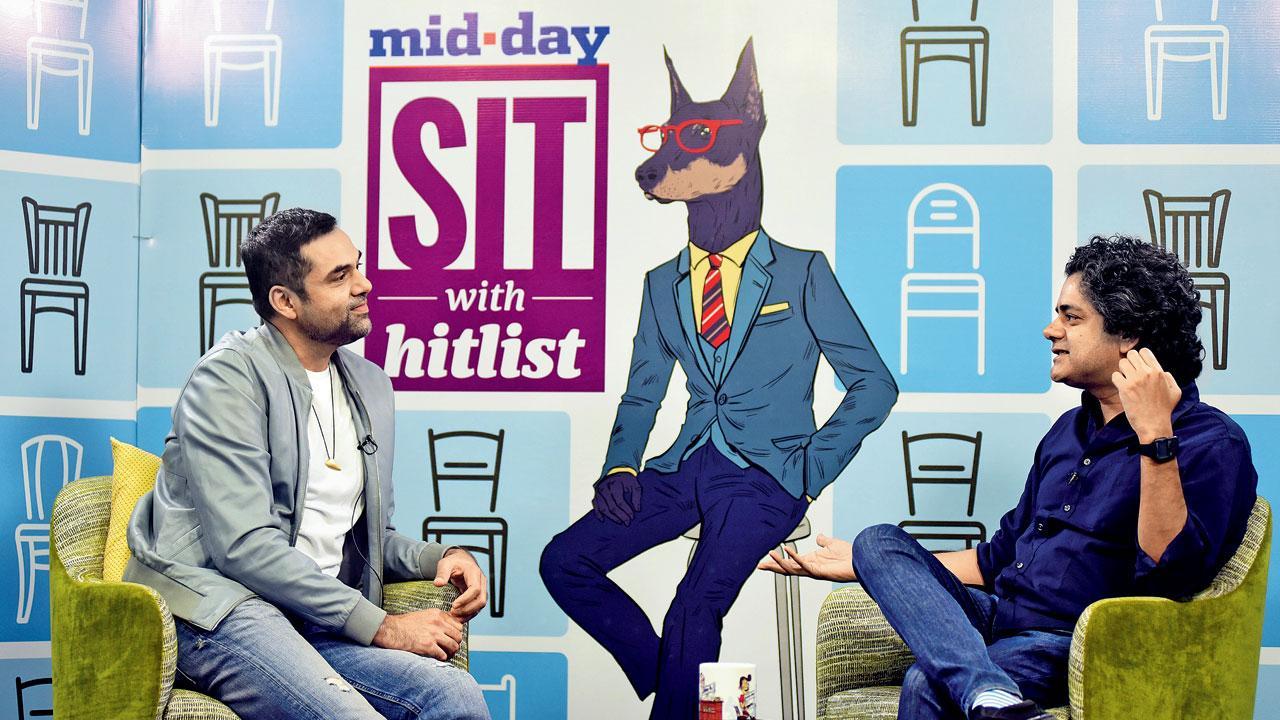
Abhay Deol with mid-day’s entertainment editor Mayank Shekhar at the latest edition of Sit with Hitlist. Pics/Shadab Khan
Decoding the rise & fall of Mumbai film industry’s ultimate insider-outsider!
Mayank Shekhar (MID-DAY; January 21, 2023)
Shortly after our conversation, before a live audience, Abhay Deol is scheduled to meet Shekhar Krishnamoorthy, the person he plays in the Netflix series, Trial By Fire — based on the life of a middle-class Delhi couple, who fought the city’s top real-estate developers, post the death of both their children, in the 1997 Uphaar Cinema fire tragedy.
Which is also when we realize Deol had chosen to consciously stay away from the real-life inspiration for his part, during the process of making the series. Deol is Punjabi by ancestry, unlike Krishnamoorthy, with the most Tamil surname. In fact, Deol has played a Tamilian before this.
That was as the bureaucrat Krishnan, for Dibakar Banerjee’s Shanghai (2012). In an episode dedicated to Deol’s films, on a podcast named Khabardaar, that I was listening to before meeting the actor, the hosts — shout-out to wonderful ladies, Aparita Bhandari, Baisakhi Roy—make an observation on Deol’s walk onscreen. They believe it is the same in all his films. Except, Shanghai, if you notice the minutiae.
Firstly does he agree, and was that consciously so, I ask Deol: “There are physical characteristics that I suppose you don’t change easily. You’re unaware of them. With Shanghai, that may be true. Not that I consciously worked on my walk, though. I did have to work on my accent. Krishnan is a Tamil Brahmin.”
“And I had to put on a Hindi, like a Tamilian would speak it, which is hard to find. Because no Tamilian really speaks Hindi — they speak to you in English. Also, we don’t have an infrastructure of accent training for actors in our country. So we found this out-of-work Tamilian writer, who I worked with, and developed a system [for it].”
If we must get deeper into this accent thing still, for instance, Deol recalls, “I hope I haven’t mixed up my memory, but I was really working on the phonetics — there is no ‘ha’ sound in Tamil, and there is no ‘ba’. In Tamil, you could pronounce my name closer to ‘Apaay’. Stuff like that was insightful. This is besides mimicking my accent-trainer off-camera — so I would know how he might say my dialogues.”
The ladies of Khabardaar podcast might wanna notice this the next time they watch Shanghai. Krsihnamoorthy in Trial By Fire, Deol points out, is different from Krishnan, because he’s a Tamilian, but essentially from Delhi.
He has what one could call a more neutrally North Indian or ‘Delhi’. Which is also a character Deol has played in Oye Lucky Lucky Oye (OLLO) — another real-life person he obviously didn’t meet, before playing him on screen. Bunty Chor was the local swindler, where would you find him?
OLLO (2008) tragically released in theatres, when the “the firings were still on” during 26/11 terror attacks in Mumbai. My favourite memory of OLLO is an off-screen one from the film’s BTS video online, where a dog is after Bunty Chor (Deol), who’s jumping off a tall building-gate. Banerjee asks him to turn around for the camera, so the audience knows the lead actor performed this himself, instead of a body-double.
Deol says, “It’s fun doing stunts, as much as I can. I think Dibakar was a bit surprised about how easily I was scaling such a large gate, and he said he wanted people to see it!”
Sticking to Delhi, and characters inspired by actual events/people still, how about Anurag Kashyap’s Dev D (2009). I learnt this much after watching the film that the role was in fact somewhat based on Deol’s own life. Meaning, obsession in love, and indeed experiments with drugs. If true, kindly elaborate?
“Well, I wanted to contemporize the (Sarat Chandra Chatterjee) book, because I felt there was something wrong there — with such a male, patriarchal view of a man-woman relationship, where women are falling over Devdas. No matter what he does, he can never be wrong. I grew up in an environment, where drugs and alcohol were all available.”
“My Chanda (Kalki’s) character was far stronger than what eventually got made into the movie. She was an East European pole-dancing escort, who is fine the way she is — making great money, traveling the world. She takes pity on him (Dev). Obviously it worked for Anurag [that] she was as vulnerable as he [Dev], and she was a victim too. For me, he was the only victim. The women only grew stronger from there.”
Did he know the Polish escort? “I am not going to tell you! I know all sorts of people; let’s just put it that way. Yeah, I know a few escorts ‘n’ all.”
Let’s pause at the movie titles here: Banerjee’s Shanghai, OLLO. Kashyap’s Dev D. Also from a time when both Kashyap and Banerjee were the ‘new-age filmmakers’, early on in their directorial careers. I wonder what Deol thinks of the trajectory they took thereafter.
Frankly, he doesn’t have much to say, besides “conforming to commercial pressure” that becomes inevitable in some cases. He could sense the “creative genius of Banerjee in LSD (2010)”. As for Kashyap, I find it surprising that he hasn’t seen any of his films since Dev D! Not even Gangs Of Wasseypur (2012)? What; did they have a fallout or something, I ask.
“Well, [Kashyap] went in public, and said a lot of lies about me.”
For example? “One lie was that I demanded a [five-star] hotel room [during the shoot of Dev D]. He had actually come up to me and said, ‘Listen you can’t stay with us, you are a Deol. So, I want to put you up in a hotel room.’ He literally told me that. What he told the press was that I demanded it.” The reference here is to Deol’s profile published in Huffington Post (June 5, 2020).
He continues, “So, there was clearly a lot going on at the time, which was not professional. I had my heart on my sleeve, and all that is great — but you get taken advantage of, and then you get reactive. So, he [Kashyap] was a good lesson for me. Then I just avoided him, because I don’t need toxic people in my life. Life is too short, and there is so much more to explore. But he (Kashyap) is definitely a liar, and a toxic person. And I would warn people [about] him.”
This outburst is evidently in response to Kashyap’s quote about Deol in the Huffington Post report. Deol adds later, “I don’t look in the past. When Anurag said that crap about me in public, he sent me ‘apology’ messages.”
“He does that all the time. He was like, ‘You want to shout at me, scream at me…’ And I was like, ‘I don’t care. It’s been 12 years. You don’t feature in my thoughts even now; get over it.’ He said, ‘Forgive me, because I have had a bad day.’”
“I said you are forgiven. I never had a personal agenda. It was far bigger than just me. That is how I feel about everything. How much of this is he going to do? And I would have never taken his name and said the things, had he not gone public [either].”
Raking this up is important only because lead actors, or stars, have always been the medium to tell stories on screen — even if in the off-stream space, so to say. And by the mid Noughties, Deol was at the centre, if not the pioneer, of a movement of sorts, within Bollywood—picking up young, untested directors to star in their scripts/films, on a leap of faith, first.
“The first five movies of mine were all by first-time directors,” he recalls. Let’s pause again to name these debutants: Imtiaz Ali (Socha Na Tha), Shivam Nair (Ahista Ahista), Reema Kagti (Honeymoon Travels Pvt Ltd), Sanjay Khanduri (Ek Chaalis Ki Last Local), Navdeep Singh (Manorama Six Feet Under).
These are also films that got defined as Hindi commercial cinema, merging with an entertaining art-house — ‘H-indies,’ if you like. At least a couple of the directors did fairly well for themselves — after that firm footing in the film industry.
I can see why it’s got Deol a li’l pissed off now that I want him to dwell on what he thinks of their careers as well — he did like Ali’s Jab We Met, more than Rockstar, which in turn was still outside Ali’s usual “love-triangle zone”, and therefore a step-up: “Why am I commenting on all this — [is that] what the show/conversation is about?” Of course not.
I guess what we’re getting at is an oft repeated jibe that a lot of these directors — take Ali, for example, who got his debut due to Deol — never worked with him thereafter. Is that a fair observation, with anything deeper to it?
“And Anurag used to say, this is why directors [don’t work with me]… I know a lot of actors don’t want to work with him. But I see what you mean. Or where you are coming from. I did sense this feeling [later towards me]: ‘You know, you are not big enough!’”
“Which is ironic, because when I worked with them, neither were they! You either believe in someone, or a vision — even if it goes against the norm. Or you can say, I will keep my vision, but I will acquire bigger powers [to execute it]. Because I will get more money, I suppose. Also, I was taking a lot of it on myself, and I know I made mistakes. I am searching for answers to give you, and I hate making it about me, when it’s about somebody else.”
Consider the career graph. In terms of box-office plus cult-grade, Zoya Akhtar’s multi-starrer Zindagi Na Milegi Dobara (2011) is possibly Deol’s high point. A string of seriously superb films right before, and after. And then there is s sharp slump 2013 onwards, almost a freefall.
He’s had a release almost every year. So he’s very much been around since. The films/series are, again, by mostly first-time directors, or fresh talents, at any rate; experimental in their own right.
You can have your views on, say, One By Two (2014), Happy Bhaag Jayegi (2016), Nanu Ki Jaanu (2018), Chopsticks (2019), What Are The Odds (2019)… Good or bad is a subjective take anyway. But you know, none of them are really, well, did he lose his mojo, how do I put it….
“It’s just a fact. You don’t have to justify [your question],” Deol comes to my rescue. As for the kind of work that comes your way, he says, “Everything is [a] collective [call]. And I don’t like talking about it, because I don’t want to come across sounding bitter, or a victim. I don’t care. But when you take a stand, then you take a stand. And that has consequences. Are you ready to face those consequences?”
Exactly what stand, for example, could do someone in? “I don’t know. Calling out people for endorsing fairness creams?” Would that mean those who endorse fairness creams would debar you right away?
“It is not as simple as that. I did a guest appearance in Shah Rukh’s Zero, and he is a really dignified man. But there is a collective [thing that happens]. Say, showing up with a black eye on a red carpet, and calling out Bhushan Kumar by name, and saying T-Series blah, blah. Or constantly saying, why do we only have song and dance [in our films]…”
Deol has been equally vocal, in public, about critiquing his own films, with misplaced intentions — whether that be Aisha (2010), or Raanjhanaa (2013). Surely that’s hardly mastering the art of winning friends and influencing people. But you can tell—frankly, he doesn’t give a damn. And that’s what makes him more fun than the current crop of polite suckers for boring heroes.
Also some of his criticisms could emanate from ideas he wished to champion, but found no takers, around that time. Navdeep Singh’s Basra famously got shelved. As did a zombie comedy called Rock The Shaadi, after shoot. I fish out an old video of him consulting a tarot card reader, in Simi Garewal’s TV show — to check if one of his dream projects would come true.
Deol remembers it was an international film, with debutant filmmakers from abroad, who nobody wanted to put money on. They still haven’t made the film, and he had to stop trying eventually.
“So yeah, post 2013, it was tough. I also took a backseat. Now I don’t want to go back and pretend like nothing ever happened, or be a different person — so, I am going to sit back, and see what comes my way. And quietly work. If that works, it works. If it doesn’t, so be it!”
As for the so-called song and dance, Deol says it’s not like he has an issue with the genre: “At least three ideas of mine are full of songs. One of them was Dev D (18 numbers in the soundtrack).”
The film was a major winner at the box-office, for its budget. Deol remembers, “Especially after Oye Lucky and Dev D, I had a red-carpet entry to whoever I wanted to work with. And this is not just because I had successes behind me. Also because I was so-and-so’s son, nephew, brother…”
Which puts him in a strange ‘middle’, in the nepotism debate, that is usually conflated to the ‘elite versus masses’ battle, pitched in the wider political/public space. Deol’s “anger and rebellion” within the family itself, he says, was his reaction to fame and its pitfalls. Something he had watched closely, growing up. Left to him, it appears, he’d rather be anonymous, but remain an actor — obviously a misnomer.
“I was born an insider, but I pretty much lived as an outsider,” says Deol. That said, his debut film was a joint-family release, from Vijayta Productions — mainly helmed by cousin Sunny, son of Uncle Dharmendra.
Interested in debutant Ali’s script, he took him to meet Sunny, who was happy to hop onboard the film, since the lead character was a lot like Abhay himself! Such is how Socha Na Tha was born, and two amazing careers took off. Only the film, that released during the low-key “exam-time, March” wasn’t hugely promoted as the proverbial ‘star is born’. Socha Na Tha is hugely loved still.
Which reminds me, why is the Deol firm named Vijayta in the first place? “On my sister, my cousin — she is younger to Sunny Bhaiya. So, it’s Sunny Deol, Vijeta and Bobby Deol? “No. Then there is [another sister], Ajeita. Then there is Bobby.”
Abhay’s father, late Ajit Singh Deol (Dharmendra’s brother), I hear, was also an actor. Except I couldn’t quite find a clip online to support this, I tell him. He smiles, “He did two movies, one of which he produced. They were all in the ’70s. One never got made. I remember Honey Aunty, Zoya’s (Akhtar) mum said the cutest thing to me once. That my father is the reason her film didn’t release. I was like, ‘What do you mean?’ She said that he had to hold her face, and he was shivering [through the scene]. She was the leading lady in that film. I didn’t even know it, because I never saw that movie!”
Insider-outsider is anyway a time/generation construct. Many of the outsiders Deol worked with at the beginning of his career are bona-fide insiders now. And maybe that’s what the revolt is about — to eventually get to the high table. The cycle continues.
“You hit success, then it doesn’t matter if you’re insider, or outsider. They all want to work with you. You have to understand it is also very cliquish — you are part of this, or that camp. I had access to all of them, but I was like, no!”
Living in the Deol household, he also had no “Bollywood Juhu gang” friends. Barring his schoolmate, director Vikramaditya Motwane, who wasn’t “Bollywood then”!
Everyone goes through their brash 20s — sometimes it lasts longer — “You wanna change the world!” I asked Deol what he thinks of, when he looks back at that decade, after which it appears, the world changes you, one way or the other!
Some of the things he says he’s learnt is being diplomatic —“also, not equating power and money, with corruption — that needn’t always be the case. Money is like energy, and it is something that you know you can make good use of — when you have a lot of it. I could do things a little smarter, to not be taken advantage of, or be gas-lit.
“Human condition is complex. Everything we have spoken about today are not black and white. You would think you’ve heard it all. There was a lot left out. Also, I am really lucky. I know I did create lot of trouble, but it was all intended for the right purpose. And I created change. People still refer to films I did 10-15 years ago.”
Which is true, once you glance at his filmography until 2013, starting 2005 — those who were born that year turn into adults in 2023, when we’re making this conversation with Deol, 46.
Also, in the intervening years, so much has changed with films itself: “The disruption we were looking at got brought in by technology itself.” So the ‘multiplex movie’ became ‘OTT content’.
Also, the Bollywood indie started hitting Rs 100 crore collections, with the likes of Ayushmann Khurrana, Rajkummar Rao. Deol was the OG ‘OTT star’, even before there were streamers: “I am not done yet. Maybe what I did was 20 years ahead [of its time]. Those 20 years have come!” Only the intentions may not be matching the outcomes for some time.
And then you watch Deol in Prashant Nair’s Trial By Fire on Netflix — a performance so subconsciously chilled, yet powerful. Without once making an unnecessary show of it. The series on the Uphaar Cinema fire tragedy is still about subtle and solid story-telling, that therefore makes the leads, the stars. Fair to say: welcome back, Abhay.
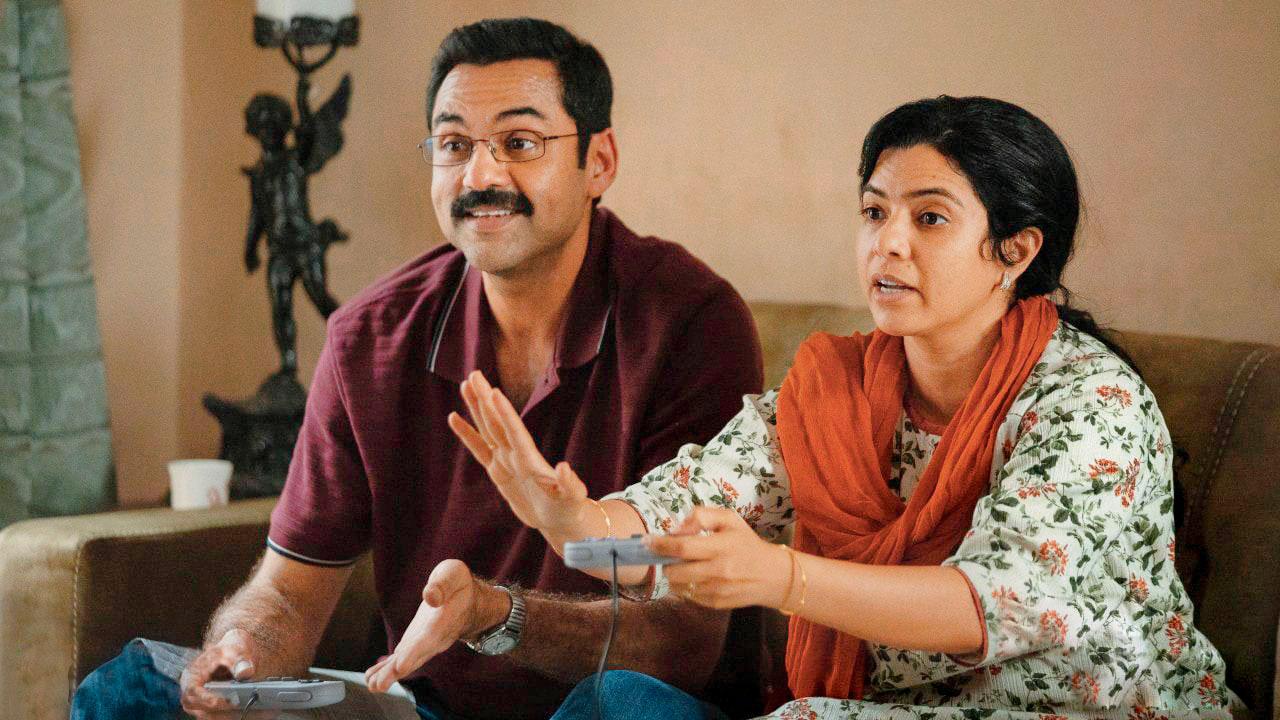
Abhay Deol and Rajshri Deshpande in Trial By Fire, which is based on the 1997 Uphaar cinema fire tragedy
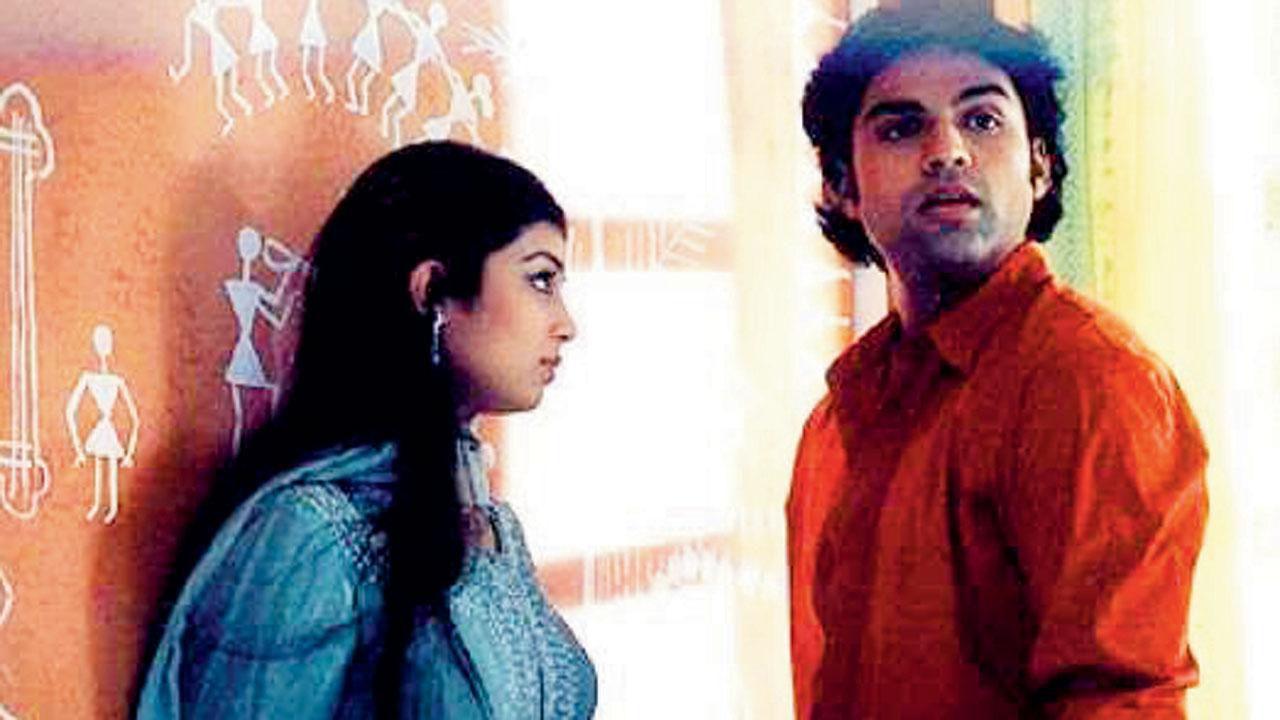
Still from Socha Na Tha (2005)
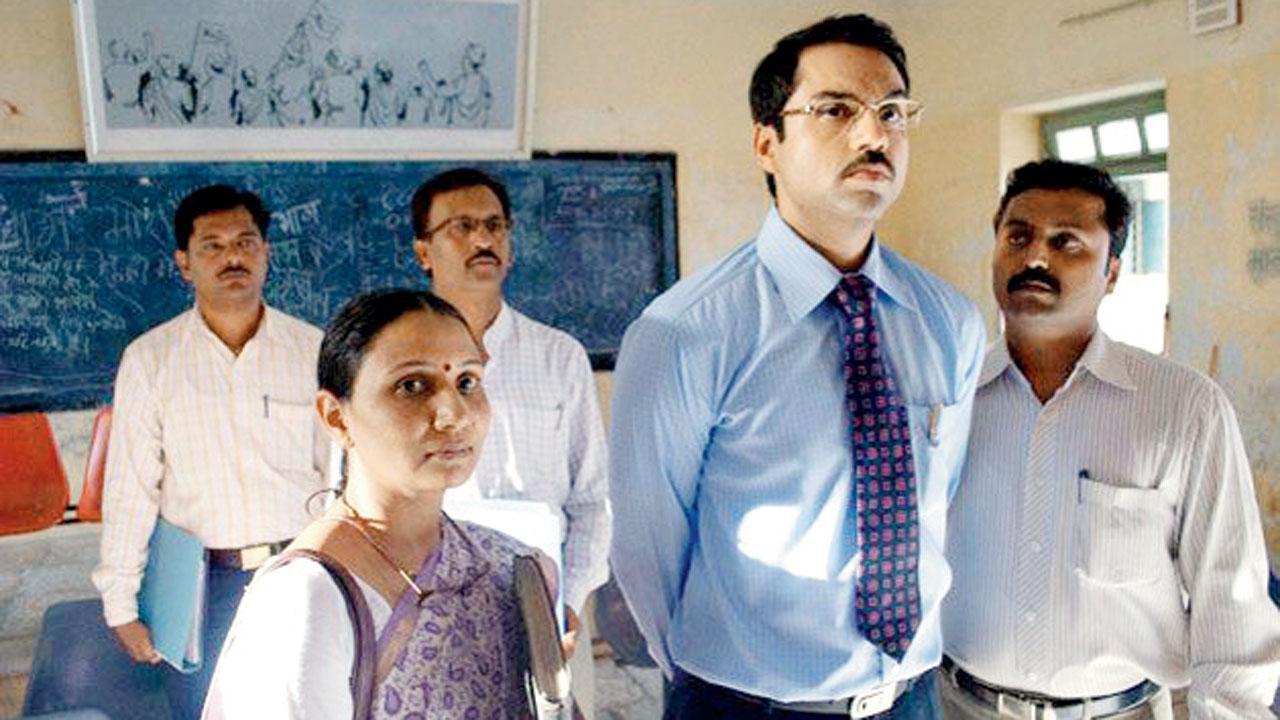
Shanghai (2012)
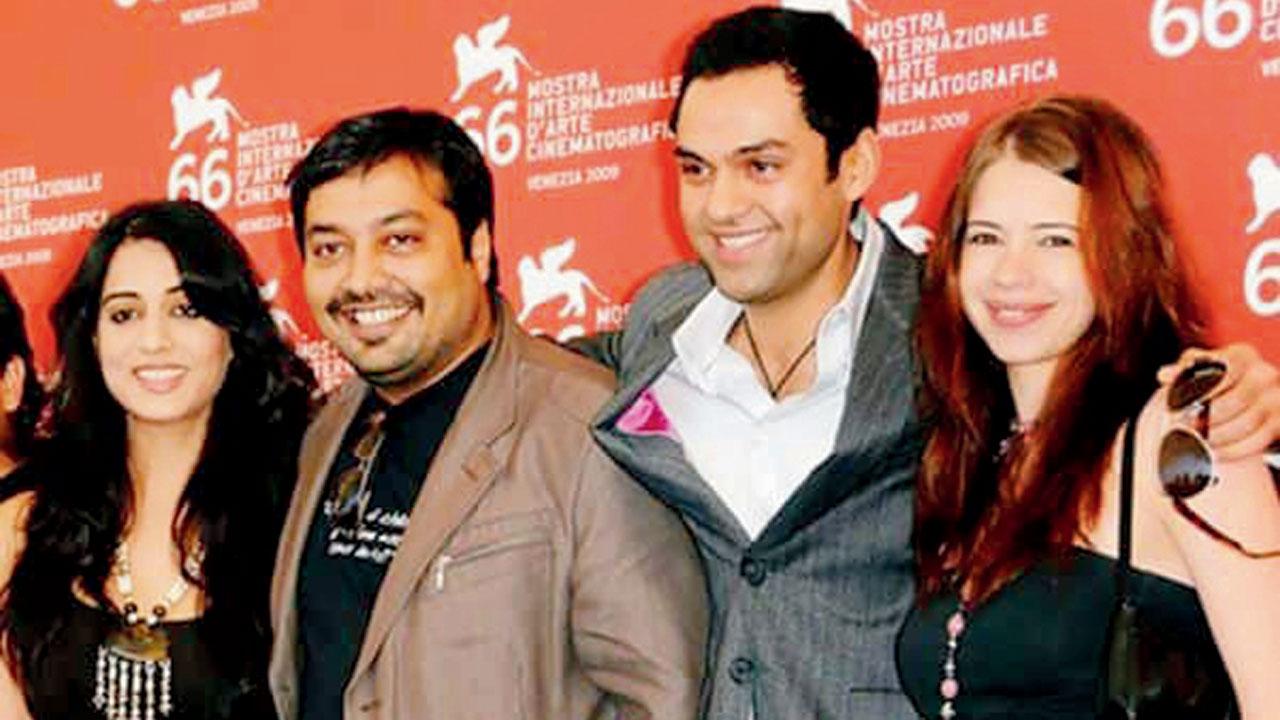
Abhay Deol with Anurag Kashyap, Kalki Koechlin, and Mahie Gill during the promotions of Dev D (2009)
Once upon a time in Banaras: The Kashyap siblings and their earliest engagements with cinema
11:26 PM
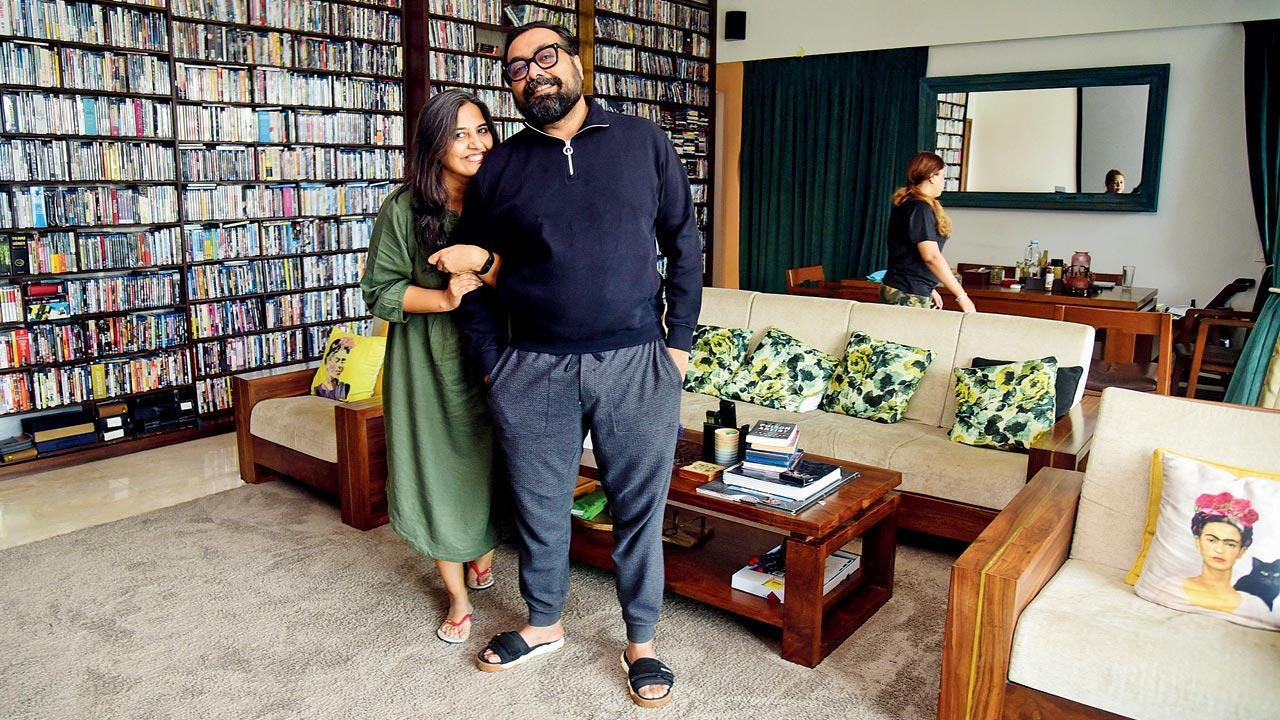
How do three of a family all become filmmakers? Kashyap siblings Anurag and Anubhuti didn’t watch movies when growing up. They played Cinema Cinema, and making up stories was their favourite pastime
Heena Khandelwal (MID-DAY; October 30, 2022)
When most children their age would play ghar-ghar, the Kashyap siblings played cinema-cinema. “Carrom board coins would become my audience, and board games would turn into a make-shift auditorium. Sometimes I would cut out film posters [to make it more realistic],” recalls Anurag Kashyap, the eldest of three siblings, over a phone call.
What about the plot? “A magazine called Sarita carried a review section called Chanchal Chaya. I would read the review, make up the story and they [Anubhuti and Abhinav] would think that I watched all the films,” he laughs. “He would create random stories… ones with shock value,” adds Anubhuti, the youngest of three siblings.
“He would also draw and turn them into comics and novellas. These would be circulated among all the cousins during the summer vacations.” “One was titled Mr Huge Ho Gaye Fuse,” pipes in her eldest brother. “I had also created a character called Wonder Man. This was back in the 80s, much before Marvel.”
All three siblings—writer, director and actor Abhinav is the middle child—had very little exposure to cinema, partly because their father, an engineer with the Uttar Pradesh energy department, would be posted in remote areas. As a result, the trio grew up in Obra and Anpara, small thermal power colonies near Banaras. Also, cinema was considered a bad influence.
“Besides an occasional Amitabh Bachchan movie on screen,” shares Anurag, “we watched most films on VCR, with pirated cassettes. In fact, the version of Mr India [1987] that we saw was without the climax.”
Anubhuti was the first among them to explore her creative side; she co-wrote a play in college and acted in it. “It also travelled to some festivals, but that was it,” she says, adding that her options for adulthood were simple: Either study and make a career for yourself, or get married.
“None of us actually aimed at getting into movies,” she says. “An MBA seemed like a good option [for me].” After graduation, Anubhuti worked in the corporate sector in Pune and Mumbai for a few years.
Meanwhile, Anurag enrolled in a zoology course at Hansraj College in Delhi, but was exposed to world cinema at a film festival. He moved to Mumbai and was soon writing scripts for television serials and films. “I was young and arrogant,” he recalls, “and turned down a lot of work that came my way, thinking this was not what I wanted to be known for.” But Abhinav, who was in Mumbai to prepare for an MBA degree, saw it as a great opportunity and became a mainstream scriptwriter.
However, it took several years for Anubhuti to quit her job. “I had reached that point where I knew that if I didn’t realign [with my creative side], it wouldn’t happen later,” she says. “So I took a sabbatical. Anurag [who was wrapping up No Smoking in 2007] recognized my talent much before I did. He subtly nudged and manipulated me into joining films.”
Anubhuti joined the team of researchers working on Bombay Velvet, which released much later in 2015. “It involved watching many films,” she laughs. Around the same time, scriptwriter Raj Kumar Gupta was making his directorial debut with Aamir (2008), and was looking for an assistant director. Anubhuti came on board. Later, she assisted Anurag on Dev.D (2009) and Gangs Of Wasseypur (2012).
“All the people who worked with me and went on to become directors—such as Neeraj Ghaywan and Vasan Bala—stayed with me only because of Anubhuti,” says Anurag. “I am chaotic, but she would handle me as well as them.”
After Gangs Of Wasseypur, Anubhuti stopped assisting and moved in the direction of short films. “The first was Let Stalk, my take on stalking, which never saw the light of day,” she says. “Then I wrote and directed Moi Marjaani [about a single mother and her encounter with love].”
It took almost a decade for Anubhuti to stake her claim to the spotlight. It came with the Ayushmann Khurrana-starrer Doctor G, which released earlier this month. The movie revolves around a male medical student stuck in the Gynaecology department.
“The script came to me in 2016, but the following three years saw a lot of ups and downs in the production company Junglee. We were just about to start shooting when the pandemic happened,” she says. Anubhuti also directed the web-series Afsos (2020).
Has Anurag been a support system in Bollywood? “He would have, had he known,” she confesses. “But I never shared any of it [struggles] with him.”
“We are the kind of siblings who hug each other a lot, but never really talk,” says Anurag. “Actually, it is not easy to talk with me around,” interjects Anubhuti, mentioning that during conversations, she is more of a listener than a talker. “I am the one who talks a lot,” explains Anurag. “She is usually worried about me, and wants updates about my life.”
Their style of cinema also differs from each other. While Anurag’s work is best described as dark, Anubhuti’s lens sees shades of grey; Abhinav makes mainstream potboilers. “Anubhuti is far from the cancel culture,” says Anurag. “She sees everyone as a work in progress, and believes everything is forgivable.” Similarly, their personalities are different too.
“While I grew up on world cinema,” says Anurag, “Anubhuti feeds off on real experiences. I have mad energy, while Anubhuti is calm.” “I am also very lazy,” interjects Anubhuti, adding that Anurag can write endlessly, but she needs a lot of pushing. “I am very independent, but I’m also happy doing nothing and I have no hurry in life.”
In an industry where nepotism is brought up every Friday, the Kashyap siblings wanted nothing to do with each other. “I have produced a lot of films,” says Anurag. “Anubhuti could have made a film [with me] long ago, but she wanted to make it on her own. Even Abhinav chartered his own path; he is very enterprising. The credit goes to our parents. We were all told that once we complete our education, we would have to make our own living. And we did.”
My audience was always watching my films illegally-Anurag Kashyap
8:28 AM

Monika Rawal Kukreja (HINDUSTAN TIMES; February 5, 2020)
With the kind of cinematic sensibilities he possesses — dark, deep and deranged — it doesn’t take much for Anurag Kashyap to stand out from his contemporaries. Take, for instance, his films Black Friday (2007), Dev D (2009), Gulaal (2009), Gangs of Wasseypur (2012), Raman Raghav 2.0 (2016) — the filmmaker has always explored a world that’s not too easy to relate to. In a candid conversation, the filmmaker talks about experimenting with the horror genre, collaborating with fellow filmmakers and more.
You’ve made some really dark films in the past. In what sense was Ghost Stories a different experience?
Ghost Stories gave me an opportunity to make horror that I always wanted to make. It was hard for me to explain to anyone how I look at horror, because the kind of horror that I really like are [films such as] The Witch (2015), Hereditary (2018), the more psychological ones. I love the genre now and after this anthology, I have a reference point that this is how I want to approach things.
Do you feel restricted when you’re teaming up with three different filmmakers? Is it tough to reach a consensus?
It’s not tough. I actually don’t think of it and look at it very differently in this sense. They’re very generous, there’s no pressure… nobody says that I have to adapt to what the other person feels or think should be done. All of us (Zoya Akhtar, Dibakar Banerjee, Karan Johar) are very different from each other. We’re just ourselves and that reflects in our stories, too.
What’s the future of anthology films?
This is ongoing, continuous, and consistent. This will always happen. This is something we look forward to. It’s like an annual holiday you take. Now that Ghost Stories is out, we’ll soon meet and decide the next subject. There’s so much excitement to come together and do this.
With a spurt of OTT platforms, do you feel that web and theatre can coexist?
They will, conveniently, because you’re talking to a whole new generation. For me, even before OTT platforms were launched, I was always in the web space. My audience was always downloading my films illegally and watching them (laughs). A few years ago, Gangs Of Wasseypur series was picked up and serialised in the US as a six-part series. That was my first connect with the web.
So, are you saying your films do better online than in cinemas?
I was always told that people watch my films. But at the box office, why do we just about break even? Why don’t we make humongous profits? Even films like Dev D – they’re quite a hit, but financially, they just crossed the budget and the investments, but don’t become like other massive blockbusters. That’s when I realised that I have an audience but it’s very working, educated audience that doesn’t line up on Fridays outside cinema. They want to watch movies at their own convenience, probably on holidays, weekends or late nights. So, OTT platforms have made my work available to them at their convenience. I still remember, after That Girl In Yellow Boots (2011) release on the web... the number of mails and messages I got on this film, I didn’t get them on its original release. And it’s not like twice or thrice the number; I’m talking 10 times the number. So, with that kind of visibility and accessibility, suddenly, my films got life back.
I haven’t done one naach gaana film, it’s a miracle that I exist in Bollywood-Richa Chadha
8:20 AM

Renuka Vyavahare (BOMBAY TIMES; January 22, 2020)
 Not someone to mince words, Richa Chadha says it like it is. Ahead of the release of her next, director Ashwiny Iyer Tiwari’s Panga, she talks to BT about her film career, relationship with actor Ali Fazal, casting director woes and why freedom of speech is important. Excerpts...
You feature in Panga alongside Kangana Ranaut. Given the fact that you have never been a conformist, your choice of this film is quite apt...
Not just me, I think it holds true for every independent, opinionated woman. When you voice your thoughts freely, even normal things are perceived as ‘yeh toh pangey le rahi hai.’
Don’t you think women are often conditioned to not take pangas, be it at home, workplace or society at large? Even putting across your point can sometimes be misconstrued as being rebellious...
We are not sheep. Sheep need shepherds. We should not be confused about who we are. Everybody is entitled to an opinion and we should be able to express it. This is what democracy is all about. If an issue is troubling your heart, you should be able to say it.
What is it like to work with people who may have contradicting political ideologies? Does it have any bearing on you as an actor?
Vivek Oberoi (her co-star in a web series) and I have discussed everything — from the Trump presidency to India to Brexit, and we never agree on things, but at least, I feel comfortable to have that discussion with him. It is perhaps because I have worked with him longer. Kangana and I, we never discussed politics. We just didn’t. Also, ours is a democracy. You work with people you may or may not agree with.
With the kind of diverse content that we are seeing in our movies and other platforms, isn’t it an exciting time for actors like you, who have always been experimental?
The boom in the digital space has helped a lot of actors. Shefali Shah, Neeraj Kabi, Amit Sial.. these actors are finding good work and their visibility makes me happy. They deserve to be stars in their own right. I have done a lot of supporting roles in my career and I have no issues with that. I didn’t come into the industry with the news of a big affair or a famous boyfriend that the media won’t stop talking about. I didn’t have a producer dad. I had to start somewhere, and I feel that I have done well for myself. I haven’t done one naach gaana film and it’s a miracle that I exist. I am glad to have proved a lot of people wrong.
While a lot is changing in the industry, stereotyping still happens. For instance, we have rarely seen you in glamorous roles. Do you agree?
Does stereotyping happen? Of course! The casting directors need to know that. I feel certain casting directors are more destructive to outsiders than producers. They have their prejudices. Barring Honey Trehan who insisted that I should be in Fukrey (2013), I have never been cast by a casting director in any of my films. Honey pushed me to do Fukrey when other casting directors told me not to do it as they wanted to plug their own people. Writer-filmmaker Kanu Behl auditioned me for Oye Lucky! Lucky Oye (2008). He was Dibakar Banerjee’s assistant director (AD) then. He saw me in a play and wanted to cast me. Filmmaker Vasan Bala auditioned me for Dev D (2009) through someone’s reference. He was also an AD with Anurag Kashyap. From that audition, I got Gangs Of Wasseypur (2012). As far as being glamorous is concerned, I’ll be that off the screen. That’s my motto. Because on screen toh mar jayenge na log. Saavli ladki? Glamorous?
Your first attempt at stand-up comedy was well received. It also revealed that you are good with imitating people’s voices. Many wondered why you haven’t been approached for voice-over opportunities yet?
I did stand-up for fun as I wanted to do something that was scary. As far as voiceover is concerned, again, that’s the problem of casting directors and how myopic the industry is. I wonder why they haven’t seen that side of me. Recently, I was dancing at a party and some film colleagues asked me, ‘Wow, you can dance! Since you did Fukrey, we weren’t sure if you could.’ People still come to me and ask if I can speak English as I did Gangs Of Wasseypur. I don’t care about what these people say anymore.
Your actor-boyfriend Ali Fazal was in the audience for your stand-up show. Was it comforting or unnerving?
Ali is a sweetheart. He was expected to reach at 8 pm for the show, as I was to perform at 8.30. He showed up at 6.30 with coffee and cookies for everyone. He is extremely supportive. I couldn’t have asked for a better man in my life. Our relationship is a great creative partnership. No one that sees us together feels like it’s a mismatch. It wasn’t unnerving to have him in the audience at all. My friend, Ali and my brother Pranav were all sitting together. I made jokes about my family, too. It was nice that people liked it and were pleasantly surprised by my comic side.
You said somewhere that it was a miracle that Ali and you found love in each other...
I said it’s a miracle because it’s rare to find like-minded people who share certain core values and have similar interests like poetry, music, films and literature. Ali is also progressive and liberal. To find someone like that in your industry is rare. Also, we never expected to end up together. It happened organically.
Have the two of you thought about marriage?
We don’t have time. If we were to talk about marriage, it will be like... I don’t have dates in March, May is too hot, we are shooting a film in June, it rains too much in July... It will become like a line production job. We are waiting and chilling, and we are in a happy space.
Ali is working with Gal Gadot. Was there even a pinch of jealousy to see your man working with one of the hottest women in the world?
Not at all. That film has such a great cast. It has Armie Hammer and he is also hot. Ali and I never get jealous about these things. We are partners who are excited about each other’s careers. I am so happy that he is getting such good work abroad. People are seeing what an incredible actor he is.
As an industry, aren’t we gradually overcoming our bias for fair skin?
Why don’t you ask Bhumi (Pednekar) and me? Yes, the situation is better now, as we do have duskier actresses, but just observe this. An actress who gets launched at 20, look at her skin tone at 34. It’s completely different. What happened there?

Despite nod for TV, The Voice contestant Piyush Ambhore's track pulled down from YouTube due to 'objectionable content'
8:02 AM

Sonil Dedhia (MID-DAY; June 20, 2019)
Even as filmmakers and artistes hail the freedom of expression that online platforms offer owing to its censorship- free stance, The Voice (2015) contestant and singer Piyush Ambhore had an unexpected run-in with YouTube.
Three days after its release last week, the video of his debut single, Tujhe Jaana Hai Toh Jaa, was pulled down from the streaming platform owing to its "objectionable content". Ambhore says the bone of contention was a scene that sees the protagonist indulging in substance abuse. "It's not the first time that a video has a snorting sequence," retorts the singer, pointing out how similar scenes have remained unscathed in the past.
"A recent example is Kabir Singh. Udta Punjab [2016] and Dev D [2009] have also depicted similar stuff. This is my first single and it is disheartening to get such a treatment." The number, Ambhore claims, had been given a clean chit by the Central Board of Film Certification for airing on television.
"The officials at Zee Music were shocked [at the development] as the video had got a U/A certificate from the Censor Board. The label had got the CBFC nod as it was planning to air the song on TV channels. When they questioned YouTube India, all they got was lame excuses."
However, he is thankful to the label for its unflinching support to his first creation. "They sent the video back to the editing table. Now, the objectionable portions have been blurred, and we have put up a disclaimer as well. We re-released the video three days ago."
Manmarziyaan is my take on a potboiler-Anurag Kashyap
8:21 AM
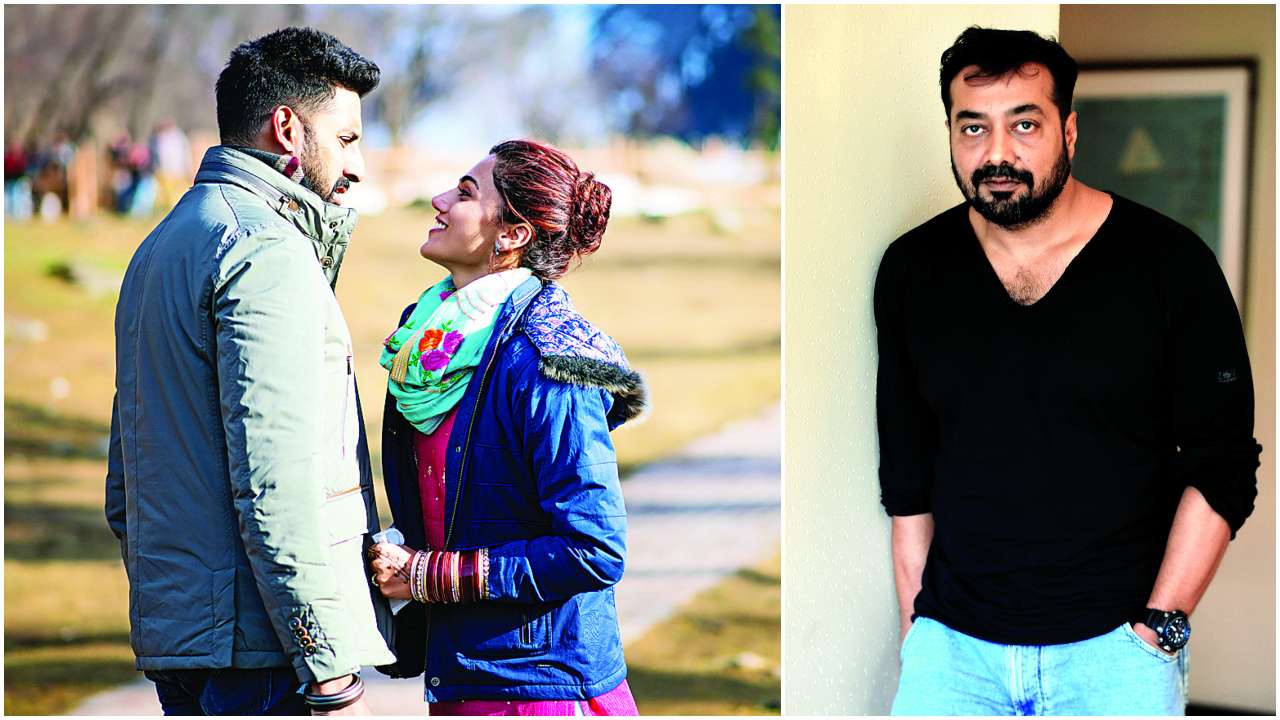
Rinky Kumar (DNA; September 4, 2018)
Anurag Kashyap is probably in one of the best phases of his career. His web series Sacred Games as well as one of the shorts, which he has helmed as part of the anthology Lust Stories, have got positive reviews. His performance as the antagonist in the recent Tamil thriller Imaikkaa Nodigal has been appreciated. The 45-year-old’s last directorial stint Mukkabaaz (2017) struck a chord with the audience for showcasing the trials and tribulations of a sportsman, who dares to take on the system. Now, the maverick filmmaker is gearing up for the release of his forthcoming movie Manmarziyaan, starring Abhishek Bachchan, Taapsee Pannu and Vicky Kaushal. As we settle down for a chat, Anurag says, “My Tamil film is getting good reviews. I’m only getting acting offers.”
However, in the same breath he adds, “I hate acting. I only want to direct. Someone had once told me, ‘Anurag, tu acting karega na, toh tu aur tera producer dono paise kamayenge. Tu direct karta hain, phir bhi paise nahin kamata.’ On that note, we begin our conversation and he tells us how cinema gives him a better perspective about life and why, in reality, he is a far cry from the aggressive filmmaker that he is made out to be. Excerpts…
What appealed to you about Manmarziyaan?
The character of Rumi played by Taapsee Pannu. We like love stories and aspire to have one in our lives. But I don’t believe most of that. Manmarziyaan is something that I believe in because it shows how people behave in love and how indecisive they are.
So, what’s your idea of romance?
The most amazing thing is the quest for it. Love isn’t there, we romance the idea of it. And everything else is included in that journey.
Dev D, which released in 2009, was a romantic musical. Your forthcoming film is also being termed as one. So, was it like homecoming for you?
Both the movies are different from each other. If I would say in filmmaker Neeraj Ghaywan’s words, ‘That was Dev’s story, this is Paro’s story.’ But I think it’s more than that. I don’t like to define things. We simplify things for ourselves by putting them in words that are understandable. I like things to be complex. And I would want people to talk about it rather than define it in one word.
All the characters in your films are quite angst-ridden. Do they come from a deeply personal space?
It’s not like that. I make crime films but that doesn’t mean I commit crime. I’m actually a peaceful person. I’m more peaceful as compared to other people who make lovely movies.
This is your second collaboration with Aanand L Rai after Mukkabaaz. How was the experience as both of you have different sensibilities?
It’s been good. I wanted to make Mukkabaaz, he wanted to make Manmarziyaan. We read each other’s scripts and decided let’s do both. As for our sensibilities, I never think about them. I connect with Aanand and always tell him whether I like his films or not. Aanand L Rai has been appreciative of my work. I enjoy a massive support system in the industry among the directors. I feel fearless while making my films because I know that tomorrow if no studio or producer will stand by me, the directors will. I get a great sense of security from Aanand. I know I will be allowed to be myself as a creative person while working with him because he gives me immense breathing space. And that gives me a lot more confidence to explore things because Manmarziyaan was his idea. Kanika Dhillon wrote it, it went to two sets of people before it came to me. I was clear that I would give it my own sensibility and interpretation. So, I changed the cast first and then the music.
Music plays a pivotal role in almost all your films…
My love for music comes from my inability to play it. You always desire what you don’t have. In the pursuit of becoming a Tansen, I became a Kansen (laughs). My thinking is that if you keep saying ‘no’ to what you don’t like, you are eventually left with what you like. That’s my process.
You also tend to improvise a lot on the sets…
I can’t deal with actors who come too prepared. They have to be in the moment. It’s not their job to keep in mind the graph of their characters.
Do you think it enhances their performance?
I don’t know, but that’s the way I work. I just want them to be believable. I want to do what I believe in, if I don’t, then it’s pointless.
In one of his interviews, Aanand mentioned that while working on this film, he felt you were much calmer...
Aanand knows me because we would meet at public events. He knew me as a filmmaker through my movies, blogs and interviews. I’ve been the same person all my life. Even when I made darker films, I was still the same person. Anyone who works with me for the first time is initially shocked because it’s the perception of me that has been with them.
On the first day of shoot, even Abhishek Bachchan was surprised to see you jumping and dancing on the set…
I was a writer for Yuva (2004). So, he and I didn’t interact much. I’ve always been an aloof person. I don’t get out of my room except when I’ve to work. But if you talk to people with whom I have worked on the first film, they will tell you I dance on the set, I never scream. Abhishek told me, ‘I expected you to sit in a corner with light falling on your brooding face’ and I told him, ‘I don’t brood.’ When I do, no one sees me because I am in my room. People have a perception of me that has been built by the media. I’m happy in my own space. Everyone thinks I’m super aggressive as I say things bluntly.
But you didn’t love his performance in Yuva..
I wrote in my blog that it could have been better. And I think Abhishek took it hard because that was a performance that everyone appreciated. He thought a writer usually doesn’t say such things. We didn’t talk to each other for 10-15 years.
So, how was it working with him now?
It was lovely; today, we have become good friends. You know when you work with someone, you think they have got your back. I felt the same with him.
You didn’t have reservations before collaborating with him?
I had reservations before I met him. But once I did, they disappeared.
What is it that drives you about cinema?
The possibility of exploring things and telling stories, baaki kuch nahin (smiles). I articulate through cinema. It’s also my process of understanding things. When I am going through something in life or something is affecting me, I put it in my film and figure out what it means in the process.
Do you enjoy acting?
Not at all…
But you usually get good reviews for your performances…
That’s because I’m a good actor. However, I like acting on stage. Recently, I met Makarand Deshpande who has directed me in his plays and he asked me, ‘Why don’t you act?’ I told him I like to do so on stage as theatre is an actor’s medium, but cinema is a filmmaker’s medium. I’m very selfish, I want it to be my medium.
How do you look back at your journey as a filmmaker?
I’m very happy. I’ve had 25 good years of filmmaking. I’ve done more than 100 films as a writer, director, producer. I came here to make one movie.
Will we ever see you helm a commercial potboiler?
Manmarziyaan is my take on a potboiler.
For me, numbers are the only parameter of success-Taapsee Pannu
7:58 AM

Neha Maheshwri (BOMBAY TIMES; September 3, 2018)
She comes across a bubbly girl next door, who can transform into a hard-as-nails woman in an instant. In a way, Taapsee Pannu’s choice of films is a lot like her — a mix of lighthearted commercial potboilers like Judwaa 2 and intense, issue-based movies like Pink. And now, as the actress gears up for the release of her next, Manmarziyaan, she talks to BT about how much she believes in box-office numbers, acting in an Anurag Kashyap film and her love-hate relationship with trolls. Excerpts...
Manmarziyaan was announced in November 2016, but it took two years to complete the film. With a new cast and Anurag Kashyap directing it, expectations have risen. As one of the main characters in the film, are you feeling the pressure?
I suffer from anxiety, but it’s healthy. If I stop feeling anxious, it would mean that something is wrong. In fact, l feel the pressure while selecting a film and not when it’s releasing. I love the pressure of expectations, as I have worked really hard to reach this stage. It keeps me on my toes and doesn’t allow me to take things for granted.
Do you bother about the number game?
It has always been about the number game for me. I won’t even mince words in admitting that I don’t want anything except box-office success. For me, numbers are the only parameter for success, as that means that people have seen my film. Of course, I will read what critics have to say about films like Pink and Naam Shabana, but not about a film like Judwaa 2. A film like that is not made for them, it’s only made for numbers and entertainment.
How was the experience of collaborating with Anurag Kashyap, who is mostly known for sketching dark characters?
It’s been a funny experience. People are either hardcore Anurag Kashyap fans or they don’t follow his cinema at all. I am somewhere in between. I loved Dev D and Gangs Of Wasseypur, even though the underworld is not my zone. I have liked some of his films, and totally disliked others. I would often tell him, ‘Sir, kya soch rahe the ye banane se pehle? Ye fast forward karke bhi nahi dekh sakti main.’ I think it’s my honesty that made Anurag and me click so well. So, don’t be surprised if you see us do more work together.
In Marmarziyaan, you play Rumi, a carefree girl who doesn’t hold back when it comes to speaking her mind. In real life, too, you are like that...
Anurag believes that I am Rumi, though I don’t agree completely. That’s why he didn’t give me the script till two days before the shoot. Finally, I had to threaten him that if he didn’t give me the script, I wouldn’t show up on the set. Anurag didn’t change a single thing about me — from my hair texture to my body language. While there may be similarities, I am not someone who shouts and screams like Rumi. When I am angry, I become cold, sarcastic and mean. I can rip the person apart with my words. However, I will never abuse. In fact, many people are shocked when I tell them that I don’t abuse. That’s probably because of my image. I even told Anurag that no abuses will be hurled on screen, unlike what is seen in most of his films. I will only star in films that I can watch as an audience. Mujhe nahi prove karna ki main gory stuff kar sakti hoon.
 Like most of your characters on screen, you are vocal on social media too. While you don’t hold back from thrashing trolls, does it affect you as a person?
They don’t know the real me, which is why they are trolling me, otherwise they wouldn’t dare. In the beginning, I responded to a few people. Then, my father told me not to talk or reply to trolls, as he didn’t want me to stoop down to their level. Somebody told me that as you become bigger, you start affecting people. So, they pull you down. Honestly, trolls don’t affect me anymore. In fact, I want to use social media for the benefit of my genuine followers — I pick up one or two tweets and use my sense of humour to entertain them. The trolls don’t realise that they are actually helping me become more popular and in return, I am helping them grab a celebrity’s attention. I think my trolls and I are very good friends. There is an equation going on here (laughs!).
You have almost become synonymous with films that highlight pertinent issues. So, a huge section of the audience expects you to have an opinion on every pressing matter...
Well, people who have brains will understand that I am an actor and my way of voicing an opinion is through my films. I am not a social activist or a politician. I will not go on the terrace and shout ki aaj ka mera agenda ye hai. I will choose some films, which address some issues, while others will be pure entertainers. When I am doing films like Pink and Mulk, I am asked questions regarding the issues they are based on, and when I answer those questions, they say, ‘Film release ho rahi hai, isliye ye ab bol rahi hai.’
Do you feel that people can’t imagine you in films that are not issue-based, while you must be wanting a healthy mix of intense roles and commercial potboilers...
No, they actually can. They still remember me for Judwaa 2. They may love me or hate me for doing it, but they do remember the film. Having said that, I also know the audience believe that if I do a film, it will have something to talk about. I am happy that they have that notion about me. At least, they are not coming to watch my films leaving their brains at home. My movies may be issuebased, but they never fall in the bracket of indie, art or typical festival films. Though my movies might seem unconventional, they will be commercial in their own way. Manmarziyaan is not hard-hitting or a mudda-based film, but it will make you feel strongly about love. However, I also have to do films like Judwaa 2, to change gears or people will expect only hardhitting films from me. I do a film like that to clear the palette. It’s like sorbet. And I hope films like Judwaa 2 come my way, as I have to struggle to get them. The problem is, there is a long queue of girls, who are doing such films, brilliantly. So, why should the makers take me instead? For them, it’s about taking the risk or thinking out of the box.

Subscribe to:
Posts (Atom)