Showing posts with label Bajirao Mastani. Show all posts
Showing posts with label Bajirao Mastani. Show all posts
Mujtaba Aziz Naza reveals his song Dongri Ke Sultan, shot on a grand scale, has been edited out of Dhurandhar 2
4:32 PM

Singer Mujtaba Aziz Naza reveals he recorded and shot the track Dongri Ke Sultan for Dhurandhar 2; is clueless why it was edited out
Mohar Basu, Priyanka Sharma (MID-DAY; March 24, 2026)
An almost four-hour runtime has enabled filmmaker Aditya Dhar to tell an expansive story in Dhurandhar The Revenge. But it looks like the Ranveer Singh-starrer has arrived in theatres with a trim. Dongri Ke Sultan, a song that was recorded by singer Mujtaba Aziz Naza and shot on a grand scale in South Mumbai last year, has gone missing from the action drama’s final cut.
When mid-day reached out to Naza, he shared that the song was conceived of as part of a celebratory sequence where Singh’s character Hamza returns to his den after winning the local elections. “We had shot three songs — Dongri Ke Sultan, and [the cover of] Jumma Chumma De De, and Apni Toh Jaise Taise. The set-up was elaborate — Ranveer and Rakesh Bedi were shown in a car, while there was a band on a truck performing. We shot the song over a day,” recalled the singer.
The sequence itself was mounted on a lavish scale. “That scene was actually when Ranveer was coming back from winning the election. There was a lot of fun and a lot of audience. There were at least 10 cars. We shot this in South Mumbai one day last Ramadan (2025),” he recalls.
He added, “My whole group was there. My brother Munir was there. It was an amazing set-up. We had a band on a truck, drummers in front of us, and a car ahead with Ranveer and Rakesh Bedi. It was an amazing shoot.”
The shoot, which lasted an entire day, was captured extensively. “We shot it the whole day. We recorded it live. He set up cameras on the buildings as well, and on the ground floor too. A couple of people were shooting from the buildings, and Aditya repeatedly requested the residents to not shoot from their mobile phones. He had a very big team.”
Naza is full of praise for director Aditya Dhar’s involvement in shaping the performance. “Aditya Dhar was very happy. He suggested the songs. First we recorded Dongri Ke Sultan, and then he suggested the other songs. He said, ‘Ustad ji, you sang this song a little more swingy. You don’t have to worry about the way you sing.’ He asked me to play my instrument, my bongo, a little more swingy. He shot all the scenes.”
Despite the scale and effort, the sequence and the three songs didn’t make it to the film. Was there a rights issue since T-Series acquired the audio rights of Dhurandhar The Revenge? In contrast, Dhurandhar’s (2025) music rights rested with Saregama, which allowed it access to a wide archival library. Naaz shared, “I don’t know why we had to remove them. The [makers] have edited the whole thing out. Fan clubs reached out to me, asking about the song.”
However, Naza retains the rights to the song and is now planning to release it independently. “My song was in it but could not come. So I decided that I will make an official video of it. Because it had only audio and not video. We are working on its video as well, and we are making a very exclusive video. Very soon we are going to launch the official video of Dongri Ke Sultan.”
For the singer, the experience of working on Dhurandhar 2 still holds immense value. “It is a big thing for me to go with a big movie and big artists. For me, it is an experience. And with Ranveer Singh, he has been very lucky for me because I have already had two films with him - Bajirao Mastani and Padmaavat. I have already got a lot of love from people. Working with Aditya Dhar was a very happy memory for me. I would like to thank him for the movie.”
Khushboo Sundar on losing Bajirao Mastani to Tanvi Azmi: "I was told I don't look old enough for Ranveer Singh's mother"
11:02 AM

From regretting losing out on a role in Bajirao Mastani to auditioning for parts, Khushboo Sundar discusses juggling Hindi and Tamil films
Priyanka Sharma (MID-DAY; March 7, 2025)
South star Khushboo Sundar returned to Hindi cinema after 22 years with director Anil Sharma’s Vanvaas (2024). It won’t be too long before we see her again as she is doing another Bollywood film. Keen to continue building a diverse filmography, the actor mentions that she rejects more movies than she accepts, across languages. Sometimes, it’s the reverse as well. “There are times when I am rejected. It’s a part of the process,” says the senior actor, who has had a 45-year career spanning Tamil, Hindi, Telugu, Kannada and Malayalam films.
If things had gone as per her wishes, Sundar would have featured as Ranveer Singh’s mother in Sanjay Leela Bhansali’s Bajirao Mastani (2015). But she recalls that her audition didn’t make the cut, and Tanvi Azmi bagged the role. “My girls keep cursing me for [losing out on] it,” she laughs, before adding, “It was a brilliant role. But they said I didn’t fit it. Tanvi was outstanding in it and won the National Award as well. When the casting director makes a choice, s/he is clear about it. I remember they had said that I didn’t look negative, and old enough to play Ranveer’s mother.”
Besides being a politician, Sundar has been among the leading stars in the Tamil film industry. While many may believe that stars and auditions don’t go hand-in-hand, she harbours no such misguided notions. “I don’t look at myself as a star. My daughter has turned producer, and I’m starring in her maiden production. She won’t cast me if she thinks I don’t fit the role. You can’t say, ‘I won’t audition because I’m a star’. Even Meryl Streep and Julia Roberts audition for parts. So, why not us?”
When Deewani Mastani released, Remo Dsouza credited me for my work in front Sanjay Leela Bhansali-Kruti Mahesh
10:42 AM

Akash Bhatnagar (HINDUSTAN TIMES; July 21, 2024)
National Award-winning choreographer Kruti Mahesh is renowned in the industry, but her dance career began with the reality TV show Dance India Dance in 2009. While the show helped her make a name for herself, it was also where she met her mentor, choreographer Remo DSouza. On Guru Purnima, she looks back on the way DSouza has influenced her life and career as a dancer and choreographer.
“From judge to mentor and a guru to family, he is someone I can call at anytime for anything and he will be there,” Mahesh tells us. The choreographer is all compliments about her mentor and says, “Remo sir is the calmest person I have seen on a set. He keeps everyone happy and lively while teaching us that the creative process should always be enjoyed.”
Mahesh also recalls assisting him on Pinga and Deewani Mastani (Bajirao Mastani, 2015), an experience that she holds dear. “He gives you creative space. At times, he would give me the mic and tell me to give the count. I have always been very shy, be it in front of cameras or on a mic. He believed in me a lot more than I did in myself,” she shares, adding, “He would know where I wanted the camera [while shooting the dance sequences for the film] and everything worked in tandem. When Deewani Mastani released, he credited me for my work in front of everyone, including Sanjay (Leela Bhansali, filmmaker) sir; that adds a lot to any choreographer’s success. He has the biggest heart of anyone I know.”
Mahesh also reveals that DSouza was among the first few to find out about her National Award win for Ghoomar (Padmaavat, 2018). “I was in rehearsal when I got the news. Remo sir was the second person I called to share the news with, after my mother. He was so excited for me, even more than I was. My achievements will never be complete without my guru,” the choreographer ends.
Nobody better than Ranveer Singh to play Chhatrapati Shivaji Maharaj-Sandeep Singh
9:49 AM

Producer-turned-director Sandeep draws wish-list for Shivaji biopic; keen to cast Madhuri as Jijabai
Upala KBR (MID-DAY; February 19, 2024)
Last week, days before Chhatrapati Shivaji Maharaj’s birth anniversary, Sandeep Singh announced his next directorial venture, The Pride Of Bharat - Chhatrapati Shivaji Maharaj. Through the biopic, he wants to take the story of the famed Maratha warrior king across the country.
“People don’t know [enough] about Shivaji, even though they may have heard of him. This kind of historical drama needs a lot of research,” starts the producer-turned-director, who plans to mount the project on a lavish scale and release it in Hindi, Tamil, Telugu, Kannada, Malayalam and Marathi.
The obvious question is— whom does he wish to cast in the titular role? “My first choice would be Ranveer Singh as I have worked with him in Bajirao Mastani [2015] and Ram Leela [2013]. When nobody was ready to shave their head for Bajirao, he went ahead and did it. That is the dedication we require to play Shivaji Maharaj. There’s nobody better than him to play Shivaji. He was born and brought up in Mumbai, and knows Marathi too.”
The director, who is fine-tuning the script, will approach the actor after he is ready. “I’ll go to him only with a bound script. I’m sure Ranveer will say yes. Who will say no to play the legendary hero?”
The Maratha king’s mother Jijabai was known to have influenced his values and ideals. The film, which will roll by the year-end, will shed light on her too.
“I will ensure that every part of his life story is captured, including how he started going to war at the age of 13 and his sacrifices. If Sridevi was alive, I would’ve requested her to play Jijabai. But now, my ideal choice is Madhuri Dixit-Nene. She is a powerful actor with a strong persona and vast experience.”
Bajirao Mastani is the only film in my entire career that I wish I had got-Addinath Kothare
8:25 AM

Vinay MR Mishra (HINDUSTAN TIMES; October 17, 2022)
Before making his Bollywood debut in director Kabir Khan’s 2021 venture ’83, actor Addinath Kothare had a string of opportunities that didn’t work out. In a recent chat, Kothare mentions filmmaker Sanjay Leela Bhansali’s Bajirao Mastani (2015) as one of the opportunities that didn’t work in his favour. The actor auditioned for the film, but lost the part to actor Vaibhav Tatwawadi, a fellow contemporary from the Marathi film industry and a “dear friend,” who eventually played Chimaji Appa in the Ranveer Singh and Deepika Padukone-starrer.
“Vaibhav and I were the final two actors shortlisted for the part. I’ve been a massive Bhansali fan, so getting to work with him was something that I was genuinely looking forward to. However, Vaibhav got that part and I was heartbroken (laughs). It was indeed a bummer. It is the only film in my entire career that I wish I had got,” Kothare shares.
Interestingly, Bajirao Mastani had Singh in the lead, which Kothare did not get, but he did make his Bollywood debut alongside Singh anyway, courtesy of ’83. “That was sheer coincidence. I never really thought about this. I guess I was destined to make my Hindi debut with him. It was written [in the stars],” the 38-year-old quips.
While the 2015 film didn’t work out for Kothare, it took almost seven years for Bhansali to not only take notice of the actor, but also laud him for his performance in the costume drama Chandramukhi. “I received a message from him. He really loved the film. He said this movie has put the Marathi film industry on a certain pedestal. Hopefully, I’ll soon get to work with him,” Kothare ends.
It’s imperative that big screen films have a huge scale-Ranveer Singh
8:14 AM

Rachana Dubey (BOMBAY TIMES; October 1, 2022)
At the recently concluded FICCI Frames Fast Forward 2022, Ranveer Singh engaged in a detailed conversation which revolved around his learnings during the pandemic, how we all need to adapt to the changing content landscape and the way his wife, Deepika Padukone, has influenced him as an artiste. The actor spoke from his heart to a packed room full of individuals from different walks of the entertainment world, dignitaries and foreign delegates. Excerpts:
‘I HOPE WE CAN ADAPT AND DELIVER CONTENT THAT BRINGS PEOPLE BACK TO THEATRES’
On a personal level, the pandemic has changed me and deeply affected me, as it did to everyone in the world. The Indian entertainment sphere has been rapidly accelerated to where the western entertainment spheres are now. The gulf between the big-screen and at-home entertainment has become distinct, evident from the films that have been released in the past year. It is imperative that big screen films are made on a huge scale and are a community-watching experience. The community viewing experience is as important as enjoying a movie or a show all by oneself at home.
The rise of new verticals is evident. It’s all one giant landscape of entertainment now. The average Indian consumer has access to every kind of content at the click of a button, so there is an extra onus on us to look at the content we are creating. I am committed to big-screen cinema and excited about my releases in the forthcoming months. Yes, it is alarming that we have 12,000 cinemas shrinking to 8,000, but we are the people who are committed to the cause of big screen entertainment, and I hope we can adapt and deliver content that brings people back to theatres. After the pandemic, when I went back to cinemas, I felt like I had missed this experience.
As an entertainer, I want to contribute to things that make people laugh and entertain them. My next offering, Cirkus, is the kind of film you expect Rohit Shetty to deliver, and you go into a theatre seeking that. I have consciously chosen to be a part of this, and you have to give something to the audience that justifies their time and money.
‘THE HUNGER TO DO MORE AND DO BETTER IS STILL BLAZING’
I couldn’t have dreamed of being here. It’s almost every day that I wake up with gratitude, and I can hardly believe I am in this position where I am working with the finest filmmakers and working on the biggest offerings. I can’t believe it has happened to me. I feel like I am dreaming. I think 12 years usually is long enough for people to believe and for things to sink in, but it hasn’t sunk in for me. I am just as hungry as I was when I started. The hunger to do more and do better is still blazing.
‘DEEPIKA PADUKONE IS ONE OF THE GREATEST BLESSINGS THAT I AM GRATEFUL TO HAVE’
Deepika is a consummate professional with exemplary habits. I learn a lot from her. It’s been a while since we acted together. Bajirao Mastani is where we had a large number of scenes together. People liked the little portion we had in '83. Since we shot Bajirao Mastani, there has been immense personal growth, and as people and actors, we grew and navigated our spaces as actors.
The kind of credibility she brings to her work is amazing. For someone who has dealt with anxiety and mental health issues, to performher part in Gehraiyaan with that excellence is something. It is authentic, has finesse and is honest. I admire her craft and want to work with her again.
On a personal level, her art of creating work-life balance and sustainable life choices with authenticity is what I love. It has been a decade since we started dating. And she is one of the greatest blessings that I am grateful to have.
‘TODAY, ACTORS HAVE MORE EMPLOYMENT OPPORTUNITIES’
I think this is the best time to work in Indian entertainment. I was talking to aspiring actors once, and I told them that this time is very different from when I started. Things were insulated then and the opportunities were fewer. Today, you have OTT platforms and films and so many employment chances. Back then, we didn’t have OTT channels and we would have to network, going to offices and meeting people with physical copies of our pictures. That’s how we got our foot into the door. When asked for advice, I just say that my story and time were different and your path and journey to get your foot into the door will be different, but I will encourage you to take the plunge.
My personal favourite Filmfare Award hosts have been Shah Rukh Khan and Saif Ali Khan-Ranveer Singh
8:41 AM
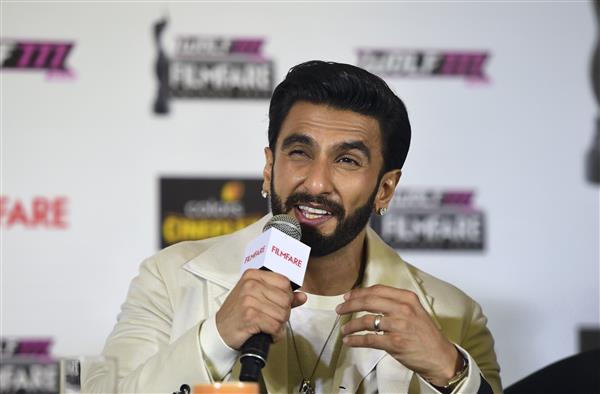
The 67th Wolf 777news Filmfare Awards 2022 were announced at an event in Mumbai where the actor was the guest of honour
Renuka Vyavahare (BOMBAY TIMES; July 30, 2022)
The 67th Wolf 777news Filmfare Awards 2022 will be held in full glory with a live onground show in Mumbai. Taking forward the six-decade-long legacy, the coveted Black Lady will recognize the best in Hindi cinema for the year 2021 at a star-studded event that will celebrate the artistic and technical brilliance of Hindi cinema. The event will be hosted by Bollywood buddies, Ranveer Singh and Arjun Kapoor, at the Jio World Convention Centre, BKC in Mumbai, on August 30. The awards night will see performances by Kartik Aaryan, Vicky Kaushal, Kiara Advani, and Disha Patani to name a few. Bollywood fans can enjoy the show live amidst the stars by buying tickets on BookMyShow.
Bollywood’s powerhouse performer Ranveer Singh was the guest of honour at the press conference in Mumbai on Thursday to make the announcement. The actor is a recipient of four Filmfare Awards so far.
Ranveer said, “It’s an honour to represent and host Filmfare Awards. The legacy of the Black Lady is an integral part of the entertainment industry for the last six decades. This year I am extremely excited to host the show in front of a live audience. The energy in the house will be unprecedented. The team behind the show are some of the best names in the business, and together it is our endeavour to create a magical and memorable evening for our beloved audience and fraternity.”
Calling himself a ‘filmy bachcha, ’90s baby’, the actor shared some lovely anecdotes in his usual no holds barred style. Ranveer, who won his first Filmfare Award for Band Baaja Baaraat (2010), said, “I’ve won the Filmfare Award a few times and some of my most cherished moments in life have been on those awards nights. When I won the Best Actor for Bajirao Mastani (2015), my idol, the one who inspired me to be an actor, Mr Amitabh Bachchan was sitting in the front row. Madhuri Dixit Nene presented the award to me for Gully Boy (2019) and that was a moment of a lifetime for me. When Deepika won the Best Actress Award for Piku (2015), to be there with our families was very special for us. There is some magic around Filmfare, so I am thrilled to be hosting it this year. My personal favourite Filmfare Award hosts have been Shah Rukh Khan and Saif Ali Khan. I have my dearest baba Arjun Kapoor to co-host with me this time. I am looking forward to celebrating excellence in Hindi films.”
Sudan or Tunisia, wherever I go, I’m amazed at Indian films’ impact-Ranveer Singh
8:34 AM

The actor spoke about the global reach and resilience of Indian cinema, as well as his acting process with I&B Minister Anurag Thakur, at the Expo 2020 Dubai
Niharika Lal (BOMBAY TIMES; March 30, 2022)
From the global impact of Indian cinema in countries across the world, to the challenges he’s faced in his career — Ranveer Singh spoke about a plethora of topics at Expo 2020 Dubai. The actor, who was representing the Indian entertainment industry at the expo, visited the India Pavilion, as part of the Media & Entertainment fortnight, where he joined Anurag Thakur, Union Minister of Information and Broadcasting, for a discussion on The Global Reach of Indian Media and Entertainment Industry. Excerpts:
‘MUJHE HERO BANNA THA,AUR MERI ZINDAGI KA SAPNA PURA HO GAYA’
While discussing his toughest roles, Ranveer said, “Every new role comes with a unique set of challenges. (In the film '83) Woh bowling action karte karte, mera paani nikal gaya.”
Imitating Kapil Dev’s voice, Ranveer continued – “‘We here to win, what else we here for?’ – woh lehza, language and everything aside, that bowling action was very difficult.”
The actor added that working with director Sanjay Leela Bhansali was particularly challenging. He said, “It is no secret that the films I have done with Mr Bhansali (Goliyon Ki Raasleela Ram-leela, Bajirao Mastani, and Padmaavat) constitute the pillars of my career. Stardom aside, he has been able to hone me as an artiste over the three films that I have done with him. The thing with Mr Bhansali is that he really pushes you. He pushes you beyond your boundaries, beyond your limits...and it is only beyond your comfort zone that growth actually happens. He revealed to me what I am capable of. While it is extremely challenging and testing, when you come out of it, it is as a much more evolved artiste.”
When Anurag Thakur wondered, “Ranveer ki itni energy aati kahan se hai? Woh andar se aati hai, ya public se?”
The actor responded, “Mujhe woh hero banna tha. Meri zindagi bhar ka sapna pura ho gaya. It’s so surreal. I am on this stage at this moment representing my country as the face of Indian entertainment, it is an honour for me. That gratitude is that dynamo inside me. Main jo bhi karta hoon, pure josh ke saath karta hoon. No half measures. All in.”
‘NOT JUST INDIAN DIASPORA,PEOPLE ACROSS THE WORLD LOVE OUR FILMS’
The Minister also pointed out how Indian films have a stronghold over countries across the world. He said, “They ask, ‘Mera Naam Joker dekhi?’ Kab Raj Kapoor ji thay, aur kab Mera Naam Joker thi. Unn logon pe humne (our films) kya impact — kya impression — chhora hoga. Yeh Indian film industry ki bahut badi dein hai Bharat ke liye.”
Ranveer added, “I am astonished when I travel across the world – the kind of (impact) our entertainment has had in far-flung places like Algeria, Tunisia, Morocco, Sudan... just about anywhere I go. It is not just the Indian diaspora who loves and watches our films, but so many people from across the world. It has themes that people can relate to.”
While discussing how OTT has given the Indian entertainment industry an opportunity to produce stories that can travel the world so easily, Ranveer said, “We want to tell those stories that are universal, that transcend culture and translate across boundaries. Ultimately, you tell human stories that everyone can relate to. Our films are such an important connect with the Indian diaspora too. They feel connected with their homeland through our films, and that’s a great responsibility. The pandemic affected every industry across the world — and the entertainment industry is no exception — but the way we bounced back, shows our resilience. I am very very proud of our entertainment fraternity.”

Ranveer Singh, Anurag Thakur shake legs on 'Malhari'
My constant theme, more than loneliness, is that you cannot be deprived of dignity-Sanjay Leela Bhansali
8:33 AM

‘This is my most personal film, it is about a world I knew, it has so much of what I absorbed as a young boy,’ says Sanjay Leela Bhansali as he reflects on the dark yet upbeat world of Gangubai Kathiawadi. And he is glad that the audience today is willing to hear, even celebrate, a story such as this
Anshul Chaturvedi (BOMBAY TIMES; March 5, 2022)
When we spoke after Padmaavat, you’d said – ‘My first screening is always with my mother, and there is one empty chair in between for my father, who always wanted me to make films like Mughal-e-Azam and Pakeezah’. Was it the same this time as well?
Yeah, though my mother was not keeping well. For the first time when the print got ready, the first person sitting in that chair was mom, me, and one chair (empty) as usual. That has not changed. This time, I paid tribute to my father as well. In two ways. One was making films on the kind of scale that he wanted – like Mughal-e-Azam. And I also paid tribute to a film that he had made in 1958 called Jahazi Lootera. That is there as a poster on the theatre all through Gangubai. And so this was a film (Gangubai Kathiawadi) that was even closer to me because I was paying tribute to his film that I have never been able to see. I have, sort of come out of it very happy ki chalo, somewhere I have paid my salute and respect to him that whatever he taught me, whatever his unfulfilled dreams were – I’m trying to fulfill over the years.
And this was our area, this was our place. This was where I was born – I was born just one lane away. This was a world that I knew, this was a world we all celebrated, enjoyed our lives, went through our grief and yet strived for everything. So this was one place which was personal.
What’s the sentiment behind this ritual, of sorts, after each film is made?
My deep down gratitude that my film has to be first seen by my mother, and that I firmly believe that my father’s soul is always there. How would I otherwise come out of some of the most difficult situations that any filmmaker would face? I have come out of film after film after film of unheard-of circumstances and I have sailed through it. Something is guiding me, something is protecting me and something is making it possible for me to – as a very below average human being, according to me; nothing special – how do I end up making Bajirao Mastani and Padmaavat and Goliyon Ki Raasleela Ram-leela, if not without a certain amount of spiritual guidance, or blessings of ancestors or prayers of parents... I don’t know. I believe in these things, although you cannot prove it, it is abstract.
I also feel that now I am finding that joy of making a film without thinking of box office and budget and how much will digital sell and how much will satellite sell for. I did Padmaavat which did 550 crores worldwide. I did Gangubai and I think we are getting a terrific response right now. Gangubai (the film), a woman-oriented film in India which we don’t expect people to go to because there is a myth that only hero-oriented films work and hero stories work. Who says that the nation doesn’t want to see a women-oriented story or a heroine-oriented story? Who says that they are not going to see it? But to be able to make that film with that honesty is when you spiritually thought – this is my way of offering a prayer.
You have earlier said that ‘Saawariya and Black have many moments of my life which I want to talk about, which moments, don’t ask.’ You said that you purge yourself through cinema and you leave behind traumatized moment each time you make a film. Now these two thoughts – purging yourself and leaving behind traumatized moments and the film reflecting moments of your life – how much of it applies to this movie?
Completely. This is my most personal work. There are so many references, moments even in terms of the colours of the wall. This is personal in terms of connecting with the character – that’s one. A story, a book that touched my heart the most from all the ten films that I have done. But there are lots of areas – Gangu’s angst, not just Gangu as a character, but somewhere it is placed as Birju. There is a boy called Birju in the film. As Birju I had watched so many things unfolding in front of me in that one chawl area. There is a lot of that I have written and put in. But besides Birju, there is a lot of me in lots of other characters. But Birju, primarily, is me. I wish I had not told you this (laughs).
There were so many layers that I have put in through what I have written in Gangubai. And where it reaches most, I’ve realised is that how I’ve understood a filmmaker, what you have heard and imbibing everything. I don’t know why I was imbibing it all. My soul right now lives over there. It doesn’t live over here in my house where I am staying. No, no, no. My soul, my dreams, are all placed completely in those lanes. So even today, whatever I dream or whatever I think of, is all placed in those lanes. Before every film I go there, stand outside my building and look up. Even now, we went there two days before the release.
What’s the thought behind all the posters you have recurrently kept in your frames through the movie?
Posters used to fascinate me. This world is so beautiful. I remember I used to drive by this brothel to go to school – this lane, the famous lane. In that lane, there was a very strange way of depicting every film as a sexual film to the audience, and there were six theatres in that lane, out of which we’ve shown three. Each would have a poster, and that joy of seeing every Friday a new poster with the sexual tonality to it was fascinating.
I’ve seen films with these people. I’ve noticed the importance of garish posters to attract people. One of the biggest moments of giving them hope and joy was to see a woman as garishly painted as them on the poster. To see an equally garishly painted woman smiling at them from the poster, reassured them of the possibility of hope and joy of what she has achieved, we will also achieve.
And all the films that were running there were not the popular ones. The popular films came very late in these theatres. Good theatres, where “good, decent people” would be where they would release first. So all the posters that we have put up, except for Chaudhvin Ka Chand, are of not very popular films. Films of Dev Anand, of P L Santoshi, but also of very interesting, unheard-of directors. We may have forgotten about them, we may not have seen these films. Someone asked, ‘who is this, sir?’ And I was like, ‘what’re you saying, who is this? This is Nimmi ji, Suraiya ji.’ Today, for me, I was reliving the history and paying tribute to all those faces. Nalini Jaywant… there were lots of Nalini Jaywant posters over there. My most important instruction was that do not get very famous films. So Barsaat Ki Ek Raat was there, but otherwise very few known ones.
In an earlier discussion, you said: ‘A sense of completion is something I have never pursued in my life. I find anything that completes, what should I say, I lose interest in it, it ceases to have been for me and they lived happily ever after doesn’t make sense to me. Incompleteness is something that I pursue a lot.’ Has that changed in this story? It almost ends like something good, something positive happened. Is that not an aberration for a Bhansali film?
No, no, no. It ends in the procession, but the battle is not yet won. That is from where she actually started to fight. A battle which she could not eventually win because it was not legalised, those women have still not been accepted, those children did not get a place in society. Gangu’s life was not complete. What was that life? There’s that incompleteness in life of being betrayed and then struggling till the end to find respect, dignity, happiness – it is just struggling, groping in the air. That groping in the air is what makes it so special, so fascinating because she kept on till she found that one thread and she held on to it. Her life is not complete in that sense.
A topic like this, for want of a better word, is more arthouse than commercial, is it not?
See, this is one film where there are no trappings of a mainstream film. I felt that this film is giving tremendous hope to people to say that we all can get jacked in life. We all go through our toughest and darkest moments, nobody is spared of it, no human being is spared of it, but how you tackle that dark moment and get up, and rise from ashes and you soar. And to soar with that kind of resonance that it was 70s when Gangubai passed away, and 40-50 years later I’ve made a film on her and celebrated that spirit of a woman in Kamathipura, which is the least travelled area by civil society in so many ways. I am celebrating her.
I feel that audience today is willing to hear this. I think it is the first full-fledged film made on a brothel and women after Mandi. Shyam Benegal made that and this is after that. Today I have found far more acceptance than maybe a beautiful film like Mandi found at that point. A lot of people spoke about Shabana Azmi’s performance in the film, but it was not a box office hit.
Is there a social message to a movie on such a subject?
This film has no message. I never make socially relevant films, I tell you stories of people, women or a man who have gone through something. My constant theme, more than loneliness, is that a human being should stand for dignity and that dignity cannot be deprived. No human being should be deprived of his dignity, and in case of adversities and problems, how powerful are you to maintain your own dignity in that circumstances? And that is the recurring theme (of my films) constantly, be it Bajirao, who stands for the dignity of Mastani, that yes, I have had an extramarital affair and I am going to give her a place in my house, and not keep her hidden somewhere. These are the people who fought for dignity. Be it Vanraj in Dil De Chuke Sanam who stands for it or Michelle in Black or Deepika in Padmaavat. Even when Hrithik’s character in Guzaarish asks for death. He says that if I have the right to live with dignity, I have the right to die with dignity. The most important thing to live for is to be respected in whatever capacity. Everyone knows that they all are not going to be rich and famous and name and all that. Forget all that. I need my respect.
Throughout Gangubai Kathiawadi, we see the after-effect of violence, but we never see the violence itself. Why is that? Did you not have a counterview that you are sanitizing it too much?
I thought that was the most fascinating way of doing it. I understood Gangu’s grief. Woh violence ko ek scene mein dikhaaya humne, just to see how and what would happen. But even then, I think it’s just a part of what those women are going through. It’s too gruesome to even think of showing it. I’m very adamant and very convinced of the fact that I saw a woman wanting to celebrate, enjoy, smile through that – even though she is standing in a cage.
This story, for you, is not theory, this is what you have seen first-hand, right?
This is what I have seen and therefore, I’m saying this is what I need to show. They should smile, they will laugh because they have a right to become friends and celebrate within the bars. They’re standing behind the bars and laughing and fooling around. They have no choice. What will they do? Sit and cry inside the cage? There is no escape for them. That after-effect of what I saw, of these women standing, to express that how and why was more fascinating to me as a filmmaker than actually showing Gangu being raped or her first night with her first client. I was not interested in that. I did not want to be voyeuristic on that issue. In my mind, Gangu was family and I did not want to embarrass her one more time on screen, and see the nakedness and harshness of it all. It was not necessary. I wanted to see the after-effect of what happens. Also, the accusation of then maybe sensationalizing Gangu and trying to show more elaborate sex sequences and then trying to encash – I didn’t want that either because that was not the idea. The idea was that she went through it. We know.
You so often refer to filmmakers such as V Shantaram, K Asif, Guru Dutt and Bimal Roy. How do you think you will be remembered 50 years from now?
I don’t think people will remember me 50 years from now. (Pause) They will remember my work.
Mumtaz reveals why she turned down Sanjay Leela Bhansali’s web series Heeramandi
8:27 AM

Onkar Kulkarni (BOMBAY TIMES; January 2, 2022)
Yesteryear actress Mumtaz is open to making a comeback in showbiz and was even offered Sanjay Leela Bhansali’s web series Heeramandi that is said to feature Manisha Koirala, Sonakshi Sinha and Aditi Rao Hydari. As per reports, Mumtaz was offered a pivotal role, which required her to perform an elaborate mujra, but the actress declined it saying her husband would have a problem with her dancing at this age.
When Bombay Times reached out to her, a surprised Mumtaz said, “Aap logon se kabhi kuch cheez chhupti bhi hai kya? Kaise pata chal jaata hai aap logon ko? Well, yes, I was approached for this project. I had got a call from his office. It wasn’t him, but it was his secretary who was talking to me. I didn’t quite understand what my contribution would be to this project. I was told that there is some dance sequence. I didn’t see much meat in what was being offered.”
She added, “I am open to the idea of a comeback. But I will be returning after many years and would want to surprise my audience and show them that I can still act. I was also approached for two films recently, but I turned them down, too. Woh andar se ek feeling aani chahiye na... bass woh nahi aa rahi thi in all these projects. So, I said no. I am just waiting for an outstanding project to come my way. I don’t know where this point about my husband having a problem has come from. He shouldn’t have any problem.”
Mumtaz, who is known for movies like Aap Ki Kasam, Do Raaste and Tere Mere Sapne, says that she is an admirer of Bhansali’s school of cinema. “I enjoyed watching his movies like Devdas and Bajirao Mastani. His films are beautiful. He is quite a generous filmmaker and doesn’t shy away from spending on the lavish sets and costumes. I am just glad and ecstatic that a filmmaker of that stature thought of approaching me for his project. I like him and I wish he was working at the time when I was active as an actor. It would be a pleasure to collaborate with him,” she said.
After Swabhimaan, people liked me so much that I thought I would be the next Shah Rukh Khan-Rohit Roy
8:11 AM
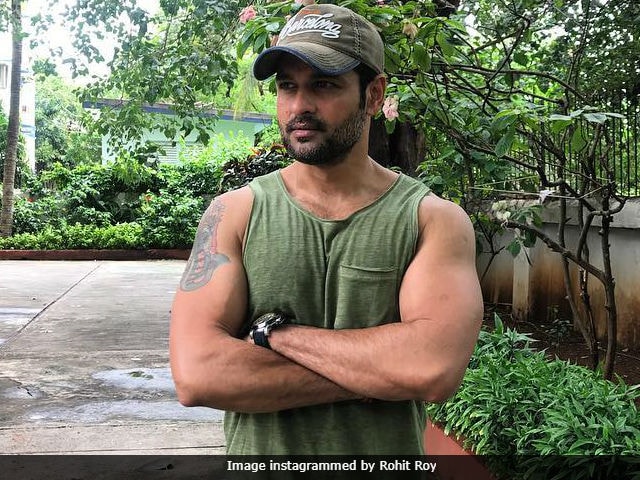
Tanvi Trivedi (BOMBAY TIMES; September 30, 2021)
Rohit Bose Roy has had a few film outings, but he has been lucky to land good roles in movies. The actor had an important part in Sanjay Gupta’s Mumbai Saga, which was released in March 2021 during the second lockdown, and is now all set to don the director’s hat for a musical that is being backed by Sanjay Leela Bhansali. In an exclusive chat, Rohit, who hails from a television background, shares his views on how he is a director at heart, success going to his head many years ago and films releasing directly on OTT platforms. Excerpts:
Are you a bit disheartened because Mumbai Saga was released during the second wave of the pandemic?
Of course! After putting in hard work for one-and-a-half years and achieving a leaner physique, working out in the gym for six months, you feel a bit bad that the film had to release during the second wave of Coronavirus. From a regular physique, I worked towards a six-pack, and the film had a star like John Abraham, so you feel bad that not many people could come and watch it in theatres. Nevertheless, people are watching films on OTT platforms, so I feel good about that. We hope that things will improve and people will flock to theatres to watch a movie on the big screens.
You have essayed grey characters earlier, but you played a villain in the Hrithik Roshan-starrer Kaabil. Do you feel negative characters have helped you find a place in Bollywood?
I was chosen to play a villain against a superstar like Hrithik Roshan. Who wouldn’t want to act in the film? Many people called me after Kaabil, expressing shock and disbelief over how I could have enacted that role.
In a way, I surprised the masses and I feel good about it. There are many more shades in grey or negative characters and if I look convincing, why not?
You are turning director with a musical that’s being backed by Sanjay Leela Bhansali ...
Many years ago, I had directed a short story, Rice Plate, in the film Dus Kahaniyaan. I started my career as an actor, and thankfully, it also kept my kitchen running for so many years, but I am a director at heart. I had also assisted Sanjay Leela Bhansali in Bajirao Mastani. It’s a coaching class on acting when you are on his sets. Due to the pandemic, the musical I am directing has taken some time, but it will go on floors soon. It is a human-interest story that revolves around a father-son relationship. I am excited about the project.
Are you happy with the way your career in films has shaped up? Do you feel it takes TV actors longer to make it in Bollywood?
Many years ago, I had asked Anurag Basu why wasn’t he casting me in his films, and he had joked, ‘People watch you for free on television, why would they pay money to watch you in a film in theatres?’ That was quite a shocker, but I understood his viewpoint. Having said that, I am one of those few actors who has continued doing films and television simultaneously. Now, lines are blurring and you can bag great projects in both the mediums, and web shows are an added blessing.
Secondly, I would not blame anyone for my films not doing well at the box office or not bagging interesting projects, because after I did Swabhimaan (TV show), success had gone to my head. I have only started working hard in the last decade. When I did Swabhimaan, I was spoken about as the next big star, I felt I would be the next Shah Rukh Khan. So, if my career took a backseat for few years, it is because of my own assumptions. I was a very bad actor and never took work seriously. If I had put in the kind of effort other successful actors put in many years ago, I would have been somewhere else. I am happy that I am now getting to do interesting work in OTT and films. Maybe, I am one of those few actors who survived in the industry and is doing good work for the last 25 years.
My next project is my dream film and should start by next year-Remo Dsouza
8:15 AM

Kavita Awaasthi (HINDUSTAN TIMES; April 2, 2021)
Four months ago, Remo Dsouza had a heart attack and underwent angioplasty. Having recuperated and even back to the gym, these days, the director-choreographer is “feeling much better”. “It was scary. It still feels like a frightful dream, which came true. What I learnt is you can’t predict life. One never knows what will happen tomorrow. I say, just be happy and be positive in life. Mere liye yeh health scare ek big lesson, bada jhataka tha jo tal gaya, thank God!” he shares.
Dsouza enjoys keeping a low-profile and his birthdays, too, are the same. “I am always low key, but these days, due to Coronavirus, there’s no other option. My wife and kids get excited and plan surprises for me, which is really sweet. Last year, it was lockdown, so we baked a cake at home and this year, at least we can order one! Even celebrations are just family and really close friends. Moreover, with the virus scare and keeping my health in mind, I am not meeting many people this time,” reveals Dsouza who turns 46 today.
He recalls how his wife, Lizelle gave him a surprise and planned a trip to Singapore. “I didn’t know what was the plan and it was a pleasant surprise. Not just family, some close friends too flew down to make the day special,” he exclaims.
Having started his career as a choreographer, it was with the reality show, Dance India Dance, that Dsouza became a household name. He moved on to direction with F.A.L.T.U (2011) and since then has directed many films including, ABCD: Any Body Can Dance (2013), ABCD 2 (2015) and Street Dancer 3D (2020).
Talking about the way his career panned out, he says, “I am happy with the way my life has turned out. It is going well and I think I have done well. I have a lot more to achieve but whatever I have achieved is all thanks to God and my parents’ blessings. I wanted to direct Salman Khan and I did that in Race 3 (2018). I won the National Award for Choreography for the song, Deewani Mastani (Bajirao Mastani; 2015). I wanted to buy a big house for my family and I did. Now, I have a lot of plans and I am working on a big project. It’s my dream film and should start by next year.”
Now, Ranveer Singh, Deepika Padukone, Priyanka Chopra's Bajirao Mastani moves to stage
8:20 AM

The film has inspired a live musical, with Pandit Birju Maharaj as creative director and seven songs from the original
Himesh Mankad (MUMBAI MIRROR; June 13, 2020)
 Sanjay Leela Bhansali’s 2015 period romance, Bajirao Mastani, fronted by Ranveer Singh, Deepika Padukone and Priyanka Chopra, is gearing up for a comeback as a live musical on stage. Directed by Maitreyee Pahari, with Kathak maestro Pandit Birju Maharaj as the creative director, it has Rajniesh Duggall stepping into the shoes of the Peshwa. Two renowned Kathak dancers, Shailja Nalawade and Anusua Majumdar, play his wives, Mastani and Kashibai respectively.
 “The musical is based on the film,” informs the actor, adding that it features nine-10 musical sequences with 50 dancers and 12 actors from all over the country. “We have retained seven original tracks from Bajirao Mastani, including “Malhari”.
Rajniesh admits that he has watched SLB’s film multiple times to understand the nuances of the character. “Ranveer as Bajirao set a benchmark, but since this is a live performance, it will have its own flavour,” says the actor, who has trained in the semi-classical dance form, Chhao, with Pandit Birju Maharaj for 40 days. “I have eight days of practice remaining. I was a non-dancer, but naach-gaana came naturally to me once I started rehearsing. There are two major fights, too, which will be a mix of Chhao and sword-fighting.”
They were supposed to perform in Delhi in mid-April, then, travel with the play to Mumbai, Dubai and London. Rajniesh points out that they have different versions keeping the live audience in mind. For instance, there won’t be too many Marathi dialogues when performing in Delhi. In the current scenario, with films and plays taking the virtual route, will that be the way forward for them, too? Rajniesh says they are still debating on the subject. Meanwhile, the Coronavirus lockdown gave him the time to brush up on his cooking and Chhao dancing skills. “There are certain poses for which it’s imperative that your muscles don’t tighten up. I’ve been doing a lot of basic stretching. I have also been attending a few master classes on direction,” he says. Is direction on the cards, then? “Yes, I definitely want to direct a film, but I will start with a couple of shorts,” he shares, adding that he hopes someday Ranveer, SLB, Deepika and Priyanka will get to experience their musical live. “We had planned to invite them for a show,” the actor admits.
I have about five to six scenes in '83-Deepika Padukone
8:35 AM

Glad to finally feature in a film that doesn't involve the death of her or hubby Ranveer Singh's characters, Deepika Padukone traces working on Kabir Khan's 83
Shaheen Parkar (MID-DAY; March 1, 2020)
In Homi Adajania's comic caper Finding Fanny (2014), which starred Deepika Padukone, Ranveer Singh had made a special appearance. Now, it's her turn to do the same. She features in a cameo in his upcoming film, 83. "I have about five to six scenes," says Padukone, who plays Romi, wife of cricketer Kapil Dev, in Kabir Khan's film based on India's 1983 cricket World Cup victory.
After Padmaavat (2018), Bajirao Mastani (2015) and Goliyon Ki Raasleela Ram-Leela (2013), Padukone is glad that she is teaming up with Singh for a movie with a different subject. "All these three films were costume dramas and emotionally heavy. Also, we ended up dying at the end of all!" So, she's glad to be alive in this one. "In that sense, it was relatively emotionally lighter," says Padukone.
Singh had to put in a lot of prep, including learning how to get his cricket on point. "I just went with the flow," says Padukone, who shot for her scenes during the UK schedule last year. She adds, "The way we approach our characters are distinct. Our processes are different. It was also novel as we have not done something like this before."
Though on the set they may prefer to dive into the characters in their own ways, off-screen they influence each other greatly. "His personality has rubbed off on me, and mine, on him. I have learnt a lot from him, and he, from me."
Actors are insecure; we constantly seek validation-Arjun Kapoor
8:04 AM

Renuka Vyavahare (BOMBAY TIMES; December 3, 2019)
 Arjun Kapoor has a big release lined up — Ashutosh Gowariker’s period epic Panipat — in which he plays Sadashivrao Bhau, the valiant sardar senapati (commander-in-chief) who led the Marathas in the Third Battle of Panipat, which took place in 1761. In a chat with BT, the actor spoke about the challenges that came along with this role, comparisons with Ranveer Singh of Bajirao Mastani, facing Sanjay Dutt on screen and more. Excerpts:
In your last interview with BT, you said you might not be as good looking as Hrithik Roshan or have a body like Tiger Shroff, but you are here to stay as there’s room for everyone, which is great. Are you happy with the space you have carved for yourself?
I am an unlikely hero; not one of the pack. Comparative studies bahut hoti hai, but individuality is rarely accepted. Uniqueness is what made people accept me in the first place, because I was not like the other boys when I made a debut with a film like Ishaqzaade (2012). I did a role that a debutant actor is unlikely to play and have worked hard for my place in the industry. Even though acting happened by chance, I love being an actor and have never been disrespectful towards my profession. Hits and flops are part and parcel of every actor’s life. I can either try to fit in and fail or be myself and succeed eventually. I’d rather be myself. Yeh profession aisa hai ke log kho jaate hai. Maine dekha hai logon ko badalte huey. I am happy that I have survived eight years in the industry. I want to survive for 80 more years.
After Panipat’s trailer was launched, many wondered if you were an unconventional choice to play a Maharashtrian warrior. When Ashutosh Gowariker approached you, did you have any apprehensions?
I never doubted my ability to play the character, but Ashu sir wanted me to go bald for this role, and I was apprehensive about that. I asked him if he was sure as it was a big risk. Ek baar baal nikaldiye toh vapas jaldi ugney nahi wale (laughs!). He suggested we do a look test to ease my discomfort. Actors are insecure; we constantly seek validation. Once we get that, we forget about the negativity and it helps us do better. Ashu sir gave me that validation. Performance emotions se banta hai, and I knew I could deliver that, but a period film is also look-based. It has to look authentic. Looking like a Maharashtrian is one aspect but looking like a Peshwa quite another. They looked and dressed a certain way and had a certain demeanour. I wasn’t worried about getting the language right as I am from Mumbai and school mein main Marathi padh chuka hoon. The heavy costumes didn’t concern me either, but then Ashu sir told me, ‘You have to go bald for this one.’ I was like, ‘Oh! So, you are convinced that I can look like a Peshwa?’ He had done enough research and was convinced that I could play Sadashivrao Bhau. I was thrilled to play this part.
Was it intimidating to face Sanjay Dutt in the film? He has this larger-than-life persona on screen...
Yes, the thought of facing Sanjay Dutt in the film was intimidating. I was nervous and excited. Sanju sir disarms you with his charm and normalcy. He has a larger-than-life personality, but he is a chilled-out guy. He is a man and a child at the same time. We spoke about so many things during the shoot. He called me home once to have a meal and told me he was happy that I was doing action films. Both Sanju sir and I lost our mothers before the release of our first film. Tragedy connects you in a unique way. We never spoke about it, but I have seen his biopic, Sanju, and I cried while watching it. When Kar Har Maidaan Fateh was playing, I realised that I am not the only one in this world who has had to deal with things. There is someone who has gone through worse.
Portraying a historical figure can be a difficult task for various reasons. What challenged you the most?
The armour I wore in the action sequences weighed around 18-20 kgs. It took four people to help me wear it and I had to ride a horse wearing that. In the film, I actually rode a horse and I was trained by professionals for two months at the Mahalaxmi Racecourse. I even learnt sword fighting. My expertise in the film is sphere throwing, so I learnt javelin throw for it. I used to wake up at 5.30 in the morning and ride a horse at Mahalaxmi Racecourse at 6 am. That was the most beautiful time in my life. I have never felt so calm with an animal before to the extent that I could connect and be comfortable with them. I started enjoying horse riding and we have used that extensively in the film.
Comparison with Bajirao Mastani (2015) is inevitable as that too revolved around the Maratha Empire and the Peshwas. People have drawn parallels between the two films even before the release of Panipat. Were you anticipating this?
Aap apney kaam ko rok nahi sakte kyunki log compare karenge. Both the films are about the Maratha Empire and Peshwas, so what are we supposed to do? We thought about the comparison, but how else will you retain authenticity? Should we not tell this story because Bajirao Mastani has already been made? It’s unfair, right? Ranveer has done Bajirao Mastani, so I shouldn’t do Panipat? It’s like saying if Ranveer has played a cop in Simmba (2018), I shouldn’t play one in another film. Bajirao Mastani was a very well made film, but Panipat is a different story, and it deserves to be told.
Ranveer set the benchmark high after Bajirao Mastani with the way he pulled off that role. Did that play on your mind somewhere?
Ranveer playing Bajirao had no bearing on Ashu sir casting me for this film. In fact, after seeing the trailer, Ranveer sent me a voice note saying, ‘Sadashivrao bhauuuuuu’ (imitates Ranveer). He came and jumped on me the other day when I was dubbing; that’s our camaraderie as friends. We are happy for each other. We don’t compare ke isney yeh kiya toh main woh karunga. It’s not like if I have played a student in 2 States (2014), he can’t do that later. That’s our choice. We had a biopic on Dhoni. Now, if we want to make a film on Yuvraj Singh, it will be set in the same time period, right? Dono ki story alag hai, but Yuvraj bhi ussi samay cricket khel raha tha. We can’t do anything about it. If the cast of Yuvraj’s film is dressed in the same way, you can’t say woh Dhoni ke picture ko copy kar rahe hai.
There were memes about how in Panipat, Arjun plays Ranveer from Bajirao Mastani and Sanjay Dutt plays Ranveer of Padmaavat. Since you are active on social media, do you find these things amusing?
We all crack jokes, but let’s not forget the bigger picture. I am the first one to laugh at myself. I have done a roast, so nothing can beat that. But in Panipat, we are paying a tribute to those who sacrificed their lives for our country. It’s fine to laugh as long as you don’t disrespect the sentiment behind the movie. While pitting one actor against the other, or to be the first one to crack a joke on a film, we tend to forget why a story is being told. It’s important that we smile, but not make a mockery of the people this film is dedicated to.
A historical is bound to be closely scrutinized as it is based on real events. We have witnessed in the past, too, where the controversy around a period drama hit the headlines and became national news. Did you have any fears on those grounds?
Ashu sir goes by the book. So far, no questions on authenticity have been raised. As far as the finer details are concerned, I trust my director and his research completely. Should the film hurt anyone’s sentiments, we would be the first ones to raise our hands and say that’s not our intention. In Panipat, we have depicted history as it was. Even if you see the song Mard Maratha, I am not dancing in it. Ashu sir has even measured the ghera shendi that I have sported in the film. He was in the van when I shaved my head and the ghera shendi was marked by him. The intent behind this film is honest.

I can't let fear of comparison keep me from making my film-Ashutosh Gowariker
9:14 AM

Ashutosh Gowariker discusses the upcoming historical, Panipat, and the obvious comparisons between Ranveer Singh and his male leads
Abhishek Mande Bhot (MID-DAY; December 1, 2019)
The last time Ashutosh Gowariker made a historical epic, the world was a very different place. Facebook was far from being the government-toppling behemoth it is today, YouTube was three years old and Instagram wasn't even an embryo. Netflix had delivered its billionth DVD the previous year and Barack Obama's biggest concern was that he wasn't going to be able to keep his BlackBerry after he became President. Let's take a moment to review that. Netflix. was. a. DVD. rental. company. So when Jodhaa Akbar released in 2008, it released... it didn't drop.
It had been eight years since Gowariker was nominated for the Academy Awards but somehow, at the time, it seemed like it was just the previous year. He had since made just one movie, Swades (2004) and Jodhaa Akbar was a hotly anticipated film from an Oscar-nominated director. The sheen of accolades seemed to last longer back then, somehow. Even if Jodhaa Akbar had been a mediocre film, the Oscar-nominated tag suspended between two olive branches, would've been sufficient to carry it through. It gave Gowariker the liberty to indulge himself. Jodhaa Akbar ran for three hours and 20 minutes. He'd justified it back then saying the genre and the scale required that kind of runtime. Gowariker's next, Panipat, that marks his return to the genre runs at two hours and 45 minutes.
And so it is that on what passes off as winter morning in Mumbai, sun filtering through the tree canopies in a quiet Khar lane we find ourselves waiting for the man who's about to have yet another go at the box office. If the dismal performances of his last three films, What's Your Raashee? (2009), Khelein Hum Jee Jaan Sey (2010) and Mohenjo Daro (2016), have affected him, Gowariker doesn't show it. He has the calm of a boxer before a bout, having shut out anything that could potentially distract him from his game.
But that hasn't meant he isn't aware of the changing world around him. "The fact is that audience viewing habits have evolved," he says, "And your approach to storytelling has to undergo a change too. The narrative pace has to be quicker and the script tighter. You can't insist on showing someone offering three salaams in an emperor's court, even though that was the prevailing norm, because the audience doesn't necessarily want to get that deeply involved in the tale. Skip cinematic manners to keep your audience engaged."
As a result, much of Gowariker's scripting process has undergone a change, especially with Panipat. He says, "At the script stage, how all the incidents are interwoven becomes important. There are so many characters involved in the story; you have to take a conscious decision, which ones to show and who to drop."
You would've thought that this kind of environment would be detrimental to historical epics. Yet, India has seen more movies in the genre than ever before. This year alone saw the release of Manikarnika and Kesari. The last year opened with Padmavat. Even though it wasn't rooted in history, 2017 was the year of the epic film Baahubali 2, while 2015 saw the release of its precursor, Baahubali: The Beginning. The year 2015 was also the last time that the Maratha pride was on full display in Sanjay Leela Bhansali's Bajirao Mastani. Next year will see the release of the Ajay Devgn-starrer Tanaji and Akshay Kumar-starrer Prithviraj. There's a lot of period drama going around. For perspective, when Jodhaa Akbar hit the screens in 2008, comparisons were made to Mughal-e-Azam, a movie that released almost 50 years ago.
"The reason why we're getting to see more historical epics is because producers are willing to back these projects and actors are willing to act in them. Without these two, there's no way a movie can be made," Gowariker says matter-of-factly. It also helps that actors are now more open to experimenting. Panipat stars Arjun Kapoor as Sadashiv Rao, a nephew of Bajirao Peshwa and the commander-in-chief of the Maratha army. Sanjay Dutt plays Ahmad Shah Abdali, the Afghan emperor who invades the Maratha empire. Neither has a period film in their filmography. With Panipat, both the actors step into some very big shoes—that of Ranveer Singh. The maverick superstar has played both, a Peshwa (Bajirao) and a Muslim invader (Khilji), and comparisons between him, Kapoor and Dutt are bound to be drawn. "I can't let the fear of comparisons keep me from making my film," Gowariker says. "Even Arjun, when he was offered the role, didn't say, 'Oh, Ranveer has done something similar so let me avoid it'. He was inspired by the story, the character, and agreed immediately." As for Dutt, "When I asked him why he'd never done a period film, he said no one had asked him," Gowariker says doing a little Dutt impersonation.
There's no denying that even in the three-minute trailer Dutt's Abdali is reminiscent of Singh's Khilji, a portrayal that is considered by some as being problematic in the way it reduced the ruler to a meat-eating, sex-crazed, philistine. Some have called the portrayal Islamophobic. A reviewer called it a movie that "puts together every single stereotype of Muslims in India". Gowariker says that there was a conscious effort to make sure Dutt's Abdali didn't come across as being that. "I had kept that in mind while scripting. Panipat is about Maratha valour; it is about a protector and an invader and not about religion."
The battle of Panipat ended with a crushing Maratha defeat. According to Trimbak Shejwalkar's authoritative book on the subject, that also served as the bedrock of Gowariker's research, about one lakh Maratha soldiers and non-combatants were killed during and after the battle. But what sets it apart from movies such as Manikarnika, Kesari or even Padmavat is that this wasn't a last stand situation. At the time of the battle, the Marathas were a dominant force and, if anything, the battle was a clashing of two extremely powerful empires. It's also something should free the film from the toxic machismo of Akshay Kumar in Kesari and Ajay Devgn in the upcoming Tanhaji. In that, the casting of the easy-going Arjun Kapoor doesn't seem altogether off, despite the many memes.
It's also perfectly likely that Dutt's scowl and Kapoor's narrow range of expressions would be the movie's, how shall we put it, Waterloo, but something in the trailer suggests that Panipat is a dignified tale that celebrates valour and not victory. In this chest-beating moment of our country's history, Panipat could come as a welcome relief.
As we walk out of the building, we learn that the half dozen policemen guarding the entrance have been deployed to protect Gowariker from a fringe Maratha group threatening stir against the film. Gowariker isn't fazed. The right-wing tin-pot Karni Sena had threatened a similar stir during the release of Jodhaa Akbar. Eleven years have passed. Some things don't change.
1 lakh
Number of Maratha soldiers and non-combatants killed during and after the Third Battle of Panipat


I realised that my history book for this project was going to be Ashutosh Gowarikar-Kriti Sanon
7:46 AM

Onkar Kulkarni (BOMBAY TIMES; November 30, 2019)
 She began 2019 with a romcom (Luka Chuppi) and then followed it up with an action comedy (Arjun Patiala) and a reincarnation comedy (Housefull4). And now, Kriti Sanon is all set for her next outing — the historical war drama, Panipat — in which she plays the role of Parvatibai, the wife of Maratha warrior Sadashivrao Bhau. In an interview ahead of the film’s release, the actress talks to BT about director Ashutosh Gowarikar’s penchant for perfection, her memories of shooting with yesteryear diva Zeenat Aman, and her bond with Akshay Kumar. Excerpts...
Do you get fascinated by the world of period cinema? What was your first reaction when you were approached for the role of Parvatibai in Panipat?
My all-time favourite period films are Mughal-E-Azam (1960), Jodhaa Akbar (2008) and Bajirao Mastani (2015). The genre does fascinate me. I am not good with history and so, when I was approached for this film, I wasn’t well aware about the war of Panipat. The thing with history is that all of us read it, but we don’t remember it for too long. When you see it on the big screen, it gets inscribed in your mind, as the visual medium is way too powerful. When the script was narrated to me, I was mesmerised as I didn’t know what the Marathas had gone through in this journey. I didn’t know much about Parvatibai either. So, after the narration, I tried researching about my character, but there wasn’t much information available on her. I realised that my history book for this project was going to be Ashutosh Gowarikar. I am a director’s actor.
This is the first time Arjun Kapoor and you are doing a film together, and given that it is such an intense film, did you get time to get to know each other during the course of its making?
Arjun and I were supposed to do many films together, but they didn’t happen. I can’t name them, but two-three movies came to us, and either they didn’t happen at all or I did the film with someone else, or he did the film with someone else. Arjun and I have met at parties and bumped into each other at events. He is someone with a dry sense of humour. He is funny and I enjoy his company. He is very well brought up, and respects the people around him. It made me feel that we could be very good friends. Even though this was our first film together, we were very comfortable with each other. We loved our outfits and he was competing with me in the jewellery department. I would count my jewellery pieces and compare it with how much he was wearing. He is someone who can crack you up, no matter what your mood is.
You are working with Ashutosh for the first time. What sets him apart from the other directors that you have worked with?
It is his knowledge about the subject that he is working on, and the way he shapes up his characters. His female characters, even in a period film, are so aspirational. He is extremely calm as a director. It needs a calm man to handle the set of a period film, which is buzzing with a huge number of people. He never screams at his cast and crew and is never in a hurry and says, ‘Jaldi karo karo, jaldi ready ho jao, late ho raha hai.’ I remember, after taking a lot of time to get ready for a scene, I arrived on the set as Parvatibai. He looked at me and said, ‘I don’t think this sari is going with this scene’. He asked the team to show him other options and then he picked one and asked me to change.
That took another 45 minutes. For him, everything needs to be perfect, he is never in a rush. I personally feel that you perform well when everyone is calm on the set. He is open to suggestions. He told me, ‘You love comedy and like to introduce fun elements in your characters, so do it wherever you can’. In the first half of the film, Parvatibai will put a smile on your face because I added a few such nuances.
The film also stars yesteryear diva Zeenat Aman. Did you get to share screen space with her?
Zeenat ma’am plays Sakina Begum, and I have a lot of scenes with her. She is very graceful. I remember this one big scene, which is crucial to the film. It is a conversation between the two of us and very dialogue-heavy. I was excited, thrilled and nervous at the same time. We did the reading session in the vanity van, right before going on the set. She kept asking Ashu sir if she was doing it right. It was just the way a newcomer would ask a director. She had the same passion and hunger that the new actors have. On a lighter note, my parents were very upset with me, because they were in town and I completely forgot to tell them that I was shooting with Zeenat Aman. She chatted with me about her son, told me that she had seen my work and appreciated it. I could relate to her when she told me that during her times, not too many actresses were tall. She is very tall. I am slightly taller than her. I was very excited to see a tall woman in front of me (laughs!).
You met Priyanka Chopra recently and the picture went viral as it was captioned ‘When Parvatibai meets Kashibai’. What did Priyanka say about your portrayal as Parvatibai since she played Kashibai in Bajirao Mastani?
I didn’t ask her if she’s seen the trailer of my film. We bonded well and got busy talking about the Parvatibai-Kashibai connect. So, Sadashivrao Bhau is Bajirao's nephew, and Kashibai is Bajirao’s wife. I am Sadashivrao’s wife, hence, Kashibai would be my taisa. She told me that she enjoyed watching my video where I am dancing to the Coca Cola track (Luka Chuppi), while I was dressed in my period attire from Panipat inside my vanity van. She told me that it reminded her of the Bajirao Mastani days, when she would step out of her character and have fun on the sets (dressed as Kashibai) and Sanjay sir (Leela Bhansali, director) would get upset seeing that.
There’s a lot of buzz about your forthcoming film Bachchan Pandey. You are reuniting with Akshay Kumar for the film...
I am very excited about the project. Farhad (Samji, director) said in an interview, ‘Main chaati thok ke bolta hoon ki unka (Kriti’s) role bahut achcha hai and parallel hero se bhi bada hai’. I read his statement and it put a smile on my face, because I know the role and the way he has written it. I shared a great comfort level while working with Akshay sir during our last venture together. There, it was an ensemble cast and there was not much scope to explore our chemistry as a couple, this film might give us a lot more scope for that.
Akshay was seen opposite your sister Nupur in her debut music video. Is he helping her get a foothold in Bollywood? Did you have any role to play in the process?
He is definitely a friend, and a humble person. It is a huge coincidence that my sister did a music video (Filhall) with him. Actually, she was in talks with the makers of the music video for something else when they suggested the idea of doing this music video. Nupur didn’t even know who her co-star would be. On the day she was called to sign on, they revealed that Akshay would be a part of it. Frankly, I am not someone who is born and brought up in the industry that I can pick up the phone and ask anyone to cast my sister. She will have to do it on her own merit, just the way I did.

Panipat didn't require me to seek Ranveer's advice as Bajirao and Sadashiv are from different eras-Arjun Kapoor
8:25 AM

Attempting his first-period drama in Panipat, Arjun Kapoor explains why he didn't seek Ranveer Singh aka Bajirao's advice for his Maratha warrior act
Mohar Basu (MID-DAY; November 29, 2019)
"I was surprised by the love the trailer received. I always keep my expectations modest," chuckles Arjun Kapoor as he discusses his first-period drama, Panipat. Known to have a deep understanding of market realities, the actor asserts that he greenlit the project to explore the forgotten Maratha history.
"This film starts off at the point where Marathas were ruling India. No one knew that they controlled the Mughals, who paid taxes to them. I loved that I knew so little about this story," says Kapoor, alluding that he walked into the universe created by Ashutosh Gowariker as a novice. Shaving his head was only the first step towards becoming Sadashivrao Bhau. "I worked with a diction coach, and looked the part. But it was harder to perfect the character's vulnerabilities. [What was] his personality like? Was he in love with Parvati Bai? I discovered him through this movie."
His peer and close friend Ranveer Singh had won acclaim for his portrayal of Maratha general Bajirao Peshwa in Bajirao Mastani (2015). Did he exchange notes with Singh before slipping into the part of Bajirao's nephew? "Ashu sir and Sanjay sir [Leela Bhansali] make magnum opuses, but they have different temperaments. Here, I respected my director's temperament. I wanted to remain loyal to my story. Ranveer would have given me his point of view [that would be derived from] Sanjay sir's understanding. I have tremendous respect for Ranveer's work. But this film didn't require me [to seek his advice] because Bajirao and Sadashiv are from different eras."
In the years that they have known each other, Singh has risen to become one of the biggest stars. What effect does stardom have on their friendship? "He still gatecrashes my dubbing, sends long voice messages after watching my songs and kisses me on the cheeks. Our connection remains unaffected. I tell Deepika [Padukone, Singh's wife] that I am her souten. We have been consistently warm."

Priyanka Chopra and I tried to figure relation between Kashibai, Parvatibai-Kriti Sanon
8:08 AM

As netizens argue her Panipat character is reminiscent of Priyanka Chopra's part in Bajirao Mastani, Kriti Sanon reveals how two actors exchanged notes at a recent party
Sonil Dedhia (MID-DAY; November 26, 2019)
When the trailer of Panipat released earlier this month, it inspired a host of memes, with a section of Twitterati pointing out that the Ashutosh Gowariker-directed venture seemed to be influenced by Sanjay Leela Bhansali's Bajirao Mastani. Many felt that Kriti Sanon's character Parvatibai reminded them of Priyanka Chopra Jonas' character Kashibai from the 2015 magnum opus. Not surprisingly, when the two actors met at a party over the weekend, history of the Maratha empire was all they could talk about.
"We were trying to figure the exact relation between Kashibai and Parvatibai," laughs Sanon, adding that the comparisons don't bother them. "Priyanka had seen my video where I was dancing on Coca Cola [Luka Chuppi song] in my vanity van, dressed as Parvatibai. It resonated with her. She said, 'It reminded me of myself because whenever I would be off the set, I was no longer Kashibai. I would slip into my character again when I was on the set.' We had a fun, informal conversation."
The comparisons between the two period dramas can't deter her enthusiasm — Sanon is only too happy to add a war drama to her résumé. "I was expecting comparisons when I signed the film. Padmaavat too was compared to Baahubali. The period of Panipat and Bajirao is similar. The setting is similar because the Peshwas lived in Shaniwar Wada, and they dressed in a certain way. But the characters are different. I hope the audience doesn't [jump to] conclusions by watching only the trailer."

I’m very nervous. Soon I will have no nails left-Ashutosh Gowariker
8:09 AM

Ashutosh Gowariker on his plans to explore the story of Prince Siddhartha’s journey to becoming Buddha, where he erred with Mohenjo Daro and why he felt the need to go to battle with Panipat
Roshmila Bhattacharya (MUMBAI MIRROR; November 19, 2019)
 Just three weeks before he unveils his next period extravaganza, Panipat , Ashutosh Gowariker looks amazingly calm and not battle weary as you’d imagine. The voice is soft as he takes you into the war zone. Excerpts:
You choose subjects that challenge you as a filmmaker, from Lagaan and Jodhaa Akbar to Mohenjo Daro and now Panipat. What makes you want to create big screen spectacles?
I love history, and within that, the theme is important, be it religious tolerance (Jodhaa Akbar) or the concept of unity (Lagaan). I also love to create different worlds and learn what were the smallest sparks that fired these big events.
And just how difficult is it creating these worlds?
It’s very difficult and is all in the prep, which is why I make one film in three years. The research doesn’t end with the script, but blossoms through different departments—from art to action, from costumes to hair and make-up. And since every department needs time, the key is patience and singular focus. In this, I’m not alone. Along with my crew of like-minded people, I need committed actors who’ll shave their head and stay in that look for six-eight months. Building that commitment is like building an army in itself.
We’ve read about the battle of Panipat in history books but in modern times, how do you plan to whip up interest and bring people to the theatres?
Yes, we have read about the battle but how many know that there were three battles of Panipat, and the third, which we are bringing to the screen, was the most inspiring? For the first time in history, anywhere in the world, an army travelled 1,000 kilometres to stop an invader. Since film is an audio-visual medium, it’ll take you beyond textbooks. And while I like to be authentic in my depiction, I also like to tell a story in an entertaining way. I can’t think of making a film without songs; elements like music keep the audience engaged.
You’ve always cast against type but what made you opt for Sanjay Dutt, Arjun Kapoor and Kriti Sanon who had never done a historical film before Panipat?
According to descriptions, Sadashiv Rao Bhau was a large man, a warrior with brute strength. Arjun fitted the bill. Also, he was free then to give me the commitment I wanted. And having seen his Ishaqzaade, 2 States and Finding Fanny, I knew him as a natural, understated performer. Kriti is beautiful, and having played the girl-next-door in all films, I thought it would be nice to see her in regality as Parvati Bai.
Sanjay and I go back a long way, having been co-actors on Naam. When I asked him why he’d never done a historical before, he said simply that no one had asked him. So, I did. He’s my Afghan invader, Ahmad Shah Abdali. All three were my first choices. Along with them, I have an interesting ensemble cast in Mohnish Bahl (Nana Saheb Peshwa), Padmini Kolhapure (Gopika Bai) and Zeenat Aman ji (Sakina Begum).
In India we’re quick to compare, pass judgements. So, as soon as your trailer came out, similarities between Arjun’s Sadashiv Rao Bhau and Ranveer’s Bajirao and Sanjay’s Abdali and Ranveer’s Khilji from Padmaavat were noted.
That’s understandable because the last film that comes out, stays in our recent memory. So, Jodhaa Akbar was immediately compared to Mughal-E-Azam, Bajirao Mastani to Jodhaa Akbar and Padmaavat to Baahubali. That’s nothing to be worried about.
Also, we are still in the era of the Peshwas in Panipat, which revolves around Bajirao’s next generation—his son, Nana Saheb Peshwa, his brother Chimaji Appa’s son Sadashiv Rao Bhau and his second son with Mastani, Shamsher Bahadur. So, the costumes and their palace, remain the same but the story is very different.
You give three years to a film like Mohenjo Daro (below), then, it’s torn apart. Where do you get the strength to enter another battlefield?
The norm of this business is that failure is singularly yours while success is to be shared. So, I never blame anyone. I analyse what went wrong, make mental notes and try not to repeat the mistakes in the next film.
What mistakes did you make with Mohenjo Daro? Was it the special effects?
Mohenjo Daro was pre-history, there were no references, so we wrote a story and built a world around it, from scratch, hoping the audience would identify with it. They didn’t, despite all our Herculean efforts. I’ve noted that the audience forgives bad performances and VFX if the script connects with them. That did not happen in this case. Maybe I could have done it a little differently in terms of emotions.
During Mohenjo Daro you were also dragged to court on plagiarism charges.
I’d never copy anyone’s script, in fact, I’d never take anything from anyone that doesn’t belong to me. I am very straight so when such court cases happen, I feel sad, but I have to still fight them.
Would you want to revisit Mohenjo Daro?
Not at the moment, and even if I did, I’d want to go to Harappa this time, as it became a bigger trading centre after Mohenjo Daro. A civilisation was named after it. But after Mohenjo Daro, Jodhaa Akbar and Lagaan, I’m done with pre-history, medieval, Mughal India and the British era. I haven’t explored Ancient India yet. I’d want to make a film on Buddha, on how Prince Siddhartha became Buddha. What happened to bring the change, the answers he found…
Do you see any changes in you from when you were an actor?
As a person, my knowledge about our country and its neighbours since our histories are connected, has been enriched by my own films. But as a maker, I start on a zero when I start a new project. The challenges are so different each time that I’m scared on the first day of shoot, and for every day after that, worried if I’m doing the scene right.
Lagaan was the turning point for both Aamir Khan and you. What do you recall of the film?
When I moved to direction, the attempt was to do something new and different. That’s what led to Pehla Nasha with Deepak Tijori, followed by Baazi, which was an attempt to change Aamir’s image from a chocolate hero to an action hero. Lagaan was a step further, on a bigger scale.
Back then, no one believed a cricket film, revolving around villagers who spoke in Avadhi, set in British India, would work. But both of us were excited about entering this world. Lagaan was a period drama and a sports film, it made a social statement, had songs and was a love story. Even I have not made a multi-genre film like this since. It went to the Oscars, the Olympics of cinema. We made it to the last five, after which it’s unfair to choose. But a choice had to be made, that doesn’t devalue the rest. We lost the cherry, but we ate the cake.
It was a brave step for Aamir too, not just to act in it but to also produce the film.
Oh yes, it was. But Aamir was always trying to do different things while remaining mainstream. Even when he had started, Raakh came on the heels of Qayamat Se Qayamat Tak and Lagaan with Dil Chahta Hai. But yes, Lagaan gave us the confidence and the eyeballs to take more leaps. I went on to make the nationalistic Swades, followed by Jodhaa Akbar. And along with the audience, the trade was interested in my next.
After Mohenjo Daro, it couldn’t have been easy finding backers for Panipat?
For a project to be greenlit, you need actors willing to work with you and funders who’ll back you. I was fortunate to get both. Also, I have a pillar in Sunita. She’d also come out of Mohenjo Daro and had she told me not to make Panipat, I wouldn’t have. My wife has a natural business acumen, she understands numbers and finds solutions to problems which are huge. We also found a collaborative partner in Rohit Shelatkar, who has been harvesting this dream for a while.
Panipat will be followed by Tanhaji: The Unsung Warrior. Our audience seems to be more amiable to this genre...
Jodhaa Akbar changed things.
So, would you say our audience has evolved?
I don’t think the audience has changed. I, too, grew up watching Amar Akbar Anthony and Rajnigandha, Don, Gol Maal with films of Mrinal Sen and Satyajit Ray, as also Hollywood flicks. What has changed is access. Earlier, Rajnigandha would play in three theatres, today, it would play in multiplexes, do Rs 100 crore business. What has evolved is the distribution and exhibition, which is the bridge between filmmakers and the audience.
 We have digital platforms...
Yes, but web writing is difficult as you have to engage an audience and get them to binge through 10 episodes of an hour each. I don’t have that skill, I’ve to perfect cinema first.
Are you open to more acting roles after Ventilator (left)?
Acting is a difficult job, but it was calming and liberating for me to stand in front of a camera and not have to worry about the colour of the curtains behind me. I’d love to do roles which interest me. But right now, I’m in the battlefield.
And yet you seem so calm…
Oh no, I’m very nervous. Soon I will have no nails left.

Subscribe to:
Posts (Atom)