All three films are about ordinary people standing up against injustice-Sunny Deol
9:19 AM
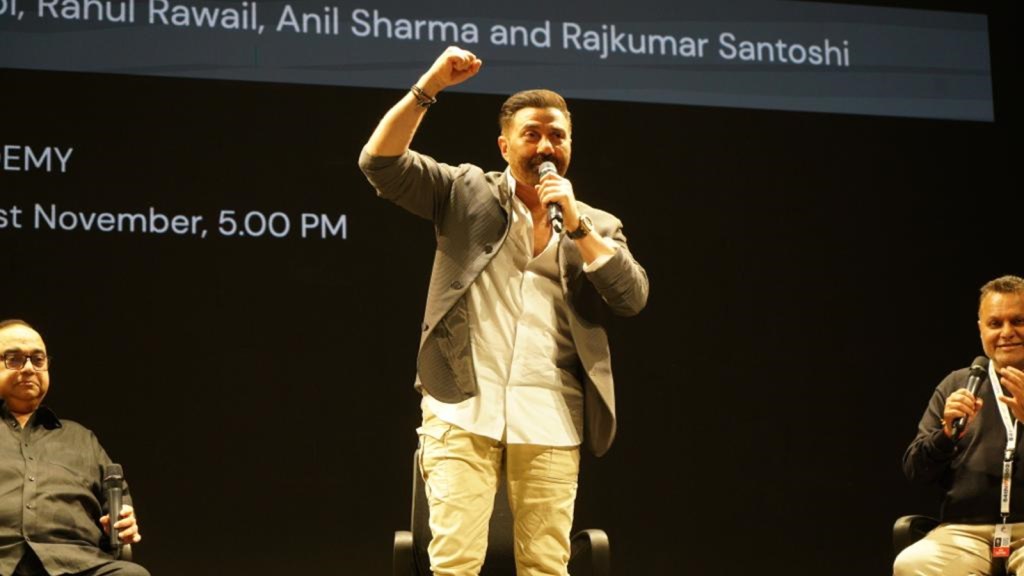
Sunny Deol and Rajkumar Santoshi weigh in on the theatrical re-release of their 90’s hits
Renuka Vyavahare (BOMBAY TIMES; July 23, 2026)
Sunny Deol and Rajkumar Santoshi have given Hindi cinema some of the most popular films of the ‘90s. As the actor-director duo reunites for Batwara 1947, a retrospective celebrating their collaboration will see three of their classics – Ghayal (1990), Damini (1993) and Ghatak (1996) – re-released in theatres from July 24. In an exclusive conversation with us, the duo reflects on their enduring partnership, iconic characters and why stories of ordinary people fighting injustice continue to resonate.
THE ANGER WORKED BECAUSE THERE WAS EMOTION BEHIND IT: SUNNY
Speaking about the re-releases and reuniting with Santoshi, Sunny says, “Our journey began with Ghayal, followed by Damini, Ghatak and now Batwara. We understand each other without having to explain too much, and that’s why our partnership works. There’s an unspoken understanding between us. All three films are about ordinary people standing up against injustice. Times and circumstances may have changed, but that fight never grows old.”
The actor is delighted that younger audiences will now get to experience these films on the big screen. “I don’t usually sit and watch my own films because I immediately start noticing what I could have done better. But seeing audiences, especially younger people, discover these films today is emotional. It tells you that an honest film never grows old.”
Talking about the characters he has played, Sunny says, “People remember the action, but I believe my real strength has always been emotion. The anger worked because there was pain, love or injustice behind it.”
I’VE ALWAYS SEEN THE VULNERABLE MAN BEHIND SUNNY’S STRENGTH: SANTOSHI
Recalling his first meeting with Sunny, Santoshi says it wasn’t the actor’s physique or screen image that impressed him the most.
“It was his honesty. There was an innocence, emotional sincerity and a quiet confidence about him. People see the anger, the action and the larger-than-life moments, but I’ve always seen the vulnerable man behind that strength. That fascinated me. Whether it was Ajay Mehra in Ghayal, Govind Srivastav in Damini or Kashi Nath in Ghatak, they were never superheroes. They were ordinary men pushed to extraordinary limits.”
For Santoshi, reuniting with Sunny after three decades felt surprisingly effortless. “It never felt like 30 years had passed. Both of us have lived through success, disappointments and personal growth.
He adds, “Sunny never tries to impress people. He listens more than he speaks and never wears a mask, which allows a director to shape the character instead of fighting the actor’s personality. He also represents a kind of masculinity that is becoming increasingly rare.”
Are Damini, Ghatak and Ghayal still relevant today?
Santoshi believes audiences may have changed, but human emotions haven’t. “Today’s audiences have access to stories from every corner of the world, but human emotions remain the same. People still experience injustice and betrayal. Earlier, cinema externalized anger through powerful confrontations. Today, it is more internal and psychological, but anger itself hasn’t disappeared. If Ghayal or Damini were made today, I would make them differently because cinema has evolved. But their emotional core would remain exactly the same,” he says.
Aamir and my films clashed at the box office, but I never saw him as a rival: Sunny
Aamir Khan and Sunny Deol have come together for Batwara 1947 — directed by Santoshi, starring Sunny and produced by Aamir. The collaboration is particularly interesting given their legendary box-office clashes over the years — Dil versus Ghayal, Raja Hindustani versus Ghatak, and Lagaan versus Gadar. How different is their relationship today?
Sunny smiles, “I never saw Aamir as a rival. Our films competed at the box office; we never did. Today, it feels wonderful that the same history has brought us together. He heard the story, believed in it immediately and backed it with complete conviction. We may be very different people, but our love for cinema is the same.”

Subscribe to:
Post Comments (Atom)
Post a Comment