Showing posts with label Lagaan. Show all posts
Showing posts with label Lagaan. Show all posts
All three films are about ordinary people standing up against injustice-Sunny Deol
9:19 AM
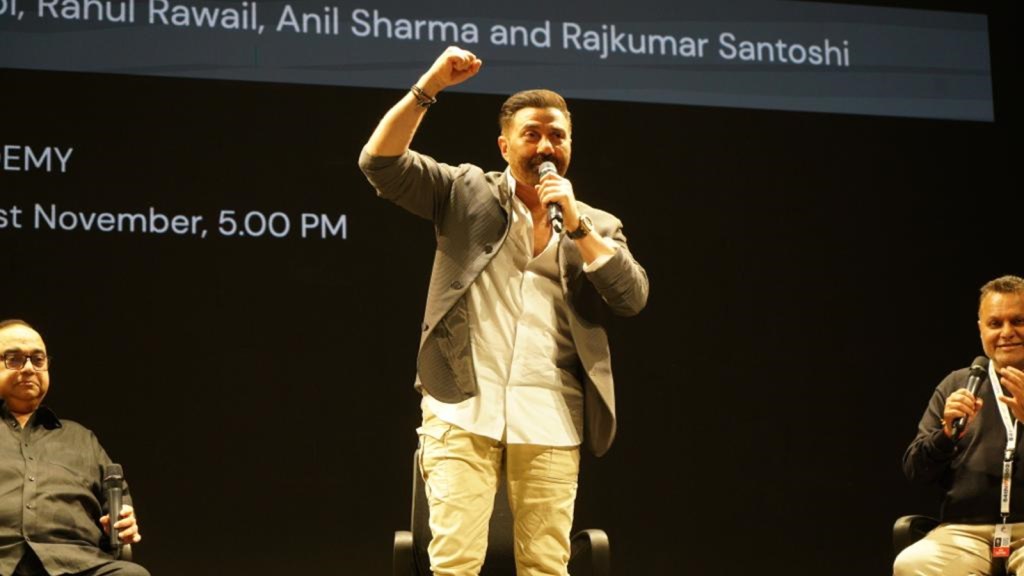
Sunny Deol and Rajkumar Santoshi weigh in on the theatrical re-release of their 90’s hits
Renuka Vyavahare (BOMBAY TIMES; July 23, 2026)
Sunny Deol and Rajkumar Santoshi have given Hindi cinema some of the most popular films of the ‘90s. As the actor-director duo reunites for Batwara 1947, a retrospective celebrating their collaboration will see three of their classics – Ghayal (1990), Damini (1993) and Ghatak (1996) – re-released in theatres from July 24. In an exclusive conversation with us, the duo reflects on their enduring partnership, iconic characters and why stories of ordinary people fighting injustice continue to resonate.
THE ANGER WORKED BECAUSE THERE WAS EMOTION BEHIND IT: SUNNY
Speaking about the re-releases and reuniting with Santoshi, Sunny says, “Our journey began with Ghayal, followed by Damini, Ghatak and now Batwara. We understand each other without having to explain too much, and that’s why our partnership works. There’s an unspoken understanding between us. All three films are about ordinary people standing up against injustice. Times and circumstances may have changed, but that fight never grows old.”
The actor is delighted that younger audiences will now get to experience these films on the big screen. “I don’t usually sit and watch my own films because I immediately start noticing what I could have done better. But seeing audiences, especially younger people, discover these films today is emotional. It tells you that an honest film never grows old.”
Talking about the characters he has played, Sunny says, “People remember the action, but I believe my real strength has always been emotion. The anger worked because there was pain, love or injustice behind it.”
I’VE ALWAYS SEEN THE VULNERABLE MAN BEHIND SUNNY’S STRENGTH: SANTOSHI
Recalling his first meeting with Sunny, Santoshi says it wasn’t the actor’s physique or screen image that impressed him the most.
“It was his honesty. There was an innocence, emotional sincerity and a quiet confidence about him. People see the anger, the action and the larger-than-life moments, but I’ve always seen the vulnerable man behind that strength. That fascinated me. Whether it was Ajay Mehra in Ghayal, Govind Srivastav in Damini or Kashi Nath in Ghatak, they were never superheroes. They were ordinary men pushed to extraordinary limits.”
For Santoshi, reuniting with Sunny after three decades felt surprisingly effortless. “It never felt like 30 years had passed. Both of us have lived through success, disappointments and personal growth.
He adds, “Sunny never tries to impress people. He listens more than he speaks and never wears a mask, which allows a director to shape the character instead of fighting the actor’s personality. He also represents a kind of masculinity that is becoming increasingly rare.”
Are Damini, Ghatak and Ghayal still relevant today?
Santoshi believes audiences may have changed, but human emotions haven’t. “Today’s audiences have access to stories from every corner of the world, but human emotions remain the same. People still experience injustice and betrayal. Earlier, cinema externalized anger through powerful confrontations. Today, it is more internal and psychological, but anger itself hasn’t disappeared. If Ghayal or Damini were made today, I would make them differently because cinema has evolved. But their emotional core would remain exactly the same,” he says.
Aamir and my films clashed at the box office, but I never saw him as a rival: Sunny
Aamir Khan and Sunny Deol have come together for Batwara 1947 — directed by Santoshi, starring Sunny and produced by Aamir. The collaboration is particularly interesting given their legendary box-office clashes over the years — Dil versus Ghayal, Raja Hindustani versus Ghatak, and Lagaan versus Gadar. How different is their relationship today?
Sunny smiles, “I never saw Aamir as a rival. Our films competed at the box office; we never did. Today, it feels wonderful that the same history has brought us together. He heard the story, believed in it immediately and backed it with complete conviction. We may be very different people, but our love for cinema is the same.”
25 Years of Gadar - Ek Prem Katha: Never had exhibitors seen such a response to scenes with the public going wild
10:52 AM
Box Office India Trade Network
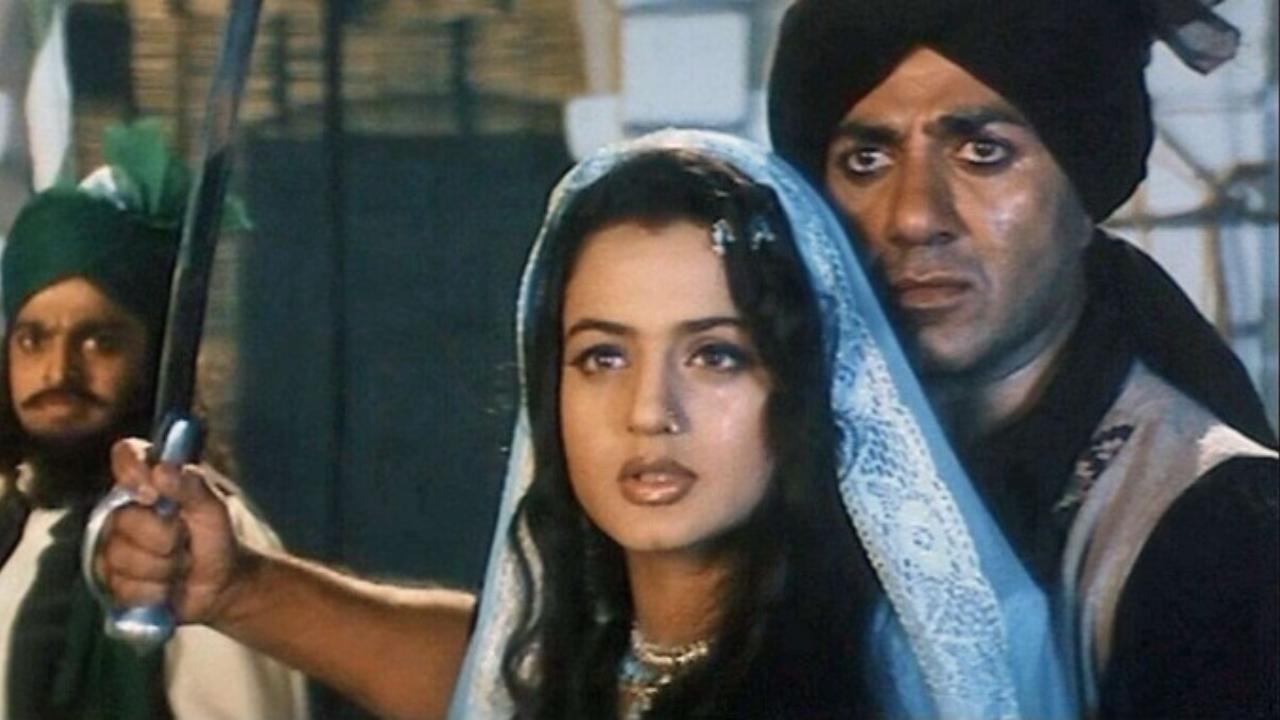
GADAR - EK PREM KATHA is celebrating 25 years today as it released on 15th June 2001 to a bumper response. The collections on day one were not a record but that was basically because it was not the biggest release in terms of prints. In those days, prints were important for the final number as generally most commercial films with a star cast were going to 90% plus occupancy on day one. GADAR - EK PREM KATHA opened to cent per cent capacity all over barring some stations of South India.
The collections of the film were never seen before type especially for those initial 10-12 weeks. The craze was unprecedented with the music and dialogues, certain scenes going to such a level that they became etched in public memory like never before. Never had exhibitors seen such a response to scenes with the public going wild and this was practically all over the country.
The film did an insane job at the box office when released and was one of the great films of India cinema but to get among the real cream there has to be a longevity. GADAR - EK PREM KATHA had this longevity as some scenes were such that the audience would never forget but due to the change in business, it never had that theatrical run of SHOLAY or MOTHER INDIA, which, even after twenty of years release, were a theatrical force. These films proved their relevance well after release. So, while GADAR - EK PREM KATHA had the same relevance their was no way to prove it. Yes satellite was a rage but then SOORYAVANSHAM was a bigger rage. Hence, when you want to be among the greats, you need something more than satellite.
Eventually GADAR 2 happened in 2023 and that initial and the response to the film rubber stamped the greatness and relevance of GADAR - EK PREM KATHA and how it had passed the test the time like very few before it. The reaction to GADAR 2 meant that that GADAR - EK PREM KATHA was probably the second greatest film ever seen in India after SHOLAY.
There are only 4-5 films in this bracket and time will tell if BAAHUBALI or DHURANDHAR can get there though it will be tougher for the former due to the faces in it and the music in the film as CHANDRALEKHA was a similar film in 1949. But ten years later, no one really knew about it. With DHURANDHAR time will tell though it does not have that mass appreciation at the level of a SHOLAY, GADAR or MOTHER INDIA.
GADAR clashed with another big film LAGAAN but in those days the clashes did not matter as both films had their chain of theatres in each circuit. LAGAAN had better industry reports and the general sense was that it will do better but this was related to media and industry. GADAR had been sold for higher prices and was a wider release. So, ground realities were different to what the industry and media thought even before release. The only thing was business was not about the weekend or week at that time. As a result, with the better industry reports they would have thought that the final business of LAGAAN would be better.
25 Years of Lagaan, Gadar: Two films, one release date... and the rest is history
9:27 AM

25 years ago today, Gadar: Ek Prem Katha and Lagaan hit theatres and went on to become two of Indian cinema’s biggest success stories. We speak to members of the film fraternity as they look back on the excitement surrounding this box-office clash and reflect on what makes both films enduring classics even today
HINDUSTAN TIMES (June 15, 2026)
The expectations before release day
Filmmaker and trade expert, Girish Johar recalls that Gadar was already carrying tremendous buzz before its release. Its music had become popular and audience anticipation was high. In comparison, Lagaan appeared to be lagging initially.
“People couldn’t quite understand what Lagaan was about from its early promotional material. The creative images showed 11 men in rural costumes. And at the time, (Gadar director) Anil Sharma was a far more commercially successful director than (Lagaan director) Ashutosh Gowariker, so the odds were largely in Gadar’s favour,” he says.
Johar adds that Lagaan’s lengthy runtime also posed challenges. “Being a three-hour film, only a limited number of shows could be accommodated. There was also confusion over whether the film would have one interval or two. But the clash itself was incredibly exciting. Exhibitors were eager to screen both films, but show-sharing wasn’t common in single-screen theatres then. It was a tough call which film to screen, but all these are now fond memories.”
Why both films struck a chord
Nitin Datar, former president of the Cinema Owners and Exhibitors Association of India, recalls that many single-screen theatres preferred allocating more shows to Gadar during its initial run.
Explaining the reason, he says, “Gadar was an action film in which the protagonist takes on Pakistan’s police and political leaders. It evoked national sentiments among the audiences. I still remember people shouting ‘Bharat Mata Ki Jai’ inside theatres.”
He points out that Lagaan also carried a patriotic undercurrent, though in a very different way. “Lagaan was also rooted in national pride, but the conflict was against the British and was expressed through a cricket match rather than direct action. But ultimately both the films did well.”
DID YOU KNOW?
- Lagaan became the first Hindi film to be shot using sync sound which means that dialogues and sounds were recorded live during the shoot itself.
- Lagaan travelled to various international film festivals across the world but more importantly, it was nominated in the Best Foreign Language film at the Oscars 2001. The film’s selection was a moment of pride for Hindi cinema as it was for the first time that a commercial film had been nominated at the Oscars.
- Lagaan was the maiden production of Aamir Khan’s production house.
The legacy continues through re-releases
To mark its 25th anniversary, Lagaan returned to theatres for a limited three-day re-release on June 12, 13 and 14.
“Twenty-five years on, Lagaan remains one of Indian cinema’s defining achievements. Its return to theatres is both a celebration of the film and an opportunity for audiences to experience the scale, ambition and storytelling that make cinema timeless,” says Niharika Bijli, Lead Strategist, PVR INOX Limited.
Meanwhile, Gadar enjoyed a successful re-release in 2023, becoming one of the highest-grossing Bollywood re-releases in India. According to trade experts, the film earned an impressive Rs. 7.78 crore during its repeat theatrical run.
SUNNY DEOL’S POP CULTURE MOMENT
Sunny Deol’s ‘handpump scene’ in Gadar: where his character Tara Singh uproots a hand pump and uses it as a weapon became iconic. What was intended as an over-the-top display of emotion and strength became one of the most recognizable images in Indian pop culture.
- Natasha Coutinho

When I saw Lagaan's first cut, I realized what a masterpiece it was-Javed Akhtar
9:36 AM

Twenty-five years later, Aamir Khan, Ashutosh Gowariker, Javed Akhtar & AR Rahman reflect on the journey of making the Oscar-nominated classic Lagaan
Debarati S Sen (BOMBAY TIMES; May 28, 2026)
Twenty-five years after Lagaan: Once Upon a Time In India changed the landscape of Hindi cinema, its creators came together at Mumbai’s Mehboob Studios on Monday evening for a nostalgic conversation about the film.
The panel discussion, moderated by Meiyang Chang, featured actor-producer Aamir Khan, director Ashutosh Gowariker, lyricist Javed Akhtar and composer A R Rahman, who reflected on the enormous risks, doubts and creative ambition behind the film.
Released in 2001, Lagaan, a period sports drama set in a drought-stricken village under British rule, earned an Academy Award nomination for Best Foreign Language Film, introducing Indian mainstream cinema to a global audience.
FROM DOUBT TO A CULT CLASSIC
Opening the evening, Aamir admitted that no one involved with the film imagined its legacy would endure for decades. “We never thought people would remember this film for 25 years. At that time, we didn’t even know whether the film would work or whether audiences would like it. It feels exciting that something we made so many years ago is still relevant.”
Calling the gathering the first official event marking the film’s silver jubilee, Aamir added that the team remains overwhelmed by the affection the film continues to receive.
A STORY BORN OUT OF FAILURE AND FAITH
For Ashutosh, Lagaan emerged during a difficult phase in his career. The filmmaker recalled that after two unsuccessful films, he wanted to create something entirely original and emotionally stirring.
He said the idea began with seven unlikely heroes, men burdened with differences and conflict who eventually unite for a common cause. As the screenplay evolved, so did his dream team. “Only Aamir was in my mind for the role,” Gowariker shared, adding, “Along with that, mere mind mein yeh zaroor tha ki iss film ka music A R Rahman ko karna chahiye aur lyrics Javed Akhtar ka hona chahiye, and the entire HOD list including Bhanu Athaiya ji for costumes.” But convincing Aamir proved difficult.
‘BAHUT BURI KAHANI HAI YAAR’
One of the evening’s most entertaining moments came when Aamir revisited his now-famous rejection of Lagaan. The actor revealed that when Gowariker first narrated the premise - villagers playing cricket against the British to avoid paying tax - he was convinced the story would fail.
“I told Ashu, ‘Bahut buri kahani hai yaar. This story does not make sense to me,’” Aamir recalled. Three months later, Gowariker returned with a completed script and requested a full narration of three-four hours. Aamir admitted he agreed to listen with “zero expectations”, believing he would reject the film once again. Instead, he found himself completely absorbed.
From the moment he started narrating, I was hooked,” Aamir said. “When the narration ended, I was gobsmacked. I had never heard such a brilliant script before.”
Even then, the actor hesitated. Producing the film himself felt like a terrifying prospect, especially after watching his father struggle as a producer in the industry. “Mujhe der saal laga before I said yes to Ashu for Lagaan,” he said.
ON SEEING THE FIRST CUT, I REALIZED IT WAS A MASTERPIECE: JAVED AKHTAR
Javed Akhtar confessed that he too believed the project was commercially risky, perhaps impossibly so for its time. He recalled feeling protective towards Aamir, whom he had known since childhood, having written Yaadon Ki Baaraat, one of the young actor’s earliest screen appearances. "Maine socha agar main nahi samjhunga toh inhe kaun samjhayega?" he said, with the wry warmth of a man recounting his own spectacular misjudgement.
“I felt this film was a perfect list of things that would never make a film work in those days. Uss zamane belief tha ki period films don’t work. Next was cricket ek film-friendly game nahi hai, after all Aamir’s Awwal Number had flopped. Heroes wearing dhoti – that wouldn't work in a 2000 film, box office nahi manega. Even my Gaabar Singh decades ago was seen wearing pants. And throughout the film, characters cricket seekh rahein hain. I was worried for them, ye kya film hai.”
He said Lagaan seemed to contain every element considered “unmarketable” in Hindi cinema then: a period setting, cricket as the central theme, heroes in dhotis, and a narrative built around learning a sport rather than conventional action or romance. “I called then both and bahut samjhaya ki yeh film na banaye. But, bahut khushi ki baat hai ki they did not listen to me and went ahead and made the film. And I decided ki main apna kaam imaandaari se karunga, picture jaisa bhi ho, gaane acche hone chahiye. When I saw the first cut, I realized what a masterpiece it was. I am very proud of this film.”
RAHMAN ON CREATING A TIMELESS SCORE
For A R Rahman, the challenge lay in ensuring the music matched the film’s epic emotional scale. The composer said he approached Lagaan with the intention of making its soundtrack timeless, which led him to collaborate with legendary singers Lata Mangeshkar and Asha Bhosle alongside Javed Akhtar’s lyrics. Rahman also shared a moving memory from the film’s background score sessions, explaining how he experimented with hybrid orchestration techniques because certain instruments were unavailable in India at the time.
Describing one recording session, he recalled seeing Aamir sitting silently in tears after hearing the music. “He asked me, ‘What have you done to my movie?’ - in a good way,” Rahman said with a smile. “That was the first time I saw the birth of a producer who was so emotionally invested in every aspect of the film.”
Javed Akhtar opens up about Asha Bhosle's ‘agni pariksha’ moment
10:45 AM

As told to Upala KBR (MID-DAY; April 13, 2026)
They say that a small tree can never grow under the shade of a big one, but if anyone proved it wrong, it was Asha ji. Lata ji [Mangeshkar] was a goddess [in Hindi playback singing]; no singer could hold their own in front of her. Many singers tried to sing like her. But Asha ji developed her own style of singing and created her own identity. The Mangeshkar sisters ruled the Indian film music industry for over 55 years.
Life experiences create depth, and that was present in both of them. She sang her first song when she was only 10 years old. That means an 83-year career and what an impact she has left!
I will always remember what Ashaji told me once. She said, ‘When you look for happiness in life and relationships, you may be hurt. True happiness lies only in your work. If you think you have done your work well, that will give you true satisfaction.’
Among my favourite songs that I had written for her is Radha Kaise Na Jale from Lagaan [2001]. There is also Kanha Jo Aaye Palat Ke from Sardari Begum [1996]. When I would write the lyrics, I would know that only Ashaji could sing it.
In Rahul Rawail’s film [Aur Pyaar Ho Gaya, 1997], she was to sing a song with Nusrat Fateh Ali Khan. It was a challenging tune, and Asha ji realized it was her agni pariksha. She heard it twice with rapt attention before going behind the mic. When she sang it, Nusrat Fateh Ali couldn’t stop saying, ‘Waah, waah!’
My sister, a star
Javed Akhtar recalled how he interviewed Lata Mangeshkar for a TV channel, where she reflected on her sister Asha Bhosle’s versatility. He said, “Lata ji told me, ‘Asha can sing the songs that I have. Lekin Asha ne jo saare gaane gaye hai, woh saare gaane main nahin gaa sakti’.”
The Oscar Hustle: Calculations, campaigns and crores
9:40 AM

Niharika Lal (BOMBAY TIMES; January 21, 2026)
Insiders once associated with Harvey Weinstein have famously described Oscar campaigning as a “blood sport.” For Indian films, which largely compete in the International Feature Film category, entering this arena is a daunting challenge. The goal might be simple but what’s difficult to achieve is ensuring Academy members actually watch the film. As voters are not required to see every submission, visibility is everything, but it comes at a high price.
Karan Johar, who has backed the Oscar-shortlisted Homebound, recently highlighted the staggering financial and logistical hurdles involved, describing the campaign process as a “bottomless pit.” So what does it take to ace the Oscar campaign?
‘It’s about positioning the film in the minds of Academy members’
It’s the season of the Oscars – or rather, the season of the Oscar campaign trail. PR firms are hired. Strategists are deployed. Social media campaigns are organized. Several people work their phones to drum up support.
And it costs a lot. By some estimates, an Oscar campaign may cost even more than making the film.
Dheer Momaya, producer of Chhello Show, which was India’s official entry for Oscars and won shortlist nomination, says, “Running an Oscar campaign is one of the most challenging and misunderstood parts of filmmaking. People often call it lobbying, but it’s really about positioning a film in the minds of Academy members and, most importantly, getting them to actually watch it and vote for it.”
He explains, “That requires a sophisticated strategy and usually multiple publicist separately for North America, UK and Europe, each organising high-profile screenings at premium venues. In Los Angeles alone a single screening at places like the Ross House can cost $50–60,000, the Four Seasons around $30–40,000, and then there are events at Soho House in London or MoMA in New York. Beyond screenings, there is an enormous advertising push. Full-page ads in the LA Times, The New York Times, Variety and The Hollywood Reporter, and often billboards on Sunset Boulevard targeted directly at voters.”
‘AN OSCAR WIN UNLOCKS LONG-TERM VALUE FOR THE IP AND GLOBAL VISIBILITY.’
The campaign run can be one expensive marathon for the film. “It’s not unusual for the campaign to cost more than the film itself,” shares Dheer, adding, “Neon reportedly spent around $20 million on Anora when the film cost about $5–6 million, and Apple invested a similar amount for CODA. Distributors do this because an Oscar win unlocks long-term value for the IP and global visibility. Each branch of the Academy, directors, writers, editors has to be engaged separately, especially when competing in multiple categories. I saw this firsthand with Last Film Show; we were up against Netflix titles like Bardo and All Quiet On The Western Front, with campaigns well over $10 million, flying teams across continents for Q&As from Tokyo to Los Angeles. It’s exhilarating, but it’s also an expensive marathon few people truly see from the outside.”
So many expensive campaigns (including Paheli, Gully Boy, Peepli Live/Taare Zameen Par, all from huge banners) did not make it, even though they spent money. Producers say that however, it’s not just about the money, the film has to actually resonate with the academy voter base.
You don’t have to rely on screenings. What you rely on is the buzz: Kiran Rao
Screenings are crucial for the buzz they create, far beyond just getting eyes on the screen, said Kiran Rao in an interview last year. “Everyone’s films are now online. You don’t have to rely on screenings. What you rely on is the buzz. The multitude of online viewing options means it’s still easy for some films to be overlooked. The sound surrounding it has to be pretty loud. Back then, screenings were the only option, and you relied on word-of-mouth to get people to come. You do screenings regardless of the fact that your film is available online,” she explains.
Oscars are an American awards, you have to work with American distributors: Guneet Monga
Guneet Monga explained to us in 2023 when The Elephant Whisperers won the Oscar for Best Documentary Short Film, “I’ve been trying to articulate and explain for so many years that you have to get into that country’s distribution. It’s important to select films with US distribution because hum log jo wahan ja kar campaign karte hain, at that time, we have like 40 or 30 days for the campaign. In 30 days, you can’t learn the market and ace it, right? Woh campaign khatam ho jata hai, and by the end, every filmmaker is like achha, ab humein samajh aaya karna kya hai. It’s basically American awards, so you have to work with American distributors. It’s the core of it. Lagaan got nominated (for the Best Foreign Language Film at the 74th Academy Awards) because Sony Pictures Classics did the campaign with Aamir. And The Lunchbox would have been nominated agar India select karta, the film would have gone far. And if we do good campaigns, hum paanch saal mein nominate bhi ho jayenge, jeet bhi jayenge. But as of now, we don’t do good campaigns. With Period: End of Sentence and The Elephant Whisperers, we had an American distributor.”
Main work is to get the members of the Foreign Language committee to watch: Aamir Khan
Ensuring that your film doesn’t get overlooked is key, said Aamir in an interview last year. “There are separate committees for the foreign language category and for the documentary category. The (Academy’s) entire membership doesn’t get involved. Roughly 600 to 800 people sign up to watch these films and then vote. Your main work is to get the members of the Foreign Language committee to watch your film. Given that voters are only required to watch 80% of the submissions, ensuring your film doesn’t get overlooked is a critical part of the process,” he explained.
How strategists pitch films for Oscars
- Awards campaigns often rely heavily on statistics and timing narratives rather than just performances or films. Negative narratives are also a part of the strategies
- As The New York Times notes, narratives don’t always work, but the right one can overpower a bad film.
- Strong personal or comeback narratives can outweigh weak or poorly reviewed films, as seen with Brendan Fraser’s nomination for The Whale.
Who runs Oscar campaigns
Oscar campaigns are often run by professional strategists. In Hollywood, sometimes their work starts a year before the award ceremony. These strategists advise where a film should premiere, what should be the campaign platform.
According to an NYT report, "Sometimes several strategists work on a single film, and the war room of an Oscars campaign can grow to be as many as 10 or 20 people.”
Aamir Khan to release Sitaare Zameen Par on his YouTube channel for Rs. 100
9:33 AM
Vishakha Pandit (HINDUSTAN TIMES; July 30, 2025)
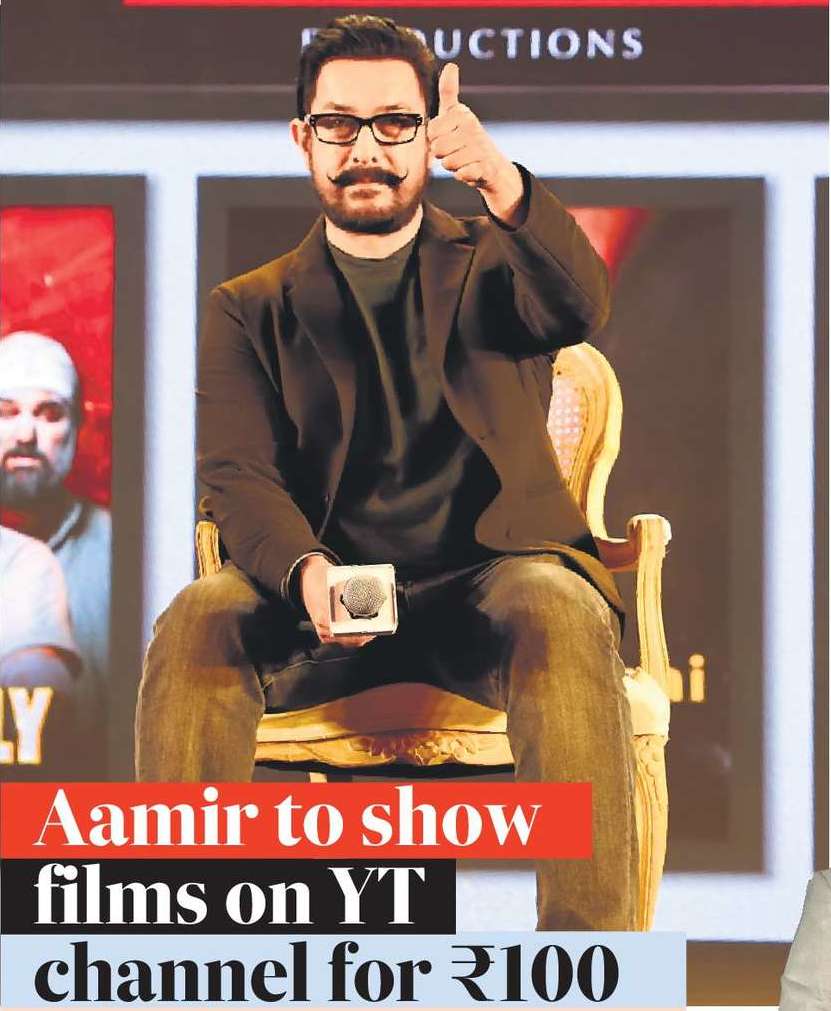
Aamir Khan, who launched his YouTube channel, Aamir Khan Talkies, in March, has decided to release his films on the platform. He made the announcement at an event in Mumbai on Tuesday. “This was the reason why I did not give away the rights of my film Sitaare Zameen Par as this was in motion. Our plan is to release every film under the Aamir Khan Productions banner on YouTube, after they complete the theatrical run. Each movie will be available at a minimal cost of Rs. 100,” said Aamir, as he spoke about his channel that already has over three lakh subscribers. The content on the channel would be ad-free.
The actor added, “After Sitaare Zameen Par, films like Lagaan (2001), Taare Zameen Par (2007) and Peepli Live (2010) will also be available on the channel. Some timeless classics produced or associated with my father (late filmmaker Tahir Hussain) such as Caravan (1971) and Hum Hain Rahi Pyar Ke (1993) will also be available, to offer a rare blend of nostalgia and cinematic heritage.”
The 60-year-old says that he also wants to use the space to promote young and independent filmmakers who struggle to find a theatrical release. “By showcasing their films on the channel, I wish to provide visibility and opportunity to emerging talent. While we will take a nominal fee from the earnings, the idea is to ensure creators benefit directly from their own work,” said Aamir.
Even if Kaho Naa Pyaar Hai now achieves 1% of what it did back then, it’s a big achievement-Rakesh Roshan
8:58 AM

Madhureeta Mukherjee (BOMBAY TIMES; January 10, 2025)
It’s a landmark year for the Roshans — Kaho Naa Pyaar Hai (KNPH), the film that set the stage for Hrithik Roshan in Hindi cinema and went on to become a smashing hit, re-releases in theatres today, 25 years later, on the actor’s birthday. As the family celebrates Hrithik’s milestone in the industry, they are also proud to present a documentary titled The Roshans, which is coming up soon. Yes, the Roshans are on a roll, and in an interview with us, Rakesh Roshan says, “Even if Kaho Naa Pyaar Hai now achieves 1% of what it did back then, it’s a big achievement.”
Congrats on 25 years of KNPH, a film that proved to be a grand launch for Hrithik. Prior to his debut, Hrithik had assisted you in four of your directorials. What made you feel that he was ready to make his entry as an actor at that point?
When I joined films at 21, I always thought that I had made a mistake by starting out at that age. So, when it came to Hrithik, at the back of my mind, I believed it would be right for him to make his debut at 24-25. I launched him because he was a good actor, not because he is my son. I had seen him in Bhagwan Dada and also in other parts as a child artiste and I realised he had matured as an actor. I was a bit on the edge because some people told me, ‘Yeh dono characters (in KNPH) bhai nahi hai, toh log story kaise believe karenge’. I told them that I always make films where it’s hard to convince people, and my job as a filmmaker is to convince them.
When KNPH released, biggies like Aamir Khan, Shah Rukh Khan, Salman Khan and Anil Kapoor were coming with their films. Didn’t that deter you?
I announced the release date (Jan 14) much earlier. Everyone advised me to change the date, but I thought if I did that, the fear would stay with me forever. It would also mean that I am not confident about my film. If some big filmmakers like Yash Chopra, Sooraj Barjatya and Subhash Ghai were coming with their movies, maybe I would consider not clashing with them. So yes, there were big actors’ releases, but I wasn’t competing with any big filmmaker. My film had two newcomers in the lead, Hrithik and Ameesha Patel, who were very confident, and I was sure about my product, so I went ahead with it, and it paid off.
You made Hrithik a superstar and a superhero. In 2003, when you made Koi Mil Gaya, the concept was fairly alien to a large section of the Indian audience. Then, you successfully created the Krrish universe. These subjects required a vision and most of all a lot of courage, would you agree?
I give credit for that to Lagaan. I watched it in South Africa at the premiere, and I was stunned by it. Then I thought, what should I make with Hrithik? I can’t do the same dance or romance. Everyone around me was strongly against the idea. They told me, ‘What are you doing? You made him such a big star, and now you want to ruin his career?’ While we were making Koi Mil Gaya, Hrithik’s other films that released during that time were not doing well, about eight of his films didn’t work and he was even given the tag, ‘One film wonder’. Hrithik and I both believed in the film, and I thought that we can’t keep making the same films, as we need to show the audience how an actor can transform himself and what he can do. I knew this movie would make people realise what kind of actor he is, and he went all out and proved himself.
You have seen Hrithik closely grow from strength to strength, and this year, he completes 25 years in the film industry. He’s seen highs and lows, but nothing has diminished the sheen of his stardom and star power. What do you attribute this kind of success to?
In one word, it’s his honesty. He’s someone who never takes shortcuts. Even when I’m shooting with him, and I say that the shot is okay, he will say, ‘Let’s do one more take, baba. I will do it better this time.’ He gives his 110% to every shot, and that’s what makes him the actor he is.
Somewhere, do you think you’ve lived your dream through Hrithik?
Not just through Hrithik, I have lived my dream through all my actors. When I write a scene, I visualise how I would enact it if I was playing the role. So, I see myself in every actor I direct.
Times have changed, today, even supporting actors are getting meaty parts, and enjoying their moment in the sun. There is a plethora of opportunities out there for actors. Did you ever think of acting again?
No, never, because as an actor, I went through a lot of trouble, and the fear has stayed with me. That phase gave me sleepless nights, of course, things changed when I became a producer and director. The good part is that I was always at it, I never left it – I did lead roles, character roles, villainous parts. I stayed back, but many actors didn’t. Hence, I am here today. I wasn’t educated, and this (movies) is all I ever knew since childhood.
What has been the biggest learning in your career – as an actor, producer and director?
One big learning in my life has been – If you don’t know how to appreciate others’ work, you can never climb the ladder. Never pull down somebody. Yahan kya hota hai…people try to pull you down and they think by doing that they will rise. But that’s not true, they will only fall. So, whenever I see a good film, I call the actor or director and tell them how much I liked what I saw.
On KNPH’s re-release in theatres, are you reminded of the time when it first hit the big screen? What was your state of mind back then?
I was extremely nervous before the release of KHPH. I wanted the film to do well for Hrithik. I called my friends to the editing room to show them the film, because you never know, if the film didn’t do well, he wouldn’t have other films. Luckily, before the film released, Hrithik was signed by Subhash Ghai, Vidhu Vinod Chopra, Sooraj Barjatya and Karan Johar. Now that it is re-releasing, I am nervous again. This is an emotional moment for Hrithik and me. Even if the film achieves 1% of what it did back then, it’s a big achievement.
The documentary – The Roshans, is dropping on Netflix on January 17, whose brainchild was it?
My friend Shashi Ranjan, who has a lot of knowledge of music and knows a lot about my father’s work, came up with the idea of making a documentary on him. I took it a step further and thought, why not make a documentary on three generations of Roshans (my father, legendary music director Roshan Lal Nagrath, my brother, music composer Rajesh Roshan and me, and then, my son Hrithik). We are alive, and I can talk more about myself than have others talk about me when I’m not there. The documentary is not about what people know about us from the outside, which is all colourful. It’s about our personal struggles and our journey, beyond how we make films, which is beautifully put out there. In our family, all these years, none of us have really pushed ourselves. My father didn’t, Rajesh and I didn’t, and neither did Hrithik. We, Roshans, have always let our work speak for us.
If Lagaan was a drum, Swades was a flute-Ashutosh Gowariker
8:11 AM
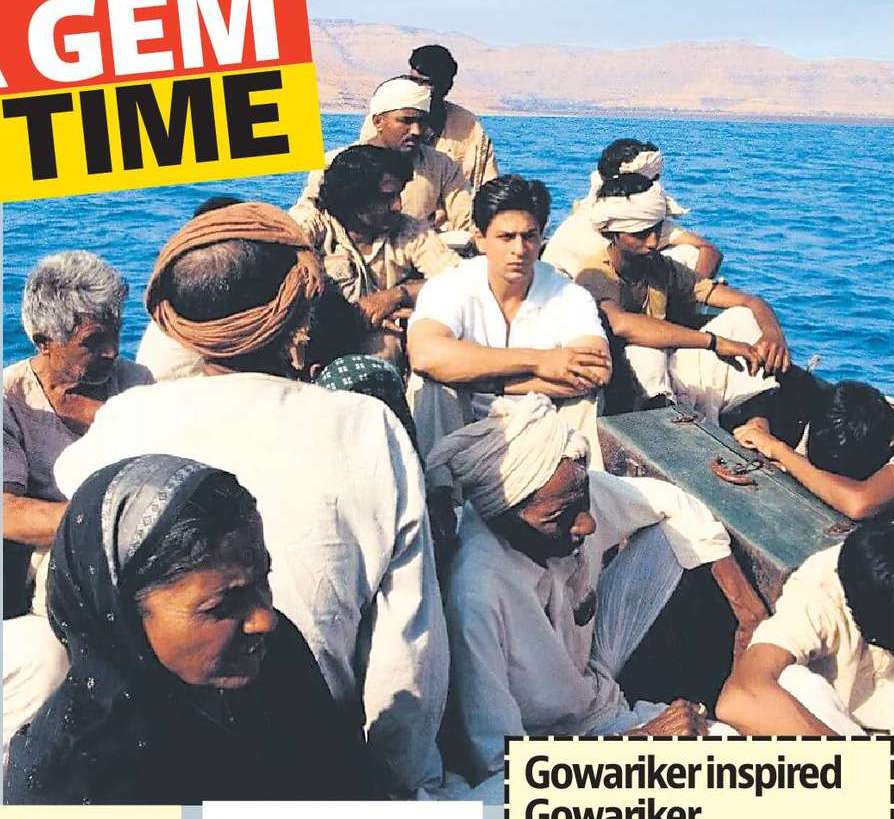
‘Ahead of its time’ and ‘cult classic’ — these are some of the terms that define the 2004 Shah Rukh Khan-starrer, Swades. Though the Ashutosh Gowariker directorial underperformed commercially at the time of its release, it is now counted among the best works of Khan and Gowariker. As the film clocks in 20 years, here are some interesting facts about it. Read on...
Akash Bhatnagar (HINDUSTAN TIMES; December 17, 2024)
SRK never watched the full film
Khan has time and again said that Swades is his favourite film in his filmography, but interestingly, he never saw the final product. In a tweet, the actor had said, “Making Swades was such an emotionally overwhelming experience that I never saw the finished product. Didn’t want the feeling to end.”
Though the film didn’t work commercially, Khan had a gut feeling about it. “I told Ashutosh Gowariker that it won’t work commercially. The film was nobly intended,” he had told Zoom in an interview, adding, “I always say it’s not the manzil but the journey that matters... Swades will always be one of my most special films.”
Gowariker inspired Gowariker
Swades was inspired by a 90s’ TV show, Love Stories, which had Gowariker act in it. The anthology included an episode titled Vapasi, in which Gowariker played Mohan, an NRI who returns to India for his Kaveri amma, and falls in love with a woman named Geeta. Kaveri amma’s role was played by late actor Kishori Ballal in both the iterations.
The one-hit wonder
Debuting opposite Khan is a dream come true for any actor, and Gayatri Joshi, who played Geeta in Swades, got to experience it. But strangely, it remained the only film in her filmography. A beauty pageant winner who represented India at Miss International in 2000, Joshi tied the knot with businessman Vikas Oberoi and bid adieu to her acting career, barely weeks after the film’s release.
The ‘Bijli’ dadi
Whoever has seen Swades will never forget the iconic ‘Bijli’ dialogue and the woman who said it. On the film’s 17th anniversary, Gowariker took to social media to reveal how she was chosen from 30 women who auditioned for the character of Dadi Setu. “All had to look up at the camera and say one word – BIJLI! The woman who said it with the most emotion got the part. She was 102.”
Unexpected after Lagaan
Gowariker’s last release before Swades was the 2001 film Lagaan, which was a huge success and even got nominated at the Oscars. So, the expectations were high post that, but Gowariker revealed to The Hollywood Reporter recently that he deliberately went against the expectations: “Swades was not the film people thought I was going to make after Lagaan. People thought my next film would be about football or some such sport. If Lagaan was a drum, Swades was a flute. It was a completely inward journey. If Lagaan was about patriotism, this was about nationalism, which is something that is not external. It’s not drum beating, it’s not jingoism. It’s all internal. You have to feel it.”
Did you know?
- Actor Hrithik Roshan was first offered the role of Mohan Bhargava, and while it finally went to Khan, Roshan and Gowariker went on to work together in Jodhaa Akbar (2008) and Mohenjo Daro (2016).
- Swades was the first Indian film to be shot inside the NASA headquarters and the NASA Research Center in Florida (US).
- Khan reprised Mohan’s role in filmmaker Ayan Mukerji’s Brahmastra: Part One Shiva (2022). Interestingly, Mukerji had worked as an assistant director on Swades. In yet another reference to the 2004 film, Jawan (2023) saw Khan’s character Azad being raised by Kaveri Amma, played by actor Ridhi Dogra.
- Made on a budget of just Rs. 20 crore, Swades failed to recover it and earned just ₹Rs. 16 crore nett in India.
- The film went on to win two National Film Awards — Mahesh Aney won Best Cinematography, while Udit Narayan bagged Best Male Playback Singer award for Yeh Taara Woh Taara.
Being a producer is a thankless job, my dad went through hell-Aamir Khan
3:49 PM
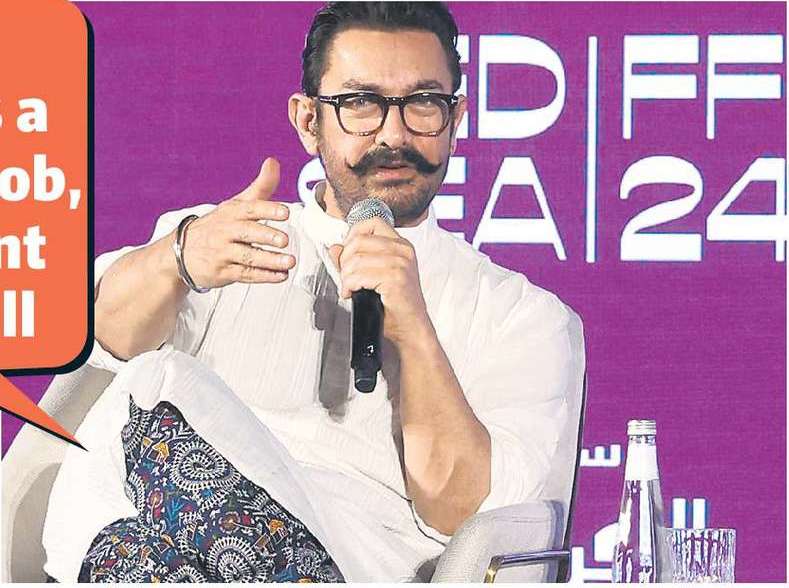
HINDUSTAN TIMES (December 7, 2024)
In a surprisingly candid revelation, actor Aamir Khan, known for iconic Bollywood films such as Rang De Basanti (2006), 3 Idiots (2009) and PK (2014), has opened up about his initial fears of turning producer. While talking at the ongoing 2024 Red Sea Film Festival in Jeddah (Saudi Arabia), where he was honoured, the actor said, “I have had the freedom to act in and produce movies and tell stories I wanted to tell, but when you are producing, the slightest slip and you risk the whole film coming crashing down.”
The 59-year-old said that his reluctance stemmed from witnessing the struggles his father, late Tahir Hussain, faced as a producer. “I’d seen my father go through hell. It’s a thankless job,” The Hollywood Reporter quoted him as saying.
However, Khan had a change of heart when director Ashutosh Gowariker approached him with Lagaan (2001). “I was afraid that any [other] producer would start arm-twisting the director,” he said, adding that after 18 months of reflection, he agreed to produce the film, which was India’s official entry for the Academy Awards in 2001.
He added, “At the time, I was still hesitating to commit, but then I thought, ‘If you want to do great work, you have to take risks’.”
Imagine Chameli without Kareena Kapoor's face; A R Rahman was a co writer in Lagaan-Sudhir Mishra
7:49 AM
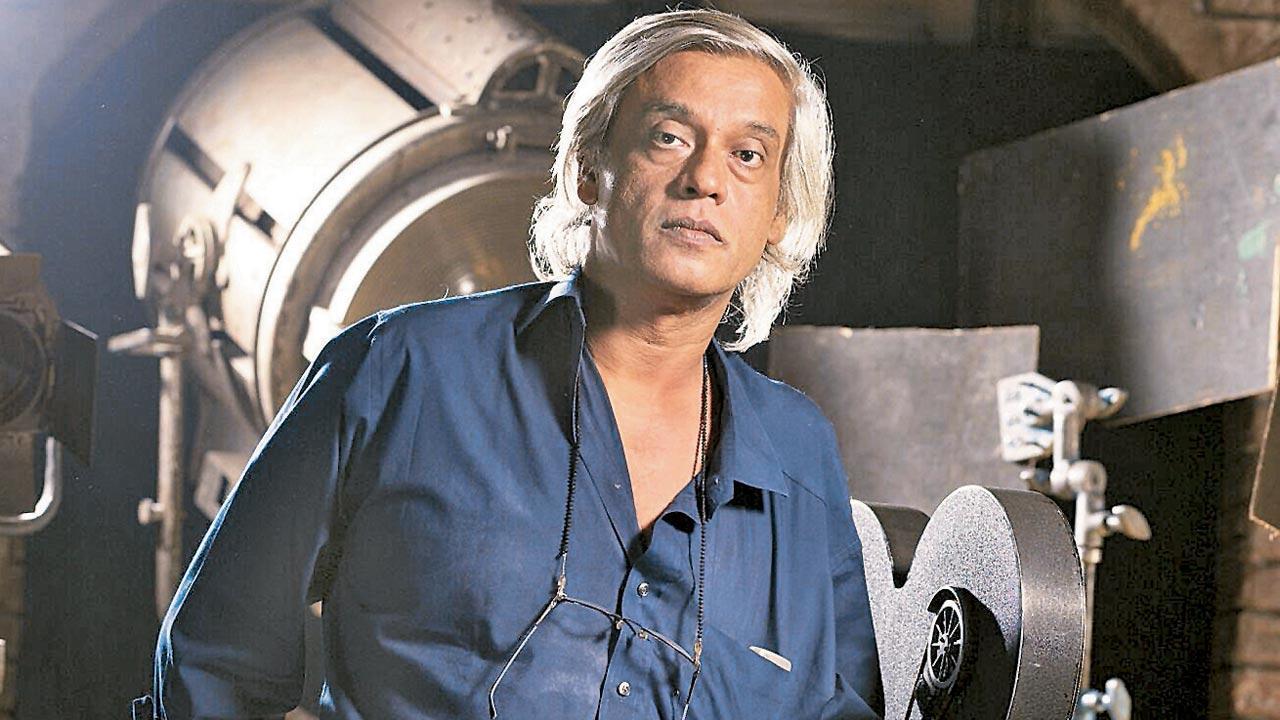
Niharika Lal (BANGALORE TIMES; November 8, 2024)
Sudhir Mishra sees filmmaking as a constant process of rewriting. But, he insists that filmmaking is not only a director’s medium. “Actors are co-writers of the film. Every actor has a different process, and the director’s job is to follow their process,” he says. In a recent interview, the filmmaker opened up about the making of Tanaav Season 2, his love for long-form storytelling, how he connected with Kashmir, and what it’s been like working with actors throughout his career.
‘WHAT’S THE POINT OF ACTORS IF EVERYTHING IS PRE-WRITTEN’
Sudhir Mishra tells us, “I consider cinema a constant process of rewriting. You rewrite with locations and with the actors, otherwise, what’s the point of actors when everything is pre-written? Imagine Hazaaron Khwaishein Aisi without Chitrangda Singh’s face, or Chameli without Kareena Kapoor, or Serious Men without Nawazuddin Siddiqui, Yeh Saali Zindagi without Irrfan Jhan, or Dharavi without Om Puri and Shabana Azmi. You can’t – they’re co-writers.”
He adds, “Then, the camera takes its position, the location speaks, and you gather all that material and sit with the editor. The film you imagined may not be there, so you try to find it. You add music – take A R Rahman’s score in Lagaan. Put another piece and the film changes. So, for me, Rahman is a co-writer of Lagaan.”
‘THE FILM I MAKE SHOULD IMPACT ME’
For Mishra, discovering the film is the aim of making a film. He says, “When I make a film, I should learn something I didn’t know before. The film should impact me – that’s the fun, the excitement, the therapy.”
Sudhir Mishra says all his films have surprised him – sometimes for the better, sometimes for the worse. “You can’t say it’s not the cinematographer’s medium – then why do you hire him? The director is a bit like an architect or a designer of the overall film. A director is like a conductor of an orchestra. Sometimes he writes the score and also conducts it,” he adds.
‘After making Tanaav, I understand Kashmir better’
About making Tanaav and shooting in Kashmir, he says, “I just love Kashmiris. They are really compassionate, warm, but also very sad. So, you have to work with that rhythm. I tried to bring out the human aspect (in the show). After making Tanaav, I understand Kashmir better.”
Talking about films on Kashmir and how he managed to avoid any controversies, Mishra says, “Most films about Kashmir are made by outsiders, and many of them don’t have a deep enough connection to the place. If your purpose is not to offend, and you approach things without bias – seeing them as they are – no one gets offended. If you’re not a sensationalist, not pretending to be the final word on anything, not strutting around like someone who thinks they know everything, there’s no issue.”
--------------------------------------------
About working with Rajat Kapoor, the filmmaker says, “You just have to indicate the character to Rajat and he will bring himself to it”
--------------------------------------------
Talking about Irrfan, Sudhir Mishra says, “He knew the character and was more interested in ensuring the entire scene works, because if the scene worked, he worked”
The primary reason for Laapataa Ladies getting picked is Aamir Khan’s previous record with Lagaan-Varun Grover
3:04 PM

Getting nominated for an Oscar is not just about having a universal story, but also about having the funds to campaign for it
Mohar Basu (MID-DAY; September 29, 2024)
In a year filled with heavyweights, it was Kiran Rao’s Laapataa Ladies that emerged as India’s official entry to the 2025 Oscars. Unfolding in the heart of rural India, this film is a commentary on patriarchy, which juxtaposes humour with deep societal critique. With a backdrop of dusty Madhya Pradesh villages and real-life locales, the film captures the essence of a lost India, where women disappear—figuratively and literally—amid the chaos of cultural expectations.
When the Film Federation Of India revealed that Laapataa Ladies would carry the nation’s hopes at the Academy Awards, cinephiles cheered—but not everyone was convinced. Selected from 29 films, including Animal, Kalki 2898 AD, and All We Imagine As Light (AWIAL), the victory was both sweet and surprising. While many celebrated Rao’s comeback and the film’s understated brilliance, others couldn’t help but voice their discontent over what they saw as missed opportunities. Fans of All We Imagine As Light, a Cannes sensation, took to social media in droves. The Payal Kapadia-starrer is considered to be one that has a real shot at Oscars. Their argument? That Laapataa Ladies, while charming, lacks the international appeal of its more polished competitors.
Celebrated writer Varun Grover tweeted, “I mean it was expected that the chaaploos mandali (who can’t even write a citation with any attention to detail or meaning) will never select a film by someone who has questioned their authority. And, it’s still heartbreaking. We rarely get such a strong contender as AWIAL. At the same time, happy for Kiran Rao and her team. They made a sensitive, progressive, rooted film told beautifully through a new set of actors (and a hate-speecher)—and totally deserve a shot at glory. Best wishes to them. Jai Ho!”
While Grover didn’t wish to elaborate on the subject beyond this tweet, an indie favourite filmmaker tells us: “It’s undeniable that AWIAL was a stronger contender and should have been picked. The primary reason for this getting picked is Aamir Khan’s previous record with Lagaan. His ability to get visibility increases his chances of actually bringing home the Oscar.”
Laapataa Ladies was a unanimous decision, Jahnu Barua, the head of the Federation, told us. He told mid-day, “The film resonated deeply with us because it brings forward global social issues that are rarely explored on screen. As jurors, we want to select a film that has the best chance of making it into the Oscar nominations. The jury did deliberate over the AWIAL. It’s a significant work that deserves attention, especially since there were high expectations surrounding it. However, we felt that there were technical aspects that could have been stronger. When selecting a film for the Oscars, many factors come into play. While the subject was undeniably powerful, and Payal has crafted it beautifully, we ultimately had to make a tough choice. We wish we could have chosen both.”
So what is one looking for while choosing India’s entry to the Oscars? We asked Pan Nalin about his film Last Film Show (also known as Chhello Show) which beat RRR to get chosen as India’s official entry, much to the horror of fans.
Nalin said, “In our case, it was a complete surprise. You know, we were not even sure that we would ever get selected. The buzz in India was of very big, popular films. But when it comes to Oscars, it’s not really about popularity, but the film which will speak to the members of the academy in the US. So, from that point of view, I guess they must have voted for us. And once we become an entry, it’s a big work, you know, we need to do as a producer and director. It’s really huge work. You know, you need to mount a massive campaign in Hollywood. You need to organize quite a lot of screening for the members of the Academy. So, in our time, there were, for example, 102 films from 102 different countries. And the first round of voting leaves 15 film shortlist nominations. So, we were shortlisted. Voting is done purely by the Academy. India has no role to play there. All the academy members have to watch the film in order to vote. When we got shortlisted, you know, it was after a 21-year gap. Before that, the film which got shortlisted was Lagaan and went on to get the nomination. Our journey stopped there. And we also realized a couple of things while we were doing the campaign. Because we had no idea, we were learning as we were running the campaign for India. When the Oscar shortlist is announced, it’s actually the map of each country shown in the Academy screen. So, it’s neither the director nor the film. It’s actually you who is representing a country. You are representing a flag when you go there. The film was luckily very heavily appreciated. We were invited at the Academy to do multiple screenings. But where we lacked is time and money. Because you do need a lot of funds, you know, to mark the campaign. And advertising in international media and the US media is really expensive. The billboards alone are costly and you need to really have a great campaign. In the past five years, the publicity campaign has become aggressive and expensive. It’s very much like an election. You have to really make sure that every vote is earned. And the only way to earn a vote is maximum people have to see your film, who are the members of the academy.”
Nalin says the jury is looking for a universal story. “It is important because we were already acquired by an American distributor called Samuel Goldwyn Films. The fact that it speaks to an international audience is a plus. It is a gamble that must speak to international jury and voting committee members of the academy. The film has to be universal to start with because most of the Academy members are American, you know, I would say almost 85 per cent of them. Since the past 15 years, it has been very inclusive. Lots of foreign country members are being invited who are in the Academy. Now, I am a voting member as well. We know that if we had the right amount of funds and time, we would have gone much further in the campaign. But we had no example to fall upon. We had no master class to learn something from other examples. Because none of the films from India had made it up to that in 20 years, since Lagaan. It makes sense that Aamir Khan has a shot at this again. Laapataa has a chance to make it.”
The one element connecting the two films is Chhaya Kadam—who appears as Manju Mai in Rao’s film and is currently in France for the premiere of AWIAL.
She told us, “I’m absolutely thrilled and overjoyed! It’s such a proud moment for me to see Laapataa Ladies chosen as India’s official Oscar entry. At the same time, I’m in Paris for the premiere of All We Imagine As Light, which has been shortlisted by France as a possible submission for the 2025 Oscars. It’s truly exciting to have both films recognized on an international stage.” Is there a chance for AWIAL still? “I would have wanted to see them both at the Oscars. It might still happen,” she said optimistically.
Nandini Ramnath, film critic, Scroll.in, tells us choosing the best pick is a tough choice regardless, because of the diversity of the films being made.
“A few factors work in the favour of Laapataa Ladies: it has Aamir Khan as one of three producers; he has had previous experience with Lagaan; Laapataa Ladies is easily available to the Academy voters by virtue of already being on Netflix all over the world. I have watched both films. They are very different. Laapataa Ladies is a sweet modern-day fairy tale told in a realistic manner. All We Imagine As Light is a textured exploration of the shades of feminine desire and a quest for meaning. Given the current tendency of the Oscars to be more receptive to all kinds of storytelling styles from around the world, rather than just a certain kind of global-local international film, Payal Kapadia’s feature debut would have been an excellent contender too, especially given its Cannes award. Movies speak differently to different sets of viewers. What works at a film festival often doesn’t work for the Oscar voters. In general, films that can communicate their themes well and have layers in their plotting, performances and filmmaking language can travel to any corner of the world, regardless of the theme.”
When we asked her how she thinks politics and personal biases play into the selection process for India’s Oscar entries, Ramnath has the last word, “I think it fair to say that the Film Federation of India, for all its drawbacks, has been trying to keep away from political choices. If that were the case, the jury would have picked a propaganda film.”
Our films don't do good campaigns for Oscars-Guneet Monga
8:30 AM
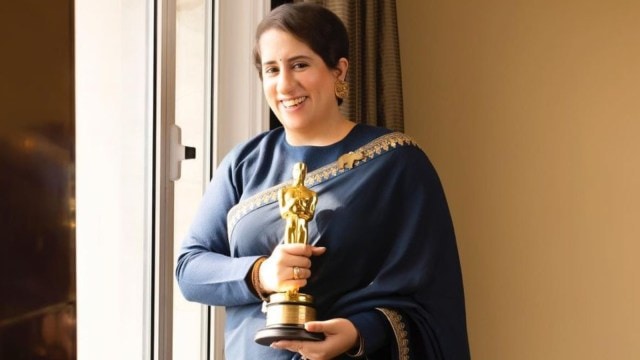
Niharika Lal (BOMBAY TIMES; September 20, 2024)
With The Elephant Whisperers and Period: End of Sentence, Guneet Monga has two Oscar winning productions to her name. In a recent chat with us, the filmmaker reveals what it takes for an Indian film to succeed at the Academy awards.
“It’s important to select films with US distribution,” she reveals, adding, “The top 10 distributors will handle distribution to their theatres, manage press and leverage their relationship with the media. It’s important to work with the people who have the know-how since they have been doing this for the last 70 years.”
Guneet recently adapted Gyaarah Gyaarah from the Korean series Signal. For her last film Kill, she brought in Se-yeong Oh, the fight choreographer from South Korean director Bong Joon Ho’s Snowpiercer. Given her experience and insight into how Korean films work, what does she believe Indian dramas and films can learn to achieve a similar breakthrough?
She says, “I’m a huge fan of Korean cinema, whether it’s their series or films, there’s so much innovation. I don’t think India lacks talent. We have the talent and the know-how. It’s just a matter of time and consistency. I think that we need to open up our international channels. Korean cinema travels through festivals, engaging in conversations with buyers. Kill was able to do that, to the point where we sold a remake to the John Wick team.”
She adds, “So, there are two key aspects: first, the story you’re telling, and second, the business of the film – how far can you take it? Did you open it at Cannes, and from there, did you have a conversation about worldwide distribution? That kind of innovation in the business needs to happen at scale.”
We need to open our films to int’l channels
Every year, when the Academy Awards are announced, the question is: when will Indian films secure their place at the Oscars? So, what does India need to do to see more of its films recognized at the Oscars?
Guneet shares, “I’ve been trying to articulate and explain for so many years that you have to get into that country’s distribution. Jab hum log jo wahan ja kar campaign karte hain, at that time, we have like 40 or 30 days. In 30 days, you can’t learn the market and ace it, right? It’s basically American awards, so you have to work with American distributors. It’s the core of it.”
She adds, “Lagaan got nominated (for the Best Foreign Language Film at the 74th Academy Awards) because Sony Pictures Classics did the campaign with Aamir. And The Lunchbox would have been nominated agar India select karta, the film would have gone far. And if we do good campaigns, hum paanch saal mein nominate bhi ho jayenge, jeet bhi jayenge.” But as of now, we don’t do good campaigns.”
‘My focus is on building labs for mid-career women’
At Cannes this year, it was announced that Guneet will head the initiative WIF: India, part of the global WIFTI (Women In Film & Television International). Talking about it, she says, “I’m learning from the chapters around the world. I’m very invested in women in mid-career because they take breaks due to pregnancy, shaadi, and there’s always a bit of a career break. Then they find it very hard to come back – to be able to make a film, to get back into the circuit of things. So, a large part of my conversation is about building labs for mid-career women. To make their careers so shiny that producers will want to reach out to them and say, ‘Oh, aap ne ye wala programme kiya hai, so we want you to make a film for us.”
I take up films and TV projects to fund my love for theatre-Makarand Deshpande
8:06 AM
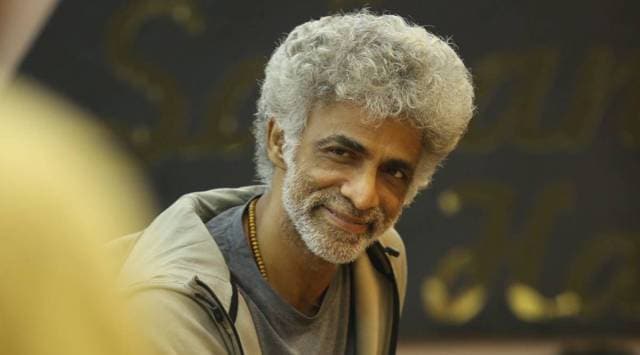
Neha Maheshwri (BOMBAY TIMES; July 16, 2024)
Known for his unique literary perspective and ability to transform life experiences into compelling stage performances, Makarand Deshpande captivates theatre enthusiasts, drawing them in large numbers to witness his vision come to life on stage. Currently, he has a busy week; he is set to stage seven plays (‘Patni’, ‘Sir Premacha Kai Karaicha’, ‘Manushya’, ‘Qatl’, ‘Time Boy’, ‘Ram’ and ‘Sir Sir Sarla’) as part of his group Ansh Manch festival at Prithvi Theatre.
‘I wanted to pursue something from which I didn’t have to retire’
Makarand was deeply involved in sports, particularly cricket, during his younger days. However, one day, while playing on the field, he was struck by a sobering thought about the longevity of his career: he would eventually have to retire. That realization sparked his love for acting.
He shares, “I just couldn’t bear the thought of retiring from cricket and wanted to pursue a career that wouldn’t require me to stop. I was cast in a play during college and enjoyed the process immensely. That was the beginning of my journey in theatre. I have spent more time on stage than on TV and film sets.”
‘Theatre is my existence now’
For Makarand, theatre is not a job, it is not even a passion. In fact, he says, it’s not even his love, it is his life. “When something becomes your way of life, you stop seeking validation,” he says, explaining why comments about the industry not giving him his due do not bother him.
“I think this transformation happened around seven years ago. Theatre is my life. Main isse jeeta aaya hoon aur karta aaya hoon aur usme se seekhta bhi aaya hoon. I am not a formally trained playwright or theatre person; I learnt on the job and from life. Mujhe zindagi ne jo jo sawaal diye uske jawaab mere naatak mein mile,” he shares.
‘As a writer and director, I feel more in sync with theatre’
As the conversation shifts to his preferred art form, he reminisces how he has always chosen theatre over big-screen recognition. “In the past, I wouldn’t dedicate more than 10 days to any film project. I would request small roles so I could complete the schedule and get back to writing plays. When my friend Ashu (Ashutosh Gowariker) was making ‘Lagaan’, he offered me a role and I was required to be on the set for six months. He even offered me a writing table because he knew about my love for theatre. However, I didn’t want to devote that kind of time to a film set. As a writer and director, I feel more in sync with theatre as it is connected to life, which is always moving. There is no alternative to living life. I take up films and TV projects to fund my love for theatre.”
Aamir Khan acknowledged that Gadar was at least three times bigger than Lagaan-Anil Sharma
7:58 AM

Renuka Vyavahare (BOMBAY TIMES; August 12, 2023)
It’s the season of sequels in Bollywood and Hollywood. Twenty-two years after Gadar: Ek Prem Katha, the original cast – Sunny Deol, Ameesha Patel and Utkarsh Sharma – reunite in Gadar 2. Filmmaker Anil Sharma talks about why he decided to make the film after over two decades and the huge expectations from Gadar 2. Excerpts:
‘Gadar was a huge brand, but I didn’t want to cash in on it’
Anil says, “It’s the season of sequels. Everyone is making one, and Gadar was a huge brand to cash in on commercially, but that was never my objective. I didn’t want to simply resurrect a brand just for commercial purposes, unless I had a genuine story to tell that warranted a sequel. I was intrigued by the future of Tara Singh’s family. ‘Uske parivaar ka aage kya hua?’, this question hounded me. Writer Shaktimaan Talwar, who wrote the previous film, came back to me with a story that deserved to be made. That’s how Gadar 2 happened.”
Despite the immense success of the first film, the director has released himself from the clutches of expectations. “I am not the kind to put myself under this pressure. Both these films are people’s films; they will decide Gadar 2’s fate.”
‘Aamir acknowledged that Gadar was at least three times bigger than Lagaan’
Speaking of comparison, who can forget Gadar’s epic clash with Aamir Khan-starrer Lagaan: Once Upon A Time In India when it was released on the same day in 2001. Lagaan went on to win an Oscar nomination, and Gadar set new box-office records.
On his film’s 20th anniversary, Aamir had said, “If Lagaan was even one per cent less of a film, we would not have stood a chance.” Sharma reminisced, “Aamir was kind enough to say and acknowledge that Gadar was at least three times bigger than Lagaan.”
‘Gadar was a story about love transcending borders’
Along with the success, Gadar also met with its share of criticism. The director says, “I don’t remember my film getting great reviews from critics. Logon ne meri picture ko chalaya hai because they could emotionally connect with it. It was a story about a family and love transcending borders. I hope the audience is able to feel for the characters and their story once again. Sunny Deol is one of our finest actors. I have closely worked with him and the Deol family, they are nice people and that reflects in their performances as well. It was also nice to have Ameesha (as Sakeena) and my son Utkarsh back.”
‘We wanted Udit Narayan to reprise Udd jaa Kaale Kaava in Gadar 2’
Gadar’s music continues to be a roaring success. Uttam Singh’s iconic composition Udd jaa Kaale Kaava has been recreated and sung by Udit Narayan. Sharma says, “We have retained two songs from the original and Mithoon has done a brilliant job on the new album and reprising the old melodies. We wanted Udit to reprise the song. Film industry sabko bahut jaldi bhool jaati hai. I know that’s how new talent gets a chance and that’s fine. I am not averse to new people, but I don’t believe in overlooking someone only because he has been around for 40 years. He was the perfect choice.”
Nitin Desai’s sets were a visual custard of colours and opulence
8:50 AM
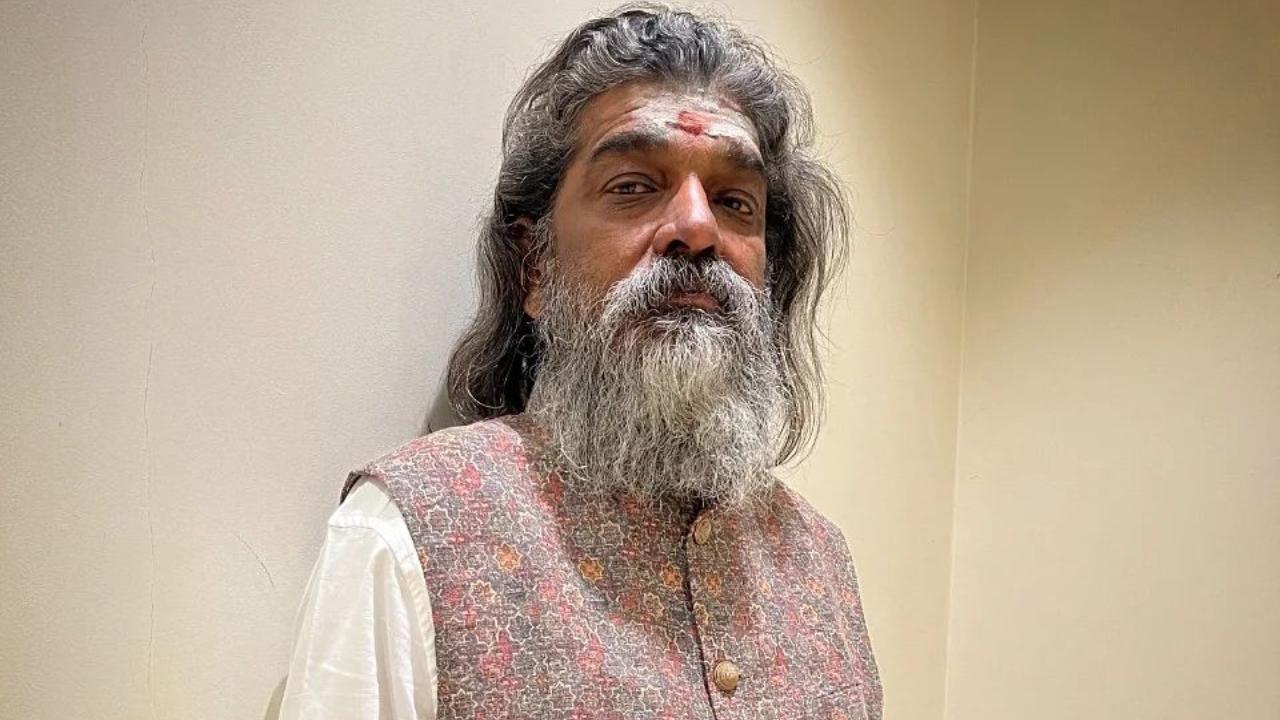
Avijit Ghosh & George Mendonca | TNN (THE TIMES OF INDIA; August 3, 2023)
As word of veteran Bollywood art director Nitin Desai’s death got around, several personalities paid homage to his creative spirit. Television producer Siddhartha Basu, who collaborated with him on several shows, including the iconic Kaun Banega Crorepati (2000), tweeted that Desai conjured “world class installations on an industrial scale.”
Apart from films and TV shows, Desai was much sought after for organising state fun ctions for Maharashtra such as the Republic Day tableaus. He was to set up Mumbai’s popular Lalbaugcha Raja Ganpati installation this year.
Actor and BJP MP Hema Malini remembered the art director as “a warm human being.” Actor Riteish Deshmukh described him as “soft spoken, humble, ambitious & a visionary” who had contributed “immensely to the growth of Indian cinema.”
As an art director first—and later in the more expansive capacity of a production designer—Desai elevated the projects he was associated with, especially those of film directors Vidhu Vinod Chopra, Sanjay Leela Bhansali and Gowariker.
There’s a harmony and continuity of palette in the way most scenes are crafted in Bhansali’s Hum Dil Chuke Sanam (1999). “A French production company called me up to find out where the location in the film was. I had to tell them the whole thing was a set built at Film City,” Desai said in a 2003 interview.
Bhansali’s Devdas was a visual custard of colours and opulence, and offered a contrast to the earlier film versions of Saratchandra’s novel portrayal of 19 century Bengal. Desai’s artwork turned colours into a language and helped Bhansali communicate his alternative vision. Just a year earlier, the art director had displayed his versatility in Gowariker’s anti-colonial cricket drama, Lagaan.
The terrain was totally different: the desert of Kutch where a famine looms. Desai’s production design of the village and surroundings is delightfully restrained, much in tune with the movie’s needs and mood. Just as he is pompish in the medieval tales of romance and valour, Gowariker’s Jodhaa Akbar and Panipat (2019). In his own way, Desai revolutionized art direction in Hindi cinema.
A student of photography at JJ School of Arts in Mumbai, he shifted to the world of moving images in the 1980s. Desai started out as a fourth assistant to the renowned art director Nitish Roy in Govind Nihalani’s telefilm, Tamas (1988), a searing tale on the horrors of Partition. He also assisted Roy in Shyam Benegal’s Bharat Ek Khoj and worked independently in the DD serial, Chanakya.
But he caught attention and found appreciation with Vidhu Vinod Chopra’s 1942: A Love Story (1994), which underlined his eye for details and flair for the eye-catching. The film earned him the first of his three Filmfare Awards: Khamoshi: The Musical (1997), Devdas being the other two. He also bagged four national awards for production design: Dr Baba Saheb Ambedkar’ (1998), Hum Dil De Chuke Sanam, Lagaan and Devdas.
In 2005, Desai set up N D Studios, a sprawling facility for filmmaking and television work, spread over 52 acres. It was his dream venture where many big projects such as mega reality tv show, Bigg Boss, were lensed. Sadly, this is also where the dream died.
(With inputs from Mohammed Wajihuddin in Mumbai)
-----------------------------------------
Final act: Help for tribals, NDRF amid landslide
Navi Mumbai: Nitin Desai provided 10 tents to house victims and rescue workers at the landslide-hit Irshalwadi hamlet in Khalapur taluka. The tents were kept at two different locations to help victims and government staff involved in rescue and relief. Desai also provided a night's accommodation and dinner to 56 personnel of the National Disaster Response Force 5th battalion-Pune which carried out the rescue work. Desai’s aid came when the administration was struggling with the logistics at a remote location in the immediate aftermath of the incident.
I don’t think there has been any film as romantic as Gadar-Sunny Deol
8:43 AM
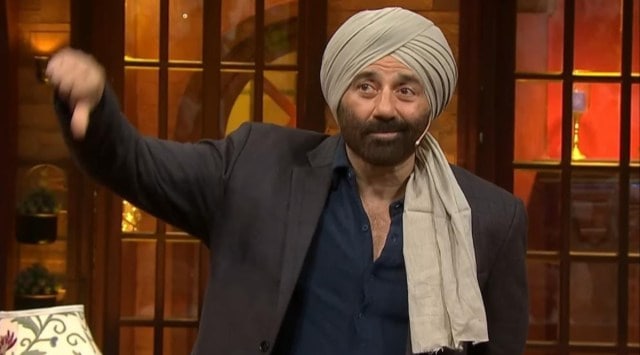
Madhureeta Mukherjee (BOMBAY TIMES; July 24, 2023)
Whatever Sunny Deol does – he packs a punch. When he appears on screen, he’s larger than life, when he delivers his dhai-kilo heavy dialogues, the impact stays. And when he sits down for an interview (rare occasion), he flows. Fearlessly! Much like his on-screen avatar. On August 11, he will be seen in theatres as the lovable Tara Singh in Gadar 2, directed by Anil Sharma. Excerpts from a conversation...
In the past, you have said that no film is as romantic as Gadar: Ek Prem Katha. Today, 22 years later, when you are all set to release Gadar 2, do you still believe that?
Absolutely! I don’t think there has been any film which is as romantic and has touched families and youngsters in a way that film did. People made Gadar what it is. It has got so much love all these years, and when it was released in theatres again recently, I saw how happy people were. It seemed like they were watching a new film. It gave me a boost.
Gadar: Ek Prem Katha was a love story with the underlying theme of patriotism. In an interview earlier, you said that we shouldn’t be giving films tags like ‘patriotic’ etc. How would you describe Gadar 2?
I don’t know why we need to tag films. Jo film dekhte hai, woh tag ke liye nahin dekhte hai, they get absorbed into the world of the film. People didn’t go to see Gadar because of the action. In fact, the action was not of that calibre, and we didn’t have special effects back then. The action was driven by pure emotion, where a person is protecting his family and fighting for a cause. Tara Singh (the character played by Sunny) has emotional strength; it is not just about physical strength. For Gadar 2, we had to come up with a subject around that period, so there is little change to the ambience. The audience believed in those characters (in the first film) and with Gadar 2, they will be reliving it all over again.
You are the OG action hero, and your kind of action has always been more raw and real. Today, the action we see in our movies is far more stylized, and many say it is of international standards. How do you view it?
In our time, we didn’t have all these gadgets and VFX. We would fall and get hurt. I have suffered multiple injuries and gone through back surgeries. Today, we are copying everyone, we are not creating our own action. Earlier, we would ourselves be involved in our action scenes, and be a part of creating the action scene. The action today has become too gimmicky, yes, it might look good on screen, but earlier there was a certain beauty to it, which has been destroyed. I have nothing against what people are doing, and if the audience is connecting with it, maybe the action is working fine.
Do you ever feel unnerved by the current uncertainty that everyone is talking about – that no one from the movie business can figure out what is really working at the box office?
I have never felt unnerved by box-office numbers as I believe that there is so much to do. There are many ways of portraying stories, but every Friday, we change our vision, and we say that, ‘Yeh nahin chal raha hai, toh aisa karo’. But this has been happening forever, it’s not new. Yeh jo hum uspe baith ke thesis karne lagte hai, we don’t need to. We need to believe in our stories and tell them to our audience.
Gadar: Ek Prem Katha had clashed with Lagaan: Once Upon a Time in India, and there are many big box office clashes this year. Even Gadar 2 is clashing with another film on a Friday. What do you feel about that?
Gadar did 100 crore plus, while Lagaan did much lesser. I don’t understand why people compare – whether it’s from the business or likeability point. Gadar didn’t have the perception, people thought it is this masala film, yeh purani type ki picture hai, purane type ke gaane hai. On the other hand, people thought Lagaan was classic, etc. The so-called people who talk about films had run down Gadar completely. It went on to become a people’s film, and they loved it. At award shows, I remember that they made a spoof of Gadar, but we weren’t bothered by it. It has happened with some of my other films too, like Ghayal and Dil, which clashed. There is no comparison, but people like to do it. What I am trying to say is that jo film zyada acchi hoti hai phir bhi aap usko doosre films ke barabari mein le aatey ho. Jis cheez ki barabari nahin hai, mat karo.
How attached do you get to your success or failure?
Everyone likes success, obviously. I get flustered at times, not because of the failures, but because the perception game is so big that good content/cinema often doesn’t get the credit it merits. What is not as good, uska dhanda accha ho jaata hai because of perception. The world is moving at such a fast pace right now that everything is a fashion – how you talk, what you eat, what you watch. Mostly people don’t have their own taste, as they are following the rest. I feel what has gone wrong in our country is that we are all just following trends like – we should eat this, follow this diet, that routine, khane mein yeh add karo, woh mat karo. Today, everyone’s make-up and clothes are so similar that they all look similar. So rather than indulging in the emotion, our movies want to reflect that and maybe the audience wants it to be that way. I guess that is the way it is.
Three generations of actors at home, what are the conversations like? Is your son Karan’s taste in cinema different from yours?
In our family, we are all like reflections of each other. I don’t know how my kids are going to handle today’s world out there (laughs!), but they will have to. How they will do it, I have no idea. I never knew much when I joined the industry, so I would be shocked by things, because at home it was a different reality. But eventually, you start seeing the world, understanding reality and adapting to it.
When an actor turns down a career-defining role over scheduling conflicts or creative differences
8:30 AM
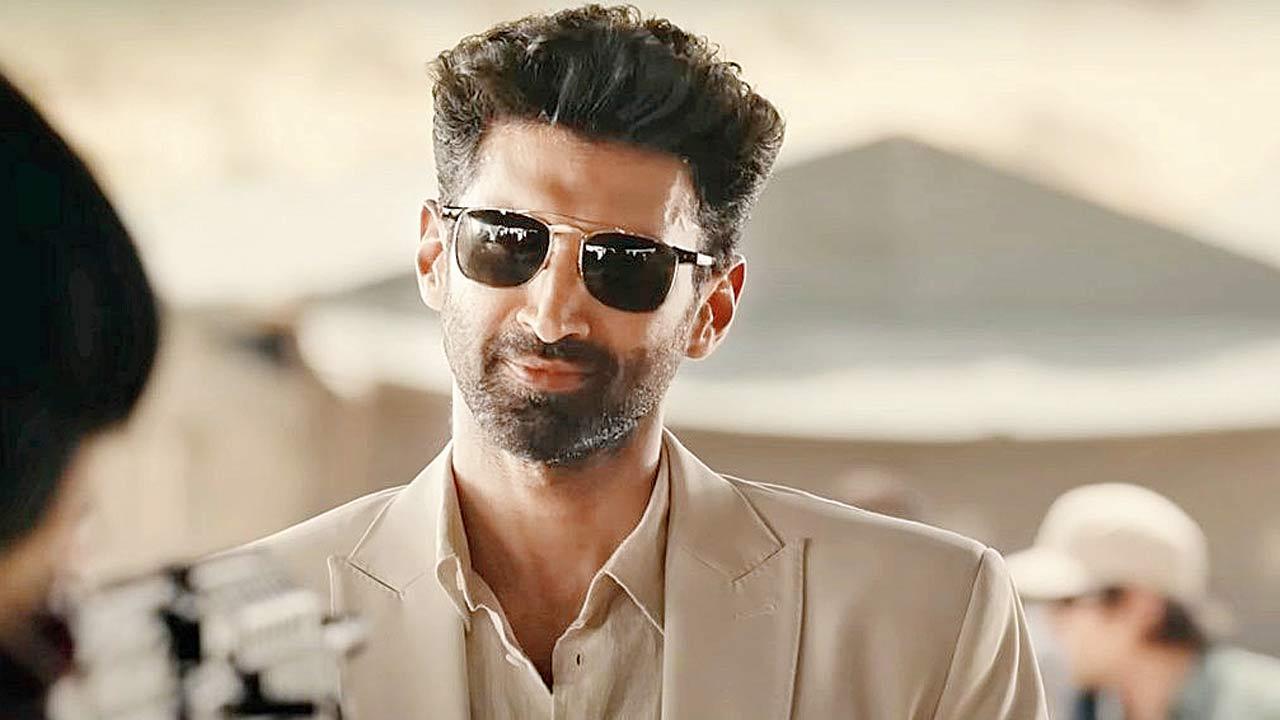
When one actor turns down a career-defining role over scheduling conflicts or creative differences, another actor wins
Rajeev Masand (HT BRUNCH - July 1, 2023)
The Indian adaptation of The Night Manager, whose final lot of episodes goes live this weekend, has changed both the industry and the audience’s perception of Aditya Roy Kapur dramatically.
The actor was never regarded as a serious player, despite having starred in hits such as Aashiqui 2 (2013) and Malang (2020). But many are predicting that his committed, restrained performance as a suave undercover spy in The Night Manager could change the course of his career. Aditya was cast in the show after Hrithik Roshan dropped out, reportedly over creative differences with the makers.
Most actors will tell you that a lot of thought goes into what they say yes to. That they take weeks, sometimes months, before they commit to a film or a new project, because one has to be sure it’s the thing one wants to spend the next six months invested in. Every actor also insists that saying no is as crucial a decision (if not more so), one that requires as much thought and careful consideration.
Because, let’s face it, no one wants to be the guy who failed to see potential in what turned out to be a blockbuster. You can bet Abhishek Bachchan hasn’t forgiven himself for turning down Lagaan (2001); Harsh Varrdhan Kapoor must realize that saying no to Andhadhun (2018) was a bad idea; and even Shah Rukh Khan must wonder how he didn’t see the merit in doing Munna Bhai MBBS (2003).
But more importantly (and they’ll never admit this), no one wants to be the guy who said no to a project that went on to change another actor’s career. That point is made well in a key scene in Luck by Chance (2009), Zoya Akhtar’s sharp rumination on the Hindi movie business. Moments after Hrithik’s superstar character Zafar Khan is introduced to the up-and-coming Vikram Jaisingh (Farhan Akhtar) at an industry party, a top producer asks him if the newbie said thank you to Zafar. After all, that kid wouldn’t be at this party, wouldn’t be poised for a promising career, if Zafar hadn’t turned down this one big film that the kid has now landed. Zafar’s expression, as the camera stays on him, is an unmistakable cocktail of scorn and regret.
When Ranveer Singh debuted in Band Baaja Baaraat in 2010, dazzling the audience with his inspired performance as a Saharanpur boy who starts a wedding-planning business with his female friend, most people felt it was a role tailormade for the young actor. But the truth is that writer-director Maneesh Sharma and producer Aditya Chopra intended the film for Ranbir Kapoor, who has admitted he couldn’t see himself in the role and hence politely declined.
The success of Band Baaja Baaraat heralded the arrival of a charming leading man with solid acting chops. In his very first film, Ranveer was able to show he could transform into the character he was hired to play. He also had the swag of a bona fide star. Ranbir, meanwhile, who has gone on to make some relatively oddball choices (Besharam, Bombay Velvet, Shamshera), has had no trouble demonstrating his incredible acting skills, but hasn’t exactly revealed an instinct for picking hits.
To apply the logic of that producer in Luck by Chance, and to suggest that Ranveer might not have become a star if Ranbir had done Band Baaja Baaraat, is to grossly undermine Ranveer’s talent and potential. But there is no question that few newcomers have had the kind of career-making debut that Ranveer was lucky to have in that film.
Preity Zinta had already featured in major projects such as Mission Kashmir (2000), Dil Chahta Hai (2001), and Koi… Mil Gaya (2003), but it wasn’t until Kal Ho Naa Ho (2003) that she skyrocketed to superstardom. That film was originally offered to Kareena Kapoor, who refused to do it unless she was paid as much as Shah Rukh Khan. Producer Karan Johar felt that was an unfair ask. Kal Ho Naa Ho became one of PZ’s biggest hits, and led to a falling out between Kareena and Karan. Kareena has since said that she was “young and foolish” to let go of the film.
Sadly, for actors, no crystal ball has been invented yet to help them always pick hits. It’s why instinct is generally accorded more importance than talent in the movie business. It’s also why actors struggle for weeks and months over the decision to say yes or no. Each wrong choice has far-reaching consequences.
Neeraj Ghaywan bats for Kachra; calls out food app for being ‘extremely insensitive’
8:19 AM
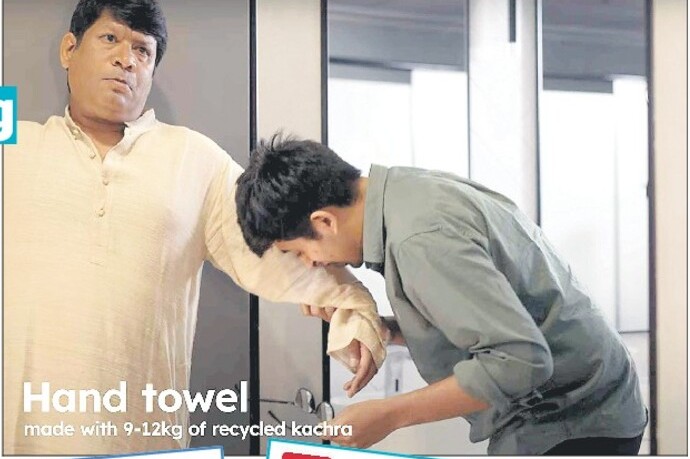
Vinay MR Mishra (HINDUSTAN TIMES; June 9, 2023)
On Thursday, filmmaker Neeraj Ghaywan slammed a video campaign by food aggregator Zomato, calling it “extremely insensitive”. The now-deleted video saw actor Aditya Lakhia, known for playing Kachra in Lagaan (2001), showcasing the importance of recycling garbage.
Ghaywan says, “It (the ad) has the savarna saviour complex of having an oppressor caste emancipate a Dalit. The take should have been progressive. It celebrates saviours, but puts the oppressed in the same cycle of being a perpetual victims.”
The 42-year-old says the ad, which showed Kachra’s character as a tablecloth, “normalises casteism”. He rues, “It is insensitive to use a character to make a ‘funny’ commercial about sustainable recycling. Companies need to have an inclusivity orientation.”
Lakhia, who is absolutely “fine” with the ad being pulled down, says, “The idea was to give out a positive message. We did not aim to hurt anybody. But if someone is hurt, one must respect that.”
While the ad has been pulled down, Zomato has also issued an apology for hurting “the sentiments of certain communities and individuals”. When we reached out to the app, they refused to comment further.

Actor Javed Khan dies after prolonged ailment
8:08 AM
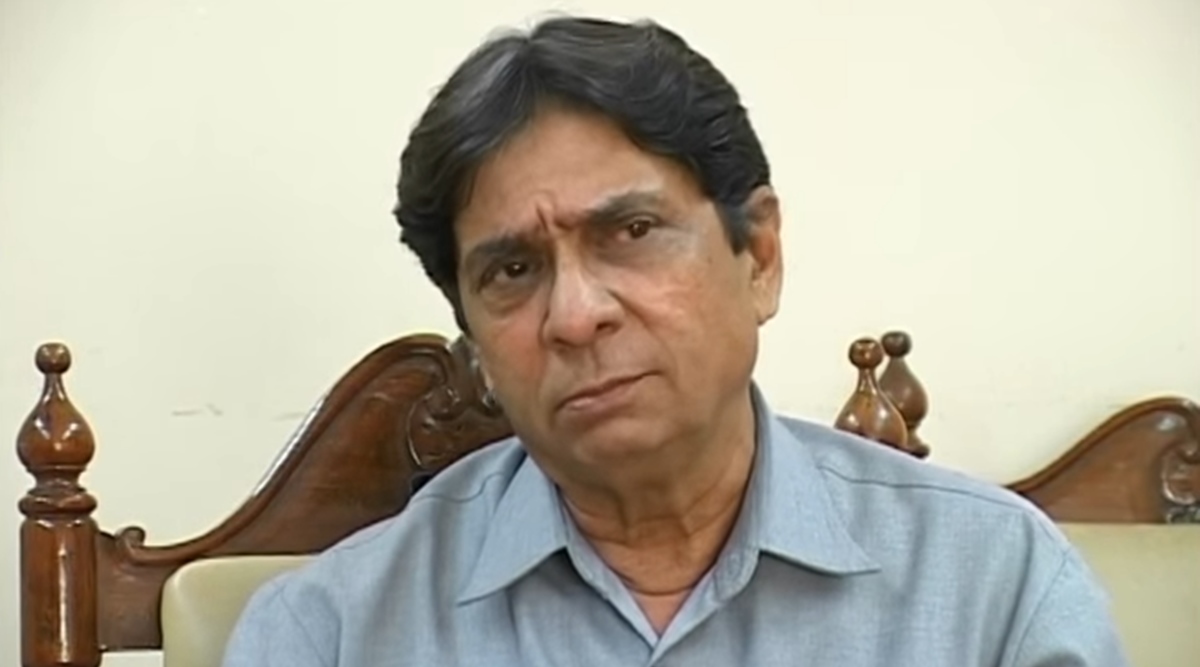
Bella Jaisinghani (THE TIMES OF INDIA; February 15, 2023)
Mumbai: Actor Javed Khan, whose repertoire spanned a lion’s share of comedy and a side serving of character roles, passed away after a prolonged illness ending in lung failure on Tuesday. He was 75. A native of Amroha, UP, Khan was an FTII alumnus and closely associated with theatre through IPTA.
Doordarshan viewers recall the twinkle-eyed Karim barber of TV serial ‘Nukkad’ while film lovers double up with laughter over ‘Anand Akela’ courting Raveena Tandon in ‘Andaz Apna Apna’. Ashutosh Gowariker, who directed him in ‘Lagaan’, said, “He was known for his straight-faced humour. And I liked his work for that very reason. His one line that is unforgettable for me is the way he says ‘Hum Jeet Gaye!’ when the villagers win. His contribution to theatre and film is immense. Javed bhai will be missed!”
Khan's students at ZIMA (Zee Institute of Media Arts) in Andheri, which he headed, were conversant with his full range of performance. Khan had played Bharat Kapoor’s evil lackey in ‘Noorie’ and caretaker Sukh Lal in ‘Chak De India!’
He is survived by a son and daughter. The last rites were performed in Oshiwara Kabrastan at 7. 30pm on Tuesday.
Subscribe to:
Posts (Atom)