"Bollywood needs a reboot": Makers speak out on crisis within
8:39 AM
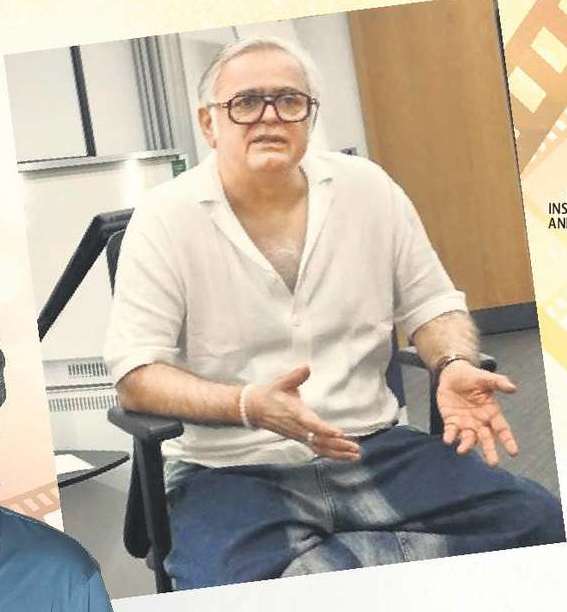
Compiled by Rishabh Suri (HINDUSTAN TIMES; April 25, 2024)
Over the past year, much of the conversation in the Hindi film industry has been around rising entourage costs, films failing to draw audiences to the theatres, escalating fees of actors, and the need to rein them in. From Hansal Mehta to Shoojit Sircar, filmmakers weigh in on why not just production budgets but also the overall quality of films are impacted. Here’s what they said:
Bollywood hardly has any independent producers; there’s no fresh ideas; no innovative distribution or marketing strategies
Vivek Agnihotri, who’s been vocal about issues related to the film industry, recently wrote on X, “Bollywood is in shambles. And that’s good for the industry. To erect a new building, you must demolish the old one. This is that time. Today, Bollywood has hardly any independent producers. No new producers. No fresh ideas. No innovative distribution or marketing strategies. A few years ago, there were a dozen studios — now just two or three remain, and they too are monopolistic and here for reasons other than filmmaking.”
The 51-year-old The Kashmir Files filmmaker further added that the ‘passion’ for making films was overpowered by ‘corporate greed’, and claimed, “...there are no promising new stars. If you want to cast someone from the 21–35 age group, you’ll find almost none — neither heroes nor heroines...”
Make movies for Bharat, not for a small group of people watching in 25, 50 or 100 selected multiplexes
Vipul Shah, known for directing hits such as Namaste London (2007) and producing box office successes such as The Kerala Story (2023), too weighed in on why today’s films struggle to resonate with the masses the way they once did.
“I feel there are many reasons for this, and we are going through a phase which has lasted for quite some time...,” he recently told ANI. He further pointed out that the core problem is that filmmakers have stopped making movies for the larger Indian audience. “The first issue is that we have stopped making movies for Bharat. We make movies for a small group of people watching in 25, 50, or 100 selected multiplexes. Our expectations are that only those people should like our films,” he added.
Everyone forgot the masses
Vikram Bhatt, whose latest directorial Tumko Meri Kasam tanked at the box office, criticized Bollywood’s pause on “massy” films. The 56-year-old told ANI, “Everyone forgot the masses and went to niche films. And during Covid, the audience’s habit of watching films in theatres disappeared. We stopped making massy films. If you see the South industry, it’s flourishing because it always prioritises the mass audience. They still want to see superheroes, want to see Pushpa, want to see Kantara. They still consider the villain a villain, still whistle and clap. Hum toh waisi films banana bhul gaye jise dekhkar audience seeti aur taaliya bajaye.”
Recycled, formulaic approach needs to end
Hansal Mehta, who is currently shooting for his upcoming series Gandhi, had a pointed response for those who predicted the “doom” of Bollywood. “...pause. The industry isn’t dying. It’s waiting to be disrupted,” the filmmaker wrote on X, adding, “The problem isn’t the audience losing interest. It’s that investment is being funnelled into the safe, the recycled, the formulaic.”
The 56-year-old, known for his works such as Shahid (2012), Scam 1992 (2020) and Scoop (2023), further wrote, “The future of Hindi cinema lies in betting on raw talent, bold storytelling and directors who can take a script and direct the hell out of it. The past few years have proved: stars don’t necessarily bring audiences; conviction does. A new generation of actors, filmmakers, and writers is ready to change the game.”
He went on to name actors such as Adarsh Gourav, Vedang Raina, Ishaan Khatter and Zahaan Kapoor as promising talents that Bollywood can place its hopes on.
Popular actors will have to lower their fees
Shoojit Sircar voiced his displeasure over the steep fees demanded by certain actors. The filmmaker, whose 2024 release I Want to Talk underperformed at the box office, said, “I won’t say much about people’s entourages or what they charge, but I am sure of one thing: Popular actors will have to lower their fees. If they don’t, directors will stop approaching them. We have to make a film within cost now, if we want the audience to come and watch it. Go expensive wherever needed. If the director visualizes a shot a particular way, pay more for that. The director should not compromise on his vision to save money for the actor’s fees.”

Subscribe to:
Post Comments (Atom)
Post a Comment