Showing posts with label Shoojit Sircar. Show all posts
Showing posts with label Shoojit Sircar. Show all posts
Babil Khan was just figuring out his way and the world was expecting him to deliver-Shoojit Sircar
11:17 PM

Babil credits filmmaker Shoojit Sircar and acting coach Rachit Singh on this Teacher's Day for guiding him through the industry
Yashika Mathur (HINDUSTAN TIMES; September 5, 2026)
Actor Babil considers himself a lifelong student of acting, guided by two mentors: filmmaker Shoojit Sircar and acting coach Rachit Singh. On Teacher's Day, the young actor explains the role these two mentors have had in shaping his mindset.
“Shoojit da and I have been trying to work together for quite some time now. Even in that struggle to find the right subject and the right time, he taught me to trust life,” shares the 28-year-old.
In learning to trust the process, Babil also discovered the importance of embracing the journey. “All this while, I was chasing outcomes when I should have been living the struggle itself for what it is, and developing my instinct through it while balancing that with rigorous practice of the craft,” he says.
These lessons, he believes, came from having the right teachers. “The difference between a good and a bad teacher can be whether the student lives their life or merely survives it,” says the actor, who made his debut with Qala (2022) and is now preparing for his foray into Malayalam cinema.
Shoojit Sircar on guiding Babil
Shoojit Sircar says there was a lot of expectation from Babil since he is the late actor Irrfan’s son. “But it’s wrong. He was just figuring out his way and the world was expecting him to deliver. That’s the worst scenario for anyone. I just tried to help him out of this trap. Whatever course correction he is doing, it’s purely his conviction for his art. He is still a student and we should give him that chance,” he insists, adding that Babil’s biggest strength is “his surety that he wanted to become an actor”.
Rachit Singh's role in Babil's career
Speaking about his other pillar of strength, Babil says, “Rachit sir and I have been working intricately on surrender and awareness for six years. His workshops changed my life and perspective, and showed me how to offer my throat to life and be fearless about it. The confidence I have today in my skills as an actor and a human being stems largely from paaji’s workshops and friendship.”
Talking about an important moment with Rachit, Babil shares, “I think one moment that I can say without worrying is from paji’s workshops, especially the first one when I was trying to quit midway desperately afraid of failing and Rachit paji would call me incessantly and do whatever it takes which included literally dragging me out of bed and into the workshop to perform. I would usually perform well on these days but performing well wasn’t what he was trying to instil, it was confrontation with failure.”
He adds, “He was trying to tell me that it doesn’t matter whether I fail or succeed, it matters that I show up. Thank you so much, and I’m forever grateful for you Rachit sir!”
Growing up in Auroville shaped who I am-Ahilya Bamroo
2:51 PM

Divya Shree (BOMBAY TIMES; July 4, 2026)
Ahilya Bamroo always knew she wanted to be an actor. What she didn’t know was that an Instagram account would become her ticket to the movies. Growing up in the multicultural township of Auroville near Puducherry, she was far removed from the traditional film circles, but her humorous videos on accents, multilingual observations and language-learning series went viral and eventually led to acting in Shoojit Sircar’s I Want To Talk and Sing Geetham, directed by Singeetham Srinivasa Rao, which released last month.
In a candid conversation with Hyderabad Times she shared about her unconventional journey, how her upbringing shaped both her life, her role as Gauri in the film, and the lessons she learnt from working with the legendary filmmaker Singeetham Srinivasa Rao.
‘Growing up in Auroville shaped who I am’
Growing up in Auroville gave Ahilya a childhood unlike most. Surrounded by people from different countries and cultures, those formative years instilled empathy, patience and a broader perspective that continue to shape her both as an artiste and as a person.
“At one point in school, I was one of only four Indian students in a class of about 25. Everyone else came from places like Korea, Germany and Italy, so it was an incredibly diverse environment. Because we were such a small community made up of people from so many different backgrounds, you naturally learned empathy,” she says, adding, “You had to be patient with one another because everyone came from a different place. I’m incredibly grateful to my parents for raising me there.”
‘Playing Gauri taught me a lot about myself’
Those values also helped Ahilya connect deeply with Gauri, the character she played in Sing Geetham, an eco-fantasy musical directed by Singeetham Srinivasa Rao and set in the fictional mining village of Kuberapuram.
“The theme of the movie is very relevant to what’s happening in the world today. Many of the things Gauri goes through are things I’ve also felt at different points in my life, and that’s been shaped a lot by where I grew up. I grew up in a forested environment, in a place that really values nature, peace and serenity over material wealth, and in some ways, that perspective feeds into the film as well,” she says.
Despite sharing an emotional connection with the character, Ahliya believes Gauri is far more courageous than she is. “At the same time, Gauri is much braver than I am. I really admire her. I’ve actually learned a lot from her. So even though I don’t come from the same background as the character — I’m not a Telugu girl and I didn’t grow up in those exact circumstances — there were still parts of her personality that I could connect with and draw from,” she says.
‘Even at 94, Singeetham sir pushes boundaries of filmmaking’
Beyond the character, the biggest takeaway for her was watching the 94-year-old legendary filmmaker at work.
“What’s inspiring is that the strong, progressive ideas around women and lead characters are coming from someone who is 94 years old. It’s incredible. I remember once, someone suggested doing a scene in a way that’s commonly done in mainstream Telugu commercial cinema, but he simply said, ‘We’re not making a film like everybody else, are we?’ He encouraged us to move away from familiar commercial conventions and experiment scenes in a more organic way instead of relying on a formula. Even now, he continues to experiment, push boundaries and always wants to change the game. Watching that firsthand has been incredibly inspiring,” she says.
‘Social media opened doors I never imagined’
During the pandemic, Ahilya’s comedic skits, vlogs and spot-on impressions, including a fan-favourite French accent, found a wide audience on Instagram. What began as a creative outlet soon became a launchpad for her acting career, with the platform helping her land opportunities in both Bollywood and Telugu cinema.
“I think one of the best things about Instagram is that it has made opportunities much more accessible. You can be sitting in a small town in India, and someone in Mumbai, Delhi or Hyderabad can come across your work and cast you in a project. In that sense, I owe a lot to Instagram because it allowed me to stay in my little world in Pondicherry while still being discovered by people in the industry,” she says, adding, “In fact, this is the second film I’ve landed through an Instagram direct message. The first was I Want To Talk, with Shoojit Sircar and Abhishek Bachchan, which still feels surreal to me. I’m incredibly grateful to Instagram, but I’m equally grateful to filmmakers who are willing to look beyond the usual circles when casting.”
--------------------------------------------------------
“Singeetham sir is so ahead of the curve. He always has been, as an artiste and as a visionary. Very often, he’ll suggest changes to the script or propose approaching a character differently, and it always feels so fresh and modern. The way he looks at stories is constantly ahead of its time.”
--------------------------------------------------------
“Of course I want recognition, but I don’t measure success by how many followers I have or whether a film I’m part of becomes a box office hit. For me, it’s about growing as an artiste.”
I feel this generation desires love more desperately than any other-Imtiaz Ali
9:37 AM

Director Imtiaz Ali says ‘Main Vaapas Aaunga’ is his way of presenting a different viewpoint on the Partition than to help people heal from the historic event
Mohar Basu (MID-DAY; May 22, 2026)
Set against the backdrop of India’s Partition, Main Vaapas Aaunga is not a political statement, according to filmmaker Imtiaz Ali. Instead, it looks at the emotional weight that the historic chapter left on the people it divided. At its heart, it’s a sweeping romance, particularly for the younger audience.
“People often say this generation doesn’t have patience. But I feel this generation desires love more desperately than any other. There’s this feeling that meaningful, lasting love existed in the old times, but cannot anymore,” shared Ali.
To dispel the idea, the director has woven a timeless love story starring Naseeruddin Shah, Diljit Dosanjh, Sharvari, and Vedang Raina. The June 12 release is centred on a man remembering, on his deathbed, the love of his life whom he had to leave behind in Pakistan during the Partition.
Revisiting Partition on screen in today’s political climate inevitably comes with its own sensitivities. Asked whether art can help heal the trauma carried by those who lived through the episode, Ali reflected, “No, it’s not meant to make you forget the horrors or somebody’s personal grief. A film can never be and should not be so powerful that it obliterates that grief. However, it can present somebody else’s story, a [different] point of view.”
Ali’s love story has struck a chord with his friend and filmmaker Shoojit Sircar. Recalling Sircar’s response, Ali shared, “He said, ‘Yeh film mujhe banaani thi. I could never take my father back to Dhaka.’ In a way, it’s so many people’s stories. It’s not as though their feelings will go away after watching this film. But [they] will at least get the joy that it’s being addressed. More people will know this story, which stayed only in my closet.”
Kritika Kamra talks about Gaurav Kapur: "Sending reels and memes to each other is our love language"
4:52 PM

Renuka Vyavahare (BOMBAY TIMES; May 3, 2026)
Kritika Kamra’s intimate, no-frills wedding in March to cricket presenter and entrepreneur Gaurav Kapur reflects her belief in living life on her own terms. The actress rose to TV stardom at 18 but soon stepped away to explore more meaningful acting opportunities. After 20 years, her performance in The Great Shamsuddin Family (2025) brought renewed critical acclaim. In a candid chat, she reflects on her marriage and evolving approach to work.
What drew you to Gaurav the most?
He’s the life of the party, while I’m more of a quiet, corner or bar-seat person. It balances out perfectly. He has always been funny, and I love his humour, but he has this deep, sensitive side to him. What really surprised me about him was his emotional intelligence. Women are often conditioned to be the anchor, the wise one while men aren’t as emotional or expressive. But with Gaurav, that couldn’t be further from the truth. He’s deeply attuned to the feelings of others. To me, that kind of emotional intelligence is a true sign of kindness, taking the time and effort to understand what someone needs and then showing up for them, often without being asked.
Having lived independently for so long, does marriage change things by giving you someone to lean on or does sharing a house with someone has its own challenges?
It’s been quite seamless. Just a week after our wedding, we were both back at work. We’re both mature, self-made individuals, so it doesn’t feel like a big adjustment. It’s more like living with my best friend. We both understand how a household runs and what it takes to manage everyday life. Earlier, we were doing everything on our own. Now there are two of us, and that just makes things more efficient. There are no rigid roles or fixed rules in the house. It’s very fluid, whoever has the time takes care of what needs to be done. Nothing is left pending because it’s ‘someone’s job’. I joke that my deliveries don’t get sent back anymore if I’m not home!
You got married in your late 30s... single women often tend to face societal judgment. Did you experience that?
I’ve been privileged to choose my own timeline. There was never any pressure from my family. I stayed single until I wanted to and got married when I felt ready. Financial independence and living on your own shield you from societal noise and are incredibly empowering.
He’s a cricket guy and you are into films. How did you two meet?
We’ve both been in Mumbai for a long time and have mutual friends. It really started with some online banter, and then we met and kept meeting after that. It grew quite organically from there, beginning as a friendship. We were also familiar with each other’s work through social media. While I’m in films and he’s deeply rooted in cricket, there’s actually a lot of overlap in our interests. I’ve always enjoyed watching cricket, even before I met him. And he, on the other hand, is a complete film buff. He remembers the most random film dialogues. Sending reels and memes to each other is our love language.
Your marriage was intimate and low-key. Is that the way you always wanted it?
Both Gaurav and I are huge fans of The Office, so we had the Jim and Pam wedding song playing at ours. It was completely last-minute and unplanned. Someone just asked what we wanted to play, and we went with that. Suddenly, all of Gaurav’s friends were walking us up to the terrace. No one really knew what was happening or what they were supposed to do, but that’s what made it so special and memorable.
Was his proposal as dramatic as Jim’s?
No, not at all! He was actually quite lazy about it but I’m okay with that (laughs).
Your film The Great Shamsuddin Family brought you back into the spotlight. What drew you to the subject?
It’s one of the best things that I have ever done. People discovered it on their own through word of mouth. The performance demanded a certain restraint. In a scene, my character, a single woman, says how she doesn’t want to be strong anymore. Many could relate to that. I didn’t approach the film thinking it would change my career trajectory. I wanted to be a part of it because I miss these slice-of-life films that were made by Basu Chatterjee and Hrishikesh Mukherjee in the 70s. Shoojit Sircar’s Piku briefly brought that sensibility back, but such storytelling has largely been absent. Being part of a film that revisits that space was nice.
Shoojit Sircar, Ajay Gahlaut remember working with Piyush Pandey on 2 memorable Amitabh Bachchan campaigns
9:15 AM

THE ECONOMIC TIMES (November 5, 2025)
Ajay Gahlaut, Former Group CCO, Dentsu Creative Services
UNICEF’s Pulse Polio, ‘Do Boond Zindagi Ke’ (2002): Do Boond, One Brilliant Idea
I wrote the line ‘Do Boond Zindagi Ki’ for the Pulse Polio campaign. But the real genius of the campaign, the central idea, came from Piyush Pandey. And that idea was showing Amitabh Bachchan angry with people who had not immunized their children against polio. Only Bachchan could get away with berating an entire nation. Only he commanded that kind of respect and love. And only Piyush could have come up with that idea. Stunning in its simplicity, understanding of Indian culture and impact.
One day, I read a criticism of it on social media. Some random guy had written: “What’s so special about this campaign? Just another celebrity talking to the camera.” I was furious and wanted to reply with a sarcastic tirade. I sent Piyush a screenshot of the tweet and told him that I was going to write a riposte. Piyush smiled and said, “Tere paas kaagaz-kalam hai?” I said yes, excited that he would give me some points to write.
“Likh Dhenchu, Dhenchu, Dhenchu!’”said Piyush. (The Hindi equivalent of ‘Hee-Haw’, a donkey’s call) “Matlab?” I asked, puzzled.
“Is gadhe ko aur kya samajh mein aayega?” said Piyush with a laugh. What a lesson.
-----------------------------------------------------------
Shoojit Sircar, Filmmaker
Gujarat Tourism, ‘Khushboo Gujarat Ki’ (2010): Two Giants, One Simple Act
The Gujarat campaign started off with one film, but it went on for nearly five or six years. During filming, Piyush and I would eat, sleep, discuss and shoot side by side, often with Amitabh Bachchan, since he was part of this campaign.
Piyush was the country’s top creative mind, but he was open to everyone — be it a client, a director or someone from the crew. He would listen to, and manoeuvre ideas as long as the core remained intact. My production manager, Kumar Thakur, became his best friend because they both came from the heartland.
Once we had a 6 am shoot call time. The previous day we had an early pack-up, so we were partying a little and it got late. Next morning, Piyush knocked on my door at 6 am, saying, “He [Amitabh Bachchan] has reached the location, nobody’s there!” We ran to Kumar who scurried out barely dressed, and Piyush told him, “Arre pant toh pehno!”
Piyush and I then ran to see Mr Bachchan in the distance, picking up all the garbage people had left from the previous evening. We started apologizing, after which Piyush said, “Main bhi aapke saath saaf karta hoon,” and joined him in the clean-up as we readied for shoot. The visual of him and Piyush cleaning up after everyone will remain etched forever in my mind.
I was just watching Vicky Donor and I was thinking, 'did I make this film?'-Shoojit Sircar
8:02 AM

Niharika Lal (BOMBAY TIMES; April 28, 2025)
For Shoojit Sircar, the re-release of Vicky Donor is not just a moment of nostalgia - it’s an emotional ride. "I can't control my excitement as a director, that the film is re-releasing," he says with disbelief and joy. "This thought itself is addictive to me because aisa hua nahi hai. I’m in awe. Aise hota nahi hai normally that a film is re-releasing. For a director and a technician, and for everybody associated with the film, the film coming on the big screen is like a boon. I'm over-excited, not excited. I'm over-excited," he says.
Thirteen years later, the humour in Vicky Donor still lands, the warmth is still felt - but what remains for him as a director when he returns to it now? He says, "Somehow, it doesn’t feel like a 13-year-old film. It just feels like - Abhi yaar, kuch saal pehle hi banaya hai. It doesn’t feel 13–14 years have gone by."
In conversation, he walked us back through the film - what it was, what it became, and the nostalgia of seeing it again.
'I was just watching the film and I was thinking - did I make this film?
Shoojit Sircar watched the film again while preparing for the re-release, and says it stirred more than just excitement. He says, "I was just watching the film and I was thinking - did I make this film? Am I the same person I made this film? I was really amazed." he says.
Talking about the cast, he says, "Such an amazing cast, such amazing performances, such exuberance in their performances. There's so much joy," he says, crediting the film’s energy to the team behind it.
"The way Juhi wrote the film, the way Ayushmann came and the way my friend Ronnie came to produce the film, the way Annu Kapoor came, Yami was cast, Dolly ji and Biji came, and the songs. The entire thing - I think ho gaya hoga. Ho jata hai na kabhi kabhi," he adds.
'After Vicky Donor, a question came up in conversations - are you a Punjabi?'
Shoojit Sircar shares that he hadn’t anticipated the film’s success. He says,"Three things happened. The film became quite a talk of the town, which I didn't expect. I was really scared when the film was released because I thought this film is not a regular subject to deal with."
The film on sperm donation, touched on a taboo subject. He adds, "Second, a lot of conversations came up tha - are you a Punjabi? That question came up - 'how do you know Punjabi, how do you know Punjabi culture so well?"
He reveals, "Then I tell people that I have spent time in Delhi, I have so many Punjabi friends. Somewhere I'm a ghost Sardar. Even after being a Bengali, somewhere there is a lot of punjabiyat in me."
The cultural richness of Delhi - particularly the Punjabiyat of Lajpat Nagar - flowed into the film naturally. “Those little things that we picked up in the Punjabiyat of Delhi, especially among Delhi Punjabis and Lajpat Nagar. All my friends are from there. And they actually got married to a girl from CR Park, so that has happened. If we actually start showing culture clashes (in movies), it can be much bizarre than this. We have shown it in a very conservative way (in Vicky Donor), but actually mein toh abuses aa jayenge, gaali-galauj aa jayega.”
He says, "Third was Dolly ji and Biji drinking together. That one scene was talked about a lot - how beautifully Juhi had written it, and what the two of them brought to it. I often look back at that scene - Will I be able to pull off that scene today or not? I think we all go through everyday drills. But at the end of the day there is some kind of warmth in relationships that also exists."
'If we actually start showing culture clashes (in movies), it can be much more bizarre than this'
That cultural clash in Vicky Donor - between the Punjabi and Bengali families, especially the wedding scene really stuck with people. The ‘Rum rum whiskey’ has become a go-to track on reels.
Talking about the scene where the families meet, he says, "What Jayanto Da (who played Yami Gautam's character's father) has done – and between him and Dolly ji and Ayushmann and Pishi (Swaroopa Das) - she is too good. I think what happened there in that room that day was amazing. Jayanto Da has actually lived in CR Park in Delhi. He knew that elite Bengali – talking about culture."
He says that the cultural contrast between Biji (Kamlesh Gill) and Dolly Ahluwalia on one side, and the Bengali family on the other, required no forced staging. "It was naturally flowing because Dolly ji and Biji were as frivolous as they could be. They were just talking. When we were writing the character of Dolly ji, we told her – we are writing you. I think that cultural clash, we live with that. Even in Bengal, and when I talk about Punjabi, there is an understanding, love, criticism – everything. You can understand when a Bengali girl is married to a Punjabi, and in this kind of marriage discussion, this is just evident," he says.
'Lajpat Nagar is in my blood'
In Lajpat Nagar, almost every house has a biji and Dolly ji - small houses, interconnected terraces. Vicky Donor took out Lajpat Nagar from Delhi and made it a city in itself in Hindi movies. How did he create that identity for Lajpat Nagar.
Shoojit Sircar recalls his good old Lajpat days, "Lajpat Nagar ke chhole kulche, chhole bhature and all the garment shops, all the ladies being there for that salwar and dupatta shopping. My school was KV, Andrews Ganj, a short walk away. From my school days, every Friday, Saturday, Sunday I used to spend in Lajpat Nagar."
During his theatre days, he would frequent the area with friends, jamming, writing at Piyush Mishra's place in Lajpat Nagar. “I'm a south Delhi boy. My upbringing was in CR Park and in other parts of Delhi, but Lajpat Nagar never left me. I knew every house there. 75 gaj wala ghar hota tha wahan pe – chhota se entrance, straight lamba sa. Then there was Nirula’s below the flyover – so Lajpat Nagar never left me. Lajpat Nagar is in my blood.” (laughs)
The writer of Vicky Donor, Juhi Chaturvedi, also lived there. “Lajpat Nagar and Connaught Place – I don't think I will ever forget Lajpat Nagar,” he says. Back then, many of his friends from Lajpat Nagar were just starting out. “Some have become actors, writers, directors, some big producers. Lajpat Nagar is a city in itself.”
The interiors for the film were shot in Rajouri Garden. “We actually shot in Rajouri Garden. We shot exteriors in Lajpat Nagar and we shot interiors somewhere in Rajouri Garden because there are many parts of the city that actually look like Lajpat Nagar.”
He says glimpses of Delhi can be found across his work - in Piku, October, and beyond. “You will get a reflection of Delhi in all my films.”
'Vicky of Vicky Donor is so much Ayushmann than Ayushmann being Ayushmann'
In an interview, Naveen Kasturia said that when Vicky Donor came out, he would tell people, ‘This is my story,’ because he identified so strongly with Ayushmann’s character as he is also from Lajpat Nagar.
How did Shoojit Sircar create such a Lajpat Nagar boy? Shoojit Sircar says, "The character of Vicky that we created - he knows jugaad, he knows where to get his things done, but he is clueless about his life. Some kind of jugaad work he will do and he will manage."
And then there’s Ayushmann Khurrana - for whom Vicky Donor was a breakout. He says,“Ayushmann will always be known as Ayushmann for Vicky Donor. I had a very strong feeling about it.”
What stood out, Shoojit Sircar says, was the sensitivity of his performance. “It’s not just the loud Vicky that he played, but it's his delicate performance. Vicky of Vicky Donor is so much Ayushmann than Ayushmann being Ayushmann, I would say."
He remembers Ayushmann once telling him - ‘Dada, that will always be there. I’m also doing a lot of films that seem inspired from Vicky Donor.’
"Bollywood needs a reboot": Makers speak out on crisis within
8:39 AM
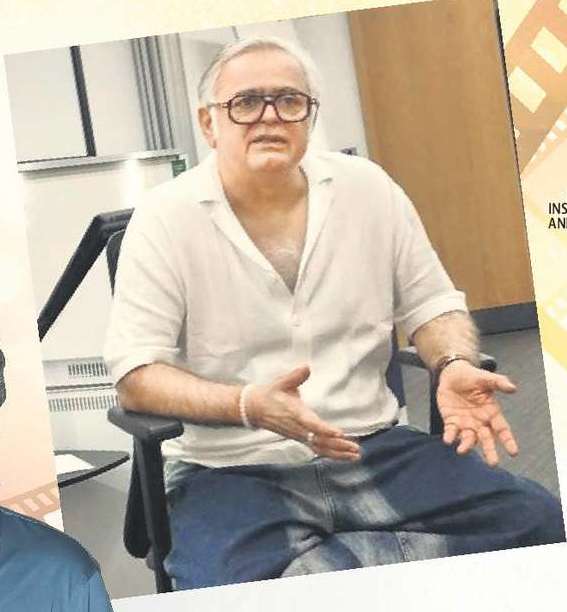
Compiled by Rishabh Suri (HINDUSTAN TIMES; April 25, 2024)
Over the past year, much of the conversation in the Hindi film industry has been around rising entourage costs, films failing to draw audiences to the theatres, escalating fees of actors, and the need to rein them in. From Hansal Mehta to Shoojit Sircar, filmmakers weigh in on why not just production budgets but also the overall quality of films are impacted. Here’s what they said:
Bollywood hardly has any independent producers; there’s no fresh ideas; no innovative distribution or marketing strategies
Vivek Agnihotri, who’s been vocal about issues related to the film industry, recently wrote on X, “Bollywood is in shambles. And that’s good for the industry. To erect a new building, you must demolish the old one. This is that time. Today, Bollywood has hardly any independent producers. No new producers. No fresh ideas. No innovative distribution or marketing strategies. A few years ago, there were a dozen studios — now just two or three remain, and they too are monopolistic and here for reasons other than filmmaking.”
The 51-year-old The Kashmir Files filmmaker further added that the ‘passion’ for making films was overpowered by ‘corporate greed’, and claimed, “...there are no promising new stars. If you want to cast someone from the 21–35 age group, you’ll find almost none — neither heroes nor heroines...”
Make movies for Bharat, not for a small group of people watching in 25, 50 or 100 selected multiplexes
Vipul Shah, known for directing hits such as Namaste London (2007) and producing box office successes such as The Kerala Story (2023), too weighed in on why today’s films struggle to resonate with the masses the way they once did.
“I feel there are many reasons for this, and we are going through a phase which has lasted for quite some time...,” he recently told ANI. He further pointed out that the core problem is that filmmakers have stopped making movies for the larger Indian audience. “The first issue is that we have stopped making movies for Bharat. We make movies for a small group of people watching in 25, 50, or 100 selected multiplexes. Our expectations are that only those people should like our films,” he added.
Everyone forgot the masses
Vikram Bhatt, whose latest directorial Tumko Meri Kasam tanked at the box office, criticized Bollywood’s pause on “massy” films. The 56-year-old told ANI, “Everyone forgot the masses and went to niche films. And during Covid, the audience’s habit of watching films in theatres disappeared. We stopped making massy films. If you see the South industry, it’s flourishing because it always prioritises the mass audience. They still want to see superheroes, want to see Pushpa, want to see Kantara. They still consider the villain a villain, still whistle and clap. Hum toh waisi films banana bhul gaye jise dekhkar audience seeti aur taaliya bajaye.”
Recycled, formulaic approach needs to end
Hansal Mehta, who is currently shooting for his upcoming series Gandhi, had a pointed response for those who predicted the “doom” of Bollywood. “...pause. The industry isn’t dying. It’s waiting to be disrupted,” the filmmaker wrote on X, adding, “The problem isn’t the audience losing interest. It’s that investment is being funnelled into the safe, the recycled, the formulaic.”
The 56-year-old, known for his works such as Shahid (2012), Scam 1992 (2020) and Scoop (2023), further wrote, “The future of Hindi cinema lies in betting on raw talent, bold storytelling and directors who can take a script and direct the hell out of it. The past few years have proved: stars don’t necessarily bring audiences; conviction does. A new generation of actors, filmmakers, and writers is ready to change the game.”
He went on to name actors such as Adarsh Gourav, Vedang Raina, Ishaan Khatter and Zahaan Kapoor as promising talents that Bollywood can place its hopes on.
Popular actors will have to lower their fees
Shoojit Sircar voiced his displeasure over the steep fees demanded by certain actors. The filmmaker, whose 2024 release I Want to Talk underperformed at the box office, said, “I won’t say much about people’s entourages or what they charge, but I am sure of one thing: Popular actors will have to lower their fees. If they don’t, directors will stop approaching them. We have to make a film within cost now, if we want the audience to come and watch it. Go expensive wherever needed. If the director visualizes a shot a particular way, pay more for that. The director should not compromise on his vision to save money for the actor’s fees.”
Shah Rukh Khan shoots brand endorsement with director Shoojit Sircar
9:02 AM

Contrary to buzz about Shah Rukh Khan conducting a look test over the weekend, sources say the actor shot a brand endorsement with director Shoojit Sircar
Mohar Basu (MID-DAY; March 3, 2025)
Over the weekend, Shah Rukh Khan was spotted at Mehboob Studio in Bandra, sparking speculation that he was conducting a look test for his upcoming project. However, a bit of digging revealed that the superstar was, in fact, shooting an advertisement for a popular cookie brand. The brand commercial was helmed by Shoojit Sircar.
A picture from the set, which made its way online, showed Khan wearing an apron and standing in a kitchen. An insider from the production team says, “Shah Rukh’s look was so distinct that people assumed it was a look test. It led to rumours about him fronting Shoojit’s next feature film. But the two actually teamed up for a cookie commercial. The ad has a slice-of-life appeal.”
The shoot reportedly began on Friday afternoon and was wrapped up late at night. Khan and Sircar, who have known each other since their Delhi days, enjoyed the collaboration. “Even after filming his portions, Shah Rukh was fully involved, discussing minute details with Shoojit to perfect the scenes. He brought his usual charm. The campaign will air in two weeks,” added the insider.
BO numbers disturb you, says Shoojit Sircar on I Want To Talk
9:51 AM

HINDUSTAN TIMES (January 31, 2025)
Filmmaker Shoojit Sircar’s I Want To Talk (2024) may have opened to positive responses from audience and critics alike, but the Abhishek Bachchan-starrer failed to impress at the box office.
“I was completely disoriented because I didn’t know what did or did not work in terms of audiences going to the theatre,” the 58-year-old said in an interview with NDTV, adding, “But now, the film is also on OTT, and I see a lot of people reacting to it. It is very difficult for me to explain. But yes, box office collection disturbs you.”
On the film being called niche, Shoojit remarked, “This film is based in the US, so there are a lot of languages spoken. The title of the film is in English. A lot of film lovers are exposed to international content. What do you call the subjects that they watch? So, if you look at it from that perspective, I never thought my film was in that niche category.”
However, the filmmaker adds that “people are telling me that about the film”. “So, it is very difficult for me to identify what is niche and what is not niche, and how that would impact people coming to cinema halls,” he said.
I would have expected a bit more footfall for I Want To Talk-Shoojit Sircar
8:38 AM

Stating that he made I Want To Talk to spread hope, director Shoojit Sircar reveals how artistes in the industry often battle mental health issues while hiding behind the facade of glamour
Priyanka Sharma (MID-DAY; November 28, 2024)
At the moment, Shoojit Sircar is all about observing and learning. Reason? His latest film, I Want To Talk, had a slow start at the box office. “The pre- and post-COVID releases are a different dynamic altogether. I’m getting beautiful reactions from whoever is walking into the theatres. But I would have expected a bit more footfall,” the director tells us candidly over a phone call.
But that hasn’t shaken his faith in the Abhishek Bachchan-starrer. Or in his brand of cinema. Over the years, the filmmaker has championed middle-of-the-road films — from Vicky Donor (2012) to October (2018)—in an industry that values mainstream entertainers and box-office numbers over all else.
“That persistence is required, otherwise filmmakers like me will vanish. It’s my job as a filmmaker to tell a different kind of story. Somewhere, I need the support of the audience, too, to survive. Many recent films that fall in this category have slowly grown and I am expecting my film to grow in the coming weeks,” he says optimistically.
In I Want To Talk, Sircar tells the true story of a cancer patient, who was told he had 100 days to live, but went on to create a longer and beautiful life for himself. The film has themes that are recurring in the director’s world—death, hope, and mental health.
“We are always fearful whenever the word death [comes up] or when we have to explain it to a child. I have embraced it in such a way that it makes me free of fear, and opens me up to live in joy, awe and wonder. In these times of mental issues, I want people to have hope, and maybe my device to make them more hopeful is death,” he shares, adding that the movie is also inspired by his observation of the mental health challenges that his colleagues from the film industry face.
Sircar says, “I do a lot of healing. [Mental health issues] are so rampant in our industry, you can’t imagine. With their make-up on, artistes can smile at you, laugh, hug you, and show off, but I have seen deep inside in their eyes a lot of insecurity and mental pressure; I can see that loneliness. Many times I have taken them to a corner, spoken to them and they have started crying. That has given me a lot of understanding.”
As we talk about the film industry, it’s impossible not to mention how his movies have almost always been led by top Bollywood stars, who turn up in non-glamorous avatars for the parts—be it Deepika Padukone in Piku (2015), Varun Dhawan in October (2018) and Vicky Kaushal in Sardar Udham (2021). The realisation has hit Sircar only now, with I Want To Talk.
“If someone in front of you feels not so insecure and calms down, a lot of things can happen. The most important thing is to calm them down and get them out of their vanity. We call them stars, but at the end of the day, they are also normal people. Because of the pressure of vanity, they carry it to the set also. But if you calm their nerves down, they will understand the character more.”
So, what is the filmmaker up to next? He laughs and replies, “I have nothing right now. I may work on a romantic or a mythological project. I’m working on a couple of subjects.”
Shoojit Sircar and I are all dads to girls, and truly understand that emotion-Abhishek Bachchan
8:15 AM

Appearing on KBC 16, Abhishek Bachchan says his profound relationship with his daughter Aaradhya made him connect deeply with I Want to Talk’s narrative
Upala KBR (MID-DAY; November 21, 2024)
Amitabh and Abhishek Bachchan’s joint appearances are often marked by their witty banter. Things, however, took an emotional turn as the duo shot for an episode of Kaun Banega Crorepati 16, which will be aired tonight. As part of the promotions for I Want to Talk, Abhishek appeared on the quiz show along with director Shoojit Sircar and author Arjun Sen, on whose experiences the film is based. In the episode, Abhishek recounted how Sircar pitched the film to him.
“Shoojit-da didn’t tell me the entire story. He only spoke about Arjun-da’s journey, and that alone left a lasting impression on me,” said the actor.
I Want to Talk tells the story of a man whose medical diagnosis alters his life journey, following which he reaches out to his estranged daughter. With the movie offering a retelling of Sen’s personal experiences, the author recalled his battle with cancer and how his daughter Raka became his motivation to emerge triumphant.
“My three-year-old daughter, Raka, asked me three questions, ‘What is dying? Are you dying? Will you dance at my wedding?’ I reflexively told her that I’d dance at her wedding. Seeing her eyes light up, it became my life’s mission to be there for her,” recounted Sen on the show.
Abhishek then revealed that the movie’s profound exploration of the father-daughter relationship was the primary reason he agreed to front it. He reflected, “Aaradhya is my daughter, and Shoojit-da has two daughters. We are all dads to girls, and truly understand that emotion. What resonated with me the most was Arjun’s promise to his daughter. That unwavering commitment as a father is beyond words.”
I was very close to Irrfan Khan, and for Babil, I think like a parent-Shoojit Sircar
8:02 AM

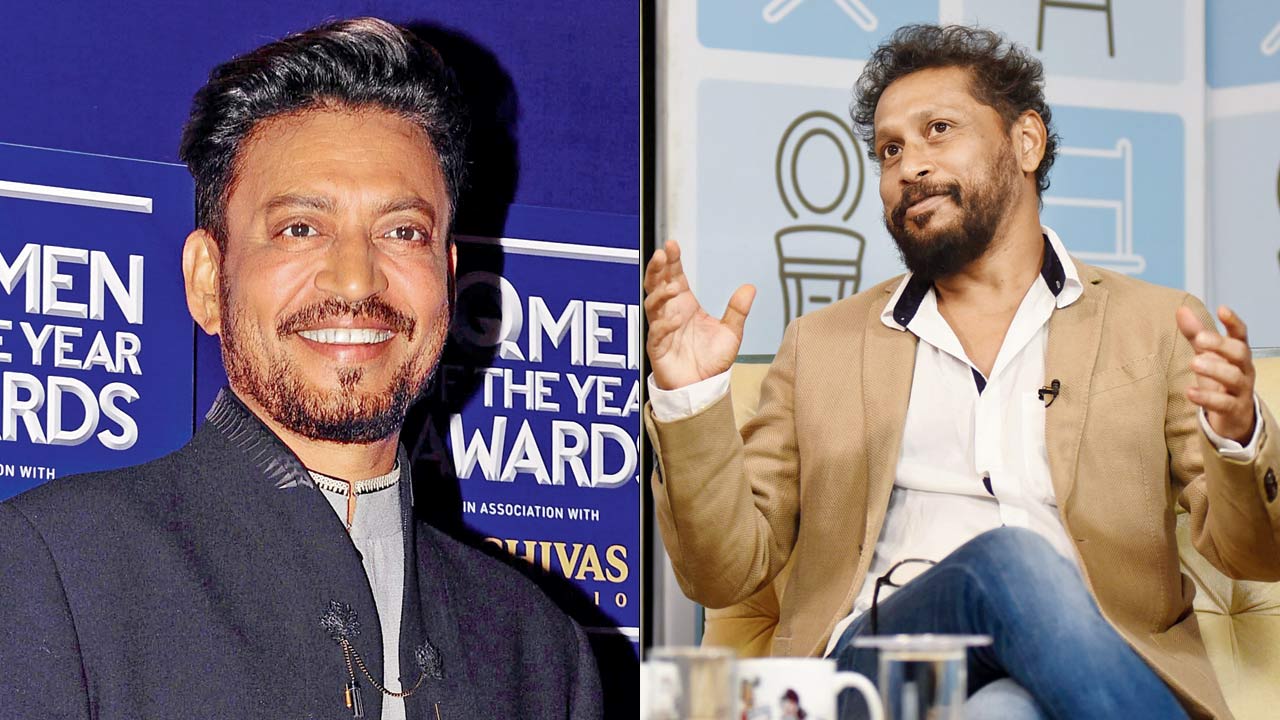
Having cast Babil in The Umesh Chronicles, Shoojit on his soft spot for the actor; says youngster should build a career without pressure of matching father Irrfan’s legacy
Mohar Basu (MID-DAY; August 12, 2024)
How does a director, who is in the midst of shooting his movie, double up as a producer? It’s tricky, but worthwhile, says Shoojit Sircar. The Umesh Chronicles, starring Amitabh Bachchan, Babil Khan and Kriti Panth, is set to screen at the Indian Film Festival of Melbourne on August 22. For Sircar, Pooja Kaul’s directorial venture is a “special film”.
“We shot it with Jakob Ihre [Chernobyl cinematographer] whom I’ve known since he shot Yahaan [2005]. Producing is tricky for me. So, I let my partner Ronnie Lahiri do the heavy lifting, and I looked after the creative part. In this film, the nostalgia of the ’70s, ’80s and ’90s has come through beautifully, as has that era’s tranquility of life. It’s about a girl growing up. That’s a beautiful experience to bring to the screen,” he smiles.
The Umesh Chronicles marks Sircar’s first collaboration with Khan. As one of Irrfan’s closest friends, the filmmaker is naturally overprotective of the late actor’s son.
“I was always worried about Babil. I was very close to Irrfan, and for Babil, I think like a parent. I feel responsible for him. He and his mother Sutapa [Sikdar] drop in at my office the way Irrfan used to. We have chai and jhalmuri, and talk of movies. Babil will have to take his movies one by one. It’s a lot of pressure for him, and it’s important to keep his sanity when he is making choices. That talent he has and the star he hopes to become must be balanced. It’s his career, not Irrfan’s. He should never forget why he is doing what he is doing; he shouldn’t get lost in the glitz and glamour.”
It helps that Khan stars alongside Bachchan in the movie. The megastar is a constant fixture in Sircar’s films, be it the unreleased Shoebite or Piku (2015) or Gulabo Sitabo (2020). How does he rope in Bachchan so frequently?
“It’s always the script. That’s my biggest learning after years of working with him. If he connects with the story, you’ve won him over. He has been our support system. I was noticed because he agreed to do my films. He taught me that the written word is sacrosanct.”
Now we aren’t making movies that can become classics. We’re just wound up in numbers-Aahana Kumra
8:19 AM

Sundas Jawed (BOMBAY TIMES; June 9, 2024)
Actress Aahana Kumra is known for her out-of-the-box choices when it comes to films and speaking her mind. The Lipstick Under My Burkha and Khuda Haafiz actress was in Kolkata on Saturday and did touristy things in the city. CT caught up with her about her impromptu visit, her love for theatre, films and more. Excerpts.
The city as an inspiration
Aahana had posted her Kolkata pictures with a caption quoting Amitabh Bachchan ‘if one needs inspiration, one should come to Kolkata’.
“The simplicity of the city really inspires me,” said the India Lockdown actress. “I have many friends here and just love the city. The beauty of Kolkata also lies in the fact that the city never changes, I have been coming here for 20 years now,” she said. Actor Chandan Roy Sanyal, who is shooting in Kolkata invited her over.
“He invited me to have lunch with him and Tony da (Aniruddha Roy Chowdhury), said the actress. “Everyone from the set of their next movie was there too. I loved the fact that the food I had on set was home cooked,” said Aahana who enjoyed a hearty meal of Kolkata-style fish and mutton on set.
Indian cinema and the need to tell our own heartland stories
“Many big films don’t work because the Indian audience has become very smart now, they want fresh and original content and cannot be fooled,” said Kumra, adding, “We have a lot of stories to tell, we just need to look into our periphery and not imitate the West. We need to make more heartland movies and Bengali cinema is doing that. It is the everyday stories that people connect with. If we look at India’s feat at the Cannes, it is these stories that made it to the global platform."
‘Theatre is like life, with no second chances’
“Both theatre and movies have given me immense love and an understanding of my profession. Theatre is just like life, it doesn’t give you a second chance. But then it is also about how you accept, adapt and move on. Theatre also helps you connect with the audience. Kolkata has the best audience I have ever seen in my life.”
The beauty of Bengali classics
Aahana believes, the beauty of cinema lies in its simplicity, and Satyajit Ray and other Bengali filmmakers aced this art. “When at film school, I watched the Apu trilogy and was awe struck by the simplicity of the film and Ray. Charulata, Aparajito, are stories that stay with you,” said Kumra, adding, “Now we aren’t making movies that can become classics. We’re just wound up in numbers.”
Shopping and food in Kolkata
“My Kolkata visit happened under funny circumstances. I was shooting in Goa and was supposed to be here for a play but the play got cancelled last minute but I decided to come down anyway as I love being in the city,” she said.
Like a true tourist, the actress loves all things Kolkata, heritage eateries included. “I love being on Park Street because of Mocambo and Peter Cat there. I love Chelo kebab. I went sari shopping and love the handloom here,” she added.
------------------------------------------------------------
“I went to Kalighat on Saturday afternoon. It was raining that time and it felt so good and peaceful”
------------------------------------------------------------
“I’d love to work with Shoojit Sircar & Tony da. I’d have loved to work with Pradeep Sarkar but sadly that cannot happen. Films like Parineeta aren’t made everyday”
I cycled from Gangotri to Gangasagar in 75 days-Shantanu Moitra
8:12 AM

“Cycling is nostalgia for me,” says Shantanu Moitra who learnt and fell in love with the sport when he was in the fifth standard. In a candid chat with us for World Bicycle Day, the musician who has composed for films like 3 Idiots and 12th Fail takes us through his life-changing experiences while cycling around the country. Excerpts:
Baba taught me how to cycle
As a child, my first sense of freedom came from cycling. The falling, getting up trying again – as you learn, your parents let you go which gives a sense of independence also. In Delhi’s East Patel Nagar, where we grew up, we used to see every other person travelling on a bicycle, but I never had my own as we couldn’t afford it. So I used to borrow from my friends and take rounds of our neighbourhood. My father was an avid cycle lover. He used to travel 40 km to and from work every day. He taught me how to balance the two wheels. I remember the day vividly when he let me go on my own. It was an important day in my life, it empowered me to take care of myself.
‘My father’s cycling tales fascinated me’
Baba always told me how he made friends from different walks of life while he used to cycle. He and his friends always went to a particular tea shop for chai or nimbu paani on their way back home. He had created a world while cycling and it fascinated me. Just imagine: you are riding a cycle and stop to pick up a jamun that fell from a tree. Isn’t it captivating? All these stories were like a fantasy land for me.
‘I bought my first cycle when I was 30’
Ironically, I never got to buy a cycle when I was in school or college. Eventually, I bought a car, but never a cycle. When I came to Mumbai 30 years back, I saw cycling as a hobby was popular. That was when I bought my first cycle, at 30 years of age! It made me nostalgic and I realized I was made for cycling. Then a cycling community was formed and, every Sunday at 5.30 am, we used to cycle 70 km, from my home in Versova to Nariman Point. It was a Sunday morning ritual we looked forward to. Everyone in this community was a cycle lover.
‘The Ganga expedition was an opportunity of a lifetime’
Shantanu shares that after completing the music composition for 3 Idiots, he undertook a ‘100 days in Himalayas’ trip in 2016. “I was travelling above 14,000 feet right from Kashmir to Tibet. The perspective I gained from that trip made me realize that I wanted to do it on a cycle. I wanted to see Ganga from its source to the end. Adventure is not rational, one has to feel that urge from within. My fear was that the timing of the adventure (which he undertook in 2021) shouldn’t clash with the music composition of Shoojit Sircar’s Sardar Udham, but Shoojit being a friend assured me that he could adjust, and I shouldn’t let go of the opportunity of a lifetime.”
‘It was a mind game’
For the Ganga expedition, Shantanu realized that he had to cycle for 2,700 km. “That’s a magnificent number. I realized it’s a mind game. This time was pivotal in my life – Baba saw me prepping, which made him very happy. Soon after, COVID changed the world, and I lost Baba in the pandemic. I realized life is uncertain so I must fulfil my dream. I knew I had to do this expedition for my baba.”
‘Got professional guidance’
Shantanu started prepping for the trip in 2019. He says, “Before any mammoth expedition, professional guidance is a must. I got a nutritionist, and got medically checked. For my lung capacity, I practiced regularly at Bhor Ghat, Lonavala’s highest point. I mapped my route on a cycle trainer at home. I started my regime by cycling 100-150 kms every day and slowly the cycle became my greatest companion and best friend. Within 25 days, I reached Rishikesh, and the expedition of 75 days started from Gangotri to Gangasagar. It was a memorable experience.”
Shantanu’s safety tips
- If you are cycling early in the morning, there has to be a taillight on and a helmet light on
- A red light is applicable for all transports, including a cycle. Respect that
- Before you start long-distance cycling, eat light food at least one and a half hours before. And after cycling for say 50 km, munch on a snack bar or something light so that your body has the fuel to continue
- People tend to avoid cycling and opt for a car or bike as they feel it is safer. The first and foremost rule while cycling is to wear a helmet, it’s non-negotiable
- Hydration is a must when you are cycling long distances. Alertness is very important for a cyclist and that happens when you keep yourself hydrated. Also, muscle reflexivity increases if you are well-hydrated
- Need to create paths for cyclists
- If we encourage cycling for the young generation on World Cycling Day, we have to create paths for cyclists – and that is the biggest concern of urban civilization. Any civilized place has cycling tracks. If we want less fuel consumption, less pollution and a healthier lifestyle, cycling tracks are a must in any city.
------------------------------------------------
Cycling takes care of one’s body, mind and reflexes. Not only does it help build a community but also lets one connect with nature. We must encourage the young generation to cycle more for a better world
------------------------------------------------
No one understood why a music director is cycling down a river. I failed to explain to people that it was an experience of a lifetime. Every pedal was a tribute to my father and no one can stop me from cycling
– Shantanu on his Gangotri to Gangasagar expedition

The composer shared with us his cycling route map for the Gangotri to Gangasagar expedition, spanning 2,700 km. “I mapped my route on a cycle trainer at home,” he tells us
Give me credit for Shoebite as it originated from me, and let’s get on with it-Shailendra Singh
8:30 AM
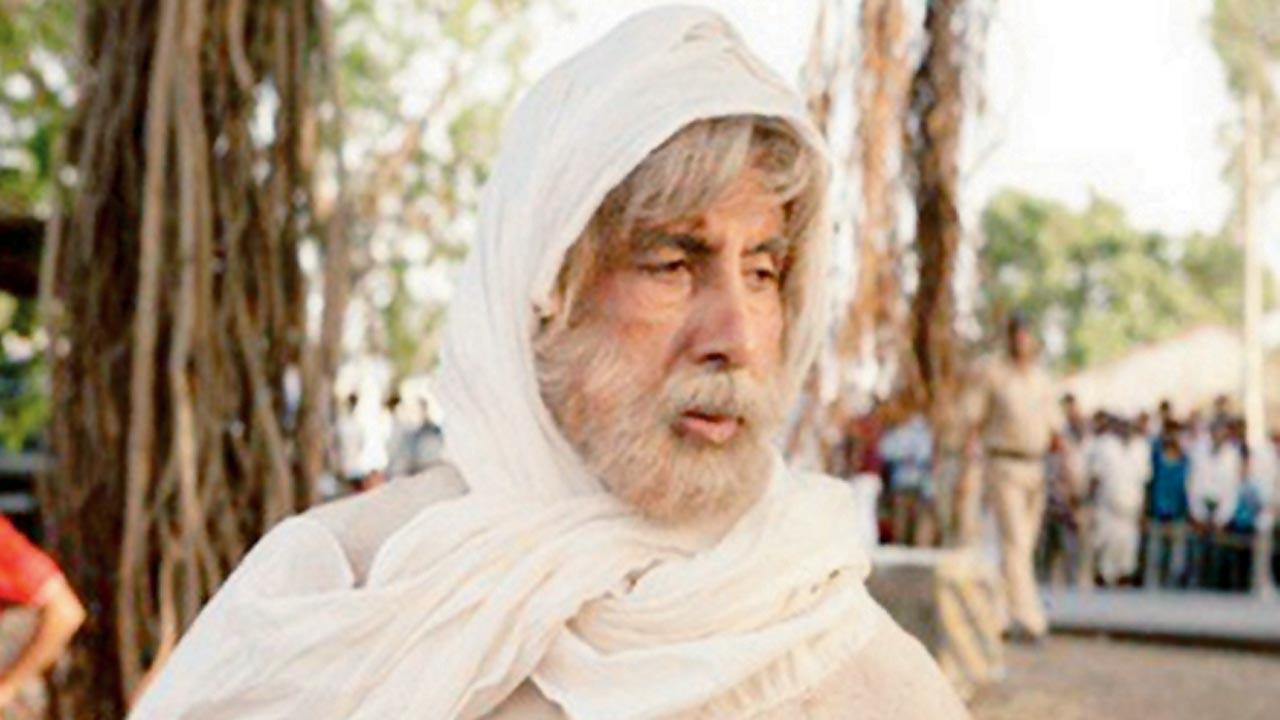
Singh, who filed an injunction against Shoebite’s release in 2012, says he doesn’t want to block Big B-Shoojit’s film anymore; seeks acknowledgement and dialogue with duo
Upala KBR (MID-DAY; April 2, 2024)
It’s heartbreaking to have your labour of love lie in the cans for 12 years. Last week, director Shoojit Sircar told mid-day that he was trying to resolve matters so that Shoebite, which has been mired in legal issues, could have an OTT release (Out of the limbo, Mar 31). Now, Percept Pictures Company’s Shailendra Singh, who had filed an injunction against the film in 2012, says that he will support its release as long as the makers give him due credit.
The poignant drama, which marked Sircar’s first collaboration with Amitabh Bachchan, has had a turbulent history. In 2007, Singh had originally announced the film as Johnny Walker with Bachchan and Sircar. However, the project didn’t roll, and the director went on to make Shoebite with UTV Motion Pictures. That led Singh to file an injunction against its release in 2012. Since then, both Bachchan and Sircar have often expressed their desire to have Shoebite reach the audience.
Singh rues that the episode is the perfect example of “what Bollywood does to independent filmmakers”. “Johnny Walker was initiated by me. I paid a Rs 4 crore cheque to Amitabh Bachchan; at that time, he didn’t know who Shoojit was. I chose Shoojit and took him to meet Amit ji for the narration. I spent Rs. 86 lakh as Shoojit went on a 20-city recce. Yes, Amit ji later returned my money. Amit ji wanted to become its producer by getting AB Corp on board. When I rejected [the idea], they changed the movie’s name and went to Ronnie Screwvala.”
Twelve years on, Singh says he doesn’t want to block its release anymore. He wants to come to an understanding with the actor-director duo. “I don’t want to block the film. I want a transparent dialogue among the three of us about what transpired. Shoebite is a brilliant story, and I want them to acknowledge that Johnny Walker was my film and this is what happened. I don’t want an apology because nobody will give it. I don’t want money or compensation either, I just want credit. I want a big slide to come in the film’s beginning, thanking me for it. I had gifted the title Singh Is Kinng [2008] to Akshay Kumar; similarly, I gave the title Chak De [India, 2007] to Aditya Chopra. They both thanked me in the credits. Give me credit for Shoebite as it originated from me, and let’s get on with it.”
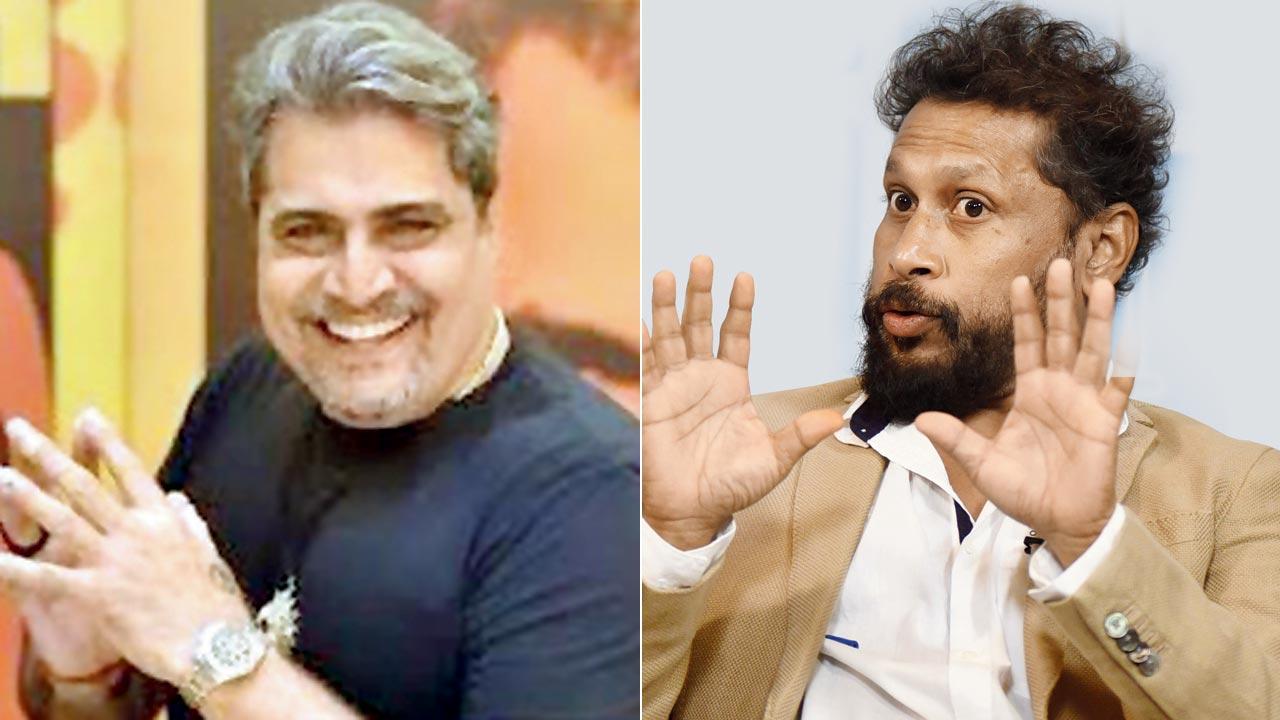
Like his father, Abhishek Bachchan too remembers every detail of the script-Shoojit Sircar
9:57 AM

Director Shoojit Sircar collaborates with Abhishek Bachchan for the first time on a father-daughter movie; says the actor is spontaneous, while his megastar-father is a stickler for rehearsals
Upala KBR (MID-DAY; March 23, 2024)
It’s hard to shake off a haunting film like Sardar Udham (2021). Almost three years after the Vicky Kaushal-led period drama, filmmaker Shoojit Sircar has returned to his signature slice-of-life cinema. “This is on the lighter side,” he says of the yet-untitled film that marks his first collaboration with Abhishek Bachchan. Together, they tell the story of a father-daughter duo who rekindle their bond.
The director, however, insists that the film is much more than its central theme. “It’s set outside of India. It’s a story about the central character, his relationships, and the ups and downs of his life.”
Be it Vicky Donor (2012) or Piku (2015), Sircar’s films capture the wonders of everyday life. Is his next, written by Ritesh Shah and him, along the same lines? “I love to do movies that deal with life and the humour in it. I’ve seen that humour in the people I have met, and in places like Delhi and Kolkata. There will always be a wry, humorous perspective in my movies. My characters are relatable as I draw a lot from real life; I don’t have any other source except my powers of observation.”
While the director has worked with Amitabh Bachchan on four films, including the unreleased Shoebite, Abhishek and he were keen to team up for a long time. Now that it has happened, Sircar observes that Abhishek is on his toes as an artiste.
“Mr Bachchan rehearses a lot, Abhishek is more spontaneous. Like his father, he too remembers every detail of the script. If you give Mr Bachchan a three-pager, he will remember every page, including the pauses, commas and full stops, as will Abhishek. I want to do more movies with him as I am seeing the emergence of a new Abhishek Bachchan. [Now] there is a maturity to him that an actor needs.”
Sircar shot the project in the US in late 2023. As a result, he had to miss the National Film Awards ceremony last October, in which his Sardar Udham earned five wins, including Best Hindi Feature Film.
“It’s a prestigious honour. My team was constantly sending me updates and pictures. Sardar Udham remained with me for a very long time. While I received many National Awards for it, I wish they had sent it to the Oscars. I was expecting [recognition] there too. It is one of Vicky’s finest performances.”

You name the director, and I think I have worked with them all, and I feel grateful for that-Varun Dhawan
8:34 AM

Onkar Kulkarni (BOMBAY TIMES; January 1, 2024)
Varun Dhawan is all excited to step into 2024. The actor whose film Bawaal released on an OTT platform in 2023, says that he is looking forward to being back in the theatres this year. In a chat with us, he talks about his many firsts in the year to come and the goals he has set for himself. Excerpts:
In 2023, you started working on a quintessential massy actioner (VD 18), a genre which is the flavour of the season, along with your first web series (Citadel). Were both the experiences drastically different?
Shooting for VD 18 has been very exhausting because there’s a lot of action, which I have never done on this scale before. Yes, this film will introduce me in a different light, so I am excited and scared at the same time. I have grown up watching these kinds of films. My favourite action entertainers have been Hum and the many Manmohan Desai films, which also boasted of family values. I have loved watching Salman Khan and Ajay Devgn actioners. With this genre, true human emotions reflect through your characters and maybe that strikes a chord with the audience. About the web series, it was really interesting to work in this format, which is longer, and I feel that way, you get so much more time to set the world and establish your character.
Shooting for VD 18 has been very exhausting because there’s a lot of action, which I have never done on this scale before. Yes, this film will introduce me in a different light, so I am excited and scared at the same time. I have grown up watching these kinds of films. My favourite action entertainers have been Hum and the many Manmohan Desai films, which also boasted of family values. I have loved watching Salman Khan and Ajay Devgn actioners. With this genre, true human emotions reflect through your characters and maybe that strikes a chord with the audience. About the web series, it was really interesting to work in this format, which is longer, and I feel that way, you get so much more time to set the world and establish your character.
While a lot is in store for you this year, you didn’t have a theatrical release last year. How would you describe the year gone by?
2023 was more of a working year for me. I wanted to concentrate on making films. The idea was to not let go of the craft and try to get better at it. I was shooting non-stop and it was a lot of work. Everything that I shot for will release in 2024. Sometimes, when you are trying to push the scale of your film, it is not easy. I had to try and do it differently. I have not had the biggest films mounted with me in them, and now I want to try to make my movies look bigger to get people more excited and get them to the theatres. When you make big films, it takes longer! But overall, I didn’t have a release in theatres last year. I am excited about returning with a film in theatres in 2024.
2023 was more of a working year for me. I wanted to concentrate on making films. The idea was to not let go of the craft and try to get better at it. I was shooting non-stop and it was a lot of work. Everything that I shot for will release in 2024. Sometimes, when you are trying to push the scale of your film, it is not easy. I had to try and do it differently. I have not had the biggest films mounted with me in them, and now I want to try to make my movies look bigger to get people more excited and get them to the theatres. When you make big films, it takes longer! But overall, I didn’t have a release in theatres last year. I am excited about returning with a film in theatres in 2024.
Your OTT film Bawaal created some amount of bawaal after its release. Will that experience discourage you from experimenting with films and subjects, something that you like to do from time to time?
I have never been scared of taking risks. Imagine, I have played a wolf in a film! This (such experiments) keeps you alive as an actor. But I missed doing mass genre for a long time, so that is what I have returned to at the moment. So, is 2024 a year of experiments? Not really! It is just a year of action for me. Bawaal was a very special experience. I loved shooting for it and putting it out. We got a lot of love on OTT, which is great. I would love to do one more film with Nitesh Tiwari (director of the film). He’s an amazing filmmaker. I also feel that the audience resonates more with my funny side, so I plan to do two comedy films soon.
You have spent more than a decade in Bollywood, and have done a range of roles – from out and out commercial films to experimental ones. Do you feel a lot of your potential is still untapped?
I think everyone feels that, but I am not the kind of person to cry foul. I believe that you have to be very happy with what happens in life and create your own opportunities. I think that’s what being an actor is all about. There are many opportunities for all actors. So, underutilized? No, I think I have had the opportunity to work with such great filmmakers. I have worked with Shoojit Sircar, Nitesh Tiwari, Sriram Raghavan, David Dhawan, Karan Johar… you name the director, and I think I have worked with them all, and I feel grateful for that.
I think everyone feels that, but I am not the kind of person to cry foul. I believe that you have to be very happy with what happens in life and create your own opportunities. I think that’s what being an actor is all about. There are many opportunities for all actors. So, underutilized? No, I think I have had the opportunity to work with such great filmmakers. I have worked with Shoojit Sircar, Nitesh Tiwari, Sriram Raghavan, David Dhawan, Karan Johar… you name the director, and I think I have worked with them all, and I feel grateful for that.
Vicky Kaushal undoubtedly deserved the Best Actor National Award for Sardar Udham-Shoojit Sircar
9:02 AM

Sardar Udham director says Kaushal’s haunting performance should have been recognised, as he dedicates film’s National Award wins to original choice Irrfan Khan
Priyanka Sharma (MID-DAY; August 26, 2023)
When we get on a call with Shoojit Sircar a day after his Sardar Udham (2021) bagged five wins at the 69th National Awards, including the Best Hindi Film, the joy in his voice is palpable. And yet, there is also a lingering guilt. The filmmaker dedicates the National Award to his late actor-friend Irrfan Khan, the original choice for the role.
“There is some kind of guilt in me that I did not work with him on this. He had also told me to move on. Every day, deep inside me, it hurts. I got the award, but he wasn’t here. The vacuum is still there. It’s not just Sardar Udham, I will dedicate whatever I can to him,” says Sircar.
That said, the director is proud of leading man Vicky Kaushal, who brought to screen the anger, agony and courageous spirit of Udham Singh. Sircar echoes the thoughts of many as he says that Kaushal should have been adjudged the Best Actor. Telugu star Allu Arjun won in that category for Pushpa: The Rise (2021).
“Vicky undoubtedly deserved the Best Actor award. The way he transformed into Sardar Udham is commendable. We started with the Jallianwala Bagh sequence. The first shot was of Udham picking up [the dead] bodies, feeling the weight and pain. The set was witnessing that nightmare. That set the tone of the film. Vicky couldn’t sleep for nights, and carried that disturbance throughout other parts of the movie.”
The biographical historical drama also won awards for cinematography, production design, audiography and costume design. Sircar says the awards’ significance lies in the fact that the movie highlighted ideas that are currently debated across the world. “In today’s times when you are talking about freedom of speech and what it means to be a revolutionary, getting this recognition is a [marker of] hope.”
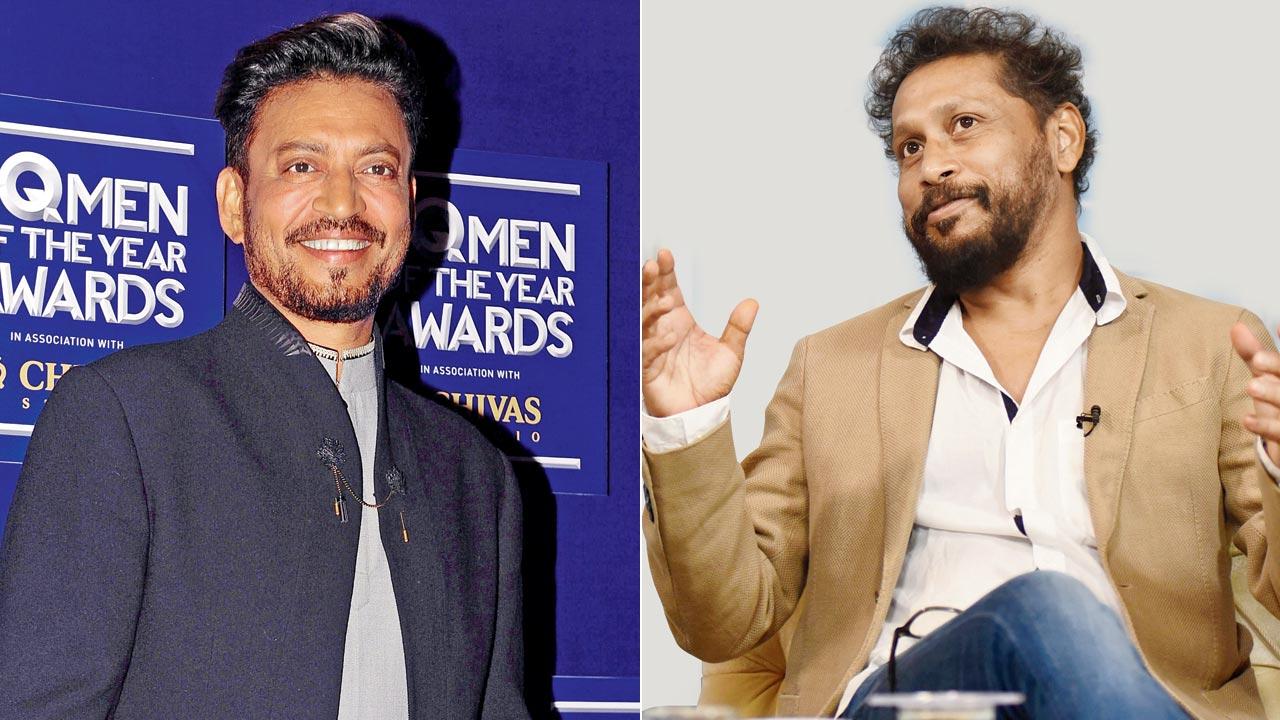
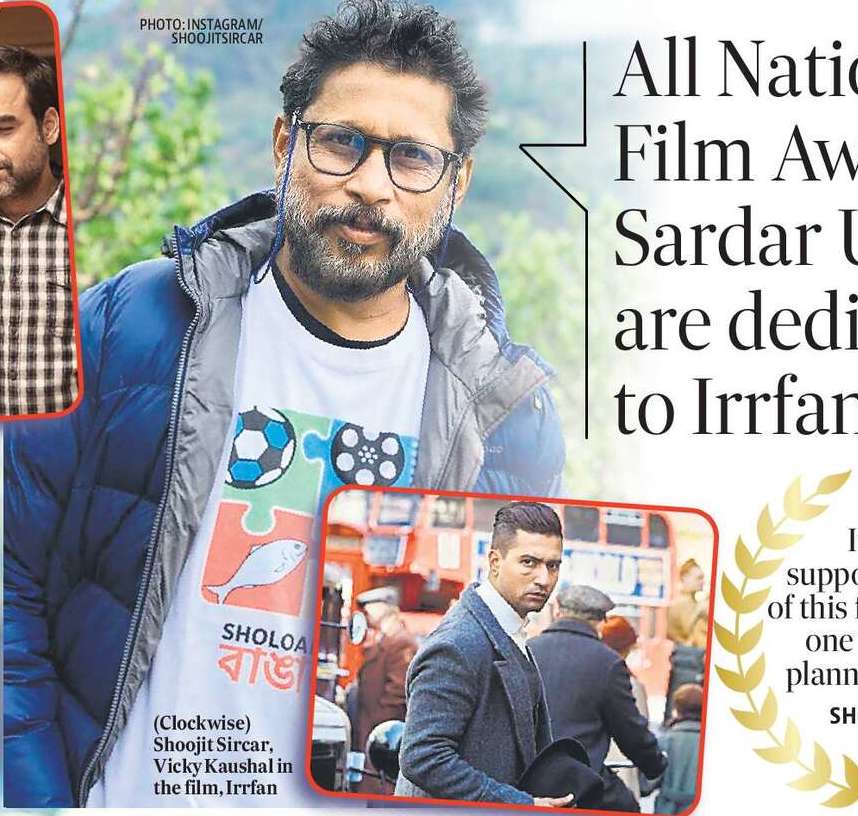
All National Film Awards for Sardar Udham are dedicated to Irrfan Khan-Shoojit Sircar
8:43 AM
Sugandha Rawal (HINDUSTAN TIMES; August 26, 2023)
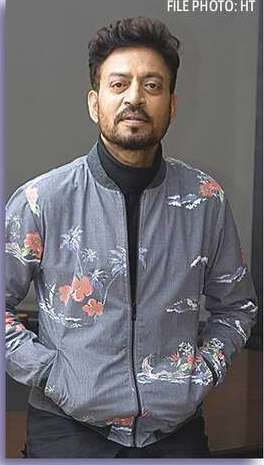
Shoojit Sircar’s Sardar Udham (2021) won five National Film Awards and the recognition has made the filmmaker emotional. The film’s team has decided to dedicate the honours to late actor Irrfan, who was originally supposed to essay the titular role. “All the awards we have won for the film are dedicated to Irrfan,” the 56-year-old tells us.
Irrfan died in 2020, after which actor Vicky Kaushal stepped in to play the lead. “Irrfan was supposed to be part of this film from the start. It is really unfortunate that he was unable to do so. Irrfan deserves the recognition that I am getting at the moment,” says Sircar, whose film won awards for Best Hindi Film, Best Cinematography, Best Costume Designer, Best Production Design and Best Audiography: Re-Recording (Final Mixing).
Sardar Udham is based on freedom fighter Udham Singh, who was determined to avenge the Jallianwala Bagh massacre by killing Reginald Dyer, British Punjab’s lieutenant governor at whose orders, 379 Indian civilians were killed in an indiscriminate shootout. While the film was widely appreciated by the audience, Sircar says a National Film Award gives additional encouragement.
“I would be wrong if I say that I was not hoping for it. It feels good that the film has been recognized on a national level. This kind of acknowledgement comes as a seal of courage for us. It makes us feel that we are on the right path and we should explore and evolve in that direction,” he wraps up.
I have an Anil Kapoor reference for my role-Varun Dhawan
9:00 AM

Counting Bawaal as a film that takes him beyond a mainstream hero, Varun on how director Tiwari guided him to perfect the part
Mohar Basu (MID-DAY; July 19, 2023)
Currently, the belief in the industry is that big-ticket movies are the secret to box-office success. It is Varun Dhawan’s beat, something he can do effortlessly. Yet, the actor has chosen the introspective Bawaal as his next.
To explain the move, he points to a Harivansh Rai Bachchan quote. “Mann ka ho toh achcha, na ho toh aur bhi achcha. My mother always quotes this couplet to me that talks about believing in the divine plan. It’s as if the universe had a different plan for me and I followed it,” begins the actor.
After meeting director Nitesh Tiwari multiple times with no specific project in mind, Dhawan was offered Bawaal. The Amazon Prime Video offering is a romantic drama as well as a story of self-discovery, and relies heavily on the leads’ chemistry. Dhawan says he couldn’t have asked for a better co-star than Janhvi Kapoor, but is quick to add that their first meeting was awkward.
“The first time I met her was at a party, after the film had got confirmed. She was happy to see me and was probably going to hug me. But her joy went a notch above, and she broke the glass in her hand. I was amused by her, and the more I got to know her, I realized that she is one of a kind.”
Armed with a good co-star, a solid script and Tiwari’s guidance, Dhawan went into the world of Bawaal. “Nitesh sir and I would talk about my character a lot. How does Ajju talk? What are his relationships like? I have a strong Anil Kapoor reference for Ajju. One of the technical changes Nitesh sir made was to make me say my lines slower. He would act out the emotional scenes. That’s the benefit of working with a writer-director; you know exactly what the vision is. When I did October [2018], it was similar—I surrendered to Dada [Shoojit Sircar].”
With Bawaal, Dhawan wants to go beyond the mainstream hero and do films that satisfy the artiste in him. His conviction has strengthened after working with Tiwari. “My takeaway is that if one works with a good writer and director, the performance will be good. I went through introspection and signed three films—Bhediya, JugJugg Jeeyo and Bawaal. These films have given me the strength to choose different [stories]. If you do good work, it will work. You can’t care too much about what everyone thinks.”
Subscribe to:
Posts (Atom)