I’m extremely happy that we have made India's Most Wanted-Arjun Kapoor
9:05 AM
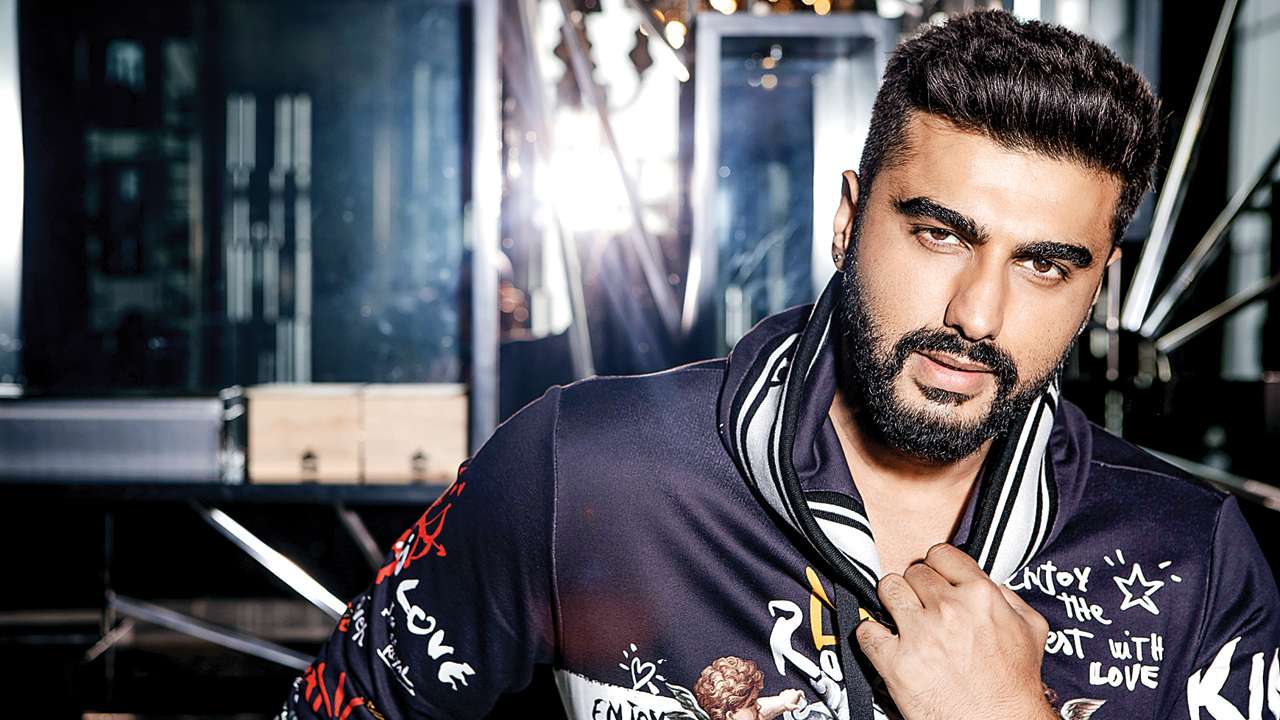
Meena Iyer (DNA; April 29, 2019)
Of late, Arjun Kapoor has been in the news mainly for his personal life. But in reality, the actor has had a chock-a-block schedule on the professional front. He has been shooting non-stop for Ashutosh Gowariker’s ambitious period drama Panipat, in which he plays Maratha leader Sadashivrao Bhau. Moreover, his other film, Rajkumar Gupta’s India’s Most Wanted, opens in cinemas next month. Arjun plays an intelligence officer who hunts down an international terrorist in the thriller. Hours before its trailer launch, the actor spoke to After Hrs. Excerpts from the conversation...
Are you ‘India’s Most Wanted?’
Not at all. My film is titled India’s Most Wanted and it releases on May 24. I’m glad that people have received the teaser and the poster so well, because it’s truly a movie about the unsung heroes of our country. It is about guys who roam around in regular clothes, whom we would never recognise. We’ve tried to put it out in a genuine way, so the next time people wonder if they are safe in the country, they should realise it’s because of these soldiers who’ve been to hell and who make sure that the negative things don’t reach us. They can’t always stop it, but there is never a moment when they stop trying to protect us.
This is a story of five people who saved a billion lives, whom no one gave a chance to, yet they walked into such a perilous situation. I’m neither holding a gun nor beating and shooting people in the movie. It’s genuinely about how covert missions happen. These five men caught a dreaded terrorist without shooting a single bullet, and that’s an amazing achievement. I’m extremely happy that we have made this film and the audience today is receptive to such a subject.
You once spoke about how filmmaker Aditya Chopra said that you win some, you lose some, but you’ve to be the person you are. But aren’t you young for that level of maturity?
Aurangzeb (my second film) flopped, but I moved ahead. My upbringing has been about ‘you win some, you lose some’. So, I’ve accepted that it happens to the best of us.
Aurangzeb is one of the most underrated films.
I agree. It might have had a better chance with today’s audience. It would have garnered more respect and attention for being something unique from the YRF stable. That was the point when Adi sir spoke to me and said, ‘Your first film did well, your second didn’t.’ These things happen. How you survive failure is what makes you a star. People will write you off, they will run you down and doubt you. That is how the industry and the world functions. Success toh sabko milti hai. After surviving failure, how you rise to the occasion is what matters.
One also noticed that after Namaste England, there were no toxic articles against you.
People do give you the benefit of doubt. And the media has been decent about it. They understand that we attempted something with the film, but it went haywire.
How much of the onus is yours?
You have to take responsibility. I cannot just blame one person and get away with it. A lot of people tend to blame the director, which is unfair. I made the choice to do the film in full hosh-o-hawaas. But it didn’t translate from the paper to the screen that well. My job is to have faith in somebody’s vision. And if I see that it’s not happening as I imagined it, I still have to see it through. Otherwise, it’s unprofessional. And I have to believe that perhaps I’m over-analysing, but eventually things will fall into place.
Your gut can give you some idea, but you can’t always follow it in the middle of the film. You can give your opinion. You may say 10 things and one or two might be taken. But eventually, you’re an actor doing your job. You’re being paid to do one thing and you do that and go home.
I’m involved as a team player, but I can’t override certain facets. And fair enough, you live and learn. Which is what Adi sir prepared me for. He told me that ‘tu har jagah producer ka beta nahin ban sakta. You can’t show your producer instinct to everybody. You do some films as an actor and learn from them.’
When a film doesn’t work, is Aditya the kind of person you can call for a heart-to-heart?
Definitely. I’ve always had that equation with him and I continue to do so. He keeps telling me that I’m like the nagging wife whom one doesn’t pay attention to (laughs). He will always prepare me. When he sees a trailer, he says ‘mujhe aise lag raha hai.’ If he likes it, he will say, ‘I love it’. If he sees the film, he is honest. He is the first one to say, ‘Boss, I was wrong, I didn’t like it, but it did well.’ Or ‘I liked it, but it didn’t do well.’ He is honest with me and you need such people around you. He keeps me grounded when I’m flying high. He preps me up in the most bizarre way when I need it. Even after Tevar, I spoke to him and he was like, ‘Theek hai, yeh Friday achha nahin gaya. Agla Friday achha hoga.’
Irrespective of Tevar’s fate, director Amit Sharma’s vision has to be lauded. His colours were so beautiful.
I backed the director. Maybe he got his due in Badhaai Ho more than Tevar. His cinematic journey started with ads, continued to Tevar and translated to story-telling with Badhaai Ho. In Namaste England, I backed the thought of a man going to that extent to bring his wife back home.
It’s okay, it happens to the best of us. In the last couple of years, we’ve seen everybody go through ups and downs. The most unexpected films worked and you’ve to salute that. And sometimes, the most expected ones didn’t and you’ve to respect that, too. The audience is getting more honest, they are not going to spending money unless it’s worth it.
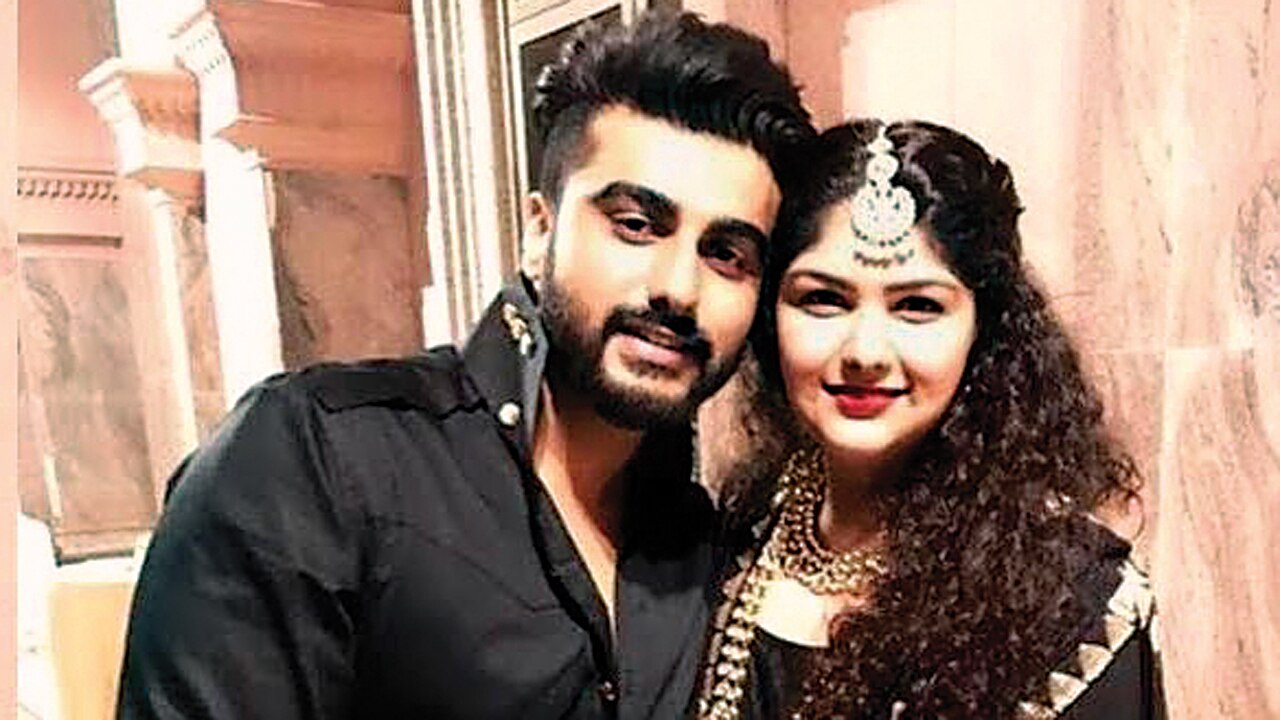 So, who is your go-to person besides Aditya? Your sister Anshula has fairly less cinematic experience.
My sister reads my scripts. I give her that much time because you never know what someone might say that will help. I always give her the respect of being an audience member, irrespective of her age. And today, the audience is young. I’ll make her listen to a song, I’ll give her a script to read. I’ll tell her this is the space of the film and then ask her what she thinks about it, if she finds it exciting. Dad is always there, too. Of course, he is my father, so there’s an emotion attached whenever he gives his opinion. But I’ll have to filter out that emotion and see the practicality.
I have my friends who are always around. But, eventually, I decide which projects I want to do depending on what my gut tells me. Adi (Chopra) always asks me, ‘What does your gut say?’ In this profession, you can listen, observe and learn. But eventually, you have to back yourself. In success, it’s easy to do that. In failure also, you have to back yourself because if you have made that choice, you have to learn to live with it. The introspection is not about how the film went wrong, because the audience has already answered that. It is about why did you make that choice to do it? A year back you needed to do this movie, you felt you liked it. But today, the material, which is being offered, is better, so it doesn’t mean that you made a wrong choice then. You still have to follow through it. Circumstances change in your life.
You also have to look at the fact that you need to work, from what is being offered.
Yes. Unfortunately, I don’t have the luxury of sitting at home and waiting for the perfect script. I’ve been working only since the last five-six years. I don’t have an educational qualification. I regard the fact that I’ve got this opportunity to make the most of it. And even financially, you have to sometimes put yourself out there and say, ‘Boss, I need to keep working.’ You observe the careers of big stars like Ajay Devgn and Akshay Kumar. They keep churning out material; sometimes doing three to four films a year. They are not scared of going out to work.
Like you said, you have to keep going..
I’m running a house, so, I have to sometimes take decisions knowing that I can’t sit at home for six months waiting for the perfect film. Once I make enough money, I can do that. Thankfully, now I’m in a better place as compared to the last couple of years. Going forward, I can afford to take some more time to assimilate scripts and take a decision. In the future, I will be more discerning about the scripts that I choose. Jab shuruat ki thi, tab yeh bhi tha ki jo mil raha hai, make the most of that. Toh uss mein kuchh galtiyaan hoti hai, kuchh cheezein sahi padh jaati hain.
Besides Panipat, which other project is keeping you busy currently?
After India’s Most Wanted releases, I have Dibakar Banerjee’s Sandeep Aur Pinky Faraar next, followed by Panipat at the end of the year. I’ve been shooting for the historical since the last five months. Ashutosh Gowariker sir told me that he would need six months, because of the kind of scale the film is mounted on. As I’ve got a unique look, I can’t jump into the next project immediately. I’ll wrap it by May end. Then I would like to take a short break in June.

Subscribe to:
Post Comments (Atom)
Post a Comment