Showing posts with label Aurangzeb. Show all posts
Showing posts with label Aurangzeb. Show all posts
I asked makers why they didn’t consider me for titular role in Chhatrasal-Ashutosh Rana
8:10 AM
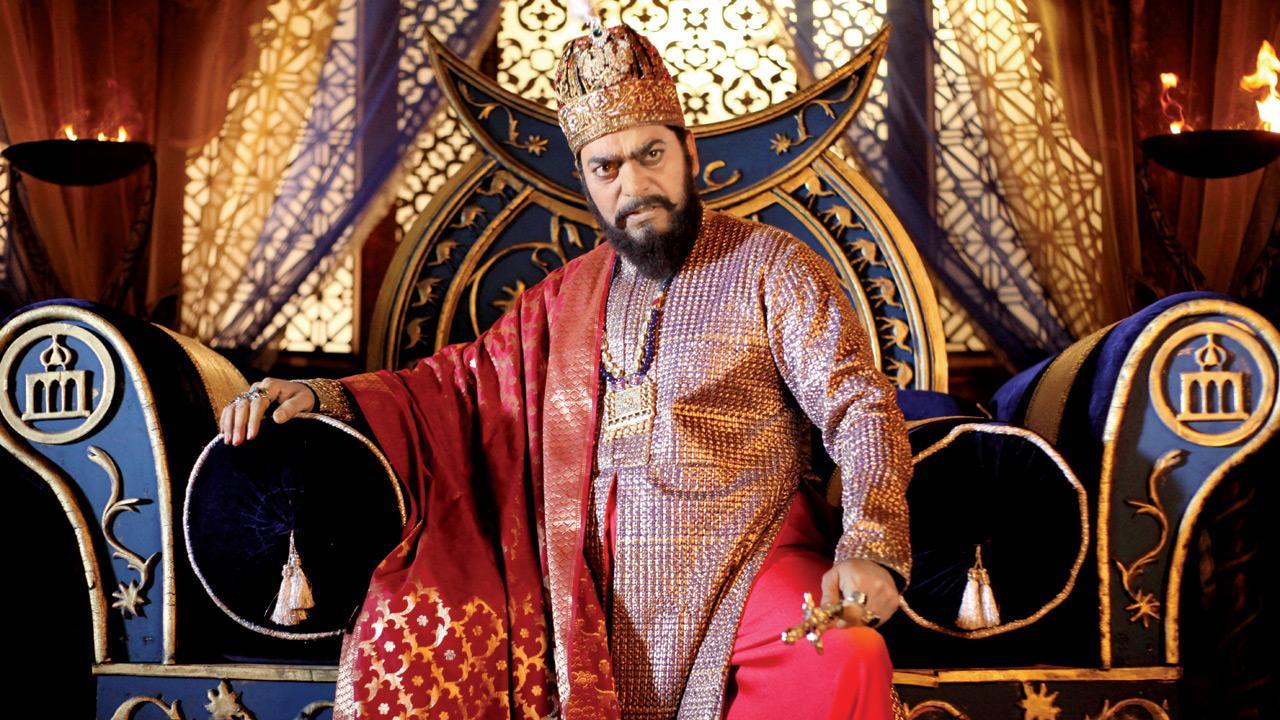
As he plays Aurangzeb in Chhatrasal, Ashutosh Rana says he wished to portray Bundeli king whose heroic stories he grew up on
Letty Mariam Abraham (MID-DAY; August 17, 2021)
We’ve often seen him as the tormenting antagonist on screen, but having a conversation with the man who makes acting look like child’s play was a first. On hearing Ashutosh Rana’s passion for his craft and the work he puts in to portray a character, it made us wonder why we don’t see him more often on screen. For now though, the actor is only too happy to tell the story of Maharaja of Bundelkhand with MX Player’s Chhatrasal. Rana talks about his love for history, and portraying Aurangzeb despite being a “bhakt” of the King of Bundelkhand.
Edited excerpts from the interview.
This is your first web series. Did you have any inhibitions before making your debut?
Not in the least. I hail from Bundelkhand, and if a series is being made on the King of Bundelkhand, it was my desire to be part of that narrative. It was a moment of pride and joy for me. Some things that you love come to you much later in life. After this series, I am sure I will be offered more historical projects.
We hear that you had wished to play the titular role?
Of course. I am a bhakt of Maharaja Chhatrasal Bundela, so I asked the makers why they didn’t consider me for that part. In turn, they asked me, who would then play Aurangzeb? On hearing this, I fell silent. In his lifetime, [the King of Bundelkhand] ruled for 44 years and won 56 wars. He then challenged Aurangzeb, and freed Bundelkhand from [his grip]. A hero emerges when he wins against a villain who is bigger and more powerful than him. That’s what Maharaja Chhatrasal accomplished all his life. It would’ve been a delight to play such a phenomenal character, but it is equally amazing to play Aurangzeb.
How did you desist from portraying Aurangzeb as all black?
There are few rulers with his combination of traits. While he was a powerful ruler, he had a Sufi style to him. Though he lived in a palace, he lived as a fakir in it. Despite it all, he has been the most powerful ruler of the Mughal empire. Without moving from the throne of Delhi, he controlled almost all of India. We didn’t explore the humane side of him in this series.
Why do you think there weren’t any shows made about Maharaja Chhatrasal until now?
This was mainly due to the language barrier. Bundelkhandi is a language that is mainly spoken in Uttar Pradesh and Madhya Pradesh, and is not a popular [dialect beyond that region]. That said, his name is not lost in history because several Hindi poets have written about his bravery. I had read the works of Kavi Bhushan. His feats are recorded in history, but since we didn’t learn about him in our history textbooks, we believe he didn’t exist. We may know the name of our father, grandfather and at times even our great-grandfather, but can we name the generation before that? That doesn’t mean they didn’t exist.
As an actor, do you have a line that you would never cross?
I cannot take my or someone else’s clothes off on screen. In Dushman [1998], I played a rapist. But my character Gokul Pandit did not touch Naina or Sonia [Kajol’s characters]. If I’m able to convey the fear of rape without touching, I have achieved the goal. Aesthetics is key even to showcase some of the most horrific acts. Instead of being wild on screen, I strive to create a wild imagination, which is more [impactful]. That is why people still remember me from Dushman and Sangharsh [1999]. I play negative characters, but with a positive attitude.
Now, I have validation that I should follow my instinct and not worry about box office-Arjun Kapoor
8:19 AM

Harshada Rege (BOMBAY TIMES; June 15, 2021)
Arjun Kapoor’s nine-year stint in Bollywood has been a roller-coaster ride of sorts. The actor has seen box-office success followed by films that failed to click. Arjun admits that he fumbled when he based his career choices on what he thought an actor is supposed to do, rather than follow his instinct. However, the release of his recent film made him look at his career path in a new light. In a conversation with BT, the actor talks about different kinds of cinema, and also highlights what he terms the ‘new commercial narrative’ that’s growing in the industry. Read on:
You have always said that you love all things typically Bollywood unabashedly, but you have also made interesting choices at regular intervals like Aurangzeb, Finding Fanny or Ki & Ka, and your new release Sandeep Aur Pinky Faraar. Do you find yourself wondering how to strike the balancing act?
The endeavour is to try and do stuff that excites me at a personal level and also as a member of the audience. Sometimes, you have to be intimate about your selection, because as an actor these are the things you have craved that you would get an opportunity to do. Yes, it has been a tough act to balance because over a span of two-three years, you get masked as a mainstream commercial hero, so you aren’t given enough offers of this kind. Therefore, you have to go and seek that unique and different film rather than it coming your way organically. However, that doesn’t stop me from seeking it.
Also, the lines have blurred from 2012 to 2021, where a film like Sandeep Aur Pinky Faraar (SAPF) is not looked at just as an interesting choice, or Aurangzeb and Ki & Ka aren’t looked at as offbeat films. They blend with the commercial, or rather, the new commercial narrative that’s growing, and that’s a heartening sign.
Theatres had reopened after seven months in November 2020, but had to down shutters once again during the second wave of Coronavirus. The pandemic played havoc with film releases and business. How did you deal with the uncertainty around the release of your film?
In my case, the release of SAPF was affected not once, but twice. First in March 2020, when we had the trailer out and had started the marketing, and then again in March 2021, when we were preparing once more and had to deal with the fact that there was a likelihood of another lockdown. At such a point, you just accept the fact that the film is not meant to connect with the audience in a broad spectrum and you feel it will be scattered — with the movie coming out mainly on satellite and digital. You accept that and detach yourself from the result but continue to believe that the process was worth it. You can’t get emotional about these things because they are beyond your control... it’s not like everyone else’s films were releasing.
We wanted to make sure that the film comes in theatres, and Dibakar sir (director Dibakar Banerjee) had made a film that I felt would get its due over the years to come. What I didn’t expect was this burst of love and genuine understanding of what the film speaks about, and people catching the nuances to such a level. The rekindling of the magic of Ishaqzaade that had Parineeti and me... This time around our chemistry was appreciated despite being devoid of romance. And this is where the audience wins at the end of the day. You can’t predict the audience or know them beyond a point, you can just keep your head down and work honestly and hope that the film connects with them.
You recently said that you followed your instincts at the beginning of your career and you fumbled a bit when you tried to strategize after a certain point. How did you get into that phase?
People tell you that you should do films that are viable at the box office, and I have done that and enjoyed those. When I had said I fumbled, what I meant was that I got muddled in my thinking about what actors are supposed to do versus what I should do. When you look at it through the optics of what your stardom should have you doing versus what the audience or you as an actor or someone who watches films should do, sometimes you get confused. When I was offered my kind of cinema, I just grabbed it.
What are you planning to do differently when it comes to selecting future projects?
The material that I am doing right now is selected with an attempt to make sure that you are looking at the pan-India audience, who likes to be entertained. When I do a film with Mohit Suri, I am aware that he connects with our entire country when it comes to romance, music and action, and there’s a certain way he presents actors. At the same time, when I am doing a horror-comedy with Saif Ali Khan, I know it appeals to the audience with certain sensibilities, and mine as well. I have always wanted to be a part of a comedy with Saif, and things just fell into place and Bhoot Police took shape.
Do you feel more confident now to make choices that don’t necessarily fall into the typical Bollywood hero trap?
Now, I have validation that I should follow my instinct and impulse, and not worry about the box-office implications... well, right now all of that exists on paper, so you can’t tell where the situation will be one year down the line. You just have to go with your instinct and know that the audience is sensible. Right now, they are consuming material on OTT, so when they come into the theatres — and believe me, they will — they should feel respected and not taken for granted. So, the material that I am selecting now, whether it’s more mainstream or as they call it a little off-centre, there is a certain regard that I am keeping in my mind for the audience, where I myself don’t want to be taken for granted when I go to watch a film, be spoon-fed and be made to feel silly about things. I want to enjoy cinema that stimulates while entertaining me. You realise that the audience is ready to use all their might to get involved in the journey of the characters, catch on to the smaller details and make a film a bigger success. Before SAPF came on OTT, I was thinking about whether I should stick to a certain kind of cinema, but this experience has given me the confidence to dabble in both worlds and enjoy myself equally.

An appreciation post for Sikandar Kher - the actor who deserves to be celebrated!
5:48 PM

In September 2013, actor Rajkummar Rao (then Raj Kumar Yadav) came to our office, along with Hansal Mehta, for the promotions of his film Shahid. The same year, he had delivered an acclaimed film in the form of Kai Po Che and had proved his worth with films like Love Sex Aur Dhokha, Shaitan, Gangs Of Wasseypur, Ragini MMS and Talaash. Yet, he was not as popular as he is right now. I had not seen Shahid then as it had not released but was impressed by his talent. I hence clicked a picture with him and uploaded on my Facebook account. I remember an acquaintance of mine telling me that he found it amusing that I clicked a snap with Rajkummar and even wrote so highly about the actor’s work in the caption. I reasoned that he is talented, humble and has a bright future; but it didn’t cut ice with the acquaintance. Today, now that Rajkummar is loved by one and all, this acquaintance is seen too doing the same – raving about Rajkummar at every given opportunity. I soon realized that there are many actors who are doing a good job but we don’t celebrate them if it’s not trendy enough to do so. It’s only when he or she becomes the next big thing is when most people want to jump on to the bandwagon.
As I finished the acclaimed web series Aarya a couple of weeks ago, I was reminded of this Rajkummar Rao episode, especially after witnessing Sikandar Kher’s riveting performance. Here’s an actor who has not done many films in his 12-year-career but has given some many memorable performances. And it’s sad that we are still not celebrating his talent yet.
I saw Aarya mainly for Sushmita Sen and Chandrachur Singh’s comeback and also to see what Ram Madhvani (of Neerja fame) has to deliver this time. I finished the show in awe and also surprise. After all, the web series boasted of some amazing performances but after Sushmita, it was Sikandar Kher who took the cake! Aarya deals with a rich Rajasthani family involved in drug business. Sikandar plays Daulat, the most trusted and dangerous servant of the patriarch Zorawar (Jayant Kripalani). He hardly speaks but is highly dependable. Give him a job and you can be assured it’ll be done. He also tags along Zorawar’s daughter Aarya (Sushmita Sen) when she faces acute crisis in her life and even motivates her to become the ‘sherni’ to fight off her detractors. While helping her, he also balances by taking care of Zorawar and keeping his secrets intact. His life is tough but he has a loving side, as seen in one seen when he plays with the puppy, Mango! And yes, he’ll never lie. Despite the twist in his tale in the last part of the season, you’d still yearn for a Daulat in your life, who’ll protect you, guide you and ensure that no harm comes your way. Sikandar’s stubble look, moreover, suited him perfectly and he did total justice to the character with his performance.
Sikandar Kher debuted in 2008 with Woodstock Villa followed by Summer 2007, released within a gap of two weeks. I have still not seen both the films and saw him for the first time in Khelein Hum Jee Jaan Sey. He was a surprise for me as I had zero expectations from him. And he suited the part of Nirmal Sen well.
After not-so-memorable performances in Players, Aurangzeb and Milan Talkies, he amazed me in Tere Bin Laden: Dead Or Alive. The first part is seen by many but sadly, the sequel sank without a trace. And with, very few got to see how Sikandar gave, believe it or not, the most unique performance ever in Bollywood. In this film, he plays a white CIA official named David DoSomething! His make-up and prosthetics comprising of protruding teeth made him completely unrecognizable. And he made the performance even better with his American accent. He totally nailed it and many couldn’t even realize that it’s Sikandar. And that’s not all. David DoSomething disguises himself as a loud Indian producer called David Chaddha. And for this role, he had a funny, Punjabi accent. Both roles were done splendidly by the actor and you have to see it to believe!

Sadly, the film failed to create buzz and didn’t get positive reactions from critics and audiences. Still, one hoped that Sikandar Kher would be noticed for his wonderful performance. Alas, that just didn’t happen. Today, no one remembers this film and here’s hoping that after Aarya, people might go back and revisit this film to see the brilliance that Sikandar got on screen.
After Tere Bin Laden: Dead Or Alive, Sikandar Kher left a mark in Romeo Akbar Walter as well. Here, he mastered the Pakistani-Punjabi accent and once again proved his worth. In The Zoya Factor, he again was brilliant especially in the finale where he provides tea to the very irate mob who had come to vandalize his house! It was one of the most novel and unconventional scenes in Hindi cinema. But look at the bad luck of Sikandar. The Zoya Factor, despite being worth watching, had terrible collections. In fact, none of his film has worked till now and were mostly ignored.
Even off-screen, Sikandar is hugely entertaining. Just check his rapid fire in the video below and it’s guaranteed to leave you in splits, especially the way he gets the Russian accent just right. Not many have this talent and Bollywood should make good use of it. Also, he’s an actor who can take a joke on himself and even crack that joke. His dig on his own film Aurangzeb is howlarious. Also, at one point, Maniesh Paul is asked “A rumour about you that you wish was true”. To which, Maniesh says, “That I am doing Dharma films”. Sikandar, at this, quickly retorts, “At least you had that rumour”! That unexpected jibe does make you laugh but also hits you that how the industry has been unfair to him.
Sikandar has recounted his struggles in several interviews in detail. To prep for Tere Bin Laden: Dead Or Alive, the actor shaved off his hair and also gained 16 kgs. In an interview to DNA, he said, "I used to go on 3 am binges. People would look at me with pity thinking here’s this actor who’s become bald and fat out of sheer frustration of not getting roles… (Laughs)." In his recent interviews, he has remarked how Aarya is his first project that worked and that he doesn’t expect anything as expectations lead to disappointments. It is heartbreaking that an actor of his calibre has to make such statements.
To all those who loved Sikandar Kher in Aarya, I request you to watch Tere Bin Laden: Dead Or Alive to see for yourself what this guy is capable of. Let’s spread the word on social media so that more and more people come to know. As for Bollywood, please give him more and more interesting and challenging roles in well-written films. Please ensure that he has a fabulous career from now on because he truly deserves it! Fortunately, he’ll be seen in Rohit Shetty’s Sooryavanshi, a highly awaited film that is expected to set the box office on fire. Will Aarya and Sooryavanshi prove to be a turning point in his career? Let’s hope for the best!

I've never played a character as deranged as Udaybhan-Saif Ali Khan
8:20 AM

Anshul Chaturvedi (BOMBAY TIMES; January 4, 2020)
At a time when the Mughal era is dissected socially and politically every other day, Saif Ali Khan is playing a Rajput warrior who fought for Aurangzeb against the Marathas. The role was frightening, he says, since it was not only loud and dark, but the character himself is utterly deranged. Along the way, he explains his individual view of the Mughal era – he thinks Persianate is a more accurate description – but adds that he prefers to not enter the political conversation on it
India seems to be enjoying war-based cinema in recent years, be it placed in current times or from the past – but is there a cultural undercurrent to it?
On one level obviously, yes and everyone eventually reacts to the fact that it’s the Muslim invader story. Whether it’s Pakistan that becomes the villain, whether it’s the ISI, or the Mughals. But on another level, those are the only kind of antagonists we seem to have had. I mean, we could come up with other stories, but on a large scale if you think about war films, these are the villains, the enemy we have fought against. That seems to be the most dramatic. You could make a movie about the Chinese but somehow I don’t think it will resonate very strongly with our audiences (laughs).
So, right or wrong, it becomes one of those things. And when you come to Tanhaji, Aurangzeb and Shivaji Maharaj had very bloody, serious encounters and that went on for quite a long time. So we look for heroes, and filmmakers look for heroes, and Tanhaji fits the bill in the perfect way, being the unsung right hand of Chhatrapati Shivaji Maharaj, fighting the autocratic, orthodox Aurangzeb. So that’s the story. Now how historically accurate it is, is another conversation. Whether people are fighting in the name of religion and independence, or whether there are more economic reasons that drive these things. History is obviously an argument that is told by the winner and the story will change depending on which point of view you take.
Many years back, you had spoken about the reading you were doing on national and international history and geo-political history. Have you had the time to read up on the Mughal era?
Yes.
What have you taken away from that?
I have read books that have defined Indian history and said that the west and the English are to blame, really for creating this idea of ‘eras’ because they divided history as per the classical age of Greece and Rome, and the Medieval Age and the Modern Age. And they wanted to classify Indian history as per the Hindu Age, that is the Classical Age, and the Medieval Age that is the Mughal Age, and the Modern Age, which is the British Age, really. So they created this framework, which is not necessarily how it was. And it is perhaps more correct to call India the Persianate Age rather the Muslim Age, because it was the language that was interactive and was the language of the courts and a lot of the country. And it was kind of the interaction with other cultures and other religions led to a great deal of – of what India is.
It is a great time to make a movie about, from the kind of tortures, the intrigues, the murders, the kind of scheming and stuff that used to go on in these people’s lives; the struggle for power is the mark of a good story in itself. They had this drink called poust, which is an opium based drink that slowly drives people mad and robs them of their dignity and kills them, but it takes a couple of months. I read this disturbing story about how Aurangzeb imprisoned his nephew (Sulaiman Shikoh) in Gwalior and forced him to have this drink and he said ‘paint his portrait every month because I want to see what he is looking like’.
I have learnt stories of great military feats. Babur was supposed to be this military genius, you come across Akbar and Dara Shikoh and… actually these are very Shakespearean characters. Aurangzeb is very much like Richard III, he is this scheming king, who is very handsome in his youth but later on becomes a little crooked, that kind of thing. Dara Shikoh is Hamlet, he is miscast really for this kind of job. He is better off as a Sufi saint rather than the son of the ruler of Hindustan. Shah Jahan is like King Lear, and Jahanara and Roshanara are like Cordelia and her sister in King Lear. And it goes on like this. And two books I read – one was The Peacock Throne by this guy called Waldemar Hansen and another The Last Spring. And these are fascinating stories.
Yeah, so I got a sense of you know, the politics of the time, the kind of art they encouraged and the inter-family complications and drama and you get a sense of that it is not really driven by religion, you know – they seem kind of really Indian, the Mughals, and they kind of really assimilated into the country.
Your character in the film, is he battling for an evil empire, or is it more layered?
Aurangzeb entrusts him to defend the fort against Tanhaji. The kind of back story that Om (the director) gave it and the kind of madness he created, it is a very new experience as an actor. I have a tendency to try and underplay things, and he was like, no I want you to be much louder, which was very frightening because that’s new for me. I don’t think it is the evil empire, but he is a slightly deranged character, that is for sure.
Did you enjoy playing a deranged character?
Well, I have never played one quite so deranged before! I don’t think I would like to do it very often.
Could you have pulled off a role like this in the era when you were doing something like a Salaam Namaste?
(Laughs) No! I don’t think so, not at all! This was I think the most seasoned kind of acting. It was like breaking down a wall and finding yourself in a new room. I am really pleased with it. It is something that the director and I found together.
Some part of Bollywood has been quite politically vocal currently, on either side of what can be described as polarising issues. You are not on social media and don’t speak much about politics. Is that the safer way?
I think, in a country like ours, taking either stand sometimes can have different results than what happens normally in an environment where people can voice views and discuss stuff and life goes on. It is a slightly more volatile environment, where the impact of what you say is louder, and some people enjoy that impact, I guess. I am not sure that I do, so I am still trying to form my opinion. It is a very interesting time and a disturbing time and you hear a lot of things, on one hand. And you are wondering how the country is going to define itself. That’s on one hand. And honestly, on the other hand, and I don’t mean to offend anyone when I say this, I have never been happier living in my country. The kind of medical treatment that is available to me and my family, the education for my kids, the professional employment and the work I am getting, everything about my life in India is better than it has ever been. So, I am hopeful.
You can almost see the counter argument coming that you are too privileged to be impacted either way.
Which is why I tend to keep quiet. Because I understand, that I am not only privileged, but my wants and desires are probably irrelevant to people with burning issues in a literally burning environment. So I get that, and I am quite happy with that. And I don’t feel disenfranchised with that. I do feel that I am absolutely way too privileged to really enter into that conversation with any relevant point of view.
On that thought, if not in privilege, at least in holding the attention of the paparazzi, how has it been to have a competitor right in your arms?
I would love it if Taimur could grow up just as a normal kid and be allowed to… Look, like you said we are really privileged and nobody is really complaining. I love the press, in fact the press has been very kind to move away from our house; they used to be stationed right opposite here. Yes, they do give him attention. Luckily, he seems to be very sweet and normal, and he has not gotten affected in some strange way by it. But I’d be the happiest guy if he were just an anonymous, normal kid. Why do people give kids so much importance, which they don’t really deserve? It’s frightening. I don’t know. I don’t know what to say. I would much rather, and he would much rather, be normal and ignored.
 He would? Has he spoken to you about it?
Yes, he has told me! He’s like, “No picture!”. And he starts frowning. He doesn’t like too much fuss. It’s not something he is excited about, for sure. But on the other hand, in a positive way, he does seem to make people happy. And he makes me very happy, because he is a cute kid. So I get it… because it’s an outpouring of affection and love. But unfortunately sometimes, in some public places when he goes to school, sometimes it can get a little crowded and that’s something he has grown up with. And it’s not something that any of us enjoy, but what to do?
When you are asked to be this belligerent, aggressive guy playing a historical villain, is there a thought somewhere that this is going to be compared to Ranveer’s Khilji?
I guess, in the sense that Ranveer Singh has definitely set the bar with the kind of performance in a historical film. And I would like to compare and I would like people to compare my character to what he has done. I think my character of Udaybhan is original and I think it is the best work I have done. So I am actually keen to have it compared with anyone else and what they have done.

Aditya Chopra, Karan Johar and Rohit Shetty are like ‘chaar dhaam’-Ashutosh Rana
7:25 AM

Kavita Awaasthi (HINDUSTAN TIMES; October 24, 2019)
Being part of a film that does stupendous business at the box office is a joy. Every actor wants his or her film to be seen by the most number of people and superhits are possible when a film is watched multiple times,” says actor Ashutosh Rana, talking about the success of the Hrithik Roshan-Tiger Shroff-starrer War, which also features him.
Ashutosh proved his mettle way back with Dushman (1999) and Sangharsh (2000). And the movies he has done of late have also given his career a boost. Last year, for instance, he was seen in Simmba, Dhadak and Mulk, besides Sonchiriya this year. The actor feels being part of a film like War has a huge impact on one’s career. “Aditya Chopra’s production house, Karan Johar’s production house and Rohit Shetty are like the chaar dhaam’. As in Hindu religion, even if you visit many famous temples, doing the chaar dhaam yatra is a must. Similarly, being an actor, after having worked with them I feel I am completely a part of the film industry. I have worked with so many other talented filmmakers but having these diggaj (stalwart) filmmakers in my filmography takes it to another level,” he says.
After shooting for Vicky Kaushal-starrer Bhoot, he is now working on Guneet Mongia’s next, Priyadarshan’s Hungama 2, another film with Aditya Chopra’s production house, a Telugu web show, a Kannada film and a web series based on the Mughal emperor Aurangzeb. Ashutosh is known for his impeccable command over Hindi and says talking in Urdu while playing a historical character was a pleasure for him. “Hum bhaasha ke anugrahi hai, pujari hai. So, whenever I speak in Hindi, Urdu, English, Tamil or Telugu, I try to use the language in a pure form and not use Hindi while speaking English or vice versa. Urdu and Hindi have been spoken in India for years and essentially, we speak Hindustani zubaan. It wasn’t tough to talk in Urdu for the show as the language was not as chaste as it might have been in that era. That’s because the show is set in 1700s but the audience watching it is from 2019, so we have kept that in mind,” he shares.
I’m extremely happy that we have made India's Most Wanted-Arjun Kapoor
9:05 AM
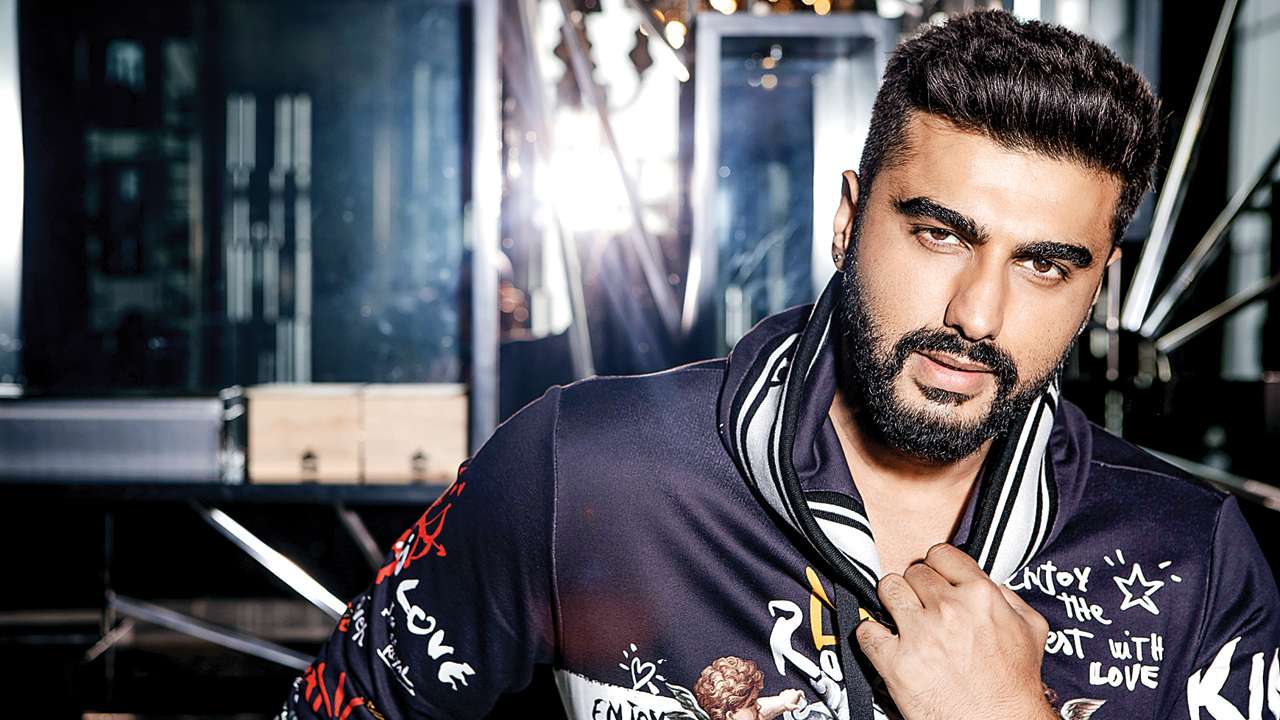
Meena Iyer (DNA; April 29, 2019)
Of late, Arjun Kapoor has been in the news mainly for his personal life. But in reality, the actor has had a chock-a-block schedule on the professional front. He has been shooting non-stop for Ashutosh Gowariker’s ambitious period drama Panipat, in which he plays Maratha leader Sadashivrao Bhau. Moreover, his other film, Rajkumar Gupta’s India’s Most Wanted, opens in cinemas next month. Arjun plays an intelligence officer who hunts down an international terrorist in the thriller. Hours before its trailer launch, the actor spoke to After Hrs. Excerpts from the conversation...
Are you ‘India’s Most Wanted?’
Not at all. My film is titled India’s Most Wanted and it releases on May 24. I’m glad that people have received the teaser and the poster so well, because it’s truly a movie about the unsung heroes of our country. It is about guys who roam around in regular clothes, whom we would never recognise. We’ve tried to put it out in a genuine way, so the next time people wonder if they are safe in the country, they should realise it’s because of these soldiers who’ve been to hell and who make sure that the negative things don’t reach us. They can’t always stop it, but there is never a moment when they stop trying to protect us.
This is a story of five people who saved a billion lives, whom no one gave a chance to, yet they walked into such a perilous situation. I’m neither holding a gun nor beating and shooting people in the movie. It’s genuinely about how covert missions happen. These five men caught a dreaded terrorist without shooting a single bullet, and that’s an amazing achievement. I’m extremely happy that we have made this film and the audience today is receptive to such a subject.
You once spoke about how filmmaker Aditya Chopra said that you win some, you lose some, but you’ve to be the person you are. But aren’t you young for that level of maturity?
Aurangzeb (my second film) flopped, but I moved ahead. My upbringing has been about ‘you win some, you lose some’. So, I’ve accepted that it happens to the best of us.
Aurangzeb is one of the most underrated films.
I agree. It might have had a better chance with today’s audience. It would have garnered more respect and attention for being something unique from the YRF stable. That was the point when Adi sir spoke to me and said, ‘Your first film did well, your second didn’t.’ These things happen. How you survive failure is what makes you a star. People will write you off, they will run you down and doubt you. That is how the industry and the world functions. Success toh sabko milti hai. After surviving failure, how you rise to the occasion is what matters.
One also noticed that after Namaste England, there were no toxic articles against you.
People do give you the benefit of doubt. And the media has been decent about it. They understand that we attempted something with the film, but it went haywire.
How much of the onus is yours?
You have to take responsibility. I cannot just blame one person and get away with it. A lot of people tend to blame the director, which is unfair. I made the choice to do the film in full hosh-o-hawaas. But it didn’t translate from the paper to the screen that well. My job is to have faith in somebody’s vision. And if I see that it’s not happening as I imagined it, I still have to see it through. Otherwise, it’s unprofessional. And I have to believe that perhaps I’m over-analysing, but eventually things will fall into place.
Your gut can give you some idea, but you can’t always follow it in the middle of the film. You can give your opinion. You may say 10 things and one or two might be taken. But eventually, you’re an actor doing your job. You’re being paid to do one thing and you do that and go home.
I’m involved as a team player, but I can’t override certain facets. And fair enough, you live and learn. Which is what Adi sir prepared me for. He told me that ‘tu har jagah producer ka beta nahin ban sakta. You can’t show your producer instinct to everybody. You do some films as an actor and learn from them.’
When a film doesn’t work, is Aditya the kind of person you can call for a heart-to-heart?
Definitely. I’ve always had that equation with him and I continue to do so. He keeps telling me that I’m like the nagging wife whom one doesn’t pay attention to (laughs). He will always prepare me. When he sees a trailer, he says ‘mujhe aise lag raha hai.’ If he likes it, he will say, ‘I love it’. If he sees the film, he is honest. He is the first one to say, ‘Boss, I was wrong, I didn’t like it, but it did well.’ Or ‘I liked it, but it didn’t do well.’ He is honest with me and you need such people around you. He keeps me grounded when I’m flying high. He preps me up in the most bizarre way when I need it. Even after Tevar, I spoke to him and he was like, ‘Theek hai, yeh Friday achha nahin gaya. Agla Friday achha hoga.’
Irrespective of Tevar’s fate, director Amit Sharma’s vision has to be lauded. His colours were so beautiful.
I backed the director. Maybe he got his due in Badhaai Ho more than Tevar. His cinematic journey started with ads, continued to Tevar and translated to story-telling with Badhaai Ho. In Namaste England, I backed the thought of a man going to that extent to bring his wife back home.
It’s okay, it happens to the best of us. In the last couple of years, we’ve seen everybody go through ups and downs. The most unexpected films worked and you’ve to salute that. And sometimes, the most expected ones didn’t and you’ve to respect that, too. The audience is getting more honest, they are not going to spending money unless it’s worth it.
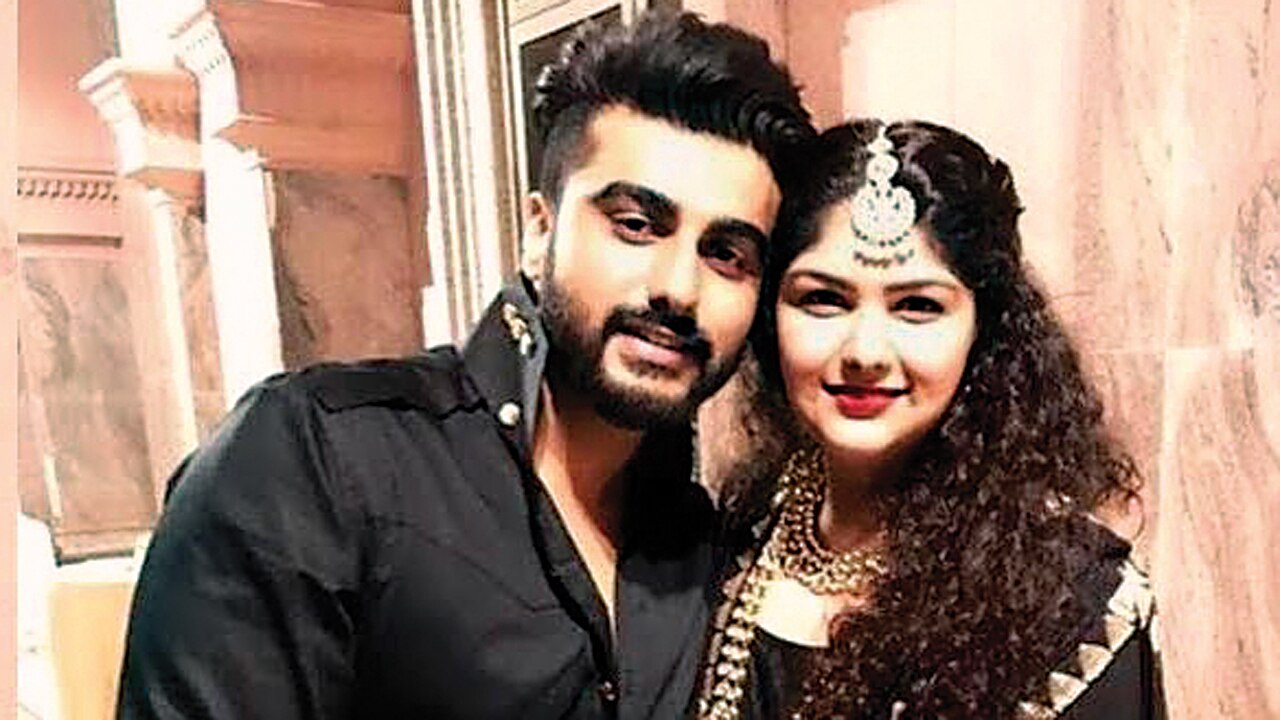 So, who is your go-to person besides Aditya? Your sister Anshula has fairly less cinematic experience.
My sister reads my scripts. I give her that much time because you never know what someone might say that will help. I always give her the respect of being an audience member, irrespective of her age. And today, the audience is young. I’ll make her listen to a song, I’ll give her a script to read. I’ll tell her this is the space of the film and then ask her what she thinks about it, if she finds it exciting. Dad is always there, too. Of course, he is my father, so there’s an emotion attached whenever he gives his opinion. But I’ll have to filter out that emotion and see the practicality.
I have my friends who are always around. But, eventually, I decide which projects I want to do depending on what my gut tells me. Adi (Chopra) always asks me, ‘What does your gut say?’ In this profession, you can listen, observe and learn. But eventually, you have to back yourself. In success, it’s easy to do that. In failure also, you have to back yourself because if you have made that choice, you have to learn to live with it. The introspection is not about how the film went wrong, because the audience has already answered that. It is about why did you make that choice to do it? A year back you needed to do this movie, you felt you liked it. But today, the material, which is being offered, is better, so it doesn’t mean that you made a wrong choice then. You still have to follow through it. Circumstances change in your life.
You also have to look at the fact that you need to work, from what is being offered.
Yes. Unfortunately, I don’t have the luxury of sitting at home and waiting for the perfect script. I’ve been working only since the last five-six years. I don’t have an educational qualification. I regard the fact that I’ve got this opportunity to make the most of it. And even financially, you have to sometimes put yourself out there and say, ‘Boss, I need to keep working.’ You observe the careers of big stars like Ajay Devgn and Akshay Kumar. They keep churning out material; sometimes doing three to four films a year. They are not scared of going out to work.
Like you said, you have to keep going..
I’m running a house, so, I have to sometimes take decisions knowing that I can’t sit at home for six months waiting for the perfect film. Once I make enough money, I can do that. Thankfully, now I’m in a better place as compared to the last couple of years. Going forward, I can afford to take some more time to assimilate scripts and take a decision. In the future, I will be more discerning about the scripts that I choose. Jab shuruat ki thi, tab yeh bhi tha ki jo mil raha hai, make the most of that. Toh uss mein kuchh galtiyaan hoti hai, kuchh cheezein sahi padh jaati hain.
Besides Panipat, which other project is keeping you busy currently?
After India’s Most Wanted releases, I have Dibakar Banerjee’s Sandeep Aur Pinky Faraar next, followed by Panipat at the end of the year. I’ve been shooting for the historical since the last five months. Ashutosh Gowariker sir told me that he would need six months, because of the kind of scale the film is mounted on. As I’ve got a unique look, I can’t jump into the next project immediately. I’ll wrap it by May end. Then I would like to take a short break in June.
Why this short film by Zara Khan and Raj Babbar's niece Kajri is a must-watch
8:14 AM

Salma Agha's daughter, Zara Khan, and Raj Babbar's niece, Kajri, bring a short film on a Punjabi bride's determination to track down the NRI groom who had abandoned her
Dinesh Raheja (MID-DAY; March 25, 2018)
Three-and-a-half decades ago, singer-actress Salma Agha and actor Raj Babbar made waves with the 1982 blockbuster Nikaah; now Babbar's niece Kajri Babbar and Agha's daughter Zara Khan (aka Sasha Agha), have joined forces to make a short film, Khoj, on the subject of young Punjabi brides who are abandoned by their NRI husbands. Khoj is scheduled to open at the Shorts Corner at the Cannes film festival in May 2018, and Zara is excited at the prospect of walking the red carpet.
In the film, however, Khan doesn't sport a glamorous look. The actress says, "I play a 19-year-old from a small village in Punjab who can't speak English properly and is married off to an NRI. Abandoned by her husband, she tracks him down in London. It was difficult for me to relate to my character's way of living and her body language, but her spirit appealed to me. Nothing can break her. And this is something I wish for women of all ages."
Director Kajri Babbar, currently completing her Masters in film direction at Arts University, Bournemouth, UK, speaks on the issue her film tackles with the fervour of youth, "I wanted to tell the world the story of a strong Punjabi woman. During my research, I contacted the NRI wing of Punjab Police and they connected me with women who had been deserted by their husbands. What shocked me was that most of the girls were still in their teens!"
Zara acknowledges the role that her and Kajri's shared family history played in getting them together for this project. "Thanks to mom and Raj uncle's association, we all are very close," she says. When she saw Kajri's first short film, Pardaa (2017), Zara messaged the director expressing her desire to work with her. Kajri responded with the script of Khoj. "We did a reading through Skype and she thought I was perfect for the role. Together, we created Gurpreet Kaur Bedi."
Though mother Salma chided her for letting her "monkey ears" show on screen because of her character's hair-pulled-back look, Zara is all praise for the film's makeup artist Charlotte Annice Spruch for making her character look authentic. Zara's personal contribution was: "long hair that really helped me look like a sardarni."
By agreeing to look her part, Zara won over Kajri who had been sceptical about the actress' willingness to accept the deglamorised part of a pregnant young girl with chapped lips and dark circles under her eyes. Zara reasons, "My job as an actor is to look the part, so paint me red, blue, yellow, or do whatever because when I'm in front of the camera, I submit myself to the director completely. I can look pretty at any given time, but to look real is my kind of beautiful."
Realism enthuses Kajri too. Groomed and raised to be a socially responsible individual, the director believes that her work should convey her convictions. Kajri attributes the fascination for NRI grooms to the belief that "India is still living under a colonial hangover. We believe everything from abroad is better including the food, money, cars, brands, government and even Indian men born on foreign land."
She adds, "In a country like ours, women should stand together and help each other but we hear several horrible cases of mothers-in-law torturing their daughters-in-law or even grandmothers abandoning their granddaughters because they are female. The issue of patriarchy becomes even more complex with the participation of women; and that frustrates me the most. This film was my subtle way of conveying the frustration."
The climax of the 28-minute film offers education as the key to empowerment. But Kajri agrees that the problem needs to be addressed at various levels. She cautions against choosing a life partner in haste and says, "Families should conduct a proper background check on the groom; from the passport to the bank accounts, everything should be verified. And it is crucial for any woman to have legal proof of marriage especially if the man is a citizen of another country."
Zara draws solace from the fact that "Union Minister Kiren Rijju went to the United Kingdom and negotiated an agreement to resolve the issue of Indians abandoning wives and aged parents back home in India." For Zara, Khoj is her chance to set her film career back on track after her debut Aurangzeb failed. Zara smiles, "A YRF film is every actor's dream launch but unfortunately Aurangzeb did not do well and everyone presumed that I was just a pretty face. But whoever has seen Khoj has said, 'Oh we didn't know you were such a good actor!'"

Kajri Babbar
I am very proud that I hail from the film fraternity. I am never apologetic about it-Arjun Kapoor
8:06 AM

Lasyapriya Sundaram (BOMBAY TIMES; July 24, 2017)
In a span of less than five
years, Arjun Kapoor has managed to make a mark in the film industry with
a variety of roles. Despite wanting to be a mainstream Hindi film hero,
he has not shied away from experimenting with niche films. As he says,
“When you have survived for four-five years and have a body of work,
you should only look towards making more inroads. You cannot be stuck in
personas of being massy, urban, classy, sophisticated or rustic.
These are tags that you can break.“ In a candid chat with BT, ahead of
the release of his upcoming film Mubarakan, the actor talks about
breaking stereo types, associating with directors who come from various
schools of thought, and how he'd never do a film that portrays women derogatorily. Excerpts...
 When one looks at your repertoire of eight films in the past five years
and the way you have gone about choosing them, there seems to be a
method behind it. Would you say that this assumption is correct?
When one looks at your repertoire of eight films in the past five years
and the way you have gone about choosing them, there seems to be a
method behind it. Would you say that this assumption is correct?
I auditioned for my first film and that's how I got it. After my first film, I was just happy that I had been accepted. I wanted to dabble in all genres, so I chose a Gunday, which was a larger-than-life film. I then chose to do 2 States because the conflict that the character went through appealed to me as it was quintessentially Indian in nature. I did a film like Aurangzeb as it was a non-song film, which at that time was attracting the audience to the multiplexes. I did a Finding Fanny because I love Homi Adajania's madness. Also, I wanted to share screen space with Naseeruddin Shah and Pankaj Kapur and learn from them. I didn't say yes to everything that came my way, but I did give my nod to exciting projects. When Ki & Ka came my way, I realised no boy will say yes to this role. The film's director, R Balki, narrated one line and said that he had not even thought about it. I jumped at it because I felt it was tailor-made for somebody with my physicality. I took a chance with the film and consciously worked towards it as it went against the grain and it also paid off. Half Girlfriend was exciting because the texture of the storytelling was again Indian. There are certain things that pique an actor's interest, and that's why you veer towards certain subjects.
While you are a creative person, you also understand how it is to produce a film. Do these two viewpoints - one artistic and the other commercial - create a conflict in your mind?
Well, what I do take into account is that, I don't want anybody losing money on my film. Even if I am experimenting and pushing the envelope, the film should be safeguarded, so that the risk taken doesn't cost somebody their job. Besides, no human being can predict how a film will perform at the box office. The one responsibility that every actor should shoulder is to secure the producer to whatever degree they can. With every film performing well at the box office, your saleability as an actor improves. That doesn't mean you are becoming a better actor. When I signed Finding Fanny, I knew it was an experimental film. I did it intentionally. It was a film made in English for a certain audience, it still earned close to Rs 30 crore at the box office. But when you compare it with 2 States, which released earlier, it won't make sense. If you look at it in isolation, my responsibility was to attract the audience into theatres and ensure that my presence didn't lead to the budget going overboard, and I think I achieved that. Being part of a film like that gave me creative satisfaction and it's one of my best-reviewed films as well. Commercial success of a film is different from making a film commercially viable.
After Anees Bazmee's Mubarakan, you have been roped in by Dibakar Banerjee for Sandeep Aur Pinky Faraar. How does an actor straddle these two diametrically opposite worlds that these filmmakers represent?
The excitement lies in the fact that I will be going from one world to another. That's exactly how every actor wants to be challenged. As an actor, I should have the ability to navigate these different spaces and be well-rounded. In a calendar year, I have Mohit Suri, Anees Bazmee and Dibakar Banerjee as filmmakers to work with, this only helps me showcase my range as a performer. I will be dedicating a month to prep up for Dibakar's film. The reasons for doing Mubarakan and Sandeep And Pinky Faraar are for its makers and the material they have to offer. I get to live vicariously through directors, who create diametrically opposite worlds; how lucky am I!
Tiger Shroff recently said that he is happy that he has a fan following among the audience in the B and C centres. Since films like 2 States and Ki & Ka have worked more than say a Tevar, do you fear that you will be tagged as a hero appealing to the multiplexes and not the masses? Like we often say, a metrosexual hero...
I don't think I have been tagged as a metrosexual hero. Half Girlfriend did well in UP, Bihar, Rajasthan and Indore. Gunday also did well in those regions. Ishaqzaade was a pan-India success at that point. It wasn't massy in its texture, but people from across the country saw it. I am not looking at whether the film will work in the A, B or C centres, and I think that reflects in my selection of films. I am always trying to meander my way into every household in India. I want to be a pan India hero. That's how you can survive. When you have survived for four or five years and have a body of work, you should only look towards making more inroads. You cannot be stuck in personas of being massy, urban, classy, sophisticated or rustic. These are tags that you can break.
While most actors are image conscious, you are conscious about not creating any image. So, in a way, you are not yet completely Bollywoodised...
I am very proud that I hail from the film fraternity. I am never apologetic about it. That doesn't mean that there aren't other facets to my personality. I am a well-rounded person, not just physically (laughs). I am a huge Bollywood fan, but that's not all that there is to me. There is enough time for various facets of my persona to come to the forefront.
From your interviews and your public persona, you come across as a feminist. If a film that you are offered portrays women derogatorily, would you voice your objection to it?
Films mirror society. When you read about a character, if it's not written with a particular agenda, say where they not purposely trying to malign the opposite sex and the journey brings about a catharsis, then it makes sense. Take for example my first film - if I was doing Zoya's role and reading about Parma, it's not my job to question the director about the boy's behaviour with the girl. He is doing that because that is what happens in society, sadly. The second half then goes on to say what the boy stands to lose for behaving the way he does with women. If a film is derogatory towards women, I won't affiliate myself with it. That is not the reality I would like to put out in the world.
But what's your response when people say that films and film stars influence the masses?
If we, as filmmakers and creative people, start becoming the do-gooders and the cleansers of society, it means that the infrastructure of our government has let us down drastically. Do you mean to say that we are the only cause for everything bad that happens in the country? If that is the case, then there is a fundamental flaw in the system.
I auditioned for my first film and that's how I got it. After my first film, I was just happy that I had been accepted. I wanted to dabble in all genres, so I chose a Gunday, which was a larger-than-life film. I then chose to do 2 States because the conflict that the character went through appealed to me as it was quintessentially Indian in nature. I did a film like Aurangzeb as it was a non-song film, which at that time was attracting the audience to the multiplexes. I did a Finding Fanny because I love Homi Adajania's madness. Also, I wanted to share screen space with Naseeruddin Shah and Pankaj Kapur and learn from them. I didn't say yes to everything that came my way, but I did give my nod to exciting projects. When Ki & Ka came my way, I realised no boy will say yes to this role. The film's director, R Balki, narrated one line and said that he had not even thought about it. I jumped at it because I felt it was tailor-made for somebody with my physicality. I took a chance with the film and consciously worked towards it as it went against the grain and it also paid off. Half Girlfriend was exciting because the texture of the storytelling was again Indian. There are certain things that pique an actor's interest, and that's why you veer towards certain subjects.
While you are a creative person, you also understand how it is to produce a film. Do these two viewpoints - one artistic and the other commercial - create a conflict in your mind?
Well, what I do take into account is that, I don't want anybody losing money on my film. Even if I am experimenting and pushing the envelope, the film should be safeguarded, so that the risk taken doesn't cost somebody their job. Besides, no human being can predict how a film will perform at the box office. The one responsibility that every actor should shoulder is to secure the producer to whatever degree they can. With every film performing well at the box office, your saleability as an actor improves. That doesn't mean you are becoming a better actor. When I signed Finding Fanny, I knew it was an experimental film. I did it intentionally. It was a film made in English for a certain audience, it still earned close to Rs 30 crore at the box office. But when you compare it with 2 States, which released earlier, it won't make sense. If you look at it in isolation, my responsibility was to attract the audience into theatres and ensure that my presence didn't lead to the budget going overboard, and I think I achieved that. Being part of a film like that gave me creative satisfaction and it's one of my best-reviewed films as well. Commercial success of a film is different from making a film commercially viable.
After Anees Bazmee's Mubarakan, you have been roped in by Dibakar Banerjee for Sandeep Aur Pinky Faraar. How does an actor straddle these two diametrically opposite worlds that these filmmakers represent?
The excitement lies in the fact that I will be going from one world to another. That's exactly how every actor wants to be challenged. As an actor, I should have the ability to navigate these different spaces and be well-rounded. In a calendar year, I have Mohit Suri, Anees Bazmee and Dibakar Banerjee as filmmakers to work with, this only helps me showcase my range as a performer. I will be dedicating a month to prep up for Dibakar's film. The reasons for doing Mubarakan and Sandeep And Pinky Faraar are for its makers and the material they have to offer. I get to live vicariously through directors, who create diametrically opposite worlds; how lucky am I!
Tiger Shroff recently said that he is happy that he has a fan following among the audience in the B and C centres. Since films like 2 States and Ki & Ka have worked more than say a Tevar, do you fear that you will be tagged as a hero appealing to the multiplexes and not the masses? Like we often say, a metrosexual hero...
I don't think I have been tagged as a metrosexual hero. Half Girlfriend did well in UP, Bihar, Rajasthan and Indore. Gunday also did well in those regions. Ishaqzaade was a pan-India success at that point. It wasn't massy in its texture, but people from across the country saw it. I am not looking at whether the film will work in the A, B or C centres, and I think that reflects in my selection of films. I am always trying to meander my way into every household in India. I want to be a pan India hero. That's how you can survive. When you have survived for four or five years and have a body of work, you should only look towards making more inroads. You cannot be stuck in personas of being massy, urban, classy, sophisticated or rustic. These are tags that you can break.
While most actors are image conscious, you are conscious about not creating any image. So, in a way, you are not yet completely Bollywoodised...
I am very proud that I hail from the film fraternity. I am never apologetic about it. That doesn't mean that there aren't other facets to my personality. I am a well-rounded person, not just physically (laughs). I am a huge Bollywood fan, but that's not all that there is to me. There is enough time for various facets of my persona to come to the forefront.
From your interviews and your public persona, you come across as a feminist. If a film that you are offered portrays women derogatorily, would you voice your objection to it?
Films mirror society. When you read about a character, if it's not written with a particular agenda, say where they not purposely trying to malign the opposite sex and the journey brings about a catharsis, then it makes sense. Take for example my first film - if I was doing Zoya's role and reading about Parma, it's not my job to question the director about the boy's behaviour with the girl. He is doing that because that is what happens in society, sadly. The second half then goes on to say what the boy stands to lose for behaving the way he does with women. If a film is derogatory towards women, I won't affiliate myself with it. That is not the reality I would like to put out in the world.
But what's your response when people say that films and film stars influence the masses?
If we, as filmmakers and creative people, start becoming the do-gooders and the cleansers of society, it means that the infrastructure of our government has let us down drastically. Do you mean to say that we are the only cause for everything bad that happens in the country? If that is the case, then there is a fundamental flaw in the system.

Anil Kapoor & I are like brothers where he is the younger one and I am the older one-Arjun Kapoor
7:55 AM

Chaya Unnikrishnan (DNA; July 22, 2017)
Arjun Kapoor has beaten Sonam and Harshvardhan Kapoor in sharing screen space with Anil Kapoor. Mubarakan is also his first full-fledged comedy. He is the only actor from his generation to play a double role for the second time after Aurangazeb. He jokes, “With Anil chachu in the film, you need to have a double role!” Here, the actor talks about the challenges of playing twins, sharing screen space with himself, talking to tennis balls, working with his chachu and more.
This is the second time you are playing a double role after Aurangzeb. Was it easier or tougher this time?
Both the films were tough and fun. No actor looks at work as easy or tough. If you think it’s too easy, you are not going to put effort in it, if you think it’s too tough, you will get scared. Both the genres are unique — Aurangzeb was a drama thriller, while Mubarakan is an absolute family entertainer. The dynamics between the two characters are different. I played brothers in both the films, but in Aurangzeb I didn’t share screen space with myself. They were two different characters, who live their own lives and one pretends to become the other. The only time we met was in the last 10 minutes of the film. Whereas in this film, I am sharing screen space with myself through the film, which was very exciting. At the same time, it made me nervous, too.
How challenging was it to play the two characters?
I had to develop an equation on how the two brothers would behave and also how an elder brother feels towards his younger one. I had to imagine doing all of it with myself. They are twins so there is an overlap of personalities. The thing is Karan is the bully, while Charan is the docile one, who gets bullied because he is submissive. I am Anshula’s older brother and I have bullied her. So that part I knew, but here I had to do it to myself, which was exciting.
Did you play the two characters alternatively or shot one the entire day and the other the next day?
I used to shoot both the characters alternatively. I must have swapped Karan and Charan four-five times a day. In the morning, the whole scene would play out with the director Anees Bazmee, the DOP along with the VFX camera. Who I would play first used to depend on the scene. If Karan’s is the more proactive one, with more conversation, I would do that first. I used to have a body double, Bali (Balwinder Singh Janjua), who was also the writer. He used to sit with me and perform as Charan. If there was Anil chachu, Ileana (D’Cruz) and me in a scene, Bali used to play Charan and I would be Karan. He would perform with us in the scene. After the scene, I would go and watch the video to see where the actors were standing, how they reacted to Charan, how many times they looked at him, when did Charan take a pause, who did he look at... I would watch everything minutely. I had to match what Bali did and perform on top of it. I would then go back in the frame and all the other actors would be removed. Tennis balls would be kept as their eyes! The audio with Karan that was already shot would be played. I would then perform as Charan looking at the tennis balls!
Was there any point when you got confused?
No, never. When I used to wear the pagadi, I would start feeling like Charan. I had enough time to breathe and get into the character. I would focus and calm myself down. The pagadi always helped.
Before Sonam and Harshvardhan Kapoor, you have managed to share screen space with Anil Kapoor...
(Cuts in) Technically, my father worked with him before, but yes on screen I am the first! For me, the best part was the fact that Anil chachu called and told me about Mubarakan. He said, ‘I have heard this script and I think it will be perfect for you’. That for me was the biggest compliment! And also that he felt I am good enough to share screen space with him. I went in relaxed and happy and didn’t have that pressure ke Anil chachu kya sochte hai mere baarein mein. That phone call made me realise that I am worthy enough to work in a comedy with him. Validity from a fellow actor that he trusts you is important, especially, in a comedy.
The two of you share an amazing chemistry. What kind of equation do you share with Anil?
We are not the typical chacha-bhatija. We are like brothers, friends, chacha-bhatija, all together. More often we are like brothers where he is the younger one and I am the older one! He calls me Arjun chachu and I call him Anil chachu. It’s always been like this. You can’t fake it with with your family.
There have been reports about you doing the sequel of Namastey London. Is it true?
The only film I will be doing after Mubarakan is Sandeep Aur Pinky Faraar as that is officially announced.
The film will see you reuniting with Parineeti Chopra after Ishaqzaade.
Yes. The first co-star is always special because you have shared more than screen time together. Our journey started together. After Ishaqzaade, we wanted to work with each other for the last five years, but we didn’t find the perfect material. Also, Dibakar (Banerjee) is a special talent so while it is exciting to pair up with Parineeti again, what is more exciting is we both are coming together for a perfect director who can explore another aspect of our chemistry.
Of the characters you have played so far, which is close to your heart and which do you identify with?
Identifying with a character is very different from one that is close to my heart. I don’t identify with Parma of Ishaqzaade, but he is close to my heart because that’s the first time I behaved like that. However, I identify with Krish from 2 States and he is also close to my heart. On the other hand, I don’t identify with Kabir of Ki & Ka but that philosophy, that thought is close to my heart. I feel why women should bear the brunt of being homemakers and if they are they should be respected for that. The journey of Gunday is also close to my heart. You might not equate with the character or the beliefs, but you always retain something from the film.
What is your takeaway from Mubarakan?
Right now, I am so busy promoting the film, talking about it that I can’t figure out because hum sirf baatein kar rahe hain.
Have you seen the film?
No. I haven’t seen the entire film. I haven’t even seen Ki & Ka till date.
Why is that?
Whenever I used to go for the screenings, the film would have already started. Balki (director) would tell me to watch it, but I wanted to see it aaram se. Also, when you see a film and your work in it close to the release, you start doubting it though people were saying nice things. I also had a little tashan that I want this film to be seen by the audience and get their reaction. It was such a special film for me that I let it go to the audience, and I think it worked. I know it shaped up the way we had imagined it to be.
After hosting Khatron Ke Khiladi, are you open to doing more TV?
I am always open to all avenues. But I would like to be a host because I don’t think I am a good judge. I am not that kind of a person to have an opinion on other people’s work, and what they are capable of. I prefer hosting and entertaining. Whatever the format of a show I would like to be the entertainer. I don’t want to sit and have an opinion. I like making people smile, engage and entertain.
What about a web series?
It’s still too early in the day to say we are ready for it because the material has to be very good. You need to see the growth of digital medium because a lot of stuff is already being made. I would be definitely interested as long as I see quality work coming out. Right now, we don’t have any references. Ek baar ubharna shuru ho... we will automatically sense the kind of value the digital series have.
I had tennis balls for co stars-Arjun Kapoor
3:54 PM

Mohar Basu (MID-DAY; June 21, 2017)
Set to feature in a double role again after his 2013 thriller 'Aurangzeb', Arjun Kapoor says filming for 'Mubarakan' was more challenging. Talking about his upcoming comedy, which pairs him with chachu Anil Kapoor for the first time, Arjun says, "Playing a double role is far more difficult when you are doing a comedy, because timing is crucial in this case. While technology can help, it is the performance that has to be bang on. This isn't about mistaken identity, I had another co-star, myself. I have spent so much time talking to myself in this film that I could easily pass off as crazy. It required more effort, since in the scenes which required both my characters to be present, I had to first perform with the actors, and then with tennis balls, which would replace them (as markers)."
Though the actor would often find relief in a body double, he often found himself performing the same scene with a different perspective. "It was complex but the VFX was done well. As a team, we have done a fabulous job with the double role. It looks authentic."
Arjun says Anil's 'Kishen Kanhaiya' (1990), which saw the actor in a double role, is among his favourite films.
Even two Arjun's won’t be enough to combat Anil Kapoor's energy and abilities-Arjun Kapoor
8:16 AM

Arjun Kapoor is the only actor of his generation to have done a double role (in Aurangzeb). He is doing it again...
Upala KBR (DNA; September 9, 2016)
From the younger lot of actors, only Arjun Kapoor can claim to be playing a double role more than once. He did it for Aurangzeb early on in his career and will now go double for Mubarakan. Another interesting thing about the film is that he will be acting with his uncle Anil Kapoor. He talks about why such films excite (and not scare) him.
What was your father’s (Boney Kapoor’s) reaction to working with your uncle Anil?
He said, ‘Don’t think, just do it! Anees is a fantastic writer and director.’ Also, as a producer, he would have jumped at the possibility of producing the film himself. Dad could have been selfish and have said, ‘I will make the film with you and Anil’, but he’s a large-hearted man. He has no personal or vested interest in this, but has always selflessly worked for his family. When I asked him about Mubarakan, he said, ‘You know what? Do what is right for you.’ That was the deciding factor for me. Dad has always put us above and beyond him.
How do you feel about sharing space with your uncle?
I’m very excited because by just being there, he brings tremendous value to my performance, being such a brilliant actor himself. He sets the bar several notches higher for me to put in my best. Apart from the excitement, it’s a great celebration when you are working with family. Though some people can get bogged down by it and take it very seriously I think differently. While we have been seen together at various public events, having conversations where both play it to the gallery, this is the first time that we will be coming together on screen, so it’s a celebration. I think that in this genre there is no better actor-star to work with. The director Anees Bazmee and Anil chachu have given us blockbusters like No Entry and Welcome. Such films are not easy to do, nor are they everybody’s cup of tea.
And your cousins Sonam and Rhea’s reactions?
They are very excited that Anil chachu and I are shooting together and curious to see what raita we can phaillao in a film like this. It’s about time and actually overdue for our combination to happen. It’s just meant to be.
You are the first among your contemporaries to sign a double-role film again. Comment.
When I did my first double role (in Aurangzeb), I didn’t have any apprehensions. I didn’t know though (laughs) that five years later I would jump into another one. I signed Mubarkan because I liked the film, the setting, the world and scope of performance that it gives and not because it has a double role. The film gives me tremendous scope to perform.
Aren’t double roles tougher to do?
Yes, because you have to create an imaginary person in front of you which is not you, but the character you play. It’s difficult to imagine what you will do as the second character pre-empting his actions. It is also tough because you have to adopt a different body language, a different way of talking and other finer details, which makes one different from the another. All these small things can add value to the films, performances, costumes, way you walk, styling etc.
Do you think the second time will be easier?
I will be able to answer that only after my Mubarakan shoot is complete. I have to say I have never been more nervous in my entire life because of the genre I am doing. I have never done a comedy before and the actor in front of me is apprehensive of putting myself out there in a double role. It’s a commercial setup that I have chosen to do but I have to now be very good in it. I introspect after I finish shooting for Mubarkan. By the way this is my third double role technically speaking. I recently shot for a ketchup ad in a spoofy double role directed by Dhoom 3 director Vijay Krishna (Victor) Acharya.
Is playing a double role to pit two Arjuns against one Anil?
(Laughs) Even two won’t be enough to combat his energy and abilities, but it’s a fair start for me to take on one of him!
I think being single is a crime-Arjun Kapoor
9:01 AM

Madhureeta Mukherjee (BOMBAY TIMES; May 15, 2016)
He sings “Main hoon super
man...“ with pure filmi flamboyance. Yet, he knows that even with ripped
muscles and a body suit, he can't take you on a flight of fantasy . But
he possesses other ammo, or let's just say superpowers of a different
kind. More human, maybe. He is a realist, a man with a terrific sense of
humour who can laugh at himself. That's what makes Arjun Kapoor
immensely likeable. He's unconventionally good looking. Tucked behind his
machismo and the shadow of his stubble is a cute boyishness that makes
him truly attractive. There is never a blah moment while talking to him,
and like a “thorough-bred filmi“ he can woo the media and tackle the
trolls with equal candour and ease. Bravo. And oh, he's deceptive,
too. His droopy eyes make you think that he's distracted, but no, he's
all
there. Relaxed, but smooth and spontaneous, his mind is racing as he
talks about...
Four years of success, stardom and some heartbreak too...
It feels like 20 years, though it's only been four. My first film, Ishaqzaade, did well and I got four damn good films because of it. With Aurangzeb, I just knew that the film wasn't going to work; though I think it was one of my most underrated performances. I did the film too early in my career, but I stand by it. Back then, its failure didn't shake my confidence, as I was sure about Gunday, Finding Fanny and 2 States. In the last three years, there has been a sudden burst of accepting new concepts, so if the film was made today, its fate would have been different. I trusted my instinct about Ki & Ka, so I decided to turn co-producer for the first time. Without boasting I can say that I feel validated. I give my dad (Boney Kapoor) utmost credit for my business acumen. It is in my blood. I am a thoroughbred filmi ghoda. Today, actors have to be as much a producer's actor as a director's actor. Given the amount of money we charge, we dare not be unprofessional. It is our face and we stand to gain the most.
A film that shook his ground....
The flop that hit me was Tevar. It felt like someone knocked the wind out of me. When you do a home production, it always hurts more. I wasn't ready to accept that Tevar didn't do well. During Aurangzeb I was prepared for it. It took me three months after release to come to terms with it. Tevar was emotionally more overwhelming as I got written off after it. A lot of people very silently put their hands up and said... we can't back him anymore. Suddenly, I had no film and the last one was a flop. The perception is ...achcha yeh supporting ban sakta hai, it didn't happen but it could go to that extreme. Then I signed a film with R Balki who is known for his unique films and I told myself that I don't care what the world thinks but I will do this. When nobody backed me, then I backed myself and I don't blame them for it. That is how the industry works. After Tevar, I am better prepared to deal with failure.
Shifting gears and revving up his career to turn director...
I was always preparing to be a director; I am still doing that vehemently. This is all a means to an end. I didn't even know I would be an actor; I always wanted to be a cameraman. I was obsessed with Baba Azmi, and I would sit in the camera trolley all day while he shot for Prem and Roop Ki Rani Choron Ka Raja. I struggled to start writing a script, but I can't put a page down without hating it. Direction is my calling. At 21, I was thinking of directing my first film, though I think I would have made a rubbish film then. I think you need to experience life a little more to make a movie. At 30, I am sensitised to what is happening around me and I am a lot less gimmicky. I'm glad it didn't work out then, otherwise Hindustan ko bahut badi flop milti.
His more love, less hate relationship with the media...
The media has been very pro me, that's also the reason I feel the audience has been pro me. I meet the media mostly during movie promotions, and the problem is that we never have enough time. Like today, the way I am talking to you, it is more like a genuine conversation than an interview. I understand that the relationship between the media and an actor is give and take. I cannot pretend that mujhe inki zaroorat nahi hai and vice-versa. There will be ups and downs like in any relationship, but the fact remains that as long as we are going to be in this profession we have to work around it, so we might as well enjoy it.
Deceptive looks...
Well, I have a face that is very deceptive, and sometimes, I look disinterested, angry and arrogant. I don't know why. I am guessing because I have a deadpan look and droopy eyes. Also because my face is like that, I've played intense characters, but it doesn't mean I am really the person that you see in my movies. If you hang around with me you will realise that I am closer to my character in Ki & Ka and 2 States. I am genuinely not the angry young man that people think I am. I am actually damn funny but nobody gets to see that.
Man enough to mangle the mean tweets...
How can these faceless people typing nonsense on social media anger me? What have they done in their life? I laugh at it. They are probably frustrated and it gives them a kick. I have dealt with so much worse in my life, nobody can fathom that. I know we all have a story and I'm not the only one, but I have seen enough in life to ignore some childish tweets. I have been called fat and ugly for so long, even when I was not on social media. You need to have a sense of humour to be in this industry, as everybody will have an opinion about you and we can't react to everything.
Social media is addictive, but it makes stars non-exclusive...
I agree that we have sold our soul to social media. I resisted it for long as I knew I have an addictive personality. Now, I am really active. Yes, I wouldn't want to put my life on a platter and serve it to the audience, but I also don't have these notions about being an elusive star. Anyway, we will never have that exclusivity that the previous generation of actors had. Earlier, to catch a glimpse of a star was such a big deal. That is why actors are called stars, as they don't come down to the earth. Now, we actors are coming to you (the media). We are on reality shows, and every party we go to gets covered. That sheen of stardom is gone now. It would be foolish to blame the media. It is a result of progression. Whether it is for better or worse is a different debate, so we rather accept it than fight it.
Never taking stardom for granted and resting on the armchair of a filmi legacy...
I have never taken my stardom for granted. Or the fact that my father is a producer. He has provided me with what a father is supposed to and has given me his name. I am proud of that name. I have got a lot of love and respect from the industry because of him, and it has opened doors for me. But now, I have to follow my own path, create my own life and make him proud. My father says that he loves being told that he's my father. If he feels that way, I am happy. I think people will not judge me for whose son I am, but for the person I am.
A long line of link-ups. Being single ain't easy...
I think being single is a crime. I have committed a sin by being single (laughs). I can't be written about for saying hello to people and having casual conversations with them. How much will I justify? I am going to go out as a young guy and live my life; people should be allowed to do that. The conclusion of every conversation with the opposite sex can't always lead to a relationship. At times, there is a lot implied by the media in jest, and you think it is harmless. You can discuss someone's work, but it is not harmless to discuss someone's personal life as frivolously as it has happened in my case in the last six-eight months. Also, because I have not reacted to it and laughed it off, it doesn't mean that I'm not irritated about it. I didn't think the repercussions of being silent would be so much. Also, I think I am the only single one left, so I am linked with anyone (grins). The insinuations are upsetting, the generic conversations are not. As long as you don't hit below the belt, it is okay, but the insinuations are bulls**t.
Bonhomie with the boys...
Whether it is Ranveer (Singh), Varun (Dhawan) or Ranbir (Kapoor), I really get along with these boys. Our bonhomie is rare. I look out for Varun like he is my younger brother, and I am close to his elder brother Rohit, too. And we all know that Ranbir is the torchbearer of change when it comes to young actors. I also have amazing friends around me like Kunal Rawal, Aarti Shetty and Abhishek Varman who are honest and realistic. In fact, I have chosen friends who only put me down. They make me believe that my career is going to get over tomorrow (laughs). But really, I'm glad to have honest people around me as it's easy to get carried away with success. I would love to do an Ocean's Eleven kind of film with all of us - Ranbir, Ranveer, Varun and me. It might not get made but just one day of shooting will be a blast.
Four years of success, stardom and some heartbreak too...
It feels like 20 years, though it's only been four. My first film, Ishaqzaade, did well and I got four damn good films because of it. With Aurangzeb, I just knew that the film wasn't going to work; though I think it was one of my most underrated performances. I did the film too early in my career, but I stand by it. Back then, its failure didn't shake my confidence, as I was sure about Gunday, Finding Fanny and 2 States. In the last three years, there has been a sudden burst of accepting new concepts, so if the film was made today, its fate would have been different. I trusted my instinct about Ki & Ka, so I decided to turn co-producer for the first time. Without boasting I can say that I feel validated. I give my dad (Boney Kapoor) utmost credit for my business acumen. It is in my blood. I am a thoroughbred filmi ghoda. Today, actors have to be as much a producer's actor as a director's actor. Given the amount of money we charge, we dare not be unprofessional. It is our face and we stand to gain the most.
A film that shook his ground....
The flop that hit me was Tevar. It felt like someone knocked the wind out of me. When you do a home production, it always hurts more. I wasn't ready to accept that Tevar didn't do well. During Aurangzeb I was prepared for it. It took me three months after release to come to terms with it. Tevar was emotionally more overwhelming as I got written off after it. A lot of people very silently put their hands up and said... we can't back him anymore. Suddenly, I had no film and the last one was a flop. The perception is ...achcha yeh supporting ban sakta hai, it didn't happen but it could go to that extreme. Then I signed a film with R Balki who is known for his unique films and I told myself that I don't care what the world thinks but I will do this. When nobody backed me, then I backed myself and I don't blame them for it. That is how the industry works. After Tevar, I am better prepared to deal with failure.
Shifting gears and revving up his career to turn director...
I was always preparing to be a director; I am still doing that vehemently. This is all a means to an end. I didn't even know I would be an actor; I always wanted to be a cameraman. I was obsessed with Baba Azmi, and I would sit in the camera trolley all day while he shot for Prem and Roop Ki Rani Choron Ka Raja. I struggled to start writing a script, but I can't put a page down without hating it. Direction is my calling. At 21, I was thinking of directing my first film, though I think I would have made a rubbish film then. I think you need to experience life a little more to make a movie. At 30, I am sensitised to what is happening around me and I am a lot less gimmicky. I'm glad it didn't work out then, otherwise Hindustan ko bahut badi flop milti.
His more love, less hate relationship with the media...
The media has been very pro me, that's also the reason I feel the audience has been pro me. I meet the media mostly during movie promotions, and the problem is that we never have enough time. Like today, the way I am talking to you, it is more like a genuine conversation than an interview. I understand that the relationship between the media and an actor is give and take. I cannot pretend that mujhe inki zaroorat nahi hai and vice-versa. There will be ups and downs like in any relationship, but the fact remains that as long as we are going to be in this profession we have to work around it, so we might as well enjoy it.
Deceptive looks...
Well, I have a face that is very deceptive, and sometimes, I look disinterested, angry and arrogant. I don't know why. I am guessing because I have a deadpan look and droopy eyes. Also because my face is like that, I've played intense characters, but it doesn't mean I am really the person that you see in my movies. If you hang around with me you will realise that I am closer to my character in Ki & Ka and 2 States. I am genuinely not the angry young man that people think I am. I am actually damn funny but nobody gets to see that.
Man enough to mangle the mean tweets...
How can these faceless people typing nonsense on social media anger me? What have they done in their life? I laugh at it. They are probably frustrated and it gives them a kick. I have dealt with so much worse in my life, nobody can fathom that. I know we all have a story and I'm not the only one, but I have seen enough in life to ignore some childish tweets. I have been called fat and ugly for so long, even when I was not on social media. You need to have a sense of humour to be in this industry, as everybody will have an opinion about you and we can't react to everything.
Social media is addictive, but it makes stars non-exclusive...
I agree that we have sold our soul to social media. I resisted it for long as I knew I have an addictive personality. Now, I am really active. Yes, I wouldn't want to put my life on a platter and serve it to the audience, but I also don't have these notions about being an elusive star. Anyway, we will never have that exclusivity that the previous generation of actors had. Earlier, to catch a glimpse of a star was such a big deal. That is why actors are called stars, as they don't come down to the earth. Now, we actors are coming to you (the media). We are on reality shows, and every party we go to gets covered. That sheen of stardom is gone now. It would be foolish to blame the media. It is a result of progression. Whether it is for better or worse is a different debate, so we rather accept it than fight it.
Never taking stardom for granted and resting on the armchair of a filmi legacy...
I have never taken my stardom for granted. Or the fact that my father is a producer. He has provided me with what a father is supposed to and has given me his name. I am proud of that name. I have got a lot of love and respect from the industry because of him, and it has opened doors for me. But now, I have to follow my own path, create my own life and make him proud. My father says that he loves being told that he's my father. If he feels that way, I am happy. I think people will not judge me for whose son I am, but for the person I am.
A long line of link-ups. Being single ain't easy...
I think being single is a crime. I have committed a sin by being single (laughs). I can't be written about for saying hello to people and having casual conversations with them. How much will I justify? I am going to go out as a young guy and live my life; people should be allowed to do that. The conclusion of every conversation with the opposite sex can't always lead to a relationship. At times, there is a lot implied by the media in jest, and you think it is harmless. You can discuss someone's work, but it is not harmless to discuss someone's personal life as frivolously as it has happened in my case in the last six-eight months. Also, because I have not reacted to it and laughed it off, it doesn't mean that I'm not irritated about it. I didn't think the repercussions of being silent would be so much. Also, I think I am the only single one left, so I am linked with anyone (grins). The insinuations are upsetting, the generic conversations are not. As long as you don't hit below the belt, it is okay, but the insinuations are bulls**t.
Bonhomie with the boys...
Whether it is Ranveer (Singh), Varun (Dhawan) or Ranbir (Kapoor), I really get along with these boys. Our bonhomie is rare. I look out for Varun like he is my younger brother, and I am close to his elder brother Rohit, too. And we all know that Ranbir is the torchbearer of change when it comes to young actors. I also have amazing friends around me like Kunal Rawal, Aarti Shetty and Abhishek Varman who are honest and realistic. In fact, I have chosen friends who only put me down. They make me believe that my career is going to get over tomorrow (laughs). But really, I'm glad to have honest people around me as it's easy to get carried away with success. I would love to do an Ocean's Eleven kind of film with all of us - Ranbir, Ranveer, Varun and me. It might not get made but just one day of shooting will be a blast.

Why Arjun Kapoor hasn't signed a single brand since his debut in 2012
8:20 AM

Tushar Joshi (DNA; January 25, 2014)
While actors who have made their debut before Arjun Kapoor are already successfully selling us face creams and colas, this Yashraj discovery has not been seen in any ads. Lack of choice or lack of offers? After Hrs finds out...
The image trap
Arjun has played a rogue Romeo in Ishaqzaade and a bad boy (he gets violent with his girlfriend) in Aurangzeb. He isn’t really synonymous with the image that makes brand managers woo celebrities. Moreover, even in his next (Gunday) the actor is playing a grey character. The market looks for actors who have played characters that attest reliability and inspire trust. Endorsements are slave to an image. Market movers are yet to see him as someone who can influence the buyers into shelling out for a car or a coffee. Given his current image, he might be more suited to rugged ads like baniyan and bikes and those don’t offer mega bucks. A YRF source says, “He has been offered brands. but not the brands he wants. So he hasn’t taken them on.”
Moolah matters
Neither of his films have been huge big commercial successes nor have they received huge critical acclaim. Although his work has been appreciated, he still needs that big money spinner at the BO. Arjun is honest enough to admit that, “You need to give commercially successful films, only then you get to do the brands that you like. I don’t want to endorse stuff that is coming my way at the moment.”
Sex sells
The characters that he has played don’t make the female fans ooh and aah. At this point, it would be fair to say he has more male fans. Unlike a Sidharth Malhotra, Sushant Singh Rajput and even a Varun Dhawan, he hasn’t bared his six packs and emerged from a pool with dripping body. When the female fans come, so will the brands. Arjun shrugs, “I am very finicky, picky and choosy, I would rather wait than do something just to be in circulation. I will wait when I am worth it, the good brands will come.” Now that’s confidence!
Ranveer on the ‘brand’ wagon
All actors depend on endorsements to make a quick buck. It takes under a week to shoot and money is as good as it is in films, that takes a year in the making. Celebrities are quite competitive and aggressive about bagging big brands. Ranveer Singh, who made his debut with Band Bajaa Baraat (2010) and has had some big successes, has still not signed up for a brand. Talk about being selective. Maybe now after the film, his Gunday, co-star Arjun and he might do an ad together!

It’s easier for women
Arjun’s 2 States co-star Alia Bhatt was grabbed by the beauty brands after her first film Student Of The Year. She played a fashionista in her first film and the image was just perfect. Parineeti Chopra has played strong, independent characters with a mind of her own and a voice. That has worked for her. She is raking it in when it comes to endorsements. Ditto for Anushka Sharma.
Subscribe to:
Posts (Atom)