Showing posts with label India's Most Wanted. Show all posts
Showing posts with label India's Most Wanted. Show all posts
Most of us have been underdogs at some point, so I always tell an underdog’s story-Raj Kumar Gupta
4:48 PM

Anshul Chaturvedi (BOMBAY TIMES; August 18, 2025)
Raj Kumar Gupta last stepped behind the camera in 2019 with India’s Most Wanted. In the post-pandemic landscape – where Indian viewers are spoilt for choice with global OTT content and theatrical releases often struggle to draw crowds – he made a return to the big screen with Raid 2, delivering an impressive theatrical run. Best known for films like Aamir and No One Killed Jessica, the director believes that even in an OTT-saturated ecosystem, there is still room for procedural dramas in mainstream cinema. And the USPs of that are two elements: a distinctly Indian setting and the story of an underdog battling the system from inside to achieve justice – a narrative arc uniquely rooted in the Indian context. Excerpts from a chat:
Given the high-quality police procedural content available on OTT, how have things changed since you made the first Raid film in 2018? Is it more complicated to carve out space today than it was when the first film happened?
Even if you look at Raid (2018), it wasn’t an easy film to make, it wasn’t an easy story to tell. Of course, there was a novelty to it. We all relied on the underdog story – the story of a righteous officer against somebody who was never questioned in terms of power dynamics. And we rested it on storytelling as well as emotions. So, that has not changed.
Of course, there is a lot of exposure now to different content, but the challenge was always there. In filmmaking, the one element that we really depend on – apart from telling a good story– is the emotion of it. An American story, of course, can work here also in terms of reception; but the connection that one would have from an Indian story would be very different.
Often, your protagonist is fighting the system and from within the system. So, you’ll have a lawyer or a police officer or an Income Tax officer, who is trying to get things done in a system that is really not enabling them to sort of take things on. Is this a conscious personal sympathy point – towards people who try to deliver results while they are inside? Where does it come from?
I find them fascinating. A lot of these people are government employees, a lot of them I know personally because they’re my friends, and I’m aware of their struggle inside the system. The limitations, what they are up against, the politics of it, and there are repercussions to their actions. They have to perform their duty despite these hurdles, be resourceful without the resources, put their own resources because they are passionate and be sure about something that they are doing, because in these jobs sometimes you work with facts and evidence, and sometimes you work on your instinct. There is a heroic nature to these jobs.
So, these things really fascinate me. And it is very dramatic. I’ll give you two small examples from when I was researching Raid. One of my Income Tax friends, when they raided somebody who was evading taxes, they could not recover anything from him. And it was a very high-profile raid. Suddenly, acting on instinct, this I-T guy remembered what was the last thing that this guy wore, and he got that shirt and pants.
And there was a chit in his pants – and the entire case was built on that (what was written in it). It was so instinctive, so subtle and dramatic.
And the second incident was long back, I guess in the early 2000s or mid 2000s – when there was a riot about to happen between two communities. The DM and SP, whom I know, came in between (the two groups) and told them that if you want to harm each other, you have to first kill us. Everybody went back, nobody did anything. It was so dramatic.
So, one incident was so subtle, and the other was so in-your-face dramatic. These are the kinds of dramas that really, really fascinate me. And it is always an underdog story.
How are the characters in your stories underdogs?
In Aamir, he was a normal guy who was standing against a thought process. He was asked to do certain things he was against – and we rooted for him. In No One Killed Jessica, we rooted for Sabrina and for the journalist Meera’s character, and we wanted them to win because they were up against a system, against powerful people. If you look at Raid 1 or Raid 2, it is a normal government employee who is again standing against powerful people. In India’s Most Wanted, our protagonist went to another country to get India’s Most Wanted terrorist, and we rooted for these people.
So, that’s how that underdog element comes in, and there is an inherent emotion attached to it. Most of us – if not all of us – have been underdogs in our lives. We have been up against something or someone at some point. It might not have looked that larger-than-life in our day-to-day life, but we all have lived it.
So, what is the general throwback of your career in your mind at this point in time – after this movie?
(Laughs) I mean, as a filmmaker, I feel that my job is to tell a story and I’ve been doing it. This is my sixth film. I feel that I have just started, you know. There is a lot to learn, and there are so many new things coming. There are many stories to tell in terms of narrative style – one would want to explore various elements and stories.
In terms of throwback, one always looks at whether the stories that I’ve told till this point have connected with the audience or not. And I’m happy about the fact that, largely, it has connected to the audience. That gives me the strength to tell more stories, and explore, experiment.
One of my films has not worked – India’s Most Wanted. To some extent, Ghanchakkar had a mixed reaction. But it was an average film. I don’t know why...
What did you do differently in those two projects?
Nothing. As a filmmaker, I have told all my stories with sincerity and trusted those scripts. And I still believe in those scripts. But it happens. You know, you go with your conviction. Some work, some don’t work. And that’s the way it has been. But it has nothing to do with what I did differently in those films. So why they didn’t work is still a mystery to me, but I told those stories with equal passion.
During No One Killed Jessica you said that Delhi is a city with more power than it can handle. You have also had some degree of exposure to Delhi from your background and studying here in Ramjas College. Is it different making a film set in Delhi’s power corridors than going to the hinterland and making stories like Raid? Are there different dynamics?
Yes, for sure. Because there is a physical complexity and an emotional complexity to Delhi. Delhi is the centre of power, and so many things happen in this city which probably would not happen in a smaller town like, say, suppose – in Kanpur or Lucknow or Patna, or, for that matter, any smaller places. And our nature as humans might be very different in a bigger city than in a smaller city because of exposure...
The humour is also very different. The humour that would come in a smaller town in terms of power politics would be more defined than what would come in a place like Delhi.
Any film that you sort of watched and felt ‘I wish I had got a chance to direct this one’ recently?
No.
That means you’re happy with your CV?
No, I’m not saying that I’m happy with my CV. I’m just saying that I’m happy that I got the opportunity to make the films that I have. I’m also a student of cinema, as other filmmakers are. So, I’d love to make different films, explore different genres, and I’m glad that I’ve got an opportunity to make these films that I have made.
If you look at my films – those were not very usual, formula films. I’m happy about the fact that, largely, my work has connected to the audience. It could very easily have been otherwise, and I am fully aware of that. And that’s what gives me strength to tell more stories and explore more genres, more challenging stories.
----------------------------------------------------
It is always an underdog story... In Aamir, he was a normal guy who was standing against a thought process. In No One Killed Jessica, we rooted for Sabrina and for the journalist because they were up against a system, against powerful people. In Raid 1 or Raid 2, it is a normal government employee who is again standing against powerful people
----------------------------------------------------
As a filmmaker, I have told all my stories with sincerity and trusted those scripts. Some work, some don’t work. But it has nothing to do with what I did differently in those films. I told those stories with equal passion
The curious case of casting for biopics
7:53 AM

Shreya Mukherjee (HINDUSTAN TIMES; November 24, 2019)
 Gone are the days when people would throng to theatres to watch heroes bashing the baddies black and blue. Those make-believe heroes have now been replaced by real heroes on screen, which has resulted in so many biopics being churned out. But inarguably, the most important bit about making a good biopic is casting the right actors.
“When making a biopic there are certain things to be kept in mind. There has to be similarities between the reel and real characters. Also, it’s important to note how much of the character’s demeanour can the chosen actor imbibe. For a film like India’s Most Wanted, one could take some liberty as not many would not know the faces of the terrorists, but that isn’t possible for a film like The Accidental Prime Minister because all the politicians in the story are well-known,” says actor and casting director Abhishek Banerjee.
 Be it Anupam Kher as the former Prime Minister Manmohan Singh (in The Accidental Prime Minister), Nawazuddin Siddiqui as Shiv Sena founder Bal Thackeray (in Thackeray) and author-playwright Saadat Hasan Manto (in Manto; 2018), Ranveer Singh as Kapil Dev (in ’83), R Madhavan as former scientist Nambi Narayanan (in the upcoming Rocketry), Vidya Balan as mathematician (in her next, Shakuntala Devi biopic), or Deepika Padukone as the acid attack survivor Laxmi Agarwal (in the much-awaited Chhapaak) — the makeover in each of these cases inevitably surprised the audience.
Explaining why makeup and prosthetics aren’t enough to look a certain part, casting director Mukesh Chhabra says, “We need to see if the face reminds us of the real life person. Casting for supporting roles is equally important.”
 According to Nawazuddin, an actor needs to go that extra mile to look convincing. “You can’t take the chance by playing around with the audiences’ memory. It’s satisfying when people say, ‘you looked the part’,” he adds.
 Director Omung Kumar feels while similarities do matter, a good actor can hold any character. However, having helmed biopics such as Mary Kom (2014), Sarbjit (2016) and PM Narendra Modi, he feels prosthetic makeup is a boon. “People said so much about Priyanka [Chopra Jonas] playing Mary Kom but she proved everyone wrong. For Sarbjit I took a liberty as his story was more popular than his face.”
For Ranveer’s look as Kapil, director Kabir Khan says he didn’t go for facial similarities while casting him. “How the actor matches the character’s persona is important. Ranveer’s energy matches Kapil Dev’s. In fact, all the characters were chosen accordingly, and went through extensive training and workshops to match the parts.”
Kabir adds, “When I watch Invictus (2009) I don’t question whether Morgan Freeman is looking like Nelson Mandela or not. He played the persona so well that a few minutes into the film, I forget I am looking at Freeman’s face,” he concludes.
Tricolour movies, then and now: How Bollywood has re-invented films on desh bhakti over the years
7:41 AM

How Bollywood has re-invented films on desh bhakti over the years and made it more diverse — from war films to sports and now, social issues
BOMBAY TIMES (August 17, 2019)
The Hindi film industry has always managed to touch the hearts of cinephiles with films having a dash of patriotism and love for “desh ki mitti”. Over the years Bollywood has managed to invent and re-invent movies based on nationalism and patriotism, leading to a high success rate at the Indian box-office.
Down the decades, films like Kismet, Purab Aur Paschim, Shaheed, Upkar, Border, Ab Tumhare Hawale Watan Saathiyo, Kesari, Baby, Uri: The Surgical Strike and Lagaan have been but a few among many films that celebrated the essence of desh bhakti, evoking the love for the country among cinegoers.
Currently, Indian filmmakers are flipping through real stories to explore the genre. Apart from obvious instances such as recent war films (Uri: The Surgical Strike and Paltan come to mind) that let filmmakers tap the patriotism genre, stories of sportspersons (Dangal, Mary Kom, Bhaag Milkha Bhaag, Gold to name a few) and real incidents, where commoners played the hero (Airlift, Raazi, Pad Man, India's Most Wanted) have come to be ready formula.

‘EVERYONE FEELS PATRIOTIC’
Actor Arjun Kapoor, who starred in India's Most Wanted, says patriotism in films should not be used to further personal agenda but to encourage love for the nation. “Everyone feels patriotic. To be able to speak about it without being jingoistic is great. Sometimes you have to be jingoistic to motivate and encourage, which is also great as long as it is not used for personal agenda. You should not exploit people’s patriotic notions for personal gains,” he said.
 Actress Yami Gautam, who is on roll with the success of Uri — based on the 2016 surgical strikes that India conducted following a terrorist attack in Uri in Jammu and Kashmir — said that “gone are the days of chest-thumping patriotism”. New-age Bollywood films such as Uri seem to thrive on a maxim Yami herself endorses: “Apne desh se behad mohabbat karo, jee tod mehnat karo and desh ka naam roshan karo (love your nation immensely, work hard and make your nation proud).” She added that the success of Uri underlines the nation’s sentiment towards its soldiers.
Producer Sandip Ssingh, who has bank-rolled movies like Mary Kom, Sarbjit and PM Narendra Modi, believes that it’s the love for matrubhoomi that makes the movies strike a chord with the people. “Whether it was Manoj Kumar, who was known as ‘Mr. Bharat’, he made those films and people got emotionally connected to him.. These films will work as it already has an emotional chord attached to it, which is the nation,” he said.

WAR FILMS AND BEYOND
The war film in Bollywood really came of age with Chetan Anand’s 1964 classic, Haqeeqat, based on the 1962 Indo-China war, and probably the most accomplished war drama Hindi mainstream has ever made. The decades that followed saw Border, LOC Kargil, Lakshya, 1971 and Paltan explore various military themes, mostly highlighting patriotism.
 Actor Harshvardhan Rane, who starred in Paltan, says cinema with a patriotic vibe involves the audience. This is perhaps the only aspect about the genre that has not changed over the generations. “Love for your motherland is a very strong emotion and motivation for a story to be told. Films made with a patriotic backdrop tends to involve the audience into the plot immediately,” he said. But with changing time, filmmakers realised that there is more to explore.
In 2001, director Ashutosh Gowariker made Aamir Khan-starrer Lagaan, in which a group of villagers fight the Britishers for tax reduction via a cricket match. The film set a trend of blending desh bhakti with the sports genre in new-age Bollywood. Then there was Rang De Basanti, which, beyond being a blockbuster, also drew a connect between today’s youth and their need to find a purpose and the freedom struggle of Shahid Bhagat Singh, Rajguru, Sukhdev and Chandrashekhar Azad. Bhagat Singh, in fact, has been a subject of numerous biopics.
Actor Sonu Sood, who has essayed Bhagat Singh in 2002’s Shaheed-e-Azam, said, “There is a lot of change in films that are being made on patriotism, because people are expecting it. People have got certain thinking issues towards patriotic films and the type of content provided to the actor and audience, is something which was needed for very long.”
It was just soon after that stories revolving around women made it through — Shah Rukh Khan’s Chak De! India, Alia Bhatt’s Raazi and Kangana Ranaut's Manikarnika - The Queen of Jhansibeing some examples.
— IANS

Fenil's Bollywood Talk # 571
9:39 AM

WORLD CUP, PRE-RAMZAN EID PERIOD TO AFFECT COLLECTIONS
Less than a week is left for the release of the Eid biggie, the Salman Khan-starrer Bharat. Since its releasing on Wednesday, any film releasing tomorrow would just have a five-day week. Moreover, the Ramzan period is going on, when a section of audience stays away from cinemas. Also, the ICC Cricket World Cup begins from tomorrow. Although India’s first match will be directly on June 5, it can affect collections to a small extent especially when coupled with Ramzan and shortened-week factors.
A horror film, Khamoshi, starring Prabhudheva and Tamannaah Bhatia, was to release tomorrow. But it has been postponed to June 14. Now only one A-grade Hindi film releases tomorrow, Nakkash. It reunites the Filmistaan actors Sharib Hashmi and Inaamulhaq. It also stars Kumud Mishra and Rajesh Sharma. The subject seems relevant and political but forget buzz, even awareness is practically zero. The film hence is bound to have a disastrous run at the box office, even if it turns out to be a good fare.
The film that would have some respectable collections is Godzilla 2: King Of The Monsters. It is the sequel to Godzilla, which released in 2014. It releases today and hence will have a four-day weekend. This isn’t a big franchise but opening can be decent, of around Rs. 1.5-2 crore. For cinemas, it’ll be an ideal film that will get some footfalls in this dry week before the gigantic Bharat takes over.
The other film that will excel is also a Hollywood film, Aladdin. It released last Friday but has held well in the weekdays. It’s a grand family entertainer and hence it can see an upswing in collections from tomorrow. As for Hindi releases, De De Pyaar De will fare best. PM Narendra Modi and India’s Most Wanted, both which released after that and with Aladdin, will fare poorly in Week 2.
(Crisp) Movie Review: INDIA'S MOST WANTED by FENIL SETA
2:17 PM

India's Most Wanted has promise and tells a sensational story that every Indian deserves to know. But the execution is lacklustre. It’s just 125 minutes long and should have been shorter by 20 minutes. For most parts of the film, nothing much is happening and scenes just drag. It’s also a bit confusing and some scenes are random. On the positive side, few sequences come out very well and the finale is exhilarating. Yet, one surely expected more from director Raj Kumar Gupta, who is known for gripping direction in films like Aamir, No One Killed Jessica and Raid. Talking of performances, Arjun Kapoor is fair and nothing extraordinary. Rajesh Sharma is efficient. Sudev Nair, the antagonist, leaves a huge mark with his eyes and looks. All in all, India's Most Wanted is an average fare and can be missed in cinemas.
My rating - ** ½ out of 5!
India's Most Wanted has no early morning shows; here's why...
7:56 AM

Himesh Mankad (MUMBAI MIRROR; May 24, 2019)
The makers of the Raj Kumar Gupta-directorial, India’s Most Wanted featuring Arjun Kapoor, reportedly based on the capture of India’s dreaded terrorist Yasin Bhatkal, have adopted an unconventional distribution strategy for the film which releases today. Mirror has learnt that Fox Star Studios have spoken to the national multiplex chains i.e. PVR, INOX, Cinepolis to avoid all early morning shows.
“Our audience will only venture to the theatres towards the evening and taking into consideration the high overhead costs for theatre owners, we didn’t think it is wise to run morning shows with minimal attendance. We are concentrating on shows post noon and towards evening and night. The two-hour run time will also enable us to get more shows despite the delayed start,” revealed a source close to the development. PVR confirmed the news.
When asked why the move is limited to only the national multiplex chains, the source informed that it is a targeted 1100-screen release and will be showcased primarily at multiplexes and limited single screens.
Vijay Singh, CEO, Fox Star Studios, explained, “We wanted to build the film strongly on the perception and positive endorsements. Our distribution strategy has been a judicious mix of showcasing and cinemas, so as to maximize the potential to reach our target audience.”
Mirror had earlier reported that a few cinema chains were kept open round the clock for Avengers: Endgame, to maximize the revenue keeping demand among the audience in mind. So, this decision to screen the film only after noon has comes across as a surprise.
Trade analyst Taran Adarsh informed that a festival film like that of a Salman Khan starrer or for that matter a lavishly mounted futuristic adventure fantasy like Rajinikanth and Akshay Kumar’s 2.0, bring in the crowds early and collections start coming in from the morning shows. “But this is a film that is expected to grow and if word-of-mouth is positive, business will automatically escalate towards evening. It’s a good strategy,” he asserted.
Fenil's Bollywood Talk # 570
9:39 AM

TWO ‘NATIONALIST’ FILMS UP FOR RELEASE!
The festival of Eid and the release of Salman Khan-starrer Bharat are just 14 days away and hence there won’t be any significant release next Friday. This week will see the release of two prominent films which can get a clean 2-week run if it succeeds. Both films have challenges though. My analysis:
INDIA’S MOST WANTED: It is directed by Raj Kumar Gupta and like his earlier well-received films (No One Killed Jessica, Raid), this is also based on a true story. It chronicles how 5 Indian intelligence officers nabbed Yasin Bhatkal of Indian Mujahideen in Nepal in 2013 without firing a single shot! Arjun Kapoor plays the leading role here. The trailer is interesting and intriguing, also because not many know about this sensational episode. However, the promotion hasn’t worked much. Songs are forgettable. Also, it’s difficult to say if viewers will be excited to see the film where the makers are making it clear that no bullet shot has been fired. In other words, there’s no action in the film! The opening will be low, of around Rs. 2-2.5 crore. But the film has the potential to grow significantly from Saturday if it’s well made. It’s Monday collections can be better than that of Friday.
PM NARENDRA MODI: As the name suggests, it is based on the life of the current Prime Minister of India but it’ll focus only till the time that he is sworn in to this honourable post in 2014. Vivek Oberoi plays the lead role. Also starring in this flick are Boman Irani, Manoj Joshi, Kishori Shahane, Zarina Wahab, Prashant Narayanan, Barkha Bisht Sengupta, Yatin Karyekar and Darshan Kumaar. It is directed by Omung Kumar who made the much-liked Mary Kom followed by two flops – Sarbjit and Bhoomi. It’s shocking to know that the film went on floors this year itself in January end. Within 70 days, a film of this scale was shot, edited, and was ready for release. But they must have completed the film's post production at the eleventh hour and only then they applied for censor certificate. However, the Central Board Of Film Certification (CBFC) didn't give the certificate overnight and followed the due process. As a result, the film was to release on April 5 and was postponed to April 11. Just few hours before the press show on April 10, it was announced that the film has violated the Model Code of Conduct and hence, postponed till the end of voting. The makers then decided to release the film tomorrow. The results of the Lok Sabha Elections are today and if Narendra Modi wins again, it might prove beneficial for the film and can secure an opening of around Rs. 1.5-2 crore. But if he loses, it can prove detrimental. The film really has to be great to make an impression.
WHICH FILM WOULD YOU LIKE TO SEE AND WHY? DO LET ME KNOW!
India’s Most Wanted is not about a terrorist, but the people who captured him-Arjun Kapoor
8:04 AM

Renuka Vyavahare (BOMBAY TIMES; May 20, 2019)
The upcoming spy thriller, India’s Most Wanted, starring Arjun Kapoor, follows five unlikely heroes, who embark on a dangerous covert operation to capture one of India’s deadliest terrorists. They carry out this Herculean task without firing a single bullet. The film, based on true events, which is an ode to unsung heroes, has been directed by Raj Kumar Gupta. The director was inspired by the Intelligence Bureau (IB) officers, who led the mission to catch terrorist Yasin Bhatkal. Arjun Kapoor talks about what makes this film special and more.
 Your choice of cinema over the years has been interesting. You have stayed away from those typical heroic characters…
The audience has changed. I came into the industry at a time when unconventional was more interesting than conventional. I wasn’t playing a typical hero. I have enjoyed being away from what was expected from me. Be it Ishaqzaade, Aurangzeb, 2 States or Ki & Ka. None of these roles had me as a ‘hero’.
‘The audience will reject the ordinary and support a genuine story’
I also did my Tevars and Mubarakans and enjoyed those, too. I try not to repeat myself. I am at a stage in my career where I go with what I am convinced about instinctively and impulsively. It doesn’t matter if it’s a conventional project or an unconventional one. That’s where a film like India’s Most Wanted comes into the picture.
What drew you to a subject like India’s Most Wanted?
For me, it’s a conventional film, but made in an unconventional way, and that’s what I liked about it. The director told me, “I want the circumstances, choices and decisions that your character takes to make you a hero. Not every hero wears a cape. When you try to behave like a hero, you tend to lose your audience. These Intelligence Bureau officers that you are representing are normal people.” He made me meet some of the officers. They are simple people, who look like they do a 9-to-5 job. They are supposed to blend in, so they have to be as normal as possible. The director allowed me to portray the character in a realistic manner. And Prabhat (Arjun’s character in IMW) will be a hero in the audience’s eyes by the end of the movie. The film is about the victory of underdogs. It’s also about patriotism, it tells a story of a true mission and has been given a tone of reality. It isn’t jingoistic. It’s about the ground reality of what transpires in our country and how our intelligence officers actually operate. It’s the true story of a manhunt, and capturing someone without the use of a single weapon is more heroic than using guns and other ammunition.
The film is allegedly based on the capture and arrest of Yasin Bhatkal, who is still in Tihar Jail, Delhi.
Yes, it’s based on an actual despicable human being, but I don’t want to glorify him. This man (Yasin) is still alive and requesting pardon as he claims he is not guilty. This film gives a glimpse of how our intelligence agencies work to protect our people. I was emotionally stirred by this story.
The research required to recreate a real life covert operation must be immense.
Raj sir gave me the dossiers, we sat together and went through them. Plus, I was already aware of him (Bhatkal). However, this film is not about a terrorist but the people who captured him. It’s an emotional, humane story about the unknown people who put their lives on the line to protect us. For the officers, it was important to catch Bhatkal, but our story revolves around the men who went on a mission to capture him. Raj sir had done his research thoroughly, he took three years to write it, so I relied on him completely.
Today, films are more relevant to the times that we are living in. It’s no longer just about entertainment, is it?
India is evolving as a nation and the audience is changing. Stories today are much more relevant and rooted. People want honesty and truth in cinema. The audience will reject the ordinary and support what is genuine. Films that are looked upon as timepass, paisa vasool and escapist entertainers will always be there, as there is an audience for such films, too. Today, the audience wants to ask questions, seek answers, be involved and get provoked. There has to be a sense of connect. 2 States could have been anybody’s story and that is what made it so relatable. Or even Ki & Ka... It mirrored an evolving India, where women want their voice to be heard and men need to be supportive of that because that’s the right thing to do. Stories of middle-class India, common men with extraordinary spirit will always stand out because that is what our country is all about. India’s Most Wanted represents the Indian mindset. There’s a line in the film that says, ‘Pachchas lakh kharch karenge phool pe 26 January ki parade mein, par mission ke liye pachchas hazaar nahi dengey.’ That’s the reality. There is a certain bureaucracy and protocol to follow in India, which delays a lot of processes.
India’s Most Wanted, produced by Fox Star Studios, Raj Kumar Gupta and Myra Karn, releases on May 24.

Women in our country don't get their due, nor do they get the right to choose-Arjun Kapoor
8:44 AM

Batting for parity for his female co-stars, Arjun Kapoor on why a film no longer belongs to an actor alone anymore
Mohar Basu (MID-DAY; May 19, 2019)
Arjun Kapoor gives a glimpse of his new buzz-cut, as he removes his cap. Seated at a suburban five-star, the actor has been, since morning, promoting his upcoming film India's Most Wanted. "How come you don't have a shendi (pony)," I ask him. "It's better to use a clip on. Right now, my hair has grown because I am shooting the climax [of Panipat] in which I am wearing a helmet," pat comes the reply. To douse our excitement, he volunteers to show us the looks of his next - Panipat, a period drama helmed by Ashutosh Gowariker in which he plays a Maratha warrior. Regal gait, royal costumes, and an enviable moustache is all the sneak peek we get of the actor from the film. Over some black coffee, we sit down to chat about gaining perspective from his failures, why he won't tolerate his female co-stars being treated any lesser than him and finally reacting to the allegations of sexual harassment against Dibakar Banerjee, the director of his long pending film Sandeep Aur Pinky Faraar.
From a comic role in Mubarakan (2017) to a cop act in India's Most Wanted, are you consciously trying to display your range to keep up with the changing colour of commercial cinema?
When the audience evolves, the material evolves. After 2 States [2014], I was sure I wouldn't take up another romantic-comedy anytime soon because there is no point in dabbling with generic things anymore. But R Balki's [director] Ki & Ka [2016] connected with my heart. I relate to the thought - what if a man wants to grow up and follow in his mother's footsteps? Women in our country don't get their due, nor do they get the right to choose. Social consciousness is very internal for an artiste, but this also operates in tandem with the greed of working with a director, who can teach us to do better. I chose Dibakar Banerjee's film [Sandeep Aur Pinky Faraar] because I instinctively felt he could make me a better actor. As for Rajkumar Gupta, it was his idea of depicting patriotism without jingoism. A period film is on everyone's wish list, and I finally got mine. Some projects work, some don't, but I know my reasons to pick a film. It has always been nothing short of a learning experience.
Is this film about the terrorist organisation Indian Mujahideen (IM) because the villain's identity is still under wraps?
The story is about five men. We don't want to emphasise on the identity of the man [Mohammed Ahmed Siddibappa aka Yasin Bhatkal, leader of IM] who killed about 400 people. Through this film, people should discover how terrorists are waiting to get pardoned in this country. It boils my blood that we allow trials and respect even our worst enemies. He doesn't deserve the mercy. I hate that we glorify such men. Instead, let's glorify what this country did to stop the man.
What has been the biggest challenge on Panipat so far?
It's an emotionally draining and equally satiating experience. Just because the world around you is so operatic, it is difficult to not over-perform sometimes, especially with poetic lines and the grand milieu. The heightened performance and theatrical tonality could take away from believability, but Ashu sir keeps the pitch in control. He wanted us to be relatable in spite of the grandeur. Panipat is a patriotic film and every emotion it showcases is relevant even today.
Is the Marathi diction tough to crack?
Not really. I have studied Marathi in school. The language is another prop for authenticity. The film has to have a pan-India appeal, so we can't have a language divide. It has to be understandable [across regions].
What was Kriti Sanon's reaction when you tweeted, 'batting for the film to be referred to as Kriti and Arjun's Panipat'?
We were shooting together when I tweeted it. As a woman, I am sure Kriti has thought of it several times. To say, 'Arjun Kapoor's Panipat to clash with Kartik Aaryan's Pati Patni Aur Woh' is not factually wrong, but it discredits others who make a film happen. It doesn't make an actor any lesser if the female actor's name is attached to the film. This industry isn't about insecurity anymore. Panipat is incomplete without Kriti. The era of making it only a hero's film is gone. Actresses aren't all about song and dance anymore, and even if an actor has a smaller part in a film, it is integral to the plot, like Taapsee Pannu was in Baby (2015). People have to call out this bulls*#t.
Your next film is with Banerjee. In light of the #MeToo movement last year, few past allegations have resurfaced in public domain…
After the allegations were made, he has gone on to direct five films, and no one bothered to discuss it before.
But now, it's in discussion because of the sentiment at large.
The fault lies in everyone collectively. We all must introspect. I did my research after the allegations resurfaced. Whatever had transpired, he spoke about it, so did she [Payal Rohatgi], and the matter was shut [2011]. No one brought it up for the last eight years. I feel he could work and speak openly about it because there is nothing to hide. If he had done something wrong, then justice should have been served to him. Enough and more people have worked with him since then; we have to believe the matter is over and done with. No one took a stand all along so, you have to let go of it because it makes sense to follow the judgement of more sensible people who have worked with him before me. It's convenient to have this conversation now because allegations are one thing, understanding what happened is another and consensual activity is another. There are a lot of layers and I am not talking about Dibakar here. The movement has suffered because complex discussions are being reduced to allegations. Blame somebody and the repercussions can be dealt with later. Every time a man is not proven guilty, the repercussions are far bigger. Unfortunately, the movement is still being understood. And I fairly say this, if there is anything wrong we all must reconsider and take a stand on it.
I felt I have reached a stage of maturity where I can tackle a film like India's Most Wanted-Arjun Kapoor
7:50 AM

India's Most Wanted leading man Arjun Kapoor on graduating from romantic fare to gritty espionage thriller
Mohar Basu (MID-DAY; May 14, 2019)
On the surface, India's Most Wanted — inspired by a real-life manhunt for India's most dreaded terrorist — seems divorced from mainstream Bollywood offerings. But leading man Arjun Kapoor says he could not pass up the chance to be part of a gritty Raj Kumar Gupta-directed film. "I have grown up watching espionage films. So, when this script came my way, I felt I have reached a stage of maturity where I can tackle a film like this," he begins.
Sold as he was on the idea of playing an intelligence officer, Kapoor admits that it wasn't easy to understand the psyche of the protagonist. "My first prerogative was to not look like a miscast. I met civil servants to understand my role better. I noticed that the way they carry themselves is different from that of a common man. They don't have a hero's demeanour. They are cold and calculated who rely on their brains more than brawn."
Point out how slick James Bond films constitute a movie-goer's idea of a spy agent, and the actor vehemently disagrees. "Today, aspirational characters have lost their sheen. The texture of commercial cinema has changed, and we are enjoying apni gully ki kahani. The concept of entertainment has now become story-driven rather than hero-driven. For instance, a Raazi [2018] sells because the film works."
Kapoor is aware that the thriller comes at a crucial point in his career — his past few offerings have had a less than favourable run at the box-office. But the actor, who has another promising movie in Panipat, says that every film has only honed his craft. "In the first few years, I picked up anything that came my way, like an excited kid in a toy store. It's only slowly that I started hearing what the audience is asking of me. I got it wrong a lot of times and also got it right equal number of times. When a film doesn't work, I go back to the reason why I did it."
Intelligence officers behave as if they are doing a 9 am to 5 pm job and are not out to save the country-Arjun Kapoor
8:13 AM

As told to Avinash Lohana (MUMBAI MIRROR; May 13, 2019)
Prepping for a film is not just about physical training, it’s about mental conditioning as well. In my upcoming thriller, India’s Most Wanted, my character is an Intelligence Bureau officer, Prabhat, who is a skilled interrogator, mining information from locals, even those wholive in another country. The role required me to understand the psyche of interrogators and their tactics. It’s all about how they speak with their subject, sometimes playing the good-copbad-cop routine. Raj sir (director Raj Kumar Gupta) and I worked on this a lot because there are scenes where my character is unsure how trustworthy a person is, but he has to ascertain if the information they provide is authentic.
I met Intelligence officers and what struck me about them was the normal demeanor, it’s as if they are doing a 9 am to 5 pm job and are not out to save the country. Their heroism is inherent in the cause and not mirrored in their persona. I realised that while they can look aggressive, they need to be soft spoken, calm and collected. Raj sir did not want me to get too dramatic with dialogues, just be precise and straightforward, as that’s the tonality of an interrogator. Since this one is from Patna, we added a linguistic twang where needed.
I play a cop from Gurgaon in Dibakar Banerjee’s Sandeep Aur Pinky Faraar and lived in Delhi for a month, met people in the force and spoke to them at length. I even learnt how to dismantle a pistol for cleaning and put it back for a particular scene.
 The big challenge, of course, is Ashutosh Gowariker’s historical drama, Panipat, for which I started horse-riding lessons last November, three months before shooting. It’s important to connect with the animal as there will be good days when the horse is willing to listen and bad ones when it misbehaves. It’s a game.
I would go to the Mahalaxmi Race Course at 6 am. It was therapeutic waking up at 5.30, driving to town and sitting on a horse as the sun rose. It allowed me time to introspect and made me comfortable with a horse for the shoot. I’m glad I’m not using a body double.
Sword-fighting is also an integral part of period films but that’s action in your head and that simplifies the process as you work towards it. But riding must come naturally or you will never get it right. The bigger challenge is learning how to ride a horse and use a weapon simultaneously.
For my debut film Ishaqzaade, I had to ride a bike and they gave me a Yezdi which is one of the tougher bikes to learn on. I started a month before the film rolled and over the 60-day schedule, got better at it. Even though I’m not a biker, ironically, I was put on a bike in every film after that. In real life, my sister Anshula doesn’t allow me to spend money on a hobby like biking.
For Ki & Ka, Balki sir (R Balki, director) sent me to attend a 10-day workshop that taught me how to chop vegetables, make eggs, pasta and tea. We used a body double only for the really fast chopping portions for safety reasons. But though I got comfortable in the kitchen, mera kaam hai khana aur mujhe nai aata hai pakana. I can only cook eggs but believe cooking is a beautiful art form.

Mirror Exclusive: Yasin Bhatkal's capture is the subject of Arjun Kapoor's thriller India's Most Wanted
1:21 PM

Himesh Mankad (MUMBAI MIRROR; May 10, 2019)
During the trailer launch, the team of India’s Most Wanted had admitted that the upcoming film is inspired by a true story of five unlikely officers from Bihar who captured one of India’s most dreaded terrorists, without a single bullet being fired. The man dubbed ‘India’s Osama’ had, over a span of six years, from 2007 to 2013, master-minded 52 blasts across several Indian cities, including Jaipur, Hyderabad, Mumbai, Delhi, Ahmedabad, Bangalore and Pune. Ever since, speculations have centered around the subject of director Raj Kumar Gupta’s story of an undercover stakeout. The production studio, Fox Star, director Gupta, leading man Arjun Kapoor and everyone associated with the project have however remained tight-lipped on the subject.
Now, Mirror has learnt that Yasin Bhatkal, the founder of Indian Mujahideen, is the yet-unnamed terrorist. In 2013, the Indian Government had announced a Rs 3.50 crore reward for anyone who could provide details of his location or help in his capture. At 30, Bhatkal is believed to be responsible for more than 220 deaths across India and figures on the ‘Most Wanted’ list of 12 states, including Gujarat, Uttar Pradesh, Karnataka and Andhra Pradesh.
The mission kicked off when an IB official received information from one of his ‘key human assets’ that Bhatkal, in the guise of a doctor, was stationed in Nepal. Soon after, the officer got clearance from the joint director of the Intelligence Bureau in Patna to go after the ‘Ghost Who Bombs’. Arjun’s character, Prabhat Kumar, is based on a real-life IB officer who led the mission with other members of the Patna police, played by Prashanth Alexander, Asif Khan, Devendra Mishra and Praveen Sisodiya. Rajesh Sharma enacts the role of the Arjun’s superior. The joint mission of the Special Operations Group, Intelligence Bureau and the Bihar police which led to the arrest of Bhatkal on August 29, 2013, is described as a ‘victory of human intelligence’ as it was accomplished without any gunfire or turbulence to normal civilians. Bhatkal is currently serving out his lifetime imprisonment sentence at prison no. 2 of Delhi’s Tihar Jail.
“The officers of the mission didn’t get their due acknowledgement back then and the film is a tribute to the unsung heroes of our country. The characters have been fictionalised but the genesis of the idea came from this historic mission that led to the capture of the terrorist,” the source concluded.

Ravindra Kaushik’s family trusted me with the rights to his story-Raj Kumar Gupta
1:20 PM

Raj Kumar Gupta on what makes the Black Tiger fascinating, his journey with India’s Osama and why he is against taking creative liberties with translating real-life stories for the big screen
Himesh Mankad (MUMBAI MIRROR; May 10, 2019)
Raj Kumar Gupta is at his office, waiting. And the first thing he says is, “I hope you have some interesting questions that I would enjoy answering.” And that sets the ball rolling. Excerpts:
For over a decade since Aamir in 2008 to the soon-to-release India’s Most Wanted, all your films have been thrillers. What’s with the fascination with this genre?
It’s something that comes naturally to me and is not genre-specific. Yes, Aamir, No One Killed Jessica, Ghanchakkar, Raid and now, India’s Most Wanted are high on thrills, and drama and humour too. Every film has different moments and I approach them in a way that all the elements come together in a thrilling manner.
When did you decide on making a film based on this lesser-known mission of the Intelligence Bureau which led to the capture of India’s most wanted terrorist?
I started researching the subject in 2013 and thought this story deserved to be told to a wider audience. I took another year to finish the script and then, I got busy with Raid. But right after that, around four years after being involved with the subject, everything fell into place. What kept me going was how unbelievable the story is, the information is not readily available, but I wouldn’t let it go. Imagine five unlikely people on a mission to capture India’s most-wanted terrorist without a single gun? If this doesn’t sound cinematic, I don’t know what would!
Arjun hasn’t played such a character, what made you opt for him?
I think it’s great to have unlikely actors playing roles of unlikely officers on a mission. Arjun and I have been talking about doing something together for a while, and after seeing the trailer of Raid, he called to congratulate. We got talking and he asked, “What are you doing next.” I told him I was working on something and was sending it across. “Just read the script and tell me what you think of it,” I told him.
Then?
The conversation took place at 1 pm, and at 5 pm, he called asking me to let him be a part of the film. What he brought on the table was a passion for the script and a love for the subject.
 Tell me honestly, after working with Ajay Devgn in Raid, didn’t you think of casting him?
That’s a difficult question because we had a great time shooting Raid and the film did really well at the box-office. But I knew that as an actor, Ajay had different commitments and as the director, I wanted to start this film immediately after Raid. So, we never even entered into a discussion. Hopefully, we will do something together soon.
Next up, a spy thriller, Black Tiger…
Yes, my partner and I have acquired the official rights to Ravindra Kaushik’s life from his family. He is famously known as the Black Tiger and I have been wanting to make this film for a while now. The family trusted me enough with the rights and I am currently scripting the film.
Will it be a period film set in the ’70s or are you planning to adapt it to modern times?
It would be ridiculous to make a film on someone’s life and change the time frame. That would be an insult to the person who has done so much for the country. I want to be as authentic as possible in my portrayal of that subject, as I have tried to be in all other films.
How did you come across Ravindra Kaushik’s story?
My wife (No One Killed Jessica actress Myra Karn) played a role in getting me to this script. It took three years to research and will take another year to finalise the script.
Buzz is, you have spoken to Hrithik Roshan to play the titular role.
I am not one of those directors who would approach an actor without a script. Having said that, I would love to work with Hrithik in the future, but I can take the casting call only after I have a script in place.
Any plans of working with your wife as an actor in your film?
She has worked with me on India’s Most Wanted as a producer and helped me in other aspects of filmmaking. As far as I know, she is more interested in being behind the camera than in front of it.

As an actor, why would I want to get married when I am sporting a bald look?-Arjun Kapoor
8:11 AM

Arjun Kapoor on shedding baggage of being from a film family, why his Dibakar Banerjee film is delayed and reuniting with father Boney Kapoor
Avinash Lohana (MUMBAI MIRROR; May 8, 2019)
Arjun Kapoor insists that we sit on chairs instead of the sofa so that he doesn’t slouch during the interview. And even though he is juggling the shoot of Ashutosh Gowariker’s Panipat with promotions for Raj Kumar Gupta’s India’s Most Wanted, he is visibly relaxed and ready to tackle questions. Excerpts:
 From being a commercial film actor to playing an Intelligence Bureau officer in a Raj Kumar Gupta film… It has been quite an arc for you.
I believe I have always had the knack of juggling all kinds of films. Maybe I am known as a commercial entertainer partly because I am from a film family that has made big films for years. It’s a pre-conceived notion that is difficult to shake off, so I embrace it. That said, I think India’s Most Wanted is today’s commercial film.
Some of your films haven’t fared well…
You live and learn. You see potential in something and go for it. Sometimes it goes beyond expectations and sometimes it falls short. But you can’t throw up your hands and refuse to fulfil a commitment. You ride on your instinct, give it your all and leave it to the audience. No actor is above a Friday. Everyone must auto-correct and analyse because the audience evolves faster than you.
The cinema one grows up watching might restrict their thought process and stepping out of it to understand the new kind of cinema may take time.
Did you also go through this transition?
I signed Mubarakan and Sandeep Aur Pinky Faraar around the same time. I wanted to go from Anees Bazmee to a Dibakar Banerjee. But today, when I am offered a film, I know that I don’t have to fret over whether the audience will get it. They are more cinema-educated. When they are watching a Badla or a Uri, it’s not for naach-gaana or the cast. It’s because they are genuinely interested in the story.
Sandeep Aur Pinky Faraar has been stuck for a long time. Producer Aditya Chopra is reportedly not too happy with the final edit.
You’ll have to ask Adi (about it), but he is impossible to reach (laughs). It is a unique multiplex film and we need a window of opportunity to release it. Namaste England was ready in the time Dibakar sir was cutting the film. So, we pushed it for later as we needed a gap between the two films. Then, Luka Chuppi and Sonchiriya happened to be opening on the same date that we had decided for Sandeep Aur Pinky... Why would you want to get into a three-way tussle? The film is ready and it’s just a matter of releasing it at the right time.
But too many delays also run the risk of losing the buzz among movie-goers…
Dibakar sir is a master craftsman. And if a director like him has taken time to edit a film, there must be a reason behind it.
What was it like prepping for India’s Most Wanted?
I am playing an Intelligence Bureau officer in the film and because of Raj sir, I got the opportunity to meet certain people who work within the community and listen to their stories. During the readings and research, I realised that in their head, these people are just doing their job. You have to be the most selfless person in the world to be in that head-space.
You and your sister Anshula are the most prolific sharers of childhood pictures on the social media. Just how big is your family album?
(Smiles) That’s the way we relive memories of our mother (Mona Kapoor). She used to save pictures from all our birthday parties and other important moments. By the time she passed away, she had a drawer full of albums dating back to the 1970s. Anshula is a replica of her and takes care of these things now. We live in the same house and take each other for granted, not saying in person how much we love each other, but we use the social media for it.
How has your equation with Janhvi and Khushi evolved?
I am still discovering them, and I don’t like to speak too much about it as mujhe lagta hai ke nazar na lage. We were brought together by the worst of circumstances but we’re trying to make the best of it. There is a long way to go before I can truly say that I know them inside out. We have a WhatsApp group that keeps us connected all the time.
Buzz is, you are doing a film with your father, Boney Kapoor. Is it No Entry Mein Entry?
Dad is about to start Ajay (Devgn) sir’s film and has just completed another one with Ajith sir down South. He is focused on that for now. I am hoping we will have something by the year-end to start in 2020.
It must have been difficult as a leading man to shave your head for Panipat.
Ashutosh (Gowariker, director) sir gave me enough time to think about it. And I felt excited about the look. Sometimes, you need to come out of your comfort zone to discover new things that work.
You’ve recently rallied behind leading ladies getting equal footing in film credits alongside male colleagues.
Women have always been hardworking, important and relevant to our films, so why not give them the respect they deserve? It only adds value to my name if Panipat is known as Kriti’s (Sanon, co-star) film.
And it’s about time that leading men spoke up for pay parity.
Pay parity should be all about proving yourself at the box-office and not about gender. If you are bringing footfalls to the theatre, you should be paid a certain amount of money.
While you and Malaika Arora are yet to comment on your relationship status, reports of a wedding have only intensified this year.
Usually men lose hair after getting married and not before (laughs). To put things in perspective, as an actor, why would I want to get married when I am sporting a bald look? There would be pictures of it everywhere! On a serious note, I am not getting married. I have not hidden anything from anyone and I think my personal life deserves respect and dignity for that.
But you are happy to be in love?
I am happy and that is all that matters. I don’t want to add more adjectives to it. My personal and professional lives help me sleep well at night and I would like it to remain like that.

Raj Kumar Gupta’s faith in me is heartening-Rajesh Sharma
7:51 AM

Rajesh Sharma, who’s been a regular fixture in the director’s recent films, discusses the beginning of their collaboration
Himesh Mankad (MUMBAI MIRROR; May 7, 2019)
 After acting in films like Parineeta, Khosla Ka Ghosla and Ishqiya, Rajesh Sharma hit pay dirt for his portrayal of investigating officer NK in Raj Kumar Gupta’s No One Killed Jessica, which had Rani Mukerji and Vidya Balan as leads. For the actor, the fame came as a huge surprise as he had bagged the role quite unexpectedly.
“I was in Delhi for a show as I wasn’t doing a lot of films back then and I got an audition call for a film. I went in without any prep, met Raj Kumar’s assistant and auditioned,” Rajesh reveals, adding that on his first day of the shoot, Raj Kumar told him that he had fought with the producers to get the actor on board as the makers wanted a known face. “It gave me a sense of responsibility and brought the best out of me.”
Soon after, he reunited with the director for the Emraan Hashmi-starrer dark-comedy, Ghanchakkar. “There’s a back-story to my character in the film, which was conceptualised with a different actor as the story demanded someone in the age bracket of 65-70. Raj Kumar eventually got the age down to 45 years and cast. His faith in me is heartening,” the actor smiles.
Next up, Rajesh will pop up in the filmmaker’s Arjun Kapoor-starrer India’s Most Wanted, which chronicles the capture of a dreaded terrorist without a single bullet being fired. “Like many people, even I hadn’t heard of the mission and was surprised to discover that it took place in our country. It’s a stamp on the bravery and efficiency of our police, who are perceived negatively. This film proves that,” he asserts, adding that he plays Rajesh Singh, a senior Intelligence Bureau officer from Bihar in the film. “It’s based on a real-life character, but I’ve approached it in my unique style,” he signs off.

2018 wasn't my year, so I am hoping that 2019 is the year for me-Arjun Kapoor
7:47 AM

Stating that Bollywood is now open to experimental films, Arjun Kapoor keen to boost his box-office run with India's Most Wanted
Sonil Dedhia (MID-DAY; May 3, 2019)
It's a busy time for Arjun Kapoor, who has three films lined up this year. That he is constantly experimenting is evident in his choice of projects, which include the action thriller India's Most Wanted, a black comedy in Sandeep Aur Pinky Faraar, and a historical in Panipat. "2018 wasn't my year, so I am hoping that 2019 is the year for me," says Kapoor, acknowledging his less-than-favourable run at the box office last year with admirable honesty.
He is set to kick off his innings this year with the Raj Kumar Gupta-directed thriller. Proud to front a film that is far removed from the mainstream fare, Kapoor says Bollywood is now welcoming of experimental cinema. "Now, one can't think in terms of a hero or villain. It's the best time to experiment because directors and scriptwriters are coming up with brilliant ideas. It's about taking the right chances and in the process, even if you fail, you learn from it. I am here today because the audience wants to pay to watch my films."
An admirer of Gupta's gritty movies, Kapoor considers himself fortunate to work with him early on in his career. "When I called to congratulate him on Raid [2018], he told me that he wanted to share a story. I read the story on Valentine's Day last year and agreed to be part of it. I totally went with his conviction."
Quiz him on his long-delayed film with Dibakar Banerjee, and he says, "Sonchiriya and Luka Chuppi [blocked the date] that we were supposed to come on. So, that date was cluttered. Since India's Most Wanted was already slated to release on May 24, we didn't want to shift it to accommodate this one. Sandeep Aur Pinky Faraar will release immediately after India's Most Wanted; Yash Raj Studios [producer] will announce the date soon."
I’m extremely happy that we have made India's Most Wanted-Arjun Kapoor
9:05 AM
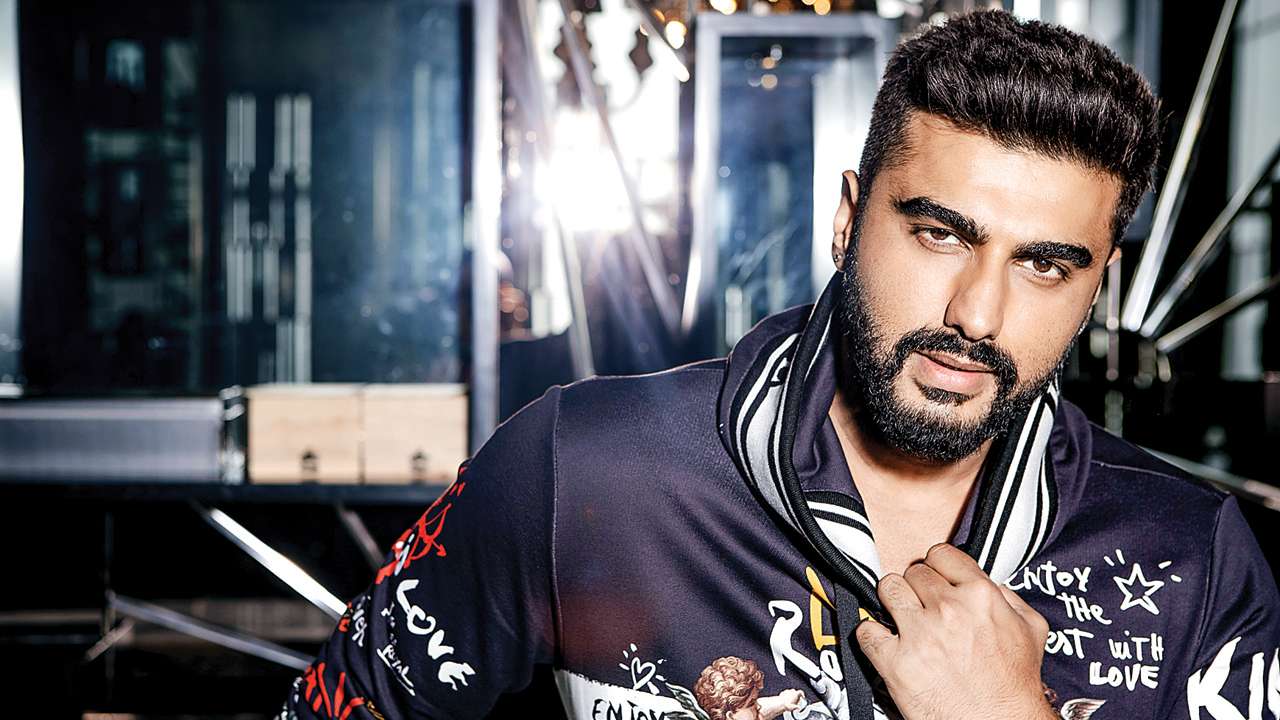
Meena Iyer (DNA; April 29, 2019)
Of late, Arjun Kapoor has been in the news mainly for his personal life. But in reality, the actor has had a chock-a-block schedule on the professional front. He has been shooting non-stop for Ashutosh Gowariker’s ambitious period drama Panipat, in which he plays Maratha leader Sadashivrao Bhau. Moreover, his other film, Rajkumar Gupta’s India’s Most Wanted, opens in cinemas next month. Arjun plays an intelligence officer who hunts down an international terrorist in the thriller. Hours before its trailer launch, the actor spoke to After Hrs. Excerpts from the conversation...
Are you ‘India’s Most Wanted?’
Not at all. My film is titled India’s Most Wanted and it releases on May 24. I’m glad that people have received the teaser and the poster so well, because it’s truly a movie about the unsung heroes of our country. It is about guys who roam around in regular clothes, whom we would never recognise. We’ve tried to put it out in a genuine way, so the next time people wonder if they are safe in the country, they should realise it’s because of these soldiers who’ve been to hell and who make sure that the negative things don’t reach us. They can’t always stop it, but there is never a moment when they stop trying to protect us.
This is a story of five people who saved a billion lives, whom no one gave a chance to, yet they walked into such a perilous situation. I’m neither holding a gun nor beating and shooting people in the movie. It’s genuinely about how covert missions happen. These five men caught a dreaded terrorist without shooting a single bullet, and that’s an amazing achievement. I’m extremely happy that we have made this film and the audience today is receptive to such a subject.
You once spoke about how filmmaker Aditya Chopra said that you win some, you lose some, but you’ve to be the person you are. But aren’t you young for that level of maturity?
Aurangzeb (my second film) flopped, but I moved ahead. My upbringing has been about ‘you win some, you lose some’. So, I’ve accepted that it happens to the best of us.
Aurangzeb is one of the most underrated films.
I agree. It might have had a better chance with today’s audience. It would have garnered more respect and attention for being something unique from the YRF stable. That was the point when Adi sir spoke to me and said, ‘Your first film did well, your second didn’t.’ These things happen. How you survive failure is what makes you a star. People will write you off, they will run you down and doubt you. That is how the industry and the world functions. Success toh sabko milti hai. After surviving failure, how you rise to the occasion is what matters.
One also noticed that after Namaste England, there were no toxic articles against you.
People do give you the benefit of doubt. And the media has been decent about it. They understand that we attempted something with the film, but it went haywire.
How much of the onus is yours?
You have to take responsibility. I cannot just blame one person and get away with it. A lot of people tend to blame the director, which is unfair. I made the choice to do the film in full hosh-o-hawaas. But it didn’t translate from the paper to the screen that well. My job is to have faith in somebody’s vision. And if I see that it’s not happening as I imagined it, I still have to see it through. Otherwise, it’s unprofessional. And I have to believe that perhaps I’m over-analysing, but eventually things will fall into place.
Your gut can give you some idea, but you can’t always follow it in the middle of the film. You can give your opinion. You may say 10 things and one or two might be taken. But eventually, you’re an actor doing your job. You’re being paid to do one thing and you do that and go home.
I’m involved as a team player, but I can’t override certain facets. And fair enough, you live and learn. Which is what Adi sir prepared me for. He told me that ‘tu har jagah producer ka beta nahin ban sakta. You can’t show your producer instinct to everybody. You do some films as an actor and learn from them.’
When a film doesn’t work, is Aditya the kind of person you can call for a heart-to-heart?
Definitely. I’ve always had that equation with him and I continue to do so. He keeps telling me that I’m like the nagging wife whom one doesn’t pay attention to (laughs). He will always prepare me. When he sees a trailer, he says ‘mujhe aise lag raha hai.’ If he likes it, he will say, ‘I love it’. If he sees the film, he is honest. He is the first one to say, ‘Boss, I was wrong, I didn’t like it, but it did well.’ Or ‘I liked it, but it didn’t do well.’ He is honest with me and you need such people around you. He keeps me grounded when I’m flying high. He preps me up in the most bizarre way when I need it. Even after Tevar, I spoke to him and he was like, ‘Theek hai, yeh Friday achha nahin gaya. Agla Friday achha hoga.’
Irrespective of Tevar’s fate, director Amit Sharma’s vision has to be lauded. His colours were so beautiful.
I backed the director. Maybe he got his due in Badhaai Ho more than Tevar. His cinematic journey started with ads, continued to Tevar and translated to story-telling with Badhaai Ho. In Namaste England, I backed the thought of a man going to that extent to bring his wife back home.
It’s okay, it happens to the best of us. In the last couple of years, we’ve seen everybody go through ups and downs. The most unexpected films worked and you’ve to salute that. And sometimes, the most expected ones didn’t and you’ve to respect that, too. The audience is getting more honest, they are not going to spending money unless it’s worth it.
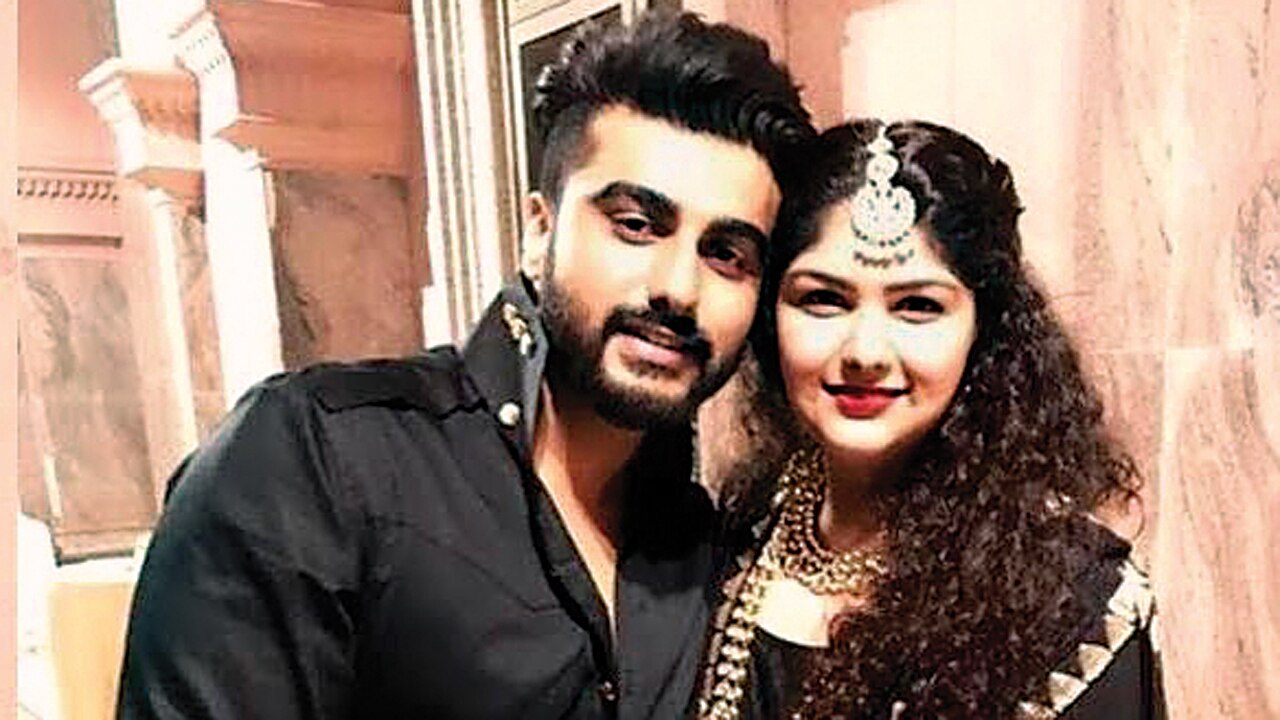 So, who is your go-to person besides Aditya? Your sister Anshula has fairly less cinematic experience.
My sister reads my scripts. I give her that much time because you never know what someone might say that will help. I always give her the respect of being an audience member, irrespective of her age. And today, the audience is young. I’ll make her listen to a song, I’ll give her a script to read. I’ll tell her this is the space of the film and then ask her what she thinks about it, if she finds it exciting. Dad is always there, too. Of course, he is my father, so there’s an emotion attached whenever he gives his opinion. But I’ll have to filter out that emotion and see the practicality.
I have my friends who are always around. But, eventually, I decide which projects I want to do depending on what my gut tells me. Adi (Chopra) always asks me, ‘What does your gut say?’ In this profession, you can listen, observe and learn. But eventually, you have to back yourself. In success, it’s easy to do that. In failure also, you have to back yourself because if you have made that choice, you have to learn to live with it. The introspection is not about how the film went wrong, because the audience has already answered that. It is about why did you make that choice to do it? A year back you needed to do this movie, you felt you liked it. But today, the material, which is being offered, is better, so it doesn’t mean that you made a wrong choice then. You still have to follow through it. Circumstances change in your life.
You also have to look at the fact that you need to work, from what is being offered.
Yes. Unfortunately, I don’t have the luxury of sitting at home and waiting for the perfect script. I’ve been working only since the last five-six years. I don’t have an educational qualification. I regard the fact that I’ve got this opportunity to make the most of it. And even financially, you have to sometimes put yourself out there and say, ‘Boss, I need to keep working.’ You observe the careers of big stars like Ajay Devgn and Akshay Kumar. They keep churning out material; sometimes doing three to four films a year. They are not scared of going out to work.
Like you said, you have to keep going..
I’m running a house, so, I have to sometimes take decisions knowing that I can’t sit at home for six months waiting for the perfect film. Once I make enough money, I can do that. Thankfully, now I’m in a better place as compared to the last couple of years. Going forward, I can afford to take some more time to assimilate scripts and take a decision. In the future, I will be more discerning about the scripts that I choose. Jab shuruat ki thi, tab yeh bhi tha ki jo mil raha hai, make the most of that. Toh uss mein kuchh galtiyaan hoti hai, kuchh cheezein sahi padh jaati hain.
Besides Panipat, which other project is keeping you busy currently?
After India’s Most Wanted releases, I have Dibakar Banerjee’s Sandeep Aur Pinky Faraar next, followed by Panipat at the end of the year. I’ve been shooting for the historical since the last five months. Ashutosh Gowariker sir told me that he would need six months, because of the kind of scale the film is mounted on. As I’ve got a unique look, I can’t jump into the next project immediately. I’ll wrap it by May end. Then I would like to take a short break in June.
It’s fascinating that we were not even aware of who ‘India’s most wanted’ was-Raj Kumar Gupta
9:01 AM

Anshul Chaturvedi (BOMBAY TIMES; April 28, 2019)
Yes, people do ride on sentiments and encash them, but no, my project wasn’t timed to coincide with a nationalistic upsurge or the electoral season, I just want to tell a story of the unknown, passionate people, who do difficult things to protect us,” says Raj Kumar Gupta. Excerpts from a chat about his upcoming film India’s Most Wanted:
 Is the current surplus of movies about the defence forces, old battles and secret agents happening because filmmakers are looking to ride the nationalistic wave for Box-Office success?
It might be that somebody has been wanting to make a film on the same subject for some time and it comes together now, and it might be just about the country. In terms of filmmaking, as you know, any film takes one-two years in making. So, it is not that one is wanting to catch a certain sentiment. It is that you are wanting to make a film and the situation around you changes so much that when your film comes, it looks like you wanted to catch that sentiment, but it’s not that.
Also, it depends on what story you are telling. If you are telling a story of a soldier, and the basic premise is that he has become a soldier to defend the country, somewhere down the line, that moment will come when he will say that I joined because I wanted to do something for the country. Policemen or intelligence agency people do not do the job for money, they do it because there is a certain passion; they want to work for the country. If you are telling their story, there will be that situation, one scene will come and that will be very organic. One has to make a distinction when you see that — and don’t judge it as if one is just trying to ride a wave. When me or any other filmmaker is making that film, it is a story he has thought three-four years back and it is pure coincidence that it has come at this time. But if you ask me koi behti Ganga mein haath dhota hai ya nahi? Dhote hain. It’s not only in our industry. There is herd mentality everywhere. But just generalising it is not right.
 Movies about intelligence officers tend to have an undercurrent that they are unsung heroes. But isn’t that the core point of that nature of work — to be anonymous?
For me, their life is a story. Just because their nature of job is such, it doesn’t mean I will not tell their story. In Hollywood also, people have been fascinated by this, because it is an integral part of our lives. When I was making Raid, I was making a film on these real people who did things which were very difficult to do. That might be their job, but as a filmmaker, I find that interesting, I see it as a story that needs to be told. So yes, they are unsung, they are not coming out and saying anything, they have maintained dignity, but that should not stop me from telling their story as I find that story fascinating. Similarly, I thought that this story is something the country should know. ‘Unsung heroes’ is a phrase that one might say has been overused, but it should not stop me from telling that story.
There are so many superhero films being made, where the heroes save the world from evil. My film is also similar, just that my heroes are real heroes, based in the real world, dealing with real situations and saving real lives.
Is there a paradox between calling somebody India’s Most Wanted and having a degree of suspense for the audience about who he is? If he is most wanted, shouldn’t he be a universally recognisable name?
Don’t you think sometimes it’s fascinating to know who was India’s most wanted and we were not aware of it? Sometimes I also discover — Oh my God! Kya baat kar rahe ho! I was shocked when I learnt that he was described this way in intelligence circles. Why do we call Dawood India’s most wanted when this guy, who has killed so many people, was the biggest target? He was number one on the list. At times you discover these things and that becomes fascinating.
What’s also fascinating about these stories that one might not have heard is that they also show how these people (in the intelligence agencies) work, what they go through, what are their limitations. You see their lives. You might not know what they do to protect you and for me that’s fascinating. I might just stop and say thank you.
After your film’s teaser released, there were conflicting opinions on one element — the background voice quoting the Gita to justify killings.
What you see in film is not something cooked up. It is inspired by true events. It is a story about how one of India’s most wanted terrorists was captured without firing a single bullet. As far as the quote is concerned, when I was researching it was as intriguing to me as it is for the viewers — people who do these things, how they twist words and how they quote things to justify their acts. When somebody was interrogated, he quoted this (the Gita). And, in the film, there is a befitting reply the protagonist gives. Right now, what everyone is seeing, is one side of the film. One has to see the film to see the reply. We all know how people are brainwashed, how words are twisted and this is something which has come from the real life event. I can’t tell you more than this at this point.
When you talk of terror, it is as much about the ideology of the terrorist today, as it is about the actual acts of violence, isn’t it?
I think it is very complex. It is not something which has an easy answer. We all respect all religions and I don’t think any religion teaches violence. There are words which are twisted, quoted by these people to justify their acts.
 So the man quoting the Gita has a certain philosophy. In multiple movies, the protagonist against the state — in some movie a terrorist in Kashmir, in another a Naxalite in central India — is a challenge for the filmmaker. How much do you humanise the character who picks up a gun against the state? Are you owning him as a misguided, brainwashed citizen who can be reformed, or are you saying that this is a man who should be shot?
Of course, every side has a human story. Going back to my first film, Aamir, it has that same debate where a person from the same community is on a different side of the debate. One is wanting to do something and this man is saying this is happening to us and he should believe him, but he says I don’t believe in you, I have lived my life, I don’t see your point of view. That is a humanistic debate. In these kind of situations whenever someone is trying to prove a point, he might give his reasons, which might be true and might not be, it depends on the desperation level of someone who is trying to impose something on the other person. But it’s on me whether I have that mind to make my own opinion and then act on it. So in that sense, there was an answer in Aamir, and that’s how I approach my subject. When one is doing that job, there is a justification which one wants to give, but then there is this counter point which comes in. And it says that nothing can justify that kind of violence. No one preaches that. That debate has to happen at a human level. It has to be person to person.
There is that fine line — either you glorify a terrorist and it becomes a propaganda for that side, or you degrade him so much that looks like a caricature, an unrealistic portrayal. How do you draw that line — portraying the person as a human being and yet not being sympathetic towards him?
I think it’s a debate while you are writing, filming, pitching your character. At best, it’s your instinct hoping you don’t fall on either side and you have a balanced point of view. But, as I said, there is no justification to killing people, so in that sense, one has to come back to the argument.
Your teaser got caught up in the election fever as well. BJP supporters quoted it and asked why the Congress didn’t act against this terror from 2007 to 2013. Congress supporters asked why the current government hasn’t taken the case forward yet. A teaser about a nameless, faceless terrorist led to political debate. Did you see this coming?
I have been researching this subject since 2013. At that point, I was not aware who would be in power today. There was something that I found interesting and I started researching on it to make a film. We all know how hyper-sensitive we are and we all know how anything and everything can be politicised and right now in this environment, with the ongoing elections, anything can have any meaning, but from my point of view it is not something I want to get into. It is a film, a story I wanted to tell for the last four years. It took me some time to research, write this story to make sure that I get it right. We didn’t plan to release it now (in election season).
 How has the man who made No One Killed Jessica not made a film on Nirbhaya yet?
No One Killed Jessica was a story born out of tragedy. I spent 20-25 days with Sabrina. I used to sit with her for two-three hours every day. It was not easy and you get overwhelmed and when you are doing something like this, you keep two things in mind — the sensitivity of the subject, of people, as well as getting overwhelmed by the subject itself. Then execution slips. After I finished my research, I was not sure whether I will be able to do it. I took over a month’s break from the entire research, so that I have some perspective when I would write it. Even after I started writing it, I was not sure if I would be able to do justice to it. But as you start writing it, things start coming together and you start balancing it, then only you realise there is some form you are able to give to that story.
So it is very difficult when you are dealing with tragedy. Also, you want to have a perspective on that subject, you don’t want to just do it for the sake of doing it, thinking okay, this is the case, it is such a gruesome tragedy and now I want to bring in my emotions in telling this story.
So did you go back and disengage and de-emotionalise your reflex?
Not in terms of emotions. It’s something that the entire country has been affected by. I need to understand that, not the tragedy of it, we all know the tragedy of it. It is a sensitive subject and you have to have some perspective on that subject. You have to know the entire thing, you do not want to sensationalise it. As a filmmaker you are always scared. I am always scared as I don’t want to sensationalise things. I want to have a perspective on things and then tell those stories. So probably, five-six years down the line, I might think that I have a perspective on telling that story. Then only I would want to attempt it.
Is there any emotional cost to it for a filmmaker?
It has an emotional cost because you have to recreate those emotions. As a filmmaker it is not that you go and say that chalo ye karo, let’s shoot this. When you are shooting something like this, or even in No One Killed Jessica, or any other film, it’s never that you come and start shooting it. There is an emotional journey that you have to go through. When you are living a tragedy, it’s not just about that. You are thinking about a person who has gone through that. It kind of kills you. You become numb because you have to relive that and you have this added responsibility of doing justice to the subject or that situation, which is not easy. So emotionally it is very, very difficult.

Arjun Kapoor-starrer India's Most Wanted teaser latches on to Kalank
8:08 AM

Sonil Dedhia (MID-DAY; April 15, 2019)
 One of the most anticipated films of the year, Kalank is expected to release across over 3,000 screens this week. Taking advantage of its wide reach, the makers of Arjun Kapoor's next, India's Most Wanted, have decided to attach its teaser to the multi-starrer.
Confirming the development, writer-director Raj Kumar Gupta says he is keen to offer a wide platform to his espionage thriller so that the audience can become acquainted with the country's real-life heroes. "At a time when the audience is loving superhero films, my movie is about real heroes who save lives, and is set in the real world."
Eyeing a May 24 release, the film — inspired by a secret manhunt that was conducted between 2012 and 2014 to capture one of the country's most dreaded terrorists — is the result of three years of research. Revealing that the shoot wasn't without its challenges, Gupta adds, "One has to keep the sensibility of the subject intact even when we are adding elements of fiction. The film has been shot in real locations. When you are shooting in such locations, it's not about what you want, but about what you get. It tests [your skills]."
Subscribe to:
Posts (Atom)