Inlaks aka the Bombay dream goes in for redevelopment
10:23 AM
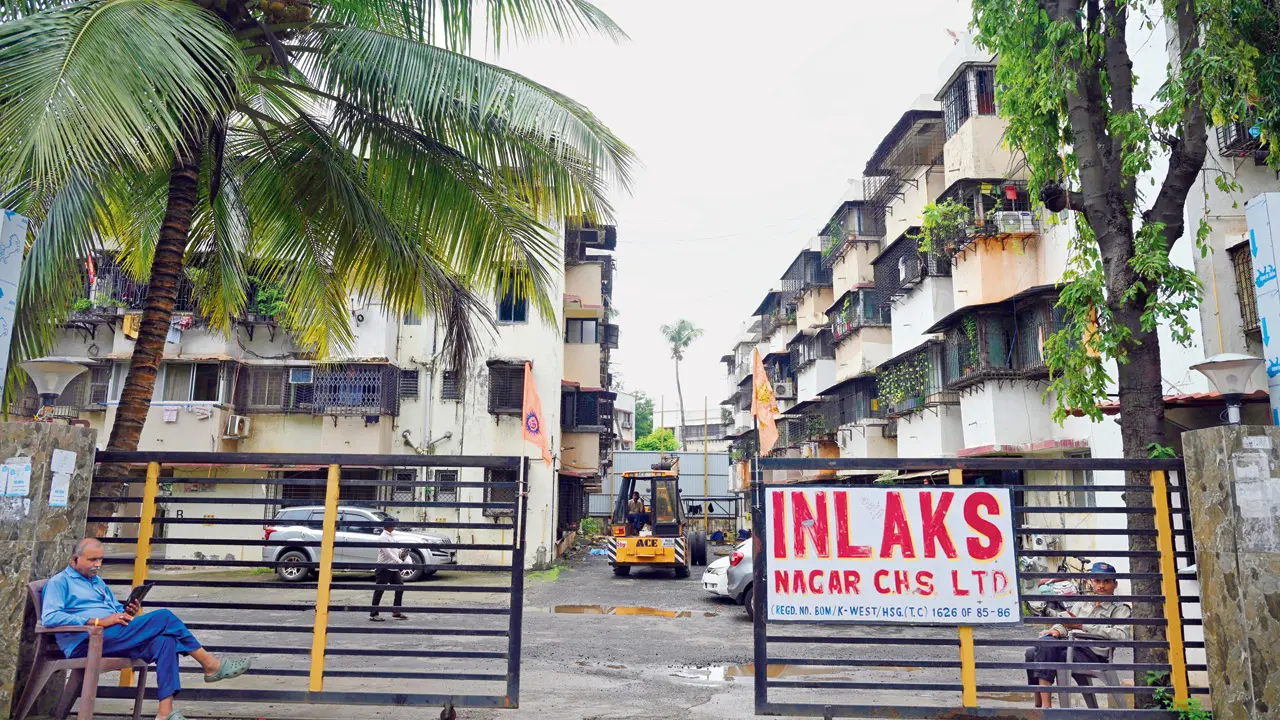
This Versova society welcomed actors, screenwriters, and anyone with a Bollywood dream with open arms, including Sanya Malhotra and Rajkummar Rao. As it heads for redevelopment, many ask: Where will aspirants find solace now?
Mohar Basu (MID-DAY; August 23, 2026)
If you have lived in Andheri West and worked in the film industry, chances are you couldn’t have missed Inlaks, the soon-to-be-torn-down society that has been a rite of passage into Bombay’s film world. There is a long-running joke that all roads in Versova lead to Inlaks — sometimes for an unforgettable night of partying with friends, sometimes to huddle around a laptop and write your first film, and more often than not because it was one of the last housing societies in this supposedly progressive city that didn’t interrogate you before handing you a key: Which religion do you belong to? Are you married? What do you do for a living? And, the most humiliating of all, “Movies mein ho? Toh phir ghar kyun denge?”
My entry into Inlaks was after an unfortunate sabbatical I took from mid-day to pursue my Bollywood dreams. I landed up in the office of screenwriters Raghav Raj Kakker and Kashyap Kapoor in 2023 after a decade of avoiding the mystical, magical land that has been the starting point of hopes for many. NDAs forbid me from telling more of what we made and what eventually happened (or didn’t happen to it), but it sure did one thing: It brought me back to life through a really dark phase of my own career. So when I decided to write this piece, I went back to meet them where I began, at that very office.
The glorious 2010s
In 2011, when Kakker first came to Inlaks, Versova was still a very different place. “This used to be such a deep end of the city, that literally a dust bowl was flying here,” he remembers, “This wasn’t even a paved road, it was a rough road.”
Over the years, the society became known as a kind of unofficial film-school extension, a place where people who had come to Bombay to work in films could find a home, often before they had found a career. The society itself had a different purpose when it came up. Kakker recalls that Inlaks was created as low-cost accommodation for members of the Sindhi community through the Amil Panchayat.
Over time, however, it acquired another identity, one that would become almost inseparable from Mumbai’s film industry. Directors, cinematographers, art directors, actors, casting directors, and acting trainers lived there or regularly hung around. “They used to call it a mini FTII,” he says,“Rajkummar [Rao] bought an Audi and the joke was that it was a car worth more than a house. So, I would see Rajkummar chilling outside. A lot of directors, DPs, art directors from FTII would hang out here. When casting directors were not even a legitimate profession, casting director and acting trainer Prashant Singh used to hang out here. Actors Aakash Dahiya and Chandan Roy Sanyal used to hang out here.”
What mattered, though, was not simply the number of film people living in one place. It was the fact that everyone was at a different point in the same journey. “There was a sense of community. Outside Inlaks and inside Inlaks, there are a lot of people like me who are in different degrees of success. Some are just starting out, some are about to start, some have already started. And the common factor was this space.”
The feeling, he remembers, was simple — you could walk outside, bump into somebody who has just made it and think, “tomorrow it will be my turn”. That became part of Inlaks’s mythology. Kakker remembers the building going into a small frenzy at the famous chai tapri outside over the belief that Aamir Khan had visited during the shoot of Dangal (2016) because Sanya Malhotra was apparently living there. “I don’t even know if it’s true or not,” he says.
There was a piece of folklore about Inlaks that Kakker remembers clearly. “If you come to the industry and don’t live in Inlaks, you haven’t come to the industry.”
The reason the joke stuck was because the society had a reputation for making room for people who might not have found it elsewhere. “Bachelors used to get houses. Four boys used to get houses. Minorities used to get houses. Industry people used to get houses.” That was crucial for people entering an industry built around irregular work. Actors don’t necessarily have salaries.
Writers didn’t necessarily have salaries. A person could have talent, ambition and a promising audition, and still not have the paperwork or income that made a conventional landlord comfortable. Inlaks had room for that person.
The tea stall outside
For casting director Aakash Dahiya, who worked with Mukesh Chhabra in their early years, the film industry didn’t just exist inside Inlaks. It existed at the tea stall outside.
Dahiya lived there from 2008 for four to five years. He and Chhabra were working together on casting, and the tea shop became their adda, a place where actors, casting people and other film industry aspirants would meet. They would find out from one another where auditions were happening, who had gone for which audition, and who was looking for whom. It was an informal network before the industry had the kind of digital networks it has today. The tea stall was where information travelled.
He tells us, “It was an informal network, you found out about work simply by being around. For four-five years while I was there, so much of my life happened there. Mukesh and I were doing casting. We would sit there, meet people, find out who had gone for which audition, where the next one was happening, who was looking for whom. That was how you found work, through people. Even industry seniors lived there — so you had Raj, Vinod, Vineet Kumar Singh, Manoj bhai and so many others around you. And personally, I did D-Day while I was living there, Delhi Crime season one was made while I was there. My first car was there. I fell in love there, I had a breakup there. So when you tell me Inlaks is going away, it doesn’t feel like you’re just taking down a building. We have seen a life there.”
The loneliness antidote
Actor Ashish Verma, known for his roles in Sui Dhaaga, Article 15, Haseen Dillruba, Atrangi Re, Teri Baaton Mein Aisa Uljha Jiya and Tere Ishk Mein, as well as shows including InMates and Court Kacheri, came to Inlaks in 2012, during his transition from FTII to Bombay. He moved through D Block, C Block and A Block over roughly two years. The society was known to be friendly towards artistes and freelancers, and people were willing to accommodate unconventional living arrangements, including living in with his then partner, now wife Ronjini Chakraborty.
His own early years there were modest. He remembers 10-by-10 rooms, two-room arrangements and sharing the space with filmmaker Avinash Arun.
“I kind of graduated through the years. At that point, they would allow you to live there, even if you were in a live-in relationship. When I got here from FTII to Bombay, Inlaks became a very natural transition for us. Divyenndu was there, Deepak Nambiar was there, Rajkummar was there. There were so many of us. The beautiful thing about that FTII gang is that we have seen each other growing. We have seen each other at every stage. Today we might all be busy, we might not meet for months, but nobody has really changed. You meet again and you start from exactly where you left off.”
“I remember Divyenndu around the time of Chashme Baddoor, when he had just started shooting. Avinash was a DOP then, and he was working on a script on the side, which he kept coming back to. That eventually became Killa. You were literally watching people’s careers take shape around you,” he says.
For Verma, Inlaks was also a mohalla. It was almost like a hostel, where every night there would be people around. “Mumbai can be very lonely, and the film industry can be brutal because actors are rejected every single day. Here, you would come home and there would be 10-15 people around you. It became this mini-hostel, this community of people who were all trying to figure their lives out together. And that is something I think you don’t easily recreate.”
But his reaction is far more pragmatic. He says, “I am a strong believer in evolution, so I don’t want to say that nothing should change. Geography changes, cities change, and something more beautiful can come out of it. A few of my friends have gone on to buy houses and move ahead in life. But when you see Inlaks going into redevelopment, you also realise that a very particular kind of space is disappearing, the space that allowed all of us to be young, broke, and uncertain and still be in Bombay, still be close to the industry.”
A 300-square-ft sanctuary
For screenwriter Kashyap Kapoor, the Juhu boy who was introduced to this world by his writing partner Kakker, Inlaks became their first workplace. The duo, whose credits include Inmates, Class, Faraaz and The Buckingham Murders, have their office there.
For Kapoor, the significance of that office was not simply that it was inexpensive. “Inlaks in that sense is a safe space and a sanctuary,”
Kapoor says, “It gave us the dignity of an office from a coffee shop. If you get a sense of space, irrespective of whatever that space is, suddenly it’s yours and you are more responsible to your work. There is a respect for space. People come and work there. There is that energy.”
From that small room, however, their stories travelled. “We have been able to write stories of Bangladesh, the UK, North India, South India, Manipur. And I think that is one of the highlights of this place — that we could still be in Bombay and be cut off enough to say stories of the world. We all spent years in this room together creating something that we were really proud of, irrespective of whether it got made or not.”
Kapoor remembers the first big cheque they received at the office. “We were literally one light, two chairs, and one table and arrives this big cheque and it felt like we have made it. It is also so serendipitous; the first show we wrote at this office (an eight-part series for a leading platform) went on floors last week. It will be our last delivery from this space too. It makes me also feel that this is a place where a lot of dreams come true for a lot of people, including us. So, no matter how hard it gets, the only way to make it here is to stay at it and someday, many years from the day you wrote something, it will be out there for the world to watch it.”
The professional high, however, was accompanied by the very ordinary realities of the building. After returning from London following The Buckingham Murders, they came back to Inlaks and
the monsoon arrived. “We came back and it started raining and our roof started falling on our heads, quite literally. We spent a day mopping the ceilings and the walls, laughing about the irony called life.”
That Midas touch
Artiste manager Amandeep Khubber remembers another Inlaks entirely. She left her home earlier this month after an eviction notice was sent to those renting apartments. Her memory of the place is not of the crowds outside, but of looking out from her window.
During lockdown, there was a small ground below her house. She spent much of her day at the window. She began noticing the birds. There were different kinds every day. There was a pair of hummingbirds that she would sit and watch. There were monkeys too.
She lived in the same house from 2017 to 2021 and eventually it became her office. “I didn’t necessarily move to Inlaks because I wanted my immediate social circle to be there, but if I look at my career, I grew 100 per cent while I was living in that house. I took a sabbatical in 2023, and when I went independent in 2024, I really saw the shift. I registered my own company and suddenly actors started approaching me for representation. Manoj and Seema-ji, Suvinder Vicky, Vijayant sir, these are some of the people I associate with that phase of my life. Mehoob Brar was also working on Operation Safed Sagar (the newest hit show on the streamer) while he was there.”
“I sometimes joke that Inlaks had a Midas touch. I don’t know what it was about that place, but people seemed to grow there. I could work from there, live there and have this very quiet space while my career was changing completely. That’s what I will miss most — not just the building, but what that house represented for me.”
‘Where will the artiste live?’
That is what Kapoor finds hardest to reconcile with the redevelopment. “This was the last bastion of those who are starting out,” he says. “The artiste who used to come, who needed a house in his budget, who wanted to live in Versova… Because now where will the people live?”
He points to the old Shah Rukh Khan story, the outsider who arrived in Bombay and became its biggest star. “There is always a growing conversation about how artistes are not getting a place in Mumbai. The classic Shah Rukh Khan story, that he came from far and became the king? That story can never be made again because we are not leaving a place for him.”
For people who grew up around Inlaks, that is what makes its redevelopment sting. The building is changing at exactly the moment when the city around it has become increasingly difficult for the people who once made it. For some perspective and wisdom, we reached out to a filmmaker-actor whose Inlaks story of living there for decades, is apparently put down into a script and is parked with a streamer.
She and husband moved to Mumbai in 1994, where they built a life together in this very society. She told us, “Well, life moves on. As for artistes, they are a resilient bunch; they will find their way...”
Perhaps she is right. Because, right now, the set of Ram Gopal Varma’s Daya Nayak biopic is parked right next to the crumbling building. Its leading man is Harshvardhan Rane, who left home at 16, struggled for eight years before landing his first acting gig. It took him 26 years to give the biggest hit of his career last year. Well, dreamers do find their way.
Broker Speak
Real-estate broker Mohit Sharma says the numbers around Inlaks tell a very different story from the era remembered by its former residents. “Today, a 1-BHK in and around Inlaks and Yari Road can command roughly Rs 45,000 to Rs 55,000 a month, depending on the building, condition and furnishing. In the society, till last year, rent was in a similar range. You can find lower or higher quotes, but the old idea of getting a decent 1-BHK in this part of Versova for the kind of rent artistes once paid is simply not realistic anymore.”
Recent 2026 listings around Yari Road and Inlaks show 1-BHKs at about Rs 53,000, with numbers going up to Rs 1 lakh for 2-BHK homes.
Shaan, wife Radhika Mukherjee buy 3 Bandra flats for Rs. 48 cr
10:19 AM

Singer and wife Radhika Mukherjee bring three apartments together to create a grand 6,300-sq-ft luxury home
Diwakar Sharma (MUMBAI MIRROR; August 22, 2026)
Bollywood singer Shantanu ‘Shaan’ Mukherjee and his wife Radhika Mukherjee have made a sizeable luxury property purchase in Bandra West, spending Rs 48 crore on a sprawling 6,300-sq-ft residence created by combining three apartments.
The property is part of Palmera by NVK Realty, located at the junction of Turner Road and St Martin’s Road. Sources told Mirror that the Mukherjees’ residence is on the 18th floor of the 22-storey luxury tower.
The deal was brokered by Propbay India LLP and registered on August 20, said Vikas V Bhatia, who handled the luxury transaction in Mumbai.
The three units have been combined across roughly one-and-a-half floors. Two apartments are interconnected, while the third remains an independent unit.
“It is a luxury property on Bandra’s Turner Road. The three units have been combined across approximately one-and-a-half floors,” a source said.
Palmera, a 22-storey residential tower, was constructed after the demolition of the old bungalow of actress Mala Sinha. The building also has a pool and bar on the 23rd floor, although its Occupancy Certificate (OC) is yet to be issued, sources said.
The Rs 48-crore purchase adds another chapter to Shaan’s longstanding association with Bandra. The singer has been a longtime resident of the suburb, with his family’s connection to the area spanning generations. His father, musician Manas Mukherjee, was also associated with the music industry, making Bandra a familiar family address.
The latest acquisition comes amid a bustling luxury housing market in Mumbai. The city recorded 1,499 luxury property registrations worth Rs 14,903 crore between April and June, according to the latest Quarterly Luxury Real Estate Report by Lighthouse Luxury.
The report, based on verified Maharashtra stamp duty and registration data, said Mumbai’s luxury market is clocking roughly 16 transactions of homes priced at Rs 5 crore or more every day. It pegged the average value of luxury transactions at around Rs 164 crore a day during the quarter.
For Shaan, though, the latest purchase has a more personal ring to it. His new Bandra address brings three apartments under one roof while continuing his family’s longstanding association with the suburb — albeit on a considerably grander scale.
Sunny Leone in Mahendra Dhariwal’s horror comedy, Chudail
10:17 AM

Paresh B Mehta (MID-DAY; August 14, 2026)
The upcoming horror-comedy film Chudail is gearing up to terrify and entertain audiences with a unique blend of music, rivalry and supernatural elements. With Sunny Leone in the titular role, and Mandana Karimi playing her adversary, the film’s cast also includes Southern star comedian Brahmanandam, Sunil Verma (the antagonist in Pushpa), Rahul Dev and Dev Gill.
Produced by Mahendra Dhariwal along with Rocky Sandhu (it is his landmark 50th film) and Paramveer Sandhu and directed by TLV Prasad, Chudail marks a grand return to the supernatural genre for its lead star cast.
“My 1997 film of the same name was a super-duper hit, so we renamed ‘Lucky’ to ‘Chudail,’. Further with horror films trending nowadays, the release is perfectly timed,” Dhariwal justified the reason for change in title.
Rivalry and Royal Hauntings of this Horror-Comedy
“The core plot of Chudail revolves around an intense professional conflict. Both Sunny Leone and Mandana Karimi portray singers in the film who are fierce and uncompromising competitors,” reveals Dhariwal adding that the conflict is pushed to its limits.
To capture the eerie, larger-than-life atmosphere required for a supernatural thriller, he emphasises, “The film has a Royal Backdrop in Uttar Pradesh and Haveli Settings as it is almost entirely shot in a colossal, authentic royal palace in Bulandshahr.”
“This horror-comedy features a total of five distinct songs meticulously woven into the narrative. The absolute highlight of the soundtrack is a specific, bone-chilling recurring ‘haunted song’. Instead of playing just once, this signature track is strategically split across the narrative,” Dhariwal mentioned.
Revealing that ZEE Music Company has acquired the music rights, he said, “While the recurring haunted anthem brings the chills, the remaining four tracks are designed as soft, soaring romantic songs to balance out the horror.”
The highly anticipated horror-comedy Chudail is currently on track for a grand theatrical release by September-end. Riding the Horror Wave: The decision to release the film by late September is highly strategic. Recognizing a major shift in audience preferences, the producer notes, “It is the trend of horror films nowadays, and hence its timely release.”
Mahendra Dhariwal’s ambitious upcoming ventures
Looking beyond the horror genre, Mahendra Dhariwal along with Rocky Sandhu and Paramveer Sandhu is mounting the most ambitious project of his career, titled Mahadev ki Mahima. “Setting a new benchmark for Indian cinema, this mythological venture will be driven by advanced Artificial Intelligence (AI) technology with big artist dubbing that is visualized on a grand scale with a staggering budget of Rs. 150 Crores,” he conveyed.
Adding to his high-octane lineup, Dhariwal also confirmed that ‘Maa Tujhhe Salaam 2’ is in the pipeline, “Following the massive action-patriotic legacy of the original 2002 hit, this sequel is being designed to bring high-stakes drama back to the silver screen.”
Remembering Tamas: A lesson in history for the ‘reasonable and strong-minded’
10:16 AM

Arushi Jain (BOMBAY TIMES; August 14, 2026)
As India observes Partition Horrors Remembrance Day, Govind Nihalani’s Tamas remains a searing depiction of Partition. First telecast on Doordarshan in 1988, the six-part adaptation of Bhisham Sahni’s novel tells the story of the violence and upheaval that accompanied the splitting of a nation into two. Nearly four decades later, its questions around history, memory and intolerance remain relevant. While Nihalani has maintained that a work like Tamas is not easy to make today, late actor Om Puri believed it would remain relevant for generations.
‘Those who forget their history are condemned to repeat it’
Adapted from Bhisham Sahni’s 1973 novel of the same name, which won the Sahitya Akademi Award in 1975, Tamas brought together a formidable cast of Om Puri, Amrish Puri, A K Hangal, Pankaj Kapur, Dina Pathak and Surekha Sikri. Sahni himself was closely involved with the series, though certain details were altered to create a more compelling screenplay.
Every episode started with a reminder: “Those who forget their history are condemned to repeat it.” The series unfolded in a fictional Punjab town, beginning with a pig carcass left on the doorsteps of a mosque, an act that sparks riots. From there, it traced how rumours snowballed into violence, how neighbours turned into enemies, and how women took their own lives to escape dishonour.
Years later, at a 2011 event, Om Puri explained why Tamas remained relevant: “A film like this should be shown to every community. This is a work of art which should be shown to every child, and it will be relevant for generations to come.
Govind Nihalani had a story, but no money to make it
Making Tamas was not easy. Born in Karachi, Nihalani had long been intrigued by the Partition, but the courage to take it on as the subject of a film came only after he stumbled upon Bhisham Sahni’s novel. “I first saw the book at a store in Mandi House. I didn’t know the writer or what it was about, I just read the title and liked it. I still remember the first sentence – it read – ‘Aale mein rakhe diye ne ek jhapki lee’. And as I finished the first paragraph, I said to myself, ‘This is it. I am
going to work on it.’ But I had no money to make the film,” he recalled in a 2017 interview with Delhi Times.
The same year, he met then Prime Minister Indira Gandhi during the International Film Festival of India (IFFI) in Delhi. During their two-minute conversation, Nihalani asked if the government would support a film on Partition. She told him, “It will all depend on the political condition of the country when you make the film.”
Nihalani soon realised that turning Tamas into a film would be a herculean task, particularly when it came to finding the money. He eventually found Lalit Bijlani of Blaze Films, who had produced Shyam Benegal’s Ankur (1974), willing to back the project. Nihalani had warned Bijlani that the film could be controversial, but he went ahead nevertheless.
His apprehensions provedright when Tamas ran into controversy after its 1988 Doordarshan telecast, with Nihalani facing threats and court cases. Yet, the film has endured as one of the finest works on Partition.
‘Making Tamas was an act of faith’
“When Partition happened, I was a little kid, but my first memory of fear, panic and blood comes from that period. My family migrated from Karachi and we settled down in Rajasthan. I was very emotional while making this film,” Nihalani had said in a 2013 interview.
That personal connection also shaped the making of Tamas. “Making Tamas was an act of faith,” Nihalani had remarked. He said he was fortunate to find some of the finest artistes for the project, “I was just lucky.”
'Some roles change your life’
For the actors, too, the series was transformative. Ila Arun, speaking at a 2011 event marking its DVD release, had said, “I didn’t know the pain of Partition until I played Lalaji’s wife. I understood what the Partition took away from people. After working on Tamas, I learnt a lot about humanity and Hindu-Muslim friendship.”
Deepa Sahi had also echoed the sentiment: “Some roles change your life and Tamas is one of those. I can write a book on my experiences from the Tamas shoot.”
Amrish Puri, though wary of overexposure on television, agreed to play an elderly Sikh community leader at Nihalani’s insistence. “It really was an agonising role in Tamas. I was very selective about television appearances and accepted this for the sake of personal associations. When Govind wished to cast me, I didn’t allow stardom to affect my decision,” he recalled in his autobiography.
Tamas takes us to a historical past – unpleasant at times, but revealing and instructive
The Supreme Court in its 1988 judgment
Om Puri, who played the tanner Nathu, believed the show carried a larger lesson. “It is a reminder of the price we pay if we divide on the basis of communities,” he had said at the 2011 event. To look the part, he shed further kilos despite already being lean.
Tamas went on to win three National Awards – for Nihalani (Nargis Dutt Award for Best Feature Film on National Integration), Surekha Sikri (Best Supporting Actress), and music director Vanraj Bhatia (Best Music Direction). The series is currently streaming on YouTube.
‘Tamas is not entertainment. It is history’
The telecast was followed by legal battles. On January 21, 1988, a writ petition led to a Bombay High Court stay on further telecast of the serial. But two days later, on January 23, a division bench of the Bombay High Court, comprising Justices Bakhtawar Lentin and Sujata Manohar, overturned it after watching all six episodes in one day. The court famously declared: “Tamas is not entertainment. It is history. And you cannot wish away history simply by brushing it under the carpet.”
The controversy didn’t end there. There were protests, demonstrations, and Nihalani received threatening calls and needed police protection. The case reached the Supreme Court, where Soli Sorabjee, India’s former Attorney General, argued on Nihalani’s behalf that free speech could not be judged by the standards of a fanatic. On February 1, 1988, the Supreme Court upheld the High Court’s decision, ruling that Tamas must be seen through the eyes of “reasonable, strong-minded” citizens.
The court added that the HC judges who had seen the film had come to the conclusion that “the average person will learn from the mistakes of the past and realise the machinations of the fundamentalists and will not perhaps commit those mistakes again.”
An India Today report from the time had quoted Nihalani as saying, “We are becoming polarised as a society and strong consciousness is needed among people so that the saner elements in each community see this pattern.”
Ironically, the controversy also boosted sales of Bhisham Sahni’s novel. By the time the final episode aired on February 13, 1988, Tamas became both a cultural flashpoint and an important case on free speech.

Amrish Puri featured as elderly Sikh community leader Teja Singh
Kamathipura locals oppose plan to change Alexandra theatre plot reservation
10:11 AM

Richa Pinto (THE TIMES OF INDIA; August 12, 2026)
Mumbai: Minister Ashish Shelar's assertion that a land's original reservation cannot be altered to only suit a particular use appears to be at odds with BMC's actions. Proposals for changes in land use have been made for multiple sites in the city and a 1,005sm plot housing the now defunct century-old Alexandra Theatre in Byculla and a 3,439sqm plot in Versova meant for a fire station and a civic post are set to be the latest casualties.
BMC will move a proposal on Wednesday before its improvements committee seeking to remove the Byculla plot's cinema/entertainment reservation and rezone it for residential use.
Opposing the plan, the Kamathipura development committee on Tuesday urged BMC to retain the existing reservation and protect one of the few remaining recreational amenities in the locality.
In a letter to BMC chief Ashwini Bhide, the committee said the state govt, through Mhada, is undertaking a group redevelopment project spread across around 34 acres in Kamathipura. It said the redevelopment will substantially alter the neighbourhood and have a significant impact on available recreational and public amenities. It said it is, therefore, important to preserve land reserved for such amenities. The committee urged the civic administration not to alter the reservation "under any circumstances".
According to BMC's proposal, the theatre has been closed since 2007 and owing to the current condition of the premises and changing trends in the entertainment sector, running it is no longer economically viable. Besides, it said, the building is in a very dilapidated condition. The proposal said an application seeking cancellation of the cinema reservation and inclusion of the plot for residential use was submitted by Sameer Qazi of the state waqf board to deputy CM Eknath Shinde on Feb 25. The state urban development department subsequently sought BMC's opinion on the proposed change. The plot's occupant, Rafiq Patel, also submitted an application to the civic development planning department. Following scrutiny and verification by the civic departments concerned, a proposal to delete the cinema reservation is now being placed before the improvements committee. Approval of the civic House of corporators will also be required for the change.
------------------------------------------
It’s curtains? Only 50 single-screen cinemas remain in Mumbai Metropolitan Region
Bella Jaisinghani (THE TIMES OF INDIA; September 16, 2026)
Mumbai: The fortunes of Alexandra Cinema, a famous single screen theatre in Nagpada, rose and ebbed like ocean tides in the last 105 years since it was founded by Ardeshir Irani and Abdulally Esoofally in 1921. Once a favourite haunt of movie-goers for its Sunday Hollywood classics, it gradually fell into disrepute for showing X-rated fare. In 2007 the last film was screened, and around 2011, Alexandra transformed into an Islamic study and prayer centre. Now it is set to be demolished to make way for a residential complex.
Audiences recall the magic of watching movies in such standalone theatres in the 1960s-70s where a samosa and ticket cost Rs 2-5 each. Spectators would freely whistle and applaud when Amitabh Bachchan beat Mohan Sherry in Trishul, laugh heartily at Mahmood’s antics in Ginny Aur Johnny, and throw coins at Jayshree T’s mujra ‘Humne maana hum pe saajan’ (Dada).
Glitzy multiplexes are a different prospect, say critics, adding tickets and food are prohibitively expensive and collective outpouring of emotion is seldom witnessed.
The Cinema Owners and Exhibitors Association of India (COEAI) provided TOI an updated list of June 2026 which shows that only 45-50 single screen cinema halls remain functional in MMR. The rest, around 125, have closed down. A requiem is being written every other week.
Owners of single screen theatres say that faulty govt policies including high taxes, electricity bills, tiresome licence procedures and lack of incentives have left them suffocated. In fact, tax holidays are granted to multiplexes owned by rich corporates. The prospect of redevelopment is enticing -- only if the mandate to include a movie hall in the new premises is removed, they say.
Senior film critic Rajiv Vijayakar says, “I have watched movies in single screen theatres across India because my father had a transferable job. The atmosphere, the enthusiasm of the audience cannot be compared to a multiplex. Rarely do you see people clapping now -- maybe in some cases like Dhurandhar.”
He recalls, “Decades ago I had gone for a short three-day holiday to Mussourie, and every afternoon, I would visit a particular 50-seater theatre to watch films. I remember seeing CID 909, Shehnai and Yaadein. In Delhi I watched Bridge on the River Kwai and Lawrence of Arabia in Sheela Cinema, which had installed the first 70 mm screen in India. In Chennai I recall going to a nice theatre located in the basement of a building.”
Vijayakar moved to Bandra in the 1970s where Bandra Talkies and New Talkies became his standard haunt followed by Gaiety-Galaxy. “Of course it was a lovely era but let me not omit the occasional rat sightings in single screen halls,” he laughs. He recommends that the govt grant a tax holiday to single screens to revive them.
The challenge of OTT and web series is not the sole hurdle. Nitin Datar, past president of COEAI, spells out a series of factors that have brought the curtains down on single screen theatres.
“The first cause would be the [unfavourable] policies of the govt of Maharashtra, like very high property tax, electricity rates and [cumbersome] licence renewal. Then, multiplexes which were the new entrants were given a tax holiday for a period of five years, and in that duration, they earned around Rs 15-20 crores. But when our single screens asked govt for a similar incentive to compete with multiplexes, we were denied it and left high and dry,” he says.
“Thereafter the Maharashtra govt gave a tax free scheme like multiplexes to theatres in the state -- except in corporation areas like Mumbai and Pune. But after GST was introduced, govt discontinued this policy. Meanwhile exhibitors had spent a huge amount on renovation -- and they came into losses. Then the govt almost put compulsion on single screen theatres to go for digital projection and computerised ticketing. So first we used to sell paper tickets, now it was computerised. And the benefit of this was taken by agencies who monopolised the process,” Datar says.
If that were not enough, big distributors and producers were acting like a “monopoly” cartel. “Due to pressure by multiplexes, they did not supply films to all the single screen theatres,” he says.
COEAI and other associations requested the govt for subsidy and loans so single screens could survive and compete, to no avail.
Datar is presently renovating his own Uday Cinema in Ghatkopar into a commercial complex, including two screens in the mandatory cinema hall.
A high profile revival in recent years was that of Eros Cinema, Churchgate, in Jan 2024. A spokesman for Metro Realty which owns the theatre said, “The redevelopment of Eros was a capital intensive and challenging project, envisioning adaptive reuse of spaces in an iconic heritage building. It now houses an IMAX cinema, flagship store and ten dining options.” Similar financial backing is often not available to single screens in non-prime locations.
Kapil Bhopatkar’s family has owned Bharatmata Cinema in Lalbaug since 1941. The hall underwent a full makeover in March. Bhopatkar says, “The challenges for a single screen are multiple. Firstly we have no control over the content that we screen. I don’t make the films that I exhibit at Bharatmata. After all only if the film does well, the theatre does well. Moreover, we pay unusually high electricity bills because we are charged at a commercial rate. We pay huge sums in property taxes and of course there are vast upgradation costs. We need some kind of govt support and ease of licencing regulations. Those owners who want to exit the business and apply for change of user should be allowed to go.”
Bharatmata has been revamped in a tie-up with One Cinemas, Rajat Haksar and Sunil Patil. “Ours is a heritage structure so we retained the exterior but changed the interiors -- chairs, AC, a bigger screen, better sound and 2K projections.”
Even as newer direct to home technology and OTT overtakes the cinematic experience, several generations of film lovers long for that one Drive-In or Navrang that did not force them to break the piggy bank.
------------------------------------------
Alexandra Cinema case raises wider plot reservation concerns
Sanjeev Devasia (THE TIMES OF INDIA; August 30, 2026)
Mumbai: As a proposal to change the reservation of the plot housing the shut Alexandra Cinema in Byculla to a residential plot is pending before the BMC improvement committee, questions have been raised over whether the reservation for other cinema/theatre plots will similarly be changed merely because the theatres have remained closed.
While demanding that the proposal regarding Alexandra Cinema be kept in abeyance or rejected, Congress improvement committee member Meher Haidar has demanded that the status of all cinema theatre reservations/designations under DP-2034 be made public. She has also sought a comprehensive white paper on the cancellation/amendment of reservations for RGs, PGs, open spaces and other public amenities.
“This is a serious attack on public interest in the city’s planning,” Haidar said. She pointed out that DP-2034 contains 119 cinema theatre reservations/designations, covering a total area of 3,09,284 sq m. “If the designation of one closed cinema theatre is cancelled today, will this not create a precedent for owners of other shut cinema theatres to seek cancellation of reservations for their plots?” she asked.
Shiv Sena (UBT) member Visakha Raut, who opposed the proposal, said multiplexes are beyond the reach of the common man. “Besides, you need to preserve cinemas in certain areas, including in the vicinity of Alexandra Cinema, for people from the lower- and middle-income groups,” she said. Shiv Sena (UBT) member Sachin Padwal said, “This will create a precedent, and what entertainment options will people in that particular area have?”
As per provisions of DCPR-2034, at the time of redevelopment of such plots, a cinema/theatre facility has to be provided over 30% of the plot area or with a minimum seating capacity of 300 seats, whichever is less. “If a cinema theatre is closed, it can be modernized and restarted. Then why is the reservation itself being cancelled?” Haidar asked.

As Mirzapur The Movie crosses Rs 170 crore, makers discuss sequel plans
8:39 AM

Mohar Basu (MID-DAY; September 14, 2026)
What started out as an experiment has become a box office force. Mirzapur The Movie, which has collected more than Rs. 170 crore at the domestic box office, has done more than just extend the popular Prime Video series to the big screen. mid-day has learnt that the success of the Pankaj Tripathi, Ali Fazal, and Rasika Dugal-starrer has prompted conversations within Excel Entertainment about the possibility of a second theatrical offering.
According to an industry insider, the team is overjoyed at the film’s run and confident that there is a theatrical audience for it.
“Next week, the actors, director Gurmmeet Singh, and writer Puneet Krishna will meet producers Farhan Akhtar and Ritesh Sidhwani, to discuss the way forward. There are several ideas being discussed, but nothing has been formally locked,” said the insider.
The timing is interesting because the crime drama’s fourth season is in development.
The insider added, “Earlier, the focus was on taking Mirzapur forward as a series by prioritizing the fourth season. Now, there is a realization that the audience will also come to theatres for these characters. If the story and the scale make sense, the team will explore another film.”
Robbie Grewal says Arjun Rampal won't capture Vijay Mallya's look in Billionaire
8:38 AM

Mohar Basu (MID-DAY; September 14, 2026)
Months after winning praise for Made in India: A Titan Story, director Robbie Grewal is turning to Billionaire, a web series he announced in March. If Made In India: A Titan Story was an exploration of an institution and a country coming into its own, Arjun Rampal-led Billionaire will take a perceptive look at a controversial man, through the rise and fall of a business tycoon.
“It’s a story that people know of, but don’t know the intricate details. What’s similar [between the two shows] is that it is still a human story,” said Grewal.
In April, mid-day reported that Rampal’s character is modelled on UB Group’s disgraced former head honcho Vijay Mallya (First baddie, now King of good times, Apr 17). While remaining tight-lipped about it, Grewal said he wants to dig deeper into his flawed protagonist.
“I’m not trying to balance out the good and the bad for the sake of balancing them. I’m saying it as is, while going into the human mind. I am trying to understand what made him become who he became.”
That philosophy extends to Rampal’s preparation for the role. For both the actor and Grewal, playing a real-life person is not about becoming a physical replica of him, but about capturing his spirit.
The director elaborated, “The idea of telling the story of a real-life person is never to impersonate him. Be the person in your head, not in the physicality of it. I’m not a fan of actors trying to match the look. Many times, the actor might look like the person, but their performance goes down by 10 or 20 per cent, because they can’t move their facial muscles in order to embody the performance.”
Faster & Cheaper: Artificial Intelligence’s the new superstar of Indian microdramas
8:35 AM

Shows in this segment made with use of AI may increase to 80% over next 18 months: Cos
Rajesh N Naidu (THE ECONOMIC TIMES; September 14, 2026)
Rapid adoption of artificial intelligence (AI) is changing the content dynamics of the microdrama segment of India’s entertainment industry.
The share of microdrama content created with the help of AI is likely to rise to as much as 80% over the next 18 months from 20-25% now, founders of microdrama mobile applications told ET.
Since the beginning of AI usage, visual consistency in a microdrama series has been a key challenge.
But constant innovation by microdrama content creators has ironed out these problems materially.
With AI, visual consistency associated with characters’ looks, objects, locations and the feel of stories over longer-length episodes has been tackled. This has given confidence to microdrama companies that AI-assisted content will rise.
“Today, AI is changing the economics of microdrama very quickly. In the next one year, I estimate that around 80% of microdrama content could be AI-generated, while about 20% will continue to be made through human-led production,” said Vinod Kumar Meena, cofounder and chief operating officer at Kuku.
Two clear advantages support this trend. AI-assisted microdrama content materially reduces the time and cost for content creators. This has made the economics of producing microdrama content through AI more favourable.
Several microdrama content creators said production using AI is at least 30% cheaper compared with traditional ways of using human actors. Also, the time required to create microdrama content through AI is materially lower — it takes up to seven days for a 50-episode series compared with 30-45 days for traditional live-action production. According to a recent study by consulting firm Redseer, increasing use of AI is likely to reduce the production costs of close to 100-episode micro-drama series to Rs. 5-6 lakh from Rs. 15-20 lakh in the next three to four years.
“Due to time and cost advantages, I anticipate AI-assisted micro-drama content creation to surge to over 50-60% within the next year from the current 20–25% baseline,” said Anshita Kulshrestha, founder and chief executive officer of TukTuki Entertainments. “This will set a new benchmark for scalable and mobile-first storytelling.”
Increasingly, considerable improvement in AI-assisted language models has also added to the optimistic view about the rise of AI usage in microdrama content creation. Even the audience experience of AI-assisted microdrama content has been favourable enough to encourage content creators to use more AI. Companies which use AI as a tool for content creation said there is huge scope for content creators to toy with diverse themes and subjects through AI-assisted models. Generally, microdrama content is small-budget fare revolving around romance and drama genres.
But increasing use of AI will enable creators to broaden the range of genres in their storytelling. “AI allows creators to imagine stories across diverse genres. The other advantage is scale,” said Rahul Basak, cofounder of Round Table Media, a company which creates microdrama only through AI. Some companies said microdrama content involving human actors could become premium content as AI-assisted content production increases sharply.
According to the market research firm, Redseer, India’s microdrama market is estimated to generate revenues of close to Rs. 2300 crore in 2026. By 2027, the segment’s revenues are estimated to jump two times to Rs. 4600 crore.
I have given my word to my father to not comment on anything I am not knowledgeable about-Sonu Nigam
4:53 PM
Vinay MR Mishra (BOMBAY TIMES; August 12, 2026)
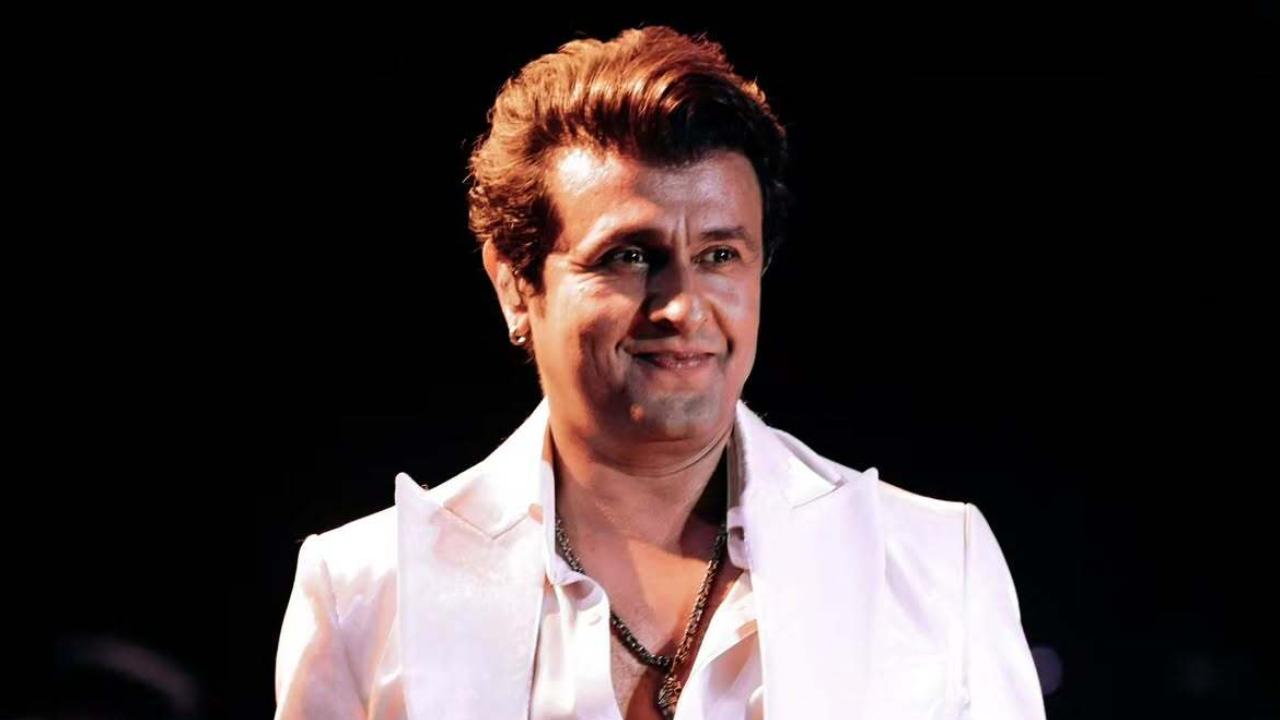
Sonu Nigam has never really been one to shy away from taking a stand. Over the years, the singer has spoken openly about issues ranging from the use of loudspeakers at religious places to royalty rights for performers. So, when a recent video of him refusing to comment on the ongoing student protests over alleged NEET irregularities went viral, his silence was bound to invite questions. During the interaction, Sonu was visibly irritated when reporters continued to ask him about the issue and eventually ended the exchange. Now, explaining his decision, Sonu says it was less about avoiding a difficult question and more about choosing when — and on what — he should speak.
“Firstly, in the last more than three decades of being in Mumbai, I have learnt one basic etiquette for any press conference. Always adhere to the agenda of the occasion and do not let conversation wander to disconnected matters,” he says, adding, “Talking politics when you have come to talk about your tribute to your Guru Pankaj Udhas is disrespectful in my eyes. And I would very politely expect the press and media gathered to maintain the same decorum.”
The singer who recently sang a Haryanvi song, Chunni, continues, "I have also given a word to my father to not comment on just anything which I’m not knowledgeable about. I don’t have social media on my phone. My life is about music and Bhakti. I have taken enough stands throughout my life and have been instrumental in bringing many mammoth changes in the system. From my outcry against loudspeakers on religious places to the right to royalty for performers, I have belled the cat alone bravely. Now let others take up new courageous stands and see what changes they can bring through their steadfastness. Let them become real warriors and not just social media lampoons,” he says.
‘The pain had nothing to do with my vocal chords’
Apart from the controversies, the singer has recently been in the news for his health. Sonu had earlier spoken about experiencing severe pain, with reports describing a pinched nerve, and has since also shared a video from a separate medical procedure involving a recurring growth on his left ring finger.
"I am perfectly fine due to the timely intervention of a wonderful and kind physiotherapist from Delhi called Arvind Kumar. He rid me of the excruciating pain in four days. More than anything else, I was overwhelmed with the outpour of love and concern for me from every quarter.” The singer clarifies that the pain was not related to his voice.
“The pain was in the side of the neck and had nothing to do with vocal chords, thankfully. But of course, your ability to sing comfortably is compromised when you are under such severe agony,” he says.
Haiwaan collects 4.75 cr in 2 days
4:39 PM
-1789233276347_d.png "Haiwaan box office collection day 2: Akshay Kumar, Saif Ali Khan-starrer fails to beat Mirzapur The Movie, earns THIS much")
Box Office India Trade Network
HAIWAAN recorded a dull first day ranging between 2.50-2.75 crore nett which leaves the film with little chance to go anywhere. The industry as usual will see it as shocking but its happened before. So, its not a huge surprise. When a trailer does not offer much, then a film is impossible to save from the audience point of view as they will wait for the film to come on television if they really have to watch.
Also, the fact that there are two films doing so well means this film is going to get a far lesser share of the audience then it would otherwise get. If the trailer or music was better, then only can you stand up to the other films which have been liked. If those films were not there, it could have done a couple of crore more but that would not even alter the scenario. Nothing can be done about it as MIRZAPUR THE MOVIE was expected to do well though maybe not to the level it has done. However, HANUMAN ANSH has come out of the blue.
The only positive factor for the film was the presence of a star like Akshay Kumar but from the reports coming out it seems an extended guest appearance type role with limited screen time which will not help its cause in terms of the trend. So here the positive will also end up as a negative. When there is a big star in a film it has to be a dominating role. A film like WELCOME TO THE JUNGLE had a bigger star cast than HAIWAAN but was dominated by Akshay Kumar.
------------------------------------------
HAIWAAN is a poor fare as collections were 2.25 crore nett on Saturday adding to the 2.50 crore nett on Friday. The film dropped 10% apprx and with such low occupancy on Friday there was a chance of this happening as it was bound to lose screenings as two other films were doing so well. The two day total of the film is 4.75 crore nett and it will be a weekend of only 7 crore nett apprx.
Subscribe to:
Posts (Atom)