Showing posts with label Waheeda Rehman. Show all posts
Showing posts with label Waheeda Rehman. Show all posts
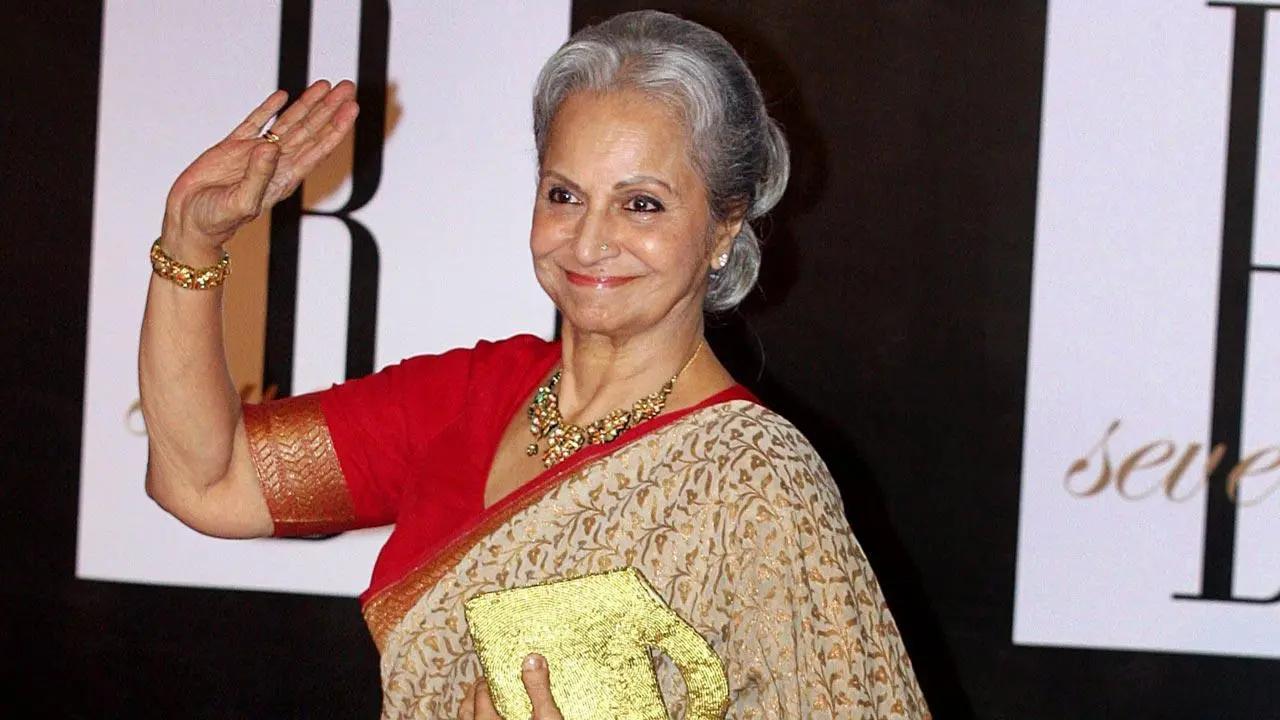
Waheeda Rehman to make rare screen comeback as Mahatma Gandhi’s mother Putlibai in Manoj Bajpayee starrer
4:36 PM
Iti Shree Misra (BOMBAY TIMES; September 21, 2026)
It took more than a few sittings and a promise of the best food in Lucknow to coax Waheeda Rehman back onto a film set. After a brief, memorable appearance in the 2021 OTT film Skater Girl, the veteran actress had been reluctant to take on new assignments, citing age and a desire to step back – until now. The actress will be seen in a major role in Sudhir Mishra and Anubhav Sinha’s next.
The pitch that worked
Director Sudhir Mishra was adamant about having Waheedaj i in his Mahatma Gandhi film, and producer-director Anubhav Sinha backed him with a series of patient meetings.
“Waheeda ji was rather unsure of coming back to acting in another movie. But Sudhir was very keen on having her as part of the cast,” Sinha says.
Over several rounds of conversation, Mishra reassured her about the role, while Sinha leaned into charm and cuisine. “I promised to feed her the best food in Lucknow,” he says.
Waheeda Rehman, who had visited Lucknow a long time ago and wasn’t very familiar with the city, finally agreed. She is now in Lucknow, shooting for the film and playing what the team describes as a very important part although not Putlibai, as some reports suggest.
Sinha further shared, “Waheeda ji found the script very exciting and the character very interesting but she was reluctant and unsure if she wanted to come back to acting. But Sudhir and my insistence and the story convinced her enough to say yes to the role.”
For the two filmmakers, securing Waheeda Rehman was less about casting and more about legacy. Sinha says that sitting with her to discuss cinema and this particular script has been ‘an incredible honour’.
A 21-day chapter, a starry ensemble
The yet-untitled film, currently working under the title Gandhi And My Mother, focuses on a lesser-known 21-day chapter from Gandhi’s life. Manoj Bajpayee essays the Mahatma, reuniting on screen with Saurabh Shukla after Satya (1998) and Aarakshan (2011).
The ensemble also includes Divya Dutta, Aamir Bashir and Ashwath Bhatt in significant roles. Divya, incidentally, plays Sushila Nayyar, Gandhi’s personal physician and close associate, who authored several books on her experiences with him. Her brother Pyarelal Nayyar served as Gandhi’s personal secretary.
“For me to be playing such an iconic character is a real high”: Divya Dutta on playing Sushila Nayyar
For Divya, signing up for the biopic felt like a double win. “For me to be playing such an iconic character is a real high. Being on the set and just playing the role takes me back to that remarkable era and that feels amazing,” says the actress.
The film also marks her first collaboration with Mishra, a filmmaker she has long admired. “To be part of the cast of such a talented and amazing director is like a dream come true,” she says. With producer-director Anubhav Sinha, meanwhile, it’s reunion time. “This is my second film with Anubhav who’s an amazing friend and being back on the set with him is like party time,” Dutta adds.
Though Divya and Manoj Bajpayee have acted together in several films earlier, this will be the first time they share screen space in the same frame, a milestone she notes with quiet excitement. In a project that blends legacy, craft and camaraderie, Dutta’s enthusiasm is simple, “It’s an all-out win-win situation for me!”
After Meena Kumari and Madhubala, Guru Dutt’s biopic in works
10:06 AM

Meena Kumari, Guru Dutt, Madhubala. Pics/mid-day archives, YouTube
Mohar Basu (MID-DAY; September 11, 2026)
The fascination with the lives of Hindi cinema’s legendary stars shows no signs of slowing down. While Madhubala and Meena Kumari’s biopics are in the making, mid-day has now learnt that late Guru Dutt’s life and legacy will be brought to the screen. Manish Goswami’s production house Siddhant Cinevision has acquired the adaptation rights of ‘Bichde Sabhi Baari Baari’, Dutt’s biography by novelist Bimal Mitra, with plans to develop it as a multi-part series.
Mitra shared a close personal and professional association with Dutt, which began when the latter adapted his acclaimed Bengali novel, ‘Saheb Bibi Golam’.
A source shared, “The author spent considerable time with Dutt at his Mumbai home and Lonavala farmhouse, working on scripts and having long conversations with him. Those interactions became the foundation for the memoir. ‘Bichde Sabhi Baari Baari’ also shone a light on Dutt’s troubled marriage to singer Geeta Dutt, his bond with Waheeda Rehman, and the actor-filmmaker’s anxieties and vulnerabilities.”
mid-day contacted Goswami, who said, “It’s premature to discuss the details.”
Happy that the new generation is participating in saving this heritage-Waheeda Rehman
10:08 AM
Niharika Lal (BOMBAY TIMES; November 20, 2025)
A couple of months ago, films starring Waheeda Rehman returned to theatres, drawing audiences of all ages. Among them was Rehman herself, who watched her performances on the big screen after decades – and was surprised by how the films continued to resonate across generations. In a recent conversation with us, she spoke about how she views her films today and what she believes defines an artist’s legacy.
‘THERE HAS BEEN SHIFT WHERE FILMS ARE NO LONGER SEEN AS ‘OLD,’ BUT AS A VITAL PART OF OUR HERITAGE’
After the restored versions of several films were screened at major international film festivals and re-released in cinemas in recent years, Rehman notes that there has been a shifting attitude toward classic cinema. She says, “It’s a change where films are not looked at as ‘old’, but as a vital part of our heritage. It makes me happy to think that the new generation is participating in saving this heritage so that future generations will get to see our work, and we will not be forgotten.”
‘WATCHING A FILM THAT YOU HAVE ACTED IN AS A YOUNG ACTRESS IS DIFFERENT FROM VIEWING IT DECADES LATER’
Speaking about the difference between watching her films upon release and viewing them now, she recalls, “Recently, I went to a cinema to watch some of the films (classics) that I acted in the 1960s on the big screen and the memories from over 60 years ago came rushing back. Watching a film that you have acted in as a young actress is very different from viewing it decades later... What really amazed me is the excitement across generations to watch these films and how entire families came to watch – out of nostalgia, but also to show the next generation films that they had loved... When I was making these films, I knew they were extraordinary, but today it is wonderful to see that my hope has become a reality for many of my films.”
Rehman keeps a keen eye on contemporary cinema and occasionally visits theatres to watch new releases. She adds, “Cinema is a way for us to tell our stories. Cinema continues to be such a powerful art that captures the imagination of people, an art through which they learn about themselves and the world... Today both our mainstream films and our independent and regional films are making a mark across the world.”
‘I had kept saris and memorabilia linked to my films for decades’
A couple of years ago, she donated all her memorabilia to be kept at a museum. Reflecting on what it feels like to give away belongings that are now part of public memory, she says, “I had kept photographs, sariees and memorabilia linked to my films for decades because I felt they were tangible objects of my past and the history of cinema. In the digital world today, I feel that these physical objects are even more valuable. I am so happy that I found a home for my personal memorabilia at Film Heritage Foundation as I know that they will value it and ensure that it will be preserved and showcased with respect and in the right context.”
Jawaan bachche Guru Dutt ki biopic nahin kar sakte-Waheeda Rehman
8:27 AM
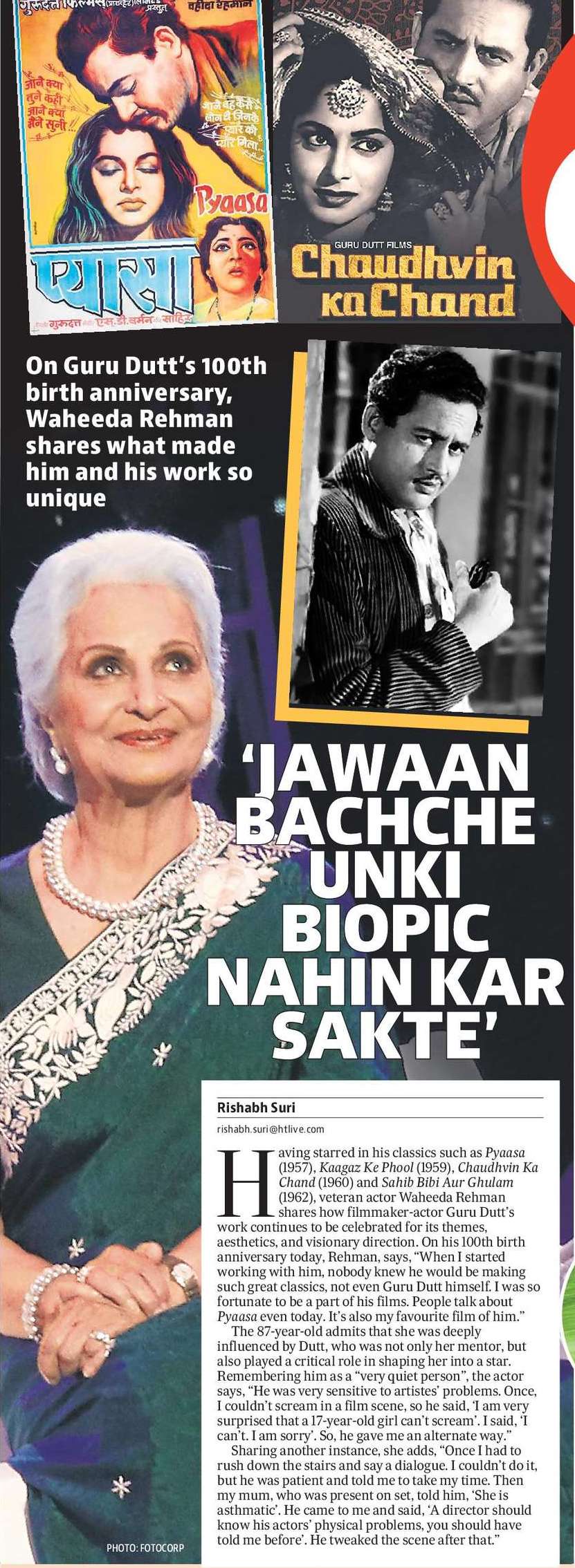
On Guru Dutt’s 100th birth anniversary, Waheeda Rehman shares what made him and his work so unique
Rishabh Suri (HINDUSTAN TIMES; July 9, 2025)
Having starred in his classics such as Pyaasa (1957), Kaagaz Ke Phool (1959), Chaudhvin Ka Chand (1960) and Sahib Bibi Aur Ghulam (1962), veteran actor Waheeda Rehman shares how filmmaker-actor Guru Dutt’s work continues to be celebrated for its themes, aesthetics, and visionary direction.
On his 100th birth anniversary today, Rehman, says, “When I started working with him, nobody knew he would be making such great classics, not even Guru Dutt himself. I was so fortunate to be a part of his films. People talk about Pyaasa even today. It’s also my favourite film of him.”
The 87-year-old admits that she was deeply influenced by Dutt, who was not only her mentor, but also played a critical role in shaping her into a star. Remembering him as a “very quiet person”, the actor says, “He was very sensitive to artistes’ problems. Once, I couldn’t scream in a film scene, so he said, ‘I am very surprised that a 17-year-old girl can’t scream’. I said, ‘I can’t. I am sorry’. So, he gave me an alternate way.”
Sharing another instance, she adds, “Once I had to rush down the stairs and say a dialogue. I couldn’t do it, but he was patient and told me to take my time. Then my mum, who was present on set, told him, ‘She is asthmatic’. He came to me and said, ‘A director should know his actors’ physical problems, you should have told me before’. He tweaked the scene after that.”
MAN WITH A VISION
Highlighting his brilliance, she shares how he decided to change a song while the film was running in cinemas: “Chaudhvin Ka Chand was shot in black and white and colour films were coming up then. The film became a hit, and then he thought: ‘If the title song was reshot in colour and added to the film, it’d be more successful’. And it did make a difference. People went to the theatres again and again to see the title song in colour.”
BIOPIC ON GURU DUTT?
There have been reports about a biopic on Dutt’s life, reportedly starring Vicky Kaushal. Ask Rehman which actor works best to play Dutt, and she says, “Pankaj Tripathi, Pankaj Kapur or Naseeruddin Shah ke face aur kaam mein maturity hai. Aaj ke bachche bahut jawaan hain. Unko play karne ke liye maturity chahiye. Jawaan bachche nahin kar sakte.”
I would love a companion but I don’t miss out on it-Divya Dutta
7:54 AM

Divya Dutta (left) as Shabbo in with Preity Zinta in Veer Zaara (2004)
Iti Shree Misra (BOMBAY TIMES; October 2, 2024)
Divya Dutta, who celebrated her birthday recently, also completed three decades in the industry this year. In conversation with us, the actress looks back on her choices, both profession and personal, and how she is in a comfortable space in both aspects of her life.
People would wonder what category to fit me in
Starting her career in an industry known for its defined boxes — commercial cinema vs parallel cinema, the quintessential heroine vs character actors — Divya Dutta often found herself walking a path less travelled.
“People would wonder, what category do I fit into? Is she a commercial or parallel cinema actress? A heroine or a character actor?” Dutta recalls.
“But despite the industry’s initial confusion, I was determined to create my own path. 30 years later, I still get roles written for me,” she adds with a sense of gratitude. “When someone comes and says, ‘This is for you, you can do this,’ it’s the most gratifying feeling. It’s not common to be in a profession where you are exactly where you want to be, doing what you love,” she says.
There’s been a lot of ‘nos’ along the way
From playing a romantic lead to a negative character, Divya has done it all. “I was often told I couldn’t do certain roles. I was told I was too soft for negative characters. But when someone tells me I can’t do something, it becomes a challenge for me,” she says with a laugh. “There were lots of ‘no’s’ along the way,” she admits.
“People thought I was crazy for turning down the offers I got, but I followed my gut. Nobody can say I’m just a romantic heroine or a softy or a lady don. I’ve worked hard to ensure that my body of work is as diverse as possible. There was this production house that offered me a role and halfway through the narration I said no, I don’t want to do this. They asked me kya hua so I told them that I don’t think I will enjoy playing this character. They were also very sporting and accepted my decision. Now, I just say no if I don’t like a role. I don’t like any ambiguities, pretence mujhe karna nahi aata. Bahut kar li diplomacy, jab nayi-nayi aayi thi tab karti thi, but now I just like to be straighforward. Ab pyaar so bolna nahi aata hai, ab toh bas ‘chup kar, mujhe nahi karna hai’ kehti hoon. And I think I deserve it now and trust me, I have worked in better projects with the same people.” (laughs)
OTT and theatre-watching will never be in competition
With several releases lined up on the big screen and OTT, Divya feels the two can never compete. “I think OTT and theatrical releases need a good marriage, like a film released in theatres should be on OTT after 6 months. Also we need OTT for small films. A film like Laapataa Ladies had a backing of Aamir Khan Productions, 12th Fail had Vidhu Vinod Chopra backing it, so they could be marketed, publicised and released in theatres. But ab agar ek chhoti film hai, kam budget wali, woh kahan hi jayegi. So for such projects OTT is a boon. But theatrical releases will never go. In recent times we have had so many re-releases, toh woh charm to badi screen ka rahega hi,” she says, adding, “What I really feel is that we need good writers. Film chahe chhoti ho ya badi, agar story gripping nahi hai toh audience nahi dekhegi, chahe OTT pe ho, ya theatres mein. The audience these days is very clever and discerning, so we now need big names in acting only for the initial push, uske baad toh story is what counts. Content nahi, toh audience nahi.”
I don’t want any kind of toxicity in my life
Single and being very happy about it, Divya says she is very happy being by her ownself. “I would love a companion but I don’t miss out on it. I think that’s because I am very content in my space now, with all your experiences that you come with. I don’t want any kind of toxicity in my life now. When a good partner comes into my life, I think I will know. Until then I don’t want any timepasses,” says the actress who celebrated her birthday earlier this week.
“I do have a lot of male attention, but sometimes you are in that phase where you are very happy with the work that you’re doing and I think I am in that space. Also, at this stage in my life, for me what is of utmost importance is peace of mind. So when you’re peaceful in your heart and mind, then only you can give your best in any situation you are in, personal and professional. Baki I think woh completeness hum jo doosron mein dhoondte hain, I don’t think I’m in that place where I want completeness with someone. But companion most definitely. I would love to travel with someone, would love to go on these romantic outings as I am a diehard romantic. But with a very right person. I’m not wanting marriage in my life, surely. I mean I shouldn’t say no ever, but I think I will be happier with a companion. Until then, I am my best companion right now and I wouldn’t like it any other way. Maje aa rahe hain!”
Lesson for life
Dutta fondly recalled a lesson she learned from filmmaker Rakeysh Omprakash Mehra while working on the film Delhi-6. “I was playing Jalebi, a foul mouthed woman and I just couldn’t speak the dialogues because there were all these seniors in front of me. Waheeda ji, Rishi ji, Om Puri sahab and I was very hesitant in speaking like that in front of them. So after several retakes, Rakeysh finally came to me and told me, ‘Set Divya aside. She is too sweet. Think of the person Jalebi is and let her character take over.’ That advice has stayed with me.”
— Inputs by Ankita Bharti
When they grow up, I want my grandchildren to visit the museum and look at these photos of my films-Waheeda Rehman
2:52 PM

The saree she wore to her first premiere, albums documenting her journey in cinema – Waheeda Rehman has donated all of this and more to Film Heritage Foundation for preservation. While handing over the priceless memorabilia, the veteran star says, “Achanak yeh (photos) dekhte hue laga uss time kaise films banti thi...”
Niharika Lal (BOMBAY TIMES; March 14, 2024)
Last year, when the Film Heritage Foundation (FHF) organised a screening of the restored print of Guide, Waheeda Rehman wondered, “But will people come to watch a film that was made 60 years ago?” To her utter surprise, not only was the screening a houseful one, the audience watched the entire film in rapt attention. Six months later, the veteran actress invited FHF archivists to her home to donate some of her precious memories, tracing her journey in cinema, so that the foundation could preserve them for posterity.
Among the items she handed over to the foundation was the saree she wore to her first film, CID’s (1956) premiere, some trophies, and photo albums documenting all the behind-the-scenes action from her memorable films like Kaagaz Ke Phool (1959), Chaudhvin Ka Chand (1960) and Bees Saal Baad (1962).
‘I hope this inspires others from the film frat to donate materials for preservation’
Speaking to us about Waheeda Rehman’s priceless donations, Shivendra Singh Dungarpur, Founder and Director of the Film Heritage Foundation, said, “It was a very emotional moment for me when she donated her precious personal memorabilia to the Film Heritage Foundation and entrusted us with its care and preservation for posterity. I am so proud that she chose us as her memory keepers. I hope that it will inspire others from the film fraternity to recognise the importance of our film heritage and donate their material to be preserved for posterity.”
60 years have passed, but I’ve kept the albums safe: Waheeda Rehman
When we met the veteran actress at her sea-facing abode in Mumbai, she was in a nostalgic frame of mind. Sifting through a stack of albums, Waheeda Rehman shares, “Maine mehsoos kiya ke jab hum personal photographs rakhte hain, woh kharab ho jati hain phir bada afsos hota hai. Maine socha FHF photos safely rahenge museum mein. Apne se lagaav aur obsession hota hai toh rakh lete hain magar uski dekh-bhaal nahi kar paate hain, aata bhi nahi hai. We don’t know how to preserve pictures. But now these photos will be safe. People who love films may like to visit and look at these albums sometime. When they grow up, I want my grandchildren to visit the museum and look at these photos of my films.”
As for how she acquired these photos, she said, “I used to request directors to give me working stills – the behind-the-scenes shots. I wanted them to share the shots in which the director is directing. Main kehti thi ‘woh sab leke dijiye aap’. There are so many albums. Sixty years have passed, but I have kept them safe. Sometimes, when I get into the mood, I clean the albums and dust them off.”
‘MUJHE PHOTOGRAPHY KA BAHUT SHAUQ HAI’
Waheeda Rehman has always been interested in photography. She shares she likes taking photos of birds, animals, landscapes, and people. About her safari sojourns, the actress says, “Mujhe photography ka bahut shauq hai. Our group is made up of like-minded people who love photography. Most of them are professional photographers. I have been going on these trips for 10 years now. I capture a lot of candid moments. I have visited almost all jungle safari destinations in India – only Gir is left. I have also travelled abroad for safari trips. One of my favourite places is Namibia – it was so beautiful, with sand dunes touching the Mediterranean Sea and waves”
‘I was always particular about what I’d wear’
Waheeda Rehman says, “It’s great to look glamorous, depending upon the character and situation. But just to reveal (your skin) for no reason, I don’t like it. People who do it, if they are comfortable and like it, it’s fine. But personally, I don’t like it. In Amrapali (1966), what Vyjayanthimala was wearing, that’s what people used to wear 2,500 years back. There used to be no top per se – it was all covered with pearls. I was always shy and particular about what I would wear and how I would wear it. There is a scene in Kala Bazar (1960) where Dev (Anand) goes to get flowers for me, and he slips of a cliff and I take out my saree and use it as a rope to save him when no one hears me calling for help. Maine Vijay Anand ko kaha, ‘Yeh toh main nahi karungi. Woh bhi outdoor mein!’ Toh woh bole, ‘Yahan maqsad figure dikhane ka nahi hai, yahan kisi ki jaan bachane ka hai.’ Mera kehne ka matlab hai ki jo marzi costume pehen lijiye – bikini pehen lijiye, swimming costume pehen lijiye magar dikhane ke liye matt peheniye.”
And how did directors during that era react to her views on costumes for her characters? She says, “With time, as I spent more years in the industry and became a top heroine, I managed to convince the directors, and they used to say, ‘Yes, you have a point.’”
‘Meri apni film maine kabhi theatre mein jakar nahi dekhi’
Last year, during the 100 years of Dev Anand celebration, Waheeda Rehman attended the screening of Guide. She said, “Tajjub bhi hota hai ki itni purani filmein log itni dilchaspi ke saath chupchaap dhyaan se dekhte hain; toh lagta hai kahin kuch achha hi kiya hai. What I really liked was that all those people in the cinema hall were silently watching the film. Kabhi beech mein gaane aate thay toh maine bahut saari taaliyaan bhi suni. Mujhe achha laga.”
However, the actress shares she has seen a few of her films in theatres. She adds, “Meri apni film maine kabhi theatre mein jakar nahi dekhi. Abhi bahut barson ke baad main Guide ki screening mein gayi thi aur meri beti Kashvi bhi mere saath thi to maine kaha usko, ‘Beta, aapko nahi dekhne ka dil karta hai toh aap keh do, hum chale jayenge. She was like, ‘What are you talking?’” (Laughs).
‘There are so many female directors, it’s wonderful’
“I really like it when women directors approach me. Two girls once came looking for me for the film Skater Girl (2021). It was a small role. I thought both these girls are struggling, and it’s not a big contribution, so I should do it. Now, there are so many female directors, which is wonderful. I feel sometimes, the sensitivity with which a female director perceives a scene, that’s something only a female director can do. Like in English Vinglish, the way her husband talks to her – it’s not mean, but jaise biwi ko jhadak diya – woh sab auratein zyada behtar samajh paati hain. Aaj kal kaafi achhe directors hain jaise Gauri Shinde. I also like Farah Khan’s films – in commercial cinema, the masala Manmohan Desai type films she makes. Commercial success toh bahut zaroori hai. Then there’s Zoya Akhtar and Kiran Rao.”
I would love to act in a biopic of Madhubala, Zeenat Aman, Waheeda Rehman or Rekha-Ananya Panday
8:34 AM

Ananya, who has cyber thriller Control and Call Me Bae in the offing, keen to widen her range as an artiste with a biopic
Upala KBR (MID-DAY; February 3, 2024)
You can’t blame Ananya Panday for being greedy as an artiste. She has tasted blood with Kho Gaye Hum Kahan (2023), and now she wants more. The actor has a promising line-up that includes Vikramaditya Motwane’s Control, Collin D’Cunha’s Call Me Bae and the yet-untitled film with Akshay Kumar. But she is eyeing a new goal—headlining a biopic.
The actor recently watched The Crown, and Elizabeth Debicki’s performance as Princess Diana seeded the desire. “I loved how she completely became the character and yet brought so much of herself to it. I would love to do a biopic, transforming myself into someone who already existed,” shares Panday.
She has a wishlist, though she admits to being unsure whether she can do them justice. “I would love to act in a biopic of Madhubala ji, Zeenat Aman ji, Waheeda [Rehman] ji or Rekha ji.”
For now, Panday is being moulded as an actor by some fine directors. Having wrapped up Motwane’s cyber thriller, she says, “Vikramaditya is a dream director. [While shooting], you don’t realize what you are learning. But later, when you do something [in front of the camera], you realize you had learnt it from him. He wants everyone to grow with him.”
Being directed by D’Cunha on her maiden web series has been a fun ride. “I’d make Colin enact scenes and he’d bring his own funny twists.”
Arpita Khan Sharma usually organizes our family reunions, and all of us enjoy Christmas lunch together-Helen
8:25 AM

Natasha Coutinho (BOMBAY TIMES; December 24, 2023)
From preparing sweets to packing gifts for her grandchildren, 85-year-old Helen enjoys celebrating Christmas with her family. She recalls how everyone in the family loves marzipan. “Salma, the children and grandkids relish marzipan the most. Salim sahab has a small piece so that he can be part of the festivities,” says Helen.
Speaking about this year’s Xmas plans, Helen adds, “Arpita (Khan Sharma) usually organizes our family reunions, and all of us enjoy Christmas lunch together. Our family’s favourite dish is Vindaloo Turkey; sometimes I make Burmese Khow Suey.”
Helen shares a close bond with yesteryear actresses Waheeda Rehman and Asha Parekh. Talking about their friendship, she says, “We still travel together and make great memories. We used to be a big group of friends from the film industry and would celebrate special occasions. Shammi and Nanda used to be part of our friend’s group as well, but they are no more.”
Helen shares a special connect with Bandra and attends midnight mass at St Andrew’s Church on Christmas Eve with her friends. “I love how every home is decorated with fairy lights at this time of the year. It’s truly a melting pot of cultures, and everyone comes together to celebrate the festival. I also send gift hampers to the local hospital for the less fortunate. I moved to different parts of Mumbai after coming to India and joining films but kept returning to Bandra, it’s a special connection. Especially after marriage Bandra became home and it’s where I’ve lived most of my life. Although the bungalows that existed in the past have gone and now the area is full of buildings,” says Helen.

National Awards: Stars descend on New Delhi as President Droupadi Murmu honours the best of Indian cinema
8:32 AM

THE TIMES OF INDIA (October 18, 2023)
New Delhi: President Droupadi Murmu on Tuesday conferred the Dadasaheb Phalke Award, India’s highest film honour, on cinema’s enduring icon Waheeda Rehman, an honour she dedicated to her “dear film industry” and its various departments.
President Murmu also conferred the best actor award on Telugu star Allu Arjun for his performance in ‘Pushpa: The Rise’ and best actress to Alia Bhatt and Kriti Sanon respectively, for their performances in ‘Gangubai Kathiawadi’ and ‘Mimi’.
Referring to films as the most effective medium to spread awareness, Murmu said at a function at Vigyan Bhavan that meaningful films depict the achievements and problems of society and the country.
Arjun, who received the award amid loud cheers, said the award was not only a personal milestone, but belonged to everyone who supported and cherished his cinema.
Alia, who attended the ceremony with actor-husband Ranbir Kapoor, also said she was grateful and honoured for having been awarded.
Actor-filmmaker R Madhavan also received the National Award for best feature film for his directorial debut ‘Rocketry: The Nambi Effect’, while actor Pankaj Tripathi won the best supporting actor for ‘Mimi’.
Union information and broadcasting minister Anurag Thakur said Indian content was no longer limited to regions, adding that the government stands with the industry in its efforts to counter movie piracy, and also on a policy that will help India realize its potential as the “content hub of the world”.


Dev Anand told me, 'If you want to do more films, you will have to shoot at night'-Waheeda Rehman
8:24 AM

On the sidelines of a special film festival to mark Dev Anand’s 100th birth anniversary, Waheeda Rehman remembers some of the moments she shared with the legendary actor
Waheeda Rehman (BOMBAY TIMES; September 26, 2023)
I met Dev saab on the sets of C.I.D. I was a fan, but never in my wildest dreams thought that I will be working with him in my first Hindi film. He never made me feel like ki main newcomer hoon aur woh established star hain. He made me feel so comfortable aur naturally woh ek understanding thi, toh humne ek ke baad ek saat (seven) picturein ki. And the best was of course, (Guide) saari duniya janti hai. He was so charming and decent. Kabhi kisi ki burai nahi karte thay.
Once he told me, “Waheeda kabhi fikr mat karo ki picture chalegi ya nahi chalegi kyunki ye jo zindagi ki slate hai, uspe tumhara mera naam toh likh diya gaya hai, toh woh koi mita nahi sakta. Toh aap kabhi socha mat karo. Picture nahi chali (toh) nahi chali. Chhor do. Aage dekho kya karna hai.” He was very charming. Jaise charming dikhte thay waise charming insaan thay. Bahut achhe insaan thay.
‘HE MADE ME SO COMFORTABLE ON THE SETS OF CID’
On the second day of the shoot I called him Dev saab, and he said no. Toh maine kaha achha Mr Anand? And he was like – ‘No, no, no, no.’ Maine puchha, phir kya bulaoon? Toh kehne lage Dev. Maine kaha aap mere se bade hain aur itne bade star hain, main kaise aapko Dev bulaoon. Ye hamare culture mein, hamari tameez mein nahi hai.’ He then explained, ‘Dekho agar koi saab kehta hai toh mujhe lagta hai ki main school teacher hoon. I don’t get that feeling that you are my colleague’. So, in the whole industry, he was the only hero jinse main first name basis pe baat karti thi.
C.I.D. ke liye hum Churchgate station pe raat ko shooting karne gaye thay. Raj Khosla took special permission for it. We both had to get into a running train. I was very nervous. Dusra shot hone tak raat mein mujhe neend aa jaati thi toh main so jaati thi do baje tak. So Dev asked me, ‘You want to do more pictures?’ It was my first film, so I said, ‘Haan karna toh hai’. To which he replied, ‘Then you will have to shoot at night’. Like a fool I asked ‘Par raat mein kyun kar rahe hain. Din mein kyun nahi kar rahe?’ Toh kehne lage, ‘Public khatm ho jayegi tabhi toh hamare liye permission milegi!’
It was really good and fun. It was so comfortable working with him, very casual, very charming.
‘I WAS A PART OF GUIDE ONLY BECAUSE OF DEV’
Meri kismat achhi thi aur Dev ne soch liya tha ki Guide mein Rosie ka role main hi karungi. That made me very happy and confident. I told him, ‘Ismein aap jo marzi scene cut karo, magar mera koi bhi dance cut nahi hoga’. It was the only film where I had got the chance to dance.
I was in Guide only because of Dev. He was the producer and he had given me the contract pehle se. Unfortunately, the directors Chetan Anand and Tad Danielewski (for the US version), they didn’t want me. I told Dev ‘Aapke dono directors mujhe nahi pasand kar rahe. Problem ho jayegi. Aap kisi aur ko le lijiye.’ He said, ‘Are you crazy? Meri marzi hai main kise loon. I am the producer. What makes you think like that?’ I told him to ask his publicist and friend Amarjeet. He confirmed it. Tad also said there’s going to be a very hot love scene. When I told Dev, he said, ‘You know I won’t do a scene like that. Tumko darane ki koshish kar rahe hain.’
Finally, although Tad stayed (for the US version, which didn’t have Waheeda), Vijay Anand aa gaye (in place of Chetan Anand for the Indian version).
— As told to Niharika Lal
WHY WAHEEDA DIDN’T ATTEND THE COLOUR PREMIERE OF HUM DONO
I don’t remember when I met him for the last time. When he did Hum Dono in colour (in 2011), toh uska premiere hone wala tha. Both the leading ladies of the film – Nanda and Sadhana – didn’t come for it. He had called me for the premiere, but when I found out both the leading ladies are not coming I asked ‘Fir main kaise jaungi? It will look like I’m taking away their (credit). It’s bad manners.’ Toh Dev kehne lage ‘You are a part of Navketan (his production house). You are not an outsider’. I said, ‘It is very sweet of you, but public kahegi ki na Sadhna hai, na Nanda hai, ye Waheeda beech mein kya kar rahi hai? Galat lagta hai na.’
‘Tum mera dil dukha rahi ho’ (Dev said), and I replied, ‘I’m sorry. Tell them kuch bhi kar ke aaye. Unke bagair main nahi aa sakti’.

Dev Anand insisted only I will play the role of Rosie in Guide-Waheeda Rehman
8:22 AM

Dev and Waheeda in Prem Pujari, his directorial debut
Waheeda Rehman, who paired with the debonair star in classics such as CID, Kala Bazar, Baat Ek Raat Ki and Guide, remembers the actor whose birth centenary falls on Sept 26
As told to Shruti Sonal (THE TIMES OF INDIA; September 24, 2023)
When I was first signed to star opposite Dev, I had no idea that I would be working with him. Those days we got to know about our costars at the last moment. When I went on the sets of CID, director Raj Khosla introduced me to the whole unit. When I saw Dev, I was surprised and shocked. I went up to him and said “Dev saab, it’s an honour to meet you.”
He replied, “Tum mujhe Dev saab nahi kahogi (You can’t call me Dev saab).” I told him that I was a newcomer, and he was a big star, so how could I call him by his first name? But he insisted. He explained very calmly that if someone uses words like ‘saab’ or ‘sir’, a distance is created and he doesn’t feel comfortable. As a result, he became the only person in the industry whom I called by name. Everyone else was “ji”, “saab”, and “sir”. He was just Dev for me.
Guide was made in Hindi and English. Vijay Anand directed the Hindi version; Tad Danielewski, the English. Both didn’t want to work with me. However, Dev insisted that only Waheeda will do the role. I told him not to force the directors. But he stood by me, and insisted that as the producer, he would take the call. I blushed when he told me that ever since reading the book by R K Narayan, he had only imagined me playing Rosie. I was taken aback when he told me that he knew that if problems arise, I would stand by him. That’s what happened.
There was a lot of chaos as we were shooting simultaneously in Hindi and English. Ego clashes between the two directors hampered the shoot. Dev was very upset and worried. A lot of time was being wasted. One day, he suggested that we should first shoot in Hindi, then in English. He asked me for additional dates and I agreed without a second thought. “See, I knew you’d stand by me,” he replied.
During that era, there were three big stars: Dev, Raj Kapoor, and Dilip Kumar. All were very talented, but there was something different about him. He was not condescending. He insisted on working with new directors and crew, and made everyone comfortable. He was a charming actor and a charming human being. He was also a decent flirt. Dev was always the most well-dressed person on the set. He had so much energy mentally and physically. If his clothes would get drenched in sweat or get soiled, he would run to his room, change, and then come back to take a shot. I used to joke, and call him an ‘Eveready Battery’, always charged. Dev also had an ear for good music and was very particular about the songs in his films. If he didn’t like a song, he would even tell (Sachin Dev) Burman da, “Dada, maza nahi aaya! Kuch aur banaiye.”
As I become older, it sometimes becomes difficult to recall the details of the time I spent with him. What I remember the most, however, is how broad-minded and progressive Dev was in his thinking. Also, he didn’t stick to the formulaic films or typical love stories that were being made in that time. He wanted every film of his to be different from the other. He had the guts to make Guide, which had a very bold subject. More than a love story, it was about three people who want to make something of their life. The characters were grey, and made unconventional choices. It was different, yet at the same time, very true to life and the people we see around us even today.
I am sure wherever he is, he is happy that his work is being honoured and remembered even today.
-----------------------------------------------------------
Pocket picked at Delhi premiere, but Jewel Thief kept quiet
A pickpocket pinched Dev Anand’s purse, robbing him of Rs 15,000 during the premiere of Jewel Thief (1967) at a New Delhi theatre. Adjusted for inflation, that roughly amounts to Rs 7.5 lakh today.
“I flew all the way from Darjeeling to Delhi to attend the premiere at the Odeon Cinema. The crowds were jumping up and down with delirious joy as I alighted from the car outside the theatres,” the actor writes in his autobiography, Romancing with Life.
“Suddenly a hand brushed my hip pocket. I checked for my purse, and found it missing. But I did not react, for the euphoria of the moment was too immense to cry over a meagre sum of Rs 15,000, lost in the enormous wave of goodwill and popularity,” he writes.
“Stardom cannot be earned or bought at a price. I let the pickpocket dance away in joy with my cash-filled purse,” Anand concludes.
Interestingly, Dev Anand had played a pickpocket in the film, Pocket Maar (1956).
Nostalgia drives re-releases of classics and popular movies
8:17 AM

Niharika Lal (BOMBAY TIMES; September 23, 2023)
When veteran actress Waheeda Rehman heard that four classics of Dev Anand, including Guide which also featured her, were being re-released, she wondered if moviegoers would be interested in watching 60–70-year-old films in cinemas. She was surprised to know that the shows of these films C.I.D. (1956), Guide (1965), Jewel Thief (1967) and Johny Mera Naam (1970), which will happen over this weekend as part of Dev Anand’s birth centenary celebrations, had been sold out.
"Restored and remastered films provide a higher-quality viewing experience. Post the pandemic younger audiences are going out for movies while the older audience has stayed away. Re-release of classic titles has enabled us to bring back this audience to cinemas."
- Gautam Dutta, Co-CEO, PVR INOX Limited
---------------------------------------------------------
“These special screenings offer a chance to relive iconic moments and share the magic of timeless films with a new generation of cinema enthusiasts. The response to re-releases has been overwhelming."
- Devang Sampat, CEO Cinepolis India
---------------------------------------------------------
"When I recently met Waheeda ji to invite her to the Dev Anand film festival, she was shocked to discover that there is a huge craze among people for these classics. She couldn't believe that the shows of these re-releases were mostly sold-out."
- Shivendra Singh Dungarpur, film archivist and director of Film Heritage Foundation
SOME MAJOR RE-RELEASES IN THE RECENT PAST
- Khalnayak, on completion of 30 years of the film
- Koi Mil Gaya, to celebrate its 20th anniversary
- RRR, before the Academy Awards ceremony
- Avatar, before the release of Avatar 2 Gadar, before the release of Gadar 2
- Dilwale Dulhania Le Jayenge, to celebrate Shah Rukh Khan’s birthday
‘Re-releases offer youngsters a chance to discover classics’
A part from the Dev Anand films, Kamal Haasan’s 1987 film Pushpak is set to be re-released in theatres soon. Exhibitors say that in the last year, several films have been re-released to celebrate actors’ birth anniversaries, film anniversaries, and even to hype some upcoming sequels. Industry insiders say that the reason why there’s such a huge demand for these films is because “re-releases give young moviegoers a chance to discover classics on the big screen and evoke nostalgia in the older generation”.
SPECIAL FESTS TO SCREEN OLDER FILMS VALENTINE’S WEEK FILM FESTIVAL
Movies like Titanic (English), Dilwale Dulhania Le Jayenge (Hindi), Ticket to Paradise (English), Ved (Marathi), Geetha Govindam (Telugu), Vinnaithaandi Varuvaayaa (Tamil), Hridayam (Malayalam), Googly (Kannada), Love Ni Bhavai (Gujarati) were re-released as part of the festival in multiple cities
DILIP KUMAR HERO OF HEROES
To mark Dilip Kumar’s birth centenary, Aan (1952), Devdas (1955), Ram Aur Shyam (1967) and Shakti (1982) were released in 31 cinemas in 21 cities
CHRISTOPHER NOLAN FESTIVAL
Interstellar, Inception, The Dark Knight and Dunkirk were re-released ahead of Oppenheimer’s release date
SUPERSTAR RAJINIKANTH BIRTHDAY SPECIAL
It was held in Chennai and Coimbatore last year with shows of Baba (2002), Sivaji: The Boss (2007), 2.0 (2018) and Darbar (2020)
BACHCHAN BACK TO THE BEGINNING
To celebrate Amitabh Bachchan’s 80th birthday, a film festival was organized in 17 cities where Kaala Patthar, Kaalia, Kabhi Kabhie, Namak Halaal, Abhimaan, Don and Deewaar were screened
If you don’t make difficult films, you’ll have a dumb audience, a dumb voter-Sudhir Mishra
8:12 AM
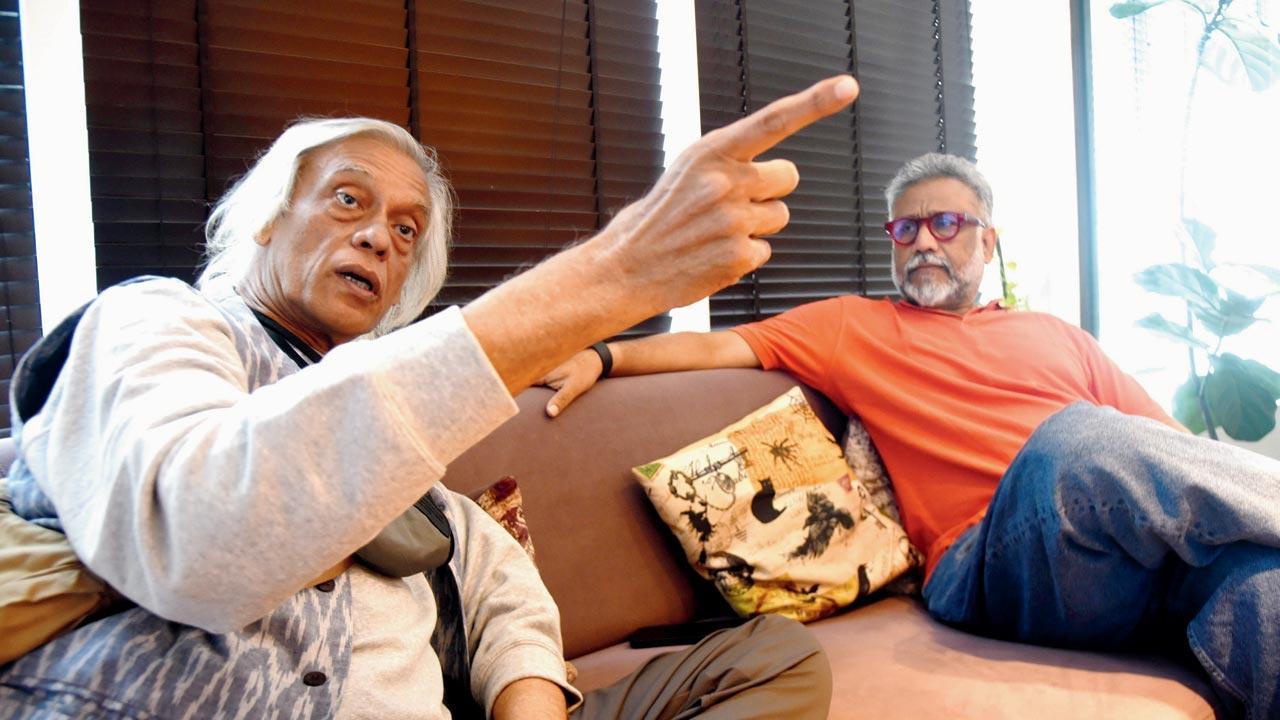
Sudhir Mishra and Anubhav Sinha, friends and collaborators on last week’s political thriller that chases the life of a rumour, on why they don’t waste time on apprehensions
Jane Borges (MID-DAY; May 14, 2023)
The day we visit Sterling theatre in Fort for an 8 pm show of Sudhir Mishra’s Afwaah, #LoveJihad has been trending largely thanks to the week’s other controversial release, The Kerala Story. It tells the story about a group of women from the southern state who are converted to Islam and forced to join the Islamic State of Iraq and Syria (ISIS). Mishra’s film, a plausible antithesis to this rhetoric, appears light years away from this shor sharaba.
Afwaah is not unbothered, though. When we walk out of the cinema, we realise that it’s deeply invested in the great affliction of our times—the boom and doom of virality and the nature of communal propaganda. With characters caught in the thick of the white noise on the web, the film cleverly chooses to play spectator instead of taking the moral high ground as commentator. “Here’s a town. Let’s witness the chaos,” it seems to say.
Set in a conservative pocket in Rajasthan, the plot tracks the insincere and raving-mad aspirations of right-wing politician Vicky Bana (Sumeet Vyas), whose chicanery forces his outraged bride-to-be Nivedita Singh (Bhumi Pednekar) to run away from home—she won’t marry a bigot. This fuels a night of violence and bloodbath. Wedged in this kerfuffle is the suave Rahab Ahmed (Nawazuddin Siddiqui), who is on his way to a tony book festival where his wife is a participant, and whose only fault is wanting to rid himself of the guilt of a lie he has carried far too long. It’s what—we will later learn—compels him to save Nivedita from the goons set loose by her fiancé. It’s a trap, and for a man, who doesn’t wear religion on his sleeve, but whose identity now embroils him in a “Love Jihad” controversy.
“He is being hunted for who he is not.” The audience is pulled into a night of epic proportions. “A lot of people wanted me to remake Iss Raat Ki Subah Nahin…,” says Sudhir Mishra of his iconic 1996 thriller that spans an entire night, explaining the genesis of his latest all-nighter, when we meet him days after its release. Mishra is joined by friend and Afwaah’s producer Anubhav Sinha, “…But you can’t go back to your youth, and remake a film just like that.”
The idea for Afwaah “was all over us. You just had to have your ear to the ground”. “But what interested me, and what I think the critics have not got…” says Mishra, asking us if he can be “a bit arrogant” “…is that people see films only at the surface.”
“Afwaah is not really about the rumour that’s outside,” he says of the political thriller that most critics have called a cautionary tale about false narratives infesting social media. “Protagonist Rahab is also spreading a rumour about himself, and the bubble he is living in,” says Mishra, who has written and directed the film, “The film is not about what makes headlines, but what happens behind those headlines.”
Mishra’s characters are layered. We see spurts of goodness, even in evil. Chandan, a character played to perfection by Sharib Hashmi, believes he is Vichy Bana’s wingman; he makes one wrong move and has everyone baying for his blood, including Bana, who is ruthless in his chase. “Chandan is both, the victim and the antagonist. The film tries to understand the lyncher as much as it understands the lynched.”
None of his motivations as a storyteller, Mishra feels, have been understood by the critics. His disappointment is evident. But that’s not stopping him. “If you don’t make difficult films, you will have a dumb audience and a dumb voter… and then God help you.”
Sinha, who has been listening quietly, has himself long moved away from spinning box office juggernauts, to engage with content that forces the viewer to think. Be it the patriarchy-defying Thappad (2020) or the more recent Bheed, which documented the painful and horrifying migrant exodus during the pandemic.
Working with Mishra was an important part of this journey, he says. “Over the last few years, we bounced ideas off each other. But every film has its destiny, some stories get made quickly, some take longer. This [Afwaah] was the child that got lucky.”
Having said that, Sinha says, the content of the film was not as important, as “wanting to make a film with Sudhir bhai”. “He is one of the first filmmakers I met when I came to Mumbai. On my first night here, I had the privilege of having a drink with him and Javed saab… he used to drink back then,” Sinha smiles.
“I wanted to make Afwaah to learn something from him. The rest—you write a film, you cast for it, you shoot and edit—is all mechanics. What’s important to know is why you are making the film that you are.”
Movies like Afwaah that don’t endeavor to entertain the audience in a manner that they lose themselves, he adds, are difficult to make and watch. “What has become even more difficult [to determine] is which film has the real audience. All those numbers [box office] are not trustworthy. They are not truthful anymore. Unfortunately, the success and failure of a film is only defined by them,” says Sinha, “But what about the other number, the number of years a film will live on a shelf? Or the number of times, people will go back to it [during their lifetime].”
Film consumption is diverse. “It is meant for weekends, theatres, satellite channels, OTT platforms and for times to come. Of these, the biggest parameter, according to me, is the times to come,” thinks Sinha.
For Mishra, making a film is still a discovery. A mathematician’s son, he didn’t go to film school. He says he learnt from his father that you start with a hypothesis, and then you go about proving it. “I make a film to learn. I wanted to learn about Rahab... there’s a lie he has been telling.”
Mishra’s protagonist is not a hero in the true sense then. He doesn’t want to die, because he thinks it would be a useless death. “When did you last hear a hero say that?” Mishra asks.
“One journalist called me after seeing the film, saying it reminded her of George Bernard Shaw’s Arms And The Man, where there’s a character called [Captain] Bluntschli who says, ‘martyrdom sucks’. I suddenly remembered that Bluntschli was the first role I played in my life, on stage. So, what influences you, you sometimes discover through the process of making a film. I discover myself [when I make a film].”
That it is increasingly becoming difficult to make honest films that hold a mirror to society, is not lost on them. “I would be lying if I said that there wasn’t any apprehension,” says Mishra. “But I don’t think it ever stopped Anubhav from wanting to produce it, or me from making it. There is this dynamic, democratic society called India, and we are participating in it. We should be allowed to have our say. That’s what we expect.”
Mishra confesses that his affiliation is to his art, not any political party. His 2004 political drama, Hazaaron Khwaishein Aisi, was set against the Emergency of 1975, and released when the Congress was in government. He is also not one to shy away from engaging in conversation with filmmakers whose films contrast his own.
We were surprised when we stumbled on a recent two-hour-long interview where Mishra engages with The Kashmir Files director Vivek Agnihotri for his YouTube channel, I Am Buddha. Here, Agnihotri, who is an unapologetic right-wing filmmaker, credits Mishra for inspiring him after Hazaaron... to tell the stories he believed in. No hard feelings, none at all.
The hope is that more people will show courage. Even actors, who are often hesitant to take on daring scripts. “See, the big stars won’t come to me anyway, because I write frail characters,” claims Mishra. “There’s all of Indian cinema. And then, there’s my cinema.”
The former, he says, worships the hero, while he is invested in their failure. “That’s why it is more difficult to make my kind of films. The heroes don’t like this. It upsets their testosterone-ridden, fake machoism… they are simply pretending to be sensitive to women. None of them are.”
Sinha thinks female actors are stronger in conviction and the risk that they will take. He adds that this also stems from the fact that we do not ascribe the success of the film to its women. “A lot of time it’s they who are responsible for it, though,” says Sinha.
Waheeda Rehman, for instance, says the duo, was “better than all the men of her time”. “She had more skillsets than any of the actors.” Sinha adds, “Even today, the number of good female actors is way higher than the good male actors. They are gutsier, and they are far more disciplined…”
Mishra adds, “I come from the parallel cinema [era] when we were considered a viral infection. Today, I feel that there are younger actors who are far more genuinely appreciative of the films I make. Whether they work in my film or not is another thing.”
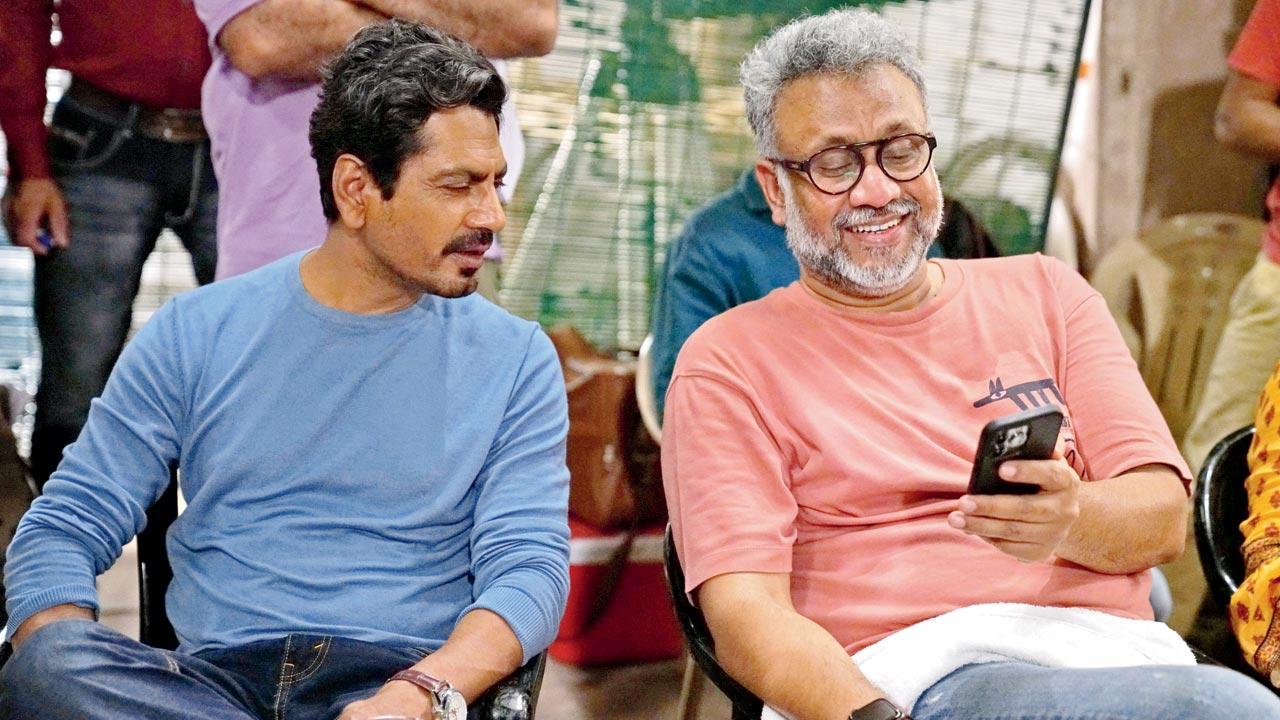
Sinha and Nawazuddin Siddiqui, the protagonist of Afwaah
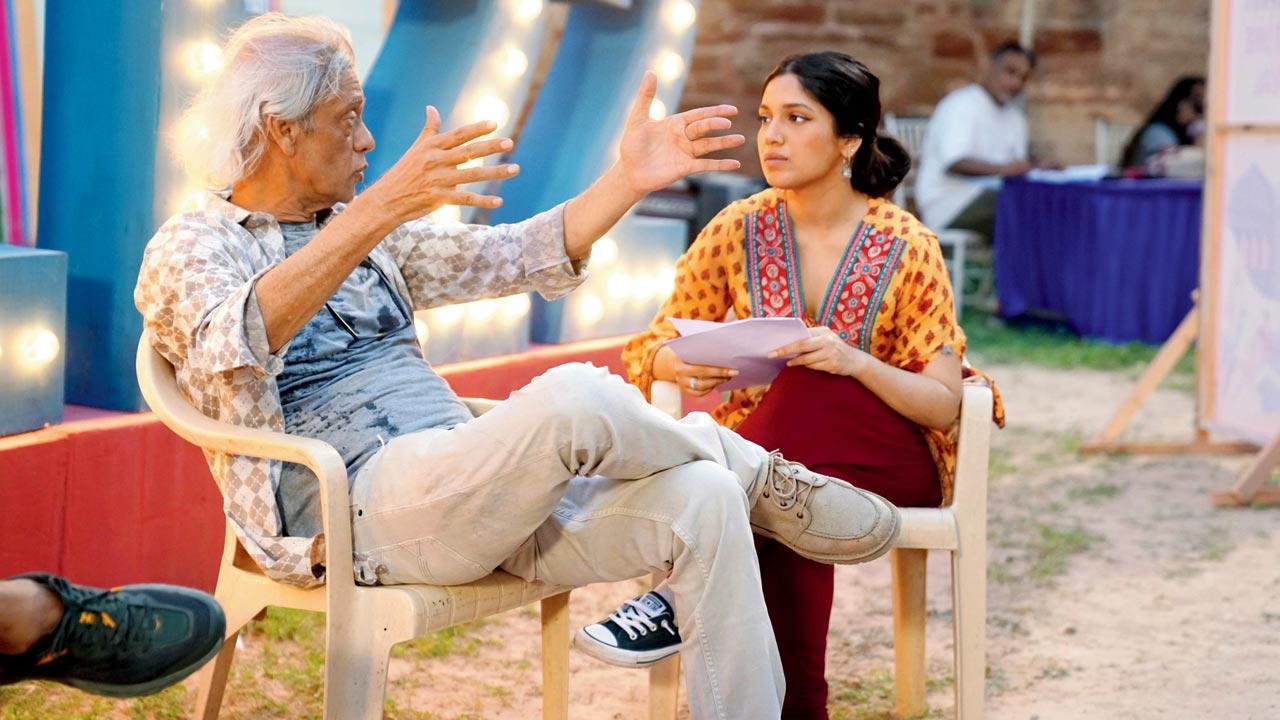
Mishra with actor Bhumi Pednekar, who plays a political heiress
I would like to do commercial films as well; wearing chiffon sarees and dancing in Switzerland is not easy-Saiyami Kher
8:15 AM

Saiyami Kher on how the recent release, Faadu, is her attempt to be a part of atypical stories
Uma Ramasubramanian (MID-DAY; December 15, 2022)
Faadu was an easy yes for Saiyami Kher. She was thrilled to go back to her Maharashtrian roots to play the role of Manjiri. What made the decision easier was director Ashwiny Iyer Tiwari’s vision for the story that explores romance between two people with contrasting ideologies.
Kher feels the Sony LIV series is far removed from the frothy love stories seen on screen. “I have been lucky to get work that is different from mainstream [offerings]. In my first film [Mirzya], I was presented in a different way. There were offers [of love stories] with two typical songs that came my way. But they didn’t excite me. I enjoy watching commercial films and would like to do them as well; wearing chiffon sarees and dancing in Switzerland is not easy. But I would also like to do work that liberates me as an artiste,” she says.
The actor, who is now looking forward to Ghoomer, says she has always held Waheeda Rehman’s advice close to her heart. “She told me, ‘Don’t bother about success; it’s not in our hands. Try and do different things that will satisfy you as an actor.’”
At army quarter in Chittagong, Lata Mangeshkar helped me survive a minor crisis-Waheeda Rehman
8:31 AM

As told to Mohua Das (THE TIMES OF INDIA; February 7, 2022)
Lata ji and I knew each other for years but there were instances that brought us closer and I got to know the person Lata ji was. At first it was during the 1971 war when I was made chairperson of the Bangladesh Sahayak Samiti of Maharashtra. I had the responsibility of organising a concert at Brabourne stadium in its support. Among the artistes we called, it was natural Lata ji was top of mind.
I went over to invite her but she said ‘no’. She said she wouldn’t perform live in India. But she agreed when she learnt of the cause and the concert was successful. Later she joined us when Sunil Dutt’s troupe toured the war-torn zones to entertain jawans. Travelling with us were Nargis, Mala Sinha and others.
We were put up for a night at an army quarter in Chittagong when suddenly there was a water crisis. Now, I cannot go a day without having a bath. I wondered if I could shower in Lata ji’s room which still had some water left. Nargis warned: ‘Are you mad? Lata ji is very sensitive and may get upset if you intrude into her space. She might even refuse to sing’. Not heeding, I showed up at Lata ji’s door and she ushered me inside without hesitation.
But as luck would have it, the tap ran dry while I was still in the shower. So I knocked on the bathroom door. Lata ji came close and asked me what the matter was. On informing her of my plight, she arranged for two buckets of water and carried them with her own hands to the bathroom.
Later when I told Nargis of what had happened she was stunned! When we returned to India, Lata ji arranged for a dinner party where she cooked for us, made lovely kebabs and gifted us beautiful sarees.
Celebs and co-stars mourn the loss of India's greatest actor Dilip Kumar
8:16 AM

Team BT and ETimes (BOMBAY TIMES; July 8, 2021)
HE WAS SUCH AN INTENSE ACTOR WHO WAS GOOD AT COMEDY, TOO: WAHEEDA REHMAN
It is a very sad news, but it was bound to happen. He had been suffering for so long. I have done five films with him and it was a fantastic experience, he was not only a good actor, but also a huge star. He was such an intense actor, especially in tragic scenes. He used to be very good even without uttering a word. He could express his pain so well and yet, he was good in comedy, too. I remember one funny scene from Ram Aur Shyam when he had to switch over from being Ram to Shyam. In that scene, he had to eat many boiled eggs and there were retakes and the entire unit used to laugh. He would say, “Here I am getting tortured and you guys are laughing at me.” I was sitting in front of him in the scene and he told me, “Please hasna mat ,anda gale mein phas jayega. Aur main mar jaunga.” I replied, “It was your bright idea to do this thing.” It was a great experience working with him, the industry and the entire country will miss him. But that’s life...
I WAS A GREAT ADMIRER OF DILIP SAAB, I WOULD BE DUMBSTRUCK AROUND HIM: ASHA PAREKH
I was a great admirer of Dilip saab. I would be dumbstruck around him. I couldn’t even open my mouth! It is a big shock and Saira has been like Florence Nightingale in his life. She has looked after him so much, not even bothering about her own health. She must be completely shattered, may God give Saira the strength.
I LOVED DILIP KUMARV-YJAYANTIMALA JODI, I ENJOYED WATCHING THEIR FILMS: HEMA MALINI
Raj Kapoor, Dev Anand and Dilip Kumar were the three pillars of Bollywood. I never got an opportunity to be paired opposite Dilip saab, but I loved Dilip Kumar-Vyjayantimala jodi a lot, and so I enjoyed watching films like Ganga Jumna, Sunghurshand Leader.When I was offered Seeta Aur Geeta, I wondered if people would compare me with Dilip ji as it was similar to his film Ram Aur Shyam. Every time we met, woh kisse sunane lag jaate the about how they would shoot films back then. Through the years I kept in touch with Saira ji. Once a month, I would make a call to her to know about Dilip saab’s health. Every time he was hospitalised, we prayed for him, but this time he left all of us.
HE NEVER PRIORITIZED COMMERCE OVER ART: SHARMILA TAGORE
I remember when I met him for the first time, I was so tongue-tied. I wanted to ask him so many things, but I couldn’t. He was an extremely dignified and gracious person. He put me at ease and wished me luck for Kashmir Ki Kali. He has had a wonderful 50-year-long career where he has played so many roles. He never prioritized commerce over art. To him, work was more important than money. He worked in one film at a time and gave a lot of thought while choosing a project. He loved sports and spoke at length about chess and cricket with Tiger (Mansoor Ali Khan Pataudi) when we were shooting Anupama in Khandala. He was a legend and an icon, and a reminder of happier times in the industry.
HE WOULD ALWAYS MAKE ME LAUGH ON THE SET: HELEN
He was such a charmer and a thorough gentleman. I can never forget him. It was so much fun working with him. He would always make me laugh on the set. I had attended his 91st birthday celebrations. Dilip saab was there looking handsome as ever! I still remember his beautiful eyes. After that, we visited him at his home a few times, but Salim saab used to visit him often. It’s great that Saira ji always kept him in touch with us. May God give her strength in this difficult time.
HE WAS THE GREATEST ACTOR OF ALL TIMES: PREM CHOPRA
Dilip Kumar saab was a great source of inspiration for everyone. He was a great human being and a fabulous actor. I consider myself lucky that I got a chance to work with him in Bairaag, Duniya, Dastaan and other films. He was like a teacher on the set. Despite being the biggest star on any set, he didn’t ever want the spotlight on himself. He was always concerned about the film, and wanted it to turn out well. It was his love for cinema that rubbed off on so many of us. He was the greatest actor of all times, and rightfully so. He’s left a legacy behind. When I came to Mumbai to become an actor, my father had asked me to watch Dilip Kumar saab, as he wanted me to be an actor like him. I would never miss his film releases. When I started working with him, I realised how easy it was for him to accommodate newcomers like me. People were conscious of his presence but he would make everyone comfortable. I will miss that warmth and the love I got from a big star like Dilip Kumar.
Geeta Dutt believed that the bungalow was haunted, says Lalitha Lajmi on Guru Dutt's wife in new book
8:37 AM

Waheeda Rehman, Guru Dutt`s love and muse, cut off from him after the Berlin Film Festival screening of Sahib Bibi aur Ghulam. Dutt, who was married to singer Geeta Dutt, is said to have drunk alcohol on the entire flight back home
In a new biography, which explores the man and the myth that was Guru Dutt, the actor's sister recounts how his wife Geeta blamed their Pali Hill home for all that was going wrong in their relationship
MID-DAY (January 10, 2021)
Berlin, 1963
Sahib Bibi Aur Ghulam was India’s official entry at the 13th Berlin International Film Festival. On 26 June 1963, its lead actors, Guru Dutt and Waheeda Rehman, attended the festival along with the film’s director, Abrar Alvi. The screening took place the next day but the film failed to create any flutter as the international audience could not relate to the overt melodrama and the very Indian theme. This, despite the fact that the film had been trimmed specially for the festival. There were hardly twenty-five people in the theatre and their interest in the film could not be sustained. The film was outrightly rejected.
Guru Dutt walked out of his own screening.
On this very same trip, Waheeda Rehman — Guru Dutt’s protégé, and the one and only lead actress in his films for a substantial part of his career — conclusively yet gracefully conveyed the end of her relationship with Guru Dutt.
‘Yes. The last time I saw him must have been in Berlin,’ said Waheeda Rehman. Things had started to unravel towards the close of their last shoot together for Sahib Bibi Aur Ghulam. Guru Dutt’s younger sister, the eminent artist Lalitha Lajmi, remembers, ‘Waheeda and Guru Dutt had almost parted. She used to invite us both sometimes for dinner and my brother knew she was friendly with me. I heard Guru Dutt went with a bouquet of flowers to her home and the doors were not opened to him. Perhaps it was after this incident I had visited him and for the first time he told me not to keep in touch with her any more.’
The very next day, Guru Dutt left Berlin.
Legendary filmmaker B R Chopra recalled, ‘That man, Guru Dutt, drank all the way back from Berlin to Bombay while keeping all to himself in a corner seat. We knew all about Waheeda having told him, point-blank that she had made up her mind about him and that was it. She also discreetly left Guru Dutt to find his own way back. Guru Dutt was clearly heading towards turning into a mental and physical wreck…I instinctively knew that it was the beginning of the end.’
Guru Dutt used up all the sleeping pills that he had carried with him to Berlin. He didn’t sleep for the next four nights. ‘He said to me, “I think I will go mad”’, recalled Bimal Mitra, the writer of Sahib Biwi Aur Ghulam and undoubtedly a giant in the literary world from Bengal.
Bombay, 1963
Back in Bombay, his wife Geeta Dutt—the glorious singer who had broken playback singing traditions to bring a fresh naturalness to Indian film songs—had started blaming their bungalow for all their woes. They shared only a decade old but widely celebrated story—the star singer and the struggling filmmaker having found love in tinseltown. Deep down she believed that their relationship had developed an irreparable rift only after they shifted to this bungalow in the very posh locality of Pali Hill.
Lalitha Lajmi, who witnessed the relationship from the early days of courtship till the end, further recalls, ‘She believed that the bungalow was haunted. There was a particular tree in the house and she said there’s a ghost who lives in that tree, who is bringing bad omen and ruining their marriage. She also had something against a Buddha statue that was kept in their huge drawing room.’ According to Lalitha, it was Geeta who had suggested that they must leave.
This prospect was heartbreaking for Guru Dutt.
It had been his dream house—but never the home he had always longed for. Guru Dutt had twice attempted to kill himself in this house and survived both attempts.
Once, after surviving a suicide attempt, a close friend asked Guru Dutt, ‘Why should you have done it? You have fame, you have wealth, you have the adoration of the masses. You possess all that most people crave for! Why are you so dissatisfied with life?’
Guru Dutt replied, ‘I am not dissatisfied with life, I am dissatisfied within myself. True, I have all that people crave for. Still I don’t have that which most people possess—a nook where one can repair [retire] to after the day’s task is done, where one can find some peace and forget one’s cares. If only I could get that, life would be worth living!’
From a house that had been home to the birth of so many great stories on celluloid, it now only birthed insomnia for Guru Dutt. So despite living in one of the most beautiful bungalows in Bombay’s prime real estate, Guru Dutt would leave the house early every morning and reach his studio with sleep-deprived eyes. The studio wouldn’t be open at that hour and silence hung all around it. Guru Dutt’s man Friday, Ratan, would open the lock of the small chamber—a seven feet by seven feet room with a precious small bed. This is where Guru Dutt would lie down quietly and finally find sleep.
‘I always wanted to be happy in my household. My house is the most beautiful among all the buildings in Pali Hill. Sitting in that house, it does not look like you are in Bombay. That garden, that ambience—where else can I find it? Despite this, I could not stay in that house for much longer,’ once shared Guru Dutt.
Away from his luxurious and palatial bungalow, this small room was where he would find peace and sleep.
And then, on the morning of his birthday — ten days after his return from Berlin — he called in workers and told them to demolish his Pali Hill bungalow
‘I remember it was his birthday. He loved that house and he was heartbroken when it was demolished,’ recalls his sister Lalitha Lajmi.
‘But what is the real reason for demolishing the bungalow? Bimal Mitra asked him. That bungalow was…?’ ‘Because of Geeta,’ Guru said in a low voice.
‘What does that even mean?’ Mitra asked Guru took a puff of his cigarette, and gently explained, ‘Ghar na hone ki takleef se, ghar hone ki takleef aur bhayankar hoti hai.’ (The pain of having a home sometimes can outweigh the pain of not having one.)
It seems like sharp reminder of the scene from their film Sahib Bibi Aur Ghulam where Guru Dutt, playing a middle-aged architect, goes back to the haveli and asks the workers to pull it down. His life and cinema kept merging with each other like that.
About a year later, the last shot he gave was for the film Baharen Phir Bhi Aayengi. Playing a reporter, he hands over his resignation letter to his editor and says, ‘I am leaving.’
Excerpted with permission from Guru Dutt: An Unfinished Story by Yasser Usman, published by Simon & Schuster India
It’s a Catch-22 situation, need to find a way-Waheeda Rehman
8:30 AM

Shreya Mukherjee (HINDUSTAN TIMES; June 16, 2020)
Dealing with Coronavirus pandemic hasn’t been easy for anyone. But life will always throw challenges at us, and how we get over them defines us, believes Waheeda Rehman. The veteran actor says this crisis requires us “to be careful, sensible and intelligent”.
“I feel it’s important to be patient. If you get paranoid, it’ll stress you out and you might make mistakes,” says the Padma Bhushan awardee. Holed up with her daughter and her family, Rehman admits it isn’t easy. “It’s like a catch-22 situation. Whether we’re at home or have to go outside, we need to find a way. I see many flouting safety norms, not wearing masks since the lockdown has been eased. That’s wrong,” she says.
With no intention to seem philosophical, the actor, 82, says that we know nothing about our future, adding, “Par darr darr ke nahi jee sakte. We must face difficulties head on.”
Rehman is spending her time watching films, doing yoga, taking a walk in the garden, and enjoying photography. Not a fan of mobile phones, she, however, has realised it is a necessity. “I talk to my sister, nephews and nieces a lot these days. Asha (Parekh; actor) aur Helen (actor) se bhi baat hoti rehti hai,” she says. Her family is ensuring that they take care of their staff. “If we have food to eat, then people who work for us should also have food,” she adds.
Concerned about people facing mental health issues, she says, “Chinta karne se kuch fayda nahi. Bas Allah ka shukar karo, dil aur niyat saaf rakho aur aagey badho.”
To all those flouting the lockdown, I want to ask them, ‘Has God given you immortality?’-Asha Parekh
8:08 AM

Shreya Mukherjee (HINDUSTAN TIMES; April 28, 2020)
At 77 and amid the ongoing Coronavirus crisis, Asha Parekh is taking it one day at a time. But she loses her cool when she sees people aren’t ready to “face the reality” and are putting lives in danger.
“Ye beemari bahut taqleef deti hai; aap saans nahi le paayenge. Aur jo log soch rahe hain unko nahi hoga, I want to ask them, ‘Has God given you immortality?’ Emergency care providers are working hard. Please think about them. What angers me is the way educated people are behaving,” she rues.
Parekh stresses that “it isn’t right to complain when you’re in a better position”. She’s doing her bit by not stepping out of her house, and gives due credit to her driver and security personnel for getting her essentials.
“I know it’s claustrophobic at times, more so when seven or eight people share a room in a place like Mumbai. Par yeh socho ki aap phir bhi surakshit hain. Agar main ab rone baith jaun ki kab tak ghar mein rahungi to kya hoga? Isse achha hai main khush rahun, positive rahun,” she says, adding, “There’s not much pollution, and it feels so nice. The world is changing, so are we all…”
Parekh starts her day with yoga, reads books, watches TV, and talks to her family members and friends over video calls regularly.
“My brother (Jayesh Parekh) calls me every day at 5.30 pm... My best friend (Vandana Shah) stays in Birmingham, and she was telling me how depressed she feels at times. The other day Shabana (Azmi, actor) called and said, ‘Tu akeli hai, kuch chahiye to bataana’. Waheeda (Rehman, actor) aur uski beti bhi call karte rehte hain,” she shares.
When it comes to wildlife photography, you need to have luck and patience-Waheeda Rehman
7:21 AM

Veteran actor Waheeda on pursuing her hobby as she hosts wildlife photography exhibition
Sonil Dedhia (MID-DAY; December 16, 2019)
It’s never too late to discover a new passion. Waheeda Rehman will vouch for it — after decades of romancing the camera, she is equally happy behind it. The yesteryear actor has turned a wildlife photographer as she recently held an exhibition of her pictures from her safaris to Kenya, Tanzania, and wildlife reserves across India.
“I always loved taking pictures. When I was young, I would carry a small camera with me on the sets. I recently met Himanshu Seth [curator of the show] who asked me to pursue my hobby and came up with the idea of having an exhibition. I wasn’t too keen to display my pictures as I didn’t think they were great, but my friends and family persuaded me,” she smiles, adding that what started out as a mere hobby has now become “an addiction”. “When it comes to wildlife photography, you need to have luck and patience.”
She may be 81, but it is evident that Rehman is unstoppable as she discusses her bucket list. “I want to learn scuba diving,” she shares, before revealing that she is working towards it. “Prahlad Kakkar’s son runs a professional training company. I will discuss my health condition, and will try my hand at it.”
Subscribe to:
Posts (Atom)