Showing posts with label The Jungle Book. Show all posts
Showing posts with label The Jungle Book. Show all posts
I was asked to replace the word chaddi from Jungle Jungle Baat Chali Hai-Gulzar
11:26 PM

Natasha Coutinho (BOMBAY TIMES; November 14, 2024)
Celebrated Indian poet, lyricist, author, screenwriter and film director Gulzar has penned iconic children’s songs like Lakdi Ki Kaathi from Masoom (1983), Jungle Jungle Baat Chali Hai from The Jungle Book (1989) and Panga from Makdee (2002), the latter two composed by Vishal Bhardwaj. Not many know that even the popular prayer Humko Mann Ki Shakti Dena from Guddi (1971) was written by him. On the occasion of Children’s Day, in a chat at his Bandra bungalow, Gulzar spoke to us about some of his favourite works for children.
‘Many are not aware that the lyrics of Humko Mann Ki Shakti Dena were written by me’
Gulzar explains that the idea behind the song was to portray what a young schoolgirl prays for and how she expresses her thoughts. He says, “Humko Mann Ki Shakti Dena went on to become the morning prayer at many schools. Many people don’t know the lyrics were written by me. I was recently working with Shaad Ali (director) at the recording studio, and he mentioned that they used to sing Humko Mann Ki Shakti Dena in school. He was taken by surprise when Shankar Mahadevan mentioned that the lyrics were written by me. If you speak from your heart, it reaches children. Back then, the great Indian poet Kedarnath Singh had told me, ‘Your work has gone beyond your name, which is a great thing.’”
‘Writing for children isn’t about getting the grammar right’
Talking about how he develops the idea that connects with children, he cites the example of Lakdi Ki Kathi (Masoom), a song that has resonated with children across generations. “The idea came from the thought that if you make a child sit on a walking stick and call it a horse, they know it isn’t real, but they still enjoy the experience because of their imagination. It’s also important to use places that they are familiar with, for example, they have heard their parents speaking about visiting the sabzi mandi (vegetable market) or Mehrauli and so on. So, the song must have a familiar environment. Writing for children isn’t about getting the grammar right, it’s about throwing grammar out of the window and connecting with the child’s thought process. Children enjoy tongue twisters, what we give them in textbooks is boring.”
‘I was asked to replace the word chaddi from the song Jungle Jungle Baat Chali Hai’
Recalling a controversy over the lyrics of another popular song, he shares, “NFDC had some objection to the lines, Jungle Jungle baat chali hai, pata chala hai, arre chaddi pehen ke phool khila hai (The Jungle Book, 1989).
“I was told, ‘Gulzar saab ab aap poetry mein chaddi bhi le aayenge.’ There was a silly suggestion to replace the word chaddi with lungi. I asked them if Mowgli in The Jungle Book had put on anything else throughout the film? Ab chaddi ko kuch aur bolenge? Vishal Bhardwaj (music composer for The Jungle Book) has a knack for understanding children, he made films like Makdee and The Blue Umbrella, but didn’t find encouragement from the trade. Vishal himself is a little child for me.”
‘I have been working with physically challenged children since 1972’
Gulzar shares, “Since the time I made Koshish in 1972, I have been working with physically challenged children. Every year these children come down from Bhopal and I walk with them at the Mumbai Marathon. These children feel so happy when they appear on television and that gives me immense joy, too. I wish to continue working with children till I’m alive.”
'Inspired to write poems during Covid'
He says, "I wrote a poem on a crow during COVID-19, when death was surrounding us, ambulances were constantly passing by, people were wearing masks but this crow near my house, was busy building it’s nest. Hearing the little crows caw was so inspiring. I ended up writing 14 children’s poems that were published by my friend Sushil Shukla with illustrations by Allen Shaw."
Photo: Prathamesh Bandekar
If you look at the animals in The Jungle Book and in Bhediya, you will say that ours is as good-Dinesh Vijan
8:05 AM

Madhureeta Mukherjee (BOMBAY TIMES; November 22, 2022)
We have seen filmmakers create a whole universe with action, cops, comedy, even superheroes. But in our cinema and in today’s times, creating a horror comedy universe is rare, and let’s say, not a job for the weak-hearted. There in comes Dinesh Vijan, who leads Maddock Films, a place which he says, ‘Is a home for anyone who wants to tell a story, no matter where you come from’. After Stree and Roohi, he’s all set to release Bhediya in theatres on November 25 — a creature comedy starring Varun Dhawan and Kriti Sanon, directed by Amar Kaushik that is also backed by Jio Studios. Dinesh passionately talks to us about what drives him, how we need to unearth great stories from within us, and what made him pave new roads, and sometimes take the forests less travelled. Read on...
It’s hard enough to land a good comedy with the audience, and blending it with horror and thrill, and also building a universe around it with a string of movies, is tricky and needs a lot of conviction and courage. What pushed you in this direction?
Honestly, I have never looked at any film that I have made as a risk. When I made Hindi Medium, some people told me it was a risk, and before that, it was Badlapur. When you hear a concept from a director or writer, your first thought has to be, ‘I can’t not make this film’, and that’s what drives me to make it. Instinct is everything for me. If there is a voice from inside that tells me that I should make a film, I do it. After being in the business for 18 years, our strength is that we don’t take ourselves seriously. We don’t think we know it all. We believe that we have to constantly learn and evolve.
You have made films like Cocktail and Agent Vinod that are urban and contemporary, and also Love Aaj Kal (which, of course, did go into retro mode). And then, you gradually started moving towards stories that were very different in tonality and texture — more rooted in our culture and shot in small towns. Did you observe the audiences changing tastes for content before making that shift, or was this something that happened organically?
Agent Vinod taught me how to make Badlapur. I learnt what went wrong and how to correct it with director Sriram Raghvan (who directed both). Agent Vinod and Raabta (directed by me) have taught me more than all my films. If you are willing to learn, failure teaches you much more. In fact, Raabta taught me that trends had changed. Through the making of Love Aaj Kal, I was learning how to be a producer. I think that Saif (Ali Khan) and I made a pretty good debut production. Sometimes, it takes about ten years to find your voice and understand what satisfies you. Hindi Medium was a game changer for us. Badlapur and Hindi Medium made me realise that if you have a pure story, strong writing, the right man to direct the film (it’s not necessary that he has to be the best in the business) and good actors — you will hit home.
Most of your films are set in small towns, including Bhediya (shot in Arunachal Pradesh’s Ziro in Lower Subansiri, Sagalee in Papum Pare and Pakke-Kessang district). Do you believe that smaller towns are a hotbed for greater, rarer and untold stories which can emerge from only there?
A while back, we were aspiring to make films that were more like the West and I feel that around 2015 that changed. With Badlapur and Hindi Medium, even I realised that the power has moved as much to small towns, as the people there are actually going to the theatres a lot more. I looked inwardly and found a treasure. There are so many stories buried in these towns and cities. My dad always made me travel a lot and would tell me that, ‘You must know your country’. I owe a lot to him. Most people in the cities don’t know what the rest of India is. Your instinct as a filmmaker also comes with the life that you have lived. Amar Kaushik happens to be a Forest Ranger’s son, so like I said, it is about getting the right man to direct your film.
You made Badlapur with Varun Dhawan, and in a recent interview with us, he said, “When I asked Dino ki tu hamesha mere paas itna teda story kyon leke aata hai, he told me ki ussi mein hi mazaa hai. I want to put you in an uncomfortable zone.”
I think that’s when they are at their best. I have been telling Varun that this is his 2.0 version. He has given his blood and sweat to this film. Now when I see the film, I can’t imagine any one other than him in this part.
Would you say that Bhediya has been the most challenging film of your career — in terms of scale, subject, VFX, shoot, etc?
It’s the best film I have produced. With Bhediya, our instinct said yes, but we also knew that if we didn’t create a wolf that is of international standard, this film won’t work. And I can tell you that if you look at the animals in The Jungle Book and ours, you will say that ours is as good. When you see the film, you will feel like we have not used VFX, it looks real. We went to one of the best VFX companies in the world and made the film in a record time of about 18-20 months. And also, it’s about what the film leaves you with at the end. There are few films that talk about conservation. This is a film that you would want your kids and young adults to watch. I think what Indians now want are films emerging from their culture, but made at par with international standards. And they want it to be affordable in the theatres. If we can achieve that, we are home.
In recent times, there has been a lot of doubt and skepticism in the industry about what will work on the big screen. Maybe there isn’t one right answer, but do you believe that every theatrical release will need to be a visual spectacle to get the numbers? Or does great content minus the visual impact, too, have the power to bring back larger volumes to the theatres?
The world is gravitating towards the first statement you made. Do I completely believe in it? Maybe we will have more clarity in the next twelve months, but as we are talking about it, we have made one (spectacle film). However, we also have a variety of other kinds of films coming up. We have to accept that the digital medium is a reality because most people are in relationships with their phones. We need to understand the screen size, as your film will get consumed on all mediums, so we have to make films keeping that in mind. My first love is theatricals, and we make films for the big screen, but we can’t ignore other mediums. The West is largely in the spectacle kind of cinema space. I feel we need to pull up our socks and deliver high quality films. The film has to completely engage you, which most our films haven’t been doing lately. You need to have an experience — whatever that might be. Today, if you ask me whether a Hindi Medium would still do well, I would say, yes, it would. If I give you a really good comedy with a high concept, will you watch it in the theatre? I think you will. Bhool Bhulaiyaa 2 wasn’t a spectacle film, but it’s done such good numbers.
In the last two years, like many businesses, the film industry, too, has had to navigate through a lot of uncertainty. Was it all a huge learning experience for you as a filmmaker and a phase that changed your outlook and perspective?
Even pre-COVID, I was telling my friends that there is going to be a huge change in our cinema. I am happy that we instinctively made Bhediya, which will hopefully keep us relevant. Today, we have to fight to be relevant and win back the audience’s confidence. We have to achieve these two things. We are competing with the West, but we have to look at what we have. If we look deep inside, look at our culture and find those stories, we are going to be able to create that experience for them. And that is their own experience; it’s not America saving the world. It’s none of that. And it begins with writing. We have to reward our writers. My writers are empowered, they have a say and I believe in them. And we (Maddock Films) are a home for anyone who wants to tell a story, no matter where you come from. I was like that, as I don’t come from a film family. I am the first-generation coming into this industry, and all my directors are too. I want my directors to feel that they have got the best wingman in me and that I completely have their back.

There should at least be two more decades of me-Kareena Kapoor
8:13 AM

Kareena Kapoor on completing 20 years in the Hindi film industry in 2020 and being excited about turning 40
Ankita Chaurasia (MUMBAI MIRROR; December 17, 2019)
 Tucked away in an unassuming neighbourhood of Bandra, the building one walks into is familiar, the backdrop for Taimur Ali Khan’s innumerable paparazzi pictures. On the second floor is the office Kareena Kapoor and Saif Ali Khan share. Scattered around are stacks of books, from Rumi’s poems and Thomas Carlyle’s The French Revolution to Boccaccio’s The Decameron, Rujuta Diwekar’s Don’t Lose Out, Work Out and Chetan Bhagat’s Five Point Someone. One also spots a range of true scale versions of luxury cars and bikes and a cubby hole marked with his name, amidst posters of the actor-couple’s many films, conveying that the office belongs as much to the little one as his parents.
Begum Bebo sits pretty, on a pistachio chair styled like a throne. In the first film that she signed after marriage, Veere Di Wedding, she played a non-committal bride-to-be, Kalindi Puri who finds support in her girl gang. Now, after giving birth to Taimur in 2016, she plays a mom-to-be in Good Newwz, that deals with an IVF goof up. Ask her if she’s choosing films according to which point she is at in her life and Kareena points out that she was the first to come on board, hooked by Raj Mehta’s (director) narration by the interval. “We were thinking of taking new people then, but when superstar Akshay Kumar came along, the budget was restructured and Diljit and Kiara roped in to make the film a multi-starrer,” she informs. You can’t resist asking how she disclosed the “good news” to Saif when her pregnancy was conformed. “It was quiet and organic. We had wanted a child, and Taimur is the best thing that could have happened to my life,” she smiles serenely.
Kareena reunited with her Kambakkht Ishq co-star after 10 years but recounts that she was present when Akshay gave his first shot for Deedar. “I have known him since I was nine, it’s a 30-year relationship now. Whenever his film releases, my mother (Babita) rushes to the theatre. Akshay’s a Virgo like me—all heart. He was the first one to find out I was in love with Saif and didn’t even tell his wife. When Twinkle found out, she called him and blasted him. He’s going through one of the best phases, professionally. I compare him to Mr (Amitabh) Bachchan, a bona fide superstar. Whatever he touches, turns to gold,” she marvels. She’s also returned to her 3 Idiots co-star, Aamir Khan, and confides he’s the only actor who makes her tongue-tied with his mind, film choices and cinematic genius.
 Taimur, who will soon turn three, accompanied her on the Punjab schedule of the film and explaining her reasons, mamma says, “He has working parents and he should know how it is. I keep him in the hotel mostly because of the pollution, but he came on the sets twice.” A boy who’s growing up amidst films must have his favourites? “He’s only interested in animals and jungle safari. He reads and loves drawing, which he is good at. We have introduced him to The Jungle Book, which I dubbed for. He’s made friends with all the animals and goes around looking for them, screaming, ‘Where are you Bagheera, Baloo, Akela?’” Kareena relays, saying she plans to also introduce him to the Golmaal series, Jab We Met and eventually, Omkara, because it featured Saif too.
Given that Taimur is growing up in the public eye, Kareena and Saif’s parenting decisions must be quite different from textbook versions. She agrees, saying they are only teaching him the difference between good and bad, and leaving the rest up to him. “He’s a relaxed guy, everyone has made him into a superstar but he is just a child. Give him time to achieve something.” Does belonging to a filmi family help them cope up with the paparazzi culture better? “We don’t want to teach him to shy away while walking down the street or cover his face; we can’t scar him that way. I was always Karisma’s sister growing up, but that’s about it. Of course, the digital age is a different ball game and you can only try to keep them sane,” she reasons.
She and Saif have been married for seven years now and Kareena admits she protects their relationship with kid gloves and never takes him for granted. “Our priority is always the three of us, we like to do the same things and he likes that I divide my time equally between being a mother, wife and actress. We both want to do good films and roles and eventually settle somewhere with our children, be like a family-family,” she says wistfully.
Pointing out that her husband is going through an interesting phase, Kareena gushes that it’s wonderful to have come so far, then, change things around by being the first to have done a digital show. “Only he could have done it, there will always be only one Saif,” she says proudly, adding that’s true of her too, as she did women-centric films like Chameli, Dev and Omkara when they were not fashionable. “You can’t put me in a box and label me.”
Having debuted with Refugee in 2000, Kareena will complete two decades in the industry next year and turns 40 in September 2020. “I’m excited about hitting the milestone, as also about two amazing films—Takht and Laal Singh Chaddha. There should at least be two more decades of me,” she concludes with a smile.
Fenil's Bollywood Talk # 578
8:02 AM

WILL THE LION KING GO THE JUNGLE BOOK WAY?
One of the biggest successes in cinema in India in the past couple of years was The Jungle Book. It was expected to perform well in cinemas. But it emerged as a blockbuster. It also became the first film to cross the Rs. 100 crore mark, and earned a huge Rs. 187.84 crore! Of course, the fact that there was an Indian connect helped this Hollywood film tremendously. But the film was also well-made due to which it held up for almost 25 weeks in theatres, a rarity in today’s times.
Trade and industry are now hoping for a repeat as The Lion King releases tomorrow. The trailer is top-class and the film seems like a grand affair that will be best enjoyed in cinemas. The film has been made even before in the 90s as an animated feature. It was not a great success in India but there’s a lot of awareness about the film, it’s plot and the characters. It’s not based in India like The Jungle Book. But with The Jungle Book’s success, The Lion King is expected to get benefit as it’s made by the same makers.
The Jungle Book was able to do so well thanks to the Hindi version. The Lion King is also expected to succeed in the dubbed version and the makers smartly roped in none other than Shah Rukh Khan to voice Mufasa. To add to the excitement, SRK’s son Aryan Khan will be voicing Simba, Mufasa’s son. The producers recently released a teaser featuring the voice of Aryan and it became a talking point. This was the first time that Aryan’s voice was heard – till now everyone has seen his pictures but no one was aware how he sounds like. And his voice has an uncanny resemblance with that of his father, due to which the excitement is upped. Aryan, as we all know, is a potential superstar of tomorrow, and for those who can’t wait to see him on screen would like to see The Lion King to hear his voice.
Yet, the challenges remain. The Jungle Book opened at Rs. 10.12 crore in 2016. The Lion King will be expected to do better but with the advance and not-so-high buzz, that might not happen. The opening can be anywhere between Rs. 8-9.50 crore and can touch Rs. 10 crore if it picks up in the evening. Since it’s a family flick, the collections can go on a high on Saturday and Sunday. The next two weeks will see 4 significant Hindi films releasing but they are not so big as to dent the collections of this film. Hence, it can have a smooth ride till August 15 and that’ll be more than enough to do blockbuster business.
So will it be able to beat The Jungle Book’s lifetime collections of Rs. 187.84 crore? It seems next to impossible as of now but that was the case for The Jungle Book as well!
Talking of Hindi releases, there are three releases and none of them stand a chance. The one that can get decent footfalls is Jhootha Kahin Ka. It reunites Pyaar Ka Punchnama 2 actors Sunny Singh and Omkar Kapoor along with Rishi Kapoor, Jimmy Sheirgill, Pujita Ponnada and Nimisha Mehta. It is directed by Smeep Kang who has made popular Punjabi films like Carry On Jatta and Chak De Phatte. The trailer is funny and has a customary Delhi-based alcoholic song. Even the cast is popular but the buzz is just not there for the film. The opening might be less than Rs. 1 crore and if all goes well, it can touch around Rs. 1.25 crore.
The second release also has Jimmy Sherigill – Family Of Thakurganj. Mahie Gill, Nandish Singh, Saurabh Shukla, Pavan Malhotra, Mukesh Tiwari, Yashpal Sharma, Pranati Rai Prakash and Manoj Pahwa are the rest of the actors. It looks like a routine UP-based gangster drama. The trailer is far from impressive and this will affect it’s opening.
Finally, there’s Penalty, a football-based film that also tackles the issues faced by North Eastern people in the country. The trailer is dominated by Kay Kay Menon but the end credits in the promo mentions that he has a special appearance. Manjot Singh and Shashank Arora are the other known faces. The buzz is zero and it’ll open to zero-audience shows.
WHICH FILM WOULD YOU LIKE TO SEE AND WHY? DO LET ME KNOW!
I don’t get exotic princess roles anymore-Freida Pinto
7:50 AM

Nayandeep Rakshit (DNA; November 30, 2018)
Freida Pinto has admittedly juggled different platforms — she’s done feature films, TV shows and will now be seen in Mowgli: Legend Of The Jungle, which releases next week on Netflix. The actress, who was on a short trip to India, spoke to After Hrs about her role in the film and her plans of producing some Indian stories. Over to her...
Everyone has childhood memories attached to The Jungle Book. Is it the same for you?
Yeah, it’s the animation series, which almost every child in India has memories of. We always had the Sunday experience of watching The Jungle Book with siblings or mom and dad. For me, it’s been exactly the same. I kind of romanticised Sundays with my family because of this experience.
What was going through your mind when you were offered this part?
I was never offered it. I went ahead and demanded a role in the film (laughs). I wanted to be a part of this film and when I heard Andy (Serkis) is making it, I just asked him for it.
But no star would do that...
I’m not a star, I’m an actor.
You have a brief role in the film. Does the screen time matter to you?
It doesn’t really matter to me, as long as I know I’m adding value to the film. I’ve done all kind of roles — I’ve played the lead, supporting roles and even cameos. At the end of the day, if you feel fulfilled, then it doesn’t matter what somebody else thinks. I don’t care to read someone else’s opinion of what the length of my role should be, because it’s my choice and my decision.
Priyanka Chopra has also spoken about how unlike here, in the West, big actors come together to do brief parts, just for a film...
Yes, absolutely! I’ve heard several stories like that. I don’t remember having seen male superstars in India do that. When was the last time we have genuinely seen five heroes come together for a project? I can’t even think of one right now. But yes, to each his own. That’s what they believe they should be doing, but it’s not something I believe in, at all. So for me, it’s not about ‘am I being the centre of attention in the movie?’ No film is successful because of one person, it’s always team work.
Mowgli: Legend Of The Jungle has been made only for the digital platform. What do you think of the newer avenues?
Streaming services have made things more available and accessible for the audience, too. Say something from Mexico can be watched by someone in India, and that accessibility has allowed the cultures to come together. The fact that I’ve American friends who watched Sacred Games, and loved it, proves the fact. The platform that these services provide is absolutely amazing because you can create a theatrical experience at home.
Expectations from this movie will be high given that its feature film version did exceedingly well...
I know The Jungle Book was outstandingly successful. But I have no fears for this film doing well at all, because it’s unique.
This is a dark retelling of the same story. Why opt for something so dramatic?
The Jungle Book has always been made as a slightly happier version. But if you really think about how animals are in the wild, or how a kid, who was adopted by a wolf pack and is trained by them, would behave, you will know that everything can’t be happy and perfect all the time. He will be wild and feral. I feel Andy did justice by really embracing that backdrop. More than just dark, it’s visceral and intense. You’ll be at the edge of your seats while watching this version.
Usually Indian actresses who foray into Hollywood are offered only exotic princess roles. Why do you think they are stereotyped?
It’s their job to refuse such roles if they don’t want to essay them. You can only end a certain stereotype by not giving into it. I don’t get exotic princess roles anymore because I have said no to them in the past. I might have got them right after Slumdog Millionaire (2008), but there’s a way to change that perception and mentality. And it takes a lot of courage, because saying no would mean you’re also refusing the work, money and opportunities. But personally, I don’t want to adhere to this stereotype.
You were also planning to produce an Indian story...
It’s not just one Indian story. There will be quite a few, actually. For me, it’s important to put the right teams together. One of my producing partners is Tabrez Noorani and we are putting together some stories which, I believe, will do well in India, too.
There were rumours that you are getting married to Cory Tran next year…
I believe everyone has reasons for doing whatever they are doing. So, they should be allowed to live and let live.
I’ve grown up eating Indian food-Christian Bale
8:10 AM
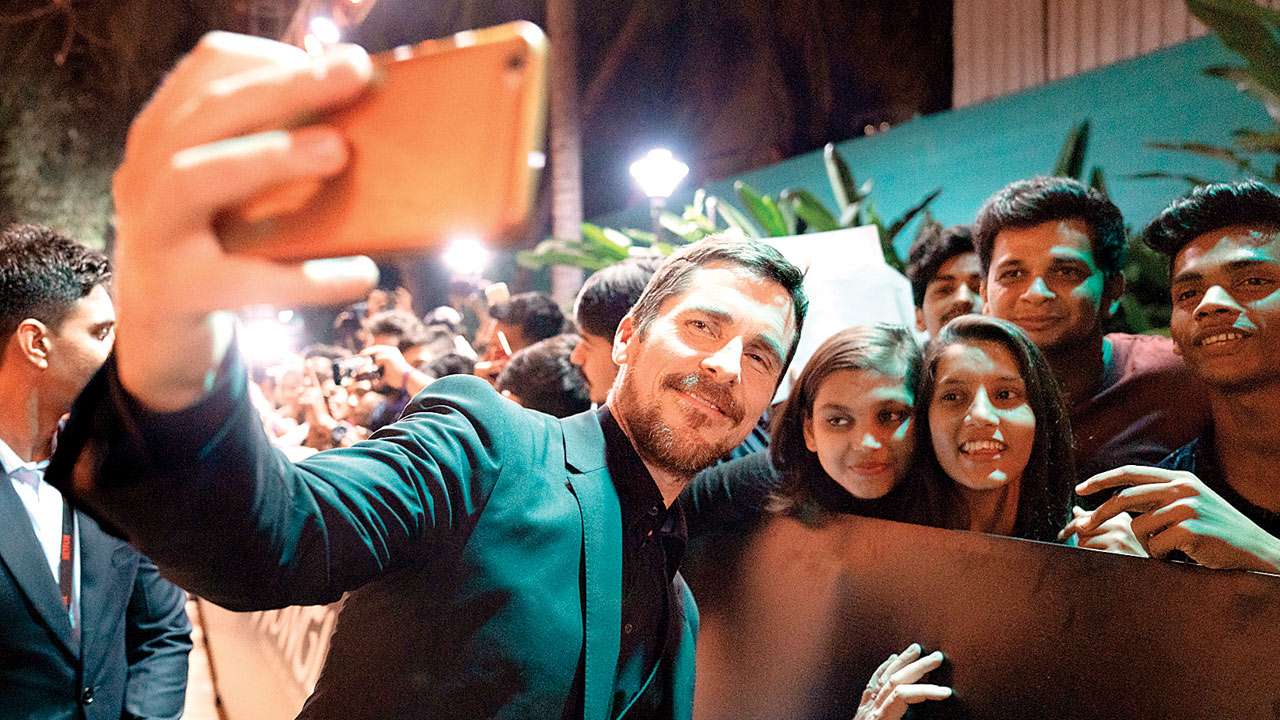
Sanaya Chavda (DNA; November 28, 2018)
Known for taking on varied roles and making them believable, often losing or gaining several kilos in the process to transform himself, Christian Bale, is seen in a unique avatar in Mowgli: Legend Of The Jungle. The actor, who wears his Batman tag with pride, takes on the character of Bagheera in the Netflix film, which is not only directed by Andy Serkis but also stars him. This version of the beloved childhood tale is closer to Rudyard Kipling’s original, more realistic and dark, as it takes audiences through Mowgli’s (Rohan Chand) journey. Bale, who was in the city recently for the Indian premiere, talked about preparing for the role and what excites him as an actor.
What are your earliest memories of The Jungle Book?
I had read it in school, but I was never a good student, sort of considered anything we were learning in school not worth remembering (laughs). I’ve greatly enjoyed the animated Disney version, loved Baloo the bear and the Bare Necessities (song). It’s a book that lends itself to many interpretations — you don’t have to like one or dislike another. It’s fascinating that Disney made their version so recently, in the last two to three years and Andy, as well as Netflix, are doing this version now and how very different they are. The earlier story had a warm fuzzy fairytale notion and the songs, which were enjoyable while Serkis’ interpretation is more similar to Rudyard Kipling’s writing. But it still has that fantasy of being able to run wild with the animals, to be able to howl at the moon, to be able to shrug all notions of human decency and the desire to return to a more animalistic self — things which kids and adults feel a longing for.
We just repress it a great deal. Then there’s the notion of really wanting to belong, but finding it difficult to fit in and how to survive in nature. It’s a classic, which will have many other interpretations to follow.
What was it like playing Bagheera? Unlike your previous roles, there was no physical transformation here...
Yes, however, this is performance capture, so it’s not just the voice. We had cameras around our head, they filmed me non-stop. All of the scenes were not done stationary, we were on the move. I had to study the panther’s movements, every body position I was in was translated to the film. And that’s the body position you see Bagheera in. So, we paid a lot of attention to that. Andy, Rohan and I were all in the same room interacting with each other when Baloo and Bagheera were having their fight. Andy and I were smacking each other. The only thing we had to accommodate for was the spatial awareness, so we didn’t break the cameras that were balanced around our heads. It’s an incredible process which I can’t even begin to understand, of transforming my face to a panther’s and Andy’s on to a bear, but it has an amazing potential for what you can transform into for a film.
What drew you to the movie?
I wanted to make a film my children would be able to see. I don’t always make films that are appropriate for my kids to watch, so I enjoyed it greatly. But it’s something that adults can enjoy as well. It has many layers to it...
You are known for your physically challenging roles, be it in The Machinist or more recently in Vice. Do such movies excite you?
I like not being able to see myself when I look in the mirror. I often like to create characters where I’m not apparent in them. So, physical transformation is definitely one portal of doing that. This was absolutely a transformation, even though I’m not donning a panther skin, I was constantly attempting to make the movements and motions of the animal.
One of your most iconic roles is that of Batman having done the Dark Knight trilogy. Has that become a part of your identity?
It will always be what I’m identified as. There will be no other film as successful or more successful than that — he’s an iconic character who is globally embraced. I loved Christopher Nolan’s interpretation of it. I much liked what he allowed me to do and how I presented it to him. Bruce Wayne is a damaged individual. I’m proud of what we did and left it when we did because many franchises keep going because they can. We were offered to but Chris always said the most we will do is three, if we are fortunate enough to and then we walk away. I’m absolutely fine with that, it’s the most iconic role I’ve played.
What are your India plans?
I’d love to be here for longer because obviously there’s a whole world within India itself. I brought my family out last week. We travelled from Delhi to Agra to Jaipur and arrived in Mumbai on Saturday night.
And are you fond of Indian food?
Well, I’m English so you grow up eating Indian food, so yes, absolutely. I would get home from school and grab a samosa from the corner store and eat it. That was always my choice of food (smiles).
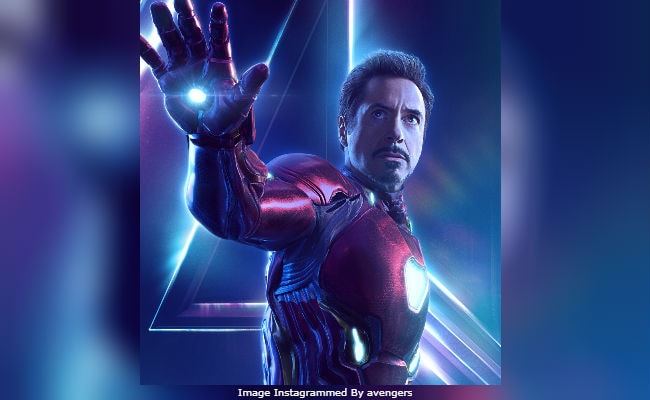
Avengers: Infinity War becomes seventh historic Hollywood blockbuster in India
8:33 AM
Box Office India Trade Network
AVENGERS: INFINITY WAR has become the seventh historic blockbuster from Hollywood in India as listed below. It could even become the biggest of them all in terms of adjusted gross but that will depend where the film finishes. At the moment THE JUNGLE BOOK is the biggest closely followed by TITANIC in terms of adjusted figures.
It all really started for Hollywood in 1994 with JURASSIC PARK which grossed around 7.50 crore nett which equates to 125 crore nett in value today. JURASSIC PARK and TITANIC are the only big hits in the single screen era as at that time it was difficult for Hollywood films to fill up 1000 seaters even if dubbed. The multiplexes changed the game and in the last three years the huge grossers from Hollywood have become more frequent.
The seven historic blockbusters from Hollywood in India is as follows.
1. Jurassic Park (1994)
2. Titanic (1998)
3. Spider-Man 3 (2007)
4. 2012 (2009)
5. Fast & Furious 7 (2015)
6. The Jungle Book (2016)
7. Avengers: Infinity War (2018)
Intimidating women aren't worth having sex with-Kangana Ranaut
2:54 PM

Spitting in the face of criticism is an actress who will say what she feels, do what she likes, and act like a dream. Presenting Kangana Ranaut unplugged
Mohar Basu and Sonil Dedhia (MID-DAY; February 1, 2017)
If there is one actress you can count on to defy diplomacy, it's Kangana Ranaut. While the Indian entertainment industry applauds Priyanka Chopra's Hollywood-bastion-breach, even honouring her for the feat with an award that labels her an icon, Kangana doesn't think it's special. While another A-lister, Deepika Padukone, followed PeeCee, landing a part in Vin Diesel-starrer 'xXx: Return of Xander Cage', Kangana says she has no aspirations of going international. "It would be stupid for anyone to make the move to the West now. Their theatre business is crashing because of the influx of digital media. Asia, on the other hand, is where Hollywood was 15 years ago. It is a lucrative time for entertainment here. These are baits that I won't fall prey to."
Presumably taking a potshot at Deepika, who ensured a traditional desi welcome for her first Hollywood co-star, Diesel, Kangana pooh-pooh's the "dhol and nagadas". Taking the indigenous-talent-first stance, she says, "If an American film ['The Jungle Book', 2016] is doing Rs 100 crore business, and not all our films are able to, we may not find adequate screens for home-bred films 10 years down the line. I'm all for world cinema, but it needs to be a film that brings employment and money into our country. I don't wish to offer myself on a platter to another industry."
Show me some spine
Self-admittedly "opinionated and inherently badass", Kangana is trying to bring the forgotten brand of boisterous women to screen. But, she is disappointed that she doesn't have company along the way. Most of her contemporaries, she says, find it impossible to be frank without fearing backlash. "Women are raised to believe they are healers. They can only nurture. People appreciate the goody two-shoes. Even the most successful women want to be liked by others. There is the alluring promise of heaven for those who can love selflessly. It's fine if they can't look themselves in the eye, but the world should see them as the epitome of holiness. They [her colleagues] don't stand up for themselves, forget doing it for others."
Men can get intimidated
Films, then, are only mirroring the majority view, she argues. While she has "faith in the badass generation of girls", she fears that most women fall in the trap of placating men, some of whom enjoy the timid archetype. "Intimidating women aren't worth having sex with," she says, scoffing at the patriarchal view. "Bold, stubborn women, who are achievers, are desirable only to those who are strong and assured. [For some men] it's frightening to handle a woman who can speak her mind. Thankfully, that's not true of everyone. Courage is often endearing and rare."
She is perhaps referring to last year, one of her most trying on the personal front. An ugly public war with actor Hrithik Roshan over an alleged relationship and leaked emails led to accusations of impersonation and hacking of accounts. "I was dragged to court for being who I am. I was restricted to a relationship that was [carried out] behind closed doors and I fought it fair and square. People [can] talk rubbish, but they can't decide how I lead my life. I felt stigmatised. I would wake up to [media reports] of hideous mails, which I hadn't written. I am a certified screenwriter from the New York Film Academy. I don't write such crap (laughs)."
Won't stand bullying
The game face may be on, but the hurt escapes the veneer now and then. Kangana admits to feeling betrayed because "someone I once shared a beautiful equation with did it… and with such malice. It hurt me". She speaks of receiving a legal notice, demanding an apology for the claims she made in public. "I refused. I never completely understood the story -- who was impersonating whom? I was threatened that horrifying secrets about me would be revealed. My parents were concerned for my safety, but I couldn't bear it quietly. There was a group of jealous hats wandering around him (Hrithik), using him to aim vengeance at me," she says. But the actress isn't disillusioned. She says she fortunately found as many supporters as critics. "The film industry is a lovely place. They really cared for me. Prove what you are claiming and then I may apologise. I won't stand bullying," says Kangana.

Disney India delivers 2016's biggest hit and yet, shuts down
2:38 PM

Box Office India Trade Network
The year gone by has seen Disney India (formerly UTV Motion Pictures) deliver the highest grossing Hindi film ever (probable) in DANGAL and THE JUNGLE BOOK which is the highest grossing Hollywood film in India ever and both films are the biggest BLOCKBUSTERS ever for Disney India but it is has shut operations in India. Not only does it have these huge grossers but there is also BAAGHI which was a hit at the box office and is now running riot on television with almost 60 lakh impressions on first viewing and has hit 30 lakh plus impressions three to four times in repeat. Put into perspective these repeats are higher than the premieres of Shah Rukh Khan's FAN and Akshay Kumar's AIRLIFT and RUSTOM. This is no mean feat for a small film. Basically the five most popular films of the year in 2016 in India going by theatres and television are SULTAN, DANGAL, (this order can change in time) THE JUNGLE BOOK, HOUSEFULL 3 and BAAGHI and three of these of belong to Disney India. There has been a FITOOR and MOHENJO DARO but the huge popularity of the three above films more than counteract that.
It is rare to see a studio shut operations in the same year that they have delivered such hugely popular films but that is exactly what has happened to Disney India. This year the decision makers at Disney India would have seen what the audience wants as you have to be stupid not to see after such hugely successful films and on top you have also seen your content which has failed with the audience. It would give a clearer view of what Hindi cinema is all about. But this clearer view is probably too late as the American bosses have pulled the plug. The plug has been pulled because of what we call the DIL CHAHTA HAI syndrome which was probably there in the studio (and many others).
DIL CHAHTA HAI syndrome is
1. There was a film in 2001 called DIL CHAHTA HAI which a section (a fairly large section) of the industry for some reason followed in its story telling and its narrative style despite it being a poor film and rejected and by most of the audience at the box office and even more on television after. More about this fiasco (for the industry) on another day.
2. You make films which you want to make (DIL CHAHTA HAI) which is actually correct and what everyone should do but the problem is when the audience is kicking you in the teeth again and again then there has to be some rethink. It was not just Disney (then UTV) but the whole brigade which thought DIL CHAHTA HAI cinema was the way forward. It was okay at the time though as it was all corporate money and table profits so the audience opinion did not matter much but it had to tell as eventually someone somewhere had to cover the losses.
Disney India (formerly UTV Motion Pictures) started in 1997 with DIL KE JHAROKE MEIN (Manisha Koirala, Vikas Bhalla) which was a disaster were a part of this DIL CHAHTA HAI brigade post the release of the 2001 film and had their first hit in 2006 with RANG DE BASANTI and the same year had KHOSLA KA GHOSLA which no one saw but was raved about in the media and probably this brigade in the industry also. Actually even RANG DE BASANTI was more talked about than what it actually achieved at the box office and after on television. The company continued with this type of cinema which was never going anywhere not in India at least but there were some huge bright spots like hugely appreciated films like ROWDY RATHORE and CHENNAI EXPRESS and well liked acquisitions like RACE and YEH JAWAANI HAI DEEWANI.
Then in late 2013 they hit the jackpot as Disney wanted its share in the Indian market and took over UTV Motion Pictures but Disney is a blockbuster studio. When someone like that comes to India they expect the blockbusters and biggest films but here what they got was DIL CHAHTA HAI cinema and duds like HAIDER, KATTI BATTI and FITOOR etc. which would have been a shock to their system. THE JUNGLE BOOK despite being a foreign film is more Indian in its story telling and emotions than all these films. There were blockbuster acquisitions like KICK and PK but one was highly priced while the other on commission so returns were not huge as the success of those films warranted. This was more than counteracted by acquiring of poor films like PHANTOM, TAMASHA and MOHENJO DARO at fancy prices where just the first named alone more than killed the profits on KICK and PK and this would not have gone down well in at Head Office in California.
The irony of it all is that just when a studio is coming out of some misconceptions (has to be after DANGAL, THE JUNGLE BOOK, BAAGHI and there was also last years ABCD 2) it has to shut up shop which is sad. Actually the misconceptions could have come out earlier when a ROWDY RATHORE and CHENNAI EXPRESS was there but there is a fluke like BARFI in among them and that gives hope that this can be the correct road especially if the people making creative decisions believe in that road. But if you dig deeper into all the facts and figures of BARFI everything is crystal clear that it can happen but rarely and post its theatrical run there is only rejection as though numbers came in theatres its through a minority and wider audience was not interested.
The other sad part is that Disney India is a powerful distribution outfit today with a huge presence in all the circuits and now despite this clout it will not be releasing any Hindi films barring the pending JAGGA JASOOS unless headquarters in California have a rethink. A rethink could actually mean a much better Disney India after what has happened in 2016 but if its still DIL CHAHTA HAI syndrome then there would not much hope for this industry.
Note - Some films in the list will be acquisitions released as a distribution concern
It's pretty esoteric to tell people that I am a 'music preparer'-Dhruv Goel
3:43 PM

Dhruv Goel talks about being a Hollywood 'music preparer' and how going to Berklee made him value his roots
Aastha Atray Banan (MID-DAY; December 26, 2016)
"It's pretty esoteric to tell people that I am a 'music preparer'. But that's what it is," says musician Dhruv Goel. "You can also call me a music copyist." That doesn't mean Goel copies music. Here's what he does: Music directors send him a 'session' — a mock-up of the music they've made - on a computer software. Goel breaks it down by turning it into a printed piece of paper that details what notes will be played on the different instruments. This printed music is then sent to the studio where it is recorded by a real orchestra, instead of a digital software. "It's really a translation process," says the 27-year-old composer as he chats with us from Los Angeles, where he is based.
Goel, who works as a freelancer with JoAnn Kane Music, has already worked on X-Men: Apocalypse and The Jungle Book, and is right now busy working on Star Wars 8. He has also scored music for indie projects such as Tehzeeb — a multiple award-winning short film (including awards at The Royal Television Society Awards and The London Asian Film Festival) made by Myriam Raja from London.
The Delhi boy studied Economics at Delhi University, and then headed off to the Berklee College of Music, which he says changed the way he saw music. "What happens is that in the bheed (crowd), you find yourself. I grew up in a home where we heard Bollywood music. When I finally found my sound at Berklee, the language it took on was Hindi and Urdu."
Goel joined the famed Berkelee Indian Ensemble, and will now be releasing his first song with them in the first quarter of 2017. The song, Pinha (which in Urdu means hidden within), is a ghazal that has elements of Jazz. "We plan to make a video for it soon. It's about not losing hope and finding your own potential. We want to make a video with a young girl child in India, who is ready to do whatever she wants in the future, without being judged."
That's not all. Goel is also working on creating music for video games and has just worked on Sniper: Ghost Warrior 3 — a first-person tactical shooter game. But, surely that is completely different from his "world music" vibe, we ask. He laughs, "No, actually not. These days video games have large orchestral kind of scores. There are many fantasy games that need 'epic' music. For Ghost Warrior, the music is very Jason Bourne as it's a suspense sniper game. So, video games are on the level of Hollywood movies."
But, Goel is intent on coming back now, and scoring and composing for Bollywood movies. "Working on projects like X Men and Star Wars has given me an idea of how the best of Hollywood is working. I want to get that to India. That's my final ambition," he signs off.

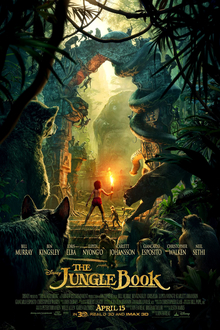
The Jungle Book scores BIG on television
8:28 AM
Box Office India Trade Network
The year has been a disaster till date (till date because DANGAL may rescue it somewhat) but there have been a couple of films that have shone. One is SULTAN and the other is THE JUNGLE BOOK. These two films are the only real hits of the year from universal box office to universal appreciation across the country. THE JUNGLE BOOK grossed around 188 crore nett in a twenty week run. The run was more than double what the biggest Hindi films achieve.
The India GBOC of the film at 255 crore is more than the Worldwide GBOC of all Hindi releases barring SULTAN. That includes films like AIRLIFT, HOUSEFULL 3, RUSTOM, M S DHONI - THE UNTOLD STORY and AE DIL HAI MUSHKIL. After a huge box office run the film has now taken television by storm by easily smashing all records for a Hollywood film. In fact like the box office it has fared better than many big Hindi films. The film has achieved the sixth highest rating of films premiered on television this year while it is 5th highest of films released this year. The ratings for 2016 are below and show impressions which is basically the number of television sets that viewed the films on their respective premieres.
1. Prem Ratan Dhan Payo - 2,51,19,000
2. Sultan - 1,13,10,000
3. The Flying Jatt - 98,43,000
4. Dishoom - 95,44,000
5. Housefull 3 - 78,16,000
6. The Jungle Book - 75,51,000
7. Baaghi - 69,88,000
8. Dilwale - 67,61,000
9. Sanam Re - 56,66,000
10. Bajirao Mastani - 54,76,000
THE JUNGLE BOOK is also the biggest Hollywood blockbuster in India in terms of inflation adjusted figures as it beat the 180 crore nett adjusted figure of TITANIC released in 1998.
English film-viewing market has eaten into our business because our content is not good enough-Arjun Kapoor
8:04 AM

Arjun Kapoor on the way ahead and beating Hollywood at their own game
Nayandeep Rakshit (DNA; November 22, 2016)
Speaking with Arjun Kapoor is never time wasted. One always comes away with hope. He seems to understand and comprehend what works and what are the failings of cinema in Bollywood, in its current avatar. Also, as a star kid — dad Boney is a known producer and uncle Anil and Sanjay actors — he is intricately aware, despite being only a few films old — why certain films work here and others don’t. As an insider and industry watcher, he has a unique perspective on why Hollywood regularly outperforms us, what we need to fight back and how we ought to create homegrown superheroes and internationally acclaimed animation films. Here’s what he had to say on a variety of topics...
On Hollywood outperforming us
“Along with us, the South East Asian film industries are also doing fairly well, so we aren’t the ‘last surviving industry’. Their films, content-wise, production-wise, and even recovery-wise have become pretty decent. Take for example, The Jungle Book, which did great business globally, including in India. It’s an Indian story with Indian characters. The dubbed version of the film did better business here than the English one. We have to take the hint that audiences are watching films like these in Hindi. The English film-viewing market has eaten into our business because our content is not good enough. If we provide great content on the same day, even our films would do well. There is food for thought that we have to pull up our socks.”
Audience ka signal
“The audience is giving us a signal... ‘ki yaar, tum log kuch banaoge jo hum logo ne nahi dekha, toh hum aake dekhenge theatre mein’. It’s just the way you look at it. I completely understand that the thought of Hollywood taking over Bollywood has come up, but they can never do it, because we consume films in Hindi. English films dubbed in Hindi do well. Almost 60 per cent of their collections in India come from the Hindi version. What people don’t realise here is for every Jungle Book and Fast & Furious film, there are 20-30 other films, which are dubbed and they still don’t do well here. Even they have flops, it comes to India. Here, certain kind of films do well like action so there’s F&F which has become a franchise everyone’s looking forward to. People love such films. Vin Diesel is the typical Hindi film hero in that sense.”
On the absence of superheroes in B-Town
“Hollywood makes superhero films. We don’t make as many of them here. Indians love mythology and their superhero films are like mythologies. They have a backstory, they have a journey, they have a reason for becoming who they have become. There’s an added element of kids liking it. So overall, it’s a deep-rooted thought about content more than anything else. We have to be aware and we should learn from it rather than get scared of it.”
On lack of good animation flicks
“We do not make great animated films. We don’t even try much, I feel. We cannot imagine a budget that they have. But never say never. Also, we have never had that one film that made people wake up and notice. We never had a genre-breaking film. The day that happens, things will change drastically. Budget is, of course, a reason. But then, people think that ‘Arre, it will take around three years to make an animated film. Let’s just make a live film’. In India, it’s more about speed, people don’t want to wait that long to complete any project. In the special effects studios we have, there are a lot of American elements that are sublet into the Indian VFX agencies that are doing great work. But also there needs to be a director with a foresight and the passion to make an animated film. With Baahubali doing so well, it changed the thought process about period films. You need an animation film to pull off what Baahubali did — to cut through all language barriers, audiences — and then you feel okay, we can afford to do it The moment that happens, we will see a lot more animated films.”
Another poor year on the card; cumulative business down
4:05 PM

Box Office India Trade Network
The year is certain to be another poor one unless AE DIL HAI MUSHKIL, SHIVAAY, BEFIKRE, DANGAL and the other films become big winners. Business is already down 75 crore from last year from the same point (a week before Diwali). The cumulative nett gross is 1950 crore as against the 2025 crore last year at the same time. This is with a better flow this year and more films getting advantage of tax free but the gain here is probably incorporated into the highest rates in some states as compared to the first half of last year. One real grosser is SULTAN and all the other releases are struggling to cross even 125 crore nett which is not exactly a huge total today.
The problem is not that the year again will end with the same cumulative business as last year but its happened three years in a row. The footfalls are looking at a 5% drop as ticket rates have not seen huge gains this year which was also the case last year. The huge problem is that footfalls have dropped 20% since 2013. In that year there were over 34 crore footfalls for Hindi films and this year we will probably just cross 27 crore. It is all about the content being churned out as Hollywood films which are aiming at the same markets have made good inroads in this time since 2013. Only Aamir Khan, Salman Khan and Shah Rukh Khan have delivered bigger grossers than THE JUNGLE BOOK. If we look at non holiday grossers then THE JUNGLE BOOK is number one beating YEH JAWAANI HAI DEEWANI which is the highest Hindi non holiday grosser.
Airlift is one of the worst Akshay Kumar performers on television in recent history
2:45 PM

Box Office India Trade Network
SULTAN is coming to the end of its run and will close around the 300 crore nett mark and this has instilled confidence in the industry with blockbuster success and in the last five months there will be a good flow of big releases to add to Sultan. But is SULTAN just a one off and the rest of the year will see results like as they were before SULTAN where films outside Hollywood release THE JUNGLE BOOK not only struggled for initials but also appreciation. There were a few films that did well but the biggest plus for all these films barring HOUSEFULL 3 were cost constraints. HOUSEFULL 3 had a big satellite price and a subsidy from UK which combined were probably worth over 55 crore which turned out to be the big plus.
The problem all the films outside SULTAN and THE JUNGLE BOOK faced is not just appreciation but even universal acceptance and the numbers are just not going to come if forget being liked you are not even accepted by majority of the audience. A film for the big multiplexes may get around 1 crore people to the theatres if it gets a clean run so that these multiplexes keep it on for 4-5 weeks. But that is not really going to translate into big numbers and to even get there you need the luck of the draw.
Then on top you have films like AIRLIFT, KAPOOR & SONS and NEERJA proving duds on television meaning forgotten films as they just wont get the repeat runs on television to stay alive or remembered within the watching audience (critic types may be different as these types think that if they liked a film it will pass the test of time so that is portrayed in the media though results say otherwise). AIRTLFT is one of the worst Akshay Kumar performers on television in recent history and irrespective of box office, Akshay Kumar starrers generally do very well on television, not just initially but in the long run also.
There is a long list of films starting soon with DISHOOM, MOHENJO DARO, RUSTOM, A FLYING JATT, AKIRA, BAAR BAAR DEKHO, RAAZ REBOOT, M S DHONI: THE UNTOLD STORY, MIRZYA, AE DIL HAI MUSHKIL, SHIVAAY, ROCK ON 2, FORCE 2, DEAR ZINDAGI, KAHAANI 2, BEFIKRE and DANGAL. Now barring the last named you could probably not say with certainty that any of the others will do 100 crore nett and this is a figure that is hardly a benchmark today.
You even have sequels of films like ROCK ON 2 and FORCE 2 where the first films not only failed at the box office but found no appreciation. The former was a disaster on television as well to make matters worse and sequel success has a lot to do with repeated television viewings be it a DHOOM, GOLMAAL, HOUSEFULL or a HERA PHERI, so the brand stays alive.
If looked closely SULTAN does not change much. It shows business is there but only for films where stories are told in the way the public understands and the content is Indian.. The real turnaround would be if the films releasing in the next 4-6 weeks can bring people to the theatres and have content which can be appreciated by the wider audience. This will automatically bring the numbers and then it would really be something to cheer about.
Hollywood shifts dates to avoid clash with Bollywood films
5:00 PM

With Kabali postponing its release, Ice Age: Collision Course will also do the same to avoid a clash, just like The BFG moved its date to avoid competing with Salman Khan's latest film. Industry insiders say that it's a prudent practice to minimise competition
Niharika Lal (MID-DAY; July 7, 2016)

 Hollywood films like Fast
and Furious 7, Jurassic World, among others have done better business
than Indian films released around the same time. However, the production
houses of big Hollywood releases are still cautious about avoiding box
office clashes with big-budget Indian films. The most recent example of
this is Ice Age: Collision Course. The film was scheduled to release on
July 15,
a week before the US release, to avoid a clash with Rajinikanth's Tamil
film Kabali, which was to release in the first week of July .Now that
Kabali's release has been postponed to the end of this month, Ice Age is
also looking for a new release date. This is the second Hollywood movie
that has postponed its India release in the last one month. Steven
Spielberg's The BFG, which was scheduled to release on July 1 in India,
will now release on July 15. Although no
official reason has been given for the delay, sources say that it was
done to avoid a clash with Salman Khan's Sultan, which released
yesterday. Earlier this year, Shah Rukh Khan's Fan and The Jungle Book
were both scheduled to release on April 15, but The Jungle Book release
was then preponed to April 8. While the official statement for change in
release date is usually 'technical issues', sources say that more often
than not, it is done to avoid clashing with a big Bollywood film.
Hollywood films like Fast
and Furious 7, Jurassic World, among others have done better business
than Indian films released around the same time. However, the production
houses of big Hollywood releases are still cautious about avoiding box
office clashes with big-budget Indian films. The most recent example of
this is Ice Age: Collision Course. The film was scheduled to release on
July 15,
a week before the US release, to avoid a clash with Rajinikanth's Tamil
film Kabali, which was to release in the first week of July .Now that
Kabali's release has been postponed to the end of this month, Ice Age is
also looking for a new release date. This is the second Hollywood movie
that has postponed its India release in the last one month. Steven
Spielberg's The BFG, which was scheduled to release on July 1 in India,
will now release on July 15. Although no
official reason has been given for the delay, sources say that it was
done to avoid a clash with Salman Khan's Sultan, which released
yesterday. Earlier this year, Shah Rukh Khan's Fan and The Jungle Book
were both scheduled to release on April 15, but The Jungle Book release
was then preponed to April 8. While the official statement for change in
release date is usually 'technical issues', sources say that more often
than not, it is done to avoid clashing with a big Bollywood film. 
SHIFT IS TO AVOID CLASH
Even as production houses maintain that shift in release dates are due to reasons other than big Bollywood releases, exhibitors tell us that the change in release dates don't affect the film's revenue, rather, it increases it. Yogesh Raizada, corporate head, of a multiplex chain, says, “The release dates of Hollywood movies are moved around to avoid clashing with Bollywood films. They don't want to create competition for themselves.“
Devang Sampat, business head of a multiplex chain, adds, “The films are often postponed because of unavailability of screens. If two major movies are released in the same week, then it is a loss for cinemas too because the screens and the audience get divided.“
FILM RELEASE IS SHIFTED ON BASIS OF THE MOVIE'S APPEAL
Amrita Pandey, the VP of the Indian arm of an international studio tells us, “For us, a movie's release date is based on the familiarity and existing appeal of the movie among the Indian audience. For a movie like The Jungle Book, which was an Indian story at heart, we did not want the audience to wait and wanted to bring it to India before the American release. We believed the movie would resonate strongly with the audience here. Also, the weekend we released the film, it was a long one in a few key states. In some cases, we prefer to wait for a week or two after the global release if we think that the movie will benefit from the international publicity and reviews. “

The first half of 2016 boasts of very few hits and dominance by Hollywood & regional films
8:04 AM
Shilpi Sampad (MID-DAY; July 5, 2016)
We are already halfway into 2016 and have seen a mix of actioners, romantic dramas, biopics, thrillers and comedies keeping their date with cinebuffs. But if an assessment of the box office has to be made, Bollywood seems to have encountered more speed bumps than smooth roads in the first six months.
Four and a half dozen films released within this time period, but only two — Airlift and Housefull 3 — managed to break into the Rs 100-crore league. Both films starred Akshay Kumar, but they belonged to diverse genres — the first one was a drama-thriller while the other a leave-your-brains-at-home comedy.
Trade analyst Amod Mehra says, “It wasn’t a very exciting first half. There were some hits, and many average grossers and flops. The only silver lining was that except May, every month had at least one film of which people took notice — Airlift in January, Neerja in February, Kapoor & Sons in March, Baaghi in April and Housefull 3 in June.”
Trade folk suggest the first half of most years is more or less lacklustre, but what took them by surprise was the steady dominance of Hollywood at the Indian box office. “No Hindi release could match up to the might of The Jungle Book, which did a solid business of Rs 175 crore here. Then came Marathi film Sairat, collecting Rs 90 crore and giving many Bollywood films a run for its money. It was undoubtedly, the surprise package of the year,” adds Mehra.
If sources are to be believed, Hollywood films made over $ 61 million at the Indian box office in 2016’ s first half in comparison to the $ 62 million they made in all of 2014 what with several of them overshadowing Bollywood releases. “The Conjuring 2 released alongside Amitabh Bachchan and Nawazuddin Siddiqui- starrer Te3n and collected Rs 3 crore more on its opening day. Overall, it minted Rs 50 crore, which is the highest for any English language horror film in India,” says exhibitor-distributor Akshaye Rathi, adding that other Hollywood releases like The Jungle Book, Captain America: Civil War and Deadpool were some films that gave B’wood a tough time.
Rathi says “small is big” has clearly been the highlight of this year so far. “Small films with controlled budgets emerged victorious at the box office. Airlift and Neerja were the best examples,” he adds.
As far as the biggest disappointments go, Shah Rukh Khan-starrer Fan and Katrina Kaif and Aditya Roy Kapur’s Fitoor take the cake. Made on a big budget, the former just about broke even while the latter incurred losses. Even Azhar and Udta Punjab couldn’t cash in on the controversy that they were embroiled in. “One thing is clear,” says Mehra, adding, “The audience wants entertaining films, irrespective of the genre or language.”
We are already halfway into 2016 and have seen a mix of actioners, romantic dramas, biopics, thrillers and comedies keeping their date with cinebuffs. But if an assessment of the box office has to be made, Bollywood seems to have encountered more speed bumps than smooth roads in the first six months.
Four and a half dozen films released within this time period, but only two — Airlift and Housefull 3 — managed to break into the Rs 100-crore league. Both films starred Akshay Kumar, but they belonged to diverse genres — the first one was a drama-thriller while the other a leave-your-brains-at-home comedy.
Trade analyst Amod Mehra says, “It wasn’t a very exciting first half. There were some hits, and many average grossers and flops. The only silver lining was that except May, every month had at least one film of which people took notice — Airlift in January, Neerja in February, Kapoor & Sons in March, Baaghi in April and Housefull 3 in June.”
Trade folk suggest the first half of most years is more or less lacklustre, but what took them by surprise was the steady dominance of Hollywood at the Indian box office. “No Hindi release could match up to the might of The Jungle Book, which did a solid business of Rs 175 crore here. Then came Marathi film Sairat, collecting Rs 90 crore and giving many Bollywood films a run for its money. It was undoubtedly, the surprise package of the year,” adds Mehra.
If sources are to be believed, Hollywood films made over $ 61 million at the Indian box office in 2016’ s first half in comparison to the $ 62 million they made in all of 2014 what with several of them overshadowing Bollywood releases. “The Conjuring 2 released alongside Amitabh Bachchan and Nawazuddin Siddiqui- starrer Te3n and collected Rs 3 crore more on its opening day. Overall, it minted Rs 50 crore, which is the highest for any English language horror film in India,” says exhibitor-distributor Akshaye Rathi, adding that other Hollywood releases like The Jungle Book, Captain America: Civil War and Deadpool were some films that gave B’wood a tough time.
Rathi says “small is big” has clearly been the highlight of this year so far. “Small films with controlled budgets emerged victorious at the box office. Airlift and Neerja were the best examples,” he adds.
As far as the biggest disappointments go, Shah Rukh Khan-starrer Fan and Katrina Kaif and Aditya Roy Kapur’s Fitoor take the cake. Made on a big budget, the former just about broke even while the latter incurred losses. Even Azhar and Udta Punjab couldn’t cash in on the controversy that they were embroiled in. “One thing is clear,” says Mehra, adding, “The audience wants entertaining films, irrespective of the genre or language.”
Fenil's Bollywood Talk # 419
2:02 PM

6 MONTHS OVER & ONE OF THE DRIEST WEEKENDS IS HERE!
The week before the release of a biggie is usually one of the worst ever! 4-5 small-budget movies release and try their luck in cinemas but their efforts always prove futile. The present scenario is no different. Last week's releases - Raman Raghav 2.0, Junooniyat, 7 Hours To Go, A Scandall and Rough Book - have bombed. Tomorrow, Shorgul and Kerry On Kutton will hit screens. Both will flop but the former will have some sort of respectable collections. Kerry On Kutton meanwhile will be a disaster. Sultan releases next week on Wednesday July 6 and hence both these films will get just 5 days to score. Hence, one can imagine the collections.
6 months of the year are over and it has not been great. Only 2 films crossed 100 crore - Airlift and Housefull 3 - and even these films didn't really were blockbusters. Airlift collected 123 crore approx while Housefull 3 will finish off at around 108 crore. The Jungle Book, on the other hand, shocked everyone by doing a business of around 180 crore, a first for any Hollywood film. Marathi film Sairat on the other hand too stunned trade by netting 80 crore and that too with a major chunk coming in from Maharashtra. This shows that viewers are there but are not coming to theatres possibly due to not-so-great content. And Bollywood is facing the brunt while regional and Hollywood films are making merry by delivering content that people love. Its high time Bollywood comes up with content that is mainstream and appeals to a wide section of audiences.
It pains me when a film actor or a cricketer is a youth icon-Irrfan Khan
8:35 AM

Our definition of heroes needs to change, but our definition of good cinema might already have, says Irrfan Hollywood could pose a serious threat if Bollywood does not provide better content
Anshul Chaturvedi (BOMBAY TIMES; May 30, 2016)
You are one of the few
global actors India has. What are you doing with a film titled Madaari
like it's one of those snake charmer-monkey trainer cliches?
Chhoti si kahani thi, joh itni hit kari ki sochte rahe, yaar, yeh film ho sakti hai kya? We sort of explored it a little bit and then we thought yes, there is a film. It's the reality of our country. There were certain important things that I want to address. Aisa nahin hai ki ab subject mil gaya toh film banao. Subject kis liye hai? Kya hai? Subject kar kya raha hai? Hum kyun banana chahte hain usko? Uske liye kuch cheezein thi important. There is a fact that we don't realise sometimes - that a hero lies in every man and in every woman. And most of the times, 99 per cent of the times we die, we perish before realising it. And the other thing is the accountability of our system. Kisi bhi ek aam aadmi ke saath kuch hota hai, toh where does he go? The courts are so overloaded that hamara CJI gets emotional and breaks down in front of the PM. Where do we go? There are certain facts which are very, very disturbing, and it concerns everybody. So, this film addresses that and we could not find the title of the film till we were halfway through the film.
Madaari nachaye ja raha hai?
Connotations wohi hain. Ki matlab jamura aur madaari ka khel hai. Zindagi mein kayi baar aap madaari hote hain, kayi baar jamure hote hain. That's how Madaari came.
Is the film art or mainstream?
Now, art films don't exist. What do you call art film? Where is the art film?
In Irrfan's portfolio?
Main art film ki den nahin hoon, main aisi film ki den hoon jiski definition media ne dhundi nahin hai. It is now not about art, it was not about mainstream. What would you call Piku? And Talvar? There is art in Talvar. A film which does not have songs, which does not make too much of noise, people start calling it art film, that is the tragedy of our times. This is a new kind of cinema which is emerging, and I think it has to pick up and it has to become bigger before Hollywood actually gulps you. Hollywood is coming with so much speed that you can't even understand!
Gulps you like Ka? The Jungle Book has earned more than Rs 180 crore in India I suppose that's more than SRK's Fan?
Yes! This is the first time that has happened. And another first is that Hindi version ka business zyada tha. Can you see the appetite of the audience which is desperately wanting to be engaged? That is where our film industry is on the back foot, where it is often not able to provide.
You've said earlier that you were paid less in Hollywood but you were working there because you wanted to change your working style. Their writing style is so much superior, it is much more detailed you can practically smell the character that they are writing...
I would like to add to that. See, Hollywood is America and the soul of America is marketing. The whole nation is built on marketing, so they understand it. And baaki unki koi bhi industry kuch bhi kar rahi ho, but the game (sports) industry and cinema industry they have captured it and specialised in it the world over. And many big countries, industries have been gulped by them. European cinema ko poora Hollywood kha gaya hai UK khatm ho gaya, France khatm ho gaya, Italy ... Their kind of craft knows how to engage people. Hamare yahan actors star nahin hain. Wahan actors stars hamesha se rahe hain. Chahe woh Clint Eastwood ho, Al Pacino ho, Robert De Niro ho ya Brando ho. Jo hamare yahan tha pehle.
Joh behtareen actor hota tha wohi superstar hota tha... till that changed in the '80s-'90s?
Yes, and then there was decadence. After Rajesh Khanna there was a strange kind of degeneration, with films mostly creating heroes indulging in self-pity, who make melodrama about self-pity, about how much pain he is in, that is when Govinda and all happened. You can't see that in isolation. That happened because theatre was dying down, VCR was introduced, middle class was not coming. The audience was gone. There was a particular kind of audience, and cinema was catering to them. The whole atmosphere was like that.
We went lower in search of the consumer?
Because the consumer was like that. People only liked that. Once, during a shoot, (Mahesh) Bhatt sahab aaye, chillaye mere par 'Arey yaar Irrfan, gandi acting kar, spoon-feed them. Spoon-feed. Yeh achhi acting se nahin chalega, dukan band ho jayegi'.
What movie was this?
Kasoor pehli film thi yeh. And he had a point. He was addressing that audience, he has a great communication with that audience that's not interested in nuances. Cinema was not capturing those nuances, so there was this space for nuances. Fortunately, now, the audience is exposed to world cinema. They want similar things from India. That's why Talvar, that's why Piku. All these films are being lapped up by the audience. 4 crore ki film 70 crore ka business kar rahi hai. Aur jahan tak Hollywood ke craft ka sawaal hai even when they make films for kids, it's not just the kids who can enjoy it, even parents can. Like Jurassic World or Jungle Book. We have not made any successful horror film or a successful children's film. We are still lagging behind. (But) The system is changing. You will be surprised by the way things will change. The way Priyanka has suddenly gone there, Deepika has gone there things are moving in a very interesting direction as far as India is concerned.
Is it easier for Indian actors to get a footing in Hollywood after the sort of work people like you or Priyanka have done?
No, no. It is not easy. It is 50 times more difficult to break into Hollywood than it is here. An actor who gets one or two auditions there is exhilarated. Just two auditions. If he gets them, he thinks he is there. Uss industry mein break in karna is not easy. I don't think that they are looking at India and saying aao ji aao.
How has Priyanka made a mark this early?
I don't know. I have seen people some famous stars also, I don't want to name people who have spent so much time trying. Chappalein ghis gayin, as we say, but kuch nahin, nothing. Kuch actresses do-do saal tak wahan padi huin hain aur kuch dhele ka kaam nahin mila. How something happens there or here there is no formula to it. That is the mystery of cinema!
In an earlier interview some years back, you had spoken about the baba in Jaipur who saw your kundli in 1983... (a minute's break for laughter)... and you said he told you you'll be famous only after 2000. So he gave you a 16-17 year waiting period. It's been 16 years since 2000. How does life look from this vantage point? Do you ever ask about your future now?
Yeh joh art hai, iska kuch percentage sahi jaata hai, dekhne wala hona chahiye. Like a doctor who is able to diagnose accurately because he knows how to assess you. But it is suicidal to depend on it. It deprives you of facing life spontaneously Some times, what is predicted happens, sometimes it doesn't happen. But to take life spontaneously, to be prepared for whatever is going to happen that enriches you. If you know, or think you know, or if I knew ki ab se yeh hoga, 2000 se aisa hoga, aur waisa hua it hasn't done good to me. It shows some kind of insecurity within me. I am insecure, which is why I depend on that. It shows that I don't trust the process of life. That's a folly, that's a weakness.
Like knowing where a bowler will be pitching the ball before he bowls it?
Exactly! And if the ball is an outswinger and you were told it will be an outswinger aur aap ne uss pe shot maar diya, toh aap ko aage, kahin na kahin, apni ability pe question mark rahega. Ki woh faculty joh meri thi, agar main judge kar ke maarta, woh exercise nahin hui.
Given that you came to Delhi to watch the IPL eliminator KKR vs SRH I was thinking of the extremely interesting logic you had once used in explaining that you had wanted to be a cricketer, but then thought that there is scope for only 11 players, while there can be any number of actors so you opted to be an actor!
Yes, that is exactly how I thought in my naive mind then. I had to break out of that mould I was in. I don't know where it was from - but the desire I had was to escape from the perception people had of me. That was the basic desire. In my school days, I used to dislike how people looked at me, what they thought of me. I wanted to escape that. I think that made me come out of my shell and express myself. You are looking at me in a particular way - and I am not that. I am something else. What am I - I don't know.
So you were clear about what you did not want to be. And then you began to find out what you wanted to be.
Yeah, yeah. That's why cricket. That's why acting. That's why trying to find out what I wanted to be. Once I was watching an Ashok Kumar film - Mamta. And I was fascinated by the role of a barrister, and I thought that I'll become a barrister. I was always looking for things that would take me away from where I was. Pata nahin yeh interview mein bolna chahiye ki nahin... Jab main teenager thaa, hamare bagal mein ek showroom hua karta thaa, Jaipur mein. Wahan angrez aaya karte thay. Unki air-conditioned bus hua karti thi. Mera cousin wahan neeche khada hua karta thaa kabhi jab woh buses ja rahi hoti thi, aur aise hi khade ho ke hi-hello kiya karta tha tourists ko uska intention hua karta thaa ki woh shayad use kuch de dein. And I was part of it! I still remember that time - my mental makeup. How we were fascinated by these people and they looked like they were from another planet. I just wanted to get away from there, from being that.
In a previous interview, you'd said that you 'felt like a nobody' after watching a shooting as a child - did you want to be on the other side of the shooting someday, be a somebody?
Nahin, tab woh khayal hi nahin aaya thaa. I was too young. Maine Bachchan sahab ki shooting dekhi thi. And I felt very bad, I felt like a nobody. Ghar aa kar maine yeh incident apni mother ko bataya. She said 'Mujhe bhi aisa laga thaa. Amer Fort mein Dara Singh ki kisi film ki shooting chal rahi thi, aur mujhe bahut bura laga tha wahan jaane ke baad'. Toh main yeh identify kar paaya ki humari feelings ek jaisi hain - magar woh kyun hai aisi, mujhe samajh nahin aaya. Uske baad main zindagi mein kabhi shooting dekhne nahin gaya. Zindagi mein kabhi kisi se autograph nahin maanga. Ek baar maangne gaya thaa, (iconic Pakistani batsman) Zaheer Abbas se. Main bhaga bhaga gaya thaa, kisi tarah se mauka mil gaya thaa, friendly match tha, itni strict security nahin thi. And he just looked at me - and kept walking. Uss ke baad se I have never approached anyone for an autograph.
Which is why you are so uncomfortable walking away when people ask you for a picture?
Sometimes you don't have the time, sometimes you're not in the mood. But I really feel bad sometimes, ki maine kyun mana kar diya... Abhi do din pehle main Lokhandwala mein ghoom raha thaa raat ko, ek auto ruka aur ek ladka utar ke aisey aaya (arms outstretched) ki maine socha kya ho gaya, koi bam phodne aaya hai kya. He ran towards me. And when he reached me, I saw he was exuberant. 'Sir, sir, photograph...' I was in a different mood. I said, 'Yaar, tu haath mila le, bhai tu photograph rehne de'. Uske chehre ka rang badla aisa ek second mein woh main bhool nahin sakta. Ab mujhe lagta hai maine gale kyun nahin lagaya. What irritates you sometimes is that people don't value themselves ...bahut saste mein jaise apne ko... Aur photo bhi kheench gaya tab bhi satisfaction nahin hai, selfie chahiye. Iss pravritti se thodi uljhan hoti hai. All the time one is not in a zone to do all this.
In an interview a couple of years back you'd said 'Wanting fame is a disease.'
Yes, I still think that. One day I will want to be free from this disease, from this desire. Where fame doesn't matter. Where just experiencing life and being okay with it is enough. Right now, you can say I am a patient of the disease. In the very beginning, that was all I wanted when I thought of being an actor - ki bas main famous ho jaun.
Are you currently at peace?
Comparatively, I think I am. But our industry is such that we keep propelling ourselves in new directions. I don't have formulas, but I have landmarks to achieve. To do the kind of films that I want to do. To engage audiences in a larger way. To redefine things. That is my basic concern - things need to be redefined... It pains me when a film actor or a cricketer is a youth icon. I don't have anything against them. They are great entertainers; they are useful to the society. They contribute to people's lives. But they are not heroes. We haven't redefined heroes. Heroes are different people. Heroes are people who sacrifice their own concerns and do something bigger, who change people's lives. We film stars and cricketers shouldn't be aspirational in such a big way for the healthy growth of the society. It's a sign of consumerism at its extreme. That's why I find it so cool and so hip to see that photograph of the women scientists of ISRO celebrating a launch. That's heroism. That's cool, that's hip! Lekin main agar kahin se udhaar le kar, kuch bana ke, thodi der ke liye aapka time pass kara de raha hoon, just because I am famous, you aspire to become me - that's not cool, that's pathetic.
Chhoti si kahani thi, joh itni hit kari ki sochte rahe, yaar, yeh film ho sakti hai kya? We sort of explored it a little bit and then we thought yes, there is a film. It's the reality of our country. There were certain important things that I want to address. Aisa nahin hai ki ab subject mil gaya toh film banao. Subject kis liye hai? Kya hai? Subject kar kya raha hai? Hum kyun banana chahte hain usko? Uske liye kuch cheezein thi important. There is a fact that we don't realise sometimes - that a hero lies in every man and in every woman. And most of the times, 99 per cent of the times we die, we perish before realising it. And the other thing is the accountability of our system. Kisi bhi ek aam aadmi ke saath kuch hota hai, toh where does he go? The courts are so overloaded that hamara CJI gets emotional and breaks down in front of the PM. Where do we go? There are certain facts which are very, very disturbing, and it concerns everybody. So, this film addresses that and we could not find the title of the film till we were halfway through the film.
Madaari nachaye ja raha hai?
Connotations wohi hain. Ki matlab jamura aur madaari ka khel hai. Zindagi mein kayi baar aap madaari hote hain, kayi baar jamure hote hain. That's how Madaari came.
Is the film art or mainstream?
Now, art films don't exist. What do you call art film? Where is the art film?
In Irrfan's portfolio?
Main art film ki den nahin hoon, main aisi film ki den hoon jiski definition media ne dhundi nahin hai. It is now not about art, it was not about mainstream. What would you call Piku? And Talvar? There is art in Talvar. A film which does not have songs, which does not make too much of noise, people start calling it art film, that is the tragedy of our times. This is a new kind of cinema which is emerging, and I think it has to pick up and it has to become bigger before Hollywood actually gulps you. Hollywood is coming with so much speed that you can't even understand!
Gulps you like Ka? The Jungle Book has earned more than Rs 180 crore in India I suppose that's more than SRK's Fan?
Yes! This is the first time that has happened. And another first is that Hindi version ka business zyada tha. Can you see the appetite of the audience which is desperately wanting to be engaged? That is where our film industry is on the back foot, where it is often not able to provide.
You've said earlier that you were paid less in Hollywood but you were working there because you wanted to change your working style. Their writing style is so much superior, it is much more detailed you can practically smell the character that they are writing...
I would like to add to that. See, Hollywood is America and the soul of America is marketing. The whole nation is built on marketing, so they understand it. And baaki unki koi bhi industry kuch bhi kar rahi ho, but the game (sports) industry and cinema industry they have captured it and specialised in it the world over. And many big countries, industries have been gulped by them. European cinema ko poora Hollywood kha gaya hai UK khatm ho gaya, France khatm ho gaya, Italy ... Their kind of craft knows how to engage people. Hamare yahan actors star nahin hain. Wahan actors stars hamesha se rahe hain. Chahe woh Clint Eastwood ho, Al Pacino ho, Robert De Niro ho ya Brando ho. Jo hamare yahan tha pehle.
Joh behtareen actor hota tha wohi superstar hota tha... till that changed in the '80s-'90s?
Yes, and then there was decadence. After Rajesh Khanna there was a strange kind of degeneration, with films mostly creating heroes indulging in self-pity, who make melodrama about self-pity, about how much pain he is in, that is when Govinda and all happened. You can't see that in isolation. That happened because theatre was dying down, VCR was introduced, middle class was not coming. The audience was gone. There was a particular kind of audience, and cinema was catering to them. The whole atmosphere was like that.
We went lower in search of the consumer?
Because the consumer was like that. People only liked that. Once, during a shoot, (Mahesh) Bhatt sahab aaye, chillaye mere par 'Arey yaar Irrfan, gandi acting kar, spoon-feed them. Spoon-feed. Yeh achhi acting se nahin chalega, dukan band ho jayegi'.
What movie was this?
Kasoor pehli film thi yeh. And he had a point. He was addressing that audience, he has a great communication with that audience that's not interested in nuances. Cinema was not capturing those nuances, so there was this space for nuances. Fortunately, now, the audience is exposed to world cinema. They want similar things from India. That's why Talvar, that's why Piku. All these films are being lapped up by the audience. 4 crore ki film 70 crore ka business kar rahi hai. Aur jahan tak Hollywood ke craft ka sawaal hai even when they make films for kids, it's not just the kids who can enjoy it, even parents can. Like Jurassic World or Jungle Book. We have not made any successful horror film or a successful children's film. We are still lagging behind. (But) The system is changing. You will be surprised by the way things will change. The way Priyanka has suddenly gone there, Deepika has gone there things are moving in a very interesting direction as far as India is concerned.
Is it easier for Indian actors to get a footing in Hollywood after the sort of work people like you or Priyanka have done?
No, no. It is not easy. It is 50 times more difficult to break into Hollywood than it is here. An actor who gets one or two auditions there is exhilarated. Just two auditions. If he gets them, he thinks he is there. Uss industry mein break in karna is not easy. I don't think that they are looking at India and saying aao ji aao.
How has Priyanka made a mark this early?
I don't know. I have seen people some famous stars also, I don't want to name people who have spent so much time trying. Chappalein ghis gayin, as we say, but kuch nahin, nothing. Kuch actresses do-do saal tak wahan padi huin hain aur kuch dhele ka kaam nahin mila. How something happens there or here there is no formula to it. That is the mystery of cinema!
In an earlier interview some years back, you had spoken about the baba in Jaipur who saw your kundli in 1983... (a minute's break for laughter)... and you said he told you you'll be famous only after 2000. So he gave you a 16-17 year waiting period. It's been 16 years since 2000. How does life look from this vantage point? Do you ever ask about your future now?
Yeh joh art hai, iska kuch percentage sahi jaata hai, dekhne wala hona chahiye. Like a doctor who is able to diagnose accurately because he knows how to assess you. But it is suicidal to depend on it. It deprives you of facing life spontaneously Some times, what is predicted happens, sometimes it doesn't happen. But to take life spontaneously, to be prepared for whatever is going to happen that enriches you. If you know, or think you know, or if I knew ki ab se yeh hoga, 2000 se aisa hoga, aur waisa hua it hasn't done good to me. It shows some kind of insecurity within me. I am insecure, which is why I depend on that. It shows that I don't trust the process of life. That's a folly, that's a weakness.
Like knowing where a bowler will be pitching the ball before he bowls it?
Exactly! And if the ball is an outswinger and you were told it will be an outswinger aur aap ne uss pe shot maar diya, toh aap ko aage, kahin na kahin, apni ability pe question mark rahega. Ki woh faculty joh meri thi, agar main judge kar ke maarta, woh exercise nahin hui.
Given that you came to Delhi to watch the IPL eliminator KKR vs SRH I was thinking of the extremely interesting logic you had once used in explaining that you had wanted to be a cricketer, but then thought that there is scope for only 11 players, while there can be any number of actors so you opted to be an actor!
Yes, that is exactly how I thought in my naive mind then. I had to break out of that mould I was in. I don't know where it was from - but the desire I had was to escape from the perception people had of me. That was the basic desire. In my school days, I used to dislike how people looked at me, what they thought of me. I wanted to escape that. I think that made me come out of my shell and express myself. You are looking at me in a particular way - and I am not that. I am something else. What am I - I don't know.
So you were clear about what you did not want to be. And then you began to find out what you wanted to be.
Yeah, yeah. That's why cricket. That's why acting. That's why trying to find out what I wanted to be. Once I was watching an Ashok Kumar film - Mamta. And I was fascinated by the role of a barrister, and I thought that I'll become a barrister. I was always looking for things that would take me away from where I was. Pata nahin yeh interview mein bolna chahiye ki nahin... Jab main teenager thaa, hamare bagal mein ek showroom hua karta thaa, Jaipur mein. Wahan angrez aaya karte thay. Unki air-conditioned bus hua karti thi. Mera cousin wahan neeche khada hua karta thaa kabhi jab woh buses ja rahi hoti thi, aur aise hi khade ho ke hi-hello kiya karta tha tourists ko uska intention hua karta thaa ki woh shayad use kuch de dein. And I was part of it! I still remember that time - my mental makeup. How we were fascinated by these people and they looked like they were from another planet. I just wanted to get away from there, from being that.
In a previous interview, you'd said that you 'felt like a nobody' after watching a shooting as a child - did you want to be on the other side of the shooting someday, be a somebody?
Nahin, tab woh khayal hi nahin aaya thaa. I was too young. Maine Bachchan sahab ki shooting dekhi thi. And I felt very bad, I felt like a nobody. Ghar aa kar maine yeh incident apni mother ko bataya. She said 'Mujhe bhi aisa laga thaa. Amer Fort mein Dara Singh ki kisi film ki shooting chal rahi thi, aur mujhe bahut bura laga tha wahan jaane ke baad'. Toh main yeh identify kar paaya ki humari feelings ek jaisi hain - magar woh kyun hai aisi, mujhe samajh nahin aaya. Uske baad main zindagi mein kabhi shooting dekhne nahin gaya. Zindagi mein kabhi kisi se autograph nahin maanga. Ek baar maangne gaya thaa, (iconic Pakistani batsman) Zaheer Abbas se. Main bhaga bhaga gaya thaa, kisi tarah se mauka mil gaya thaa, friendly match tha, itni strict security nahin thi. And he just looked at me - and kept walking. Uss ke baad se I have never approached anyone for an autograph.
Which is why you are so uncomfortable walking away when people ask you for a picture?
Sometimes you don't have the time, sometimes you're not in the mood. But I really feel bad sometimes, ki maine kyun mana kar diya... Abhi do din pehle main Lokhandwala mein ghoom raha thaa raat ko, ek auto ruka aur ek ladka utar ke aisey aaya (arms outstretched) ki maine socha kya ho gaya, koi bam phodne aaya hai kya. He ran towards me. And when he reached me, I saw he was exuberant. 'Sir, sir, photograph...' I was in a different mood. I said, 'Yaar, tu haath mila le, bhai tu photograph rehne de'. Uske chehre ka rang badla aisa ek second mein woh main bhool nahin sakta. Ab mujhe lagta hai maine gale kyun nahin lagaya. What irritates you sometimes is that people don't value themselves ...bahut saste mein jaise apne ko... Aur photo bhi kheench gaya tab bhi satisfaction nahin hai, selfie chahiye. Iss pravritti se thodi uljhan hoti hai. All the time one is not in a zone to do all this.
In an interview a couple of years back you'd said 'Wanting fame is a disease.'
Yes, I still think that. One day I will want to be free from this disease, from this desire. Where fame doesn't matter. Where just experiencing life and being okay with it is enough. Right now, you can say I am a patient of the disease. In the very beginning, that was all I wanted when I thought of being an actor - ki bas main famous ho jaun.
Are you currently at peace?
Comparatively, I think I am. But our industry is such that we keep propelling ourselves in new directions. I don't have formulas, but I have landmarks to achieve. To do the kind of films that I want to do. To engage audiences in a larger way. To redefine things. That is my basic concern - things need to be redefined... It pains me when a film actor or a cricketer is a youth icon. I don't have anything against them. They are great entertainers; they are useful to the society. They contribute to people's lives. But they are not heroes. We haven't redefined heroes. Heroes are different people. Heroes are people who sacrifice their own concerns and do something bigger, who change people's lives. We film stars and cricketers shouldn't be aspirational in such a big way for the healthy growth of the society. It's a sign of consumerism at its extreme. That's why I find it so cool and so hip to see that photograph of the women scientists of ISRO celebrating a launch. That's heroism. That's cool, that's hip! Lekin main agar kahin se udhaar le kar, kuch bana ke, thodi der ke liye aapka time pass kara de raha hoon, just because I am famous, you aspire to become me - that's not cool, that's pathetic.

‘Hollywood makes junk, too’
8:12 AM

Why despite a Jungle Book, the US film industry doesn’t pose a real threat to Bollywood just yet
DNA (May 17, 2016)
‘Hollywood is beating Bollywood’. ‘Bollywood would be finished just like European cinema’. ‘Indian filmmakers need to pull up their socks’. ‘Star system is set to end sooner than later’. These are some of the statements, or rather ‘panic calls’, that are being heard of late.
The Jungle Book, a well-deserved success that it is, triggered it all. Agreed that it has already crossed Rs 175 crore and done more than double the business of Shah Rukh Khan’s Fan (this was the time when the alarm bells started ringing first). However, is that a reason good enough to drop the anchor?
“No,” says a prominent exhibitor, “You can’t judge an entire industry by the success or failure of a film. In all fairness and good credit to The Jungle Book, it was still as Indian a film as it can be. It was set in Indian milieu, had Indian characters and the best of it all, was dubbed by Indian celebrities. Yes, it has done huge business but half of it is coming from the dubbed versions.”
This can be evidenced from the fact that the second best Hollywood release in India is Captain America: Civil War and that is looking at a lifetime of around `Rs 55 crore. That’s a huge way off from The Jungle Book.
“Deadpool didn’t even take an opening, despite all the hype. Batman v Superman: Dawn of Justice opened well, but then fizzled. Kung Fu Panda 3 did reasonable business due to franchise recall, and that’s about it,” informs a trade expert, “So, we basically have five films doing decent to extraordinary business in five months. It is just that the phenomenal success of The Jungle Book, has ended up building a perception that Hollywood is here to rule. It is like Slumdog Millionaire doing well in the West and making one believe that Indian films are there to rule in overseas too. That never happened, right?”
This can be pretty much evidenced from the fact that despite a stellar cast (Gerard Butler, Aaron Eckhart, Morgan Freeman) the big ticket Hollywood release London Has Fallen didn’t even open well in India. Zootopia, the highest grossing Hollywood film globally this year, was just about fair, too.
“There is junk made in Bollywood but then same is the case with Hollywood too. Do you know that more than 50 notable films have released in the West as well since the beginning of the year? On the other hand we are talking about only a handful of films that have made some sort of impact in India,” says a senior member of the Bollywood film fraternity, “I can bet that you won’t be able to name even 10 other prominent Hollywood films. See, we have a habit of pressing the panic button for no rhyme or reason. Also, it gives media people like you some spicy headlines. We are here to stay and you will see that.”
This could well be true as the only big ticket films of 2016 that one can count are X-Men: Apocalypse, Teenage Mutant Ninja Turtles: Out of the Shadows, Independence Day: Resurgence, The Legend of Tarzan, Ice Age: Collision Course, Jason Bourne, Inferno and Rogue One: A Star Wars Story. However, Bollywood also has its own biggies like Housefull 3, Sultan, Dishoom, Rustom, Mohenjo Daro, MS Dhoni, Shivaay, Ae Dil Hai Mushkil, Befikre and Dangal in the offering, all of which are expected to sail past the Rs 100 crore mark quite comfortably.
Well, may the best industry win!
Why Hollywood distributors no longer worry about competing with Bollywood flicks
9:07 AM

Hollywood distributors no longer worry about competing with Bollywood flicks — and their risk is paying off. We explore the trend
Ria Lawrence (MID-DAY; May 15, 2016)
While India has always been deemed as a niche market for Hollywood to crack, there were some hit franchises which struck a chord with the audience. Apart from the regulars though, Hollywood cinema was never considered a threat daunting enough for big Hindi releases. The trend, however, seems to have undergone a drastic makeover. The surge in Hollywood cinema has almost been theatrical with movies like The Jungle Book, Captain America: Civil War and Deadpool making a remarkable entry into the Indian market and giving tough competition to Bollywood biggies. Maybe, it’s the authentic storylines, larger than life visuals, arresting cinematography or subtle yet striking performances. But whatever the formula, it seems to be working and has definitely raised the benchmark for Hindi movies. Case in point: A much-awaited, big-budgeted affair like Fan starring Shah Rukh Khan suffered visibly because of The Jungle Book. The coming week will see popular franchise X Men going head-to-head with Sarabjit, starring Aishwarya Rai Bachchan and Randeep Hooda in lead roles.
Kamal Gianchandani, CEO- PVR Pictures, says, “As film marketers in India, we have observed a rising demand for Hollywood over time. People are always on the lookout for good content, both visually and intellectually. Speaking of Hollywood, it undoubtedly has an upper hand in film technology as compared to Bollywood. In the past, Hollywood distributors would shy away from releasing their films at the same time as big budget Bollywood releases. But with changing demands, this trend is no longer applicable, the best example being the release of Udta Punjab and Now You See Me 2 on the same date.”
While one could argue that movies like Life of Pi and Slumdog Millionare hit the right chord with the audience, thanks to their massive Indian appeal, even past visual spectacles like 2012 and Avatar, not to forget global superheroes like Iron Man and animated movies like Kung Fu Panda, created quite a stir with the audience pouring into theatres and preferring those to big Hindi releases at the time.
Says Vivek Krishnani, managing director, Sony Pictures India, “Hollywood films have particularly seen good growth thanks to an increase in multiplexes and 3D screens as well as changing audience preferences. We have always believed that there is an audience for all kinds of films in India, especially films that have quality content and it’s just a matter of getting space in this overcrowded and under-screened market. For instance, The Angry Birds movie has high awareness among ages eight to 80 years.”

Tim Burton’s Alice: Through The Looking Glass is to release with five Hindi movies (Cabaret, Phobia, Veerappan, Fredrick and Waiting) but has generated quite a buzz among cinegoers
Amrita Pandey, vice president, Disney Studios, believes that Hollywood movies in India are enjoying their moment in the sun. However, this could be for a few tentpole movies each year. She says, “In 2015 too, three of the top 10 grossing movies were from Hollywood (Fast and Furious 7, Avengers: Age of Ultron and Jurassic World), which is a big deal, but if you take away the top five English movies each year, the business for the others isn’t at the scale of medium to big Hindi movies. It shows the massive potential that India as a market represents for a few big movies that our audience does take to. For both The Jungle Book and Captain America: Civil War, localisation was given huge priority. We pushed for the right voice talent and that helped bring in larger revenues from the regional markets.”
Vijay Singh, CEO, Fox Star Studios says the debate has little to do with Hollywood and Bollywood per se. “It’s a battle of good content vs the not so good content. Content is the king eventually and that can come from any industry.”
Grirish Johar from Zee Studios believes the foothold that Hollywood has been gaining along with strict competition with Hindi films has got Indian producers a bit rattled. “Bollywood producers are now keeping an eye out for big Hollywood franchises while fixing their release dates. So, that mental check has seeded itself in their minds,” he explains.
Whether the trend continues being a threat to Bollywood and mid- budget movies also get the recognition they deserve remains to be seen. One can’t, however, argue that Hindi movies are feeling the heat and content-driven films are becoming the need of the hour.
Trade analyst Amod Mehra sums it up, “People want entertainment, whether it comes from Bollywood or Hollywood. This trend will grow further, but that does not mean all English films will work. Those already established franchises will have an upper hand. It’s a wake-up call to our producers.”

Suicide Squad will release on August the 5 and is one of the big Hollywood releases to hit the screens this year
Subscribe to:
Posts (Atom)