Showing posts with label The Elephant Whisperers. Show all posts
Showing posts with label The Elephant Whisperers. Show all posts
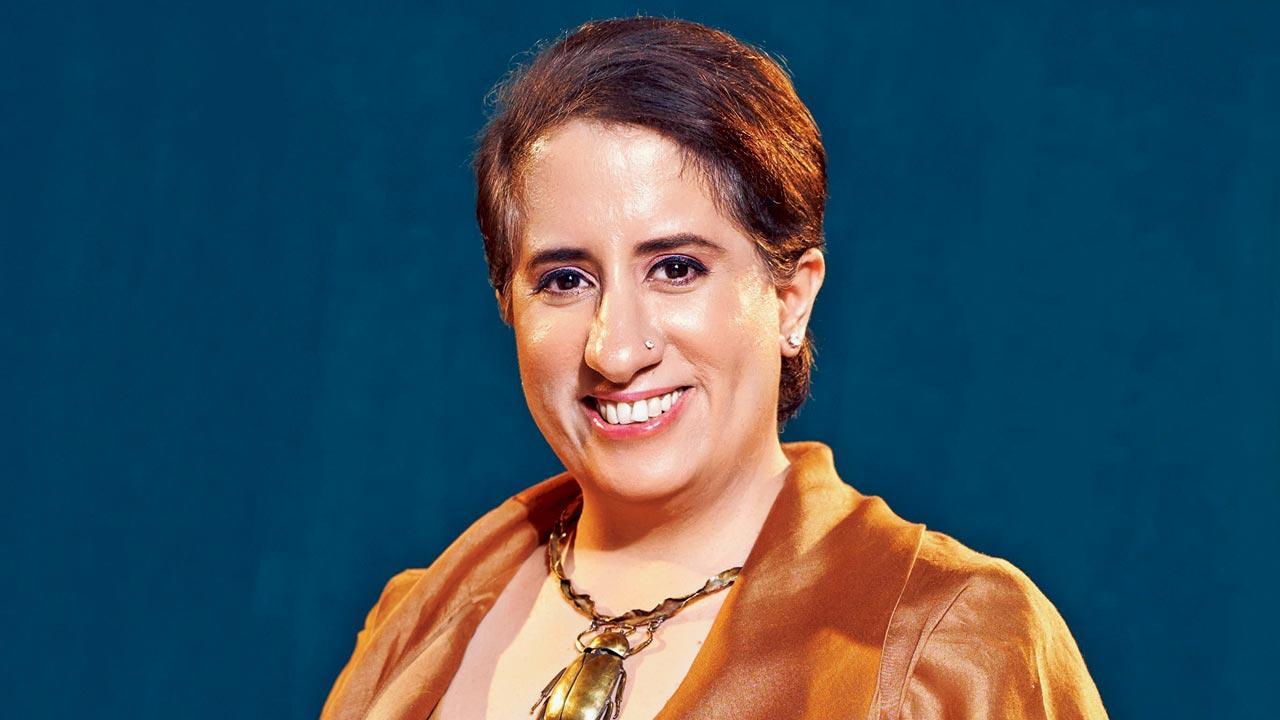
The world wants to see how India lives, moves and dances-Guneet Monga
9:20 AM
Shreya Varanasi (BOMBAY TIMES; July 31, 2025)
When The Elephant Whisperers made history at the Oscars 2023, it wasn’t just a proud moment for Guneet Monga — it was a milestone for Indian storytelling. Sharing the spotlight with Naatu Naatu’s big win that same night, Guneet remembers being awed by the impact of Telugu cinema on the global stage.
In a chat with Hyderabad Times, the producer, who was in town for the ‘Golden Lens’ symposium hosted by YFLO, opened up about her journey, the growing resonance of local stories, and her admiration for Tollywood. “I’m a big fan and would love to produce a Telugu film someday, if the stars align,” she said. “I’m always thinking about how I can add value to a project, and if there’s a meaningful way to contribute, I’d be more than happy to be involved.”
‘RRR is one of the best examples of how local stories resonate globally’
For Guneet, the success of Indian films on the world stage boils down to authenticity. “RRR is one of the best examples of how a deeply local story can have global resonance. Whether it’s Baahubali or RRR, our culture, language, and music captivate audiences around the world.”
It’s not just the big, grand spectacles that travel well. Films like The Lunchbox, Masaan, and The Elephant Whisperers also struck a chord globally because they’re rooted, real, and unmistakably Indian, she reckons. “These are the stories the world wants. People may not travel here, but they’re deeply curious about India, our culture, our people, and even our dances.”
‘My memories of Hyderabad are all about great food and vibrant places’
Guneet finds something enchanting about Hyderabad every time she visits. “My memories of Hyderabad are all about great food and vibrant places. And what really fascinates me is the number of lehenga stores! I always find myself looking at those big wedding wear storefronts, they’re everywhere.” There’s one Hyderabad staple she’s looking to discover more of though. “A really good biryani! I don’t have a go-to spot yet, but I’d love to try one.”
‘Many films have left an impact on me’
Whether it’s the timeless charm of Bollywood or the quiet brilliance of international indies, Guneet draws inspiration from across the spectrum. “My first memory of cinema was watching Dilwale Dulhania Le Jayenge. I was completely obsessed with the love story and the romance,” she recalls, adding, “And then I remember watching Boyhood on a flight, it completely blew my mind. I couldn’t stop thinking about how someone could film for so many years (the film was shot across 12 years from 2002–2013) and piece it together. That kind of ambitious storytelling inspires me.”
‘Portrayal of women is something I deeply care about’
Known for championing strong women-centric narratives, Guneet believes the strength of a woman’s portrayal lies in thoughtful writing, not just lead roles. “One of the films I’m proud to have produced is Soorarai Pottru. Though it was Suriya sir’s film, Aparna Balamurali’s character sparked meaningful conversation,” she says, adding, “In The Elephant Whisperers, Bellie stood out so beautifully, just like Huma Qureshi did in Gangs Of Wasseypur.”
For her, what matters most is depth. “Even submissive characters must have redemption. The portrayal of women is something I deeply care about as a producer.”
‘I fall in love with scripts that move or challenge me’
Reflecting on her journey post-Oscar, Guneet said the recognition has opened doors and pushed her to dream bigger. “It expanded what’s possible for me as a filmmaker,” she said. But for her, it’s never about chasing a trend. “I fall in love with scripts that move or challenge me,” she added. Among the stories she’s hoping to bring to the screen someday is a full-fledged female-led action film. “I think we’re ready for that, and I’d love to be part of making it happen.”
‘We’re building a space for women in cinema to connect, be heard & create change’
At the ‘Golden Lens’ symposium hosted by YFLO, Guneet struck a chord with an audience of over 200 with a nearly two-hour-long conversation as candidly she spoke about the highs and heartbreaks of her journey. “Life gave me 10 ‘Nos’ before a single ‘Yes’, but I chose to celebrate every ‘No.’ Because each one took me a step closer,” she said, drawing applause.
She also spoke passionately about the Women in Film – India Chapter, part of the global WIF network. “Less than 10% of Indian film directors are women. That reality deeply concerns me,” she said, adding, “Through this chapter, we want to build a space where women in cinema can connect, be heard, and create lasting change.”
Resul Pookutty, Guneet Monga discuss factors that matter in Indian cinema’s journey to the Oscars
9:25 PM
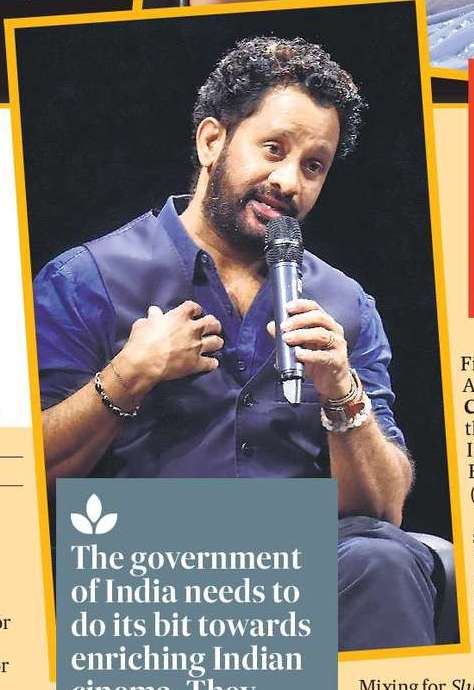
Oscar winners Resul Pookutty and Guneet Monga, as well as voting member of the Academy, Carter Pilcher, discuss pivotal factors that matter in Indian cinema’s journey to the Oscars
Monika Rawal Kukreja (HINDUSTAN TIMES; November 25, 2023)
Winning an Oscar holds a different emotion for everyone. Some call it a fixation or an obsession, some look at it as the ultimate milestone, while for others, it’s a far-fetched dream they hope to fulfil one day. But for the majority of filmmakers — Indian or anywhere across the globe — the Academy Awards qualify as the highest benchmark of creative recognition.
Discussing various aspects of this subject, Sonal Kalra, Chief Managing Editor, Entertainment & Lifestyle, Hindustan Times, moderated the enriching In-Conversation session, The Road to Oscars, with speakers comprising Oscar-winning producer Guneet Monga, Oscar-winning sound designer Resul Pookutty and Chief Executive of ShortsTV and voting member of both the Academy of Motion Picture Arts and Sciences (AMPAS) and British Academy of Film and Television Arts (BAFTA), Carter Pilcher, at the ongoing 54th International Film Festival of India (IFFI) in Goa.
Not hesitating in stating that he “can’t understand why we are so fixated with Oscars,” Pookutty, who won an Oscar for Best Sound Mixing for Slumdog Millionaire (2008), believes that it’s not the end-all of a benchmark of a filmmaker having arrived. However, he was quick to add, “The Oscars, of course, are one of the highest achievements of recognition in filmmaking. I’d like to discuss why our films aren’t at Cannes, Venice and several other important international film festivals. I don’t think the Oscars are the end of everything, but at the same time, they’re one of the most recognised recognitions all over the world for filmmakers.”
Whereas, Monga, whose production The Elephant Whisperers (2022) recently won an Oscar in the Best Documentary Short category, said, “Distribution is the key. Awards come later. Films that are distributed in the US have a head start in the race for Academy Awards. You need knowledge of the system, a strategy and the right partners. The committee that chooses films for the Oscars in India must optimise the chances of getting the film shortlisted... You can’t be selected and then suddenly try to campaign in two months.”
Pookutty stressed, “The government of India needs to do its bit towards enriching Indian cinema. They need to set up a fund, have some kind of tie-up with one of the biggest PR agencies in US, and say, ‘Look, we are sending this film this year’. So, basically, if the government uses a small percentage of the entertainment tax it collects, doing so will streamline the process and help push our films to the Oscars. Also, this will give independently produced films a chance at that stage.”

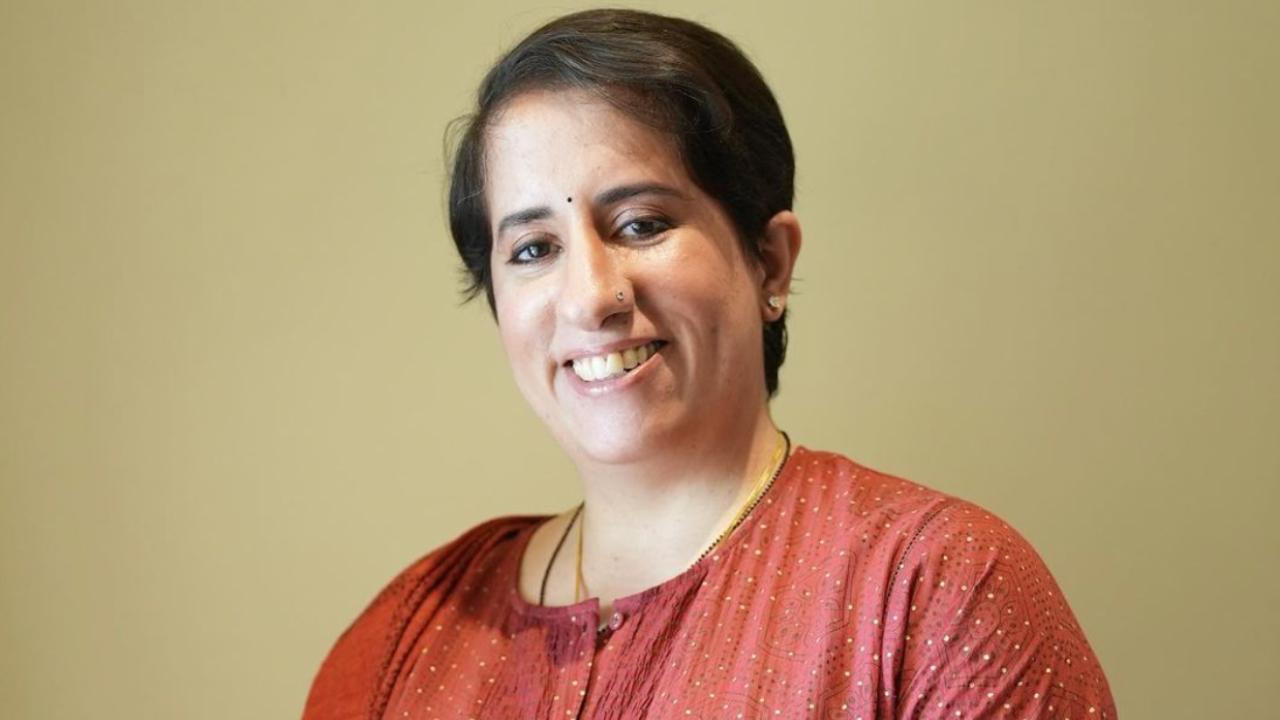
I’ll win Oscar for an Indian feature film-Guneet Monga
2:50 PM
Niharika Lal (BOMBAY TIMES; November 18, 2023)
Earlier this year, after winning an Oscar for The Elephant Whisperers, when Guneet Monga was about to make her speech, then the music started and she was cut off. She ended up screaming, ‘This is India’s first Oscar, for an Indian film’. When she shouted out, Riz Ahmed, Malala Yousafzai and several other filmmakers cheered in the audience. That moment wasn’t telecast.
As a feature film producer, Guneet says her next dream is to get an Oscar for an Indian feature film. “I also have to go back and finish my speech that was cut off,” she said during a discussion titled, ‘Building the India story globally, one film at a time’ at the recently concluded Dharamshala International Film Festival in Mcleodganj.
‘I’LL WIN AN OSCAR FOR INDIAN FEATURE FILM, I ALSO HAVE TO GO BACK AND FINISH MY SPEECH THAT WAS CUT OFF’
In response to the question, ‘Do you believe you are pride of India?’ Guneet replied, “I’m the pride of India. I’m the best producer in India. I do believe that. In 2018, a book on women changemakers had a chapter on me. The last line of the chapter is, ‘Do you think India will win an Oscar?’ and I said, ‘I will win an Oscar.’ I said, ‘I’m winning it, and it’s on the way’. It was 2018. In 2019, we won for Period: End Of Sentence. But on that film I was an EP, so I did not get the trophy. I thought, ‘Oh! I told the universe the wrong thing.’ Then I told the universe ‘I need the trophy’, so now in 2023, I have the trophy. Now, I’m telling the universe (that I want to bag an Oscar) for an Indian feature film. Shorts bohot achhi baat hai, but now feature film because I’m a feature film producer. That’s also happening. I have to also go back and finish my speech that was cut off.”
‘NOW I WANT TO DO (FILMS ON) CRAZY RICH INDIANS’
When I started in independent filmmaking, my dream always was to do something like Monsoon Wedding – something that the whole world watches. You go to a tiny village in some part of the world, and people are like, ‘I have seen your film.’ That dream got fulfilled with The Lunchbox. Then I saw a new dream – of course, I want to win an Oscar. I’m not saying I know how to. But you do so much, and you show up with that intention, and something happens. I definitely wanted to tell brown stories to the world. I now want to do (films on) ‘Crazy Rich Indians’; I now want to do ‘Brown Panther’; I now want to do ‘Indian Jurrassic Park’! I want to cross the threshold of brown films in the billion-dollar industry. I’m going to figure out how to do it in the next decade.”
‘I WAS TOLD – YOU’RE TOO PUNJABI’
When I was new in Mumbai I was told, ‘Oh my God! You are too Punjabi, you are too loud.’ I had to learn how to talk. People used to say, ‘You are a hustler,’ and that was a bad word. And I internalized it. I was like, ‘Is it a bad thing to want to make a film and just be so excited about it that everybody who meets you, you tell them – you know this?’
‘THE LUNCHBOX DISTRIBUTION IN INDIA MADE ME THINK THAT I NEED TO BE MAINSTREAM’
Guneet said that her turning point in understanding films was The Lunchbox, which gained global recognition but couldn’t find any distributor in India. Despite financial constraints, she took it to Cannes and sold it worldwide within 24-36 hours. However, Indian distribution remained elusive. This led her to introspect – what was she missing?
She said, “I need to speak their language. Aap kranti apne kone mein nahi la sakte... You really have to be in the thick of it to bring the change. When Karan Johar came on board for distribution, I saw magic happen. The film earned Rs. 25-26 crore at the box office. It was still the film which had no songs, most of the film is in English. Distribution was mainstream. That made me think that I need to be a part of mainstream.”
‘THOUGHT THAT THE COMMUNITY NEEDS THEIR VOICE’
In response to a question about the role of a producer, she mentioned that the most underrated aspect is creating an environment that serves the story rather than being self-serving. She underlined that no one is bigger than the story, adding, “And then once it’s ready, people just comment – ‘What is this? Nobody is going to watch it.’ With The Lunchbox, people said, ‘At least let them meet in the end. If they don’t meet, at least put a bell so the audience knows he has come home.’ For The Elephant Whisperers, everyone said, ‘Put a voiceover – get the biggest actor in the world who works for wildlife.’ But we insisted, ‘No, the indigenous community needs to have a voice. It’s a decision-making process every day.’”
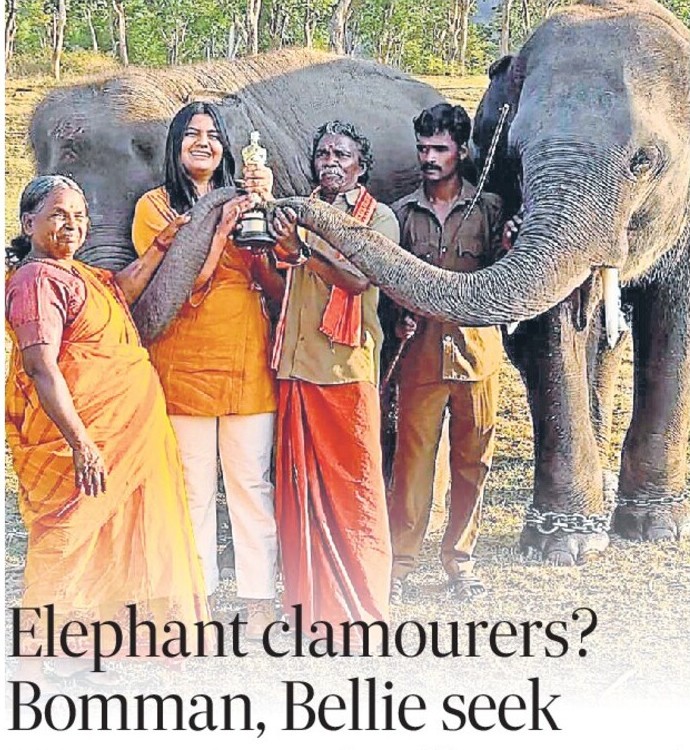
The Elephant Whisperers couple accuses makers of exploitation; producers refute
8:51 AM
Logesh Balachandran (BOMBAY TIMES; August 8, 2023)
Bomman and Bellie, the elephant caretakers who were the subject of the Oscar-winning documentary The Elephant Whisperers, have accused its makers of exploiting them and failing to compensate them adequately. Reports say that the couple claimed in an interview that the director, Kartiki Gonsalves, did not return the money that they spent on shooting a wedding sequence for the docu. They also claimed that they had no money to return home after attending an event in Mumbai for the film.
According to Praveen Raj, a social activist who has taken up their case along with advocate Mohammed Mansoor, they have moved the Madras High Court to get justice. Praveen states that Bomman and Bellie had recently approached him citing various grievances on how the director and the team have not kept their promises.
Praveen says, “The director promised better housing conditions, financial support for their granddaughter’s education and more, but the team hasn’t got back to them on these. After repeated neglect and their calls being avoided, Bomman and Bellie are heartbroken and have decided to take the case to the court.”
However, a source close to the director tells us, “There was never any promise of a house or vehicle. Whatever money we had agreed on in the contract was given. Whenever they travelled for anything, everything was taken care of. They had someone who was chaperoning them from the forestry department and everything was taken care of.”
KARTIKI IS NOT EVEN READY TO TALK TO US PROPERLY: BELLIE
Bellie, who was recently appointed as the first permanent woman elephant caretaker in the Theppakadu Elephant Camp, tells us, “The case was initiated by the lawyer who saw our plight and found out that we had not received any remuneration from the makers of the documentary. We don’t expect some huge help from them. They could at least repair the house where I’m taking care of my grandchildren and my injured son all by myself. When the lawyer told me about moving against Kartiki, I told them the forest department will be building a house for us, and till then, we will stay in this hut. But the lawyer said that they have made a lot of money and they should have given us at least some remuneration for the hardships they put us through. Kartiki has hurt us so much. While making the documentary, they said that they will definitely help us if the documentary does well. But now, she is not even ready to talk to us properly.”
ALL CLAIMS MADE ARE UNTRUE: DOCU’S MAKERS
In response to the allegations, the production house Sikhya Entertainment and the film’s director have sent out a statement that “All claims made are untrue. We have a deep respect for all of the contributors of this story, and remain driven by the desire to create positive change.”
---------------------------------------
HINDUSTAN TIMES (August 8, 2023)
Mahout couple Bomman and Bellie, who featured in the Oscar-winning documentary The Elephant Whisperers earlier this year, have sent a legal notice to Kartiki Gonsalves, the director of the film, seeking Rs. 2 crore as a “goodwill gesture”.
The legal notice says that Gonsalves got financial aid from Prime Minister Narendra Modi and the Tamil Nadu government and that the couple was promised a proper house, an all-terrain multi-purpose vehicle and enough financial support as a one-time lump sum payment (without stating any amount) as compensation for their time.
“Gonsalves had promised them monetary help as well as help with the education of Bellie’s granddaughter, while making the film. But she now refuses to give even a fraction of the enormous profits made by the film,” Pravin Raj, a social activist-lawyer and acquaintance of the couple, told PTI.
In a response sent to advocate Mohammed Mansoor, who is handling the case, the notice mentions that Sikhya Entertainment Pvt Ltd, which backed the documentary, “has flatly refused help”, stating that Kartiki has “already given money to the couple”.
The company issued a statement to the agency, which read: “The goal in creating The Elephant Whisperers has always been to highlight elephant conservation, the tremendous efforts of the forest department and its mahouts, Bomman and Bellie... All claims made are untrue. We have deep respect for all of the contributors of this story and remain driven by the desire to create positive change.”
Big actors who are also big producers don’t see you as an equal-Guneet Monga
8:11 AM

Vinay MR Mishra (BOMBAY TIMES; July 6, 2023)
After bagging an Oscar earlier in February for The Elephant Whisperers (the Best Documentary Short category), filmmaker Guneet Monga finally feels that she has been accepted in the film industry. “Post Oscars, I’m getting the love that I thought I’d get back in 2013 when The Lunchbox released. But it has taken a decade to be accepted and celebrated as a producer and filmmaker,” she expresses.
‘In India, if you have money, you can become a producer’
Guneet believes that being a producer in India, especially a woman, invites several prejudices. Talking about the kind of bias she faced, she says, “It happened all the time, especially when you talked to big actors who are (also) big producers. They don’t see you as an equal. They don’t know what you can bring to the table. I have been in rooms with very big actors, and they’d say, ‘Acha aap script lekar aaye ho, but what will you do?’ I would be taken aback. In India, if you have money, you can become a producer. But that is not the case abroad. Producing is an art, people study film production.”
‘We are born with patriarchy, feminism is something we learn’
As we further discuss gender inequality, Guneet admits that “something shifted” for her “post the #MeToo movement” in India. “There was a lot of suppression, there was a camaraderie that was missing. That movement united a lot of people and reminded them that it is okay to feel and express. I realised that in my previous company, I had produced more than 20 films and none of them were directed by a woman. That was my moment of realisation - What am I doing in this position of power? We are born with patriarchy, feminism is something we learn,” she elaborates.
I never gravitated towards monetary gains, says Guneet
Despite producing a dozen films, Guneet confesses that she “lived under an imposter syndrome”. “You often think you are a fluke, itna hi aata hai. But over the years, I have realised that mujhe mera kaam aata hai and I can do even better. Now I feel empowered through my work and ability. Early in my life, I suffered a personal loss when I lost my parents in my 20s. I never gravitated towards monetary gains. I wanted to make a difference. When you experience grief so closely, there’s a mind shift that happens. You derive meaning from your work,” she says.
Ayushmann Khurrana, Manoj Bajpayee, Hansal Mehta raise thought-provoking points at FICCI Frames
3:52 PM
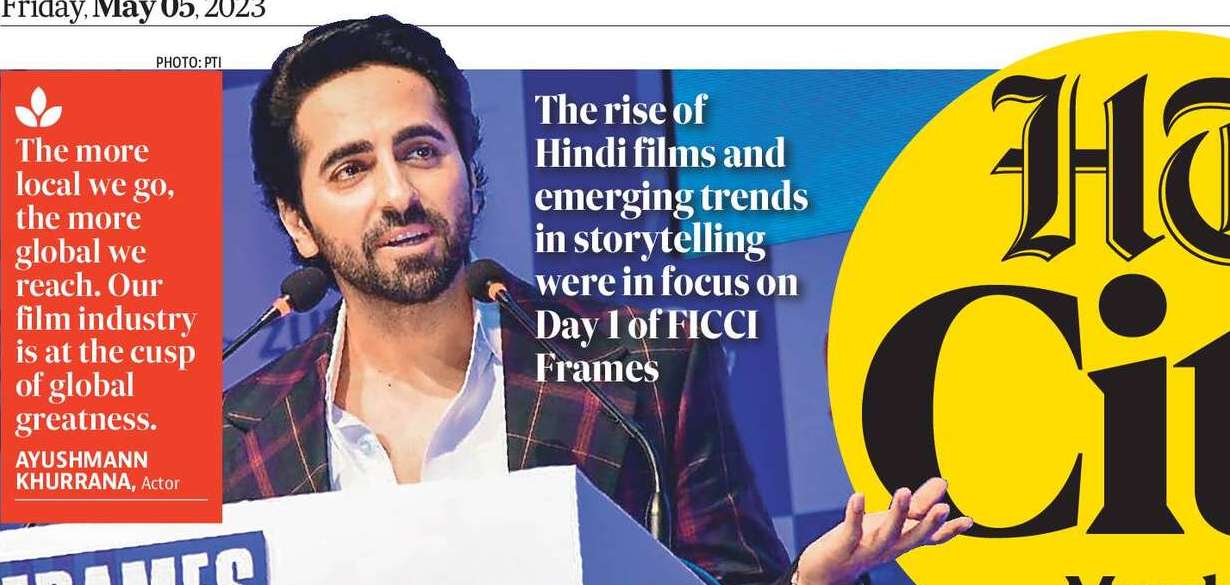
The rise of Hindi films and emerging trends in storytelling were in focus on Day 1 of FICCI Frames
Rishabh Suri (HINDUSTAN TIMES; May 5, 2023)
Local stories and the changing face of entertainment through OTT — the opening day of FICCI Frames 2023, being held in Mumbai, was all this and more. It kicked off with a fireside chat with actor Ayushmann Khurrana, who was happy and surprised with India bagging an Oscar for the documentary The Elephant Whisperers.
“Ten years ago, I went to a wildlife sanctuary at the tri-junction of Karnataka, Kerala and Tamil Nadu, and witnessed first-hand the relationship between man and animal. I never thought that in 2023, that relationship would be spoken of worldwide and give us an Oscar. The more local we go, the more global we reach. Our film industry is at the cusp of global greatness,” Khurrana said, adding that he never imagined his choice of quirky, socially relevant subjects will come to be called ‘the Ayushmann genre’.
THE FILMMAKERS ASSEMBLE
It was a fascinating conversation between four auteurs of Hindi cinema: Hansal Mehta, Sriram Raghavan, Abhishek Chaubey and Sudhir Mishra. Mehta started off with recalling his beginnings as a filmmaker and how he continues to “find myself through the stories that I try to tell”, before going on to dismiss the notion that Bollywood exists as a single entity. “Bollywood does not exist. What exists is respect for each other and each other’s work. There is a desire to share what you have done with each other. You support and appreciate each other’s work and using that to propel your work forward,” he said.
Chaubey, on the other hand, was not too happy about box-office collections being the sole measure of a film’s success. “Over the years, it has gotten even worse. This obsession with weekend numbers is unnatural... So, I think this revolution that has happened through OTT has happened in good time,” Chaubey shared.
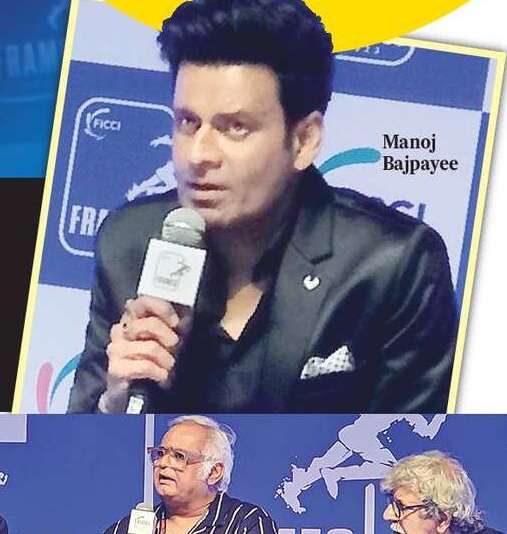
MANOJ BAJPAYEE’S REQUEST
In attendance with Gulmohar director Rahul V Chittella and his co-actor from the film, Utsavi Jha, Bajpayee asked the audience if they had seen the film yet. When not many hands went up, the actor quipped, “Theatres mein aati hain films, aap nahin jaate. Ab OTT pe aa rahi hain, tab bhi nahin dekhte!” On the power of content, he added, “After watching Gulmohar, my daughter went to the bathroom and howled. She washed her face, came out, and then told me that the dadi in the film (played by Sharmila Tagore) reminded her of her nani, who had passed away last year. That is the impact.”
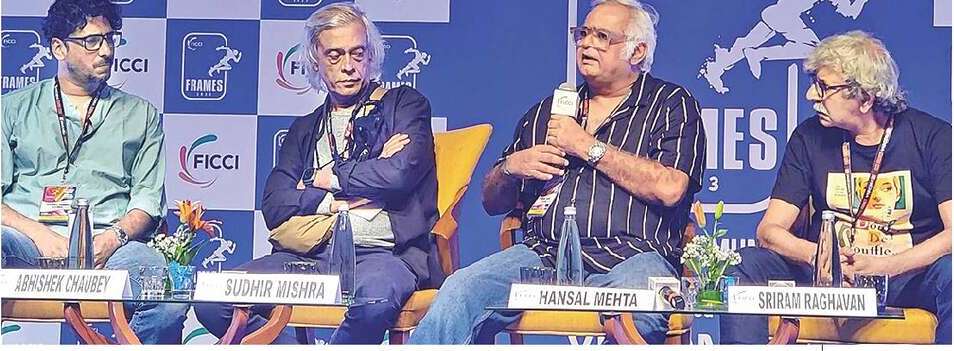
(L-R) Abhishek Chaubey, Sudhir Mishra, Hansal Mehta and Sriram Raghavan PHOTOS: RISHABH SURI/HT
Shaadi, Oscar, films: Guneet Monga now wants a small break: "Literally for me, it’s ‘everything everywhere all at once’"
8:07 AM

Rishabh Suri (HINDUSTAN TIMES; May 1, 2023)
From getting married to winning a coveted statuette for her documentary The Elephant Whisperers, the past few months have been nothing short of eventful for Guneet Monga. Now, the Oscar-winning producer just wants to take a pause — and the month of May seems to be her designated downtime.
“April was really busy; my show Gutur Gu released. In May, my film with (actor) Sanya Malhotra [will be out]... I know it sounds ridiculous, but I really want to take some time off. Shaadi bhi kari, Oscar bhi [jeeta], aur do-teen releases bhi hain. Literally for me, it’s ‘everything everywhere all at once’,” says Monga, in a witty reference to the award-winning film of the same name.
An Oscar win would naturally translate into more offers, and so is the case with the 39-year-old: “Yes, there is a massive influx of work offers, both nationally and internationally. But I have just not had time over the last month... I am literally telling people, ‘Meet me in June.’”
In all of this, has she had the chance to process her historic win? “I’ve had no time to do that! [But] I am just grateful for all of it and for the love the country has been giving us,” she says.
And to reciprocate this love, Monga has been carrying the trophy along everywhere, letting people hold it and feel it: “It (the statuette) is for the whole country, so why not? All of us manifested it together!”
In my 16 years of filmmaking, I had never seen this kind of fan art-Guneet Monga
8:35 AM
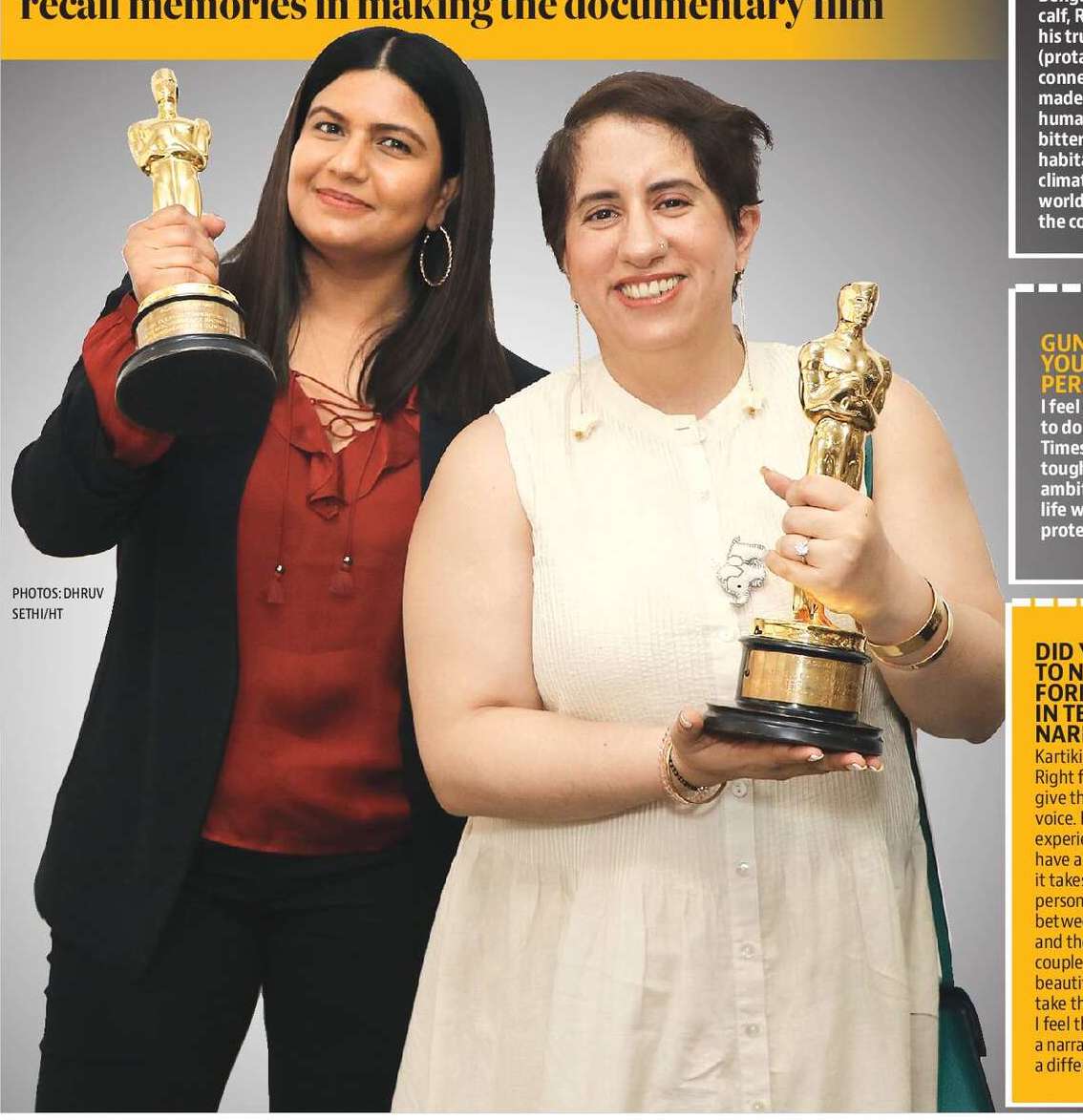
In a visit to HT City, producer Guneet Monga and director Kartiki Gonsalves talk about their historic win at the 95th Academy Awards and recall memories in making the documentary film
Compiled by Sugandha Rawal (HINDUSTAN TIMES; April 1, 2023)
Tell us a bit about the process of green-lighting a story or a script?
Guneet: It is intuitive, but producing is an art. The process is not everyone’s cup of tea and is extremely underrated. In our country, producing is seen as somebody putting in the money. Before taking up any project, I have a conversation with myself about what it is that we are bringing to light and if there is some innovation in it. Though a film is the director’s brainchild, we are holding the light for the director and making sure that this journey is as smooth and beautiful as possible.
The documentary, about the bond between a couple and an orphaned elephant calf, has won an Oscar. How did the journey start?
Kartiki: While I was driving back from Ooty to Bengaluru, I spotted a three-month-old elephant calf, Raghu. The calf was walking by the road with his trunk wrapped around Bomman’s (protagonist’s) arms. It came across as a beautiful connection between a human and an elephant. It made me think, why is this elephant calf with a human being? That’s when I got to know the bittersweet reality of Asian elephants losing their habitat at a rapid pace due to encroachment and climate change... I wanted to put that out in the world, through the story of a sacred bond between the couple (Bomman and Bellie) and an elephant.
What were the challenges you faced while working on the documentary?
Kartiki: Observing animals in an ecosystem is a challenge because you never know what will happen next. It requires a lot of patience. Plus, the [way towards the] Nilgiris was shut due to Covid, as the officials wanted to protect the 20 indigenous communities. On top of it, I got a bad bout of Covid-19. We got worried if there is a chance of elephants getting the infection. These were some of the challenges. However, the biggest challenge was disconnecting from your human emotions. When Raghu (the elephant) was taken away, the entire crew was in tears, however, we couldn’t do anything but record.
At what point after the release of the documentary did you realize that it was being appreciated from all quarters?
Guneet: The love showered [on the documentary] has been beautiful. The OTT platform (Netflix) on which the documentary came on has a wide reach. It is like putting a hoarding on the moon. After the launch [of the documentary], the first love came through fan art globally. In my 16 years of filmmaking, I had never seen this kind of fan art. Kids started responding to it. One thing led to another and we went from strength to strength. It’s unprecedented what happened. We were shortlisted and in March, we won the Oscars. It has been a very beautiful journey.
Did you consciously decide not to go into the usual formats of a documentary in terms of having a narration?
Kartiki: It was a very easy decision to make. Right from the beginning, I wanted to give the indigenous people a voice. From all my past experiences, when you have a narrator come in, it takes away from the personal bond between the couple and the viewers. The couple had so many beautiful messages to take the story forward. I feel that when there is a narrator, there is always a different interpretation.
Do you think the Indian audience still relies on receiving validation from the West?
Guneet: The Elephant Whisperers (2022) won Best Documentary Short film — a first for an Indian production. Besides this, I was also the executive producer of Period. End of Sentence. (2018) which had won an award in the Documentary Short Subject category at the 91st Academy Awards. An Oscar is definitely the biggest award in the world in our industry. Now, it happens to be in the West and we can’t do anything about it. It is because of the Oscars that we are going places. It is a celebration of filmmaking.
Guneet, you have had a tough childhood. How do you think those experiences shaped you as the person you are today?
I feel everything adds up in life. Whenever I talk to young people, I tell them to do as many internships as possible. My first internship was with Hindustan Times here in Delhi. It gives you exposure and confidence. My childhood was tough, but full of dreams. My parents were beautiful and gave me hope and ambition. They made me a fierce and an independent person. In my world, my life was beautiful despite all the chaos, property feuds and fights. My parents protected me from it and let me dream. And such exposures continue to help me.
Guneet Monga was hospitalized after Oscar win, reveals M M Keeravani
8:31 AM
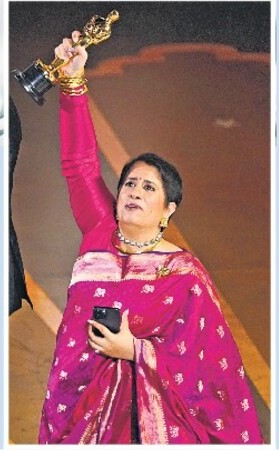
HINDUSTAN TIMES (March 27, 2023)
India created history at the 95th Academy Awards by winning two Oscars, one in Best Original Song category Naatu Naatu (RRR, 2022) and the other for Best Documentary Short film category The Elephant Whisperers (2022). Days after this development, M M Keeravani, the composer of Naatu Naatu, has now revealed that Guneet Monga, producer of The Elephant Whisperers was hospitalized after her win.
While talking about his excitement on receiving his first Oscar, Keeravani went on to reveal that it was ‘not to an extent where you go breathless’. In an interview with Galatta Plus, Keeravani said, “The universe was listening to my prayers and it happened. But it was exciting only, but not to an extent where you go breathless, like the fellow award winner – Guneet Monga. She was not given time to speak her words, so she went breathless and she was hospitalized also.”
Reacting to her speech cut short on stage at the Oscars as her film The Elephant Whisperers won an award in the Best Documentary Short Film category, Monga had earlier expressed her shock.
“There was a shock on my face. I just wanted to say it’s India’s first Oscar in Indian production, which is such a huge thing. My heart started racing as I couldn’t have come so far and not be heard. Western media is pulling up The Academy that I did not get to speak. People are so offended that I did not get the chance to deliver my speech. There are videos and tweets online expressing disappointment that I couldn’t get to speak. This was India’s moment taken away from me,” she had said.
Visitors line up to see stars of The Elephant Whisperers
8:26 AM
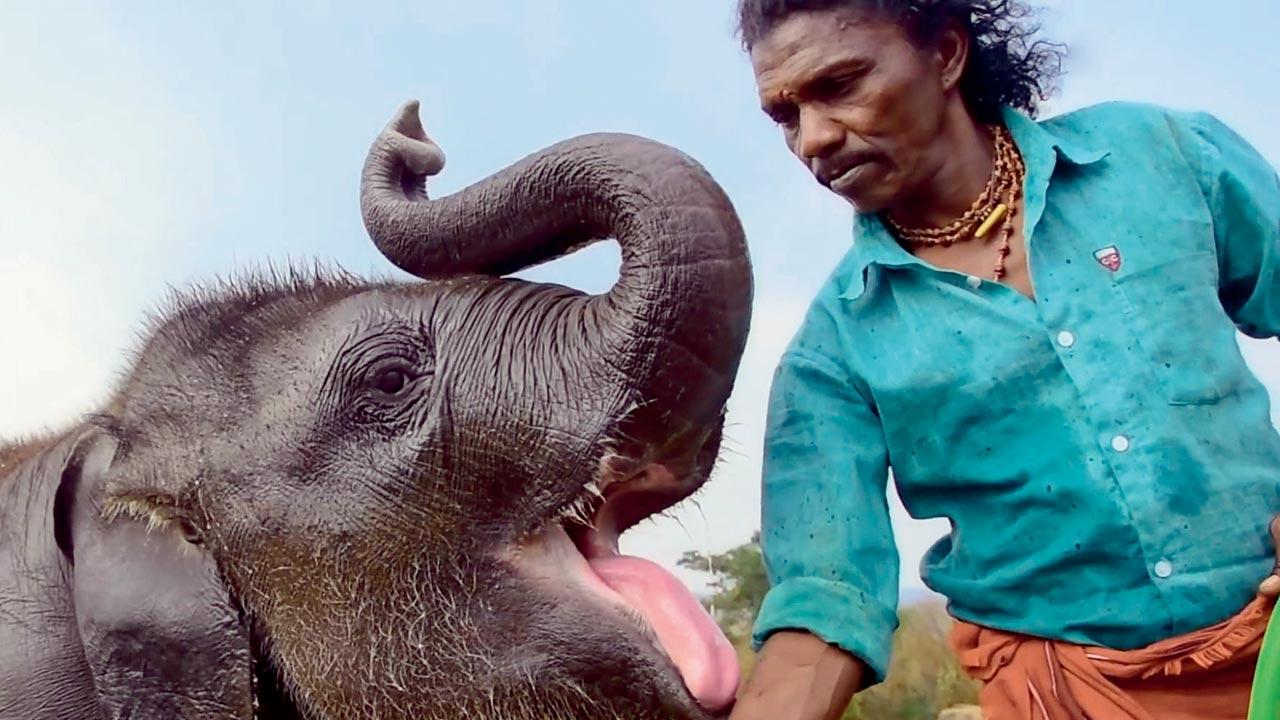
Logesh Balachandran (BOMBAY TIMES; March 15, 2023)
The newborn elephants, made famous by the Oscar-winning Indian documentary, The Elephant Whisperers, are attracting a large crowd of tourists at the Mudumalai Theppakadu elephant camp. The film revolves around a family adopting two infant orphan elephants in Tamil Nadu.
Ranjitha, a guard from the camp who monitors and takes care of the elephants at Theppakadu, says that Raghu and Ammu have been getting many visitors in the last two days. “No special arrangements have been made for the public, but people visit them in the mornings and evenings. People who know about The Elephant Whisperers winning an Oscar click pictures from a distance. Occasionally, I even inform visitors about the film’s achievement,” she says.
The camp doesn’t allow people too close to the elephants. “But there is a spot from which they can view and interact with them safely,” she says.
However, Bomman, the caretaker who features in the film, says that Mudhumalai Camp has always been a major tourist attraction, with visitors frequenting it throughout the year.
People used to say, ‘If Shekhar is on a honeymoon, Satish Kaushik will go with him’-Shekhar Kapur
8:24 AM

Ace filmmaker celebrates Indian cinema’s international triumph
Rishabh Suri (HINDUSTAN TIMES; March 15, 2023)
Filmmaker Shekhar Kapur is often credited with putting Indian cinema and makers on the international map with projects such as Bandit Queen (1994) and Elizabeth (1998). The latter had received seven nominations at the 71st Academy Awards and bagged the Best Makeup honour in 1999. As India won two trophies at the recently held Oscars, it’s only fitting to get his reaction to the same.
“I was waiting for this! After Elizabeth, I was waiting for other filmmakers to take it up, and thank God for that. It’s been years,” he says.
Kapur adds that people should celebrate Shaunak Sen’s All That Breathes equally for getting a nomination. “You shouldn’t discount All That Breathes from India didn’t win — a nomination is as good as a win. It’s a beautiful film,” he shares, adding, “So, two heartfelt documentaries (including The Elephant Whisperers) and a feature film like RRR (2022), have kind of taken the West by storm. It was an Indian melodramatic celebration of what we do best. Internationally, they have opened their arms [for Indian cinema],” shares Kapur.
He also addresses the much-debated aspect of the Academy giving in to popular demand. “It can’t be just art cinema; else it will fall by the wayside,” elaborates the director’s whose film What's Love Got To Do With It? starring Emma Thompson and Shabana Azmi is set for a release in India soon.
So, do we wait for global validation before recognizing our own talent at home? “It’s great to get an Oscar; suddenly the world knows about you, and you get [more] opportunities to work internationally. But I have constantly said that we don’t need validation. And nobody has proven it better than (filmmaker) S S Rajamouli. He has proved it through such an Indian way of making movies and made it so celebratory that the whole of the West is saying, ‘Look at this’.”
Reiterating the fact, Kapur recalls the time when Elizabeth was nominated in seven categories at the 1999 Oscars. “Everybody said, ‘Wow, look at this director’. I said, ‘Wait a minute, I am the same guy who made Bandit Queen, Masoom (1983) and Mr India (1987). Why am I suddenly this amazing director — because the West has come up and said, he is amazing?’,” says Kapur, asserting that validation can make an artiste try “to be who they are not”.
‘SATISH WAS A BRILLIANT MATHEMATICIAN’
Kapur, who had directed the late actor-filmmaker Satish Kaushik for the iconic character Calendar, in Mr India, shares fond memories of him. “People used to say, ‘Oh My God, if Shekhar is on a honeymoon, Satish will go with him’! That’s how people saw us,” he shares, adding, “Nobody knew that Satish was a brilliant mathematician as well! His death is such a loss; we have lost somebody who was yet to explore his potential, there was so much more.”

Meet Sanchari Das Mollick, editor of The Elephant Whisperers, who cut 500 hours of footage to 40 minutes
8:10 AM

THE TIMES OF INDIA (March 14, 2023)
In The Elephant Whisperers’ Oscar success, Bengal got a chance to renew its bond with the Academy Awards thanks to Sanchari Das Mollick, who shared co-editing honours for the film. Mollick was present at the award ceremony with director Kartiki Gonsalves and producer Guneet Monga’s team, becoming the first Bengali to be at the Beverly Hills in person when her film bagged an Oscar.
Bengal’s earlier tryst with the famed statuette was when Satyajit Ray was conferred with the honorary Oscar in 1992. However, Ray had received the award at a Kolkata hospital owing to ill health and a video message from the auteur was played when theaward was announced by actor Audrey Hepburn.
Sanchari and Douglas Blush edited some 500 hours of footage of Indian couple Bomman and Bellie who devote their lives to caring for orphaned baby elephants Raghu and Ammu, the final outputbeing the 40-minute-long film.
Minutes after the announcement, Sanchari told TOI: “I am still in a state of super shock. The presence of so many greats, listening to their acceptance speeches and just feeling the electrifying atmosphere – everything is so beautiful. I don’t even have words to express myself,” she said. Not a sari, Sanchari chose to wear designer wear by Payal Khandwala, who is known for making western outfits with Indian cloth.
“All I can say is dare to dream big. Work every day for your dream and they do come true,” was the message from Mollick, an alumnus of Loreto House, Calcutta International School, St Xavier’s College and Film and Television Institute of India (FTII).
Busy caring for elephants, couple hasn’t yet watched The Elephant Whisperers fully
8:07 AM
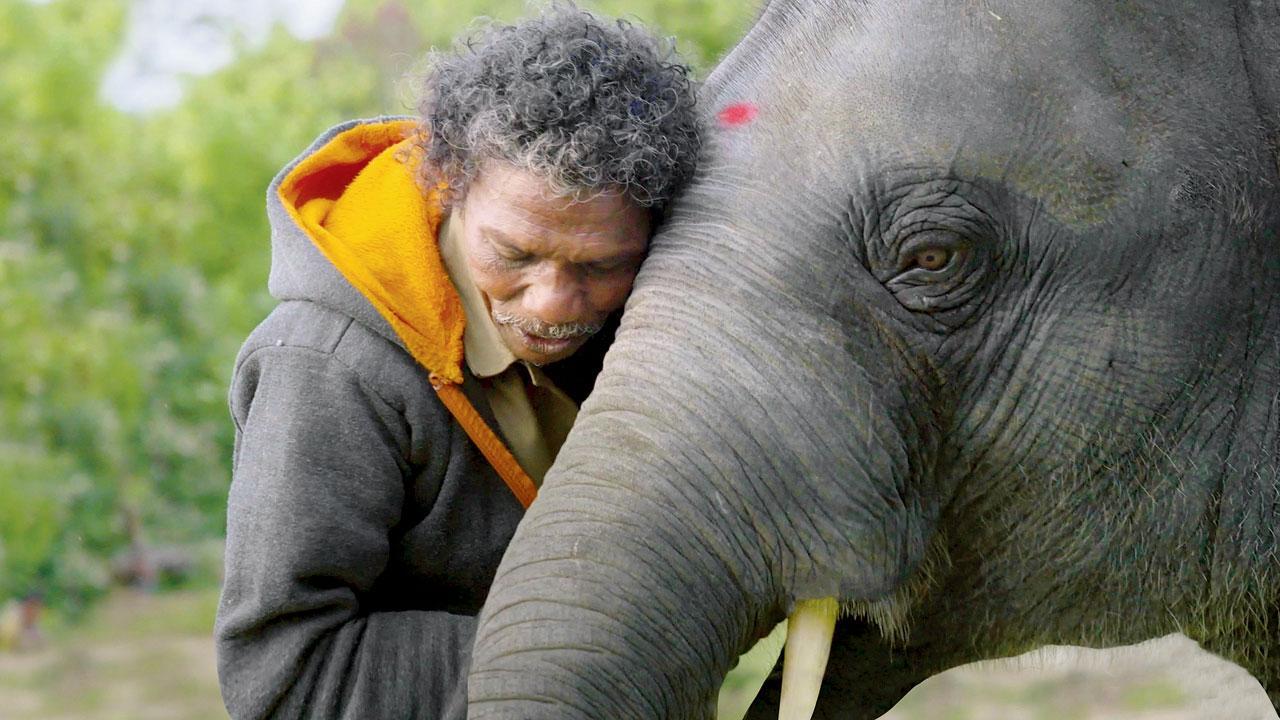
Shantha Thiagarajan | TNN (THE TIMES OF INDIA; March 14, 2023)
When the Oscar awards were announced for ‘The Elephant Whisperers’ on Monday, the hero of the documentary, K Bomman, 55, unaware of the global stir it was causing, was busy taking care of an orphaned elephant calf in Dharmapuri in Tamil Nadu. The calf’s mother was among three elephants that were electrocuted recently by an electric fence put up illegally in a farm.
Bomman’s wife Bellie, was, as usual, tending to elephants at the veterinary centre at the Theppakadu camp in Mudumalai Tiger Reserve in the Nilgiris. Their lives have always revolved around wild elephants and abandoned calves.
They were the ‘foster parents’ of the two elephant heroes in the documentary, Raghu and Bommi, for two years, after which they were handed over to other mahouts about a year ago.
Bomman and Bellie, though, are yet to watch the Oscar-winning documentary. They have watched a bit of it, but not the full film. But as news of the documentary winning an Oscar spread, Bomman and Bellie were suddenly in the news.
Asked what he felt about the Oscar award, Bomman said rather nonchalantly, “It’s good. But it doesn’t make much difference to my life. My chosen job is to rear wild elephants and calves. I’m happy with that.” Bomman has been a mahout for 28 years. Belliesaid, “It is good to hear that the filmmaker’s efforts got recognition. I am happy.”
When Raghu and Bommi entered their lives, it was an emotional journey for Bomman and Bellie. It was the first assignment for Bellie as a caretaker though she had been with other elephants assigned to Bomman.
“We took care of Raghu like our own child. We spent many sleepless nights. It was the first time we were both involved in rearing a calf. It was a great bond between us,” said Bomman.
Two years passed and adding to their joy, another abandoned female calf, just three months old, from Sathyamangalam forest, named Bommi, came into their lives. “Our joy doubled. It was a life full of happy emotions,” said Bomman.
About a year ago, Raghu (now seven years old) and Bommi (three and a half years old) were transferred to younger mahouts for care. Bomman was assigned to another elephant, Krishna, and Bellie was relieved from work. But a month ago she was reinstated as a temporary worker in the camp.
Bomman said, “My wife and I were emotionally disturbed for a while after we had to leave Raghu and Bommi. After Raghu and Bommi, I am now assigned to take care of another orphaned calf and unite it with a herd in the forest in Dharmapuri. Until this job is done, this calf is our kutty (child),” said Bomman.
The Elephant Whisperers a loud ovation for India’s unsung elephant warriors
8:05 AM
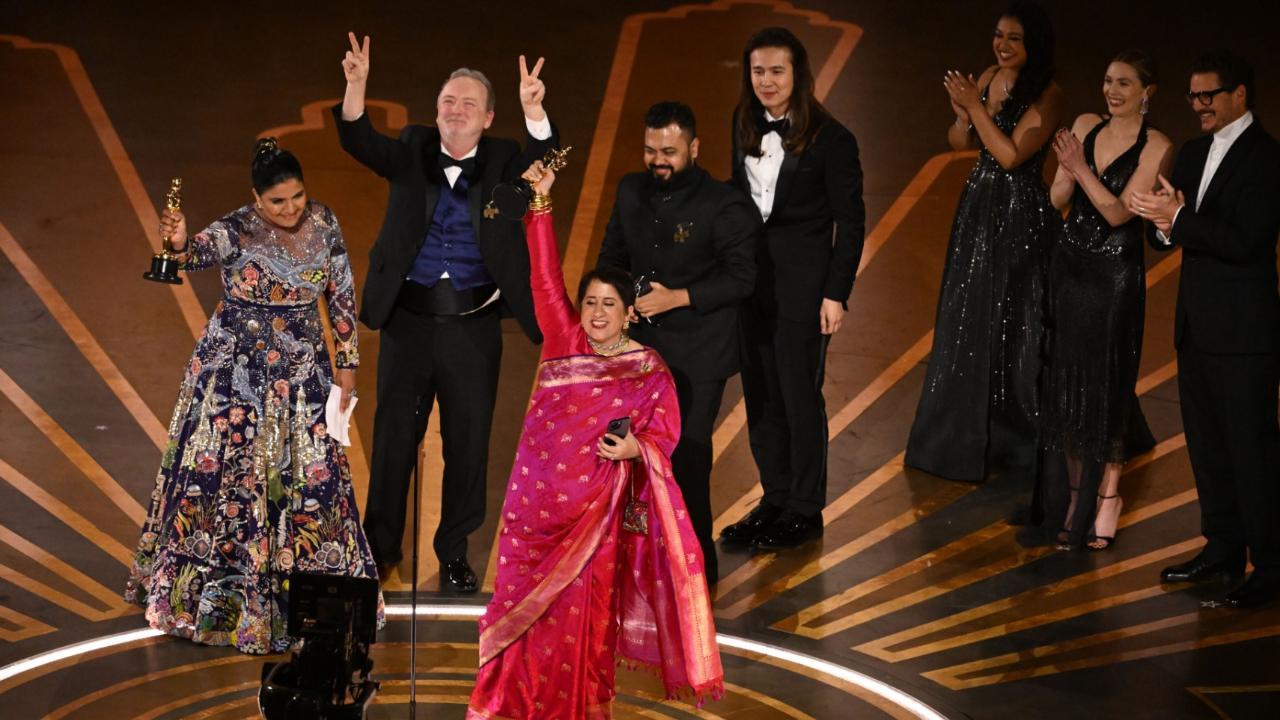
Shantha Thiagarajan | TNN (THE TIMES OF INDIA; March 14, 2023)
There are many poignant accounts of orphaned elephant calves being rehabilitated by tribal mahouts in the Theppakadu Camp at Mudumalai Tiger Reserve in the Nilgiris, a hill district in Tamil Nadu. One such tale is that of Raghu and Bommi, calves orphaned in the years 2017 and 2019, respectively, who were assigned to K Bomman, a tribal mahout, and Bellie, a tribal assistant in the elephant camp. The Oscar-winning documentary short film, ‘The Elephant Whisperers’ celebrates the dedication of the mahouts and the calves and the subsequent human-animal bonding.
It was a joyous moment for India when Kartiki Gonsalves and Guneet Monga’s ‘The Elephant Whisperers’ bagged the award for Best Documentary Short Film at the 95th Academy Awards.
Film director Kartiki Gonsalves thanked the Academy, producer Guneet Monga, her family, and dedicated the award to her motherland. She said, “I stand here today to speak for the sacred bond between us and our natural world, for the respect of indigenous communities, and empathy towards other living beings we share space with, and finally, for co-existence.”
She thanked the Academy and video-streaming giant Netflix for believing in the power of the concept, and Bomman and Bellie for “sharing their sacred tribal wisdom”.
It is not an easy task to take care of elephants when they enter the camp as a wild adult or a calf. “It was, however, easier for me when I took charge of Raghu in 2017 and Bommi in 2019 because I had grown up with elephants,” said K Bomman, the hero of the film.
Normally, when an abandoned calf is brought to the camp in the nursing stage, the forest department assigns a mahout couple to rear it. In 2017, Raghu, an abandoned one-and-a-half-month-old calf from Hosur Forest, was handed over to Bomman for caretaking. His wife Bellie was roped in by the forest department to help Bomman as the calf had to be fed milk.
Thus began the journey of Gonsalves and Monga’s ‘The Elephant Whisperers’. They hadn’t imagined winning an Oscar when they started the short film inspired by the native wisdom of the mahout couple taking care of the two abandoned calves. The short film was produced by Netflix and it was widely watched and applauded.
Tamil Nadu additional chief secretary and environment, climate change and forest secretary Supriya Sahu told TOI, “The film brought the spotlight on the state government’s conservation efforts and on the unsung heroes. In wildlife conservation we need to recognize our foot soldiers. In this connection, the Tamil Nadu government took the initiative to send a group of 13 mahouts and assistants to Thailand as part of an exchange programme to imbibe conservation skills.”
She said the conservation process should become bigger because it is directly linked to climate change. “Winning an Oscar for this kind of short film is an incredible feat,” said Sahu. She earlier tweeted, “As ‘The Elephant Whisperers’ wins the Best Documentary Short Film, it also tells the world of the great strides being made in India and in Tamil Nadu in elephant conservation. It’s also a celebration of our unsung heroes.”
All the 28 mahouts in Theppakadu Camp are capable of training wild elephants and taking care of abandoned calves, MTR field director D Venkatesh told TOI. Bomman yet again proved himself, a few months ago, in the exercise of reuniting a baby calf with its herd by displaying his own special and gentle approach, said Venkatesh.
“Now, Bomman has been assigned to take care of an abandoned calf in the process of joining the baby elephant with some herds in Dharmapuri Forest,” he said.
Asked about the Oscar win, Bomman said matter-of-factly, “I’m happy to hear about the award the film fetched. I was informed by forest officials.”
HistoRRRic: With Naatu Naatu and The Elephant Whisperers, India shines at the Oscars
8:03 AM
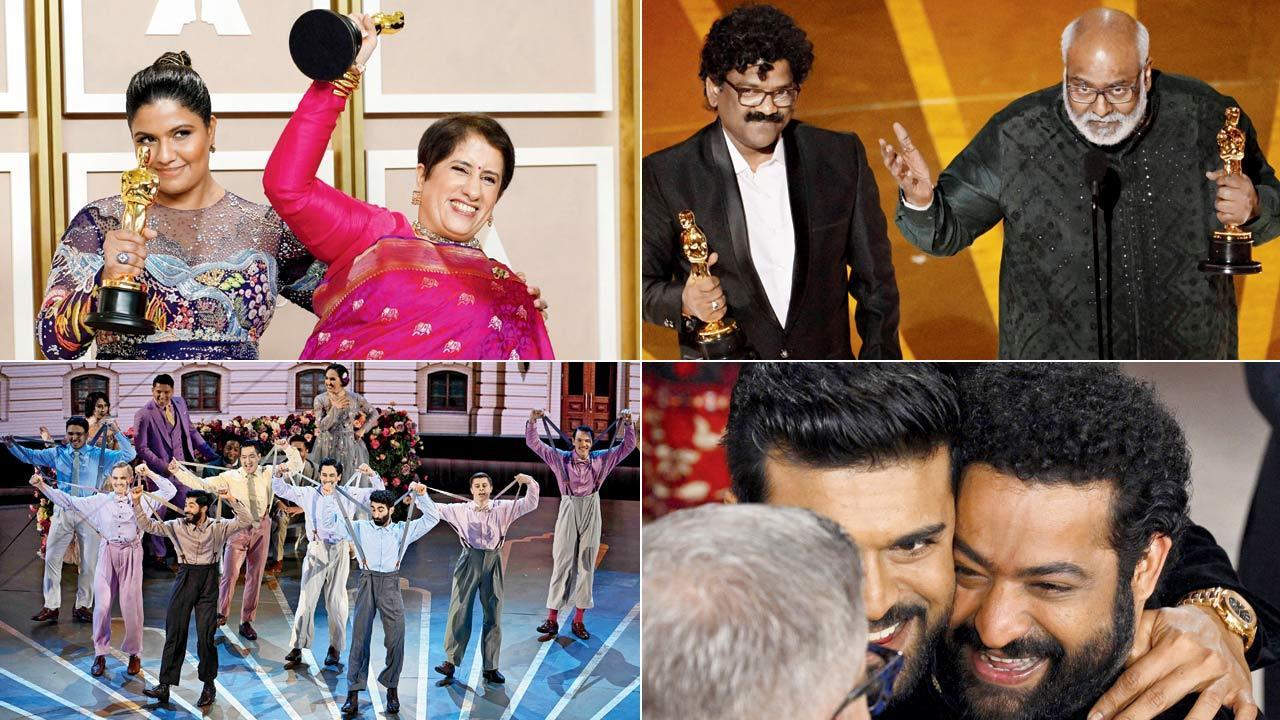
Standing ovation plus Oscar for Naatu Naatu. Gong for Guneet’s short. Two wins for Indian productions. First in Academy history!
Priyanka Sharma (MID-DAY; March 14, 2023)
Monday morning would have commenced unusually for film aficionados in India. Abreast with the knowledge that three Indian films were competing for top titles at the world’s biggest film awards night, movie buffs would have kicked off their day groggily browsing through their phones to learn if we indeed did clinch an Oscar. The country won not one, but two titles, making this event a historic one for Indian cinema.
At the 95th Academy Awards, S S Rajamouli’s RRR took home the Best Original Song title for MM Keeravaani’s composition, Naatu Naatu. The dance number that became an anthem of sorts in India, acquired international acclaim after RRR began to pick up titles across international galas, this year.
Guneet Monga and Kartiki Gonsalves’s The Elephant Whisperers earned the country its second Academy Award this year, making this the first Indian production to win an Oscar.
RRR presenter Jayantilal Gada tells mid-day, “The Oscars is always the dream and the ultimate goal [for filmmakers]. We are humbled and grateful to Rajamouli ji for partnering with us. The film has made India so proud. I congratulate the entire team.”
Gonsalves and Monga dedicated their win in the Best Documentary Short category to India. The Netflix offering about the unbreakable bond between an abandoned elephant and its caretakers earned Monga her second Oscar after Period. End of Sentence. The 2019 film also earned her a title in the same category.
“I stand here to speak of our connection with the natural world, for the respect of indigenous communities, and empathy towards other living beings we share a space with,” Gonsalves said, dedicating the win to her “motherland, India”.
Monga, who graced the stage in a pink Banarasi saree, said in a statement, “This is an incredibly powerful and historical moment. We, as two women from India, stood on that global stage making this historic win. An independent production house from India has made history to be the first ever Indian film by an Indian production to win an Oscar. My heart is racing with all the joy, love, and excitement in the moment. Today I can say, the future for Indian cinema is audacious, the future is here and not to forget, the future is truly female.”
Naatu Naatu act emerges to be Oscar highlight
The first song from an Indian film to win in the Best Original Song category, Naatu Naatu was pitted against the works of heavyweights like Lady Gaga, and Rihanna, both of whom performed their nominated songs, Hold My Hand, and Lift Me Up, at the gala. The energetic performance to Naatu Naatu, which saw singers Kaala Bhairava and Rahul Sipligunj sing live on stage, emerged to be the talking point of the night after it brought the audience to its feet.
M M Keeravaani sings
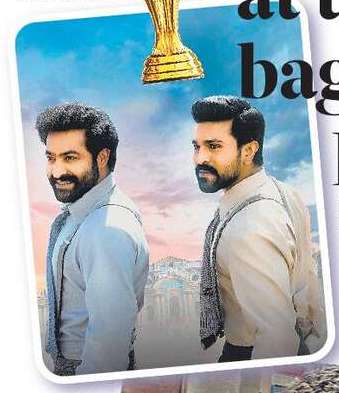
Team RRR was also lauded for celebrating Indian culture with their ensembles at the big night. While Rajamouli took to the stage in a traditional dhoti and mauve silk kurta, leading men Ram Charan and Jr NTR wore attires with statement embroidery that was reminiscent of their characters. In an acceptance speech that was as joyful as it was heart-touching, Keeravaani, who had grown up consuming the music of American duo, The Carpenters, serenaded the audience with his take on their song, Top of the world. “RRR has to win, pride of every Indian, and must put me on the top of the world (sic),” the man of the moment sang.
The big winner of the night was an American film about a Chinese immigrant. It appeared that every second win was awarded to Everything Everywhere All At Once, which took home seven of the eleven trophies it was nominated for. The biggest titles of the night, including Best Picture, Best Director, Best Original Screenplay, Best Lead Actress, Best Supporting Actress, Best Supporting Actor and Best Editing, were awarded to the Daniel Kwan and Daniel Scheinert directorial venture. It became the most-awarded film since 2008’s Slumdog Millionaire, which earned eight titles in 2009.
In his celebrated comeback of sorts to Hollywood, Brendan Fraser won the top nod in the acting category for The Whale, which sees him as a morbidly obese teacher who tries to restore his relationship with his teenage daughter. “I started in this business 30 years ago and things didn’t come easily to me. I want to say thank you,” he said.
------------------------------------------------
Sushil Rao (THE TIMES OF INDIA; March 14, 2023)
The signs appeared much before Naatu Naatu won the Oscar for Best Original Song on Monday. The first reference came roughly 14 minutes into the ceremony when third-time host Jimmy Kimmel issued a friendly warning to all winners in his opening monologue: “We want your speeches to be moving, but we also want to keep it moving. So if the speech goes on for too long, this time we are not going to play you off-stage, instead we have a group of performers from the movie RRR who are going to dance you off-stage…”
Then, as he continued announcing the names of the first set of presenters, a team of Naatu Naatu dancers danced Kimmel off the stage. The act was met with thunderous applause, as was the performance of the song later in the evening. Actor Deepika Padukone introduced Naatu Naatu to the audience from the stage, describing it as a “global sensation” and a “banger”. The audience cheered and shrieked when she teased: “Do you know Naatu? Because if you don’t, you are about to. . .”
The song’s original singers, Rahul Sipligunj and Kaala Bhairava, brought Naatu Naatu to life along with a troupe of over 20 Hollywood dancers, including American performer and artist Lauren Gottlieb. As in the film, the dance was performed against the backdrop of Kyiv’s Mariinsky Palace – the official residence of Ukrainian President Volodymyr Zelensky.
Raw And Earthy Number
Many months before RRR’s Oscars triumph, director S S Rajamouli had a clear brief for lyricist Kanukuntla Subhash Chandrabose: “It has to be a raw and earthy song”.
Chandrabose, an electrical and electronics engineering graduate from JNTU, Hyderabad, grew up in Challagarige village in Telangana’s Jayashankar Bhupalpally (earlier Warangal) district, and knew exactly what raw and earthy meant. He hit upon the idea of using the word naatu – which means rustic in Telugu – in the song, and the rest is history.
The 52-year-old has written more than 3,500 songs in his 28-year-old career, but Naatu Naatu crystallized slowly in a 19-month collaboration with music director Koduru Marakathamani Keeravani, a perfectionist. A film director told TOI Keeravani does not stop working on a song until he’s fully satisfied. “He makes no compromises. He also does not give in to suggestions when he is absolutely sure about the music that he creates.”
The effort paid off when Chandrabose clasped the Oscar in his hand, sharing the stage and honours with Keeravani, who is better known as MM Kreem in Bollywood, and Maragathamani in Tamil film circles.
Wife’s Prophecy Fulfilled
Before the big win, Chandrabose was tense. His daughter Amrutha had called him before the ceremony. “He said he was tense and that he was switching off the phone as he did not want to speak to anyone,” she told TOI. But ultimately his wife Suchitra’s prophecy came true. At the start of the year, she had written him a letter. “I wrote in it that he would win the Oscar. I also signed the letter,” Suchitra said.
“I saw him continuously work on the song for 19 months. His hard work has paid off,” Amrutha added. The family will dedicate the Oscar to Chandrabose’s father and his late mother.
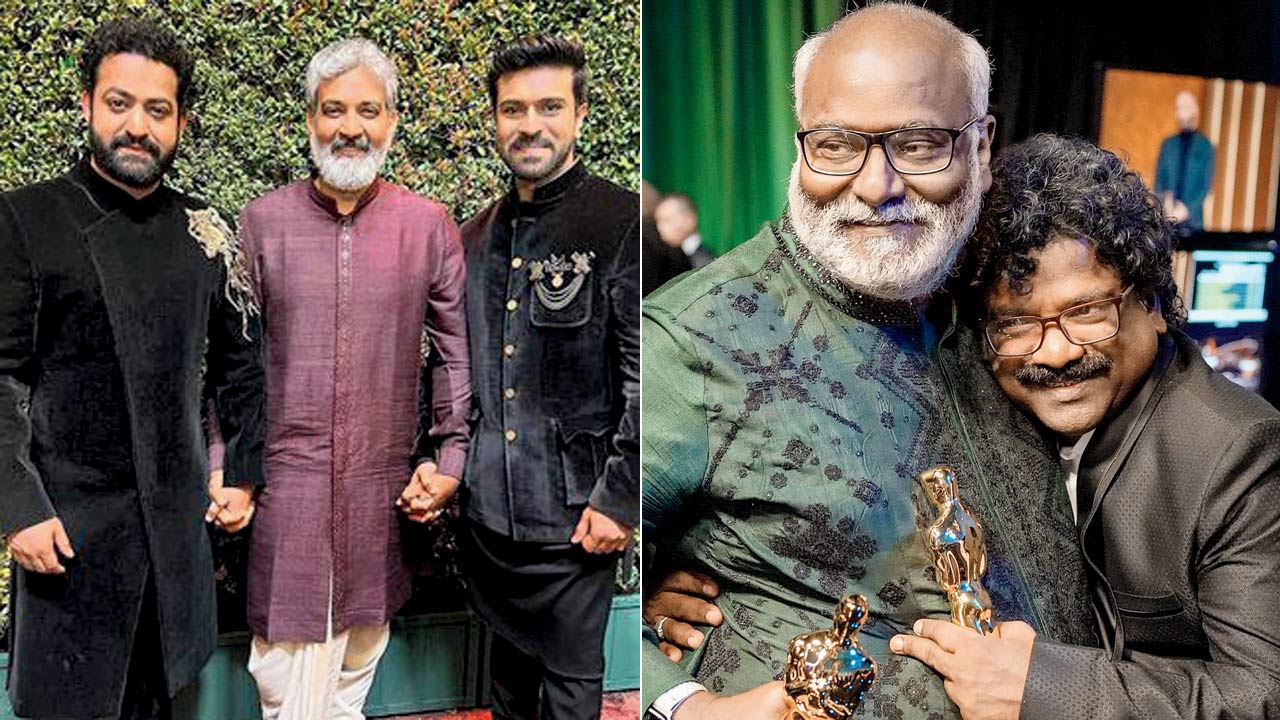
Jr NTR, SS Rajamouli and Ram Charan pay homage to India with their attires
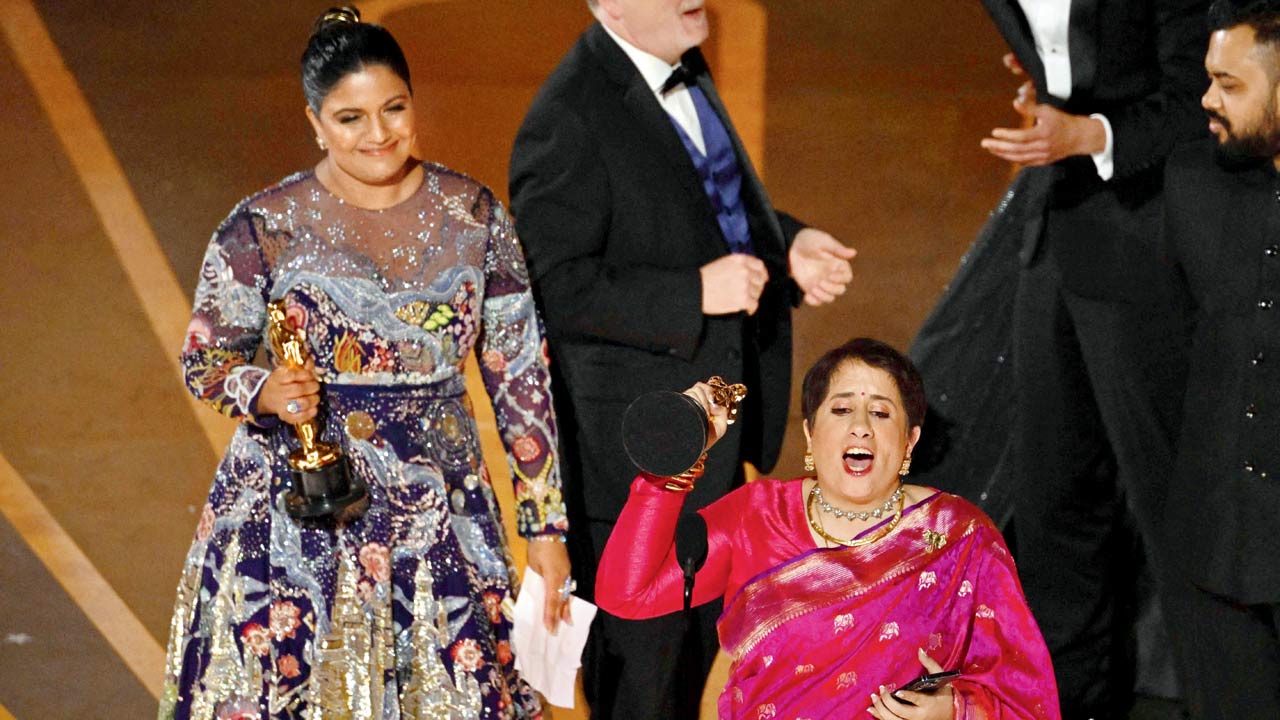
Kartiki Gonsalves and Guneet Monga
Having been in Los Angeles during award season, I can say that RRR and Gangubai were the talk of the town-Ted Sarandos
7:59 AM

THE ECONOMIC TIMES (February 20, 2023)
Netflix's viewing engagement in India grew by 30%, and revenue grew by 25% last year, said Ted Sarandos, Co-CEO, Netflix. In a conversation with Anupama Chopra, Founder & Editor, Film Companion, Sarandos spoke about growth in India, the focus on more local content and taking Indian cinema global. Edited excerpts:
So much has happened at Netflix in the last year. On January 19th, Reed Hastings formally stepped down after two decades, handing over the reins to two CEOs — you and Greg Peters. 2022 was a tough year with a steep loss in subscribers and stock price, but then in Q4 of the same year, the service added 7.5 million subscribers, beating analyst forecasts. It’s been a roller coaster ride. What is your top priority right now?
Four years ago, Reed spoke at this conference, and post-transition, this is also my first international visit to this conference. It's so good to be here today. The first half of last year was pretty rough, as we got off to a slow start recovering from Covid-19, and we had to navigate a whole lot of uncertainties, including shutting down our operation in Russia, where we had a million subscribers. But in the second half of the year, we really kept moving. I think it speaks to the company we've built, filled with incredibly smart and resilient people. We got singularly focused on reigniting growth and started to focus on content and programming around the world. We even built an ad product from scratch in six months that worked worldwide. We started with hits like Stranger Things Season 4 and rolled into big global phenomena like Wednesday, with back-to-back hits from all of our content around the world.
India has always been a priority market for Netflix, but the general perception is that it’s been a bit of a hit-and-miss experience for Netflix here. Earlier, you had said that “there is a trial-and-error period”. Being a matcher of stories to audiences is hard work, and it’s very fluid. Would you say the team is now better at it?
I believe that our original projects are improving every day, and I think it's hit or miss when entering a new market. In my experience, what works in one country may not work in another, and it's essential to be on the ground to understand consumer tastes, culture, industry, and the challenges faced by creators in that country. In India, for example, we noticed a rich cinema culture and a lack of focus on television, which led us to create Sacred Games, our first attempt at combining cinema principles with television. Now, we've produced 100 original projects in India, with 28 of them released just last year, and our upcoming slate of films and series for the next year looks stronger than ever. We've invested heavily in India, not only in production but also in having a local team that understands the local culture, storytellers, and audience. Our team running India is based in India, which gives us a big advantage over companies that try to run India from California and get frustrated early on. Our office in Mumbai has 250 people, and we also have an office in Delhi. All of this allows us to create great content in India.
There are lots of numbers and ranges floating around this industry to suggest success and scale, and the Netflix subscriber number seems smaller if we were to take these unverified standards at face value, but then there are engagement figures from credible third party sources like ComScore and App Annie, where Netflix leads the pack with 74% engagement while everyone else is declining. What is the real measure of success? And how does Netflix India measure up?
For me, as Netflix, an absolute measure of success starts with engagement. We ask ourselves, “Do people care enough to spend their viewing time with us?” Do they choose to spend their screen time with us instead of the other options out there? That's why I believe the engagement metric is so important. In India, I've had the best year of our existence. I’m proud to say that the viewing engagement in India grew by 30%, and our revenue grew by 25% last year. This wouldn't have happened if it wasn't tied to that engagement metric. I understand that a lot of measurement around subscriber numbers makes for nice headlines, but they're not a real business metric for us. We need to see what's behind that subscriber number. Is there engagement, is there revenue, and is there profit? For Netflix, the answer is yes!
One of the big successes of Netflix was taking Indian cinema global. We saw the success for RRR and Gangubai. The storytelling simply excited viewers globally.
In my opinion, what's truly remarkable about RRR and Gangubai Kathiawadi this year is that they represent an inflection point, a change in distribution or storytelling, or an alteration in audience appetite. Having been in Los Angeles during award season, I can say that RRR and Gangubai were the talk of the town. Everyone was discussing them, and there were 180 movies to watch on the voting site, yet these two were among the most watched, with many viewers discovering them on Netflix. That's the power of Netflix, pushing these movies into the cultural conversation and generating buzz. For many people I know, RRR may have been their first Indian movie, and it took them on a wild journey that left them wanting more. Squid Games did that for Korean content around the world, and again, it was all thanks to Netflix. It's not impossible to have a global hit, but it's very rare, and you need a distribution platform like Netflix and a system of curation that can surface things you may not know you're going to like. That's what we do at Netflix, and it's why RRR has been such an enormous success. The director himself acknowledged as much at the Golden Globes, noting that most people in the world found it on Netflix.
Another film that's worth mentioning is The Elephant Whisperers, which is nominated for Best Short Documentary at the Academy Awards this year. It's our second nomination in the short documentary category, with the first being Period, End of Sentence, which won the Oscar a few years ago. Both films are from India, and I'm proud to see them receiving recognition at such a prestigious event.
What's your top priority, now?
Reigniting the growth of our company, we have gotten to think about how there has been a lot of recent discussion about the streaming business. People are openly questioning whether or not this is a good business. Of course, it's a great business because this is what consumers want. The world is moving toward streaming and on-demand, away from linear television, away from pay television, and away from traditional movies.
Let's look at what success means in streaming. I really think there are only three business metrics. Number one is engagement. We clearly lead the way in this area around the world. The second one is revenue, do people pay? And then, because that can be reinvested in more content and more programming, it creates consumer joy. And then the third is profit—is it profitable? And among all of our peers, we are profitable. Our major competitors are not.
Tech guru Scott Galloway said Netflix spends more on content than the defence budget of Sweden and the truth is it's actually more than the defence budget which is at $17 billion a year. So how much of it is allocated to Netflix in India?
The key is that whenever we launched anywhere in the world, the first people who signed up for Netflix were probably western centric in their days, early adopters of technology, had wired broadband at home and a big screen TV and as you get more massy, you need to have more price points. So over the years, we've added multiple price points, we're rolling out an ad tier around the world. And then programming too, becomes a little more than the mainstream, you don't abandon the other program you have, you just add more.
While Indian documentaries shine globally, support at home elusive
8:05 PM

Niharika Lal (BOMBAY TIMES; February 1, 2023)
From nominations and awards at the Oscars and BAFTA to accolades at film festivals like Cannes and Sundance, Indian documentaries have made their presence felt at most major global film events in the last few years. This year, two documentaries made it to the Academy Awards shortlist – Shaunak Sen’s All That Breathes and The Elephant Whisperers, directed by Kartiki Gonsalves. Apart from these, Sarvnik Kaur’s Against the Tide bagged the Special Jury Award for Verite Filmmaking at the 2023 Sundance Film Festival, and was the only Indian film competing in the World Cinema Documentary Competition category at the fest this year.
According to filmmakers, when it comes to international festivals, Indian documentaries are ahead of their fiction peers. However, these trophies don’t necessarily lead to an immediate pay-off, and documentaries still don’t get the support they need in India.
‘OSCAR NOMINATIONS HAVE INCREASED INTEREST IN INDIAN DOCUMENTARIES’
Filmmakers say that Indian documentaries have been grabbing attention at top international festivals regularly. But it is only now, thanks to the consistent Oscar nominations, that Indian documentaries are being discussed in the mainstream.
Vinay Shukla, whose documentary While We Watched (on Ravish Kumar) won awards at the Toronto and Busan festivals last year, and An Insignificant Man (on Delhi CM Arvind Kejriwal) won several awards at international film festivals in 2016, says, “Over the last decade, we have had some incredible filmmakers who are taking risks and telling stories with the best cinematic craft. International festivals and audiences respect and support that.”
Filmmaker Lubdhak Chatterjee adds, “There has been a spotlight on Indian documentaries internationally for a while because of intriguing content featuring local stories that also present an innovative formal approach. If stories are told with an uncompromising attitude, they are bound to transcend geographical borders.”
‘FESTIVAL NOMS DON’T ALWAYS TRANSLATE INTO DISTRIBUTION DEALS’
With international recognition, are documentaries commercially viable today? Directors have varied responses to this, as it depends upon the grants they receive, and the producers and investors they have on board. However, most point out that there is no support structure for documentaries in India. Pitching and mentorship labs like Docedge Kolkata – an incubation-cum-pitching forum for Indian and Asian filmmakers – help. However, there is a need for more such platforms.
Lubdhak, who made a documentary with the PSBT (Public Service Broadcasting Trust), says that earlier makers used to have Films Division and PSBT for support, which is not the case now. A screening at Cannes, a nomination at Oscars or international recognition translates into distribution deals from studios or OTTs in some cases, but not all. Sushmit Ghosh and Rintu Thomas, directors of Writing With Fire, recently told Deadline how they did not get a global distribution deal despite two awards at Sundance 2021. The Oscar nomination was a gamechanger, though.
Utpal Kalal, whose documentary was screened at IFFI in 2021, says that OTT platforms in India often refuse Indian documentaries, claiming there is no audience. He says, “Not all good documentaries are going to be selected for Sundance, Oscars or Cannes, so we need a system in India that supports documentary investment and distribution. The international interest has always been there but there is so much that needs to be done in India. It should start with supporting filmmakers beyond festival screenings. Why can’t we have global distributors at IFFI and Mumbai International Film Festival? Even National Award-winning films don’t get distribution deals. These big Indian festivals need to reflect what they’re offering to the documentary genre and whether it is enough. Our Writing With Firestories are being watched by an international audience, but the Indian audience is missing out. How many people in India have watched Writing With Fire? We’re making amazing documentaries, but unfortunately we’re not able to show them to our home audience. In India, it’s almost impossible to get a theatrical release for a docu, so we’re all dependent on OTT.”
WHAT’S NEEDED FOR DOCUMENTARIES TO THRIVE IN INDIA
- Community and audience support
- Funding for documentaries, which is nearly non-existent at the moment, say makers
- State bodies like the erstwhile Films Division and NFDC need to create a system to support documentaries
- Cinema clubs or places that screen films by amateur documentary filmmakers
I have never seen happier elephants than Raghu and Ammu, says The Elephant Whisperers director Kartiki Gonsalves
8:28 AM
Debutant director Kartiki Gonsalves, whose movie has been nominated in the Best Short Documentary Film category at the Oscars, tells us about the serendipity that led to chronicling of the extraordinary life of an elephant and his caretaker
Mitali Parekh (MID-DAY; January 29, 2023)
In 2017, Kartiki Gonsalves was on her way from Bengaluru, where she was living at the time, to Ooty, her home. On the side of the road, she saw a man walking with a young elephant calf. “They were heading for their evening bath,” says Gonsalves over a video call from Seattle. “I had never seen a calf so young. It looked up at the man often, and the man looked at him with obvious fatherly love. They were headed down to the water for the elephant’s evening bath, and I got off the car and followed them. Their bond was so obvious and deep. The man talked to the calf all the while, and the calf would wrap his trunk around the man’s arm and was clearly attached to him.”
That was Bomman and Raghu. The movie, The Elephant Whisperers, that 36-year-old Gonsalves made on their relationship, has been nominated in the Best Documentary Short Film category at the 2023 Oscars.
Kartiki shot the pair over five years, in two schedules. The first one was shot in 2017 on a DSLR and her phone, and the rushes shown to Netflix which brought Guneet Mongia onboard as producer. Then came the process of applying for permissions to shoot in the oldest elephant camp in Asia, Theppakadu, within the Mudumalai Tiger Reserve. With Gonsalves based in Ooty, it was only a 30-minute drive. Through Netflix, the documentary has reached 190 countries.
Every elephant story talks about the man-animal conflict, so Gonsalves wanted to focus only on the positives. The film briefly touches upon how Raghu’s mother was electrocuted, and he was found with his tail cut off, maggots infesting the wound. Gonsalves chipped away all excess, and most of the movie is tight shots of Raghu and Bomman’s life together, and the family that builds around them—Bellie, an indigenous woman who has lost her daughter and husband; and another elephant calf, Ammu. You see Raghu spitting out the balls of millet Bellie feeds him, like any toddler, and going instead for the dried coconut and jaggery one; Raghu chiding him for licking the soap he is lathering on him in the river; Raghu chomping on a garland around his neck, and their walks into the forest together.
“I wanted to show the sacred bond between man and animal,” says the cinematographer and social and natural historian. “This is why we chose not to have a narrator; it’s Raghu and Bomman telling their story.”
Gonsalves also wanted to give the indigenous people of the forest a voice by capturing their symbiotic relationship with their habitat, their knowledge of how to raise calves, the reservoir of natural remedies and medicines to use for them, and their ability to mimic the elephant’s natural life as much as possible. “The forests around Ooty are home to me, and I have been around elephants all my life. Honestly, I have never seen happier ones [than Raghu and Ammu].”
At adolescence, Raghu was transferred to another handler. This separation is the second moment of grief in an otherwise happy movie. “In adolescence,” says Gonsalves, “elephants become very stubborn and their primary handlers tend to pamper them. This can be dangerous. Raghu and Ammu live with different handlers now, but in the same camp and see Bellie and Bomman often.”
A love story within the love story of Raghu and Bomman, is Bellie and Bomman’s. Affection takes root between them when Bellie is brought in to help him. The two marry, and become a family of four. “It was all so fresh,” says Gonsalves of the serendipity that helped her witness and chronicle this. “It all just happened as we were filming.”
Next on her plate is a documentary about the relationship the First Nation people have with orcas in the Pacific North West. “They have a deep spiritual relationship—they worship and revere them,” she says of the project that is still in the research phase. “They believe that when you die, you become an orca; so these are their ancestors.”
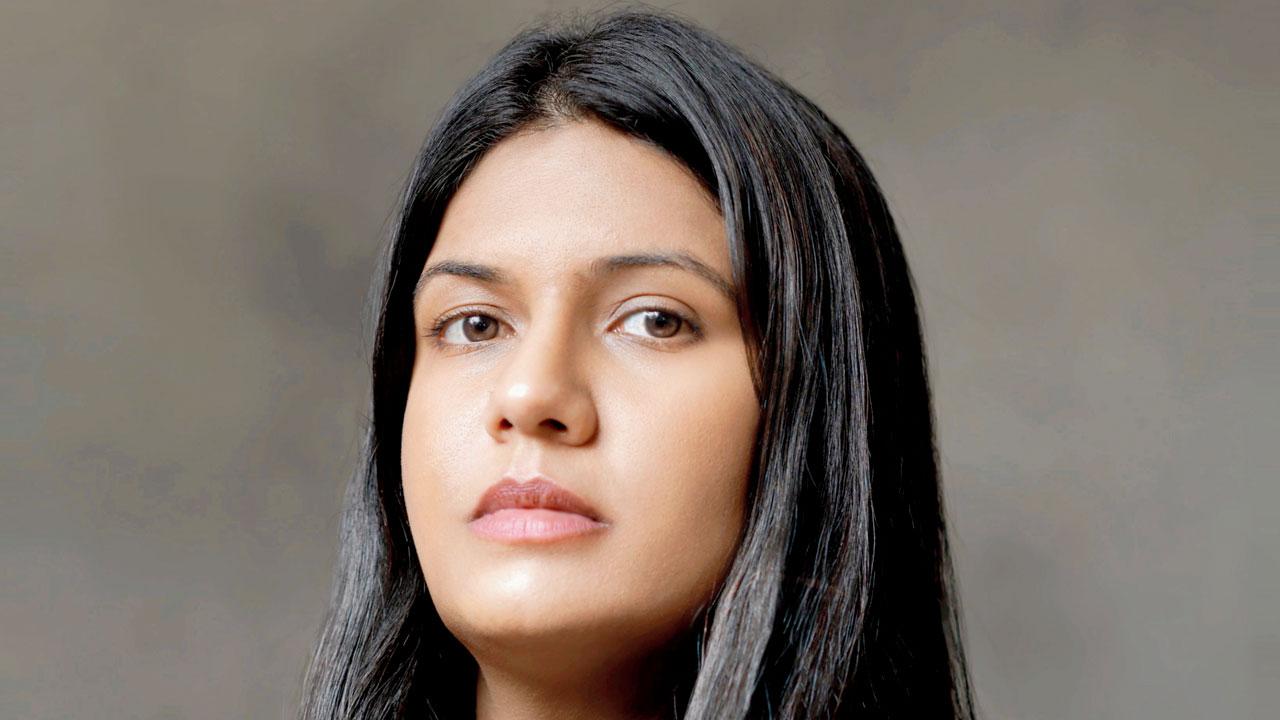
Naatu Naatu, 2 documentaries earn India Oscar nominations
9:05 AM
Ajay Sura & Sandeep Rai (THE TIMES OF INDIA; January 25, 2023)
India clinched three nominations for the 95th Academy Awards, including for ‘Naatu Naatu’ from S S Rajamouli’s blockbuster ‘RRR’ for best original song. The Telugu hit dance track won a Golden Globe earlier this month.
India clinched three nominations for the 95th Academy Awards, including for ‘Naatu Naatu’ from S S Rajamouli’s blockbuster ‘RRR’ for best original song. The Telugu hit dance track won a Golden Globe earlier this month.
The other Indian nominations for the Oscars are ‘All That Breathes’for documentary feature and ‘The Elephant Whisperers’ for documentary short.
India’s official entry—Gujarati film ‘Chhello Show’— failed to make the final five. The multiverse-skipping sci-fi indie hit “Everything Everywhere All at Once” led with 11 nominations.
------------------------------
Chandigarh/Meerut : Nominated for the Oscars for best original song, ‘Naatu Naatu’ from ‘RRR’ is set tocompete with others such as ‘Applause’ from ‘Tell It Like a Woman’, ‘Hold My Hand’ from ‘Top Gun: Maverick’, ‘Lift Me Up’ from ‘Black Panther: Wakanda Forever’ and ‘This Is a Life’ from ‘Everything Everywhere All at Once’.
“WE CREATED HISTORY!! Proud and privileged to share that #NaatuNaatu has been nominated for Best Original song at the 95th Academy Awards,” the film’s official Twitter handle posted. Composer Keeravani tweeted, “Congratulations to my team!! Big hugs to all.”
Nominated for documentary feature, ‘All That Breathes’, set in Delhi, follows two siblings, Mohammad Saud and Nadeem Shehzad, who devoted their lives to rescuing and treating injured birds, especially black kites. It has also been nominated for a Bafta Award. It previously won the ‘World Cinema Grand Jury Prize: Documentary’ at this year’s Sundance Film Festival, and the Golden Eye award at Cannes.
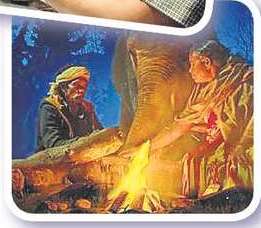
Tamil documentary ‘The Elephant Whisperers’, nominated for documentary short, captures the bond between two abandoned elephants and their caretakers. Director Kartiki Gonsalves termed it an honour.
Besides ourselves with joy, says Sen
Tamil documentary ‘The Elephant Whisperers’, nominated for documentary short, captures the bond between two abandoned elephants and their caretakers. Director Kartiki Gonsalves termed it an honour.
Besides ourselves with joy, says Sen
“We’re utterly besides ourselves with joy and a bit lost for words,” Shaunak Sen, whose documentary ‘All That Breathes’ has been nominated for the Oscars, told TOI.
------------------------------
HINDUSTAN TIMES (January 26, 2023)
History has been created. RRR, directed by S S Rajamouli, has bagged a nomination at the prestigious Academy Awards for Naatu Naatu (Best Original Song category). And as far as cherries on the cake go, there is not one but two — Shaunak Sen’s All That Breathes (Best Documentary Feature) and Guneet Monga Kapoor-produced The Elephant Whisperers (Documentary Short Subject), too, bagged nods.
In a celebratory note, Rajamouli wrote, “The main reason is Taarak (Jr NTR) and (Ram) Charan’s sync and style.” He acknowledged Naatu Naatu’s dance routine, which people have tried to recreate all over the world. “Sorry for the torture but I will not hesitate to do it again,” he further wrote about the song, which will compete against Applause from Tell It Like A Woman (2022), starring Jacqueline Fernandez.
M M Keeravaani, who composed the song, told Deadline, “The Oscars involve the dreams of artistes from all over the world, which is not a joke. I’m very proud to be nominated for the first time from [South] Asia in this music category. I’m thrilled.”
Kapoor tweeted, “This film is an ode to devotion and love..an ode to selfless love for the beautiful baby ellie Raghu who felt all the emotions like us humans but only two could hear his whispers - Bomman and Bellie (sic).”
The awards show will take place on March 13, and fans will look forward to seeing the golden statuette (or statuettes!) home this time.
I am proud that a documetary from South is being acknowledged globally, says The Elephant Whisperers director Kartiki Gonsalves
8:37 AM

Logesh Balachandran (BOMBAY TIMES; January 26, 2023)
Tamil documentary The Elephant Whisperers has bagged a nomination in the ‘Best Documentary Short Film’ category at the 95th Academy Awards.
Directed by Kartiki Gonsalves, The Elephant Whisperers traces the journey of an indigenous South Indian couple — Bomman and Bellie, who have dedicated their lives to caring for an orphaned elephant calf. It’s all about the beautiful, unbreakable, sacred bond between them and how their actions impact nature over a period of time.
Expressing joy at her film being nominated for the Oscars, Kartiki tells us, “I feel proud and honoured that an indigenous documentary from south India is being acknowledged across the world. I thank the OTT platform and others who believed in this unique yet interesting story that showcases the sacred bond between man and the wild animal.”
Kartiki, who was born and raised in Ooty, says that she grew up amidst nature and has been exploring the beauty of forests from the age of three. “I visit Mudumalai quite often for photography purposes, and it’s more like my home. I have always wanted to tell stories from here, and I am happy that these stories are being recognized. It all began when I met this three-month-old baby elephant named Raghu and his caretakers. Their story touched me and also gave me insights into how elephants are losing their habitat due to encroachments and the human-nature conflict,” she says.
Kartiki worked on this documentary for five years, right from 2017. “This is a documentary and not fiction. So, I had to spend close to five years with Bomman, Bellie, and Raghu to understand their values. Also, shooting in the wild is not easy. There were other wild elephants, tigers, and leopards in the forest, and we had to make sure not to disturb their habitat. Since it’s a documentary, we can’t plan everything in advance. Every single day was a challenge, and it took years to complete this,” she says, adding, “When working with a tribal community, winning their trust first is more important. There are many deeper emotions that should be portrayed in the right way.”
Kartiki is currently abroad researching for another documentary she’s working on. “It’s about an indigenous community in Seattle. I am also simultaneously working on yet another documentary that will be shot in Arunachal Pradesh, Pune and Ladakh.”

Subscribe to:
Posts (Atom)