Showing posts with label Sutapa Sikdar. Show all posts
Showing posts with label Sutapa Sikdar. Show all posts
Irrfan Khan's fifth death anniversary: Why the legendary actor still lives on at Hiruchiwadi in Igatpuri
8:41 AM
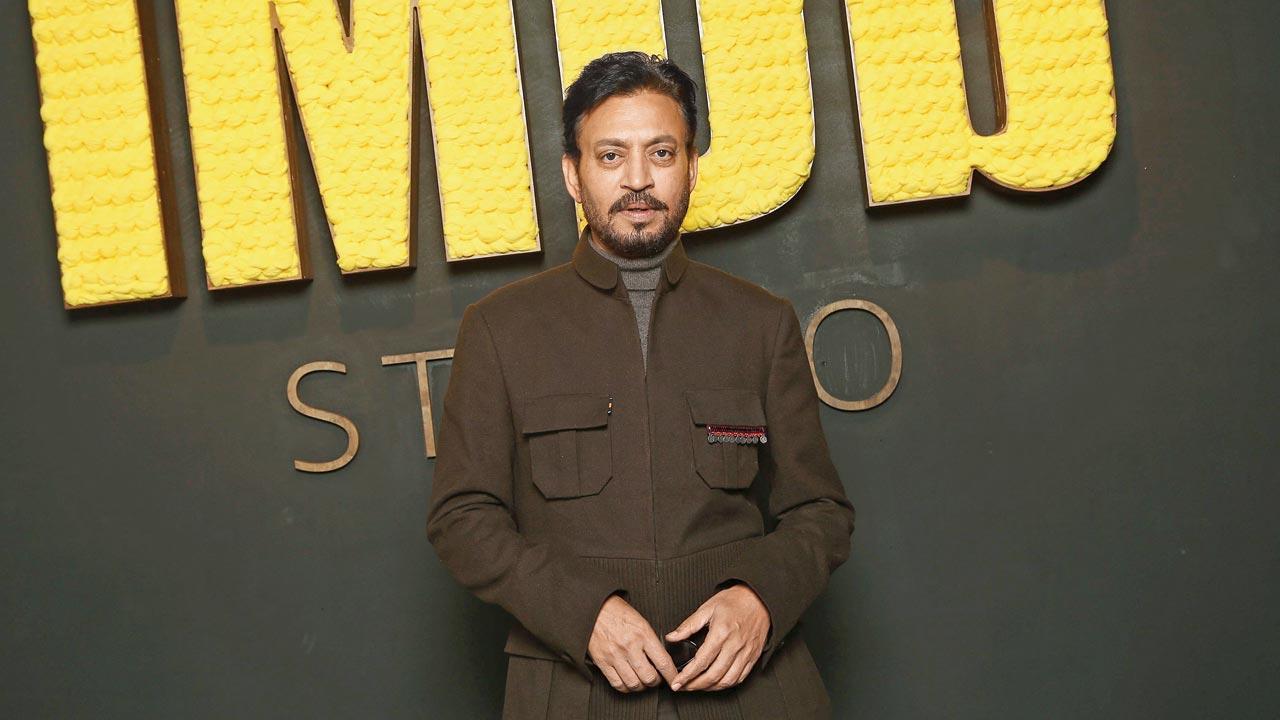
To mark his 5th death anniversary on April 29, Sunday mid-day travelled to Hiruchiwadi in Igatpuri—a village where Irrfan’s farmhouse lies untouched, and his legacy of generosity and kindness is still valued
Anand Singh (MID-DAY; April 27, 2025)
In 2010, when the late actor Irrfan bought a land parcel in a tiny hamlet in the lap of the scenic Sahyadri range in Igatpuri taluka of the Nashik district, very few people knew of him here.
By then, he was already an international star, having worked in Danny Boyle’s Oscar-winning film Slumdog Millionaire (2008), and classics such as Asif Kapadia’s The Warrior (2001), Vishal Bhardwaj’s Maqbool (2003), and Mira Nair’s The Namesake (2006), apart from many other Hindi box office hits.
It’s no surprise that people didn’t know him here, given that televisions are still a rarity in this tribal village called Hiruchiwadi. In the era of 5G connectivity, the network here is spotty, with just 3G connectivity if you’re in the right spot. When we asked a local farmer, Revati, 28, when was the last time she had watched a film, she responded, “Mee kadhi chitrapat naahi baghitla (I have never watched a film).” However, she came to know about Irrfan after he moved here, as he socialized with the villagers quite often.
It may be bewildering to many, but films are not the main source of entertainment in this tribal village. The closest film theatre from here, Victory Cinema, is around 11 km away, near Igatpuri railway station. With no state transport facility to connect Hiruchiwadi, travelling outside the village is not an everyday affair for everyone. Adults who have two-wheelers and a few families with cars are the only ones who frequently travel towards the city side.
Though just 120 kilometres from Mumbai, this tribal hamlet feels light-years away from modernity, still living in the 1990s. Old Hindi film music can still be heard on the radio sets if you stroll through the village on a quiet afternoon. The Sahyadri range surrounding it from all sides protects it in its soft fists, much like a mother coddles a baby in her lap.
It’s probably this simplicity and rawness that appealed to Irrfan, and he chose to build his farmhouse here, which was completely ready by 2015. It’s a perfect escape from the glitz and glamour of Mumbai, a city that always kept him busy and where everyone knew him.
Social media is full of stories and articles claiming that the village’s name has been changed to “Herochiwadi,” meaning “the hero’s neighbourhood” in Marathi. However, when Sunday mid-day spoke to the village Sarpanch, Ashok Pingle, it revealed what can be described as both coincidence and misinformation.
The Sarpanch explained, “The village’s actual name is Hiruchiwadi, named after Hiru Pingle, the mukhiya of the local tribal clan, who fought the British alongside the tribal revolutionary Raghoji Bhangre. Local NCP leader Suresh Bodke, who has worked for the village, proposed that the village’s name should be changed to ‘Herochiwadi’ to honour Irrfan after he passed away. But we didn’t want that. Because firstly, we are the descendants of Hiru Pingle and take pride in the fact that the village is named after him. Secondly, if two letters in the village’s name are changed—from ‘Hiru’ to ‘Hero’—it may bring popularity to the village, but it would also mean that all our documents, from Aadhaar to property papers, would need to be changed as well… It’s too long a process for changing just two letters.”
It’s a major coincidence that both “Hero” and “Hiru” have a very similar phonetic sound. The visit to the village was another lesson in the age of social media—do not trust everything you read online.
Regardless of the village’s name, the Sarpanch said the village loves its “Hero”. “The humility Irrfan showed by visiting houses around, providing livelihood to the locals by giving them jobs at his farmhouse, and his interaction with the children was something we did not expect from such a big film star. He could have arrived in his SUV with his bodyguards and chosen to stay in, enjoying the serene view and spending time only on his estate without stepping out. But he always chose to come to us.”
Ashok Pingle’s uncle, Damu Pingle, lives just a stone’s throw from Irrfan’s farmhouse, being the third house from his gate. When Irrfan learned that Damu was a tailor, he gave him the task of altering and tailoring all the drapery he had purchased for his farmhouse, including furniture covers for when the house would be closed. Damu refused to share how much he was paid for partly being involved in the “interior designing” of a film star’s house, but he mentioned it was more than all the money he made in the last five years.
When we asked Damu about his interactions with Irrfan, he said, “Aamcha bolnach zhaala nahi, kaaran tyaanna Marathi yaet nhavta ani mala Hindi bolta yaet nhavta. (We never spoke a word as he didn’t know Marathi, and I couldn’t speak Hindi).” But Irrfan’s staff did the translation for the two.
Another employment opportunity arose for Damu’s family as caretakers. It is his family that tends to the farmhouse during Irrfan’s family’s absence. As he showed this correspondent the farmhouse from outside, he further added, “I also worked on items like the tablecloths, kitchen cloths needed for regular use, and even doormats. Irrfan brought these items from outside, probably Mumbai, but they needed to be tailored to size. All the tailoring on this farmhouse is my work.”
But the real surprise came when he revealed that he had also stitched a few kurtas for Sutapa Sikdar, Irrfan’s wife. “She gave me a kurta that fit her well. I took the measurements and sewed many clothes for her for over two years.”
The trust Irrfan placed in the villagers was evident as we walked around his farmhouse. Villagers freely moved around, as there were no locks on the gates. A trophy he won for a film, along with various décor items, lay scattered on the façade of the farmhouse, yet nobody touched their beloved hero’s possessions.
Locals mentioned that Irrfan was deeply committed to community work. According to Subhash Mengal, a primary school teacher in the village, Irrfan was planning to have some films shot there, those that fit the village’s terrain—mountainous, rugged, yet green.
Mengal says, “In one of the interactions I had with him, he mentioned that film shootings would generate employment for the locals. It’s a location just three hours away from Mumbai, and it may help filmmakers save costs on VFX or travelling to distant locations. It was a very interesting prospect. You can see how disconnected the village is, despite being at the border of three major districts—Nashik, Palghar, and Thane.”
Though he never formally adopted the village, during his time here, Irrfan touched lives across all domains. A resident of the village, Eknath Pawar, told us that Irrfan had donated Rs 50,000 for a local temple, now the largest in the village.
“We mentioned that the Hanuman temple needed renovation. We didn’t care whether the donation came from a Muslim, as it was god’s work. He never cared about religion either. The funds arrived within a few days, around the time when he was already sick. It didn’t come directly from him but through Sutapa Didi.”
But closest to his heart were the children of Hiruchiwadi. Bhavrao Bandu Bangar, the former headmaster of the primary school in the neighbouring village of Patryachawada, knew how big a star Irrfan was. However, his approximately 100 students had no idea who he was. In 2015, when Bangar learned that Irrfan’s farmhouse was nearly ready and that he would be arriving soon, he went to the farmhouse to request him to meet the students. “It may have been their only chance to meet such a big film star. Meeting an influential figure at a tender age can make an impact,” he tells Sunday mid-day.
But Irrfan was seemingly busy that day, telling the headmaster, “I will come later in the day...” School ended at 5 pm, and the children waited until 5.30 pm, but Irrfan did not arrive.
Bangar says, “It was understandable. He is a busy man.” But, to his surprise, the next morning, Irrfan, along with his family, arrived at the school earlier than anyone else and waited for the students to come. Delighted that he had shown up with his entire family, the headmaster asked, “Why did you not come yesterday?” To which Irrfan replied, “I didn’t want to come empty-handed.” Bangar recalls, “He came with two cars full of school bags, stationery, sweets, and whatever he could get for the children from a nearby market in Nashik.”
A few years later, Irrfan visited the farmhouse again. By this time, the children knew he was unwell. Bangar told the students, “Hero aajaari aahe (Hero is unwell). Make bouquets for him from whatever you find on the farms.”
The students got to work immediately, and within a few hours, a hundred bouquets made from local flowers and leaves were ready. Bangar informed Irrfan that the children had brought him something this time. Soon, a hundred bouquets adorned the façade of his farmhouse. “He started crying when he saw the gesture,” recalls Bangar.
This happened towards the end of the monsoon season, and Irrfan had noticed the children walking to school with plastic sheets or nothing at all during heavy rains. Bangar shares, “Ten months later, at the onset of the next monsoon in 2018, I received two massive cartons. The sender’s address was from Rajasthan, where Irrfan originally hailed from. I had never asked for it, but even while he was receiving treatment in London for his illness, he remembered the children and the fact that the monsoons had begun, knowing they would need raincoats to go to school. I never got to see him again, as Saheb was very sick.”
Today, the plans Irrfan had for the village sit stalled, which included basic infrastructure for shooting, proper roads till the Trilangwadi Fort, modern classrooms in the primary school, and much more. Locals say his family does not visit as often, and they mostly keep to themselves, unlike Irrfan. He once told primary school teacher Subhash Mengal, “The film industry is a lonely place. I am glad to have you all.”
However, the work he did for the village remains. The children still cherish fond memories of spending entire days, multiple times, with an international star. Some now aspire to become actors. Bangar says, “Without him, even the thought of learning theatre or becoming a film star would not have occurred to these children. We are close to Mumbai, yet so far.”
The questions posed to the residents about Irrfan make them light up with pride, knowing that their village is recognised now because of their hero.
Today, the gate of his farmhouse, which opens directly in the village, has a seat that nobody sits on, next to an epitaph that reads, “We live because you reside in our soul.”

Irrfan’s farmhouse in Hiruchiwadi, Igatpuri—where he helped the village grow and found a second family. Pics/Satej Shinde
Babil Khan pe bahut zyada pressure hai, almost depression mein hai-Sutapa Sikdar
10:44 AM
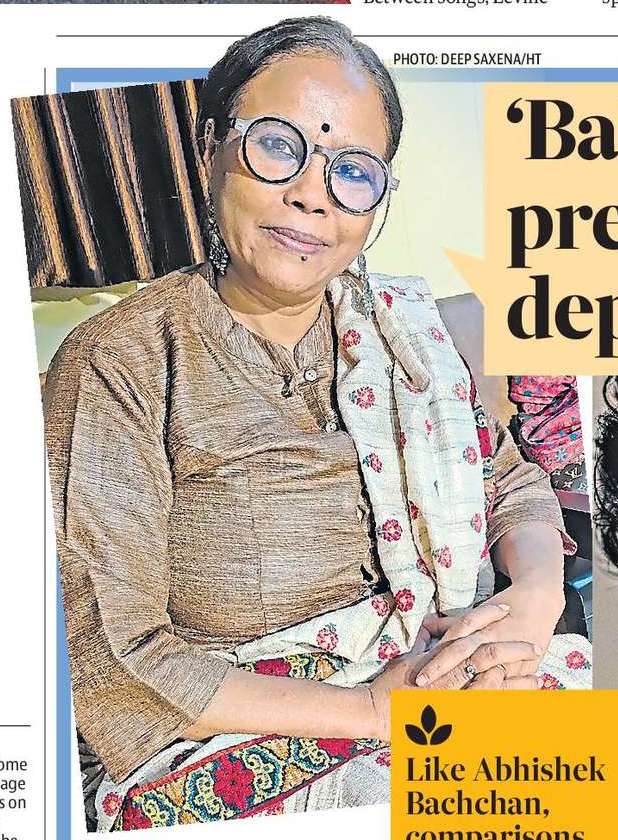
Deep Saxena (HINDUSTAN TIMES; December 5, 2024)
Late actor Irrfan Khan’s wife, writer-producer Sutapa Sikdar, candidly opened up about the challenges faced by their son, actor Babil Khan, who has featured in The Railway Men and Qala, during her recent visit to Lucknow. Sutapa revealed how constant comparisons with his legendary father have created immense pressure on Babil, affecting his emotional well-being.
“Babil pe bahut zyada pressure hai aur mujhe yeh thik nahin lagta! This pressure should not be there. Irrfan never had this kind of burden, and when you don’t put pressure on yourself, your individuality shines. It’s not just about work; losing his father has left Babil almost in depression. Usmein yeh stress and comparison hai all the time. As a mother, I feel, ‘Please mere bachche ko chorr do.’ He’s very vulnerable and does not have a fighter’s spirit. His father was very strong and so am I, but genetically kahin se toh aaya hoga,” shared Sutapa.
Drawing parallels, she compared Babil’s journey to actor Abhishek Bachchan’s career struggles. “Like, Abhishek Bachchan did amazing work in I Want To Talk but wahi hai...comparisons with legendary Amitabh Bachchan have worked against him. I feel Babil is going through a similar ordeal. I just hope he overcomes it soon.”
On the professional front, Sutapa, who contributed to Kahani (2012), is slowly returning to her creative pursuits. She has consulted for two TV shows and is now working on a book and a film. “I am writing a book and a film, but to be honest, I am still unable to become an individual that I can focus on career or writing. I am unable to detach myself, and simultaneously, Babil’s career has started, and phir kabhi kuch, kabhi kuch…so I am still stuck. I have written the skeleton part of the film. Besides, I have started a book on Irrfan but not a serious preachy one and want to do it in a funny genre, which needs time,” she said.
Asked if she plans to direct or act in her film, she said, “Whoever I have narrated the concept has suggested that I should direct it. Babil can fit in as it’s about mother and son, but surely, I won’t act in it.”
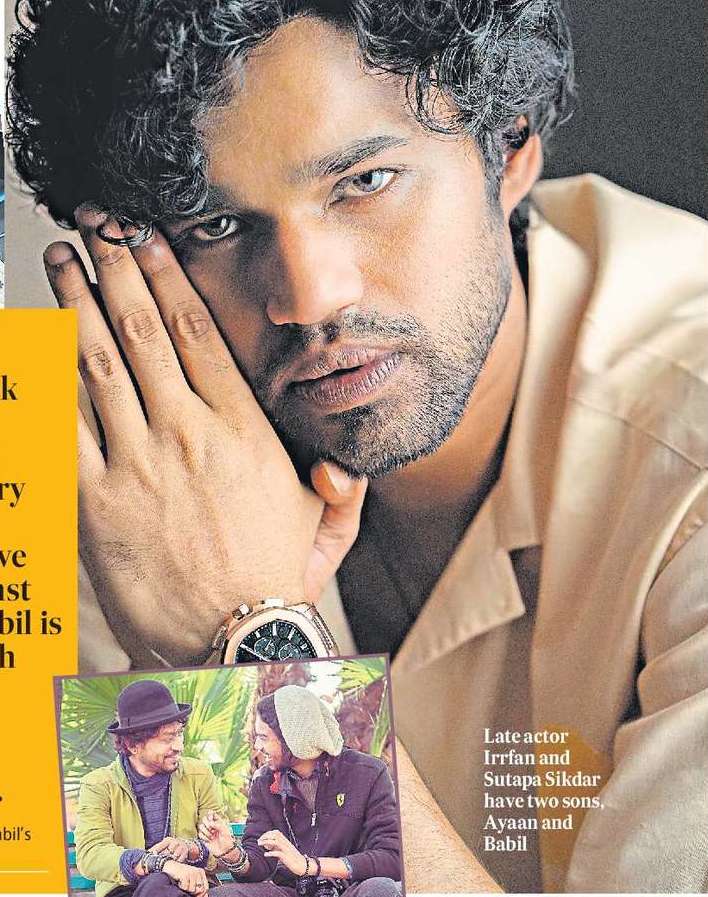
I was very close to Irrfan Khan, and for Babil, I think like a parent-Shoojit Sircar
8:02 AM
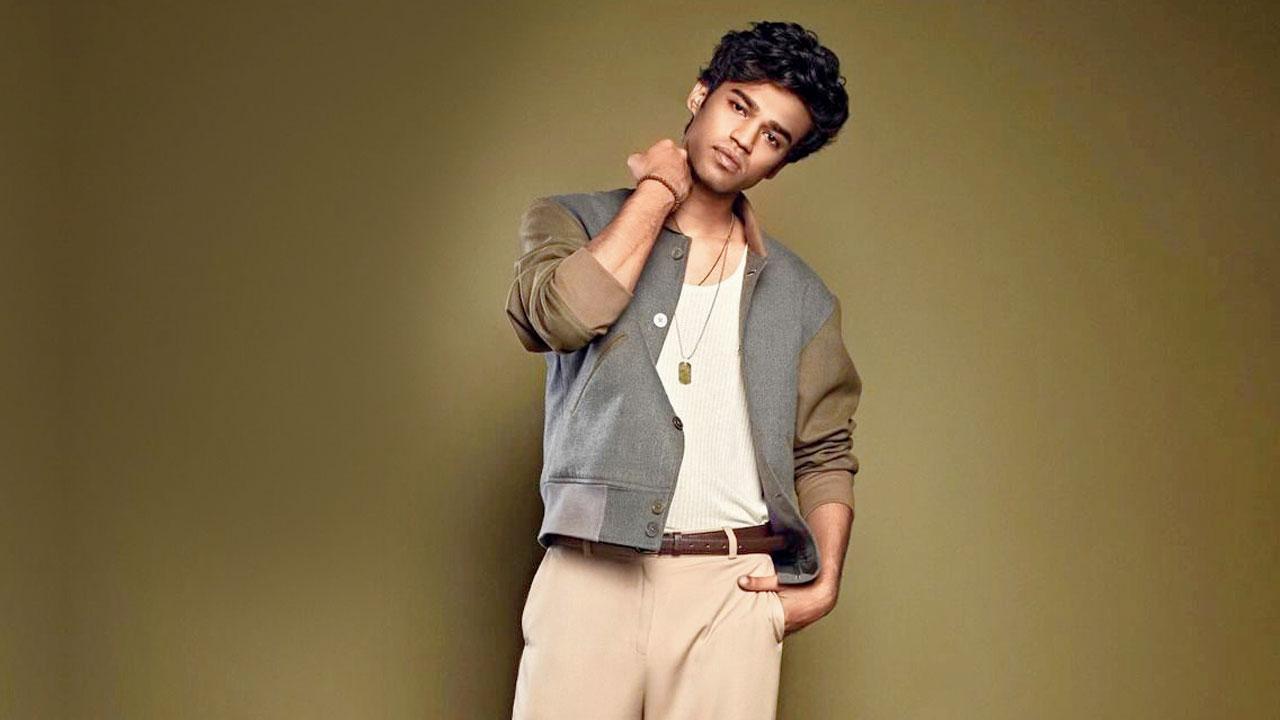
Having cast Babil in The Umesh Chronicles, Shoojit on his soft spot for the actor; says youngster should build a career without pressure of matching father Irrfan’s legacy
Mohar Basu (MID-DAY; August 12, 2024)
How does a director, who is in the midst of shooting his movie, double up as a producer? It’s tricky, but worthwhile, says Shoojit Sircar. The Umesh Chronicles, starring Amitabh Bachchan, Babil Khan and Kriti Panth, is set to screen at the Indian Film Festival of Melbourne on August 22. For Sircar, Pooja Kaul’s directorial venture is a “special film”.
“We shot it with Jakob Ihre [Chernobyl cinematographer] whom I’ve known since he shot Yahaan [2005]. Producing is tricky for me. So, I let my partner Ronnie Lahiri do the heavy lifting, and I looked after the creative part. In this film, the nostalgia of the ’70s, ’80s and ’90s has come through beautifully, as has that era’s tranquility of life. It’s about a girl growing up. That’s a beautiful experience to bring to the screen,” he smiles.
The Umesh Chronicles marks Sircar’s first collaboration with Khan. As one of Irrfan’s closest friends, the filmmaker is naturally overprotective of the late actor’s son.
“I was always worried about Babil. I was very close to Irrfan, and for Babil, I think like a parent. I feel responsible for him. He and his mother Sutapa [Sikdar] drop in at my office the way Irrfan used to. We have chai and jhalmuri, and talk of movies. Babil will have to take his movies one by one. It’s a lot of pressure for him, and it’s important to keep his sanity when he is making choices. That talent he has and the star he hopes to become must be balanced. It’s his career, not Irrfan’s. He should never forget why he is doing what he is doing; he shouldn’t get lost in the glitz and glamour.”
It helps that Khan stars alongside Bachchan in the movie. The megastar is a constant fixture in Sircar’s films, be it the unreleased Shoebite or Piku (2015) or Gulabo Sitabo (2020). How does he rope in Bachchan so frequently?
“It’s always the script. That’s my biggest learning after years of working with him. If he connects with the story, you’ve won him over. He has been our support system. I was noticed because he agreed to do my films. He taught me that the written word is sacrosanct.”
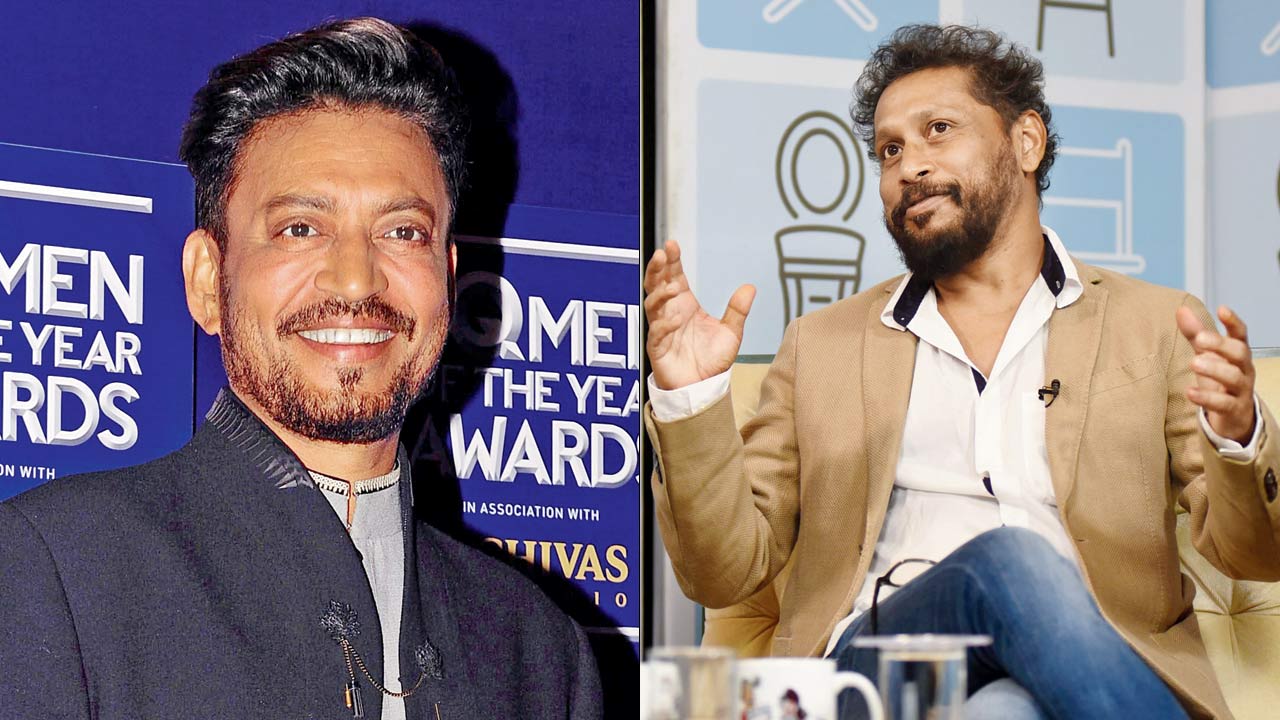
Irrfan Khan would have wanted to collaborate with Diljit Dosanjh, feels Sutapa Sikdar
10:00 AM

BOMBAY TIMES (May 3, 2024)
Remembering Irrfan, who passed away on April 29, 2020, his wife and screenwriter Sutapa Sikdar took to Instagram to share a note that was different from the usual posts. She shared a conversation that she imagined they would have had, if had he had been alive.
She began the note saying, “It’s 4 years and three days since Irrfan left me. Four years? A feeling of guilt sweeps through my body. 4 years we have LIVED without him, added with sadness, fear, hopelessness and severe helplessness. And then I thought, but still I lived with him more. I knew him since 1984, so that makes it 36 years of knowing him more and definitely, till I die, I would have spent more time with him than without him. And then I thought, if he was with me physically in 2024, what would have been our conversation like? Because that’s the most I miss (sic).”
Sutapa then shared a hypothetical chat between them where she would have praised Diljit Dosanjh’s performance in Amar Singh Chamkila, which would have led her to recommend they work together. She wrote that the actor would have called his friend, producer, Dinesh Vijan, to try and work out a possible project for the two. She also shared that her husband would have expressed the desire to work in a Malayalam film.

Irrfan Khan was tired of doing TV, wanted to direct a show-Sutapa Sikdar
8:30 AM

Natasha Coutinho (BOMBAY TIMES; March 2, 2024)
Sutapa Sikdar, late actor Irrfan Khan’s wife and a writer herself, spoke to us about how Irrfan was tired of acting on TV and wanted to try his hand at direction. In fact, Sutapa was writing a show titled Janam Samjha Karo that Irrfan was supposed to direct over two decades back, but the show got shelved.
Sutapa reveals, “The show was based on a story of four couples who get pregnant together and was called ‘pathbreaking’ at the channel party in Delhi. We had been flown down for the event and the show had been commissioned by the channel. A month later, we were informed that the channel’s strategy had changed after another show with a conventional storyline found huge success. That was the turning point in my professional life as a writer, and I decided to leave TV. I realized that you get TRPs when you create stereotypes rather than characters.”
Speaking about how Irrfan got roped in to direct the show, she adds, “Irrfan got tired of acting in TV shows and decided to direct a show himself.”
Aadha lagta hai Irrfan Khan ke bina-Vishal Bhardwaj
10:07 AM

At an event titled Irrfan: A Retrospective, Vishal Bhardwaj and Naseeruddin Shah came together to talk about Irrfan’s unforgettable performance in Maqbool and share other anecdotes about the actor
Harshada Rege (BOMBAY TIMES; February 1, 2024)
It’s impossible to think of Maqbool without Irrfan, but few know that the actor was not the first or even the second choice for the role. Filmmaker Vishal Bhardwaj shared, “Ek actor ke liye toh Naseer bhai ne bola tha ke tumhe goli maar doonga (laughs).”
After the recent screening of Maqbool at an event titled ‘Irrfan: A Retrospective’, filmmaker Vishal Bhardwaj and Naseeruddin Shah shared many such anecdotes from the making of the film, which clocked in 20 years on January 30, and spoke about their association with the actor, who passed away in April 2020.
The first thing that struck me about Irrfan was his eyes: Naseer
Remembering his first meeting with Irrfan, Naseer said, “I met him for the first time when he was rehearsing for a play with Ratna (Pathak Shah). People had told me that he liked me a great deal. When I was introduced to him, he was very matter of fact, there was no fawning. Like everybody, the first thing that struck me about him was his eyes. He had absolutely amazing eyes. I had no idea of the depth of his range. There couldn’t have been a better choice to play Maqbool than Irrfan. Personally, he was very affectionate towards me, and I was very fond of him, but we didn’t meet very often. So, I can’t say that we were close friends, which is something I missed out on, but I continuously admired his work and his attitude towards it.”
Irrfan understood the silences in the script: Vishal
Vishal said, “During Maqbool, we were all discovering ourselves. Naseer bhai supported me a lot and did many workshops. The thing about Irrfan was that he was so effortless that at times, you would feel he hadn’t prepared for the scene at all. He understood the silences in the script so well. Dosti, dosti mein saara kaam ho raha tha, aur lag raha tha ke kuch special ho raha hai. We were grappling with many things, jaise ke paise kam the. Film release hone ke baad jo reaction aaya tab realize hua ke bahut extraordinary kaam hua hai.”

I wasn’t being modest when I said that I envied Irrfan as an actor: Naseer
Talking about Irrfan’s brilliance as an actor, Naseer had once said that he envied him. Elaborating on that, the actor said, “He always seemed to be performing so effortlessly, never did I feel, while watching him perform, that he was straining for an effect or trying to make an impact. My feelings about his movies are uneven. I haven’t liked them all, but there has never been any moment of falseness that I have detected in Irrfan’s work anytime. I wasn’t being modest or anything; I genuinely meant it when I said that I envied him because I know that at his age, I certainly was not that capable or had that much of an understanding of the craft of acting.”
No box-office success can match the pride that Maqbool gives me: Vishal
During the evening, Vishal played a song that Irrfan had sung and sent him during his cancer treatment that brought everyone to tears. The filmmaker said, “Irrfan had a great sense of humour. Even when he was unwell, he would make fun of the doctor. He had caught the doctor’s gestures and would mimic them. Sutapa would keep scolding him ke tameez se baat karo, tumhara ilaaj kar raha hai. Har baat mein Irrfan ka… Main toh andar se toot gaya hoon, kyunki aadha lagta hai Irrfan ke bina. Jab bimar the, tab mujhe messages bahut bhejte the aur gaane bhi gaake bhejte the…”
When asked if he would make any changes for better performance at the box office, Vishal said, “This reminds me of an actor who, after reading the script, said that the hero is a loser (laughs). No box-office success can match the pride that it gives me now.” Is there is anything he would change if the film were made today, Vishal said, “The only thing I would change is bring Irrfan back, but that isn’t possible.”
Vishal and Irrfan’s nok-jhok
Reflecting on the relationship they shared over their many collaborations, Vishal said, “Abhishek Chaubey ki ek film thi Ishqiya, uske pehle Anurag Kashyap ki ek film thi No Smoking. Both the producer and the director wanted me to be associated with it, toh maina apna naam de dediya. That movie flopped badly. After that, when we started shooting Ishqiya, Irrfan told me that he had given away all the dates meant for Ishqiya. He said, ‘Aapki film toh flop ho gayi, toh mujhe laga aap toh aage banaoge nahi.’ Toh mein bahut gussa hua, aur hum dono ki do-teen saal baat bandh hui thi.
Phir main jab 7 Khoon Maaf bana raha tha, I was unable to cast for the part that he eventually played. When I called him for it, I told him that I had a small role for him. He said, “Aap jo bhi bolenge main karunga, mujhe toh aapko manana hai.” Par jab editing ka time aaya, toh woh role kaatna pada. He got angry.”
He added, “For Haider, when I spoke to him, tab unhone kaha ke pehli shart yeh hai ki jo part kaata tha 7 Khoon Maaf mein usse YouTube pe release karo. Maine kaha theek hai, par aaj tak woh nahi mila. Haider ke waqt unhone kaha ke main paise bahut loonga tumse, kyunki tumne mere saath yeh gadbad ki thi. I said the role is yours and the money is also yours because I knew nobody could play the Ghost. After the trial of the show, he said, ‘Agar aisi entry deni thi toh paise kyun diye?’”
Sutapa's memory of Maqbool
Irrfan’s wife, Sutapa Sikdar, and son Babil were also present at the event. Sharing her memory of Maqbool, Sutapa said, “They were shooting the film in Bhopal, and I was pregnant with our younger son Ayaan. Suddenly, the doctor said that I might have the child. So, Irrfan rushed back, once he reached here, he started speaking to Ayaan, ke bahut nuksaan ho jayega Vishal ka, tu aisa mat kar. And the child actually seemed to have heard him. He was born two months later.”

The baggage of proving myself as an actor has reduced a lot-Babil Khan
7:11 PM

Vinay MR Mishra (BOMBAY TIMES; January 5, 2024)
While reading the script of his next project, Babil gets ready for a photo shoot with BT in his Oshiwara home, where he moved in with his parents, Irrfan and Sutapa Sikdar, and brother Ayaan, when he was 17.
Wearing a blue shirt made from three shawls recycled by his mother, paired with yellow pants, he says, “I’m bad at photoshoots. They are so structured, so I get a little lost.” In a conversation with us, he talks about letting go of the pressure of proving himself as an actor and how his upbringing has influenced his career choices. Excerpts:
‘An actor has to find the character within them’
Babil firmly believes that an actor needs to find a character within themselves. “It’s a myth when actors say, ‘I’m getting into a character’. I don’t think you can become another person. I feel every kind of person already exists within you. It’s just that you don’t confront that part of you. The moment you surrender to yourself, you can shed parts that are not the character and keep the parts that are like the character.”
‘Now, wanting to prove myself has become a positive feeling’
The actor who received critical acclaim for his work in the recent web show, The Railway Men (TRM), believes that these projects brought about a positive change in him.
“I cannot depend on any project and hang on to its success. I move on. However, TRM has influenced my self-belief in a positive way. I am more excited about art. Before it, I wanted to prove a lot, but the baggage of proving myself as an actor has reduced a lot now. I have realized that the feeling of proving yourself should not bring you down. Earlier, it would eat me up, but now, wanting to prove myself has become a positive feeling.”
‘Baba had to beg TV producers for his money’
“You can either choose to have a strong character or an easy life,” Babil says during the conversation. The thought sounds intriguing, but does Babil believe he has a strong character? The Qala actor answers, “I was born in a very small family, I don’t come from money as such. I was raised very modestly; I wouldn’t even say we were a middle-class family. When I was born, baba was doing television, and he had to beg producers for his money, and mamma was writing. They were both working parents. I think when I was 12 or 13, they started seeing success and for the first time, I saw comfort in their eyes. They still didn’t give me money (laughs). I don’t take myself very seriously at all. Right now, I have to be very careful with my ego, especially with not having mamma around as she is busy, and I don’t have any friends. So, I spend a lot of time with myself.”
‘Public perception is a beast of its own’
Babil wears his vulnerability on his sleeves. While a certain section states his articulate responses are a publicity gimmick, he reveals that he is often censored by his publicists. He shares, “It does feel like a cage sometimes. But it’s only a cage if you look at it like that. If they don’t do their jobs, I will not be able to do my job. Public perception is a beast of its own, so if they don’t take care of that, and I do that myself, I won’t be able to focus on my art.”
‘Could never go on a set thinking I don’t deserve to be there’
Three films old, Babil is one of those rare industry kids, who have not faced criticism for their background. “When my father passed away, the initial reaction I got was sympathy and positivity. After a point, if I had let go of my values and done things that would not have aligned with my values – like not giving an audition or making certain phone calls – it would have brought me negativity. At home, I have been taught that humanity prevails over any kind of success. That is the real reason why I have been perceived positively by people. I could never go on a set thinking I don’t deserve to be there.”
People keep saying, ‘He looks high’, because of my eyes. But, yeh eyes mujhe baba se mili hain-Babil Khan
8:34 AM
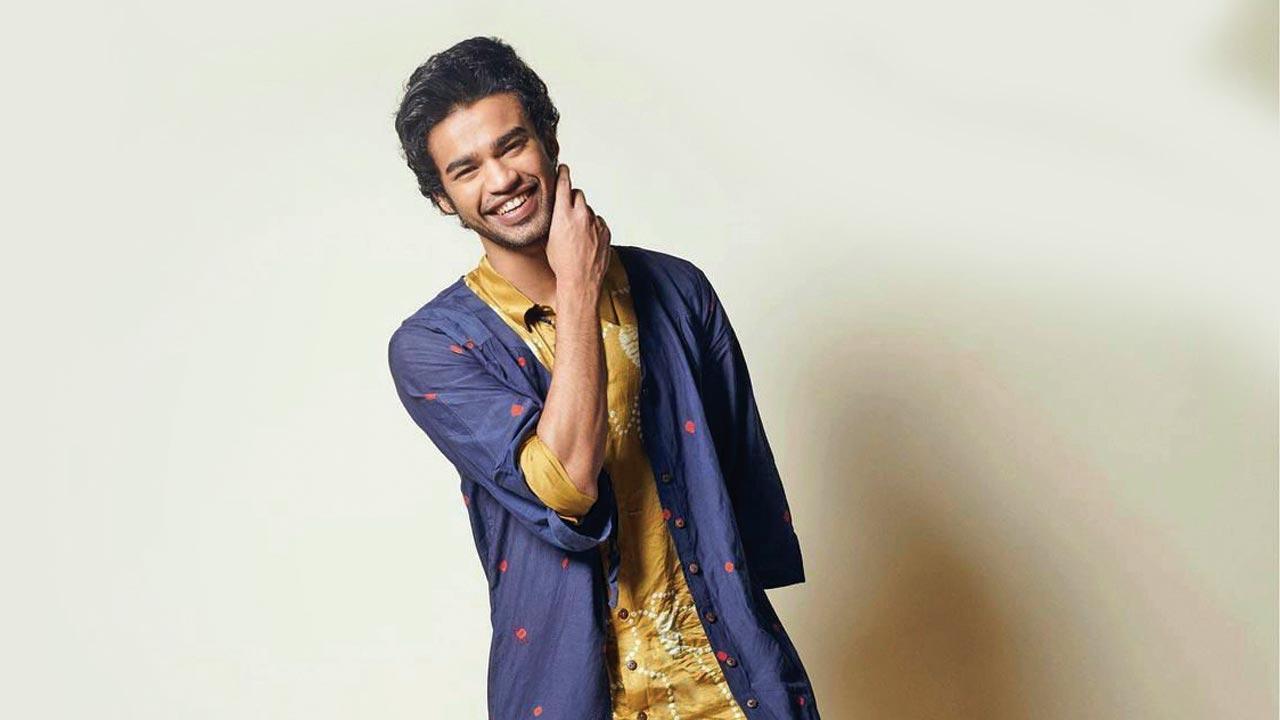
The actor’s recent project might have failed to make the right noise, but he reveals he learnt how to get past it from his father, Irrfan
Navya Kharbanda (HINDUSTAN TIMES; October 26, 2023)
Actor Babil has been turning heads not only for his sartorial choices but also for his skills as an artiste. However, the 25-year-old receives appreciation and trolling in equal parts for his choices.
“I am being lauded for [my fashion], but I am being trolled a lot, too, because I make risky choices,” says Babil, adding, “But I’m not scared of putting myself out there. Yes, I will get trolled, but if you don’t take yourself too seriously and don’t think from a space of ego, then you are much more productive and will see more growth in your art.”
Talking about the lessons imparted by his father, the late actor Irrfan, Babil shares, “When he was around, I never failed or felt it. It was only after he left that I got a fear of failure.” He continues, “Watching him pass away, I got such a strong sense of mortality. There is no time to doubt yourself. Kya hoga? Log mazaak udaaayenge? Troll karenge? At least you put yourself out there and that’s your win. That’s what I learned.”
Babil’s connection with his mother, Sutapa Sikdar, is also deep and integral to his journey. “I am nothing without my mother. Every move I make, I need to have her by my side,” says the actor, adding, “If I go to an event and everyone is pampering me, when I come back home, my mum sits me down and gives me 15 criticisms on how I can become better. That’s how she keeps me grounded.”
He often gets asked on social media if he’s intoxicated most of the time. Addressing that, he says, “People keep saying, ‘He looks high’, because of my eyes. But, yeh eyes mujhe baba se mili hain, I have baggy eyes and that’s it.”
Baba wouldn’t have reached the level of artistic success if it wasn’t for Mumma-Babil Khan
8:25 AM
Ready with his second film Friday Night Plan, Babil recalls how mother Sutapa was Irrfan’s strongest critic
Priyanka Sharma (MID-DAY; August 25, 2023)
Fear is not a place Babil Khan operates from. He believes in surrendering to life. In that regard, he is the polar opposite of his character Sid from his next, Friday Night Plan. But embracing a character different from oneself is among the joys of acting. Babil, who debuted with Qala (2022), decodes his second venture, saying, “I allow life to influence my decisions, and think it will take care of me. But in Sid’s case, life betrays him. In such a case, the fear is so strong that you are governed by all the things that could go wrong [and make] 80 back-up plans. Since I couldn’t relate to that thought process, I tried finding a place within me that I am truly scared of.”
Director Vatsal Neelakantan’s upcoming Netflix film revolves around two bickering brothers, essayed by Babil and Amrith Jayan, whose night out turns into a misadventure. The trailer shows Juhi Chawla as a disciplinarian mother to the two boys. To Babil, even that little nugget is divorced from his real life. “There is nothing hidden from each other at our home. You want to party? Go ahead,” he smiles, cherishing the atmosphere of honesty that producer-mother Sutapa Sikdar has built.
Asked if his brother Ayaan and he are scolded by their mother, the actor says, “We haven’t really troubled her, but she calls us namoona. She would even call Baba [the late Irrfan Khan] a namoona.”
Irrfan Khan and Sikdar were married for 25 years before he passed away in April 2020 due to cancer. With his demise, Indian cinema lost one of its finest actors, who had built a filmography that was at once awe-inspiring and unmatched. Visibly emotional about his parents’ love-filled relationship, Babil says Sikdar used to be Irrfan’s strongest critic.
“He was a focused and fearless man. But I believe Baba wouldn’t have reached the level of artistic success if it wasn’t for Mumma. She is an excellent acting critic. I used to go to screenings with him where people wouldn’t stop raving about him, his eyes and talent. Then, we would reach home and Mumma would play the film and say, ‘Please sit, Irrfan. The decision you took in that scene is reflecting in another scene, and it’s not looking honest.’ She is a brilliant and intelligent woman, without whom Baba wouldn’t have been the actor he was.”
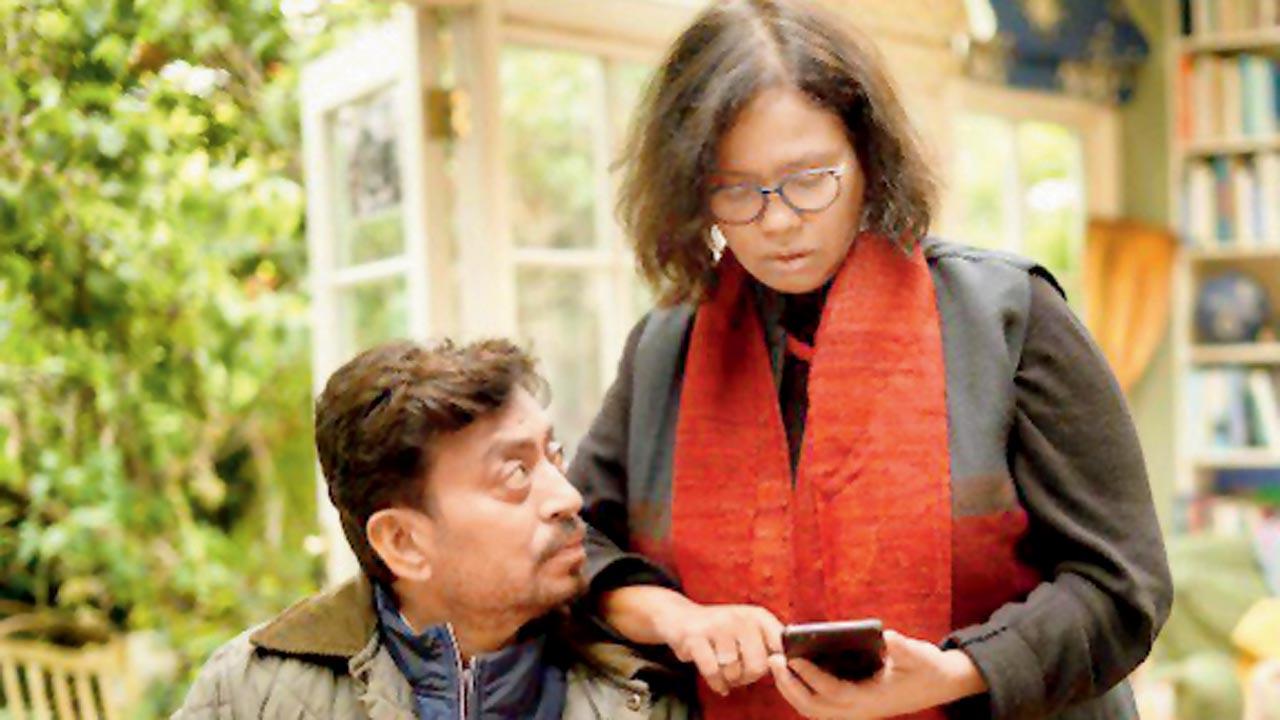
Baba (Irrfan Khan) and mumma (Sutapa Sikdar) once booked a water park on my birthday-Babil Khan
8:27 AM
Rishabh Suri (HINDUSTAN TIMES; May 16, 2023)
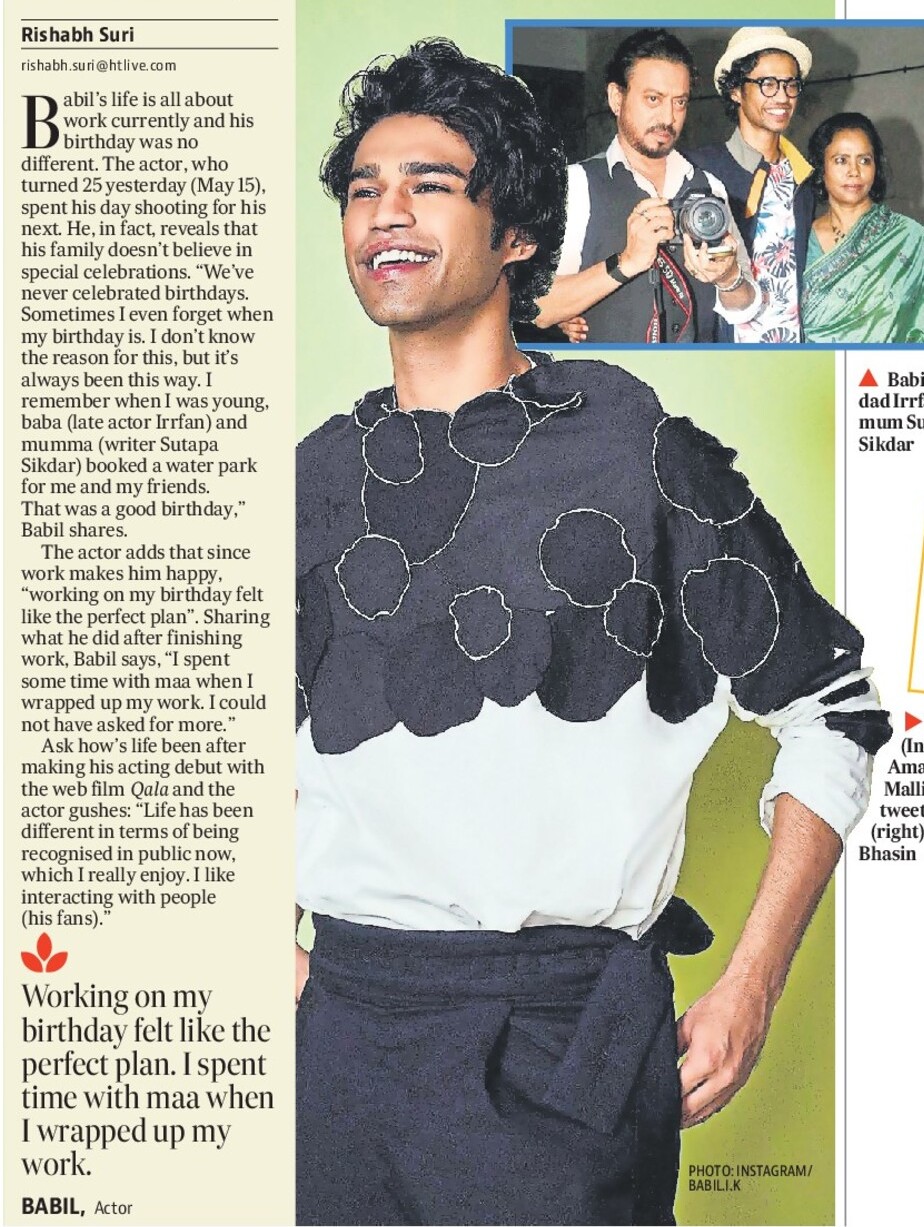
Babil’s life is all about work currently and his birthday was no different. The actor, who turned 25 yesterday (May 15), spent his day shooting for his next. He, in fact, reveals that his family doesn’t believe in special celebrations.
“We’ve never celebrated birthdays. Sometimes I even forget when my birthday is. I don’t know the reason for this, but it’s always been this way. I remember when I was young, baba (late actor Irrfan) and mumma (writer Sutapa Sikdar) booked a water park for me and my friends. That was a good birthday,” Babil shares.
The actor adds that since work makes him happy, “working on my birthday felt like the perfect plan”. Sharing what he did after finishing work, Babil says, “I spent some time with maa when I wrapped up my work. I could not have asked for more.”
Ask how’s life been after making his acting debut with the web film Qala and the actor gushes: “Life has been different in terms of being recognized in public now, which I really enjoy. I like interacting with people (his fans).”
Irrfan Khan didn’t remember birthdays, including his own-Sutapa Sikdar
8:44 AM

Renuka Vyavahare (BOMBAY TIMES; January 7, 2022)
The passing of Irrfan, one of the most respected actors across the globe, on April 29, 2020, was a huge loss to the world of cinema. On the occasion of his birth anniversary, wife Sutapa Sikdar spoke about life post Irrfan, who would have turned 55 today, and how he changed her as a person.
She reminisced, “You never get over the loss of a loved one. You just learn to deal with the pain. He left when he was beginning to enjoy the best phase of his career. He had six massive films in his kitty, including huge international projects, but fate had other plans.”
Healing from such a loss isn’t easy and Sutapa went on to tell us what’s helped her sail through this. “There’s a word called ‘sabar’ in Urdu, which gave me strength and peace to carry on. I think of that word and surrender to the almighty,” she said.
Sutapa told us Irrfan wasn’t a fan of birthdays. “He didn’t remember birthdays, including his own. When we were courting in the early years, it took me a while to accept that. I, on the contrary, loved big celebrations. Irrfan would say, ‘I have no idea how many new days they invent every year’,” she said.
Sutapa said, “Irrfan would say, ‘Puray planet par toh hum insaan bojh hain aur mai kya celebrate karu? Main ek aur saal jee liya isliye?’ Valentine’s Day was out of the question and he believed birthday celebrations were marketing strategies for gifting companies. I gave up the idea of getting him any surprise gifts. Although he would surprise me randomly by saying, ‘I have bought land for you, where we will build a farm.’ That had nothing to do with any special occasions. The day he felt like doing something special, he would do it.”
The actor often even teased his wife by telling her, “Tumhara kya hai, you will fall for a man who will remember your birthday.” However, Sutapa followed her birthday rituals religiously. She explained, “I still kept making chawal ki kheer on his birthday. He would not know what to say to people who called to wish him. He wasn’t comfortable with small talk. He hated taking selfies. He would often ask people, ‘Yaar tumhare paas agar phone nahi hota, toh kya tum mujhe yaad nahi rakhte?’”
She added teary-eyed, “What he truly cherished were soul-to-soul conversations, and I miss having those with him the most. Everything else can be compensated for. I have friends who are there for me, but with whom do I have those great conversations? My life is devoid of good conversations now. It’s unbelievable for me to fathom a world without Irrfan.”
As close as the two were, they had different temperaments, and Irrfan was a calming influence on his wife. Sutapa said, “It was he who taught me to be less anxious. I am a high-pitched, gregarious person. I scold loudly, love loudly and laugh loudly. Irrfan was a gentle soul like our younger son Ayaan, who is shy and soft-spoken. Thanks to what I have learnt from Irrfan, I will see to it that Babil chooses the best of scripts, but I won’t interfere beyond that. I will allow life to happen to him.”
She added, “The biggest gift that Irrfan has given us is the ability to reflect on our thought process. The most difficult thing to practise in the film industry is, to be honest. He retained his honesty. But when he was battling the disease for over two years, he mellowed down. He’d say, ‘What if my criticism of someone’s art makes him less confident?’ That was him realising that it’s more important to be nice to another person than being brutally honest.”
Growing up around him was an adventure, you never knew what was coming, says Babil on Irrfan Khan's 1st death anniversary
7:53 AM

In the concluding story of #OneYearOfMissingIrrfan, a year after he passed away, the late actor’s son Babil reminisces, ‘I miss my bestest friend and I dream of him often’, even as he says that, in hindsight, Irrfan’s equation with him was a model of genius parenting
Anshul Chaturvedi (BOMBAY TIMES; April 29, 2021)

This was the biggest loss for me. And it is difficult to explain. It is easy to say for someone ‘I am putting myself in your shoes and understanding’. You can’t. You can’t experience something that someone has experienced. The biggest loss I have – see, I really don’t have friends. I have a very, very close circle. And he was my bestest friend. I don’t know how to explain the relationship… (pauses) If you ever saw us together, you wouldn’t be able to make out if I was his son – we had a ball, man! We fought also like children – (pauses) We were the bestest friends – and that has been the biggest loss for me. People are like, ‘it has been this long, now just get over it’… bro, for 15, 25, 35 years, till the end of my life, I will never be able to get over this. Because it is not possible for me to ever find a friend like him! It has been one year, almost every night, I have dreamt about him. And that is my only area of reaching him – and so I don’t really like waking up, I don’t like the dream coming to an end. And that becomes a problem since I have a schedule, you know (laughs)! I hate waking up. I never had that problem. But now it is like I don’t want to let go of that dream. He was my closest, my bestest – he was my soulmate. When he left, half of my soul left, you know. I can see that there is this huge chunk of me that’s missing, that I guess some day I will be able to rebuild, but… You know, it is difficult for anyone to face a thing like this, to lose someone, to be hit by that pain. And you want to run away from that pain. But another thing he taught me was that pain is not something to run away from because pain is one of the most beautiful aspects of life. Happiness is great, joy is great – but pain is where the true introspection happens. When you are happy, you are not really introspecting, you’re going with the flow, you’re vibing and everything…
Pain is when you truly introspect. Now saying that doesn’t mean you put yourself through pain purposefully. But when it comes, I would suggest to everyone out there not to run away from pain but to feel it – not react to it, just to feel it, to see where it takes you. This is another lesson he instilled in me – to not run away from pain (laughs).

This is a long answer! (laughs, then pauses) I was a very, very lonely child when I was small. No one wanted to be friends with me. And I was a hopeless romantic. If I liked any girl, I would, you know, hopelessly fall in love with her – and this I’m talking like since I was eight! And I would get bullied a lot, intensely. I faced a lot of trouble in my childhood.
And then, when I was 16, I adopted this new personality, of being Irrfan Khan’s son. Not being Babil, but being Irrfan Khan’s son. And I soon realised that this guy, this personality that I have created, he is getting everything that I have ever wanted. Free entry to clubs, girls wanting to meet me, endless friends – not real friends, but I didn’t realise it at that time – all those things that Babil never could get.
And when he passed away, that bubble popped, you know. And the realisation of letting go of that identity you have created, worked so much on it, like you sandpaper the edges of a sculpture – to let go of that personality, to come back to who you are… I have learnt a lot of other things through the pain, but this is the most substantial one. To let go of that identity, to find myself – and I am still doing it – but at least I can say I have let go of a certain identity that was not me.
A lot of people create an identity to enter social structures that deny them entry otherwise and to let go of that identity and just be bravely who you are, doesn’t matter, that is my learning.

Yeah, yeah. And you know how he transferred that into me? By making me watch Tarkovsky! At a very very young age. Tarkovsky is something you watch at 40 years, you know, and you are still like ki arey mujhe kuch samajh mein nahi aa raha! He made me watch it when I was 12. I was like what are you making me watch? And he was like nahi please, please just sit down and watch this with me. And I realised that one of the things Tarkovsky talks about is that you have to remain a child. By remaining a child, by remaining vulnerable, you keep your curiosity alive. Once your curiosity diminishes, you are like a dead tree – the potential for your growth is over. The biggest challenge for anyone out there is to keep your curiosity alive, to make sure you remain a child.
Growing up around him was an adventure. You never knew what was coming. There was always a new layer of him. He would keep trying new things.
Irrfan the actor, Irrfan the father, Irrfan the friend – do all these intermingle in the way you remember things, now that you are also stepping into acting as a profession?
Yes, yes. I was gravely upset that he couldn’t see me act even earlier. But that was because of how hard he worked, not because he wasn’t a great father. See, I’ll be very honest with you. People think he was always very talented as an actor. He really wasn’t. When he started off, he wasn’t even a good actor. I watched recordings of his plays in National School of Drama (NSD), (private ones, that no one else has). People think he was always talented. Not true. He had serious commitment to his craft, sincere commitment to his craft, and that’s what made him and that’s what made him so good and great later on.
And that commitment meant that he was working very hard, he was at shoots all the time. He was always in that zone. When he came out of that zone, we’d have a blast, of course. I was very upset when I did my 8th grade play and he didn’t show up for that, because, obviously, he was working, he had prior commitments. But I was really upset about that. I think I’m just reminiscing about that because now I’m finally acting and he’s not there to watch it. “If he was there, he’d have given me these kind of tips”… So today when I talk about him as an actor, or his tips, (like he does on Instagram sometimes) it’s part reminiscing, part sharing, part even I don’t know what it is… I regret he could never watch me act.
Not even in any other school play after that 8th grade one?
No, he never had the time na, he was very busy! Look at his body of work! He was always working. But he was a very dedicated father. If I had a problem, if I was going through something, he would step aside from whatever he was doing. But it had to be something that mattered. It was not like an event or a festival or a birthday, not things like that. He would not show up for my birthday or something, I would get upset at that time – but later I realised that he was a really, really dedicated dad. When I was actually going through something – not something that society has constructed but something that I was personally facing – he would drop everything. Even if it was Ang Lee or George Clooney, doesn’t matter who he was having a meeting with, he would push it aside if he saw a message from me like ‘Baba mujhe samajh nahi aa raha main kya karoon’. Then he will push everything aside and he will call me and talk, even if it takes one hour.
So he never saw you act?
(Pauses – and then he remembers something) He saw me act once, though (laughs)! I was assisting the camera team in Qarib Qarib Singlle. There was this shot where me and my then-girlfriend, we had this one second shot as extras. And he was so excited to see me in front of the camera, he just took over (laughs)! He wouldn’t even let Tanuja ma’am say ‘action’ also! He took over everything, he came to say ‘action’, I saw this joy on his face, I can’t explain it to you… I would have loved for him to watch me.
You grew up in a mixed faith family. And Irrfan was a very curious, philosophical mind. What did you pick up from him?
When I was really, really young, he would make me read the Quran. And I would get so irritated – I don’t want to do all this. It’s not like I had any view on religion, it was more like this is boring and I want to go play cricket! He was, like, no, no, you have to read this, because after this you have to read the Bhagvad Gita, and after that you have to read the Bible. And I am like – what are you trying to do?! Now I understand. He never made me a religious person but he made sure I understood religion. Like, I understood what it is, and why it is important. That it can enable a certain kind of spirituality into you, but it also can introduce you to its dark side. I didn’t understand all of it at that young age, but now I introspect upon it. I think I was saved by that. I am a very spiritual guy. And I think if I was not guided properly by him, that spirituality would probably have been misguided into some fake love for religion and I would have been doomed. Because there are times where your quest for redemption turns into a very toxic and blind faith in religion which will destroy you. He made me understand that the concept of all religions is the same thing. What matter is your connection with the Creator, whoever you think He may be. It is a personal connection you and Him have and no one has the right to interfere in that. It was very important for me to know all that. Else I could have been something quite different, and I’m glad I am not.
How did you handle the last phase – when Irrfan was hospitalised and then passed away?
For the first few days, Mom (Sutapa Sikdar) was like how is that he is taking it so well? I was running around, doing everything, making sure everything was fine at home and at the hospital. It was really bad, though. I can’t explain the amount of pain he was going through when he was conscious. I particularly remember when they were going to put a catheter, and asked me to leave the room, and he almost yelled, ‘Babil, tum kahin mat jao mujhe chhod ke!’ They pulled me out of the room and he screamed my name. I never felt that much pain and helplessness. I just stood there outside, hearing him scream my name. I dealt with it well in that moment, but after he passed – initially, Mumma was surprised how well I was taking it – but two days after he passed away, I crashed. I just crashed. Everything shut off. I went into deep, deep depression. I can’t even explain. There was no will to wake up. I was very suicidal… (we pause for a bit) I was done. I didn’t have any will to live. I still struggle with it a lot. And at that time, Mumma was the strength. She has always been the strength of our family. Throughout Baba’s career. You know everyone’s like Baba was this, Baba was that – but Baba wouldn’t have been anything without Mumma, she’s been the strength of the family.
There’s something I’d like to remind you of, a quote from the note Irrfan wrote while being treated in London – “In this chaos, shocked, afraid and in panic, while on one of the terrifying hospital visits, I blabber to my son, “The only thing I expect from ME is not to face this crisis in this present state. I desperately need my feet. Fear and panic should not overrule me and make me miserable.”
Was he always this open with you about what he felt?
He was very open about his vulnerability with me. After I was 14, 15, he has shown me great vulnerability. He would cry in front of me. He would tell me he’s scared. And you know what happens, through that, I was never ashamed of feeling vulnerable, of being scared, of crying. And so for me that is what a man is. This whole concept of mard ko dard nahi hota is such bull****. He showed me. He showed by telling me how he is scared and why he is scared – just talking to me about all these things. He never tried to be a ‘tough man’ before me. He was vulnerable. And he showed me that I could be vulnerable before him, I could cry, that it was fine. And that’s parenting, man! I think that’s genius parenting!

There are times when I feel Irrfan Khan is around, he is just not physically present-Sutapa Sikdar
8:05 AM

Irrfan passed away on April 29 last year. They tell me that time heals, but it hasn’t healed me in one year, says his wife Sutapa Sikdar, as she speaks on strength, loss and introspection
Anshul Chaturvedi (BOMBAY TIMES; April 28, 2021)

I’ve been up and down, up and down. Everything seems to be going normal, and I tend to get normal, and everything seems to get... and suddenly it comes back like as if it just happened yesterday. So... I don’t know. Everybody tells me that time heals. So I also wait... okay, time is going by, and time will heal. And then suddenly, you know, you get hit so strongly that you just tend to kind of get flustered... then you know it hasn’t healed. So that’s how it is.
It’s not healing?
No, it’s not healing. I have got work to do. I have got offers to write, but I have not been able to concentrate to write. Getting into another zone altogether is becoming very difficult. Abhi tak toh main career ko seriously le hi nahi pa rahi hoon. I have got two-three people asking me, ‘will you now start writing, are you okay? Are you ready?’ But nahi ho raha hai.
Fortunately, the responsibilities are kind of letting me not get to self-pity zone. Which is good in a way. Fixing classes, arranging tutors, and all that. So I guess the chores are actually making it in a way more normal. If I did not have anything to do, I think it would have been very, very difficult.
But sometimes, you know, it just hits me – the helplessness. As if I am lying down and then somebody has really punched me in the lower abdomen. That pain is like a punch. And it’s the whole feeling of helplessness, extreme helplessness which makes you feel very insignificant.
Temperament-wise I am a more positive person than Irrfan, have always been. Irrfan always had these blues, you know. He was more sensitive that way. He went into those blues and his sadness and his depression would go on for a longer time. So that’s not my personality to be hopeless and helpless. I don’t want to feel that depressed. I resist it, you know. So it’s a very complicated zone. I am becoming better but that’s how it feels, at least this month. It feels as if somebody will just take the gut out of my body. It’s a very strange feeling. And then I can’t sleep, so I get a sleep disorder. So it’s all mixed up.
How do you cope with his absence?
The loneliness is very strong. Because as is, we were not very social, we did not have too many friends. We were always that two-people unit. He was working a lot, so it’s not like he was there the whole day with me, so that way I am quite used to being alone, being on my own, doing my own book reading or whatever. But the point is, you know, whenever there is leisure time or a time where you are having some kind of a break, it was everything to do with him only, na. He would come back from shoot and we would see a film or talk – mostly see a film. So it’s so revolved around him and along with him. It is very difficult to figure out a life without him.
I have a friend, one of my closest friends, and she is single and she said you know, problem hogi, but once you get used to it, it’s a wonderful life to be single (laughs). This is how she put it to me. In the end, you will reclaim your life. You will finally know who Sutapa is, because tera thoda tendency tha, tu bhool gayi thi apne ko. She is very critical of me because she thinks I am a great writer and I did not give enough justice to my own talent vis-a-vis my family.
I am saying, nobody is stopping me, I have the time and I can do anything I want, but the entire feeling to surge ahead alone, as of now it’s not there. Maybe tomorrow it will come, how long can I stay in this state of, you know, just writing things about him, thinking about him and talking about him... There will be a time when I will go ahead, I guess, but abhi tak toh nahi hua.
Staying strong in the face of this loss – how difficult has that been?
I think I tried to be too strong, you know. I pretended to be too strong and I took to family responsibilities and duties and everything else. Too early, too strong.
My intellect comes in front of my emotional thing. Your mind is always controlling your emotions. I don’t talk to people (about such topics) because I find it so embarrassing to cry in front of people, you know. So probably that’s why I didn’t cry as much as I should have. I don’t know. Probably it’s all bottled inside.
And then last month I went for the marriage of Irrfan’s brother’s son. I can’t take a flight, it makes me claustrophobic. So I drove down to Jaipur from Mumbai. And when I went there, I just cried, and cried. I cried uncontrollably for days... for seven-eight days. 24/7 I cried. I’m not sure why... One, I think, my children were not there with me, I had gone alone – I didn’t have to be strong. And secondly, I don’t know what happened, maybe it’s the place and he was there, since it’s Rajasthan. I think it still holds that connection and it’s very strange, you know, I do get hints of him being around.
Such as?
Irrfan and I have a very strange connection – both of us loved the rain. And both of us would joke – if it was very hot and Irrfan was going to shoot somewhere, he would be like ‘bahut garmi hai dekhte hain na...’ and it would rain the next day. And he would say, ‘Dekha? I got the rain!’ So you know, we always had this rain connection, this joke.
And when I went to Jaipur, it was a very hot day – and then, that night, it rained! The weather wasn’t like that at all earlier. It felt so strange that it rained. But that wasn’t all.
When I was travelling back on the Jaipur-Mumbai highway, Google Maps told us that there was congestion and suggested an alternate route. My driver also didn’t understand it, we thought it must be a short diversion for a bit, we took it anyway. It was an unfamiliar road, I kept seeing where we were going and then I was like – Oh my God! We are going via Tonk!
Tonk is the place he belonged to. Initially, I had planned to go to Tonk when I came to Jaipur but then had cancelled it because of the Coronavirus situation – and then I find I am, despite that decision, finally going via Tonk. Drawn there, sort of.
And also, you know, sometimes there is this smell thing. Woh jo baarish ki jo geeli mitti ki khushboo jo Rajasthan ki hoti hai na woh Bombay ki nahi hoti. Sab ki alag-alag hoti hai. So this happened in Bombay. Woh jaise baarish giri aur woh khushboo aayi na meri naak mein, main chhatt pe khadi thi, ek dum se na mujhe laga – My God! Matlab, I could feel every inch of his face. I could feel him saying that aisi khushboo toh nahi aati na Bombay mein? I could actually, literally feel him. It’s that.
And there are things like that when I literally feel that suddenly there is some fragrance of some flowers. And it comes and it travels and it goes. I’m not a person who would believe in such things, but woh kuch cheezein aisi hoti hain ki aap ko aisa lagta hai ki they are signs from the universe. I don’t know what it is.
It’s not that I am looking for a connect – dekha 11-11-11 ko yeh hua tha. I am not that kind of a person at all. But there are things where I feel suddenly that you know, as if everything is the same. He is around, he is just not physically present. That’s it.
Is it comforting or unsettling?
It’s a comforting thought.

No! Two months before he passed away, we were thinking of planning a holiday. In spite of every doctor, everybody telling me this is going to happen sometime or the other. But at the same time, they also said that people do survive for five years and 10 years etc... So we were never actually mentally prepared. Then, we would look at reports and they tend to become better so it’s... I don’t know. I mean people say aap ko toh andaza hoga ki itni buri beemari hai. Lekin mere ko really andaza nahi tha. I always had hope that he would recover...
He was actually looking at a script and that’s why I am saying that he was not prepared. He was looking at a script for him and Babil. He was like, ‘Babil ka yehi raha na ki acting hi karna hai toh yeh jo film aa rahi hai na, Sutapa...’ It was a very nice film about a coach who trains some specially-abled children for a football tournament and a win. And he said, ‘I want to do it with him. I would like to act or direct, maybe if I can’t act, I’ll direct. But maybe I would like to act...’. That was the kind of dreams and plans and everything and then suddenly... I don’t know...
Although I don’t think he wanted to act so much anymore, you know. Because he had started enjoying this time we had. We saw films and good plays in London and we spent time together with the kids and did everything which we had not for long, long, long time because he was so busy. So maybe he was just waiting ki theek bhi ho jaoon na toh wohi ek film karunga saal mein and I’ll spend my time with my family. That remained unfulfilled... because it was not in destiny, I guess.
He was not into shoharat anymore. He was not ki main famous ban jaoon aur ab aur karna hai, but he loved to do films. He would have loved to do the film with Iñárritu (Alejandro González Iñárritu, the director of movies such as Birdman and The Revenant). It actually came to him. I came to know later, when Mira Nair said that the director got in touch with her and he wanted to cast him. And he was Irrfan’s favourite director. And Irrfan didn’t even know and went away without knowing that this has happened. It is only after his death that Mira spoke of it. So destiny is so interesting and funny. You don’t know what you plan, and he was planning ahead, so I don’t know what it is...
His courage and curiosity – did they stay in that difficult period with him?
You know, yes. I have to say that he had his unique relationship with death, with the concept of death. It was there since we were students in National School of Drama (NSD). Since then, I heard him casually speaking – because his father had also expired before he came to NSD, he always said – kya hota kya hai death ke baad? You know, you’d feel very strange – a 23-year-old talking about death. He would not say ki main mar jaunga, but always explored death as a concept.
So every play we did, I remember him mulling, and if that play had the concept of death etc, I saw him always giving it a lot of attention. From there, it travelled to a kind of a fear – what if I die? I am not talking about now, I am talking about 15 years back. So curiosity, then fear and then fear of claustrophobia, that he even dealt with now. But in this final two and a half years, he was not scared of death anymore. He was not scared, but still of course he wanted to live. It’s not black and white. He still wanted to grow a forest, he wanted to do a lot of social work...
What was his philosophy, his approach to life and death, especially in the last two years?
Mere ko toh yeh bhi lagta tha ki he will make his own religion! If nothing had happened, cancer had not happened even then. Even then, he was destined to leave this showbiz and go on some search of his own. He was on the journey of a search, of himself, of this world, bigger things than this world, parallel reality, parallel world. He was constantly into it – reading and studying, you know. He was like a... kaise main kahoon, matlab ek yatri hota hai na duniya mein? That this is the only reality – he did not believe in it. Religion for him was spirituality. During this period, he read the Upanishads, he read Ramakrishna Paramhansa, Vivekananda... but he was never a typically ‘religious’ person. Osho, Mahaveer, he read everything.
I don’t know how to tell people that he was beyond your comprehension. Somebody asked me what is the fittest tribute you can give to Irrfan? Maine kaha, by not being guided by any religion but by being true to yourself and by literally and truly being just a human being without any tag – Mr/Mrs/gender/religion – that would be the greatest tribute you can give. Even one person, even I, Sutapa. I am keeping my fast, imagine. Irrfan was not a practising Muslim, I never converted, I am a Hindu, but I am keeping fast. Because I don’t know why... I feel at night when I break my fast and meditate to God. See. I have not read the Quran so I don’t know (the rituals). I do it in my own way. That’s what Irrfan has taught me – that I don’t have to convert and be a Muslim to keep rozas and to converse with Allah.
Irrfan couldn’t fast, though he wanted desperately to in the last two years. He would say ki ek din hafte mein main fasting karunga hi. And he gave a shock to his relatives saying, ‘Maine soch liya hai ki main somvaar ka fast karunga, Shivji ka din hota hai’. That’s how we have been. Irrfan believed in one religion, one God.
He was not a non-believer, though he was not a practising Muslim. He did not believe that you can reach the Supreme through only one way. Ki agar aap Muslim hai toh tabhi pahunch paoge, ya agar aap Hindu ho tabhi pahunch paoge. Koi bhi pahunch sakta hai, aap ka tareeka alag ho sakta hai. But he definitely did not believe in rituals, he thought it was actually a waste of time and energy – all the rituals of all religions. His whole life went into looking for “neeyat”. He just believed in it so, so strongly ki humari neeyat mein koi khot nahi aani chahiye, chahe aap kuch bhi kar lo.
And I just go by what Irrfan had told me, that Ramzan is a month of introspection. I am keeping my rozas for introspection, introspection of what I am and what are the wrong things I have, so that I watch, I look at myself. I look at every action of my life and that is what Irrfan always taught me. He always told me, ‘Sutapa tum bahut hadbadi karti ho. Yaar ruko, dekho, introspect karo, apne har movement ko dekho!’ So, yes, I introspect.

I always felt ke agar Irrfan Khan ko samajhna hai, toh unki khamoshi ko samajhna hoga-Deepak Dobriyal
8:05 AM

Deepak Dobriyal reminisces about the quiet moments spent with his friend Irrfan, who he co-starred with in films such as Maqbool, Hindi Medium and Angrezi Medium
By Deepak Dobriyal (BOMBAY TIMES; April 25, 2021)
‘HE WAS ALWAYS SURROUNDED BY FRIENDS WHO ARE WRITERS, POETS AND FILMMAKERS’
Whether real life or reel life, Irrfan bhai would see things in a creative way. His creative thought process would dominate his lifestyle. He would always be surrounded by his good old friends who are writers, poets, filmmakers, and so, the topic of discussion would always be art and literature. Even on sets, whenever he would have free time, he would discuss poetry and creative ideas with people. He would always think about art and wouldn’t shy away from appreciating an artiste. Agar unke saamne koi achha performance kar raha ho toh woh unki aankhon mein dikh jaata tha. You could see it.
‘THE SILENCE IN IRRFAN BHAI’S PRESENCE WAS MAGICAL’
His way of life was very simple. He was a nature lover. During one of the outdoor schedules Irrfan bhai, his son Babil, wife Sutapa and I were sitting on a terrace. That evening, for three hours straight, we just kept looking at the bats that were flying in the sky. There was silence. Nobody was talking to anybody, but just enjoying the sight. The silence in Irrfan bhai’s presence was magical. Considering he’s a star, his co-stars or people around him would always try to chat with him. But I always believed that agar aap unhe samajhna chaahte ho toh unki khamoshi ko samjho. Aapko aadha Irrfan toh unki khamoshi mein hi samajh aa jaayega. Maine woh aadha Irrfan jaan ne ki koshish ki. Between all this, I can still hear his laughter and when I am alone and think about it. It leaves me with a smile. He was so much fun to be around. During our schedules, the two of us and a couple of more people would go trekking, swimming, for a walk in the park or to watch a film.”
‘THE SUCCESS OF HINDI MEDIUM MADE HIM VERY HAPPY’
With Hindi Medium doing good at the box office, Irrfan was extremely happy. He was always called a fine actor and an actor of a different league, par unki filmein paise nahi kamaati thi. Hindi Medium broke that notion and that made him very happy. He hoped that Angrezi Medium would do good business, too.
‘I HAD MESSAGED HIM THAT I WANTED TO MEET HIM’
The last time I met him was in London during the shoot of Angrezi Medium. Later, I had messaged him several times that I wanted to meet him, but he wasn’t too keen on meeting anyone.
— As told to Onkar Kulkarni

People talk about Irrfan Khan’s legacy, but he has made imprints on souls-Sutapa Sikdar
7:53 AM

Kimberly Colaco (BOMBAY TIMES; January 25, 2021)

The screening of Paan Singh Tomar at IFFI on Friday was an emotional moment for the entire audience, as it was for you. People remember Irrfan in so many ways — a towering actor, an ambassador of Indian cinema to the world, but above all, as a wonderful human being. How does it feel when you hear people remember him so fondly?
This is the first time I’ve come out of my home and I’m meeting people. I didn’t know how I would react, but I knew I was vulnerable and didn’t want to leave my home. People have such fond memories of Irrfan. I would get messages from people that they had met him, which was a surprise for me. He was an introvert and didn’t enjoy the public gaze at all. But he connected with people, and that is what you see in his performances. Babil would ask me, “why are people so connected to baba?” I’d tell him, “Irrfan behaved in the way his guts dictated, or his soul said.” For instance, if he felt that a writer — big or small, didn’t matter — had honesty and truth, he’d listen to them for five hours.
People keep talking about Irrfan’s legacy, but he was not that kind of a star. He doesn’t have a legacy — what he has made are imprints on souls. It’s for a generation of actors who are not from star families, but those who have a will that hum bhi kar sakte hain.
Over the years, Irrfan became one of the ambassadors of Indian cinema abroad. Yet, he was a down-to-earth, affable person. What do you think helped him stay so grounded?
We as a family are very weird, quirky and mad. We didn’t spend time at filmi parties; we would rather spend time at some park or visit a jungle. His profession was a career; that wasn’t our lifestyle. We are growing organic veggies, watching the stars through telescopes. He trained our kids to watch documentaries, and not just feature films. We are not a conventional family; we all have our spaces, where we do our own thing. What makes us special is that we are what we are inside and outside. We never believed in definitions; we didn’t believe that we need to get married to move in together; we didn’t believe that my children should have a mainstream education.
We got married because we wanted a home loan. Irrfan was at ease wearing a branded suit on stage, waving his hand, yet he was comfortable staying in a hut in Karnataka where there wasn’t even an attached bathroom. What makes me extremely sad and heartbroken is that it’s not about a person dying, it’s about a life I think I’ll never live again. The basic rules, values and fundas are so alike in us that we never had to fight. We both wanted the same kind of things. It’s not more of a partner going, but more of a friend leaving. He was a rare individual; you don’t meet people like this every day.
Six months before he went away, I asked him who he loved more, as I always felt he loved the kids more. He said, “I love you the most. I wouldn’t have admitted it before, but today I am admitting it.” I would tell him that we would sail through this sickness together.
For years, before he gained widespread recognition, Irrfan was a character actor on the fringes of Hindi cinema, waiting for his place under the spotlight. What were those years for him like? Were there moments of despair? How did you support each other during that period?
Irrfan would never feel jealous and even in private moments, he never said that “I should have got that role.” It was always, “Whatever is written in my destiny, I will get it.” He was always hopeful that he will make it. To me it didn’t matter as long as I sat in his vehicle and roamed the city. I’m not a very ambitious person; I wouldn’t push him to be part of camps or chase directors. I wasn’t a good influence on him that way (laughs).
You told us that IFFI would bring you some form of closure. Babil also spoke about dealing with personal loss as part of a person’s evolution, and not something to be afraid of. It’s been nine months since Irrfan left us. How have you coped? Have you found some closure?
I still haven’t come to terms and accepted the fact that I lost him; it was difficult. That’s why I wasn’t coming out of the house. IFFI is special because I wanted to relive the moments. When I’m in Mumbai, I’m reminded of him as a celebrity. I wanted to get back to the roots and come to terms with it. When we had nothing, we were nobody and just had dreams. So this reminds me of where it all began and where it has reached.
Over these months, and through the pandemic, has work kept you occupied? Does it serve to keep the mind busy and from straying?
I’m planning to restart my career, which I kept on the back burner for many reasons. We have a farm a few kilometres from Mumbai where Irrfan planted around 300 trees, and now I’m taking care of it. He was interested in quantum physics, astrology – things that had nothing to do with business. We like to celebrate life the way it is. If you don’t know how to be happy, you’ll never be happy no matter what you have. When needed, Irrfan would wear a branded suit, but at home he would wear whatever made him comfortable.
You penned a heartfelt note on social media on Dec 31, saying, “It’s so difficult to wish 2020 as the worst year as you were still there. Last year this day next to me, gardening, busy building birds house, how can I say goodbye to 2020!!” Do you feel his thoughts and ideas still guiding you in life?
I feel he was there with me. It’s not easy to bring up two teenage kids alone, and we are a nuclear family in Mumbai. I’m not that mother who will stop her kids from doing anything. At the same time, I need that little nudge from him where we need to know if we can give them something and stop at that — which you have to do with teenagers. Irrfan was very busy before that, he had many shoots back to back and we couldn’t spend much time together. When we were in London, we would meet so many people, it was a roller-coaster ride. This two-year journey was a completely different love story of ours — which has a start, a middle and an end.

Losing someone is part of growing up and evolving, says Irrfan Khan’s son Babil
8:19 AM

Kimberly Colaco (BOMBAY TIMES; January 24, 2021)
“Desh ke liye daude toh kisi ne na poochha, ab baaghi ban gaye toh sab yahi naam jap rahe – Paan Singh... Paan Singh...” The lines reverberated in the dark auditorium as International Film Festival of India (IFFI) paid homage to actor Irrfan Khan with a screening of his classic Paan Singh Tomar on Friday. The show was attended by his wife, writer Sutapa Sikdar, and elder son Babil.
Babil spoke to about how tough the last year had been for the family. “But losing someone is a part of evolution, it’s not something to get scared of or something you don’t want to go through. It’s a very beautiful part of a process of growing up and evolving. Pain is essential and important and we are going through it head on.”
Babil remembers his father as a beacon of encouragement. “He used to love it when I would send him suggestions. He always encouraged me. He toh was like a teenager and child. We used to play football and he used to tell me that I’m cheating. He was the wisest amongst us but he was also like a baby.”
Remembering their time at their Madh Island home in Mumbai, Babil said, “He loved all animals but would get annoyed by crows. So we would build these traps so he could catch the crow without hurting them and he would talk to the crow and ask them, ‘Why did you disturb me when I was sleeping?’”

Subscribe to:
Posts (Atom)