Showing posts with label Socha Na Tha. Show all posts
Showing posts with label Socha Na Tha. Show all posts
Imtiaz Ali on Main Vaapas Aaunga's slow opening: "We are not a star-driven film, so it was supposed to be like this"
9:52 AM

The filmmaker on his latest movie’s slow-burn box office journey, why Gen Z is often misunderstood, and Diljit Dosanjh
Akash Bhatnagar (HINDUSTAN TIMES; June 19, 2026)
Even as Main Vaapas Aaunga (MVA) records a gradual uptick at the box office, filmmaker Imtiaz Ali says he always expected the film to find its audience over time rather than through a blockbuster opening.
“We are not a star-driven film, so it was supposed to be like this. If people like it, they will tell others to watch it, and that’s how the film will grow,” he says.
Ali is particularly encouraged by the response from younger viewers, who he believes are yearning for deeper connections. “I feel the younger generation needs love the most. They are sensitive, romantic and seeking commitment, but they are often misunderstood and labelled as flaky. Their lives are different from previous generations, but they are searching for something meaningful,” he says.
Set against the backdrop of Partition, the film intertwines a love story with the lived experiences of survivors. “When I heard their stories of what they’ve seen, what they remember now after 78 years, I realized that no love story can happen in a vacuum. It happens in the real world, and the real world of the era of partition was necessary for the setting of this love story,” says Ali.
He was also unfazed about mounting a large-scale film led by relatively new actors Vedang Raina and Sharvari. “I am a man, not from the trade, but from the art of filmmaking. I do understand the power of cinema and performance, and also the power of good casting. If all those things come together, then there is a certain power that is created. I had no doubt that both these actors will be able to headline this story well,” he says, adding, “But I also knew that on the poster, there is also Diljit (Dosanjh). Everybody in the world knows him and they are interested to see what he’s doing. I was sure that there was going to be a poster appeal because he is there.”
While Imtiaz Ali has made romances across decades, he claims that he “doesn’t come from a point of understanding love”. “In Socha Na Tha (2005), the confusion of Viren (played by actor Abhay Deol) was actually my confusion of committing in a direction but your heart pulling you in another. I didn’t have an answer for that but I made a movie on it. Jab We Met (2007), in my mind, was not even a love story. It is about two people who meet as strangers and eventually become like the other. They complete each other and realize that [they are in love] later,” he says.
Similarly, Main Vaapas Aaunga (MVA) is set up as a love story, but also showcases the ordeal faced by the people of Punjab during the 1947 Partition. Does Ali feel that the film should be made tax free, especially in Punjab? “A lot of people have said that this is a story of Punjab, and also in a way of Bengal and other parts of India. If people feel that way genuinely and if that comment of national interest is out, then there must be a process in these states to see if the film can be made tax free and we’d be looking into it,” he says.
The filmmaker also asserts on the universality of the story, insisting that tragic incidents like the Partition are happening even today, something he brought out with the video of Kya Kamaal Hai in MVA’s end credits. And it was Diljit who pushed for it.
“I must thank him and Irshad (Kamil, lyricist) for encouraging me to make the video. I had never done or seen anything of this sort, but Diljit said, ‘Ye to karna hi hai kyunki ye phir isko sabki film bana dega’,” he shares.
As a DJ, I feel more confident now to perform in front of people-Abhay Deol
10:03 AM

Kanksha Vasavada (BOMBAY TIMES; May 4, 2024)
Abhay Deol, who dons many hats (actor, producer, art lover), recently made his debut as a DJ at a newly opened arcade, Ballers Ahmedabad on Sindhu Bhavan Road, Ahmedabad. The Zindagi Na Milegi Dobara (ZNMD) actor tells us, “I love music and used to make mixtapes as a child. I learnt how to work on a DJ console, and this was a natural progression. Now, I can mix the music that I have collected over the years and play it.”
He adds, “I feel humbled by the response I received for my gig. Amdavadis are really warm.” Will he do a DJ tour now? “It is a hobby and I will be back to shoot for films soon. But as a DJ, I feel more confident now to perform in front of people. So, if I get offers, I may be up for it unless I am busy.”
‘I don’t label films as mainstream or independent’
Is it a conscious choice to choose films that aren’t exactly mainstream? He says, “I am always attracted to scripts that are relatable, insightful yet entertaining. I choose films that aren’t completely arthouse or completely mainstream. Be it Socha Na Tha, Dev D, Oye Lucky Lucky Oye or ZNMD, all my films have managed to strike a perfect balance between the two.”
Abhay, who has done independent movies like Road, Movie, adds, “Also, I don’t label films as mainstream or independent. For me, the subject is the main thing. When we use words like ‘independent’ for a film, it means it wasn’t mainstream, and was difficult to make and sell. I make movies that usually don’t get made. They get labelled as independent films as they don’t have the backing of big producers, distributors or directors. Even Ek Chalis Ki Last Local, Oye Lucky… were called independent films back then but had a big producer backed them, that wouldn’t be the case.”
‘Had a great time while working with Shabana Azmi and Zeenat Aman’
Abhay recently wrapped up the film Bun Tikki, which also stars Zeenat Aman and Shabana Azmi. Both the actresses have worked extensively with his uncle Dharmendra, whom he lovingly calls ‘papa’. Abhay says, “I had a great time. Zeenat Aman is the most warm, sweet, and polite person you will meet, and extremely professional. I have also known Shabana for a while. Zeenat ji feels papa is a gentleman, while Shabana is fond of him too. They remembered the good old days of working with him.”
‘Feel blessed that people love my film choices’
Having played unconventional characters, does he feel people expect that from him now? Abhay says, “I feel an actor’s image is built organically. I have always experimented with my characters. So, if my image is that I experiment with my roles, and people say they love my choices, it’s a blessing. I feel humbled. I want to do challenging roles-things that I haven’t done before.”
‘Being rebellious got me this far’
In recent times, Abhay has spoken about how he could have done certain things (like handling fame after Dev D) differently in his career. Elaborating on it, he shares, “When you are young and inexperienced, you are ignorant about certain things. As we grow up, we deal with the same situations in a more mature way. I was a rebel, but I am more diplomatic now. Being rebellious got me this far, as it was difficult to make the kind of movies I wanted. While the movies I made between 2005 and 2007 are considered relevant today, it was hard to make them back then. Now, I feel that being diplomatic is going to take me ahead.”
‘I hope that OTT platforms evolve more’
Abhay, who has done OTT projects like JL50 and Trial by Fire, believes there is room for improvement (for OTT platforms). He says, “When a medium is new, it has nothing to lose and you can experiment with everything. But once you grow bigger, you have a certain responsibility, and you tend to take fewer risks. When organizations prioritize business over creativity, the downfall begins. So, I hope that platforms can evolve more because I feel it’s time to be bold and take risks once again.”
I was born an insider, but I pretty much lived as an outsider-Abhay Deol
8:53 AM
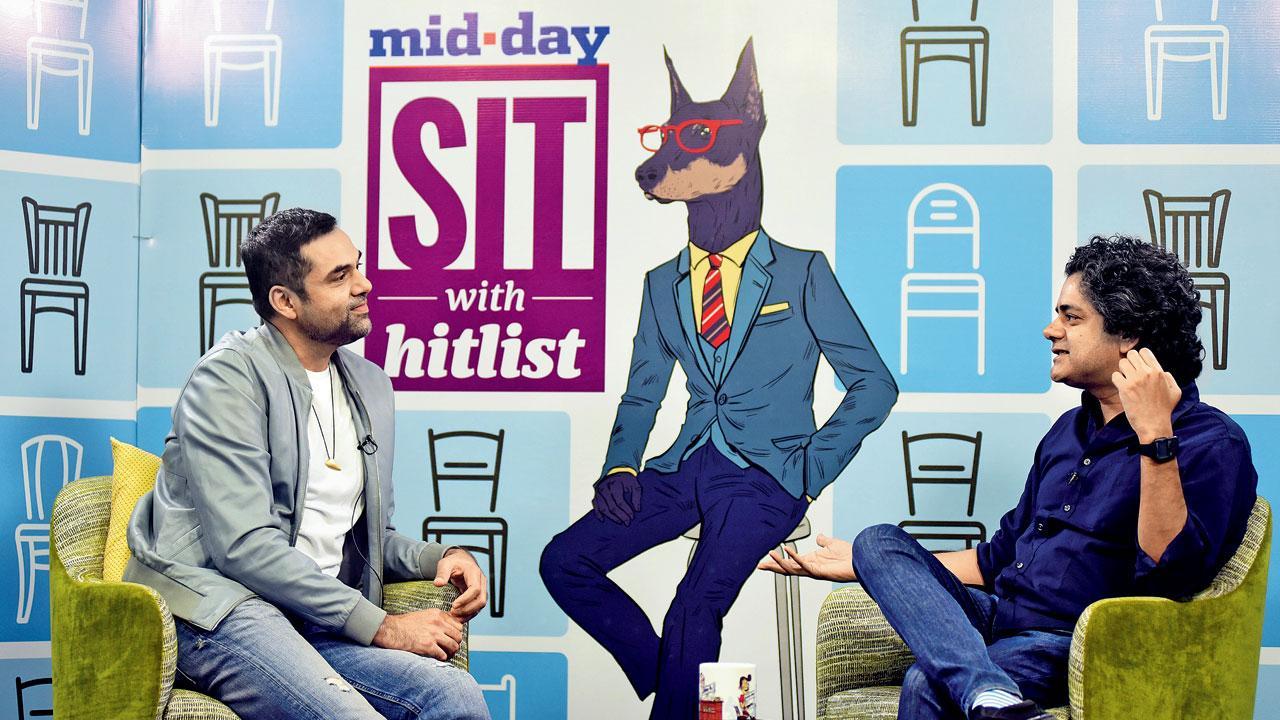
Abhay Deol with mid-day’s entertainment editor Mayank Shekhar at the latest edition of Sit with Hitlist. Pics/Shadab Khan
Decoding the rise & fall of Mumbai film industry’s ultimate insider-outsider!
Mayank Shekhar (MID-DAY; January 21, 2023)
Shortly after our conversation, before a live audience, Abhay Deol is scheduled to meet Shekhar Krishnamoorthy, the person he plays in the Netflix series, Trial By Fire — based on the life of a middle-class Delhi couple, who fought the city’s top real-estate developers, post the death of both their children, in the 1997 Uphaar Cinema fire tragedy.
Which is also when we realize Deol had chosen to consciously stay away from the real-life inspiration for his part, during the process of making the series. Deol is Punjabi by ancestry, unlike Krishnamoorthy, with the most Tamil surname. In fact, Deol has played a Tamilian before this.
That was as the bureaucrat Krishnan, for Dibakar Banerjee’s Shanghai (2012). In an episode dedicated to Deol’s films, on a podcast named Khabardaar, that I was listening to before meeting the actor, the hosts — shout-out to wonderful ladies, Aparita Bhandari, Baisakhi Roy—make an observation on Deol’s walk onscreen. They believe it is the same in all his films. Except, Shanghai, if you notice the minutiae.
Firstly does he agree, and was that consciously so, I ask Deol: “There are physical characteristics that I suppose you don’t change easily. You’re unaware of them. With Shanghai, that may be true. Not that I consciously worked on my walk, though. I did have to work on my accent. Krishnan is a Tamil Brahmin.”
“And I had to put on a Hindi, like a Tamilian would speak it, which is hard to find. Because no Tamilian really speaks Hindi — they speak to you in English. Also, we don’t have an infrastructure of accent training for actors in our country. So we found this out-of-work Tamilian writer, who I worked with, and developed a system [for it].”
If we must get deeper into this accent thing still, for instance, Deol recalls, “I hope I haven’t mixed up my memory, but I was really working on the phonetics — there is no ‘ha’ sound in Tamil, and there is no ‘ba’. In Tamil, you could pronounce my name closer to ‘Apaay’. Stuff like that was insightful. This is besides mimicking my accent-trainer off-camera — so I would know how he might say my dialogues.”
The ladies of Khabardaar podcast might wanna notice this the next time they watch Shanghai. Krsihnamoorthy in Trial By Fire, Deol points out, is different from Krishnan, because he’s a Tamilian, but essentially from Delhi.
He has what one could call a more neutrally North Indian or ‘Delhi’. Which is also a character Deol has played in Oye Lucky Lucky Oye (OLLO) — another real-life person he obviously didn’t meet, before playing him on screen. Bunty Chor was the local swindler, where would you find him?
OLLO (2008) tragically released in theatres, when the “the firings were still on” during 26/11 terror attacks in Mumbai. My favourite memory of OLLO is an off-screen one from the film’s BTS video online, where a dog is after Bunty Chor (Deol), who’s jumping off a tall building-gate. Banerjee asks him to turn around for the camera, so the audience knows the lead actor performed this himself, instead of a body-double.
Deol says, “It’s fun doing stunts, as much as I can. I think Dibakar was a bit surprised about how easily I was scaling such a large gate, and he said he wanted people to see it!”
Sticking to Delhi, and characters inspired by actual events/people still, how about Anurag Kashyap’s Dev D (2009). I learnt this much after watching the film that the role was in fact somewhat based on Deol’s own life. Meaning, obsession in love, and indeed experiments with drugs. If true, kindly elaborate?
“Well, I wanted to contemporize the (Sarat Chandra Chatterjee) book, because I felt there was something wrong there — with such a male, patriarchal view of a man-woman relationship, where women are falling over Devdas. No matter what he does, he can never be wrong. I grew up in an environment, where drugs and alcohol were all available.”
“My Chanda (Kalki’s) character was far stronger than what eventually got made into the movie. She was an East European pole-dancing escort, who is fine the way she is — making great money, traveling the world. She takes pity on him (Dev). Obviously it worked for Anurag [that] she was as vulnerable as he [Dev], and she was a victim too. For me, he was the only victim. The women only grew stronger from there.”
Did he know the Polish escort? “I am not going to tell you! I know all sorts of people; let’s just put it that way. Yeah, I know a few escorts ‘n’ all.”
Let’s pause at the movie titles here: Banerjee’s Shanghai, OLLO. Kashyap’s Dev D. Also from a time when both Kashyap and Banerjee were the ‘new-age filmmakers’, early on in their directorial careers. I wonder what Deol thinks of the trajectory they took thereafter.
Frankly, he doesn’t have much to say, besides “conforming to commercial pressure” that becomes inevitable in some cases. He could sense the “creative genius of Banerjee in LSD (2010)”. As for Kashyap, I find it surprising that he hasn’t seen any of his films since Dev D! Not even Gangs Of Wasseypur (2012)? What; did they have a fallout or something, I ask.
“Well, [Kashyap] went in public, and said a lot of lies about me.”
For example? “One lie was that I demanded a [five-star] hotel room [during the shoot of Dev D]. He had actually come up to me and said, ‘Listen you can’t stay with us, you are a Deol. So, I want to put you up in a hotel room.’ He literally told me that. What he told the press was that I demanded it.” The reference here is to Deol’s profile published in Huffington Post (June 5, 2020).
He continues, “So, there was clearly a lot going on at the time, which was not professional. I had my heart on my sleeve, and all that is great — but you get taken advantage of, and then you get reactive. So, he [Kashyap] was a good lesson for me. Then I just avoided him, because I don’t need toxic people in my life. Life is too short, and there is so much more to explore. But he (Kashyap) is definitely a liar, and a toxic person. And I would warn people [about] him.”
This outburst is evidently in response to Kashyap’s quote about Deol in the Huffington Post report. Deol adds later, “I don’t look in the past. When Anurag said that crap about me in public, he sent me ‘apology’ messages.”
“He does that all the time. He was like, ‘You want to shout at me, scream at me…’ And I was like, ‘I don’t care. It’s been 12 years. You don’t feature in my thoughts even now; get over it.’ He said, ‘Forgive me, because I have had a bad day.’”
“I said you are forgiven. I never had a personal agenda. It was far bigger than just me. That is how I feel about everything. How much of this is he going to do? And I would have never taken his name and said the things, had he not gone public [either].”
Raking this up is important only because lead actors, or stars, have always been the medium to tell stories on screen — even if in the off-stream space, so to say. And by the mid Noughties, Deol was at the centre, if not the pioneer, of a movement of sorts, within Bollywood—picking up young, untested directors to star in their scripts/films, on a leap of faith, first.
“The first five movies of mine were all by first-time directors,” he recalls. Let’s pause again to name these debutants: Imtiaz Ali (Socha Na Tha), Shivam Nair (Ahista Ahista), Reema Kagti (Honeymoon Travels Pvt Ltd), Sanjay Khanduri (Ek Chaalis Ki Last Local), Navdeep Singh (Manorama Six Feet Under).
These are also films that got defined as Hindi commercial cinema, merging with an entertaining art-house — ‘H-indies,’ if you like. At least a couple of the directors did fairly well for themselves — after that firm footing in the film industry.
I can see why it’s got Deol a li’l pissed off now that I want him to dwell on what he thinks of their careers as well — he did like Ali’s Jab We Met, more than Rockstar, which in turn was still outside Ali’s usual “love-triangle zone”, and therefore a step-up: “Why am I commenting on all this — [is that] what the show/conversation is about?” Of course not.
I guess what we’re getting at is an oft repeated jibe that a lot of these directors — take Ali, for example, who got his debut due to Deol — never worked with him thereafter. Is that a fair observation, with anything deeper to it?
“And Anurag used to say, this is why directors [don’t work with me]… I know a lot of actors don’t want to work with him. But I see what you mean. Or where you are coming from. I did sense this feeling [later towards me]: ‘You know, you are not big enough!’”
“Which is ironic, because when I worked with them, neither were they! You either believe in someone, or a vision — even if it goes against the norm. Or you can say, I will keep my vision, but I will acquire bigger powers [to execute it]. Because I will get more money, I suppose. Also, I was taking a lot of it on myself, and I know I made mistakes. I am searching for answers to give you, and I hate making it about me, when it’s about somebody else.”
Consider the career graph. In terms of box-office plus cult-grade, Zoya Akhtar’s multi-starrer Zindagi Na Milegi Dobara (2011) is possibly Deol’s high point. A string of seriously superb films right before, and after. And then there is s sharp slump 2013 onwards, almost a freefall.
He’s had a release almost every year. So he’s very much been around since. The films/series are, again, by mostly first-time directors, or fresh talents, at any rate; experimental in their own right.
You can have your views on, say, One By Two (2014), Happy Bhaag Jayegi (2016), Nanu Ki Jaanu (2018), Chopsticks (2019), What Are The Odds (2019)… Good or bad is a subjective take anyway. But you know, none of them are really, well, did he lose his mojo, how do I put it….
“It’s just a fact. You don’t have to justify [your question],” Deol comes to my rescue. As for the kind of work that comes your way, he says, “Everything is [a] collective [call]. And I don’t like talking about it, because I don’t want to come across sounding bitter, or a victim. I don’t care. But when you take a stand, then you take a stand. And that has consequences. Are you ready to face those consequences?”
Exactly what stand, for example, could do someone in? “I don’t know. Calling out people for endorsing fairness creams?” Would that mean those who endorse fairness creams would debar you right away?
“It is not as simple as that. I did a guest appearance in Shah Rukh’s Zero, and he is a really dignified man. But there is a collective [thing that happens]. Say, showing up with a black eye on a red carpet, and calling out Bhushan Kumar by name, and saying T-Series blah, blah. Or constantly saying, why do we only have song and dance [in our films]…”
Deol has been equally vocal, in public, about critiquing his own films, with misplaced intentions — whether that be Aisha (2010), or Raanjhanaa (2013). Surely that’s hardly mastering the art of winning friends and influencing people. But you can tell—frankly, he doesn’t give a damn. And that’s what makes him more fun than the current crop of polite suckers for boring heroes.
Also some of his criticisms could emanate from ideas he wished to champion, but found no takers, around that time. Navdeep Singh’s Basra famously got shelved. As did a zombie comedy called Rock The Shaadi, after shoot. I fish out an old video of him consulting a tarot card reader, in Simi Garewal’s TV show — to check if one of his dream projects would come true.
Deol remembers it was an international film, with debutant filmmakers from abroad, who nobody wanted to put money on. They still haven’t made the film, and he had to stop trying eventually.
“So yeah, post 2013, it was tough. I also took a backseat. Now I don’t want to go back and pretend like nothing ever happened, or be a different person — so, I am going to sit back, and see what comes my way. And quietly work. If that works, it works. If it doesn’t, so be it!”
As for the so-called song and dance, Deol says it’s not like he has an issue with the genre: “At least three ideas of mine are full of songs. One of them was Dev D (18 numbers in the soundtrack).”
The film was a major winner at the box-office, for its budget. Deol remembers, “Especially after Oye Lucky and Dev D, I had a red-carpet entry to whoever I wanted to work with. And this is not just because I had successes behind me. Also because I was so-and-so’s son, nephew, brother…”
Which puts him in a strange ‘middle’, in the nepotism debate, that is usually conflated to the ‘elite versus masses’ battle, pitched in the wider political/public space. Deol’s “anger and rebellion” within the family itself, he says, was his reaction to fame and its pitfalls. Something he had watched closely, growing up. Left to him, it appears, he’d rather be anonymous, but remain an actor — obviously a misnomer.
“I was born an insider, but I pretty much lived as an outsider,” says Deol. That said, his debut film was a joint-family release, from Vijayta Productions — mainly helmed by cousin Sunny, son of Uncle Dharmendra.
Interested in debutant Ali’s script, he took him to meet Sunny, who was happy to hop onboard the film, since the lead character was a lot like Abhay himself! Such is how Socha Na Tha was born, and two amazing careers took off. Only the film, that released during the low-key “exam-time, March” wasn’t hugely promoted as the proverbial ‘star is born’. Socha Na Tha is hugely loved still.
Which reminds me, why is the Deol firm named Vijayta in the first place? “On my sister, my cousin — she is younger to Sunny Bhaiya. So, it’s Sunny Deol, Vijeta and Bobby Deol? “No. Then there is [another sister], Ajeita. Then there is Bobby.”
Abhay’s father, late Ajit Singh Deol (Dharmendra’s brother), I hear, was also an actor. Except I couldn’t quite find a clip online to support this, I tell him. He smiles, “He did two movies, one of which he produced. They were all in the ’70s. One never got made. I remember Honey Aunty, Zoya’s (Akhtar) mum said the cutest thing to me once. That my father is the reason her film didn’t release. I was like, ‘What do you mean?’ She said that he had to hold her face, and he was shivering [through the scene]. She was the leading lady in that film. I didn’t even know it, because I never saw that movie!”
Insider-outsider is anyway a time/generation construct. Many of the outsiders Deol worked with at the beginning of his career are bona-fide insiders now. And maybe that’s what the revolt is about — to eventually get to the high table. The cycle continues.
“You hit success, then it doesn’t matter if you’re insider, or outsider. They all want to work with you. You have to understand it is also very cliquish — you are part of this, or that camp. I had access to all of them, but I was like, no!”
Living in the Deol household, he also had no “Bollywood Juhu gang” friends. Barring his schoolmate, director Vikramaditya Motwane, who wasn’t “Bollywood then”!
Everyone goes through their brash 20s — sometimes it lasts longer — “You wanna change the world!” I asked Deol what he thinks of, when he looks back at that decade, after which it appears, the world changes you, one way or the other!
Some of the things he says he’s learnt is being diplomatic —“also, not equating power and money, with corruption — that needn’t always be the case. Money is like energy, and it is something that you know you can make good use of — when you have a lot of it. I could do things a little smarter, to not be taken advantage of, or be gas-lit.
“Human condition is complex. Everything we have spoken about today are not black and white. You would think you’ve heard it all. There was a lot left out. Also, I am really lucky. I know I did create lot of trouble, but it was all intended for the right purpose. And I created change. People still refer to films I did 10-15 years ago.”
Which is true, once you glance at his filmography until 2013, starting 2005 — those who were born that year turn into adults in 2023, when we’re making this conversation with Deol, 46.
Also, in the intervening years, so much has changed with films itself: “The disruption we were looking at got brought in by technology itself.” So the ‘multiplex movie’ became ‘OTT content’.
Also, the Bollywood indie started hitting Rs 100 crore collections, with the likes of Ayushmann Khurrana, Rajkummar Rao. Deol was the OG ‘OTT star’, even before there were streamers: “I am not done yet. Maybe what I did was 20 years ahead [of its time]. Those 20 years have come!” Only the intentions may not be matching the outcomes for some time.
And then you watch Deol in Prashant Nair’s Trial By Fire on Netflix — a performance so subconsciously chilled, yet powerful. Without once making an unnecessary show of it. The series on the Uphaar Cinema fire tragedy is still about subtle and solid story-telling, that therefore makes the leads, the stars. Fair to say: welcome back, Abhay.
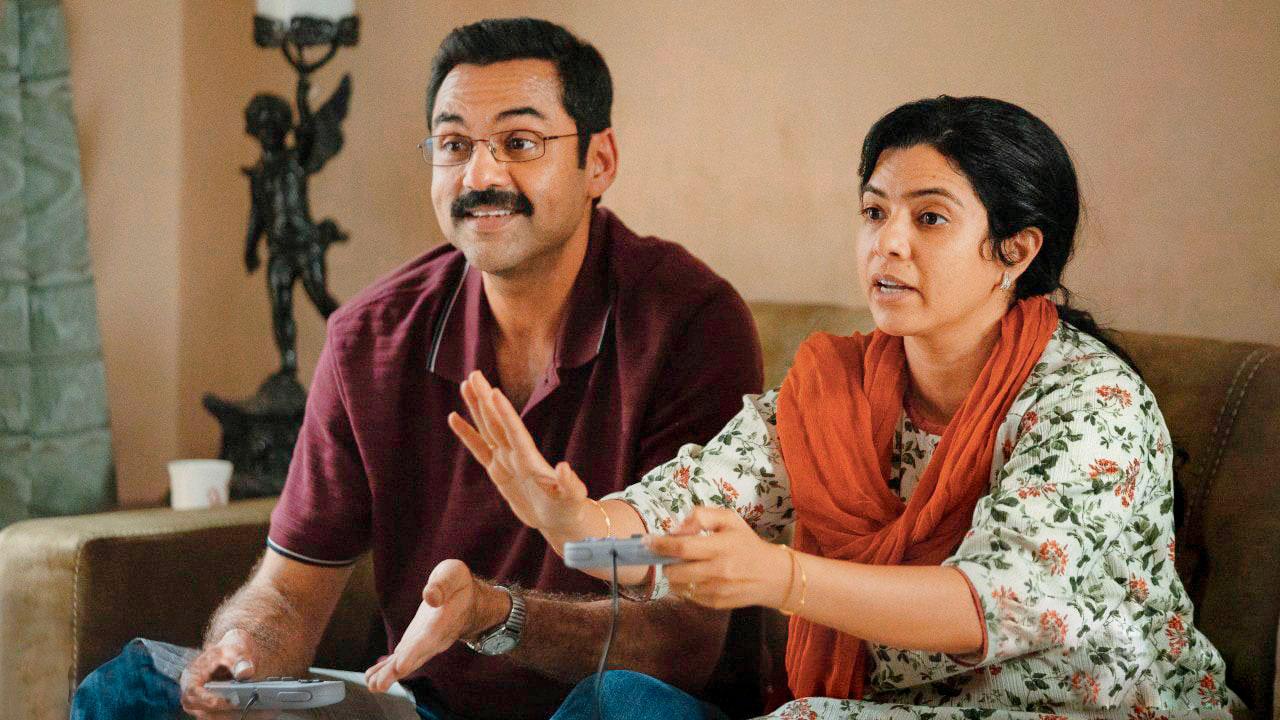
Abhay Deol and Rajshri Deshpande in Trial By Fire, which is based on the 1997 Uphaar cinema fire tragedy
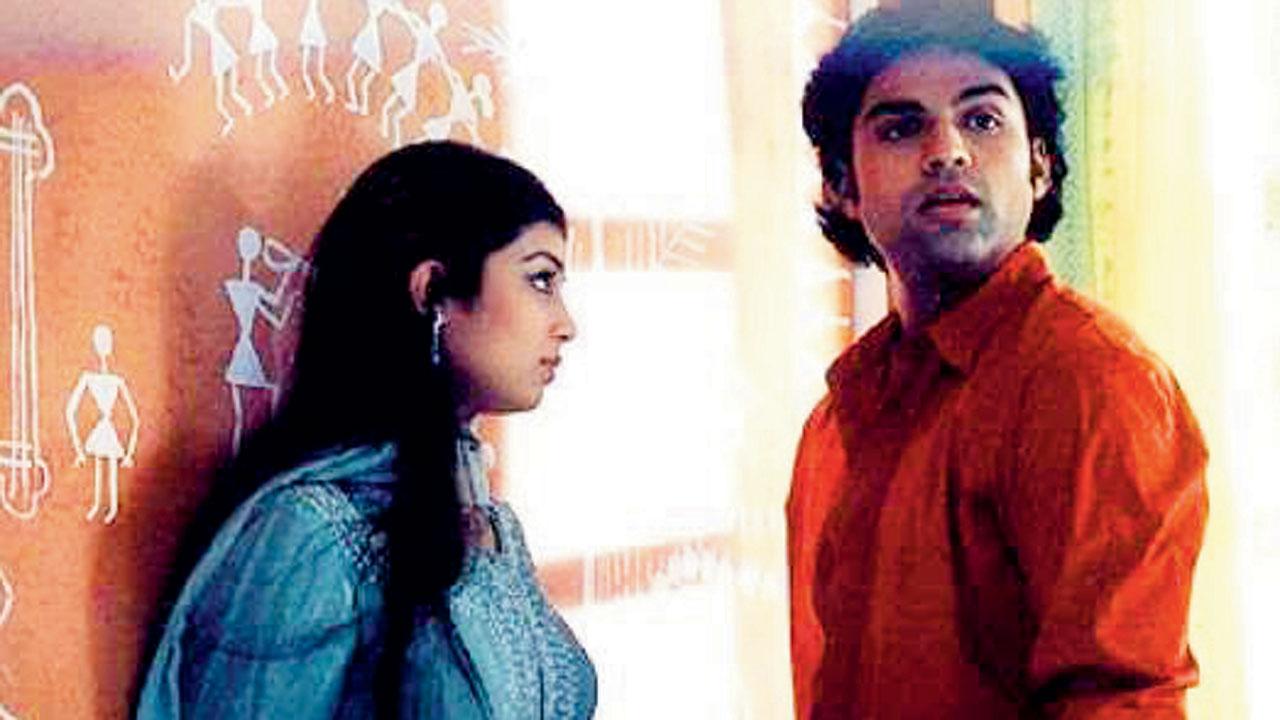
Still from Socha Na Tha (2005)
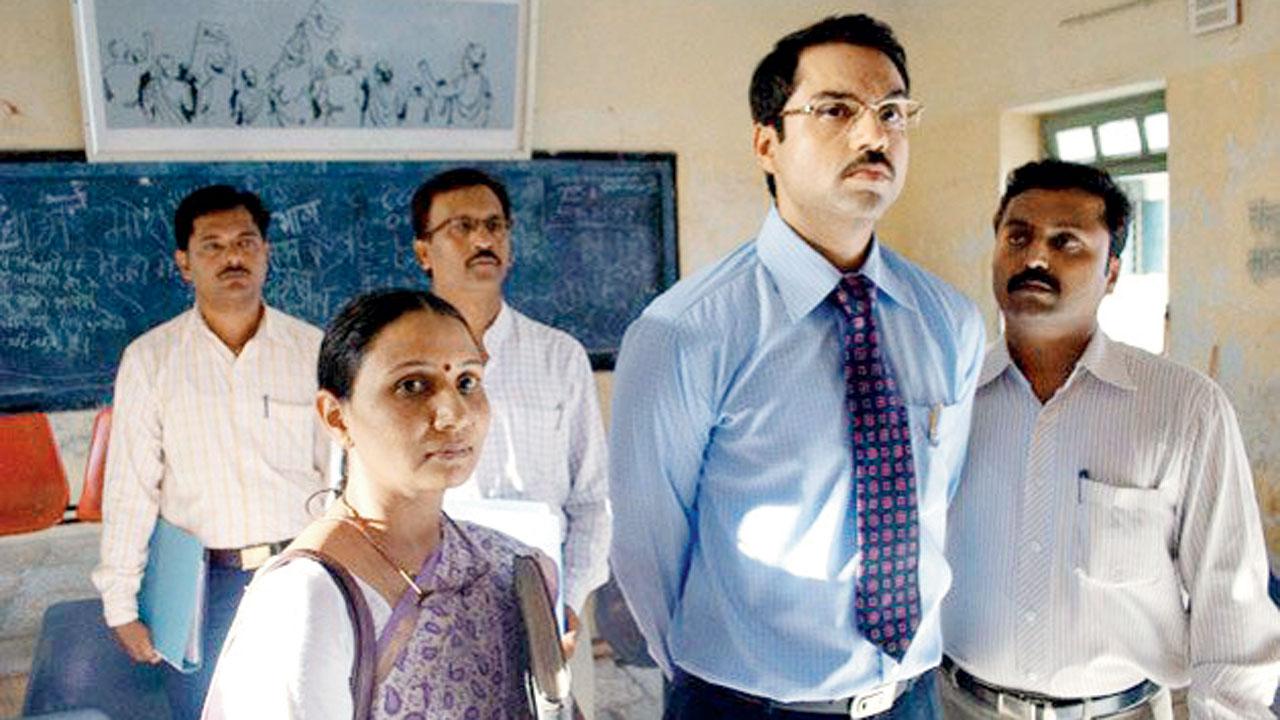
Shanghai (2012)
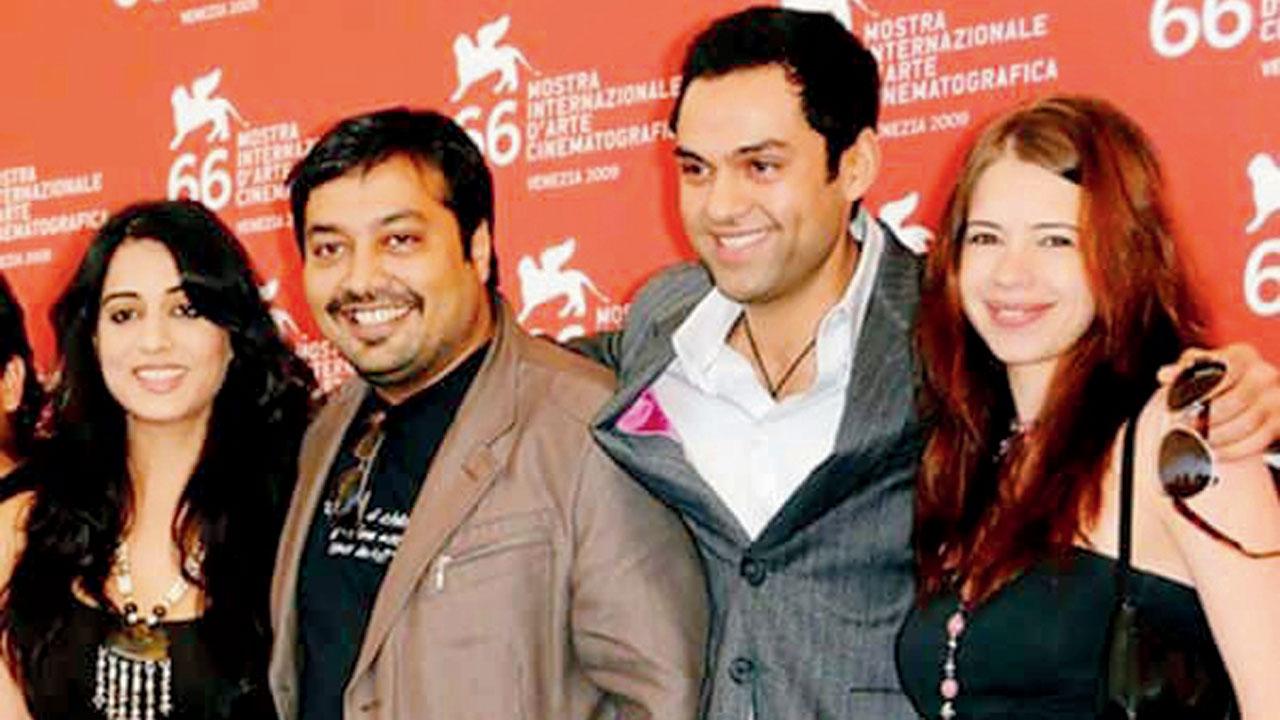
Abhay Deol with Anurag Kashyap, Kalki Koechlin, and Mahie Gill during the promotions of Dev D (2009)
Love is still a mystery to me-Imtiaz Ali
8:54 AM
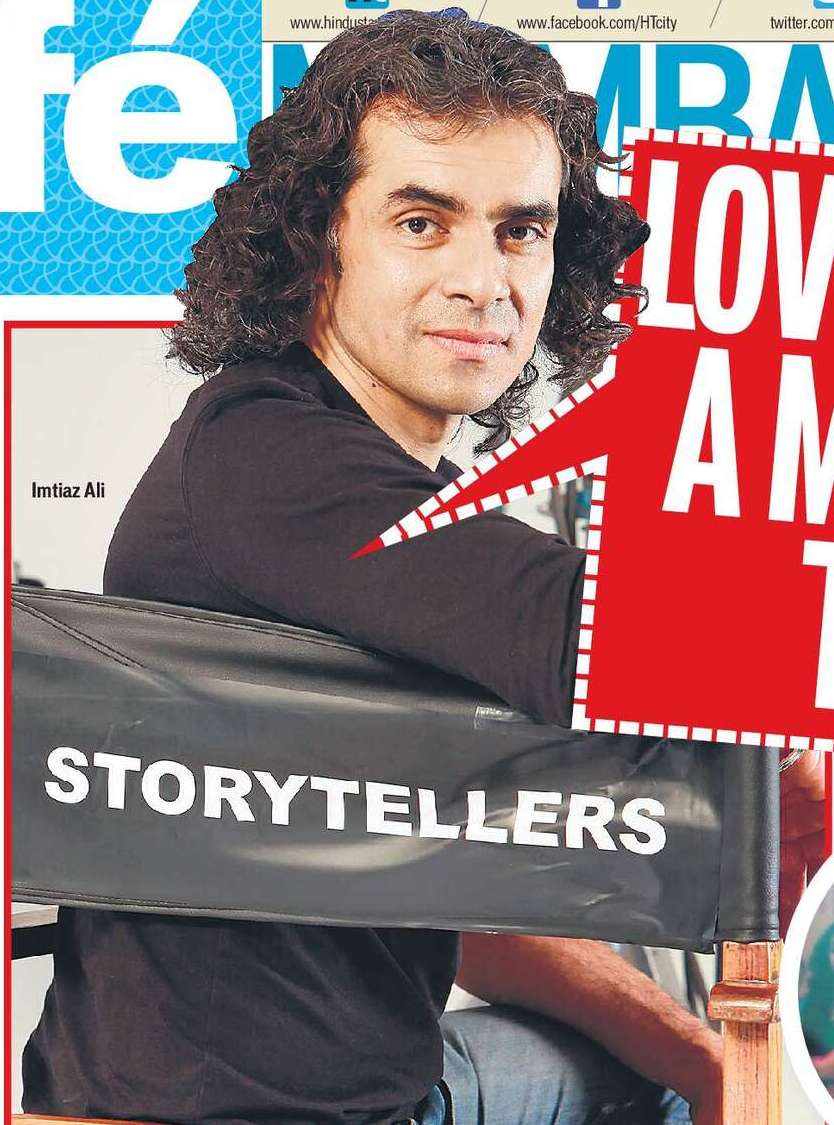
Imtiaz Ali says he knows nothing about love; relies on his thoughts and reflections to explore the concept
Prashant Singh (HINDUSTAN TIMES; February 3, 2020)
When he first made people sit up and take notice of his talent in Socha Na Tha (2005) followed by the cult hit, Jab We Met (2007), not many knew that Imtiaz Ali will soon leave an indelible mark in the Hindi film world with his inimitable, deep-rooted take on love. But just when you think of anointing him the ‘master of romance’, Imtiaz leaves you stumped, saying he knows nothing about it. “It’s not as though I am a master at it so I am telling you such stories but it’s more like I’m trying to understand it and movies are getting made,” says Imtiaz, as he readies for the release of Love Aaj Kal (LAK) starring Kartik Aaryan, Sara Ali Khan and Arushi Sharma. Excerpts:
2020 marks 15 years since you have been weaving stories...
Honestly, I don’t look back at my career or the professional life. But I do look back at my life, friends and people, so looking back is personal that way. I am always connected with people from my past. But I don’t try to learn too much from what [work] I did in the past. Maybe, I should (laughs). You work on one film and put all of yourself into it. And then, you kind of move on from there, and not go back. So, in some way, it’s poignant and good too because that way, you clear out the deck for newer things to come in. Else, it’ll be like being in a relationship that you don’t have anymore.
Your first film (Socha Na Tha) had an innate charm that stemmed from the fact that it was very raw, real and innocent. Have you managed to retain that magic?
I don’t think I’m the right person to answer that. And I don’t even know whether I have been able to maintain or conserve the innocence or rawness in my filmmaking. But whatever I do, even now, I don’t try to be more innocent or raw. I think the only way ahead is truthfulness and honesty. I’m a different person from when I made Socha Na Tha, and have learnt many things after that. Now, I have to look at how I perceive things at this stage and depict them beautifully. But my basic tools, fascinations, interests and process, remain the same. Also, since I’ve always written and directed my films, the process has remained intact.
Along with your legion of fans, a section of people also feel that you only make romantic films. How do you react to this?
I feel many emotions at the same time. If it’s said in praise, I feel like telling them, ‘I don’t know about it [love]. Maybe, you know more than I do. And that I am just more interested in it than you are.’ If someone feels I only make romantic films, I also wonder, ‘why that happens (smiles).’ But the fact of the matter is that I can show only those grains that grow in my garden. I just can’t invent or artificially inseminate something. So, most of the times, when such things are said, I try and not get affected by it as I want to enjoy the freedom of the range that I naturally have. I try to be in touch with my ‘real’ self, and not do things in reaction to something.
Coming to your next, Love Aaj Kal [LAK], it seems to have the same concept, pattern as your first Love Aaj Kal. Your take?
See, I’ve never done a remake, part two, a sequel or anything of that sort. So, vis-à-vis LAK, it all started with random conversations that if it was to be made today, it’d be very relevant and you would have a particular kind of guy and a girl. Also, I feel, it came from the fact that in the last 10 years, I’ve seen young people getting into relationships in a totally different — almost in a reverse kind of a process — than it was a decade back or 20 years ago. Yet, what they are looking for and their desire remains absolutely the same.
So, are you saying that your ‘regular’ conversations led you to this film?
Yes, and also, I guess the whole idea of love and relationships have gradually gone through such a dramatic change that I found myself talking about it time and again. I was going to make another film but I spoke so much about it that it started to form like a story in my head. While I was prepping to get into the shoot of the other film, I realised that I already have this story and I’m more excited about it. And plus, this was also more topical. So, I went for it.
Has your idea of love/romance changed, or metamorphosed over the years, or does the core remain the same?
I know that since I often make films about romantic relationships, I’m supposed to be someone who ‘knows everything about love.’ But the fact is that I know nothing. Since I don’t know anything about it and am still engaged with that concept, I’m still trying to understand it, as it remains a mystery to me. And the movies I make are a result of that churning in my mind. I don’t know anything more than anyone else. I do have some images, reflections and thoughts, and I’ve also realised a few things which I can present through stories.
You’ve seen many successes as well as failures. But by now, have you developed any software or hardware to deal with everything?
I think I entered the industry equipped with the software to deal with success and failure, and that’s shamelessness (laughs). It helps me not to ponder much. I always tell myself that I came from Jamshedpur/Delhi since I love making films. That’s what I should do and make them as well as I can since I enjoy that. I hope all my works is successful but if it’s not, then what different you can do. When Jab Harry Met Sejal didn’t do well, I, of course, didn’t enjoy that fact at all. But even if it was a success, I’d still be making the best film that I can. Right?
Talking about Love Aaj Kal [LAK], you chose the ’90s to showcase the past era. Do you feel a special affinity towards the ’90s?
I am at a different age now but when I see 20-year-olds, I think of the times when I was that age. That’s why the ’90s, when I was in my 20s. So, be it getting into relationships for the first time or the gamut of love-related emotions, it all happened to me then. In my case, it was even earlier but the 20s is the age when it happens to most people. So, if a person, who is nearly my age, looks at modern-day relationships thinking of times when he was that young, then the ’90s becomes the right period.
For you, did the ’90s also bring a personal connection?
Yes, because I understand the texture of the romance of that era because I was there. I have seen those things around me, in me. For instance, in our film, a group goes to watch Qayamat Se Qayamat Tak (1988), and that affects their romance. I know that emotion very well and also how people would wear clothes, especially in small towns. So, it’s about familiarity and also a secret desire to see what happens when Dil Deewana [from Maine Pyar Kiya; 1989] plays in a gully. Those things bring a smile to my face. So, I was like, ‘let’s depict it, and pay homage to those great films, which had a great influence on my life.’
Coming to film’s star cast, what made you choose Kartik Aaryan and Sara Ali Khan?
I was initially trying to work out another story. And when I happened to meet Kartik, I discussed that story with him and found him very accessible, someone you can talk to, and he also understands quickly. So, I knew I can work with this guy. And then I spoke to him about Love Aaj Kal. And the same happened with Sara too, who is very talented. I have known her for the longest time, and was very eager to work with her. Now, I realise — especially after watching the film — that they are more suited to this story than the first one. I feel it’s all about signs connecting you to the right direction, where I also wanted to go.
And then, you also have a newbie, Arushi Sharma?
I am very fond of her. We first bumped into Arushi at her engineering college near Shimla, when one of my assistants zeroed in on her for the part of Princess Sanyukta [in Tamasha; 2015]. And she did a great job in that little part. I was enchanted when I saw her for the first time. There’s something very pleasant about her. While working with her, I realised she has an innate, natural ability to act. So, I was looking for a chance to work with her again. When I finished writing LAK, I knew I will look for many girls — everyone out there — but I’ll finally choose her (smiles). Now, when people praise her after the trailer and songs, it kind of vindicates me. I feel relieved and gratified.
You don’t seem to be in a hurry to make your films. For instance, your last one, Jab Harry Met Sejal came in 2017…
Yeh ho jaata hai! I want to make films frequently. But I also write many scripts at one go. The same goes for my films such as Rockstar (2011) and Highway (2014). I made Highway 10 years after I wrote it. This time around too, I wrote four scripts but went with LAK. At times, subconsciously, you want to let a script be for a bit so that it grows organically. Even after Socha Na Tha (2005), I didn’t have work for a long time, so I wrote many scripts. This time too, the same thing happened. Since I have a bank now, I can, hopefully, come up with films sooner as a director. Also, since I’ve a production house now, I can present or produce more films than I direct.
There was a time when I was trying to figure out the meaning of 'love', but I have given up-Imtiaz Ali
8:34 AM

Madhureeta Mukherjee (BOMBAY TIMES; August 2, 2017)
His frames look stunning,
almost like a picture postcard coming out of real life. The lead pairs
in his films look lovely, too, but they
appear real. Like us all - beautiful and flawed, confused and complex.
His next, Jab Harry Met Sejal¸ starring Shah Rukh Khan and Anushka
Sharma, is close to his heart. It's a story that hits the road and takes
you along, and like Imtiaz Ali says, “If I had been born in Mumbai, or
belonged to a film background, my journey would have been lesser. And
for me, the journey is the most important part of my life.“ We catch up
over coffee and chat about all kinds of things - love, movies, men, women
and journeys. It's not a straight route, of course, but that's Imtiaz
for you. He will still give you enough to chew on. So, read on...
Your love stories follow a certain thread - pain, heartbreak, soul-searching, repression, breaking free... Is this how you define love yourself?
I am no longer looking for the meaning of love. I am no longer trying to define it either, but while reflecting on my own work I feel that a relationship with anyone else also makes you look at the relationship you share with yourself. I feel that whenever you encounter a new person or feeling, there is always a discovery and some sort of internal travel. It's not like I have a better definition or understanding of relationships than anyone else. There was a time when I was trying to figure out the meaning of the word 'love', but it's been long since I have given up. In fact, I never use the word 'love' while working, shooting or in real life. It means different things to different people depending on their experiences. It means different things to the same person at different stages in their life. So many things are clubbed and categorized under that word that it becomes extremely inaccurate to use it liberally. If I tell my actor that you are in love with this girl, so behave like this with her, it means nothing at all.
Have your films changed the course of your own journey? How much change has it brought about in you, personally?
Yes, for sure. Sometimes when I watch my own films, I realise that now, people have a sneak peek into everything that I am trying to hide from them. Movies reveal so much to everyone and even more to the director. Personally, I draw a lot from my films, but I don't see it passing on as learning to the next film. If I had carried on something from one film to the other, today, I would have been more confident as a director than I was when I made Socha Na Tha. But that's not the case. Every time I am working on a film, it feels like I have never worked before and I don't know what to do. When I am on the set, I don't know the first thing to say to anyone. It sounds convoluted, but it's absolutely true.
Like in Jab Harry Met Sejal (JHMS), in many of your other films too, the love story hits the road. Is it symbolic? Is it trying to spell out the belief that we need to travel inwards and outwards to find love?
Personally, travel has been very important for me. I was from Jamshedpur and I had to travel a lot, first to study in Delhi and then to Mumbai for work. In smaller towns, people have to travel more as you don't find everything in your own city. Travel is the most affordable entertainment and all kinds of people travel. It is a time when they can be who they want to be. You are often defined by your location, job and the environment you live in. Once that changes, the definition also wears off. You can choose who you want to be and you can refresh yourself by being anyone else because no one knows you there. When you travel, you come to know what kind of person you really are. If you live in a society and go to school or college in a certain area, everyone there has an opinion and you are often bound to carry the same opinion of yourself that everyone has. Once you leave that environment is when you dis cover yourself.
Anushka Sharma and Shah Rukh Khan have worked together twice before doing this film. Does it make it easier directing a love story with a lead pair, who are already comfortable with each r other?
Yes, it does. It makes it easy for not just a romantic film, but for any film. Though sometimes, it also a makes it difficult as there is a certain pattern that already exists which you need to break, because each film is unique and needs a difeferent energy. SRK and Anushka are very comfortable with each other; at the same time, as individsuals, they are very different. I think that also makes it more exciting because people who are unlike each other often add other dynamics to the scenes.
Your journey from Jamshedpur to Mumbai, from Jab We Met (first success) to JHMS, has been interesting. When you come from a smaller town, do your achievements (fame, success) seem more magnified?
I don't know any other way. For me, this is the life that I have lived. I cannot compare it with any other. I feel fortunate that my journey has been long, and the fact that I have been at various places and cities in life. I have worked at a junior level and learnt the ropes the way everyone does. I can use all those experiences in the movies that I make. I feel I am more blessed that life has taken me to different places. If had been born in Mumbai, or belonged to a film background, my journey would have been lesser. And for me, the journey is the most important part of my life.
Your name features on most actors' bucket list. Yet, you say that you are insecure. Why?
Honestly, I feel completely unsure about myself as a director. I think it is the very basic nature of people to be unsure about what they are doing. Right now, I am going to the mixing studio and it will be a struggle to make the best of what I can today. Tomorrow, I won't have the chance to do it again. There is nothing that I have done, which I have not regretted later in terms of work. There is nothing that I have done, which I felt couldn't have which I felt couldn't have been better. Yesterday, at the mixing studio I was thinking...when will a time come when I will just romanticise about the film releasing and talk about all the good things about it? Before every release, I am just insecure about the nitty-gritties that could go wrong.
The characters in your movies are beautifully sketched; do you see a reflection of your own self in your characters?
I do it subconsciously, never deliberately. Your own influence on the characters of your film is also something you realise in retrospect. I try to keep myself as far away as I can, but it is difficult. Ultimately, when I watch my films, I see that there is a reflection of me and my experiences. I try to avoid it, and the reason is that I don't want my life to repeat and make my films and characters boring and repetitive.
Ranbir and you share a strong bond. In a previous interview, you have spoken about how he often chooses films from the heart. The two of you seem to be similar in that sense; you are driven solely by the story you want to tell. Of course, the commercial aspect comes in later...
It is not a question of how much money you can make with one particular film. For actors and directors, it is a question of how you are going to train yourself to be the person who can make movies that will earn over a period of time. For that, learning is important. Many of us have not been to film schools and we learn on the job. The only way to learn is to experiment and attempt different things. After one successful film, I know that if I make a similar film, it will most likely make money as people have already accepted the subject. If I do that, my learning will stop and after three films, I will have nothing new to say. There are these risks we have to take with the intention that it will reap rewards later, if not right away. Which is why someone like Ranbir, who is going to be here one way or the other for donkey's years, needs to take those risks and learn more. For him, learning and doing new things is more important than the money that he makes right now.
What will he do with the money?
He already has more than he needs (laughs)!
Has your understanding of women changed through your own real life and cinematic experiences? Do you think you understand them better now?
I don't know if my understanding of women has become better, but I can say that now, I am more interested in them. It has always been there. As a child, I was always guilty about being interested in girls and women, now I am old enough to admit that, yes, that's the case. I am fortunate to have been in the company of admirable and intelligent women. I always feel that women are far more intelligent and sharper than men. So, more than understanding women, I think that I am fascinated by them.
In Love Aaj Kal, you showed parallel love stories belonging to different generations. In the older era, the man is in love with one woman, in the new age, he is confused about his choices. Do you think that the new generation construes love differently?
Yes, the definition has changed, but the basis has not. The dynamics around the topic has changed completely and with every generation, it is bound to change. Earlier, the impediment used to be an outside force, a barrier that would stop a man and a woman from coming together and the whole romance was to fight that barrier. Now, it has become internal. Today, you might have to combat some internal things to be with somebody. So, in that sense, the parameters have changed, but the basic desire of a man and woman to be together is the same.
Even the way we show love cinematically has undergone a huge change. Today, a couple in love kisses on screen, makes love and expresses themselves with abandon, without any fear of judgement...
Yes, that has changed, too. I think society has become liberal and therefore, cinema had to become liberal. Today, we have modern relationships, where even after living in for a long time and having an active physical relationship, a couple can take time to understand if they really love each other and want to be together for life. So, cinema is also trying to get there.
So, what we are trying to portray is more honest and closer to reality...
Absolutely! If you realise, today's cinema is actually becoming purer, as we aren't trying to camouflage emotions or add filters. Instead, we are removing them. Now we have a chance of portraying love stories more realistically.

Imtiaz Ali is modern day Yash Chopra-Shah Rukh Khan
8:09 AM

Shah Rukh Khan on his return as a romantic hero and how the decision to avert a box-office clash with another big budget film came to fruition
Sanyukta Iyer (MUMBAI MIRROR; June 10, 2017)
Shah Rukh Khan, whose propensity for box office clashes is a thing of industry legend, sent shockwaves across social media platforms on Thursday night with an uncharacteristically prudent move. The 51-year-old actor declared that his upcoming film, the curiously-titled Imtiaz Ali directorial Jab Harry Met Sejal, which was poised for a clash with Akshay Kumar’s Toilet – Ek Prem Katha on August 11, will now hit the marquee a week before, on August 4. Earlier this year, his Rahul Dholakiadirected Raees locked horns with Hrithik Roshan’s home production Kaabil, while Christmas in 2015 was reserved for a face-off between SRK’s Dilwale and Sanjay Leela Bhansali’s Bajirao Mastani. Earlier, Ekta Kapoor had reportedly moved the release date of Once Upon A Time In Mumbai Dobaara!, which had, coincidentally, featured Akki in the lead, to avoid a clash with SRK’s Chennai Express.
What made you re-schedule the release of Jab Harry Met Sejal?
Sometimes, it is unavoidable to have two big films release on the same day because the next available date may be too far off. I’d have adjusted the release of Raees as well if it was possible but the next available date was August 4, which would mean shifting Jab Harry Met Sejal to January, 2018. Raees was already a little delayed because of my knee injury and sitting on it for another six-seven months was not a good idea. Red Chillies Entertainment’s (SRK’s banner) films are mounted well and marketed widely. They can utilise 5000 theatres on their own during opening weekends. With another release, unfortunately, it becomes a 50-50 and the film doesn’t reach out to the scale it was intended. Of course, we still make money, we still do good numbers, but the real possibilities get affected.
Who took the final call on changing the release date of Jab Harry Met Sejal? Was there a discussion with Akshay before the move?
Whenever there is an open date close to the original release date, one should take it. I have always gone and requested people to adjust their dates knowing that it is sometimes unavoidable. But, this time we got August 4, and were told about this decision two-three weeks ago. It was a collective business decision that worked better for both the films. We have a long weekend with Raksha Bandhan coming up and our film is also a long-running one with a more nurtured, unabashed love story that does not depend entirely on one weekend. Hopefully, it will run into the second weekend as well, at the same time the other film gets its solo release.
Everybody loves their films and every film should have its breathing space. I hope others also keep this in mind. Until we have 8000 screens, two releases on one weekend won’t be good for the opening capacity of any big-ticket release.
Will the film release internationally as well on August 4?
Red Chillies has a huge international presence and we’re going even bigger in South America this time, because we have a huge fan base there.
Since your company is presenting and producing the project, have you ever found yourself in a spot trying to juggle your roles as an actor and producer, especially when you may have to overrule a director for a business decision?
Whether it’s Rohit (Shetty), Aanand L Rai, or this film with Imtiaz, my production team directly reaches out to the director. All I want is to do bigger and better films. There are senior people who manage the business and they tend to keep me out of it because I over-spend all the time. They treat me like an actor and give me a call-time. I don’t directly meet with the exhibitors or distributors unless my team wants me there. I am only creatively involved. If it’s a ‘no’ from my team, it’s a ‘no’ from me. I am neither autocratic nor a hands-on producer.
There had been a lot of speculation around the Imtiaz Ali film which was untitled for the longest time, after the tentative The Ring and Rehnuma. Was the final title chosen deliberately as an ode to the Hollywood classic, When Harry Met Sally?
It is what the director wanted it to be. Imtiaz’s working title is usually in English, which ended up as the final titles in the case of Rockstar and Highway. During narration, Imtiaz’s script was called The Ring. We chanced upon the first Hindi title (Jab Harry...) that resonated with everyone, only two days before we started shooting. Ranbir Kapoor was shooting for a brand at Mehboob studios, I was there with Imtiaz and Anushka was shooting something, and Ranbir joked “This should be the title — Jab Harry Met Sejal”. And even though we loved it, we hated the fact that Ranbir had suggested it and we’d have to give him complete credit!
When Harry Met Sally is one of Imtiaz’s and my favourite films, it’s everyone’s favourite love story. Our film is not a copy, or a takeaway from it. The only connection is that ours is also a classic love story with sweetness and sadness, love and heartbreak. It’s visually attractive because we’ve filmed in Lisbon, Amsterdam, Prague and Budapest. Imtiaz’s creative team and I have seen the film and the consensus is that it’s funny and celebratory. The girls like it a lot more than the boys.
No wonder they call you the ‘King of Romance’. What’s it like to be 51 and be able to romance a 29-year-old Anushka Sharma?
The film is not bubble-gummed because I am not at an age to be doing teenage love stories. Imtiaz’s writing has a strong sense of maturity, and my character’s age lends to the comedy as well. It’s not like I’m playing a 51-year-old in the film, but I’m not a teenybopper either. I play Harinder Singh Nehra aka Harry whose lived abroad, like the Punjabis or Sikhs who move to UK or Canada and have lived there for the last 15 years. I am actually getting back to doing a romance after a really long time.
For someone who has done so many romantic films, what sets Imtiaz’s love story apart?
Adi (filmmaker Aditya Chopra) told me that I’m called the King of Romance but I’ve not done a romance since Kuch Kuch Hota Hai, since they’ve all been “just another love story”. But doing an unabashed love story in my age depends entirely on the writing. Imtiaz’s story is wonderfully penned, proving that he’s a modern-day Yash Chopra. Imtiaz believes in love… classic, unconditional love. He always shoots his films abroad, and loves food.
My little girl (daughter Suhana Khan) had shown me parts of Jab We Met (an earlier Imtiaz directorial) and I had enjoyed it. But I had watched Socha Na Tha featuring Abhay Deol, which had released when Imtiaz was not well-known and I had loved it a lot more! Rockstar was brilliant but it didn’t do too well at the box-office because Imtiaz sometimes makes his love stories too intense. Not this time though. We’ve made sure it’s all about love and happiness.
My post against racial discrimination isn't about me or the fraternity-Abhay Deol
7:09 AM

Abhay Deol reacts to Sonam Kapoor's displeasure over his post against racial discrimination; says he's all for 'Hindi-Indie' films
Natasha Coutinho (MUMBAI MIRROR; April 14, 2017)
 On Wednesday, Abhay Deol
called out Bollywood's A-listers, from Deepika Padukone to Vidya Balan
and Sonam Kapoor, from
Shah Rukh Khan and John Abraham to Shahid Kapoor, with a
thought-provoking post on social media for endorsing fairness products
and thereby reinforcing discrimination on the basis of skin tone. While
many came out in support of his 'brave' stance, his Ayesha and
Raanjhanaa co-star, Sonam Kapoor, hit back by digging out a picture of
Esha Deol endorsing a similar product. She later deleted the post after
being trolled for it.
Bring this up and Abhay shrugs, “Honestly I didn't care what people from the fraternity think because this is not about me or them. I have nothing personal against them. I put up the post because I was tired of celebrities and brands telling me that they are simply propagating a regressive message which has existed in our society for hundreds of years. The frustration comes from the fact that by cashing in on it we're only perpetuating it further. So, since this is not about Sonam and me, let's stick to the issue at hand, shall we?“ He points out that many celebrities choose not to speak up because when they do, the issue at hand gets inadvertently pushed to the side while celebs themselves becomes the point of discussion. “I have my faults too; I'm not holier than thou. I only wish to stop reinforcing a myth so we can deal with the real problem. Some people will take offence to everything. That's okay, we need people like that so we can know what not to do,“ he reasons.
The actor admits that as a fair Punjabi child, he'd often heard people say “Hai kitna gora hai, his cheeks are so red,“ growing up. And as a child, he thought of his skin tone as an advantage. “The ads reiterating that fair-skinned people became successful confirmed the notion. It was only when I went to Los Angeles for further studies and befriended many browns and blacks who were proud of their complexion that I realised how wrong the conditioning had been,“ he rues.
On the professional front, Abhay has been shooting for an Indo-American production, The Field, which will wrap up in four days. “We are done with the Delhi shoot and wrapping up the film in Mumbai now. Early in my career, when multiplexes were just mushrooming, I was able to make and release films which were not considered safe or sensible because they veered away from the formula. They were tagged as 'Hindi-Indie' which for me was a refreshingly different term. I never liked the word 'Bollywood' and only started using it when it became so common that in that one word I could describe a genre but still I prefer the term 'Hindi cinema'. The Field is not the kind of film Bollywood will ever make, it's more 'Hindi-Indie', like Manorama Six Feet Under, Oye Lucky! Lucky Oye! and Dev D,“ he asserts, adding that the crime-drama is frank and explicit in a way Hindi films can never be. “It's 80 per cent Hindi and 20 per cent English and the 20 per cent are the parts with Brendan Fraser.“
Abhay wants to give smaller films a platform through his distribution business. Films like Socha Na Tha, Zindagi Na Milegi Dobara and even Dev D which struck a balance between formula and non-mainstream. “The films that tread the middle path are most difficult to come by, conceive, write, fund and find a cast for. The kind of films the formula dictates are all about the star. I'm not only pointing fingers at others but at myself too. We are all conditioned by our culture, but art can be used to break certain patterns which are regressive. You simply have to step out for a moment and reflect,“ he avers, going on to explain that the formula is all about the hero and the heroine but if you keep the film in the forefront and not the star, over time the audience will be conditioned differently. “They already do that with foreign language films.“
For Abhay it's a risk worth taking as he has been through the grind himself with his choice of films. He admits that many believed some of his earlier films would never get made and if they did, would flop.“But after I did them, I got really positive response from filmmakers who wanted to step out of the box and needed a platform to showcase their work. Unfortunately, the multiplex boom slowed down and formula returned to reign again and that window was lost to us. And with big star studded mainstream films taking up all the screens, there was no space for the little films. Maybe going digital will give them that space, make it a level playing field. I'll be watching out for filmmakers who will never get space from big corporates, studios and multiplexes.“
So is a sequel to Socha Na Tha or Zindagi Na Milegi Dobara in the pipeline? “I'm not in touch with Imtiaz (Ali) and Zoya (Akhtar) has not come up with a part two for ZNMD yet. We laugh over the possibility but it's not like she has a plan yet,“ he signs off with a flash of dimples.
I was told that there can’t be a love story without a villain-Imtiaz Ali
8:07 AM

Natasha Coutinho (MUMBAI MIRROR; November 22, 2016)
Imtiaz Ali addressed a session at Film Baazar in Goa on Monday titled to ‘Love or Not to Love’ on the romance in his films during the course of which the director admitted that growing up in Jamshedpur, he had no idea he’d be making films some day even though he was doing theatre since his school days and was an avid movie buff who once told Amitabh Bachchan, “You perhaps don’t know yourself as well as I do.”
He approached many with his first script, Socha Na Tha, only to get the thumbs down because its protagonists had no problems and the story had no villain. “There can’t be a love story without a villain, I was told,” recalls Imtiaz who then took the script to Sunny Deol even though he knew he wasn’t suitable for the part. “Sunny listened to the script patiently, and then said, ‘We will make the film, now let’s eat.’ We’d met at an exotic hotel in Shimla after shooting was cancelled because of the rain,” he reminisced. Dharmendra went on to produce the romcom with Abhay Deol and Ayesha Takia in the lead.
Songs have always been an integral part of Hindi films and Imtiaz admitted he wanted them in his films too. “But I don’t want them to be embarrassing and my firang friends to make fun of them. They should express what is not spoken,” he averred, adding that having worked with A R Rahman on three films (Rockstar, Highway, Tamasha), he’s become familiar with the maestro’s intuitive grasp. “When you are sitting with him you feel like he is creating nothing and sometimes get scared thinking, ‘yeh toh duba dega’. But his tunes reflect that he has got your brief.”
He went on to reveal that he had not approached Rahman for Highway because it was a small film. “But he heard the story and said, ‘You want me to do it? Let’s do it?’” Imtiaz flashbacked.
On his strong female protagonists he shared that his mother was a strong woman. “It would annoy me as a child as she would catch my mischief. All women I’ve met have been strong and they must inspire my characters somehow,” he said.
I don’t change my scripts-Imtiaz Ali
3:59 PM

Imtiaz Ali respects funders, but puts creative freedom above everything, says his personal enjoyment of making a film is more significant than if the audience had a good time
Anirban Das (MID-DAY; October 2, 2015)
On Wednesday evening, Imtiaz Ali caused a frenzy at Fun Cinemas, Andheri, when he arrived for an interactive session as part of the ongoing 6th Jagran Film Festival. Movie buffs as well as aspiring actors and filmmakers jostled for space as the director discussed his journey in the industry so far. In a tête-à-tête with hitlist , Imtiaz talks about the changing scene for independent filmmakers, his aversion to remakes and why he does not make much of people’s expectations. Excerpts:
You are considered a new age filmmaker. How do you perceive that tag?
I somehow do not relate to it. I have worked to the best of my abilities, but I feel the audience goes on its own journey while watching my films. I don’t feel a sense of ownership as they move with or live the film. In fact, after a few months, my movies are gone and the audience lives some other film.
How do you think you have done so far?
I think I am in a very fortunate place. I see a lot of people who are interested in working with me. As long as I get opportunities to make my films, I will be in a great place. I don’t know what my comparative value is in the industry, but that’s not my occupation anyway.
As an ‘outsider’, do you think you have been lucky to work with stars?
I don’t think so. Abhay Deol and Ayesha Takia were newcomers when I made my debut, Socha Na Tha (2005). When I made Jab We Met (2007) with Shahid Kapoor and Kareena Kapoor, they were known faces, but it was not a great time for them then. My third film (Love Aaj Kal, 2009) was with Saif Ali Khan, but then again I did a movie with Ranbir Kapoor (Rockstar, 2011), who was as big as any star.
How tough is it for newcomers to seek support for marketing their films?
It has become easier now because of the media boom and digital revolution.
What about theatrical releases?
I think the theatrical release scene has become marginally better. But the big deal is that the new filmmakers can make people watch their films using digital platforms. That was not available to filmmakers of our generation. And if people are still complaining, then I think they just want to keep complaining.
You also make short films. Any plans to release them on digital platforms?
Often, I find there is something interesting going on around me. It could be a sunset or a car moving through a jungle. I capture it all on my phone. Short films, at times, tell you deep, significant stories. I have put only two short films online — one on Kashmir and another on Rajdhani Express going from Mumbai to Delhi.
How much time do you devote to writing?
I actually spend a lot of time penning stuff. I love the process of coming up with an idea and writing it down to tell a story.
With every new film, do you feel the pressure of living up to audience expectation?
I think a human being can allow himself or herself to not feel the pressure of audience expectation by being shameless. Or by thinking no matter what the pressure is, I will do my job right. You need to put your head down and work. Shamelessness is my way of enjoying working on a movie. I value that more than someone else enjoying my movies. What they think about the film is important, but what’s even more important is that I able to devote and surrender to the film. After that, if people have expectations, I don’t care about it.
But what about expectations of distributors or producers in terms of the film’s commercial viability?
Yes, that is something important to my job. I do give it a rational thought. But, again, I don’t think about it while working. I think about it only before or after shooting. If I have a story and someone is funding it for a release, I ask if the film will be able to recover the money. You listen to those monied people. But if they try to change the script, don’t make the film with them. I don’t change my scripts.
Subscribe to:
Posts (Atom)