Showing posts with label Shekhar Kapur. Show all posts
Showing posts with label Shekhar Kapur. Show all posts
Jugal Hansraj reunites with Masoom director Shekhar Kapur for Masoom: The Next Generation
10:07 AM

Akash Bhatnagar (HINDUSTAN TIMES; August 9, 2026)
Filmmaker Shekhar Kapur is reviving his 1983 classic, Masoom, for the new audience in a new way, with Masoom: The Next Generation. Veteran actors Naseeruddin Shah and Shabana Azmi have already been confirmed to be reprising their roles from the original film, and now HT City has exclusively learnt that another original cast member has come on board — Jugal Hansraj, who played Rahul, Naseeruddin Shah's onscreen son.
Jugal Hansraj made his acting debut as a child actor with Masoom alongside actor Urmila Matondkar. He played the innocent Rahul, whose entry into a typical family changes its dynamics forever. More than four decades after the film's release, Hansraj is now reuniting with his first director, Shekhar Kapur, as well as Shah and Azmi.
Speaking about the reunion, Kapur tells us, “There is something profoundly beautiful about coming home, not to a place, but to a story that has stayed alive in people's hearts for decades. Jugal was just a young boy when we made Masoom, and today, welcoming him back as an accomplished actor is both emotional and deeply fulfilling. Reuniting him with Naseer and Shabana is a reminder that some relationships transcend cinema. As we begin this new chapter, I hope audiences experience the same honesty, tenderness, and emotional truth that made Masoom so enduring.”
Hansraj resonates with the sentiment as he shares that he felt so happy when Kapur called him to offer the new film.
“Masoom has been a part of my life, my identity, for as long as I can remember. Even after all these years, I’m still that ‘Masoom boy.’ It’s been more than 40 years since the film was released, but people still remember the film with so much affection. I constantly get stopped by people even here in New York, and I’m told with a warm smile that their kids or grandkids listen to ‘lakdi ki kathi’. They meet me like I’m a member of their own family. I’m glad that I can be a part of this special family again. It’s like life coming full circle,” he shares with us.
Masoom: The Next Generation is a spiritual sequel to Masoom and will explore changing family dynamics, identity, and relationships across generations. Apart from the three actors, the film will also feature an ensemble cast including Manoj Bajpayee, Nithya Menen, and Kapur's daughter, Kaveri Kapur. Composer A R Rahman has come on board to compose the music and co-produce the project.
Directing an English film and working with international crew is a whole new chapter in my life-Kunal Kohlli
2:23 PM

Kunal Kohli with British actress Amelia Gething and Hollywood actor Nick Sagar
Onkar Kulkarni (BOMBAY TIMES; June 26, 2026)
Filmmaker Kunal Kohli is stepping into uncharted territory with his latest project, All About Her, a British English feature film starring a predominantly British and international cast. The film, which is currently being shot in the UK, is his first English-language directorial venture.
Talking about it, Kohli says, “Directing an English film and working with a full British and international crew is a whole new chapter in my life. Shekhar Kapur has always been my inspiration, and I am hoping this starts a trend of more Indian filmmakers working globally. Though English is not my first language, the experience of directing a film in English has been incredibly rewarding.”
Headlined by British actress Amelia Gething and Hollywood actor Nick Sagar, the Sheetal Parab production venture is expected to wrap filming later this month and will be submitted to international film festivals before its release. Nick Sagar is best known for his role in The Princess Switch film franchise, while Amelia Gething has garnered attention for her performances in Emily and The Spanish Princess.
He adds, “Shooting a film in the UK with British actors and crew gave me a great deal of creative freedom. Direct interaction with the actors helped bring the characters to life on screen exactly as I had envisioned, in complete sync with Amelia and Nick. Although I was new to their industry, the actors placed their trust in me and together we created an incredible cinematic journey that we are excited to share with audiences across the world.”
"Didn’t know they were big stars": Cafe manager on serving Matt Damon, Christopher Nolan, Tom Holland
9:20 AM

After Matt Damon, Christopher Nolan and Tom Holland’s chai and bun maska stop went viral, the manager of the Mumbai café they visited shares what it was like hosting the trio
Rishabh Suri (HINDUSTAN TIMES; July 13, 2026)
It’s not every day that you spot three Hollywood heavyweights — American actor-producer Matt Damon, British-American filmmaker Christopher Nolan and English actor Tom Holland — sipping chai and tucking into bun maska at a local eatery in India. But that’s exactly what happened on Saturday, when the trio visited the 108-year-old Olympia Coffee House in Mumbai amid promotions for their upcoming film, The Odyssey.
As photos and videos of their visit went viral, Olympia Coffee House manager Inayat Maredia shares what it was like to host the stars, and reveals that they didn’t even recognise them at first!
“Unn teenon ke guests jo the (their team), woh pehle 2:30 baje naashte ke liye aaye, uske baad se voh khade the cafe ke baahar hi. Humko toh pata bhi nahi tha ki jinki woh wait kar rahe hain, woh itne bade hain. Baad mein jab Google kiya toh maloom padha ki Tom Spider-Man wale actor hain,” he says.
It was only when Damon, Nolan and Holland walked into the cafe at 6 pm, suited up, and the crowd began to swell, that the staff realized they had some pretty famous people amidst them. “The three of them came. Chai peeya, bun maska khaaya, very light snacks. Zyaada der nahi ruke kyunki bheed bahot aa gayi thi. Bodyguards aaye the, police thi. 10-15 minutes se zyaada nahi ruke,” Inayat shares.
Bollywood turns up for The Odyssey's India premiere
Mumbai saw a star-studded premiere for The Odyssey on Saturday, with Christopher Nolan, Tom Holland and Matt Damon receiving a warm welcome from fans and members of the film fraternity. The event drew several Indian celebrities in attendance, including veteran actor Dimple Kapadia, who starred in Nolan’s 2020 espionage thriller Tenet, and her granddaughter Naomika Saran, actors Shruti Haasan, Boman Irani and Dino Morea, as well as digital creator Ashish Chanchlani. The premiere was preceded by a fan screening on Friday.
After Matt Damon, Christopher Nolan and Tom Holland’s chai and bun maska stop went viral, the manager of the Mumbai café they visited shares what it was like hosting the trio
A Matt Damon-Shekhar Kapur collab up next?
Natasha Coutinho (HINDUSTAN TIMES; July 13, 2026)
At The Odyssey press conference on Saturday, Matt Damon revealed he still regrets missing the chance to work with filmmaker Shekhar Kapur after having to turn down his 2002 directorial The Four Feathers because he had already signed another film. “He’s has always been on my list and I would like to have another go,” Damon said.
Reacting to the actor’s remarks, Kapur tells us, “I hope the collaboration happens. It’s Time Matt, and I finally collaborate.”
I hated myself during the shoot of Bandit Queen-Shekhar Kapur
9:55 AM
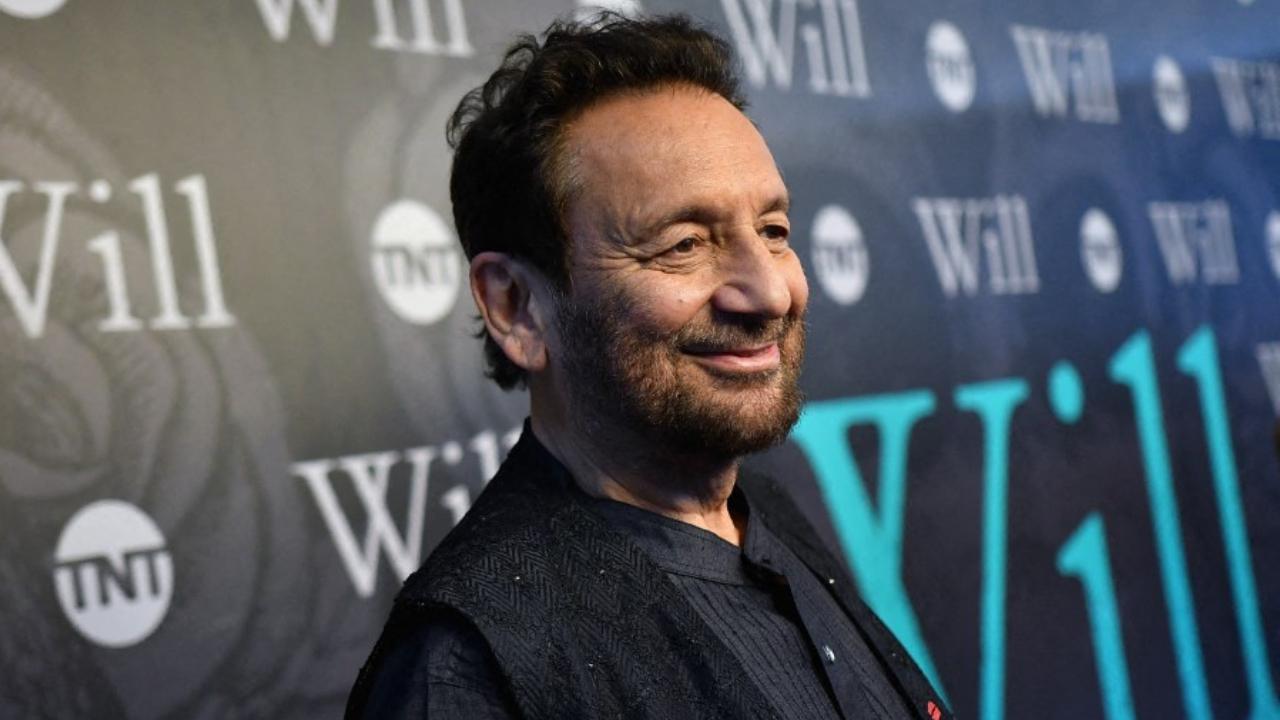
Niharika Lal (BOMBAY TIMES; April 8, 2026)
Shekhar Kapur is often asked when he will make another film like Bandit Queen (1994). The film, which won the National Award for Best Feature Film in Hindi in 1996, continues to stand out in Kapur’s oeuvre. But he has no plans to revisit it. “Kaise banaoon? Mar jaunga,” he said at the recently concluded International Film Festival of Delhi.
In a conversation with Vani Tripathi Tikoo, Artistic Director, IFFD, the filmmaker reflected on why he couldn’t imagine making another film like Bandit Queen, and how “everything about Masoom (1983) is Delhi.”
‘I APPROACHED BANDIT QUEEN FROM A PLACE OF GUILT – THAT I AM RESPONSIBLE FOR WHAT HAPPENED’
Discussing the journey of Bandit Queen, a film that chronicles the life of Phoolan Devi and lays bare the brutal realities of caste, gender violence and survival, Shekhar reflected on the emotional toll of making it.
“It’s difficult to describe the journey of Bandit Queen. I used to live in Nizamuddin at that time. I read about Phoolan Devi – it used to appear on the second or third page of the newspaper. Mujhe pata hi nahi tha ki yeh duniya hai kya. I didn’t know a world that existed right at my doorstep,” he said.
Shekhar elaborated how every film begins with an attitude. “Every filmmaker has to have an approach. I approached the film from a place of guilt – that I am responsible for what happened there. I have this tendency of becoming every character – as if it is me. Unless I become the character, I don’t know how to explain it to the actor.”
Discussing the everyday language used for girls, he told Vani, “In Punjabi, we say, ‘Kinni pyari hai, kinni soni hai, kinni sharmili hai’. Then I started thinking – this is the worst thing to say to a young girl. ‘Kinni sharmili hai’ means how submissive she is.” That thought shaped the film.
He shared, “Then I started asking – who am I in this film? I am a macho Punjabi man. It became a film that fundamentally said: rape is not a sexual act, it is an act of domination. It has nothing to do with sexuality.”
‘Bandit Queen was an expose of macho Shekhar Kapur’
At a certain point, he said, the film takes over. “Banate banate film ki ek marzi aa jati hai. And then the film takes over. You are no longer the director – you are following the dictates of the story.” After a pause, Shekhar spoke about filming one of the most difficult scenes of Bandit Queen.
He told the audience, “I was thinking for days – how do I shoot the gang rape scene? In films, such scenes are often shown as sexual. I sat locked in a room for two nights, trying to understand – what does it mean to be raped? What does it feel like? How do I shoot a rape scene and take the sex out of it? So, if you watch Bandit Queen – the scene is suggestive. Darwaza khul raha hai, band ho raha hai, log aa rahe hain – it’s all very suggestive. But I knew what was happening there. And so, while directing, I was constantly throwing up. The crew was watching me – ‘What is happening to him?’ I said, ‘Kal shoot karte hain, ab nahi ho raha.’ But they said, ‘Abhi shoot kar ke khatam karte hain.’ People ask me – ‘Bandit Queen jaisi film phir se kab banayenge?’ Kaise banaoon? Mar jaunga. I started hating myself, I hated myself during the shoot of Bandit Queen.”
After the film released, he recalled, even those close to him were unsure. They would tell him, “Film aise thode hi banti hai, Shekhar? Film mein gaane hote hain.” He said, “Par maine nahi banayi. Film ne khud ko banaya. Bandit Queen was an expose of macho Shekhar Kapur.”
‘Everything about Masoom is Delhi’
Speaking about Masoom (1983), Shekhar said, “Everything about Masoom is Delhi. At that time, Delhi was transitioning – from a bureaucratic city to a business city. Everyone I spoke to would say, ‘I do import-export.’ That’s how Saeed Jaffrey’s character’s profession came about. Masoom was not set in Delhi because it was easier to shoot there – it was because I knew these people.”
I know that I am better than ChatGPT-Shekhar Kapur
10:09 AM

Niharika Lal (BOMBAY TIMES; November 25, 2025)
Throughout the course of this year, several actors have secured protection for their personality rights from AI-generated impersonation. But when Shekhar Kapur consulted his lawyer about claiming rights over a dialogue from one of his films, the outcome was different. “I wanted to copyright the dialogue ‘Mogambo khush hua’ (from Mr India ), but I was told that the court would have granted protection of this dialogue to Amrish Puri. It’s the actor’s copyright,” he told the audience during a session at the ongoing International Film Festival of India (IFFI) in Goa.
The IFFI Director, who is making an AI-driven film titled Warlord , spoke about celebrity personality rights and what AI can and cannot do during a conversation with Berlin International Film Festival chief Tricia Tuttle at the festival. Excerpts:
‘PLAGIARISM, WITH OR WITHOUT AI, COMES FROM CREATIVE LAZINESS’
Discussing the possibilities and the limits of AI, Kapur explained that he can tell when a script has been written by it. He recalled his cook using ChatGPT to write a script for Mr India 2, saying, “He came to me with so much enthusiasm. I genuinely didn’t know what to appreciate first – the meal he had cooked or the script he had written.”
When an audience member pointed out that it was possible to generate the script only because the original exists, Shekhar responded that influence is natural. “It took me ten years to write this script, and it takes ten days to do it with AI tools,” he said, adding, “I know that I am better than ChatGPT.”
During the audience interaction, questions around plagiarism and ethics came up. Kapur said, “AI is not magic. It’s not chaos. It’s changed. But real storytelling is unpredictable. AI cannot predict the future; it can only imitate the past. Plagiarism, with or without AI, comes from creative laziness. Emotional storytelling will always reveal the human behind the work.”
‘Close-up works so well, AI can’t do that yet’
While working on a film that uses AI, Kapur also described the limitations he has encountered. He emphasized that the energy of collaboration and the presence of great actors are irreplaceable. “It’s unpredictable – the unpredictability of the moment actually happens when everybody is working together. There’s an electric atmosphere that is created between, say, me and my DOP Rand, and Cate Blanchett (on the set of Elizabeth). I don’t think AI, yet, can do what Cate Blanchett can do.”
He added, “If you have Cate Blanchett or Shabana Azmi, there are variations of expressions and emotions that they bring (which are captured in a close-up). There is an interesting thing that we are looking at right now – the close-up. That’s where AI has a problem, because we don’t even scientifically understand how the pupil works. So when a great actor comes on screen, with amazing eyes – be it Cate or Shabana or Brad Pitt – something happens. A connection is formed quite subconsciously between the actor and the audience. And that’s why the close-up works so well. AI can’t do that yet.”
I want to be here when I am 90 and doing this-Bobby Deol
9:42 AM

Madhureeta Mukherjee (BOMBAY TIMES; October 6, 2025)
Three decades in an ever-changing industry — and Bobby Deol’s journey feels as personal as it is cinematic. From the wide-eyed debutant of Barsaat to the fierce, magnetic Lord Bobby, who has captured a new generation of fans, his story is one of faith and reinvention. As he marks 30 years in films, Bobby joins us on Philips LatteGo presents Bombay Times Lounge powered by instax FUJIFILM for an emotional conversation — about his ultimate idol and biggest inspiration, the lessons that came with failure, and the joy of finding new ground in a new era of cinema. The full episode drops soon on the Bombay Times YouTube Channel. Here’s a glimpse of how Bobby won over the audience present at the show — with wit, wisdom, and that unmistakable Lord Bobby charm.
Today, marks 30 years of you being in the movies. When you look back, what emotions does this journey bring up for you?
I never thought I would be sitting here and talking about completing 30 years as an actor. All I think about is…I want to be sitting here when I am 90 and doing this. I look up to my father (Dharmendra), and I hope I can work for as long as he has. He makes me stronger in many ways, and also, there is no scope for excuses – my father is turning 90 and he still wants to work, just seeing him ups my self-belief. I believe I’m here for 30 years as I have his blessings and so much love from the audiences because of him.
Your debut with Barsaat was unforgettable for many reasons. I believe that there was a grand premiere for the film. What do you remember most about that time?
Barsaat took many years to be made, we started with the shooting when I was about 22-23, and the mahurat was on my birthday, January 27. The directors changed: Shekhar Kapur was directing it, and he got an offer from Hollywood for Bandit Queen. My dad told him, ‘My son’s career is as important to me as your career is to you’, so that’s how Rajkumar Santoshi came in to direct it. The premiere at Metro Cinema was one of the most exciting nights of my life. I was really nervous. I had to sit in the car with Twinkle Khanna (her debut film, too) and arrive at the theatre. I told her…Tina just hold my hand, I am feeling very nervous. And she was like, “What nervous?” You know how outspoken she is. It had rained that day (true to the title of the film). Back then it wouldn’t rain in October. It was a huge event and everyone from the industry was invited.
Which co-actors and friends from your early days are you in touch with?
I am lucky that I have a huge family, I don’t need to talk to people besides my family and close friends. But if you ask me, I am friendly with Preity Zinta and Rani Mukerji. I have known them from the beginning. With Preity, I had an argument during the making of Soldier and then we got close. Even with Rani, we had an argument during Bichoo and then we became friends. Akshaye Khanna is also a sweetheart; he is a recluse but such an awesomely talented actor. I call him every year on his birthday.
From the Bobby of Barsaat to Lord Bobby – there’s been a complete turnaround in the audience’s perception of you. Decades back, no one would have believed that you would be able to pull off these grey, edgy, menacing characters so convincingly, right?
That was my biggest fear – what would my fans think? Because they mostly want to see the actors they love as the good guy. But now the audience’s mindset has changed, as they are exposed to so much content from around the world. So, when I got the opportunity to do Aashram, they accepted me in that character. I didn’t tell my dad or my brother (Sunny) that I’m doing the show, because I knew they’re from the old school of films, where they believe that if you have a certain image, you have to play those kinds of characters. From the word go, I always wanted to do different kinds of characters, but I didn’t get those chances earlier. I’m enjoying this phase of my career. I think it’s the best time for me as an actor.
There’s so much curiosity around your son Aryaman’s debut. Is he headed in that direction?
He wants to be an actor and he is working on himself right now. I’m just hoping that I get somebody to work with who would launch him.
Which is the one thing that the audience still doesn’t know or understand about you?
I think everybody knows me. I’m what I am. I say what I feel, and I think people see that and respect it. I don’t have a defence mechanism or portray something I am not. Sometimes I get carried away with things and I just have to control that. I guess that’s a very real trait, right?
-----------------------------
On the highs & lows of his career
I think failure teaches you a lot. But I don’t want to sit and cry about what happened to me. Nobody’s life can always be high up there. Life can never be easy, no matter how talented you are or not. There are so many cases of people being talented and not getting work. And there are cases of people who are not talented and are getting work. But that shouldn’t be an excuse for you to give up on yourself. I just want to tell people that never give up, because you never know what’s waiting for you round the corner.
There are scenes between Kaveri Kapur and me that are straight out of Shekhar Kapur’s memories-Shabana Azmi
10:52 AM

Shabana Azmi, who is doing workshops for the Masoom sequel, on how her role is inspired by filmmaker Shekhar Kapur’s grandmother
Upala KBR (MID-DAY; July 1, 2025)
It has taken Shabana Azmi, Naseeruddin Shah, and filmmaker Shekhar Kapur forty-two years to reunite for a project after their classic Masoom (1983). But now that they have teamed up, things are moving swiftly on Masoom: The Next Generation, the sequel to the 1983 film. Azmi has begun workshops for the drama, which will also star Manoj Bajpayee, and Shekhar’s daughter Kaveri Kapur.
“Shekhar wishes the actors to improvise a lot, and workshops are currently on between Kaveri and me,” shares Azmi, who is looking forward to the creatively stimulating experience of shooting with Shah and Shekhar.
“The script is about the search for identity, which Shekhar has been haunted by for as long as I’ve known him. My character has been inspired by his nani. There are scenes between Kaveri and me that are straight out of Shekhar’s memories,” she says. With Masoom: The Next Generation, the filmmaker will explore the idea of what home means to different generations.
Azmi, who will play Kaveri’s grandmother in the movie, will sport a distinct look. Adopting a particular look for each character is a step towards embracing the part, believes the veteran actor. “The focus on looking good in a prescribed way works to the character’s detriment. At the end of the day, inhabiting a character’s world is about finding the soul,” she states.
While she is particular about her on-screen looks, she is irked by the practice of actors’ off-screen appearances being scrutinised in the name of fashion. “Why is there so much emphasis on which designer one chooses to wear? The obsession the paps have with singling out how much a bag or a pair of sunglasses costs is loathsome,” she states.
20 Years of Hazaaron Khwaishein Aisi: My whole reputation with the younger generation is built on-Sudhir Mishra
9:10 AM

Niharika Lal (BOMBAY TIMES; April 21, 2025)
“Hazaaron Khwaishein Aisi precedes me whenever I walk into a room. First, Hazaaron walks in, then I,” says the film’s director Sudhir Mishra. Even two decades after its release in 2005, the film, starring Shiney Ahuja, Chitrangda Singh and Kay Kay Menon, is regarded as one of the finest political dramas of Hindi cinema, and Mishra believes, “There are many films – but none like Hazaaron. Even I haven’t made another film like it.”
As the film clocks 20 years, Mishra offers a glimpse into the ideas that shaped the movie.
‘THE FILM IS A LAMENT FOR A LOST GENERATION’
For Mishra, the period of Emergency shown in the film is used as metaphor. “It’s about a generation that rejected the version of India that was handed down to them,” he says, adding, “Perhaps it was the last generation that truly rebelled – for whom life wasn’t all about loving your parents. Life was also about holding the hand of someone who wasn’t yours, but was less fortunate. It was about recognizing that this world isn’t the best of all possible worlds. I think all of that was communicated through the film. It’s also a requiem, a lament for a lost generation. It’s a lament, too, for an India that could have been, and wasn’t.”
‘HAZAARON... LAUNCHED MANY CAREERS’
Mishra calls the film an accident. “Everything that could go wrong in a film went wrong. But strangely, every problem led to a solution that turned out better than the original,” he says.
Citing examples he says, “For example, I had cast someone (as female lead), but it didn’t work out due to certain issues – then I found Chitrangda, and she turned out to be a better choice. The same thing happened with Shiney (Ahuja). Even Swanand Kirkire – he was right behind me, assisting on the project. This film ended up launching many careers.”
‘I’ve lost count of how many young people have seen the film’
Mishra recalls Shekhar Kapur’s reaction to the film’s first screening. “He said, ‘Who will see this? The young don’t know anything about anything.’ But now, I’ve lost count of how many young people have told me they’ve seen it,” Mishra says, adding, “My whole reputation with the younger generation is built on Hazaaron.”
‘First title was Twist With Destiny’
Talking about the title of the film, Mishra says, “Like tryst with destiny, the film was initially titled Twist With Destiny. It was a play on Nehru’s Tryst With Destiny speech. But Pritish said, ‘Hindustani film nahi lagegi.’ And I thought he was right, so we dropped it. I was going to use the song Hazaaron Khwaishein Aisi anyway, so we went with that as the title.”
Baawra Mann changed my life: Swanand Kirkire
Swanand Kirkire, who was the chief assistant director on the film, sang one of the most popular tracks of the film – Baawra Mann. Recalling how he ended up singing it, Kirkire shares, “Baawra Mann was written 3–4 years before Hazaaron... I never thought it would become a song for a film and would live on. I never used to sing it for anybody, but on that set, I sang it for Kay Kay, Sudhir, and everybody. It clicked with them, and Sudhir asked me, ‘Yeh kiske liye likha hai? Yeh film mein le sakte hain kya?’ Then Shantanu Moitra polished it, and it became a part of the film. It changed my life. I never wanted to become a singer. But Sudhir said, ‘Tu hi gayega.’”
How Hazaaron Khwaishein Aisi came to be
Mishra was working on a different film when the story for Hazaaron... came along. “I was sitting with my friend and cowriter, Shiv Kumar Subramaniam. Various things were happening, and in one of the stories, Vikram appeared (played by Shiney). And we thought, what if we tell the story of our generation, or of those who wanted to rebel, through the eyes of a guy who didn’t want to rebel – the fixer. And if we humanise that fixer, make him more than just a type… then we could tell our story through the eyes of someone who hated the rebels, and yet was one of them. That’s what completes the picture of India. So, when Vikram (Shiney’s character) came into the story, the film came together,” he recalls.
"Would they cut a Nolan film?": Shekhar Kapur on OTT’s Bandit Queen edit sans permission
9:17 AM

HINDUSTAN TIMES (March 20, 2025)
Filmmaker Shekhar Kapur has expressed his dismay at streaming platform Amazon Prime Video for editing Bandit Queen (1994) without his permission, addressing the hurdles for freedom of expression even on OTT.
He wrote on X on Tuesday, “I wonder if OTT platforms would let me make #BanditQueen the way I made it years ago. The Bandit Queen on #AmazonPrime is unrecognizable from my film. Someone has cut it beyond recognition. And yet it carries my name as Director. And no one asked me! Are we lesser beings than Western Directors? Would they have the guts to cut a Chris Nolan film without his permission? (sic)”
The biopic portrayed the life of Phoolan Devi, dreaded dacoit-turned-Member of Parliament, and earned Shekhar global acclaim. It also led to his Hollywood directorial debut with the Oscar-nominated Elizabeth (1998).
The issue began when the 79-year-old appreciated the British mini series Adolescence for “its next level story telling”, to which filmmaker Sudhir Mishra replied, “Nobody will let us do something like that. One should do it as an independent film.” Shekhar then pointed out the edits in his film.
Filmmakers Kunal Kohli and Hansal Mehta also expressed their support.
“Today’s @shekharkapur with your Hollywood successes would be allowed to make it. But the Shekhar Kapur before Bandit Queen would definitely not be allowed by any OTT to make Bandit Queen the way he wants to. Cutting/Hacking your film without your permission is shocking to say the least. (sic),” wrote Kunal.
Hansal commented, “That is the point I’ve been trying to make @shekharkapur. Are we here to foster superior storytelling or to produce cattle-feed ? Leave the good stories, the innovative storytelling, the silences, the slow burn, the experiments, the audacity, the budgets to the superior minds from the west. Welcome back to the days of colonization. (sic)”
Shekhar Kapur's Masoom sequel to go on floors; starring Shabana Azmi, Naseeruddin Shah, Manoj Bajpayee, Nithya Menen
8:24 AM

After writing the story a decade ago, Shekhar Kapur to take the sequel of Masoom on the floors; starring Shabana Azmi, Naseeruddin Shah, Manoj Bajpayee, and Nithya Menen
Upala KBR (MID-DAY; February 9, 2025)
In 1983, Shekhar Kapur stirred emotions with Masoom, starring Naseeruddin Shah, Shabana Azmi, Urmila Matondkar, and Jugal Hansraj. Now, almost 42 years later, the filmmaker is making the sequel, Masoom: The Next Generation, set in Mumbai. He plans to shoot the film in a start-to-finish schedule. While not a direct continuation of the 1983 film, the sequel also explores familial relationships. Kapur, this year’s recipient of the Padma Bhushan, shares that the film will delve into what a home represents—love, relationships, memories, and identities.
“We will begin shooting in the next couple of months. I am recording all five songs composed by [husband-wife duo Nirali Kartik and Kartik Shah’s] band Maati Baani. Their [music] is folksy and Indian with a modern touch. I have to compete with my songs in [the original] Masoom,” he smiles.
He adds that the unit will build the set in Mumbai once he completes the music sessions. “It’s a very performance-oriented film, and I don’t want to push my actors. I want to give them space to discover the film and their characters. We will, of course, do workshops and weeks of rehearsals before we begin shooting. The first schedule will start with the entire cast—Shabana, Naseer, Manoj Bajpayee, Nithya Menen, and Kaveri [Kapur; his daughter].”
The director further explains that while Shabana and Naseer portray 80-year-olds, “Kaveri plays the daughter of an Indian father and an American mother.” “I started writing this film a decade ago, based on my experiences and my parents, who wanted to build a home in Delhi,” he shares.
A junoon without parallel: Shyam Benegal sowed Ankur of new cinema, rediscovered Bharat
8:13 AM
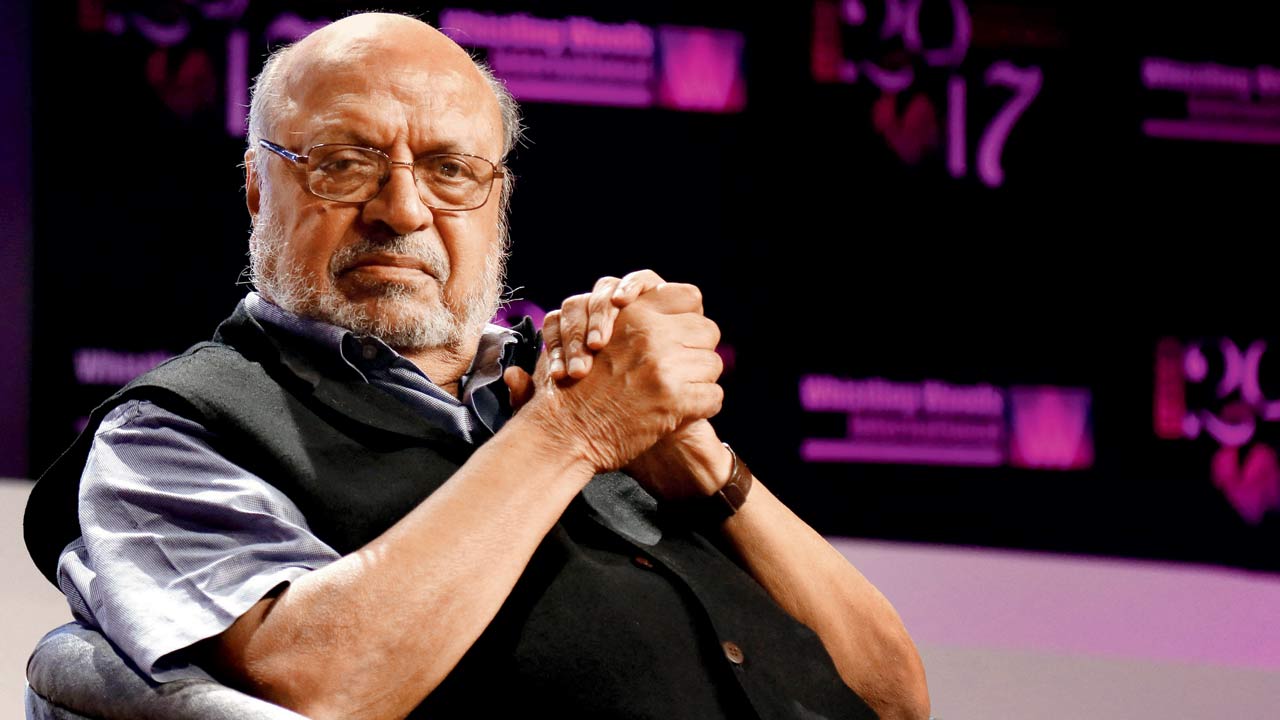
Benegal Pioneered New Wave Cinema, Created Cult Classics
Sunil Nair (THE TIMES OF INDIA; December 24, 2024)
Shyam Benegal came out of nowhere and lit up the Hindi film scene in the 1970s at a time when the industry was "an absolutely closed shop", as a close associate recalled it. It was the age of melodrama and action - 'Roti Kapda Aur Makaan' and 'Sholay' were big hits - and every release flaunted a roll-call of stars. "There was no possibility for any young filmmaker to get into it at all," is how Girish Karnad, who was then director of the Film and Television Institute of India, described it.
Benegal's neorealism struck a deep chord with a generation keen on films that would mirror the social and political tensions of their time. His debut film 'Ankur' (The Seedling), a tale of sexual exploitation set against a feudal background with a cast of unknown yet riveting newcomers, ran 25 weeks at the landmark Eros theatre in Bombay. He had begun writing the script of 'Ankur' when he was in college in Hyderabad and spent 20 years looking for a financier before an ad film distributor agreed to produce it. Its success staked out new ground for the 'art/parallel cinema' movement that over time showcased new talent such as Naseeruddin Shah, Shabana Azmi, Smita Patil, Om Puri, Govind Nihalani, Vijay Tendulkar and Vanraj Bhatia.
Benegal, who pioneered parallel cinema in India and created the 53-episode Bharat Ek Khoj, and whose last project was a 2023 biopic on Mujibur Rahman - 'Mujib: The Making Of A Nation' - passed away in a hospital in Mumbai, days after he turned 90 on Dec 14.
Shyam Benegal grew up in a cantonment town near Hyderabad in 1930-40’s where his father, a professional still photographer, introduced him to the camera. The obsession with movies began early, his appetite whetted by Hollywood and Indian releases screened at a local hall for the morale of the troops. “There used to be two programme changes a week,” he once recalled. “…like in Cinema Paradiso, I befriended the projectionist so I could see both...”
Shifting base after his education, he began working at Lintas in Mumbai as a copywriter. The next decade and a half were spent on a prodigious number of ad films and documentaries. Traces of the social concerns underpinning his cinema are evident in the shorts he made, including the earliest ones, such as A Child Of The Street, which took a compassionate look at juvenile vagrancy, and Close to Nature, a colourful take on tribal life in Madhya Pradesh.
His stint as a teacher at the Film and Television Institute of India (FTII) drew him closer to celluloid. But his bleak stories still had no takers among financiers. Lalit Bijlani of Blaze Advertising eventually stepped in. Both Ankur and Nishant, which came a year later, were set in the feudal lands of Telangana, a region under the Nizam. It was a world Benegal had seen up close in his formative years. Touted as his most striking works, the narratives and characters were situated in a rural milieu with a distinct dialect and attendant class-caste equations. Coming around the time of the Emergency, the two films spurred a movement of sorts and cemented his reputation as the high priest of the ‘New Wave’.
Benegal’s eclectic interests showed in the diversity of subjects. From Gujarat’s milk cooperatives (Manthan) to the life of a silent film era actress (Bhumika), from 1857 (Junoon) to feuding business families (Kalyug), his projects spanned periods and themes. A bearded, Renaissance figure at the centre of the ‘art film’ circuit, he was equally a mentor to actors, musicians, writers and technicians.
At a felicitation to celebrate Benegal’s 25 years as a filmmaker, actor-playwright Girish Karnad spoke of his innate ability to help artistes tap their potential. “He was not just a director but also a doctor, a psychiatrist, a father figure and a banker,” said Karnad.
The latter part of Benegal’s career was marked by biopics, including one on Gandhi’s years in South Africa and a tetralogy on Muslim women (Mammo, Sardari Begum, Hari-Bhari and Zubeidaa). By then, the ‘art film’ movement had dissipated. He had turned to a new set of collaborators, many from commercial cinema. His standout work in this period, however, was a part elegiac, part quirky interpretation of a Dharamvir Bharti novel, Suraj Ka Saatvan Ghoda. Occasional forays into television too made for interesting viewing: Bharat Ek Khoj, the mega-series based on Jawaharlal Nehru’s Discovery of India, and Samvidhaan, on the making of the Indian Constitution, were the best examples.
Benegal’s influence on the Indian film industry extended far beyond his own body of work. He headed a govt committee set up in 2016 to streamline the film certification process and lay down a framework that would allow more room for artistic expression.
--------------------------------------------
'Benegal told raw & real stories about ordinary people'
Bella Jaisinghani (THE TIMES OF INDIA; December 24, 2024)
Mumbai: The passing of Shyam Benegal, the torchbearer of New Wave cinema, evoked a lament of loss across the film fraternity Monday night. It was Shyam Babu who discovered and mentored an entire generation of the finest natural actors including Shabana Azmi, Naseeruddin Shah, Smita Patil and Om Puri, having fathered the parallel cinema movement with 'Ankur' in 1974.
In fact as recently as Dec 14, the entire clan met to celebrate Shyam Babu's 90th birthday, with happy pictures featuring Azmi, Shah, Kulbhushan Kharbanda, Kunal Kapoor of Prithvi Theatre, Divya Dutta and Rajit Kapur.
Filmmaker Shekhar Kapur posted: "He created 'the new wave' cinema. Shyam Benegal will always be remembered as the man that changed the direction of Indian Cinema with films like Ankur, Manthan and countless others. He created stars out of great actors like Shabana Azmi and Smita Patil. Farewell my friend and guide."
Actor Manoj Bajpayee whose career was baptised by his prince's act in 'Zubeidaa', termed it a "heartbreaking loss for Indian cinema. Shyam Benegal wasn't just a legend, he was a visionary who redefined storytelling and inspired generations". Actor-singer Ila Arun said, "I feel as if I lost my father. It is the end of a golden cinematic era."
Filmmaker Mahesh Bhatt said, "Shyam Benegal was a giant of Indian cinema. He told stories without pretense. They were raw and real, about the struggles of ordinary people. His films had craft and conviction. He changed Indian cinema, not with noise, but purpose."
Filmmaker Sudhir Mishra said, "Not many talk about the fact that there was a lament in his films and a sadness about the fact we were not living in the best of all possible worlds."
People from all walks of life mourned his loss. Congress leader Rahul Gandhi said, "Saddened by the passing of Shyam Benegal ji, a visionary filmmaker who brought India's stories to life with depth and sensitivity. His legacy in cinema and commitment to social issues will inspire generations. Heartfelt condolences to his loved ones and admirers worldwide."
Congress MP Shashi Tharoor recalled how Shyam Babu during his early years as ad filmmaker had photographed his sister and other children as "the first Amul Babies".
(With inputs by Swati Deshpande)
--------------------------------------------
He leaves behind a body of work so sprawling—shorts, documentaries, features, TV movies, series—that his CV alone might be longer than an obituary
Mayank Shekhar (MID-DAY; December 24, 2024)
Shyam Benegal’s last work, Mujib (2023), was possibly the most important film for Bangladesh; a biopic on the neigbouring nation’s founder, Sheikh Mujibur Rahman. He was 89, when the movie released. You did well, Mr Benegal. His first feature, Ankur (1974), was possibly the most important Hindi film for India’s art-house movement, heralding the Indian New Wave, from Bombay.
In between is a life so full of all kinds of cinema—shorts, documentaries, features, TV movies, series—that his CV alone, let alone its range, might be longer than an obituary can do justice. This would include a series of firsts; again, starting with Ankur itself, that was actor Shabana Azmi’s screen debut. Nishant (1975) was Naseeruddin Shah’s. He picked both actors, after they’d graduated from Pune’s Film & Television Institute of India.
One evening, while watching news on television, the anchor caught his eye, and he cast her in his children’s film, Charandas Chor (1975). That was Smita Patil. Bhumika remains, arguably, her greatest performance. Between Naseer, Shabana and Smita, forming an alternate, Bombay star-system of their own—besides Om Puri (Susman, Arohan), Anant Nag (Konduran, Kalyug), Rajit Kapur (The Making of the Mahatma, Suraj Ka Satvan Ghoda), and so many others—Benegal didn’t just make films.
He built an entire eco-system, for what came to be known as Hindi parallel cinema. Named such, because it did not intersect with the Bombay mainstream—remaining true to its realism, social consciousness, barely appeasing to audience’s baser instincts, or ignoring its intellect, while staying within commercial cinema, after all, for his features were still mostly privately funded (Blaze Productions, in particular).
An unassuming, gentle soul, gifted with gravitas, foremost, Benegal was a young mind. How else do you explain a career scripted over seven decades. Consider that when he made his first short, in 1962 (Ghar Betha Ganga), Jawaharlal Nehru was still India’s Prime Minister; man was several years away from stepping on the moon; and it’d be 20 years before we’d get Doordarshan (DD) for a proper national broadcaster.
Last checked, Benegal was still making movies. His partner, Nira, both in life and films, was his sounding board. He gave DD, and indeed Indian television, its greatest OTT slow-burn, decades before there was OTT, with Bharat Ek Khoj (1988), based on Nehru’s Discovery of India. He made India’s crowd-funded film, Manthan (1976), based on the life of dairy engineer, Verghese Kurien, with contribution of 500,000 farmers, decades before crowd funding became a term.
With Junoon (1979), he made the sharpest effort, until then, to take art-house into a big-budget space, with stalwarts of the time, adapting Ruskin Bond’s A Flight Of Pigeons. At the turn of the century, when multiplexes offered a short-lived window into exploring meaningful yet entertaining content, beyond simply the starry space, he brought forward intelligent comedies, Welcome to Sajjanpur (2008), Well Done Abba! (2009).
This is before he swiftly switched gear, and embarked on the astoundingly ambitious series, on the making of the Indian Constitution, Samvidhaan (2014), for Rajya Sabha TV. Yup, Benegal has always been there. Not just in terms of works, but also for how he inspired. What’s the final shot in Nagraj Manjule’s Fandry (2013), if not the stone-throwing finale of Ankur!
Given the widest possible gamut, surely, everybody has a Benegal Top 10. And each might read so different from the other. Kalyug (1981), modern adaptation of Mahabharat, set in Bombay’s corporate world, tops mine; Mammo (1994) might be a second; Mandi (1983) could be yours, or Zubeidaa (2001), if you’re younger.
A cousin of Guru Dutt, who got interested in cinema, because of his photographer-father Sridhar Benegal, who gave him access to a movie camera, when he was only 12—once Benegal moved to Bombay, from Hyderabad, he started out as a man of advertising.
It’s something he shared with Satyajit Ray, his inspiration of sorts. One of the most enlightening conversations on cinema that Benegal left behind for film buffs was his interview with Ray himself, for a documentary (that occasionally appears and disappears from YouTube).
It’s where you see Benegal for simply a curious movie mind. And a consummate movie buff, you would always spot at screenings at cinemas and festivals. The last I met him, in 2019, at his Tardeo office, which is a shrine of sorts in filmmakers in Mumbai—it was right after his Manthan actor and long-time associate, Girish Karnad, had passed on.
“Everybody’s leaving now,” he said. The very next minute, he began revealing how the then Bangladesh PM, Sheikh Haseena, had entrusted him with a film on her father, Mujib, along the lines of Richard Attenborough’s Gandhi. Benegal was 85 then—speaking about recommendations to the Indian censor board that never got implemented, or his public commitments in Goa, initiated from his Member of Parliament fund.
We discussed movies as a changing medium. He told me the cellphone was the best way to watch films—the eye’s distance should, anyway, be one and half times the length of the screen’s diagonal, and the sound doesn’t get better than a headphone. I’ve followed his advice since. There was so much more to learn. The movies remain. He lives on forever.
In the 90s, there was a significant stigma that models can’t act. The pressure was immense-Arjun Rampal
4:41 PM

Onkar Kulkarni (BOMBAY TIMES; December 21, 2024)
Supermodel of the 90s, Arjun Rampal, made a successful transition into movies. He gives us a glimpse into the modelling scene back then and talks about designer Rohit Bal’s influence on his career...
I moved to Mumbai in 1993, and the following year, Bombay Times was launched. One of its standout features was Page 3, which quickly became a sought-after space. It offered a fresh perspective on urban India, showcasing a side of the city that had never been highlighted before. Being featured on Page 3 felt like a significant accomplishment. Meanwhile, Bombay Times itself evolved rapidly, just like my own journey began after moving from Delhi.
Back in the 90s, modelling wasn’t seen as a serious career. Even I didn’t know where it would take me. I was doing it because I enjoyed it. I had the privilege of meeting incredibly creative individuals like Gudda (Rohit Bal), Bharat Sikka, Prabuddha Dasgupta, Rafique Sayed, Shahab Durazi and Tarun Tahiliani. Slowly, respect for the profession grew, and a fan following began to form. People started attending fashion shows not just for the designers, but to see the models. This was when fashion truly came into the spotlight, with designers establishing themselves and the supermodel culture emerging from the West. It was a golden era for fashion editorials. Even legends (American photographers) like Bruce Weber, Herb Ritts, Richard Avedon and Steven Meisel were pushing boundaries.
One of the most influential people in my modelling career was Gudda. Without his support, I’m not sure I would have made it to where I am today. He recognized something in me and made me his muse for a long time. Oddly enough, my mother and his sister-in-law had gone to school together, which added another layer of comfort to our collaboration. The three of us — Gudda, Bharat (Sikka) and I — created some of the most talked-about fashion shoots of that time. Gudda not only taught me about grooming and styling but also about how to stand in front of the camera with confidence. Coming from a small town, I had no knowledge of the industry, but his mentorship was invaluable. Gudda remained a constant presence in both Bombay Times and Delhi Times. It’s sad that he’s no longer with us.
The era was also significant for me personally, as I made the transition from modelling to acting. I was shooting a commercial with Shekhar Kapur when he suggested that I consider acting. He told me that my modelling career had reached its peak and that it might be time to train as an actor. Making the transition into acting wasn’t easy. In the 90s, there was a significant stigma that models can’t act. The pressure was immense. However, one film led to another and then, there was no looking back.
Amrish Puri's grandson Vardhaan Puri bags Shekhar Kapur's next
8:17 AM

Vinay MR Mishra (BOMBAY TIMES; September 17, 2024)
Actor Vardhaan Puri would unite with Shekhar Kapur, 35 years after the birth of the iconic villain character Mogambo, curated by the filmmaker with the former’s grandfather the late Amrish Puri.
“The news is indeed true,” confirms Vardhaan, adding, “I find it very exciting that after collaborating with my Dadu in 1987 on Mr. India and creating the iconic character of Mogambo, now I am going to be associating with Shekhar sir’s beautiful mind, body and soul. It’s a big responsibility and I want to make him proud.”
The two would work on a medical drama/thriller Next To God, which would go on floors later this year. “It is inspired by the true incidents of abuse and violence that real Indian doctors have experienced. It speaks about the urgent need for safety in the medical fraternity. Shekhar sir is mentoring me and the film,” Vardhaan shares.
Ask him if there is any pressure on uniting with the senior filmmaker and he replies, “I don’t take any pressure. It messes with my sense of creativity. I am just constantly seduced by the film’s story and characters.”
He clarifies that the filmmaker and him have bonded well. “Even though Shekhar sir is senior to me and so much more experienced, we are good friends. We usually discuss ideas, life, cinema, and food. Shekhar sir is constantly curious like a child, forever learning, and embraces any change and innovation like a boss - something I find so inspiring. Dadu and he shared a great camaraderie and Dadu would always refer to him as a 'genius'.”
During a conversation we had while playing table tennis recently, “Shekhar sir told me, ‘Mr. India is what it is because of what Amrish Ji made from Mogambo. I asked him to perform Mogambo like one would perhaps perform Shakespeare for 8–10-year-old children, and he followed my instructions so perfectly and made the character immortal.’ How gracious of him to say this,” Vardhaan states.
Rumour also has it that actress Manisha Koirala would headline the medical drama. While Manisha did not respond to our queries, Vardhaan mentions, “At this point, all I can say is that Manisha Ji is one of my favourite actors of all time, and who would not want to work with her? She was so nuanced and so effortless in Heeramandi. I will be working along with a stellar cast that will soon be announced.”
Whoever feels they want to be a part of Paani will come to me naturally-Shekhar Kapur
7:39 AM
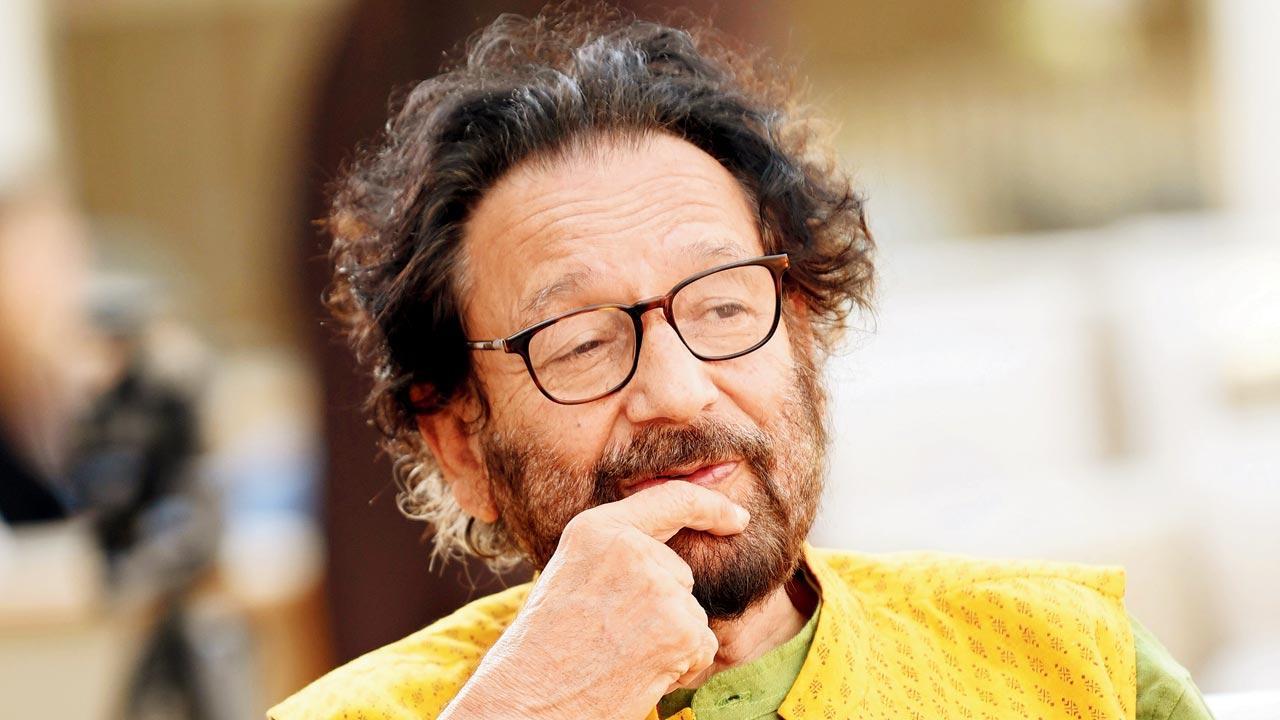
Confident that his ambitious project on water scarcity will attract the right cast, filmmaker Shekhar Kapur on reworking the project with new producers
Upala KBR (MID-DAY; May 26, 2024)
It all began in 2002, when actor and award-winning filmmaker Shekhar Kapur first announced his desire to make Paani, an apocalyptic film on the scarcity of water. Delays in casting and finding a producer kept pushing his plans for the film. Despite all the unforeseen interruptions, the director never lost his desire to make Paani. In fact, with time and added research, the director has managed to develop the script further. After all the waiting, things are finally falling into place as Kapur finds a producer to back his ambitious project.
Kapur felt that after What's Love Got to Do With It, many in Hollywood believed that he had moved back to India, but his research on water issues got a financing company interested. “Paani is now being negotiated as an international film,” he affirmed.
In fact, he had recently visited the New York University Abu Dhabi to understand their innovative research on water desalination, wastewater treatment, water security and sustainability. “Everybody has read about my interest in water, as it is such a huge topic now. [The university] invited me to show me all the technology that they have as we are running out of water. Like how to take drinking water out of salt water in the ocean. They are also looking [to clean] brackish or sewage water,” said the actor-director, adding that his fascination with water problems started 15 years ago when he was studying about glaciers drying out.
“We always thought air and water were free until one day I came to Mumbai and found people selling cold, drinking water on the streets. The first story I ever wrote was about a man who travelled from a village to Mumbai and returned with stories of selling water. That’s where Paani developed — how some people, in times of water shortage, will be using it to control others. The story is told in a mythic way, with relationships running between them. Paani has a father, mother, brother, sister, long-lost love, daughter, and son — at the centre of it is a love story. Every relationship is connected to water, as is our relationship with love.”
Kapur informs that although Paani was supposed to be shot as a film, his vision could not be summarized in two hours, especially when new information is constantly being added.
“We haven’t decided yet whether it should be a feature film or a series. When I narrated it to the [funding company], they said I had enough material for a limited series,” he said, adding, “I don’t think the film is casting dependent. Whoever feels they want to be a part of Paani will come to me naturally.” While the cast is unclear, Kapur had earlier said that he will dedicate the film to Sushant Singh Rajput, who was passionately involved in the project until his untimely death in 2020.
Before Paani, Kapur will wrap up Masoom The Next Generation, a sequel to his 1983 film Masoom.
Hansal Mehta offered me a part in Gandhi, but asked me to keep it a secret-Shekhar Kapur
9:44 AM

Shekhar reveals director Mehta offered him a pivotal role in Gandhi when he recently visited the London set; says he is keen to observe filmmaker’s approach to the subject
Upala KBR (MID-DAY; May 3, 2024)
A happy coincidence, that’s what Shekhar Kapur pegs it down to. Last week, the filmmaker was in London to conduct auditions for his project when he learnt that Hansal Mehta is filming Gandhi in the city. A quick exchange of messages followed, and soon, Kapur was on the web series’ set, taking in the world of the Pratik Gandhi-led historical drama.
“I love visiting the sets of filmmakers I admire to see how they work. To do a series on Gandhi ji, after everything that has been said about him, is impressive. I wanted to ask Hansal how he is approaching the subject,” he says.
He got more than he bargained for. Mehta not only gave him a ringside view of the ambitious series—based on historian Ramachandra Guha’s books, Gandhi Before India and Gandhi: The Years that Changed The World—but also offered him a role. Kapur laughs, “Hansal offered me a part in Gandhi, but asked me to keep it a secret. It’s a pivotal character, and I said yes.”
Before he turned director with Masoom (1983), Kapur had started out as an actor, featuring in Jaan Hazir Hai (1975), Toote Khilone (1978) and more. Even as filmmaking took precedence, he kept the actor in him alive, starring in Govind Nihalani’s Drishti (1990).
“I never say no to acting. When I want to act, I choose directors, not roles. They can give me any part they want. I don’t think I’m such a good actor, but what the hell? When somebody like Hansal asks you to act in one of his projects, you don’t say no.”
His visit may have been only an hour-long, but it was a fascinating experience to see Mehta shoot. “To make a film that does well is easy. But to make a film that does well, gets critical acclaim and one that you’re proud of, you have to be God’s child. Hansal is that. I couldn’t [gauge] his method in one hour; he was instructing his actors and filming. It will be fascinating to observe his process when I act in Gandhi. As an actor, I’d give myself without fear to a director like him.”
What did he think of Pratik, who is fast becoming one of the finest actors in Hindi cinema? “I didn’t have time to interact with Pratik as they were filming an emotional scene. So, I said hello and left.”
Masoom's sequel came from idea of what home means today-Shekhar Kapur
2:11 PM

Set to launch daughter Kaveri with Shabana-led Masoom: The Next Generation, director Shekhar Kapur says the second part will explore themes of relationships and family like the much-loved 1983 original
Upala KBR (MID-DAY; April 8, 2024)
In 1983, Shekhar Kapur made his directorial debut with the acclaimed Masoom, starring Naseeruddin Shah, Shabana Azmi, Urmila Matondkar and Jugal Hansraj. Little did the filmmaker know then that forty-one years on, he would direct its sequel as the acting debut for his singer-daughter Kaveri Kapur. Along with Shekhar, Azmi too will return to the film’s universe, playing Kaveri’s grandmother.
Masoom, which continues to be loved by audiences to this day, examined family and infidelity through a happy couple whose life changes drastically when a boy—who is the man’s illegitimate child—joins them. Shekhar says that the sequel, the working title of which is Masoom: The Next Generation, too will revolve around themes of family and relationships.
“It is not a continuation of Masoom. The story is based in India, and we will have two male protagonists along with Shabana and Kaveri as the female leads. We are working out the dates and cast,” says the director. If things go as planned, the project will roll in October 2024.
The thought of making another movie like Masoom always played in the filmmaker’s mind. It is only now that he found a fitting idea.
“Masoom: The Next Generation is my gift to the people of India, who have supported me for so long. It came from an idea of what home means to us today. To my mother, who was a refugee from Pakistan and had survived two earthquakes, it was more than bricks and mortar. Home meant family and memories to her. She wanted to build a home in Delhi that survives an earthquake. Today, my friends ask me to sell the house, but it’s an homage to my parents. Through my movie, I want to convey that home is an emotion, and within that, there is a family.”
Kaveri, like most of us, was deeply moved by the original. She says the sequel will focus on today’s generation and their issues. “I don’t know anyone in my generation who doesn’t have anxiety issues, and the script treats it with compassion.”
Being directed by her filmmaker-dad and sharing screen space with Azmi are experiences she is looking forward to. “It’s daunting to work with an actor of such international acclaim. But every time I meet Shabana aunty, I feel like I’m talking to a family member. My dad is constantly telling me that I have to bring who I am, to the part. I will also write and sing some of the songs,” she says.

Every morning, I wake up with anxiety about whether I have done enough for my daughter-Shekhar Kapur
1:56 PM

Jaspreet Nijher (BOMBAY TIMES; April 7, 2024)
When Shekhar Kapur and his daughter Kaveri engaged in a discussion on stage at a film festival in Chandigarh, the filmmaker opened up to his inmost fears, including involving his parenting. The only child of Shekhar and his ex-wife Suchitra Krishnamoorthi, Kaveri has admitted to having faced mental health issues as a child when her parents were separating.
When Kaveri, who is being launched by her father in his next film Masoom 2, asked him, ‘what is your biggest fear?’ Shekhar replied, “The fact that, have been a good dad.”
Shekhar added, “Every morning I wake up with the anxiety that have I done enough for my daughter, because my daughter went through a lot. My biggest regret as a parent was that I was busy working when Kaveri was growing up. I am not attached to the material and put my life on the line, but with her I wonder if I am being a responsible father?”
For Shekhar, whose career includes illustrious films Bandit Queen, Elizabeth: The Golden Age, fear also extends to himself and his profession as a filmmaker. “People say I have this cool aura about me, but inside I am really scared,” he said, adding, “Every morning I panic that people will find out I am con (laughs), and that the real me is something even I don’t yet.”
Shekhar, who is deeply into spirituality says that despite finding peace and strength from divinity, anxiety remains a part of him.
“Anxiety is such a big thing, and people say anxiety is necessary for creativity. When I am faced with 200 people on sets, I don’t know what to do with them. Underneath that calm I am hiding a constant, constant conflict of the two voices within me. Yes, uncertainty and fear drive me,” he added.

I have never made a film which was a star vehicle-Shekhar Kapur
8:19 AM

Tanvi Trivedi (BOMBAY TIMES; February 19, 2024)
Filmmaker director Shekhar Kapur, who is known for his contribution to Indian cinema with masterpieces like Mr India and Bandit Queen, is all set to make a sequel to his 1983 directorial debut film Masoom. In a conversation with us, Kapur spoke about his inspiration for the sequel, his daughter Kaveri, who will make her acting debut with this project and how his films are all about the story, never the star. Excerpts:
You are making a sequel to your classic, Masoom, titled Masoom…The New Generation. What inspired you to do that after over four decades?
I have decided to make Masoom 2 - The New Generation for a reason. The story revolves around the next generation and their issues. The new generation is constantly thinking about who they are, where they are headed and so on. I want to make a film about them, their value system, how they relate to parents, single parents, and the entire debate about the old generation versus the new generation. There have been films on the new generation, but they have only touched the surface.
Your daughter Kaveri Kapur, who is a singer and songwriter, will make her acting debut in the sequel. Were you planning to direct her debut, or did this happen organically?
My daughter has been an artist for a long time and when I read her lyrics, I realized she is more of a philosopher. At her age, she talks about philosophy with Deepak Chopra. I have been discussing acting projects with her, but she kept saying, ‘No, that’s not me’. Then we watched a few Alia Bhatt films together, and she admired her work. That’s how she got interested in acting. I always knew she would act. When she was younger, I used to call her my entertainment machine; she would crack jokes and it is not easy being funny. She is talented like her mom (actress Suchitra Krishnamoorthi). The inspiration for the Masoom sequel came from Kaveri because she has often spoken to me about how their generation suffers from anxiety and how life is tougher as there are many opportunities, but the pressure is higher. I am currently writing her dialogues, but I hope that someone from her generation will share more about their issues. I don’t want my daughter to feel that I failed her. The film will also feature the old cast, including Shabana Azmi.
Among the many pressures that the current generation is facing, do you think social media ranks high?
Social media has definitely put pressure on Gen Z because it is creating an artificial aspirational life for them. Many young people I meet have become victims. People on social media keep sharing posts about how great their life is, which is not the reality. With ChatGPT and AI, it is a different life for Gen Z.
You moved to the West and made notable films in Hollywood. Looking back, do you think you could have made more movies in India?
In India, I agree (I did less work), but I did a lot of work abroad. I am proud of the fact that I worked with actors in Hollywood when they had started their careers, like Cate Blanchett and Heath Ledger (directed him in Four Feathers). After Bandit Queen, I figured that it was not easy to tell different stories. Now, with OTT, things have changed, and actors like Manoj Bajpayee are winning accolades. But, in those days, it was not possible to work with Manoj Bajpayee and make a film. You had to take a star, and when you work with a star, things change. I have never made a film which is a star vehicle, whether it is in the east or west. I have always worked on a movie where everyone is subservient to the film and story. Even when I worked with Sridevi in Mr India (1987), she was not a star; she had acted in Himmatwala (1983) and later became a star.
There has been a lot of speculation around a sequel to Mr India 2. Are there any plans?
I will never make Mr India 2 because I have already made the first part. But, I would not mind if they take another director and make the film and remember that the original was born because of the joy of filmmaking.
Big-ticket, tentpole films are ruling the box office today, while that’s great, do you feel we need to make more films that are socially relevant?
The big-ticket films do make sense because they are like a joy ride. But then, every now and then, we get a film like 12th Fail, and it reminds us how there are interesting films like these, too. I have enjoyed watching a lot of good content on OTT, like Panchayat, and many good writers have moved over to OTT platforms. I agree that social context is missing in films today, but then directors should be motivated to make films like Naya Daur and Pyaasa, which were so socially relevant.
Actor Kavita Choudhry of Udaan fame passes away
9:51 AM

Avijit Ghosh & Yudhvir Rana (THE TIMES OF INDIA; February 17, 2024)
New Delhi/Amritsar: In the summer of 1984, evenings changed in India. Hum Log, India’s first television soap, had arrived. Within weeks the lives of Basesar Ram’s family became a conversation point in drawing rooms. Over the next few years, as the number of sponsored TV shows mushroomed, the idea of a well-spent evening got redefined.
Udaan (Flight) arrived in 1989, the heyday of monopoly Doordarshan. The long-running serial was about a spirited girl who overcomes financial worries and gender barriers to become an upright police officer. Kavita Choudhry, who not only played the protagonist but also wrote and directed the show, passed away following a heart attack in Amritsar on Thursday night. Battling cancer at the city’s Parvati Devi Hospital, she was 67.
Udaan, which ran till 1991, was inspired by the life of Kavita’s sister, Kanchan Choudhry-Bhattacharya, India’s second woman IPS officer and the first woman director-general of police. Judging by the social media posts on Friday, the serial inspired many young women of the time.
Actor-director Shekhar Kapur wrote on X, “So many women now in high positions in Indian Civil Services come to me and say they were inspired by Udaan.” Added Kapur, who played the role of an IAS officer and the central character’s love interest in the series, “She was an amazing director”.
Amritsar-born Kavita had earlier become a familiar face modelling for Surf as the fictional character Lalita-ji. The Lintas campaign was constructed when Hindustan Unilever Limited (HUL)’s lucrative washing powder came under pressure from the less expensive brand, Nirma. Kavita, who belonged to National School of Drama’s acting class of 1978, was selected to deliver the part of a housewife who had to convince the customer to buy a more expensive product.
“Lalita-ji represented the archetype of a woman totally in control, someone who could argue persuasively in the face of male questioning. And Kavita was utterly convincing in that role. Which is why the ad as well as the character became iconic,” says brand consultant Santosh Desai. The ad’s punchline, “Surf ki kharidari mein hi samajdari hai”, became as popular as a Salim-Javed dialogue.
Kavita was introduced to the big screen by producer-director Bhimsain (Gharaonda, Dooriyan) in Tum Laut Aao (1983). The film was based on notable Hindi writer Mridula Garg’s progressive novel, Mera; the protagonist’s husband doesn’t want her to get pregnant because he intends to migrate to the US. “Kavita portrayed the determined, lower middle-class woman quite well,” recalls Garg. But the film was little seen; it was the small screen that earned her fame.
In later years Kavita acted in several other television serials, such as Your Honour and IPS Diaries. She also wrote Satish Kaushik’s Badhaai Ho Badhaai (2002). Kaushik, along with Anupam Kher, was a batchmate at NSD.
The actor-director lived in Amritsar’s Garden Enclave neighbourhood with her nephew Ajay Sayal, an advocate, after the death of her elder sister, Kanchan, in 2019.
Dr Rajnish Salwan of Parvati Devi Hospital, under whose care she was being treated, said Kavita was admitted in critical condition, with multiple organ failure, last Sunday. She was cremated on Friday.
I was the only actor left without a job after Bandit Queen-Manoj Bajpayee
3:56 PM

Anukriti Sharma (BOMBAY TIMES; February 4, 2024)
As Maan Singh in Bandit Queen, Manoj Bajpayee left an impression on viewers with his acting skills. Surprisingly, it was followed by five years of ‘looking for a role’. “I was the only actor left without a job after Bandit Queen," shared Bajpayee during a masterclass on acting at the recently concluded Pune International Film Festival. From being one of the busiest actors during his theatre days in Delhi, the Shool actor went into a phase of self-doubt due to no work.
“I used to feel that everything I had done in theatre was a lie and whatever I thought about myself was an illusion,” he added. Besides discussing his theatre days, Manoj also deep dived into stories from his early days in the industry and spoke about how narcissism shouldn’t be an actor’s best friend.
‘The uncertainty in theatre attracted me’
Manoj had his first brush with theatre after shifting to Delhi and soon realised that it was far bigger than the Dussehra or Ramnavami presentations he had seen. “Delhi jaake laga ki ye ek duniya hai jiska hissa main hamesha rehna chahta hu,” he shared, adding that even while he grew up admiring Amitabh Bachchan, he completely forgot about cinema, thanks to theatre. “I just loved the process of making a play. With each show, you felt like a newcomer. That uncertainty attracted me,” he said.
‘I realised early on that mainstream cinema will definitely need my craft’
Manoj also emphasised that he doesn’t believe in looking in the monitor or in the mirror and the last thing an actor should be is a narcissist. “The moment you start thinking about how you are looking or how your mouth is twitching, you stop concentrating on your character and subconsciously are only thinking about your face,” explained the actor, adding, “Very early in my life, I realized that mainstream cinema doesn’t need a face like mine, but it definitely needs my craft. Stardom bahut bada fluke hai. Stars are temporary; every Friday there will be a new one. But actors are forever. They are the people who are seriously working on their craft and their contribution is far bigger in the field."
On prepping for his character in Satya...
“Satya gave me recognition which I had never even dreamt of,” said Bajpayee, adding, “My reference for Bhiku Mhatre was a criminal from Bihar. I took reference from his clothes, the way he used to walk and the way he used to laugh. But I worked on my Marathi accent and body language by interacting with a Marathi lady who used to work at my house.”
On changing his approach towards acting...
Elaborating on his skill of getting into the skin of a character, Bajpayee said, “Mujhe lagta hai main rahoon na rahoon, kirdaar rehna chahiye.” However, adopting this approach resulted in a challenging period for him post Shool as he found it difficult to distance himself from the characters he portrayed. Following the advice of a mental health expert, Manoj actively worked on it.
“Pinjar was a result of my changed approach, and it was easy to come out of that role. It also gave me a new direction as an actor since I was really experimenting with my craft at that point,” he informed.
On working with various directors...
Speaking about some directors he has worked with, Bajpayee shared, “Shekhar Kapur (Bandit Queen) was different. After every scene, he used to talk to us about his own life or narrate some story and would tell us that this is the emotion he was looking for. Anurag Kashyap (Gangs Of Wasseypur I & II) makes you improvise a lot, while Devashish Makhija (Bhonsle and Joram) would ask me to give him two words instead of ten or use no words at all if I could just express the emotion through my eyes.”
---------------------------------------
“Mumbai is a tough city. In Delhi, even if you don’t have money, you are never insecure. You know food will come from somewhere or you will find a roof over your head. But in Mumbai, if you have no money, you are going to have a hard time surviving”
Subscribe to:
Posts (Atom)