Showing posts with label Sardar Udham. Show all posts
Showing posts with label Sardar Udham. Show all posts
If any of my films were released on the big screen, I might have had a stamp of approval-Amol Parashar
9:18 AM

Akash Bhatnagar (HINDUSTAN TIMES; July 20, 2026)
As actor Amol Parashar basks in the success of the recently released Gram Chikitsalay season 2, he opens up about his journey, audience connect and the noise that comes with fame.
“I have done a lot of work in the last 10 years, bas wo phatne wala jo project hai, wo Tripling (web series) ke baad ye hua hai,” says the actor who gained popularity as Tripling’s Chitvan.
While Dr Sinha’s character is soft and sensitive, we ask the 39-year-old whether, in an era dominated by hypermasculine protagonists, seeing such a character resonate with audiences feels like a validation? He responds: “As long as the audience is enjoying the work, they don’t care if it is a soft or hypermasculine protagonist. Something might become a trend, but that is also with only the makers. They just want to enjoy and have fun.”
While his stint on OTT has been quite successful, Amol hasn’t had much luck in films. He got appreciation as Bhagat Singh in Sardar Udham (2021), but he hasn’t had a big screen project yet, and he blames the Covid-19 pandemic for it.
“If any of my films were released on the big screen, I might have had a stamp of approval, but it didn’t happen,” he says, adding, “I don’t want to do a film for the sake of it. I would rather wait.”
The actor, who has been romantically linked with actor-filmmaker Konkona Sen Sharma, also reflects on the downside of fame and the rumours that come with it.
“This is part and parcel of being an actor. People have interest in our lives and they love coming up with conspiracy theories about us,” he says, adding, “Initially, I used to get angry and frustrated, but now I put my faith in intelligent people. I don’t get bothered until it’s distasteful.”
Amol Parashar on Gram Chikitsalay being compared to Panchayat: "We have found our own standing"
9:48 AM

Letty Mariam Abraham (MID-DAY; July 14, 2026)
Why does Amol Parashar seamlessly blend with Dr Prabhat, his character from Gram Chikitsalay? Because they both seem grounded and refreshingly honest. He is deeply connected to his roots, and finding joy in the little things is another reason why they seem similar. As the Prime Video series returns with its second season, the actor talks to mid-day about finding the show’s own identity beyond inevitable comparisons with Panchayat, why stories about good people still matter, and stepping out of Chitvan’s long shadow. Excerpts from the interview.
Your character, Dr Prabhat, experiences a culture shock moving to a rural set-up. Was it a culture shock for you as an actor?
Not as much. For the sake of the storytelling, we’ve shown him as someone who has never stepped inside a village. But that’s not the case with me in real life. I have relatives who live in rural areas. My grandmother used to live in a village and we would often go there during the summer holidays. My uncle still lives in a village on the Jaipur highway. While I am unable to go there as often now, I was there recently for a wedding.
The show tackles corruption, poor medical infrastructure, and systemic inefficiencies. How much of that was new information for you?
None of these things are industry-specific. We all know the inefficiencies of our system. Some of us choose to look at it and call it for what it is. Some choose to look away and pretend that everything is perfect. But deep down, we all know it is not. I also believe there is a lot of scope for improvement. That’s why people relate to the story. I don’t think anyone in the audience will ask, ‘Ghoos kya hota hai?’
The rural setting invites comparisons with Panchayat. How did you ensure Dr Prabhat felt like a different character?
This is something we were aware might happen, more for the show than for us as actors because everyone has their own style and personality. I believe there is a difference at the character level. While both stories begin with a city boy arriving in a village, their motivations are different. Dr Prabhat has chosen to be there, while Jeetu’s [Jitendra Kumar’s] character wants to leave. So I wasn’t worried about comparisons. By season two, we have found our own standing.
After the first season, several medical professionals reached out to you. Did any of those conversations influence the performance in season two?
No, I don’t remember that. What made me happy was receiving messages from people facing the choice between bending to the system or sticking to their values, who were inspired by the story. Everybody knows it’s a fictional character. But it gives you a lens of what is possible. [Besides entertainment], stories are also supposed to imbibe values in society. Over time, we have stopped telling stories of just plain good people because it was considered boring. Gram Chikitsalay is an example that a story about an aspirational protagonist can still be entertaining.
For years, people associated you with Chitvan from Tripling. Has that changed now?
I think some people, not many, are probably discovering Chitvan through Prabhat. Most people know Tripling or Chitvan, or at least know the song even if they haven’t seen the show. Some people are saying they like Prabhat more, while others still prefer Chitvan. But the perception is shifting. As a character, and as a show, there is no longer the shadow of a previous role. There is also a niche audience that remembers me as Bhagat Singh from Sardar Udham (2021).
Back to the stage
After nearly a decade away from theatre, Amol Parashar returned to it with the play, ‘Besharam Aadmi’. “It had been around eight to nine years. The whole story started from the stage, after I left my job. I used to miss it. I just didn’t know how to make it happen. With film and series schedules making ensemble theatre difficult, the only way to do it is to create a one-man show. I feel your instinct gets trained by direct and unfiltered feedback. It is a nice way to connect and have conversations with people after the show.”
Shifting to India shows my focus and commitment to Hindi movies-Banita Sandhu
8:30 AM
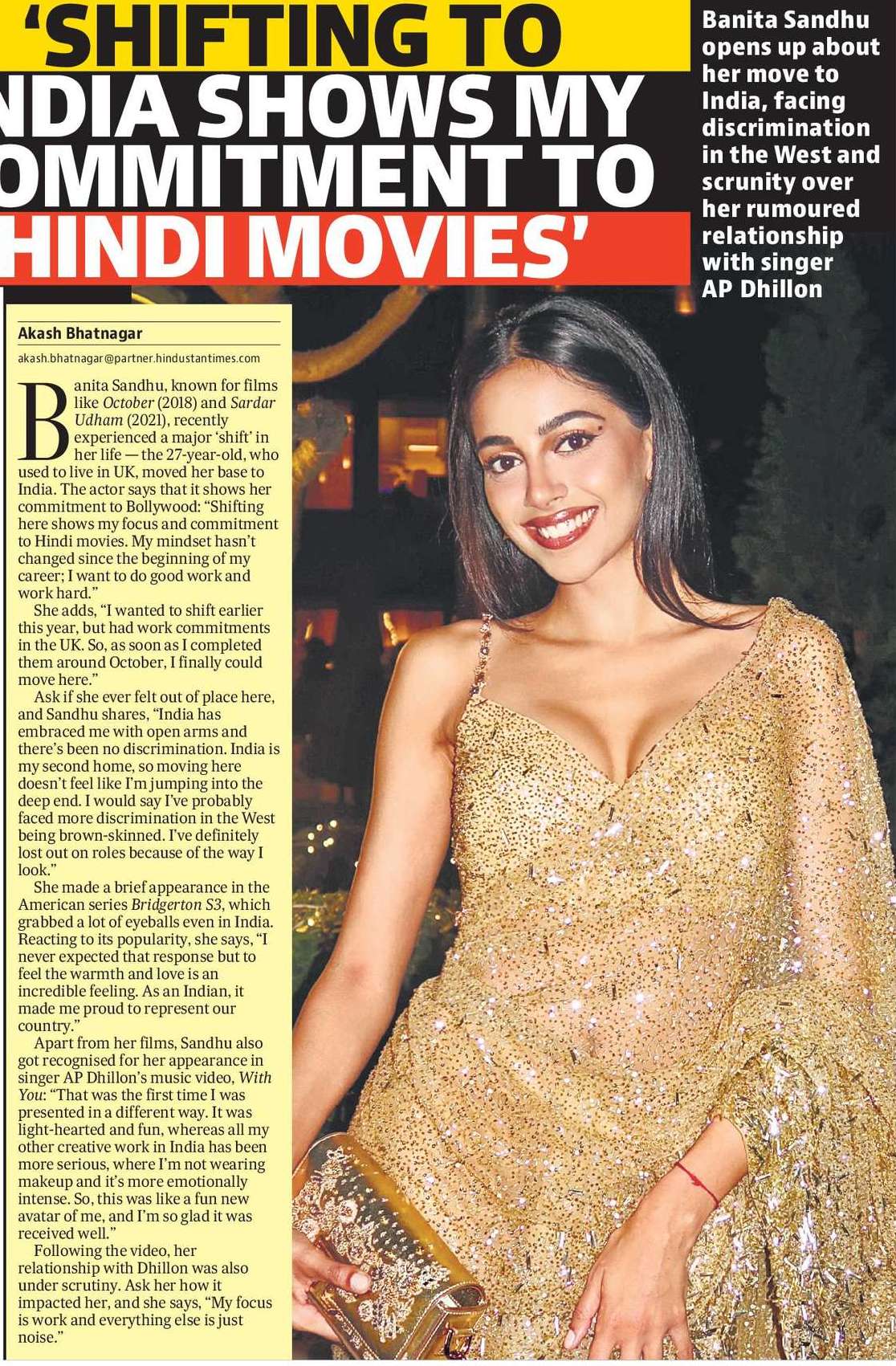
Banita Sandhu opens up about her move to India, facing discrimination in the West and struggles over her rumored relationship with singer AP Dhillon
Akash Bhatnagar (HINDUSTAN TIMES; December 26, 2024)
Banita Sandhu, known for films like October (2018) and Sardar Udham (2021), recently experienced a major 'shift' in her life — the 27-year-old, who used to live in the UK, moved her base to India. The actor says that it shows his commitment to Bollywood: “Shifting here shows my focus and commitment to Hindi films. My mindset hasn't changed since the beginning of my career; I want to do good work and work hard.”
She added, “I wanted to shift earlier this year, but had work commitments in the UK. So, as soon as I completed them around October, I could finally move here.”
Ask if she ever felt out of place here, and Sandhu shares, “India has embraced me with open arms and there's been no discrimination. India is my second home, so moving here doesn't feel like I'm jumping into the deep end. I would say I've probably faced more discrimination in the West being brown-skinned. I've definitely lost out on roles because of the way I look.”
She made a brief appearance in the American series Bridgerton S3, which grabbed a lot of eyeballs even in India. Reacting to its popularity, she says, “I never expected that response but to feel the warmth and love is an incredible feeling. As an Indian, it makes me proud to represent our country.”
Apart from her films, Sandhu also got recognized for her appearance in singer A P Dhillon's music video, With You: “That was the first time I was presented in a different way. It was light-hearted and fun, whereas all my other creative work in India has been more serious, where I'm not wearing makeup and it's more emotionally intense. So, this was like a fun new avatar of me, and I'm so glad it was received well.”
Following the video, her relationship with Dhillon was also under scrutiny. Ask her how it impacted her, and she says, “My focus is work and everything else is just noise.”
I cycled from Gangotri to Gangasagar in 75 days-Shantanu Moitra
8:12 AM

“Cycling is nostalgia for me,” says Shantanu Moitra who learnt and fell in love with the sport when he was in the fifth standard. In a candid chat with us for World Bicycle Day, the musician who has composed for films like 3 Idiots and 12th Fail takes us through his life-changing experiences while cycling around the country. Excerpts:
Baba taught me how to cycle
As a child, my first sense of freedom came from cycling. The falling, getting up trying again – as you learn, your parents let you go which gives a sense of independence also. In Delhi’s East Patel Nagar, where we grew up, we used to see every other person travelling on a bicycle, but I never had my own as we couldn’t afford it. So I used to borrow from my friends and take rounds of our neighbourhood. My father was an avid cycle lover. He used to travel 40 km to and from work every day. He taught me how to balance the two wheels. I remember the day vividly when he let me go on my own. It was an important day in my life, it empowered me to take care of myself.
‘My father’s cycling tales fascinated me’
Baba always told me how he made friends from different walks of life while he used to cycle. He and his friends always went to a particular tea shop for chai or nimbu paani on their way back home. He had created a world while cycling and it fascinated me. Just imagine: you are riding a cycle and stop to pick up a jamun that fell from a tree. Isn’t it captivating? All these stories were like a fantasy land for me.
‘I bought my first cycle when I was 30’
Ironically, I never got to buy a cycle when I was in school or college. Eventually, I bought a car, but never a cycle. When I came to Mumbai 30 years back, I saw cycling as a hobby was popular. That was when I bought my first cycle, at 30 years of age! It made me nostalgic and I realized I was made for cycling. Then a cycling community was formed and, every Sunday at 5.30 am, we used to cycle 70 km, from my home in Versova to Nariman Point. It was a Sunday morning ritual we looked forward to. Everyone in this community was a cycle lover.
‘The Ganga expedition was an opportunity of a lifetime’
Shantanu shares that after completing the music composition for 3 Idiots, he undertook a ‘100 days in Himalayas’ trip in 2016. “I was travelling above 14,000 feet right from Kashmir to Tibet. The perspective I gained from that trip made me realize that I wanted to do it on a cycle. I wanted to see Ganga from its source to the end. Adventure is not rational, one has to feel that urge from within. My fear was that the timing of the adventure (which he undertook in 2021) shouldn’t clash with the music composition of Shoojit Sircar’s Sardar Udham, but Shoojit being a friend assured me that he could adjust, and I shouldn’t let go of the opportunity of a lifetime.”
‘It was a mind game’
For the Ganga expedition, Shantanu realized that he had to cycle for 2,700 km. “That’s a magnificent number. I realized it’s a mind game. This time was pivotal in my life – Baba saw me prepping, which made him very happy. Soon after, COVID changed the world, and I lost Baba in the pandemic. I realized life is uncertain so I must fulfil my dream. I knew I had to do this expedition for my baba.”
‘Got professional guidance’
Shantanu started prepping for the trip in 2019. He says, “Before any mammoth expedition, professional guidance is a must. I got a nutritionist, and got medically checked. For my lung capacity, I practiced regularly at Bhor Ghat, Lonavala’s highest point. I mapped my route on a cycle trainer at home. I started my regime by cycling 100-150 kms every day and slowly the cycle became my greatest companion and best friend. Within 25 days, I reached Rishikesh, and the expedition of 75 days started from Gangotri to Gangasagar. It was a memorable experience.”
Shantanu’s safety tips
- If you are cycling early in the morning, there has to be a taillight on and a helmet light on
- A red light is applicable for all transports, including a cycle. Respect that
- Before you start long-distance cycling, eat light food at least one and a half hours before. And after cycling for say 50 km, munch on a snack bar or something light so that your body has the fuel to continue
- People tend to avoid cycling and opt for a car or bike as they feel it is safer. The first and foremost rule while cycling is to wear a helmet, it’s non-negotiable
- Hydration is a must when you are cycling long distances. Alertness is very important for a cyclist and that happens when you keep yourself hydrated. Also, muscle reflexivity increases if you are well-hydrated
- Need to create paths for cyclists
- If we encourage cycling for the young generation on World Cycling Day, we have to create paths for cyclists – and that is the biggest concern of urban civilization. Any civilized place has cycling tracks. If we want less fuel consumption, less pollution and a healthier lifestyle, cycling tracks are a must in any city.
------------------------------------------------
Cycling takes care of one’s body, mind and reflexes. Not only does it help build a community but also lets one connect with nature. We must encourage the young generation to cycle more for a better world
------------------------------------------------
No one understood why a music director is cycling down a river. I failed to explain to people that it was an experience of a lifetime. Every pedal was a tribute to my father and no one can stop me from cycling
– Shantanu on his Gangotri to Gangasagar expedition

The composer shared with us his cycling route map for the Gangotri to Gangasagar expedition, spanning 2,700 km. “I mapped my route on a cycle trainer at home,” he tells us
After a long break, more Indian films being screened and shot in Russia
8:56 AM

Anumeha Chaturvedi (THE ECONOMIC TIMES; May 25, 2024)
Several generations of Russians grew up watching subtitled Indian films and were floored by Raj Kapoor, Mithun Chakraborty, Hema Malini and Shah Rukh Khan years ago. Now, after a gap of about three decades, industry players and authorities are working to reignite the old cultural affiliation through Indian films by increasing film shoots and screenings of Indian films in Russia.
Film production and distribution companies and government officials in Russia are looking to attract Indian filmmakers and films now that Hollywood films are absent in Russia following the Russia-Ukraine conflict.
Sarfaraz Alam Safu, who runs Kartina Entertainment, a line production company for Indian films in Russia and CIS countries, said Indian filmmakers are showing increasing interest and parts of some recent films including Sardar Udham, Pathaan, Tiger 3 and JugJugg Jeeyo were shot there.
“I am also working on a film, which is a biopic of Rakesh Sharma (the first Indian in space) to be shot here, which will be produced by Siddharth Roy Kapur,” Safu said. “Companies such as Dharma Productions, Excel Entertainment, Emmay Entertainment, Rohit Shetty Productions, and many more are in touch with us for several projects,” he added.
Local authorities are hoping to attract more Indian filmmakers this year through discounted production costs.
“We are now like the front office or supermarket of any services for filmmakers, as we are trying to cut their production expenses as much as possible by offering a low price to shoot here,” said Evgeny Kozlov, first deputy head of the office of the mayor and the government of Moscow. Upcoming Tamil action film ‘The Greatest Of All Time’ last month became the first foreign film to be shot as part of the ‘Moscow-City of Cinema’ programme that provides subsidies to filmmakers.
“I hope we will see several Bollywood projects from India being shot this year in Moscow,” Kozlov said. “We have started working deeply with Bollywood firms to invite Bollywood filmmakers to the Moscow cinema cluster. My colleagues from the Moscow Department of Culture who are responsible for attracting filmmakers are also trying to establish connections with Bollywood filmmakers.” Kozlov is also the chairman of the Moscow City Tourism Committee.
Meanwhile, more Indian films are being screened across Russia as Hollywood blockbusters, which have been mostly ruling Russian cinemas post the collapse of Soviet Union in the early 1990s, are no longer released in Russia.
Besides Moscow and Saint Petersburg, Indian films are being screened in over 40 locations in the country including Arkhangelsk, Belgorod, Kazan, Penza, Saratov, Tula, Ulyanovsk, and Cheboksary.
Mirzoyan Karen Rudolfovich, a general producer of Indian films in Russia, said he is hoping Indian films will capture about 20% of the Russian films market in the next four to five years, up from less than 5% now. “Hollywood made a lot of investments in popularizing their actors in Russia. That’s missing for Indian films,” said Rudolfovich, who has been working on Indian projects for the past eight years.
“We work with production houses such as Red Chillies and Dharma Productions, and our company purchases the rights of Indian films to screen them in Russia,” he said.
Abhishek Anand, a Russian language translator and interpreter who also acted in a recent Indian film shot in Russia, said the older generation of Russians have a totally different emotion for Indians as they were very fond of actors such as Raj Kapoor. “But films such as Pathaan, Pushpa, Bahubali and RRR have also done well here,” he said. “Pathaan was shot here and there is a Russian dialogue in the film that resonated very well with the audience here,” Anand added.
Vicky Kaushal undoubtedly deserved the Best Actor National Award for Sardar Udham-Shoojit Sircar
9:02 AM
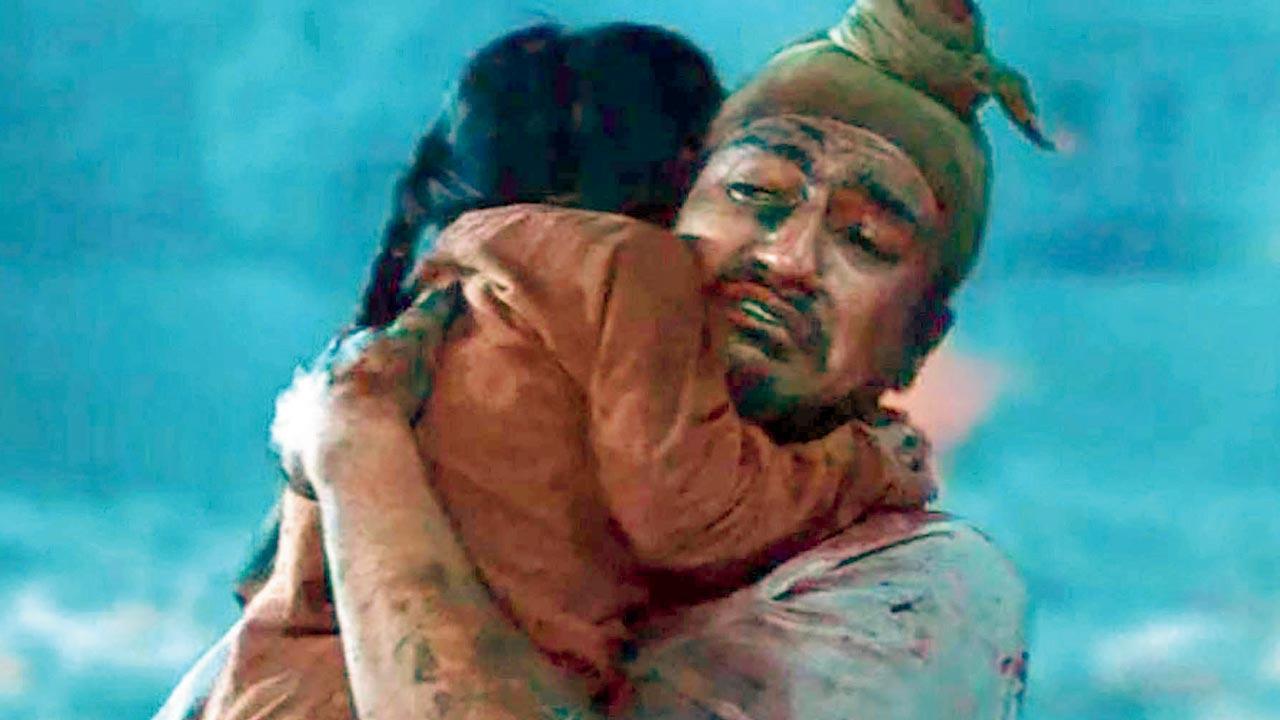
Sardar Udham director says Kaushal’s haunting performance should have been recognised, as he dedicates film’s National Award wins to original choice Irrfan Khan
Priyanka Sharma (MID-DAY; August 26, 2023)
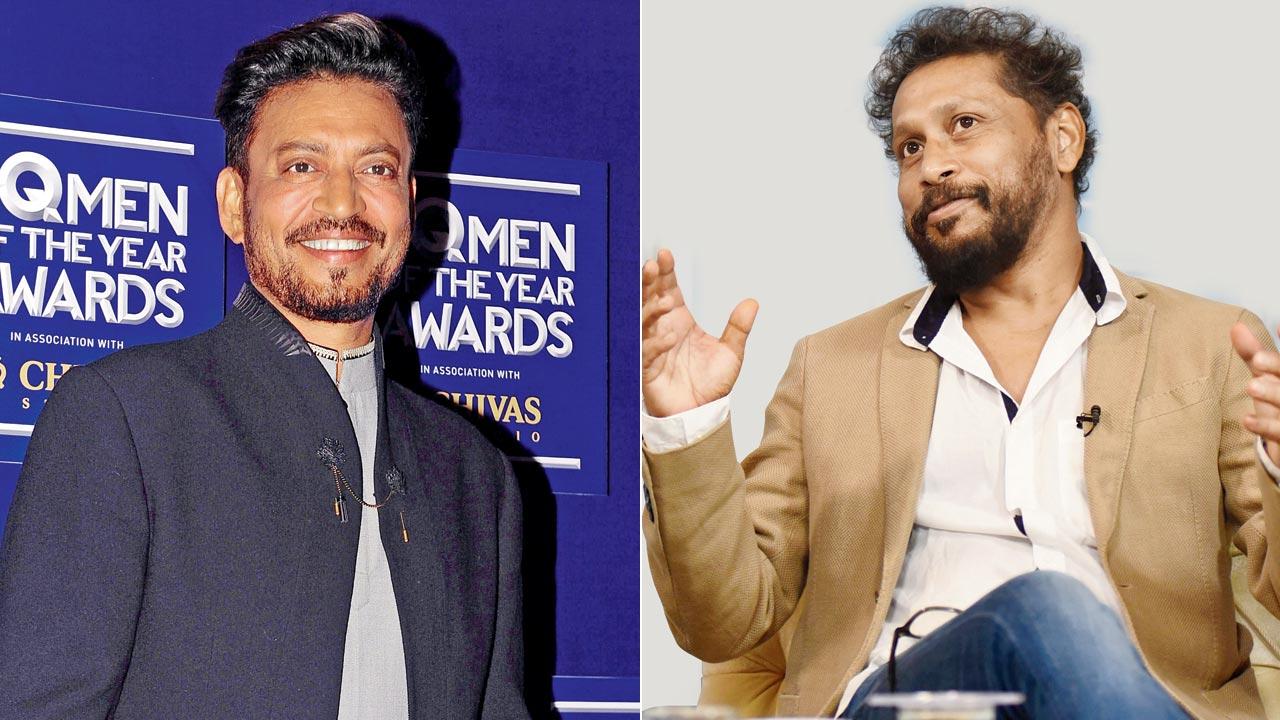
When we get on a call with Shoojit Sircar a day after his Sardar Udham (2021) bagged five wins at the 69th National Awards, including the Best Hindi Film, the joy in his voice is palpable. And yet, there is also a lingering guilt. The filmmaker dedicates the National Award to his late actor-friend Irrfan Khan, the original choice for the role.
“There is some kind of guilt in me that I did not work with him on this. He had also told me to move on. Every day, deep inside me, it hurts. I got the award, but he wasn’t here. The vacuum is still there. It’s not just Sardar Udham, I will dedicate whatever I can to him,” says Sircar.
That said, the director is proud of leading man Vicky Kaushal, who brought to screen the anger, agony and courageous spirit of Udham Singh. Sircar echoes the thoughts of many as he says that Kaushal should have been adjudged the Best Actor. Telugu star Allu Arjun won in that category for Pushpa: The Rise (2021).
“Vicky undoubtedly deserved the Best Actor award. The way he transformed into Sardar Udham is commendable. We started with the Jallianwala Bagh sequence. The first shot was of Udham picking up [the dead] bodies, feeling the weight and pain. The set was witnessing that nightmare. That set the tone of the film. Vicky couldn’t sleep for nights, and carried that disturbance throughout other parts of the movie.”
The biographical historical drama also won awards for cinematography, production design, audiography and costume design. Sircar says the awards’ significance lies in the fact that the movie highlighted ideas that are currently debated across the world. “In today’s times when you are talking about freedom of speech and what it means to be a revolutionary, getting this recognition is a [marker of] hope.”
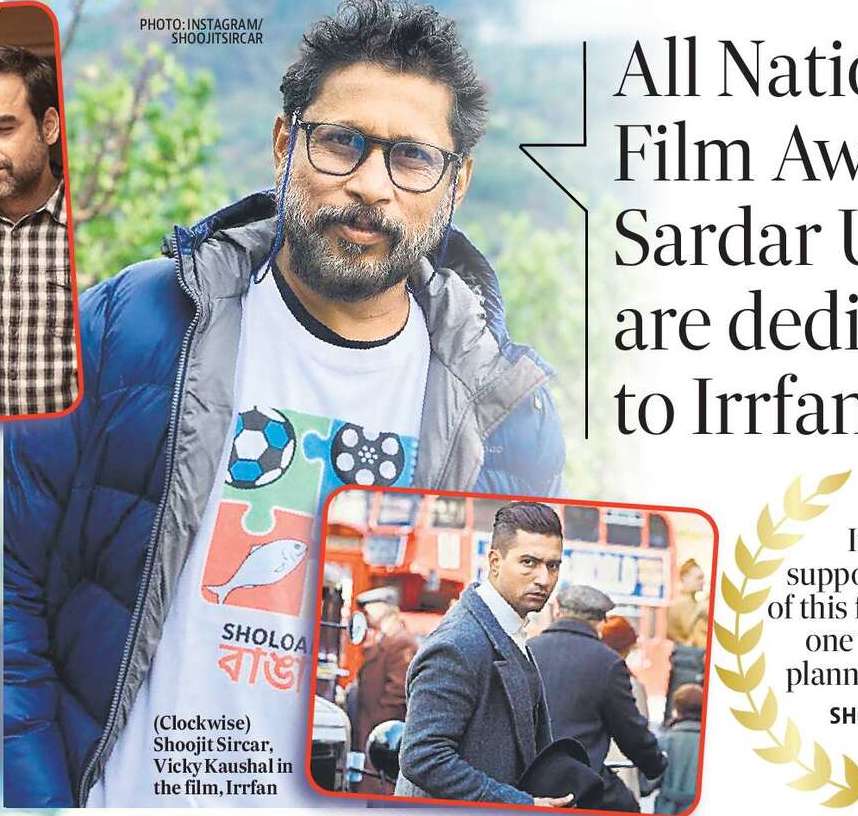
All National Film Awards for Sardar Udham are dedicated to Irrfan Khan-Shoojit Sircar
8:43 AM
Sugandha Rawal (HINDUSTAN TIMES; August 26, 2023)
Shoojit Sircar’s Sardar Udham (2021) won five National Film Awards and the recognition has made the filmmaker emotional. The film’s team has decided to dedicate the honours to late actor Irrfan, who was originally supposed to essay the titular role. “All the awards we have won for the film are dedicated to Irrfan,” the 56-year-old tells us.
Irrfan died in 2020, after which actor Vicky Kaushal stepped in to play the lead. “Irrfan was supposed to be part of this film from the start. It is really unfortunate that he was unable to do so. Irrfan deserves the recognition that I am getting at the moment,” says Sircar, whose film won awards for Best Hindi Film, Best Cinematography, Best Costume Designer, Best Production Design and Best Audiography: Re-Recording (Final Mixing).
Sardar Udham is based on freedom fighter Udham Singh, who was determined to avenge the Jallianwala Bagh massacre by killing Reginald Dyer, British Punjab’s lieutenant governor at whose orders, 379 Indian civilians were killed in an indiscriminate shootout. While the film was widely appreciated by the audience, Sircar says a National Film Award gives additional encouragement.
“I would be wrong if I say that I was not hoping for it. It feels good that the film has been recognized on a national level. This kind of acknowledgement comes as a seal of courage for us. It makes us feel that we are on the right path and we should explore and evolve in that direction,” he wraps up.
RRR wins 6 National Awards, Gangubai Kathiawadi 5; Allu Arjun wins Best Actor award
8:45 AM
THE TIMES OF INDIA (August 25, 2023)
New Delhi: ‘The Kashmir Files’, Vivek Agnihotri’s controversial film on the exodus of Kashmiri Pandits from the Valley, bagged the Nargis Dutt Award for best feature film on national integration at the 69th National Film Awards announced Thursday. Pallavi Joshi won best supporting actress for the film.
The National Awards for 2021, announced by filmmaker Ketan Mehta, declared Nikhil Mahajan best director for Marathi film ‘Godavari’.
The Indira Gandhi Award for best debut film went to ‘Meppadiyan’ in Malayalam while the prize for best film on social issues went to Assamese ‘Anunaad-the Resonance’. Telugu blockbuster ‘RRR’, which won six awards, saw M M Keeravani share the best music direction award with Devi Sri Prasad for ‘Pushpa’.
Asked about films releasing theatrically in 2022 winning the awards for 2021, Neerja Sekhar, I&B additional secretary, said, “As per regulations, the eligible films were certified and released from 1st January 2021 to December 31, 2021.”
--------------------------------------------------------
THE TIMES OF INDIA (August 25, 2023)
New Delhi: Hindi feature film ‘Rocketry: The Nambi Effect’ was adjudged best feature film in the National Awards 2021 announced on Thursday.
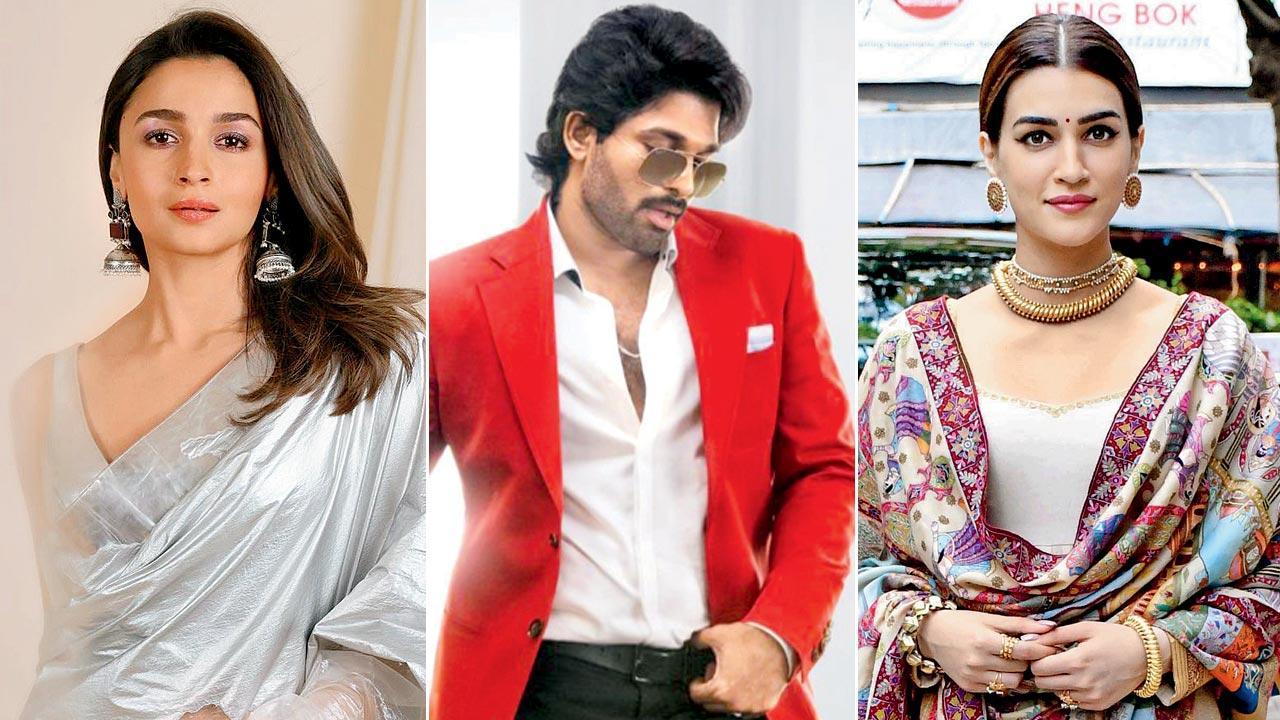
Allu Arjun, Alia Bhatt and Kriti Sanon won top acting honours for their roles in ‘Pushpa: The Rise (Part I)’, ‘Gangubai Kathiawadi’ and ‘Mimi’ respectively. Pankaj Tripathi won the award for best supporting actor for ‘Mimi’. Shoojit Sircar’s biopic ‘Sardar Udham’ won the award for best Hindi film as well as honours for best cinematography, audiography (re-recording final mixing), production design and costume design.
‘RRR’, directed by S S Rajamouli, won six awards including best popular film providing wholesome entertainment, best male playback singer to Kalabhairava, special effects, action director and choreography.
Sanjay Leela Bhansali’s biopic ‘Gangubai Kathiawadi’ was a close second with five awards. While Alia Bhatt won best actress, Bhansali won the award for best editing and screenplay writer (adapted), both jointly with Utkarshini Vashishtha.
Shreya Ghoshal won the best female playback award for her song ‘Mayava Chaayavaa’ for the film ‘Iravin Ninzhal’. The best original screenplay award, meanwhile, went to Malayalam film ‘Nayattu’ and its writer Shahi Kabir.
--------------------------------------------------------
MID-DAY (August 24, 2023)
Feature Film Awards:
Special mention: Kadaisi Vivasayi - Late Shri Nallandi, Jhilli - Aranya Gupta & Bithan Biswas, Home - Indrans, Anu: Eyes On The Sunshine - Jahanara Begum
Best Feature Film in each language:
Mishing: Boomba Rise
Assamese: Anur (Eyes On The Sunshine)
Bengali: Kalkokkho-House Of Time
Hindi: Sardar Udham
Gujarati: Chhello Show
Kannada: 777 Charlie
Maithili: Samanantar (The Parallel)
Marathi: Ekda Kay Zala
Malayalam: Home
Meiteilion: Eikhoigi Yum (Our Home)
Odia: Pratikshya (The Wait)
Tamil: Kadaisi Vivasayi (The Last Farmer)
Telugu: Uppena (Wave)
Technical Awards:
Best Action Direction: King Soloman for RRR (Telugu)
Best Choreography: Prem Rakshith for RRR
Best Special Effects: V Srinivas Mohan for RRR
Special Jury Awards: Shershaah director Vishnu Vardhan
Best Lyrics: Chandrabose for 'Konda Polam' song from Dham Dham Dham
Best Music Direction: Devi Sri Prasad for 'Pushpa' and M M Keeravani for 'RRR'
Best makeup artist: Preetisheel Singh D'Souza For 'Gangubai Kathiawadi'
Best Costume Award: Veera Kapur Ee for Sardar Udham
Best Production Designer: Dmitrii Malich & Mansi Dhruv Mehta for Sardar Udham
Best Editing: Sanjay Leela Bhansali for Gangubai Kathiawadi
Best Audiography: Chavittu, Jhilli and Sardar Udham
Best Screenplay: Shahi Kabir for Nayattu (original) and Sanjay Leela Bhansali for Gangubai Kathiawadi (Adapted)
Best Dialogue Writer: Utkarshini Vashishtha and Prakash Kapadia for Gangubai Kathiawadi
Best Cinematography: Avik Mukhopadhayay for Sardar Udham
Best Female Playback Singer: Shreya Ghoshal for Maayava Chaayavaa from Iravin Nizhal
Best Male Playback Singer: Kaala Bhairava for Komuram Bheemudo for RRR
Best Child Artist: Bhavin Rabari (Chelloo Show)
Best Supporting Actress: Pallavi Joshi for The Kashmir Files
Best Supporting Actor: Pankaj Tripathi for Mimi
Best Actress: Kriti Sanon for Mimi and Alia Bhatt for Gangubai Kathiawadi
Best Actor: Allu Arjun for Pushpa
Best Direction: Nikhil Mahajan for Godavari
Best Feature Film: Rocketry: The Nambi Effect
NON-FEATURE FILM CATEGORY:
Best Non-Feature Film: Ek Tha Gaon (Garhwali & Hindi)
Best Director: Bakual Matiyani for Smile Please (Hindi)
Best Film on Family Values: Chand Saanse (Hindi)
Best Cinematographer: Bittu Rawat for Pataal Tee (Bhotiya)
Best Investigative Film: Looking For Challan (English)
Best Educational Film: Sirpigalin Sipangal (Tamil)
Best Film on Social Issues: Mithu Di (English), Three Two One (Marathi & Hindi)
Best Environmental Films: Munnam Valavu (Malayalam)
Best Book on Cinema: Music by Laxmikant Pyarelal: The Incredibly Melodious Journey by Rajiv Vijayakar
Best Film Critic: Purushothama Charyulu
Best Film Critic (Special Mention): Subramanya Bandoor
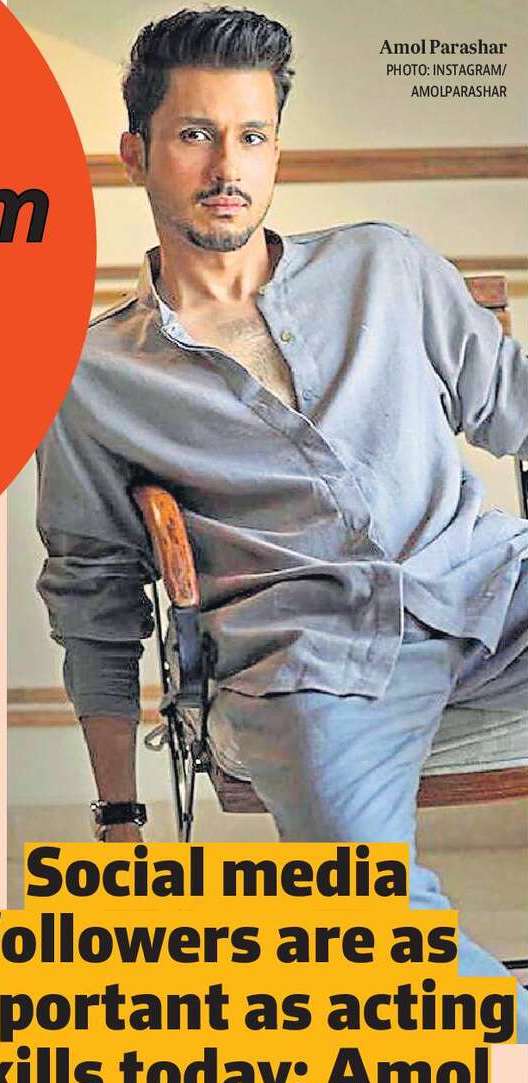
Social media followers are as important as acting skills today-Amol Parashar
8:00 AM
Arundhuti Banerjee (HINDUSTAN TIMES; November 5, 2022)
Actor Amol Parashar, who was recently seen in the web series Tripling Season 3, feels that talent alone may not be enough to make it big in the OTT space. One’s social media popularity, he says, is equally important.
“In today’s day and age, it is not always about talent, but also the bankability of an actor. And the same is applicable to OTT projects as well. It is about the combination of talent and followers on Instagram. Earlier, it has happened to me multiple times, that even though a director wanted to cast me, the producer would not take me because I was not popular,” says Parashar.
Now, however, things have changed for the actor, who played Chitvan in Tripling. He tells us, “Now, I also have a certain number of followers. People think that I can generate some views for their content. But I am okay with it, as long as I am doing the work of my choice. Of course, if I am not a good actor, no one will watch me.”
And while there is always a fear of being typecast into a certain kinds of roles, Parashar says he has been fortunate in this matter. “After the success of Tripling, I feared that I would get all characters like Chitvan; but thankfully no. I think it has also happened because people in Mumbai, especially casting directors and senior actors, have seen me on stage as I used to do theatre,” says the Feels Like Ishq actor.
And while he is grateful for all the love, he says things are not always easy for an actor who wants to do work that excites them. Parashar, who portrayed the character of freedom fighter Shaheed Bhagat Singh in the critically acclaimed film, Sardar Udham (2021), says, “My friends and family say that after my performance in the film, I should be getting more work. But in reality, that’s not what is happening. In the recent past, some opportunities came my way, but I say no to a project when I can’t see myself in the world of the story.”
When I did the first season of Tripling, there was no word like OTT-Amol Parashar
8:42 AM

Saptaparna Biswas (PUNE TIMES; October 1, 2022)
For actor Amol Parashar, the online space was where he had his tryst with onscreen acting. Amol, an engineer and theatre enthusiast, became a popular name through the characters he portrayed in online shows, much before the OTT boom. In a candid chat with us, the Sardar Udham actor speaks about the rise of OTT, playing a legendary character like Bhagat Singh and handling trolls with vinamrata.
‘VARIETY OF ROLES WERE LIMITED BEFORE THE RISE OF OTT PLATFORMS’
Amol has carved a niche for himself by playing a variety of roles in different web shows and has seen the rise of the medium. “When I did the first season of Tripling, there was no word like OTT. Web series used to come out on YouTube then. By the second season, there was a vast difference, and a bunch of platforms had come up. Then, of course, the pandemic happened and blurred all distinctions. I’m not a person to sit and judge ki arey pehle aisa hota tha, ab aisa hai. Now everything – films, TV shows, reality shows, documentaries – everything invariably goes on OTT eventually,” he says.
He further adds how the increasing volume of content has increased the scope of diverse roles for actors. “Before this there were only certain kinds of roles for films, and TV shows would run for years. The scope was a little limited. There is a greater quantity of work now. Every week you get to watch something new, and people are sitting with lists of what they want to watch,” he adds.
‘I WAS NERVOUS WHILE PLAYING THE ROLE OF BHAGAT SINGH’
Amol had stepped into the shoes of legendary freedom fighter Bhagat Singh for Shoojit Sircar’s Sardar Udham. When asked if he was apprehensive of doing a role that has been played by many successful actors before him, he shares, “I was quite nervous. The character itself is legendary and I have grown up watching various talented actors essay the role before. So, there was a fear of not being able to do justice, or people perceiving it differently. I was anxious, more so with a character like this which has preset expectations. But taking up such a role is a risk every artiste takes.”
He recalls how he spoke to his co-actor Vicky Kaushal and Sircar about his doubts. “I’d spoken to Shoojit sir and Vicky also about this and they said ‘Arey tu aaja, apan karenge, bohot mazza aayega’. The goal was to do something different from what others had done with the character. We wanted to bring authenticity and not think much about what had been done before,” he adds.
‘I TRY TO AVOID UNNECESSARY RUDENESS ON THE INTERNET’
With popularity and fame come the trolls on social media who have an opinion about everything a public figure does. Talking about it, Amol says, “Thankfully, I haven’t experienced so much negative attention online. I also have tried on my part to be honest in my interaction with people. I don’t think anyone should talk down to people, even in the virtual world. I have always kept conversations respectful. So, when people comment on something, and you reply with humility and vinamrata, they also mellow down. The escalation stops there. It is tiring and exhausting at times to engage in conversations with people who are there just to pick battles. But I try to avoid any kind of unnecessary rudeness. And if you don’t have the bandwidth, don’t engage.”
I dedicate IIFA award to Irrfan Khan, the actor I admired all my life-Vicky Kaushal
8:28 AM
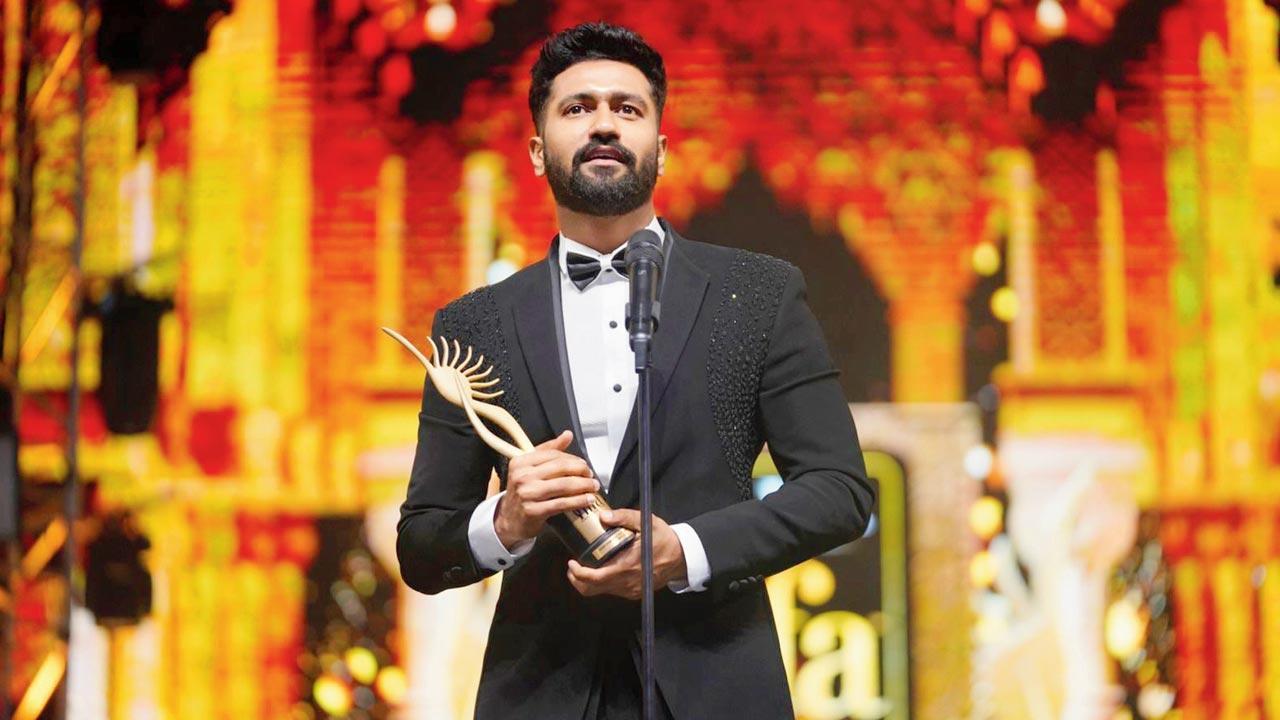
Honoured to step into Irrfan’s shoes for Sardar Udham, Vicky Kaushal pays tribute to the late artiste with his IIFA Best Actor win
Uma Ramasubramanian (MID-DAY; June 6, 2022)
That Vicky Kaushal is a fine actor was evident in Masaan (2015). But with Sardar Udham (2021), he showed that when given an author-backed role, he could well give a performance that was evocative and almost unforgettable. It’s not surprising then that he walked away with the Best Actor trophy at the recent IIFA Awards 2022.
“I have always wanted to be a part of Shoojit da’s [Sircar, director] films. I have got my award already by being part of his world. Anything beyond that is an honour,” said the actor, jubilant as he received the trophy at the Abu Dhabi event.
On its October release, the biopic — an ode to the revolutionary, Sardar Udham Singh — was highly praised for Sircar’s deft direction and the leading man’s restrained performance. It is widely known that the filmmaker had originally planned the period drama with the late Irrfan.
Kaushal, who had the tall order of stepping into Irrfan’s shoes, dedicated the award to the late actor, saying, “I want to dedicate my first Best Actor award to an actor whom I admired and respected all my life — the original choice for this film, dear Irrfan saab.”
The film is easily Kaushal’s most significant work to date. To him, it’s also the defining point in his career, as it made him one of the most reliable actors of the current crop. “It has been seven years in the industry for me. I remember I used to knock on everyone’s door for auditions, but never got through. I’d come back home and tell my mom that nothing is working out. She had said, ‘It’s not your job to know how it happens. It’s your job to have faith.’ That stayed with me. I did not know how this was going to happen, but I did everything in my capacity [to earn a place in the movie industry].”
While actor-wife Katrina Kaif could not attend the awards gala, she was not far from his thoughts. The actor, who tied the knot with Kaif last December, said, “People have been saying that I have a glow on my face. Everything is because of lady luck. You know who I am missing here.”
The glittering event at Yas Island saw Kriti Sanon win the Best Actor (Female) trophy for Mimi (2021), while Shershaah was adjudged the Best Film.
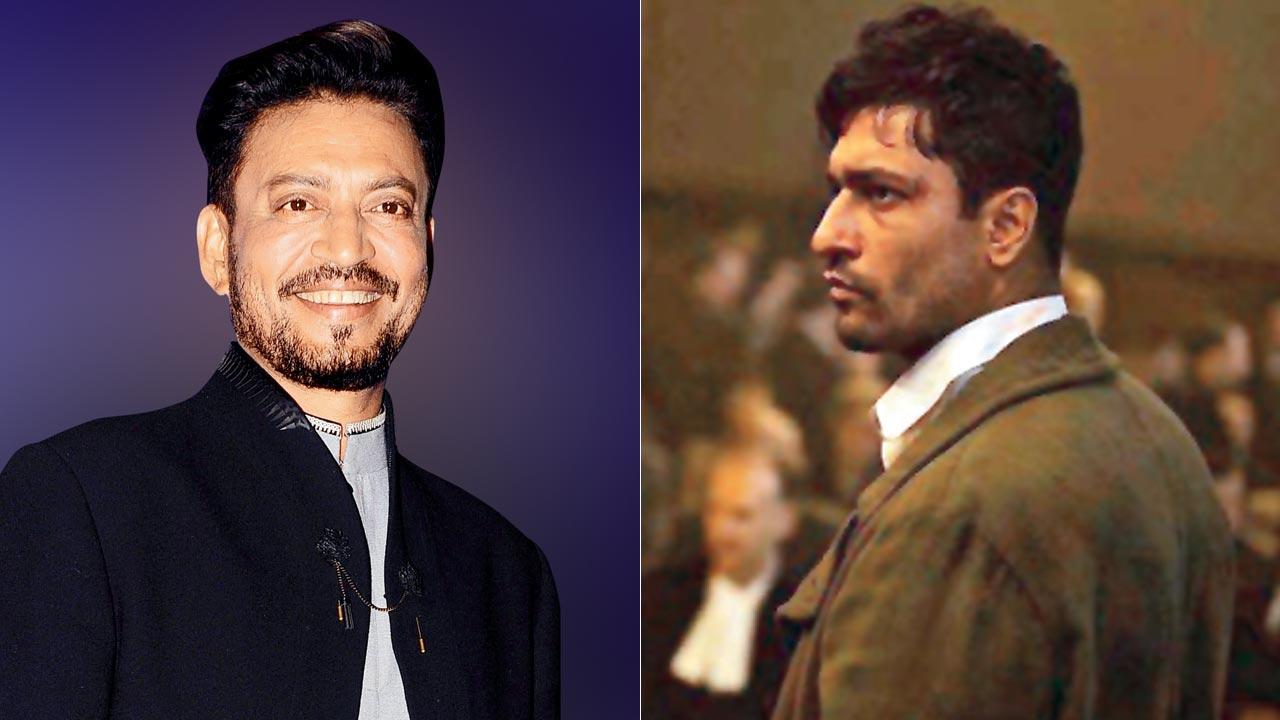
I’m fascinated by films set in a certain time zone-Vicky Kaushal
8:21 AM

Rachana Dubey (BOMBAY TIMES; December 19, 2021)
Recently, Sanya Malhotra and Fatima Sana Shaikh joined the cast of Meghna Gulzar’s biopic on Field Marshal Sam Manekshaw. To be headlined by Vicky Kaushal, the film will feature Sanya as Silloo Manekshaw and Fatima as former Prime Minister Indira Gandhi. This will be Vicky’s second biopic after Sardar Udham based on an individual of historical relevance.
Talking about his new project, Vicky says, “Sam Manekshaw’s biopic is in the pre-production stages right now. It will take a few months of prep and we should start rolling in the first quarter of 2022.”
Lately, there has been a spike in the interest in films, stories, and characters that are set in a time zone that Gen Z has probably only read or heard about.
The Raazi actor says, “Even though I am an actor, I am as much a part of that young audience that loves films set in a certain time zone. I am fascinated by them because I have only read stories about them, or heard about them from my parents or probably gone through some books on them. I am eager to become a part of those timelines and narrate a story set in a period that I will otherwise not get a chance to inhabit. I want to know more about those times that generations of young Indians have limited exposure to. I know people who study history through art and cinema. Sometimes, it’s the visuals that stay back with you more than the written word.”
Vicky further adds, “When I go through scripts and stories offered to me which are in sync with this thought, whether it is Sardar Udham or Sam Bahadur, I learn a lot. I didn’t know much about both the characters until I heard the director’s point of view on them and the understanding they have today of them as subjects. With these films, I am getting a chance to take people into a different time zone. It’s great to know those people who have made a remarkable difference to this country in their own ways.”
How Vicky Kaushal and Katrina Kaif met and how their romance blossomed
8:41 AM

As the star couple ties the knot today, here’s a deep dive into their romance, that they kept as hush-hush as their nuptials
BOMBAY TIMES (December 9, 2021)
It’s pretty much impossible for actors to keep their relationships out of the spotlight these days, with paparazzi following them and fans sharing videos of their off-duty time. However, Vicky Kaushal and Katrina Kaif, not only managed to keep their ongoing wedding celebrations in Rajasthan under wraps, but they also managed to keep their romance away from the media glare. The two were barely spotted together during the dating phase. Since they had never acted in a film together, many wondered how this romance blossomed. During her appearance on Karan Johar’s chat show Koffee With Karan in 2018, the actress said that she would like to work with Vicky Kaushal as she feels they may look good together. A few episodes later, when Vicky was on the show, Karan told him about Katrina’s statement, the actor, who was thrilled, pretended to faint with joy. Here’s how their love story unfolded after this.
1. JAB THEY MET
Apparently, Vicky and Katrina’s first meeting was in 2019 when they shot for a chat show where they discussed their work and experiences in the industry. Later that year, they shared the stage at an awards function when Vicky jokingly proposed to her. He said, “Aap kisi acche se Vicky Kaushal ko dhoondh ke shaadi kyun nahi kar leti?”
Sometime later, they were spotted on a dinner date, pictures from which went viral. After this, there was constant speculation regarding them dating. However, they were never clicked together. Still, their appearance at a friend’s Diwali bash in 2019 added fuel to the rumours.
2. PLAYING HIDE AND SEEK WITH PAPARAZZI
In March 2020, they were spotted having a great time at Isha Ambani’s Holi party, which also had other celebrities, including Priyanka Chopra Jonas and her husband Nick Jonas, in attendance. This year in August, they turned up for a special screening of Sidharth Malhotra’s film Shershaah, but they made sure that they were not photographed together. Katrina also attended the screening of Vicky Kaushal’s recent release Sardar Udham, but here too, the couple made separate entries and exits.
3. WHEN HARSH VARRDHAN KAPOOR LET THE CAT OUT OF THE BAG!
While the industry knew about their romance, there was no confirmation, as the couple hadn’t spoken about it. However, in an interview with Zoom this June, Harsh Varrdhan Kapoor – when asked about a rumoured relationship in Bollywood that is real – said, “Vicky and Katrina are together, that’s true. Am I going to get in trouble for saying this? I don’t know. I think they’re quite open about it.”
4. TAKING IT TO THE NEXT LEVEL
During the pandemic, Vicky was clicked a couple of times when he visited Katrina at her home. It was rumoured that the couple even brought in the New Year together in Alibaug. Online sleuths were convinced that Vicky’s reflection was visible in an image shared by Katrina online, which was later deleted.
Talk about them taking their relationship to the next level began this Diwali when there were reports of a roka ceremony at filmmaker Kabir Khan’s house. These love birds, who are tying the knot today have indeed managed to keep their relationship as private as possible.
------------------
IT’S D-DAY FOR VICKY-KATRINA
After a fun-filled-sangeet, Katrina and Vicky’s colourful haldi ceremony took place at Fort Barwara in Sawai Madhopur. “The musical-sangeet evening lasted till midnight and guests enjoyed a small performance by Gurdas Maan,” a source told us.
Following their wedding today, where Punjabi band RDB is expected to perform, the buzz is that the couple will visit Chauth Mata temple, which is close to their wedding venue, to seek blessings. As per sources, the guests will be taken for a tiger safari at the Ranthambore National Park and a crocodile safari at the National Chambal Sanctuary in Palighat village near the main city.
– Agencies (with inputs from Richa Shukla)

You can’t escape criticism, it’s part and parcel of the work we do-Shoojit Sircar
6:11 PM

Rachana Dubey (BOMBAY TIMES; November 28, 2021)
Filmmaker Shoojit Sircar has been on the receiving end of criticism and praise in equal measures for his recent film Sardar Udham. The filmmaker, who had a masterclass at IFFI (International Film Festival of India) recently, spoke to us about his life post the film, whose story he had lived with for over 21 years. Excerpts:
By your admission, you’ve lived with the story of Sardar Udham for over two decades. You spent about five years just on the scripting. What has life been like post the movie?
You sometimes feel you have nothing left to do anymore. Kabhi kabhi hota hai aisa. The film was mounted on a big canvas, though we tried to not make it too big. Now, after the movie is over, suddenly I feel like I don’t know what to do. There is an emptiness that creeps in. Ronnie (Lahiri, the co-producer) and I have ideas and we keep talking about them, and discussing them, but it’s hard to get rid of that khaalipan, that vacuum created after Sardar Udham went out of our system. Both Ronnie and I had never thought it would go through the way it did. It’s like there was a little storm which has now blown over, and now we don’t know what to do.
How do you deal with that emptiness?
You have to keep nurturing yourself. This is a very crucial period and often, people end up making wrong decisions during this phase. You want to quickly start something and put it out there. But the better way out is to remain calm and do things with proper thought and planning. Creatively, you have to keep yourself engaged and active — you have to keep the fire burning. Sometimes, you can do it through cinema and sometimes, you just do things like gardening, playing football or reading something or watching something.
Is that why you often escape to villages in north Bengal and spend time cooking and gardening?
Yes, that’s right! I regularly go to north Bengal where I was born. I grew up there and I spent my childhood in those places that I visit even now. It’s very peaceful. I’m going to stay in Goa for some time now and do some reading there. I also plan to jam with my researchers and see what we can arrive at. I am not in a hurry to make a new film.
Sardar Udham and Gulabo Sitabo were both appreciated and criticised in equal measures. Have you been able to go over the points of criticism that have been raised on the films?
Look, I have realised that criticism is something that you have to take. You can’t escape it and it’s a part and parcel of the work we do. You have to be ready for it and for observations that people make. Also, as a creative person, you cannot possibly cater to everyone and to everything that is asked of you. As Ronnie said during our masterclass session, we did not and we have not compromised on Sardar Udham in any manner. Yes, we may have made mistakes. We will go through the content and whatever mistakes we can identify, we will make a note of it and make up for it in our next films. The idea is to not repeat those mistakes again. I am absolutely not worried about criticism. It can affect you depending on the way you take it. Sometimes, criticism is very healthy and helpful. You have to know which part of criticism is important for you. Sometimes, you have to just let criticism pass and sometimes, you have to hold on to the things people tell you. I believe in taking just those points that are beneficial, learning from those and taking it forward.
During the session, you said that you would probably use all the material you couldn’t include in the film in a series, if you make one. Are you considering that seriously?
Frankly, I don’t know what I will do with the material that I am left with from the film. There is a lot of research that I have. I have heard that Ram Madhvani is making a film on Jallianwala Bagh. I might give it to him. I would love to offer him all my research. It’s a creative and competitive line but I have told everyone that I am ready for any discussion on this subject. I have books that have been marked out, taped and set aside. I can help anyone who needs help on research on this subject.
Using flashbacks or going back and forth in time in a screenplay is commonplace, but the way you did it in Sardar Udham was experimental in many ways, which seems to have increased expectations from you. Does that scare you?
I am very scared of expectations, please don’t expect anything from me. The next movie that I make may not cater to everyone. So far, I have tried to make films that I am happy about. The subjects Ronnie and I are discussing are about films that are completely out of the box. So, don’t expect anything from me. And frankly, expectations scare me a lot!
World premiere of Chhorii to be held at the International Film Festival of India
7:48 AM

Amazon Prime Video lines up the world premiere of Chhorii, a slew of panel discussions and masterclasses with industry stalwarts at IFFI
BOMBAY TIMES (November 19, 2021)
The 52nd edition of the International Film Festival of India (IFFI), one of India’s most prestigious film festivals, is slated to start on November 20 in Goa. And for the first time, video streaming services have been invited to be a part of the festival. Amazon Prime Video, which is closing in on half a decade of entertaining India, is participating to bring an exciting line-up for festival goers.
“Over the last five years, we have actively worked towards taking local stories, from different corners of India to viewers across the country and the world,” said Gaurav Gandhi, Country Head, Amazon Prime Video, India, adding, “Besides bringing cultures and people together through the power of entertainment, this has also allowed us to discover new, prolific storytellers and talent, and contribute meaningfully to India’s vibrant creative economy. We are honoured to be a part of IFFI, an event that celebrates the diversity and rich cinematic heritage of India, and brings the entertainment community, content creators and talent together.”
The premiere of Chhorii at IFFI will be attended by Nushrratt Bharuccha, director Vishal Furia and producers Vikram Malhotra (Abundantia Entertainment), Jack Davis (Crypt TV) and Manish Menghani, Head Content Licensing, Prime Video India. The Family Man Masterclass will be conducted by its creators and cast, including Raj & D.K. (Raj Nidimoru, Krishna DK), Aparna Purohit, Head India Originals at Amazon Prime Video, Samantha Ruth Prabhu and Manoj Bajpayee (joining virtually), while Shoojit Sircar and Ronnie Lahiri will conduct the master class on Sardar Udham.
The collaboration is a testament to IFFI and Prime Video’s common goal of promoting excellence in cinematic art. With world premieres in 240 countries and territories, the streaming service has exported local stories from the best Indian talent to the global stage.
I have not left any single shot in my edit room for the Jallianwala Bagh scene. Everything is used-Shoojit Sircar
8:28 AM
In the latest edition of our award-winning interview series, Shoojit Sircar decodes how he created a hatke brand of commercial Bollywood with an indie heart
Mayank Shekhar (MID-DAY; November 13, 2021)
“But you’re not like this [as a person],” an assistant on the sets of Sardar Udham exclaimed to filmmaker Shoojit Sircar — observing him seated, with two buckets full of fake blood, getting constantly replenished on either side of his feet.
He would dip into it with a mug, splashing that blood to dry earth himself, to get the colour right — all the while operating the camera, filming the Jallianwala Bagh sequence in Sardar Udham (2021).
It’s gory as hell. But Sircar wanted to get April 13, 1919, just right. Martial law in Punjab. Curfew in place. No one allowed to help the injured and dead. One man dealing with dead bodies after dead bodies.
It’s a scene Sircar had been living with, ever since he first visited the actual Jallianwala Bagh site in 1998 — much before he’d even thought of becoming a filmmaker. He’d been going back to that sequestered memorial park, through a narrow passage to the entrance in Amritsar, every year since. It’s a walk down from Golden Temple.
This was his only chance to recreate what he believes was the turning point of India’s freedom movement — the massacre of thousands of people, peacefully protesting the draconian Rowlatt Act, that allowed the British government to incarcerate Indians, without proper trial, under the pretext of ‘national security’: “It gave birth to many unsung revolutionaries, of which we only know about Bhagat Singh, and now Sardar Udham.”
It took Sircar four months to get the colour of blood right. Real blood for shoots is usually imported. They didn’t have the budgets. Jallianwala Bagh is also kinda immortalised from Gandhi (1982), by Richard Attenborough, who had resources to bring down train loads of people from Punjab, to shoot the short scene in Delhi.
Sircar had to shoot in Punjab itself, to get the look of thousands of actors/extras right. He hired locals. Some of them were children trained in Gatka style of martial art. They’d do free-falls and heavy-duty acrobatics, although they’d never faced a camera before.
On day one, actor Vicky Kaushal was his usual enthusiastic self. But as the shoot progressed, with humans being carried like carcasses in wooden carts, and the smell of fake blood and dust around, the cast and crew started getting affected.
Once, when the shooting had packed up for the day, a young girl was still around, that the assistants insisted they should shoot with, anyway. Sircar decided to casually pick the scene, knowing they didn’t need more. Soon as the girl started crying for her mother (in the scene), Kaushal began uncontrollably howling as well. The girl was a little flummoxed. They kept the camera rolling from a distance, most of which made it to the final film.
Every moment in the Jallianwala Bagh scene, step by step, Sircar says, is mentioned in Hunter Commission and the Congress report, besides survivor statements of ladies named Ratan Devi and Attar Kaur. It lasts a lifetime in Sardar Udham: “I have not left any single shot in my edit room. Everything is used.”
Some might dub this as an over-indulgence of sorts. It will remain etched as one of the most haunting sequences in Hindi cinema still. Unsurprisingly we talk about it for a good portion in this conversation. Only as a nod of sorts for the fact that Sircar filmed this one sequence, over 21 days in Punjab!
Sardar Udham is essentially a London-based period film, for which Sircar extensively referenced series such as Peaky Blinders and The Crown to get the era right.
As for a wider inspiration, while there is no direct connection, Sircar calls Sardar Udham “a tribute to Akira Kurosawa’s relatively lesser known film, The Hunters, set in Siberia, filmed as a Japanese-Russian collaboration.”
Which makes me segue into his film company, Rising Sun. Is that a reference to Japan? “Well, we didn’t think about it. My producer Ronnie [Lahiri] suggested Rising Sun. It sounded positive. I asked him to check if there is any other Rising Sun Films. There wasn’t, so went ahead!”
I ask this because over a decade and half, while the eclectic Sircar undoubtedly has belonged to commercial Bollywood, he remains essentially an independent filmmaker, which is an anomaly of sorts.
Throughout, he has teamed with the same producers, Goa-based Lahiri originally from Shillong, and Bihar-born, Russian educated Sheel Kumar, taking care of the finances. Besides more or less the same crew of writers (Shubhendu Bhattacharya, Juhi Chaturvedi), cinematographer (Avik Mukhopadhyay), editor (Chandrashekhar Prajapati), and the like.
He says, “[By independence], you [mean to] do a film on your own terms. Of course, we compromise sometimes. And I have been compromising [as well]. But film after film, I have reduced that. Crafting your own path is a lesson I have learnt from the city [Bombay] itself, and its film industry. Otherwise, nobody will let you be what you are — forcing on to you what works. And in cinema, there is nothing like, ‘what works’ — it is an expression. You do what you are compelled to, from the inside — what you feel like; you do that.”
Which explains how the money being thrown at him to script a sequel to Vicky Donor (2012) is pretty much the budget of an entire film — he doesn’t reveal the number — but he won’t click that bait, simply because Vicky Donor is behind him, and he’s “not that filmmaker anymore.”
The auction is only natural, given that a Rs 4.5 crore Vicky Donor — a slice-of-life comedy on sperm donation, that even Sircar hadn’t imagined would capture an audience beyond those interested in quirky movies — picked up close to Rs. 80 crore at the box-office! This equals ‘family audience’ in Bollywood speak.
Debutant Ayushmann Khurrana was the star. Which also opened up a minor film industry for Khurrana headlining a series of comedies on similarly taboo subjects — balding, old mother pregnant, gay love, etc.
With Sircar, these benefits can be a challenge: “I am actually very scared of the wrong audience, and unnecessary hope. I am openly telling you — with Gulabo Sitabo (2020), I faced so much of that. I was doing a film with Amitabh Bachchan and Ayushmann Khurrana. So people think it is Vicky Donor and Piku coming together! I faced so much flak after [Gulabo Sitabo came out] — this film is so slow, nothing happens… But that is what I had made. I wasn’t thinking [Vicky Donor and Piku] in my head. Don’t expect it. Yet, how do I convey that? It is so difficult. So sometimes, wrong audiences can really harm your film!”
To be fair, Sircar has dabbled in multiple genres, without getting overwhelmed by the success of his previous work. In fact, if you notice, he consciously shifts from light-hearted to serious subjects/treatments — say, a political thriller Madras Café, after Vicky Donor; a strikingly sombre October, after Piku. It’s something he describes as mere coincidence. Rather than an effort to alter his mind space.
“A movie is not like a mask, that you take off after it’s over, and put on another. It stays inside you forever. I am Sardar Udham. I strongly feel about it. I strongly feel about greed in Gulabo Sitabo. I feel for October, because I have been in ICU for three months with my mother. And I know exactly what happens [being around] a comatose patient. I cannot just throw it away.”
Sircar debuted as a feature filmmaker with Yahaan (2005), set in Kashmir, about a local girl and an Army officer, during the height of insurgency/militancy. One of the aspects that stood out in that film was its coolly lit bluish tint, lending a surreal touch to the screen, although the film was shot on actual locations.
I am wondering of this level of visual sophistry had much to do with his work in advertising, which is how he first got into films. Sircar says, if anything, his works are often more informed by documentary filmmaking, which is also what he dabbled in for close to five years before.
Yahaan was also the debut feature film of Swedish cinematographer Jakob Ihre. What’s Ihre best known now for? Shooting the stunning HBO series, Chernobyl. Yup! “Jakob was once in Delhi to shoot a documentary for BBC4. A friend of mine was the sound person for the film, who introduced us. Of course I knew of the Polish film school he was from, which is really good. I did a commercial with him, which was also done on my own terms. The ad was for toughened glass. But the film, for around three minutes, unheard of at the time, was all about reflections. With Yahaan, I was wondering if I would get Kashmir right — I had done a documentary there, and knew what Charar-i-Sharief or Habba Kadal Bridge will look like. I needed a different perspective. The first thing Jakob told me when I took him to Kashmir is it looks like Bosnia, which also had problems going on at the time. In winters, Kashmir, like Bosnia, is brown and silver. Jakob got onboard and shot Yahaan.”
They’ve been friends since. The script of Yahaan “bounced like a ping pong ball” between all the corporate studios in Mumbai, until Sircar first went ahead with it himself, with Jimmy Sheirgill and Minissha Lamba in the lead roles.
Ad films have also allowed Sircar financial independence, and some flex to make only the features he wants. It also turned him into a patron of the arts early on, in the early ’90s, while he worked in an amateur theatre group Act One in Delhi: “I was a mole from my [theatre] group in the advertising industry. I’d make money from ads, and whatever I’d earn, I’d put into theatre. That is what my job with the group was — you make the money, bring it to us, and we will do plays!”
Act One had performers like Manoj Bajpayee, Gajraj Rao, Piyush Mishra, among others, who later moved to movies and Mumbai. Sircar continued in advertising, mitigating the struggle that involves, in hindsight, romanticised notions of stepping into showbiz city, with few rupees in wallet, friends with culinary benefits, and sleepless nights in railway platforms. Sircar has none of those heartbreaking stories of following a personal passion.
In fact, strangely enough for a Bengali, the arts, cinema, and literature were totally external to his growing up years. Football was his life’s primary goal; something he actively pursues at 53 still.
Graduating in commerce from Delhi’s Bhagat Singh College, Sircar was quite comfortably placed as an accountant in one of the city’s top hotels, Le Meridien. Which is a longish walk down from the Capital’s cultural district, that houses National School of Drama, and several theatre performance spaces.
Almost like a turning point of a movie script, a moment of epiphany as it were, Sircar’s friend [his writer now] Shubhendu Bhattacharya asked him once to step out to watch a play, after lunch, during work hours.
That was Satyadev Dubey’s production Andha Yug, written by Dharamvir Bharti, starring Naseeruddin Shah, Amrish Puri, Rohini Hattangadi. He says something happened to him once he watched that 3 pm show. There were no tickets available for the following 6 pm show, but he bribed the guard to enter again. By 9 pm, when he walked back to his office, he had “turned into a zombie.”
Following week, he watched Satyajit Ray’s Pather Panchali at India International Film Festival in Delhi’s Siri Fort auditorium. A film he had repeatedly slept through, during growing up years. The penny had dropped: “Then I started reading and watching with a different eye.” He joined theatre, then ads, thinking little of the debit and credit accounting of such a call.
Which takes us back a little to the film October (2018), one of his most personal works, since as he said, it came from the experience of nursing his mother in an ICU ward. But its setting — the full expanse with doors that demarcate the contrasting inside and outside world of a five-star hotel is clearly from his time from Le Meridien?
“When [writer] Juhi bounced off the structure, character and idea about how the film would be, it clicked: ‘Okay, hotel — I know hotel, so I will go into this’. I had no problem in understanding the hotel. My art team said we will create it. I said, no, you cannot create this. It has to be real.”
As is the story — emotive, seeping through the pores, at every level. Even if there’s a touch and feel of Sircar in the lead character, Dan, the fact is, if you rewind to when the film was being planned, the last person you’re likely to imagine in the lead role is the boisterous Varun Dhawan — of ‘tera dhyan kidhar hai, tera hero idhar hai’ fame! There has to be a story behind Dhawan breaching a likely mental/casting block. There is.
Sircar recalls, “Varun had been calling to meet me for quite some time. I live in Kolkata, and would be in Mumbai for two days and leave, so I wasn’t getting time. Once when I had a flight to catch, I saw his text, “Dada, when is your next?” I told him that I was in town, but leaving in a bit. He said his house was close by. I asked him to quickly drop in. He said he’ll take a shower and come, and that he’d just woken up. I told him nobody will see him: ‘Just walk in as you are’. I still have his picture from that day — he was clumsy, holding a bottle that fell. He said, ‘Sorry, Dada, sorry.’ While talking, he zoned out completely. I don’t know what he was talking to me about. [As an actor], he wasn’t on my radar at all. I looked at his torn jeans. He said, please, don’t look there. He just sat there, said, ‘Theek hai, Dada.’ And left. In the flight I kept thinking about him. As I landed, I called up [writer] Juhi and [producer] Ronnie. This is what the clueless Dan is, you know — he doesn’t know what he’s doing, saying, where he is…”
The unlearning of the Bollywood star started before shoot. For script, Sircar only shared the first half of the film. For prep, Sircar passed on a piece of meditation music to Dhawan and asked him to simply stare at a house-plant every morning with it!
“On the first day, we shot the film’s last day’s conversation with the girl — it’s an important scene. I thought I’ll catch him raw, the way I had caught him in the office that day. He said, ‘Dada I am not doing anything [in the scene]’. We rolled the cameras in the rehearsal take, and used it in the film.”
It’s a little like how Sircar got Ayushmann Khurrana into the infamous sperm donation scene in Vicky Donor. Khurrana had to go to a private room to donate sperm.
Except, there were no instructions on paper about what he’s supposed to do. There were CCTV cameras placed in the room. Khurrana was clueless. He got out of the room and said, “Aise thodi hota hai? (What am I supposed to do; this is not how it happens!”) The cameras captured that actual line.
In Dhawan’s case of course, the idea was to keep him slightly clueless all through the shoot, instead — something the camera captures convincingly in October.
As for another unlikely casting, the one that comes to mind is John Abraham. Abraham incidentally won the National Award for Vicky Donor—as the film’s co-producer. No knock on Abraham. But he isn’t quite the first actor one might have in mind for Sircar’s reasonably intellectual political thriller, Madras Café. It was a deeply researched procedural on the plot to assassinate Rajiv Gandhi, called “the PM” in the picture.
Sircar admits, “You can say Madras Café was one film that I just quickly wanted to make. By 2010, the entire Tamil group [LTTE] had been wiped off. The [assassination] case was completely shut. I just thought I must go ahead and make this [before it’s too late]. I didn’t wait too long. The research and script were quite good. In terms of my craft around making the film, I would do it completely differently now, and with an absolutely fresh mind. It could have been much more powerful. That’s one film I would really want to go back, and remake.”
What would he do differently, in particular? “Of course, I will take real names [of characters], as I did with Sardar Udham. I’ll go with a completely new set of cast. There are many places where I have compromised, in terms of dialogue. Then there is the heroism part of the film. My idea of heroism has changed, from then and now. For me, heroism is not about [being a] hero [type]. For me, heroism is doing the right thing — rather than not. That is what it is.”
That’s of course a film yet to be seen, but from what we have of Madras Café, as it exists, it is by no means even vaguely a low point in Sircar’s career — wonderfully farmed from the Jain Commission Report, it survives as an important, albeit slightly over-the-top document, detailing the assassination of PM Rajiv Gandhi.
If at all, the cursory low point in Sircar’s career might well be a film of his that we haven’t seen. And that’s because it never got released—Shoebite, the director’s first collaboration with Amitabh Bachchan. From my memory of what went wrong with the film was a dispute between two companies, Percept and UTV. The former were first producing the film.
There was a hitch over Bachchan’s remuneration, reportedly. Percept brought on board Anil Kapoor for the lead part instead. Sircar and Bachchan jumped ship together, bringing in UTV to produce the film instead. Copyright issues followed. I needlessly jog my memory for Sircar, who is understandably not so forthcoming on this.
“Well, it’s a long story. But I can tell you where we are now, I think. So, finally, the film is with Disney. And Disney is also Fox, and Disney is also UTV. They can actually release the film. They are still figuring it out. What’s happened in the past is over.”
The Fox angle in the story could have to do with the original concept of Shoebite being Hollywood filmmaker M Night Shyamalan’s. Is that true? “So, the script was adapted by Rensil [D’Silva], who had just done Rang De Basanti. Later we found out that this was an idea by Manoj Night Shyamalan. I stepped back. Then Ronnie Screwvala [UTV boss then] was doing a film with Shyamalan and [our project] restarted. Since the basic idea was written by Shyamalan for a Hollywood film, we requested for a regional version. It was messy. But it is quite sad that the film still in the cans. It should release.”
The other messy stuff that’s made it to print in the past, so far as Sircar is concerned, are cases registered by writers against two of his films, Gulabo Sitabo and October, over copyright infringement. Much talked about before release, allegations hurled, press lapping up.
“It is distressing. When it happened with October (a Marathi filmmaker alleging rip-off), I was completely shaken up. We thought we were creating something absolutely fresh, and new, and everything had come out from my own deepest experiences, and Juhi’s as well. Same with Gulabo Sitabo. This is no way. Tons of stories can stem out of landlords and tenants. But after the film [releases], there is nothing. After the film is gone, there’s nothing. The entire panel of writers’ association has seen the film, and given us a clean chit. What else you can do? I was telling Ronnie the other day: I hope with Sardar Udham, nothing comes up. Ronnie told me I should get used to it. It will come, so it’s okay; be ready for it. It is distressing sometimes. We could not enjoy the release of October, because of this. Normally I go to the theatre and watch the film [with the audience]. We didn’t.”
Thankfully none of the above this has impacted his works consequently. Bachchan, for instance, was happy to sign up with Sircar, despite their first film together having been a non-starter. The released movie is Piku (2015), of course. The brief he gave to his writer (Chaturvedi) for it was long scenes; “sometimes 20 pages long.”
Sircar wanted to stage Piku as a play first — “experience from theatre really helped” — and then cut at the editing stage. The driving force being to test the acting styles of three really diverse performers—besides Bachchan, Irrfan and Deepika Padukone, whose subtly expressive eyes were really the leads as well.
Sircar reasons, “Mr. Bachchan, as a person, is all method—he will rehearse, and be so particular — you can’t use left-hand on the rehearsal, and right-hand on the take. You can’t. On the other hand, Irrfan is someone who just lets go. And he can go on. Deepika is natural. You have to tap into her internally, as an artiste. My instruction was that in this film, nothing is happening, nothing is moving. It’s in the drawing room of a Bengali household. If you notice, there are a lot of silences in the film. And I want audiences to hate this Bengali family. Irrfan, though, had just convinced himself that there will be a love angle to the story eventually: ‘You’ve cast me with Deepika, there will be conversations; of course we’ll get romantic’. I had to constantly explain to him that’s not going to happen. People will define [this relationship] in their own way!”
It’s not like the actors didn’t have other apprehensions. Bachchan, for one, did. Until Sircar practically convinced him by actually enacting his part over a narration — after Big B had read the script, with long notes on side margins sent as feedback. While it doesn’t show, the soft-spoken Sircar does have a stubborn streak. It’s that same indie cinema spirit about working on one’s own terms.
When Piku released, Sircar says, it was being deemed as an altogether Bengali movie: “I said no, it’s a Hindi film.” Unsure why he had to be defensive, because Piku is indeed a Bengali film — so specific, that it’s universal enough.
With the added bonus that most Bengalis I’ve met have so identified with this family — of a cranky daughter, who’s had it with a loud un-selfconscious, child-like dad, obsessed with his bowel movements — that they repeatedly watch Piku, as if it was their home video.
An air force officer’s son, Sircar grew up across defence establishments, given his father’s transferrable job. He spent a lot of time in Delhi. For home, he chose Calcutta still — far from Mumbai’s maddening movie crowd, that he occasionally returns to, for work, and disappears into the “17 football fields” around his Salt Lake, Kolkata address. He says this is also to root his two daughters into a local/Bengali culture — a privilege he didn’t enjoy himself.
But speaking to him for an hour and some, before a live audience, I sense this could be because Sircar, an ardent devotee of Satyajit Ray, is as genially Bengali as it gets. When it comes to the most special skill the community enjoys, no matter where they are in the world — ‘adda’, that long, warm conversation on things from here and there, that can carry on, even when the cameras are switched off. As was the case with this edition of Sit with Hitlist.
Shoojit Da would tell us a thing or two about good health — the importance of walking. Not brisk walk; just walking. And the right posture to hold a phone, which is not to hold it at all — 20 minutes of cellphone on palm plus wrist equals 17 kg burden on the shoulder. I’ll take that advice from a footballer, who can be quite the Dada on a field, dribbling much younger men like Ranbir Kapoor and Abhishek Bachchan into exhaustion.
He’s also happy to heckle on the field. Which isn’t my mental image of him, given the gentle demeanour. Equally unsurprised that his assistant was flummoxed looking at him going absolutely berserk with blood and gore, shooting the iconic Jallianwala Bagh sequence in Sardar Udham.
My mental health was in a very bad space; So I took a year off to get better-Banita Sandhu
7:57 AM

Titas Chowdhury (HINDUSTAN TIMES; November 12, 2021)
Banita Sandhu forayed into Hindi films with October (2018), but she has had no releases since then, until last month — Sardar Udham. Ask about her absence and the actor, 24, confesses that she took a break to improve her mental health and complete her education.
“I had to go back to London to finish my degree. My mental health was in a very bad space at that time. So, I took a year off to get better, so that I can start doing good work again,” she shares.
October was her first collaboration with filmmaker Shoojit Sircar, and she garnered immense praise for her role. Though she’s had no releases for three years, her performance is etched in the minds of film buffs. “I’m aware of what October has become today, thanks to social media... I didn’t realise it would achieve cult status,” Sandhu gushes.
In her latest outing, despite limited screen time, her portrayal of a mute girl, who lets her eyes do the talking, has fetched her appreciation. “Shoojit sir puts his actors in a very safe space where we can play and the cameras will be there to catch those moments,” she says.
Teaming up with Sircar once again, the actor says, feels like coming back home, adding, “He has been with me since the beginning of my career. He is my mentor and life guide.”
Shoojit Sircar reacts to Oscar jury’s decision on Sardar Udham
8:23 AM

HINDUSTAN TIMES (October 28, 2021)
Filmmaker Shoojit Sircar has opened up on his film Sardar Udham not being selected as India’s official entry for the Academy Awards stating that it’s a “personal opinion” and “very subjective”.
According to a leading daily, Indraadip Dasgupta, a jury member, said: “Sardar Udham is a little lengthy and harps on the Jallianwala Bagh incident. It is an honest effort to make a lavish film on an unsung hero of the Indian freedom struggle. But in the process, it again projects our hatred towards the British. In this era of globalisation, it is not fair to hold on to this hatred.”
Reacting to the jury’s decision, Sircar, in conversation with The Quint, said, “For the international audience, it would be a little difficult to understand Sardar Udham, because they don’t know our history of 200 years of colonial world. They do not know who Bhagat Singh is. They know of a particular section of Indian independence. So, it’s very difficult for them to process why this is lengthy, why the director is possibly indulging in this sequence. So, what the jury must have thought and chosen, I appreciate it and I am with it.”
The jury made a selection, and we have to respect that selection-Vicky Kaushal
8:19 AM
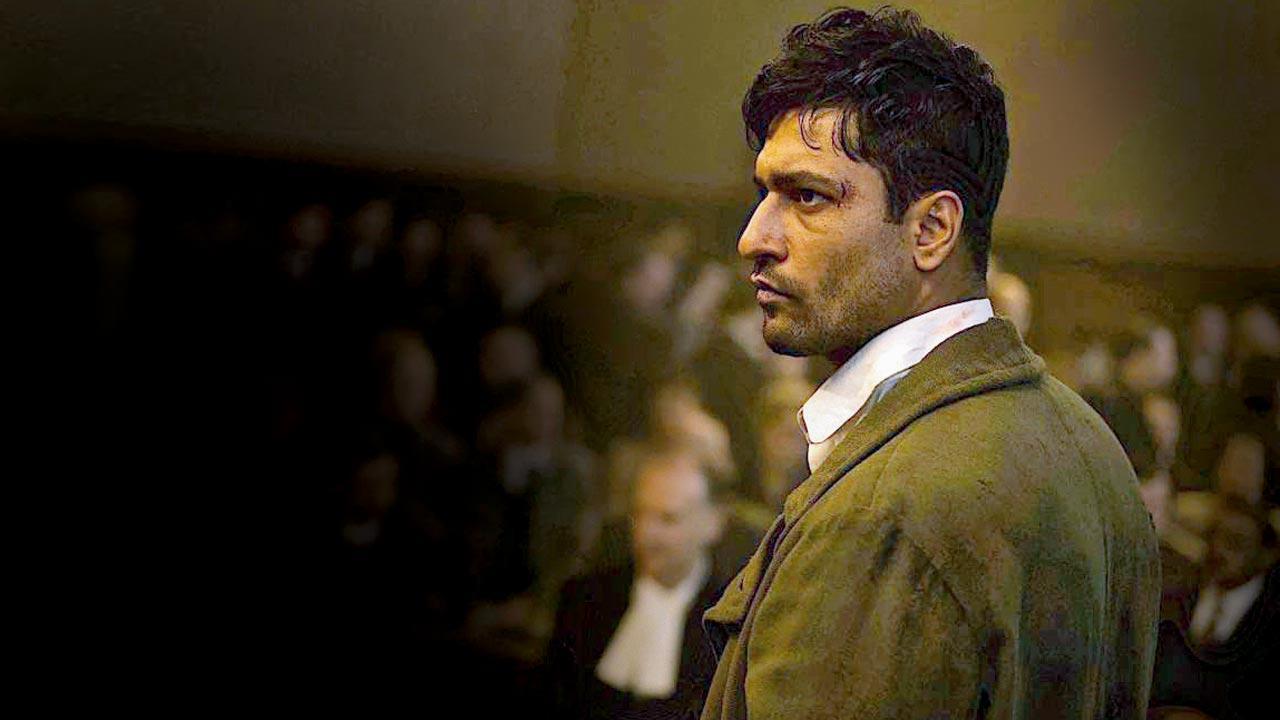
Vicky takes it in his stride as Sardar Udham fails to make the cut for Oscars 2022; urges people to root for India’s official entry Koozhangal
Uma Ramasubramanian (MID-DAY; October 29, 2021)
The unhurried pace of Sardar Udham may not be for everybody. But Vicky Kaushal's honest performance makes it nearly impossible to take your eyes off the screen as he retells the story of freedom fighter Udham Singh who avenged the Jallianwala Bagh massacre. Almost a fortnight since the film's release, the actor admits he is constantly tracking social media. “I am curious to know what people have to say about the film. I can sense that it has [struck a chord with] the audience. [In an OTT release], the film is not judged by box-office numbers. Instead, people are recommending it to their friends and family,” says the actor.
The rave reviews aside, Shoojit Sircar's period drama was among the contenders for India's official entry for Best International Feature Film at the 2022 Academy Awards. Finally, P S Vinothraj's Tamil film Koozhangal landed the coveted spot. The decision was followed by a controversy — Indraadip Dasgupta, a member of the Film Federation of India (FFI) jury that chose India's entry, faced flak when he said that Sardar Udham was denied a shot at the Oscars because it portrayed “our hatred towards the British.”
Broach the subject with Kaushal, and he gracefully says, “Everybody has the right to their opinion. We have a jury [comprising] experts in cinema. They made a selection, and we have to respect that selection. I haven't seen the Tamil film, but Shoojit da has seen it and is gung-ho about it. I am sure it's the best decision taken for Indian cinema to be on a global platform. We should now root for the film that is selected, and hope that it brings us glory.”
While the Amazon Prime Video offering is being widely appreciated, many have noted that the film's languid pace may be a deterrent. Sircar, however, says that he wanted to make a movie “as elaborate” as this. “I like things slow and steady; I'm not a fast-food guy. I listen to classical music. That served as my base when I was shooting the film. People said similar things about October [2018] and Gulabo Sitabo [2020]. But I'm happy I made the film on my terms.”
The Immortal Ashwatthama is not shelved, but it has been pushed-Vicky Kaushal
8:42 AM
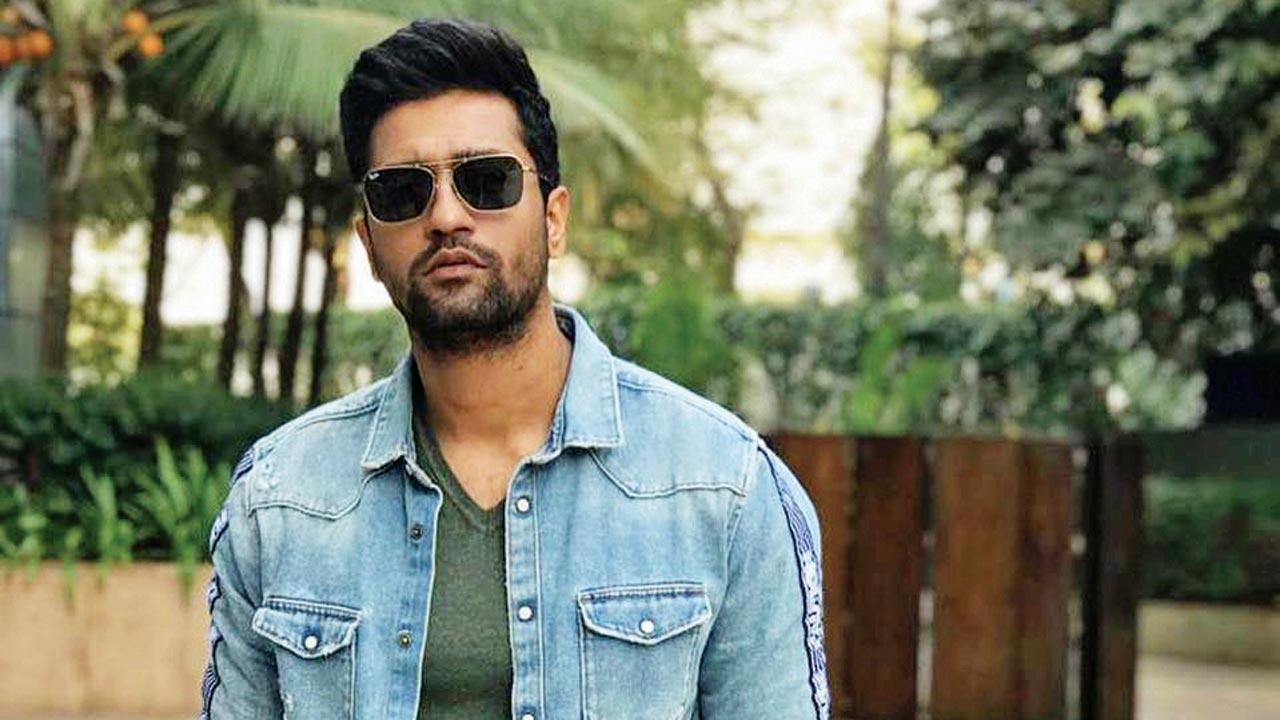
Vicky Kaushal asserts The Immortal Ashwatthama, his second collaboration with Uri director, has been deferred amid the pandemic due to requirement of massive crew
Uma Ramasubramanian (MID-DAY; October 17, 2021)
The success of Uri: The Surgical Strike, his last offering with director Aditya Dhar had piqued audience interest in their next collaboration. However, Vicky Kaushal says The Immortal Ashwatthama, which was on the back-burner after being announced in October 2020, is still on hold.
“We are waiting for a better time to shoot, where we are not worried about COVID and can shoot the film across the globe. It is a film that demands the attendance of a crew of 300, which is a bit of a nightmare, currently. So, it is important for us to do justice to it. It is not shelved, but it has been pushed,” says the actor.
With Uri having catapulted him into the spotlight, Kaushal says he judges any forthcoming offering on two parameters. “I make sure that with the film, I am not repeating [a previous act], Also, I [analyse if] I get affected by the script when I read it the first time. After that, I pay attention to who the director is, and how he intends to say the story. Once that is arrived at, I just dive headlong and try to enjoy the process.”
Perhaps accustomed to analysing box-office trends on the weekend following his release, Kaushal would have heaved a sigh of relief with his latest offering, Sardar Udham, only hit the OTT platform. However, looking into box-office trends, he says, is not customary. “I have never taken the box-office pressure [seriously]. I am curious to know how many people are coming to watch the film because it is an indication of [how well the film is doing]. And the producers have to recover the money. But, it is not something that weighs heavily on me. Every film has its own destiny, and gets its due when people resonate with it.”
Subscribe to:
Posts (Atom)