Showing posts with label Sarbjit. Show all posts
Showing posts with label Sarbjit. Show all posts
My sister warned that if I lost more weight, she’d break my cameras and walk out-Randeep Hooda
8:11 AM
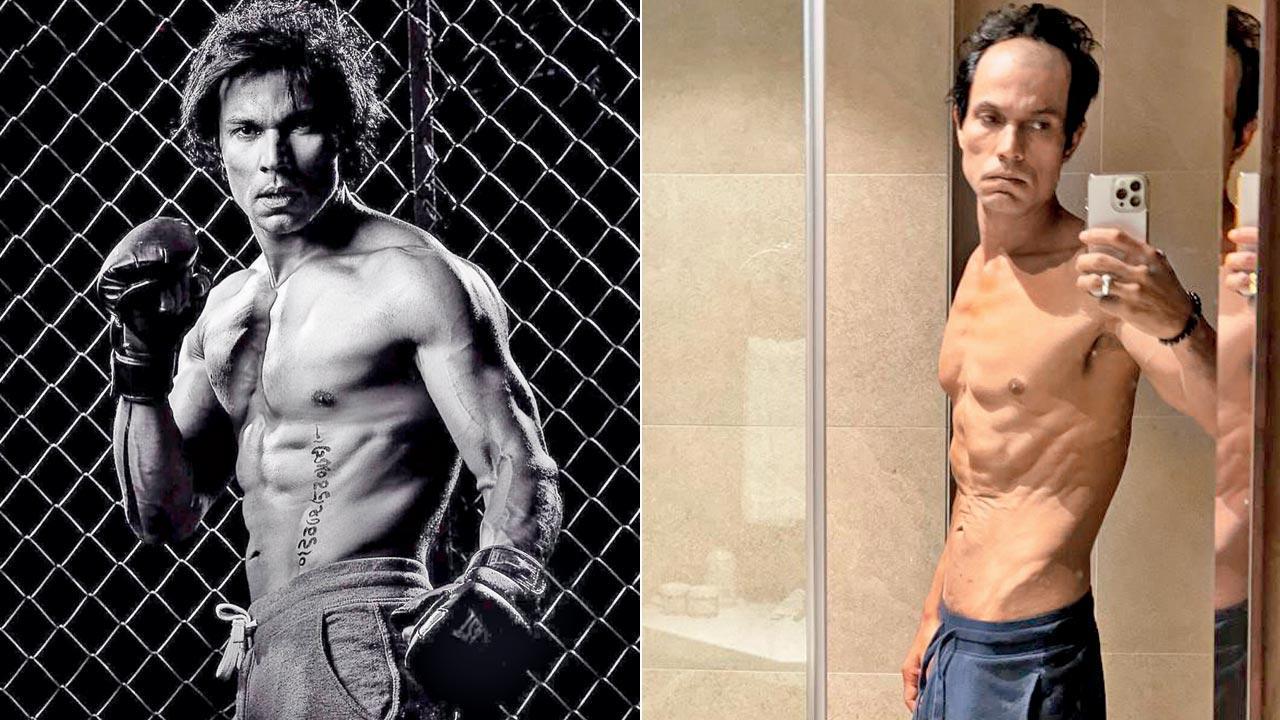
Before and after
In a candid interaction with mid-day, Randeep Hooda chronicles the pain he endured to shed 32 kilos and remain underweight for 18 months as he breathed life into his character for Swatantrya Veer Savarkar
Sonia Lulla (MID-DAY; April 10, 2024)
While production timelines in the film industry are often breached, the implications of a delay in filming Swatantrya Veer Savarkar significantly impacted Randeep Hooda, who took on the Herculean task of shedding 32 kilos for the offering. A defined deadline to commence and conclude the film had been contractually set, but “obviously that did not happen”.
For Hooda, while the decision of his producers to back out of the film may have taken an emotional toll, it was his physical health that also took a hit. “This time around, I was underweight for one-and-a-half years,” he says, while drawing parallels with the programme he previously followed while taking on a similar task for Sarbjit (2016).
“When the previous producers shelved the movie, I had lost all my muscle mass. I recall passing out and tumbling off [my] horse. My calf was bent at a right angle to my thigh, which makes me realise how weak I may have been.”
On regaining consciousness, Hooda recalls “pushing my leg back in place”, and subsequently spending the following eight weeks in bed, indulging in “revenge eating”. “That’s what happens when you deprive yourself of food for a long time. I couldn’t even walk. Then, I took help from [a] physiotherapist, and started practicing walking on the treadmill under water. I had a sequence to execute in the film where my character, Mr Savarkar, escapes in France. This training was essential for that.”
Losing weight, twice over
When work on the film commenced again, that actor needed to “quickly shed weight”. “I had to be losing [a] kilo a day for a certain number of days. That’s when I adopted the fast mimicking diet, which led me back to the place I had been working towards for months. It was very tough. I would often feel extremely weak, and would faint. It’s a terrible thing for an actor to go through. But, I believe, looking the part is something every actor should do. It should be the [very least] one does. I had planned things out, but they didn’t work out. So, the longer that [I had to adhere to the diet], the more frustrated I became. I had to suffer due to lack of organization, and had to do it twice over,” says the actor, who also turned to his sister, Dr Anjali Hooda Sangwan, for assistance.
“She also features in the film, as the guiding light for Mr. Savarkar. On set, she was always worried for me. She’d keep a check on my stats and blood report, and, at one point, warned that if I lost more weight, she’d break my cameras and walk out.”
Hooda now speaks of the Herculean task with humour, but admits that enduring it as an actor was no mean feat. That he had been playing the role of a 92-kilo “khata peeta” cop with a paunch before commencing this film implies that he had a long way to go before he hit his target of 60 kilos.
“This is the least I have weighed. Also, because I was directing the film, I had taken on an added challenge. It was a test of patience, not only for me, but also for the remaining cast and crew. My mind was clouded, and often I felt [I could hear] voices from a distance. I’d lose my patience quickly, and often. But, I made everybody aware of the fact that I was going through something that was not in my control, and requested them to bear with me. I was concerned about the fact that I had been underweight for too long. At one point, I was begging the people involved to finish the shoot so I could get back to [eating normally].”
Not done yet?
When Hooda’s dramatic pictures first made their way to social media, netizens were quick to compare his efforts to those of Hollywood actor Christian Bale, who had taken on a similar task for his role in The Machinist. And while a listener hearing about the daunting feat may assume that an actor would never wish to tread the path again, Hooda, like Bale, only “thinks” he is “done” with such transformations.
“The thing is, you first take on a role if it appeals to you, and then when you get into it, you realise this is something you may need to do. That’s when it hits you. So, it’s an afterthought. Each time that I take on a film like this one, my parents make me promise that I won’t do it again. It’s not just the physical trauma, but also the emotional and financial one that one bears. My parents told me they wouldn’t stay with me in Mumbai if I did it again. And so, I promised them I wouldn’t, but, I’m not sure. I feel like I don’t want to go through this anymore, but if there’s a role that [I am drawn to, I may]. In this case, after I read about the injustice that Mr Savarkar endured, and learned about his contributions to the freedom struggle, and his ideology of an all-encompassing nation, I just had to take it. But I do hope I work on easier roles, in that sense.”
Of course, the experience has left Hooda with his share of learnings. Should he take on a film of this nature again, he would “work with more like-minded people who are considerate of the project’s quality, and my health”. “I absolutely could have died. I was in such a bad state. I [will] try to contractually bind people, if I’m going to attempt something like that.”
It comes at a cost
While other actors who have shed oodles of weight for their professional commitments have often underplayed the physical damages it has left them with, Hooda speaks of his scars without inhibition.
“I’ve been on anti-anxiety and sleeping pills for a while now, and want to wean myself off them. That was needed, because, at times, I was so hungry that I couldn’t sleep. Being hungry gives you a lot of energy; your mind wanders because you don’t have the hormones that aid you to sleep. Also, my body has changed. I have gained 20 kilos again, but my body lacks the [traditional definition] it had. I have to work on building that again with systematic training. My knee needs to be operated on because my ACL is completely [damaged]. In one year, I lost [strength in] both knees due to the lack of muscle mass.”
Hooda, an avid sportsperson who speaks of his love for riding as passionately as he does of his films, admits that taking a backseat from racing affected him. “Sports is a big part of my life, as it should be for everybody. In the last two years, I have not been on top of a horse too much. I’ve got new horses that were born to my mare. One of them is Hope. She’s big, white and beautiful, and I can’t wait to [take her on the track to race]. Some of the best moments of my life have been spent in a saddle.”
The fast mimicking diet entails
- Almond flour pancake
- MCT OIL 1 tbsp
- 1-2 tbsp almond butter
- 2-3 eggs
- 1-3 squares of dark chocolate
- Digestive fibre and multivitamins
It is generally performed in cycles of five days, and is followed by a one-day break where the practitioner can have a low-carb diet
I’ve had the doors shut on my face when I’ve gone to ask for work-Darshan Kumaar
8:11 AM
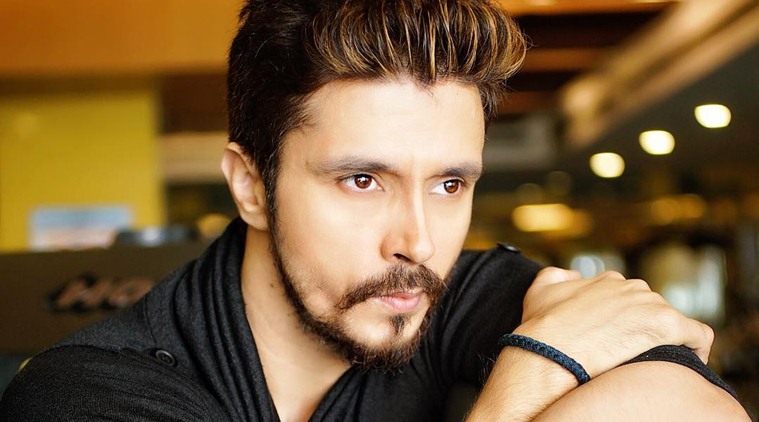
Iti Shree Misra (BOMBAY TIMES; July 1, 2022)
Darshan Kumaar, who is enjoying the popularity he has gained in recent times, feels grateful for all the love he is getting from the audience. “It feels surreal actually. It’s taken a long, long time for me to come here but I don’t want to take all of this for granted. It feels good now when people recognize me and acknowledge me. I have some wonderful projects in my repertoire, I have been fortunate to have worked with some of the best people in the industry in TV and in films and now web too. For instance, now I’m working with Satish sir, Anupam sir and Neena Gupta ji again in Kaagaz 2. I have learnt so much from them,” he says.
‘I WOULD CARRY MY SHOES IN A PACKET TO AUDITIONS SO THAT THEY WOULDN’T GET DIRTY’
Remembering that period of struggle when he would subside on glucose biscuits and travel on foot across Mumbai for auditions, only to be rejected, Darshan says, “I would wear slippers and carry my shoes in a packet so that they wouldn’t get dirty, and would change into them for auditions. There have been so many times when I’ve had the doors shut on my face when I’ve gone to ask for work. And now, people are sending me scripts at my home.”
But he says there were people along the way who helped him and gave him advice which he follows till date. He shares, “Working with Neena Gupta ji, Naseer sir in theatre and the likes of Sanjay Leela Bhansali, Manoj Pahwa, Satish Kaushik, Prakash Jha sir has been a very enriching experience for me. I remember I was so nervous when I had to face the media for the first time during the promotion of Mary Kom. I was just in my jeans and T-shirt and was so nervous when all the cameras started popping in my face. I would close my eyes each time the flash would go on. Then Priyanka (Chopra Jonas) told me, just be your honest self because nothing is hidden from the camera. Be honest and be confident. And that’s what I did.”
‘WHEN I STARTED MY CAREER THERE WERE VERY FEW OPTIONS FOR ACTORS’
Doing theatre and ads helped Darshan, also seen as the antagonist in Anushka Sharma’s NH10 and a lawyer in Aishwarya Rai Bachchan starrer Sarbjit, carry on with his dreams. “When I started my career there were very few options for actors. I was mainly focusing on my theatre shows at that time. Once during my morning walk I met Dimpy, a casting director, who used to reside in the same society. She asked me to visit her office and audition for a TV series. It was my first audition and that’s how I got selected for my first serial Chhoti Bahu,” he says. Later, Darshan went on to do shows like Baba Aiso Varr Dhoondo and Devon Ke Dev. . . Mahadev.
‘OTT HAS HELPED MANY THEATRE ACTORS AS WELL AS METHOD ACTORS’
Talking about television these days, Darshan says, “I understand that our TV industry works on TRPs and so the content providers are also focussing on the tracks which are mostly loved by our audiences.”
And although Darshan is busy with film projects, he says he would love to be on a TV show again. “I would love to host a reality show. TV is the best medium to connect with people as you become a part of their everyday life and in turn are showered with immense love.”
Ask him why these days there are few experienced actors from theatre making a foray on TV and Darshan says, “Now thanks to the OTT platform it has opened a new horizon for actors as well as producers, directors and technicians. So now along with good content there is a demand for good actors in our industry. I believe this has helped many theatre actors as well as method actors to perform their dream roles in TV serials as well as in OTT and other various platforms. On the other hand now all newcomers are getting a good opportunity to perform in serials where they are earning as well as learning their craft everyday so it’s a win-win situations for everyone.”
I’ve not understood this beast called Bollywood-Randeep Hooda
7:58 AM

Itishree Misra (BOMBAY TIMES; November 12, 2019)
The past few years may have been disappointing for actor Randeep Hooda professionally, but a more calm and confident person has emerged from it. The actor has been actively involved in social work and when asked about it, he says, “You have to go out in the world to feed the actor within you. And I feel that when I do something for the greater good, which is not personally or directly connected to me, I feel better about myself because I think there is this sense of contribution.”
He is now armed with several acting projects, including a film with Salman Khan and another with Hollywood hearthrob Chris Hemsworth. The Highway actor, who has just completed Love Aaj Kal 2 with Imtiaz Ali, says he is in a better space than he was when he had said ‘no’ to a lot of projects while prepping for his role of Havildar Ishar Singh for the film Battle Of Saragarhi. The film never got made, and the role was later played by Akshay Kumar in a different film, Kesari.
Talking about it, Randeep tells us, “It is not disappointing, rather it was a life-changing experience. I grew my hair and beard and I did it for my own satisfaction, and to test my own boundaries. Look, everybody wants recognition and the fact people are talking about it is recognition in itself. I know where I lacked and if given a chance, I will try and improve upon those things. So, it wasn’t disappointing that the film never got made, it has added to my personality immensely.”
Ask him if Bollywood has started taking note of him more now, and the actor laughingly says, “To be honest, I’ve really not understood this beast called Bollywood. I’ve been working in different kinds of films with different kinds of people. From an absolute commercial pot-boiler like Kick to a Sarbjit to doing a Bombay Talkies or even a Charles, I’ve worked with all kinds of people and have enjoyed each experience. Many successful and experienced people in the industry have told me that I shouldn’t change my look too often but I did just that. In the last 14-15 years, I’ve loved what I’ve done. If one says that Bollywood has started to notice me... well, it’s high time!”
Today, it’s a struggle to be honest and find honesty-Randeep Hooda
8:07 AM

Renuka Vyavahare (BOMBAY TIMES; July 30, 2019)
Actor Randeep Hooda gave almost three years of his career to a passion project that didn’t see its completion. To get over something that you are so invested in isn’t easy. However, like his home, which exudes peace and zen-like calm, he, too, seems positively cut off from the noise and nature of the world, which thrives on the endless rat race. In a chat with BT (we must add, it took the philosophical route), Randeep tells us how the dark phase in his life helped him evolve as a person, and how being disconnected from the world of instant gratification, vanity and social media frenzy can actually help. Excerpts:
 You have a slew of interesting projects lined up with people like Imtiaz Ali, Mira Nair and actor Chris Hemsworth, but you almost went incognito for close to three years. What were you up to?
I have taken breaks before, but this was perhaps the longest since the time I started to matter. While I was away, I discovered new ways of approaching life. I went to the Golden Temple (Amritsar) and took an oath not to cut my hair till the movie (Battle of Saragarhi) reached its completion. Through the course of working on that film, I found more meaning to life than just being an actor. I always wanted to know more about life beyond the movies. I got to pursue that… be it wildlife photography or nature conservation. I did seva, along with other things, which I didn’t have the time to do earlier. I was doing four films a year before that, so I was fortunate to get this time for myself and explore other things.
As an actor, it is harder to get the right opportunity, than to execute it well. I completely lost my sense of vanity and I am trying to be a better person. With the long beard and hair, I unlearned what it is like to behave like an actor. I explored the depths to which you can go to become someone else all over again after Sarbjit (2016; right). For that film, I gave a few months, but for Saragarhi, I almost gave three years of my professional life. The film didn’t happen, but nonetheless, it was a great experience for me.
Talking about Battle of Saragarhi,you even shot a certain portion of that film. So, what happened after that? The Akshay Kumar-starrer, Kesari, was inspired by the same historical event. Was that the reason why your film came to a halt?
We shot about 30-40 per cent of the film. We had started much before Kesari took off. In fact, I congratulated Akshay Kumar when Kesari was announced. They were different films, though the premise was the same. Every film has its own vision, so Kesari wasn’t an issue. Our director was Rajkumar Santoshi, who has made some inspirational films. He may be able to answer this question better. Everything fell into place and then fell apart. I don’t know if I want to go back to that. There were various factors. If things have to happen, they find a way. I am raring to do more work now (smiles).
Two films can be made on the same topic. Do you think the makers buckled under the pressure of a similar commercial film and hence, decided to drop the idea of making it?
They never told me that they are shelving it (laughs!). I let go of a lot of work to do this film, but I wasn’t in charge of it. I was just an actor, and making a film is not an actor’s call. I don’t think that the film buckled under pressure, and there were no creative differences either. It felt conspired. A lot of things happened. Like I said, every film has its own destiny. It’s not stalled in spirit, though. I have taken it in my stride. If I look back, I went through a dark phase, but I came through. I got forged into the fire for a better future. That is how I see it. You have to look at the positives. I have always been in awe of actors who can transform on screen — Joaquin Phoenix, Christian Bale, Daniel Day-Lewis. This film was a great lesson in transformation.
When did you finally decide to let go?
I couldn’t abandon the film as I was literally living that character. The day I shaved off my head to shoot my upcoming film with Chris Hemsworth, that day it was over for me. I went to the Gurudwara and sought maafi as I had vowed that I won’t shave my head until that movie was completed. I was in tears when I shaved off my head and beard. I have kept that hair with me. For this film, I gave it my all.
Was that the darkest phase of your career?
Not at all. Yes, it affected me the most and taught me a lot for the better. When you get into the habit of jumping from one character to another, your passion starts feeling like work. Yes, acting is work — it is a way to earn money and keeps you relevant, but for me, it’s always more about the experience of playing different people and exploring our nature as human beings.
When I started my film career, I used to do one film a year. I actually believed in the overabused term — method acting. This phase made me think about why I got into acting in the first place. I distinctly remember, while studying I also drove cabs in Australia for three years in night shifts, which became my groundwork for acting as people get into your cab and forget that you are there. They think aloud, talk to each other or on phones and through that, you get to know a lot about people and their lives. I realised at that point that if I had to choose a career in life, it had to be something I loved. My dislike for the mundane led me to acting and that feeling still holds. Acting does become about lunch breaks and call times eventually, but it’s still fascinating.
We hear even the film ’83, based on India’s World Cup win (which Ranveer Singh is now doing with a different director), and Shahid Kapoor’s role in Padmaavat were offered to you, but you didn’t make the final cut...
The films I didn’t do were not in my destiny. It doesn’t affect me. I have had many such missed opportunities, and roles that I almost did, but were pushed under the carpet. I turned down some roles and some didn’t work out, but you can’t mull over such things. You have to focus on what you have in hand. Sanjay Puran Singh Chauhan (who made the film Lahore) was to direct ’83, but it fizzled out. I wish Ranveer well.
Sarbjit is one of your finest performances till date. There are many who feel that you didn’t get the level of appreciation or awards you deserved for the film...
I have never been a favourite for awards. I have not toed the line in a lot of ways that you are perhaps expected to in this industry. I also feel that it’s in bad taste to sit here and say that I didn’t get an award for this or I wasn’t appreciated for that. You just have to move on. I remember I was noticed for my performance in Jannat 2 (2012). All of a sudden, people wrote great things about me. I was shooting for other films and I started to do certain things in those films because of that appreciation. I thought that this is what people want. I called up Naseer bhai (Naseeruddin Shah) and said, ‘Uss part ka mayil main yaha dho raha hoon’. He said, ‘There is this monastery in the Himalayas where monks make structures out of sand. They complete it, look at it and then kick it. Then they make another one. You have to do that.’ I have tried not to repeat what I thought had worked for me. I don’t know how much of it comes across, but I have tried to differentiate every part. By that, I don’t mean changing hairstyles and belts, it goes deeper than that. Recognition is a funny thing. You have to reach a place where you and your loved ones are happy with what you have done. The rest is an exercise of manipulation of thoughts, the impression you project or how you sell yourself as an actor. I am not good at that.
Be it beach clean-ups, helping flood-affected people, wildlife conservation, or spreading awareness about water crisis... you are constantly doing your bit for the society. Does this make you feel more real, more alive?
When you read the news, you feel that everything is bad in the world. That frustrated me. There are so many good people, who don’t get written about. You can’t change the world, but sometimes, doing one good thing is enough. Do your bit. It makes you feel ki aaj kuch kiya hai. You will not get that feeling by going to the gym. I truly believe that our self-centred approach to life makes us feel empty. When I was learning about seva, I realised that there’s so much to do. Also, you cannot exhaust your resources. You need to rebuild it by working in your professional space, so that you can help others. You are mortal, so you should do your bit while you can. It keeps you real. If you are real in life, it reflects in your performances as well.
You have now taken to photography... Is it your way of looking at life through a different lens?
Yes, I have bought myself a fancy camera. It’s also a way of spending more time in the wild. That’s another excuse to get away from the instant gratification and sense of self-importance that social media gives you. Everything is fast now. It’s a struggle to be honest and find honesty today, within yourself, your work and amongst people.

Other director would have presented Sanjay Dutt in his previous avatar, I focussed more on his acting-Omung Kumar
7:47 AM

Hiren Kotwani (BOMBAY TIMES; September 16, 2017)
Omung Kumar entered Bollywood with a bang. While his directorial debut, Mary Kom, bagged the National Award for
Best Popular Film Providing Wholesome Entertainment, his second outing,
Sarbjit, was equally impressive. The film, which told the story of an
Indian farmer convicted of being a spy by Pakistan, received glowing
reviews. However, after two movies based on real characters, Omung has
turned to fiction for his third directorial, Bhoomi. What makes this
movie even more significant is the fact that it marks the comeback of
Sanjay Dutt after his release from prison. With the father-daughter
story, also starring Aditi Rao Hydari, nearing its date with cinemas,
we caught up with the filmmaker for a Q & A. Excerpts...
After biopics like Mary Kom and Sarbjit, what prompted you to make Bhoomi?
When I decided to direct a Bollywood film, I approached many actors with a script I had with me for long. Though most of them are friends, they became choosy when it came to giving their nod to that project. That's when I decided to pen a script for an actress. Being a first-timer, I had to prove myself and I told my writers to come up with a script that no actress could refuse. The result was Mary Kom. I had no plans to make a biopic for my second directorial venture. It was Sandeep Singh, my partner, who suggested a film on Sarabjit Singh. Though I told him that I would be labelled a biopic maker, at his insistence, when I read the script, I knew that the story had to be told. Talking about Bhoomi, my plan was only to produce the film. I had five scripts with me and when I narrated all of them to Sanjay Dutt, he chose Bhoomi saying that it was fantastic. Then he asked me why I wasn't directing it. So, in a way, this film chose me.
Years ago, in Pitaah, Sanjay Dutt had played a father who avenges his daughter's rape and murder when he doesn't get justice from the law...
Bhoomi is different, it's a mature story. I know that many films have been made on the subject. Also, there has been no change in our legal system, but as far as our movie goes, the story and execution are different. You will also see the daughter joining the fight along with the father.
How did you zero in on Aditi Rao Hydari to play the daughter?
Once Baba was on, it was basically about who fits the bill to play the title role. We needed a strong performer, who can deliver an intense performance. Aditi was our first choice, but her dates were not available. However, once she heard the script, she said that she would push everything else to do this film. She is like a tigress in the film and beautifully matches up to Sanjay.
Considering that Bhoomi is Sanjay's first venture after he completed his prison sentence, do you feel the pressure of giving him a successful comeback film?
That's where I think I come in. While some other director would have presented Sanjay Dutt in his previous avatar, I focussed on his acting, nuances, and the detailing... Since this is his comeback film, the pressure was there, but once I started shooting, the story took over. Only when the promotions began did we feel the pressure again.

Has Sanjay Dutt seen the film?
He loved it. In fact, he feels that he got more than what he was expecting. That is satisfying for us, too.
Since your movie highlights the issue of rape, which has become rampant in our country, what is your take on the laws that deal with such a heinous crime in India?
We need stricter laws and a quicker justice system. While researching for the film, we learnt that in every 20 minutes, one rape happens in India. When there's public outrage, the system is shaken up, but not every rapist gets the strictest punishment. When you watch the film, you will agree that this is what all rapists deserve.
Reportedly, you were upset about the 13 cuts asked for by the CBFC (Central Board of Film Certification)...
That's not true. At the end of the day, the Censor Board is also doing its job. Yes, there are cuts and they were expected. All I can say is, the cuts haven't hampered the narrative..
What's the easiest and the most difficult aspect of directing Sanjay Dutt?
The easiest part of directing Sanjay is that if you give him a five-ten page dialogue, he will do it in one go. The most difficult thing was, well, he would some times ask, 'Itna bolna zaroori hai kya?' We would then work to reduce the dialogues. So, he would say one line and convey the rest through his eyes and facial expressions. Of course, you will get all the reaction you wanted and his performance will still give you the goosebumps.
Apparently, you've formed such a great bond with Sanjay that you'll be working with him again in your next production...
Yes, my assistant Aarambhh Singh is directing Malang. It's a very good subject - intense and commercial at the same time. However, since Sanjay wanted Bhoomi to be his comeback, we made it first.
After biopics like Mary Kom and Sarbjit, what prompted you to make Bhoomi?
When I decided to direct a Bollywood film, I approached many actors with a script I had with me for long. Though most of them are friends, they became choosy when it came to giving their nod to that project. That's when I decided to pen a script for an actress. Being a first-timer, I had to prove myself and I told my writers to come up with a script that no actress could refuse. The result was Mary Kom. I had no plans to make a biopic for my second directorial venture. It was Sandeep Singh, my partner, who suggested a film on Sarabjit Singh. Though I told him that I would be labelled a biopic maker, at his insistence, when I read the script, I knew that the story had to be told. Talking about Bhoomi, my plan was only to produce the film. I had five scripts with me and when I narrated all of them to Sanjay Dutt, he chose Bhoomi saying that it was fantastic. Then he asked me why I wasn't directing it. So, in a way, this film chose me.
Years ago, in Pitaah, Sanjay Dutt had played a father who avenges his daughter's rape and murder when he doesn't get justice from the law...
Bhoomi is different, it's a mature story. I know that many films have been made on the subject. Also, there has been no change in our legal system, but as far as our movie goes, the story and execution are different. You will also see the daughter joining the fight along with the father.
How did you zero in on Aditi Rao Hydari to play the daughter?
Once Baba was on, it was basically about who fits the bill to play the title role. We needed a strong performer, who can deliver an intense performance. Aditi was our first choice, but her dates were not available. However, once she heard the script, she said that she would push everything else to do this film. She is like a tigress in the film and beautifully matches up to Sanjay.
Considering that Bhoomi is Sanjay's first venture after he completed his prison sentence, do you feel the pressure of giving him a successful comeback film?
That's where I think I come in. While some other director would have presented Sanjay Dutt in his previous avatar, I focussed on his acting, nuances, and the detailing... Since this is his comeback film, the pressure was there, but once I started shooting, the story took over. Only when the promotions began did we feel the pressure again.
Has Sanjay Dutt seen the film?
He loved it. In fact, he feels that he got more than what he was expecting. That is satisfying for us, too.
Since your movie highlights the issue of rape, which has become rampant in our country, what is your take on the laws that deal with such a heinous crime in India?
We need stricter laws and a quicker justice system. While researching for the film, we learnt that in every 20 minutes, one rape happens in India. When there's public outrage, the system is shaken up, but not every rapist gets the strictest punishment. When you watch the film, you will agree that this is what all rapists deserve.
Reportedly, you were upset about the 13 cuts asked for by the CBFC (Central Board of Film Certification)...
That's not true. At the end of the day, the Censor Board is also doing its job. Yes, there are cuts and they were expected. All I can say is, the cuts haven't hampered the narrative..
What's the easiest and the most difficult aspect of directing Sanjay Dutt?
The easiest part of directing Sanjay is that if you give him a five-ten page dialogue, he will do it in one go. The most difficult thing was, well, he would some times ask, 'Itna bolna zaroori hai kya?' We would then work to reduce the dialogues. So, he would say one line and convey the rest through his eyes and facial expressions. Of course, you will get all the reaction you wanted and his performance will still give you the goosebumps.
Apparently, you've formed such a great bond with Sanjay that you'll be working with him again in your next production...
Yes, my assistant Aarambhh Singh is directing Malang. It's a very good subject - intense and commercial at the same time. However, since Sanjay wanted Bhoomi to be his comeback, we made it first.

When I look back, I feel that my story is similar to Urmila Matondkar's in Rangeela-Ankur Bhatia
1:11 PM

Rachana Dubey (BOMBAY TIMES; September 10, 2017)
A well-paying job in New
York's financial sector is a dream, but Ankur Bhatia had different
goals. He left it to become an actor. A chance meeting with Apoorva
Lakhia drew him back to India. “Mumbai is like New York; the only
difference is that people look and sound familiar here,“ says Ankur, who
plays Ibrahim Parkar, Haseena Parkar's husband, in the biopic of the same name. He spent a considerable amount of time trying to find his
feet. BT met the Bhopal-bred actor, who, after a bit role in Zanjeer
and a supporting role in Sarbjit, is ready for his third outing.
Excerpts...
 It's hard to recall the work that you have done so far. Could there have been a better start?
Yes, but let's look at the positive side - I had a decent start. I'm not from a film family to get a crackling launch. Zanjeer was a stepping stone in terms of mainstream movies since I had done independent work in the US. I met director Apoorva Lakhia while I was in America. I returned to India but he didn't have work for me then. I spent two months meeting people, but nothing worked out. The day I was about to leave Mumbai, Apoorva cast me in a role that had been abandoned by another actor. It was a five-day shoot that took 18 months. I did two Telugu films in the interim. Those three films became my learning grounds. Then came Sarbjit for which I grew a beard and put on weight since the character had an age graph. I got decent reviews, but no one recalls me because of my look. That movie, and working with Aishwarya Rai Bachchan, Randeep Hooda and Richa Chadha filled me with confidence.
How did you land a role in Haseena Parkar?
I met Apoorva when he was planning it. He told me that although I fit the bill appearance-wise - Ibrahim Parkar was also 6 feet tall - I needed to audition. He also made me do thorough research. I went over to Jairaj Lane where the family stayed and Ibrahim ran a restaurant, the only vegetarian eatery in the Muslim-neighbourhood that catered to Maharashtrian mill workers. Given his physique, he also doubled up as a Bollywood stuntman. He used to mimic actors and tease Haseena. He had a swagger and held his own wherever he was. He was a lovely, lively guy. I had a different picture of him in my head when I landed the film. Ibrahim is a pivotal part of Haseena's story, and I earned the role for myself.
While working with actresses like Aishwarya Rai Bachchan (Sarbjit) and Shraddha Kapoor (Haseena Parkar), does their star power intimidate you?
Once you start shooting, everything changes. During Sarbjit, I was a tad nervous while I was in the vanity van, but once I stepped out, I started seeing everyone as the characters they play. Aishwarya was Dalbir and I was her husband. It's only because of that attitude that I could hold her hand firmly and tell her, 'Aaj gayi, to phir wapas mat aana.' That scene looks convincing because I wasn't intimidated. My first big scene with Shraddha in Haseena Parkar was our wedding night sequence, but since we had a comfort zone, it fell into place. I understand that I am an actor and so are the others. I am confident in my shoes, no matter who I share the screen with.
Is the industry more open to newcomers now?
There are more avenues for newcomers and auditions have made the casting process more transparent, but there's still time for the dust to settle. Auditioning for roles worked for me, but there are many aspirants who are not so lucky. When I look back, I feel that my story is similar to Urmila Matondkar's in Rangeela - she goes from being a background dancer to the leading lady. I was in a similar space in Zanjeer and today, I'm playing a pivotal role.
Has your family come around with your change in profession?
My father was aghast when I left my job in America, but later, he and my mother came around. After I returned to India, my father suffered a cardiac issue and my mother was diagnosed with cancer. So, thanks to this job, I was here when my parents needed my brother and me the most. That's why I believe that everything happens for a reason.
Yes, but let's look at the positive side - I had a decent start. I'm not from a film family to get a crackling launch. Zanjeer was a stepping stone in terms of mainstream movies since I had done independent work in the US. I met director Apoorva Lakhia while I was in America. I returned to India but he didn't have work for me then. I spent two months meeting people, but nothing worked out. The day I was about to leave Mumbai, Apoorva cast me in a role that had been abandoned by another actor. It was a five-day shoot that took 18 months. I did two Telugu films in the interim. Those three films became my learning grounds. Then came Sarbjit for which I grew a beard and put on weight since the character had an age graph. I got decent reviews, but no one recalls me because of my look. That movie, and working with Aishwarya Rai Bachchan, Randeep Hooda and Richa Chadha filled me with confidence.
How did you land a role in Haseena Parkar?
I met Apoorva when he was planning it. He told me that although I fit the bill appearance-wise - Ibrahim Parkar was also 6 feet tall - I needed to audition. He also made me do thorough research. I went over to Jairaj Lane where the family stayed and Ibrahim ran a restaurant, the only vegetarian eatery in the Muslim-neighbourhood that catered to Maharashtrian mill workers. Given his physique, he also doubled up as a Bollywood stuntman. He used to mimic actors and tease Haseena. He had a swagger and held his own wherever he was. He was a lovely, lively guy. I had a different picture of him in my head when I landed the film. Ibrahim is a pivotal part of Haseena's story, and I earned the role for myself.
While working with actresses like Aishwarya Rai Bachchan (Sarbjit) and Shraddha Kapoor (Haseena Parkar), does their star power intimidate you?
Once you start shooting, everything changes. During Sarbjit, I was a tad nervous while I was in the vanity van, but once I stepped out, I started seeing everyone as the characters they play. Aishwarya was Dalbir and I was her husband. It's only because of that attitude that I could hold her hand firmly and tell her, 'Aaj gayi, to phir wapas mat aana.' That scene looks convincing because I wasn't intimidated. My first big scene with Shraddha in Haseena Parkar was our wedding night sequence, but since we had a comfort zone, it fell into place. I understand that I am an actor and so are the others. I am confident in my shoes, no matter who I share the screen with.
Is the industry more open to newcomers now?
There are more avenues for newcomers and auditions have made the casting process more transparent, but there's still time for the dust to settle. Auditioning for roles worked for me, but there are many aspirants who are not so lucky. When I look back, I feel that my story is similar to Urmila Matondkar's in Rangeela - she goes from being a background dancer to the leading lady. I was in a similar space in Zanjeer and today, I'm playing a pivotal role.
Has your family come around with your change in profession?
My father was aghast when I left my job in America, but later, he and my mother came around. After I returned to India, my father suffered a cardiac issue and my mother was diagnosed with cancer. So, thanks to this job, I was here when my parents needed my brother and me the most. That's why I believe that everything happens for a reason.
Awards never mattered to me, but the pride in my parents' eyes is my biggest award-Amaal Mallik
8:26 AM

BOMBAY TIMES (January 1, 2017)
Year 2016 could not have
ended on a bet ter note for Amaal Mallik. For the second time
consecutively, his compositions have featured on Radio Mirchi Top 100
Songs of the Year. After his track Sooraj Dooba Hai (Roy) shot to the
top spot in 2015, hits like Kar Gayi Chull (Kapoor & Sons) further
cemented his position. Both the songs have won the Diamond Discs at the
Mirchi Awards.
At 25, Amaal is the second youngest composer to bag a Filmfare Award with only Rajesh Roshan picking one at 21. He has also bagged accolades at other award ceremonies besides Radio Mirchi Awards, TOIFA and the prestigious Dadasaheb Phalke Academy Award for the Best Music Director. Not just in India, he is also creating waves overseas. Recently, two of his films - Sarbjit and M S Dhoni - The Untold Story - made it the Oscar list. In an interview with BT, the composer charts his success story and what the future holds for him...
You have ended 2016 on a high note...
Yes, many of my songs were received well. Soch Na Sake, Tu Bhoola Jisse, the songs in Sanam Re, Kar Gayi Chull and Buddhu Sa Mann (Kapoor & Sons), Sab Tera, Bol Do Na Zara (Azhar), Salamat (Sarbjit), Kuch Toh Hai, the tracks in M S Dhoni - The Untold Story...the list is long.
It must have been really tough to compose for a films like Airlift and M S Dhoni - The Untold Story, which are rooted in reality...
Certainly so. Airlift was inspired by incidents of the 90s, and I had to travel back to create music belonging to that era, and still make it connect with my generation. On the other hand, composing for M S Dhoni - The Untold Story was a dream come true, as he is the only cricketer whose biopic has been made while he is active in the game. I had composed music for a few commercials featuring Dhoni, but never thought I'd score the entire soundtrack for his film. Dhoni's album is a fine blend of rock and orchestral music. It's not a regular soundtrack and I'm glad I got the chance to do something like this so early on in my career.
You have turned singer, too in Badrinath Ki Dulhania...
A lightly sung scratch by me was loved by Karan Johar and Shashank Khaitan who felt my voice did justice to the song and suited Varun (Dhawan)'s character and his age in the film. The track lists the various reasons a man loses his heart to a woman. Varun will be seen wooing Alia Bhatt in it.
How busy is the next year for you?
I am really excited about Badrinath Ki Dulhania, Noor and Mubarakan. Having said that, I have decided to take it a little easy in 2017. I have released 46 songs in two years and I feel I should now focus on creating even better music. Also, I always look out for that spark in someone's eyes, a need to prove themselves...I am here to support talent, and I will do it in whatever ways I can. I worked hard only to make my parents proud. Awards never mattered to me, but the pride in their eyes is my biggest award.
At 25, Amaal is the second youngest composer to bag a Filmfare Award with only Rajesh Roshan picking one at 21. He has also bagged accolades at other award ceremonies besides Radio Mirchi Awards, TOIFA and the prestigious Dadasaheb Phalke Academy Award for the Best Music Director. Not just in India, he is also creating waves overseas. Recently, two of his films - Sarbjit and M S Dhoni - The Untold Story - made it the Oscar list. In an interview with BT, the composer charts his success story and what the future holds for him...
You have ended 2016 on a high note...
Yes, many of my songs were received well. Soch Na Sake, Tu Bhoola Jisse, the songs in Sanam Re, Kar Gayi Chull and Buddhu Sa Mann (Kapoor & Sons), Sab Tera, Bol Do Na Zara (Azhar), Salamat (Sarbjit), Kuch Toh Hai, the tracks in M S Dhoni - The Untold Story...the list is long.
It must have been really tough to compose for a films like Airlift and M S Dhoni - The Untold Story, which are rooted in reality...
Certainly so. Airlift was inspired by incidents of the 90s, and I had to travel back to create music belonging to that era, and still make it connect with my generation. On the other hand, composing for M S Dhoni - The Untold Story was a dream come true, as he is the only cricketer whose biopic has been made while he is active in the game. I had composed music for a few commercials featuring Dhoni, but never thought I'd score the entire soundtrack for his film. Dhoni's album is a fine blend of rock and orchestral music. It's not a regular soundtrack and I'm glad I got the chance to do something like this so early on in my career.
You have turned singer, too in Badrinath Ki Dulhania...
A lightly sung scratch by me was loved by Karan Johar and Shashank Khaitan who felt my voice did justice to the song and suited Varun (Dhawan)'s character and his age in the film. The track lists the various reasons a man loses his heart to a woman. Varun will be seen wooing Alia Bhatt in it.
How busy is the next year for you?
I am really excited about Badrinath Ki Dulhania, Noor and Mubarakan. Having said that, I have decided to take it a little easy in 2017. I have released 46 songs in two years and I feel I should now focus on creating even better music. Also, I always look out for that spark in someone's eyes, a need to prove themselves...I am here to support talent, and I will do it in whatever ways I can. I worked hard only to make my parents proud. Awards never mattered to me, but the pride in their eyes is my biggest award.

M S Dhoni - The Untold Story and Sarbjit in Oscar race
7:55 AM

MID-DAY (December 23, 2016)
Two Bollywood biopics have made it to the long list of 336 feature films contending for Best Picture Oscar — Sushant Singh Rajput-starrer M S Dhoni - The Untold Story and Sarbjit, which featured Randeep Hooda as prisoner Sarabjit Singh. The Academy of Motion Picture Arts and Sciences released the list on Wednesday.
To make it to the list, a feature film of more than 40-minutes must have run at a commercial theatre in LA for at least seven consecutive days.
Sarbjit producer Sandeep Singh said, “The Academy was trying to contact us for the last few days, but I thought someone was playing a nasty prank. When it became official, I couldn’t believe it. Now, I have realised there are people who value good cinema; they have acknowledged the hard work put in by lead actors — Randeep, Aishwarya Rai Bachchan, director Omung Kumar and writers (Utkarshini Vashishtha and Rajesh Beri).”
Indian-American filmmaker Mira Nair’s Queen of Katwe starring Oscar winner Lupita Nyong’o is also part of the list along with faves La La Land, Moonlight, Manchester By The Sea, Silence, Arrival and Hacksaw Ridge. Superhero movies Deadpool, Suicide Squad, Captain America: Civil War and X- Men: Apocalypse also made the cut.

After Aishwarya Rai Bachchan, Ankur Bhatia finds a wife in Shraddha Kapoor
7:42 AM

Avinash Lohana (MUMBAI MIRROR; June 20, 2016)

After playing husband to
Aishwarya Rai Bachchan's Dalbir Kaur in Omung Kumar's Sarabjit biopic,
Ankur Bhatia takes on the role of Ibrahim Parkar, Haseena Parkar's
better half in Apoorva Lakhia's film on Dawood Ibrahim's late
sister. Shooting for the film starts in November.
“Haseena married Ibrahim at the age of 17 and was smitten by his strong, brooding personality. He was a Pathan running a vegetarian restaurant in a Muslim-dominated area. A majority of his customers were Maharashtrian mill workers who used to work nearby. He had no underworld connections and was killed by Dawood's rival gang, as he went about his business at his eatery,“ says Ankur who first met Apoorva at a film festival in New York where the director's Shootout at Lokhandwala was screened.
“We kept in touch. He appreciated my work in Sarbjit. I am excited and looking forward to work with him,“ adds the young actor, who has begun prep for the film, with Apoorva. “He has researched a lot and has given me several pictures of Ibrahim, who was passionate about Hindi films and had worked as a stuntman too. His dressing sense was somewhat inspired by Bollywood too,“ Ankur adds, further revealing that he hasn't met Shraddha yet but is looking forward to work with her. “Shraddha is immensely talented. All of us will have a joint reading session once the entire cast is locked,“ he adds.
While speaking to Mirror (June 10) Siddhanth Kapoor who plays Dawood, had revealed, “Both Dawood and Haseena will age over a span of two-three decades in the film.“
“Haseena married Ibrahim at the age of 17 and was smitten by his strong, brooding personality. He was a Pathan running a vegetarian restaurant in a Muslim-dominated area. A majority of his customers were Maharashtrian mill workers who used to work nearby. He had no underworld connections and was killed by Dawood's rival gang, as he went about his business at his eatery,“ says Ankur who first met Apoorva at a film festival in New York where the director's Shootout at Lokhandwala was screened.
“We kept in touch. He appreciated my work in Sarbjit. I am excited and looking forward to work with him,“ adds the young actor, who has begun prep for the film, with Apoorva. “He has researched a lot and has given me several pictures of Ibrahim, who was passionate about Hindi films and had worked as a stuntman too. His dressing sense was somewhat inspired by Bollywood too,“ Ankur adds, further revealing that he hasn't met Shraddha yet but is looking forward to work with her. “Shraddha is immensely talented. All of us will have a joint reading session once the entire cast is locked,“ he adds.
While speaking to Mirror (June 10) Siddhanth Kapoor who plays Dawood, had revealed, “Both Dawood and Haseena will age over a span of two-three decades in the film.“
I was very idealistic about love and I still am-Randeep Hooda
8:04 AM

Renuka Vyavahare (BOMBAY TIMES; June 9, 2016)
Had Randeep Hooda been the
Julia Roberts of Notting Hill, he'd been delighted to have Hugh Grant
interview him for the Horses & Hound. His face beams with happiness
and heart swells with pride when he's at a SoBo racecourse, way past
sunset, spending some peaceful time with his gorgeous horses. It's
meditation time not only for him but also the ones privy to the sight of
watching him train the majestic species.With much hesitation, we whisk
him away from his favourite activity for a while to chat about his
upcoming reel-life love story - Do Lafzon Ki Kahani and much more.
With three back-to-back releases, 2016 is turning out to be extremely busy for you.
Yes, it's turning out be as busy as 2015, but in a less joyous way. My favourite part of doing a film is the preparation, rehearsal and exploration that go into studying a character. That gives me immense joy. For me, that's the only artistic part of the filmmaking process, and the rest is execution and promotion. I have been promoting three films in a row this year, and I try to do as much as I can, but sometimes it is a bit too much.
And it's non-stop. For some one like you, who prefers to take frequent breaks from films to pursue other things, this must be quite demanding.
It is demanding. I do feel a bit empty to tell you the truth but it's okay because I have worked really hard on all these films. Bulking up for Do Lafzon Ki Kahani was probably harder than losing weight later for Sarbjit in many ways. Playing around with your body by gaining and losing 30 kilos in the same year is no cakewalk. (I shot Do Lafzon Ki Kahani before Sarbjit so I gained weight and then had to lose it). It's not easy for a male actor, especially a Jatt. Attaining a rippling physique with internal strength and then letting it go for Sarbjit was a tough decision. But the problem is I first decide upon what I am going to do and then I am hit by the repercussions. “Oh s***, this is required for this role!“ (Laughs) But by that time it's too late. I trick myself into commitment.
But more work is always better than not having as much on your plate, right?
Yes, of course. In the first phase of my career which didn't go well, I did lesser work. But over a period of time, I've realised that I like my work and should do more of it. The films that come to me are also getting interesting.
How would you describe Do Lafzon Ki Kahani?
It is a heartfelt story about two lonely souls who fall in love. A former fighter meets a girl, who's full of life, despite being visually impaired. It changes his life. If I was not a MMA fighter and she (Kajal Aggarwal) wasn't visually impaired, this film wouldn't have acquired that larger-than-life feeling which is important for cinema. This is one of my most commercial ventures. It has great love songs, story, action and a beautiful actress.
Is your character brooding in this one as well? When we think of Randeep Hooda, it's always this 'sexy brooding guy'.
This is one of the most brooding characters of mine (laughs). He is shy and hesitant to speak as he is unsure about himself. That's the best part about this role.
Is that the reason we don't see you doing light-hearted love stories too often?
Brooding for me means that I am thoughtful and involved. You might not classify Sarbjit as a love story, but there was a love track between him and his wife Sukhpreet. There were letters and romantic songs. One of my most romantic roles was in Jannat 2. I get drunk and make a call from a public phone to hear my wife's voicemail after she has passed away. That's pretty romantic.
But well, that's romance with a shade of tragedy.
Conflict completes the story. People getting married, having great children, living happily ever after won't make for a great story.
When will we see you in a romcom?
I've experimented with a lot of genres, and I will get there as well. I am not looking for a comedy script. When the time is right, I will get it. I am not dying to show my versatility. I tried doing that in the first innings of my career and it didn't work.
Your film's tag line says 'Love never hurts... Love heals'. Does it?
It does heal after it has hurt you. This story is a fantasy. Every young man wants to be a fighter and protect his woman. Likewise, every woman wants a man who lays down his life for her. These elements are a part of this movie. In today's world of instant messaging and break-ups on social media, this film will make you appreciate love more.
Has technology made us a tad cynical about love? Taken the charm out of it?
Nowadays, communication is so fast. You don't have to wait for somebody. The beauty of waiting adds to the mystery of love. Things are so instant these days, that's where the problem arises.
Have you broken up with someone over a text message?
No, I have never done those stupid things; will never do in future as well. But these are the times that we live in.
What were your fantasies about love while growing up?
It was quite similar to what I just spoke about love in the film. I was very idealistic about love and I still am. The concept of 'ever-after' is possible, but the fact is that you were born alone and you will die alone. You will have better love stories if your love story with yourself is sorted. You have to love yourself a little more for other people to love you more.
Falling in love or staying in love.What's more difficult?
Staying in love is more difficult. Falling in love is easy. I fall in love all the time.
Our concept of love changes with time. Doesn't it?
Of course, our idea of love is ever evolving. My romance with my work today has taken precedence over everything else.
Your passion for horses, work and women? How would you rank these?
They all have to go hand in hand. There's an old equestrian saying among riders, 'When I die make my skin into a saddle and gift it to a beautiful woman, so that I am in between two of my favourite things in life even after death.' (laughs)
Is marriage important or is companionship enough?
Companionship is the basis of marriage. It is indispensable. I have not gotten close to marriage yet, so right now marriage can go take a hike. If I get married, that could be my priority.
What is it that the woman in your life must know about you to be with you?
That I am married to my work as it gives me immense joy. I also love doing different things, and if she doesn't understand that it will be miserable for her to be with me.
And many believe you are moody as well.
I am gaining and losing 30 kilos in one year, you think I won't be moody? I am either eating too much or eating too less. These things will affect you. Besides, everybody is moody, some express it, and some don't. I think it's okay to be honest. You have to be considerate of others but everybody goes through this.
Has your knack of internalising your characters, taken you away from people? Has that made you a loner, who enjoys his space?
Yes, because you do start having ummm...
Conversations with yourself?
You are making me sound crazy (laughs!) Yes, like self-conversations. Following a career in sports and films is quite time consuming. People are not interested in knowing how you get there. They are interested in results, so I have found a way that works for me. A woman in my life will have to understand that I need this space. She needs to be more nurturing because I am quite fragile though I might look tough on the exterior.
You met Sushmita Sen recently at an event. Can one continue to be friends with their exes?
You cannot be friends, who spend all the time together, but yes, you can be friends. You have spent so much time with this person, and built so many memories, so why lock yourself out of it? If it didn't work out, it didn't work out. It doesn't mean that you will lose human contact with your ex. Humanity is something you cannot forget.
With three back-to-back releases, 2016 is turning out to be extremely busy for you.
Yes, it's turning out be as busy as 2015, but in a less joyous way. My favourite part of doing a film is the preparation, rehearsal and exploration that go into studying a character. That gives me immense joy. For me, that's the only artistic part of the filmmaking process, and the rest is execution and promotion. I have been promoting three films in a row this year, and I try to do as much as I can, but sometimes it is a bit too much.
And it's non-stop. For some one like you, who prefers to take frequent breaks from films to pursue other things, this must be quite demanding.
It is demanding. I do feel a bit empty to tell you the truth but it's okay because I have worked really hard on all these films. Bulking up for Do Lafzon Ki Kahani was probably harder than losing weight later for Sarbjit in many ways. Playing around with your body by gaining and losing 30 kilos in the same year is no cakewalk. (I shot Do Lafzon Ki Kahani before Sarbjit so I gained weight and then had to lose it). It's not easy for a male actor, especially a Jatt. Attaining a rippling physique with internal strength and then letting it go for Sarbjit was a tough decision. But the problem is I first decide upon what I am going to do and then I am hit by the repercussions. “Oh s***, this is required for this role!“ (Laughs) But by that time it's too late. I trick myself into commitment.
But more work is always better than not having as much on your plate, right?
Yes, of course. In the first phase of my career which didn't go well, I did lesser work. But over a period of time, I've realised that I like my work and should do more of it. The films that come to me are also getting interesting.
How would you describe Do Lafzon Ki Kahani?
It is a heartfelt story about two lonely souls who fall in love. A former fighter meets a girl, who's full of life, despite being visually impaired. It changes his life. If I was not a MMA fighter and she (Kajal Aggarwal) wasn't visually impaired, this film wouldn't have acquired that larger-than-life feeling which is important for cinema. This is one of my most commercial ventures. It has great love songs, story, action and a beautiful actress.
Is your character brooding in this one as well? When we think of Randeep Hooda, it's always this 'sexy brooding guy'.
This is one of the most brooding characters of mine (laughs). He is shy and hesitant to speak as he is unsure about himself. That's the best part about this role.
Is that the reason we don't see you doing light-hearted love stories too often?
Brooding for me means that I am thoughtful and involved. You might not classify Sarbjit as a love story, but there was a love track between him and his wife Sukhpreet. There were letters and romantic songs. One of my most romantic roles was in Jannat 2. I get drunk and make a call from a public phone to hear my wife's voicemail after she has passed away. That's pretty romantic.
But well, that's romance with a shade of tragedy.
Conflict completes the story. People getting married, having great children, living happily ever after won't make for a great story.
When will we see you in a romcom?
I've experimented with a lot of genres, and I will get there as well. I am not looking for a comedy script. When the time is right, I will get it. I am not dying to show my versatility. I tried doing that in the first innings of my career and it didn't work.
Your film's tag line says 'Love never hurts... Love heals'. Does it?
It does heal after it has hurt you. This story is a fantasy. Every young man wants to be a fighter and protect his woman. Likewise, every woman wants a man who lays down his life for her. These elements are a part of this movie. In today's world of instant messaging and break-ups on social media, this film will make you appreciate love more.
Has technology made us a tad cynical about love? Taken the charm out of it?
Nowadays, communication is so fast. You don't have to wait for somebody. The beauty of waiting adds to the mystery of love. Things are so instant these days, that's where the problem arises.
Have you broken up with someone over a text message?
No, I have never done those stupid things; will never do in future as well. But these are the times that we live in.
What were your fantasies about love while growing up?
It was quite similar to what I just spoke about love in the film. I was very idealistic about love and I still am. The concept of 'ever-after' is possible, but the fact is that you were born alone and you will die alone. You will have better love stories if your love story with yourself is sorted. You have to love yourself a little more for other people to love you more.
Falling in love or staying in love.What's more difficult?
Staying in love is more difficult. Falling in love is easy. I fall in love all the time.
Our concept of love changes with time. Doesn't it?
Of course, our idea of love is ever evolving. My romance with my work today has taken precedence over everything else.
Your passion for horses, work and women? How would you rank these?
They all have to go hand in hand. There's an old equestrian saying among riders, 'When I die make my skin into a saddle and gift it to a beautiful woman, so that I am in between two of my favourite things in life even after death.' (laughs)
Is marriage important or is companionship enough?
Companionship is the basis of marriage. It is indispensable. I have not gotten close to marriage yet, so right now marriage can go take a hike. If I get married, that could be my priority.
What is it that the woman in your life must know about you to be with you?
That I am married to my work as it gives me immense joy. I also love doing different things, and if she doesn't understand that it will be miserable for her to be with me.
And many believe you are moody as well.
I am gaining and losing 30 kilos in one year, you think I won't be moody? I am either eating too much or eating too less. These things will affect you. Besides, everybody is moody, some express it, and some don't. I think it's okay to be honest. You have to be considerate of others but everybody goes through this.
Has your knack of internalising your characters, taken you away from people? Has that made you a loner, who enjoys his space?
Yes, because you do start having ummm...
Conversations with yourself?
You are making me sound crazy (laughs!) Yes, like self-conversations. Following a career in sports and films is quite time consuming. People are not interested in knowing how you get there. They are interested in results, so I have found a way that works for me. A woman in my life will have to understand that I need this space. She needs to be more nurturing because I am quite fragile though I might look tough on the exterior.
You met Sushmita Sen recently at an event. Can one continue to be friends with their exes?
You cannot be friends, who spend all the time together, but yes, you can be friends. You have spent so much time with this person, and built so many memories, so why lock yourself out of it? If it didn't work out, it didn't work out. It doesn't mean that you will lose human contact with your ex. Humanity is something you cannot forget.

Sarbjit success bash: Aishwarya Rai Bachchan came alone, Randeep Hooda wasn't left alone
7:50 AM

Sanyukta Iyer (MUMBAI MIRROR; May 28, 2016)
Aishwarya Rai Bachchan, was the first to arrive at the success bash of her own film, Sarbjit. She came in alone on Thursday without hubby Abhishek and explained his absence saying, "He wanted me to enjoy all the spotlight."
Ash-Abhi have been in the news after the latter walked away from his biwi at the premiere of her film, leaving her standing redfaced on the red carpet. Ash sat with her parents and brother while Abhi watched and exited with parents, Amitabh and Jaya. The grapevine was buzzing that all's not well in paradise for the Mr and Mrs. Then, to put a stop to the rumours, the couple posed hand-in-hand on the red carpet, a little longer than usual, at a recent event in the Capital.
When on stage at the gig, the two were asked who took longer to dress up and Abhi quipped, "I do because it takes a lot to make me look this good, but she just wakes up looking like that in the morning," to which Ash responded with an endless, "Awwwww."
The other actress of the film, Richa Chadha, waited till the assembled media had left to make a here-now-gone-now appearance because she didn't want to answer any queries about major chunks of her role being cut from the final edit. "That's why there were no pictures of Richa at the bash," pointed out a guest.
Buzz is, a bouquet of celebrity invites were sent out but the only ones who attended were the cast and crew with the exception of popular boxer Vijender Singh who walked in with Randeep Hooda. Randeep was the star of the night and was mobbed in the hotel lobby by a horde of female fans. They started out asking for selfies and ended up as an infatuated group of women wanting to kiss the Haryanvi hero and tear off his shirt.
"The security had to be called to free Randeep from the clutches of these Eves. But the gentleman that he is, Randeep waited, clicked selfies with them, before dashing off," the guest adds. Once inside, Vijender and he threw a few punches for the paparazzi before partying the night away.

My role was chopped off in Sarbjit-Richa Chadha
8:06 AM

Richa Chadha swears she won’t do any more supporting roles
Subhash K Jha (DNA; May 24, 2016)
After her experience in Sarbjit the talented Richa
Chadha, who will soon be seen in the central role in Pooja Bhatt’s
Cabaret, has vowed never to do a supporting role. Richa explains, “It’s
not about the length of the role. It’s just that one works so hard on a
film. It’s heartbreaking when some of your best scenes get sacrificed on
the editing table.”
This is what happened when Sarbjit needed to be pruned down. Says Richa, “Some of my best scenes had to go. The one scene that I still have towards the end where I am shown bonding with Aishwarya’s character has no context since all my scenes showing my kinship with her are gone.”
In an early sequence, Dalbir Kaur (Aishwarya Rai Bachchan) after being physically abused by her husband and thrown out of the house, was shown being motivated by her sister-in-law Sukhpreet (Richa Chadha) to not take the abuse quietly. In a later sequence, Sukhpreet was shown doing a job as a sweeper and toilet cleaner after her husband’s disappearance to make ends meet.
Says Richa, “That sequence vividly showed my character’s financial and emotional humiliation in her husband’s absence. Unfortunately, it had to go. But I shouldn’t be complaining. Every actor except Randeep Hooda had to suffer the same fate in the film, and that includes Aishwarya.” A sequence showing Dalbir’s marriage was edited out. In one sequence we see Ash with a black eye. But we don’t know how she got it.
Sighs Richa, “I am not saying I was singled out for role-chopping. All I am saying is that after so much work it’s frustrating to have just one scene for yourself. I don’t need to do this after Masaan and now Cabaret where I have the central role.”
Movie Review: SARBJIT by FENIL SETA
10:01 AM

Biopics are always difficult to handle and if it’s pertaining to the life of Sarabjit Singh, the challenge increases manifold. After all, the hardships he suffered for 23 long years and the amount of material available makes it all the more challenging. And not to forget, there’s no entertainment value as such in popular terms. However, the latter is not the reason why Sarbjit fails to make a huge impact. After all, a viewer certainly will go with a certain mindset that one can’t expect naach-gaana and laugh-a-minute-riot in a film like Sarbjit. But what takes the film down is the execution – very fast-paced at times that doesn’t allow the narrative to flow organically.
The story of the movie: Sarabjit Singh (Randeep Hooda) is married to Sukhpreet (Richa Chadha) and lives in Bhikhiwind, Punjab with sister Dalbir (Aishwarya Rai Bachchan) and father (Ram Murti Sharma). On August 28, 1990, Sarabjit gets drunk at night and mistakenly crosses over to the Pakistan side instead of going towards his village. He is arrested and taken to Lahore’s Kot Lakhpat jail. He is charged for being a spy by the name of Manjit Singh and carrying out 5 bomb blasts in Lahore. When Dalbir learns that Sarabjit is in Pakistan on false charges, she decides to fight it out till the end to get him released. However, the challenges in her journey are immense.
The biggest problem with Sarbjit is that it’s very hurried. The director just wants to rush through things. In the process, one doesn’t really get the chance to properly empathize what the Kaur family must have gone through. Yes, few hurried sequences do make an impact but not all. There are 2 major sequences which flow slowly, gradually and beautifully – when Sarabjit crosses over to Pakistan and when Dalbir and family meet Sarabjit for the first time in jail. Both these scenes are the best portions of the movie because things were allowed to progress at its pace. Otherwise, things are just running ahead in the film. This is especially in the second half. On the positive side, few scenes are nicely shot and leave a mark. There’s no anti-Pakistan jingoism done. In fact, the film shows how India is also responsible for arresting Pakistanis, many of whom could be innocent like Sarabjit. And the performances are extraordinary.
Aishwarya Rai Bachchan was quite okay in Jazbaa but in Sarbjit, she rocks and how! She makes one forget her past performances and does a great job. Her physical transformation looks very authentic and she has worked very hard to essay the old Dalbir in the later part of the movie. Randeep Hooda too is terrific. His physical transformation is very surprising or should I say, shocking! He tries his best to behave like a prisoner who has been jailed for 20 years+. Surely, one of his finest performances ever! Richa Chadha as always gives a fine performance. Surprisingly, she doesn’t have many dialogues in the 2nd half and yet, she makes an impact just through her mere presence! Darshan Kumaar (Awais Sheikh) is likeable and he is the only who provides some light moments in the movie. Ankita Shrivastava (Poonam) and Shivani Saini (Swapan) are okay. Same goes for Late Ram Murti Sharma. Ankur Bhatia (Dalbir’s husband) has a good screen presence. Charanpreet Singh (Sukhpreet’s son-in-law) is fine but has very little screen time.
Music is fine but not something that might last for long. Dard is the best song followed by the energetic Tung Lak. Shail-Pritesh’s background score is impact-generating. Make up is terrific and as close to reality as possible, especially for Randeep. Rajesh Pandey’s editing is quite fast and jerky at places. Utkarshini Vashishtha and Rajesh Beri’s screenplay packs in too much in very less time and is very quick at places. Utkarshini Vashishtha’s dialogues are good and simple. Omung Kumar’s direction is a major reason why the film turns out to be an average product. Even his first film Mary Kom had a fast-paced narrative. But in Mary Kom, he showed a lot of promise but in Sarbjit, he fails to live up to the expectations. Yes, the film is 130 minutes despite the super-fast narrative. Maybe, that’s why he felt that he shouldn’t let the duration exceed as the popular perception is that lengthy films don’t work. This is anyways a myth. After all, good films work, regardless of the duration. Sarbjit could have been 3 hours long and still made an impact if the narrative had flowed organically. Omung in fact was just not right for this film. Here’s hoping he learns his lesson and makes a better film next time.
On the whole, Sarbjit is embellished with extraordinary performances by Aishwarya Rai Bachchan and Randeep Hooda. Few scenes leave a mark and the film on the whole compels one to think and feel bad for the families affected on both sides of the border when innocent civilians get picked up on false charges and are forced to rot in jail, sometimes for the rest of their lives. However, the narrative is fast paced and disjointed at times, that takes away the impact. Someone other than Omung Kumar and someone versatile and more experienced could have done proper justice to this tale. An average flick but a must for Aishwarya fans!
My rating - ** ½ out of 5!
Ali Fazal feigns sickness to bunk shoot of Prakash Raj’s Tadka?
7:47 AM

Anirban Das (MID-DAY; May 20, 2016)
The shoot of Prakash Raj’s Hindi directorial debut in Goa was apparently disrupted to an extent when lead actor Ali Fazal claimed to be sick and decided to fly out to Delhi for rest. However, the actor’s appearance at the premiere of Aishwarya Rai Bachchan and Randeep Hooda-starrer Sarbjit here on Wednesday evening has set tongues wagging.
A source says, “Ali was supposed to shoot throughout the week, but he felt unwell on Tuesday and went to Delhi the same day. He is slated to join the unit tomorrow.” His co-stars, Tapsee Pannu and Shriya Saran, however, continued shooting for the light-hearted comedy tentatively titled Tadka. “He was down with fever for a few days, but his condition aggravated, and the makers allowed him to take rest. Tapsee and Shriya are completing their portions,” adds the source.
When we got in touch with Ali, he said, “I guess the air of Goa didn’t agree with me. I was shooting when I was unwell, but then I had to take care of myself. I flew down to Delhi to take rest and recover. The shoot had to be paused and I am resuming the shoot on Saturday.”
How did he make it to the screening of Sarbjit, looking “hale and hearty”, as some people have put it? Ali says, “I was in Mumbai for just one evening. I had to be there at the screening since Richa (Chadha, who is part of Sarbjit) is a good friend.”
Fenil's Bollywood Talk # 413
4:11 PM

WILL SARBJIT MANAGE TO DO JUSTICE TO DALBIR KAUR’S LONG FIGHT?
One of the most heartbreaking stories for Indians is that of Sarabjit Singh. A resident of Punjab, he accidentally strayed into Pakistan and then was arrested on charges of spying. His sister Dalbir Kaur bravely put up a fight and tried her best to rescue his brother. Sadly, he died in prison in 2013. Omung Kumar, who impressed with his directorial debut Mary Kom, has now tried to capture this story in Sarbjit. Randeep Hooda plays Sarabjit while Aishwarya Rai Bachchan plays his sister. Richa Chadha essays the role of his wife while Darshan Kumaar, who caught attention with Mary Kom, will be seen as a Pakistani who fights for Sarabjit’s release.
The film has been in the news since a long time but managed to make a mark when pictures of Randeep’s shocking transformation came to the fore. It was shocking to see Randeep losing almost 20 kgs and looking malnourished. Viewers were startled but the respect for Randeep also enhanced after those pictures were out. Aishwarya on the other hand too has a transformation and it’s something to watch out for.
The film has caught the attention and the Indo-Pak angle can attract audiences to theatres. However, the subject is not mainstream. Also Randeep’s torture scenes in jail will definitely put off the family audiences. The film won’t have a chance in B and C centres. The opening will be average and it can grow if the word of mouth is positive. As per reports, the budget is reasonable and that should help. Omung’s last film Mary Kom had got a tax free status before release. Something of this sort would have significantly helped Sarbjit.
WOULD YOU LIKE TO SEE SARBJIT AND WHY? DO LET ME KNOW!
I don't want my actors to look like their real self-Omung Kumar
8:07 AM

Sonil Dedhia (BOMBAY TIMES; May 17, 2016)
Known for his
larger-than-life sets for films like Black and Saawariya, production
designer Omung Kumar made his directorial debut two years ago with Mary
Kom, a biopic on the Indian boxer, which won him many awards and
accolades. The National Award-winning filmmaker is now gearing up for
the release of his next film, Sarbjit, based on the life of the slain
Indian prisoner Sarabjit Singh.Calling the Aishwarya Rai Bachchan,
Randeep Hooda and Richa Chadha-starrer his most ambitious venture, the
director reveals why he decided to make another biopic. Excerpts:
You had initially refused to make a film on Sarabjit Singh. Why?
After Mary Kom, I had decided not to make a biopic again as I didn't want to be known as a director who only makes such films. I had a few other scripts lined up but after the National Awards last year, producer Sandeep Singh brought Sarbjit's script to me. I heard the story in brief but refused to do anything with it. Later, I left for Malaysia to attend an award function. However, I was constantly thinking about the script and started watching the videos of Dalbirji (Sarabjit's sister) on the Internet. I was shocked to see how this feisty lady took up the challenge to release her brother from a Pakistan jail. I read the script again and agreed to do the film.
How was your first meeting with Dalbir Kaur?
It was emotional. I remember Dalbirji walking into my office where I was sitting with my wife and the film's writers. Slowly, we started talking to her and noted down all the points that we needed to cover in the film. Her family has gone through a lot of trauma so while narrating the stories she would often break down and we could feel their pain. We would stop the conversation and come back to it. My wife and I also took Dalbirji for a movie to brighten up her mood. Later, I also went to Sarabjit's village and met people there, spoke to his friends and the prisoners who had been in jail with him. I met journalists, army officers and diplomats, too, who provided us with any additional information about him.
It must have been an emotional experience for her to be on the film's set.
Dalbirji was present on the first day when we were shooting the jail sequence. It was a haunting experience for her. The setting was similar to real life and we saw tears in her eyes. After some time, her blood pressure shot up and she left. She later visited the set when we were shooting at Wagah border and Punjab.
What was your biggest challenge while making this film?
It was to show Sarabjit and his family's 23-year long journey in just two hours and 12 minutes. I had to streamline the entire story and ensure that the audience isn't loaded with unnecessary information. Sarabjit and his family went through a lot of ordeal. Right from the Kargil War to the Parliament attack and even the 26/11 Mumbai attacks, many important incidents have been depicted on screen. Making this film has been an emotional journey for me. So many times during the shoot, we would see someone from the crew crying as everyone was so emotionally involved in it.
Was Aishwarya your first choice for the film?
Yes, she was the first actress I had approached and she agreed to do the film within 15 minutes. I knew many people would raise objections about casting Aishwarya as she is younger than Dalbirji and has a glamorous onscreen persona, but I was ready for the challenge. I wanted to cast an actress who could pull off being a 22-year-old and a 60-year-old with equal ease. There are very few actors who could do that.
During Mary Kom, you had said that it was a commercial decision to cast Priyanka Chopra. Did the same hold true for Aishwarya as well?
Yes. I knew that Aishwarya is a big star and casting her would help us reach out to as many people as possible in India and across the world.
Is it true that Dalbir recommended Randeep Hooda's name for Sarabjit's role?
We had a few names including Randeep Hooda in mind. When I discussed it with Dalbirji, she told me that Sarabjit's daughters were keen on him playing the title role. I was also convinced with their choice. Randeep is a fantastic actor and this is the toughest role of his career. The first thing I told him was that he had to lose weight. He lost 28 kgs in 18 days. That's when we shot the portions where he had to look thin. Then, I told him he had to put on weight within 20 days and look like a wrestler. His physical transformation will leave the audience stunned. In order to understand Sarabjit's pain, Randeep also set up a 6x4 feet mock prison in his house where he spent his entire day, fully chained, with minimum supply of food.
Be it Mary Kom or Sarbjit, your actors have gone through a drastic physical transformation.
I don't want my actors to look like their real self - I want to make them the character that I want for the film. That is what I made Priyanka Chopra do in Mary Kom. She had never gone to a gym but she did a biopic on a boxer! Look at the makeover that Aishwarya and Randeep have gone through for Sarbjit. Their characters look real. When I write a film, I write it with the intention that it should be the actor's best role for life.
Are you happy with the way the film has shaped up?
For the longest time Dalbirji wanted to make a film on this subject and I am glad that we have managed to do it. She is happy that people will finally get to know the truth. When we started this project, my only wish was that even if one Indian prisoner who has been wrongly convicted is released from a Pakistan jail then we have achieved the film's purpose. Our intention is to show the reality to the world and bring about a change in the society.
You had initially refused to make a film on Sarabjit Singh. Why?
After Mary Kom, I had decided not to make a biopic again as I didn't want to be known as a director who only makes such films. I had a few other scripts lined up but after the National Awards last year, producer Sandeep Singh brought Sarbjit's script to me. I heard the story in brief but refused to do anything with it. Later, I left for Malaysia to attend an award function. However, I was constantly thinking about the script and started watching the videos of Dalbirji (Sarabjit's sister) on the Internet. I was shocked to see how this feisty lady took up the challenge to release her brother from a Pakistan jail. I read the script again and agreed to do the film.
How was your first meeting with Dalbir Kaur?
It was emotional. I remember Dalbirji walking into my office where I was sitting with my wife and the film's writers. Slowly, we started talking to her and noted down all the points that we needed to cover in the film. Her family has gone through a lot of trauma so while narrating the stories she would often break down and we could feel their pain. We would stop the conversation and come back to it. My wife and I also took Dalbirji for a movie to brighten up her mood. Later, I also went to Sarabjit's village and met people there, spoke to his friends and the prisoners who had been in jail with him. I met journalists, army officers and diplomats, too, who provided us with any additional information about him.
It must have been an emotional experience for her to be on the film's set.
Dalbirji was present on the first day when we were shooting the jail sequence. It was a haunting experience for her. The setting was similar to real life and we saw tears in her eyes. After some time, her blood pressure shot up and she left. She later visited the set when we were shooting at Wagah border and Punjab.
What was your biggest challenge while making this film?
It was to show Sarabjit and his family's 23-year long journey in just two hours and 12 minutes. I had to streamline the entire story and ensure that the audience isn't loaded with unnecessary information. Sarabjit and his family went through a lot of ordeal. Right from the Kargil War to the Parliament attack and even the 26/11 Mumbai attacks, many important incidents have been depicted on screen. Making this film has been an emotional journey for me. So many times during the shoot, we would see someone from the crew crying as everyone was so emotionally involved in it.
Was Aishwarya your first choice for the film?
Yes, she was the first actress I had approached and she agreed to do the film within 15 minutes. I knew many people would raise objections about casting Aishwarya as she is younger than Dalbirji and has a glamorous onscreen persona, but I was ready for the challenge. I wanted to cast an actress who could pull off being a 22-year-old and a 60-year-old with equal ease. There are very few actors who could do that.
During Mary Kom, you had said that it was a commercial decision to cast Priyanka Chopra. Did the same hold true for Aishwarya as well?
Yes. I knew that Aishwarya is a big star and casting her would help us reach out to as many people as possible in India and across the world.
Is it true that Dalbir recommended Randeep Hooda's name for Sarabjit's role?
We had a few names including Randeep Hooda in mind. When I discussed it with Dalbirji, she told me that Sarabjit's daughters were keen on him playing the title role. I was also convinced with their choice. Randeep is a fantastic actor and this is the toughest role of his career. The first thing I told him was that he had to lose weight. He lost 28 kgs in 18 days. That's when we shot the portions where he had to look thin. Then, I told him he had to put on weight within 20 days and look like a wrestler. His physical transformation will leave the audience stunned. In order to understand Sarabjit's pain, Randeep also set up a 6x4 feet mock prison in his house where he spent his entire day, fully chained, with minimum supply of food.
Be it Mary Kom or Sarbjit, your actors have gone through a drastic physical transformation.
I don't want my actors to look like their real self - I want to make them the character that I want for the film. That is what I made Priyanka Chopra do in Mary Kom. She had never gone to a gym but she did a biopic on a boxer! Look at the makeover that Aishwarya and Randeep have gone through for Sarbjit. Their characters look real. When I write a film, I write it with the intention that it should be the actor's best role for life.
Are you happy with the way the film has shaped up?
For the longest time Dalbirji wanted to make a film on this subject and I am glad that we have managed to do it. She is happy that people will finally get to know the truth. When we started this project, my only wish was that even if one Indian prisoner who has been wrongly convicted is released from a Pakistan jail then we have achieved the film's purpose. Our intention is to show the reality to the world and bring about a change in the society.

It's easy to take off your clothes, but it's hard to bare your soul-Randeep Hooda
4:16 PM

Neha Maheshwri Bhagat (BOMBAY TIMES; May 16, 2016)
My first interview in a
stable and I really made hay while the sun shone. Get the drift? Yes,
I met the dashing Randeep Hooda at the place he likes most - amongst his
horses (Mahalaxmi Race Course, Mumbai). He often takes time off from
the promotional schedules for his upcoming film, Sarbjit, to pamper and
train his horses.
He may come across as a macho Jat with a devil-may-care attitude, but underneath the tough exterior is a heart filled with empathy for those around him. And his bonding with Sarabjit Singh's sister Dalbir Kaur is a testimony to that. In an unrestrained chat with Bombay Times, he speaks about his journey in Bollywood, being an emotional person and his growth as an actor.
You love your horses as much as you love your movies...
If it were not for my horses, my career wouldn't have been resurrected (laughs). I was offered Once Upon A Time In Mumbaai right here (Mahalaxmi Race Course). The horses are as much a part of my growth as my movies. For me, films are not just a means for making money or fame, but there is something I learn from each one of them. Every character enriches me. I go through an emotional journey while playing various characters, especially Sarbjit for his extreme emotions and situations in all aspects - physically, mentally and emotionally; it's unimaginable.
Would you call Sarbjit your most challenging role so far?
I have been equally involved in all my projects, but Sarbjit has certainly been a lot more emotionally involving. I had to go through it all over again while dubbing. Dalbir and the family's struggles are well documented in the media, while Sarabjit's isn't. Since 23 years, the only reference point we have is one photograph, some letters and a minute-long video with 30 seconds muted, of him confessing his crime when he is looking drugged out. The real challenge was how to go about it as there are no blueprints.
So, what's more difficult to play: a real or an imaginary character?
Both have their pros and cons. An actor enjoys freedom to instill a lot more of himself while playing a fictitious character, but in real characters, you have to find a lot more of them in you. The job is the same and you have to play to the script.
What has been your biggest learning from this character?
After this film, I feel I share a better relationship with Sarabjit's family as well as my own. It's a real value addition to life. Daarji, who plays my father in the film, died after we finished the shoot (shows a picture with him). Such incidents take away a part of you, but give you a lot more in return. It makes you recognise the value of what you are getting, instead of pushing you to run after what you don't have. We take little things like fresh air, sunlight, human touch and conversation for granted.
Did you ever feel that the focus was more on your physical transformation than the emotional involvement?
My approach has been the same ever since I started acting, but it has come to the fore now probably due to the drastic transformation and weight loss. It's easy to take off your clothes, but it's hard to bare your soul. There are times when you go beyond your job, and this one is above my pay cheque. I always say that the physical transformation was a small part. The bigger challenge was to imagine what happens to a guy convicted wrongly for 18 years - to be on the death row, to live with the fear that you will be killed any day and to bear the brunt of the conflict between the two warring nations. It's against human rights to have somebody in shackles for 18 years.
How did it feel when you learnt that Dalbir suggested your name for the title role?
I didn't pay attention back then. I had seen Sarabjit in the news. Later, somebody forwarded an article to me about Dalbir and the kids wanting me to play Sarabjit in his biopic. I was unaware that a movie on him was being made till I got a call from director Omung Kumar. The biggest reward for me is that Dalbir wants me to offer my shoulder to carry her body when she dies.
We heard that you have formed a strong bond with her in real life.
I was shooting a scene in the cell, when somebody whispered that Dalbirji is here. After the scene, I went to check the monitor, and I sat on the chair next to her. We looked at each other and we were in tears. It was overwhelming. I just hugged her and she started kissing me. Since then we have formed a bond. I tease her and pull her cheeks and hair. I am still in touch with her.
Her role is being played by Aishwarya Rai Bachchan. Anything you discovered about Ash?
After working with her, I realised that she is loving, motherly and a protective sister. I don't know if people are aware of that side of her. Like Dalbir, she, too, is a strong woman.
The multi-starrer films you have featured in have worked better than your solo projects...
They were bigger projects and were bound to do that much business in terms of the idea and people involved. Most of my films have suffered because they were different, though they have been rated high. Along with presenting something relatable, the real challenge is to make your film stand out in this clutter. The fate of the movie is not in my hands, sometimes the inexperience of producers doesn't get it across to people.
Do you believe that belonging to the Rs 200-crore club is the parameter for an actor's success?
That's called super success. Ultimately, it's every artiste's dream to reach out to as many people as possible. No one wants to create art in the bathroom and not show it to the world. I am a selfish actor and my deepest desire is that I want my art to reach to as many people as possible.
Does it bother you when actors who are not as talented as you get ahead owing to their clout?
I would not compare my journey with anybody else's. Mine has been full of ups and downs, but these things don't matter if you are just involved in your work. Funnily, I had no ambition after doing the film D. It was a big achievement for a small-town guy, to play the most dreaded gangster in his first leading part. That was an 'I made it' moment for me. At that time, I didn't think of it as a career. And the definition of 'have I made it?' keeps changing. Back then I didn't have work for three years. I believed there was no point playing a character if it wasn't involving because I'd either suck at it or it wouldn't result into anything great. The hardest part for an actor is not acting, but to get a job. And that's when I really got interested in horses. I started show-jumping around the country and earned around nine national medals. That became my life. I am glad that I didn't sit at home and fret about not getting work.
So, when did people start taking you seriously?
Maybe, not the top producers and directors, but I have always met a lot of people who are excited about working with me. There was never lack of work, but there was no one to teach me how to grow in my career. That's where I felt like an outsider because I didn't have anyone to guide me.
You do films eying commercial success and then there are projects closer to your heart. What pulls you more?
I don't look at them as commercial or non-commercial as my job in both is the same. I don't really think I have been an art-house actor either. I am walking the middle path which I think is best.
You don't seem to have set a benchmark for yourself?
I am my own benchmark. Am I getting better, thinking deeper, feeling more, recognising life and able to relate to more diverse things? That's the benchmark for me.
He may come across as a macho Jat with a devil-may-care attitude, but underneath the tough exterior is a heart filled with empathy for those around him. And his bonding with Sarabjit Singh's sister Dalbir Kaur is a testimony to that. In an unrestrained chat with Bombay Times, he speaks about his journey in Bollywood, being an emotional person and his growth as an actor.
You love your horses as much as you love your movies...
If it were not for my horses, my career wouldn't have been resurrected (laughs). I was offered Once Upon A Time In Mumbaai right here (Mahalaxmi Race Course). The horses are as much a part of my growth as my movies. For me, films are not just a means for making money or fame, but there is something I learn from each one of them. Every character enriches me. I go through an emotional journey while playing various characters, especially Sarbjit for his extreme emotions and situations in all aspects - physically, mentally and emotionally; it's unimaginable.
Would you call Sarbjit your most challenging role so far?
I have been equally involved in all my projects, but Sarbjit has certainly been a lot more emotionally involving. I had to go through it all over again while dubbing. Dalbir and the family's struggles are well documented in the media, while Sarabjit's isn't. Since 23 years, the only reference point we have is one photograph, some letters and a minute-long video with 30 seconds muted, of him confessing his crime when he is looking drugged out. The real challenge was how to go about it as there are no blueprints.
So, what's more difficult to play: a real or an imaginary character?
Both have their pros and cons. An actor enjoys freedom to instill a lot more of himself while playing a fictitious character, but in real characters, you have to find a lot more of them in you. The job is the same and you have to play to the script.
What has been your biggest learning from this character?
After this film, I feel I share a better relationship with Sarabjit's family as well as my own. It's a real value addition to life. Daarji, who plays my father in the film, died after we finished the shoot (shows a picture with him). Such incidents take away a part of you, but give you a lot more in return. It makes you recognise the value of what you are getting, instead of pushing you to run after what you don't have. We take little things like fresh air, sunlight, human touch and conversation for granted.
Did you ever feel that the focus was more on your physical transformation than the emotional involvement?
My approach has been the same ever since I started acting, but it has come to the fore now probably due to the drastic transformation and weight loss. It's easy to take off your clothes, but it's hard to bare your soul. There are times when you go beyond your job, and this one is above my pay cheque. I always say that the physical transformation was a small part. The bigger challenge was to imagine what happens to a guy convicted wrongly for 18 years - to be on the death row, to live with the fear that you will be killed any day and to bear the brunt of the conflict between the two warring nations. It's against human rights to have somebody in shackles for 18 years.
How did it feel when you learnt that Dalbir suggested your name for the title role?
I didn't pay attention back then. I had seen Sarabjit in the news. Later, somebody forwarded an article to me about Dalbir and the kids wanting me to play Sarabjit in his biopic. I was unaware that a movie on him was being made till I got a call from director Omung Kumar. The biggest reward for me is that Dalbir wants me to offer my shoulder to carry her body when she dies.
We heard that you have formed a strong bond with her in real life.
I was shooting a scene in the cell, when somebody whispered that Dalbirji is here. After the scene, I went to check the monitor, and I sat on the chair next to her. We looked at each other and we were in tears. It was overwhelming. I just hugged her and she started kissing me. Since then we have formed a bond. I tease her and pull her cheeks and hair. I am still in touch with her.
Her role is being played by Aishwarya Rai Bachchan. Anything you discovered about Ash?
After working with her, I realised that she is loving, motherly and a protective sister. I don't know if people are aware of that side of her. Like Dalbir, she, too, is a strong woman.
The multi-starrer films you have featured in have worked better than your solo projects...
They were bigger projects and were bound to do that much business in terms of the idea and people involved. Most of my films have suffered because they were different, though they have been rated high. Along with presenting something relatable, the real challenge is to make your film stand out in this clutter. The fate of the movie is not in my hands, sometimes the inexperience of producers doesn't get it across to people.
Do you believe that belonging to the Rs 200-crore club is the parameter for an actor's success?
That's called super success. Ultimately, it's every artiste's dream to reach out to as many people as possible. No one wants to create art in the bathroom and not show it to the world. I am a selfish actor and my deepest desire is that I want my art to reach to as many people as possible.
Does it bother you when actors who are not as talented as you get ahead owing to their clout?
I would not compare my journey with anybody else's. Mine has been full of ups and downs, but these things don't matter if you are just involved in your work. Funnily, I had no ambition after doing the film D. It was a big achievement for a small-town guy, to play the most dreaded gangster in his first leading part. That was an 'I made it' moment for me. At that time, I didn't think of it as a career. And the definition of 'have I made it?' keeps changing. Back then I didn't have work for three years. I believed there was no point playing a character if it wasn't involving because I'd either suck at it or it wouldn't result into anything great. The hardest part for an actor is not acting, but to get a job. And that's when I really got interested in horses. I started show-jumping around the country and earned around nine national medals. That became my life. I am glad that I didn't sit at home and fret about not getting work.
So, when did people start taking you seriously?
Maybe, not the top producers and directors, but I have always met a lot of people who are excited about working with me. There was never lack of work, but there was no one to teach me how to grow in my career. That's where I felt like an outsider because I didn't have anyone to guide me.
You do films eying commercial success and then there are projects closer to your heart. What pulls you more?
I don't look at them as commercial or non-commercial as my job in both is the same. I don't really think I have been an art-house actor either. I am walking the middle path which I think is best.
You don't seem to have set a benchmark for yourself?
I am my own benchmark. Am I getting better, thinking deeper, feeling more, recognising life and able to relate to more diverse things? That's the benchmark for me.

Aishwarya Rai Bachchan to attend Sarbjit premiere in Pakistan?
4:09 PM

Subhash K Jha (DNA; May 16, 2016)
There are talks of an elaborate premiere for Sarbjit in Pakistan that Aishwarya Rai Bachchan, Randeep Hooda, Richa Chadha and director Omung Kumar may attend.
The film is believed to delineate Indian national Sarabjit Singh’s sister’s 30-year battle to bring home her brother after being imprisoned in Pakistan for alleged spying.
Notes Omung, “There is absolutely nothing anti-Pakistan about Sarbjit. I don’t know why people feel it might be a propaganda film against Pakistan. Both the nations should watch this film.”
Moreover, the film has been cleared with practically no cuts by India’s Censor Board, in spite of its controversial politically charged subject matter.
Says a source, “We’ve only asked for a couple of abusive words to be removed from the dialogue. Otherwise, not a shot from the film has been removed.”
The film has been granted a UA (for children accompanied by adults) and is being praised by sources in the Censor Board for refraining from any anti-Pakistan references.
In fact, says the source, Sarbjit should make the Pakistanis very happy for its objective attitude to the subject.
Sarbjit to premiere at Cannes tomorrow
7:52 AM

BOMBAY TIMES (May 14, 2016)
Filmmaker Omung Kumar's
Sarbjit, based on an Indian farmer's life by the same name who was
imprisoned in a Pakistan jail after he was accused of being a spy, is
set to premiere at the prestigious Cannes Film Festival on May 15. The
heartwrenching biopic, which traces his sister Dalbir Kaur's 23-year-old
struggle
for his freedom, features Randeep Hooda, Aishwarya Rai Bachchan, Richa
Chadha and Darshan Kumar.
Aishwarya, who has been a popular face at the festival for the last 15 years, will walk the red carpet tomorrow with Omung and producers Bhushan Kumar, Jackky Bhagnani, Deepshikha Deshmukh and Sandeep Singh. Omung, who is eagerly looking forward to the big night, says, “Sarbjit is a story which needs to be told and Cannes is an esteemed platform to showcase it due to its varied audience. We are going to premiere the film and hope to get a positive response from international viewers.“
Sarbjit releases worldwide on May 20.
Aishwarya, who has been a popular face at the festival for the last 15 years, will walk the red carpet tomorrow with Omung and producers Bhushan Kumar, Jackky Bhagnani, Deepshikha Deshmukh and Sandeep Singh. Omung, who is eagerly looking forward to the big night, says, “Sarbjit is a story which needs to be told and Cannes is an esteemed platform to showcase it due to its varied audience. We are going to premiere the film and hope to get a positive response from international viewers.“
Sarbjit releases worldwide on May 20.
Randeep Hooda finds his Dream Girl
8:08 AM

Actor brings home his first mare, but has to give the Cannes premiere of the Sarabjit biopic a miss
Roshmila Bhattacharya (MUMBAI MIRROR; May 13, 2016)
At the end of almost every interview Randeep Hooda is asked about the current love of his life so now the actor has got himself his first mare, Dream Girl, and points to her when the question crops up. She's a warmblooded, Holsteiner breed, specialist show jumper from Germany and, he admits, that there's a lot of love and physical contact happening between the two. "My dog Candy brought female energy into my home, Dream Girl has brought female energy into my stable. She has a great temperament and is a sweetie pie," he asserts.
You wonder why it took him so long to play the field with a mare and he explains that they are different from stallions because of their cycles. But he's known Dream Girl who belonged to his friend Sanjay Dhanak for a while now and had his heart set on her. But Sanjay was not ready to part with her. Then, one night his show jumping coach, Colonel SH Ahlawat told him that she was up for grabs and Randeep exclaimed, "Done, I want her right now!" And she exchanged hands between friends.
He is quick to point out that he doesn't go for champion horses to win championships but horses with character, breeding and some problem so he can nurture them with love and care. "Ranji has one eye like Maharaja Ranjit Singh after whom he and the Ranji trophy is named, Cupa had a bad hawk or elbow joint in the hind leg and Johnny Walker was hairless and a bag of bones when I got him. Even as a child I brought injured strays home," he recalls. Ranji in fact developed lemonitis and came back from the dead thanks to the efforts of Mumbai-based vetenary surgeon Feroze Khambatta who was treating and even got a mechanical prosthetic leg for Shaktiman but couldn't save the horse. Dream Girl also has a little problem that Feroze is looking into. "I'm always mindful that no horse of mine should be pushed beyond a physical or medical condition in the quest for medals and hopeful that one day Dream Girl will gift him a beautiful foal," he smiles.
Randeep had to give the Cannes premiere of Sarbjit a miss because the doctor advised him against travelling so soon after his appendicitis surgery. "I've been to the fest before, many times," he points out, having just finished some radio interviews for the upcoming biopic. He admits that it was a challenge living the life of a man of whom there are just a couple of photographs before his imprisonment in existence and one from the prison along with a 30-second video when he confessed to being Manjeet Singh Dhillon.
"I started the process of becoming Sarabjit with a photograph of him which his sister Dalbir Kaur used when campaigning for his release at dharnas. I'd already started losing weight so stuffed oranges in my cheeks to make them look fuller. When the trailer came out, there was a hue and cry on the social media about how we had used a picture of the real Sarabjit Singh till my director Omung Kumar pointed out that it was a picture of me as Sarabjit," reveals the actor, talking about the uncanny resemblance between the two.
He has completely won over Dalbir Kaur, Sarabajit's wife Sukhpreet and his daughters, Swapandeep Singh and Poonam. He invited them to the dubbing theatre and showed them three scenes from before Sarabjit went to prison, then refused to show them more. "But those three scenes had them laughing, tearing and rolling on the couch as they brought back many fond memories. Swapandeep pointed out to me that her father who'd been with her till she was two, used to call her Thandu and not Thallu as I was saying," says Randeep who rectified the research error by redubbing those scenes.
Ponam was still in her mother's womb when her father crossed the border, was convicted as a spy and imprisoned. She only got to see him when with her aunt, uncle, mother and sister she met him in jail after 18 years, four days before he was to be hanged. "For me, seeing their reactions was the biggest takeaway from the film. That's what made the starving and effort worth it. Dalbirji told me that when the girls saw me joking about attendance in the Laal Rang trailer, they called me 'naughty papa'," he grins.
Buzz is, Randeep is now playing gangster Abu Salem in another biopic. He is clueless but points out that he heard about Sarbjit first when Dalbir and his daughters said in an interview that Randeep was playing him. "I haven't been approached for another biopic yet, maybe I will learn about it from someone else too," he jokes. Touche!
Subscribe to:
Posts (Atom)