Showing posts with label Renuka Shahane. Show all posts
Showing posts with label Renuka Shahane. Show all posts
Renuka Shahane pens moving note on student protests: "We don’t need hollow words, we need accountability"
9:38 AM

As told to Priyanka Sharma (MID-DAY; July 25, 2026)
Of the people, by the people, and for the people. That is a true democracy. Every citizen is important in a democracy. Not hearing out citizens is not something that democracies should do. Instead, things were allowed to fester for so long and then citizens were treated with disregard; that is terrible. The response to the students’ protest should have been handled better.
Unfortunately, it was not handled properly at all. I don’t think we should label the students as terrorists, foreign-funded, or whatever names they were called. It is important for the government to listen to what students want and take action. Just listening to them is also not enough. Good education is something that will determine what every child’s and our country’s future will look like. Education is one of the most important pillars of a nation.
We need to pull up our socks and make the system better. There are no doubts that a lot needs to be done. What we require is for the government to make changes, not just pay lip service. They have to begin with accountability and taking responsibility for repetitive failures. They have to be more compassionate about the children who lost their lives. We don’t need hollow words; we need responsibility, accountability, and action.
---------------------------------
Actors Atul Kulkarni, Arjun Mathur, Kritika Kamra, Chandan Roy Sanyal, and comedian Kunal Kamra were among the many who attended the July 24 protest in Mumbai
Renuka Shahane to direct husband Ashutosh Rana for the first time
9:29 AM

Akash Bhatnagar (HINDUSTAN TIMES; May 28, 2026)
Celebrity couple Ashutosh Rana and Renuka Shahane recently celebrated 25 years of marriage. But beyond the milestone, the duo is now bringing their enduring off-screen chemistry into a new creative collaboration.
Speaking exclusively to us, Renuka, who has carved a space for herself both in front of and behind the camera, reveals that she is set to helm a short film this year starring her actor-husband for the first time.
“There are always jitters when you direct, but this time it’s more special as Rana ji is playing the lead. It’s the first time he is in front of the camera and I am behind it, and it can go either way. Just because you are great partners doesn’t mean it will translate on screen too. But it was better than I had imagined. As a director-actor duo, we make a great team,” shares the actor-director.
Talking further about Ashutosh as a professional, Renuka shares, “He’s a dream actor to work with; he is so open and trusting. He completely surrenders to your vision. He’s like clay, open to being moulded and doesn’t come with preconceived notions as an actor.”
She quips, “Maybe with others he might be a little strict, but with me he was exceptionally kind and forgiving.” Renuka adds that she would also love to collaborate with her husband on screen someday, but with “someone else directing the project”.
Renuka Shahane recalls a married producer asking her to live with him for a campaign
10:51 AM

HINDUSTAN TIMES (November 11, 2025)
Bollywood actor Renuka Shahane, popularly known for her roles in Hum Aapke Hain Koun! and the TV show Circus, spoke about being mistreated in the industry.
Renuka recalled how a married producer proposed living together in exchange for a campaign, doing so in front of her mother, and revealed the aftermath of such situations in the industry.
Renuka recalled, “Ek producer aaye the bahut saal pehle aur vo mere ghar pe aaye the mujhse milne aur unhone mujhe proposition hi kar diya mujhe ki main married hoon lekin ap meri brand ambassador banegi, kuch sari ke producer the aur campaign ho gaya aur main apko itna stipend dunga per month, and then we live together kind of thing.”
Renuka revealed that after she refused, the producer offered the campaign to someone else, and she further shared the typical aftermath of such situations.
In an interview with Zoom, Renuka said, “Ya toh aapko nikala jaata hain, ya toh fir ikatha hokar aapko fir aur bhi trouble karte hain, aapko paise nahin milte agar aap nikal jao. It’s a whole club that comes together and tries to victimize the victim even more.”
Renuka Shahane heartbroken that Chakda Xpress might be shelved
9:27 AM
HINDUSTAN TIMES (July 31, 2025)
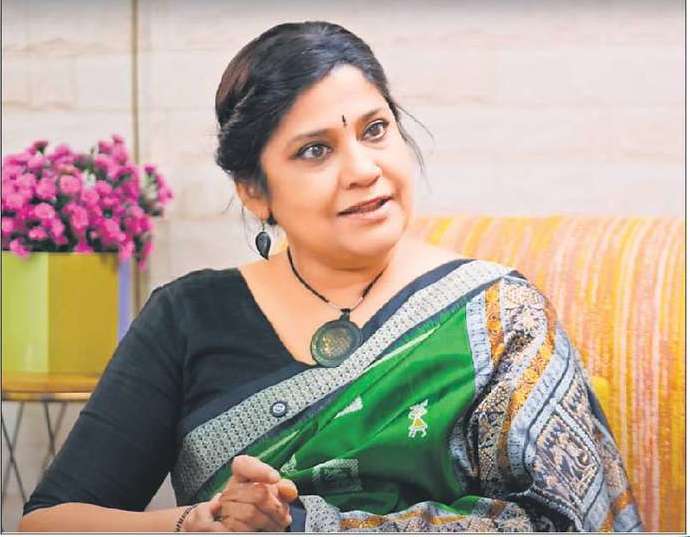
Actor Renuka Shahane has expressed profound disappointment and heartbreak over recent reports suggesting that Anushka Sharma’s film, Chakda Xpress, might be shelved. The film is a biopic is based on cricketer Jhulan Goswami. Renuka, who filmed her scenes for the movie in 2022, shared her shock during an interview recently.
“I didn’t know. I am very shocked. I am totally heartbroken, basically, because I think everyone has put in so much effort. Anushka has also worked on herself so much for it,” Renuka stated.
She further emphasized the film’s significance, particularly for women in sports. “And whatever scenes I did were so powerful and so impactful, especially for women in sports,” she explained in an interview with NDTV.
Renuka highlighted the inspiring story of the cricketer: “Jhulan Goswami is iconic, and coming from a very poor house and making it big— and yet the kind of discrepancy that still exists between men’s cricket and women’s cricket, and all other sports, I would say— Chakda Xpress had that core quality of sportsmanship.”
Renuka also lauded Anushka’s portrayal, noting, “Anushka has done such a good job of creating that character.”
She revealed that the majority of her scenes were with Anushka, who was her seen in, Zero, in 2018.
Chakda Xpress, which completed filming in 2022, is slated for release on OTT. Despite the current uncertainty, Renuka remains hopeful, wishing “there was some way such a beautiful film could be salvaged.”
Renuka Shahane on Marathi-Hindi row: "Slapping people will not help the language"
2:49 PM
HINDUSTAN TIMES (July 19, 2025)
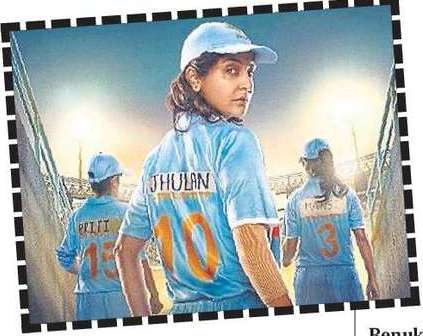
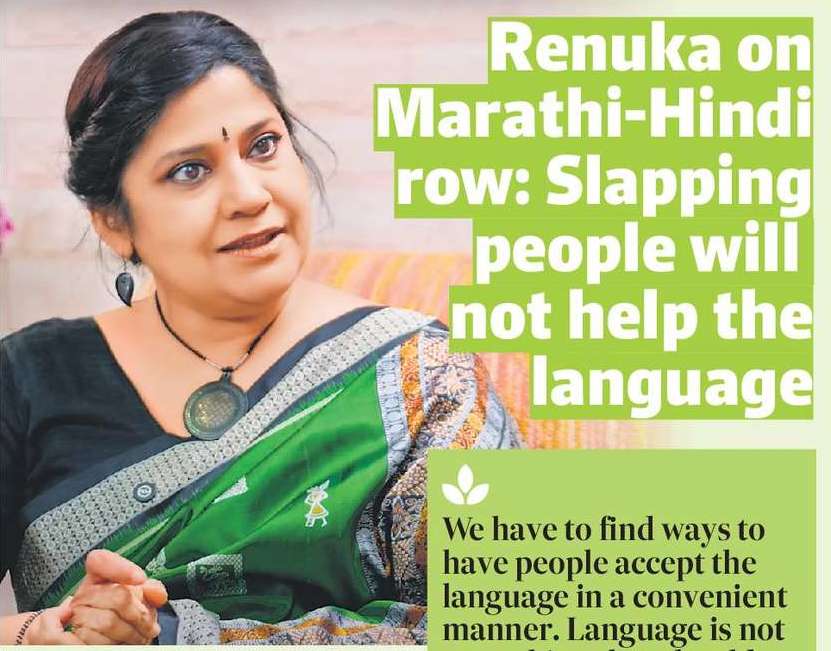
Actor Renuka Shahane has weighed in on the ongoing language debate in Maharashtra, urging people to respect local languages and cultures while firmly opposing any form of aggression in the name of linguistic pride. The 58-year-old, who hails from Maharashtra, shared her thoughts on the tensions that have emerged between Hindi and Marathi speakers in the state.
“If you’ve been living in a place for a long time, it’s good to understand the local language and culture, and be respectful of it. I don’t like people who don’t feel the necessity to be accommodating of the local language and culture,” Renuka said on the podcast InControversial.
However, she added that she’s against any kind of violence. “I don’t like the fact that people can be rude about it. Going into a place where Marathi is not spoken and slapping two-three people won’t help the language in any way. We have to find ways to have people accept the language in a convenient manner. Language is not something that should be forced.”
Renuka’s husband, actor Ashutosh Rana (58), who hails from Madhya Pradesh, also addressed the issue recently. “Bhasha samwaad ka vishay hoti hai, vivaad ka nahin. Bharat samwaad mein vishwas rakhta hai, vivaad mein nahin,” he told ANI, emphasizing that language should be a tool for dialogue, not controversy. Renuka and Ashutosh’s comments come amid tensions in Maharashtra around language identity.
The debate reignited recently after the state government announced — and then rolled back — a decision to make Hindi a compulsory third language in schools. Since then, several confrontations have been reported where individuals, allegedly linked to the Maharashtra Navnirman Sena, have clashed with people for not speaking in Marathi.
Even some male actors want to minimize work hours, not just female actors-Renuka Shahane
9:03 AM
Akash Bhatnagar (HINDUSTAN TIMES; June 20, 2025)
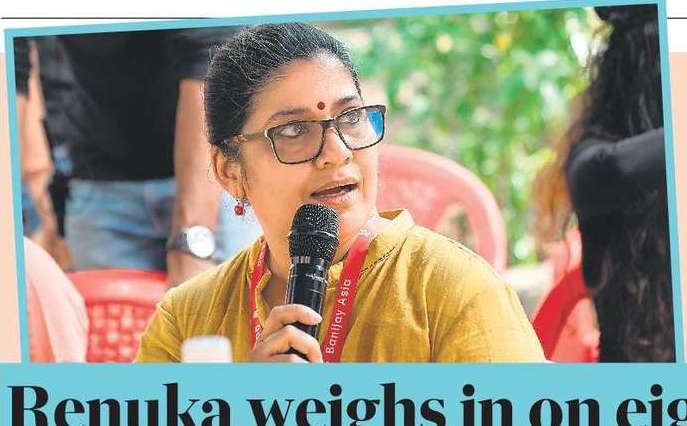
As the Hindi film industry debates the feasibility of eight-hour workdays for actors — especially working mothers — actor-director Renuka Shahane is offering a measured perspective grounded in both personal experience and professional insight. The conversation was reignited recently when actor Deepika Padukone’s request for an eight-hour workday reportedly led to tensions with director Sandeep Reddy Vanga, prompting wider industry discussion about on-set schedules, gendered expectations, and work-life balance.
Renuka, whose latest directorial project Loop Line (Dhhaavpatti in Marathi) is set to screen at the New York Indian Film Festival, feels that the issue isn’t as binary as it’s being made out to be. “I don’t want to make a general statement on it because I feel that even some male actors want to minimize work hours, not just female actors,” she says, adding, “Many have come out and said they want more time with their families.”
The mother of two added that she’s known women who work 18-hour shifts on television sets and raise their children alongside them: “That’s a choice they’ve made. There shouldn’t be compulsion — some mothers want or need to work longer hours.”
However, the 58-year-old emphasizes that clear communication and respect between all parties is essential: “This is a creative field that requires collaboration. Unless you’re all on the same page, there’s no point moving ahead. Signing on the dotted line must be mutual. That sense of respect is non-negotiable.”
Loop Line, Renuka’s animated short film, explores the often-invisible discrimination women face at home and in society. It’s an unexpected pairing of format and theme — animation is still rarely used for mature, socially driven stories — but Renuka says the story itself demanded it. “When I was writing, I kept imagining the kind of escapism you see in animation. A mix of live action and animation would’ve diluted the experience. The story chose the medium.”
I’m the only one to have two films releasing in different languages-Tejas Prabha Vijay Deoskar
8:53 AM

Bringing both his films Ground Zero and Devmanus to theatres on April 25, director Tejas Deoskar on attempting a distinct genre with each and juggling their post-production
Upala KBR (MID-DAY; April 12, 2025)
Every director will tell you about the Friday jitters they experience when their movie is releasing. One can only imagine the pressure and excitement that director Tejas Prabha Vijay Deoskar will feel when his two movies, Ground Zero and Devmanus, hit the theatres on April 25. “Somebody told me that before this, only Priyadarshan sir had two films releasing on the same day. I’m the only one to have two films releasing in different languages,” grins Deoskar.
Language isn’t the only factor separating the Hindi offering, Ground Zero, and Mahesh Manjrekar’s Marathi outing Devmanus. Inspired by real-life events, the Emraan Hashmi-starrer chronicles the aftermath of the 2001 Indian Parliament attack.
Deoskar explains, “Ground Zero is an intense action drama based on BSF Commandant Narendra Nath Dhar Dubey’s life and real events. Emraan plays him, and is seen [on the hunt] for a terrorist. Devmanus is an emotional thriller, where a man—played by Manjrekar—finds himself in a moral dilemma. I was initially apprehensive about both my movies releasing on the same day. I feel the audience gets divided, especially since the Marathi audience is a subset of the Hindi one. But the two production houses felt that both films had different viewers. They didn’t see it as a clash. The only thing I had to figure out was to run around for the films’ post-production, which was tough.”
While shooting each movie came with its challenges, the director believes Ground Zero was the more demanding one. “It was a tougher one to execute as action films are demanding. Plus, we were shooting in Srinagar and other parts of Kashmir, and the region has certain complexities.” Having an earnest actor like Hashmi helped matters.
“Emraan is a director’s delight. He asks a lot of questions related to his character and the story, and comes on the set having done a lot of homework. So, we’re halfway through when we start. Also, he has an uncanny memory,” shares Deoskar.
Working on Devmanus was a unique experience as actors Manjrekar, Renuka Shahane and Subodh Bhave are also directors in their own right. Deoskar reflects, “While there were four directors, including me, on the set, nobody overpowered me. There was mutual respect. We could collaborate, discuss their suggestions, and do what was best for the film.”
People told me after Gully Boy I only would get mother roles, but that did not happen-Amruta Subhash
8:34 AM

Vinay MR Mishra (BOMBAY TIMES; December 7, 2023)
Actress Amruta Subhash is extremely “excited” with the kind of love she is getting for her stint in the anthology Lust Stories. The actress is winning awards for her character Seema, however, for her what is more rewarding is the love she is getting from people. “Renuka (Shahane, actor) Ji gifted me a saree after watching the movie and I was just honoured with the love she showered at me,” Amruta divulges.
The actress became an overnight find after playing actor Ranveer Singh’s mother in Zoya Akhtar’s directorial Gully Boy. Amruta, however, started doing back to back work in the Hindi films which were highly acclaimed.
“I am very lucky, makers are not slotting me in any particular character. I am not stereotyped and that is a blessing. People told me after Gully Boy I only would get mother roles, but that did not happen. I did such different characters after Gully Boy. I played a bar dancer and an urban boss lady in my next. Now, I am doing a psychological thriller which is again in an urban space,” Amruta reveals.
The Dhamaka actress will soon be seein in director Rushikesh Gupte’s next. With the yet to be titled Amruta is returning to Marathi space after almost 3 years. “I am working in Marathi movies after many years. I am very excited to have a good script. I get triggered only by scripts,” she adds.
Furthermore, she also reveals being in conversation with an international project. “I am in conversation with a project that is from out of India. It is an international project, which would be my first. So, fingers crossed,” she ends.
Lyricist Dev Kohli Kohli of ‘Yeh Kaali Kaali Aankhen’ fame passes away
8:12 AM
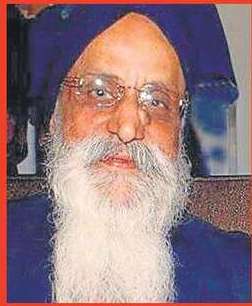
Avijit Ghosh (THE TIMES OF INDIA; August 27, 2023)
Lyricist Dev Kohli, who started his career with the sensitively-penned contemplative track, ‘Geet gaata hoon main, gungunata hoon main’ (film: ‘Lal Patthar’, 1971) but had to wait for nearly two decades before earning bigger fame and recognition with ‘Maine Pyar Kiya’ (1989) and ‘Hum Aapke Hain Koun!’ (1994), passed away at his Andheri residence on Saturday. He was 81.
“He was in Kokilaben Hospital for almost three months and brought back home ten days ago. He passed away at 4 am,” his spokesperson Pritam Sharma told TOI.
Composers Uttam Singh, Anu Malik and Anand Raaj Anand performed his last rites in Oshiwara. Uttam Singh said, “He was a saintly man — my dear friend of 50 years. I tended to him and took him to hospital over eight years when he underwent multiple surgeries. Our winning partnership in ‘Maine Pyar Kiya’ and ‘Hum Aapke..’ created such evergreen hits.” Singh, Kohli and a third friend Shailesh Sawant met regularly over Sunday meals.
Singh said, “I will miss his friendship. Kohli Sahab had no vices. He did not smoke or drink or attend parties. Over the last 8-10 years, he had stopped working. If anyone urged him to write, he would say he will only do so if Uttam Singh composes the tune!”
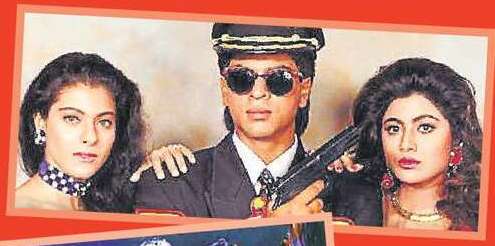
The 1990s were the high noon of Kohli’s career. He wrote the floorscorcher, ‘Yeh kaali kaali aankhen’ (music: Anu Malik, singer: Kumar Sanu, film: ‘Baazigar’, 1993) that Shah Rukh Khan and Kaajol jived to with verve and zing. The chartbusting track from the Abbas-Mustan film became a nightclub favourite earning Kohli a Filmfare award nomination for best lyricist. Kohli also received nominations for the title tracks of ‘Maine Pyar Kiya’ and ‘Hum Aapke Hain Koun’.
In all three cases, the award went to other nominees. Born in Rawalpindi (Pakistan) and growing up in Dehradun, Kohli had earlier penned two winners in another Abbas-Mustan suspense-thriller, ‘Khiladi’ (1992), an early Akshay Kumar hit. The songs, composed by Jatin-Lalit were, ‘Wada Raha Sanam’ and ‘Kya Khabar Thi Jaana’.
But the blockbuster success of ‘MPK’ and ‘HAHK’, both Rajshri Productions, propelled Kohli’s career to high gear. ‘Didi Tera Devar Deewana’ from HAHK (music: Raam Laxman, singers: Lata-SPB) was mandatory at every ladies sangeet. He would often collaborate with Anu Malik, in his prime then, churning out popular and populist lines such as ‘Oonchi Hai Building Lift Teri Bandh Hai’ (film: ‘Judwaa’, 1997) or ‘Akela Chal Raha Hoon Ek Gaadi Chahiye’ (film: ‘Mr And Mrs Khiladi’, 1997) that a David Dhawan film demanded. In several Dhawan ventures during this period, Kohli had a song or two. ‘Lift Teri Bandh Hai’ was also reprised in ‘Judwaa 2’ (2017).
Kohli had waited for serious success for a long time although ‘Geet Gaata Hoon’ (singer: Kishore Kumar, music: Shankar-Jaikishan), had happened when he was in his early 20s. It was the only song he wrote in director Sushil Majumdar’s ‘Lal Patthar’, a complex requiem to last-gasp feudalism in early 20th century colonial Bengal. Raaj Kumar and Hema Malini played the lead roles, though, the number was lip synced on screen by a young moustachioed Vinod Mehra.
The lyricist told this reporter in 2012, “The song’s success changed my life. I was immediately interviewed by magazines and on radio. From then on I started getting small films.” Those films include ‘Khoon Khoon’ (1973), which had the evocative bhajan, ‘Maati Ke Jalte Deepak’, ‘Kabhie Ajnabi They’ (1985) which had the melancholic 'Dil Ke Is Dehleez Tak' and several others such as ‘Ek Baar Kaho’. All these films flopped. It was only with ‘Maine Pyar Kiya’ that he vaulted to a bigger league.
(With inputs from Bella Jaisinghani)
-------------------------------------
HINDUSTAN TIMES (August 27, 2023)
Veteran lyricist and poet Dev Kohli, who gained popularity for his work in Salman Khan and Bhagyashree’s Maine Pyar Kiya (1989), died in Mumbai on Saturday. The news was confirmed by Kohli’s spokesperson, who shared that the veteran had been admitted to Kokilaben Ambani Hospital for the last few months and passed away in his sleep. Kohli was 81.
He had written over 100 songs for several Hindi films, including Baazigar (1993), Hum Aapke Hain Koun..! (1994), Musafir (2004), etc. While he was active primarily in the ’90s, the lyricist also worked on several recent films, such as Shootout At Lokhandwala (2007) and Judwaa 2 (2017). In a career that spanned from 1969 to 2013, he collaborated with different generations of composers, from Shankar-Jaikishan to Vishal-Shekhar.
Several celebs took to X to share heartfelt tributes to the artiste. Actor Renuka Shahane shared, “Kaisey bhool paaungi mein baba woh bachpan ki kahaniyaan.”
Singer-music director Shekhar Ravjiani wrote, “Had the honour and privilege of working with #devkohli sahab on Musafir and Taxi 9211 … What a wonderful human being and an extraordinary lyricist .. Thank you for the beautiful songs.”
Is it fair to sacrifice talented artistes at the altar of shoddy scripts?
8:20 AM

Talented actors are trolled and criticized for taking certain roles, but is it right to question only the performances?
Syeda Eba Fatima (HINDUSTAN TIMES; June 8, 2023)
Sometimes, poor scripts are elevated by great performances. But, what do you expect when best of actors are given sketchy characters in a badly written story? Case in point: Gajraj Rao in Bholaa, Sanjay Mishra in Jogira Sara Ra Ra and more. Such actors, known for their versatility, were reduced to frivolous characters in certain projects, which left their fans, and audience at large, disappointed. The bigger question is: Is it fair to sacrifice talented artistes at the altar of shoddy scripts? Industry experts help us decode.
Actors state their reasons
‘FOCUS ON WHAT’S GOOD FOR ME’
Gajraj Rao says he’s “very selective” with picking films, thus he doesn’t regret taking up any role. “If I start getting bothered by what people like to see, I won’t be able to survive in this industry. I feel, you’re the best judge of your work, so I only focus on what I think is good for me,” he says.
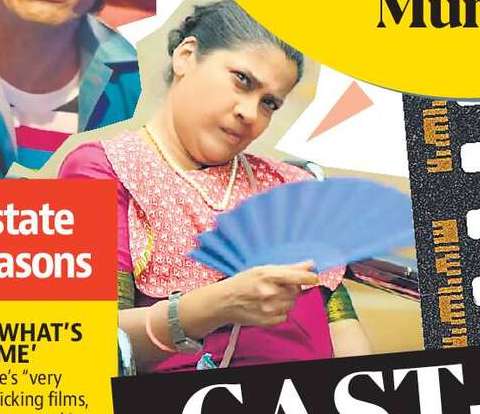
‘CAN ONLY DO WHAT’S OFFERED’
Renuka Shahane was highly criticized for Govinda Naam Mera (2022), but she doesn’t take “vague opinions” seriously. “If you tell me that this role wasn’t good enough for me, it does not make sense to me. How is it going to change anything for me? I can only do what’s being offered.”
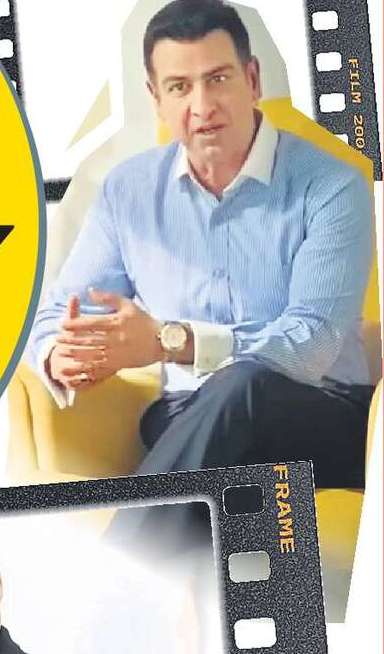
‘HAVE TO PUT BREAD ON THE TABLE’
Ronit Roy, who played Kartik Aaryan’s father in Shehzada, opines that decisions are often determined by several factors. “I have to create a balance between the films I like and projects that will facilitate putting bread on the table. I never feel short-changed because I sign the film knowing what my role is,” he says.

‘MAIN KYUN NA KARUN?’
Siddharth Jadhav was brutally trolled for his cringe acting in Rohit Shetty’s Cirkus (2022). He admits that sometimes actors sign up a film only to collaborate with a director and banner. “Kabhi kabhi achche logon ke saath kaam karna bhi impactful hota hai. That’s why I took up Cirkus and Radhe (2021), which had Salman Khan in the lead and was directed by Prabhudheva,” he says.
There are several factors at play, say trade experts
‘NOT THE ACTOR’S FAULT’
Taran Adarsh feels that actors’ judgement can in no way be blamed for a script misfire. “Actors very well know what they are signing up for. Nobody is cheating or lying to them or making false promises. This used to happen earlier when there was no hard bound script, but that’s not the case anymore,” he says.
LOST IN TRANSITION
Atul Mohan explains how at times, the character’s strength gets lost in script-to-screen transition. ”Paper par jo hota hai, wo bahut exciting hota hai. I’ve been part of so many narrations where the director described a character in such a way that any actor would get convinced. But it did not translate well in the final outcome.”
Today, pan Indian films are our big attempt. Everything cannot be pan India-Ratna Pathak Shah
8:15 AM

Onkar Kulkarni (BOMBAY TIMES; May 8, 2023)
At the recently concluded FICCI Frames 2023 Ratna Pathak Shah, Renuka Shahane, Swwapnil Joshi and Manasi Parekh shared their thoughts on how regional cinema needs to hold its own amidst the current pan-India cinema wave during the session ‘One Nation: Many Cinematic Voices’. As they spoke about the survival of films from various languages across India, Renuka stressed on the constant competition Marathi cinema has faced over the years.
She said, “We have yet not really cracked the code of competition with Hindi or Hollywood films, which are released in Maharashtra. I think as an industry, we have not been able to crack the viability code because if we have to dream any further, then we have to crack that within our own state first before we experiment with audiences all over India.”
‘WE NEED A PARADIGM SHIFT IN THE WAY WE EXHIBIT AND DISTRIBUTE FILMS’
Marathi films, too, have excelled at the box office and made noise, but Renuka pointed out that the pace has been quite sluggish. The actress feels that Marathi cinema faces a lot of competition and the industry should come together to find a solution.
She elaborated, “Films like Me Shivajiraje Bhosale Boltoy broke records, and Sairat did exceedingly well. But these are exceptions, how do we make these exceptions a rule is a question. The industry must come together and find a solution for it. I think we need a paradigm shift in the way we exhibit and distribute films because there has to be space for experimentation, which is not in direct competition with the rates of commercial Hindi, Telugu or Tamil films, otherwise, our films are never going to cross that barrier. If we are constantly faced with that competition of viability, we just do not have the theatres where our films will be released or subsidized over a period.”
‘TODAY, THERE’S A NEW AUDIENCE WHICH WANTS MORE OF THEIR OWN LIVES REFLECTED IN WHAT THEY SEE’
We have ample and diverse stories to tell from across the length and breadth of our country. In such a scenario, Ratna believes that there’s no need to focus only on pan-Indian films. Sharing her, she said, “Today, kids in their teens pick up a camera and make something. So, there’s that enormous change in the accessibility to resources. There are cheaper resources available to make any kind of content on social media. All these things have led to different kinds of content being acceptable to different audiences. Our mistake is that we keep imagining that everything should be acceptable to everyone. Today, pan-Indian films are our big attempt. Everything cannot be pan-India!”
She added, “There’s a new audience now, which wants more of their own lives reflected in what they see. I think that’s the big difference. The audience doesn’t want only fantasy. They know that life is tough, and they want to see some reflection of that, so I think that is another big change. We are becoming aware that India is more than just a small band of people and a small band of ideas. That wonderful diversity of India, which I am so proud of and which we have read about in school books forever, is something we have genuinely managed to preserve over 5,000 years of civilization. We have kept our differences, isn’t that wonderful? But today, we are busy trying to homogenize and movies have played a part in that.”
Ashutosh Rana and I would love to work together but we should have roles that we’d like to play-Renuka Shahane
8:30 AM
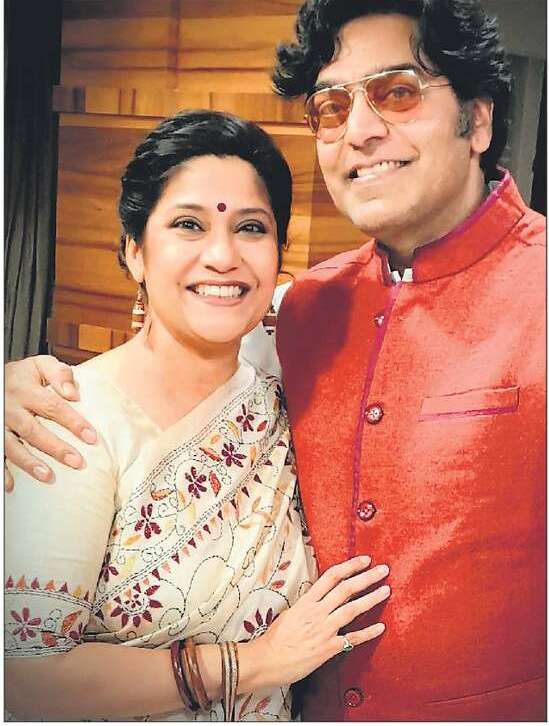
Ashish Kumar Singh (HINDUSTAN TIMES; January 23, 2023)
Actors Renuka Shahane and Ashutosh Rana have been married for over 20 years, and fans have been waiting to see them together on screen ever since. Shahane tells us that she would love to share the frame with her husband, but only if it’s a meaningful role: “We would love to work together, but both of us should have roles that we’d like to play.”
The 56-year-old, who was recently seen in Govinda Naam Mera, shares, “The roles have to be mindful of the fact that we are husband and wife in real life. As long as people say, ‘It was great to see them on the screen together’, I don’t mind taking up edgy stuff too.”
The Tribhanga (2021) director continues that Rana, 55, who has cemented his position in the industry with movies like Dushman (1998), Sangharsh (1999), Raaz (2002) and Simmba (2018), among others, is picky when it comes to projects. She says, “He is a powerful actor and opts to play only weighty characters. He likes to go for roles that he has not done before. I think, for any actor, that is a basic criterion.”
When asked if the two take each other’s advice while choosing projects, she confesses, “We depend on each other quite a lot, and we discuss things constantly to decide what to do and what not to.”
Shahane, who is also active in Marathi cinema, agrees that the industry still has a long way to go. “There was a time when films such as Me Shivajiraje Bhosale Boltoy (2009) and Sairat (2016) were thought to be better than their Hindi counterparts,” she says.
The actor adds, “There have been exceptional Marathi films that have broken that barrier, but it is not as big an industry compared to Telugu, Tamil or Malayalam cinema. Telugu and Tamil movies can compete with the Hindi film industry, but Marathi cinema cannot really do that, yet.”
Renuka Shahane finds auditions ‘raw’ and ‘cold’
8:40 AM

Ashish Kumar Singh (HINDUSTAN TIMES; December 27, 2022)
Actor Renuka Shahane is rarely seen on the big screen, but when she does, she makes sure her roles take centre stage. The 56-year-old, who recently played actor Vicky Kaushal’s mother in Govinda Naam Mera, says that she is indeed picky about projects.
“Whatever roles are offered to me, I want them to make a difference to the script. It’s not the length of a role that decides [if I’ll do a film or not], but the fact that the movie can be made or not without that character. The role has to be consequential to the plot. In that sense, yes, I am choosy,” she confesses.
Shedding light on the other factors that count, Shahane adds that it also depends on the credibility of the people she collaborates with. “You spend so much time on a particular subject and if it doesn’t see the light of day, you feel shattered. So, whoever you are working with has to see the project through,” says the actor, adding that she doesn’t pay much heed to things like which production house or banner is backing a project.
But one thing that the Tribhanga (2021) director is still not able to wrap her head around is the audition process. “For me, as an actor, it is very important to build a character. And that evolves through discussions with directors. Auditions are very raw and too many things are not told about the character. Directors are not even there to direct you during an audition. I feel it is a cold way of doing things,” says Shahane.
Citing an example of working with director Shashank Khaitan in her latest web film, the actor asserts, “Shashank did take my reading, but it wasn’t an audition as such. He wanted me to read out the script with my input. The moment he told me what he wanted, it became easier for me to build the character, emote and give what was expected of me.”
Strong, real, imperfect: Is OTT redefining female characters?
8:22 AM

Renuka Vyavahare (BOMBAY TIMES; September 17, 2022)
Kate Winslet’s scruffy, vaping detective in Mare Of Easttown went on to become one of the most-talked-about characters on OTT last year. The actress attributed the success of the series to viewers, who are ‘starved’ of shows that realistically portray women and their bodies. She revealed in an interview that she was fascinated with people falling in love with a wildly flawed, messy, broken, fragmented, difficult woman. The moral ambiguity of Jennifer Aniston’s Alex Levy in The Morning Show was equally intriguing.
Are women-fronted stories on streaming platforms increasingly straying from the conventional perceptions, even in India? Do women no longer need to be good or bad, victims or warriors, in order to be leading ladies?
‘OTT HAS CREATED SPACE FOR FULL-FLEDGED FEMALE CHARACTERS’
It is not that Shefali Shah hasn’t impressed us with her performances on the big screen for years, but today, she is among those actresses who are setting the OTT space on fire. The digital space has changed the course of her career. She says, “OTT has definitely changed the game for me. Unfortunately, a lot of heroines were accessories in films before. On OTT, there are full-fledged female characters. They are not just fillers for a project around the main hero.
Shefali adds, “Characters are now written for women of all ages. In commercial cinema, the shelf life of women for lead roles used to be between 18 and 25 years. Uske baad seedha maa bana do. Like in real life, even in cinema women would be recognized by the relationship they had with the key people. Mera role kya hai? Iski maa ka role hai, uski behen ka role hai. Woh sab relationships hai. Mera role kya hai? It’s ridiculous and changing finally.”
‘IN THE ’90S, ACTRESSES HAD TO PORTRAY A GLAM & DAINTY IMAGE BEFORE LANDING A SUBSTANTIAL ROLE’
Raveena Tandon, the quintessential ‘sheher ki ladki’ of Bollywood in the ’90s, made her OTT debut and a powerful comeback to acting with the web series Aranyak. The whodunit set in the hills showed the actress in a completely different light. But why didn’t Bollywood trust her more often with such roles?
Raveena says, “The film industry is evolving, and female-led stories have found a home today, on streaming platforms and in Bollywood as well. If you look at the 90s and early 2000s, actresses had to portray a glam and dainty image for years before landing a role that would actually do justice to their acting prowess, but with streaming platforms, that gap has bridged. The streaming space definitely allows for more freedom to explore and tell more nuanced female-led stories.”
She further adds, “My character in the series – Kasturi Dogra is one of the main reasons why I chose Aranyak for my streaming debut. She is a strong, ambitious cop, but not perfect. Aranyak and many other stories today are those of real, strong, imperfect women that deserve to be told.”
‘WE CAN NOW WRITE STORIES OF FIERCE, INDEPENDENT, IMPERFECT WOMEN’
Screenwriter Kanika Dhillon (Haseen Dillruba) agrees that OTT has changed the game for female characters. She says, “OTT is definitely giving a medium to storytellers where we don’t need to portray unidimensional women, or women as a subplot to the men. We can write them as ‘leading ladies’ in the true sense. Historically, the term leading lady is used for a female actor paired opposite the male actor leading the story, however, small or insignificant the role, as long as there is a romantic angle. But I am glad, we can now write stories of fierce, independent, imperfect women who truly lead stories and carry the project on their shoulders.”
Speaking of the business and creative point of view, she explains, “OTT has a major role in providing the platform that can make these female stories economically viable, give them reach and an audience, at par with a male leading the story. When I write for OTT, I am unfettered by the norm, historical patterns, and market diktats, compared to other mediums. So yes, I can definitely have my women go the Madonna route. As she says, ‘I am tough, I am ambitious, I know what I want and if that makes me a b***h, okay!’ Rather than a coy, de-mure, lovable ‘Hindi film heroine’! And with this kind of an attitude, I can write my characters without adhering to stereotypes of a certain approved look and standard of beauty or behaviour.”
‘OTT HAS MORE WOMEN IN POSITIONS OF POWER SO THAT HELPS IN GETTING NUANCED FEMALE STORIES ACROSS’
Renuka Shahane wrote and directed Tribhanga, a film that follows warring women from a dysfunctional family, starring Kajol, Tanvi Azmi and Mithila Palkar. As a writer and director, she says, “I couldn’t get my mind out of Mare Of Easttown. OTT allows you the space and possibility for nuance. When you go to a theatre to watch a film, the idea is to get entertained. There is nothing wrong with that, but it keeps you from having certain emotional experiences. OTT exposes you to global content, so you also feel compelled to follow your conviction. I wanted to do this (what I did with Tribhanga) for a long time on the big screen but didn’t take the risk. With prominent female actors like Deepika Padukone, Kangana Ranaut, Priyanka Chopra or Alia Bhatt becoming producers, more incredible female stories will find a voice. OTT has started that revolution of sorts. There is space for all genders and ages, which is rare in films. I liked Fleabag and the female characters in Bombay Begums, and even the tone and humour of Sumukhi Suresh’s Pushpavalli. OTT has a lot more women in positions of power so that helps for sure in getting nuanced female stories across.”
‘NON-LEAD FEMALE CHARACTERS ARE REDUCED TO ‘HEROINE KI DOST’ OR ‘HERO KI BEHEN’ ON THE BIG SCREEN’
Aahana Kumra says that OTT is a breath of fresh air for female artistes. She says, “It has given us a voice. Non-lead female characters are simply reduced to heroine ki dost or hero ki behen in films. If you turn 40 or 50, you will end up playing a mom-in-law in TV serials doing kitchen politics. OTT has ensured that stories are far more powerful now. Thanks to these platforms across languages, incredible female roles are now being written across the globe. I don’t need to wear layers of makeup and look pretty always. I can look realistic.”
She adds, “Of course, there have been some powerful female characters in films in the past as well. I can’t deny that, but they are more relatable now. Shefali Shah in Delhi Crime, Konkona Sen Sharma in the short Geeli Pucchi (part of the anthology Ajeeb Daastaans) were incredibly realistic. I just hope we don’t get stuck in the loop of star-driven culture that plagued our films before. I hope the digital platforms don’t go that road as I am getting an inkling of that already.”
Tamannaah Bhatia believes that OTT has helped us shed our inhibitions as a society to a huge extent. She shares, “The digital space is breaking stereotypes for sure! Now we can pick roles without thinking log kya sochenge. That time of finding the courage to play a hatke part is long gone. Hatke roles are the real parts today.”
Say hello to the new-age OTT and cine-maa
8:22 AM

The ever-sacrificing, predictably perfect & always one-dimensional template of the on-screen mother has undergone a dramatic change in recent times. Today’s on-screen moms are layered, flawed and sometimes downright chaotic!
Fathima Ashraf (BOMBAY TIMES; May 8, 2022)
Cinema’s moms are stepping down from their pedestals of perfection to get more real, raw and honest, with shades of grey. Sometimes, they are even messy, flawed, or plain chaotic. Recent times have seen several new shades to the filmy and OTT maa– from complicated (Tanve Azmi and Kajol in Tribhanga) to reluctant (Sheeba Chadha in Badhaai Do), to empowered-yet-flawed (Vidya Balan in Jalsa). Here’s more:
MOVIES & SERIES EMBRACE ‘HUMAN MOMS’
In the past, moms were either relegated to the sidelines of cinema, or put up on a pedestal and in either case, their whole identity centred around their kids. Often, their only flaw was that they loved their kids a tad much.
But, as Renuka Shahane – who wrote and directed Tribhanga (2021), a film about a dysfunctional and unconventional family of three women – puts it, “Ultimately, mothers are human. That is what is reflected in new-age films. Directors are also realising that mothers too have shades to their characters. In Tribhanga, while one of the mothers has had many affairs after her divorce, Kajol’s character had a daughter born out of wedlock. I think these scenarios are very real, relatable, and most people are accepting these changes.”
National Award winning actress Urvashi, who has won acclaim for playing Suriya’s mother in Soorarai Pottru (2020) and RJ Balaji’s mother in Mookuthi Amman (2020), shares, “For one to see the flaws and imperfection in mothers, they have to be looked at as human beings. If you look at mothers in older films, you’ll see they were never the lead actors. They were the hero’s or heroine’s mothers and past a certain age. They don’t have any other priorities, feelings, or thoughts. For them, it’s all about raising their kids and grandkids. That was the concept back then. As an actor, I don’t always want to play the soft and kind mother who doesn’t do much else.”
Madhoo Shah, who’s acted in films across Hindi, Tamil, Telugu, Malayalam, and Kannada, adds, “I was an actor in the ’90s and now, in 2022, I’m playing a lot of mother roles. And most of the characters I play are that of women who have left their unhappy marriages, single mothers raising kids alone, or women who start their careers or find their partners late in life. The characters these days reflect the current generation of mothers. I’m a mother, and my children are very important to me, but my focus is also on myself – my life, wellbeing, appearance, and all that. The attitude was different among the older generation. Their life was all about their husband and children. They went through a very sacrificial, martyrdom kind of motherhood. Whereas right now, there’s a lot of emphasis on self-care.”
------------------------------------------------
ADDING A NEW LAYER TO THE FILMI MAA
Recently, the film Badhaai Do featured two mother characters, who were a rare departure from the stereoptypical Bollywood moms. Sheeba Chadha – who played Rajkummar Rao’s mother in the film – said she enjoyed playing the role oft he unconventional, and rather ‘reluctant’ mother, who rarely participates in her family’s discussions.
Sheeba says, “Her non participation was the most interesting thing for me because that is really different from those conservative mom roles that one gets offered. I love her desire to not participate at all. She has a great degree of reluctance – she’s not just a reluctant mom, she is a reluctant human being (laughs). It is an interesting quality to explore as it is totally contradictory to what usually mothers are – mothers want to be present and to be contributing,” she said.
Loveleen Mishra, who played Bhumi Pednekar’s ‘hyper’ mom, told us, “My character is so hyper all the time, forget inner, most of her contemplations are outer. Uski life ke funde hi yehi hai. Usko aata nahi isse zyada sochna. There is a situation in the film, when Sumi (Bhumi) comes out to her family, and she is not just horrible, but extremely horrible in this situation. I could not get myself to believe – aisi chandalika maa bhi hoti hai.”
— with inputs from Dharitri Ganguly
------------------------------------------------
FLAWED TO FRIGHTENING: MOMS IN OSCAR-NOMINATED FILMS THIS YEAR
Several of the Oscar nominated films in 2022, featured chaotic and messy moms. While Olivia Colman was a complicated, cruel and distant mother in The Lost Daughter, Meryl Streep was seen feeding her on-screen son to the climate apocalypse in Don’t Look Up. At the same time, Parallel Mothers showed how maternal devotion can skew one’s sense of right and wrong. The Oscar eventually went to Jessica Chastain for her role in The Eyes Of Tammy Faye – in which she plays a character that feels frequently sidelined from her job due to her maternal duties.
Crime Patrol: Renuka Shahane educates parents on safe environment for children
8:11 AM
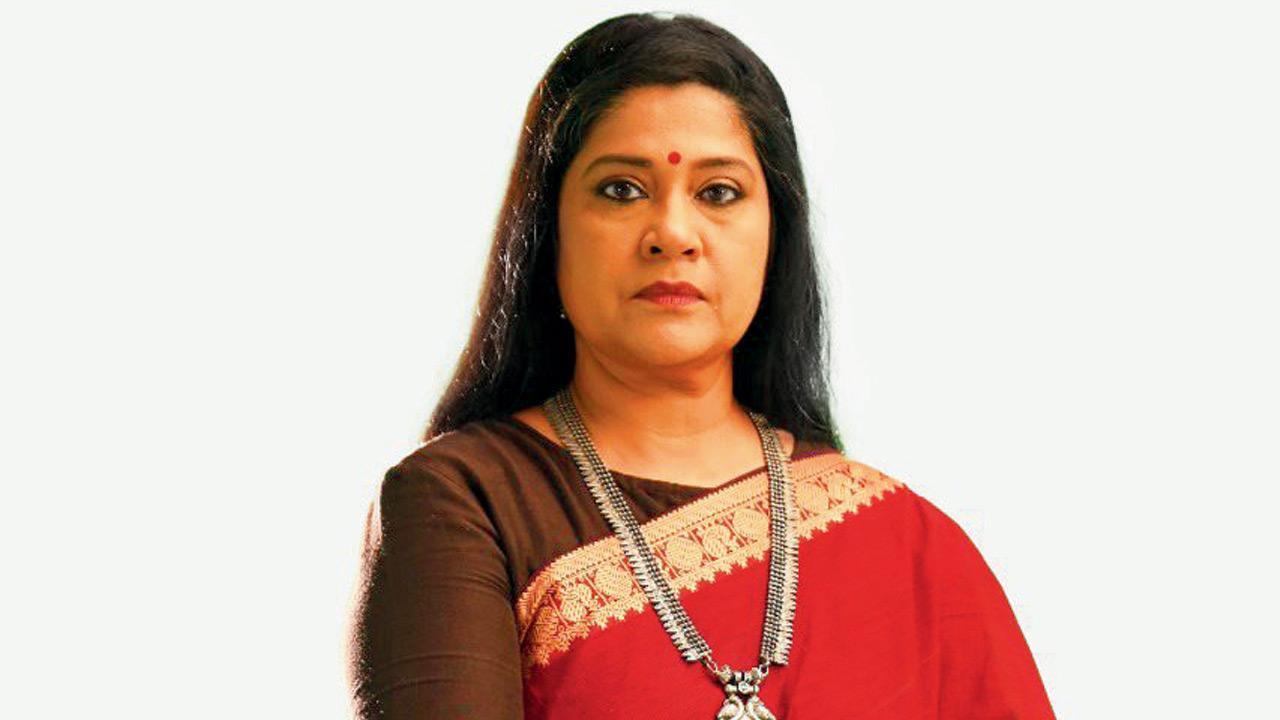
Shahane, whose directorial venture, the Kajol-starrer Tribhanga, was released digitally earlier this year, has begun work on her next film, a dark comedy set in Mumbai
Shaheen Parkar (MID-DAY; September 12, 2021)
Renuka Shahane returns to anchoring with the new season of Crime Patrol, which highlights crimes against children and committed by them. “I have hosted a wide variety of shows, but this is the first time I am delving into this genre. There is a lot of your own personality that comes across as a host, but you cannot cross a certain line, when you deal with a serious subject,” shares the actor-director.
“Crime against youngsters is the worst, they are the most vulnerable members of the society and can be victims of various forms of violence. The show also addresses parents, and how they can create a secure environment,” says Shahane, adding how important it is to make “digital footprints safer as technology is an important part of a child’s daily life”. On the show, the actor not only plays the host, but is a friend to parents making them aware of the situations that can harm children.
Shahane, whose directorial venture, the Kajol-starrer Tribhanga, was released digitally earlier this year, has begun work on her next film, a dark comedy set in Mumbai. “I am working on the screenplay, but considering its subject, which will require shooting at actual locations across Mumbai, I will wait for things to be normal,” she says.
My fever lasted a long time and that was worrying the doctors-Renuka Shahane
8:09 AM

Kavita Awaasthi (HINDUSTAN TIMES; April 28, 2021)
“It will take all of us some time to come back to feeling totally normal,” says Renuka Shahane, who recently tested positive along with her entire family. She is glad that all of them are recovering well.
“I was worried about my 81-year-old mum, who tested positive as she was staying with us. (Ashutosh) Rana ji (husband-actor) returned from a shoot and got a fever and immediately we got him tested. He was admitted to the hospital later and we all got tested but our results came three days later. The first few days were really bad. My fever lasted a long time and that was worrying the doctors but as my oxygen levels were good, so we felt confident that things would get better,” she shares.
Shahane has been avoiding watching forwarded videos and the news on Coronavirus as she gets emotional due to her “vulnerable” condition. She is disheartened to see so many whatsapp forwards, which call the pandemic “a conspiracy theory”.
“Oh, please! It exits and is curable but the infection rate is so high that before you know it, you’ve infected 50 other people. The doctors and health workers have been working non-stop and they need a break. People don’t understand or think for others, at all. It is scary when you get Coronavirus as we haven’t understood it properly yet. We should err on the side of caution rather than be overconfident and say, ‘kuch nahin hoga’. Look at the situation we are in today. The rising cases and situations at hospitals are heart-breaking,” she says.
Male gaze vs female gaze: Do female directors tell women stories better?
8:25 AM

Juhi Chakraborty (HINDUSTAN TIMES; January 31, 2021)
Female-driven stories told by female filmmakers have been gathering steam in the past few years. Films such as Lipstick Under My Burkha (2016), Raazi (2018) and Panga (2020), and the recent ones such as Dolly Kitty Aur Woh Chamakte Sitare (2020), Tribhanga and Sir have received immense love from the audience. These have been hailed mainly because of the treatment given to the stories attributed to the women directors behind them. This has also led to the discussion whether when it comes to women-centric stories, female filmmakers are more inept to tell them with sensitivity and correct treatment.
“There is something called the female gaze that comes into play. It is about how you write characters, how you shoot them and your point of view. That also changes the audiences’ point of view because they see the characters the way you present them. Right now, we are still living in cinema that is moulded by men. Everything is determined by the male gaze,” shares Alankrita Shrivastava, who has helmed Lipstick Under My Burkha and Dolly Kitty Aur Woh Chamakte Sitare.
Actor Richa Chadha, who worked with filmmaker Ashwiny Iyer Tiwary last year in Panga does not think there is much difference between how a female or a male directs a film but she says it stands true in the case of few their subjects. “In my experience, it’s not been that. But when I watch something like Dolly Kitty Aur Woh Chamakte Sitare, it appears a lot softer than other films. Even the topic of sexuality is handled sensitively,” she says.
Rohena Gera, who handled the story about a romance between a domestic help and employer in Sir, says it is difficult to say whether it is about gender.
She says, “Who is to say that as a sensitive man wouldn’t make a sensitive female-centric story. The stories one tells as a filmmaker is also because of his/her exposure to things. I find it difficult to categorize things as gender.”
Having worked with a female director in one of her most notable films, Tanuja Chandra’s Dushman (1998), Kajol recently collaborated with Renuka Shahane on her directorial venture, Tribhanga. The actor says, “I didn’t consider Renuka as a director. She knew what she wanted, her gender notwithstanding.”
Shrivastava feels that the onus is also on women directors. “That’s because not all have that female gaze. And, because the place is so lonely they prefer to perpetuate the status quo that just continues this male, patriarchal gaze,” she adds.

I want my women to talk about things not related to men, romance, or marriage-Renuka Shahane
8:20 AM

Kavita Awaasthi (HINDUSTAN TIMES; January 23, 2021)
“This year has started with a bang for me,” says actor-director Renuka Shahane, whose directorial venture Tribhanga released recently on an OTT platform. “I’m happy with the response to the film, the performances and that people related to what I tried to portray in the story. Indian stories are unique and they need to be shared with the entire world. My characters might have an education which is westernised but their choices and manner of living are rooted in Indianness, which is lovely to celebrate,” she says, adding her next film, too, might be about three women.
Often people feel female directors are able to highlight women’s issues pertinently, But Shahane doesn’t agree. “Directors like Gulzar, Bimal Roy, Guru Dutt have represented women beautifully. I think is it about being a sensitive human. It is not that women directors can’t represent men well, so the converse is also true. I feel I am still a work in a progress, as a writer or director. The stories I can believe in and understand are the ones I would like to share. I want my women to have names and talk about things that are not related to men, romance, or marriage, for heaven’s sake!” she says.
There has been a change in cinema over the years and in the last few years, content has become king across platforms. Talking about it, she says, “With OTT platforms, now there’s a space one wanted, to push the envelope in terms of content, without thinking about economic viability of a project. The more content we have, the more audience there will be for it - that’s a win-win situation. They will then expect good content even from mainstream films.”
If Aamir Khan, at the age of 40, can do a film like 3 Idiots, and play a college student in it, why can’t I?-Kajol
8:47 AM

Juhi Chakraborty (HINDUSTAN TIMES; January 22, 2021)
Ageism is a conversation that has been going on in film industries across countries for a while now. And Kajol, who has been part of the Hindi film industry for 29 years, says that while part of it is true, there are also instances which prove that female actors are not discriminated against.
“We had actors such as Sharmila Tagore, Sadhna, Nargis Dutt, etc., who were working way after the time they were married and were in their 40s. Yes, I agree that today the time is such that everybody has a binocular view on it. Today, we are suddenly looking at things which we never noticed before. But this was all happening earlier as well. Even my mother (Tanuja; actor) never stopped working,” she points out.
Kajol says how there are so many female actors who have been working non-stop but people these days are making a big deal out of it. “I am here and I am working. I am very proud of it. I don’t see an ageist issue in Bollywood. I never did. I think it is in your head. If Aamir Khan, at the age of 40, can do a film like 3 Idiots (2009), and play a college student in it, why can’t I? He believed he could and of course, with the help of special effects,” she says with a laugh.
The 46-year-old firmly believes that as long as you don’t adhere to and give in to people’s perception about you, things work out. “I have honestly never believed in anyone else’s opinion besides myself, so that is good,” she adds.
Kajol is riding high on the success of her recent Netflix film, Tribhanga, directed by Renuka Shahane, where she plays an actor. She explains how she injected her own experiences into the character of Anu.
“Renuka is an actor herself, and understands the pressures of being an actor and in the limelight. So we both kind of shared in that bit and that aspect of it. But Anu’s character is much more, being a star is just a part of who is she is. The film is about relationships, and mothers and daughters, and how everybody is screwed up. There is no supposed parenting in this world, and no supposed perfect family in this world,” shares the actor.
Subscribe to:
Posts (Atom)