Showing posts with label Rensil DSilva. Show all posts
Showing posts with label Rensil DSilva. Show all posts
Visiting control room was an eye opener-Rensil DSilva
8:10 AM
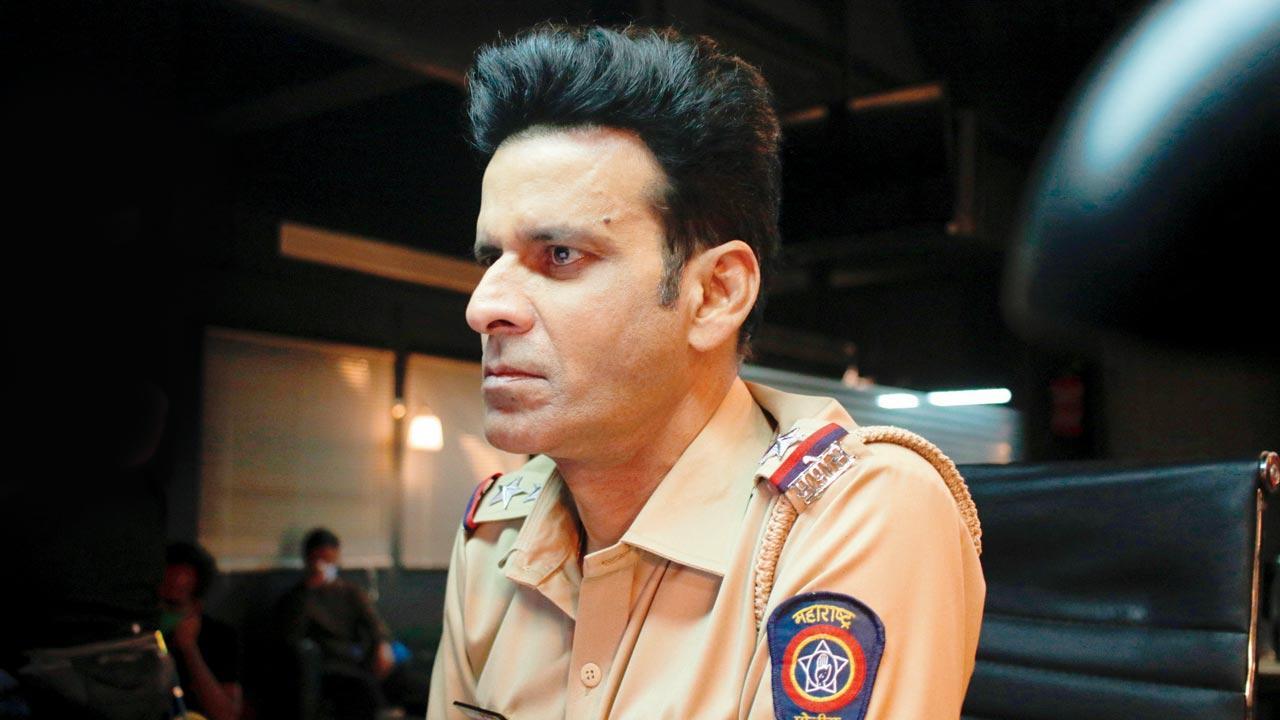
'Dial 100' director Rensil DSilva discusses how he drew from experience of meeting cops while writing Manoj Bajpayee-Neena Gupta starrer
Uma Ramasubramanian (MID-DAY; August 3, 2021)
Rensil DSilva, who previously helmed Kurbaan (2009) and 24, among others, has a way with thrillers. He knows only too well that the charm of a thriller lies in a compelling premise and intensive prep. So, before he began writing Dial 100 that sees Manoj Bajpayee’s cop character in a catch-22 situation during his overnight duty, the director visited the Police Control Room in Mumbai to gain complete understanding of its functioning.
“Today, we are part of the OTT world where every [story] is realistic. So, I wanted to make a realistic film without taking too many liberties. [As prep], we met the [then] police commissioner [Param Bir Singh] who sent us to the control room. Visiting it was an eye-opener for me. The cops answer distressing calls every 10 minutes, [with complaints ranging from] domestic abuse to suicide. Seeing them [handle such high-pressure situations], I wondered, what was their motivation to come to work the next day. If you hear 10 such calls, [it affects] you psychologically. The pandemic has brought mental health issues, such as depression, suicidal feelings and loneliness, to the forefront. I thought my film can address certain issues,” says the director.
Zeroing in on his three leads was a no-brainer for D’Silva. Having worked with Bajpayee in Aks (2001) and Sakshi Tanwar in 24, he says they were his “first and only choice” for the ZEE5 film. “The only person I hadn’t worked with before was Neena Gupta. I am glad she said yes.”
While Gupta’s Seema Pallav may use devious means to settle old scores with Bajpayee’s cop character, the writer-director strived to keep their motivations honest. “I don’t think anyone is right or wrong; it’s a matter of perspective. Neena ji is doing what a mother in her place would have done; similarly, Manoj is doing what he should be doing. Right and wrong is for the audience to judge. Their moral compass is intact because the movie’s underlying theme is that parents will go to any length for their child.”
I don’t like negative roles as you get bracketed-Neena Gupta
9:03 AM
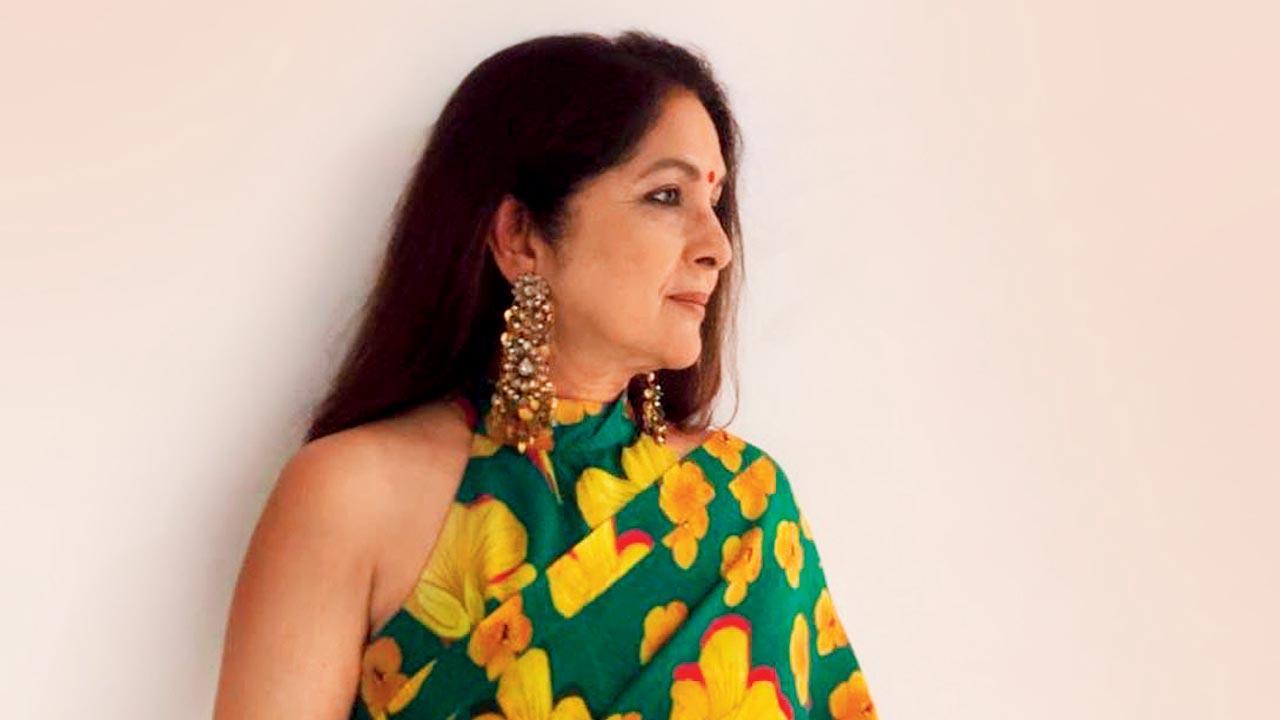
Locking horns with Manoj Bajpayee in 'Dial 100', Neena Gupta says she had initially rejected the thriller presuming her character was all-black
Uma Ramasubramanian (MID-DAY; July 29, 2021)
Delightful as she is in family comedies, Neena Gupta has switched gears with Dial 100. The trailer of the ZEE5 crime thriller promises a battle of wits between the leads — Gupta’s grieving Seema Pallav calls the police control room manned by Manoj Bajpayee’s cop character, with the intent of settling scores with him.
Gupta begins our conversation by saying that she had initially turned down the role. “When the casting person called, I was told it’s a negative character who wants to take revenge. I told him point-blank that I didn’t want to do it. I don’t like doing negative roles because once you do it, you get bracketed. But my manager convinced me to hear the narration, explaining how the character’s arc develops. That’s when I realised it’s not an [all-black] role, but one that has many shades,” she recounts.
To the actor, the Rensil D’Silva-directed venture is among the many projects that offer her nuanced roles, thus making her filmography richer and her current phase of career, more fulfilling. “When I was young, I didn’t get such roles. Usually, if a movie or series is a hit, you start getting similar parts. I wonder why Rensil and Siddharth P Malhotra [co-producer] thought of me for such a distinct role.”
Breathing life into the part of a mother in despair, however, didn’t come easy. The senior actor credits D’Silva for guiding her through the tricky slope. “How do you play such a role without the risk of going over-the-top? I had figured three ways of playing the character, but Rensil asked me to approach it in a totally different way. He gave me the rhythm of the character,” says Gupta, adding that the night shoots posed another challenge. “I get tired during night shoots. We finished the film in 18 days, with my portions [being shot] over nine nights.”
Manoj Bajpayee begins shoot of a thriller, Dial 100, with Neena Gupta and Sakshi Tanwar
8:02 AM

Mohar Basu (MID-DAY; December 1, 2020)
With the shoot of the second season of The Family Man long wrapped up, Manoj Bajpayee has had the time to shake the character of Srikant Tiwari off him and is now ready to portray a new role. The actor kicked off the shoot of his next, Dial 100, in Mumbai yesterday. Produced by Sony Pictures and Siddharth P Malhotra's Alchemy Films, the thriller sees Bajpayee join forces with Neena Gupta and Sakshi Tanwar.
Rensil D'Silva, who has previously dabbled in thrillers, including Kurbaan (2009), Ungli (2014) and 24, says Dial 100 is far removed from his earlier works despite belonging to the same genre. "The film will engage the audience with its plot and make them question everything in the proceedings. It's the kind of movie that one has to watch again and again to find a loophole in the mystery. My producers have provided me with a wide canvas, which is inspiring yet daunting," says the director, who has doubled up as the screenplay writer. D'Silva intends to wrap up the film in a start-to-finish schedule in the city.

John Abraham procures permission to shoot his biker film around the very deadly Isle Of Man roads
7:57 AM

John Abraham procures permission to shoot his biker film around Isle Of Man roads, considered among the world's deadliest
Sonil Dedhia (MID-DAY; September 4, 2019)
When John Abraham announced his yet-untitled biker film earlier this year, he had promised that he will shoot crucial racing sequences at the Isle Of Man TT (Tourist Trophy) circuit. The actor-producer, who is currently laying the groundwork for the Rensil D'Silva-directed venture, tells mid-day that he has procured permission to shoot on the Isle Of Man, which is considered one of the fastest and deadliest in the world. The roads are closed to the public during the races.
"The film has been in development for more than a couple of years, so it has been a well-thought-out plan as to how we want to proceed with it. I have seen many races on the Isle Of Man and we've done our recce. I met Laurence Skelly, the Minister for Enterprise, and he is happy to host us and allow us to shoot the film. It will be the first Hindi film to be shot there," he informs.
A true blue racing enthusiast, Abraham has designed the schedule in such a way that they can film the live Isle Of Man Tourist Trophy that takes place every summer. "We will kick off the shoot in April. The races usually take place in May and June, so we want to capture the real essence of those races, including the Southern 100 and the classic TT. If I have to draw parallels, I would say that this film will be like Rush [2013]. It's not going to be about mindless racing, but also about human emotions."
I never followed trends because they change every minute-John Abraham
8:54 AM

Reinvented and reinvigorated, John Abraham on the most gratifying film of his career, Batla House, and surviving, despite rejecting Bollywood camps
Sonil Dedhia (MID-DAY; August 25, 2019)
The first thing John Abraham notices are my colourful sneakers. Over the years, we've bonded on our collective love for shoes, as much as movies. There's something to admire about Abraham's repertoire, an example of how a gorgeous hunk of a man, most talked about for his looks has managed to evolve himself into a credible actor. "For the longest time in my career, I was called wooden," he admits but that never deterred him from exploring new ground till he found his beat. As his recent outing, Batla House, opened to steady numbers and much critical acclaim, John and I settle for a chat in his office about his newfound affinity for the patriotic brand of cinema, his trysts with the effort to be taken seriously and the way forward for his production house.
Edited excerpts from the interview.
Is there a sense of validation in the fact that you've managed to stir debate with Batla House?
From day one, Nikkhil [Advani, director] told me that it's not only about an encounter, but we are narrating the story of a man and his experiences post that encounter. We wanted to make it a human story which I am glad has been appreciated by the audience. In fact, DCP Sanjeev Kumar Yadav's wife Shobhna Yadav called me three days after the film released and said, 'You have shown everything about my husband exactly the way it is, including the pauses. It felt like I was watching him on the big screen.' Sanjeev was so thankful because there were times when I could go overboard to play to the gallery but I decided to play him. He told Nikkhil, 'I am proud of me.' For me, that was my biggest validation. Priya (Runchal, his wife) loved the film. My father wanted to congratulate Nikkhil for making a beautiful film, an acknowledgement he has never made in the past.
Do you feel the big battle you've always had to fight — that of being taken seriously as an actor - has been won?
For the longest time in my career, I was called furniture or people would comment that models cannot act while talking about me, but those people have now either left the industry or are on the fringes. I always had to prove myself at every point. There is a new set of audience and media that have come in, which is the generation I am catering to. The content and my performance are being appreciated. The idea is to take criticism constructively and improve. I am confident about the content I am creating. But I won't disagree that I've never seen such a large wave of appreciation from the audience and the critics unanimously for a film, in my career.
Has the approach within the industry altered?
People who I have worked with have always stood by me. They never had any doubts [thinks hard]. Actually, there are several who woke up from their graves and called me after watching Batla House to say, 'This is a new actor we are watching. You have new energy'. These are the same people who rejected me at some point. But I take my work seriously and don't pay attention to those who have suddenly changed their approach. I don't have any 'aspirational' list of directors. I'd rather work with someone who has the guts and heart to work with me, my production house and become the kind of person they want to.
You've often mentioned that the content from your production house is non formulaic. What is the process of selecting projects?
I choose scripts with my gut. I decide what films I'd like to produce, and then we ponder on the casting. There are many films where I am the third option [as an actor]. I am clear about what I want to do because I am not scared of failure. For, a person who has had no godfather, and faced endless criticism, has been written-off and still managed to hang around, has only himself to thank. I follow the management rule—higher the risk, higher the return. And these are calculative risks where I ensure everyone makes money. I believe in the Monday of the film. Your film is only good if it lasts two or three weeks. That's what, we as actors, producers and directors shy away from [risk] because we are scared to accept failures.
Is there then a sense of vindication with the success you have garnered in the last three years?
There would be if I gave importance to others. I don't pay heed to detractors. When the chips were down, the only person who convinced me was myself. I don't know how to follow people or belong to a camp. Hence, I do my kind of films and create my own content. I am not saying it is going to be the best, but at least it is something I will enjoy doing, and the audience will enjoy watching.
Won't people then consider you selfish?
People who know me are aware that I need to be left alone. Karan [Johar] is one of my closest friends. I don't go to his parties but we are still friends. I like being by myself, attending to my motorcycles, cars or simply reading. Does that mean that it will be difficult for me to approach an actor for my home production? Not at all. I get along with everyone but it has to be a personal interaction. I can't be part of the crowd.
You have six films lined up. Do you ever feel exhausted?
I am on auto-pilot mode. My team keeps telling me that I will burn out one day, but I fear that it will happen if I am not working. I am not mindlessly doing multiple films. I am content with each script. Rensil D'Silva's film on biking and Attack [directed by debutant Lakshya Raj Anand] has been in development for almost two years. Both are well thought-out projects. These films are being produced by JA Entertainment. I never followed trends because they change every minute. So, as far as I am concerned, the idea is not to be opportunistic with a certain trend, but to do what you believe in.
Patriotic Overdose
John Abraham's last three films Parmanu: The Story of Pokhran (2018), Satyameva Jayate (2018) and Romeo Akbar Walter have centred around patriotism. But he claims he would voluntarily do another one. "It is all about what you project. I'm secular and would like to make films that reflect the true nature of this country. If tomorrow there's [another] great patriotic film, I would love to do it. But I would not opt for jingoistic films. I am not anti any other country, I am not anti any other religion."

I don’t dance at weddings for money-John Abraham
10:56 PM

The actor-filmmaker argues why it’s more important for an actor to focus on craft than on social media
Roshmila Bhattacharya (MUMBAI MIRROR; January 7, 2019)
John Abraham embodies virtues which are fast disappearing in today’s world. He is punctual and isn’t afraid to pull punches on screen. He does the same off it too, never trying to to be politically correct during an interview. Excerpts from an interview:
What has been the biggest takeaway from 2018?
To keep working, to doing more films. The idea is not to take yourself too seriously but to simply enjoy the process.
And the biggest lesson you’ve learnt?
Someone asked me recently, “What’s it like being a producer?” I admitted that it’s not financially gratifying and that I’m still trying to recover my monies not just from Parmanu but all the way back to Vicky Donor. The person immediately concluded that production has been a horrible experience. On the contrary, these two films, along with Madras Café, have brought me a lot of respect and appreciation...
Headaches too when one remembers the fight with your erstwhile Parmanu co-producer Prernaa Arora, which ended in court and could have backfired completely. How many sleepless nights did that give you?
Innumerable, and I wouldn’t wish it on anyone else. It’s only because I’m an honest guy that I had the courage to go to court. What upset me was people coming up to me after it was over, saying, “Hey, good you did it.” I didn’t need that pat on my back after going through the journey alone.
Had I not taken that lady to court, we wouldn’t have had so many others coming forward to say she owed money to them too. But it was a battle I fought alone, and I know that tomorrow, if I’m in trouble again, no one is going to show up for me. (Shrugs) But I’m happy that the nightmare is behind me.
Mid-way through the year you found another production partner in Nikkhil Advani with whom you are collaborating on Batla House and 1911. That must be a relief...
I met Nikkhil during Satyameva Jayate. At that point, we didn’t expect too much from our partnership or even the film, we were just happy working together. Over time, I discovered our ideas resonated and in Nikkhil I also saw an honest, hard-working man. I’d assume he saw some of that in me too which is why we decided to collaborate on a number of films and series driven only by content.
Today, there is no star or star director who can sustain a film. Maybe they can bring in an initial collection but even that’s going to end soon. The only way one can reduce the probability of failure is by telling good stories. You can’t give proposals anymore and take the audience for granted.
Yes, that’s what the last year reiterated. What’s the way forward for you as an actor-producer?
Well, from the industry point of view the GST reduction is welcome and was much needed. But when I look at it from the outside, I think tickets are still grossly overpriced and a viewer is no longer going to pay up half his salary unless he thinks it’s worth the money. I promise to invest in stories that have something to say and have an apt cast. I will not bow down to diktats of commerce. I’m not afraid of failure so I’m not afraid of taking risks.
Satyameva Jayate proved that action, a genre that many had thought had run its course, is still a big draw. Are you going to build on this?
Totally. The sense of heroism was lost till Satyameva Jayate came along and reiterated that this country needs heroes. I say this as a producer and not because I love John Abraham, but with the senior actors getting too senior and the younger guys still being boys, you need a man who can run through walls and break down doors. I’m going to be the action hero for the masses.
True-life dramas like Batla House and RAW must have given you a window into the world of terror and terrorism, give us a glimpse…
Yes, both these films have given me an insight into the politics of our country. When you delve deep into such stories, sometimes you come across a footage of a politician talking of the incident, you realise it was a political game and they’re the biggest hypocrites. I’m proud we live in a democracy but the way most politicians take advantage of us and the system, is scary. RAW is probably the most compelling script I’ve read so far while Batla House is probably the most contentious story in North India after the Babri Masjid. But neither film is a documentary. We are here to engage and entertain the audience.
Along with these true-life dramas you have also signed up for Anees Bazmee’s Pagalpanti and that’s a surprise.
As a viewer I enjoy comedies and having worked with Anees on Welcome Back, I wanted to reunite with him. Pagalpanti is a laugh riot, with a fantastic cast and writerdirector. And I believe anything that can make me laugh at the narrative level has a good chance of wooing the viewer too. Personally, both RAW and Batla House were intense experiences so I just wanted to lighten things up for myself.
1911 is your dream project and at a time when your contemporaries are playing football and hockey coaches, you will actually be taking the field as a player. How big a challenge will that be?
I played A-Division football and would have played for India too. I still play regularly. I own a club, North East United FC, and practice with my team sometimes. It is a challenge to execute a film of this magnitude but in terms of the sport, I enjoy it and it’s easy for me. When you kick the ball, the audience should be convinced you are a player and not just acting as one. On that front I think I can be decently convincing.
There’s also Officer Khan?
That’s my next production with Renzil D’Silva as director. It goes on the floors in June. We have been researching the subject for three years. We are making biopics on film stars and sports stars... in a first this is the story of a common man.
What’s the one film in 2018 you wish you could have been a part of?
Honestly, I haven’t had the time to watch too many but I’m very happy for Ayushmann Khurrana, he’s making the right choices. It’s just the two of us who have had two hits last year. On my part, Parmanu taught me how to simplify something complex.
Now that your company is getting bigger and you are doing more films as an actor, will your wife Priya take a more active interest in filmmaking?
Priya handles the football team and that is like two big productions, 365 days a year. She’s doing a swell job and that has taken a load off my shoulders, allowing me to focus on acting and producing films. That’s what partnership is about rather than walking the red carpet in a pretty dress.
How do you perceive the #Me-Too movement in the film industry, one of the most crucial talking points of last year?
I’m happy the movement happened because there is some woman somewhere who has been saved from being molested. Now, it’s how we sustain it, in a credible manner, to create a safe environment for women and that’s not going to happen by putting out a tweet in support. We have to do more than that.
We, as actors, are so consumed by the social media and the love that we get on it, that we become prisoners of our own image. We need to get out, see the world for what it is, learn to respect everyone, get a life and stop taking social media so seriously. It’s a farce.
You seem really upset with the social media.
I will be one of the first few to get off it. I come from a marketing background but if a brand manager tells me that he looks at the number of likes and views on Facebook, Instagram and Twitter to decide whether to take an actor on board, then he is not doing his job right. Today we have social media stars who have not done anything credible, the virtual world has become the real world and vice versa. It’s crazy!
I’m not a social media hater, it is a great platform and can be used effectively in some cases like that of Avni, the tigress, a cause very close to my heart. There are a lot of good people there too and I appreciate their presence. But at the same time, it’s also responsible for polarising the world. There’s so much hate and negativity there that it’s toxic. Read the comments for two hours and if you don’t feel sick, I’ll change my name.
Yeah, there is a lot of celebrity bashing on the social media…
There is but aren’t celebrities also asking for it, wearing funny clothes outside airports and doing funny things. You can only be laughed at if you decide to be a clown in the circus. It’s your choice. I’m not an actor who dances at shows or weddings for money. I find it demeaning. I’m not saying that I’m right, but I wouldn’t do it, ever.
As an actor you are here to show your craft. How much money do you want to mint? Why is it important to be on a list of the highest earners? What about the audience you are robbing with crap you put out? I have always worked hard for credibility, I get that, I move on quietly. I wish we had more actors cut out from the same fabric.
I’m not afraid of failure, so I can take risks-John Abraham
8:04 AM

John Abraham celebrates a hard-won battle; insists he’ll continue to back subjects he believes in but will be wary in picking who he works with
Roshmila bhattacharya (MUMBAI MIRROR; June 18, 2018)
Parmanu was a difficult journey but your confidence and conviction in the film seems to have eventually paid off…
Yes, today I feel vindicated, validated and relieved. I was clear about what I was making and that I wanted the film to release, come hail or storm because Parmanu was a special baby. The odds were stacked against us, we had just 10 days to promote the film which released during the IPL semis and finals, just two weeks after Raazi and a week before Veere Di Wedding. Had it had a smoother release, we might have done better business going by trade estimates, but I’m grateful to the media and the audience for their support. It’s so humbling when people say it’s my best film as a producer and my best performance as an actor that at times I don’t know how to react.
When you look back, what was the darkest phase in this journey?
When I realised this was a battle I had to justifiably fight alone. I’m a realist, I don’t expect anything from anyone, somebody had to raise their voice and I did. I’m thankful to the High Court and the judge for ruling in my favour, ensuring Parmanu saw the light of the day.
What’s happening with your erstwhile partner Prernaa Arora?
I have no idea and I don’t think the subject merits a discussion.
This was the first time you collaborated with someone who was not from the industry. Has the experience made you wary as far as choosing production partners is concerned?
Of course it has. But I am collaborating on RAW: Romeo Akbar Walter as an actor with Ajay Kapoor who was my production partner on Parmanu too and stuck by me to the end, which I really appreciate. We, as an industry, run to where the money is. But after my experience I will tell my colleagues to make sure they know exactly where the money comes from and more importantly, where it doesn’t come from. I’m a beggar for appreciation and money is just a by-product of the journey.
As a producer you’ve always gambled with films like Vicky Donor, Madras Café and now Parmanu, none of them safe commercial entertainers...
As a producer, I’ve always aimed to marry content with commerce and ensure that everyone in the distribution chain makes money. But at the same time, I want to explore subjects difficult to make because I’m not afraid of failure, so I can take risks. I’ll take full responsibility for the failure of any film made under my banner and if I’m successful, I’d like people to know that I went with my gut instinct. I’m prepared for the bouquets with the brickbats and here, I got the bouquets.
You did but after a hard-won battle against Prernaa. Has the experience put you off production?
Not at all, I also discovered that there are good people who back honesty and credibility. This has empowered me to back the kind of subjects I want to make even though I know I will face the regular creative questions with them.
For two years, you hardly accepted any acting assignments and now you are on an over-drive. You’ve wrapped up Satyamev Jayate, signed another Nikkhil Advani production, Batla House, kicked off RAW and then there’s a film with Rensil D’Silva based on the book, Moryaa Re: The Ganpati Murders...
First, let me clarify that I’m doing a film with Rensil which should happen by the middle of next year and I’m making a web series based on this book but that’s not with Rensil. Rensil’s film is a beautiful human story, around two years of research has already gone into it and anything that comes out of that will be special. RAW and Batla House are probably the most challenging films I’m doing, the subjects were too good to be missed.
What’s coming from your production house?
I’m co-producing Batla House with Nikkhil. After a long time I’ve found a friend, confidante, producer, director and now a partner in Nikkhil. I wanted to extend my association with him in every count because we’re very happy to be with each other. We are exploring other ideas too but for the moment there’s just Batla House and two web series.
From the films you are doing, one gets the impression that you have gone back to action?
Most of the films I’m doing right now are high-voltage dramas with a bit of action. Whether I do action or not, the image of an action hero stays and I’m happy with that. There’s a huge vacuum in the kind of action I do and I want to fill it with an intelligent emotional action film. We’re working on scripts. There’s a fantastic action series but that’s just an idea now.
What about taking the Force franchise forward?
Vipul (Shah) and I have been communicating regularly. Right now he’s busy with his film and we’ll know better once he is back. I want to take Force forward but it will depend on how we structure our deal from here on.
John Abraham talks about his next Attack; clarifies that Moryaa Re would only be produced by him
8:51 AM

Hiren Kotwani (DNA; June 16, 2018)
John Abraham, who has a thriller, Satyamev Jayate, and action dramas RAW: Romeo Akbar Walter and Batla House lined up next, seems to be on the track to consolidate his association with these genres. More so, after the success of his last production venture — Parmanu: The Story Of Pokhran — which was inspired by India’s 1998 nuclear tests.
When we caught up with the actor-producer at the success celebration of Parmanu and asked about his next production venture, he said, “I’ll be making an action film. It’s called Attack and will be directed by Lakshya Raj Anand (who was assistant director on Ek Tha Tiger).” When probed for more details, he smiled, “It’s too early to say anything more at this point.”
The actor, who has finished dubbing for Satyamev Jayate, also starring Manoj Bajpayee, will be co-producing Batla House with Nikkhil Advani. The action drama is based on the 2008 Batla House Encounter where Indian Mujahideen suspected terrorists Atif Ameen and Mohammad Sajid were killed in Delhi.
Contrary to recent reports of John signing Rensil D’Silva’s next based on the book Moryaa Re — The Ganpati Murders, John told us that he’s not acting in it. “I’m not acting in it. I’m producing it as a web series,” he divulged. As for his wish to do a comedy, the actor-producer said he’s waiting for the right subject to come his way. “Till then, I’ve some good movies lined up and I’m excited about them,” he concluded.
John Abraham gives nod to Rensil DSilva's film based on the book Moryaa Re - The Ganpati Murders
8:02 AM

Sonil Dedhia (MID-DAY; June 11, 2018)
With Parmanu: The Story Of Pokhran having finally seen the light of day, John Abraham has now trained his sights on his forthcoming films. While the industry was abuzz with rumours of him collaborating with Kurbaan (2009) director Rensil D'Silva, the actor has confirmed to mid-day that he has greenlit the filmmaker's next. An adaptation of the novel, Moryaa Re — The Ganpati Murders, the film will see Abraham donning the cop's uniform again after his police officer turn in Nikkhil Advani's Batla House.
John Abraham says, "Rensil and I are collaborating for a film. It's a great script and we will start work on it next year." It has been learnt that the actor-producer has bought the rights of the book, which revolves around a psychopath who wreaks havoc in Mumbai by committing a series of murders during Ganeshotsav.
Besides wielding the directorial baton, D'Silva has also been entrusted with the big screen adaptation. "I have finished writing the script. We will soon start penning the Hindi dialogues. John will also produce the film. All I can say is it's an interesting thriller and is built on a certain personality," says D'Silva.

Rakeysh Omprakash Mehra reunites with writer Rensil D'Silva for a comedy film
7:43 AM

Filmmaker’s next, a light-hearted comedy, explores generational conflict through a father-son duo
Sanyukta Iyer (MUMBAI MIRROR; June 5, 2018)
Mirror has learnt that filmmaker Rakeysh Omprakash Mehra is reuniting with his Rang De Basanti writer Rensil D’Silva for a light-hearted drama that revolves around generational conflicts. Mehra recently locked the script and casting is in its initial stages. The film goes on the floors by the year-end.
“There has been a paradigm shift in the world in the last 15 years, especially with the present generation. The film is my salute to them,” Mehra, who first began work on the story two-and-a-half-years ago, tells Mirror. The project took time to materialise as the director was wrapping up his social-drama, Mere Pyaare Prime Minister, which has been filmed across slums in Mumbai and follows an eight-year-old boy who wants to build a toilet for his single mother.
Mehra, whose repertoire also boasts of films like Aks and Bhaag Milkha Bhaag, points out that to understand the younger generation we need to understand the generation before them. He admits that he’s learning new things every day by viewing the world through his 19-year-old daughter Bhairavi and 17-year-old son, Vedant. “I place myself in their shoes and I think that life has demanded a lot less from my generation. It wasn’t exactly la la land for us, but today there are demands of the society, of friend circles, of work places. Everything has gone through a transition and we are on the brink of a new social order, one that is more gender-neutral,” Mehra explains, adding that his new film will explore competition, peer pressure and modern-day relationships. “The choices you have to make in life in this age are very different. And we’re going to explore that,” he adds.
Mehra and his team will be casting a wide spectrum of actors for various crucial roles, with the characters of a father and a son being integral to the narrative. Recently, images of Ranveer Singh walking out of the filmmaker’s office had gone viral, with the actor bidding farewell with a kiss on Mehra’s cheek. The grapevine has since been buzzing that the two will be collaborating on a film soon.
In March, images of Shahid Kapoor and Mehra in Bandra led to rumours of a casting coup as well. But the filmmaker insists that the team is only in the initial stages of brainstorming for the cast. “The characters of the father and son stand out in the film. They are extremely challenging but fun roles. I’ll be able to offer the actors something new that they can look forward to,” he signs off.
John Abraham to play a cop in Rensil D’Silva’s next?
7:45 AM

Nayandeep Rakshit (DNA; September 20, 2017)
John Abraham is drawn towards real incidents and stories. As a producer, he backed Madras Cafe and his next Parmanu based on the nuclear test in Pokhran, is yet another real life saga. And now he is planning a film adapted from Mark Manuel’s Moryaa Re — The Ganpati Murders, a crime thriller and lays claim to being the country’s first full-fledged police procedural.
A book adaptation
A little birdie reveals that John has acquired the rights to the book recently and director Rensil D’Souza will direct the film. Our source says, “John will produce and act in the film as a tough cop and Rensil D’ Silva will direct it.” The book is about a bipolar killer on a revenge mission who terrorises Mumbai during Ganesh Utsav with a series of gruesome murders of celebrities. And John is the cop after this killer.
Hard-hitting film
John likes hardcore action sagas and loved his role. Adds our source, “It’s a chilling thriller but there’s a lot of action and combat sequences too. This film is right up John’s alley.” Rensil and John had been planning to work together for sometime and this film is just the right fit. “Rensil and John had several meetings when he was shooting for Parmanu at YRF. The actor-producer told him what he wants and how he plans to mount the film. Rensil is currently designing the film according to John’s instructions.” John will start this film, right after The Invisible Guest remake.”
Ajay Devgn is one of the most fab directors I've worked with-Kajol
7:50 AM

Kajol on working with her husband and her absence from Bollywood
Avinash Lohana (MUMBAI MIRROR; July 26, 2017)
Two years after Dilwale, you’ve surprised many by returning to the screen with a Tamil film.
I wasn’t planning on doing a Tamil film. In fact, after I heard the script of VIP 2, I pointed out to the makers that it was in a language I wasn’t familiar with. They reasoned that 50 per cent of the dialogues are in English and for the rest, it didn’t matter if I spoke Chinese. But on the first day, they gave me three pages in Tamil and insisted, “Let’s try, let’s try.” I’m proud to say that by the third day, I was speaking my lines in Tamil and on the last day, delivered an entire page of dialogue in one shot with only my name written in English. I’ve to thank my co-star Dhanush and director Soundarya (Rajnikanth), who worked with and around me to ensure my transition was seamless.
You did Rajiv Menon’s Tamil film Minsara Kanavu back in 1997…
(Interrupts) Yes, and every night I’d sit up for two hours memorising my lines. It was like going back to school and prepping for my board exams. After that no matter how much anybody paid me, I wouldn’t take on the stress of doing a film in a language other than Hindi.
What’s keeping you from Hindi films?
My home production should roll in September. I’m really happy with the script. Good scripts in any language are hard to come by. I’ve been picky since the beginning and have only done films that interested me. It has worked for me all my life and I don’t feel the need to change it.
Is this film an adaptation of Anand Gandhi’s Gujarati play Beta Kaagdo?
Anand has scripted it but I wouldn’t know if it is an adaptation of a Gujarati play. It’s really funny. I loved it and pounced on it. We are also producing a Marathi film which should roll soon. Another Marathi film is already on the floors. Ajay (husband Ajay Devgn) and I don’t stretch ourselves, but things are happening, slowly and steadily.
Ajay Devgn is so quiet, he doesn’t interact much with the press…
(Laughs) He is like that personally too.
… But whenever we ask him about you or your kids, Nysa and Yug, his face lights up.
(Laughs again) Thank God. It should, na?
Tell us about the marriage that is the envy of B-town...
We have been married for 18 years. You need to work on relationships every day. Both Ajay and I realise that. Both of us want this relationship enough to want to make it last.
Nysa was with Ajay at the London Indian Film Festival for the premiere of Parched. Does she intend to follow in your footsteps?
She’s too young and studying at the moment. We’ll think about this later.
Your last film, Dilwale, didn’t do well. Were you disappointed?
I’m proud of all my work, no regrets. I had a great time making Dilwale.
Any plans of collaborating with Shah Rukh Khan again?
Shah Rukh and I come together once in six-seven years. That’s what we’ve been doing for 25 years so there’s another three-four years to go for our next film.
Do you want to do more women centric films?
I want to do good films, films I’d want to watch. Maybe that makes me frivolous, not serious enough to be a great actress, but I don’t want to watch films that don’t leave me with a good feeling. Performances are fine, but I need to want to wake up in the morning and go to work. This is a fantastic time for all creative people in the industry because finally they have a chance of putting their thoughts, ideas and performances on a stage in front of an evolved audience. But eventually, it’s for the actor to decide what they are attracted to. It’s a personal choice. I’ve had a wonderful time and plan to keep on having a wonderful time. The day it’s no longer wonderful, I will stop acting.
Is Ajay Devgn planning to direct you again after U Me Aur Hum?
I hope so. I have always said that he is one of the most fab directors I have ever worked with.
Are you open to TV and the digital platform?
I have no issues with TV if they give me something mind-blowing. My script is my hero, that has been an unbreakable rule.
You were offered one such television show by Rensil DSilva?
I had a chat with Rensil but I don’t think it worked out.
Your friendship with Karan snapped during the Shivaay promotions. What went wrong there?
Since you are expecting an answer, I am going to give you one. This is not the time or place to clarify. I would prefer not to speak about it.
The nation always wins, you know...-Anil Kapoor on 24 Season 2
8:49 AM

The indefatigable Anil Kapoor returns with a bigger, better second season of 24. This one aims to awaken the patriot in you
Aastha Atray Banan (MID-DAY; July 24, 2016)
The set of the Indian version of 24, at Goregaon (East), is a sleek one. Lead actor Anil Kapoor, who reprises his role of ex-Army man Jai Singh Rathore in the second season, is dressed in fatigues and a bullet proof vest. The scene is an intense one set in the Anti-Terrorism Unit, full of computers that beep and blink with graphics and pictures of missing people and suspects. If the first season was about saving a politician from being assassinated, this one is about saving the country from a terror attack — think bio warfare. "We are waking up to reports of terrorism every day. So it made sense to address that. This season is adapted from the third season of the original series for the same reason. The terrorists have gone beyond weapons of mass destruction. This attack deals with a virus — a virus that can kill within 24 hours of infecting you," says Kapoor, who owns the Indian rights to the show.
Written by Rensil D'Silva (Rang De Basanti), Bhavani Iyer and Priya Pinto, and directed in parts by D’Silva and Abhinay Deo (Delhi Belly), the show is a fast-paced, stay-on-the-edge-of-your-seats thriller. Along with Kapoor, it stars Sakshi Tanwar, Ashish Vidyarthi, Sikander Kher and Suvreen Chawla. "In the first season, we got comments such as 'oh we can't even go to the bathroom, for fear of missing something’. But that’s the fun of it. The plot and execution is done so well that you wouldn’t want to move," Deo tells us.
It’s clear that the makers have upped the ante from the first season, which followed the antics of Rathore trying to save the Prime Minister from an assassination attack. Rathore, a patriot, ends up saving the PM but loses his wife. Season 2 starts three years later — Rathore has been fired from the ATU, and is an alcoholic. There is also a son, who is now an agent, with whom Rathore has a troubled relationship. But, of course, he gets his act together to save the country.
"This time around, the scale has been upped in all ways possible," says Deo, "characters, locations, magnitude of threat… but we have still kept it simplified keeping the TV audience in mind." D’Silva adds, "There are many things happening — there is a jail outbreak, so a jail set had to be set up. There are people getting infected, they need to be quarantined... it was ambitious in many ways. The good thing is that TV is a writer’s medium. We took two years to write the show and it was exhausting. We had to make sure whoever was directing — Abhinay or me — we had to keep the grammar of the show intact."
For Kapoor, it’s key that the audience is hooked. "We have tried to make the twists and turns original, and that’s why everyone will enjoy it," he says, as he wraps up a scene. As actor, he had to go through intense training to be prepared for the show’s action scenes. Deo was convinced that 60-year-old Kapoor needed to try out action like he had in his entire career. "He’s the youngest on set if you go by energy levels," laughs Deo. And so experts were brought on to train Kapoor in the fine art of fighting.
"It’s a lot like dance. You need to be choreographed. And it’s not like hammer and tongs physical. There are slight movements — where a single touch can maim someone," explains Kapoor. Ask him how much input he gives to direction and writing, and he says, "I am always around if they need any help. But my main focus was to get the right people and then let them do their work. They let me focus on the acting."
But it’s not just the action that 24 has in plenty. There’s emotion too. Kapoor has a budding romantic relationship and is also trying to mend fences with his son. But his relationship is the one he shares with his country. "The biggest feeling the audience needs to take away is a feeling of patriotism. For Rathore, everything in his life comes after the country. The nation always wins, you know?"

Angad Bedi joins the second season of 24 as the baddie?
7:50 AM

Natasha Coutinho (MUMBAI MIRROR; May 12, 2016)
 The Anil Kapoor-starrer 24, the Hindi adaptation of hit American TV
show of the same name, will feature a new villain, played by Angad Bedi,
while a majority of the cast is set to reprise their roles. Other new
additions include Sakshi Tanwar, Surveen Chawla and Sikander Kher among
others.
A source close to the development reveals that the team has been shooting since November but Angad is a recent entry. "The track revolves around a deadly virus attack threat that the ATS must combat. Angad plays a Dhruv, an NRI from an African country, who is on the team's suspect list as the carrier of the virus. There's also expected to be a love angle involving his past to look out for," informs the source.
The episodes have been directed by Abhinay Deo, Rensil D'silva, and Karan Boolani. Rensil confirmed the development, saying "Angad has joined the cast and has a pivotal role but I can't reveal any more details since it's a thriller. I've been shooting since November and I'm pleased with how the new season is shaping up. A bulk of the episodes have been wrapped up. The channel will take a call on the show's launch date soon."
Anil Kapoor will have a bearded look for the second season of 24
7:48 AM

Upala KBR (DNA; September 10, 2015)
Anil Kapoor has already started prepping for the
second season of 24. This time, his character Jai Singh Rathore will
sport a long beard, which he’s growing out naturally.
Says Anil, “I am working out a completely different look for the second season of 24. I am experimenting with various looks and how long I want to keep the beard. I will finalise my final look through various look tests. Abhinay Deo, Rensil D’Silva and I have all sat down and felt that my character has to have one.”
Anil has sported beards in films like Benaam Badshaah and Apraadhi, but artificial ones. He says, “Today’s generation doesn’t like anything artificial. But If I am growing a long beard, I can’t sign films as you can only do one thing at a time, so there’s a possibility that I might miss a few films which I would have loved to do. I have been getting many offers from friends and producers I wanted to work with; I’ve had to decline because of my commitment to 24 and my look. This will be for six to eight months till shooting ends.”
People have been talking about the delay in the launch of 24 Season 2. “There is no delay. It’s on time. I had to finish many things — from the shooting of Dil Dhadakne Do and Welcome Back, then the 24 contracts had to be signed with channel and cast. It’s a mammoth show and these things take time. Now I am completely into it. We launch October 15 and start shooting November 1 onwards.”
Has he had the time to enjoy his successes? “There has been no time for anything! I am travelling to Los Angeles now. I haven’t been able to go there for quite some time and I have lots of meetings lined up — including creative meetings with the 24 team — as soon as I land in LA with my business partners. I have completely moved on from DDD and Welcome Back to 24. ”
24 Season 2: What’s New? Rensil DSilva shares exciting details
8:49 AM

Anil Kapoor tells all about the upcoming season of the Indian version The new season will have a different story, a different mission altogether, reveals Rensil
Nayandeep Rakshit (DNA; August 25, 2015)
Anil Kapoor is happy that with his 24, he has
successfully made India’s first official remake of an original US TV
series. Going into the second season, he now feels more responsible.
“Last time, people could not make much money. In the second season, I
want everybody to make more money.”
Anil Kapoor is also set to bring in Modern Family on Indian TV as well. Talk about the paradigm shifts on the small screen and he says, “In my own small way, I am just trying to get their work culture over here. What’s good in the West is their discipline and professionalism. So I want to get all that — the aesthetics, the scale and the madness of their films and series. Anything I do, I only feel that people all over the world should just see it and feel, ‘This is excellent’. It shouldn’t be tacky.”
While the story and the cast for the second season has been finalised, it’s only about a few months’ time for the show to roll with its second edition. Rensil D’Silva and Abhinay Deo will helm the show this time around.
SAME CHARACTERS
“The principal characters remain the same. New characters may be added". And shooting down buzz that Urmila Matondkar would play Anil’s wife in the second instalment, Rensil maintains that Tisca Chopra will continue to play his wife. Urmila won’t be part of the show.
INTERNATIONAL STANDARDS
“The production values are similar to Hollywood’s. This time, we will have much better action sequences for sure. The tapes go to the original owners of the franchise and they, too, see the episodes. So, we have to live upto their expectations,” Rensil tells us.
ONLY IN 2016
Like last year, the crew will continuously film episodes even as the show starts airing. “We start shooting in November so we probably start airing early next year, probably around January.” Talk about the delay there and Rensil defends, “Although we show 24 hours, we have to shoot footage of over 30 hours which is similar to making 10 films at a time. Then we edit it and present it. That takes a lot of time.”
200 DIN KA SHOOT!
The shoot will last over six months, Rensil reveals. “It’s basically a 200-day shoot. A lot of time goes in prepping and then in post-production. So we shoot till almost the middle of next year.” Adds Anil, “Till mid-next year, I will be busy with 24. So after Welcome Back, there are a few projects which I am looking at. But they only start after I wrap up 24.”
THODA SA DELAY
The shooting, due to begin on August 24, now stands delayed. Rensil admits, “It got a little pushed and now, we have locked dates for early November. Abhinay leaves for a 50-day schedule to shoot Force 2. Till then, I will be directing the show. Once he’s back, we will do it together.”
Indian filmmakers' open up about torturous experiences while shooting in certain parts of country
9:06 AM
Sanat Mehra (MID-DAY; January 4, 2015)
There were several highs and lows in 2014 vis-à-vis the Hindi film industry, but the one thing that is encouraging is the rise of small-budgeted films. Not only that. Even the fact that they are released alongside big budget films was an appealing highlight of the elapsed year. However, the remedy of one problem has also brought to light another obstacle. Turns out filmmakers — big ticket or small — are finding it increasingly difficult to shoot in certain parts of the country.

(L-R): Nawazuddin Siddiqui, Chitrangada Singh and Tahir Raj Bhasin
In the news for his misadventure with the Federation of Cine Technicians and Workers of Eastern India, director Kushan Nandy recently claimed in a tweet that he was a victim of extortion, blackmail and his unit was held hostage for 72 hours. That might sound like a situation that mirrors the murkiness of AfPak but we are talking about West Bengal here. In Bolpur, a municipality in Birbhum district, to shoot his latest film, Nandy faced a number of problems that one would generally not associate with filmmaking. His film features Nawazuddin Siddiqui, Chitrangada Singh and Tahir Raj Bhasin in leading roles and is chugging on towards completion.
Nandy revealed that the screenplay of his film could be best picturised against the landscape of West Bengal, and after shooting for more than a month in parts of the state, the director was unable to shoot further in some interiors because of the “terrible” experience with the aforementioned federation. “While shooting in Bengal, according to rule, we have to hire 30 per cent of manpower from the local area. But the set number keeps increasing. It doubles and triples proving that there is no parity in what they say and do. Once 60 people become 180, the budgets begin to go haywire and because you have planned to do other things with that budget — instead of paying those who weren’t even present for the shoot — those feigning non-payment start hounding you,” rues the Mumbai-based director.
When we contacted Aparna Ghatak of the Federation of Cine Technicians and Workers of Eastern India, for her side of the story, she said that the matter had been resolved. According to her, the shooting would resume shortly once the payments are received. “However, what angered the workers was that they have been portrayed in a bad light, even after the team from Mumbai was aware that the hooliganism was not caused by workers registered with the federation,” clarifies the general secretary. Ironically, this federation has gathered flak from quite a few filmmakers based in the region.

Kashmir
Bollywood’s romance with Kashmir has been elaborated over more than 20 blockbusters, but recently to document the harsh realities other than the beauty of the state, the few filmmakers who have ventured out there with a small crew and big plans have faced the suspicion of political groups. Take for example, Aamir Bashir’s experience, on shooting the film Harud. In an earlier interview he had said, “Kashmir being a politically volatile place, one had to face the mistrust that local people have for anyone coming from outside with a camera. So, there was a lot of negotiating involved on a day to day basis. With just 18 people in the crew, everyone had to multi-task. A lot of the scenes are outdoors on the streets of Srinagar and crowd-control was a big headache.” While that was the experience of a filmmaker operating on a low budget, not so long ago the crew of Haider was forced to retreat after students of the Kashmir University violently opposed the shooting of a sequence that was based on a fedayeen attack.

West Bengal
Intriguingly enough, the matter does not come as a shock to Onir. The filmmaker whose films include My Brother... Nikhil (2005), Sorry Bhai! (2008) and I Am (2010), is no stranger to the situation faced by Nandy. According to Onir, while producing Chauranga (2014), he too had a run-in with the federation at Bolpur, the same location where Kushan’s local crew played truant. After shooting 70 per cent of the film in West Bengal, both Onir and co-producer Sanjay Suri had to hunt for a new location in the neighbouring state of Odisha. Onir adds, “The problem faced by Kushan or me is because the federation is not able to differentiate between a big-budget and small-budget film. In order to continue shooting for Chauranga we had to shift to Odisha where we did not face any problem.” The shoot was resumed at Keonjhar, a small town in the northern part of the state.

Kerala
“Great content can float a great film on a low budget, but just because we have the technical means to reduce costs doesn’t mean that all visual offerings are up to the mark.” Down South, filmmaker Bijukumar Damodaran, better known as Dr Biju, has several anecdotes to share on his clash with political realities. His doses of moving images might have insured that Indian cinema is far from ailing whether it was his film Perariyathavar or Veettilekkulla Vazhi but behind the scene, as can be noted, there are problems that continue to persist. According to this doctor-turned-filmmaker, the issue that compelled Nandy to cancel his shoot was a common problem until a few years back in Kerala. For better, the rules have been relaxed after a few directors, including Dr Biju himself, approached the Film Employees Federation of Kerala. “Numerous arthouse films come from our state. And to shoot these kind of films, the federation is more cooperative. This change has taken place over the past four to five years. As for the big budget productions, the rules remain the same,” the National Award-winning director asserts.

Uttar Pradesh and Bihar
The size of a film matters. Many a time, the budget makes all the difference — from a director's point of view — before it hits the marquee. Vasan Bala’s Peddlers (2012) collected a major part of its budget through crowdsourcing. It gave us deeper insight into how miniscule budget can be a boon as well as a curse for an indie filmmakers. “No matter what permission one procures there are always those extra payments that become difficult to pay for new filmmakers. Try shooting in UP and Bihar. It is a different ballgame all together; if you do not bring on board a producer who has some clout in that area then your shoot is bound to get disrupted sooner or later.” Would the big budget films reach a standstill in a similar situation? To elaborate further, Bala throws a word of caution for young filmmakers who might wish to venture out shooting our country’s backyard. “In hindsight, shooting without anyone knowing is the biggest thrill of any indie filmmaker, although it might curb the director’s vision. There might be filmmakers who might want a more nuanced approach to a scene; however, opting for a minimal crew can make the experience more thrilling.”

Madhya Pradesh
Prakash Jha has a special corner for the State of Madhya Pradesh and its people, so much so that he has already crossed a hat-trick and shot four films in the region. Popularly dubbed as a filmmaker who manages to etch a story that mirrors the harsh political realities of our nation, Jha has sucessfully built a niche for himself. Neither a commercial filmmaker nor one who woos the outsiders, Jha manages to give a balanced mix of reality and romanticism that he finds hidden against the backdrop of Madhya Pradesh. Raajneeti, Aarakshan, Chakravyuh and Satyagraha are some of the films shot extensively in the state. However, the idea of shooting in Madhya Pradesh came to him after he had some bad experiences shooting in other parts of India. It has been reported that he is proud that Madhya Pradesh is getting considerable visibility through his films. Interestingly, from the Prakash Jha Banner another film starring Arshad Warsi, playing a conman with 13 wives, is being shot in the city of Bhopal. The film that is being directed by Saurabh Shukla will bring the audience, yet again, to the central heartland of India.

Mumbai
Mumbai is home to the best studios but what happens when our new age filmmakers, as Vasan Bala rightly pointed out, “want their visuals to be as close as possible to reality?” Well, they opt out of the studios and shortlist locations that would complement their screenplays. Filmmaker and screenplay writer who directed and scripted the film Ungli, Rensil D’Silva says, “Mumbai is a difficult city to shoot in. Right from permissions to managing crowds who invade your frame. It has also become hugely expensive whether it is an advertisement or a feature.” His point is in sync with what Rajkumar Gupta had stated on his experience working on Aamir back in 2008: “I’ve done two films in Mumbai so far and in terms of logistics, it’s getting costlier day by day. There is no one particular office to take all the possible permissions from. I don’t wish to blame anyone in general, but given the scale our industry is at present, ideally speaking, it should be far more convenient for the filmmakers.” We must not forget that the authorities have become more vigilant after the 26/11 terror attacks, but “with the internet there has been a rise in visual exchange of ideas that cannot be ignored,” concludes Bala.

Andhra Pradesh
The situation in Andhra Pradesh and Telangana isn’t a unique one, especially, after the recent incident faced by the crew from Mumbai in West Bengal. Only last year, in the month of December, over a thousand cine workers called a strike after their demands were not met by the AP Film Chamber of Commerce. As mentioned above, the situation was similar to the problem faced by Nandy, only here the situation has been resolved. The workers were demanding a raise in wages, a change that the AP Chamber of Commerce was willing to oblige to, but with a few clauses. Two of these clauses throw light on the major issues that our new breed of filmmakers has been eyeing in the face of budget constraints: To be given the liberty to choose workers even if they aren’t from the federation and not to pay the same wages that the big budget film producers pay. Probably, that explains maverick filmmaker Ram Gopal Varma’s tweet: “Federation workers shud open their eyes 2 the misleadings of their federation leaders nd start a new federation suited to today’s times.”
Indian states that were beautifully depicted

A still from Aarakshan
Madhya Pradesh: The central heart of India is a paradise for filmmakers. Director Prakash Jha who has shot four films in the state says that the authorities and federation give able support to filmmakers who come to shoot in the state.

Alia Bhatt, Imtiaz Ali and Randeep Hooda on the sets of Highway
Himachal Pradesh: If you have been bowled over by the scenic vistas shown in Imtiaz Ali’s Highway, a part of the credit also goes to Himachal Pradesh government that has eased out procedures to shoot in the state. They have adopted a single window clearance system that has made it easier for film crews.

A still from the film, Haider
Jammu and Kashmir: The state has been the location for films such as Haider, Yeh Jawaani Hai Deewani, Rockstar and Jab Tak Hain Jaan. While filmmakers have faced many issues in the region, it is still hard to ignore. Most probably, it is the manner in which the state can be depicted: some resurrect its beauty and others dissect its so-called polity.

Assam: In the eastern region, particularly Assam, our Bollywood filmmakers have avoided what can very well be the initial steps towards introducing the country to a region they are still in the dark about.
There were several highs and lows in 2014 vis-à-vis the Hindi film industry, but the one thing that is encouraging is the rise of small-budgeted films. Not only that. Even the fact that they are released alongside big budget films was an appealing highlight of the elapsed year. However, the remedy of one problem has also brought to light another obstacle. Turns out filmmakers — big ticket or small — are finding it increasingly difficult to shoot in certain parts of the country.
(L-R): Nawazuddin Siddiqui, Chitrangada Singh and Tahir Raj Bhasin
In the news for his misadventure with the Federation of Cine Technicians and Workers of Eastern India, director Kushan Nandy recently claimed in a tweet that he was a victim of extortion, blackmail and his unit was held hostage for 72 hours. That might sound like a situation that mirrors the murkiness of AfPak but we are talking about West Bengal here. In Bolpur, a municipality in Birbhum district, to shoot his latest film, Nandy faced a number of problems that one would generally not associate with filmmaking. His film features Nawazuddin Siddiqui, Chitrangada Singh and Tahir Raj Bhasin in leading roles and is chugging on towards completion.
Nandy revealed that the screenplay of his film could be best picturised against the landscape of West Bengal, and after shooting for more than a month in parts of the state, the director was unable to shoot further in some interiors because of the “terrible” experience with the aforementioned federation. “While shooting in Bengal, according to rule, we have to hire 30 per cent of manpower from the local area. But the set number keeps increasing. It doubles and triples proving that there is no parity in what they say and do. Once 60 people become 180, the budgets begin to go haywire and because you have planned to do other things with that budget — instead of paying those who weren’t even present for the shoot — those feigning non-payment start hounding you,” rues the Mumbai-based director.
When we contacted Aparna Ghatak of the Federation of Cine Technicians and Workers of Eastern India, for her side of the story, she said that the matter had been resolved. According to her, the shooting would resume shortly once the payments are received. “However, what angered the workers was that they have been portrayed in a bad light, even after the team from Mumbai was aware that the hooliganism was not caused by workers registered with the federation,” clarifies the general secretary. Ironically, this federation has gathered flak from quite a few filmmakers based in the region.
Kashmir
Bollywood’s romance with Kashmir has been elaborated over more than 20 blockbusters, but recently to document the harsh realities other than the beauty of the state, the few filmmakers who have ventured out there with a small crew and big plans have faced the suspicion of political groups. Take for example, Aamir Bashir’s experience, on shooting the film Harud. In an earlier interview he had said, “Kashmir being a politically volatile place, one had to face the mistrust that local people have for anyone coming from outside with a camera. So, there was a lot of negotiating involved on a day to day basis. With just 18 people in the crew, everyone had to multi-task. A lot of the scenes are outdoors on the streets of Srinagar and crowd-control was a big headache.” While that was the experience of a filmmaker operating on a low budget, not so long ago the crew of Haider was forced to retreat after students of the Kashmir University violently opposed the shooting of a sequence that was based on a fedayeen attack.
West Bengal
Intriguingly enough, the matter does not come as a shock to Onir. The filmmaker whose films include My Brother... Nikhil (2005), Sorry Bhai! (2008) and I Am (2010), is no stranger to the situation faced by Nandy. According to Onir, while producing Chauranga (2014), he too had a run-in with the federation at Bolpur, the same location where Kushan’s local crew played truant. After shooting 70 per cent of the film in West Bengal, both Onir and co-producer Sanjay Suri had to hunt for a new location in the neighbouring state of Odisha. Onir adds, “The problem faced by Kushan or me is because the federation is not able to differentiate between a big-budget and small-budget film. In order to continue shooting for Chauranga we had to shift to Odisha where we did not face any problem.” The shoot was resumed at Keonjhar, a small town in the northern part of the state.
Kerala
“Great content can float a great film on a low budget, but just because we have the technical means to reduce costs doesn’t mean that all visual offerings are up to the mark.” Down South, filmmaker Bijukumar Damodaran, better known as Dr Biju, has several anecdotes to share on his clash with political realities. His doses of moving images might have insured that Indian cinema is far from ailing whether it was his film Perariyathavar or Veettilekkulla Vazhi but behind the scene, as can be noted, there are problems that continue to persist. According to this doctor-turned-filmmaker, the issue that compelled Nandy to cancel his shoot was a common problem until a few years back in Kerala. For better, the rules have been relaxed after a few directors, including Dr Biju himself, approached the Film Employees Federation of Kerala. “Numerous arthouse films come from our state. And to shoot these kind of films, the federation is more cooperative. This change has taken place over the past four to five years. As for the big budget productions, the rules remain the same,” the National Award-winning director asserts.
Uttar Pradesh and Bihar
The size of a film matters. Many a time, the budget makes all the difference — from a director's point of view — before it hits the marquee. Vasan Bala’s Peddlers (2012) collected a major part of its budget through crowdsourcing. It gave us deeper insight into how miniscule budget can be a boon as well as a curse for an indie filmmakers. “No matter what permission one procures there are always those extra payments that become difficult to pay for new filmmakers. Try shooting in UP and Bihar. It is a different ballgame all together; if you do not bring on board a producer who has some clout in that area then your shoot is bound to get disrupted sooner or later.” Would the big budget films reach a standstill in a similar situation? To elaborate further, Bala throws a word of caution for young filmmakers who might wish to venture out shooting our country’s backyard. “In hindsight, shooting without anyone knowing is the biggest thrill of any indie filmmaker, although it might curb the director’s vision. There might be filmmakers who might want a more nuanced approach to a scene; however, opting for a minimal crew can make the experience more thrilling.”
Madhya Pradesh
Prakash Jha has a special corner for the State of Madhya Pradesh and its people, so much so that he has already crossed a hat-trick and shot four films in the region. Popularly dubbed as a filmmaker who manages to etch a story that mirrors the harsh political realities of our nation, Jha has sucessfully built a niche for himself. Neither a commercial filmmaker nor one who woos the outsiders, Jha manages to give a balanced mix of reality and romanticism that he finds hidden against the backdrop of Madhya Pradesh. Raajneeti, Aarakshan, Chakravyuh and Satyagraha are some of the films shot extensively in the state. However, the idea of shooting in Madhya Pradesh came to him after he had some bad experiences shooting in other parts of India. It has been reported that he is proud that Madhya Pradesh is getting considerable visibility through his films. Interestingly, from the Prakash Jha Banner another film starring Arshad Warsi, playing a conman with 13 wives, is being shot in the city of Bhopal. The film that is being directed by Saurabh Shukla will bring the audience, yet again, to the central heartland of India.
Mumbai
Mumbai is home to the best studios but what happens when our new age filmmakers, as Vasan Bala rightly pointed out, “want their visuals to be as close as possible to reality?” Well, they opt out of the studios and shortlist locations that would complement their screenplays. Filmmaker and screenplay writer who directed and scripted the film Ungli, Rensil D’Silva says, “Mumbai is a difficult city to shoot in. Right from permissions to managing crowds who invade your frame. It has also become hugely expensive whether it is an advertisement or a feature.” His point is in sync with what Rajkumar Gupta had stated on his experience working on Aamir back in 2008: “I’ve done two films in Mumbai so far and in terms of logistics, it’s getting costlier day by day. There is no one particular office to take all the possible permissions from. I don’t wish to blame anyone in general, but given the scale our industry is at present, ideally speaking, it should be far more convenient for the filmmakers.” We must not forget that the authorities have become more vigilant after the 26/11 terror attacks, but “with the internet there has been a rise in visual exchange of ideas that cannot be ignored,” concludes Bala.
Andhra Pradesh
The situation in Andhra Pradesh and Telangana isn’t a unique one, especially, after the recent incident faced by the crew from Mumbai in West Bengal. Only last year, in the month of December, over a thousand cine workers called a strike after their demands were not met by the AP Film Chamber of Commerce. As mentioned above, the situation was similar to the problem faced by Nandy, only here the situation has been resolved. The workers were demanding a raise in wages, a change that the AP Chamber of Commerce was willing to oblige to, but with a few clauses. Two of these clauses throw light on the major issues that our new breed of filmmakers has been eyeing in the face of budget constraints: To be given the liberty to choose workers even if they aren’t from the federation and not to pay the same wages that the big budget film producers pay. Probably, that explains maverick filmmaker Ram Gopal Varma’s tweet: “Federation workers shud open their eyes 2 the misleadings of their federation leaders nd start a new federation suited to today’s times.”
Indian states that were beautifully depicted
A still from Aarakshan
Madhya Pradesh: The central heart of India is a paradise for filmmakers. Director Prakash Jha who has shot four films in the state says that the authorities and federation give able support to filmmakers who come to shoot in the state.
Alia Bhatt, Imtiaz Ali and Randeep Hooda on the sets of Highway
Himachal Pradesh: If you have been bowled over by the scenic vistas shown in Imtiaz Ali’s Highway, a part of the credit also goes to Himachal Pradesh government that has eased out procedures to shoot in the state. They have adopted a single window clearance system that has made it easier for film crews.
A still from the film, Haider
Jammu and Kashmir: The state has been the location for films such as Haider, Yeh Jawaani Hai Deewani, Rockstar and Jab Tak Hain Jaan. While filmmakers have faced many issues in the region, it is still hard to ignore. Most probably, it is the manner in which the state can be depicted: some resurrect its beauty and others dissect its so-called polity.
Assam: In the eastern region, particularly Assam, our Bollywood filmmakers have avoided what can very well be the initial steps towards introducing the country to a region they are still in the dark about.
My discomfort over Ungli's delay was nothing compared to what was happening to Sanju-Rensil DSilva
8:00 AM

Meena Iyer (BOMBAY TIMES; November 27, 2014)
Rensil D'Silva is a part of
the rare breed of thinking writer-directors Bollywood. He won
appreciation in for his writing in
Rang De Basanti and though his stylishly told spythriller Kurbaan came
unstuck at the box office, he continues to keep his market alive. With
his second directorial venture Ungli all set to release tomorrow, he
tells us what makes him tick.
Ungli gives out a cheeky message asking the common man to take on a corrupt system...
Ungli is a film for every Indian. For the first time in our country's history, the power is finally in the hands of the common man. We have cell phones that can record a corrupt official asking us for a bribe or an auto driver refusing to take us somewhere. All we have to do is record and upload it online. Social networking platforms have changed everything. In the film, the Ungli gang uses this to turn the tables on this corrupt system, but in a fun way.
Your films have been message driven - while Kurbaan dealt with terrorism, Ungli revolves around corruption. Wouldn't you want to try some brain-dead fun fare?
You can only make brain-dead entertainment for a corpse. Living, breathing people have to be engaged emotionally and intellec tually. I realised that when I wrote Rang De Basanti. It was entertaining, but it also had a message that people left the theatre with. People started candlelight marches that helped the Jessica Lal case, which is why Rang De... is relevant almost a decade later. Brain-dead entertainment would not have achieved this. In Ungli, I've used humour to deliver a message to young audiences.
Besides writing Aks and Rang De Basanti among others, you've also written your directorial projects. Writer-directors like you are a sought-after species. Comment...
I believe that writer-directors have total control of their material. So, what an audience sees on the screen is the purest form of that idea. It comes from one head. Some of the best directors in the world are fine writers.
You must have been upset that Ungli got delayed due to Sanjay Dutt's arrest...
Any director would be. But my discomfort was nothing compared to what was happening to Sanju.
Are you excited about directing the second season of 24?
I had a great time working with Anil Kapoor and Abhinay Deo in the first season. It was a game changer. I enjoyed writing the season with the writing team, as well as directing my seven episodes. We have a great idea for season two. Both Abhinay and I will be back to direct our share of episodes.
What's in the pipeline?
Mani Ratnam and I have been working on a biopic.I want to direct that next. Apart from that, I'm busy directing ads for my production house, Ignition Films, and completing my novel Kohinoor Express, an adventure thriller about the Kohinoor diamond.

Middle finger scene retained in Happy Ending but removed from Ungli by the Censors
7:59 AM

Subhash K Jha (DNA; November 26, 2014)
 If you’ve been following the trailers and the
promotions of Rensil DSilva’s upcoming Ungli, you’d have noticed the
cast showing the middle finger to anyone who cares to look. The director
calls it “an act of defiance expressing the indignance and contempt
that the film’s characters feel for the corruption all around them.”
Sounds to us as good a reason as any. But the Censor Board doesn’t seem to share Rensil or his team’s well-intentioned enthusiasm. Two flashes of middle finger have been cut from the film. However, Rensil seems content with the cuts and feels that it was “a reasonable cut considering we got a UA certificate.”
The Board, however, hasn’t been consistent on this particular bone of contention. Dimple Kapadia’s middle finger had to be chopped from prints of Abhishek Sharma’s The Shaukeens at the last minute as it was found to be objectionable. But in Happy Ending, Kareena Kapoor’s finger stays intact. Why the partiality?
Ungli: Emraan Hashmi, Kangana Ranaut, Randeep Hooda & gang join hands to fight the system
7:57 AM

BOMBAY TIMES (November 24, 2014)
Ungli celebrates the youth
of India that is impatient, irreverent and most importantly, intolerant
to injustice. Five friends - played by Emraan Hashmi, Kangana Ranaut,
Randeep Hooda, Neil Bhoopalam and Angad Bedi - come together, like
the fingers of a fist, as vigilantes against the powers that be. Neha
Dhupia also plays a pivotal role in the film.
What makes the movie interesting is that instead of treating the subject in a heavy-handed manner, it is a fun take on the angst of today's youth. While the gang of five take it upon themselves to fight the system, they go about doing it in an entertaining manner.
Says producer Karan Johar, “It is the most unusual film I have made to date. I think the film is a magnetic balance of social relevance and entertainment. The ensemble cast packs a punch and keeps you riveted through the proceedings.“
Director Rensil D'Silva feels that today, people believe in taking matters in their own hands and this is reflected in the movie. “Ten years after I wrote Rang De Basanti, I realised that even candlelight marches don't yield results. At best, they get some media attention, but are soon forgotten. It's time for action,“ he concludes.
Ungli, produced by Dharma Productions, releases November 28.
Subscribe to:
Posts (Atom)