Showing posts with label Rekha. Show all posts
Showing posts with label Rekha. Show all posts
50 Years of Sholay: Basanti’s tonga chase was all me-Reshma Pathan
9:15 AM

Reshma Pathan with Hema Malini on the sets of Mohabbat Ke Dushman
Reshma Pathan performed Hema Malini’s dangerous action scenes in Sholay. Now, nearing 71, the ex-stuntwoman shares her unforgettable memories
As told to Mohua Das (THE TIMES OF INDIA; August 10, 2025)
Before Sholay, I was already doing stunts in Gujarati films — jumping off rooftops, rolling down hills, whatever the scene demanded. One afternoon, on an outdoor shoot, a call came for me at the studio watchman’s post. It was from my Guruji, Azim Bhai, who had introduced me to this line of work. He said Ramesh Sippy’s team was hunting for a stuntwoman for a big project and asked me to get in touch with the stunt director.
They had already auditioned women who could ride horses and were trained in action. But they hadn’t found what they were looking for.
I called from a neighbour’s phone. They asked me to meet them as soon as I was back in Bombay. I called and was asked to reach a Juhu hotel by 5.30 the next morning. There was a large open area, and the team, including Ramesh-ji (Sippy), was sitting there. They asked me to drive a tonga.
I forgot I was supposed to drive just a little and stop. I went quite far before turning around. When I returned and stopped in front of them, they all stood up and clapped. They asked, ‘Why did you go so far?’ I told them it had been a while since I rode on such a long open stretch. That was it, I was selected.
Later, I was taken to Ramesh-ji’s office for fittings. They took my measurements for bangles and wigs. Even then, I didn’t know whose body double I was going to be. Back then, stunt people weren’t told much, we just did the work. Two days later, I got a call at the ration shop near my house. They told me to be at the airport the next morning. I packed and left.
We went to Bangalore. The first shot they took was of Hema-ji (Malini) sitting by the water and seeing her reflection and then four dacoits approach. She sees them and takes off in the tonga. That whole chase scene was me. I jumped onto the tonga from behind and rode off. Later, they filmed Hema-ji’s close-ups. But the running tonga was all me.
I was on that shoot for 22 days. One unforgettable incident happened during the Holi scene, when Gabbar’s men attack the village. A little girl runs during the chaos. I was supposed to rescue her by running through the horses. As I ran towards her, she suddenly fell. The horses were right behind us. I didn’t have time to think. I grabbed her mid-fall, rolled on the ground to shield her, and ran through the horses with her in my arms. She didn’t get a scratch. I was badly bruised.
People clapped after that shot. Even Dharmendra-ji came up to me and gave me Rs. 100 as a token of appreciation. That was a big amount then. Our daily wage was just Rs. 175, so I hesitated to take it. I was always nervous about men offering money. But my Guruji signalled to me to accept it, so I did.
Then came the dangerous tonga scene. Hema-ji’s tonga hits a rock, one wheel breaks, the tonga topples. It’s me in that scene. Originally, the broken wheel was supposed to be a fake wooden one that would break easily. But the second wheel was accidentally replaced with a real metal one. When the tonga hit the rock, it didn’t break but dragged. I was thrown off and the tonga overturned. That was a real accident and I was injured. But those two scenes really stayed with people. I even received awards, seven in total.
On the sets, Hema-ji always treated me with respect. If she was sitting, she would ask for a chair for me to sit. Our body types matched so well, if I wore her makeup and stood sideways, you couldn’t tell the difference. Same with Sridevi-ji, Rekha-ji. I matched them naturally.
Sholay was the turning point in my career. Back then, things were difficult. Only boys did stunts. People would say, ‘You are so beautiful. Why are you doing this? If you get a scar on your face or break a bone, who will marry you?’ But marriage wasn’t my priority. We had fallen on hard times. I had to feed my family.
After Sholay, people realized I could drive a tonga and handle daring action. The film gave me recognition and credibility. I became a go-to stuntwoman for all kinds of scenes.
Eventually, I bought a house, got my siblings married and fulfilled every responsibility that had once felt impossible. And then, life came full circle. In 2019, a biopic on my journey was made. It was called The Sholay Girl.
From Umrao Jaan to Pakeezah, how an archive frames Bollywood history
8:30 AM

From 1945, Kamat Foto Flash has been chronicling Hindi cinema’s most iconic movies through stills
Shruti Sonal (THE TIMES OF INDIA; July 8, 2025)
When Muzaffar Ali’s ‘Umrao Jaan’ released in 1981, its poetic storytelling, the enigmatic Rekha, Asha Bhosle’s unforgettable songs, and the stunning set and costume design made it an instant classic. Over 40 years later, Ali, Rekha, and Bhosle reunited in Mumbai to celebrate the release of the film’s beautifully restored 4K version in theatres.
Alongside the remastered film, Ali also launched a limited-edition coffee table book with photography stills that captured behind-the-scenes of the film’s making. “My background in advertising and painting has made me aware of the power that images hold. I thought a book would help in keeping the film’s stills zinda (alive) for a long time, along with the different layers of truth that go behind a single scene in the film,” Ali says.
To collect the stills for the book, Ali called up Neha Kamat, daughter of Vidyadhar, the film’s official photographer who captured not only the tragic beauty of Rekha but also the pre-colonial world the film evoked. The archive yielded not only the stills he sought, but also a treasure trove of memories from the shoot— like a black-and-white image of Ali by a lake, explaining a scene to Rekha and the late Farooq Shaikh. He also found rare photographs depicting scenes that never made it to the final edit preserved in the archives of the Kamat Foto Flash, which Ali calls an “institution” in itself.
This story of this institution dates back to 1945 when it was set up by Neha’s grandfather Damodar Kamat. Though he passed away long before she was born, the fascinating world of still photography in Hindi films that he built via his studio went on to shape not only her father’s life, but also hers.
“Most children in India grow up wanting to be engineers or doctors. But I grew up surrounded by reels, negatives, and photographs — of film sets, muhurats, promotional stills, and action shots,” says Neha. By the time she turned 18, Neha knew she had to digitize the vast archive she had inherited to save it from decay. The collection included over five lakh negatives, capturing behind-the-scenes moments from nearly 800 films, some as early as ‘Gajre’ (1948).
Most were taken by Damodar himself, a Belgaum-born photographer who discovered his love for cameras in his teens. In the 1940s, he travelled to Kolhapur, then a thriving photography hub, to work as an office boy before moving to Bombay to work briefly at Bombay Talkies. Soon after, he founded Kamat Foto Flash in Mahalaxmi — unusual in an era dominated by freelance photographers. The studio soon rose to prominence, earning credits in landmark films from ‘Pyaasa’ (1957) to ‘Sangam’ (1964). This journey was cut short after Damodar’s sudden death in 1967, when his son was just 13.
When Vidyadhar was a little more grown up, he took over the studio, not only continuing his father’s legacy, but taking it into a new era. After the transition to colour photography, the studio began keeping two negatives for each still: a colour one for the producers, and a black-and-white for publicity materials. Production houses like RK Films relied on the studio for its still photography. At its peak, Kamat Foto Flash had a team of over 40 photographers, capturing the moments that made a film, like brush strokes in a painting.
Today, the studio has moved out from its Mahalaxmi office into Goregaon, and much of the archive has been digitized — at the studio’s own cost, covered largely through rights sales, says 41-year-old Neha. Directors like Muzaffar Ali, pop culture researchers, film scholars, and even reality show producers regularly reach out to Neha with requests. Each is carefully searched from boxes of chronologically numbered stills, capturing stunt scenes, dance sequences, glitzy premieres and star-studded parties.
But most interestingly, the stills are also home to many untold stories of the filmy world, including how Dharmendra was replaced by Raaj Kumar in Kamal Amrohi’s musical blockbuster ‘Pakeezah’. The few scenes he shot are etched in memory, thanks to the Kamats. There are also promotional stills that Ajay Devgn and Shah Rukh Khan shot together for ‘Kayenaat’ — before Ajay was replaced by Salman Khan, and the movie became ‘Karan Arjun’.
The Kamats’ fascinating legacy has travelled beyond India. A few years ago, it featured in an exhibition in the UK curated by Rajinder Dudrah, professor of culture studies and creative industries at Birmingham City University.
“We wanted to showcase the stills but also the art that is inherent in the visual imagery. Hand painters turned some of them into billboards outside single screen theatres,” says Dudrah. Neha believes the stills serve a deeper purpose, capturing the often-overlooked contributions of those behind the scenes — technicians, light boys, choreographers, and assistants. “It’s their stories I want to preserve, as much as the stars.”

I didn’t watch Umrao Jaan’s remake; the audience won’t allow its contamination either-Muzaffar Ali
3:55 PM

Renuka Vyavahare (BOMBAY TIMES; June 17, 2025)
Come next week, Muzaffar Ali’s Umrao Jaan will be back in theatres, 44 years after its release. On June 26, ahead of its premiere in Mumbai, the veteran filmmaker will launch a book dedicated to his celebrated film. In a conversation with us, the filmmaker takes us down a nostalgic path as he revisits his timeless classic. Excerpts:
How would you describe Umrao Jaan, a film that went on to become a classic?
Umrao Jaan is a serious tragedy, a tale of entrapment. The story revolves around a woman’s helplessness and, at the same time, her resilience to face reality. When she wipes a mirror in which she sees herself, she comes to terms with what’s happened to her. It’s about the realization of losing yourself. The whole Lucknow ambience was so compelling and romantic that it gave birth to the persona of Rekha.
Your story is rooted in Lucknow and it’s fascinating how you cast Rekha, a south Indian actress for lead and made Asha Bhosle, a Maharashtrian singer, her voice.
Only Shahryar (lyricist) and I were from Lucknow. Farooq Shaikh was Gujarati, and the legendary music director Khayyam was Punjabi, yes. I wanted to break this myth of who’s from where. They belong to the world. When I chose Rekha, I realized that there was this resilience in her eyes which could make her fall and rise in the same moment. She can be broken and not defeated. I couldn't see that in anybody else. I found in her a sense of total surrender. For this film, she knew something organic was taking place in her system to become what she could never become otherwise. Had she been reluctant about it, she wouldn’t have reached where she did. She flowed with the wind. She was weightless. Asha ji and I had a lot of discussion, and she asked a lot of questions. Shahryar (lyricist) would complain, ‘why do you make me do women's poetry’? Mushkil nahi hai, kuch bhi agar thaan lijiye. He created that kind of optimism for a woman who was abducted from her home. That was special.
What inspired you to cinematically narrate this story, which is based on Mirza Hadi Ruswa’s 1899 Urdu novel Umrao Jaan Ada?
A lot of our imagination is based on truth. So, Umrao Jaan, for the writer, Mirza Ruswa, was also a compendium of many characters he must have met in life. Coming from Awadh, I wanted to tell the story of this region. I realized that many people who've come from Awadh have got lost in the ocean of Bollywood. They had these beautiful nuances, words and cultural imagination, which became a part of someone else's agenda. So, all these rich minds that went into Bollywood, they were not themselves, you know what I mean? Particularly the poets. Even Sahir Ludhianvi was not himself, in that sense. All these people probably had as rich an imagination as mine, and that imagination needed freedom. So, for me, it was that liberated mindset, which could create an authentic artistic statement. I wanted to tell the story of Umrao Jaan the way I felt it. Be it Umrao or the protagonist, who’s a taxi driver in my film Gaman (1978), the latter doesn’t realize that he would go to Mumbai and drive a taxi with no freedom and reason to come back to his village. Umrao was also trapped in a situation where she couldn't get out of it, and she then was also unacceptable in her own home. This was many people's predicament in Bollywood.
How did you navigate artistic vision and commercial expectations while making Umrao Jaan?
This is a good question because we were all battling between art and commerce at the time. Umrao Jaan is not a box office potboiler. My film was costless; it was the most inexpensive film made at the time. I don’t think expensive, and opulence translates into emotion. Fortunately, I didn't struggle as much because I was working for Air India while making the film. After six months into the film’s making, I myself decided to quit the job because I realized the film will take almost 3 years to be made. Mr. Ratan Tata was gracious and said, “Don't we have employees who play cricket and hockey? Let him make his movie.” I worked for them for 11 years. They were extremely generous.
What were your views on the remake of Umrao Jaan made by J P Dutta starring Aishwarya Rai Bachchan?
I didn't watch the remake but saw bits of it and I didn't find anything. I didn't want to disturb my own world of Umrao Jaan. I had no point of reference when I made Umrao jaan. My point of reference was me looking inside. The remake’s point of reference was my film. They had to reinterpret it to make it look originally different and that’s not an easy step. The thing is that people don't understand the kind of layering that goes into a film that’s emotional and artistic. You're telling the story of textiles, the story of sunsets and sunrises in Awadh. You're telling the story of this light going into Rekha's eyes and coming out as a tear, so these are the nuances that the story contains. It is not my story now. I'm very fortunate that it has gone into a domain where viewers are the fortress protecting the film. They won’t allow any contamination. They want the purity of what Rekha could present to the audience. A melody which goes into people’s souls cannot be erased by some limb shaking music.
If you were to make the film today, who would you cast as the lead?
It's not easy for Umrao Jaan to find Rekha and for Rekha to find Umrao Jaan. There were layers of preparation that went into essaying this role. You must also be the right age. Kareena Kapoor has something. Alia Bhatt has something. They have a lot of magic, but I can't say till I open the book. I think actors today work in shifts. They have too many commitments, they're spread out too thin, so they don't immerse themselves in their roles as much as they should. Also, it's not just them, everybody is in a hurry these days. Everyone’s attention span has depleted.
--------------------------------------------
Deep Saxena (HINDUSTAN TIMES; June 17, 2025)
Filmmaker Muzaffar Ali believes the 1981 cult movie Umrao Jaan, based on Mirza Hadi Ruswa’s novel, should not be reinterpreted. As the film prepares for a re-release in theatres later this month, he admits he wouldn’t even attempt to remake it.
“Rekha is not easy to find! You don’t people with such commitment — what she did, no one else can do today. Every person in the film was as real as Rekha, and she, too, became part of that milieu. It reflected in everything: Shahryar’s lyrics, Khayyam’s music, Kumudini Lakya’s choreography, Asha Bhosle’s playback singing, the characterization, the actors, the cinematography, and the costumes. Everything was crafted in layers,” he says.
Muzaffar adds, “The film has reached such a level that anything new should surpass it. Films aren’t made just with budgets; they’re made with commitment and passion. I haven’t felt that same passion again, and even I wouldn’t redo it. Closure is important — you can’t make it better than this. It can’t be recreated. Others have tried and failed, so why should I? Instead, I’d rather tell new stories with the same passion.”
The film has been restored in 4K by the National Film Archive of India (NFAI) and the National Film Development Corporation (NFDC). On the release date (June 27), he will also launch his coffee table book, featuring archival pictures and write-ups, including contributions from Rekha and Naseeruddin Shah.
Nitanshi Goel on paying homage to Bollywood icons with Cannes 2025 outfit: "These women walked so we could run"
9:48 AM
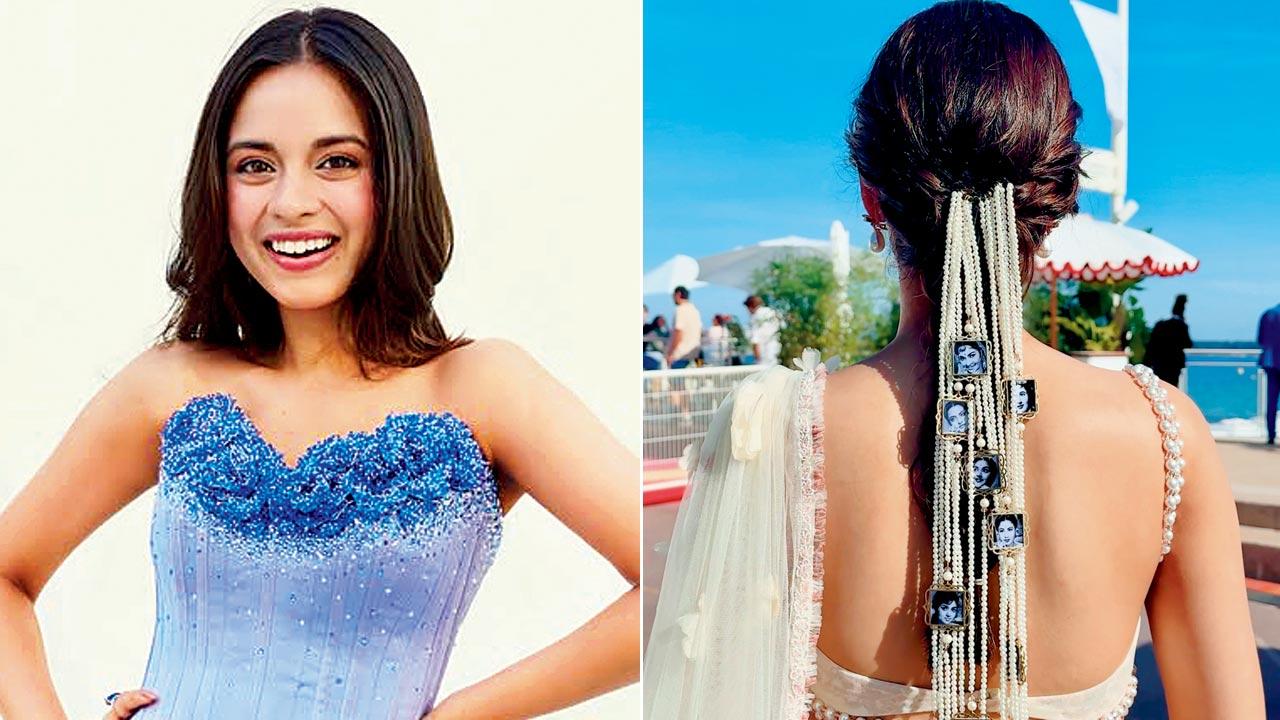
Laapataa Ladies actor Nitanshi Goel pays homage to Madhubala, Waheeda Rehman, Rekha, and Hema Malini, among others at her debut Cannes appearance
Priyanka Sharma (MID-DAY; May 21, 2025)
Actors usually put their best fashion foot forward to walk the red carpet, especially when it is for the Cannes Film Festival. Nitanshi Goel combined fashion with emotion as she made her debut at the festival with an homage to Madhubala, Rekha, Sridevi, and Hema Malini, among others. Goel, who rose to fame with her debut film Laapataa Ladies (2024), was seen sporting a pearl hair accessory (parandi) with frames of veteran actors created by jewellery brand BeAbhika.
Speaking to mid-day about the inspiration behind this gesture, she says the idea was to pay an homage that “felt personal yet celebratory”. “It came from love for the icons who’ve defined grace, strength, and cinematic brilliance in Indian cinema. Their presence has always felt timeless, and I wanted to carry their spirit with me to Cannes. These women walked so we could run,” beams Goel, who was part of the newly-inaugurated Bharat Pavilion — the government-backed platform at Cannes — aimed at promoting Indian cinema.
By representing India at the festival, her dream became a reality. She says, “I was there to celebrate our culture, stories, and the women who’ve shaped it so beautifully. The experience was filled with inspiration, heartfelt conversations, and warmth from people all over the world. I’ve returned with a heart full of gratitude.”
Still basking in the acclaim and accolades for Laapataa Ladies, Goel shares that the film’s glory is reflected in the offers she gets now. “The parts coming my way now are more layered and diverse. I feel ready to dive into stories that challenge me,” she says.
An advice from Rekha
Nitanshi Goel holds her meeting with Rekha close to her heart. She shares that the yesteryear actor once told her, “Be patient with the journey, and protect your truth.”
Documentary on Rakesh Roshan, Hrithik Roshan and family to feature interviews of Shah Rukh Khan, Rekha
9:36 PM

Rakesh and Hrithik-created docu on Roshan family to feature interviews of collaborators Rekha, SRK and more; being designed as a musical entertainer
Upala KBR (MID-DAY; July 22, 2024)
It has been a seven-decade love affair between the Roshans and cinema. Over three generations—beginning with composer Roshan, followed by his filmmaker-son Rakesh Roshan and musician-son Rajesh Roshan, to the superstar Hrithik Roshan—the family has contributed immensely to Bollywood. Last July, mid-day had reported that a documentary, titled The Roshans, was in the making (Shedding roshni on the Roshans, July 27).
A year on, we’ve heard that director Shashi Ranjan has wrapped up the shooting and is currently overseeing its editing. The docu-series will begin in 1948, when the late Roshan arrived in then-Bombay and quickly became one of the most successful composers of his time. Over four to five episodes, it will look at the family’s continuing legacy, Hrithik’s journey as a superstar and will end at the smashing success of Krrish 3 (2013).
A source, who has worked on the project, reveals that by speaking to their frequent collaborators and friends, director Ranjan has examined the family’s role in the industry today.
“Besides featuring the family, the series includes interviews of past superstars Jeetendra and Rekha, as well as current ones including Shah Rukh Khan and Priyanka Chopra. Sham Kaushal, who has served as an action director on most of Rakesh’s movies, also features in it. The Roshans and the Kapoors are among the few families, spanning three generations in Bollywood. From Hrithik’s blockbuster debut with Kaho Naa Pyaar Hai [2000] to Rakesh triumphing over throat cancer, this series will put the spotlight on how they went through the highs and lows to reach where they are today.”
Rakesh—known for his hits Khoon Bhari Maang (1988), Karan Arjun (1995) and the Krrish franchise—is supervising every aspect of the project, and has brought his sharp sense of storytelling to it.
“As one of the producers of the series, he is sparing no effort in making it entertaining and slick. An interesting aspect is that he has designed it as a musical entertainer that includes songs from his past movies as well as his father’s and brother’s compositions. While Hrithik is busy shooting for War 2, he has watched all episodes and given his suggestions.”
The source adds that after the editing is wrapped up, the makers will shop it around to the top streamers.
At Heeramandi's premiere, Rekha ji said, ‘Lo, hum toh aapke fan ho gaye’-Jayati Bhatia
8:55 AM

Akhya Shriti (HINDUSTAN TIMES; June 11, 2024)
Jayati Bhatia considers herself “blessed” to have been a part of the Sanjay Leela Bhansali universe, and being around the filmmaker was nothing but “pure happiness” for her.
The actor, who has been getting recognition for her character of Phatto in Heeramandi: The Diamond Bazaar, tells us, “I’ve learned so much just by being on that set. I remember when I did theatre, I’d get butterflies and I’d be overwhelmed before going up on the stage; I felt exactly the same roller-coaster ride in front of the camera during Heeramandi’s shoot.”
Amid all the compliments, Bhatia says getting praises from veteran actor Rekha meant the world to her. “During the premiere, Rekha ji was talking to my co-actor Sanjeeda (Shaikh), as I stood in the corner, totally starstruck as I had never seen her from such a close distance before. She saw me, stopped the conversation midway, came up to me and said, ‘Lo, hum toh aapke fan ho gaye’. She gave me a hug and pecked my cheek,” gushes Bhatia, adding, “She also complimented me for working on my character the way I wanted. It was such a beautiful thing to hear and I’ll forever be grateful.”
Meanwhile, Bhatia is aware of the backlash her co-star, Sharmin Segal Mehta is facing. Stating that Bhansali got exactly what he was looking for from Alamzeb’s character, the actor feels Mehta is being unfairly targeted.
“People are trolling her unnecessarily by digging up old interviews given during promotions. She’s a young girl, who doesn’t know how to sugar-coat her words. She’s neither trying to put down anyone nor make others think anything highly of her. She is a person with a pure heart and has nothing against anyone,” Bhatia ends.
I would love to act in a biopic of Madhubala, Zeenat Aman, Waheeda Rehman or Rekha-Ananya Panday
8:34 AM

Ananya, who has cyber thriller Control and Call Me Bae in the offing, keen to widen her range as an artiste with a biopic
Upala KBR (MID-DAY; February 3, 2024)
You can’t blame Ananya Panday for being greedy as an artiste. She has tasted blood with Kho Gaye Hum Kahan (2023), and now she wants more. The actor has a promising line-up that includes Vikramaditya Motwane’s Control, Collin D’Cunha’s Call Me Bae and the yet-untitled film with Akshay Kumar. But she is eyeing a new goal—headlining a biopic.
The actor recently watched The Crown, and Elizabeth Debicki’s performance as Princess Diana seeded the desire. “I loved how she completely became the character and yet brought so much of herself to it. I would love to do a biopic, transforming myself into someone who already existed,” shares Panday.
She has a wishlist, though she admits to being unsure whether she can do them justice. “I would love to act in a biopic of Madhubala ji, Zeenat Aman ji, Waheeda [Rehman] ji or Rekha ji.”
For now, Panday is being moulded as an actor by some fine directors. Having wrapped up Motwane’s cyber thriller, she says, “Vikramaditya is a dream director. [While shooting], you don’t realize what you are learning. But later, when you do something [in front of the camera], you realize you had learnt it from him. He wants everyone to grow with him.”
Being directed by D’Cunha on her maiden web series has been a fun ride. “I’d make Colin enact scenes and he’d bring his own funny twists.”
If people learn smoking, vulgarity from films, then why don’t they learn when a film is telling good things?-Vidya Balan
2:24 PM

Niharika Lal (BOMBAY TIMES; December 4, 2023)
During a recent discussion on initiating change and becoming the poster girl for substantial films with women in lead roles, Vidya Balan said that it was never a conscious choice to play certain kinds of characters. “I didn’t see the glass ceiling, I saw the sky,” she said.
‘WOMEN ARE NO LONGER DEFINED BY THEIR RELATIONSHIPS WITH MEN, SO THAT’S WHAT WE ARE SEEING IN CINEMA ALSO’
Discussing how films like Bandini (1963) and Sujata (1959) had women in lead roles, and why female-led movies suddenly disappeared from the big screen, Vidya said, “Because women were not seen in society. It is as simple as that, so they were not visible in films. Society is not a mirror of films, but our films mirror society. It is as simple as that.”
Vidya added that now that women are taking centre stage in their lives, they want to see that reflected on screen. “We don’t want to see women (on screen) as sacrificial mothers, the wife who puts up with everything for her husband or a daughter who is pious. We are not defined by relationships with the men in our lives anymore. We are our own people and because we are our own people that’s what we are seeing in cinema. That’s why we are willing to go and buy tickets and watch those films,” she said.
‘I USED TO WONDER WHY CAN’T WOMEN DOING LEAD ROLES BE THE MAINSTAY’
“For me, it was never a conscious decision to break the glass ceiling. I didn’t see the glass ceiling; I just saw the sky. We had Meena Kumari, Rekha, Jaya Bahaduri, Sridevi, Hema Malini, Smita Patil, Tabu – Invariably, every female actor had one or two of those (lead) films in their entire career, spanning decades. I wondered, ‘Why can’t it be the mainstay? Why can’t women be just doing substantial films? Why can’t women be doing not just serious and intense but comedy roles too?’… I think maybe the world was moving in that direction, and that’s why I had the desire in me too. It all aligned. The universe responded with great opportunities. And today, we have a situation that is far better for women.”
‘FILMS DON’T HAVE THE POWER TO INFLUENCE SOCIETY, SOCIETY INFLUENCES FILMS’
Responding to a question on doing films with a social message, Vidya said, “Sandesh dene ka kaam politicians ka hai aur hum yahaan keval manoranjan karne baithe hain. If along with that we can compel you to think about any particular issue, then that’s a win for us. Like audience, we are also a part of the society. Yes it’s said that people learn smoking, drinking, vulgarity from the films, but then why don’t they learn when a film is telling good things? I don’t think films have the power to influence society; society influences films.”
If required, I can break people’s noses to protect my sisters-Akriti Kakar
8:14 AM

Debarati S Sen (BOMBAY TIMES; August 30, 2023)
Bollywood singer Akriti Kakar and her twin sisters Sukriti and Prakriti are celebrating Raksha Bandhan in a special way this year.
“For us Raksha Bandhan has always been about us. This auspicious day is about the sisters tying Rakhi to their brothers and he is entrusted with the responsibility to protect them irrespective of whether he is older or younger than them. But hum toh teen behenein hain and honestly, I, as the elder one, never missed having a brother or having a boy for a sibling. As a kid, I was determined to have a sibling and maine mannatein maangi, aur itne prayers kiye ki Bhagwan ji ne kaha hoga, ‘You take one plus one free’ and when I was eight, my sisters were born. We were raised in such a way that we never missed having a brother. If required, I can break people’s noses to protect my sisters! Protecting and standing up for each other came naturally to us,” says Akriti who is known for hits like Saturday Saturday (Humpty Sharma Ki Dulhania), Iski Uski (2 States), Khudaya Khair (Billu).
Sukriti, who has worked on peppy numbers like Jhoome Jo Pathaan (Pathaan), Kar Gayi Chull (Kapoor & Sons) and others, confesses that their upbringing was such that they never missed a brother. She says, “I have been in a lot of situations when I don’t think even if I had a brother, I would be more protected than I have been with them. These two can say anything to me but if someone else says something then they will pounce. We have been raised thinking we are no less than men and that we are everything that we can be. Our parents would constantly make us believe in ourselves. We never needed a brother.”
‘There is no void in our lives because we don’t have a brother’
With songs like Katra Katra (Alone), Hawa Hawa (Mubarakan) and other hits, the youngest sister, Prakriti too, has made a name for herself in the Hindi film music industry. She says, “There is no void in our lives because we don’t have a brother. I have two fiery sisters and so you cannot mess with me or with them! There have been so many situations when they have stood up for me in so many ways.”
‘This festival has always been very special for all of us’
The Kakar sisters have grown up tying rakhi to their father. “Raksha Bandhan is a sweet little celebration for all of us. All these years we have been tying rakhi on our Dad’s wrist as he is our bro and our father. Later, we began tying Rakhi to our brother-in-law Chirag and our pet dogs Audio and Popcorn. They remove in just ten seconds though!” says Prakriti.
Akriti adds, “Over the years we have created our own traditions and Rakhi is special for us. We anyway do what we are meant to do for Raksha Bandhan between the three of us and this year we also start our own new tradition and tie Rakhis to each other. It took a while to calculate how many rakhis we would all need.”
Prakriti adds, “Raksha Bandhan is all about protecting people you love and that is what we are celebrating this year. Whether it is our dad, our brother-in-law or each other.” Akriti quips, “And the best thing is that it is not just about the men in the family protecting us, it is vice-versa too!”
My voice suits:
Akriti: Everyone! Kareena Kapoor, Katrina Kaif, Alia Bhatt. But if Rekha ji ever does a movie, I would love to be her voice. Toh phir jeevan safal.
Prakriti: I think it's Priyanka Chopra. I’ve met her twice and the conversation I had with her was, ‘I really want to sing for you!’.
Sukriti: My voice would suit Kareena Kapoor Khan the most, I think. I have been a huge fan of hers all my life.
Composers I would love to work with:
Akriti: I really want to work with Vishal Bharadwaj Ji. Not just because his music has a timeless quality but hamesha se I’ve been an ardent fan of the life that his music has, right from ‘Paani Paani Re’ days. And of course, A R Rahman Sir. I feel he brings out the best tonal quality and singing ability in every singer. Most singers sound different when singing for him than for other composers.
Sukriti: I have always had a dream to see myself as a singer in a Sanjay Leela Bhansali film. I’ve always dreamed about how my tonal quality would sound with him as a composer and what he would do with my voice. I’d love to work with him.
Prakriti: For me, it's Pritam Da any day! I have sung a few for him here and there but nothing has been released yet. I really love the way he casts his singers in a movie. It is amazing and it would be my life’s honour to sing something crazy for Pritam Da!
35 Years of Khoon Bhari Maang: Rekha didn’t know horse riding, my heart was pumping during the shoot-Rakesh Roshan
9:01 AM

Navya Kharbanda (HINDUSTAN TIMES; August 12, 2023)
When director Rakesh Roshan was casting for Khoon Bhari Maang, his choice was very clear. “I knew Rekha would play the lead heroine. I developed the story and went straight to her. She was really excited and that excitement pushed me further,” Roshan recalls, as the film clocks 35 years today.
On how the other actors came on board, the 73-year-old shares, “I had to cast a usual but charming-looking husband. So, I spoke to (actor) Kabir Bedi and sent him the script, and he agreed. For the antagonist, I was looking for a very fresh face. I had seen (actor) Sonu Walia in a dubbing studio and thought she could play the negative part. That’s how she became a part of the film.”
One of the standout moments during the filming was Rekha’s horse-riding scene. Speaking about its filming, Roshan recalls, “When the moment came, she told me she had never ridden a horse before! But she said, ‘Don’t worry, I will do it’. My heart was pumping throughout, thinking, ‘Kahin yeh girr na jaaye.’ But once she sat on the horse, she rode it like she was a born horse rider.”
Another notable and scary sequence from the film is when Aarti’s (Rekha) husband tries to kill her by pushing her into a lake teeming with crocodiles. “It was a very new concept at that time, so it was very exciting for me to shoot that plot. It was a step ahead of its time,” mentions the filmmaker, ruling out the idea of a remake of the movie as he says, “Classics can never be remade.”

35 years of Khoon Bhari Maang: Young girls were scared of me after watching the film-Kabir Bedi
9:00 AM

Sugandha Rawal (HINDUSTAN TIMES; August 12, 2023)
It was a phone call from director Rakesh Roshan that propelled actor Kabir Bedi to take a break from his Hollywood stint and come to India to be a part of Khoon Bhari Maang (1988). Now, the actor is happy about his decision. “When Rakesh Roshan called me to be the hero of his film, I asked, ‘Are the actors in Bollywood on strike that you are calling me?’ But he explained that no other hero was ready to play the character as it turns villainous,” recounts the 77-year-old, adding, “I agreed after learning Rekha was the leading lady.”
The film narrated the story of a woman seeking revenge from her husband, who tries to kill her by throwing her to the crocodiles in a lake. Bedi credits Roshan for bringing out the best in him and Rekha, and giving him an iconic character. “Till date, people talk about the scene where I threw Rekha to the crocodiles. A lot of young girls were scared of me after watching the film. I was thought of as the most dangerous man on the planet back then,” he laughs.
Recently, Bedi shared a picture with Rekha from an awards show, stirring talks of remake among fans. But the actor is against the idea. “There will be no thrill because you already know what the story is and it has been done well by actors,” he ends.
20 Years of Koi Mil Gaya: Hrithik Roshan was born in front of me-Rekha
9:13 AM

As Koi Mil Gaya is re-released to mark its 20 years, Rekha says her deep bond with Hrithik since his childhood made it easy to play his on-screen mother
Priyanka Sharma (MID-DAY; August 8, 2023)
When someone says Koi Mil Gaya (2003), we think of Jadoo. But the sci-fi drama also boasted of talent in two distinct forms—on the one hand was the raw talent of Hrithik Roshan, then an emerging star. On the other hand was the enduring magic of Rekha, whose skill only burnishes and shines brighter with the passage of years. As Koi Mil Gaya releases in theatres again to mark its 20th anniversary today, the usually reclusive Rekha says she is proud to have been part of director-friend Rakesh Roshan’s film. “Guddu-ji [has the ability] to catch dreams from the clouds and translate them into beautiful films,” she says.
The two go a long way back, having co-starred in Khubsoorat (1980), Bahurani (1989) and many other films. When Rakesh turned filmmaker, he trusted her to shoulder Khoon Bhari Maang (1988). Years later, when he conceived of Koi Mil Gaya, the filmmaker could only envision Rekha as the iron-willed mother who raises her son, with developmental disabilities, single-handedly. The veteran actor counts him among her favourite filmmakers.
“I have a deep connect with Guddu-ji’s vision, and with the characters I’ve played in his films. It is rare for an actor to also excel at direction. The one person I’ve admired is Raj Kapoor saab, and Guddu-ji has also proven his mettle as a director.”
To her, Koi Mil Gaya—also starring Preity Zinta—is a testament to the director’s ability to marry Indian values with global sensibilities. “Guddu-ji is proud of his culture and traditions. He is subtle at expression. The Indian woman for him is an embodiment of Devi Maa, who has many hands and multi-tasks.”
What made the film all the more special to Rekha is that it teamed her up with Hrithik. Their off-screen affection translated on screen as she played a protective mother to him. “With Duggu, I share a bond; he was born in front of me! So, in our scenes, there was an intensity, emotion and natural ease that raised the scenes to the level of reality,” she smiles.
The scene where the bullies break Rohit’s scooty, had happened to me in real life-Hrithik Roshan
9:11 AM

Rishabh Suri (HINDUSTAN TIMES; August 8, 2023)
The year was 2003. And alien films were, well, an alien concept to the Indian film industry. Koi... Mil Gaya changed that forever. The film, directed by Rakesh Roshan, was not only a success, but also cemented Hrithik Roshan’s acting chops with his portrayal of a specially-abled character. Talking to us on the film’s 20th anniversary today, the actor gets nostalgic.
“I had a deeper connection with my inner child while shooting the film. That’s something that I miss. Then I miss Jaadoo — there is an emotional connection that I have with him. It wasn’t a conscious decision to enhance my career — it was a decision taken solely from my heart... [With this film], I became more clear on the kind of films I wanted to be a part of in the future,” he tells us.
----------------------------------------------------------------
Rohit Mehra was an extension of my real self. It is from a lesser-known time of my life, my school days. I used to stutter since childhood, and just like in the film, not all people would be sensitive to my speech limitations and that would lead to bullying. In fact, the scene where the bullies break Rohit’s scooty, had happened to me in real life where some older boys broke my cycle, which was my most treasured possession as a child. I was heartbroken and it made me angry. The honesty and reality of the situation are what were seen onscreen.
----------------------------------------------------------------
For It’s Magic, I just set myself free and danced as if no one was watching! Rohit’s moves had to be similar to his body language — he would walk a little differently, move in a certain way, tilt his head at an angle, express a lot through his eyes and have an ‘I can do it all’ attitude. I had to imbibe all these peculiarities of Rohit for his dance, too. Credit to Ganesh Hegde, who understood the finer details and choreographed the song after observing me as Rohit.
----------------------------------------------------------------
A MEMORABLE SLAP
Rekha ma’am is a force of talent. She has worked with my father as a co-star and has been a part of his directorial, Khoon Bhari Maang (1988). This was the first time I shared screen space with her. I remember shooting for the scene where she slaps me. Right before filming it, she told me that she would slap me in real life to portray the impact. When we shot the scene, she went into character and slapped me really hard. It sure got the emotions flowing within me and that translated on screen. But that one was one memorable slap!
----------------------------------------------------------------
THE MAGIC OF JAADOO
The first time I saw Jaadoo was when Australian artistes James and Lara shared a sketch based on the brief my father (Rakesh Roshan) had given them. It was their first draft and the moment we looked at it, we knew that this was Jaadoo. From then on, the journey to it becoming a tangible reality was a long one. Jaadoo was an animatronic character. It was wired inside and operated using a remote, so it took months to be made. During the shoot, we would often take about four to six hours to shoot a single scene with Jaadoo as the eyes and hands had to be manually synced for the emotions to be exhibited in the scene. It was a tedious task, taking retake after retake, but papa ensured that by the end of each day, we had a shot that was perfectly synced.
----------------------------------------------------------------
A TRANSFORMATION FOR THE AGES
I started shooting for Koi... Mil Gaya soon after wrapping up another film. I was pretty muscular and as much as I’d have liked to gain and lose weight for Rohit’s character arc, I was on a deadline. I only had a few weeks to showcase a physical transformation that would’ve taken months. Instead, I opted for baggy t-shirts that covered my biceps in the first half of the film. We brainstormed on a hairstyle that made my face look slightly rounder. For the second half of the film, I simply had to undo my construct and look a lot like my off-screen self at that time.
We have Allu Arjun going de-glam in Pushpa, but such remarks are not made about him-Huma Qureshi
8:28 AM

Shunning glamour to play a middle-aged home-chef in Tarla, Huma says industry and media pressure heroines to always look beautiful
Priyanka Sharma (MID-DAY; August 7, 2023)
In nine months, Huma Qureshi has embodied three women—a plus-sized woman who won’t be bogged down by society’s beauty standards in Double XL (2022), a seductress in Monica O My Darling (2022), and a homemaker who becomes a celebrated cookbook author in Tarla. That she did justice to each part only speaks about her versatility.
“People are saying that I’ve played the character in Tarla without vanity and with courage. These diverse choices have been conscious,” begins Qureshi.
To let go of vanity is certainly not easy for an actor. But Qureshi had no qualms playing a middle-aged woman in Tarla, sporting prosthetic teeth and oversized glasses. She admits that there is constant chatter about one’s looks. “Had I allowed my vanity or fear to get in the way, it would’ve reflected on screen. The chatter about vanity is more around female actors. In a recent interview, I was told, ‘You are playing the kind of characters in your prime, which actresses play after their comeback.’ The lens through which journalists [view actors] also needs to change. We have Allu Arjun going de-glam in Pushpa: The Rise - Part 01, but such remarks are not made about him. So, why are female actors asked such questions?”
The inherent sexism plagues the industry as much as the media, states Qureshi. She believes it’s important to fight the mindset and normalize heroines playing characters that belong to different ages and backgrounds.
“I am pretty vain, I love fashion, and my Instagram handle is testimony to it. But it would be limiting if I’m only known for that. Why is it important for a woman to always look glamorous? Everyone talks about the age of the characters you play, but I am at an interesting stage where I can play someone older and younger. Also, actresses who have taken such risks have enjoyed longevity, as opposed to those who want to pretend they are 19 throughout their career. I don’t blame the women, I blame the expectation of always looking beautiful.”
A shift is required to move away from such ageist ways. She highlights it further, saying, “Zeenat Aman-ji and Rekha-ji are looking stunning on magazine covers. But where are parts being offered to them?”
We rehearsed Shah Rukh Khan's performance on Jhoome Jo Pathaan 21 times at his house-Shiamak Davar
8:19 AM

Rishabh Suri (HINDUSTAN TIMES; April 4, 2023)
Shiamak Davar choreographed all the dance performances for the Nita Mukesh Ambani Cultural Centre gala. Ask about his favourite moment and the National Film Award-winning choreographer recalls the time “when Shah Rukh Khan (actor) appeared on stage”. He says, “We rehearsed his performance on Jhoome Jo Pathaan 21 times at his house. He was such a sweetheart. It took me a week to choreograph all the performances.”
Spilling the beans on what it was like to be there at the lavish affair, the 61-year-old says, “It was an intimate affair. My team, managers and assistants had put in a lot of hard work and I couldn’t believe how wonderful it (the performances) turned out. My dearest Nita and Mukesh (Ambani) were clapping and screaming, while Isha (Ambani; entrepreneur-daughter) and I sat on the steps and watched the whole show. Rekha ji (actor) was there, too. The energy in the room was wonderful and so positive.”
What was also special for him was working with his students Varun Dhawan and Alia Bhatt (actors) again.
“I also got to work with Shah Rukh after so many years. Alia was fabulous and Rashmika Mandanna (actor) was outstanding. Varun is my jaan, he is such a sweetheart. He learnt all the new steps and worked really hard. Ranveer Singh (actor) is so high-octane,” exclaims Davar.

Mumbai is not conducive for filmmakers now; boycott trend comes later-Muzaffar Ali
7:42 AM
Sundas Jawed (CALCUTTA TIMES; January 17, 2023)
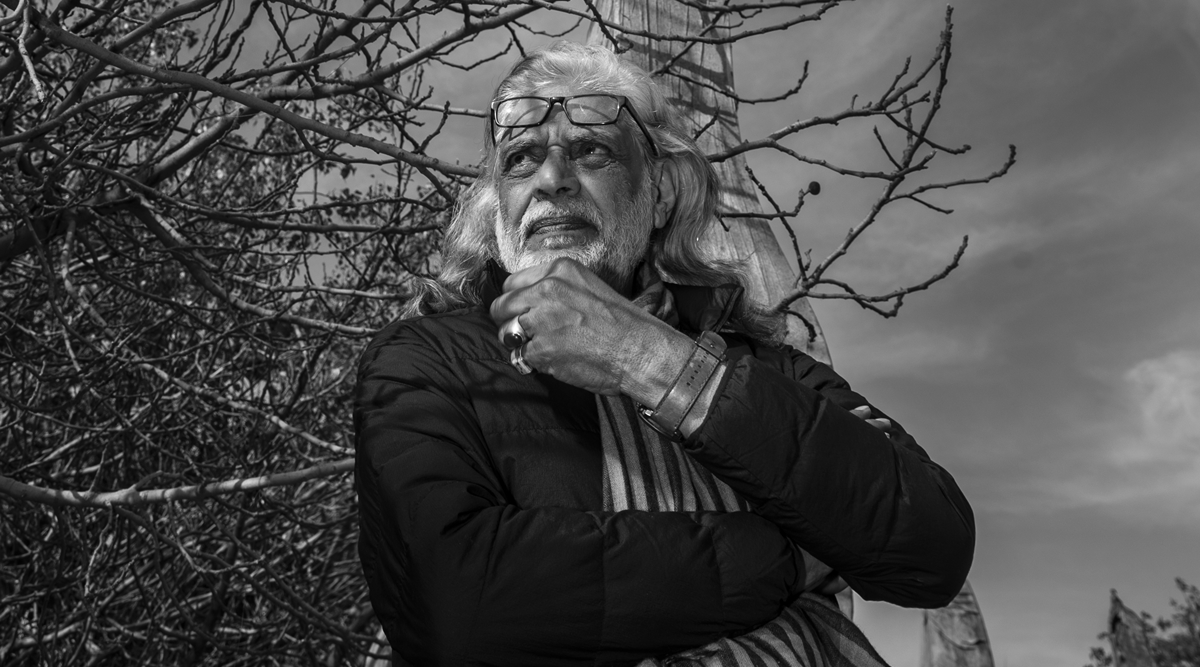
Muzaffar Ali recently weaved magic with his words at a literary festival in Kolkata. From sharing why Kolkata is significant for him to what went into finding his Umrao Jaan and why he is staying away from filmmaking, the 78-year-old actor-filmmaker-poet-designer touched upon topics close to his heart. Excerpts from his session and a chat with CT:
‘KOLKATA IS WHERE I GOT MY FIRST COMPLEX, CULTURAL & PROFESSIONAL EXPOSURE’
I got my first complex, cultural and professional exposure in Kolkata. Wherever I go, I go with a clean mind and when I came to Kolkata, I came with nothing but just Ghalib’s famous quote – Kalkatte ka jo zikr kiya tune humnashi, ek teer mere seene mein maara. I slowly began discovering the many layers of Kolkata, which I have never found in any other city. I got exposure to a more practical world, a world trying to make a difference through commerce, politics and at the same time helping me find myself. Kolkata in that sense became a significant place for me. Mumbai was as astounding as Kolkata, but one must come from Kolkata to understand Mumbai. And here I am not talking about the Bombay of business people, I am talking about the Bombay of the soul.
‘KOLKATA HAS GIVEN ME SO MUCH’
Kolkata is and was history in the making. It is a culturally rich city; it has always had a sense of poetry and appreciation for art, which still continues. It is a revolutionary place, and one must live here to understand the essence of the city. I have lived here for two-three years, and the city gave me so much. Kolkata is a place that challenges you, probes you, makes you think and makes you do things. Coming to its food, I don’t think there is anything like the kathi rolls of Kolkata. I first had them in the 1960s at a famous food joint in central Kolkata.
‘ART IS COMMERCIALIZED IN INDIA’
The ecosystem in Mumbai currently is not conducive for filmmakers to make movies; boycott culture comes much later in the scene. Me staying away from filmmaking has got nothing to do with boycotts. People should respect your taste and not think that your work isn’t commercial enough. Art is commercialized in India. The way money is handling art is not the way art should be handled. More than censorship, what is important is the freedom of art. The artist needs to feel a sense of elation with his art and expression.
‘IT WAS NOT EASY TO FIND UMRAO JAAN’
Casting of Rekha was another phenomenon. It was not easy to find Umrao Jaan, but I was lucky to find some photographs and after seeing them I was sure that Rekha’s eyes were the eyes that could tell the story I wanted to. However, transforming a woman into a character that could rule over the hearts of many was not easy. A lot of effort by many people had gone into bringing out the sensitive grace that Umrao Jaan needed – it required patience and creativity.
With other stars, their entourage can be overwhelming, but Madhuri Dixit's team is like a fly on the wall-Gajraj Rao
8:21 AM
Renuka Vyavahare (BOMBAY TIMES; October 7, 2022)
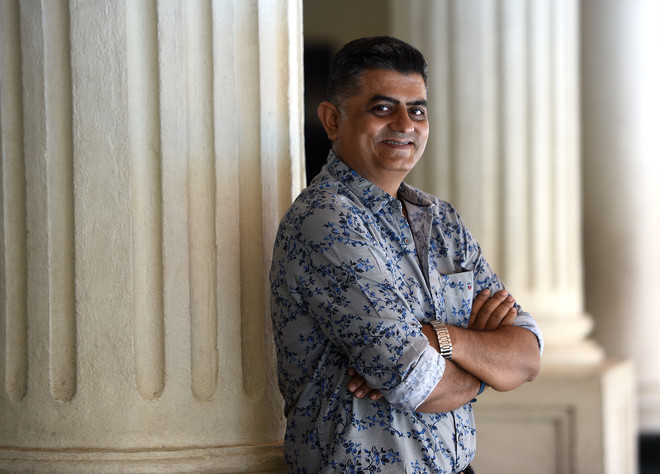
Badhaai Ho transformed the course of Gajraj Rao’s career. Ever since, the actor has been impressing us with his immense talent. He now stars alongside Madhuri Dixit in Anand Tiwari’s film Maja Ma, which is now streaming on Amazon Prime Video. In a candid chat, he talks about his journey, the zone of cinema he belongs to, and his motivation to work in Maja Ma — Madhuri Dixit. Excerpts:
What about Maja Ma appealed to you the most?
It’s a family drama and though the colours and spirit have a Gujarati vibe, it isn’t stereotypical or language-centric. The name Madhuri Dixit was enough for me to do this film. The greatest motivation was her presence in the film. Unko itna dekha hua hai, unko itna admire karte hai, so to be able to work with her and be offered an important part alongside her was a big deal for me. I am from Delhi, and since the time I was doing theatre there, I remember flocking to cinemas to watch her movies like Hum Aapke Hain Koun and Prahaar. I feel Madhuri ji’s journey is reminiscent of Rekha ji as both were able to strike a fine balance between stylized commercial cinema and hard-hitting films (like Mrityudand). The way they smoothly switched their persona for different kinds of cinema was admirable.
Did you ever think that one day you would be paired opposite Madhuri Dixit on screen?
I never thought it was possible. When Anand Tiwari first offered the role to me, I thought it must be some part, but when I read the script, I figured it was Madhuri ji’s husband’s role! My friends in the US couldn’t believe it. They called to ask, “Gajju, are you sure that you have been paired alongside Madhuri Dixit as her husband? You are her hero!” I told them it’s not a hero-heroine story. It’s a family story. I don’t belong to the Shah Rukh Khan, Anil Kapoor hero zone. You need a certain talent and traits for those roles, and I don’t have it. I can act a little, and I am glad I got this part. I come from a theatre background, and the universe I belonged to only permitted me to admire someone like her from a distance.
Being such a talented actor, why did you feel that working with someone like Madhuri was a long shot?
Agar aap gully cricket khelte ho with a tennis ball, and someone tells you, ‘Gajraj, now you get to play a proper match with Sachin Tendulkar at the Wankhede Stadium’, this was that feeling. Madhuri ji is to films what Tendulkar is to cricket. They both have excelled in their craft. The experience of working with her and being around her for promotions surpassed my expectations. When she enters a set, she ceases to be Madhuri Dixit. On set, she was Pallavi Patel (her character in Maja Ma). She is aligned with her character on and off the camera.
Are you glad that cinema is finally moving away from the typical hero-heroine subjects to character driven stories like Maja Ma?
Event films, like Baahubali, demand larger-than-life characters because they are made on a certain scale. I like what Tom Cruise, Shah Rukh Khan or Tiger Shroff bring to the table. You need that hero-like charisma for these big-ticket entertainers, and we need such stories, too, because they are aspirational. Aap hero ko filmon se hata nahi sakte because real life mein hero bahut kam hote hai. Like a parallel universe, two kinds of cinema can co-exist. Amitabh Bachchan ruled as a superstar, but at the same time, there was also Amol Palekar who the common man could identify with. Rekha ji did potboilers, but also did Umrao Jaan. There is space for both kinds of cinema.
Has OTT changed the game for actors, and would you say that the medium is more age and gender inclusive?
OTT has democratized things because there is no Friday pressure. Theatres need big faces for big openings. Audience shaayad Gajraj Rao, Ritwik Bhowmik, ya Srishti Shrivastava ke naam pe theatre mein nahi jayegi. Niche audience aayegi, but most may not turn up. So, theatres need actors who are talented and have certain stardom. OTT doesn’t have those restrictions, so you can tell a story freely. You can cast actors strictly on the basis of their acting calibre and not stardom. The script is the new hero on the web because people have the power of a remote. It’s a golden period for actors and technicians. Look at Raveena Tandon, Sushmita Sen and Juhi Chawla…they are doing such good work on OTT. Maybe it was difficult to write relevant parts for them in commercial cinema due to box office demands. Good writers are now in demand because they have that freedom.
The story of Maja Ma revolves around a family. What was the mood like on set?
The bonding and interaction between the family members in the film — Madhuri ji, Ritwik and Srishti (who play out children) and me is incredible. There was warmth, love and laughter on set. No one rushed home once the shoot was over. We played antakshari and dumb charades, and huge credit goes to MD for bringing that energy on set. With other stars, their entourage can be overwhelming, but her team is like a fly on the wall. They’d quietly sit in the corner. Unlike many successful stars, she doesn’t wear her superstar status on her sleeve. Working with her felt like a beautiful dream.
My character had to die very early in the show. As it was so loved by viewers, it got an extension-Yogendra Vikram Singh
8:15 AM

Akash Wadhwa (THE TIMES OF INDIA; June 18, 2022)
Faizabad-born actor Yogendra Vikram Singh became a household name after he played Samrath in Ghum Hai Kisikey Pyaar Meiin. He recently bid goodbye to the show and though he is emotional about his track ending, he is also happy that he got a call from his favourite actress Rekha.
He says, “It was Rekha ji who had introduced my track in the show. It was an emotional moment when she called to tell me how she liked my journey in the show and that she was going to miss seeing me in it. It really made my journey more worthwhile. In fact, not many people know this, but my character had to die very early in the show. However, because it was so loved by viewers, it got an extension. Now, I have finally made an exit.”
Yogendra, who has been part of films like Gunjan Saxena: The Kargil Girl, Baabarr, NH10 and Saand Ki Aankh among others, says he is happy working on the small screen. “With just one TV show my followers increased manifold on social media. Such is the power of this medium. Ab woh din aa gaye hai when people recognize me and now I don’t have to introduce myself to people every time. It is a good feeling,” he says.
So what next? “I would now like to play a lead character in a TV show, whether it is a positive lead or a negative. Plus, I have a film titled Woh Ladki Hai Kahaan, too, and a couple of OTT projects as well,” he says.
T Rama Rao, versatile film director, passes away at 83
8:16 AM

THE TIMES OF INDIA (April 21, 2022)
Chennai: Versatile and prolific producer-director T Rama Rao, who had an unerring knack for finding the popular pulse across languages and regions, passed away after a brief illness early on Wednesday. He was 83.
Known for making films at a brisk pace, he was a hugely in-demand director for Hindi films produced in the South in the 1980s. Family yarns (Judaai, Sansar), conservative romantic drama (’Maang Bharo Sajna’, ‘Ek Hi Bhool’), inspirational stories (’Nache Mayuri’), action films (’Andha Kanoon’, ‘Watan Ke Rakhwale’) - Rama Rao found success in a variety of genres.
Making his debut as a director in the Telugu film ‘Navarathri’, featuring A Nageswara Rao in 1966, Rama Rao directed a slew of Telugu films till the late 70s including ‘Jeevana Tarangalu’ and ‘Yamagola’. He made his Hindi debut by remaking ‘Yamagola’ as ‘Lok Parlok’ in 1979. The film created a huge controversy and was briefly banned.
There was no looking back for Rao till 2000, as remade several Tamil and Telugu films in Hindi and directed several leading Bollywood heroes including Amitabh Bachchan, Jeetendra, Dharmendra, Mithun Chakraborty, Anil Kapoor as well as female stars Rekha, Sridevi, Jaya Prada and Madhuri Dixit. Rama Rao launched actor Rajinikanth in Hindi, when he remade Tamil hit ‘Sattam Oru Iruttarai’ as ‘Andha Kaanoon’ in which Amitabh made a special appearance. He also directed one of Kamal Haasan’s early Hindi films, the amiable hit, ‘Yeh Toh Kamaal Ho Gaya’.
From the early 2000s, he turned his attention back to Kollywood as a producer and made quite a few hits including actor Vikram’s ‘Dhil’ and ‘Arul’.
Rekha ji told me ‘I haven’t seen a screen presence like yours in a long time’-Sharvari Wagh
8:13 AM

Rishabh Suri (HINDUSTAN TIMES; April 1, 2022)
Actor Sharvari Wagh is prepping for her second project after her big screen debut with Bunty Aur Babli 2 (2021). While the box-office collections were impacted by the pandemic, her performance did get her noticed. Meeting high expectations after a promising first act, and not having any connections within the industry, could prove challenging and weigh a person down — but not Wagh.
“I don’t want to take any pressure with my next performance. I don’t think any creative process can be justified if you take pressure about what the end result is going to be. You go on set and perform to the best of your abilities. After that, what happens, happens,” she says.
Speaking of the industry, Wagh shares she does feel at home, and the people have been welcoming. “Debuting with a film like that (Bunty Aur Babli 2) puts you on the map, I am really grateful and thankful to the industry. I have received many messages and calls from a lot of people I would love to work with. They are appreciating my work and performance. It’s been a really warm welcome and I can’t wait to collaborate with these people,” gushes the 25-year-old.
But the one compliment she holds close to her heart, came from veteran actor Rekha. She reveals, “I remember, a day after the release of Bunty Aur Babli 2, I got a call from Rani (Mukerji, co-star) ma’am. She said Rekha ji wants to talk to me. I couldn’t believe it. For someone like her to call and speak to me after watching my film, and tell me things like ‘I haven’t seen a screen presence like yours in a long time’, will always stay with me. I have always looked up to her, so for her to say that was the biggest compliment.”
Subscribe to:
Posts (Atom)