Showing posts with label Prem. Show all posts
Showing posts with label Prem. Show all posts
Prem says Sarke Chunar’s Karnataka, Kerala versions ‘received well’
4:42 PM

Rishabh Suri (HINDUSTAN TIMES; March 24, 2026)
The song Sarke Chunar from KD - The Devil has sparked controversy, from backlash over its lyrics to a reported fatwa against actor Nora Fatehi, who features in the track. Amid allegations that the outrage was orchestrated for publicity, director Prem has denied any such intent.
“I don’t want any controversy. Mine is an emotional film, and the song is meant to be something people dance to at parties. It’s been well received in Karnataka and Kerala. Why would I want controversy?” he says.
Prem explains that while he wrote the original Kannada lyrics, the Hindi version was translated by lyricist Raqueeb Alam. He admits he was unaware of the specific wording that later drew criticism. “Everything went smoothly with the Kannada original. I didn’t understand the Hindi words used in translation as I am not fluent in the language. I come from a village where phrases like ‘neeche mat gira, uthao’ are part of everyday speech, it’s Janapada,” he adds.
The filmmaker says the contentious lines have now been revised and the updated version will be sent to the Censor Board. Expressing regret, he says, “If anyone is hurt, I am very sorry. Our big film faced a small lyrics issue, but it has been blown out of proportion. There are so many larger problems in the world, war hai, LPG gas ki problem hai toh kyun ek gaane pe itni badi controversy kar di?”
People are reacting without watching the actual video or understanding the context-Prem
9:34 AM

Yemen S (BOMBAY TIMES; March 19, 2026)
The recently released lyrical video of Sarse Ninna Seraga Sarse from KD - The Devil, starring Dhruva Sarja, Reeshma Nananaih, Shilpa Shetty, Nora Fatehi and Sanjay Dutt, has sparked a wave of criticism online, with some netizens calling its lyrics and visuals ‘vulgar’ and ‘regressive.’ Just a few hours after the song was released, several users described the track as ‘regressive,’ arguing that it reinforces outdated stereotypes about women under the guise of mass entertainment.
A section of viewers also took issue with the choreography and styling, saying it leaned heavily on “male gaze-driven” presentation rather than narrative relevance. Critics on social media pointed out that such songs continue to normalize problematic portrayals, especially in big-ticket films featuring stars like Dhruva Sarja and Sanjay Dutt. Others questioned the creative choices, asking whether commercial appeal is being prioritized over sensitivity and evolving audience expectations.
‘Watch the full video before judging it'
In an exclusive conversation with Bangalore Times, director Prem defends his recent song Sarse Ninna Seraga Sarse, saying the outrage is premature and rooted in misinterpretation. Director Prem, who has also penned the lyrics, calls the backlash “misplaced” and urges audiences to reserve judgment until the full video is released. “If one’s angle of view is right, they won’t take this song the wrong way. Why is it that whenever a woman is involved, people assume the worst?” he asks.
Prem insists the lyrical video was only meant to pique curiosity, a standard practice in film promotions. “People are reacting without watching the actual video or understanding the context,” he says, adding that he is open to criticism — but only after the complete song is out.
‘The metaphor is lost in translation’
Addressing specific concerns about the lyrics, Prem explains that the song uses metaphor and wordplay, which may not be immediately obvious. “The entire song revolves around the ‘bottle’. I can’t keep repeating that word — it loses its charm. The visuals will make it clearer,” he explains. He points to specific lines in the song that, according to him, carry a deeper meaning. In the first verse, he writes “Kaiyal baatlu antha manevargo thakkondu hogbedi…” — a line he says is a caution against taking one’s drinking habits back home.
In the second verse, he adds “Meese hotthorigella, naan ondu question kella…”, which according to Prem the character questions men about why they seek time outside when they have a loving wife waiting at home. Prem maintains that these nuances are being overlooked. “People are not listening to the lyrics precisely before pointing out mistakes,” he says, reiterating that the full video will offer better context to the metaphors used.
On censorship and responsibility
Prem says he is not dismissing criticism but believes systems exist to address such concerns. “We have the Censor Board for a reason. I trust them and will stand by their decision.” He clarifies that while the Hindi version of the song has been taken down, he is not directly involved. “A different team handles the Hindi release,” he says, adding that the Kannada version will remain. Standing by his work, Prem reiterates that his intent is to entertain, not offend. “If a small section wants to label the song, they are free to. But I know I mean no harm.”
Mere saath dhokha ho gaya, says Raqueeb Alam on Sarke Chunar Teri Sarke controversy
8:43 AM

Debarati S Sen (BOMBAY TIMES; March 19, 2026)
The recently released track Sarke Chunar Teri Sarke, featuring Nora Fatehi and Sanjay Dutt, has triggered widespread backlash online over its lyrics, with much of the criticism directed at lyricist Raqueeb Alam. The track, part of the upcoming pan-India film KD - The Devil, was originally written in Kannada by the film’s director, Prem. Alam’s role, he says, was limited to translating the lyrics into Hindi.
‘I was told to just translate the Kannada song word for word’
As criticism over the song continues to escalate, Alam spoke to Bombay Times, alleging he was wrongly credited with the song’s lyrics. Opening up about the sequence of events, Alam claimed he had refused to write the track when he was approached by Prem.
He says, “Koi bhi lyricist aisa nahi likhega. Mujhe jab Prem ne likhne bola toh maine mana kar diya. I told him yeh theek nahi hai. Then I was told to just translate the Kannada song (composed by Arjun Janya) word for word – like ‘This is my book’ to ‘Yeh meri kitab hai’. So, I translated it and gave it to him. Prem told me, ‘Main dekhta hoon, main manage karoonga isko’. He then adjusted it with the meter and recorded it.”
‘I had told the director not to credit me as a lyricist for this song’
Alam further alleged that he had explicitly asked not to be credited for the song. He says, “When I gave him the translation, I had told him not to credit me as a lyricist for this song. After that, maine ek baar bhi woh Hindi translated song nahi suna. Kisne gaya, kahan record kiya, kuch bhi pata nahi tha mujhe. Only after the song was released did I find out that he had given my name in the credits, and I called him immediately. Maine uspe bahut chillaya, and I told him to remove my name and put his own or pull the song down completely.”
According to Alam, the director later agreed to take the song down. “Prem said that he would remove the song, and that eventually he did it, but by then the damage was done,” he said.
'Main aise song ke saath kaise associate ho sakta hoon?'
Calling the episode a "betrayal", Alam said, "Mere saath dhoka hua hai. This wasn't right. Mere bhi bacche hain, family hai. Main aise song ke saath kaise associate ho sakta hoon? Kal mere bachche mujhse puchenge ke aapne apne zindagi mein iss tarah ke gaane likhein? Toh mein kya jawab doonga?”
The lyricist, who has previously translated songs like Srivalli for Pushpa: The Rise - Part 01 and its sequel, as well as for films like Master, Jailer, Leo, and Varisu, among others, also underlined that he has consistently spoken out against vulgar content in music.
He said, “I have been someone who has spoken against vulgar songs in the past. Main khud bahut aware rehta hoon ki mujh se aise alfazon ka chayan nahi ho jisse hamare samaj pe, bacchon pe bura asar pade.”
------------------------------------------
"Once you sign a contract for a film, you are bound to fulfil its requirements. I refused to be part of this track once I read the Kannada lyrics, but I was asked to translate them into Hindi, and I had to fulfil my role as per the contract. I had told the director (Prem) not to credit me as a lyricist for this song"
-- Raqueeb Alam
------------------------------------------
Rishabh Suri (HINDUSTAN TIMES; March 18, 2026)
The track Sarke Chunar Teri Sarke, featuring Nora Fatehi and Sanjay Dutt, from the upcoming film KD: The Devil, has been drawing social media outrage for its vulgar lyrics ever since its release on Sunday.
When we reached out to its lyricist Raqueeb Alam, he outrightly denied it as his own creation: “Yeh lyrics maine nahin likhe hain, they were written by the film’s director, Prem, in Kannada. When I was asked to write all this, I refused, saying such songs will be censored. They told me to only literally translate and give it to them. Words like ‘choosega’, ‘chaatega’ are all there in the original version. Mujhe kya zaroorat hai aise gaane likhne ki? I am feeling humiliated.”
The official song version had been taken down by the makers from YouTube at the time of this article going to press. To this, Raqueeb adds, “They called me on Monday and requested that I write a fresh version with clean lyrics. They were planning to release the new version along with an apology note.”
People from within the industry have expressed shock. Singer Armaan Malik tweeted, “Sad to see commercial songwriting hit a new low.” Filmmaker Onir wrote, “...Strange country we are becoming... opposing Valentines Day celebration, interfaith marriage/ celebration, while ok with this rubbish.” Actor-politician Kangana Ranaut commented, “Bollywood has crossed all limits with vulgarity, tactics and attention-seeking.”
If you’re a 90s actor having done typical roles, it’s not easy to get a breakthrough in OTT-Sanjay Kapoor
8:55 AM
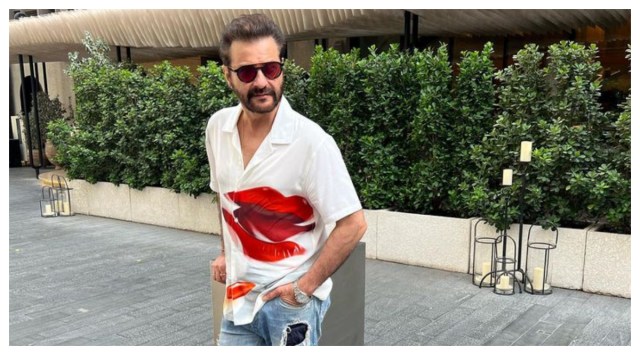
Neha Maheshwri (BOMBAY TIMES; September 15, 2023)
“I find myself in a good space today,” says Sanjay Kapoor, who has recently been seen in a string of interesting OTT projects. The actor seems to be in a phase where he is reinventing himself with every new project that he is doing. He talks to BT about how it took him so long to get his due and how he feels about where he is.
‘Good content needs talented artistes’
Self-admittedly, Sanjay, who will soon be seen in Sriram Raghavan’s film ‘Merry Christmas’, is in the best phase of his career with the kind of work he is doing on the OTT medium.
He says, “OTT has ushered in a great phase not just for me, but for most actors. For one, age is not a bar. Secondly, it is not dependent on the hits you’ve given. It’s no longerki ye bikta hai toh agar ye theek bhi kar lega toh chalega. It is sheer hard work, experience, and talent that will get you good projects. It’s a change that we are seeing in the film (big screen) scenario as well. Today, content is king, and good content needs talented artistes. OTT has extended the longevity of an actor as well as films. In fact, it has revived the 90s for me.”
‘I lost out on my prime years for no fault of mine’
Sanjay was once dubbed ‘the oldest newcomer’ in Bollywood when his debut film, ‘Prem’, took six years to complete. He was 30 when his first film hit the big screen.
He recalls, “Shekhar (Kapur) was to direct it before Satish Kaushik took over. It didn’t happen for some reason, and I lost out on my prime years for no fault of mine. ‘Prem’ and ‘Raja’ were released a month apart in 1995, and people rejected ‘Prem’ as it was outdated. Hurdles and long waits can make you doubt yourself. It was tough to go through that phase, but that didn’t make me disillusioned or bitter because that’s not my personality. I take the good and the bad in my stride.”
The actor, who has been a part of projects like ‘The Fame Game’, the ‘Lust Stories’ anthology, the film ‘Bloody Daddy’ and ‘Made in Heaven 2’, adds, “When people ask me for advice for aspiring actors, I say, ‘Keep on working because nobody can take away your talent from you. I’m living proof of the fact that success in this field may take time. Also, don’t sell yourself short’.”
‘A short film like ‘Lust Stories’ changed the game for me’
The actor is no stranger to the whims of showbiz, and the delay of his debut film was not the only time he saw his career slow down. “I often wonder why people didn’t sign me after my work started getting appreciated, especially after ‘Luck by Chance’ (2009). You don’t always have answers to these whys. A short film like ‘Lust Stories’ changed the game for me. I see my glass half full now,” he observes, adding, “How many actors have survived 30 years? Trust me, if you’re a 90s actor having done typical roles, it’s not easy to get a breakthrough in OTT. I got in because of my hard work, sincerity, and dedication. I was always on my toes and when I got the opportunity, I grabbed it with both hands. Many other actors who had started with me have faded into oblivion.”
‘I don’t want to be a part of a project where I am not contributing anything’
One day, a message from filmmaker Ali Abbas Zafar seemed to wipe away all the questions that Sanjay may have harboured about the numerous delays and hurdles he encountered throughout his Bollywood journey. “You are the most underrated actor ever,” read the filmmaker’s message to the actor after the release of ‘Bloody Daddy’. Sanjay says, “It feels great to hear this after 30 years!”
Hailing from the illustrious Kapoor family of Bollywood, Sanjay is aware of his place in the industry. He says, “I am not living in la-la land to think all projects shall be around me. I understand that not every project can be a ‘Fame Game’ that revolves around Madhuri (Dixit-Nene) and me. While I don’t live in a fool’s paradise, I don’t want to be a part of a project where I am not contributing anything, especially when things have come to me after such a long time. I am being a little careful and taking up interesting characters that stay with the audience for long.”
I feel fortunate to have started my career under Satish Kaushik-Sanjay Kapoor
9:34 AM
Syeda Eba Fatima (HINDUSTAN TIMES; March 13, 2023)
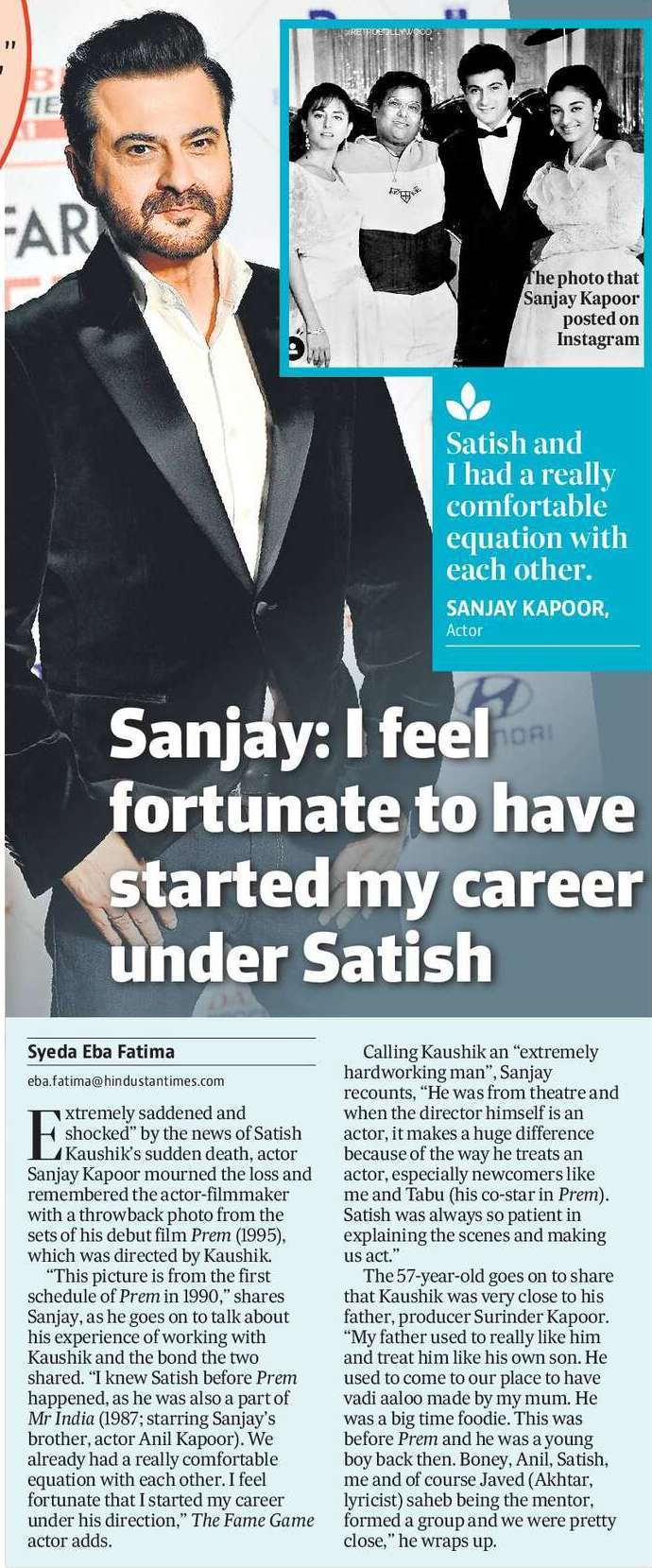
Extremely saddened and shocked” by the news of Satish Kaushik’s sudden death, actor Sanjay Kapoor mourned the loss and remembered the actor-filmmaker with a throwback photo from the sets of his debut film Prem (1995), which was directed by Kaushik.
“This picture is from the first schedule of Prem in 1990,” shares Sanjay, as he goes on to talk about his experience of working with Kaushik and the bond the two shared. “I knew Satish before Prem happened, as he was also a part of Mr India (1987; starring Sanjay’s brother, actor Anil Kapoor). We already had a really comfortable equation with each other. I feel fortunate that I started my career under his direction,” The Fame Game actor adds.
Calling Kaushik an “extremely hardworking man”, Sanjay recounts, “He was from theatre and when the director himself is an actor, it makes a huge difference because of the way he treats an actor, especially newcomers like me and Tabu (his co-star in Prem). Satish was always so patient in explaining the scenes and making us act.”
The 57-year-old goes on to share that Kaushik was very close to his father, producer Surinder Kapoor. “My father used to really like him and treat him like his own son. He used to come to our place to have vadi aaloo made by my mum. He was a big time foodie. This was before Prem and he was a young boy back then. Boney, Anil, Satish, me and of course Javed (Akhtar, lyricist) saheb being the mentor, formed a group and we were pretty close,” he wraps up.
I often say, ‘Kuttey toh bahana tha, mujhe toh Tabu ke saath kaam karna tha’-Arjun Kapoor
8:37 AM
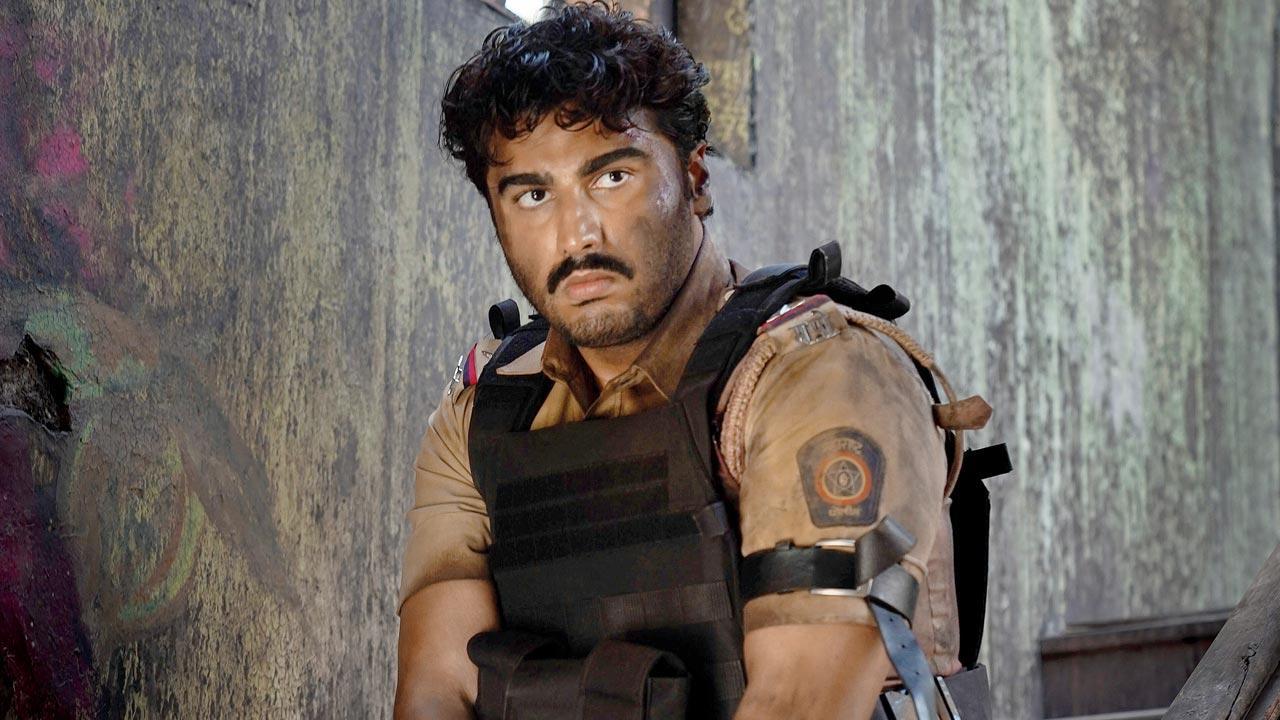
Kicking off his second decade in Bollywood, Arjun says Kuttey reflects producer Vishal and director Aasmaan’s vision of new-age cinema
Hiren Kotwani (MID-DAY; January 11, 2023)
The new year marks the beginning of Arjun Kapoor’s second decade in the movie industry. If the past 10 years have taught him something, it is to retain the hunger and spontaneity that he possessed when facing the camera for the first time, for Ishaqzaade (2012). The actor reflects, “When you start out, you make choices impulsively. After a point, you’re told to be strategic. Then, life comes full circle, and you realise the child in you should always remain. Today, I hold on to the thought of what Arjun [of 2012] wanted to do — he wanted to do good work, and be emotional about his choices rather than calculative.”
His latest release, Kuttey, is a prime example of Kapoor following his heart. Debutant director Aasmaan Bhardwaj’s crime comedy may be viewed as a risky move by some. But Kapoor says one Zoom call is all it took for him to come on board. “The father [filmmaker Vishal Bhardwaj] had made Kaminey [2009], and the son was making Kuttey. I knew I was in safe hands. Vishal Bhardwaj has a certain aura [that has been built through] his music and writing. Then Luv [Ranjan, producer] came on board. So, we had two producers who would back Aasmaan’s vision completely. We haven’t pitched Kuttey like a quintessential movie. It is new-age cinema, made with complete honesty, for the audience that is eager to see actors and filmmakers push the envelope.”
That the film brought together some of today’s finest actors — from Naseeruddin Shah to Tabu, and Konkona Sen Sharma — only reaffirmed Kapoor’s faith in it. The actor was particularly looking forward to sharing screen space with Tabu. “She made her debut in my father’s [producer Boney Kapoor] film, Prem. Even today, we share the same playful banter. I often say, ‘Kuttey toh bahana tha, mujhe toh Tabu ke saath kaam karna tha’.”
He counts himself lucky to have worked with Sen Sharma in the movie. “I just wanted to tell her how much I love her work as an actor and director.”
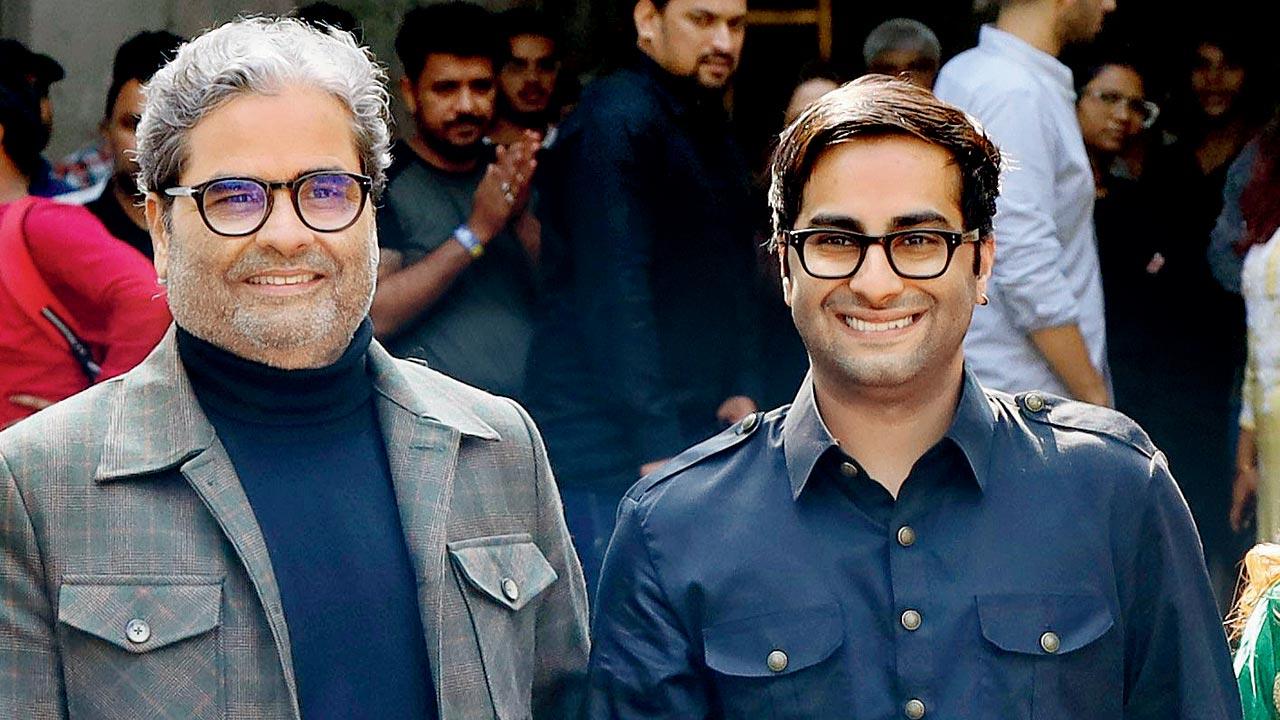
Veeru Devgan will be remembered as an iconic action director, says Bollywood
8:09 AM

Bollywood actors and filmmakers share their fondest memories of Veeru Devgan who helped them pull punches on the screen for almost three decades
Natasha Coutinho, Avinash Lohana, Himesh Mankad (MUMBAI MIRROR; May 28, 2019)

 Flying punches, gravity-defying kicks, blood and dhishoom dhishoom, the Bollywood audience of the 1980s and ’90s loved all this, and Veeru Devgan delivered stunts in plenty, stylishly packaged in films like Kranti, Loha, Himmatwala, Khatron Ke Khilaadi, Dilwale and Phool Aur Kaante to compete with the gun-slinging Westerns. On Monday, the action director-turned-producer-director breathed his last in Mumbai. He was 77.
 Through the ’70s,’80 s and a sizeable part of the ’90s, Veeru Devgan was the man to go to for action sequences. “He worked systematically, within a budget, with creativity. He’ll be remembered as an iconic action director who always wanted to make a film,” shares producer and distribution partner Suneel Darshan.
Boney Kapoor agrees that Veeru ji was among the best in the industry, always ready to try something new, and was in demand for the longest time. “His Hanuman sequence in Mr India is unforgettable while Sanjay’s (Kapoor) ‘test’ on the bridge in Prem was brilliantly executed. The train robbery in Roop Ki Rani Choron Ka Raja still remains way ahead of similar sequences attempted by international stunt coordinators later,” he eulogises.

 Gulshan Grover lauds the action director for redefining kicking techniques in Hindi cinema. “Since not everyone is flexible, he made the actor wear trousers and shoes on his hand and punch. This translated as a mighty kick on camera, a trick I incorporated in one of my early Hollywood films, The Second Jungle Book: Mowgli & Baloo,” informs the ‘Bad Man’.
Shatrughan Sinha reveals that when they were doing Mere Apne in 1971, while the film’s action director was Ravi Khanna, debutant director Gulzar got Veeru ji to choreograph most of the action. He goes on to confide how the fight master played Cupid for him and wife Poonam on the sets of their film Dharti Ki Godh Mein, spiriting away his future mother-in-law so he could ride away with his lady love during an action scene. He remembers Veeru ji as a disciplined man who fasted twice a week and after he retired, was happy to devote himself to his family.

 He was like family for Anil Kapoor who’d walk in and out of his house and gratefully recalls how Veeru ji made action scenes safe and easy for him when he was just starting out as an actor. Jackie Shroff agrees, describing him as an ever-smiling, gentle soul. “He took care of actors like his children and made the biggest action sequences simple for us,” shares Jackie who’s worked with him in Izzat, Police Officer and Doodh Ka Karz.
Anil adds, “During shooting, if we ever fell short of money, Boney would unhesitatingly turn to him, he was always there for us. His contribution to Mr India was immense.”
 Kumar Mangat whose association with Veeru ji spans 38 years since he was a production manager, reiterates Anil’s claim: “When I turned producer, Veeru ji bailed me out whenever I ran out of money. He didn’t even charge me for the action in Qayamat Ki Raat and after Ajay was launched as an actor, he told me to manage his work.”
 For Shakti Kapoor he was a “royal man” who always stayed in five-star hotels when in Chennai or Hyderabad. “And whenever I was there, he’d insist on having dinner together. He was the highest paid action coordinator in India and technically very sound,” he says, recalling Veeru ji telling him to help his introverted son open up before he got into films. “I’m happy he saw Ajay become a superstar.”
Ajay’s director-actor buddy, Sajid Khan, remembers how, as teenagers, they’d hang out at his building in the evening. “As soon as Veeru ji arrived, Ajay would go home even if we were in the middle of a cricket match. He pushed Ajay hard because as the best action director’s son, he had to be the best action hero. And till the last day, Ajay respected and cared for him like a good son.”
The memories come flooding for Harry Baweja for whom Veeru ji was a “pillar of support” when he produced and directed his first film Dilwale. “He treated me like a younger brother,” he says emotionally.
Another filmmaker Milan Luthria reminisces how when he had to wait for Ajay’s dates, his father would call him into his cabin and promise to help. “It is unheard for someone to have done over 500 films and never have a disagreement with anyone,” Milan asserts.
Aditya Pancholi recalls the Rs 100 baksheesh he got for fearlessly standing at a high point and jumping on boxes at Madh Fort for an action scene in Dus Numbri while producer-director Rajiv Rai who worked with Veeru ji in Tridev points out that the ’80s were tough times for action directors because of the lack of CGI and VFX. “But there were seldom any accidents on his sets. He was the Amitabh Bachchan of action, he worked with many cameras and I learnt a lot about technique from him,” Rai remembers from London.
Anees Bazmee who’s returned from the shoot of Pagalpanti in London, flashbacks to how in the ‘90s, when films had three-four busy heroes, Veeru ji helped resolve date issues and when that was not possible, would shoot with actors separately in a way that the audience didn’t realise it. “He was brilliant!” raves the writer-director.
I wanted to be here, but I didn’t want to do what everyone was doing-Tabu
8:43 AM

Madhureeta Mukherjee (TIMES LIFE; May 19, 2019)
When it comes to talent, grace and good looks, she stands tall. Really tall. Yes, in the past, she’s been given titles like ‘the reluctant star’, ‘mystery woman’, et al. But the only thing Tabu was really reluctant to do was follow the herd. And she would agree that this little bit of mystery is what has not let the sheen of stardom wear off. Alright, you wouldn’t probably call her the most competitive actor in showbiz, but she’s quick to explain, “Nahin hoke bhi, theek thaak hi ho gaya. Competitive hoti toh shaayad nahin kar pati.” That’s Tabu — funny, fiercely intelligent, picky about her choices in life and ready to break taboos. While she calls the twisted character in AndhaDhun her favourite role, as she “was on a trip playing Simi”, her recent release De De Pyaar De was clearly not your run-of-themill romantic fare either. In a chat with BT, the free-spirited actress reveals a lot about her journey, roles, friendships, relationships and all that, yet, she continues to hold on to some of those mysteries close to her heart. Read on…
On one side, you have comedies like Golmaal Again, De De Pyaar De in your filmography, and on the other, you have films like Astitva, Maachis, Chandni Bar, Maqbool and Haider to your credit. You seem to be an actress who has never liked being trapped in one zone. In your late twenties, you played a mom in Astitva, and did films that most actresses your age would not typically choose...
Well, everybody wants to look good and all of that, and there is nothing wrong with it. For me, it was always important to see what the scope to perform is. How am I pushing myself beyond the boundaries? Is there something for me to chew on? Every actor wants a platform where he/she can display their abilities. Astitva was that platform for me, and it was the most cathartic experience of my career. At that point, it was a fantastic role for a woman. I didn’t look at the character from the point of view of…is she a mom or a wife. I asked myself, ‘What does the character do for me?’ Mahesh Manjrekar (director) had come to be with Vaastav, and I had told him that I don’t have much to do in it. So, when he came to me with Astitva, he said, “Okay, now you can’t say you have nothing to do!”
Most actors fear that they will be offered similar roles, hence, they often don’t want to take chances with parts that are unusual. In your case, I am assuming it didn’t happen? Or even if you were offered those roles, you didn’t accept them?
I am fortunate that every kind of role came my way and I didn’t get typecast. My choice of roles worked in my favour, things could have gone the other way, too. I must applaud every writer and director who thought of me while making their film, as they didn’t typecast me. A lot of people typecast you in their head, and then everyone steers in the same direction. Look, my beginning was also different. When I did my first film (Prem, 1995), I wasn’t interested in doing this at all. Over time, it grew on me, and eventually, I found my groove, and I also found a home in the industry. I started feeling comfortable with the thought that the kind of work that I want to do is possible here. Earlier, I did not understand why the industry was making everyone do what the other person was doing. I never understood why people were not left alone to do their own thing. In my mind, I knew that I wanted to be here, but I didn’t want to do what everyone was doing. It’s also my temperament; I don’t like to be in one zone for too long.
Your film that released this Friday is about a 50-year-old man’s relationship with a 26-year-old girl. It is uncommon in our cinema, but obviously, not as rare in real life. Society is changing and becoming more accepting of relationships that don’t fit into the mould, would you agree with that?
Yes, I think so, in many ways. Having said that, I don’t think that romance between an older man and a younger girl is out of the norm. It’s been happening for years. It also depends on how the director is telling the story and how credible you make the characters. Today, I don’t think that anything is off-limits as far as content is concerned. The audience is consuming different kinds of content, at the same time, there will always be conventional stuff that will work. Also, there will be unconventional stories that might not work. In terms of man-woman relationships, we are now exploring different territories in cinema. Society changes much before cinema does. The people, who are making these films, are also part of the same society. I don’t think that we can still blatantly show what is happening in society. We have to censor it, cut it and tell the story.
The perception about you, off screen, has been that you are quite different from the rest of the people in showbiz. At one point, earlier in your career, you were given titles like ‘ice-maiden’, ‘recluse’ and more, but you seem to be a far stretch from that… at least now…
Well, I have become more open and outgoing than I used to be. Yes, I was called ice-maiden, reluctant star and things like that by the media, which were never true. It had become a topic for interviews. I was never a recluse, but it had become fashionable to ask me this question. Imagine, I was shooting every day, sitting in front of people and giving interviews, how could I be a recluse? There has been a huge change in my personality, at least in the last 10 years, but my essence hasn’t changed.
Today, being an actress has many more facets, like being a social media star, a fashionista and a diva on the red carpet. How are you coping with that new face of stardom? Has that also been a part of the change that you are talking about?
A little bit. If it is need-based (as in, if I must do it or I am told to do it), I will not fall into that trap. I have been on Instagram for a long time because I like posting pictures, and at the same time, I don’t have to say anything. Of course, there is a big change in the way we do movie promotions, and there is constant presence of the media and cameras everywhere in our life. It is too much for someone like me. Some people enjoy it and that’s great. They like being connected with the world all the time. I can’t engage with the world constantly, but I like to share pictures and some thoughts with people on social media.
So, you do think that being on social media is important?
Personally, I don’t think it is important at all. Finally, if your films work, then other things will work around it. You can tweet and post as much as you want on social media, but I don’t think it will make a difference if your film does not work. Kaam important hota hai, nothing else.
There was one point in your career (around 1996) when you had eight releases (including Bollywood and Telugu movies). Sometime after that, your stream of releases reduced, did you consciously slow down?
I didn’t cut down on work consciously, but I was certainly conscious about what I didn’t want to do. Look, a film where director bhi accha hai, role bhi accha hai, producer bhi accha hai, aisa project toh hamesha nahin aane wala hai. But whenever it came my way, I said yes to it, even if it came to me after one or two years, or after I refused 20 films. Of course, I was always ready to jump into anything good that came my way. My point is that, I need to have one solid reason to do the film and I should be clear about it, whether it is…yeh main paise ke liye kar rahi hoon, yeh main kar rahi hoon kyunki mujhe iss director ke saath kaam karna hai, ya yeh film sirf role ke liye kar rahi hoon. It must tick one of these boxes, only then I can engage with a film.
In your long career in the movies, would you say that you were competitive or fiercely ambitious?
Nahin hoke bhi, theek thaak hi ho gaya. Competitive hoti toh shaayad nahin kar pati (laughs!). I am ambitious about the quality of work that I do and how that can take me to a more evolved space. How I am doing as far as competition is concerned or in the number game… I have never diverted my energy towards such things. I don’t think you can focus on acting, as well as your position in the industry at the same time. Aapki positioning toh kaam se banti hai, right? The rest will follow. Besides, what’s the point in looking at the competition around you, tell me? Can you do anything about it? Whatever exists around you, will continue to do so. And this is the way the industry works, there are so many people vying for the same role, same director and same project. What you can do is put all your energy in the work that is given to you. We all have to co-exist.
You don’t seem to be much of a party animal, but you do have your close set of friends in the industry. Who are the people whose advice you seek on personal matters and career choices?
Most of the friends that I have been through my work, because I have been working since the time I was 16. I have a fantastic set of friends, but I also think that I have chosen wisely (laughs!). I can’t imagine my life without them. However, I don’t discuss my work with them at all. It’s not like I don’t want to share it with them, but I am just not in the habit of doing that. Sab cheezein maine khud ki hai, every decision, every mistake and every accomplishment… I have done it myself. I didn’t ask anyone for advice, or help. It is just the way we have been brought up, we don’t ask each other, we don’t interfere in each other’s lives and we are all extremely independent.
‘Sab cheezein maine khud ki hain’… does that also explain why, once in an interview, you had said that your journey has been a lonely one?
Doing things on my own has been completely my choice, I am not playing the victim here. What I meant was that my journey has been alone, or a solitary one. I think an actor’s journey is always a lone one, because only you can get inside your character. In front of the camera, no one can become ‘me’ and do my part. Directors, writers, producers… they all have their teams, but in front of the camera, actor akela hi hota hai. That’s what I meant when I said my journey is a solitary one.
Do you feel the need to find a partner?
Need se toh kuch nahin karna hai. I am not resistant to anything, but it has to fit into my idea of things. I won’t go looking for it, nahin toh abhi tak ho chuka hota. (laughs!) While talking about me to someone else, my close friend pointed out, “Her life and her journey have been unpredictable, so with her only something unpredictable will happen”. She is absolutely right!

An actor with my personality could have never succeeded without talent-Satish Kaushik
8:16 AM

Rachit Gupta (BOMBAY TIMES; December 13, 2018)
He’s an actor, filmmaker, producer, screenwriter, dialogue writer, musician and more. Satish Kaushik has dabbled in every possible aspect of filmmaking, but what he enjoys the most is acting. He says, “I may have directed 15 films, but in my heart, I am an actor first. Standing in front of the camera pleases me the most. I work day and night as a director and producer, but I will be an actor till my last breath.” In conversation with BT, the senior actor talks about his upcoming films and also gets nostaligic about his four-decade-long journey in Bollywood.
He’s recently finished shooting for Salman Khan’s Bharat and talking about his preparation, he says, “Salman has inspired to me get fit. I am playing the role of a Merchant Navy officer in Bharat and since I would have to wear a uniform, I thought I should cut down on size. For two months I attended workshops to lose weight and I’ve become a regular at the gym, too.”
He is also currently helming the film, Kaagaz, which is based on a real incident. It features Pankaj Tripathi as a farmer who has to prove that he’s alive, after having been falsely issued a death certificate. Kaushik says, “I had procured the rights to make a film on the life of Lal Bihari Mritak, 14 years ago. I’ve finally got the chance to tell this unique story.”
WOULD’VE NEVER THOUGHT THAT THE ACTOR HE SIGNED FOR Rs 500 WOULD MAKE HIM LOSE Rs 50 CRORES’
Satish Kaushik’s directorial debut, Roop Ki Rani Choron Ka Raja (1993), was a box-office disappointment. He had even issued an apology on social media to producer and good friend Boney Kapoor earlier this year. Recalling memories of his first film, he says, “During the 80s, when Boney first signed me as an actor, he offered me Rs 201. Anil (Kapoor) told him that he’d seen how talented I was during Woh Saat Din (1983), so he told him to give me Rs 500 instead. Boney would’ve never thought that the actor he signed for Rs 500 rupees would make him lose Rs 50 crores on films like Roop Ki Rani Choron Ka Raja and Prem (1995) (laughs!).” Such is his friendship with the Kapoor brothers that Kaushik considers them the most influential figures in his career and life. He says, “I became friends with them when I worked on one scene in Woh Saat Din. Sometimes it just takes one scene for you to make friends and open doors of opportunities in the film industry.”
‘ANUPAM KHER AND ANANG DESAI USED TO GET ALL THE ROLES AT FTII AND NO ONE OFFERED ME ANY WORK’
Kaushik places great importance on friendships and relationships in the film industry. The National School of Drama (NSD) graduate says, “At NSD, I made friends for life. Anupam Kher, Anang Desai, Govind Namdeo, Anita Kanwar, Kavita Chaudhary and Karan Razdan were my classmates. Theatre institute mein hum log filmon ke khwab dekhte the. We used to talk about Vinod Khanna and Amitabh Bachchan movies, while other students used to talk about theatre.” It was through NSD that Kaushik, Kher and their entire class was sent to the Film and Television Institute of India (FTII) for a six month course. That changed Kaushik’s life. He recalls, “Anupam and Anang used to get all the roles at FTII and no one offered me any work. Then one day, the institute had a play titled Rustom Sorab with Nadira Babbar and Rajesh Vivek, where I played a negative character called Behram. I got a standing ovation and that’s when my talent got noticed for the first time.”
‘I WAS SURE NO ONE WOULD OFFER ME A ROLE AFTER LOOKING AT MY PHOTO’
Having seen the highs and lows, Kaushik feels that talent is important in showbiz than luck. He explains, “An actor with my personality could have never succeeded in this profession without talent, solely on the basis of luck. Hard work and talent are what holds you in good stead, much more than just good fortune. During my days as an aspiring actor and a struggler, I never clicked a single portfolio shot or photograph. I was sure no one would offer me a role after looking at my photo.”

I never wanted to play a vanilla heroine-Tabu
8:13 AM

Nayandeep Rakshit (DNA; April 8, 2018)
If there’s someone I’m always excited to interview, it has to be Tabu. She does fewer films (which is going to change this year) and is unabashedly honest. Being in the business for over three decades, Tabu has been tagged as the thinking man’s woman. She has struck a balance between commercial cinema and off-beat projects and impressed everyone with her subtle yet powerful performances.
In this chat, she talks about her latest film Missing, how she chose projects that broke norms and why she has never played the game by the rule book. Over to her...
People have often complained about you doing fewer films. But that’s no longer the case. Is it because of the subjects that are changing so rapidly today?
Yes, absolutely. Today, stories are more about characters than just the leading lady and the hero. A lot of different roles have opened up. But it was always like this for me. I have got thousands of characters — good, bad and ugly, in short, everything. So, I always had a lot to choose from (smiles).
How difficult or easy has it been to stay relevant even now?
I don’t know. An outsider’s perspective is important in this context. I had never planned my life thinking I’ve to be relevant. I just thought that these things are important for my journey and I should do them. That’s all. This is the path of my life and this is what I have to walk on. These are my choices and I have to choose from them only. And incidentally, they became things that kept you relevant. But woh toh baad mein pata chalta hain.
Do you remember the first shot you ever gave? How have you changed over the years?
I was so nervous. A few days ago, someone posted a photo of mine from the sets of Prem. I looked at it and thought, ‘My God! I was almost like an infant.’ Mujhe kya acting samajh aayi hogi? I would cry when anybody told me anything. It was a completely new world from Hyderabad and sometimes, I just look back and think about how I made this whole adjustment. It was tougher for my mum. When she came to Bombay with us, she was 40. I was about 13-14. So for me, the adjustments happened as I grew up in Mumbai. The kind of people and life I was exposed to after coming here was a big shift. At that time, it wasn’t easy to understand the industry and the way it works. In the beginning, you are like, ‘Haan, mujhe yeh accha nahi lagta, woh accha nahi lagta.’
You are just saying what you feel, without thinking too much. You don’t know the rules. But that was the best part. To realise that I’m still here and so loved makes it all the more special. I don’t know what it took and how it has been. To me, all of it is a blur. But I kept working with sincerity.
Success and stardom have never hit you?
See, the only big change that has happened to me is that I’ve become more social. I did not have people skills at all. I was painfully shy but I was thrown into this world, and slowly with success, I became okay with the people around me. I became more expressive.
So much is spoken about women-centric roles today. You have been balancing commercial and offbeat films since you started. Has it become the norm now?
Yes, it no longer has the rebellious or sensational value. People are okay doing it and it has become more acceptable. It doesn’t feel like you are sticking your neck out if you are doing a woman-centric film. Aisi koi baat hi nahin hai, sab hi karte hain. I think it’s a good thing because that’s how more work will open up for many more actors and we will also start embracing people.
The outlook towards women has also changed. Does it give you a sense of accomplishment that you have achieved what you set out for?
Yes, today more importance is given to an actress’ role. People are willingly adding different colours to a heroine. That’s something that I have always been interested in. I didn’t want to play the good girl who feels shy and smiles every time. There’s so much more about a woman and a human being. I wanted to express all of that. She is a girl, but why can’t she be bad? Why can’t she be lustful? Why can’t she be dark and betray? At one point in time, it was so blasphemous to hear all of this. People didn’t want their heroines to be immoral or even have extramarital affairs. I never wanted to play a vanilla heroine or doing things by the rule book. Before me, many other actresses have also done it. But today, everything has become a norm. People have started appreciating the very things that they were scared of. My character goes and bombs her own mother in Hu Tu Tu and at the same time, I was doing Hum Saath Saath Hain.
Thrillers are still a dicey space in India. You did Drishyam and now Missing. What do you think of the genre?
According to me, thrillers don’t have a wide audience. I personally don’t enjoy them so much. Thrillers are also the writers’ space. Unless we have fantastic writing, it cannot work. Of course, the performances matter a lot, too. But it has to be a gripping story. We do have a few directors who are amazing at it. Sriram (Raghavan) is really fantastic and rules in that space. Once you know what happens in a suspense film, the repeat audience is already aware what the mystery is. Nowadays, so much has been done in the digital space or on television that it has become easy to predict. Audiences have become smart. They crack things and solve the mystery then and there.
When you select a film, does box office become a parameter?
See, if it does Rs 200-300 crore, then mazaa toh aata hai (laughs). The numbers might not change the way you think about yourself but the public perception of you changes. Flop ke time bhi hota hai. As an actor, I don’t think much about it because hamesha se, something or the other has been happening and coming my way so I think beyond a point, actors are not affected, once they have made their place. But hits are always welcome.
How the tussle between Kedarnath makers may spell trouble for newbie Sara Ali Khan
8:06 AM

Bharati K Dubey (DNA; February 22, 2018)
With the two producers of Kedarnath — KriArj Entertainment and Guy In The Sky Pictures — heading to court over their differences, will it be debutante actress Sara Ali Khan’s career that will end up bearing the brunt of it? Reportedly, she is under a contract and may require a NOC (No Objection Certificate) to do another film. Apparently, Anushka Sharma’s production house had offered her their new project Bulbul, but the newbie couldn’t sign it as Kedarnath was under production.
Due to the legal wrangle, the chances of the Abhishek Kapoor-directorial hitting the screens on its scheduled date (December 21) are dim. Today, almost all newcomers have strict contracts with the production house that’s launching them. An industry source elaborates, “They are either under contract for three films or for three-to-five years. If the contract is for a certain number of years, all the deals are routed through the producer or the agency which strikes the deal.”
ARE CONTRACTS A GOOD IDEA?
While such contracts help both, a newcomer and the production house, things can go haywire if the film gets into trouble. This raises the question of the fairness and necessity of such contracts. Filmmaker Ashwini Chaudhary says, “I am of the opinion that a producer/production house has the right to sign an exclusive contract with an actor/actress when they launch them. A lot of money and risk is involved in launching new faces in today’s time and clauses like three-film deals are, in a way, justified. All big banners are said to be following this norm. Even first-time directors are bound by such stipulations. If one is not in agreement with such clauses, they can always opt to not sign on the dotted line. Things tend to get ugly when the film is delayed or shelved. It is important for newcomers to have proper legal advice before getting into any contract.’’
CONTRACT KA SAWAAL
It may be recalled here that filmmaker Subhash Ghai had to take his Pardes heroine Mahima Chaudhary to court for violating the terms of the contract. Before starting Pardes, Mahima had agreed to do three films within five years and donate 35 per cent of her earnings from commercials, stage and TV shows to the Mukta Arts Welfare Trust. Ghai feels it’s mandatory to have a contract with a newcomer. He explains, “The company spends on his/ her grooming, marketing, and projects. I have always had a contract for three films, which included permission to do outside films after the first release. These included actors like Madhuri Dixit-Nene, Jackie Shroff, Manisha Koirala, Mahima, Kareena Kapoor Khan, Katrina Kaif and Hrithik Roshan to name a few. Some of them honoured it, while a few violated them.”
DELAY DILEMMA
Prem, which was supposed to be Tabu’s debut film took about eight years to complete. She stepped on the silver screen with Pehla Pehla Pyaar, opposite Rishi Kapoor. Satish Kaushik, director of Prem, recalls, “There was a contract, but I really don’t know the details of it. Our film got delayed and she got another offer. I don’t think we can really bind somebody after the threshold has been crossed, he/she should be allowed to go. Tying down anybody to the contract clauses could harm their career.”
In the recent years, Pulkit Samrat took Ekta Kapoor to court for non-payment and not allowing him to work outside, when there was no work for him at her company. The actor was shown his three-year contract when he evinced interest in working with another banner. Ekta refused and was in the process of sacking him, so he sued her and even won the case.
READ THE FINE PRINT
Cine and Television Artistes Association (CINTAA) has been asking their members to share their contracts, alleging that most deals are one-sided. The Association’s general secretary Sushant Singh says, “Star kids are still in a better position than those coming from a non-filmi background, the latter have no choice but to adhere to the diktats of the producers.”
This is not the case just with actors making debut in films, but also those working in TV shows. Singh says that TV debutants are bound by contracts that are unfair. Citing the case of the lead pair of Aisi Deewangi Dekhi Nahi Kahi, he says, “They came to us with a complaint that the producer has signed them for a three-to-five year contract with no renewals or holidays. They wanted to quit the show as their health was suffering. They were signed by the producer for 30 days and the contract with the channel was for 26 days. We fought for them and asked them to give a two-months notice and leave the serial. Fortunately, the serial was pulled out by the channel.’’
LOOK AT THE LAW
Singh points out that most of the contracts that actors sign often don’t hold much ground. He adds, “Newcomers, who are getting a break, should get it in writing from the producers that all their expenses would be borne by the latter while on contract. Also, there is nothing like an exclusive contract. Nobody can stop an actor from the right to livelihood, even if he/she is shooting for a serial. They have every right to do the things they want to post the shoot that they’re committed to the producer for.’’
Anil Kapoor is responsible for many good things in my career-Satish Kaushik
8:03 AM

Meena Iyer (BOMBAY TIMES; August 31, 2015)
How does one introduce Satish Kaushik? In a career spanning 30 years, he has made a sizeable (pun intended)
contribution to Bollywood, theatre, Indian television and international
cinema as an actor, producer and director. Importantly,
even three decades later, he has an insatiable appetite for his craft. As he gears up for the television sitcom Sumit Sambhal Lega, where he
plays Jasbir
Walia, that will air from tonight on Star Plus, this multi-faceted
personality touches on the high and low points of his life and
career. Excerpts from his interview...
You start a new journey on television tonight as Jasbir Walia...
I've been working continuously for 30 years. 24 has paved the way for finite series on TV becoming popular. This entire year has gone in shooting for Sumit Sambhal Lega. It is the adaptation of the American show Everybody Loves Raymond and I play the role of Frank, Raymond's father, in this case Sumit's father. I've made it more obnoxious, more interesting. It is not the central role but it is a juicy one and has a lot of scope. I'm a lazy man from a Delhi household, who talks in the 'aabe tubhe' language. I'm constantly eating and insulting people! It is a character with a lot of layers and though he seems obnoxious on the face of it, he has an endearing quality about him. I accepted the show because I was happy with the brand. Jeremy Stevens, one of the the writers of the original series came over, we had readings and workshops. It is all so well executed.
Three decades as an actor and you're still as excited about this role...
Acting is therapeutic for me. I have made so many names popular. Whether it is Calendar (Mr India), Pappu Pager (Deewana Mastana), German (Hum Aapke Dil Mein Rehte Hain), Jumbo (Gharwali Baharwali), Kunj Biharilal (Haseena Maan Jaayegi), Mutthu Swamy (Saajan Chale Sasural) or Airport (Swarg), people on the street address me by all these names. Something tells me Jasbir will also become as popular as the characters I have named. I've done so much in three decades - from acting in films to producing and directing movies, to producing television shows, theatre and now acting on TV. I've also directed commercials. I always wanted to be busy.
When did the acting bug bite?
I stayed at the Naiwala Lane in Karol Bagh, New Delhi. When I was eight, I told my father - my name should come in the newspaper some day. I was the most ignored child in my school till I did a mono-act play on the last day of Std XI. Everyone was very impressed by it. That very moment I became the star of my school. The claps motivated me to take admission in Delhi's Kirori Mal College, which encouraged dramatics. Amitabh Bachchan is from the same college. Professor Frank Thakurdas, a patron of the arts from our college told me, 'Satish, don't do anything else in life after passing out from here. Become an actor'. I thought he was just humouring me, especially because I knew that I lacked good looks. But my professor turned around and told me, 'Never mind your looks. When I see you on stage, you are the ultimate good-looking person for me.' He is the one who put in a word for me at the National School of Drama (NSD) and this changed my life.
You came to Mumbai next?
I did a six-month course at the Film and Television Institute of India (FTII) and then came to Mumbai. After a year at NSD and a six month stint at the FTII, I worked with the Auroras of D'Decor for a year in their textile mill and earned Rs 400 a month. My first day's job at the mill in Vikhroli was to sweep the dust off the yarn bundles. I had been gloating over the reviews that I got for my plays at NSD and thereafter, the praise I received at the FTII and here, I was being made to sweep in a mill! However, since I knew that I had to survive in Mumbai to pursue my ultimate dream of acting, I just continued. I told myself 'if you sweep the dust off these looms well, your path in Mumbai too will be a smooth one'. This positive attitude is what got me going and paid dividends. My boss saw my play Bichchoo at Prithvi and was mighty impressed. When I reported at the mill the next morning, he said to me, 'You're lacking in the looks department, but you're a terrific actor. Whatever you do, do it with passion.' I became Shekhar Kapur's assistant. I waylaid him at the airport and asked him to take me.
Is Shekhar your godfather in Bollywood?
Frankly, I think Javed Akhtar saab is my godfather. My relationship with Shekhar was very fruitful. I assisted him on Masoom and Joshilaay. Here I met Javed saab, Boney Kapoor and Anil Kapoor. Javed saab asked me not to think small ever. I did one scene in Woh 7 Din and I forged a lifetime of friendship with Shekhar, Anil, Boney and of course, Javed saab. Anil is responsible for many good things in my career.
Any more additions on the friends list?
Yes, Anupam Kher and Jayantilal Gada.
Boney entrusted you with with two big films - Prem and Roop Ki Rani Choron Ka Raja (RKRCKR), right?
Yes, RKRCKR was launched as a magnum opus. But both Prem and RKRCKR flopped. That really upset my morale. I then ventured into television with O Maria, Yeh Shaadi Nahin Ho Sakti and Philips Top 10. I was producing four to five programmes on Sony. But my heart was in films. I was down but never out. The big Bollywood directorial break came again with the Anil-Kajol starrer Hum Aapke Dil Mein Rehte Hain. After that, I never had to look back. I had also become very busy as an actor. I did around 15-16 films with David Dhawan as an actor.
Isn't it true that David actually offered you Raja Babu, the role that Shakti Kapoor later did? Why did you opt out?
David gave me Raja Babu immediately after RKRCKR flopped. At the photoshoot, he wanted me to stand in a striped underwear with a naada hanging down and a Charlie Chaplin moustache. The get-up was very funny but I was nervous, thinking that after such a colossal flop, if I stood in an underwear, people would think I was finished. So, I requested David to give me something else. That's when he offered me Saajan Chale Sasural, where I played a South Indian. I saw this as a tribute to Mehmood, whom I deeply admired and who had played a South Indian in Padosan. It is ironical that both Shakti and I won Filmfare Awards for actors in best comic roles in two consecutive years.
You were fortunate to work with some of the biggest names...
Yes, I worked with Salman Khan (Tere Naam), Anil on several films and Tusshar (Mujhe Kucch Kehna Hai). However, as far as my leading ladies go, I've worked with the most established names including Sridevi, Tabu, Kareena Kapoor Khan, Aishwarya Rai Bachchan and Kajol. I recall I was nervous about working with Kajol in Hum Aapke Dil Mein Rehte Hain. She was fresh from the success of Dilwale Dulhania Le Jayenge and I was thinking, 'God, how will I convince her to do my film.' But the moment I met her on her farm in Khandala and she yelled, 'Aye Pappu Pager,' I knew things would be easier. I realised that when you speak to Kajol, you have to be honest. So, I narrated the script to her without mincing the melodrama. Of course, her first reaction was, 'Satish, it is too melodramatic.' But once she was convinced that there was no other way you could approach the script, she cooperated fully.
Heard you told Anupam Kher once that you would attempt suicide. Is this true?
When RKRCKR failed, I was at a hotel in Hyderabad and was so dejected that I was contemplating suicide. I was newly married and my wife Shashi was wondering what she had got into. Anupam called the general manager of the hotel and said 'please save my friend.' Also, a little later I was at a pub in Mumbai where I met Mahesh Bhatt. I was wearing a dejected expression and told him that I was feeling terrible because my film had flopped. He gave me a smack on my face (albeit playfully) and said, 'your film has flopped, you haven't. Treat films as a part of your life, they're not your entire life.' I came home that day and made a life-graph. I told myself that I had had such humble beginnings. God, my friends and colleagues had paved the way for me to become so successful, then how could I feel defeated just because I had suffered one setback? People who were better-looking and better-off than me were still struggling, while I had managed to reach some place. So, I told myself, 'Satish you need a kick on your arse.' And I picked up the pieces and started again.
You also lost your son Kush to an accident...
The biggest tragedy in my life was losing Kush 20 years ago. Shashi and I could not get over this tragedy. The accident shook me up. I was on top of things as far as my career went. I was elated, when at the premiere of RKRCKR, my wife was pregnant with our first child. And then we lost our son. I realised that as far as destiny is concerned, nothing is planned and fixed. This really shook me up. Today, my son, too, would have been around the same age as Anil's son Harsh and perhaps he, too, may have chosen to be a part of Bollywood. Not a single day goes by without remembering him. Three years ago my daughter Vanshika came into our lives. She is the biggest source of joy for us, the antidote to our sadness. She has filled the gap.
International honour came your way with Brick Lane...
I did Brick Lane and believe me, the producers were in a fix initially on whether a comic actor like me could pull it off. But I had the solid background of theatre. Sarah Gavron's Brick Lane and Dev Benegal's Road Movie opened global doors for me. I met Robert De Niro and Martin Scorsese at the Tribeca Film Festival. I won a lot of accolades at the Toronto Festival for Brick Lane. And I had the privilege of meeting Sir Ben Kingsley at Doha. A new phase in my career began as I started hobnobbing with Hollywood stars at international film festivals. In fact, even before I could approach Ben, he turned around and said, 'Am I meeting this great actor from Brick Lane?' He even introduced me to his wife, who is also a famous actor.
On the social front, you have adopted a village in Haryana.
Yes, I have adopted my paternal village Dhanaunda that is in the Mahendragarh district of Haryana. I got a lot of aid from the local government for making pakka streets and even a sports stadium is being constructed there. I also run a NGO called The Roots that holds workshops in girls' schools. The motto is to tell girls to dream big and become achievers in their chosen field. I believe if God has given you enough, you must give back to society.
Are you planning on directing again?
I have directed around 14 movies and filmmaking remains a passion. The script of my next film is almost ready. It is a gritty drama based on a book. However, I will announce the film at a later day. Acting in television, theatre and films has kept me quite occupied. My play Salesman Ramlal, which is an adaptation of Death Of A Salesman, has kept me fully busy. Besides that, I'm currently doing roles in Abhishek Chaubey's Udta Punjab, where I play Shahid Kapoor's uncle and Wedding Pullav. I also have Ritesh Sinha's Promise Dad, that has an international starcast and is expected to release soon.
You start a new journey on television tonight as Jasbir Walia...
I've been working continuously for 30 years. 24 has paved the way for finite series on TV becoming popular. This entire year has gone in shooting for Sumit Sambhal Lega. It is the adaptation of the American show Everybody Loves Raymond and I play the role of Frank, Raymond's father, in this case Sumit's father. I've made it more obnoxious, more interesting. It is not the central role but it is a juicy one and has a lot of scope. I'm a lazy man from a Delhi household, who talks in the 'aabe tubhe' language. I'm constantly eating and insulting people! It is a character with a lot of layers and though he seems obnoxious on the face of it, he has an endearing quality about him. I accepted the show because I was happy with the brand. Jeremy Stevens, one of the the writers of the original series came over, we had readings and workshops. It is all so well executed.
Three decades as an actor and you're still as excited about this role...
Acting is therapeutic for me. I have made so many names popular. Whether it is Calendar (Mr India), Pappu Pager (Deewana Mastana), German (Hum Aapke Dil Mein Rehte Hain), Jumbo (Gharwali Baharwali), Kunj Biharilal (Haseena Maan Jaayegi), Mutthu Swamy (Saajan Chale Sasural) or Airport (Swarg), people on the street address me by all these names. Something tells me Jasbir will also become as popular as the characters I have named. I've done so much in three decades - from acting in films to producing and directing movies, to producing television shows, theatre and now acting on TV. I've also directed commercials. I always wanted to be busy.
When did the acting bug bite?
I stayed at the Naiwala Lane in Karol Bagh, New Delhi. When I was eight, I told my father - my name should come in the newspaper some day. I was the most ignored child in my school till I did a mono-act play on the last day of Std XI. Everyone was very impressed by it. That very moment I became the star of my school. The claps motivated me to take admission in Delhi's Kirori Mal College, which encouraged dramatics. Amitabh Bachchan is from the same college. Professor Frank Thakurdas, a patron of the arts from our college told me, 'Satish, don't do anything else in life after passing out from here. Become an actor'. I thought he was just humouring me, especially because I knew that I lacked good looks. But my professor turned around and told me, 'Never mind your looks. When I see you on stage, you are the ultimate good-looking person for me.' He is the one who put in a word for me at the National School of Drama (NSD) and this changed my life.
You came to Mumbai next?
I did a six-month course at the Film and Television Institute of India (FTII) and then came to Mumbai. After a year at NSD and a six month stint at the FTII, I worked with the Auroras of D'Decor for a year in their textile mill and earned Rs 400 a month. My first day's job at the mill in Vikhroli was to sweep the dust off the yarn bundles. I had been gloating over the reviews that I got for my plays at NSD and thereafter, the praise I received at the FTII and here, I was being made to sweep in a mill! However, since I knew that I had to survive in Mumbai to pursue my ultimate dream of acting, I just continued. I told myself 'if you sweep the dust off these looms well, your path in Mumbai too will be a smooth one'. This positive attitude is what got me going and paid dividends. My boss saw my play Bichchoo at Prithvi and was mighty impressed. When I reported at the mill the next morning, he said to me, 'You're lacking in the looks department, but you're a terrific actor. Whatever you do, do it with passion.' I became Shekhar Kapur's assistant. I waylaid him at the airport and asked him to take me.
Is Shekhar your godfather in Bollywood?
Frankly, I think Javed Akhtar saab is my godfather. My relationship with Shekhar was very fruitful. I assisted him on Masoom and Joshilaay. Here I met Javed saab, Boney Kapoor and Anil Kapoor. Javed saab asked me not to think small ever. I did one scene in Woh 7 Din and I forged a lifetime of friendship with Shekhar, Anil, Boney and of course, Javed saab. Anil is responsible for many good things in my career.
Any more additions on the friends list?
Yes, Anupam Kher and Jayantilal Gada.
Boney entrusted you with with two big films - Prem and Roop Ki Rani Choron Ka Raja (RKRCKR), right?
Yes, RKRCKR was launched as a magnum opus. But both Prem and RKRCKR flopped. That really upset my morale. I then ventured into television with O Maria, Yeh Shaadi Nahin Ho Sakti and Philips Top 10. I was producing four to five programmes on Sony. But my heart was in films. I was down but never out. The big Bollywood directorial break came again with the Anil-Kajol starrer Hum Aapke Dil Mein Rehte Hain. After that, I never had to look back. I had also become very busy as an actor. I did around 15-16 films with David Dhawan as an actor.
Isn't it true that David actually offered you Raja Babu, the role that Shakti Kapoor later did? Why did you opt out?
David gave me Raja Babu immediately after RKRCKR flopped. At the photoshoot, he wanted me to stand in a striped underwear with a naada hanging down and a Charlie Chaplin moustache. The get-up was very funny but I was nervous, thinking that after such a colossal flop, if I stood in an underwear, people would think I was finished. So, I requested David to give me something else. That's when he offered me Saajan Chale Sasural, where I played a South Indian. I saw this as a tribute to Mehmood, whom I deeply admired and who had played a South Indian in Padosan. It is ironical that both Shakti and I won Filmfare Awards for actors in best comic roles in two consecutive years.
You were fortunate to work with some of the biggest names...
Yes, I worked with Salman Khan (Tere Naam), Anil on several films and Tusshar (Mujhe Kucch Kehna Hai). However, as far as my leading ladies go, I've worked with the most established names including Sridevi, Tabu, Kareena Kapoor Khan, Aishwarya Rai Bachchan and Kajol. I recall I was nervous about working with Kajol in Hum Aapke Dil Mein Rehte Hain. She was fresh from the success of Dilwale Dulhania Le Jayenge and I was thinking, 'God, how will I convince her to do my film.' But the moment I met her on her farm in Khandala and she yelled, 'Aye Pappu Pager,' I knew things would be easier. I realised that when you speak to Kajol, you have to be honest. So, I narrated the script to her without mincing the melodrama. Of course, her first reaction was, 'Satish, it is too melodramatic.' But once she was convinced that there was no other way you could approach the script, she cooperated fully.
Heard you told Anupam Kher once that you would attempt suicide. Is this true?
When RKRCKR failed, I was at a hotel in Hyderabad and was so dejected that I was contemplating suicide. I was newly married and my wife Shashi was wondering what she had got into. Anupam called the general manager of the hotel and said 'please save my friend.' Also, a little later I was at a pub in Mumbai where I met Mahesh Bhatt. I was wearing a dejected expression and told him that I was feeling terrible because my film had flopped. He gave me a smack on my face (albeit playfully) and said, 'your film has flopped, you haven't. Treat films as a part of your life, they're not your entire life.' I came home that day and made a life-graph. I told myself that I had had such humble beginnings. God, my friends and colleagues had paved the way for me to become so successful, then how could I feel defeated just because I had suffered one setback? People who were better-looking and better-off than me were still struggling, while I had managed to reach some place. So, I told myself, 'Satish you need a kick on your arse.' And I picked up the pieces and started again.
You also lost your son Kush to an accident...
The biggest tragedy in my life was losing Kush 20 years ago. Shashi and I could not get over this tragedy. The accident shook me up. I was on top of things as far as my career went. I was elated, when at the premiere of RKRCKR, my wife was pregnant with our first child. And then we lost our son. I realised that as far as destiny is concerned, nothing is planned and fixed. This really shook me up. Today, my son, too, would have been around the same age as Anil's son Harsh and perhaps he, too, may have chosen to be a part of Bollywood. Not a single day goes by without remembering him. Three years ago my daughter Vanshika came into our lives. She is the biggest source of joy for us, the antidote to our sadness. She has filled the gap.
International honour came your way with Brick Lane...
I did Brick Lane and believe me, the producers were in a fix initially on whether a comic actor like me could pull it off. But I had the solid background of theatre. Sarah Gavron's Brick Lane and Dev Benegal's Road Movie opened global doors for me. I met Robert De Niro and Martin Scorsese at the Tribeca Film Festival. I won a lot of accolades at the Toronto Festival for Brick Lane. And I had the privilege of meeting Sir Ben Kingsley at Doha. A new phase in my career began as I started hobnobbing with Hollywood stars at international film festivals. In fact, even before I could approach Ben, he turned around and said, 'Am I meeting this great actor from Brick Lane?' He even introduced me to his wife, who is also a famous actor.
On the social front, you have adopted a village in Haryana.
Yes, I have adopted my paternal village Dhanaunda that is in the Mahendragarh district of Haryana. I got a lot of aid from the local government for making pakka streets and even a sports stadium is being constructed there. I also run a NGO called The Roots that holds workshops in girls' schools. The motto is to tell girls to dream big and become achievers in their chosen field. I believe if God has given you enough, you must give back to society.
Are you planning on directing again?
I have directed around 14 movies and filmmaking remains a passion. The script of my next film is almost ready. It is a gritty drama based on a book. However, I will announce the film at a later day. Acting in television, theatre and films has kept me quite occupied. My play Salesman Ramlal, which is an adaptation of Death Of A Salesman, has kept me fully busy. Besides that, I'm currently doing roles in Abhishek Chaubey's Udta Punjab, where I play Shahid Kapoor's uncle and Wedding Pullav. I also have Ritesh Sinha's Promise Dad, that has an international starcast and is expected to release soon.

My 1st film Prem released when I was 31; I'd joke that I'm the oldest newcomer-Sanjay Kapoor
7:57 AM

Priya Gupta (BOMBAY TIMES; December 27, 2014)
Sanjay Kapoor, 52, got
everything late in his life, be it the release of his debut as a
hero in Prem at 31, his marriage to Maheep at 35, purchase of his own
house at 38 or producing his first film Tevar at 52, but he was born
positive and was brought up to always be content, much like his father
Surinder Kapoor. He is emotional and sensitive and his high self-respect
forbids him from asking his
high-profile friends for favours. Over an hour-long conversation in his
Juhu house over a cup of coffee, he talks to Bombay Times about his
values learnt from his father, his attachment to Boney Kapoor and why he
will never offer a film to Anil Kapoor again. Excerpts:
Talk about your family's association with Raj Kapoor's family?
We used to live in Chembur in a two-bedroom hall. We were so connected with the Kapoors that Dabboo (Randhir Kapoor) would joke that we are related via satellite. My mom and Krishna aunty were best of friends and Chimpu (Rajiv Kapoor) and I grew up together. My father, Surinder Kapoor, used to work for Shammi Kapoor and his first wife was my dad's rakhi sister. She was the one who pushed my dad to make films and so, her picture used to come in the beginning in all his films.
Even though my father had not given blockbusters, Raj Kapoor uncle used to respect him a lot due to the goodwill he enjoyed and his honesty. Chimpu had a car and would travel abroad, right from when he was a year old. But our parents brought us up in a way that we never had any complexes. I remember Chimpu became an actor very quickly. Prior to his becoming an actor, when we went out together, if he paid the bill two times, I would pay it once. But we would go to ordinary places then that both of us could afford. But after he became a star, he started going to clubs where he would have whiskey and I, beer, and the bill would come to Rs 2000. Then I could not afford it, so I would often avoid going out with him at night. We remained great friends. But I could not tell him why, but then, we started meeting for lunch as that is all that I could afford. My father had always taught us not to pile on.
Talk about your father?
There are many things that I had learnt from our father. Chimpu would always go abroad and bring us Batmans and strawberry rubbers. So when I was in class X, I took a promise from my dad that if I came first class, he would send me abroad. I studied really hard and came first class, but coincidentally, one of my dad's films did not do well at that time. He said to me, 'If I send you abroad, people will ask me how I could send you abroad when my film had not done well.' I felt bad as I could not go, but later, I realised his honesty and what he was trying to do that time. He has done that even earlier. He had seen a flat in Samudra Mahal in Worli for himself and had done the deal. He was making a film with Bhappi Sonie, who had also seen a flat in Worli, and even though my father did not owe any money to them at that time, they requested him for an advance to buy that flat. So my father gave them the money that he was to buy his own flat with and can you imagine, they bought the same flat that my father was buying. My father would tell us, 'Never see the few people ahead of you. Look at the people behind, some of who may also be more deserving than you. Be ambitious, but also be content.' Later, Bhappi Sonie went through a bad time and had to sell his flat and shift into an even smaller place than where we were staying. My father would say, 'My children are doing so well, so we are going up.' He had a lot of goodwill. He was from Peshawar and would always go and drop any guest to the car. I am a happy guy as I think like my father. And that is why I have never been bitter or ever felt frustrated. I feel I have got a lot and thank God for it.
Your first film was released when you were 31. Why so late?
Shekhar Kapur was initially supposed to direct Prem. But the problem with Shekhar is that he is a very lazy guy, which is why he has made such few films over 30 years. He never wanted to start it and that led to my frustration. We then decided on Satish Kaushik to direct it, who started the film in 1989, but then he also had to direct Roop Ki Rani Choron Ka Raja in between, that finally released in 1993 and was a disaster. With that mind, he directed Prem that finally released after 6 years of starting it in 1995. Again in Prem, I will tell you about my father. We had signed a singer Nalin Dave and we were all convinced that since it took 6 years to make the film, his voice was not sounding young enough for me any more and we should replace it with Udit Narayan's. But my father did not change. He said, 'Just like Sanjay has waited 6 years, Nalin has also waited 6 years. Now, it is their destiny.' I was dating Tabu at that time initially, but by the end of it, we were not talking to each other. It finally released when I was 31 and would joke and say, 'I am the oldest newcomer.' But this was destiny. Prem did not work, but within 4 weeks, Raja released with Madhuri Dixit and that became a blockbuster. Madhuri was such a big star at that time that I did not get the credit for it. It was also the time when Sri was with her mother, who was not well in the US and Boney was with her. Had Boney been here, things would have been very different for me as there was nobody to take care of things as far as I was concerned.
Talk about your relationship with Boney?
Everyone would say that Boney was a manipulator, but the fact is that he has always done things without any harm to anybody. He chose and decided the price for both Anil and me. I had a bank account but till 12 years back, he managed all my money. In the beginning I did big shows and got a lot of money and he managed all of that. Lot of close friends would give me negative advice, but it did not matter to me. Both Anil and I had blind faith in him. He is like a father figure, but he has gone through this phase where he would overspend on his films. He tends to get carried away. He is not a manipulator. Even when my father was lavish. Boney's economics were wrong and so, he got into a role where his losses started. Because he was handling everything, it was affecting the whole family. It was not that he was using the money for his own benefit or anything, but it's just that he was putting it into his films.
Between Anil and Boney, who are you more attached to?
Boney, as we have done films together and he has always shown more concern where my life is concerned.
Your career did not pick up as well as it could have.
I did Auzaar, directed by Sohail Khan, that did not do as well, but I got a lot of appreciation for it. I was a hot newcomer and despite it being a negative role, I agreed to do it at once when Sohail called me. Many actors had said No. Salman was a superstar by this time and I don't know if Salman would remember this, but over a drink, he said to me at Piano Bar, 'When you become a producer, I will do your film.' They are a great family that way. When the hoardings of Auzaar came up, it had a big Salman's picture and a small picture of mine, even though I had a better role. He called up our producer TIPS and said, 'If you want to have this kind of publicity, then don't put my name also. Sanjay stood by us.' Salman made sure that my picture was more than his only and not less. That is how Salman is. Anyways, I thought to myself that I would make a film with Salman and through Arbaaz, who was very close to me, I met Salim sahab, who said a yes. But to my bad luck, my films Sirf Tum and Chhupa Rustum did well and thus, I kept looking out for acting assignments. In the meantime, Boney was making No Entry and Salman, without even reading the script, said a yes, I felt because of me, and that is how Salman came into Boney's life. For whatever, reason for a year, I did not sign any projects after this and had got married to Maheep. In 2002, I needed to buy a house for myself and that is the time to settle my family, I did TV and a host of movies just for the money.
Which was your lowest period?
There was a period when I was not doing much as an actor and was trying to become a producer. I was wanting to do a film with Anil. I spent 3-4 years discussing everything with him and even going with the director he wanted, but at the last minute, he said No. I was totally taken aback that time. I just felt that even if he felt that the film would have been a flop, he should have still done it for me. In the same period, he did Yuvvraaj and Black and White. I felt hurt as I had wasted so much time and gone with all his recommendations, including the director he wanted. Mentally, I was very low. I couldn't believe that despite he being my brother, he had said No. Rajat Rawail managed Anil's work and he told me, 'Sanjay, when you meet Anil with the script, you take the advance cheque also.' I found that very strange as he was my brother. I also felt hurt that Anil could even doubt that the money would not come. After that, there has never been a problem between Anil and me, but I never approached him again. Today at 52, I have finally turned producer with Arjun, who has been the closest kid to me in the family. I remember at the peak of my career, I got some money which I gave to a person to build a house on the beach for me. I later realised that the money I had got was not from a right person and I returned the money. My being positive has saved me. Whatever I am today is due to our parents, who I love the most in this world. And I do know that I get everything in my life, but I have always got it late.
Talk about your family's association with Raj Kapoor's family?
We used to live in Chembur in a two-bedroom hall. We were so connected with the Kapoors that Dabboo (Randhir Kapoor) would joke that we are related via satellite. My mom and Krishna aunty were best of friends and Chimpu (Rajiv Kapoor) and I grew up together. My father, Surinder Kapoor, used to work for Shammi Kapoor and his first wife was my dad's rakhi sister. She was the one who pushed my dad to make films and so, her picture used to come in the beginning in all his films.
Even though my father had not given blockbusters, Raj Kapoor uncle used to respect him a lot due to the goodwill he enjoyed and his honesty. Chimpu had a car and would travel abroad, right from when he was a year old. But our parents brought us up in a way that we never had any complexes. I remember Chimpu became an actor very quickly. Prior to his becoming an actor, when we went out together, if he paid the bill two times, I would pay it once. But we would go to ordinary places then that both of us could afford. But after he became a star, he started going to clubs where he would have whiskey and I, beer, and the bill would come to Rs 2000. Then I could not afford it, so I would often avoid going out with him at night. We remained great friends. But I could not tell him why, but then, we started meeting for lunch as that is all that I could afford. My father had always taught us not to pile on.
Talk about your father?
There are many things that I had learnt from our father. Chimpu would always go abroad and bring us Batmans and strawberry rubbers. So when I was in class X, I took a promise from my dad that if I came first class, he would send me abroad. I studied really hard and came first class, but coincidentally, one of my dad's films did not do well at that time. He said to me, 'If I send you abroad, people will ask me how I could send you abroad when my film had not done well.' I felt bad as I could not go, but later, I realised his honesty and what he was trying to do that time. He has done that even earlier. He had seen a flat in Samudra Mahal in Worli for himself and had done the deal. He was making a film with Bhappi Sonie, who had also seen a flat in Worli, and even though my father did not owe any money to them at that time, they requested him for an advance to buy that flat. So my father gave them the money that he was to buy his own flat with and can you imagine, they bought the same flat that my father was buying. My father would tell us, 'Never see the few people ahead of you. Look at the people behind, some of who may also be more deserving than you. Be ambitious, but also be content.' Later, Bhappi Sonie went through a bad time and had to sell his flat and shift into an even smaller place than where we were staying. My father would say, 'My children are doing so well, so we are going up.' He had a lot of goodwill. He was from Peshawar and would always go and drop any guest to the car. I am a happy guy as I think like my father. And that is why I have never been bitter or ever felt frustrated. I feel I have got a lot and thank God for it.
Your first film was released when you were 31. Why so late?
Shekhar Kapur was initially supposed to direct Prem. But the problem with Shekhar is that he is a very lazy guy, which is why he has made such few films over 30 years. He never wanted to start it and that led to my frustration. We then decided on Satish Kaushik to direct it, who started the film in 1989, but then he also had to direct Roop Ki Rani Choron Ka Raja in between, that finally released in 1993 and was a disaster. With that mind, he directed Prem that finally released after 6 years of starting it in 1995. Again in Prem, I will tell you about my father. We had signed a singer Nalin Dave and we were all convinced that since it took 6 years to make the film, his voice was not sounding young enough for me any more and we should replace it with Udit Narayan's. But my father did not change. He said, 'Just like Sanjay has waited 6 years, Nalin has also waited 6 years. Now, it is their destiny.' I was dating Tabu at that time initially, but by the end of it, we were not talking to each other. It finally released when I was 31 and would joke and say, 'I am the oldest newcomer.' But this was destiny. Prem did not work, but within 4 weeks, Raja released with Madhuri Dixit and that became a blockbuster. Madhuri was such a big star at that time that I did not get the credit for it. It was also the time when Sri was with her mother, who was not well in the US and Boney was with her. Had Boney been here, things would have been very different for me as there was nobody to take care of things as far as I was concerned.
Talk about your relationship with Boney?
Everyone would say that Boney was a manipulator, but the fact is that he has always done things without any harm to anybody. He chose and decided the price for both Anil and me. I had a bank account but till 12 years back, he managed all my money. In the beginning I did big shows and got a lot of money and he managed all of that. Lot of close friends would give me negative advice, but it did not matter to me. Both Anil and I had blind faith in him. He is like a father figure, but he has gone through this phase where he would overspend on his films. He tends to get carried away. He is not a manipulator. Even when my father was lavish. Boney's economics were wrong and so, he got into a role where his losses started. Because he was handling everything, it was affecting the whole family. It was not that he was using the money for his own benefit or anything, but it's just that he was putting it into his films.
Between Anil and Boney, who are you more attached to?
Boney, as we have done films together and he has always shown more concern where my life is concerned.
Your career did not pick up as well as it could have.
I did Auzaar, directed by Sohail Khan, that did not do as well, but I got a lot of appreciation for it. I was a hot newcomer and despite it being a negative role, I agreed to do it at once when Sohail called me. Many actors had said No. Salman was a superstar by this time and I don't know if Salman would remember this, but over a drink, he said to me at Piano Bar, 'When you become a producer, I will do your film.' They are a great family that way. When the hoardings of Auzaar came up, it had a big Salman's picture and a small picture of mine, even though I had a better role. He called up our producer TIPS and said, 'If you want to have this kind of publicity, then don't put my name also. Sanjay stood by us.' Salman made sure that my picture was more than his only and not less. That is how Salman is. Anyways, I thought to myself that I would make a film with Salman and through Arbaaz, who was very close to me, I met Salim sahab, who said a yes. But to my bad luck, my films Sirf Tum and Chhupa Rustum did well and thus, I kept looking out for acting assignments. In the meantime, Boney was making No Entry and Salman, without even reading the script, said a yes, I felt because of me, and that is how Salman came into Boney's life. For whatever, reason for a year, I did not sign any projects after this and had got married to Maheep. In 2002, I needed to buy a house for myself and that is the time to settle my family, I did TV and a host of movies just for the money.
Which was your lowest period?
There was a period when I was not doing much as an actor and was trying to become a producer. I was wanting to do a film with Anil. I spent 3-4 years discussing everything with him and even going with the director he wanted, but at the last minute, he said No. I was totally taken aback that time. I just felt that even if he felt that the film would have been a flop, he should have still done it for me. In the same period, he did Yuvvraaj and Black and White. I felt hurt as I had wasted so much time and gone with all his recommendations, including the director he wanted. Mentally, I was very low. I couldn't believe that despite he being my brother, he had said No. Rajat Rawail managed Anil's work and he told me, 'Sanjay, when you meet Anil with the script, you take the advance cheque also.' I found that very strange as he was my brother. I also felt hurt that Anil could even doubt that the money would not come. After that, there has never been a problem between Anil and me, but I never approached him again. Today at 52, I have finally turned producer with Arjun, who has been the closest kid to me in the family. I remember at the peak of my career, I got some money which I gave to a person to build a house on the beach for me. I later realised that the money I had got was not from a right person and I returned the money. My being positive has saved me. Whatever I am today is due to our parents, who I love the most in this world. And I do know that I get everything in my life, but I have always got it late.

Subscribe to:
Posts (Atom)