Showing posts with label Pratik Gandhi interview. Show all posts
Showing posts with label Pratik Gandhi interview. Show all posts
It took me 2 years after I saw Bhamini Oza in audience to ask her out for coffee-Pratik Gandhi
8:13 AM

It began with a cartwheel, a stolen glance, and one terrible cappuccino. Now, after two decades in theatre and 17 years of marriage, Pratik Gandhi and Bhamini Oza step into their most significant collaboration yet — as Mahatma Gandhi and Kasturba
Jane Borges (MUMBAI MIRROR; January 25, 2026)
Over a theatre career spanning more than two decades, actor Pratik Gandhi has experienced several on-stage highs. But his favourite unarguably dates back to 2005, when, while doing cartwheels for an experimental, no-dialogue rendering of an Anton Chekhov play, his eyes, for a brief fraction of a second, fell on a woman in the audience watching him with a mix of awe and amusement. In that fleeting moment, a thought crossed his mind: “I’d like to know her.”
We are in the study of Pratik’s Juhu apartment when he relays the incident to this writer. His wife, Bhamini Oza, walks in a few minutes later. Their eyes meet and they exchange a knowing smile — it almost feels like a replay of the story, requiring little imagination once I am told that it was, in fact, Bhamini whom he had noticed from across the stage.
“I’d never seen anyone do cartwheels before,” she says now, admitting she was blown away by his performance. She also remembers feeling mildly embarrassed when she caught him staring at her. “As a theatre actress myself, I thought it was not very professional of him,” she adds, blushing.
Last December, the couple celebrated 17 years of marriage, a milestone that also marks a new phase in their professional lives. Pratik and Bhamini, who were previously seen together in the short documentary Shimmy (2021) and have collaborated on several plays, including Sir Sir Sarla (Gujarati), will now share screen space as husband and wife on celluloid for the first time, portraying Mahatma Gandhi and Kasturba in Hansal Mehta’s Gandhi. The web series, which recently had its world premiere at the 50th Toronto International Film Festival, is set to release on OTT this year.
It’s the kind of collaboration the two had been hoping for, for years. “We’re always looking forward to each other’s projects. Every new work feels like a joint initiative — discussions about how we’re going to approach a character, how it will land with the audience, all of it,” says Bhamini.
Working together in a film or web show, they knew, would make these exchanges richer. “I was only waiting to get something substantial,” she adds.
Love, on and off the stage
Both Pratik and Bhamini have a rich theatrical repertoire, supplemented by the work they’ve done in television and film. Bhamini made her acting debut in 1999 and went on to be part of several acclaimed Gujarati plays such as The Waiting Rooms, Ek Chhokri Saav, Dastaan Goi, and Bombay Flower, as well as Hindi shows like Sarabhai vs Sarabhai and Khichdi.
Pratik, who grew up in Surat and was involved with the stage since childhood, moved to Mumbai in 2004 after landing a corporate job. He also used this time to explore opportunities in theatre — his work in Mere Piya Gaye Rangoon (a Hindi adaptation of Shakespeare’s All’s Well That Ends Well) and Mohan’s Masala, a monologue in which he plays the role of MK Gandhi and which he has performed in three languages since 2015, remains unparalleled.
Their paths crossed because of their connection to theatre and a few common friends. “But it took me another two years after I saw her in the audience to really ask her out for coffee,” says Pratik. It wasn’t that he didn’t pursue her during this time, shares Bhamini. He would try to get to know her on the pretext of sharing audition dates for different plays happening in the city.
“I thought, let’s start from somewhere,” he says, smiling. Not a huge fan of staged meetings, Bhamini kept a comfortable distance from him. “I was already very busy working, doing theatre and television simultaneously. To be honest, I also wanted things to happen organically.”
After months of giving chase, Pratik finally found the courage to ask Bhamini out. They met at a suburban outlet of a fancy coffee chain, sometime in 2007. “I was a tea drinker, so I didn’t even know what to order on the menu,” he says. “And I drank neither coffee nor tea,” adds Bhamini. Between them, they settled for one cappuccino, which they loaded with sachets of sugar, because of how much they disliked it. A year later, they were married.
The perfect script
For Pratik, his breakout moment came with Mehta’s Scam 1992, a biographical drama on stockbroker Harshad Mehta, which released five years ago, in the middle of the pandemic. By then, it had been four years since he had quit his freelance consultancy job in the corporate sector. He credits his father Jayant Gandhi — an educator and trained classical dancer — and Bhamini for giving him the courage to follow his dreams.
“She was the first one to say, ‘Just go for it.’ If not for her support, I wouldn’t have been able to take that leap. We had a huge home loan to pay, we had a young daughter, and my father too had been diagnosed with cancer,” he says, adding, “For the longest time, I was balancing both these lives together. What I did in the process was almost take away the time that I was supposed to give her for the craft. I think it was selfish of me,” he says, in hindsight.
Bhamini disagrees, telling him, “Even if I hadn’t been there in your life, you would still be where you are today — purely because of your consistent work. When a person works in the same direction, with the same passion and positive hard work, it is bound to pay off. There’s no two ways about it.”
Playing his wife on screen — and that too, the role of Kasturba, for which she went through the rigours of auditioning — she says, was exciting. “While there are so many books on the Mahatma, we know so little about his significant other,” says Bhamini.
“This show really does justice to her life,” she adds, without revealing too much. Pratik remembers how effortless the first day of shooting together was. “I think years of doing theatre prepares you for this moment. It felt like we were back on stage. The lines came so easily to us,” he says, adding, “There are, however, a couple of scenes that I can’t wait for the world to watch, both the ones we share and some of Bhamini’s on her own. It’s going to be an explosion.”
When it comes to garba songs in films, my personal favourite is Gori Radha Ne Kalo Kaan-Pratik Gandhi
3:47 PM

Soumitra Das (BOMBAY TIMES; October 1, 2025)
“Navratri certainly feels more special this year,” says Pratik Gandhi, who is back to Mumbai after attending three prestigious film festivals abroad. Gandhi, co-starring his actress-wife Bhamini Oza Gandhi, premiered at the Toronto International Film Festival (TIFF), Phule was screened at the India Film Festival of Alberta (IFFA) 2025 and Ghamasaan was showcased at the Chicago South Asian Film Festival (CSAFF).
He adds, “It happened for the first time in my career that three of my projects were screened at prestigious festivals, and I could attend all of them. I guess I have some special connection with Ganesh Chaturthi too. Right since Bey Yaar (2014), my debut Gujarati film, some of my major films have been released around the festival and done well.” Excerpts from a chat:
‘I love playing garba with friends in Mumbai’
This year, it has rained a lot in Mumbai, and it has impacted some garba venues adversely. I have been busy shooting and will also have to attend some events, but I hope I get to play garba with friends for a day or two. You need a group of friends to enjoy garba to the fullest. If nothing works out, I will invite friends and play garba at home this time. When it comes to garba songs in films, my personal favourite is Gori Radha Ne Kalo Kaan from my film Wrong Side Raju. I also love all songs from Hellaro, especially Vaagyo Re Dhol. I have grown up listening to Falguni Pathak’s garba songs. Bachpan mein toh cassettes play karte thay, and mujhe abhi bhi chronology yaad hai! I also love Bhoomi Trivedi and Aditya Gadhvi’s garba songs.”
‘I love the positive energy all around during Navratri’
What I love the most about the festival is the positive energy all around. Everything feels really vibrant. Miraya (his daughter) loves playing garba too, although she is still not a pro when it comes to garba steps. I think I could last play garba properly about three years back, when we visited a couple of garba venues, where Parthiv Gohil and Bhoomi Trivedi performed. I prefer wearing something comfortable while playing garba-like kurta-pyjama, or a loose dhoti.
‘I will never forget celebrating Navratri in Vadodara’
In 2016, while promoting my film Wrong Side Raju in Vadodara, I visited the United Way of Baroda during Navratri, and it was just magical. I will never forget that experience. I think there were 50,000 revellers playing garba together, in huge circles, and all of them were in sync and doing the same steps. I have never seen anything like that till date. I was mesmerised.
‘Attending TIFF was an experience of a lifetime’
Attending the Toronto International Film Festival (TIFF) was an experience of a lifetime because it is one of the most prestigious film festivals in the world, and Gandhi became the first Indian series to premiere at the TIFF’s Primetime programme. Be it as a subject or character, Gandhi has played a special role in my career. I met several distinguished cinephiles at the festival and when they had such good things to say about the series and we got a standing ovation, it felt surreal. It gave me a lot of confidence and interacting with people there was a very enriching experience.
‘I really miss playing garba in Surat’
Pratik and Bhamini, who tied the knot in 2008, have been living in Mumbai since then. Pratik says that he really misses playing garba in Surat, his hometown. He shares, “We had a group of 25 friends, and we visited multiple garba venues every day. I loved learning new garba steps and we would play till 2am. I was very fond of Surat’s sheri garbas. I really miss it.”
He adds, “Also, I loved attending the evening aarti at our housing society and I would discuss with my mother about what to offer as prasad. I also visited two famous temples in Surat with my mother every year. Those childhood memories remain very close to my heart.”
We keep saying art has no barriers; the audience just proved it-Pratik Gandhi
10:55 AM

Pratik Gandhi at Aga Khan Palace (Pic: Jignesh Mistry)
Mihir Bhanage (BOMBAY TIMES; August 7, 2025)
Apart from getting the country vibing to a banger opening theme, Hansal Mehta’s Scam 1992 also gave the audience an actor to look forward to – Pratik Gandhi. With a body of work that spans Gujarati films, Hindi plays, OTT shows and movies, Pratik has become a name to reckon with, more so in the last two years with projects like Do Aur Do Pyaar, Agni, Madgaon Express, Dhoom Dhaam and Phule. In a chat with us, the actor speaks about his love for theatre, his takeaway from the Phule controversy and why the struggle of Bollywood films is more complex than it looks. Excerpts:
‘No film institute can give you what theatre does’
“Theatre is an actor’s gym,” says Pratik, who was in the city to stage Mohan Ka Masala, in which he played the role of Mohandas Karamchand Gandhi. “It is a place where you can work on different prototypes. When you perform in a play, you go through the same story and emotions multiple times. I live that character more than once and it gives me the chance to rehearse my craft,” says the actor.
Highlighting that tools and theoretical knowledge are of no use if you can’t implement them, Pratik adds, “Film institutes can teach you about the tools you can use as an actor, or about the theory part of the profession, but theatre gives you a platform to implement that knowledge practically. That’s something no other place can give you.”
‘The audience has evolved multifold; makers are taking time’
Bollywood has been trying to figure out what really clicks with the audience post the pandemic. While experts try to decipher that, Pratik shares a different take on why the industry is struggling. “It’s a very complex thing. You can’t look at the problem from just one lens – of content, marketing, etc,” says the actor, adding, “I feel that for the longest time, filmmakers and the audience were evolving together, almost in sync with each other. But during the pandemic the exposure to global content happened and the audience suddenly evolved multifold. Makers, on the other hand, could not evolve that fast and that created a huge gap which we are all trying to fill up. It’s happening, but it will take some time.”
Pratik also feels that the audience’s evolution was unprecedented. “Earlier, India was looked at as a less English-speaking market and makers would be told to dumb stories down. Now, people are watching Korean and Spanish shows. Someone sitting in a remote area is watching an English show on their phone. This was something no one predicted. We keep saying art has no barriers. The audience just proved it.”
Another enemy everyone is fighting nowadays is the overuse of data in filmmaking. If you are creating a film or show on the basis of data interpretation, then you don’t need human brains to work in this industry
‘Nobody has the time to process anything today’
A few months ago, Phule, which featured Pratik and Patralekhaa as Jyotirao and Savitribai Phule, respectively, had a brush with controversy after certain groups opposed the film’s release. While the film did get a stamp of approval from critics and viewers after it released, Pratik says he wasn’t surprised with what happened.
“The world has become impatient. We want to react and jump the gun before watching or understanding anything,” he says, adding, “In the chaotic world of social media and hyperconnectivity, nobody has the time to process anything. I keep giving this example to people that in the Doordarshan days, news anchors would read the news to you, without added emotion or a specific tone. This was so you could interpret the news the way you wanted to, without being biased. Now, news is interpreted and given to you. You are not supposed to use your brain. Looking at everything, I was not surprised by the people’s reaction to Phule. I faced the same issues during Bhavai (2021). What people think and what can offend them, that’s something nobody can gauge.”
On the relevance of Phule and Gandhi in today’s times...
Having played Mahatma Phule on screen and Mahatma Gandhi on stage, Pratik says that so many things from these legendary figures’ lives are relevant even today. “We hear about discrimination, wars and people justifying violence in different ways every day. These are things that these prominent figures in Indian history fought against. I think they were visionaries because they could visualize that the world would need guiding thoughts in difficult times even if they weren’t around. That makes them significant even today,” he says.
Speaking about his play Mohan Ka Masala, Pratik adds, “We tend to think that Gandhiji was born with qualities of a Mahatma but it’s not like that. He was a common man like any of us who made mistakes and learnt from them. The message you can take away from the play is that everyone has been given qualities to become a Mahatma. It is the choices you make that define your journey.”
On six-pack abs and a possible Madgaon Express reunion
In his next OTT show, Saare Jahan Se Accha, Pratik plays a spy. Speaking about the same, he says, “We’ve often seen spies as these super-special, heroic people who can do anything. That’s not the case in real life and we have tried to show that with our next. Spies six-packs wale thodi hote hai!”
On the topic of six-pack abs, we ask him about his shirtless act in Dhoom Dhaam and whether he would do it again. Pratik laughs and shares, “I don’t mind at all! I have always looked like that. Just that I had never taken my shirt off on screen before Dhoom Dhaam.”
On a concluding note, we ask the actor if he and the team are open to a Madgaon Express sequel. To that, Pratik says, “The whole team is super excited to do it again. We are all just waiting for Kunal (Kemmu) to come up with an idea. It was a crazy, mad film.”
The thought that theatre ek gareeb medium hai should change now-Makarand Deshpande, Lillete Dubey, Pratik Gandhi
9:43 AM

On World Theatre Day, Makarand Deshpande, Lillete Dubey & Pratik Gandhi talk about the joy of performing live on stage & its long-lasting connect with the audience
Debarati S Sen (BOMBAY TIMES; March 27, 2024)
As curtains rise and lights dim, audiences are transported into worlds of imagination, laughter, and reflection, reminding us of the enduring power of live performance to inspire, provoke, and unite communities. This ability of theatre to transcend boundaries, languages, and ideologies, getting people together from diverse backgrounds in a shared experience, is being celebrated today (March 27).
World Theatre Day reminds us of the universal human need for storytelling, empathy, and connection, emphasizing the enduring relevance of live performance in an increasingly digital world. We got together actor-theatre director Lillette Dubey, actor-director-playwright Makarand Deshpande, and actor Pratik Gandhi over to Prithvi Theatre, for a candid conversation all about stagecraft.
What are your earliest and fondest memories of theatre?
Lillette: I started staging plays when I was in school, and was reminded of that by my old neighbour, whom I met on a plane recently. She told me that I’d hold these solo shows, with music et al, when I was 9 or 10! Our house in Delhi’s South Extension had a big terrace, where I’d call neighbourhood children to watch. This lady also told me that I used to take 10 paisa or 20 paisa fee (laughing!) for the show. I’d make my siblings hold a white sheet like a curtain. I was a clever producer-actor (laughs!) even as a kid!
Makarand: As a young boy I remember watching my brother on stage. It was a folk musical and when it would come to an end, mujhe lagta thaa ki yeh kabhie khatam nahi hona chahiye! I loved it. As a child, theatre was full of happy memories, when I grew up and saw theatre is about tragedies, I was shocked!
Pratik: My first ever memory of theatre was when I stepped on stage in school, in the 4th -5th standard. Once a month, the whole school would meet at the auditorium, and you were supposed to perform. I made a skit of five minutes and the moment I performed; people laughed at the right places where I was wanting them to. And that was magic for me. Maine kisi to bola nahi tha kahan hasna hai. That was my first strongest memory – theatre is magic. And ever since that day, I always wanted to be on stage.
When it comes to the stage, the feedback with the live audience is instant, whether you’re good or not. Has this aspect of the form ever intimidated or made you feel nervous all these years?
Lillette: I’ve done theatre now for, even though it makes me sound like a fossil, more than 50 years. I’ve learned to strike back and not get thrown off by extremes – whether there is extreme laughter, extreme responses, extreme chatting, or extreme silence by a detached audience. I’ve learnt to deal with them. But even the most experienced actor would be lying if he said that audience response means nothing to them. I may not react to it and may have learned to override it with experience, but audience response does make a difference. Without an audience there is no theatre. Since it is a shared experience, the energy interflow is crucial. Only an actor on stage will know what it is and why is it so heady. It is also the reason why some of us mad people still keep doing theatre despite the limitations!
Makarand: It's deceptive. A 6 o’clock show gets a standing ovation, but the 9 o’clock show, with the same everything, gets nothing. And then the doubt comes in, ‘Am I not performing well?’ So yes, audience response definitely affects your performance immediately. Priming the audience can help to get better responses, so I talk to them before I begin. There are also some audiences who behave in a particular manner. You will get guffaws in Mumbai, but a Pune audience might just smirk at the same lines.
Pratik: In cinema, the teaser, trailer, poster does all the work of priming the audience, but theatre doesn’t have that. It is one place where the constant reaction of the audience helps you to overcome your own ego. I thought I’d get audience laughter here, I got it for 25 shows, why didn’t I get that for this show? Theatre over a period of time teaches you to overcome your ego. It is about playing second by second. If an accident of one second lingers on, you can ruin the whole play. That discipline, the ego fight is what you deal with on stage. Over the years, audience reaction stops bothering you too much as you learn how to gauge them.
What is your fondest memory of staging a play in Mumbai?
Makarand: My guru late Mahendra Joshi contributed immensely to Gujarati theatre. And when I started directing, he came for my first show. He saw that my lightman wasn’t there and offered to do them. I was overwhelmed. During the show he saw us improvising on stage and said, ‘Mac, improvise karega na toh main blackout kar doonga’. Only he could say that, and he actually did it! I feel so good remembering him. Once Gulzar saab came searching for me backstage and just gave me a long hug. That was enough.
Lillette: Making Jaya! I revived it after 26 years, a rock musical on the Mahabharat, with kathak and kalarippayattu. It’s a fond memory because it is one of my most difficult and challenging plays. Secondly, I was scared because Mahabharat toh sab jaante hai. But one of the biggest compliments I received for it came from people who knew the Mahabharat. They said, “Wow. This is such a different way of looking at it because it's contemporary, English, and has a rock band.”
When you are live on stage, what is the one recurring thought you have?
Pratik: I tend to think objectively about my performance, and I become my own audience. The continuous thought in my mind is that whatever I am performing is it reaching my audience, in what best possible way should I reach out to them with this line or dialogue. I know that the one word I said, I will get a pay off in 15 minutes. Dimag mein yeh chalta hain ki yeh audience ko clearly pata chale. At that point there are two people inside me – the character I am playing and me. On stage though it is all one unit.
Lillette: Everyone’s nightmare is only one – what if I forget my lines and go blank, what will I do? At such times, you need experience to find a way to come back. The other nightmare is your co-actor also forgetting his lines. People have forgotten their lines and gone to Act 2 in the middle of a scene of Act 1. The whole play of the first half is gone. That again has to do with the craziness of that theatre - the live aspect of it. It is one of the scariest live performing arts mediums.
Makarand: I feel that going blank on stage is not as scary as going off-timing. Theatre is not like stand up comedy, here you have situations, and the timing is crucial.
With the world celebrating World Theatre Day today, what does that mean to you?
Lillette: A lot! Not just as a fraternity, but because theatre is still acknowledged as an important part of our cultural landscape, especially with the emergence of multiple forms of entertainment and storytelling around us. It is still valued as one of the most important parts of the performing arts. Days like this highlight the fact that theatre is an integral part of our culture, about our being, the need to tell stories and share experiences. It is a huge part of being human. Togetherness is the foundation of it. Theatre brings joy, it sometimes reveals things we have not thought about. The most beautiful thing about theatre is the collective experience. And by celebrating World Theatre Day, you are putting the spotlight on the significance of theatre in our lives. And it is very important to us that the world acknowledges this.
Pratik: The thought that theatre ek gareeb medium hai should change. I feel that in this world of technology, the value of the real world will increase. If you are buying a 500 rs ka ticket for a film today, mujhe nahi lagta hai ki who din door hai jab aap 2500 ki ticket deke, live theatre dekhne aaoge. When you buy an artisanal chocolate, you pay hundreds more – theatre has to be that exclusive because only theatre and this live medium can give you that exclusive experience. In films everything is virtual, there is AI. Watching theatre once a week can be way more enriching.
Makarand: One day is not enough. Every week we should have one theatre day. The valuation of this real, live performance has to go up.
Television and films are considered to be a director’s medium where the actor has little control over the end result. All of you have worked in all mediums. Do you feel that actors have more control over their craft on stage than other mediums?
Lillette: In cinema, the director's vision is clear only to the director. It's not democratic. We don't sit and discuss. Nowadays, we do have readings, but only the director knows the tone of the film, the sur, the look of it, the sensibility of it. And you are just one part of the project, unaware of the whole picture. That is why even good actors sometimes don’t perform well in a film. Because they don't know and can't judge the entire picture.
Makarand: In cinema, the actor has no control. You are probably giving the best performance of your life when you hear a ‘cut’ from the director because maybe the camera angle was wrong or a picture in the background was not straight! In cinema the actor only gets to see the married print (audio and video is together). But in theatre there is a grand rehearsal where the actor knows when the music beings, when the light switches off and when another actor comes in. In cinema you don’t know anything when shooting. We are totally in the hands of too many processes. I feel a theatre actor is far more literate than anyone. Theatre and cinema cannot be compared. Theatre is thousands of years old and cinema is too young a medium to compete. Yes, the technology can compete but not the essence of theatre.
Pratik: A theatre actor can stand at a place and say this is England and people will believe it. Theatre make-belief ka sabse strongest medium hai. As actors, we don’t have much control when it comes to films and TV. Theatre with all the kind of freedom it gives an artiste, it also makes you ready, for that responsibility. I know that I have no one to stop me once I am on stage, but I should know when to stop, know how much to do. Bahut taaliya mil rahi hai par mujhe behna nahi hai. Script ka daayra manna hai. If any actor gets this discipline, he can add a lot of value to all other mediums. Even if I am performing the same play for the 25th time, the freshness, the punch, should remain intact, theoretically.

The web series on Mahatma Gandhi, directed by Hansal Mehta, will be the biggest project of my career-Pratik Gandhi
4:06 PM

Soumitra Das (BOMBAY TIMES; October 2, 2023)
Pratik Gandhi, who has been performing Mohan No Masalo (Mohan’s Masala in English and Mohan Ka Masala in Hindi) since the last eight years, says that “playing Gandhi on stage has taught me a lot about life.” Pratik, who also found a place in the Limca Book Of Records for the play (for performing a monologue in three languages - Hindi, English and Gujarati - in a single day), will be performing the play (in Hindi) today in Ahmedabad.
He adds, “Every year, I try to make sure that I perform the play on Gandhi Jayanti. I started doing monologues with the play Hu Chandrakant Bakshi. One day, I told Manoj Shah (who eventually directed Mohan No Masalo) that Gandhi’s is a universal story and character, and it’s a subject that can still fascinate generations. A lot of people think Gandhi was a born ‘Mahatma’, but hardly anyone knows about him as a young guy, his fears, and his failures. I wanted to bring out those aspects which would really interest youngsters too. So, we roped in Ishan Doshi, a young writer who wrote the play (in English) and he has done a fabulous job. There’s no audio of Mahatma Gandhi in his native language (Gujarati). So, for the play’s Gujarati version, we explored his Kathiyawadi accent, kyun ki
unki boli mein there was that accent since he was from Porbandar.”
He adds, “Working with Hansal Mehta again for my upcoming web series on Mahatma Gandhi is the best thing that could have happened, and it will be the biggest project of my career. Even though a big film (Gandhi) was made on his life, it was an international project. Our project will cover his whole life and I am super excited.” Excerpts from a chat:
‘Every time I perform this play, I learn something new’
While preparing for this play, I read a lot of books on Gandhi and some of his quotes really stayed with me. I have seen a lot of Gandhian people in my family and their simple, minimalist lifestyle has inspired me. Initially, I thought the audience might find some of the dialogues cliched but once I started performing, I realised the power of those lines. Every time I perform this play, I learn something new.
‘I have some unforgettable memories associated with this play’
I remember performing for the inmates of Sabarmati Jail and the entire stage was cordoned off. I felt they would be least interested in the play and initially, when I saw a few inmates going out or asking for a bathroom break, I thought it (performing there) was a wrong decision. But after my performance, one guy came, and he was crying like a child. He said that after watching the play, he felt ashamed to have let his mother down and promised that he would never do something that would land him in jail again. I have also performed at the Indian Army base camp in Leh Ladakh, for the Indian Navy and abroad. In Mumbai, once I was supposed to perform the play at a small black box theatre and apart from two foreigners, nobody turned up. But we still staged the play and they loved my performance. I have some unforgettable memories associated with this play. Through this play and while reading about him, I have realized that ahimsa isn’t a cowardly act; it’s the highest form of bravery. Non-violence is the strongest tool that anyone can have.
‘Performing the play in the US was absolute madness’
I will never forget my experience of performing the play in the USA because it was absolute madness, and one of the craziest moments of my career. We were invited by JAINA (Federation of Jain Associations in North America) and I was to perform in Hindi. There were 8,500 people in the audience and 15 minutes into the performance, I could hear a murmur, and Manoj bhai told me to change the language. So, I started performing in English but after a while, the same thing happened, and I switched to performing in Gujarati. Eventually, Manoj bhai asked me to mix all the languages and I had to do that! Later, I learnt that the audiences were fighting among themselves and so, Manoj bhai wanted to make sure that the situation was brought under control. As an actor, I was really irritated but after the play was over, I got a standing ovation. It was an experience of a lifetime.
Friendship is the core of our relationship, say Pratik Gandhi and Bhamini Oza Gandhi
8:19 AM

Soumitra Das (BOMBAY TIMES; August 11, 2023)
For Scam 1992: The Harshad Mehta Story star Pratik Gandhi and his wife Bhamini Oza Gandhi, who has done popular TV shows like Na Bole Tum Na Maine Kuch Kaha (season two), Sarabhai Vs Sarabhai, Khichdi, plays and Gujarati films, “friendship is the core thing in any relationship.”
The couple, who got married in December 2008, became friends in 2005. On Friendship Day, they speak to us about how doing plays together strengthened their friendship, why a couple should continue to remain friends after marriage and more. Excerpts from a chat:
‘Theatre has played the biggest role in strengthening our friendship’
Pratik: We met for the first time at the Prithvi Festival in 2005. I was performing and Bhamini was in the audience. She came and met the team after the performance. Being in the same profession, we would share information about auditions and we even did a few Gujarati plays, for which we rehearsed together. Theatre has played the biggest role in strengthening our friendship.
Bhamini: Kajal, a common friend, introduced us and we bonded over our common love for theatre. I got to know about Pratik’s thought process regarding acting and since we shared the same work ethics, we became very good friends.
‘During those days, we would worry about roaming charges as WhatsApp didn’t exist’
Pratik: I came to Mumbai in 2004 and mere paas Surat wala number tha. Back then, phone calls were the only way to stay in touch with friends. After all, WhatsApp did not exist, and I had to worry about roaming charges while calling. And whenever I would call Bhamini, she rarely picked up my call!
Bhamini: (Laughs) That’s because I was also worried about roaming charges! Whenever Pratik called, I would be out of Maharashtra and I would think, “Yeh har baar galat time pe kyun phone karta hai?”
‘Once we started meeting regularly, there was no awkwardness between us’
Pratik: Bhamini has always been full of life and her laughter is contagious. I am a big fan of her comic timing. Our profession is such that you need a lot of strength to survive. Aap jab bahar se Mumbai aate ho, it’s never easy and her positivity really attracted me towards her. Our friendship gave me a lot of strength during my initial days in Mumbai.
Bhamini: In Pratik, I found a new friend after a long time. What I love the most about him is the fact that he is never pretentious and once we started meeting regularly, there was no awkwardness between us. I could talk to him about anything and be myself in his presence.
‘A couple can remain friends after marriage too’
Pratik: Mujhe toh first meeting ke baad hi laga tha, ki this is more than just friendship. I had a lot of female friends and colleagues, but I knew Bhamini was special. Having an engineering degree also made a huge difference. At that time, I was doing a couple of freelance projects with the National Productivity Council. As friends, if you are comfortable about having differences of opinion and despite having fights, that’s the best relationship one can have.
Bhamini: I was impressed because he was well-educated and doing good work as an engineer. I took my time before saying yes to him but the fact that I shared a great comfort level with him as a friend made that decision easier. Friendship is the core thing in any relationship and a couple can remain friends after marriage too. If there’s no friendship, there won’t be anything to talk about. I feel that even in an arranged marriage, the partners eventually become friends.
I had even tried approaching many south Indian makers for work-Pratik Gandhi
8:19 AM

Shruti Jambhekar (BOMBAY TIMES; December 11, 2022)
Pratik Gandhi, who’s been comfortably balancing films, theatre and OTT projects in 2022, says he doesn’t “feel the pressure” and “doesn’t mind living out of suitcases. ” The actor, who’s made his mark on OTT, wants to do more regional cinema. Excerpts from a chat:
Scam 1992 was a game changer for you and kept you busy in Bollywood and with OTT projects. Your return to Gujarati cinema at a time like this when you have so much in your kitty is surprising.
It’s true Scam 1992 changed everything for me and took me to a different phase in my life, but I don’t know why people are touting this film as my ‘return’. I’d like to say, I ‘never left’ the Gujarati industry. It’s true that my mainstream Hindi films and web series commitments hardly leave me time for anything else. Besides doing commercial films, I would like to do interesting Gujarati projects that give me ample scope to perform. I am open to doing other regional cinema too, but there’s a certain degree of comfort in performing in my mother tongue that helps me perform better.
You’d wanted to explore other regional cinema as well. Do you see that happening anytime soon, or are you too occupied with your mainstream Hindi films and OTT projects?
I do want to be part of other regional film industries. In fact, with the look I donned for Scam, I had even tried approaching many south Indian makers for work in their projects, but that didn’t work out. Now that regional cinema is creating some out-of-the-box content both for OTT and the big screen, there’s enough work for talented actors. I am being picky because I want to be part of challenging projects. As an actor, I have to constantly raise the bar for myself and give the audience something new every time.
You’ve had a busy schedule since 2020. How are you balancing work-life?
I have waited for this hectic phase for more than a decade and finally when I am getting to live it, I have no complaints at all. I am lucky to have got a chance to work with great filmmakers, power house performers and mind-blowing concepts – something that every actor wants to cherish. I’d say, 2022 has been a very productive year for me, I did some good films as well as OTT projects. I don’t look at the fees I am being offered for a project, for me the script should be exciting to play the character.
I started sending hints to the director that I needed a couple of days off for Navratri-Pratik Gandhi
8:46 AM

Abhimanyu Mishra (BOMBAY TIMES; October 3, 2022)
Pratik Gandhi is a diehard garba enthusiast and loves to soak in the Navratri fervour. Even though Pratik is currently shooting for his next project in Mumbai, he says he will visit a garba venue during the last two days of Navratri and dance his heart out. Talking to us in between shots, Pratik speaks about his favourite Navratri moments, how he misses his friends and “gang members” from Surat during Navratri and how he is unable to enjoy the festival to the hilt now as he has been keeping extremely busy. Excerpts from a chat:
‘NAVRATRI IS HAPPENING AFTER TWO YEARS, I HAD TO PLAY GARBA THIS YEAR’
Navratri is one festival that I wait for every year and since there were very muted celebrations in the last two years, I was really looking forward to playing garba this year. But my shooting schedule coincided with Navratri and all my plans went for a toss. But the moment I realised that this was going to happen, I started sending hints to the director that I needed a couple of days off for Navratri. Even though I have a jam-packed schedule right now, I will ensure that I go and play garba for the last two days. Navratri is happening after two years, and I had to play garba this year.
‘FEELS GREAT WHEN I SEE FANS GROOVE TO GARBA SONGS FROM MY MOVIES’
I have been lucky to be part of some of the most popular garba songs in the recent past. I hear those songs being played at several venues and feel completely distraught that I am unable to go and enjoy them myself. Such is life, but it also feels great that so many people groove to garba songs from my movies. While growing up, I never imagined that I would reach this far in the entertainment industry.
‘IN MY TEENS, WE PLAYED GARBA THE ENTIRE NIGHT’
When I was in school in Surat, we had a huge gang and all of us used to play garba for the entire night. It was so much fun. It was around that time when the organisers introduced the concept of passes. So, we would go scrounging for passes and since our group was big, we had to do a lot of jugaad to get passes. It used to be a lot of fun. I miss those days.
I don’t let the pressure of delivering a hit get the better of me or impact my mental well being-Pratik Gandhi
8:15 AM

Abhimanyu Mishra (BOMBAY TIMES; August 2, 2022)
Rising from the realms of regional films to becoming a national star, Pratik Gandhi has reinforced the fact that dreams do come true sometimes. While he continues to scale new heights, the one thing that hasn’t changed in Pratik’s life, despite his tryst with Bollywood is his first love — theatre. He made a comeback to theatre recently with a performance in Ahmedabad, following it up with his directorial debut for another Gujarati play. During a recent interaction, Pratik spoke to us about why he’s so passionate about theatre and films. Excerpts:
‘I FELT LIKE A NEWCOMER WHEN I WENT BACK ON STAGE AFTER THREE YEARS’
Theatre has always been my comfort zone, a place where I feel I always belong. During the pandemic, we couldn’t do any plays and even after that, I couldn’t get back to theatre as I was busy with other projects. So, I wanted to get back to that space and see if I still have it in me (laughs). And I felt like a newcomer when I took the stage after such a long gap. I felt the butterflies in my stomach, the anxiety and the excitement were back. It made me realise why I love theatre. The moment I was on stage, everything else seemed irrelevant. It was just me and the audience. I felt I was back where I belonged.
‘DON’T FEEL PRESSURISED TO DELIVER A HIT, NOR DO I LET THAT IMPACT MY MENTAL WELL-BEING’
My very next project after Scam 1992 that became a hit, was a Gujarati web series and I did that show because the story was very compelling. A lot of people told me not to do it, but I went ahead because I loved the story. This is how I’ve approached all my projects post Scam 1992. I don’t let the pressure of delivering a hit get the better of me or impact my mental well-being. Success means different things to different people. As an actor, I feel am a success when I am able to play different characters convincingly. I don’t consciously pick projects that can become successful, I tend to go by my instinct.
‘NOBODY IN THE INDUSTRY TAGS US AS REGIONAL ACTORS ANYMORE’
This is the best time for creative people and those who want to experiment in the entertainment industry. There is no tag like a ‘regional actor’ anymore. In fact, regional entertainment industries have captured the audience’s imagination and provided quality content. I feel Bollywood has missed the beat at times because most of the films that aren’t doing well commercially were made three years ago. Since then, the audience’s taste has changed so drastically that some of these Hindi films looked and felt stale. Having said that, if a film that was shot before the pandemic can look old in just two years, there is something wrong with the project in the first place.
‘I FEEL AT HOME IN BOLLYWOOD’
Moving into the Bollywood circle never felt alien to me. I totally feel like I belong there. In fact, I am getting to do different stuff. Bollywood is the biggest stage any actor can dream of and I have got this wonderful chance of working with actresses like Taapsee Pannu and Vidya Balan. It has been a fantastic ride so far. Working with such powerhouse performers made me realise that they are as passionate about the craft as I am. And that puts you on the same level as them.
I love being whatever my daughter Miraya expects me to be-Pratik Gandhi
8:07 AM

Abhimanyu Mishra (BOMBAY TIMES; June 13, 2022)
Pratik Gandhi is not only an inspiring showbiz actor, he’s a super cool dad in real life too. He embodies the essence of new-age parenting as a father who’s breaking stereotypes, redefining gender roles, sharing responsibilities, and being there for his kid, without making too big a deal of co-parenting. As we begin our countdown to Father’s Day, we speak to the actor about his relationship with his eight-year-old daughter Miraya, and how he keeps the traditional values alive while being the doting dad. Excerpts:
‘IT IS NOT JUST THE MOTHER’S DUTY TO TAKE CARE OF THE KIDS’
Parenting is a beautiful journey that can’t happen in isolation. It requires both (mother and father) to participate equally and help each other in raising the kids. And if a father does all those things that a mother has been doing since time immemorial, he should not be tagged as a ‘new age dad’. That’s the way it should be. As a father, I must contribute to the many other aspects of parenting other than just earning or going out to work. It is not just the mother’s responsibility to take care of the kids. As fathers, we must help them as much as we can.
‘I AM THE CLOWN FOR MY DAUGHTER, AND I LOVE THAT’
For Miraya, I am the clown in the house. I should always be chirpy and enthusiastic around her. I must play with her, entertain her, joke around and be energetic all the time. She doesn’t like it if I sit quietly when spending time with her. And I love being whatever she expects me to be. That’s the most beautiful part of being a father. You love being the person your kids want you to be.
‘I EXPLAIN EVERYTHING TO HER THROUGH STORIES’
Stories play a huge role in my relationship with Miraya. She loves listening to stories, and I think I am a good storyteller. Not a single day goes by without narrating a story to her. It’s my way of explaining things to her. There are times when she misbehaves or does something that she shouldn’t; that’s when I tell her a story that subtly passes on the message without me having to shout at her or anything. As kids, we have all loved listening to stories and if they can inculcate something positive in them, then why not?
‘MY FATHER HAS HAD AN EXTREMELY CALMING EFFECT ON MY LIFE’
My father was not from the entertainment industry, but he always understood and backed my dream. Whatever the situation, he would just say, ‘Badhu saruj thase’ (Everything will be fine). Those three words had a really calming effect on me. No matter how challenging or stressful things would be, we never saw him stressed. And that helped me sail through all the difficult phases in my life.
My 2006 unreleased film Yours Emotionally helped me perform my part in Modern Love Mumbai-Pratik Gandhi
8:18 AM
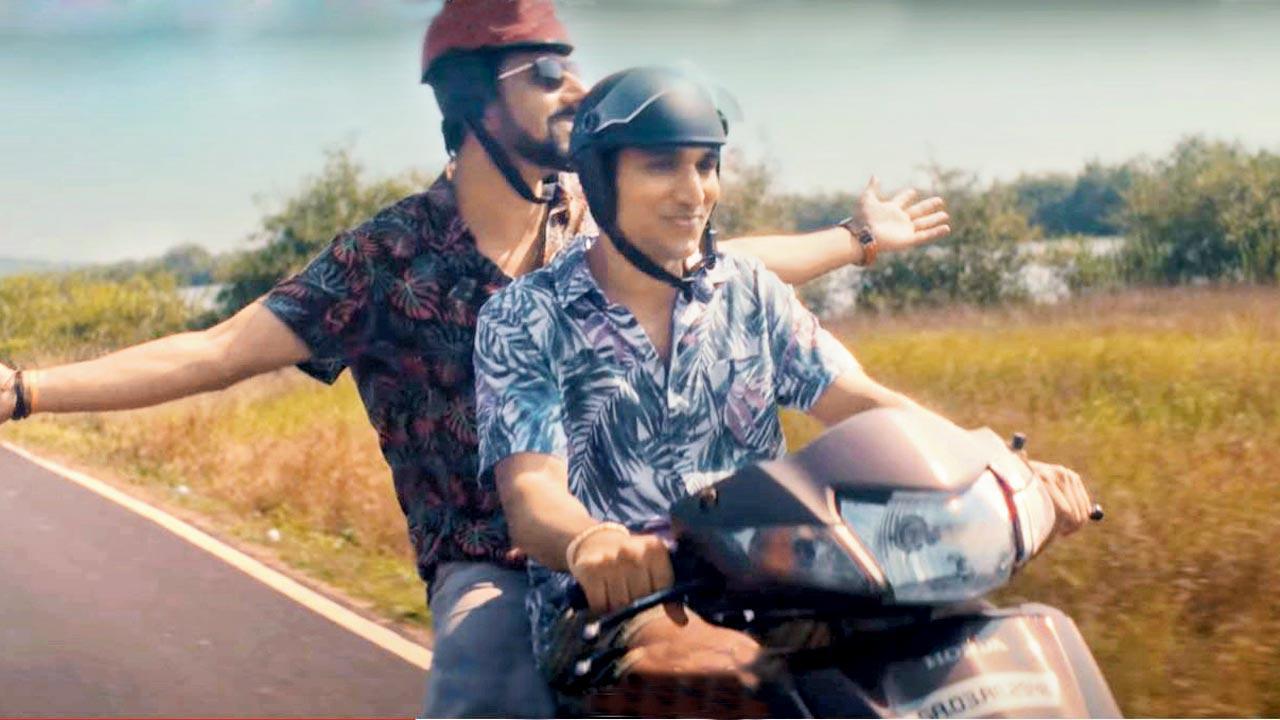
Fronting same-sex romance in Modern Love Mumbai, Pratik discusses how his unreleased 2006 LGBTQiA+ film formed the groundwork for the role
Uma Ramasubramanian (MID-DAY; May 9, 2022)
When Pratik Gandhi came on board Modern Love Mumbai to tell a same-sex love story, he had a singular concern — that the LGBTQiA+ romance should not take the aid of comedy to make its point, as Bollywood is wont to do. Director Hansal Mehta shared the opinion, and thus, was born their short film, Baai.
“We didn’t want to [portray] it in a caricaturish way. We never wanted to take the shield of comedy. Whenever you speak about this subject, the biggest tool that [filmmakers] use is comedy. But we didn’t want this emotion to be diluted,” begins Gandhi.
The Amazon Prime Video offering, like its American counterpart, is inspired by the New York Times column, and sees six acclaimed directors team up to tell distinct love stories rooted in Mumbai. Baai, co-written by Mehta and Ankur Pathak, sees Gandhi as Manzar Ali, who struggles to tell his truth to the person he loves the most.
“Manzar comes from a joint orthodox family with different values. He is constantly fighting fear. When everyone around rejects the truth, you question yourself and go into self-doubt. I understood his journey when I performed the part. [Otherwise] it gets difficult to understand what they go through.”
Embracing a character so far removed from his reality can be difficult. The actor turned to his 2006 film, Yours Emotionally, for reference, adding that he approached the character of Manzar with sensitivity and maturity that he probably didn’t possess 16 years earlier. “Yours Emotionally was [made] for international LGBTQiA+ film festivals, but it never got released. Back then, I didn’t have any clue about the community. When I was selected for it, I got to work with the community. That was my introduction to this world. I have come across some heart-wrenching stories since, and now, I understand what they go through. That film never led me to another movie, but after so many years, it helped me perform this part.”
The short film also stars Tanuja and Ranveer Brar. Gandhi is delighted to share screen space with the veteran. “She lights up the screen. The style of performance has changed a lot [over the decades], but even now, she is effortless.”
My wife and I have had multiple discussions and fights all these years about how busy I am-Pratik Gandhi
8:18 AM

Titas Chowdhury (HINDUSTAN TIMES; January 20, 2022)
Even before actor Pratik Gandhi became an overnight sensation following the success of his web show, Scam 1992: The Harshad Mehta Story, he had a jam-packed schedule. Pratik recalls, “I did multiple things simultaneously over the years, including a full-time job, doing theatre, going to rehearsals, travelling for shows, etc. I don’t remember taking vacations, trips, or even weekend getaways in all those years.”
As a result of his constant workload, his relationship with his wife, actor Bhamini Oza Gandhi, whom he married in 2009, suffered. “My wife and I have had multiple discussions and fights all these years about how busy I am,” Pratik says, referring to how his wife felt. He goes on, “She kept asking me, ‘What are you running for? When will it end? When will we get time for ourselves?’ I agree that I have been leading a very selfish life.”
However, Pratik claims that Bhamini is now content, particularly with the way his career has evolved and how they are living “a joint dream”. However, he adds that they are still finding it difficult to carve out time for themselves. “We often slip away to steal moments. We try to travel together. There was this one time when I was in the middle of changing flights. I arrived at the airport after shooting somewhere for about a month and was leaving for another 10 days. So I called her and we met at the airport,” the 41-year-old shares.
On the professional front, this year, the Bhavai (2021) actor will appear in five projects, sharing screen space with actors Vidya Balan, Taapsee Pannu and Richa Chadha, among others.
When asked if he fears being overpowered by them, he candidly shares, “Not at all! During our reading sessions, I realised that the journeys of my characters in these projects had a lot of scope and room to overpower each other. Having said that, these actors are extremely professional and secure in their own space.”
We knew we would struggle to release Raavan Leela. But then, things changed-Pratik Gandhi
8:18 AM
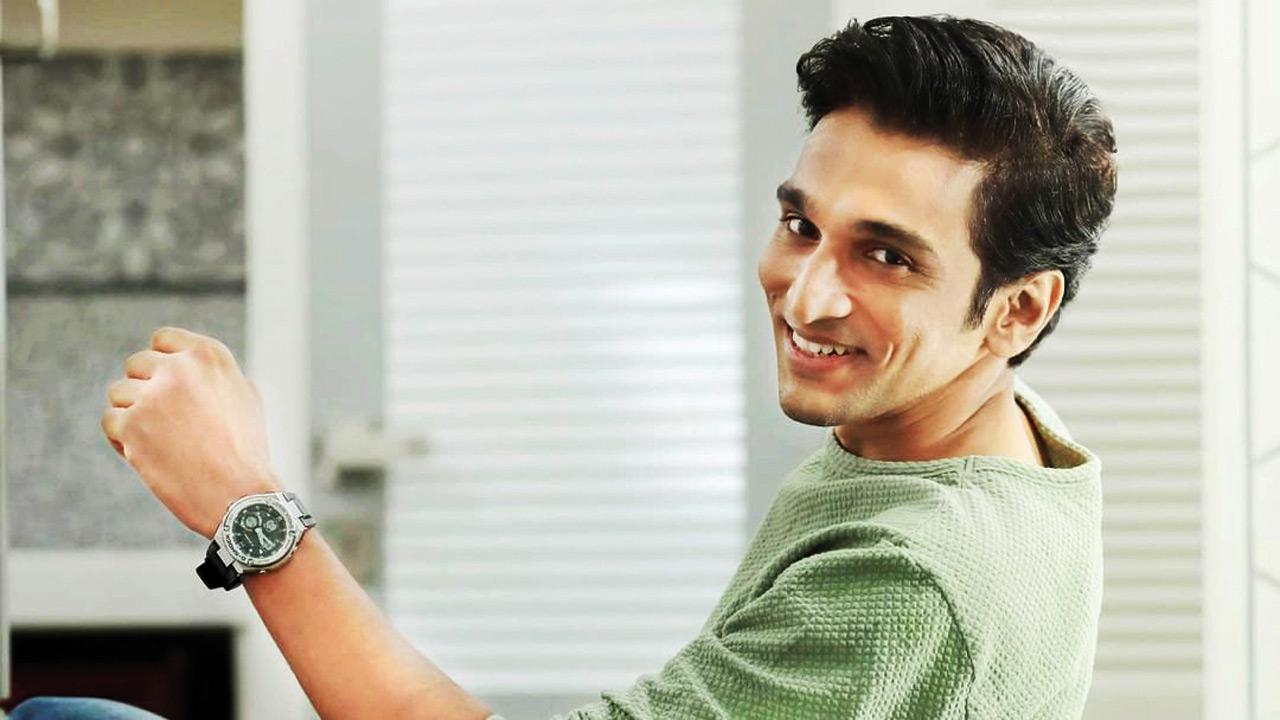
Foraying into Bollywood with Raavan Leela, Pratik Gandhi says he was unsure about audience’s interest in him until Scam 1992 made him an overnight sensation
Mohar Basu (MID-DAY; September 9, 2021)
Pratik Gandhi has no qualms in admitting that when the makers of Raavan Leela approached him, he wasn’t sure whether his face on the poster would sell the film. This was, after all, happening months before Scam 1992: The Harshad Mehta Story took the web world by storm. The actor recounts, “When I heard the last scene, I knew I wanted to do the film. I left the casting choice to my director Hardik [Gajjar]. It was on him to bet on me and make the film. I was a nobody then. We knew we would struggle to release it. But then, things changed.”
They sure did. Last October, as Hansal Mehta released his web series on the life of Harshad Mehta, the industry and audience woke up to a new talent. Gandhi, who had until then made ripples in theatre and Gujarati cinema, became an overnight star. Now, as he gears up for his Bollywood debut with the theatrical offering, the actor says he is conscious of not carrying any baggage from Scam 1992.
“For me, the story and character should offer the space to portray complex human emotions. This was the [criterion to choosing projects] then, and it’s the same now. I am not a brand; I am an artiste. I don’t think about positioning myself as a certain kind of actor who will do a specific genre of films. Initially, after the show released, I felt a lot of pressure. People had suggestions on how I should chart my career. But I listened to the one thing that has got me by the last 16 years — my gut feeling.”
Raavan Leela is only the first of several Hindi films that Gandhi has signed. Does the lure of the big screen stand true today at a time when OTT entertainment is creating worthy stars? “It’s not about the big screen as much as it’s about doing a pan-India film,” reasons Gandhi, adding, “In cinema, you live with the characters for two hours and take them home with you. It’s an irreplaceable experience. Seeing your name on a theatrical release is a high every actor yearns for.”
I was told I am not lead material-Pratik Gandhi
8:17 AM

Prashant Singh (HINDUSTAN TIMES; January 11, 2021)
In 2004, when he arrived in Mumbai, from his hometown Surat, Gujarat, with an engineering degree and “some theatre experience”, little did Pratik Gandhi aka Harshad Mehta from Scam 1992: The Harshad Mehta Story know that destiny had engineered a not-so-rosy path for him.
“To survive in the city, at the start, I did a lot of things — from doing compering at birthday parties to installing mobile towers. Then, I got a full time job in a large corporate house as an assistant manager. I worked there for 10 years until I resigned in 2016 as general manager,” he says. But all along, he kept doing theatre.
“Back in mid-2000s, TV was the biggest thing in India, so I also gave a lot of auditions. But things were just not working out. I was told ‘lead role ke liye aap look and feel mein nahi match kar rahe ho’. But I didn’t know any other way,” he says.
So, Gandhi, 31, continued to work in Gujarati films, including the National Award-winning Wrong Side Raju, besides doing smaller parts in Hindi films like Loveyatri and Mitron (both in 2018). “To many, my success may seem sudden after Scam 1992, but if you ask me, nothing has happened overnight. I was always on this path. And I believed that sooner or later, things would work out,” says Gandhi, adding that he never ran after money “because mere itne needs hi nahi hai since mera lifestyle bahut simple hai.”
After a smashing response to Scam 1992, is there any pressure vis-a-vis living up to people’s expectations? “I don’t want to take any pressure as that can be counterproductive for an artiste. Anyway, there is no guarantee as to how good or bad an actor’s next offering can be. Till now, I have steadfastly trusted my gut instinct and that’s what I would do now too,” concludes Gandhi.
I’m told my fame is overnight, but this night was 15 years long-Pratik Gandhi
8:44 AM

Shreya Mukherjee (HINDUSTAN TIMES; October 24, 2020)
Aknown face in Gujarati theatre and film scene, Pratik Gandhi has also done a few Hindi and English language films. But it’s his portrayal of stockbroker Harshad Mehta in Hansal Mehta’s recent web series, Scam 1992, that helped him get nationwide recognition.
“The actual reaction came from the share market. People called in to say that the portrayal couldn’t been more convincing. I’m indebted to Hansal Mehta for showing this kind of faith in me,” says the actor.
Given the response, Gandhi also believes that the timing worked in their favour as people are mostly consuming content online nowadays. “I don’t think I’d have got this kind of a role in a big film or a film could have given me this kind of fame. I never understood how do we decide a film to be good or bad going by the revenue generated. Thankfully, OTT doesn’t have that pressure. You don’t need a known face to sell content, rather content decides everything,” he adds.
Gandhi shares that he has been around in the world of showbiz for almost two decades, and it’s only now that things have changed for him. “When I’m told that my fame came to me overnight, my reply is ‘this night was 15 years long for me’. Now, many doors have opened. Yes, I’d like to do pivotal parts but I’m open to all kinds of experiments. I am now getting proper script narrations now, and people are writing characters keeping me in mind,” he concludes.
Many people, who have seen me for the first time, might think I became a star overnight-Pratik Gandhi
8:10 AM

Pointing out that he has been in showbiz for past 16 years, man of the moment Pratik Gandhi on how Scam 1992 thrust him into the limelight
Uma Ramasubramanian (MID-DAY; October 22, 2020)
He remembers shooting for a film in Kutch when he got a call. "Hi, I am Hansal Mehta," said the voice on the other end. By the time the call ended, he understood that things were about to change. But his intuition had not prepared him for the overwhelming love that has come his way since Scam 1992: The Harshad Mehta Story dropped online earlier this month. Pratik Gandhi, who has breathed life into the part of Harshad Mehta in the Sony LIV series, exclaims that his phone has been ringing off the hook.
"Many people, who have seen me for the first time, might think I became a star overnight. But truth is, I have been around for 15 to 16 years," says Gandhi. "The biggest difference is that now, makers have started considering me for the lead role in mainstream Bollywood films and web shows. I have received calls where directors said, 'I had written the script with someone else in mind, but after watching this show, I think nobody will suit the role better than you.'"
The 10-part series helped him gain insight into the two Mehtas — his subject Harshad, the mastermind behind the 1992 stock market scam, and director Hansal, who wanted to demystify it. "Hansal sir is an actor's director. He only kept saying, 'Follow your gut. If you feel you have given your best shot, I am game,'" he recalls.
Some might believe that the acclaim has been overdue for Gandhi, whose romance with acting began in 2005 with the Gujarati play, Aa Paar Ke Pele Paar. The engineer-turned-actor subsequently graduated to Gujarati cinema, making everyone sit up and take notice with his performance in Wrong Side Raju (2016). "From 2008 to 2016, I was a full-time employee at a corporate and did not view theatre as [my primary] source of income. It was only after Wrong Side Raju won the National Award that I quit my job and turned full-time actor."

Subscribe to:
Posts (Atom)